Category Archives: NZ Poets

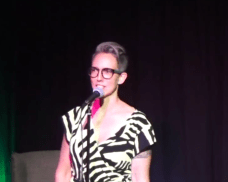
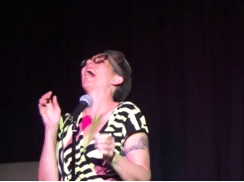
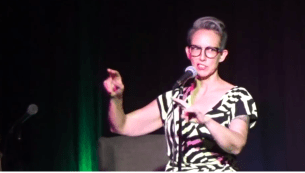
Hinemoana Baker tells her kingfisher story at The Bear in Berlin

Screen Shot 2018-06-04 at 9.21.50 AM.png  Screen Shot 2018-06-04 at 9.19.27 AM.png  Screen Shot 2018-06-04 at 9.21.08 AM.png Screen Shot 2018-06-04 at 9.20.03 AM.png


This is like many good stories that hold you tight: heart-moving, funny, generous. Hinemoana tells her story of a kingfisher and trying to have a baby. I just love it.


‘I went to ‘The Bear’, true stories told live each month here in Berlin. I told a story and ended up being chosen as the night’s winner — a great honour among the amazing storytellers there.’ Hinemoana

You can listen on YouTube

In the hammock: Reading Landfall 235

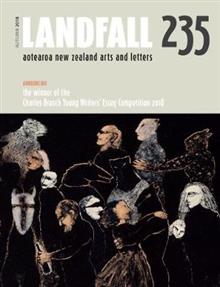
9781988531243.jpg


Landfall 235 launches Emma Neale as the new editor. The cover aptly features ‘The House Party’; Kathryn Madill’s monoprint is strange and seductive with sunken black space and textured skin. It is like a poem that tempts and then holds you in an intricate grip. There is a Madill sequence inside that is equally sumptuous, surprising, lyrical.

This is an addictive issue – think of it as a musical composition that carries you through diverse and distinctive reading effects across an arc from first poem to final story. I do hope more Pasifika, Māori and Asian poets send in submissions for the next issue to increase the diversity of voice.

The two visual sequences (by Madill and photogapher Russ Flatt) are stunning. Flatt’s photographs reconstruct memories from the ‘subconscious grief’ and experience of growing up gay in Auckland in 1970s and 1980s. Wow. This is the power of art to take you some place that transcends ideas and feeling but that is ideas and feeling.

Landfall 235 also includes the winner of the Charles Brasch Young Writers’ Competition,  Aimee-Jane Anderson-O’Connor, fiction (including a keenly observed piece by Airini Beautrais) and reviews. It welcomes established elders such as Elizabeth Smither and Bernadette Hall and barely published authors such as Sarah Scott and James Tremlett.


Here are a few poetry highlights:

Tracey Slaughter has turned from her dark, edgy must-read fiction to poetry. She was recently shortlisted for the 2018 Peter Porter Poetry Prize and I can see why. Her poem, ‘the mine wife’, with short-line fluidity, fictional momentum building, spiky detail, gritty feeling, is all about voice. A vulnerable, risking, space clearing, ‘self’ admitting voice:


the hand is a useless

surface for showing

the love it takes

to clear a path. Under

layers you wait for me to sift

your face from its mask.


from ‘the mine wife’


Lynley Edmeades‘ list poem, ‘The Age of Reason’, kicks off from Jean Paul Sartre’s title to move from ‘longing’ to ‘baby’, scooping up Simone de Beauvoir on the way, and all the staccato thoughts that propel a micro portrait: because why because how because who. I adore this!


Because fear of death

Because a dog might do

Because antidepressants

Because déjà vu

Because the trees

Because the population

Because plastic


from ‘The Age of Reason’


‘A Love Letter to My Mother: A work in progress’ by Wen-Juenn Lee is layered and probing and direct. I am wanting to read the whole work:


She takes astronomy classes at night.

I do not ask her why she stargazes

what she looks for              in the oily darkness

we go to a poetry reading on migrant women

I do not tell her

I remember her crying on the plane


from ‘A Love Letter to My Mother: A work in progress’


Nick Ascroft’s playful word shenanigans in ‘A Writer Wrongs’ are a delicious shift in key as rhyme binds  writer, hater and waiter:


So my fish is pallid.

So there’s a little pebble in my freekeh salad.

Is it necessary a balladeer batters

out a ballad?


from ‘A Writer Wrongs’


I haven’t encountered Rachel Connor‘s poetry before. She is a medievalist and a  postgraduate student in Otago University’s Department of English. I want to read more of her poetry! Her poem, ‘Home’, captivates with its quirky tropes and agile pivots upon ‘swan’:


A swan like a carved radish kickstarts its way across the water.

It should be easier

to temper my words and make iron gates of them,

to remember the names picked out in gold

that echo a memorial garden.


from ‘Home’


Tim Vosper offers my favourite ending in ‘The False Way to the Real’


When it comes time to kill the lamp

the leaf will turn into a shade.


from ‘The False Way to the Real’


I am fan of Sugar Magnolia Wilson’s poetry and have fingers crossed she gets a book out soon. ‘Betty as a Boy’ is lush with detail and movement:


And you, outside the upmarket  grocer’s, camouflaged top, khaki pants

slashed with a silk of red, a backpack strung with things that clink,

disappearing into your androgyny— the inverse of a newly minted drag queen,

appearing like a flaming comet, burning to be noticed.


from ‘Betty as a Boy’


Here is another unfamiliar poet I want to see a collection from. Susan Wardell’s poem pulsates with glorious surprising life. I will quote a piece but I urge you to read the whole thing: place rich, lithely troped, visually sparking, enigmatic, humane.  I am drawn to the voice, to the word hunger, to the portrait built.


They say

when meaning is gone, all that is left

is the grain

of the voice.


Well, hers sweeps the room like salt-flecked taffeta.


from ‘Grain of her Voice’


Writing journals, literary journals open up new avenues of reading and engagement. Landfall 235 is no exception. I have not finished, I have not yet read the reviews and all the fiction, but congratulations Emma Neale, you have taken the literary torch from David Eggleton, and the boost he gave, and turned your astute editorial eye to our advantage. I have new poets I am keen to track  down. I have seen familiar poets with fresh eyes. Kind of like a poetry house party in my head.


Landfall page

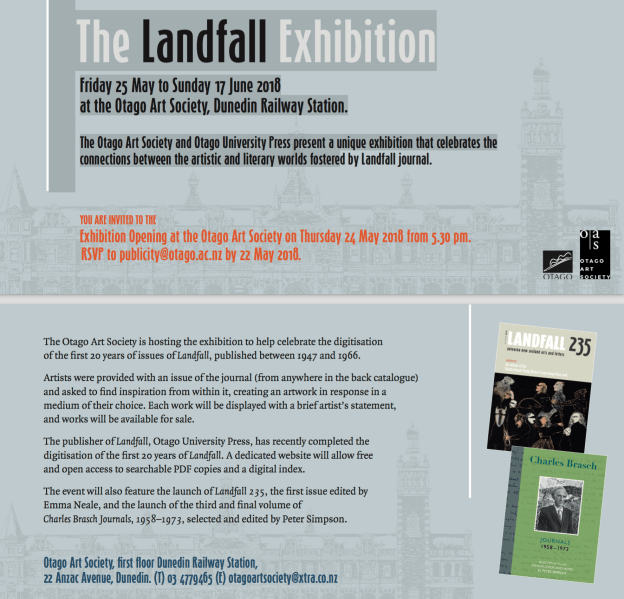
You can also go to the Landfall Exhibition if you live in Dunedin. Opening is Thursday May 25 at 5.30 pm.
Screen Shot 2018-05-24 at 2.23.52 PM.png


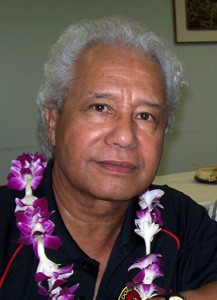
Bill Manhire and Albert Wendt recognised as Icons


bill-manchester-pic.jpg    1396039023448-1.jpg


Last night The Arts Foundation recognised Bill Manhire and Albert Wendt as Icons. Both  Bill and Albert have produced writing that is a significant part of our literary landscape, yet both have done so much more. Their mentorship of and generosity towards other writers is noteworthy. Their writing stands as uniquely theirs, offering nimble and wide ranging voices, an ability to tap into the humane, the surprising, the musicality of the world. I find their poetry utterly nourishing.

Congratulations from Poetry Shelf on this well deserved honour.

See here for more details. The other Icons were: artist Billy Apple, composer Dame Gillian Karawe Whitehead and sculptor Fred Graham.


Albert’s poem ‘New Coat’

Bill Manhire talks to Poetry Shelf

Culture trip offers ten great NZ poets


Screen Shot 2018-04-27 at 10.46.37 AM.png


‘While New Zealand is most famous for its astounding natural beauty, friendly people and now legendary cinematic prowess, it has also been called home by some truly exceptional poets. Here’s a top 10 of New Zealanders who’ve graced the world with their poetry.’

Go here for the ten poets.


This on Janet Frame whose poetry keeps pulling me back, year after year:


Janet Frame

Janet Frame was probably one of – if not the – greatest writers that New Zealand has ever produced. More than that, she was one of the most thought provoking and powerful writers of recent times. So much so that she was frequently spoken of as a Nobel Prize candidate for literature. She was more prolifically a writer of fiction – and that was what she will be chiefly remembered for – but she also published a single book of poetry.

If you’ve never read Frame’s work then you really should. She spent about a decade in mental hospitals after being incorrectly diagnosed with schizophrenia. Of this time she wrote: “I inhabited a territory of loneliness which … resembles the place where the dying spend their time before death, and from where those who do return, living, to the world bring, inevitably, a unique point of view that is a nightmare, a treasure, and a lifelong possession …” Her poetry collection is called The Pocket Mirror.


This is a tip-of-the-iceberg kind of list! Iceberg is not exactly the best trope though.


Monday Poem: by Gregory Kan


I wanted what happened to be something

I could know

and I wanted what I knew to be something

I could describe

something to which others could say

I know this

this happened to me also.

At the back of the room is a mirror

dreaming it’s become itself at last.

I keep walking

as if I know all the parts

and could play them.


©Gregory Kan


Gregory Kan is a writer and coder based in Wellington. His poetry has been featured or is forthcoming in literary journals such as the Atlanta Review, Landfall, The Listener, SPORT and Best New Zealand Poems. His poetry and philosophical works have also featured in exhibitions and publications for contemporary art institutions such as the Auckland Art Gallery, Artspace, the Adam Art Gallery, the Dunedin Public Art Gallery and the Physics Room. Auckland University Press published his first book, This Paper Boat, in 2016. An earlier incarnation of This Paper Boat was shortlisted for the Kathleen Grattan Poetry Prize in 2013. The book was also a finalist in the Ockham New Zealand Book Awards for Best Poetry in 2017. He was a Grimshaw-Sargeson Fellow for 2017. His second poetry collection, Under Glass, is forthcoming.


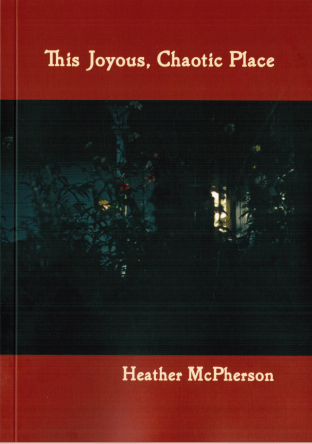
Poetry Review: Heather McPherson’s This Joyous, Chaotic Place

Screen Shot 2018-03-28 at 7.26.25 AM.png


This Joyous, Chaotic Place, Heather McPherson, Spiral, 2018

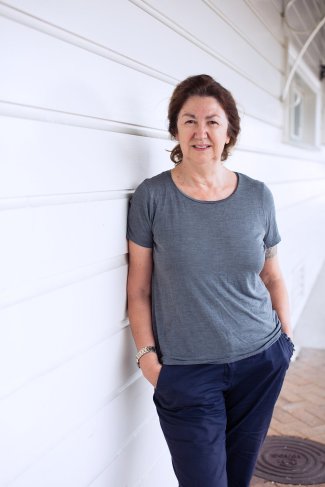
(cover image by Joanna Margaret Paul with a portrait of Heather on the back by Allie Eagle)


Heather McPherson (1942 – 2017) published 4 poetry collections in her lifetime, with her first, A Figurehead: A Face, paving the way for future poets. It was the first poetry book by an out lesbian in Aotearoa/ New Zealand.  In 1974 she founded both the Christchurch Women Artists group and Spiral, a women’s literary and arts journal.

Before her death, Heather asked poet Janet Charman to edit her garden poems while Lynne Ciochetto and Marian Evans formed a Spiral collective to publish the volume.

When I think of garden poems, I think of Ursula Bethell and the decade she devoted to writing and gardening when she lived with her beloved companion, Effie Pollen. I have thought about these intensities a lot, and write about them in my forthcoming book.

To enter the glades of Heather’s final collection, lovingly tended by Janet, is to enter a garden rich in aroma, with diverse plantings and seasonal changes. As with Ursula, to view Heather’s writing through a garden lens is extremely productive.


This graveyard’s a bit like the one

where we buried my mum and dad. Oldish,

a small town Anglian acreage


from ‘At Rangiora’s Ashley Street Cemetery’


We begin at Ursula’s grave, and while the poem draws us in close, it also generates little waves that connect admired poet – mentor almost – to Heather’s parents: one grave seeking pilgrimage as much as the next. And herein lies the delight of the poetry, the way the visual piquancy (‘the bird droppings// and twigs’) interweaves with the many selves: daughter, poet, companion, political attendee.

Attendance is vital because this is a poet who paid attention to things, small and large, the one nestled in the other, crafted within the reflective surface of poems. At times it is the joy of the thing itself that matters:


but this shape-shifter tree blossoms

tight thick-skinned buds like thrusting rose-hips


from ‘fragment’


On other occasions the poem is a vehicle for story or anecdote, and a way of tending vital bonds, personal experience, inner movement. Age is a preoccupation as is the necessity of companionship.


No. No. See, it’s like old age, he says, eyeing my face.

Goes slack and perishes. Soon as I touched it, it gave way.

Dangerous. Gone holey. I’ll get you a tow.


from ‘Waiting for the breakdown truck’


I spend time in Heather’s poetic glades, because the senses are on alert, the description compounding, and it imbues my own contemplative state. I like that. I like the way my mind wanders through my open window to the kereru plundering the cabbage tree, and then I am back within an intensity of poppies:


Poppies poppies poppies … red-headed

black-bellied upright masses on light green

sea-milk stalks – surely such riotously

frilly leaves can’t be edible – can’t be

blanched – baked – boiled – toast …


from ‘Poppies’


In a poem for Fran, Heather responds to her friend’s paintings, and it seems to me, the astute observation might also be applied to the poems.


But I don’t have lots of things in

my work – like Anna does, you said;

ah, I said, but your painting traps

amazing movement in it – it moves,

it moves – whether or not your

subject does  – it moves internally

& moving, spills (…)


from ‘Things shift’


As much as stillness gifts Heather’s poetry a translucent layering, the internal movement – the links and arcs, the revelations, the richnesses and the reserve – offer an uplift along with countless movements. By paying attention to the garden in which she lived, and the people close to her, her poetry establishes contrasting intensities – from the joyful to the chaotic. It is a pleasure to read.


Until April 14th

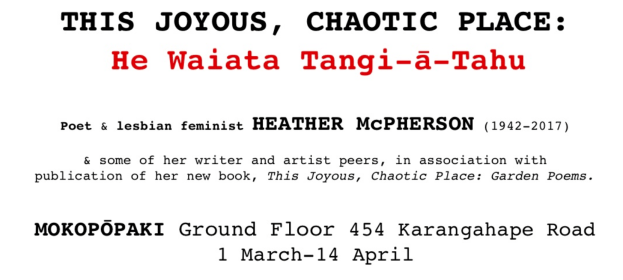
‘This Joyous, Chaotic Place: He Waiata Tangi-ā-Tahu’ is a multi-media project to celebrate poet and lesbian activist Heather McPherson (1942-2017) and her peers in the Aotearoa New Zealand’s women’s art and literature movement of the 1970s and 1980s. It is a #suffrage125 project, funded by Creative New Zealand and includes an exhibition, a collection of Heather’s ‘garden poems’ and a shopfront cinema showing 70s and 80s short films and raw footage.

Screen Shot 2018-03-27 at 9.23.05 PM.png

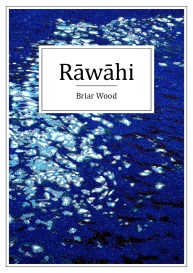
12 Questions for the Ockham NZ Book Awards poetry finalists: Briar Wood

2E4A6298BriarWood.jpg


Congratulations on your short-list placing!

Kia Ora.


What poetry books have you read in the past year?


Say Something Back – Denise Riley

The Bonniest Companie – Kathleen Jamie

Dark Sparring – Selina Tusitala Marsh

Citizen – Claudia Rankine

Deep River Talk Hone Tuwhare


What other reading attracts you?


Fiction – La Rose Louise Erdrich; Parable of the Sower Octavia Butler; A Girl Is a Half-Formed Thing Eimear McBride; Sleeps Standing Moetu Witi Ihimaera with Hemi Kelly; Foreign Soil  Maxine Beneba Clarke

History  – Tuai Alison Jones and Kuni Kaa Jenkins; Inglorious Empire: What the British Did To India Shashi Tharoor

Journalism and Essays –   Feel Free Zadie Smith; False River Paula Morris; The Best and the Brightest David Halberstam


Name some key starting points (or themes) for your collection

wāhi, places, the ambience and etymology of words, kupu kōtuitui


Did anything surprise you as the poems come into being?

Yes, the thematic intensity and interconnections as the collection e-merged.


Find up to 5 individual words that pitch your book to a reader.

negotiating,  rerenga, ecoconscious, beò, karadow


Which poem particularly falls into place for you?

‘Kuramārōtini’


What matters most when you write a poem?

Aligning kupu


What do you loathe in poetry?

I don’t loathe anything or nothing in poetry.


Where do you like to write poems?

Near Maungatapere.


What are strengths and lacks in our poetry scenes?

Te reo writing and performance is a strength – there should be more promotion of it.

The performance and publishing scene is quite inclusive and can be more so.

More consistent newspaper reviews of poetry and media outlets paying to publish poems.


Have you seen a festival poetry session (anywhere) that has blown you off your seat (or had some other significant impact)?


Performances at hui for Te Hā ki Tāmaki – Contemporary Maori Writers by Whaitiri Mikaere and Te Kahu Rolleston pass on their energy and  aroha for te reo with an integrated intensity.


If you could curate a dream poetry session at The Auckland Writers Festival which poets would be there and who would mc or chair it?


Any of the poets could mc or chair it.

Kiri Piahana-Wong

Jacqs Carter

Te Kahu Rolleston

Paula Morris

David Eggleton

Brian Turner


Rawahi-Front-Cover_high-res

Anahera press page

12 Questions for the Ockham NZ Book Awards poetry finalists: Elizabeth Smither


DSC_0067.jpg


Congratulations on your short-list placing Elizabeth!


What poetry books have you read in the past year?

Everything by Wislawa Szymborska and the Penguin Modern Poets series (3 poets in each clutch purse-sized collection): Emily Berry/Anne Carson/Sophie Collins; Malika Booker/Sharon Olds/Warsan Shire etc.


What other reading attracts you?

Almost anything. At the moment I am re-reading Rex Stout and the yellow pyjama-wearing detective Nero Wolfe.


Name some key starting points (or themes) for your collection.

I never discover a theme until a collection is put together. The connections between individual poems can be as subtle and perverse as the most delicate rhyme or rhythm.


Did anything surprise you as the poems come into being?

Perhaps the secret life of animals?


Find up to 5 individual words that pitch your book to a reader.

‘The heart heals itself between beats’ because it was a commission with an extra scoop of fear attached.


What matters most when you write a poem?

Depth and uncertainty.


What do you loathe in poetry?

Nothing. It’s important not to loathe anything.


Where do you like to write poems?

Propped up on a bank of pillows in bed, with the concert programme on the radio and perhaps a glass of wine.


What are strengths and lacks in our poetry scenes?

The chutzpah of our independent publishers; a tendency for too much adulation.


Have you seen a festival poetry session (anywhere) that has blown you off your seat (or had some other significant impact)?

Margaret Atwood and Hans Magnus Enzensberger at the Aldeburgh festival. I read first and sat down between them, shivering.


If you could curate a dream poetry session at The Auckland Writers Festival which poets would be there and who would mc or chair it?

I think I’d do a Dead Poets session. Keats and Shelley, Robert Lowell, William Empson, John Crowe Ransom, Tomas Tranströmer, Szymborska, of course… the possibilities are endless. It might have something of the bitchy tone of ‘The Real Housewives of Melbourne’.  To chair it one of the Paulas: Green or Morris.


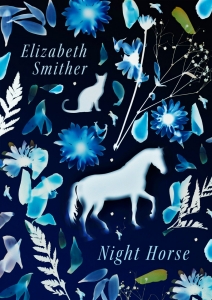
Night Horse AUP author page


1497223465774-1.jpg


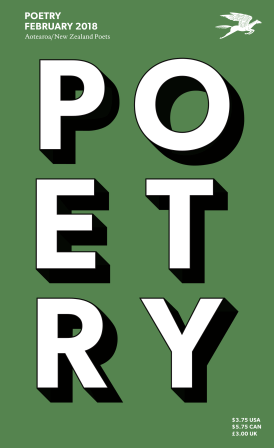
The NZ edition of Poetry


feb2018-front-cover.png


I know I find it hard to listen.

I read too much. I often need a drink.

It isn’t the world that makes us think,

it’s words that we can’t come up with.

Sure, I can work up fresh examples

and send them off to the committee.

But the poetry is in the bird. And in the pretty.


Bill Manhire, from ‘Polly’


International poetry traffic is so often dependent upon fortuitous connections. The degree of familiarity with poetry from elsewhere is utterly paltry compared with the degree of familiarity I have with local writing. Yes I have studied American and British poetry but I am more aware of the luminous stars in these poetry constellations than the grassroot outings.

On the other hand, we are no longer dependent upon ocean voyages and the constraints of distance, but to what degree does our poetry travel (compared say with fiction)? Or our poetry conversations extend beyond our lapping tidelines.

I am acutely aware of my impoverished relations with contemporary Australian poetry. Perhaps Joan Fleming and Amy Brown could guest edit a local journal with an Australian focus? But then again our journals are often annual and offer vital but scant opportunities for local poets.

This is not the first time an overseas journal has showcased New Zealand poetry, but it is perhaps the example I am most excited by. The editors – Stephanie Burt (USA), Paul Millar (NZ) and Chris Price (NZ) – have worked hard to present a distinctive and diverse overview of our current poetry. The selected poets cross all manner of borders: age, geographical location, style, university affiliation, gender, ethnicity. This matters if we want to move beyond the legacy of white male predomination, urban bias and privileged poetry models. I cannot name a NZ journal that has achieved such movement.

Yes the five books Daisy Fried reviewed – from the fifteen 2017 publications she was sent – were all Victoria University Press. Her selection certainly does not reflect the contours of that year, and we can all stand on the sidelines and shout (or sing) about the books we loved, but I have no issue with reviews reflecting individual taste. However I do take issue that a short intro and five VUP books can respond to her opening question: ‘How to characterise a national poetry?’ Why would you even try! It is a personal take on five excellent books.

The rest of the journal is an altogether different joy. The effect of reading is symphonic in the different hues and chords. Every single poem lifts off the page and catches both ear and eye. Such freshness, such lightness, darkness, musicality, room to breathe, surprising arcs and links and undercurrents. I keep swaying between Anna Jackson’s glorious bee poem and the flickering titles that coalesce in Nina Powles’s offering or the infectious wit of James Brown, Ashleigh Young and Tim Upperton.  I am pulled into the bite of Anahera Gildea, Chris Tse and then Tayi Tibble and stop in the tracks of reading. Travelling with Janet Charman and the revelatory suite makes me weep. Switching to Anne Kennedy and the momentum coils and overlaps and poetry transforms a starting point into elasticity on the line. Bill Manhire flips me over into the second stanza, and the lacework of reading – intricate yet full of holes – offers mystery, surprise, wit, curious things.


The time of breathing into clasped hands

hovering over a lighter to make a flame


not knowing

that an angry man threw his eyes into the night


the belly of his shattered father

weeping rain for separation of earth and sky


Jessie Puru from ‘Matariki’


The editors did not feel beholden to poetry that targets versions of New Zealand/ Aotearoa; our poetry might do this and then again it might not. The poems have the freedom to do and be anything whether they spring from spoken-word rhythms or  talkiness or thinginess or anecdotal revelations or sumptuous Baroque-detail or story or slanted humour or cutting political edges.

The poets: Anna Jackson, Kate Camp, Michele Leggott, Therese Lloyd, Jessie Puru, Essa Ranapiri, Tayi Tibble, Robert Sullivan, Kerrin P. Sharpe, Hera Lindsay Bird, Dylan Horrocks, James Brown, Murray Edmond, Jenny Bornholdt, Anne Kennedy, Bill Manhire, Nina Powles, Janet Charman, Anahera Gildea, Bernadette Hall, Vincent O’Sullivan, Courtney Sina Meredith, C.K. Stead, Chris Tse, Tim Upperton, Gregory O’Brien and John Pule, Faith Wilson, Ashleigh Young, Albert Wendt, Steven Toussaint, Erik Kennedy

This issue is a cause for celebration – I absolutely love it – and my celebration will take  the form of a subscription. New Zealand poetry has been well served – congratulations!


Poetry here


everything I never asked my grandmother

I can understand but I can’t speak

no one has played that piano since

New Zealand is so far away from here

let me translate for you the poem on the wall


Nina Powles from ‘Some titles for my childhood memoir’

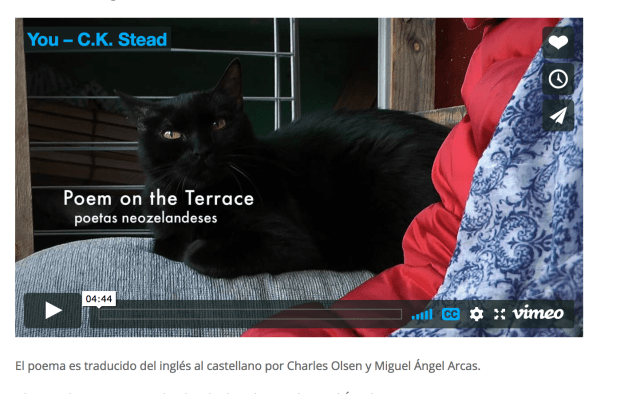
Final episode of Poem on a Madrid Terrace

‘It appears the cold weather has finally arrived in Madrid after an extended summer… Anna Borrie and I read ‘You’ by C.K. Stead in the final episode of ‘Poem on the Terrace – New Zealand Poets’, where we introduce kiwi poets to a Spanish-speaking audience.’

Charles Olsen

Screen Shot 2017-11-13 at 8.32.23 AM.png

Listen here