Category Archives: NZ poetry

Poetry Shelf connections: Elizabeth Welsh’s ‘steady’


steady


day i

i am trying to imagine a body of water from the confines of our green space.

my neighbour reads an excessive number of library books on hydrotherapy,

and i become accustomed to skimming these surreptitiously before returning

them for her. there is a composure to the watery diagrams that i pore over,

searching for instructions beyond mere bodily mechanics, some sort of cure

for aloneness in one’s body. we must stay safe at home, i repeat, but it means

very little to you beyond a sibilant silkiness on your tongue. and sometimes,

although you don’t know it yet, harm can come from within too. these days,

our neighbour calls out to us from her bedroom window each morning

when we are once again wandering undirected in the early flinching bush

and your face breaks, like a wave at its apex, about to crash. to distract,

we lean in to green. you choose the seaweed stick of chalk, and we draw

pulsing trees together. later, finding a grove of wild ginger, you insist

it’s a treasure, protecting this weed with its pervasive rhizomatous roots,

shielding it with your splayed hands and then draping it over your shoulder

along with your foraged Hormosira banksii, claimed at mid-tide on our last

evening swim. everything equal in your mind, you stroke the leaves

and shrivelled olive beads sleepily, lulled by a saturated silence from

the deserted road above; watching you, i think of habits and how they form,

and hope we keep some or all of these we are forming. my pelagic fish,

the silt in your river of isolation came when you realised the sea was lost

to you, and you struggled to use those branching chains of water-filled veins

to withstand the ebbing tide


day ii

morning light hits shivering rimu fingers in a way i didn’t notice before,

like it’s plunging, trying to pick something up that’s lost at the bottom

of a council leisure centre pool; abandoned goggles, cap, stick, stone.

i want to find that thing we’ve forgotten, or maybe all the owners

of these churning lost things that help us stay buoyant or otherwise.

my maternal grandfather was a daily wild swimmer and treated it with

a reverence bordering on panic. it’s the alteration of body temperature

that releases, relieves. it made him feel sound of mind, but maybe not safe

of body, given the lacey shape of the fractured greywacke rocks he dove from

at the inlet they called home. i can visualise a breathlessness, and then

a bruised flying. and I wonder, is that how he felt? did the propulsion

into water, coupled with that numbing, knotty coldness, shake him wildly loose?

like him, you exercise an immersive love that demands return to one salty,

thrown-about body, tangling us up in green scribbles, circles and untraceable

starfish scratches. how deep you want to measure, to fill up every space

between us, the air we share. at breakfast, while slicing apple suns,

we discuss the air quality index and the Clean Air Act and what this means

for cities and transport and adverse health effects. afterwards, floating in

the bathwater on your back, eyes closed to me, i watch the soft depression

of your chest cavity and talk to you about the humming bee breath,

closing one ear to all surrounding sound


day iii

we bend and collect fallen kauri and tanekaha leaves to dry downstairs

for making into sheets of paper, and i feel like calming, wake-like

into the warmness of the leaf litter underneath peeled-bare branches,

sighing into all the worries of the basalt, granite and rock crust

that should be frustrated with us for failing to care. we do not

have kauri rot, and our ritual to ensure this has something of prayer to it.

understanding, you chastise any who visit, pointing to which boots

are allowed to be worn on your indecipherable map filled with rising

lines, eddies, swells. you are rooted deep to your watery west coast clay.

today, we read of the cormorants that have returned to Venice,

as the seaweed-thick fragile lagoon ecosystem is visible again, shorn

of tourism and motor transport disturbance. and while you flick through

photographs, I worry that we will forget too soon. you replay the narrative

again and again, hopping and spinning about and hot-headedly insisting

on mimicry. my body still baffles me after birth; refusing, uncooperative,

not at all one with my clamorous mind, it carries me along through

this time of confinement but feels weightless in a frightening way,

as though i am an alluvial river, and not at all certain how to halt

the erosion of these shores


day iv

stories are one thing we agree upon, resting flock-like on steaming

beds of compost mulch, chopping up rotting weeds and long, prickling

stalks from harvested Jerusalem artichokes. we argue over a pair

of turquoise-handled scissors like siblings until i take your

little finger and link it through mine, pleading silence while i weave

another marshy history. the blue hue of the ocean is largely constructed

from chlorophyll and disintegrating organic bodies, and this seems

to be the only likely truth i can hear. there are more snarled news reports

that i mute furtively, my fingers washing away a wider belly of current,

holding it back for just a little longer. i am selfish in this skimming

of possible narratives, but i want you to be a water-skating insect,

legs as flotation devices, ridged with grooves marked on tiny hairs

that trap air. please slide across this surface without pause; you will learn

to scull or drift through swampy nodes and puckers soon enough.

for now, all you have is the woven ribs of trees, and the light running deep,

keeping us very nearly afloat. sometimes, if i rise early and walk into

the aqueous-lit yawn of bush before you wake, i can hear our neighbour

singing, just ever so faintly


Elizabeth Welsh is a poet, papermaker and academic editor. She is the author of Over There a Mountain, published by Mākaro Press in 2018. Her poetry and short fiction has been published in New Zealand and the United Kingdom. She lives in Titirangi with her husband and daughter.


Poetry Shelf connections: two poems from Kay McKenzie Cooke


cricket during lockdown


The ragged monotone

of a cricket’s refrain

is childhood’s waist-high grass

and boredom. It is last chances,


eternity, the beige of neglected summer lawns.

Through an open window

I hear its shrill register

competing

with the sporadic wash

of reduced traffic noise

and my granddaughter’s tearful protests

against an afternoon nap.


This cricket’s front-leg click, rub, whirr,

is an irksome useless key

turning a music box

with a loose spring

that cannot be wound any tighter.

I find myself counting on it to be


today’s measure of time. Even when

everything turns, re-turns,

the cricket will keep

on. For now though, it is

my stop watch.


above the line


Above, a black-backed gull

grifts the high way

only gulls trawl,

a sky- valley current

that streams between

beach and harbour.


I look up, see its chest

feathers ironed white by light,

its black wings

rowing west

towards today’s catch:


fish entrails, road kill,

mud crab. I note

how it hauls its cargo

of intent, watch

until it disappears

behind the tips

of trees, envision


the movement, the trail

it leaves

behind, that caught

rude disturbance

of time’s dead air.


Kay McKenzie Cooke


Kay McKenzie Cooke is a Dunedin writer. The Cuba Press are publishing her fourth poetry collection which is scheduled for release in June 2020.


Poetry Shelf congratulates the Ockham NZ Book Award winners – and showcases the poetry

d590ea43-fe25-4bb4-a1b5-a785e5cb0b66.jpg


Warm congratulations to all winners! This is a year where well-deserving and much-loved books have taken the winning spots – each book is worthy of a place on our book shelves.

I look at this list (and indeed the shortlists) and it reminds me that NZ literature is in good heart. These are heart books. These are books born from love and labour, by both inspired and inspiring authors and publishers.

The Award’s poetry section  was a drawcard for me. I loved each shortlisted finalist so much, but I leapt for joy at the kitchen table to see Jane Arthur win Best First Book and Helen Rickerby win Best Book.

Yes, some extraordinary books did not make the longlists let alone the shortlists – but this is time to celebrate our winners.

I toast you all with bubbles and bouquets and can’t wait to see what you write next.

Right now we need to support our NZ book communities, so I strongly advocate putting an Ockham winner in our pile, the next time we visit our local booksellers.

In these strange Covid times my email box has has never been so full of poems – we’re making sour dough and we’re writing poetry, and it has been such a connecting comfort.

Long may we cherish poetry in Aotearoa.


My toast to the Poetry Winners:


screen-shot-2020-02-11-at-8.45.03-am.png


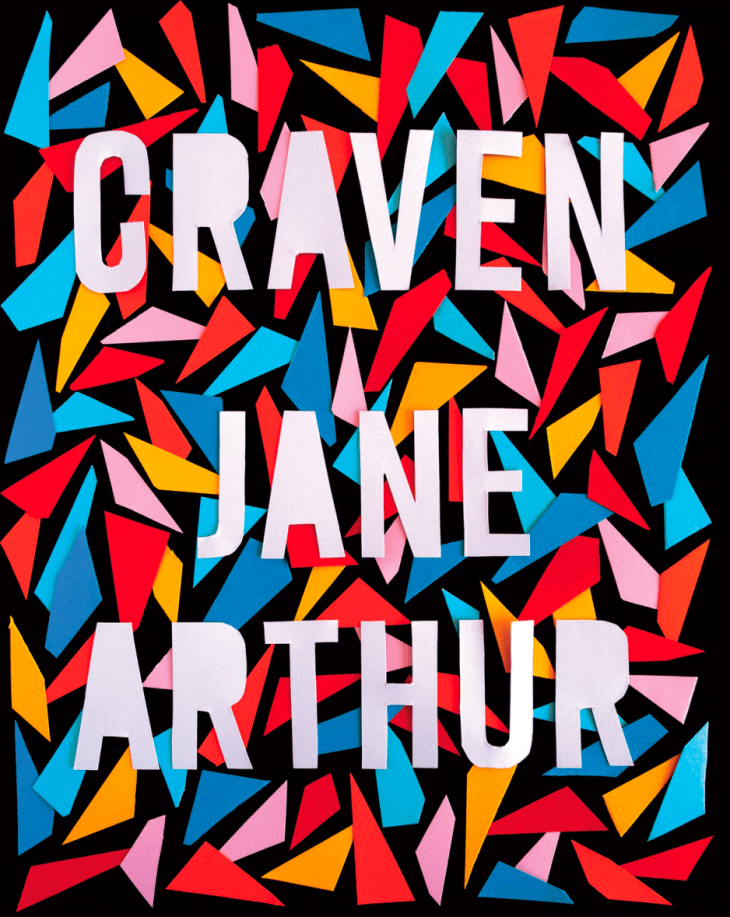
Craven, Jane Arthur, Victoria University Press, 2019 Best First Poetry Book


I have a broth at a simmer on the stove.

Salty water like I’ve scooped up some ocean

and am cooking it in my home. Here,

gulp it back like a whale sieving plankton.

Anything can be a weapon if you

swallow hard enough:

nail scissors, a butter knife, dental floss,

a kindergarten guillotine, hot soup,

waves, whales.

from ‘Circles of Lassitude’


Jane Arthur’s debut collection Craven inhabits moments until they shine – brilliantly, surprisingly, refractingly, bitingly. Present-tense poetry is somewhat addictive. With her free floating pronouns (I, you, we) poetry becomes a way of being, of inhabiting the moment, as you either reader or poet, from shifting points of view.

It is not surprising it has won Best First Book at 2020 the Ockham New Zealand Book Awards.

The collection title references lack of courage, but it is as though Jane’s debut collection steps across a line into poetic forms of grit. This is a book of unabashed feeling; of showing the underseam, the awkward stitching, the rips and tears. Of daring to expose. The poems are always travelling and I delight in every surprising step. You move from taxidermy to piano lessons to heart checks and heart beats, but there is always a core of exposed self. And that moves me. You shift from a thing such as a plastic rose to Brad Pitt to parental quarrels. One poem speaks from the point of view of a ship’s figurehead, another from that of Constance. There is anxiety – there are dilemmas and epiphanies. The poetic movement is honeyed, fluid, divinely crafted – no matter where the subject travels, no matter the anxious veins, the tough knots.

An early poem, ‘Idiots’, is like an ode to life, to ways of being. I keep crossing between the title and the poem, the spare arrival of words punctuated by ample white space, elongated silent beats that fill with the links between brokenness, strength and pressing on.


Idiots

I’ve known people who decided

to carry their brokenness like strength

idiots

I’m a tree

I mean I’m tall, I sway

I don’t say, treat me gently

No¾I say, cool cool cool cool

I say, that really sucks but I guess I’ll survive it

or, that wind’s really strong

but so are my roots, so are my thighs

my branches my lungs my leaves my capacity to wait things out

I can get up in the morning

I do things


I heard Jane read for the first time at the Sarah Broom Poetry Prize session at the Auckland Writers Festival in 2018. Her reading blew my socks off, just as her poems had delighted American judge, Eileen Myles, and it was with great pleasure I announced her as the winner. Eileen described Jane’s poetry: ‘poetry’s a connection to everything which I felt in all these [shortlisted] poets but in this final winning one the most. There’s an unperturbed confident “real” here.’ In her report, Eileen wrote:

The poet shocked me. I was thrust into their work right away and it evoked the very situation of the poem and the cold suddenness of the clinical encounter, the matter of fact weirdness of being female though so many in the world are us. And still we are a ‘peculiarity’ here and this poet manages to instantly say that in poetry. They more than caught me. I like exactly how they do this – shifting from body to macro, celestial, clinical, and maybe even speaking a little out of an official history. She seems to me a poet of scale and embodiment. Her moves are clean and well-choreographed & delivers each poem’s end & abruptly and deeply I think. There’s a from the hip authority that inhabits each and all of these poems.

I am revisiting these words in view of Craven’s multiple poetry thrills. So often we talk about the way a poem steps off from the ordinary and blasts your heart and senses, if not your mind, with such a gust of freshness everything becomes out of the ordinary. This is what happens with Craven. A sense of verve and outspokenness is both intoxicating and necessary:


I’m entertaining the idea of never being silent again,

of walking into a room and shouting, You Fuckers Better Toe the Line

like a prophylactic.

from ‘Sit Down’


A sense of brittleness, vulnerability and self-testing is equally present:

I’ve been preoccupied with what others think again.

I’ve been trying not to let people down.

Nights are not long enough.

Lately there’s been more sun than I would’ve expected.

I keep the weather report open in its own tab and check it often.


From ‘Situation’

The movement between edge and smooth sailing, between light and dark, puzzle and resolution, and all shades within any dichotomy you might spot – enhances the reading experience. This is a book to treasure – its complexities and its economies, its confession and its reserve. It never fails to surprise. I am delighted Jane read as part of my Poetry Shelf Live session at Wellington’s Writers Festival in March. It was a divine reading.


Victoria University Press page

Poetry Shelf Monday poem: ‘Situation’ by Jane Arthur

Poetry Shelf audio spot: Jane Arthur reads ‘Snowglobe’

Poetry Shelf: Conversation with Sarah Broom Prize finalist, Jane Arthur


Rickerby_How_to_Live__14837.1564361874.jpg


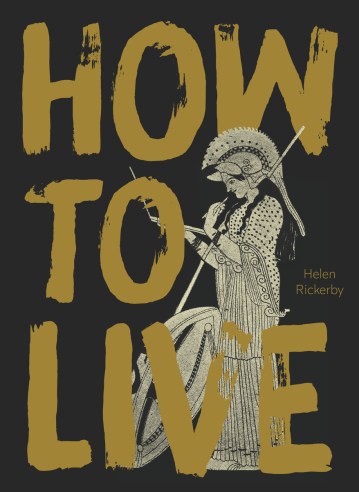
How to Live, Helen Rickerby, Auckland University Press, 2019 Best Poetry Book


Helen reads ‘How to live through this’


When that philosopher said life must be lived forwards

but can only be understood backwards

he was not thinking of me

I have lived all kinds of lives

from ‘A pillow book’

Helen Rickerby’s latest poetry collection How to Live is a joy to read. She brings her title question to the lives of women, in shifting forms and across diverse lengths, with both wit and acumen. Like many contemporary poets she is cracking open poetic forms – widening what a poem can do – as though taking a cue from art and its ability both to make art from anything and in any way imaginable.

Reading this book invigorates me. Two longer poems are particularly magnetic: ‘Notes on the unsilent woman’ and ‘George Eliot: a life’. Both function as fascination assemblages. They allow the reader to absorb lyrical phrases, humour, biography, autobiography, insistent questions. Biography is enlivened by such an approach, as is poetry.


6.   It seems to me that poetry usually begins with the self

and works its way outwards; and the essay, perhaps, starts

outwards and works its way in towards the self.

from ‘Notes on the unsilent woman’


Thinking of the silent woman I am reminded of Aristotle’s crown of silence that he placed upon she. I then move across centuries to Leilani Tamu’s poem ‘Mouths Wide Shut’ where she sits on a bus with her mouth taped shut silent. The skin-spiking poem (and the protest) considers silence in the face of racism. Even now, even after the women’s movements of the 1970s and the explosion of feminism and feminisms over ensuing decades, men still talk over women, still dismiss the women speaking (take women in power for example, or a young woman at the UN challenging climate-change inertia).

What Helen does is remind us is that silence is like snow – it is multi-hued and deserves multiple names and nuances: ‘Silence isn’t always not speaking. Silence is sometimes / an erasure.’

Ah the stab in my skin when I read these lines. In ‘Notes on the unsilent woman’ Helen draws me in close, closer and then even closer to Hipparchia of Maroneia (c 350 – c 280 BC).

5.    But I do have something to say. I want to say that she

lived. I want to say that she lived, and she spoke and she

was not silent.


Helen gathers 58 distinctive points in this poem to shatter the silence. Sometimes we arrive at a list of women who have been both audible and visible in history, but who may have equally  been misheard, misread and dampened down. At other times the poet steps into view so we are aware of her writing presence as she records and edits and makes audible. In one breath the poet is philosopher: ‘Silence might not be speaking. It might be / listening. It can be hard to tell the difference.’ In another breath she apologies for taking so long to bring Hipparchia into the picture.

Elsewhere there is an ancient warning: ‘”If a woman speaks out of turn her teeth will be / smashed with a burnt brick.” Sumerian law, c. 2400 BC.’

A single line resonates with possibilities and the ‘we’ is a fertile gape/gap/breathing space: a collective of women, the poet and her friends, the women from the past, the poet and I: ‘There are things we didn’t think we could tell.’ Yes there are things we didn’t think we could tell but then, but then, we changed the pattern and the how was as important as the what.

Another single line again resonates with possibilities for me; it could be personal, it could equally be found poetry: ‘I would like to be able to say that  it was patriarchy that stopped me talking on social media, but it wasn’t, not / directly.’

I read ‘Notes on the unsilent woman’ as a poem. I read this as an essay. I am tempted to carry on with my own set of bullet points as though Helen has issued an open invitation for the ‘we’ to speak. Me. You. They. She quotes Susan Sontag: ‘The most potent elements in a work of art are, often, its silences.’


The other poem I dearly love, ‘George Eliot: a life’, is also long form. Like the previous poem this appears as a sequence of numbered sections that are in turn numbered in smaller pieces. It is like I am reading a poem and then an essay and then a set of footnotes. An assemblage of fascinations. Biography as fascination allows room for anything to arrive, in which gaps are curious hooks, reflective breathing spaces and in which the personal is as compelling as the archives. Helen names her poem ‘A deconstructed biography’ and I am reminded of  fine-dining plates that offer deconstructed classics. You get a platter of tastes that your tongue then collates on the tongue.

To taste ‘George Eliot: a life’ in pieces is to allow room for reading taste buds to pop and salivate and move. This is the kind of poem you linger over because the morsels are as piquant as the breathing spaces. It delivers a prismatic portrait of George Eliot but it also refreshes how we assemble a biography and how we shape a poem. Helen brings her acerbic wit into play.


10.7.1.  But the fact is, and I don’t want to give you spoilers, that for such an

extraordinary woman she sure did create some disappointing female

characters. Even the heroines don’t strike out – they give up, they stop,

they enclose themselves in family, they stand behind, they cease, they  die.

They found nothing.

10.7.2.   Did she think she was too exceptional to be used as a model for her

characters? Did she think that while she was good enough to be involved

in intellectual life, and she could probably even be trusted to vote, the same

could not be said for her inferior sisters?


A number of smaller poems sit alongside the two longer ones including the moving ‘How to live though this’, a poem that reacts to an unstated ‘this’. ‘This’ could be anything but for me the poem reads like a morning mantra that you might whisper in the thick of tough times or alongside illness or the possibility of death.

‘How to live’ is a question equally open to interpretation as it ripples through the poems; and it makes poetry a significant part of the myriad answers. I haven’t read a book quite like this and I love that. The writing is lucid, uplifting, provocative, revealing, acidic, groundbreaking. The subject matter offers breadth and depth, illuminations, little anchors, liberations, shadows. I am all the better for having read this book. I just love it.


I slept my way into silence

through the afternoon, after days

of too many words and not enough words

to make the map she needs

to find her way from here

I wake, too late, with a headache

and she, in the garden wakes up shivering

from ‘Navigating by the stars’


Auckland University Press author page

Helen‘s ‘Mr Anderson, you heartbreaker you’

Helen on Standing Room Only


Poetry Shelf connections: Hana Pera Aoake reads ‘My heart swings like poi’


IMG_5934.jpeg


This is an audio recording of Hana Pera Aoake reading a poem they wrote called, ‘My heart swings like poi’, which they wrote for Te Rito o te Harakeke, which was a journal they co-edited with essa may ranapiri, Sinead Overbyne and Michelle Rahurahu Scott for Ihumaatao.

They have been very busy with the first issue of Tupuranga which has just launched.


Hana Pera Aoake (Ngaati Raukawa, Ngaati Mahuta, Tainui/Waikato) is an INFP, Gemini heartthrob living on Kai Tahu land in Te wai pounamu. They are a writer, editor and artist in a stupid amount of debt (Liv, Laff, Luv), having completed an MFA in Fine Arts (first class) in 2018 from Massey University. They are a current participant in the Independent study program at the Maumaus des escola artes via a screen and an editor at both Tupuranga journal and Kei te pai press.


Poetry Shelf connections: 2 poems by Joan Fleming


Meditation on relative suffering

            5 April, Madrid


Many terrible things in life happen quietly and without spectacle.

The times I am penned inside my own skin are a one that feels like a seven

and it makes me loud.


I pull down a book and find a strand of hair that cannot be mine.

I stroke it the wrong way to make it squeak

like an animal.


Now the windows are open and I smell a fire I want to be next to.


They say that after great pain, you find you can speak well,

but I have been speaking badly and feel about it all

as helpless as childhood.


Everything is flowering and the wild boars run in the street,

expecting someone.


Via Negativa

1 April, Madrid


In the day book, several nothings have made a space as slow as the city.

I toe the bottle to the table’s far side, this stops me reaching for it.

Mornings are good, don’t you find? And evenings sometimes terrible.


We ought to be flooded with green, turned out onto a slope

held down with roots and crowns, zesty with rot, the seasons

breaking into food, the air mad with bees and matter.


Instead, there are streaks on the glass

only where the left-side body was responsible.

We meet in bed, stroke each other’s skin as if we possessed it.


Joan Fleming


Joan Fleming is the author of two collections of poetry, The Same as Yes and Failed Love Poems, both from Victoria University Press, and the chapbook Two Dreams in Which Things Are Taken (Duets). Her new collection Dirt is forthcoming with Cordite Books. She holds a PhD in ethnopoetics from Monash University, Melbourne, and is the New Zealand/Aotearoa Commissioning Editor for Cordite Poetry Review. She currently lives in Madrid, and in 2020 she will travel to Honduras for the Our Little Roses Poetry Teaching Fellowship.


Poetry Shelf Monday Poem: two poems from Shari Kocher


from Gathering in the Underworld


Monday 13 April (Prompted by Sharon Olds’ ‘Making Love in Winter’, using the nouns: skin, blooms, transom, ovaries, questions; the verbs: is, flying, touch, burns, casts; and the adjectives: loose, dark, motionless – last noun is the title of the response poem)


Questions


At birth, the bird flew high and white

and motionless, the eye of the storm not yet

arrived but drawing nearer, the bird

loose in its orb of stillness branching

its wings in the hospital hallway between

the lights going out and the generator

roughly clanking the lights back on, in that

moment of cyclonic noise subsiding, the veil

your mother reached down to touch

between the legs they had raised in stirrups

slid warm, unbroken, and when

she, frightened, drew you to her, only a

makeshift curtain pulled partially

around the trolley on which they had

parked her, alone and shaved, one among

many, young, untaught, she felt

before she saw, like glistening gladwrap,

the bag you came in, and she held you in it,

horrified, in awe, believing in that moment before

the light flooded you with ultraviolet,

that you were gone from her, or dead, or worse,

a creature from another universe, which was

partly true and partly all she could feel through

in that overrun, clamorous place, but then you

reached your curled fist palm-upwards,

and kicked to break that sticky breach of trust

and rushed her skin, which bloomed

beneath you, and in that transom,

your tiny ovaries quickened like stardust

and she saw in your unblinking eyes

not the surprise of the unseen bird

like a torn sail above her, but something pass

wingshadowed through your widened

pupils, and she pitied the mewl you made

and brought herself to love you.


Monday 20 April: Prompt: What repels me? Working from a list of things you dislike intensely – the question of beauty propelled by repulsion inevitably confronts the abject.


Have you got your Action plan ready?

Mould on the windows, all the cooking books

smoked in grease and arsenic. Spores

on Jamie Oliver. Dust so thick it lives

to garnish spaghetti spliced with stink

bugs suppurating the porous ground.

Where once a kind of onion grew, indelible

Rorschach blots bubble through the possum wee

cooking pot, whole towns drowned in porridge

or was it asparagus, for lack of a word?

Maggots at work among the tulips,

like actors planting light bulbs under

centrelink office desks flashing on and off

up-side-down. Nothing weird

about the underworld in Australia.

Give me a worm with a moustache any day,

or a shrieking bat drunk on Tequila.

Ah, do not go gently, my foul

friend, the good old days when vampires

chilled out with retro cooking shows

and grinned friskily at the rule

against garlic in Hades. Renovations

the Addams family could be proud of.

No queues at Sgninnub in Hades, the

sausage sizzle still available with all

the extras, don’t ask questions,

blinking strictly prohibited though

you can shake whatever comes to hand.

Handles, however, are in short supply.

Tomato sauce, sulphur and sinew completely

out of stock. When registering for real estate

in Hades, have your password ready

and your myVogID portal set up

to activate your deathrate with the

myVogAp to track your whereabouts.

All viral carriers welcome, we want you to

socially include yourselves before we press

Incinerate. No, Ruby Princess, you stay

exactly where you are, you beautiful

infernal dream boat, all your working

slaves captured on camera in their glorious

two-by-two styrofoam cells, no Styx©

necessary, no coin discharged. Here’s a

plastic bag, easy enough, just hyper-

ventilate: we’ll take care of everything

at the Swiss hotel or at the marble gate.


Shari Kocher


Dr. Shari Kocher is a poet, creative writer, therapist and independent scholar whose work has been featured in literary journals in Australia and elsewhere spanning twenty-five years. These include Australian Poetry Journal, Best Australian Poems 2013 & 2016, Blue Dog, Cordite, Going Down Swinging, Meanjin, Plumwood Mountain Journal, Southerly, Overland, and Westerly, among others. She is the author of The Non-Sequitur of Snow (Puncher & Wattmann 2015) which was Highly Commended in the 2015 Anne Elder Awards (Australia). Recent awards include The Peter Steele Poetry Prize (2020), The Venie Holmgren Environmental Poetry Award (2018), The University of Canberra Health Poetry Prize (2016) and second, third and shortlisted placements in the prestigious Newcastle Poetry Prize (2017, 2015, 2020). Her forthcoming books Foxstruck and Other Collisions (Puncher & Wattmann 2020) and Sonqoqui: a verse novel in translation (El Taller Blanco Ediciones) are due out soon. Kocher holds MA and Doctorate degrees from Melbourne University, where she sometimes works as a sessional teaching associate and postgraduate supervisor in the School of Culture and Communications.


Paula: Shari Kocher and Joan Fleming have occasionally followed daily poetry prompts as part of a Madrid writers’ group that was doing ‘a poem a day’ for Poetry Month. It inspired me to gather together some local poetry prompts that I will post on Wednesday May 13th.


Poetry Shelf connections: Cliff Fell’s ‘On the First Night of Lockdown’


On the First Night of Lockdown


Mottled clouds hanging over roadside paddocks

blistered with autumn

and the road still vanishing into the mountains

where I was looking

to see the new moon’s silver thread

out on the horizon


and thinking of you on your walkways

so far to the north of

these long golden hills strung out with weeds

and thistledown wired all the way

to your city above the troubled sea

where you’d be looking


for the same lop-sided smile


but the moon was in lockdown too

thick barcodes of rain

closing out the doors of the sky

and the road’s white arms flushed dark

with unknowing


Cliff Fell


Cliff Fell lives on the eastern edge of the Motueka river catchment, He has published three books of poems and recently completed a 3600 word prose poem celebrating Lawrence Ferlinghetti’s 101st birthday.


Poetry Shelf connections: a suite of poems from lockdown

IMG_5497.JPG

my kitchen activities


Over the past weeks I have received so many poems in my inbox – poems from friends, from poets, both known to me and not known. It seems some of us took up reading and writing, while others found words an impossible currency.

Each week I have invited different groups of New Zealanders (writers, publishers, booksellers and across the arts) to pick a book or two that has offered solace or comfort. Some people kindly said no as they haven’t been reading, while others have found books to be the greatest comfort. I plan to keep these lists going for a wee while yet as a way of supporting our booksellers and publishing communities.

Some people have written nonstop, while others either haven’t time with so many other pressures or haven’t found inclinations.

This is the year we go easy on ourselves. We do what we can when we can. We might write, we might not, and that is ok.

I have never had so many emails (and poems arrive) especially as Poetry Shelf is an invitation-only blog. BUT I decided to devote April and May to NZ poetry and do as many things as I could. Some days it has taken me 6 hours to read all the emails, so apologies if I have missed some and apologies I cannot post all the poems I have received.

I have taken such delight in reading what you have sent. It feels like – when such an unprecedented crisis slams us in the gut / heart / lungs – poetry can be a good thing, whether we are reading or writing it.

Along with the sough dough, the microgreens, the homemade almond milk and yoghurt (my coup!), and the walks down the road, poems have been fermenting across Aotearoa.

I have barely slept in the past months. I wake at some ungodly hour and find poems tiptoeing through my mind. I have been writing them down. Barely polishing them. Night arrivals. The Herald have published some – the last one will appear in Saturday’s Canvas.

Today I am posting some of the poems that arrived and will sprinkle a few more over the next week or so. I am also getting back to posting interviews, reviews, and various Poetry Shelf features. I will still host book launches, and other audio and video things. In fact, while I am going to reserve time for my own new projects and writing, I plan to keep Poetry Shelf highly active in these uncertain times.

Poetry Shelf is a way of making connections.

I want to thank everyone who has supported me and my requests during Level 4 and Level 3. You have made such a difference. Your kind emails have been essential reading. Kindness, here I am musing on this, is never a redundant word. Even more so. That and patience. And I am trying to learn more about empathy.


thank you poetry fans

may poetry sing and dance in our lives

kia kaha

go well


The poems


Where we sleep


when my marriage went west

I rebubbled in my childhood home


with two matriarchs

the dowager and incumbent


my father and sons


four-generations

it was never going to be easy


bought a red chaise longue


too wide for 1950’s doorframes

it sat on blocks in the garage

displaced my parents’ car


these days I have my own home

French doors and a faded chaise longue


elderly parents bubbling on a peninsula


sons ensconced with flatmates

on the other side of town


one cooks and plays guitar

the other lauds Japanese joinery


has discovered carpentry

the wondrous feel of wood

the throb and thrust of tools


there is nowhere to store his creations

he texts me a photo


My next lockdown project, Mum

I’m making you a table


Serie Barford


maple moon


you text us photos garden to plate

baby beetroot out of isolation

tides of beetroot where the moon fed

turned them red clusters of beetroot

in scarlet jackets like foxy

waiting waiting at our window

we text you photos

of the maple planted at your birth

text haiku autumn breeze/flames of leaves/

warm an empty sky/ and misty morning/

her leaves light/the whole house/ and pray

when the world repairs its lungs

with the business of breathing

the rising sea between us

becomes a red bridge


Kerrin P Sharpe


Rubbish day


putting out rubbish is the new black


neighbours listen for rumbling concrete

synchronise wheelie bins


join the procession

push

pull


Council approved receptacles

brimming with homemade scraps


to letterboxes


stand on berms

lean on lampposts

sit on green transformers


greet friends and strangers

chin wag


dogs at their feet

alert for moving cars


moving anything

yawn


Serie Barford


bubbles

in a room where you can’t get to him
he breathes despite his lungs

overnight the bones in your face
shift into the mask of grief

you speak to me over the fence
from a safe 3 metres

from a black tunnel that goes forever
at the far end with a lighter

that burns your thumb as you try
to see how to feel

your husband takes the kids inside
to watch peppa pig

they say every line by heart


Stephanie Christie


They Should’ve Sent an Influencer


‘Today, in the whole history of the world, it’s my birthday.’

London Kills Me Hanif Kureishi


Everyone has their time – goes the jingle –

to clonk out into the limelight,

to let that burning lime’s candoluminescence throw


your features into relief,

hyperreal, sunlike, and arrayed

with tendril shadows snaking black into the velvet

of the backcloth. Everyone a time,

and for every time a person. This is yours.


Reach. Snatch at it with your elaborations of peace and

kindness, bread and candour.

Bottle it like memory.


Sell it for free to the sick, the half-blind and sand-blind.

Give it a lemon spotlight. Bejazzle it with spaffed glitter

handwriting. As it twists, bepectacle it, add bunny lugs,

balloons, a flash of thunder from forehead to chin like

Jacinda Bowie. No: minimise. Let the brand tell


its story. The morning light the window’s hills sing.

Shadows burbling. A child shimmering, who takes

a sashayed step, takes it back, repeats.


It’s how one talks business, the talking and not the business.


It’s why heads lift, fingers tap, scroll, pinch.

This is their story you are telling of yourself.


At balance teeter anxiety, joy, vanity, yelping, relativism,


tigers, platters, psycho splatters.


All for the drawing in, the seating at your outdoor table,

are these flourishes and motifs, and affirmations


for their loyalty of looking. Preparing them for the real sell.


It is again your birthday. One must be all the ages.

And all the ages you have been are past, and the new

ones are hungry waiting.


This is your moment, your audience landlocked

to their living rooms, or hiding on a bath chair flicking

through your plays on light and motherhood.

This isn’t the worst day of your life,

though the restaurants are bolted closed


and I have bought you a present no husband should

ever buy his wife, even if she had asked for it,

but asked for it if he passed a supermarket, not wrapped


to double its unintended but now italic insult,

mouthwash. The streets are barricaded in a war

on the pandemic and it was all I … could …

But this is your limelit opportunity.

If you don’t seize it like a bear salmon,


the first one slopping out of its grip, but then

munch, right in the kisser, you are a debutante,

a wonder of the glare.


Nick Ascroft


Camphor Laurel

Avondale Police Station


our relationship grew

significant to you

the way an old friend

merits heritage protection


you find my green

refreshing

but leaves drop

on your cars

you feel displeased


here now

you are the pest species

your greenery

exhausts me


at my base

leaf–fall chemicals

collect

to deter your seedlings


whatever axing you plan

in my maturity

branches spreading old friend

look around

i saw you off


Janet Charman


Cover of daylight


with this suspension

of scruffy habitual delights


op shop used thrillers

coffee stands where you stand too


leaning against a shelf

sipping a cardboard Americano


while sorting out your change

writing up your notebook


it’s possible we’ll learn something

about ourselves and others


like how to share with decency

the space allotted to us all


and the time it takes for lives

collective and individual


to pause and rekindle

to accept and endure loss


or how saving someone

we love by our absence


by no means a passive commitment

may clarify things in the end


Tony Beyer


Cannibal ants


for the sake of the nest there is

neither ceremony nor commemoration


a dark column carries the debris

of existence away into the dark


thinking numerically

absorbs the individual


and any small hopes and regrets

until all pronouns are plural


yet we need not devour each other

in order to survive and succeed


lesson one of a thousand or million

to be preserved from this ordeal


being conscious of living through history

has never in the past been an advantage


(remember the old curse

May you live in interesting times)


the pace from here on will need

to be more humane if less profitable


except in the sense

that all should be well


Tony Beyer


Lockdown


From our three bubbles, I quiz

my mother and my sister

on the finer points

of bottling fruit


overnight, the supermarket

has bloomed into

a biohazard zone


invisible viruses

malevolent cans of peaches

and apple sauce


we would rather

holiday in Chernobyl


opinions differ on the internet

on the necessity of sugar

its preservative powers


my sister recalls

her mother-in-law

kitchen ninja


always added sugar –

not too much


my mother is equivocal

thinks it might be ok without

if using the water bath method


I don’t have a big enough pot


my stepfather chimes in

he has heard that sugar

makes the fruit last longer


how long does he think

that we’ll be here


best be on the safe side


we recall my grandmother’s

penchant for pickling


the jars of preserves

she would line up in her pantry


I remember picking strawberries

in vanished fields in Karaka


the time a knife fell on my foot

while chopping rhubarb


the small white scar

a never-ending memory of Christmas


Mum finally persuaded Grandma

to switch to Watties cans


she gave it up reluctantly

like driving at 87

taking the old people to church


unappetising bottled pears

the grittiness of quinces


air bubbles are safe in jars

as long as they’re sealed in


I wonder when we’ll next

be together in the kitchen


the memories

still hold us there.


Amanda Hunt


a ramble down a road                 


zig zag in and out

keep the two metre distance

pass walkers and dogs on leads

people smile but seldom speak

is it fear or are they trapped in their headphones?

i crave the sound of friends’ voices

ring Rosemary chat for 10 min by the side of the road

yesterday Janet rang, picked up my pieces

decide to ring a friend a day

texting useful but lacks warmth

happy now i ramble on

see Sam Sampson just after a swim

walking home with his wife and two kids

Sam wonders what i’m doing so far from home

we stop to chat at a safe distance

happy about low emissions

friendliness of people

peace and quiet

worried about families in crowded conditions

after solving the crisis we part

i walk on down to the tempting wild water

maybe tomorrow, maybe not

walking back i pull out my notebook

sit on a step and start to write

four steps down a sign says

Playground Closed

shove notebook in my pack

a glowing woman in a golden poncho passes

smiles, further up I see the family I saw yesterday

today the young boy walks with his mum

i slip to the road then step back to the sidewalk

the older boy and his dad follow behind

passing a rugby ball on the road

yesterday i follow this family

the two play catch back and forth

the young boy wants to join in

fumbles the ball, passes it end over end

frustration kicks in, he kicks the ball down a steep bank

both boys scramble after it

we laugh as i pass their parents

today we smile at each other as we zig zag in different directions


Ila Selwyn


THE SPIDER AND THE SITTING DUCK


a spider crawls across the wall

while I’m sitting on my meditation cushion

the wall is there to avoid distraction

a deliberately nothing kind of wall

until the spider crawled across it

although the Sensei says ignore the spider

indeed ignore the wall

if it comes to that

that spider’s very hard to ignore

outside

I hear the sound of tires on asphalt

making like a rain has begun to fall

but that I can ignore

whereas

if I quickly reached out

even while maintaining this Burmese half-lotus pose

I reckon I could grab the spider

squash it flat

I know Buddha says don’t do that

but the spider is a sitting duck

it’s almost as if it’s asking for it

squashed spiders presage rain

or so they say

but that’s plain hocus-pocus

take your mind off hocus-pocus things

how can you meditate

in this shall-I-shan’t-I kind of state

whereas if the spider wasn’t there

I’d be back in the groove

meantime (mean time indeed!) how long can I last

vacillating like a pendulum

neither here nor there

neither this nor that

Arthur nor Martha

though neither is my name

absorption in this kind of dithering

can make you lose all sense of the passing moment

which is after all the thing you’re meant to be noticing

as it passes

and it’s right about now

that I look up

having lost my focus on the wall for a lower one

that stain upon the carpet

and bugger me

the spider’s gone

the sitting duck has slipped away

and left in her stead

another sitting duck

sitting here

upon his meditation cushion


Murray Edmond


Myriad

the washing machine throbs

and convulses,

coughs and spits dark gunk.

the walls shake.

our hands shake,


but we don’t

shake

hands anymore.


black moths

litter our living room floor,

their fragile corpses like

small velvet off-cuts. the

mourning garb of old Italian women


is strewn over unrehearsed ground;

a myriad broken rosaries,

bodies of a generation piled like landfill.


feverishly we beat against the membranes of our bubbles,

drill frenetically into floorboards, slap white paint over

chips and scars, block the entry points

of mice and contagion,


but outside

the air is vibrant, the sky vivid, the land verdant


and in the

clear ear of the world,

there is resonance

and birdsong.


Sophia Wilson


Nick Ascroft was born in Oamaru. His latest collection is Moral Sloth (VUP, 2019). His previous poetry collections are From the Author Of (2000), Nonsense (2003), and Back with the Human Condition (2016); in 2018 Boatwhistle published his Dandy Bogan: Selected Poems. He has edited Landfall, Glottis and Takahē and was all-too briefly the Burns Fellow at the University of Otago. He is also a non-fiction author, writing on music and football. Nick is an editor by trade, a linguist by training and a competitive Scrabble player by choice. Victoria University Press author page

Serie Barford was born in Aotearoa to a migrant German-Samoan mother and a Palagi father. Her latest collection, Entangled Islands (Anahera Press 2015), is a mixture of poetry and prose. Serie’s work has appeared in numerous journals and anthologies. She was awarded the Seresin Landfall Residency in 2011 and is a recipient of the Michael King Writers’ Centre 2018 Pasifika residency. Some of Serie’s stories for children and adults have aired on RNZ National. She has recently completed a new collection, Sleeping with Stones.

Tony Beyer writes in Taranaki. His recent work can be found online in Hamilton Stone Review, Mudlark and Otoliths; and is forthcoming in print in Kokako and Landfall.

Janet Charman’s monograph SMOKING! The Homoerotic Subtext of Man Alone is available as a free download at Genrebooks. Her essay ‘Mary Mary Quite Contrary’ on Allen Curnow’s suppression of the poetics of Mary Stanley, appears in the current issue on-line of Pae Akoranga Wāhine, the journal of the Women’s Studies Association of NZ.

Stephanie Christie is a poet who also works on multimedia collaborations and produces zines. She is the featured poet in Poetry NZ 2019. Her latest collection is Carbon Shapes and Dark Matters (Titus Books, 2015). Stephanie’s author page.

Murray Edmond lives in Glen Eden, West Auckland. His latest book, Back Before You Know, includes two narrative poems, ‘The Ballad of Jonas Bones’ and ‘ The Fancier Pigeon’ (Compound Press, 2019).

Amanda Hunt is a poet and environmental scientist from Rotorua, currently locked down at Pukorokoro Miranda on the Firth of Thames. Her work has been published in Landfall, Takahē, Mimicry, Poetry NZ, Ngā Kupu Waikato, Sweet Mammalian and more. She has been highly commended in NZ Poetry Society competitions and published in numerous anthologies. In 2016, she was shortlisted for the Sarah Broom Poetry Prize.

Ila Selwyn gained First Class Honours in MCW at the University of Auckland in 2014, with a multi-media approach of drama, poetry and art. She wants to write a one-woman play, with poetry. She launched her latest poetry book, dancing with dragons, in 2018.

Kerrin P Sharpe has published four collections of poetry (all with Victoria University Press). She has also appeared in Best New Zealand Poems and in Oxford Poets 13 (Carcanet Press UK) and POETRY (USA) 2018. She is currently working on a collection of poems around the theme of snow, ice and the environment.

Sophia Wilson resides with her rural GP husband and their three daughters in Otago. She has a background in arts, medicine and psychiatry. Her recent poetry/short fiction can be found in StylusLit, Not Very Quiet, Ars Medica, Hektoen International, Poems in the Waiting Room, Corpus and elsewhere. In 2019 the manuscript for her first children’s novel, ‘The Guardian of Whale Mountain’, was selected in the top ten for the Green Stories Competition (UK). She was shortlisted for the 2019 Takahē Monica Taylor Prize and the 24 Hour National Poetry Competition, and was a finalist in the Robert Burns Poetry Competition. She won the 2020 International Writers Workshop Flash Fiction Competition and is the recipient of a 2020 NZSI mentorship grant.




Poetry Shelf connections: Frankie McMillan’s ‘We are not out of the woods yet’


We are not out of the woods yet


In the Netherlands during the war

the news came from watching

the windmills, sails set to indicate

good news or bad.


Here we shelter in place

in a city street and watch the one o’clock

Ashley Bloomfield show.

We wait for the numbers,

the dip and rise


of probable and confirmed and

the suspected cases who remain suspected

who drag their bodies from one day’s count

into the next, perhaps peering from their window

at the dark and tilted trees.


Meanwhile from our thick and boundless dreams

the scuffle of an unknown beast

rough nose pressed against the pane

checking to see if there has been change

in what was once our living room.


Frankie McMillan 2020


Frankie McMillan is the author of five books, the most recent of which, The Father of Octopus Wrestling and other small fictions, was listed by The Spinoff as one of the 10 best New Zealand fiction books of 2019. Her previous book , My Mother and the Hungarians and other small fictions was long listed for the NZ Ockham Book Awards, 2017. She was awarded the NZSA Peter and Dianne Beatson Fellowship in 2019. Frankie currently teaches at the Hagley Writers’ Institute in Christchurch.

Poetry Shelf connections: Sam Duckor-Jones reads two poems


post ponies.jpg


Photo credit: Rebecca Hawkes


1. Lesson Six

I worked briefly at a very posh school. These kids had everything and neither they nor their teachers cared much about art except how to collect it. The walls had actual Colin McCahons on them. And the desks in the art rooms were very clean. It was a real big shame and I didn’t have the cahones to make much of a diff.


2. Report

I worked for a couple of years at a community art studio. A free creative space for anyone having a little trouble and it was so beautiful and rich (rich with mana & love & creativity that it is…. Funding, I imagine, continues to be a struggle). Wednesday mornings the staff met and reported on the attendees projects and progress…………………….. This poem, Report, is drawn from those meetings, tho names have been changed, of course.


Sam is a writer and artist who lives in Wellington. His first poetry collection, People from the Pit Stand Up, was published by VUP in 2018. He is represented by Bowen Galleries.