Category Archives: NZ poems

Poetry Shelf classic poem: Lynley Edmeades picks Lauris Edmond’s ‘Epiphany’


Many years ago I was working two jobs to save to go overseas. One of these two jobs was an early morning shift in a coffee cart, just off Courtenay Place in Wellington, outside a building that housed corporates of many kinds. I worked at the coffee at cart with Jenny, who became a good friend.

Jenny was everything I thought going overseas would make me: effortless artistic, politically informed, culturally savvy. Her parents were both artists, and her uncle was once a Labour Prime Minister. Unlike me, she didn’t need to go overseas; she already knew about the world. In fact, when I told her I was saving to go to India, she just shrugged and said, sweet. No bravado, no interest in impressing. The opposite to me.

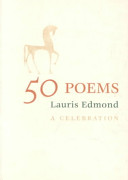
Jenny knew I was interested in poetry and that I’d been trying to write for a while. She knew I’d been reading people like Simone de Beauviour and Anaïs Nin, and that I carried this deep-seated belief that real life happened beyond these shores. Probably in France in the 1960s, but that didn’t stop me from going in search of it. Instead of challenging me on this warped idea, she simply slipped a beautiful cream paperback into my hands the day before I set sail; a parting gift. The book was 50 Poems: A Celebration, by Lauris Edmond. As if to say, there might just be some life here too.

I took Edmond with me in my rucksack, and together we would travel through India, Nepal, Bangladesh, and later, onto the UK, where I met up with Jenny in Glasgow some years later. I never said anything to Jenny, but even now, twenty or so years later, as I write this from my home in Dunedin, I still think about that parting gift and what it taught me.

There are several poems from this book that I have continued to come back to over the years. Including this one:


Epiphany

for Bruce Mason


I saw a woman singing in a car

opening her mouth as wide as the sky,

cigarette burning down in her hand

– even the lights didn’t interrupt her

though that’s how I know the car

was high-toned cream, and sleek:

it is harder for a rich woman…


Of course the world went on

fucking itself up just the same –

and I hate the very idea of stabbing at

poems as though they are flatfish,

but how can you ignore a perfect lyric

in a navy blue blouse, carolling away

as though it’s got two minutes

out of the whole of eternity, just

to the corner of Wakefield Street –

which after all is a very long life

for pure ecstasy to be given.


Lauris Edmond


Who was Bruce Mason, and why was Lauris Edmond writing a poem for him? More importantly, who was Lauris Edmond, and how could she write a poem that had the lines “the world went on/fucking itself up just the same,” in such close proximity to “Wakefield Street”? In my extraordinary naïvety, this poem took me by the hand and said: see, there are people here that think. Here was the poet, looking and noticing, thinking carefully, trying to understand, playing, slowing reality down a little … There was a form of existential enquiry happening in New Zealand, right under my nose — I’d just been too ignorant and ill-informed (and religiously adhering to a stereotype) to take notice. Which seems to me the whole point of the poem — there is stuff happening right in front of us all the time, we’re just too egotistic or preoccupied to see or hear it.

Lynley Edmeades


‘Epiphany’ is from 50 Poems: A Celebration (Bridget William Books, 1999) and was originally published in New & Selected Poems (Oxford University Press, 1991) and is posted with kind permission from the Lauris Edmond Estate.
 

content.jpg


Lauris Edmond (1924-2000) completed an MA in English Literature with First Class Honours at Victoria University. She wrote poetry, novels, short stories, stage plays, autobiography and edited several books, including ARD Fairburn letters. She received multiple awards including the Katherine Mansfield Menton Fellowship (1981), an OBE for Services to Poetry and Literature (1986) and an Honorary DLitt from Massey University (1988). Edmond was a founder of New Zealand Books. The Lauris Edmond Memorial Award was established in her name. Her daughter, Frances Edmond, and poet, Sue Fitchett, published Night Burns with a White Fire: The Essential Lauris Edmond, a selection of her poems, in 2017.

Lynley Edmeades is the author of As the Verb Tenses (Otago University Press, 2016), and her second poetry collection, Listening In, will be published in September this year (with Otago University Press). She is also a scholar and essayist, and currently teaches on the English program at the University of Otago. Her writing has been published widely, in NZ, the US, the UK and Australia.


Poetry Shelf Monday poem: Mere Taito’s ‘Reception Frame’


Reception frame


the goose waddles

down the cobbled

sidewalk that leads

to the bath with

glass wings


it washes its pigeon

English and swallows

its honk to cluck like

a creole chicken


only the goose God

understands this


the rest of us

be silent.

stop gawking.

wait patiently.


light a warm fire

when the goose

is done


Mere Taito


Mere Taito is a Rotuman Islander poet and flash fiction writer living in Hamilton with her partner Neil and nephew Lapuke. She is the author of the illustrated chapbook of poetry titled, The Light and Dark in Our Stuff.


Poetry Shelf ANZAC poem: celebrating Lorna Staveley Anker, NZ’s first woman war poet


Ellen’s Vigil


Benjamin Isaac Tom

Passchendaele Ypres and Somme

        three ovals float

        on the cold wall

plastered whiter

         than their bones,

young, khaki’d

         their bud-tender eyes

         premonition filled.


Ellen,

Her three boys gone,

      transplanted seventy years

      from Lurgan’s linen

no longer counts crops

      in season

but digs diligently, delicately,

      digs down

              further down

      her spade searching

              her garden for

      three lost sons

      Thomas Isaac and Ben.


Lorna Staveley Anker


from Ellen’s Vigil Griffin Press, 1996

(The poem also appeared in The Judas Tree, 2013 and is published with kind permission from the Lorna Staveley Anker Estate)


I discovered the poetry of Lorna Staveley Anker in The Judas Tree, a selection edited by Bernadette Hall  (2013, Canterbury University Press). The collection claims Lorna as New Zealand’s first woman war poet. She was born in Ōtautahi, Christchurch in 1914 and died in 2000. Her father died of throat cancer when she was two and her mother took in boarders to survive. Three of Lorna’s uncles were killed in WWI and her mother, Elizabeth suffered terribly. From childhood Lorna endured a lifetime of crippling nightmares, night terrors. She married Ralph Price Anker, a student she met at teachers’ college; they had four children and adopted a fifth. Lorna began writing and publishing in the 1960s, but her first collection, My Streetlamp Dances, did not appear until 1986. Two further collections appeared in her lifetime: From a Particular Stave (1993) and Ellen’s Vigil (1996). I so loved the posthumous volume, The Judas Tree, I reviewed the book on my blog. 

Shortly after the review appeared, Lorna’s daughter, Denny, sent me a copy of Ellen’s Vigil and again the poetry resonated. Much later I found myself in the Turnbull Library doing research for Wild Honey and listening to various audio tapes. I was completely captivated by an interview between Lorna and Susan Fowke (from the Gaylene Preston Productions Women in World War Two oral history archive managed by Judith Fyfe).

There were many occasions when I was profoundly moved in the Turnbull and this was one of them. I was writing a book that engaged with the work of almost 200 poets and that required a very different focus to a book that considered a single poet or perhaps even ten. However sometimes a particular poet held my attention; I got lost in the maze and astonishments of unpublished writing, letters, interviews, diaries, scrapbooks. In Lorna’s case, to hear the poet speak was a special thing indeed. Gaylene has kindly given me permission to share some gems from Lorna on being a poet but I do encourage you to explore the oral history archive Gaylene has helped assemble.


Lorna’s father sometimes wrote poetry, ‘particularly couplets’ for her mother and her mother ‘s meals ‘were a poem’: ‘she’d pickle nasturtiums and we’d have caper sauce with our mutton’. I can just picture the kitchen: ‘The shelves in the pantry would be shiny with rows and rows of goods.’

The poem ‘Ellen’s Vigil’ stems from the time Lorna’s grandmother went digging for her war-dead sons in her garden. Lorna said in the interview that her grandmother was ‘grandmother to all mothers and wives who had lost their beloved men – she was a symbol for me.’ Knowing this amplifies the ‘buried’ grief. Lorna had lived with her grandmother and grandfather for a period from 1921; her grandmother, we hear, had favoured imagination rather than ‘strict discipline techniques’.

Lorna suffered from an eye defect which hindered her reading but at the age of 52 she began writing: she said it was strange to have a slim reading history when then, at the age of 52, ‘out burst all this language and poetry’. In her introduction to The Judas Tree Bernadette muses on events that perhaps prompted Lorna’s poetry writing in the 1960s (the death of her son Staveley aged 21 and the fact his daughter was adopted out by the birth mother) and the way she began publishing after the death of her beloved husband (1983).

She recounts an incident where her poetry was rejected as middle-class rubbish: ‘I came home and I wrote out of indignation and rejection, passion, fury, disbelief, and it was the mildest poem the most restrained tender poignant poem about the death of affection’. Writing was often a physical thing for Lorna: ‘a fusing in my head’, ‘a rush of blood’.

Lorna shared a number of things on being a poet that stuck with me. She didn’t call herself poetic ‘but being poetic means you have a different print out’, and when you write poetry ‘your mind is going sideways’.

Lorna’s family helped publish her collections while Pat White, David Howard and james Norcliffe offered help and assistance with her debut collection. Two of her poems were published in Kiwi & Emu (1989) while Lauris Edmond selected her essay, ‘Has the Kaiser Won?’ for Women in Wartime (1986).

I recommend taking timeout in the archives and listening to the interview, tracking down Lorna’s individual collections and perusing the book that Bernadette assembled with such love and care. To return to the poetry with her autobiography, to remember the impact of war upon her well being and later her writing, to consider the way words flooded out when she was older rather than younger, is to enrich reading pathways through her work.


From my review of The Judas Tree

Lorna’s poems reflect a mind that engaged with the world acutely, wittily, compassionately. There is a plainness to the language in that similes and metaphors are sidestepped for nouns and verbs. These are poems of observation, attention, reaction, opinion, experience. The starting point might be the most slender of moments — and the poetry opens out from there, surprisingly, wonderfully.

In the first section (and indeed the largest section), war makes its presence felt; from the pain of departures, to the pain of the wounded, to the ache of loss. At times Lorna filters a poem through the eyes of her young self (for example, trying to make sense of Armistice Day). At times a concrete detail makes the poem more poignant (‘her spade searching/ her garden for/ her three lost sons’). In ‘Arie’s Tale’ the detail that renders the pain sharper is the ‘tyreless rims.’ In this poem the dead are carried away on a bicycle that makes such a clatter it is the hardest thing to bear (‘He felt it wasn’t respectful/ to his customers’). Lorna’s war poems stretch in all directions — they never forget the life that goes on and they never forget the heartbreak and loss that are etched indelibly. One of my favourite poems, ‘V.E.Day … and Neenish Tarts,’ moves beautifully between these two opposing but entwined forces. From the darkness of battle (now over), the poem moves to the grandmother dancing on the bed (as warm flesh weaves/ pink circles/ under a nightgown’; and from there to ‘Let’s have Neenish tarts for tea’ (this is cause for celebration). This first section of the book is a terrific addition to New Zealand war poetry because it casts a light on women at war (even when they remain in the kitchen).


‘Vision of Escape’, a poem by Lorna

Canterbury University Press author page


Poetry Shelf guest spot: Rhian Gallagher selects Cilla McQueen’s ‘Low Tide, Aramoana’


Low Tide, Aramoana


Sky with blurred pebbles

a ruffle on water


sky with long stripes

straight lines of ripples


sky-mirror full of

sand and long pools


I step into the sky

the clouds shiver and disappear


thin waterskin over underfoot cockles here and there old timber

and iron orange and purple barnacled crab shells snails green

karengo small holes


I look up from walking at

a shy grey heron on

the point of flight.


oystercatchers whistle stilts and big gulls eye my quiet

stepping over shells and seaweed towards the biggest farthest

cockles out by the channel beacon at dead low tide


It’s still going out.

I tell by the moving

of fine weeds in

underwater breeze.


takes a time to gather these rust and barnacle coloured  whole

sweet mouthfuls


Low.

and

there’s a sudden


wait


for the moment

of precise

solstice: the whole sea

hills and sky

wait


and everything

stops.


high gulls hang seaweed is arrested the water’s skin

tightens we all stand still. even the wind evaporates

leaving a scent of salt.


I snap out start back get moving before the new tide back

over cockle beds through clouds underfoot laying creamy

furrows over furrowed sand over flats arched above and below

with blue and yellow and green reflection and counter reflection


look  back to

ripples

begun again.


Cilla McQueen


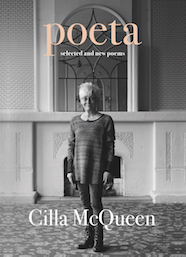
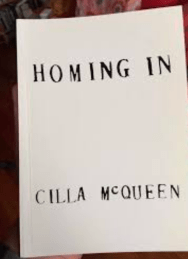
from Homing In  (McIndoe, 1982), also published in poeta: selected and new poems (Otago University Press, 2018)


From Rhian Gallagher

Sometime in the early 1980s I heard Cilla read ‘Low Tide, Aramoana’ on TV. I was utterly spellbound.

Cilla does not so much read her poems as enact them. They seem written to a music score, a sound choreography. Her work is also very visual and ‘Low Tide, Aramoana’ is a big canvas.

Whatever expectations the title sets up are given a tilt at the outset. For it is not the tide that is encountered but the sky. It is a simple notion, the sky being reflected in the water, but I experience it in the poem as if it were a brand new thing and

‘I (too) step into the sky’

In more than one way ‘I step into the sky’. The tides are a condundrum, taking place on earth yet the movement is being conducted by the moon and sun. The spaciousness of the poem on the page has me feeling this mystery all over again — my mind is up there with the moon and the sun.

The meditative opening lines are followed by a hurried, heaped-up rhythm, detailing forms and life-forms encountered on the sand flats:

‘thin waterskin over underfoot cockles here & there old timber/& iron orange & purple barnacled crab shells snails green karengo small holes’

This alternating rhythmn shapes the poem. It is a movement from a contemplative interior to the external world and back again, flowing in and out, almost as a tide itself.

On one level this is a foraging poem: going ‘out to the channel beacon at dead low tide’ for ‘the biggest farthest/cockles’. Foraging is also a metaphor for the making of the poem: the gathering is going on right from the first footstep onto the sandflats and the poem is, indeed, made of ‘whole/sweet mouthfuls’.

Some decades past before I heard Cilla read this poem again, at the Dunedin Writers Festival. It was almost eerie. The poem has a tipping point. It takes us there, way out to the edge – a brink of change, when something amazing (or horrendous) is about to happen. That moment when ‘we all stand still’.

I may risk overloading the achieved simplicity of the poem. The environment it brings to life, the multiple invocations it sets going in me, is why it has stayed close. Cilla’s pared-down language and accessibility belies an underlying multi-layered sophistication. ‘Low Tide, Aramoana’ has never given up all its secrets.


Rhian Gallagher


Rhian Gallagher‘s debut poetry collection Salt Water Creek (Enitharmon Press, 2003) was shortlisted for the Forward Prize for First Collection while her second collection Shift, ( 2011/ 2012) won the 2012 New Zealand Post Book Award for Poetry. Gallagher’s most recent work Freda: Freda Du Faur, Southern Alps, 1909-1913 was produced in collaboration with printer Sarah M. Smith and printmaker Lynn Taylor (Otakou Press 2016). Rhian was awarded the Robert Burns Fellowship in 2018.

Cilla McQueen is a poet, teacher and artist; her multiple honours and awards include a Fulbright Visiting Writer’s Fellowship 1985,three New Zealand Book Awards 1983, 1989, 1991; an Hon.LittD Otago 2008, and the Prime Minister’s Award for Literary Achievement in Poetry 2010. She was the National Library New Zealand Poet Laureate 2009 -11.  Recent works include The Radio Room (Otago University Press 2010), In A Slant Light (Otago University Press, 2016), and poeta: selected and new poems (Otago University Press, 2018).


otago693326-1.jpg   Screen Shot 2019-04-23 at 3.33.19 PM.png


Poetry Shelf review: Lynn Davidson’s Islander

Islander__83638.1547675687.jpg


Lynn Davidson Islander Victoria University Press 2019


Time goes slower in the sea

and faster in the mountains.

Physics has taken over

where poetry left off.


from ‘Pearls’


Lynn Davidson’s terrific new poetry collection, Islander, travels between Scotland and New Zealand, between the place she grew up (Kapiti, Wellington) and the place she now lives (Edinburgh). Divided into five parts the poems move amidst light, fire and earth. Like Dinah Hawken, Lynn pays close attention to the world about her, the physical world, the inhabited world, a world buffeted by weather, seasons, time. Her poems are layered and fluent and measured.

The opening poem, ‘My stair’, sees the speaker (the poet?) looking out, in an eerie night light, from her second-floor window onto the bus depot. She evokes a scene through pitch perfect detail and a surprising simile (‘buses lightly lumber / into the yellow depot / like bubbles back / into solution’). But the surprise for me, the point of ruffle and ripple, is the mention of the father:


My father’s heart is failing, he fills up


with fluid (like an empty bus fills up with light?)

I look for flights.


One of the pleasures of this collection is the eclectic movement. There is movement born from departure, from the sway between presence and absence, birds in flight, the ripple of water, the movement of a musing and contemplative mind. A number of poems struck me. ‘A hillside of houses leave’ is mysterious, magical and rich in movement. Like many of the poems, there is a link to birds that might be symbolic but that is always physical.


Steeped in old weather the wooden houses

remember their bird-selves and unfold

barely-jointed wings.


The poem holds the conundrum of life – its impermanence, its fragility and the little anchors, the necessary bones.


People curl inside

the bones that keep them

that will not keep them long.


The presence of birds is fitting in a collection that navigates islands – the birds might signal the ocean’s presence, the multiple flights, the multiple nests, the bird on the poet’s sight line, the bird carried by heart, the bird house and the bird lungs.

I began to see the collection as a poetry chain; where this poem rubs against that poem and that poem rubs against this. Here the light of this day touches the light of that day which touches the light of the day before all the way back to ancient times. Dinah has a poem dedicated to her and I am reminded of Dinah’s ability to evoke the spare and the luminous within a cluster of lines that then open out with absorbing richness. Lynn is similarly dexterous. This from Lynn’s ‘Bonfire’:


The mainland is rendered down

silvers and is gone.


My heart is green and raw – a pea not a heart –

front to the fire back to the wind.


The groan of stone on stone unsettles

me as I unsettle them.


Islands is also inhabited with daily lives, with anecdote and incident, thus rendering landscape humane as well as wild and beautiful. At times it made me laugh out loud as in ‘Lineage’:


I was nine months pregnant, and waiting, when the man in the

Taranaki airport shop snapped this isn’t a library you know,


and when I turned my great belly full of fingernails and teeth-in-bud

towards him he asked (hotly) if I was actually going to buy anything.


The baby made exclamation marks with its soft bones,

glared with its wide open eyes – two Os. No I said I won’t buy


my news from you.


Lynn traces family, the children who leave, the children who make home solid, the unnamed boy who names home hame, the children half a hemisphere away. This from ‘Leaving Wellington’:


Hours go by and elements still gather.

Each day my waking children, just by naming

assembled all the solid things of world:

the bath, stove, chair, the bed, the window,

the shoe, the dinosaur, the door, the wall.

Then in a kind of via negativa

they composed two empty rooms by leaving home.


I said it was an anchor but it’s not.

It’s a shadow roughly like a kiss.


This is a book to slow down with – just as you slow down when you walk the perimeter of an island – gazing into a shifting sky vista and towards the unreachable but alluring horizon line  –letting your own thoughts cascade and catch. It is a book where the view of a poem never settles but keeps revealing new lights, new joys, new surprises. I love this considered pace, this sharp revelation, this anchored heart. I love this book.


Victoria University Press author page


Lynn Davidson is the author of four collections of poetry, most recently How to Live by the Sea (2009, VUP) and a novel, Ghost Net, along with essays and short stories. She grew up in Kāpiti, Wellington and currently lives in Edinburgh.


Poetry Shelf Monday poem: Simone Kaho’s ‘Tour’


Tour

The crows will be her friends.
They are waiting on powerlines in the rain.
It’s exciting to be in another country with different birds even if they’re black and mawkish, and it’s only England, so kind of coming home.
‘Do they think dark thoughts?’
He comes back from training and through unspoken agreement she holds him at bay, at first.
Later, he says – ‘You held me off just the right amount’.
It’s the only kind thing he says all day.
She watches British bunnies run across the green British lawn in the British mist, into a British hedge.
That evening New Zealand loses.
Someone has scrawled a rude note for him on a napkin, he sees her looking and says
‘You’re laughing’.
She’s not.
She wishes she could.
I don’t wonder how he is doing she thinks ‘Now’.
It doesn’t even creak.
Her heart pulp; memories.
The overwhelming smell of little old ladies’ heads at mass at the Vatican.
Crouching down between acres of knees.
Him lifting her onto his shoulders, in fresh air above the churchgoers, with her battered face and oversized sunglasses.
Pope John Paul passing so close in his glass cartoon car, she could have reached out and left a fingerprint.
Her queen wave.
The ornate courtesy of him helping little old ladies over the barricades.
His beaming, bashful, face, which had gotten battered too.
Him walking straight into the Vatican while a two-mile line formed behind.
Both kneeling before the Michelangelo, not noticing marble Mary was the same age as Jesus.
Noticing nothing but the stillness of her chest
until he shifts beside her
and she wants to take it all back,
the gravel in her face,
the gravel in his.
The bottles she threw at the hostel, his blazed green eyes on the bottom bunk as the cops knocked.
The contrite blowjob in the church graveyard behind the homestay.
I can’t help being helpless, your contempt is not helping me.
She rolls her eyes as he slaps her.
That vein in his forehead is pulsing again and in a way, it has something to say and no one knows any better and
she wishes he hadn’t thrown stones at her window
and she hadn’t opened it
and he hadn’t climbed in
and she wishes she had knees instead of jelly and
she wishes she could put her heart out of her body and
let it live wild in the bush


Simone Kaho


Simone Kaho is a New Zealand poet of Tongan descent. She was born in Auckland and received an MA in creative writing from the International Institute of Modern Letters at Victoria University of Wellington.


Poetry Shelf audio spot: Nicola Easthope reads ‘Kitesurfing’


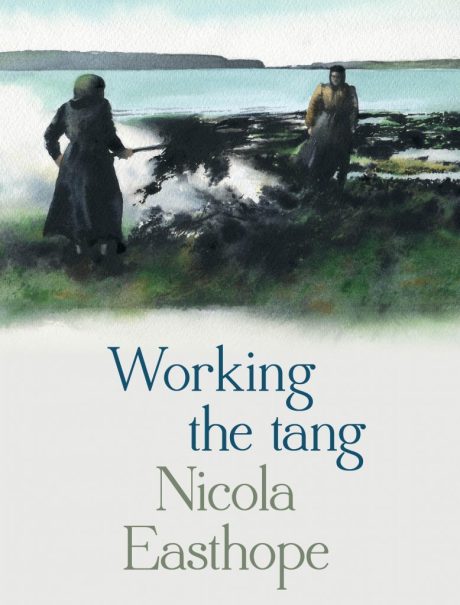
Working-the-tang-front-cover-updated-778x1024.jpg


Nicola Easthope reads ‘Kitesurfing’ from Working the Tang The Cuba Press, 2018


Nicola Easthope is a teacher and poet from the Kāpiti Coast. Her first book of poems, leaving my arms free to fly around you, was published by Steele Roberts Aotearoa in 2011. ‘Working the tang, Birsay’ is inspired by her Orcadian roots and the etymologies and experiences of the Norse word for seaweed (among other things). She was a guest poet at the Queensland Poetry Festival in 2012, and at the Tasmanian Poetry Festival in October 2018.

The Cuba Press page


Poetry Shelf noticeboard: Best NZ Poems is now live


We both know a language is waiting inside my tongue.

Please put down the adze, the skillsaw, the file:
Speak gently to me so I can recognise what’s there.

Alice Te Punga Somerville from ‘Rākau’


Kei te mōhio tāua, he reo kei tōku arero.

Waiho ki raro te toki, te kani, te whaiuru:
Kōrerotia whakamāriretia kia kite ai au he aha rā kei reira.

Translation from ‘Rākau’ by Te Ataahia Hurihanganui


Poet and novelist Fiona Farrell selected poems from 2018 that held her attention in diverse ways  – from books, journals and online sources. She questioned ‘best’ (a vague term), ‘New Zealand’ (poets needed to have been born here or lived here for some time) and ‘poem’ (she went to the Greek and cited a poem as ‘something made’).  Poetry offered her numerous reading pleasures:

Those hundreds of poems, gathered over a single year, formed a massive anthology, and if that means ‘ an arrangement of flowers’ – as it does by definition – then New Zealand poetry often reminds me of a garden I saw once, inland from Te Horo. Its flowers were a host of golden margarine containers and tin cans tacked to sticks. It was beautiful, this New Zealand version of common or garden. It was startling and provocative. What is beauty, after all? What is form and order? Why do we choose this and not that? Why does beauty exist in distortion? Why do we find it beautiful when a person stands on one calloused toe rather than with both feet firmly on the ground? Or when an apple is reduced to a crimson cube? Or when a sequence of words is forced from the patter of everyday speech? I’ve thought about that garden while plucking the blooms of 2018.


The refreshed site looks good;  you can hear some poets read and you can read notes from some poets on their selected poems (love these entries into poems). We get a new anthology – a harvest of poems that spark and simmer and soothe in their close proximity.

Tusiata Avia’s ‘Advice to Critics’ is like a backbone of the poet and it makes me sit up and listen to the sharp edges, the witty corners. There is the rhythmic hit of Hera Lindsay Bird’s love poem, there is the measured and evocative fluency of Nikki-Lee Birdsey’s ‘Mutuwhenua’, and the equally measured and evocative fluency of Anna Jackson’s ‘Late Swim’. Mary McCallum’s ‘Sycamore tree’, with its delicious syncopation and resonant gaps, first held my attention in her XYZ of Happiness. Bill Manhire’s ‘extended joke’ takes a bite at social media and I laughed out loud. Chris Tse’s poem reminds me of one of my favourite reads of 2018, HE’S SO MASC (and he has the best poet photo ever!)/. There is the inventive lyricism of Sophie van Waardenberg and the aural electrics of essa may ranapiri.
Fiona steps aside from notions of community, and questions of representation but these remain important to me. Part of the impetus of my blog is to nurture our poetry communities by showcasing and fostering connections, overlaps, underlays, experiences, events, ideas, feelings, heart. I am acutely aware that certain communities have not achieved the same representation as others, so I still check anthologies to muse upon the range of voices visible. Yep community is a slippery concept, heck I am consistently asking myself where I belong for all kinds of reasons, but as a white woman I most definitely afforded privilege, access and visibility even when I feel like an outsider. I have sat on the edge of the bed this morning stuck on the word ‘community’. Over the four years of writing and producing Wild Honey it was a key word, for all kinds of reasons, and it kept me going.


I love Fiona’s selection – the poems form an invigorating and uplifting day trip that offers breathtaking moments, surprising twists and turns, unfamiliar voices, old favourites and a welcome reconnection with some of my favourite reads of 2018 (I am thinking of Sam Duckor-Jones’s People from the Pit Stand Up for example). An anthology-garden that is well worth a day trip over Easter! I’ll be going back because I prefer to dawdle when I am travelling so still have sights to take in.


see me see me
by the sycamore tree
each child a propeller
sorry each child has a
propeller & is throwing
it up  & the dead seeds
spin & spin & spin & they
shriek my little ones & pick up another

Mary McCallum from ‘Sycamore Tree’


Visit Best NZ Poems 2018 here.


Poetry Shelf Classic Poem: Kiri Piahana-Wong picks Hone Tuwhare’s ‘Toroa: Albatross’


Toroa: Albatross


Day and night endlessly you have flown effortless of wing

over chest-expanding oceans far from land.

Do you switch on an automatic pilot, close your eyes

in sleep, Toroa?


On your way to your home-ground at Otakou Heads

you tried to rest briefly on the Wai-o-te-mata

but were shot at by ignorant people.

Crippled, you found a resting-place at Whanga-nui-a-Tara;

found space at last to recompose yourself. And now


without skin and flesh to hold you together

the division of your aerodynamic parts lies whitening

licked clean by sun and air and water. Children will

discover narrow corridors of airiness between, the suddenness

of bulk. Naked, laugh in the gush and ripple—the play

of light on water.


You are not alone, Toroa. A taniwha once tried to break out

of the harbour for the open sea. He failed.

He is lonely. From the top of the mountain nearby he calls

to you: Haeremai, haeremai, welcome home, traveller.

Your head tilts, your eyes open to the world.


Hone Tuwhare


Originally published in Mihi: Collected Poems (Penguin, 1987) and subsequently published in Small Holes in the Silence: Collected Poems (Godwit, 2011). Published with kind permission of the Estate of Hone Tuwhare.


Note from Kiri:

Hone Tuwhare has written so many beloved and iconic poems, but for me, this poem ­– ‘Toroa: Albatross’ – has always particularly resonated. It’s a poem about a bird that is so much more than a poem about a bird. The poem speaks of death, loneliness and homecoming. It crosses effortlessly from the physical world into the metaphysical. When I read this poem, I hear the voices of my departed tūpuna calling from the other side. I hear the ineffable beat of wings.


Kiri Piahana-Wong, Ngāti Ranginui, is a poet and editor, and is the publisher at Anahera Press. Kiri is currently working on the fourth edition of Māori literary journal Ora Nui, due out this September.

Hone Tuwhare (1922- 2008) was a father, poet, political activist and boilermaker. He published at least thirteen collections of poetry, won two New Zealand Book Awards, held two honorary doctorates and, in 1999, was Te Mata Poet Laureate. In 2003 he was named an Arts Foundation of New Zealand Icon Artist.


9781869795788.jpg


Poetry Shelf noticeboard: Gregory O’Brien’s launch speech for Richard von Sturmer’s Postcard Stories

9781877441622.jpg


POSTCARD STORIES…a launching speech, VicBooks, Wellington, 12 April 2019


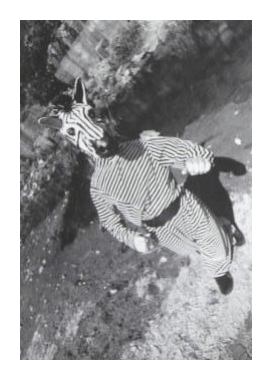
It’s over thirty years ago since Richard von Sturmer appeared on the cover of Robert Cross’s and my book about New Zealand writers Moments of Invention. Back in 1987 I remember Richard suggesting that Robert photograph him in his ‘most natural habitat’. So we went to Smales Quarry, near Lake Pupuke—a flooded, desolate, you could almost say post-apocalyptic zone—a lunar landscape with the occasional sprig of kowhai. After spending quality time in a trench-coat and mask (as the ‘Neanderthal businessman’ character, Mr Chipden), Richard donned striped overalls and a papier mache zebra-head.

Screen Shot 2019-04-17 at 7.43.56 AM.png

Was the zebra outfit a uniform or a disguise—an act of self-expression of concealment? Either way, the photo on the book’s cover raised the question, for me, of how it might be that writers, more generally, fit into this world. Richard was, and still is, proposing we should all look, listen and think beyond the obvious. Maybe the lesson of Smales Quarry is that we should look for answers in the direction of archaeology or possibly the analysis of dreams, rather than in the realms of sociology, cultural history or literary theory. The cover photo of Richard, zebra-headed and humanimal (in the adjectival sense), begged the question whether the life of the writer is ultimately an absurdity, a theatrical production or maybe even an inexplicable folly. More than anything else, the image reminds me of one characteristic of all good writers: they are up to something. They ask that we follow them somewhere new and surprising. ‘I think we should go into the jungle,’ as Barbara Anderson would have put it. Their jungle.

The cover photo was taken shortly after the appearance of Richard’s We Xerox Your Zebras appeared—a book which has long been something of a cult classic and which, infamously, upon publication prompted threats of legal action from Rank Xerox Corporation, on account of copyright infringement. Still in his twenties, Richard’s creative trajectory as a genre-bending, world-expanding writer was set, as was his now longstanding allegiance with, and commitment to, the unexpected, the odd and the illuminating. He struck me then, as he strikes me now, as an improving influence not only on the world of letters but on the world itself.

Over the three decades since then, there have been collections of poems from Richard and –to much-deserved acclaim upon its publication three years ago–a memoir about his father and grandfather, This Explains Everything. Yet, as the new book reiterates, nothing is ever really explained. Explanation is too often simply a misreading, simplification or a reduction of the matter at hand. Reality is full of live circuitry and ongoingness and expansiveness. We reach conclusions at our peril.

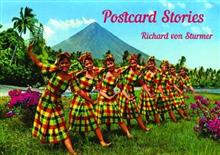
Richard’s books are working documents of a life-in-progress, a sensibility in the making and constant remaking. Reality is put, much of the time, through a Zen Buddhist filter, yet his writing can be as rowdy and colourful as the line-dancing Filipino women on the cover of Postcard Stories. Such a paradoxical, contrary state remains at the heart of his creative project. Also worth noting is a curious propensity for the transmutation or transubstantiation of the mundane or the misguided into a state of meaningful joyfulness.

What sort of narratives are on offer in Postcard Stories? Are these stories about postcards or inspired by postcards—or are these the stories the postcards themselves might have told, if they could speak. Through the first half of the book, Richard performs a visual/verbal two-step, offering short sequences of text—a hybrid of short story and  haiku—to enhance, elaborate upon, subvert and embrace the images which they accompany.


Quickly enough, the book gets one thinking about the nature of postcards. It becomes a protracted meditation on that endangered if not dying species. In the era of the jpeg and digital file, postcard stands are becoming fewer and further between. Postcard Stories offers the gentlest of interrogations, a backward glance at these printed images, their industry and their format. It asks questions, but without, of course, requiring any kind of answer.

Most of the time, postcards relate to a specific location yet, as this book manifests, they often reflect a certain lostness, aimlessness, waywardness. You would not want to use them to get your bearings in the physical world. I remember, years ago when Jen and I were spending six months in the South of France courtesy of the Katherine Mansfield fellowship, Richard sent us—in Menton—an antique Greetings from Menton postcard which he had procured from a South Auckland second hand shop.  As Richard’s new book attests, postcards, like the rest of us, lead paradoxical, complex and unreliable lives. In his bright and user-friendly introduction, he goes so far as to describe postcards as ‘cells in a giant, universal brain’ then adds, instructively: ’I like to dream with postcards’.

Traversing such inner and outer realities, the texts in Postcard Stories feature a surprising number of flowers. Ditto monuments, towers, clocks and water features. In deep amidst the imagistic ebb and flow, we are asked to consider how flowers flower differently in words than they do in pictures. We are back in the quarry. We are back at the beginning of the world, and the beginning of the word. We are once again keeping company with a zebra-headed youth in his wasteland-quarry. Yet we are also in the world of a film-maker, one half of the Humanimals who is now one half of a group called the Floral Clocks (greetings to the other half, Gabriel White, here with us tonight)… We are in the world of a man- or person-of-letters, an exemplary citizen of Aotearoa, a Buddhist, activist, free radical and traveller in the universe of postcards; a surveyor also of the lives contained in these most wistful of images and of the lives that continue to swirl around them long after they have been posted, received and put to one side.


Gregory O’Brien


.