Tag Archives: Paula Green

Poetry Shelf celebrates The Venetian Blind Poems: a gathering of illness poems

The Venetian Blind Poems, Paula Green, The Cuba Press, 2025

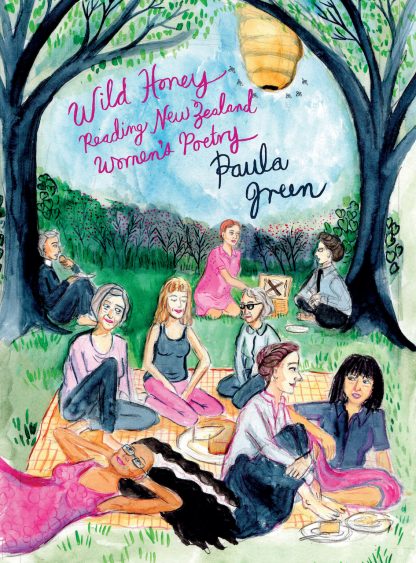
When I wrote Wild Honey: Reading New Zealand Women’s Poetry (MUP, 2019), I built a house, dividing the book into rooms, and then moving through open doors and windows to the wider world. The book was neither a formal history nor a theoretical overview of New Zealand’s women’s poetry but a way of collecting, building recouping valuing the poetic voices of women in Aotearoa. As I moved through the rooms in the house the themes accumulated: politics, poetics, love, the domestic, self, relations, illness, death, location, the maternal, home, voice.

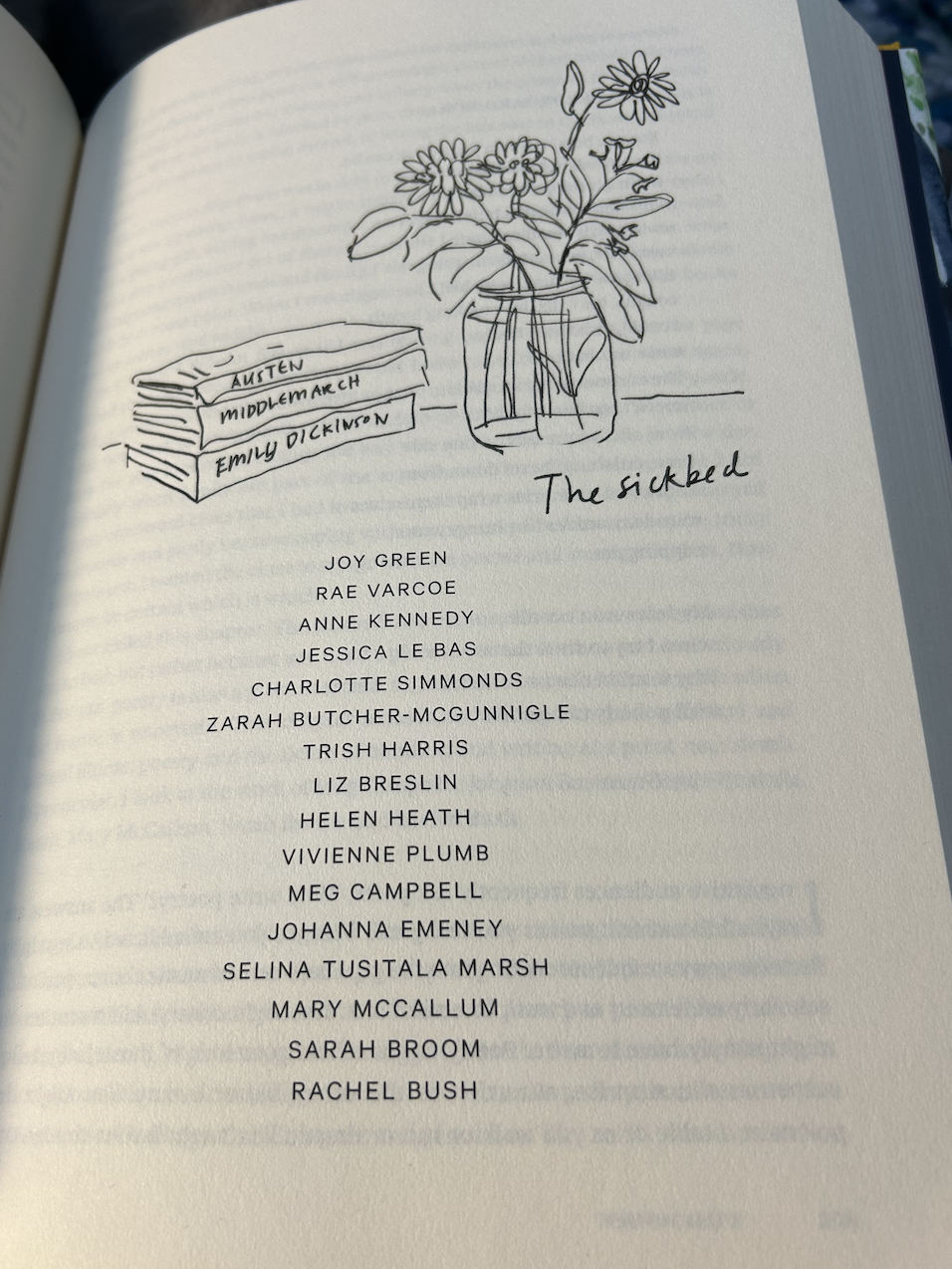
The book came out in 2019, not that long ago, and I was interested to read ‘The sickbed’ chapter again. I began the chapter by saying inquisitive audiences often ask, ‘Why write poetry?’. I still claim the answers are myriad: it makes us feel good, we are addicted to wordplay, we can squeeze writing a poem in between domestic chores, parenting, scholarly endeavour, work commitments. We might crave public attention, awards, good reviews. We might simply have to write. Our poetry might reflect a love of music, storytelling, suspense, wit, surprise, attraction to the unsayable or beauty. We might write poems at the kitchen table, in our head as we walk, run, dream or dillydally. We might favour condensation and pocket size writing or expansion and long sequences. We might write from a sick bed.

My collection Slipstream (AUP, 2010) came out of my breast cancer experience. I refer to it in Wild Honey: ‘poetry was an energy boost, a way to enhance my sense of wellbeing’. As I wrote, at least a year after the experience, I did not feel I was writing poems – nothing on the page earned the label ‘poem’ in my view — but I was conscious that the white space, the juxtapositions, the assembled lists and the melody were reaching for the poetic. I did not want to summon the dark, middle of the night slumps, but rather to show illness can change the way you see the day as well as live the day.

The Venetian Blind Poems is a little different in that I wrote it in the moment, in hospital and then back home on the recovery road. But I recognised similar motivations to write.

My new collection has been out in the world for a fortnight now, and it feels so very special. To be in Motutapu Ward and the Day Stay Ward this week, signing copies for nurses, hearing them read fragments aloud, reminded me that poetry is an incredible way of connecting. I am still in a thicket of appointments as I fine tune the road ahead, but this fortnight feels like like my time in hospital, when so many poets sent me a poem in a card. The emails you have sent me these past two weeks, so thoughtful and caring, have shone fresh light on how and why poetry is a gift. On why we write and sometimes publish poetry. I will treasure your emails for a long time (and reply soon)!

More than anything, The Venetian Blind Poems is a way of saying thank you to the doctors and nurses who have given, and are giving so much. I offer an enormous bouquet of thanks to Mary McCallum and Paul Stewart at The Cuba Press, for the beautiful book, and for inviting such terrific responses to post on social media by poets who have read it.

Now its back to normal transmission! I have new ideas for Poetry Shelf bubbling like my sour dough starter, manuscripts to finish, a treasury of books to review, emails to answer, a few more appointments, and most excitingly, I am ready to get my secret seedling idea off the ground: Poetry Shelf Goes Live. Yes! Soon I will be back in the world organising live poetry events around the country.

A cluster of illness poems

The waiting game

begins with someone calling your name before you
wait to have your blood taken in a windowless room.
Wait for the stultifying thoughts of red and disease
to pass. Wait for the phone call, for relief to wash
over you. And while you are waiting I recommend you
dance like the memory of sweat easing down his
throat; roll open like the drum beat of your limbs
in sync; tear through your wildest nights, still lit in
hopeful neon; cry like the Christmas you lost your
last grandparent; and sing like the forgotten violin
slowly coming undone in your muscle memory.
If you do not allow yourself to sleep in peace
with your worries, you will find yourself awake
at the bottom of a very deep, very secret lake.

Chris Tse
Turbine, 2014


A Final Warning

I walked past the stars
the silence of grandfathers

I was going somewhere but where

I went left at first then right
then way off course then back to somewhere

near the middle
did this mean I was ready to die

well they’ve been testing me for everything
I think I’ve got the lot

Bill Manhire
from Honk Honk, The Anchorstone Press, 2022

The Night Shift

I wake on the ward, afloat on ketamine, fentanyl,
see sky-blue morphine swifts roost nearby
in pleated paper thimbles

and some uneasy instinct tugs my gaze
to a scuff mark on the lino floor.
Coal-dark, it smolders. I stall.

A voice reassures me it’s just a graze
left by the wheel of some routine machine:
IV, PCA line, heart monitor screen.

Yet as I ease deep-cut core and leaden legs
over the distant side of the high bed
I can’t shake this need to stare

not quite in fear: not quite.

For last night, creatures came.
They arrived en masse, nodded, swayed,
pressed into each dimmed cubicle,

their copper eyes bright-candled,
lips pouched over strong, proud teeth,
their heads bowed in silent inspection;

marmalade lions with oxen feet,
crested birds with antlers, candy-pink teats,
all crowded, crowded round each bed

as the window in time was fast contracting,
and they wanted us to see before our minds
sealed tough with the fibers of logic, denial.

Their fur packed tight as green florets on catkins.
Their horns, colossal black spikes, gleamed like grand pianos.
Such mass and strength in their embedded weaponry,

yet still, they withheld their crush and maim.

The breath and bunt of their herded skulls
said we are the unbroken in you, don’t be afraid,
and I saw through the seep of dawn

that soon like guardians they will gather
each one of us, our failing forms absorbed
into their warm, strong-walled veins

until we too watch
each figure on the bed
as something invisible shifts
in the intricate balance of matter and spirit.

So it is awe, not dread, that asks me
to leave the ground undisturbed
where they gathered,
to skirt carefully the sign one left
like a scorched hoof print
as if they had stood in fire
to show they bear time’s pyre for us,

our wild sentries, our wild sentries.

Emma Neale
from Liar, Liar, Lick, Spit, Otago University Press, 2024

(A lifetime of sentences)

Soon, I could leave my body without prompts. The artist’s concept of the birth of a star, or I broke my name until the fibres separated and lost their coats. My thirst for windows kept me indoors. My gaze wandered across the suburbs of childhood, faces stammering with shyness, bodies masquerading as furniture. Initial mass and luminosity determine duration, but my sensibility comes to require an object. Here, the word “system” implies a level of certainty that is unwarranted. Some of those memories were not written by me, so they are memos, at home on my desk, but still authoritative. Now, instead of a pupil, there’s a screensaver. It was late. The room was empty. A lifetime of sentences which at first glance seem superfluous, but whose value is later understood. One thing leads to a mother. Soon enough, a flock of children came running and tapped on the glass. When I reached the bottom of the stares, I looked up.

Zarah Butcher-McGunnigle
selected by Kiri Pianaha Wong and was published a fine line and also Best NZ Poems 2011

it is a wedding cavalcade
in which I take your day of birth
and marry it with ten pink tulips
to mine     look, behind us on the road
sadness and unutterable joy
leaping over the rocks
how we were those people in the crowd
unmindful of everything 
except stepping along together 
under our parasols
what’s wrong with that?
see, the road is still there
still ahead and behind
losing its mind and leaping
over the rocks with its train
of clowns who are careless
careless careless and will never
behave any differently
believing themselves arm in arm
with all they need
to sustain life on a distant planet
choogaloo, this is all you need
tulips and a parasol
to keep off the bigger bits of debris
falling out of the sky
don’t be sad
there is every chance 
we are just now resident
in two minds regarding each other
tenderly, quizzically, uproariously
as a wedding cavalcade

Michele Leggot
from Milk & Honey, Auckland University Press, 2005

Press palm against skin
feel its breathless sprinting

            count 230 beats in a minute
            count six sibling arguments
            count four gecko squawks

gulp two glasses of water
phone the absent dad three times
return to the couch

           count 194 beats—and whoah
           with the flutter of a moth
           it slows down to a jog

steady rhythm of 75

Fire heart    
                          Sea heart   
                                             Earth heart

Calm waters as a child
now more fire than earth
chased by a white wolf

Want to feed my child
             ruby corn        raspberries
red meat        cherry tomatoes
             pomegranate bursts
sugar and acid
enough to woo a rebel

The heart heals itself
between beats, reassures
Elizabeth Smither

Mikaela Nyman

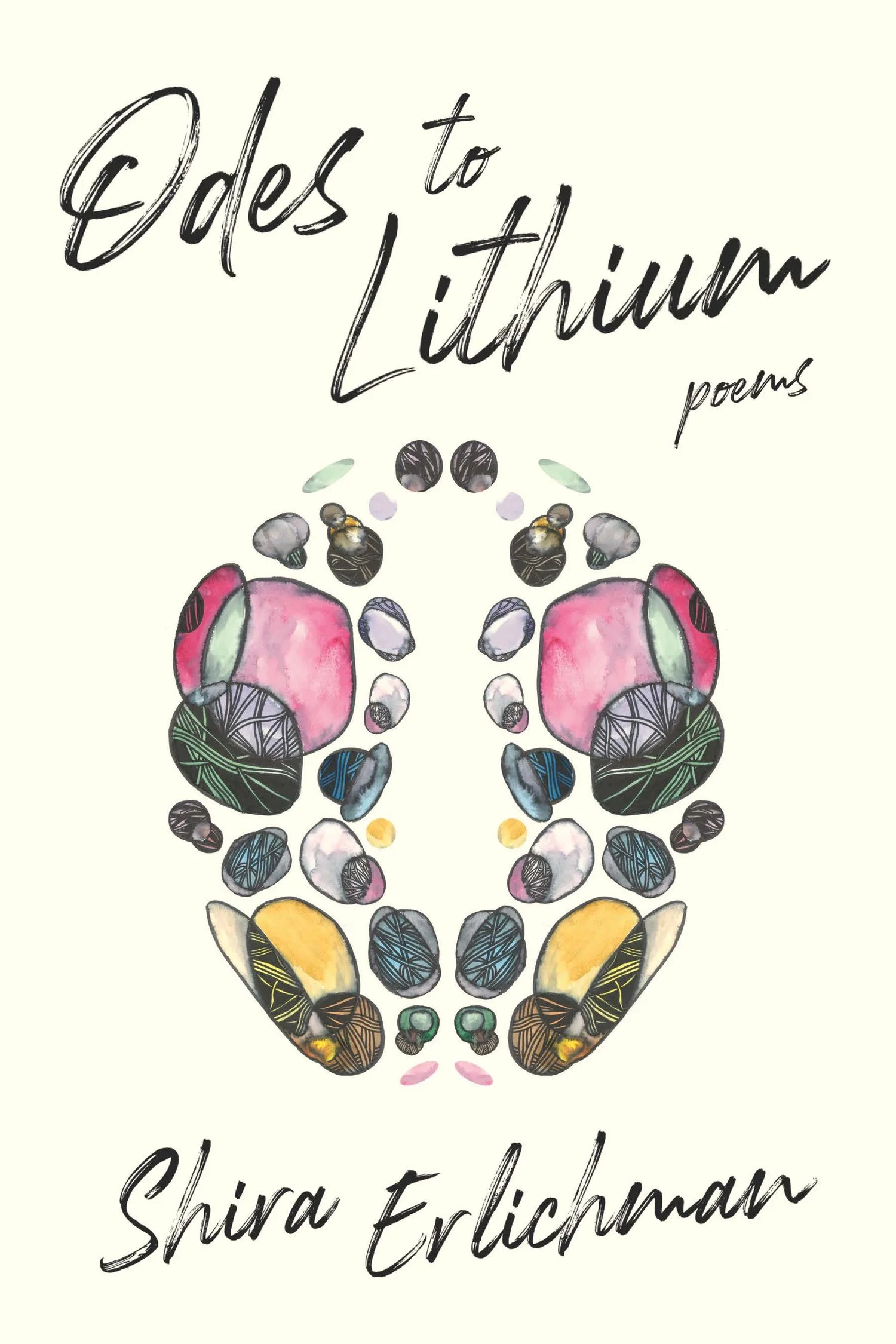
Amy Marguerite picked a poem from Shira Erlichman’s Odes to Lithium, a book I now have on order! But sadly I didn’t manage to get permission to post the poem but you can listen to Shira read it here.

Self-Affirming Mantra

I was searching my symptoms online. Disturbed sleep led to fatigue which led to post-viral condition and also to alcohol abuse and liver disease and unthinkable cancers which all led to conclusions about society and how one operates in it, how someone can be rational and maladaptive at the same time, how resilience is just a word in a PowerPoint, how years of work go into the manufacture of one unit of anxiety (a person), and how each unit, although similar to others in many ways, is unique, the product of a freakish and golden permutation of inputs, which led me back to my usual searches for wars and politicians and racing drivers and recipes and animals and islands and colours.

I went out into the day with my symptoms. The sun made the swans look like harps. I appreciated the silhouettes of buildings. I scrumped apples from over a fence. My symptoms were still with me but also not with me. I was loving them. I was setting them free.

Erik Kennedy
from Poto | Short (Te Herenga Waka University Press, 2025)

Paula Green in conversation with Anna Jackson
A collage conversation with nine poets
The Cuba Press page

Poetry Shelf celebrates The Venetian Blind Poems with a collage conversation with nine poets

The Venetian Blind Poems, Paula Green
The Cuba Press, 2025

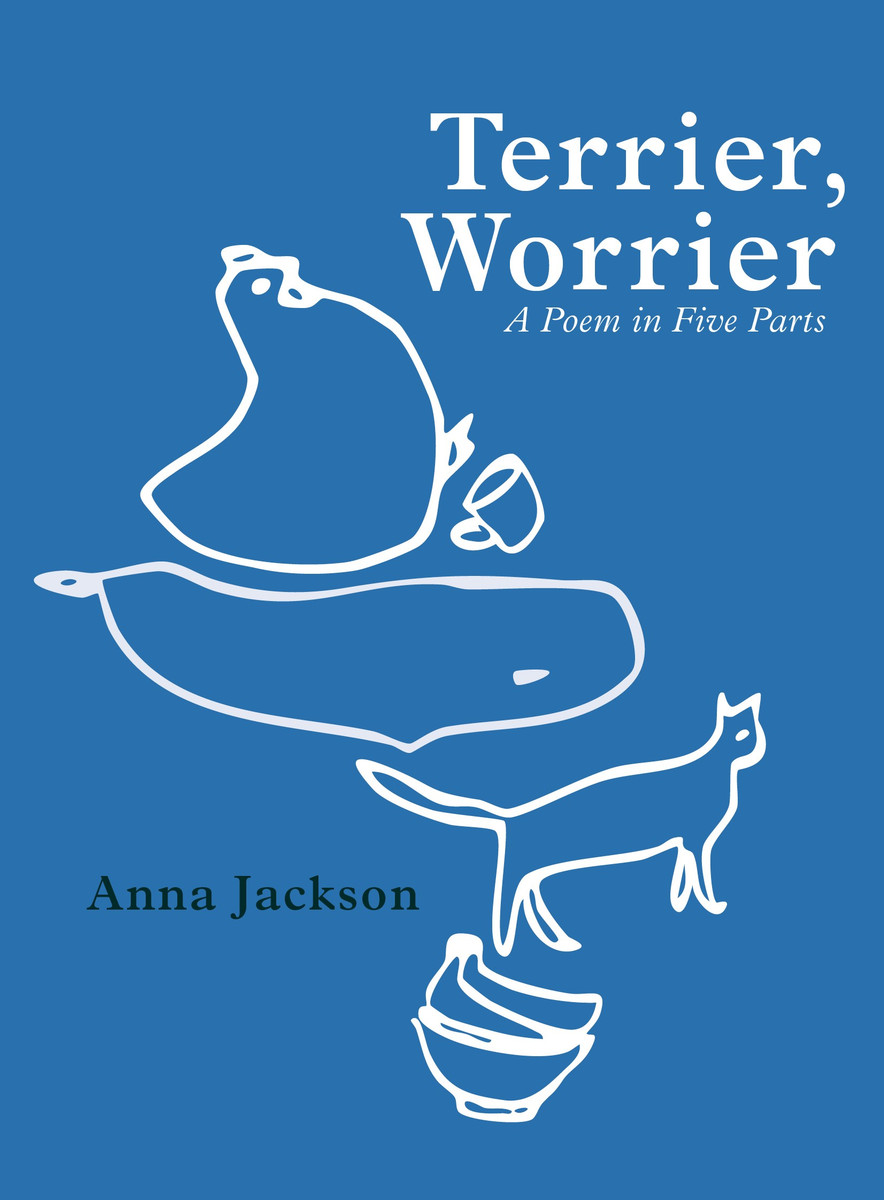
Later in the year I am planning a number of Poetry Shelf live events to celebrate poetry voices in Aotearoa. This month I have a new poetry collection out but my energy jar and immunity is not quite ready for book launches so I have invented three celebrations for the blog. On Publication Day (August 1st), I posted an email conversation I had with my dear friend Anna Jackson, a conversation that celebrates our shared love of writing and our two new books. Anna’s Terrier, Worrier (Auckland University Press) and my The Venetian Blind Poems (The Cuba Press).

For my second feature, I have created a collage conversation by inviting some of the poets whose books I have reviewed and loved over the past year to ask me a few questions. It gives me another chance to shine light on the extraordinary writing our poets are producing. I have kept the conversation overlaps as I find something new when I return to a similar idea or issue.

It is with grateful thanks to David Gregory, Mikaela Nyman, Cadence Chung, J. A. Vili, Rachel O’Neill, Kate Camp, Xiaole Zhan, Claire Beynon and Dinah Hawken, I offer this conversation in celebration of poetry. You can find links to the reviews below. The conversation has ended up being something rather special for me. I have never experienced anything quite like it! I loved the questions so much. Thank you. Because this is a book of love, I would like to gift signed copies to five readers, whether for themselves or a friend (paulajoygreen@gmail.com).

I also want to share a review Eileen Merriman posted on her blog after reading my book, because she is in the unique position to respond to it as another writer, a haematologist and a close friend. Some things she says struck me and I refer to them when I answer a question by Kate Camp.


I’ve just finished reading Paula Green’s recently published poetry collection, The Venetian Blind Poems in one sitting. This book was an oasis in the midst of a hectic time for me (when is life ever not?); it’s not very often I can be compelled to sit for more than half an hour currently. Yet I connected with this on so many levels: as a writer, as a doctor, as a patient, as a friend, as a human. Green details her experience on the Motutapu ward, the bone marrow transplant/haematology unit at Auckland Hospital, where she received a bone marrow transplant for a life threatening  blood disorder in June 2022.

As a haematologist, I know this is one of the most challenging treatments you can put a patient through, bringing someone to the brink of death to save a life. Recovery takes months, sometimes years. The acute phase can be akin to torture, one only the recipient could ever understand. But Paula holds us close, so that we can begin to understand: ‘I return to the pain box in Dune… I am using the box/for when my ulcerated mouth pain is unbearable/last night I held the box/as the mouth pain radiated but/I didn’t put my hand in/I decorated the box/ with seashells instead’. And then we are elevated from the abyss to the sublime, because this is how Green survives, by stacking poems along her windowsill and creating word pictures in her head: ‘Buttered toast and clover honey/marmalade brain and mandarin heart’. And then, time and time again, we are brought back to the world that Green sees, from the confines of her isolation room, peering through the Venetian blinds at the world that sustains her, one second, one minute, one day at a time.

This book had me captivated from the delicious first line ‘Liquorice strips of harbour’, throughout the rough seas, eddies, near-drownings and becalmed harbours of the stem cell transplant, and beyond, right through to that hopeful last line, ‘We will be able to see for miles’. Kia kaha, Paula Green, your inner strength knows no bounds.

Eileen Merriman

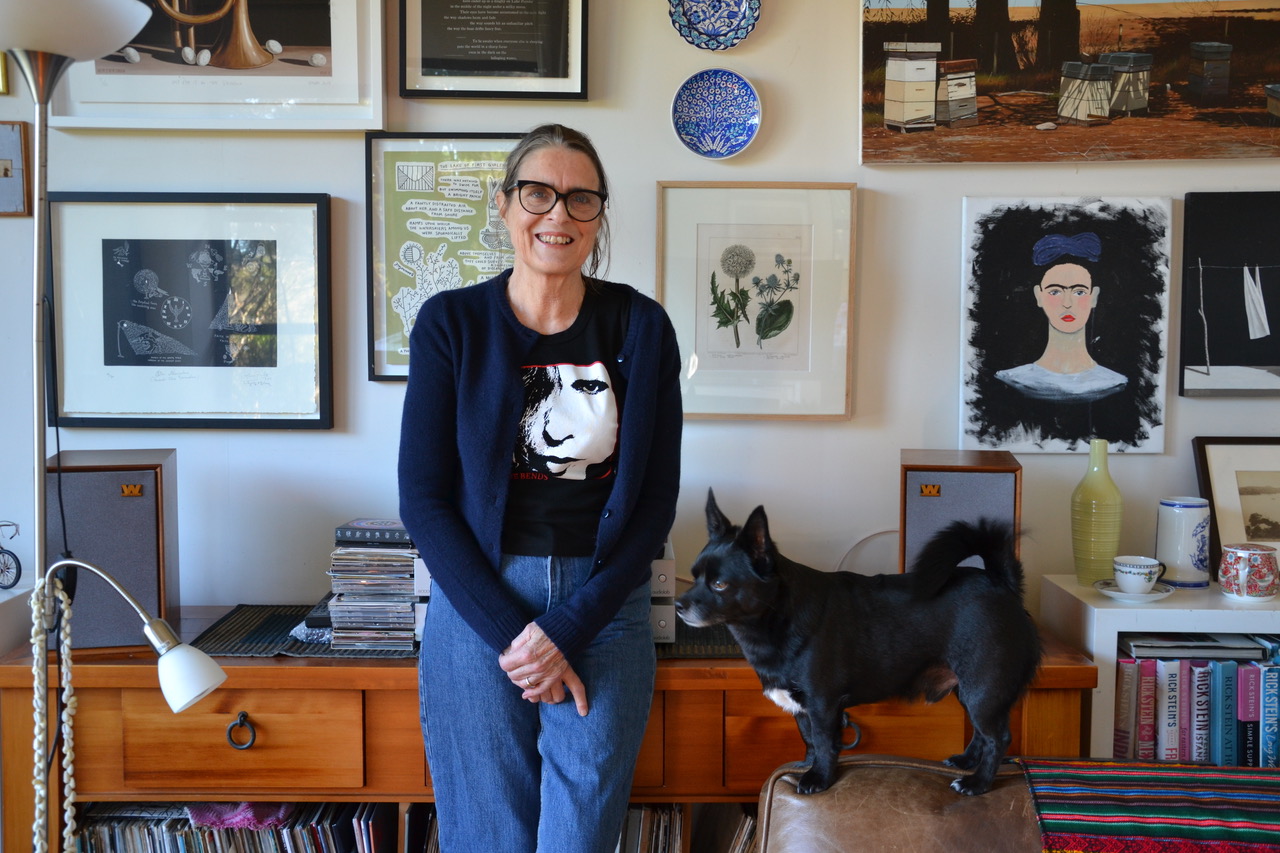
me with my daughter’s dog, Pablo

a collage conversation

Every morning I open an envelope and
read a poet’s choice inside a greeting card
I nestle into the joy
of Cilla McQueen’s kitchen table

David: Where do your ideas for your poetry come from?
Paula:  They fall into my head like surprise word showers, whether from what I see, hear, feel or read. From the world experienced, the world imagined, the world recalled.

David: How do you know when a poem is complete?
Paula: It’s a gut feeling. When it hits the right notes and catches a version of what I want to transmit. Poetry can be and do so many things, and I’m a strong advocate for poetry openness rather than limiting and conservative ideas on what a poem ought to be. Paul Stewart from The Cuba Press edited the book and he has a sublime ear for poetry and its range. You couldn’t ask for a better poetry editor.

In the middle of the night
the radio takes me to Science
in Action and I am listing
ways to save the planet
and the way dance liberates
cumbersome feet

Mikaela Nyman: These poems emerged out of a life temporarily reduced by severe illness. Yet they’re not limited by the medical circumstances, and not merely a comfort blanket, but seek to connect with the world outside. Did this happen straight away, or is it something you consciously pursued later in the writing process? 
Paula: I love this question – yes my life was limited physically, not only on the ward but on my long recovery road with a fragile immune system, daily challenges and minute energy jar. But I also saw it as an expansion of life. I focused and am focusing on what I can do, not what I can’t do. On the ward, the world was slipping in through the blinds as much as I was looking out. From the start my writing navigated both my health experience and the world beyond it.

Mikaela: Given the dire circumstances that compelled you to turn to poetry at this point in life – i.e. your personal health struggle as well as the state of the world – how important is it for you to retain hope and offer a sense of wonder in your poems?
Paula: I think it ‘s been ongoing, across decades, my impulse to write through dark and light. I think all my books have sources, whether overt or concealed, in patches of difficulty. I was writing 99 Ways into NZ Poetry with Harry Ricketts when I was first diagnosed and I never stopped writing. Maybe writing is my daily dose of vitamins. And that word wonder. Wonder is a talisman word – whether it’s the delight you might find in thought coupled with the delight you might find in awe. It is a crucial aid.

It’s the third day of the poetry season
Oh, everyone’s queueing up to read
a poem and count falling leaves

Cadence: Do you have a particular line/poem you’ve written that you think really encapsulates the collection?

I will meet you at the top of the hill
we will be able to see for miles

Cadence: What’s an experience you’ve had lately that has brought you joy?
Paula: Ah, such an important question. Every day is a patchwork quilt of joy. Take this day for example. Reading and reviewing a poetry book. Drinking coffee with a homemade muffin with sun-dried tomatoes and paprika. Making nourishing soup for lunch and sourdough with millet flour for a change. Watching the pīwakawaka dance in front of the wide kitchen window as though they are rehearsing for an special occasion. Replying to children who have sent me poems for Poetry Box. Cooking a Moroccan tagine with preserved pears and rose harissa paste for dinner and sharing with my family. Listening to Jimmy Cliff on repeat all day and imbibing the uplifting reggae beat and need to protest.

This morning I got up at 5 am to drive to an early appointment as the full-wow-moon shone in the dark, and streaks of bright colour ribbons hung over Rangitoto. It felt like my heart was bursting. I switched to Maria Callas singing ‘Casta Diva’ from Bellini’s Norma.

Today I feel happiness
as solid as a wooden
kitchen table with six chairs
and a bowl of ripe fruit

Cadence: How does a poem come to you? Quickly and all at once, or more measured and worked out?
Paula: Poems linger in my head -as they did on the ward – before I write them in a notebook. Often poem fragments arrive in the middle of the night, or when I am driving across country roads to Kumeū. But there is always a sense of flow not struggle. I love that.

I decide even stories are slatted
with missing bits, so I lie still and
fill in the gaps of my childhood

Jonah: How did your writing flow in the light and dark times, on the good
days and bad days of your recovery journey?
Paula: It flowed and flows in my head, most days, slowly, slowly. But sometimes, especially in the dark patches, I don’t have the energy to write on paper. I can’t function. Words falter. I compare it to the stream in the valley – sometimes it flows like honey, sometimes it struggles over rocks and debris. When it’s honey flow I write, when it’s not, I do something else. So I pull vegetables from the fridge of garden and make a nourishing meal to share with my loved ones. Or watch Tipping Point on TVNZ! Or listen to an audio book.


Jonah: How much did writing these poems during your personal struggle help in
your healing and recovery?
Paula: To a huge degree. And it still does. It was and is a crucial aid because it was and is a way of connecting with the world and people, of feeling love though my love of words. It’s a vital part of my self-care toolkit.

Jonah: Since this was such a personal journey for you, what was something new you discovered about yourself and life itself?
Paula: How in the toughest experience you can feel humanity at its best – for me the incredible care and patience of the doctors and nurses, no matter how tired or stretched they were (and underpaid). I loved my time on the ward. An anonymous donor gifted me life and that felt extraordinary to me. This miracle gift – it felt like I was seeing and experiencing the whole world for the first time and it was a wondrous thing. And still is (despite the heart slamming choices of certain leaders and Governments). It’s recognising what is important. Cooking and sharing nourishing food (especially Middle Eastern flavours). Watching football. Listening to music on repeat: reggae, Bach, opera, Reb Fountain, Boy Genius, Nadia Reid, The National, Marlon Williams, Lucinda Williams, Billy Bragg, Delgirl, Nina Simone,more reggae. I am hooked on Jimmy Cliff at the moment and the struggle he was singing about way back in the 1960s and 1970s: our half starved world, the Vietnam War, the broken planet, the ‘suffering in the land’. Well we are still singing and writing these same songs of heartbreak and protest.

In the basement of song
there are jars of pickled zucchini
worn shoes and well-thumbed novels

Rachel: Where does a poem generally begin for you, and has that changed at any point?
Paula: In my conversation with Anna, I talked about the way phrases drift into my head, surprise arrivals in my mental poetry room. I referred to these arrivals as gentle word showers. I have had these arrivals since I was a child. when I was in Year 8 (Form 2) my teacher, Frederick C. Parmee, was a poet! He was the only teacher who saw the potential in me as a writer and I flourished. By secondary school I was shut down as wayward and I failed school. Yet the words kept falling into my mind, and then into secret notebooks (like many women across the centuries), across my years of travelling, living in London, and finding a place in the Italian Department at the University of Auckland. Taking an MA poetry paper with Michele Leggott. Getting a poetry collection published with Auckland University Press. Extraordinary. And still the words drift and fall.

Rachel: Does your new collection speak to dynamics of patience and urgency? Along these lines, what has writing this collection made you appreciate more, or challenged you to move on from?
Paula: I think it has amplified my attraction to slowness, to patience, to writing and reading and blogging like a snail, into uncharted territory as much as into the familiar. When you run on slow dose energy, I think urgency is disastrous – I favour slow cooked braises and sourdough bread. Choosing the slow reading of poetry books, so much more is revealed. Yet urgency is both rewarding and necessary for other people, and produces breathtaking results, it just doesn’t work for me. That said, we need to unite with urgency to heal this damaged planet.

The second part of your question is crucial. In a nutshell, I appreciate life, I have had a transplant that has gifted me the miracle of life. Extraordinary. How can this not change the way I am in the world. What matters. Dr Clinton Lewis at Auckland Hospital has made an excellent video for bone marrow transplant patients. He talks about how many patients reassess what matters most. I have drafted a book, A Book of Care, it is not quite ready yet, but it is the manuscript I am most keen to be published. I offer it is as a self-travel guide, a tool kit, borrowing practical ideas that have helped me.

Rachel: In what ways do you think poetry helps us integrate and accept tension or discomfort as part of human experience and living a full life?
Paula: I love this question. I have been musing no matter what I am writing, the tough edges of the world, the daily wound of news bulletins find their way in. What difference does it make if we speak of Gaza and the abominable choices our Government is making? I just don’t know, but I do know silence is a form of consent, and that in the time of fascism in Italy, it was strengthening that some people spoke out. Every voice ringing out across the globe, in song or poem or article, every protest march and banner, is a human arm held out, a call to heal rather than destroy, to feed rather starve, to teach and guide the whole child rather than discriminatory parts.

My repugnance
at the devastation of Gaza
is not eased by the soft light
on the Waitākere Ranges
or a canny arrangement of summer nouns
or Boy Genius on the turntable
or even a bowl of chickpea tajine

 Kate: do you ever feel when you are writing about personal experiences – especially intimate ones of the body – that you are invading your own privacy? And once you have written about those experiences, do you find that the poem version overlays the “real” remembered version? Or if not overlays it, then how do they co-exist, how does the personal, private version of the experience alongside the version of the experience as captured in a poem? 
Paula: I love love this question Kate. Xiaole introduces their reading for a Poetry Shelf feature I am posting on Poetry Day, by talking about oversharing. I know this feeling so well. I feel like I am doing it in this collage conversation! To what extent do people want to hear about illness? About bumps in the road? I started sharing my health situation on the blog because I wanted people to know why I was operating on a tiny energy jar and couldn’t review quite so many books or answer emails so promptly. And most people have been unbelievably kind. I felt so bad when I hadn’t celebrated a book I had loved. And then I would think EEK! And wanted to delete my talk of cancer and transplant experiences and issues. But what I don’t do is go into dark detail. That stays private and personal. Will I have the courage to press ‘publish’ for this collage conversation! Scary.

I found it so illuminating to read Eileen’s review of the book. She writes from her experience as a writer, avid reader, haematologist and my friend. She says things I don’t have running through my head but are important! To read her words made feel so much better about how I am handling my recovery road and my own writing! I don’t use warrior language on my cancer road. I don’t wallow in what I can’t do. I have never said ‘why me?’. But I do have dark patches where I feel I physically can’t function. To hear doctors say a bone marrow transplant is an extremely tough experience is like getting a warm embrace. Recognition.

So yes, I love the idea of a private version and a shared public version – I am a writer that keeps most of my life private – my personal relationships, especially with my partner and our children. I think part of my impulse to write this experience was self-care, as I mentioned to Jonah. Liking drinking water. And how important it is for me to write out of aroha and wonder as much as difficulty. To write as you travel, in the present tense of experience. Once I had spent two years writing the sequence, I wanted to get to get the book published as a gift for doctors, nurses and other people ascending Mountains of Difficulty.

After a night of dream scavenging
I open my mouth
and out fly stars
a garden of leeks and carrots
a family of skylarks
a track to the wild ocean

Xiaole: I’ve been thinking a lot about this idea from e.e. cummings: ‘To know is to possess, & any fact is possessed by everyone who knows it, whereas those who feel the truth are possessed, not possessors.’ Did you have any experiences of not knowing or of ‘being possessed’ while working on/ living through your collection?
Paula: What fascinating traffic between knowing and feeling! Possessing the facts, being possessed. What slippery territory . . . truth yes, but even facts. Are they ever fixed or certain? Sometimes I think writing is a way of re-viewing an experience, of re-speaking it say, and it is for me an organic process. Never fixed. The versions I tell my consultant, the nurse, my psychologist, my close friends, my family, are tremble stories, never fixed, as I remember and forget and shift the focal lens, the distance finder, the colour filter. It is so very important. I almost feel like venturing to Zenlike thought by saying there is knowing in the unknowing, and unknowing in the knowing.

I lip read the cloud stories
and remember the comfort points

Claire:   I appreciated the absence of ‘explicit’ punctuation in your collection—all commas, colons, semi-colons, full stops are invisible/implicit. The rhythm and cadence of each word, line and stanza work quietly and diligently on their own, as if seeking connection and continuity. They neither ask for, nor require, anything extra in the way of emphasis or embellishment. Did you set out to write the collection this way? Or did you initially include ‘traditional’ punctuation and make a decision to remove it later/during your editing process? 
Paula: Punctuation is an aid for the poem – for me it is a key part of the musical effect – and it is a guide for the reader – where to take a breath or to pause. I have had many books published and worked with many editors and they have different, and at times, contradictory approaches. I wanted to keep faith with the first section of The Venetian Blind Poems as I gathered it in my head on the ward. Punctuation played more of a role in the second section which I wrote back home. A musical tool. A rhythm aid.

Claire: I wondered while reading The Venetian Blind Poems whether living with a painter—your partner, Michael Hight—influences your way of composing and structuring your poems? I mentioned in my FB post that something about the tone and shape of this collection reminds me of the work of artist Giorgio Morandi. I’ve long admired Michael’s paintings, too—their quiet, contemplative quality, compositional sophistication and attention to detail, the at-times unexpected juxtaposition of objects—and sense between them and your poems a kind of reciprocity or shared sensibility. 

Forgive me if I’m projecting here. I don’t mean to speak out of line or to make any assumptions… but, well, I found myself wondering about these things… how there seems to be something deeply simpatico between your work and Michael’s. And it moves me/strikes me as beautiful.
Paula: Michael and I are big fans of Morandi! We live very separate creative lives – he doesn’t enter the poetry room in my head and I very rarely walk up the hill to his studio – neither of us talk about work in process with anyone. But I have written about Michael’s work (read a review of his last Auckland show here). We have his art on our walls and it’s uplifting, a vital form of travel. I give him my manuscripts to read just before they go to a publisher! We have two creative daughters and we have shared love of books, movies, music and art. To be in New York together absorbing art, music, literature and food was incredibly special – and Ireland, Barcelona and Lisbon on another occasion – and of course Aotearoa.

Claire:  I realised when I reached the last page of your collection that I’d read the book as one long poem—a whole comprised of many parts, yes, but essentially ‘one poem’. I actively appreciated the fact that, aside from the titles at the start of each of the two sections, there are no titles to distract or interrupt the flow of the writing. This allows readers to fall into step with you and walk more closely alongside. On the last page, you seem to confirm this:

Most of this poem
is in 1000 pieces
in a box on the table

Do you see the collection as one poem?
Paula: Yes I do! One poem like a quilt made of many notes, light and dark patches. 

A poem might be an envelope 
to store things in for a later date:
old train tickets postcards buttons
a map of Rome a bookmark

Dinah: A few weeks ago I found myself asking myself what I most hoped my poems would do now that I’m in the last part of my writing life. My main hope is that a few readers will feel ‘be-friended’ by a poem of mine, in the way I have felt be-friended by the poems of others. Then, in reading your conversation with Anna (Jackson), I came across – with surprise – your idea of ‘poetry as friendship’ and Anna’s of poetry as ‘a short cut to intimacy.’ Do you have more to say about this?
Paula: Anna and I have been friends since my first collection Cookhouse was published in 1997, when I had just completed my Doctorate in Italian. Before our slow-paced email conversation, I had never thought of poetry as friendship, but the more I thought of it, the more it resonated as an idea and a practice. I realised my slow-tempo approach to poetry – to reading, writing, blogging and reviewing – is a way for forging connections, of holding things to the light to see from different angles, explore multiple points of view, experiences, hues and chords. Of listening. Our poetry communities in Aotearoa are so active and so strengthening. As this collage conversation underlines.

Dinah: And were you thinking of a particular kind of reader (say someone who had experienced serious illness) when you were writing The Venetian Blind Poems?
Paula: No, I wasn’t thinking of a reader at all. Of getting published. I write first out of my love of writing, as a form of nourishment, as a source of joy. So I guess that is selfishly writing for one’s self. Inhabiting the moment. But now that The Venetian Blinds Poems is out in the world, to be able to give copies to doctors, nurses and other people going through difficult health experiences matters so very much. And to other poets! Climbing a mountain can be hard but it can also be a source of beauty, and I am nothing, this book is nothing, without my support crew, particularly Anna Jackson, Harriet Allan, Eileen Merriman, Michele Leggott and all the fabulous doctors and nurses on Motutapu and the Day Stay Ward. All the readers and poets who contribute to Poetry Shelf as both readers and writers. And my dear family. Thank you. My dedication catches how I felt when I had finished writing the book:

for everyone
ascending the Mountains of Difficulty
and their support crews

David Gregory, Based on a True Story, Sudden Valley Press, 2024, review
Mikaela Nyman, The Anatomy of Sand, THWUP, 2025, review
Cadence Chung, Mad Diva, Otago University Press, 2025, my review
J. A. Vili, AUP New Poets 11: Xiaole Zhan, Margo Montes de Oca, J. A. Vili
editor Anne Kennedy, Auckland University Press, 2025, review
Rachel O’Neill, Symphony of Queer Errands, Tender Press, 2025, review
Kate Camp, Makeshift Seasons, THWUP, 2025, review
Xiaole Zhan, AUP New Poets 11: Xiaole Zhan, Margo Montes de Oca, J. A. Vili
editor Anne Kennedy, Auckland University Press, 2025, review
Claire Beynon, For when words fail us: a small book of changes,The Cuba Press, 2024, review
Dinah Hawken, Faces and Flowers Poems to Patricia France, THWUP, 2024, review

The Cuba Press page
Paula Green and Anna Jackson in conversation

Poetry Shelf conversations: Paula Green and Anna Jackson

In 2022 I had a lifesaving bone marrow transplant and, since then, have been on a long and bumpy recovery road. To celebrate the arrival of my new collection, The Venetian Blind Poems (The Cuba Press) I am creating three features to post on the blog over the coming month, with the help of other fabulous poets. Thank you!

The Venetian Blind Poems, Paula Green, The Cuba Press
Terrier, Worrier, Anna Jackson, Auckland University Press

‘I thought, every body is a memory palace.’
Anna Jackson

‘I will try roaming drifting stalling sailing’
Paula Green

An email conversation: Anna Jackson  and Paula Green

Paula: We have known each other for a long time, drawn together by our mutual love of poetry. When my debut collection Cookhouse was published by Auckland University Press in 1997 you slipped a letter in my university pigeonhole inviting me to afternoon tea, and we have been friends ever since. Over the past couple of years, in my isolation period, we’ve had ‘café conversations’ on the phone, filled to the brim with talk of books and writing and poetry. And of course, life. These conversations have been so precious to me.  

We both have new poetry books out this year so I thought it would be wonderful to have an unfolding email conversation where we get to talk about reading and writing poetry, and most importantly, our two new books. Like a miniature road trip with no predetermined route or lookout points.    

Where to start? For the past few days various ideas fell on the page, but I kept returning to an insistent thought: why poetry matters to me. I guess I have simple answers and complex answers. I have written poems all my life because I love doing it. Writing poetry gives me strength and joy. It feeds my love of music, my intellect, my heart, it offers surprising pathways into the past, the present, into beauty and despair, into humanity. I love how poetry can be so open, so organic.  

Why does poetry matter to you?  

Anna: I loved your Cookhouse book and I think it is funny how literally I took it – it is full of imaginary afternoon teas with writers, and you were the writer I wanted to have my own afternoon tea with, so I just asked you.  I love the way poetry opens up possibilities, on the page and in the world.  I thought about answering your question about what poetry means to me in these terms, as an intimate kind of relationship between poet and reader, and as a way of opening up possibilities for actions in the world.  But trying to answer completely truthfully about what it is that has kept me reading and writing poetry for more than three decades now, it is really more as a form of art I engage with it, rather than as a form of conversation. 

I am endlessly interested in the effects of form, and in how to arrange ideas and imagery in ways that add resonance to meaning, that give rise to a kind of beauty.  I would really have liked I think to have been an artist, and to work to create a visual language and visual beauty that would also give rise to thought, but thoughts are my material, words are what I know how to work with, or have practiced working with, and I am no closer to reaching the limits of what I can do with them.    

I’m trying to think if this is true of me as a reader of poetry as well as a writer and I think so?  I do feel a little in love with poets as a reader, and so I do also  think about poetry as a kind of conversation, or as a kind of self-expression – I can fall in love with a voice and want to read anything written by, for instance, Frank O’Hara or Eileen Myles or Amy Marguerite.  And I love Raymond Carver’s poetry because I think of him writing it – even though I have never met him (or Frank O’Hara or Eileen Myles). And when I read Cookhouse, I wanted to know you as a friend.  So it isn’t just an interest in formal arrangements – and that must be true for me as a writer too.  I am not interested in arranging just anything, I am arranging ideas and experiences of my own.  But the arrangement matters.   

Paula: So much I want to say. I am thinking of poets whose books I have travelled with over decades – Bill Manhire, Bernadette Hall, Dinah Hawken, Elizabeth Smither, Michele Leggott, Anne Kennedy, Robert Sullivan, Selina Tusitala Marsh, Tusiata Avia, Emma Neale, Helen Rickerby – whose work I love so much and with whom I have had uplifting café poetry conversations. I am thinking of the incredible waves of new poets whose work both sustains and amazes me, and I feature this on Poetry Shelf.

I am also thinking of Terrier, Worrier, and how the book’s form, with its loops and patches, its intellectual and emotional rhythms, celebrates, yes celebrates, how poetry can open and re-view worlds, both internal and exterior. So yes, an arrangement that, like a Frances Hodgkin’s still life, offers expansive movement, and out of that movement, an intoxicating interplay of stillness and beauty. And it feels deeply personal. The poetry collections that depend upon, that navigate or have poetic bloodlines in the personal in myriad ways, these are the collections I want to keep reading and re-reading.   

Anna: I read The Venetian Blind Poems as your friend, and knowing something about what you had been through, and having had many conversations with you about the politics of the time we are living in, the atrocities we have witnessed, and so of course I didn’t read it just as a formal arrangement of ideas.  But I also do love it for its composition, for the way you balance the small, vivid details of a life – the sound of air conditioning, the day-break birds – with the concerns that extend beyond your own experience, your concern for other people, the way your own life is shaped by the news you hear on the radio and read on your phone.  And I love, too, the way so much of the imagery is imagined or remembered – you can think of a beach while lying in a hospital bed, you can climb over pain like a mountaineer.  Your whole life, in a way, is there in the room with you, even while it is so taken up with the routines of a hospital stay, the comings and goings of nurses, the way symptoms of illness and recovery shape the experience of time.  It must have been a challenge arranging all these different things into a collection that moves as beautifully as The Venetian Blinds Poems does.  Do you want to talk about this?  

Paula: For me it simply comes back to three words: joy, light and love. Writing along with cooking is way of nourishing the joy, light and love that shape each day. And for me, both involve sharing. The Venetian Blind Poems comes out of a tough experience, but perhaps it comes back to beauty. I imagined (and still do) I am climbing a mountain. Yes, it is tough and there are obstacles, but in hospital I would stop on the side of the mountain and pause to look at the beauty view.  And still do. My transplant was a gift, and even though I still face daily challenges, each day is a miracle.

I think I should add friendship to my list. I’m sitting here musing on the notion of poetry as friendship. I’m heartened by the acknowledgement pages in poetry books I have read this year, pages that situate the creation of a book within a matrix of friends, along with other writers and their work.  

Anna: Oh yes, I like reading the acknowledgement pages too, especially in books by poets who are not part of my own poetry community, when they reveal friendships between different poets I love that I didn’t know were friends.  I love to think of them reading each other’s work!  Reading poems by friends, or people you want to make friends with, is a brilliant short cut to intimacy, you get to know them not only through the autobiographical details they might draw on, but through the particular way they leap from one idea to the next, the kind of images they think up, what they find beautiful in the world.

Returning to the question of the relation between poetry and beauty, there is so much beauty in The Venetian Blind Poems, in images like the moon shining through the blinds in the hospital, or the sweet-talking light that the hens respond to when you are back home in Bethells, looking out at a view you say you could make sugar from!  And there is a beauty too in the arrangement of ideas and metaphor and in the movement through time that the collection gives us.  I know you were an artist yourself before you were a poet, and your partner is an artist, so I’d be interested in what you have to say about the relationship between poetry and visual art, and the importance of beauty to you as a poet.    

Paula: I love your drawings. I have one on the wall above my desk. You should do more! There is a long line of artists in my family. Colin McCahon once lived in a shed at the bottom of my mother’s garden. Toss Wollaston is in my family tree. I would stay with my artist uncle in Mapua, he would get out his paints for me, and I fell in love with painting. When Michael and I met in London we knew we wanted to be together, and that we wanted to write and paint no matter how poor we were, and we have done that. I get to walk up the hill to his studio and get an incredible uplift from his work. And I can go to exhibitions now.

When I initially view an exhibition or read a sublime poetry book, I move beyond words, into a state of intellectual and emotional uplift. A state that may move into narrative or ideas or memory or feeling. I felt that after reading Terrier, Worrier, it took me ages to find a way to review it, to find a form and an arrangement that opened the book for the reader.   

There were so many lines I wanted to quote from your book in my review – ideas that would expand as I moved through the day. For example:

I felt as if my own life were like that dream in which you climb some stairs in your house and discover a whole additional room, or a whole

series of rooms, you didn’t know was there.

I love this idea. I definitely have rooms in my head! It got me musing on connections between writing and space and discovery. Is this key for you too?  

Anna: I think that’s a common dream, finding you have more rooms in a house than you knew you had?  And I think it does represent an opening up of the self.  I think I even read that in a dream dictionary!  And I think poetry does build rooms that expand the sense of self and gives you more room in the world.  I think art does too.  I draw all the time, actually, or often, anyway, but I don’t usually keep my drawings and I wouldn’t want to exhibit them, they are just for me, something I like doing. To be an artist I think is more than drawing, or painting, or it would have to be for me to think of exhibiting – it would be more of a conversation with the world, perhaps, than my drawings are, I would have to think in terms of audience, and in relation to other art. 

I am secretive about playing the piano too, and singing – I have no interest in performing.  But I don’t know if I would write poetry if I didn’t think I would publish it, or if I did, it would be a different kind of activity.  How strange.  What is the relation for you between writing and publishing?  Does it change the nature of the work, do you think?  

Paula: Interesting question. I have so many secret manuscripts I have written over the past couple of years and every single one I wrote out of a love of writing. Some I might like to see in book form, some I might not, but I would never sacrifice my voice or vision in order to be published. Working with Harriet Allen on 99 Ways into NZ Poetry, and with Nicola Legat on Wild Honey: Reading NZ Women’s Poetry were special experiences. Working with Helen Rickerby for many years on poetry collections was equally special. The past three years I have experienced multiple forms of isolation, but my secret writings and my public blogs have been vital engagements with the world. They both matter to me far more than being published. I love talking about poetry books by other people, but talking about my new book takes me back to such an extraordinary time, both on the ward and on my recovery road, I am cautious. Illness is a tricky thing. How do we talk about it? How do we care about it? How do we listen? 

I was thinking about secret writing, and how poetry collections, especially sequences such as Terrier, Worrier, both mind and heart fluent, come into being. Did its arrival surprise you? Like opening different doors and windows onto the world and self? Like discovering different poetry trails? 

Anna: My secret writing is mostly just stories in my head.  I’ve been interested lately in books that include day-dreaming as part of the narrative – Rosalind Brown’s Practice, about a student who is trying to write an essay on Shakespeare’s sonnets, opens out into the most extraordinary day-dreaming sequence, so true to the experience of inhabiting an imaginary self, allowing a story world to come into a kind of reality overlaying the actual reality.  And Claire-Louise Bennett’s Checkout 19 also has a story of a story inside it, a kind of written day-dream.  Both of these narratives of day-dreaming feel astonishingly transgressive to me – so revealing of an interior self!  Which is odd because what else is poetry? 

Terrier, Worrier was a surprise to me, yes!  I wasn’t planning on writing it.  But I had recorded some thoughts, over about 3 or 4 years, including the lockdown years, as a blog on my website, that was semi-public – I had a link to the blog on the website but not many people ever read it.  So it didn’t feel published, exactly, but not quite secret either.  I considered going through the blog posts and turning them into sonnets, or giving them a rhyme scheme, and I also considered expanding the ideas and developing the logic of each thought, and perhaps developing a logic connecting them to each other.  Instead, I took out an image, or a fragment of thought, or a few connected points, from each of them (or, not all of them – maybe about half of them), and pieced these extracts together in the fragmentary way the book works now, letting the connections between different ideas resonate in a more open way, and adding in additional thoughts, observations and reading notes, thinking more about the rhythm of the text than the content.  I liked the thoughts much more when they were cut short and had some space around them. 

Tell me about the process of writing The Venetian Blind Poems – they are set in the time of your hospital stay but were written later.  Did you draw on written notes or just on memory?  Were you writing poetry in hospital, in your head or on the page, or just thinking poetry, or did the poetry come later?

Paula:  I love how fragmentation, space, openness and openings work together in Terrier, Worrier, so it is fascinating to hear their role in the process of writing it. I was ‘writing’ in my mind on the ward – in one of those secret head rooms – but I was on morphine for pain and every now and then things would spill out. I would create line fragments, reciting them like beauty echoes in my mind, especially when things were tough, to help me step outside physical challenges. I think I was assembling drifts of poetry in my head. Sometimes I jotted poetry drifts in my notebook along with blood results and the water sipped.

Back home, I wrote it in a big beautiful notebook. The first section, ‘The Venetian Blinds’, was a mix of memory fragments and notebook drifts. It’s why there’s a strange rhythm sometimes, with miniature snags, jarrings and arrivals, along with sweet currents. The second section, ‘Through the open window’, is one-hundred percent back home where the miracle world is an incredible mix of wonder and fragility. It felt like I was writing poetry with a miracle pen, in a world that filled me with despair as much as it filled me with wonder.

Somehow through this, I’ve also been reading and reviewing books for Poetry Shelf. Taking time to read and write slowly. To open the possibilities for poetry book reviews wider. My slow pace and personal approach means I don’t complete as many reviews as I would like. But I love doing it so much.

I have been thinking about how writing is both words and beyond words. When I write a poem, I’m taken beyond words to a state akin to listening to music or watching pīwakawaka dance beside the kitchen window. And it’s exactly the same when I read poetry collections that carry me beyond words before returning me to the exhilarating moment of writing a review. These are the books that stick to me regardless of form or style, voice or subject matter.  I often wonder how I’ll ever manage to review such books without shutting them down for potential readers, without placing limits on the possibilities of reading. I am currently reading Josiah Morgan’s breathtaking collection, i’m still growing and I’m at the point of being beyond words I love the poetry so much. I felt this with Terrier, Worrier and ended up writing a review loop in nine parts.

Do you find writing is both words and beyond words? Every book I review – I am stalling on the word review here and might write a piece on it for the blog – I discover something different about poetry writing as a process. Any thoughts on this?

Anna: I love the idea of poetry drifts, and the idea of creating beauty echoes in the mind, and I love your account of how the book was assembled out of notes and memories, out of poetry drifts and notebook accidents, and completed in that time of miracle and fragility.  I know what you mean about the beyond-words aspect of poetry – but I don’t know if I can find the words to talk about it!  Maggie Nelson writes in The Argonauts about Wittgenstein’s idea that “the inexpressible is contained – inexpressibly! – in the expressed,” and I find myself talking to poetry students about how a poem can “mean more than it means” – stopping by some woods on a snowy evening becomes about more than stopping by some woods on a snowy evening, without ever being precisely about anything else.  In my poetry class I call this “resonance” – the way a poem kind of thrums with meaning, through the ways different ideas, or images, or events, or objects are placed together in the same textual space.  But you have to use words to make the words mean more than the words do! 

In your work, you often use abstract words in a way that seems very concrete, while filling the poems, too, with material objects that seem to shimmer with meaning.  This is something I’ve always loved about your writing.  In Cookhouse, for instance, several of the poems have an item of food as the title, then a more abstract phrase or couplet to follow:

iced water

the perpetual sense of the little piece
Relishing stroke upon stroke


gelato

habits harbouring no conclusions
in my moment of heat 

I found these poems mysterious and compelling, I loved the way the iced water or gelato anchored the lines that followed into something I could picture, but I also loved thinking of the habits that harbour no conclusions, the perpetual sense of the little piece, and how these ideas might both attach to the objects that gave rise to them but also how they might float free from them, and I found that after reading Cookhouse all the objects around me became magnetised with the potential to attach meaning.

The Venetian Blinds poems work a little differently but the effect is still to layer meaning on meaning.  There is a lot of figurative imagery, which in itself seems to me to lean towards abstraction, in the sense that as soon as you compare one thing to another it becomes at once both things and neither thing.  But you are more often bringing different concrete, material things into relation with each other rather than relating an abstraction to something concrete.  So, you write for instance:

At dawn the air conditioning
is the sound of rain on a tin roof
and then water dripping in distant bush


Or, writing about the hospital food (I found this very funny):


It’s a solid square of inedible fish pie
slathered in Thai coconut sauce that reminds
me of cotton wool and saltless sea foam

And along with the details of hospital foods, nurses coming and going, the view from the window, changing light, changing sounds, there are memories of other views and objects and occasions, and daydreams of other places, thoughts of what is going on elsewhere, so everything is at once concrete and material but also often belonging to dream or memory or imagination.  And then you are also concerned with writing about pain, illness and fear in concrete terms, imagining pain as a box, or recovery as a mountain.  And poetry itself you think of in visual terms, you talk about driving a poem at low speed so you can enjoy the view through the window, and you even have an image for the relation between the expressed and the inexpressible:

Whenever I open a poem
there’s a curious river
between what I write
and what I don’t write

Paula: Driving a poem – whether as reader or writer! Writing and reading is a crucial form of travel for me. The word that comes to mind as I reread your book again, is movement, that sweet satisfying sensation I accrue as both reader and writer. I am thinking intellectual, emotional, mnemonic, self-nourishment, musical. When I reviewed your book, I created a loop review in nine parts, and movement was a vital ingredient in each section. That and thought.

I enter your poems and I am re-viewing thought, moving across a bridge between one idea and another, along currents of thinking that expand and condense. I read: ‘every body is an emergency room’ and then ‘every body is a memory palace’. I am crossing a bridge into self and then into poetry. Could I carry the emergency room and the memory palace over to the poem? Think of the poem as emergency room? As memory palace? I love this. It resonates so acutely with The Venetian Blind Poems.

Your title, Terrier, Worrier, with its foraging dog image and fretful thinker, offers multiple gateways into movement. You write:

I thought, a terrier is a good symbol for the work of digging up
something underground but still alive.

Again I lead an idea over a bridge to self and then to poetry. To the making and the reading of a poem. And as you indicate with my collection, there are the vital anchors in a physical world. Your thinking, for example, finds roots or starting points in your hens, the birds you observe, the floor tiles, the concrete slabs you photograph, as much what you read, experience, remember.

Thinking, I am surmising, is a relative of wonder, with its attraction to both questions and awe. On each occasion I read Terrier, Worrier, I am wondering. It’s like you are opening both the emergency room and the memory place for us as readers, to let us feel and think the looping ideas, the attachment to beauty and art, to empty space and infinity possibilities.

In this piece, for example, I grasp the need for similes as much intentions or plans, especially how the similes you include add taste and texture to your curling thoughts, as though you are sprinkling grated ginger or finely chopped curly parsley over the writing, the thinking:

I thought, I feel like we ought to acknowledge our feelings,
but I also feel like we ought to then present thoughts, and
claims, that can be challenged and which could be backed
up with evidence, and we ought to act on our claims and the
implications of them. And, I thought, I feel like the phrase
‘I feel like’ ought to introduce a simile at least as often as a
thought or an opinion or a plan. I wanted to feel like a leaf
but I felt like a sink of dirty dishes.

I am about to begin a sentence with ‘More than anything …’, but what follows keeps changing, because Terrier Worrier, offers so many rewards. But I think the word I return to is nourishment. More than anything, the collection nourishes me. The idea that thought, feelings and dreaming, along with poetic devices, form and tempo, are sustenance. Poetry is nourishment, and in this uncertain world, that matters. To that I am adding preparing meals, baking bread, keeping my two poetry blogs active, connecting and engaging with family, friends and other writers.

What matters in our days? What matters in these  catastrophic times is how we nourish ourselves, each other, our planet. And writing and reading poetry is one small but vital form of doing this.

Watch Anna Jackson in conversation with Amy Marguerite and John Geraets
Auckland University Press page
The Cuba Press

Poetry Shelf noticeboard: Vaughan Rapatahana reviews Wild Honey with small interview – plus a plug for WORD!

Full review here

Vaughan Rapatahana has just a posted a terrific feature on Wild Honey on Jacket2. I am usually doing the reviewing and posting so felt nervous being on the other end of the critique. Especially when I am in a cycle of terrible doubt about what I do and write, the state of the planet, the covid issues, the political game playing at home and abroad, about whether people read things any more. I wake in the night and worry about this.

I felt incredibly moved and restored by Vaughan’s engagement with the book – by his acknowledgement that this was an important arrival in view of a history of women poets in the shadows, by his considered attention. I send a bouquet of thankfulness.

I am reminded that books are an important part of who we are – and that we must do everything in our power to create them, publish and circulate them, review them, celebrate them, even challenge them if needed. Read and talk about them. Gift them!

This paragraph in particular moved me so much – there are people in the world building houses of knowledge, peace, forging multiple connective links:

I am immediately reminded of the work of Hirini Melbourne and his concept of whare whakairo, or a carved meeting house, whereby everything in and about this construction fits into and lends support, stability and splendour to every other component. The parallels are manifest. Granted that I am transposing women poets into his words, however Melbourne’s description of te whare whakairo rings out as so similar to Green’s own kaupapa in Wild Honey, namely, “The whare whakairo is … a place of shelter and peace. It is a place where knowledge is stored and transmitted and where the links with one’s past are made tangible … [it] is a complex image of the essential continuity between the past and present …” (Melbourne, 1991). 

I also answered a few questions for the feature, after a run of wakeful nights with world and local worry, so my self-filter wasn’t on – I was answering from that secret-self-core that is private and wakes in the dark to dream, worry, invent and somehow find the truth.

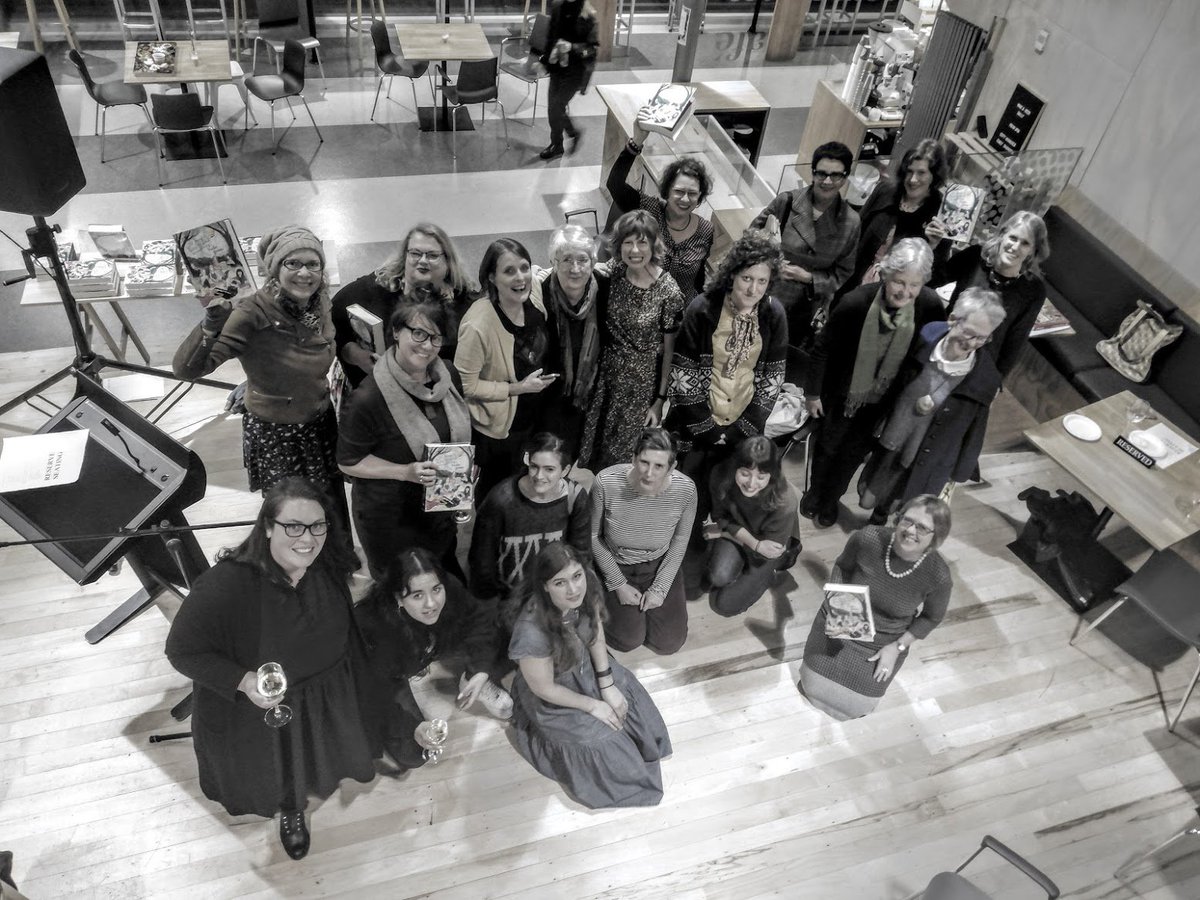
Last year I did Wild Honey events throughout Aotearoa where women came and read, and I have never experienced anything like it. Such a strong feeling as younger and older writers made connections, different kinds of voices were heard together. I felt like I was holding something enormous that I created but that it got bigger than me as so many women told me what the book meant to them. It was overwhelming and it was wonderful.

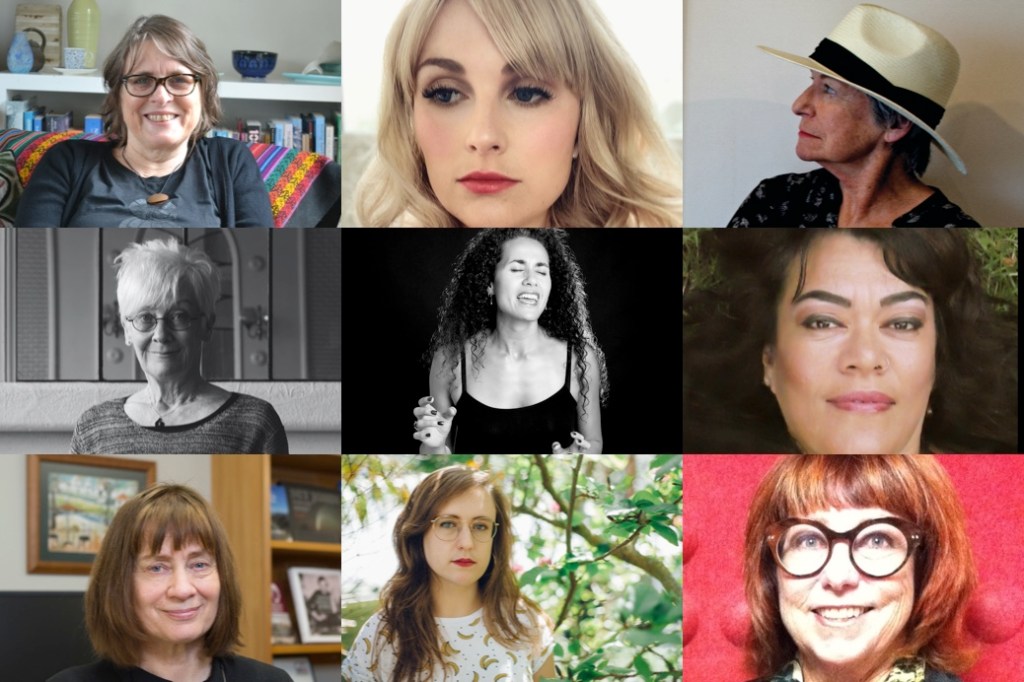
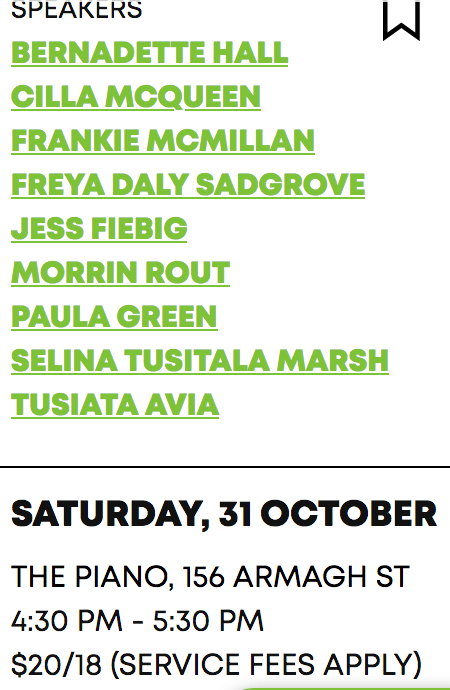
I am due to do a Wild Honey event at the Word festival in Christchurch with a stunning group of women poets and I can’t wait. Come and say hello!

Poetry Shelf on Poetry Day: On launching Wild Honey


EBeW2gFVUAARgPb.jpg


Last week I launched Wild Honey in Auckland and Wellington and I have never experienced anything like it. It was a long time in the making – four years writing and researching – and several decades reading New Zealand poetry and germinating ideas. I faced all kinds of hurdles – notably a string of accidents and illnesses – that made the project tougher. But ever since I was a young girl words have been a primary love. Writing gives me energy, it makes me feel good, it connects me with the world when I am primarily drawn to a quiet, private life. Through my schooling years you would have to say I was misfit – for all kinds of reasons – and I had little confidence in what I could do. To be an awkward teenager and have my Y12 English teacher tell me in front of the whole class I would never get anywhere in the world writing as I did was a cruel blow. I pretty much failed school and all my writing was stored in secret notebooks.

A turning point for me was going to university in my thirties and studying Italian. I first thought I would do one paper but I ended up doing full degrees until there were no more to do. Moving into another language was the best thing I could have done. I loved reading Italian literature, watching Italian movies, spending time with the ideas and art of the Renaissance, and the women poets, but the language itself was an essential joy. To speak in different rhythms and musicalities (always rhyme) was an epiphany.  To read Dante, Calvino, Ramondino, Durante and copious women poets and novelists refreshed my relationship with English. I just had to write poetry. I still didn’t feel like I belonged anywhere but writing was both my anchor and my sails. I discovered the poetry of Dinah Hawken (Small Stories of Devotion in particular), Fiona Farrell and Michele Leggott, and so began my personal quest to read as much New Zealand poetry as possible. I read poems regardless of gender but I was committed to reading poetry by women because poetry by women had been served so badly throughout the twentieth century.

I want to thank my extraordinary Italian lecturers with whom I studied, wrote theses and taught – Bernadette Luciano, Mike Hanne and Laurence Simmonds – who allowed an awkward nonconforming student to find her way and excel. Wild Honey is in such debt to you. My Italian years shaped me as a writer unlike any other.

And now Wild Honey is out in the world. I have created events to celebrate its arrival,  done interviews with attentive reviewers and am watching the book find its way into the hands of readers. It is both wonderful and overwhelming. Nerve wracking. Exciting. Exhausting. Energising.

I don’t know how to explain it but there is still a bit of that shy awkward girl in me – who favours staying at home with family and having one-on-one conversations with friends rather than big social / public occasions.

At my launches I invited around twelve poets to read one of their own poems and a poem they love by a local woman. In the middle I had a brief conversation with Selina Tusitala Marsh (Akld) and Helen Heath (Wtn). In both cities the poets reading offered a kōrero: for me, for the book, but most importantly for women. And they were all speaking from the heart; starting with the book but going beyond the book. Helen suggested that Wild Honey was just the beginning. More books would be written. More houses built. I love the prospect of different perspectives, different houses, different structures, different voices.

Dinah picked out the word ‘household’ and talked about the way Wild Honey was ‘holding’ women together. To me it felt like the whole room was ‘held’. In Wellington the readers crossed generations: from Fiona Kidman, Rachel McAlpine and Dinah Hawken to Sugar Magnolia Wilson, Tayi Tibble and Gregory Kan (reading one of his magnificent Robin Hyde poems). I can’t underestimate how significant this was: to have our poetry elders embracing our young voices and to have our young poets blown away by women who have paved the way. The audience too was a terrific gathering of poets of multiple generations.

It made me want to do more – to bring poets together across generations, cultures, styles, schools, cities and so on. To pay attention to the way poetry is multiple conversations, connections, communities.

In Wellington, mid event, Anahera Gildea got on her phone and asked Hinemoana Baker to send her Ihumātao poem from Berlin. Hinemoana was now in the room. We loved that. We were crossing oceans and then being carried to the whenua where poets are gathering. A similar thing happened when Grace Iwashita Taylor read in Auckland.

A key point with Wild Honey is that poetry establishes many resistances, homages, repetitions, discoveries, existences, differences, residencies. It is ‘an open home’ to borrow a phrase from Sally Blundell’s terrifically attentive Listener review.

At my Wellington launch I confessed I had deleted all the toxic anecdotes from Wild Honey – the scenes where men have muted or sideswiped me or other women – because I wanted my book to work differently. I wanted my book to lay down a challenge, not through toxic attack and deconstruction, but by writing out of love and connection. Is it possible? Can you write a book that challenges authority and injustice by writing out of kindness? Can you refresh the academic page by creating hybrid books that call upon scholarship, research, autobiography, biography, history, close reading, a resistance to vapid jargon and women-deleting theory? My time with Italian women writers and philosophers showed me you can think and write outside the academy as well inside it.

That night, the night of my Wellington event, I was awake pretty much until dawn, overwhelmed by the aroha in the room and musing on my book and its intentions. I started crying without knowing why. I was thinking that sometimes we do have to challenge authority and injustice in strident voices. I should have said that out loud. I was also mourning the exceptional women who aren’t in my book – the rooms and objects I had to leave behind. In the middle of the night it feels unbearable.

In the light of day when I am still overwhelmed and astonished at what I have written, I keep returning to the idea that Wild Honey comes out of the awkward girl and the love she felt for words and their power to restore and energise and connect.

In Auckland we were running over time (not excessively!); everyone was saying things that needed to be said but, because we were in Auckland Central Library with an 8pm closing time, I felt I needed to ditch my conversation with Selina. The kōrero to that point was heartlifting. Young Pasifika women acknowledging their place in the room, in Wild Honey and in poetry communities. Courtney Sina Meredith began the event by reading a  poem by her favourite poet, her mother Kim who was in the room. Johanna Emeney concluded the event by reading a poem that pays tribute to her mother, no longer with her, and Elizabeth Smither’s ‘My mother’s house’. A maternal full circle. Breathtaking, evocative, moving. Each poet invited another woman into the room through the poems they picked (Tusiata Avia, Lauris Edmond, J C Sturm, Robin Hyde, for example).

At the mid point, when I told Selina we needed to ditch our conversation, she stood up, pulled me next to her heart and said we were going to talk. She said, however, before we talked, she and I would stand in silence for 30 seconds and then invited everyone to send me their love. I have never experienced anything like it. A packed room looking back at me with warm, loving faces. People I didn’t know. People I did. I was reminded that when I was in the radiotherapy machine I had imagined a cocoon of light spinning around me and I attached each hug I had received to the spinning light and the cocoon became one of love and when I left the room I felt light and enlivened.

Wild Honey is bigger than me. On the day of my Auckland launch I baked a loaf of bread as I usually do each day (I bake grainy seedy breads in a bread maker and sour dough loaves).  But I had forgotten to put in yeast, sugar and salt so I baked a hard brick! I began musing on how Wild Honey was like a sour dough loaf. l gathered flour, salt and water but it was activated by the wild yeast in the air. There is something in the air – I’d say globally – voices that are insisting women are brought into the light: in politics, sports, comedy, music, literature, film, law, human rights, equity, equality, education, positions of power, on airspace and so on.

Wild Honey is not just a matter of what, as Selina said, but a matter of how. If we are trying to govern out of kindness, we can also critique out of kindness. There is a woman holding the pen and her ink is imbued with her story, her imagination, her vision of what a poem might do, of what the world can be. I want to move closer to that woman. I don’t like all the poetry I read, I might not understand all the poetry I read, but I will slow down and  find ways to move through a poem. I refuse the position of authority – I am an author minus the ‘ity’ bit.

That reviewers such as Kiran Dass (The Herald) and Sally Blundell (New Zealand Listener) have slowed down and read Wild Honey on its own terms has moved me profoundly.

Soon I hope to sleep through the night again – but today on Phantom Billstickers National Poetry Day I want to acknowledge everyone who made Wild Honey possible. Massey University Press and Nicola Legat who worked with such passion and patience to make the best book possible. My friends and family who got me through all manner of hurdles with enduring support. I hit rock bottom writing this book as my friends know and the end result would not be possible without their aroha and backing.

But most importantly, on this day when we celebrate poets and poetry in Aotearoa, I raise a glass of champagne to all the women who have written poems before me, all the women who write alongside me, and to the poets of the future, whatever their gender. My book is in debt to your wild honey. Today I toast you. Happy National Poetry Day!

Aroha nui

Paula


Poetry Shelf Classic Poem: Fiona Farrell picks Paula Green’s ‘Glenburn’


Glenburn


Even in the face of an icy wind, the stillness

dazzles us, and we journey south to the dulcet honey.

He falls silent, the din left destitute, far

from the hive. The sound of his laugh, it rises

and becomes music, a vein of sun that is in him


like a mountain. Appearances remain objects of barter.

All the calm. All that fury. We cross a threshold

to witness the unbidden cloud. Our chamber of words

sweetened as if made of honey or beeswax,

for we arrive at last, the smell now in him of hive.


We will eat bread and cheese, forgetting the northern

city, the pull of the ocean. He moves with his sight

fixed on stillness, finding a fickle appearance

like a star behind slow speech. All that fury. All that calm.

Where will we find the scale of love? The journey south


undoes the mountain of cloud. His own incubus

the riddle that is land. We are certain that buildings

will appear in the stillness, kept alive by our eyes.


Paula Green

from Crosswind, Auckland University Press, 2004. Also published in Dear Heart: 150 NZ Love Poems, Random House, 2012.


Note from Fiona Farrell

My favourite poem? I had enough trouble selecting 25 recently for the IIML annual anthology.

So, a single poem? Should it be one that has repeatedly popped into my head at odd intervals over many years, a single line, a phrase, one of those little handgrips that keeps me from falling? Should it be a poem that belongs so strongly to a time I like going back to in my mind, that it arrives fully packed and tagged to memory? Or the one that touched me so much because it was a gift from a friend and unexpected and it said something I loved hearing? Or the one that was very old and strange? Or the one that made something I knew well gleam with newness so I noticed it again as if it was for the first time? Or the one I read this morning that has left the day feeling just great?

I’ll go with that: Paula Green’s ‘Glenburn’ because it speaks to the strangeness I feel moving to Otago again after many years absence. And to the feeling of discovering it – and it might as well be for the first time – in the company of someone I love who has other eyes to bring to the journey south. And to my knowledge of Michael Hight’s paintings of beehives, so there is an illustration – not any one painting, but many – lurking beside the words.

And it speaks too to a feeling that’s been growing steadily since I came here, that it’s all so fragile, this beautiful golden south. Last night I talked to a woman fighting subdivisions in Arrowtown. ‘It’s going,’ she said. ‘Queenstown, and Wanaka and Arrowtown and the lakes.’ Pockmarked with 400 house subdivisions, an airport proposal which could go anywhere, hotels and resorts and dairy conversions.

This poem of Paula’s makes me think about love: for people and for a landscape.


Fiona Farrell publishes fiction, non-fiction, poetry and drama. She lived for many years at Otanerito on Banks Peninsula but has moved recently to Dunedin.

Paula Green has just published two new poetry collections (Groovy Fish, The Cuba Press) and (The Track, Seraph Press) with Wild Honey: Reading NZ Women’s Poetry (Massey University Press) out early August.


Celebrating a hundred years of women’s votes: ‘The Suffragette’


Screen Shot 2018-03-03 at 9.12.50 AM.png


Paula Green, The Baker’s Thumbprint, Seraph Press, 2013

Post card from The Next Word exhibition at Alexander Turnbull Library


2017 Prime Minister’s Awards for Literary Achievement announced

Screen Shot 2017-08-03 at 9.16.40 AM.png

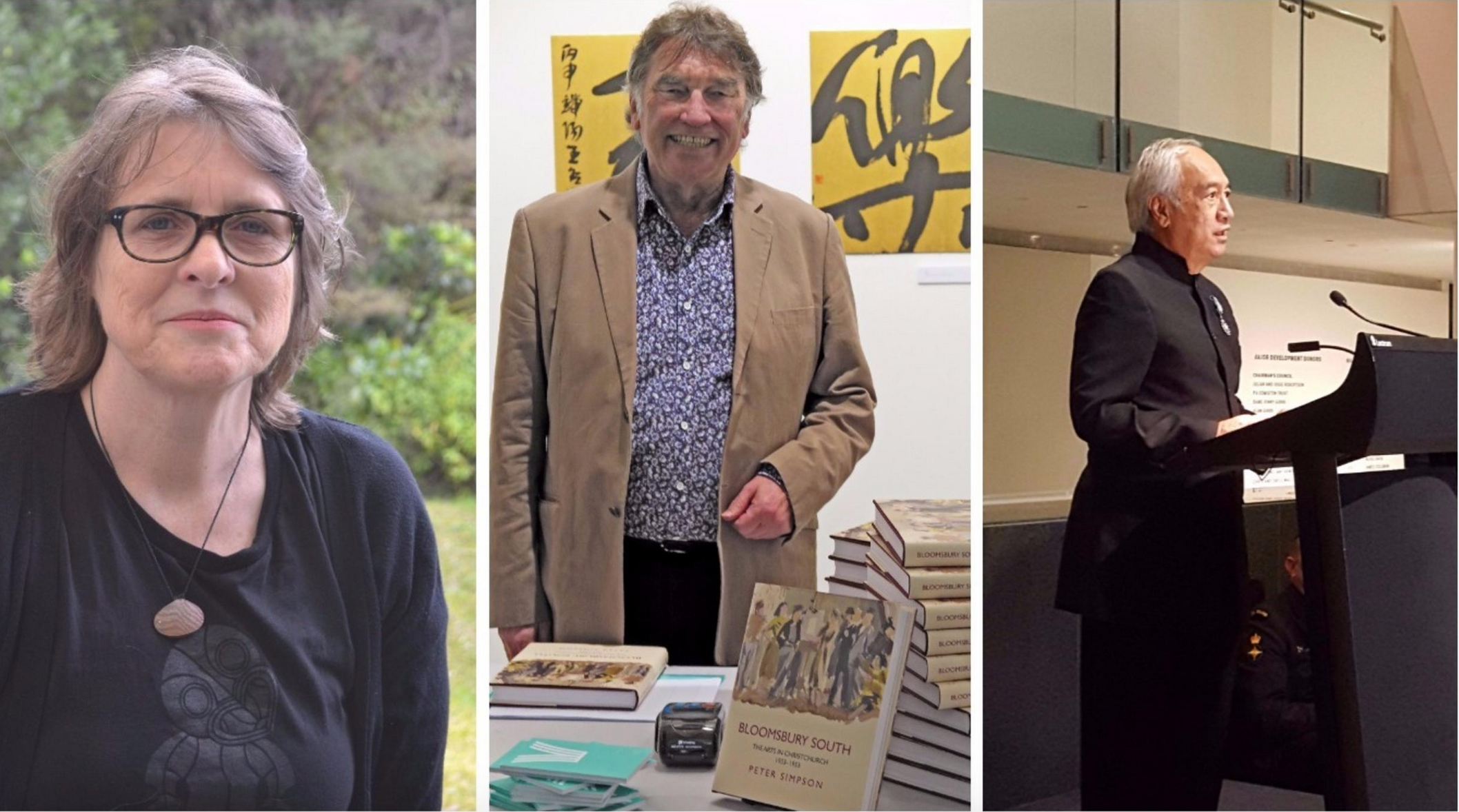
Paula Green, Peter Simpson (photo: Marti Friedlander), Witi Ihimaera.


Creative New Zealand has announced the winners of the 2017 Prime Minister’s Awards for Literary Achievement. They are internationally renowned Māori novelist Witi Ihimaera, literary historian and fine arts writer Peter Simpson and popular poet and children’s author Paula Green.

Each will be awarded $60,000 in recognition of their outstanding contribution to New Zealand literature. Witi Ihimaera will be honoured for fiction, Dr Peter Simpson for non-fiction, and Dr Paula Green for poetry.

Arts Council Chair Michael Moynahan said, “Our congratulations to this year’s recipients who are being recognised for their extraordinary legacy of literary achievement. As leaders in their respective crafts, they have engaged New Zealand readers with their story telling and have inspired other New Zealand writers to build on their literary legacy.”

The awards will be presented at a ceremony at Premier House in Wellington, on Wednesday 9 August. The 2017 Creative New Zealand Michael King Writer’s Fellowship winner, Dr Philip Norman, will also be honoured at the ceremony.

The Prime Minister’s Awards for Literary Achievement were established in 2003. Every year New Zealanders are invited to nominate their choice of a writer who has made a significant contribution to New Zealand literature in the genres of non-fiction, poetry and fiction. New Zealand writers are also able to nominate themselves for these awards.

Nominations are assessed by an expert literary panel and recommendations forwarded to the Arts Council of Creative New Zealand for approval.  This year’s selection panel was Rachael King, Nicola Legat, David Eggleton and Briar Grace-Smith.

A full list of previous recipients can be found on the Creative New Zealand website.

The Creative New Zealand Michael King Writer’s Fellowship is open to established writers of any literary genre who have already published a significant body of work. Valued at $100,000, it is awarded annually for a project that will take two or more years to complete.


Creative New Zealand and Unity Books invite you to a free literary event

The recipients of the 2017 Prime Ministers Awards for Literary Achievement will read and discuss their work with author Kate De Goldi.

This is a free event at Unity Books, 57 Willis Street, Wellington on Thursday 10 August, 12.30-1.15pm. All welcome. More info: http://bit.ly/2uD2ATe


For media enquiries, please contact:

Jasmyne Chung
Senior Communications & Advocacy Adviser
Creative New Zealand
jasmyne.chung@creativenz.govt.nz
M: 027 838 8868 | DDI: (04) 498 0727


2017 Prime Minister’s Award for Literary Achievement – Fiction

Witi Tame Ihimaera-Smiler, DCNZM, QSM (Te Aitanga-a-Māhaki, Auckland, born Gisborne)

Born in Gisborne, Witi Ihimaera is a novelist, short story writer, filmmaker, anthologist, librettist and playwright. He is of Te Whānau a Kai, Te Aitanga-a-Māhaki, Rongowhakaata, Ngāti Porou and Tūhoe descent. He has the distinction of being the first Māori writer, in 1972, to publish both a book of short stories and a novel. His novel, The Whale Rider, became an internationally successful feature film and Māori Boy: A Memoir of Childhood won the General Non-Fiction Award at the 2016 Ockham New Zealand Book Awards. His most recent books are Black Marks on the White Page, co-edited with Tina Makereti, and Sleeps Standing, with te reo translation by Hemi Kelly, about the Battle of Orakau.

Regarded as one of the world’s leading indigenous writers, Witi has held numerous writing residencies and fellowships. He holds an Honorary Doctorate from Victoria University of Wellington, and in 2009 he was honoured as an Arts Foundation of New Zealand Laureate as well as the supreme Māori arts award Te Tohu mō Te Arikinui Dame Te Atairangikaahu at the Creative New Zealand Te Waka Toi Awards. He was named a Distinguished Companion of the New Zealand Order of Merit in 2004. Last month the French Government appointed him a French Knight of the order of arts and letters (Chevalier de l’ordre des Arts et des Lettres) for his contribution to literature.

The selection panel described Witi as one of New Zealand’s most important post-colonial writers, who has consistently proved to be an outstanding storyteller, celebrated as a voice for Māoritanga and a literary leader.


2017 Prime Minister’s Award for Literary Achievement – Poetry

Dr Paula Green, MNZM (Auckland)

Paula Green is a poet, reviewer, anthologist, children’s author, book awards judge and blogger. She has published ten poetry collections, including several for children. In 2017, she was admitted to The New Zealand Order of Merit for Services to poetry and literature.

Paula has also co-edited a number of highly regarded anthologies, including 99 Ways into New Zealand Poetry, with Dr Harry Ricketts, which was short-listed for the 2010 NZ Post Book Awards. She runs two influential poetry blogs, NZ Poetry Box and NZ Poetry Shelf, and has been a judge for the NZ Post Book Awards, the NZ Post Secondary School Poetry Competition, and the inaugural Sarah Broom Poetry Prize in 2014.

Her recent publications include a collection of her own poems for children, The Letterbox Cat and Other Poems, which won Children’s Choice at the 2015 NZ Book Awards for Children and Young Adults, and an anthology of children’s verse, A Treasury of NZ Poems for Children. Her latest adult collection, New York Pocket Book, was published in 2016.

Paula has a Doctorate in Italian and was Literary Fellow at The University of Auckland (2005). She is a regular guest in New Zealand literary festivals and frequently performs and undertakes workshops in schools from Year 0 to 13.

The selection panel said Paula stood out amongst the nominees for this year’s Prime Minister’s Award for Literary Excellence in Poetry as an accomplished all-rounder, with special distinction as an author of children’s poetry. They described her as “a significant figure in New Zealand poetry as an anthologist and commentator” and as a leading poet.


2017 Prime Minister’s Award for Literary Achievement – Non-fiction


Dr Peter Simpson (Auckland, born Takaka)

Peter Simpson is a writer, editor, critic, curator and academic who has been writing about New Zealand literature, art and culture for more than 50 years. His first book, on Ronald Hugh Morrieson, was published in 1982; since then he has published eight sole-authored books, edited 12 other books, made substantial contributions to 25 other titles, published more than 100 articles in journals in New Zealand and overseas, and scores of reviews in newspapers, periodicals, scholarly journals and online.

He has taught at several universities in New Zealand and Canada between 1964 and 2008. Peter was co-founder and director of Holloway Press, 1993 -2013, publishing some 40 books. He has curated six exhibitions on Leo Bensemann and Colin McCahon for Hocken Collections, Auckland Art Gallery, Christchurch Art Gallery, Lopdell House Gallery and New Zealand Portrait Gallery.

Peter was awarded the 2012 Creative New Zealand Michael King Writer’s Fellowship. The book written during that Fellowship, Bloomsbury South: The Arts in Christchurch 1933-1953, was shortlisted for the illustrated non-fiction category of the 2017 Ockham NZ Book Awards.

The selection panel said Peter’s many books and other writing attest to his ability – both as a literary historian and as a writer on the fine arts – and that he has contributed significantly to the nation’s literary culture over many years.

2017 Michael King Writer’s Fellowship


Dr Philip Norman, CNZM (Christchurch)

Award-winning author and composer Dr Philip Norman has compiled three editions of the Bibliography of New Zealand Compositions, including biographies of some 120 New Zealand composers and descriptions of 4,000 of their works.

He has co-authored, edited or contributed to numerous other books and publications on New Zealand music. From 1980-1991 he was the principal music reviewer for The Press in Christchurch, writing more than 700 reviews.

In addition to being a writer Philip has composed more than 250 works, from orchestral, chamber music and opera through to choral works, musicals and ballet. He composed music for Footrot Flats, New Zealand’s best-selling musical, and for the Royal New Zealand Ballet’s successful Peter Pan, which is shortly to receive a repeat season in Perth, Australia.

About the Michael King Fellowship 2017:

The $100,000 Michael King Fellowship has been awarded to Dr Phillip Norman to create a history of New Zealand composers and their work from the start of European settlement to present day. Philip will use the fellowship to complete a lifetime of work studying New Zealand classical music identifying influential composers, works and performances, and tracing key developments through the decades.


Sarah Jane Barnett interviews Paula Green

pocket_book.jpg


Sarah Jane Barnett recently interviewed me about my new collection, New York Pocket Book. The shoe was on the foot, for a change! I really enjoyed the questions.  Took me right back to New York!

For the complete interview go here.

SJB: The poems in New York Pocket Book touch on the idea that the experience of being a tourist can give us a new way to see and experience ourselves. The collection’s main character, Josephine, closely observes her new experiences – the ‘American accent dipping and pausing,’ the ‘Manhattan sky.’ The idea works on two levels, with Josephine experiencing New York and with the reader experiencing Josephine. Can you speak to this idea in terms of your poetry? Do you see the poem as a way to provide a reader with a new experience of themselves?

PG: Perhaps any book refreshes our view of ourselves to varying degrees, but I really like the multiple reading experiences you have spotted. Learning another language for years, I always felt I wore my clothes slightly differently, that I had licence to be a slightly different person. I get that feeling when I stay in foreign cities. I am both myself and not myself. I eat things I might not normally eat. My daily routine goes out the window. So is it a stretch to say the reader in entering a book that is anchored in an iconic place, triggers different relations with the world and self? I don’t know but it’s a fascinating idea. One of the upshots of learning another language, is the way you learn more about your own language. Conversely, when someone speaks a foreign language they always leave clues about their mother tongue. When we experience a new city, we open windows on the familiar as much as we do the unfamiliar. So perhaps the poem is the surrogate new city, the surrogate new language.

Josephine is somewhat elusive. You are right in that you view her through a New York filter (and vice versa) and everything else lands in accidental traces. Some readers might crave more of her backstory but I resisted that. There are some red-hot traces though hiding away. This is a pocket book after all.

THE BOOK SHOW ON FACE TV TONIGHT AT 8.30PM includes a bit of poetry

The Bookman teams up again tonight with bookseller Carole Beu for another session of author interviews, book reviews and news.

Face TV is Sky Channel 83. If you don’t have Sky or miss the show then it will be linked here and here tomorrow morning. The show also screens on Thursday October 2nd at 12.30pm on Face TV.

This week Graham Beattie is talking to crime fiction author Paul Thomas while Carole chats to poet/author Paula Green.