Tag Archives: Jillian Sullivan

Poetry Shelf celebrates Te Marama Puoro o Aotearoa | NZ Music Month 2026

Poetry Shelf toasts Te Marama Puoro o Aotearoa | NZ Music Month 2026

Music streams in the ink of so many poets I love, whether on the page or in the ear/air. Think rhythm, rhyme, chords, key, hooks, harmonies, disharmonies, pitch, bridges. And of course the lyrics.

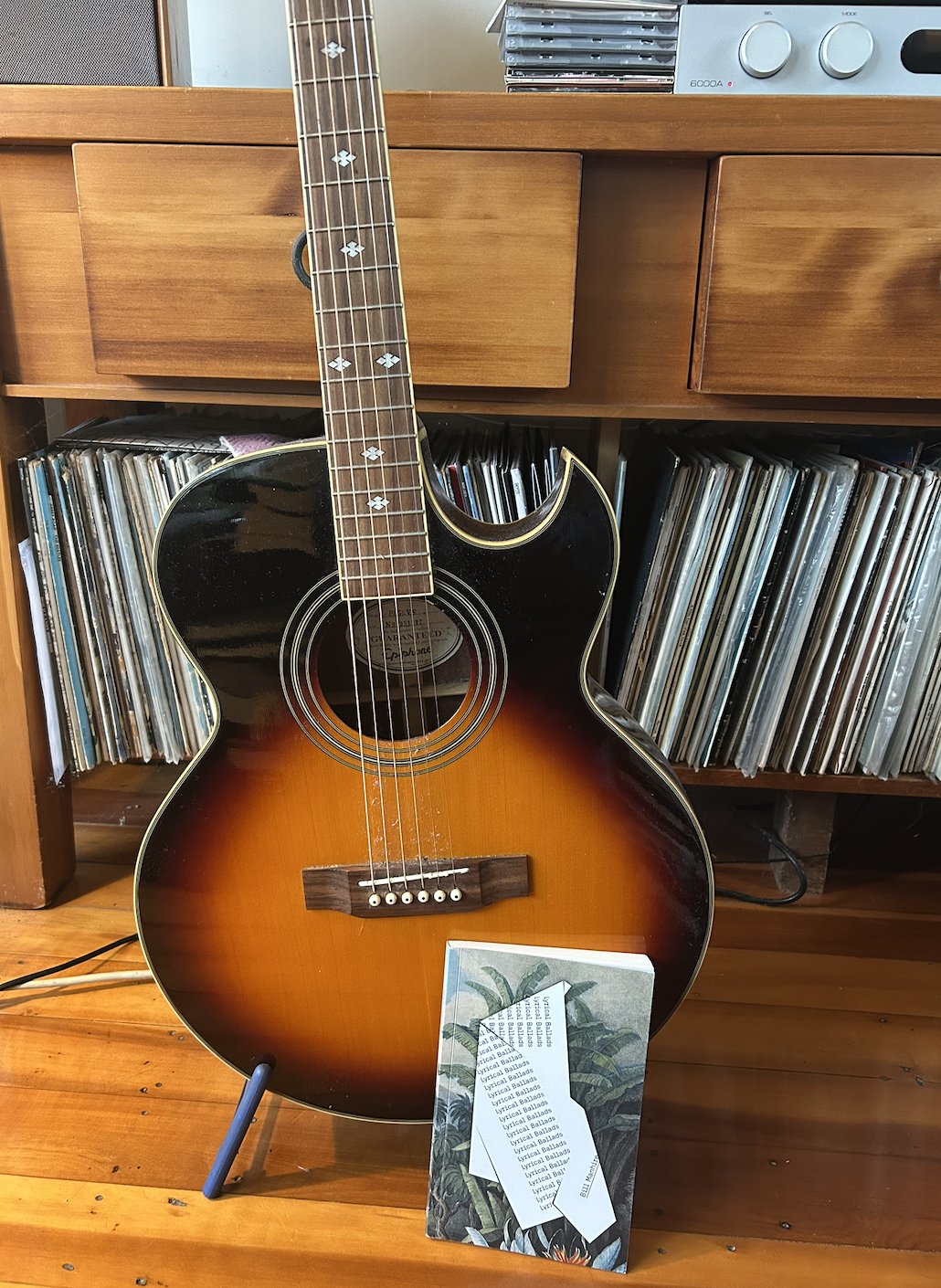
One of my favourite poetry books of 2026 to date, is Bill Manhire’s Lyrical Ballads (THWUP): “And of course there is the ink steeped in music, with rhyme and repetitions, loops, the exquisite lyricism that audio-marks each ballad. My dream is to sit in the Titirangi hall again and listen to Bill read us the whole book as we sit spell bound, before moving to the side room to the spread the locals have put on, to return with plates of food balancing on our knees, and to talk poetry and life until our voices are hoarse.” My review

Yesterday I finished reading Khadro Mohamed’s sublime novel Before the Winter Ends, and it is probably my favourite novel from 2025. Khadro writes with her poetic ear attuned to the musicality of words. I just adore it. I will be posting some thoughts on the book in the next week or so. In fact I seem to be binging on novels with sentences that achieve such musical cadence I am bursting with the pleasure of reading – and daydreaming upon how the ear of the reader is as important as the eye, the heart, the musing mind.

Music is such a connecting activity – listening to music gets us through tough patches, gets our bodies moving, our hearts moving. And how vital live gigs are, having our socks blown away by the utter joy and pleasure of live performances.

I have never invited open submissions to Poetry Shelf, but on the spur of a midnight moment, invited poets to contribute to a poetry / music month celebration. I made the brief open: “YES the poems will offer links to NZ music. Maybe subtle links, maybe a clear spotlight on performances, albums, past or present experiences, music anecdotes, memorable occasions, but the poems may also connect with music as part of our daily lives.”

I got an astonishing arrival of poems, and while it was super hard choosing only a handful, I think I will do a quick-fire submission invite again. Maybe in a few months. Maybe sooner.

Thank you everyone who sent poems. This was an absolute pleasure.

23 poems

Mata singing in the supermarket

It is the first sound I encounter, Mata singing,
a humming hovering over the ripe oranges, tomatoes,
the perfect newly washed potatoes, curling around
persimmons in season, the sultry scent of feijoas
Mata singing, a hibiscus flower tucked behind her ear

Her voice follows me past the morning newspaper,
beyond a magazine with Audrey Hepburn’s face
on the cover, oh those were the beautiful days,
it’s passing the wine bottles, the beer, the lo-alcohol
cans, our sober days are here, it riffs across the scent

 of soap and laundry powder, and the eggs,
bread and cheese that sustain us, Mata singing

 to children whose mother is buying a happy
birthday cake and lollies; so long as I remember
Mata has been here, her voice crooning
tunes amongst the herbs and spices,
her hair greying. One day she’s not there

 but a young woman from Samoa
is at the checkout counter, her voice
soaring. But where is Mata today? I ask.
She will be back, it’s just her day off, the song
must go on, Mata will come back, Mata singing.

Fiona Kidman

When the band played the chords
of their opening song
the crowd surged forward.

Not wanting to be crushed, 
he slipped under the stage
like a moray eel
and became immersed
in a reverberating
ocean of sound.

Richard von Sturmer
from a new poetry sequence


White duck                                 

On the way to the gig
I stopped by the sea  
the tide was in and slow.
I stood on grey and mellow
stones, marked time, looked out 
to the horizon.

A white duck meandered 
by, and as I tried (crimped 
hands, cramped knees) to revive
the swing, the feel of lines
it parked me beside me: 
white feathers, round stones. 

There were drumbeats and
triplets and words I could not 
remember, though I stared
hard at the sea, the way 
the duck did, for verse, bridge 
chorus to reappear

which they didn’t, despite 
the tight paradiddles 
of my heart and quavers 
in my knees, so I watched
the duck and the duck watched 
the sea until I had to leave,

and I think I played pretty tight,
that night at the Royal Albert.

Jillian Sullivan
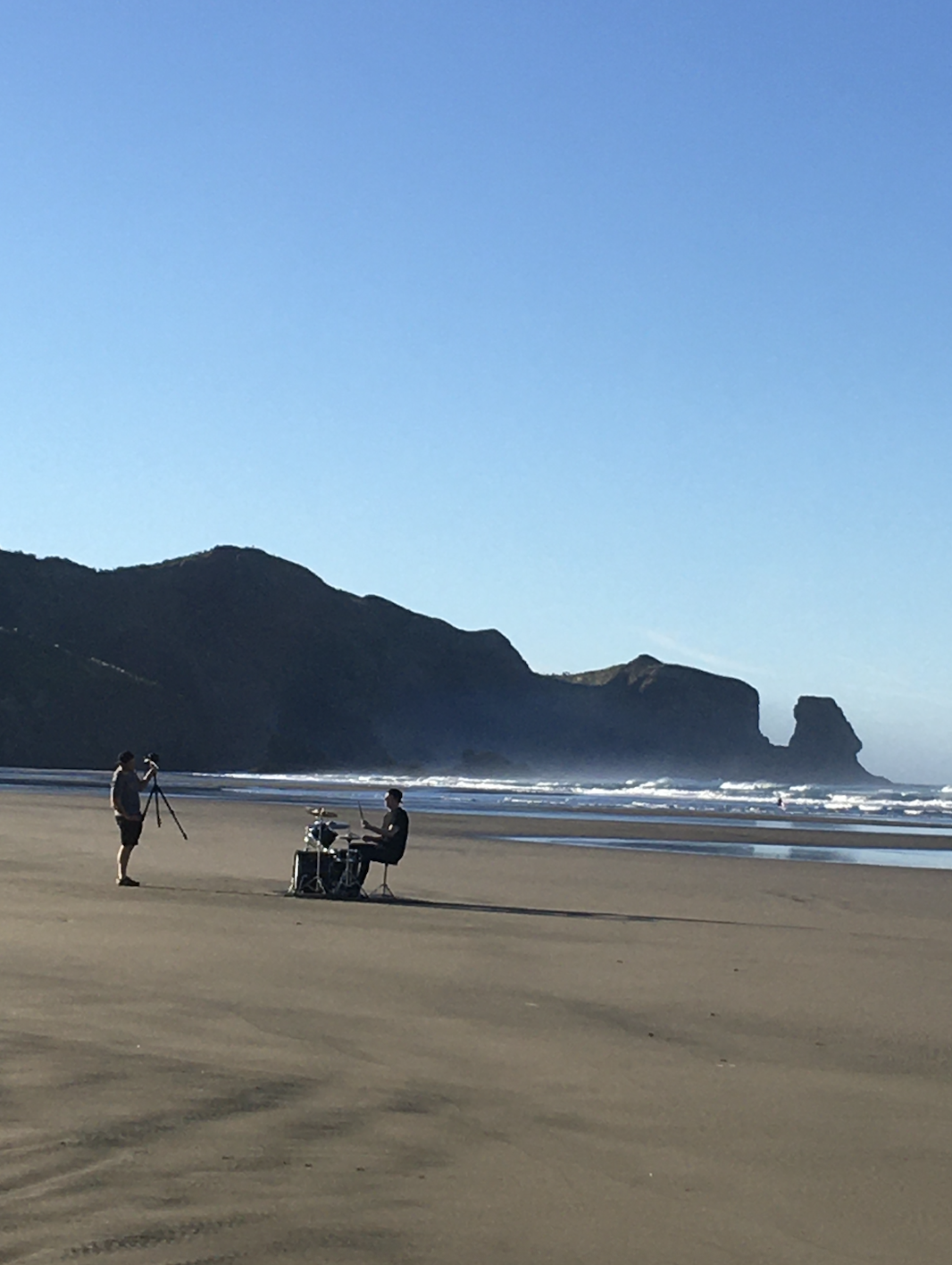
“A poem, published in JAAM, from when I was a drummer (in the all- female band Red Dress, and full of nerves before a gig.”

Amy Winehouse on St Clair Esplanade

A breezy day on the Esplanade,
where nothing escapes the view,
a kid high on a can of Red Bull,
guys in hoodies puffy as cobras.
Drifting from their wound-down window,
the sob-sister on a squawk box,
— make me go to rehab, but I said no, no, no!

Backflips through an ocean’s backyard,
with dipsticks, dropkicks, surf wipe-outs,
salt haze drifting like a filmy drape,
floaty over barren rocks, eroded sand dunes,
flowers yellow as a lick of butter,
yellow as sunshine,
— make me go to rehab, but I said, no, no, no!

I buy a chocolate ice-cream cone for you.
Smiley faces and stuck-out tongues,
there’s e-scooters, shiny shells of cars,
and peeled from a seal-black wetsuit,
the pipe-band drum-major’s leg tattoo,
— make me go to rehab, but I said no, no, no!

Your pointy leather boots clack on concrete,
while hunch-backed scolds of gulls
are moving red-webbed feet to a ska beat,
they’re crying out like Amy Winehouse,
— ska, ska, ska!  — no, no, no!

The evening sky vamps like a lava lamp
of tie-dye kaftan mauves and yellows,
but now there’s no scamp Amy Winehouse
to echo along with the seagulls,
— ska, ska, ska! — no, no, no!

David Eggleton
published in Otago Daily Times in 2024

Organology

I dropped my new earrings in the sink
and fished them out again. Only a small dark

fingerprint of tarnish gave any indication
of their drainward descent. I wore them out

to the orchestra, where we stared up the legs
of the cellists, in the cheapest of cheap seats.

Sitting there with a new friend I wondered how
it all turned out like this — libraried afternoons, waiting

nights, hurried mornings — all these violins oiled
by the fingers of guys who would have worn wigs

and white powder and all the rest of it. My friend told me
he cried, and I chose to believe him. He has eyes

like I’ve seen in photographs from 1912. The evolution
of cornets mimics the evolution observed in fossils.

Ammonites curled in spirals as if sleeping. I almost
bought one the other month with my cousin, at that

incensey place on Willis Street; a tiny crystalline
thumbnail of a thing. A lover, somewhere, reaches

for a nightstand. I didn’t see any tears fall.
I saw the wood, worn and singing, and fiddled with my rings.

Cadence Chung

Quantum Decoherence at a Bailter Space Gig, 1989

20 July was my seventeenth birthday
and I went to Sammy’s on a Thursday night.
Cold and rain, a winter standard for Dunedin.
My one clear memory is standing alone
on a fairly empty dance floor,
spotlit by a stream of sodium blue light
while feeling my neural networks
being reformatted by a subsonic phase shift
on top of which an avalanche of white noise
glued loosely together with a standing wave
of human friendly harmonic frequencies
pulsed from side to side of the hall
while bodies swayed like reeds in a gale.
When I left some time after midnight
life had changed permanently,
and my inner ears were filled
with a softly anesthetic snowfall.

Victor Billot
from The Sets, Otago University Press, 2021

The Smith the Grocer girl

wipes tables, ferries plates
and bowls and cups and jugs
back and forth to the counter

After the rush
           tray-laden in the light-filled well of the old lift shaft
she looks up

and pitches a melody
rung by perfect rung
to the sky

and you know she’ll climb it

It’s for her the cutlery
has stopped clacking, and in their pre-porcelain
clay, their porous places, the saucers,

it’s for her they listen and thirst

Sue Wootton
from By Birdlight, Steele Roberts, 2011.

Phoenix Foundation
(for Will)

“En-tnt”: that was what you used to call
an elephant. You’d say “I carry
you” when you wanted to be picked up.

Each time we read that page in Peter
and Jane where the farmer is getting
ready for work, you’d shout out “Boots on!”

because on walks you wore your red boots.
You had long yellow curls like Little
Lord Fauntleroy, a Leicester accent

thick and ruddy like the local cheese.
Once in the grocer’s in Stoneygate,
an old lady bent down, stroked your hair,

murmured: “What a very pretty boy.” 
“Fook off!” you said, staring at your boots.
She jerked her hand away as though stung.

Years after, I see you running round
and round a room, arms flapping wildly.
You stop. “I can’t fly,” you say, surprised.

But here tonight you’re standing stage right
behind your barricade of drums. Shaved
head, black singlet, sticks raised, you might be

the sorcerer’s latest apprentice.
The guitars kicks in, the blue light spins,
your hands begin to fly.

Harry Ricketts
from Just Then, Victoria University Press, 2012

Martin Phillipps’ eyes

From photos, Martin Phillipps’ eyes
look out; looking for all the world like eyes forever looking out.

The music is all we have of him now.

On walks down the street where he lived
        close by our street, I ask myself: Is that the house he lived in?
Not knowing for sure, I can only guess.

For some of us, all that’s left of him is the music, the songs and any memory.
Like the one I have of seeing him, once, in the late nineties,
alone on a stage, playing keyboard

and singing, Submarine Bells. The second time, over twenty years later,
in Ian Chapman’s house at the launch of his book, OK Boomer,
where he was just a man standing at the window

looking out at the harbour, my husband beside him
both of them remarking about the weather rolling in and the yachts,
my husband not realising who the man was until he asked him his name.

Martin, the man said. Of course, my husband thought. Martin Phillipps.
Knowing then why he’d looked familiar.
        And they both just stood there a moment longer, looking out.

Kay McKenzie Cooke
“I thought immediately of this poem I wrote after the death of Martin Phillipps of the Dunedin Sound band The Chills. It is a poem that will be in my new collection, My Favourite Set of Lights, due out in November this year with The Cuba Press. Co-incidentally, a new LP by the late Martin Phillipps arrived in my email yesterday to be downloaded through Bandcamp, and today I’ve been listening to songs of his I’d never heard.”

Recipe for a Mother’s Mana
for Helen

It must be possible
to conclude a home concert
without food, without cheesecake,
chocolate cheesecake that is,
but I wouldn’t risk my motherly mana
to find out.

The day before a concert
while I listen to Maestro practise
Brahms and Gershwin on the piano
down in the lounge,
I adapt my sister’s recipe,
my hands knowing what to do.

I crush a packet of biscuits,
mix with two tablespoons of sugar
three of cocoa
and four ounces of melted butter,
then cover the bottom and up the sides
of a lined large round cake tin
with a push up bottom.

Next, as I think through To-Do lists
I beat two tubs of cream cheese
and one of cottage,
a cup of brown sugar
two tablespoons of flour
half a teaspoon of instant coffee
three quarters of a cup of cream
and three eggs.

If you’re a Luddite like me
and beat by hand, it takes time
and grunt till it’s harmoniously blended
but when it is, quickly stir in
300 g of melted dark chocolate,
pour into the crust
and when no-one’s watching
lick the bowl.

It cooks over the next hour
or a bit more in a slow oven,
the smell of melted chocolate
sweetly seeping down the hall
to Maestro at the piano
now with Helen on the viola
practising Schubert and Glazunov.

The next day, after the first course
of the post-concert dinner,
Maestro is back on the piano
jamming with Helen on viola,
violin, cello, flute, guitars
singing.

In the quiet of the dining room
I put out the expected cheesecake
and ambrosia, food of the gods ~
ambrosia ~ how I love that word,
berry yoghurt, whipped cream
tinned boysenberries
chopped marshmallows.

In the end it is simple,
make music
have concert
eat cheesecake.

Tui Bevan

Backyard Blues Revival

This sucks. Among the 
reverb thinking I was
tapu then. Not now. 
My axe rings 
in circles 
swinging back 
through 
the firewood
in my skin
cutting a shard
in scrap tōtara 
from the old farm house, 
Shick! / Thunk! It cracks 
open. Careful now. 
Not to 
take my fingers, 
pare the shard back 
down until I
am vinyl and 
ten again lost
in a picture of an 
old man playing
a Kōauau 
and seeing the soul 
of my poverty. 

i toko

rattling the tauranga jazz fest hum

you came from some crevice
      in the city’s noise
from the cafe across the road
      from its canopy of
dark-skinned grapes.

the singing blade of you
     arrived and rattled the
whispering stars
      you stood there
all jaunty in
      your tattered coat
and I wanted to
     unravel you
thread by pretty thread.

on stage
     we inverted chords 
swapped surfaces
      knelt in snow so deep
it could thaw a summer’s grief
     oh how we harmonised,
improvised,  be-bob sha-bammed
      and all of that jazz

now, pasted down far apart
     we hum those old songs
crazy with superheros and
     and bright lights
there’s a strange high note
     playing in the skies
as icarus and angels fall
      and our veins run 
feverish with loss.

Lyndsey Knight

The Thistle

Climb the stairs, and tight to the right. Up into the old tea merchants.
There was no lingering smell of potted empire when I reached the top.
Rather the punk cologne of dak, scrumpy, sweat and leather.
Wander in past the array of anarchist books, the dangerous tools of revolution.
Now a google search would be a lot quicker.
And ‘the man’ can keep his tabs remotely.
And the revolution is remoter still.
The PA is old and clad in carpet.
The amps are shared, the drum kit communal.
The masses form up; the sound system rumbles.
The old, the young, and the great unwashed, we are all in this mess together.
We are all a mess, in this mess , together.
Then two sets in, the inevitable disruption.
In flow the police, with shields and truncheons.
And down the stairs we flow, barrelling to the left with a scent of bourbon.
And out into the night of yellow and black, so full of nineteen nineties energy.
So full of pregnant possibility.

Kieran Haslet-Moore

Thistle Hall is a community hall which played a key role in Wellington’s punk/alternative/underground music scene through the 70’s, 80’s, 90’s and 00’s.  

Shihad

Unite against
the apathy. 
The name on our 
backs is your name —

one shared with the
faithful rendered 
malleable 
in the forge where 

crowd surfers’ boots
smash noses of
Medusa boys
with ringing ears,

loose spines whip wild 
heads, and masses 
roar ’til they turn 
to stone. Yet, still, 

you would know us, 
struck mute, because
the name on our
backs is your name.

Bee Trudgeon

and somehow his silence

from the second row we see stagelights gleam on Jon Toogood’s forehead the bassist’s mouth clenching and unclenching the guy from The Phoenix Fountain mouthing Heart of Gold from stage left   

the man next to me has spilled out under the armrest and as the drums pulse through the seats I feel his side belly tremble against my arm

when the song ends he doesn’t clap just turns to his phone some bannered news website something about Trump

and I turn my head just enough to see his grey hair black pants plaid shirt and I’m suddenly conscious of my movements my nodding and tapping along my denim jacket my calling out into the applause

and somehow his silence has sucked something out of the night and I’m searching for it in the bags under the guitarist’s eyes the greasy fall of his hair    the grip of his hand on the fretboard grey haze of the smoke machine flicker of lights to blue as the band shifts into the wings

and there’s one guy left on the keyboard Lawrence Arabia I think his name is ginger moustache black jeans brown boots and as he starts to sing I lean into these details knit them together stitch a curtain between me and the guy beside me velvet and dense  

his belly quivers against my arm again but there’s no drummer now no bass and in my peripheral vision I see movement a plaid arm rising

and I turn my head just enough to see his thumb and finger spread into a fleshy triangle each one pressed to an eyelid the gleam of blue light in the wetness of his cheek skin

and Lawrence Arabia’s voice seems to fill the space between major and minor the smell of dust and steam the bite of IPA at the front of my mouth the question and the answer when will I see you again

when will I see you again

Rebecca Ball

Lessons

Sunday morning and the light is grey
inside this house. I embrace the heavy silence like a flood
embraces gravity
seeping down beneath buildings and soil and rocks and roots
of living things. Systemic
is in the very name of this disease
and so it takes a long while—everything
takes a long, long while. I learn to measure
distance by how it feels
to walk
to the bakery, the park, the classroom
where I teach teenagers the meaning of words like circulatory and interconnectedness. They are learning
about the human body
the way our organs
work: the heart, the lungs 
     like singing, I say
       the poetry in science
these things that keep us
alive. My flatmate
is sympathetic
says the roads to our house are all uphill
but that is not the story. I am learning
to step outside
this new set of imposed boundaries
the things we normalise
       as we gather ways
       to place our selves
in the landscape of our grief.
Sometimes it feels like I’ve
misplaced my self
and if I just look hard
enough
I might see my centre
pulsing
behind a mesh of muscle and bone
deep within my stomach with the rest
of my voice. Pacifism is not the same
as passiveness. My other students
are learning to breathe
like they did when they were babies
the diaphragmatic ebb and pull
       before we grow
       into the panting, holding
tightness
of everyday. But it’s difficult.
We relax and focus at once. Try to recall
the measured freedom
of youth
the evenness, the newness
the burst of life and noise
       because babies come out
       crying
ready to sing

Lola Elvy

Voyager

this tiny machine
this analog toy
this little adventurer
a glorious toddler
exploring the unimaginable
vastness
of its boundaries
speaks greetings
from Akkadian to Wu

and the walking tribes
that dream their dreams
of the rainbow serpent
sing Johnny B. Goode
and play Mozart
Bach and Stravinsky
at 16 and 2/3 rpm if the finder
has a decent record player

tethered to us by hope
and grit
and dreams
and yesterday’s genius
and dial up speeds
of imagery and sound
and the cacophany of
creatio
go looking for God
beyond grasp of the sun
beyond its anger
its rage
its wrath

the war within itself
that will destroy it
one day
one day
one
day

Ben Brown

Oh my

I was born a devil, he tells me
licking salt off my skin

holy smoke rising from his hot 
wings

invites me to feast on gravel and wine,
drive the black sheep over the edge 

of this world.

Everybody’s doing it, he says,
smudging the clear dome of my cornea

and I know we’re doomed to die
regardless of what’s written in the water.

Drunk on air, he tastes licorice and tar
notes of sulphur

black sand scorching, scorching.

Mikaela Nyman
“A tribute to Gin Wigmore’s ‘Written in the Water Die Regardless'”

Community Choir

It’s November
& next month, December
we’ll sing at the Rest Home, Silent Night

Pam, alto, says     I keep slipping into lead
Pat, bass, says     I want to move on ‘dawn’
Jay, tenor, says    You leave Dawn alone

Everyone laughs
The dog licks Diane’s – soprano – toes
I’ve been in the garden, she says & everyone laughs again

& Pat learns not to move on dawn
& Pam learns not to sing the lead
& Jay puts his right foot in & his right foot out

Jay shakes it all about & everyone laughs once more     Oh Jay!
& Diane’s toes are clean now
That’s better, she says

Sam Duckor Jones

Hugh playing the Moonlight

Hugh is playing the Moonlight
to the valley.

In swannie, shorts and Tuesday’s
socks he takes the stage before
kānuka and jostling miro.

He begins to play.

The kahikātea on the balcony
adjusts the stars upon her
shoulders.

Tawai on the high terrace
bend to pay attention and
kōwhai huddle close where
they can sway in their yellow
ear rings.

Lizard, spider, bird and fish,
rock and lichen, creek and
tussock hold their breath.

Hugh’s fingers find notes
like seeds sown on a stave.
He plants them in the dark
and the music sets leaf. It
grows into a supple vine,
looping tree to tree.

There is nothing more
beautiful in nature than
a man in a swannie,
playing the Moonlight.

Fiona Farrell
Nouns, Verbs etc: Selected poems, OUP, 2020

Be the rising human

Ava and Jasmine wanted to marry you
All the girls wanted to marry you
and you were not even four years old

When you slithered into this world
you opened your eloquent eyes
and cradled silence

From your ancestors, harmony impregnated all pores
Those eyes saw distances beyond the now
observed here from afar and afar from near

A small cough like a chipmunk scattering leaves
and words flow into poems into songs
You are thrumming. Music another name

A tiger-swallowtail alights on bee balm
vacated by hummingbirds and the knock
knock of a pileated woodpecker high in hemlock

tells us you are in this hemisphere, panting for cool air
It’s coming and the cold cold winter too
but autumn gifts us your embrace

Those genes are not ordinary DNA, those genes
Are pure love (made in Australia like your kuia)
Pushed out in Aotearoa now rising in Londontown

Be the leaf, be the branch, be the trunk, be the root
Be the river, be the air, be the soil, be the garden
Be the rising human in this world, beloved

Reihana Robinson
from Be the rising human, Off the Common Press, 2024

Prelude

A mother practices a prelude
agile fingers working
Florence Price’s minor thirds,
woven memory           loss     survival

A daughter scores sounds
from a tired world
corals and crickets      new phrasings
for better    listening

A woman watches the moon
round and full
rising      over earth’s shoulders
hunched   around a harbour

Harmonies      dissonances         blended experience
recollection                 rippling
crooked lines in a poem’s spaces       imagining
what comes next

Michelle Elvy
from in the poetry / art exhibit ‘The Wild Edge’, Arataki Visitor Centre, Jan-Mar 2026. 

Moonlight spell

We reach the point
the mind forgets the mind.
Across our great divide

and down to moon-soaked
spots on the floor. I want
to be so consumed by something,

to think that there is no way out.
Turn off the headlights. Tap the stream.
If poetry could make you love me,

it would, I think. Close the windows.
Lock the door. Show me things.
Show me more.

Jackson McCarthy
“These poems were first published in Starling‘s Issue 14, then set to music by my dear friend Cadence Chung.”

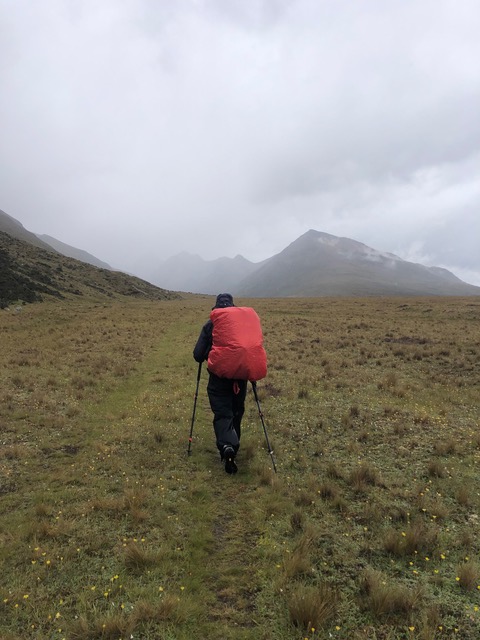
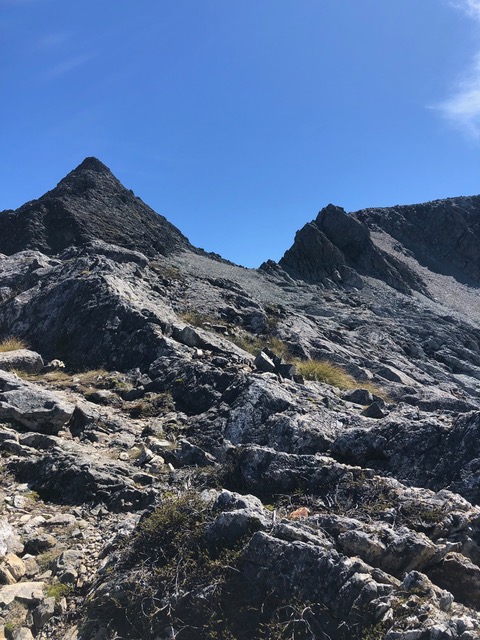
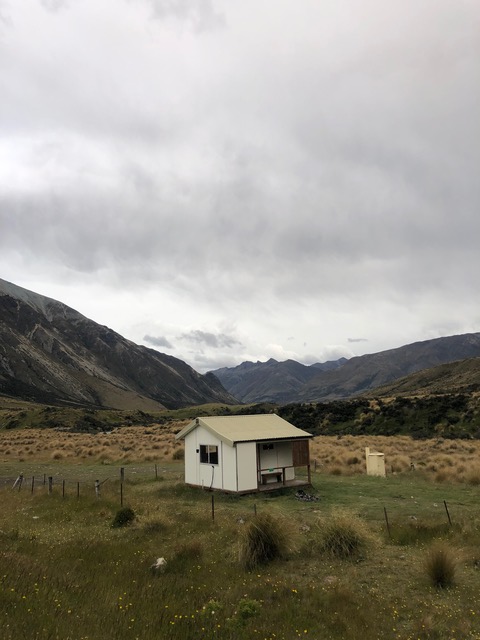
Poetry Shelf goes hiking: Te Araroa poems by Jillian Sullivan

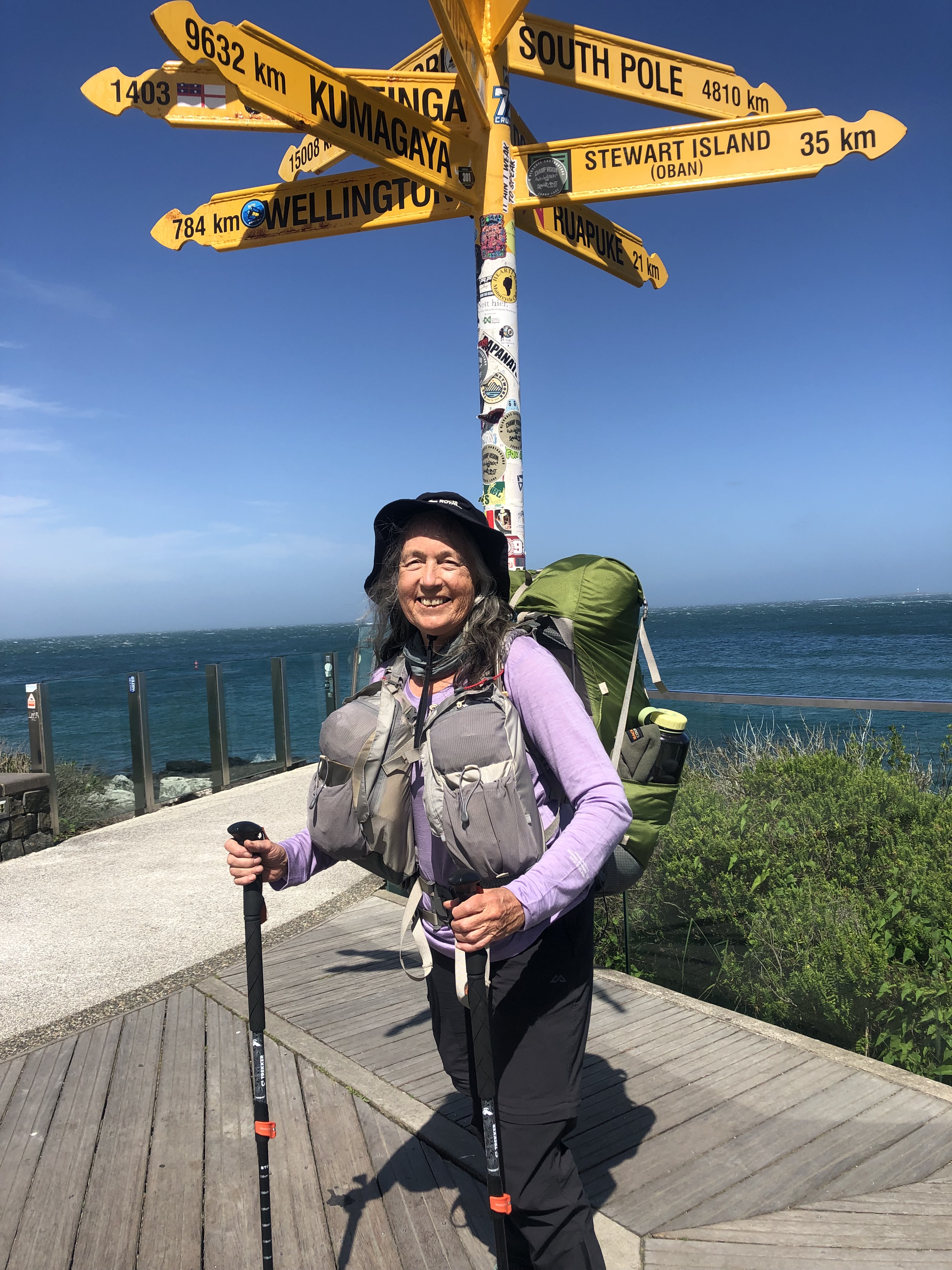
Jillian at the Bluff signpost

Jillian Sullivan has just started walking the South Island section of the Te Araroa trail. I invited her to send poems whenever she felt inspired to do so, internet access permitting.

Friends are why we come home

Friends around the table and all
the glorious food and laughter.
Sometimes I yearned to run away
from here, I told Graeme. But I didn’t

want to leave this. He guessed the weight
of my pack closest, at 14 kilos. Some
said 17. It was 13. Achievable,
then.

The gifts they gave me of their eyes.
The gifts they gave me of their selves,
who know me. And so we said
goodbye. And so it is true

I am going. Margaret took a photo, as pack
on back I walked down the white line
of the empty road running through our village.
A metaphorical photo.

Now it is a thrush singing outside
my window. Bach, Ave Maria,
black coffee. The gentle easing into
leaving this life, for when I come

back, who will I be? Someone
dissolved into trees and rocks and sky?

It’s always Wednesday

It’s always Wednesday, it’s always
eight am,        it’s always.

One last morning in the hut, figuring
the right thing to do. What would you do?

Your younger, thoughtful look,
considering. You would tell me to listen.

The final walk along the stream
bearing the heavy pack. The final call in

at Gilchrists Store for the mail. The apples
outside my window growing into their appleness

after such a winter. A sparrow riding high
on the pale green under a grey sky.

The last morning I won’t be hanging onto
every word of the weather forecast.

The last morning casually making coffee
looking around at my books which are

everywhere. Yesterday two more shelves,
already full. The last morning

I will count the weeks to the ten months
you’ve been gone. There is ease in this world

of a physical kind, but then I will learn
how to keep walking. You said it first. Keep on.

While I’m away the sun will take all this
green and lushness and turn it gold, the hay

cut, dried, stacked. A whole season over.
Like another Wednesday.

That tramper

Yes, I am now that tramper
who, after the first day

bent under weight in rambunctious
wind, unpacks the pack, examines,

holds, casts away, takes back, casts
away. Gone: rescue remedy,

extra shirt, my darling’s hat, also,
his book of poems. I will have to cleave

them closer. My daughter laughs when I say
I packed a nighty for the huts. Now

I know I am a grandmother. Ok, gone
the nighty, the togs, the jar of magnesium pills,

also, the merino jersey. The wind held me
down and I was hardly a leaf. The photo

at the yellow signpost of Bluff – I’m not
staunch. My legs aren’t even

straight. My body saying,
“You’re going to do what?”

No regrets

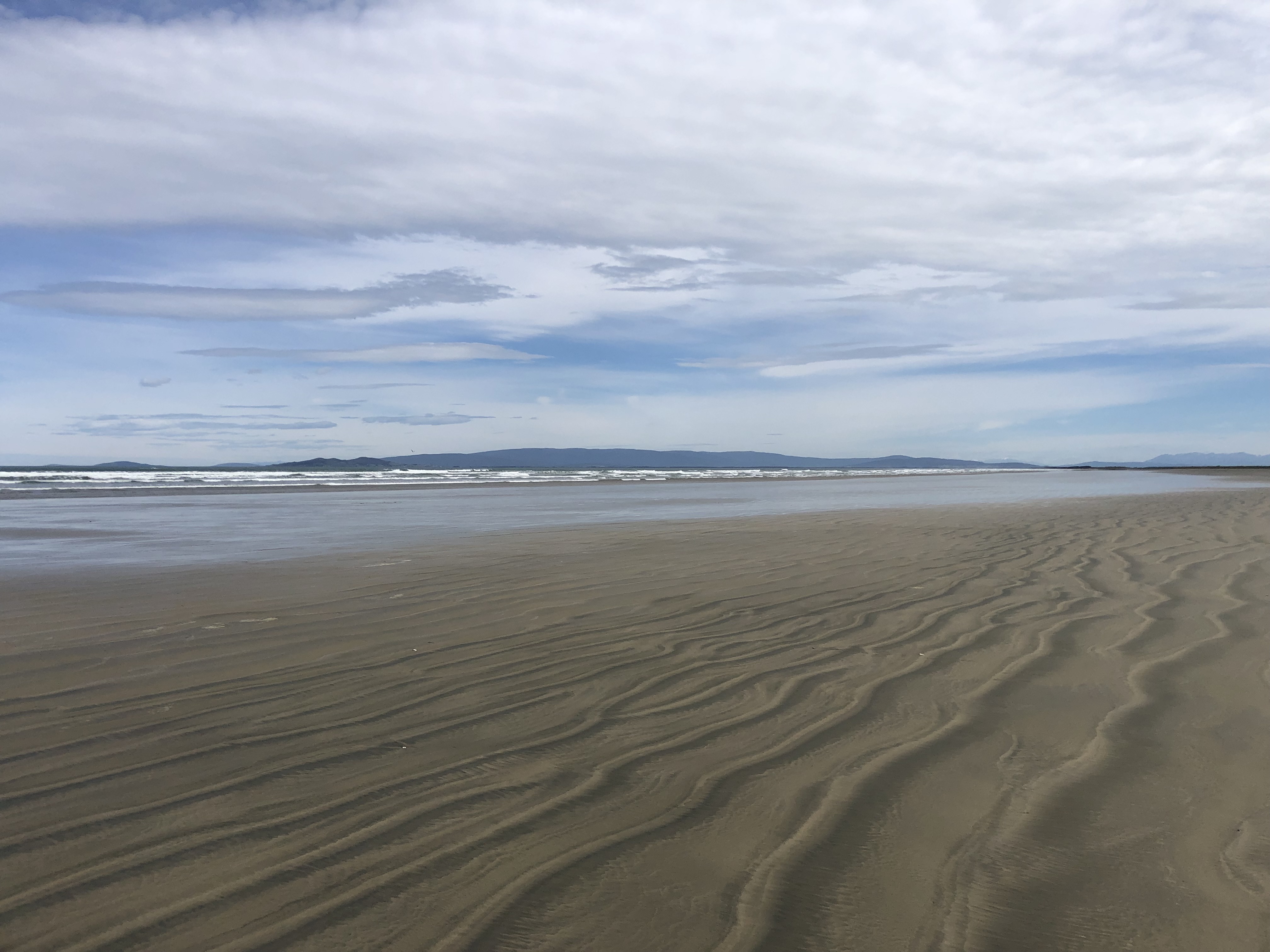
The beach is a long wing, of course
you like it; the waves blue, white crests
blown apart by wind, the sand
tawny and firm. But now you have to
walk it as if this is a sentence,
for seven hours, actually, until you turn
from the jauntiness of one step after another,
like hope in the future, which is possibly
why you’re doing this, until about the|
six hour point it all becomes pain.
The thigh bone connected to the|
knee bone, intimately. There is nothing
to be done about the future now, except
keep walking. No-one will save you. Only
the memory at five hours when the young
tattooed builder from Western Australia,
who has caught up to your stride,
stops to swim in the lolloping waves.
You are longing, you are longing to, also.
You won’t regret it, he says. You
take off your clothes on a public beach.
You don’t regret it.

Jillian Sullivan

Oreti Beach

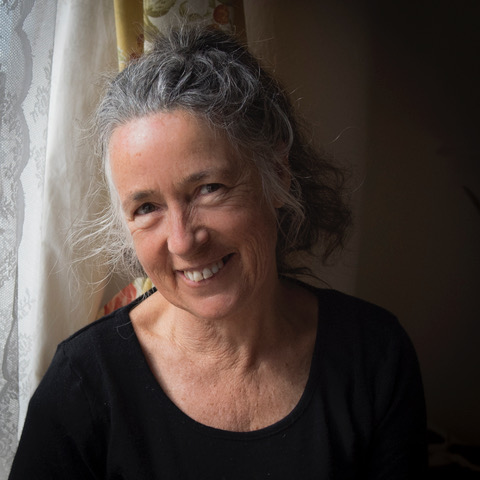
Jillian Sullivan lives and writes in Central Otago, New Zealand. She is published in a wide variety of genres and teaches workshops on creative non-fiction and fiction in New Zealand and America. Once the drummer in a woman’s originals band, and now grandmother of eleven, her passion is natural building. She finished a Masters degree in Creative writing in her 50s, and became builder’s labourer and earth plasterer nearing 60. Now home is the tussock lands, the tor-serrated dry hills and the white flanked mountains of the Ida Valley, where she has 20 acres bordering the Ida Burn, and plenty of room to store clay and sand for future earth projects. Her books include the creative non-fiction book, Map for the Heart – Ida Valley Essays (Otago University Press 2020).

Poetry Shelf Theme Season: Twelve poems about knitting

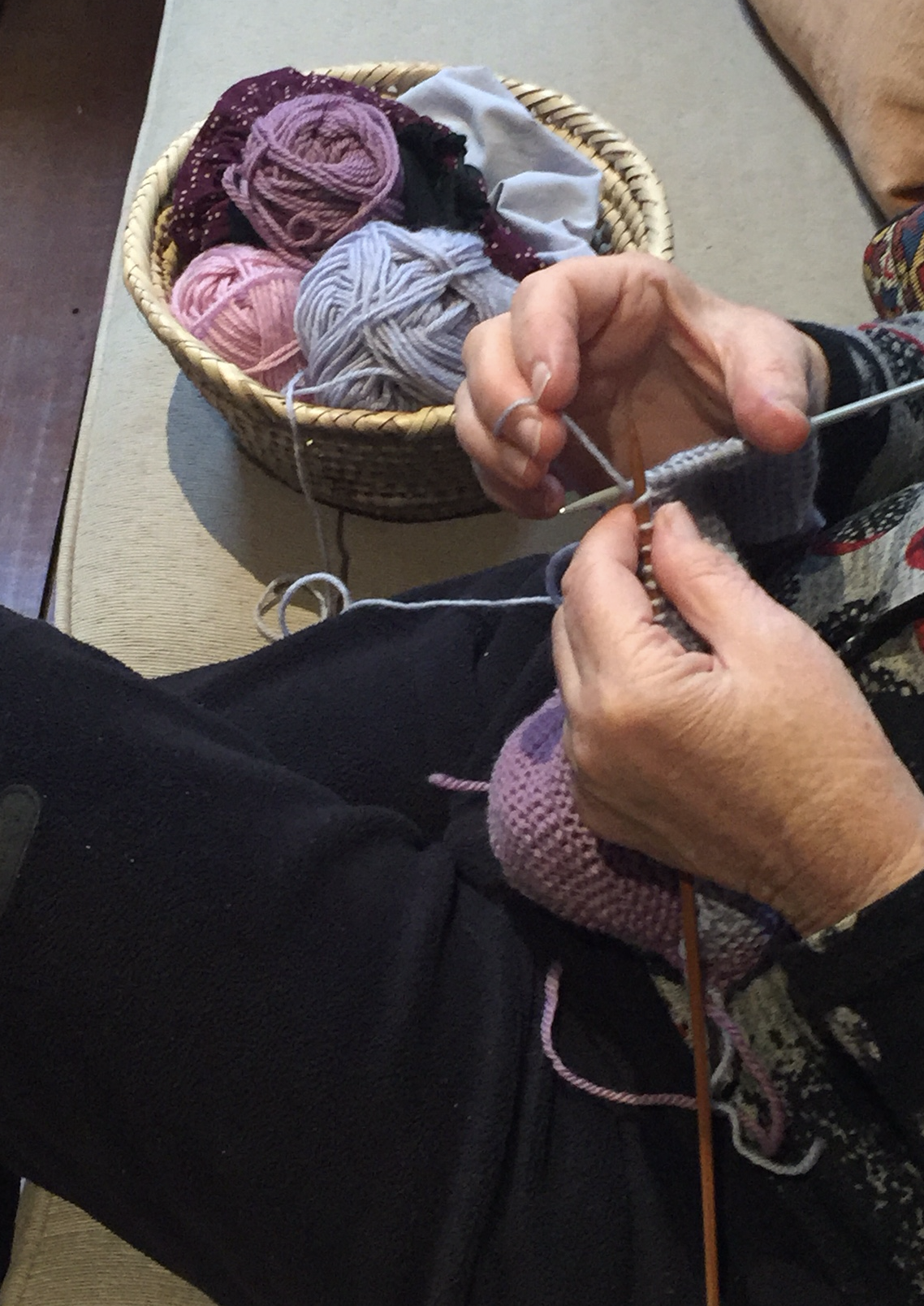
I have always knitted but never very often and never very well. I have a winter cardigan that has been on the go for years and I need help to get it working again. When I was young I knitted a very complicated black jersey. I completed it and it felt like a work of art with its intricate and sublime stitching and hard-to-see-as-you-knit colour. But before I ever put it on, my dog Woody ripped it to shreds. I have never managed to finish anything since. Perhaps this winter I will see if I can find the bag with the grey wool and hope the moths haven’t shredded the cardigan.

I love knitting because it is soothing, because crafting things is a joy, and we can produce things that are of the greatest comfort. (Although at AWF 2021, Brian Turner talked about his grandmother knitting him childhood jerseys he never really liked!) I love the way you can lose yourself in the clicketty clack rhythm, or if you are skilled, you can read and look elsewhere as you knit. But knitting is a metaphor for so much more. Writing a poem is a form of knitting. Relationships and family life are forms of knitting. Telling a story. Living. Loving. Existing.

I am grateful to all the poets and publishers who continue to support my season of themes. These poems are not so about knitting, but have a knitting presence in varying degrees. Ha! I think reading is a form of knitting too! Happy knitting!

Twelve poems about knitting

Lockdown knitting

I hit on knitting for something to do

in the gloom, I get restless,

this end of the room is dim

and outside the window, the sun

burns down on browned-out plants

holding onto the dry clay bank,

relentless blue behind.

What Paul watches all day long.

Smoking for something to do.

He raises his eyebrows ridiculously

as I pull the thread of last year loose,

wants to know what I’m doing.

I say it stops me from chatter.

We say little bits from time to time

it’s peaceful, his coffin

on the dining room table

…32, 34, 36… I’m casting on the front

a dark ship riding into the room

light falling in behind

through the potted palms

in the little courtyard.

I’m halfway up the rib

on announcement day; it’s grim.

Paul says if no one can come

and no one can go,

just chuck him in his car

and straight in the ground.

We take the back seat out.

I knit and wait and watch

at the foot of the bed

and I’m not sure of the pattern:

a black square in the middle

that no one knows how to do.    

Marty Smith

Berthe

Reflection on Berthe Morisot’s ‘Young Woman Knitting’

There you sit

where you’re put,

painted feverishly

into place.

Did you mark

the woman who

made you

in a thousand

strokes of pastel

oils? Do you notice

the way your hands,

held up to their task

seem to merge, blend

with the pale-pinkness

of your gown,

how your edges,

ill-defined,

threaten to dissolve

into the background,

so that you would

disappear in a haze

of smoke

and the smell of

burning wool?

Know all that as you sit

fixed at your task,

but also note that she –

your creator –

set your head, your shoulders

against the green-grey

of the water. So that we

might see you,

defined, so that you might

tip back,

fall,

feel your head caught by the water

and your hair trail in the waves.

Rose Peoples

knitting a poem

I’m knitting this poem

                               for you. knit 1 purl 2.

found the pattern

in an old drawer

fraying at the seams. knit 1 purl 2.

I’m tatting together

a crochet

to keep us warm. p2sso.

cabling

a colourful coverall

to contain love. p2sso.

no slip-stitched

tangle here, k2tog.

only this

inter/twined/applique

taut to the touch. k2tog.

I’m knitting this poem

                             for you. knit 1 purl 2.

ribbing together

a cardigan of care

we can don

anytime our world

unravels. knit 1 purl 2.

I’ve sewn up

this poem

for you. bind off.

Vaughan Rapatahana

Skein                                                                                                             

having three sons

to see through winter

in a house

with one fireplace

our mother was an

expert knitter

turning out identical

triplets of jerseys

almost continuously

or like Penelope

seated at her loom

she unravelled then

reconstructed frayed elbows

ragged seams and cuffs

hands moving

one over the other

in the firelight

with love

Tony Beyer

Calling

We let the string sleep slack between our houses

hours, days, years, until one of us tugs.

Then, lifted and pulled taut, we speak. Buzz

words coming down the line. A baked bean can

for trumpet and for conch. Our voices echo sound,

plumbing the marks. On my lips, your name, a manner

of holding you and what you spell. Something like

kin and kinship, something like kind; something like

affection being the grounding stitch of love, which,

purl to plain and slip-one-pass-one-over, knits

our kith. Peculiar patterns we make

with our yarn, shaped to what blows through and what’s

prevailing. Rambunctious winds, or fretful. These times

you are bent beneath a howling. I am picking up

the string to make a steady tether for your heart.

For thy heart. Dear friend, I’m thinking of thee.

Sue Wootton

from The Yield, Otago University Press, 2017

My Mother Spinning

Sit too close

& the spinning bob cools you.

Leave the room

& the foot pedal beats

on a raw nerve.

Leave the house

& a thread of wool follows.

Peter Olds

(picked by Richard Langston)

For my parents

You were meant to die at home

suddenly, one of you stepping in from a walk

to find the other on the floor inside.

Then one of you in the garden

splayed on the earth and

the other in the earth already so

it’s like you fell to them.

That’s not how you went.

Things were more difficult than that.

We still talk, or –

to use the language of crossing over –

communicate.

Newly chaste.

Awfully polite.

Shy ministers of the invisible continent.

To cover the quiet moments

I start to knit a hat, and

in deep times,

like a Victorian daughter,

I rest my knitting on my lap.

We have about a hundred stitches to let go

of Alzheimer’s and stroke

and pick up the daily walks down the goat track

to the beach, you two

ahead of me,

towels slung around your shoulders,

your bare feet finding their own way down

the steep clay path. 

Lynn Davidson

from Poetry New Zealand Yearbook 2020, Lynn reads ‘For My Parents’ here

Purl 

Side by side

we purl the fine, cream wool.

The baby pushes and glides

beneath your elbows, your fingers

tense with ribbing.

I pick up your slipped stitches,

pass the needles back and forth.

Our tiny singlets grow.

Outside it is afternoon,

the sky paling and snow

clumped on Ben Lomond.

Jillian Sullivan

from Parallel, Steele Roberts. 2014

The Pattern of Memoir

In the days before synthetics from China,

women knitted. My Brownie teacher taught me

at seven, words or wool, anyone can master it.

First, the unravelling of elusive, possibly false

strands of memory.


Next, you settle into long days, row after row,

hoping for a garment approximating truth,

knowing anything re-knitted is always a little

uneven, a compromise at best. I make no mention

of the casting off.


The way your hands finding nothing

to do now, start searching for trouble again,

unearthing that old thing in the back

of the wardrobe just itching for a make-over,

a whole new life.

In the days before synthetics from China,

women knitted. My Brownie teacher taught me

at seven, words or wool, anyone can master it.

First, the unravelling of elusive, possibly false

strands of memory.

Diane Brown

From Every Now and Then I Have Another Child, Otago University Press, 2020

KNITTING

P l e x i s P e r i p l e x i s


Stooped sore with the shells and soaps of gift-giving, the midnight-baked koulouria
and sesame, the red eggs of the resurrection, a map, a compass
shoulder-sloped with the southerly through the crack in the dining stained-glass,
the dawn frosts on the lawn and the knitting mum prudently started:


so you’ll be able to trace your way back, my mikroula, my thesaurus, so you won’t get lost,
fall, be eaten whole, wander for days in bad company, catch cold, worry; so you’ll have
something to fly from Yiayia’s yard with the pots, the tiles dusted-clean, the shed with my
clothes by the tree


I squeeze on and through; down the rows, losing rows; reach down from
the overhead locker, pull out needles and threads and start looping.

Vana Manasiadis

from Ithaca Island Bay Leaves: A Mythistorima, Seraph Press, 2009

coming undone

lists of names unspooling, not dead

but extinct, never-coming-again

owl, quail, snipe, wren

and I’m on my knees, weeding the lettuces

a blackbird hops, watches, drawn by the freshly turned earth

he’s wary he knows what species I am –

the one whose jersey’s unravelling

leopard, rhino, wolf, ibex

and strands of blue wool

unstitch behind me,

snag on blackberry barbs

and break

penguin, dolphin, sea-lion

and above me, gulls on lifting wind

bring salt-tanged keening

shearwater, petrel, albatross

and a cuff of my jersey flops down, hobbles

my hand on the trowel; I re-roll the sleeve

and my dangling hem has gathered dried sepals dropped

by camellias, that rustle, click like a small-clawed cortege

piopio, huia, bat

and I stare at my trowel as if I don’t know

what to do with it.

Carolyn McCurdie

very fine lace knitting

this is a picture of my house

wallpaper silvery with birch trees

covering the workbook

the stories and the pictures

red and yellow blue and blue-green

the smiling suns

jack in the box on the window sill

see Sweetie run

the high shelf in the toyshop

I want to be a ship

the umbrella poem

the oak tree and its acorns

the blue eyes that wouldn’t

the bar of chocolate and our mother at a high window

angelic openings in the calendar

circus elephants on the road at Waitara

hot black sand and the donkey rides at Ngāmotu

but we came ashore after the others

Mama still pale and no baby sister

though we begged her to tell us

when we might see her again

hush darlings she said

look at the tents and the lovely black sand

we will camp out until there is a house for us

but that house burned down right away

and Papa had no watch

or any instruments to make drawings with

and all of us felt sad

because the ship had gone

perhaps with our baby sister hidden somewhere inside

crying to us but we couldn’t hear

now Papa must cut the Sugar Loaf line

now Mama must tell us a new story

and when the earth shakes and the rats run across our blankets

we will not think of her

our sister outside in the dark

beside the rivers and wells

that wait to drown children less wary than us

when my mother was a girl

she thought all grown men had to go to jail

and feared to find her father one day

among the figures working in the prison gardens across the river

under the watchful eye of Marsland Hill

how did she know

afternoon sun slanting through eucalypts

stream curving or carving the valley that divides

here from there, us from them

now from then

or not at all

how did she know

that her grandfather was locked up

for three months pending trial

for the attempted murder of his wife and child

on the farm at the top of Maude Road

and that she, our great grandmother

would drop the charges, needing him

at home and claiming he would often shoot at her

going down the road, for target practice

he was cautioned against excessive drinking and released

to lose the farm and start over

as a teacher in country schools

how did my mother know

that her father, a young man in a country town

was put in the lock-up for two weeks in the year before the war

for sending indecent literature to the girl who jilted him

two postcards and a photograph

he is named but she is not

in the police report that went to the local paper

he was in the second draft

leaving for Palmerston North

dark hair brown eyes five foot seven

oblique scar on left forearm

August 1914

We were too small to remember

the trouble that took Papa to prison

for losing all his money

were we there too we ask Mama

did you take us did we all live in prison for a while

she will tell us only

that it wasn’t so bad

that everyone helped out and soon

he was home again I cannot now recall

how long we were away

but I was glad enough to leave that place

though I was not in favour of the long voyage

to the other side of the world

and dreaded confinement at sea

Well that is another story

now your father ties off his lines

for the company and remembers Cornish hills

Somerset hills and Devon hills under his pencil

he sees the nature path in the valley of the Huatoki

and knows it will take him to slopes covered in red and white pine

rimu and kahikatea

where a house may be built or brought

on land bought with remittances from England

the small child in the big photo

dark hair dark eyes pixie face

is my mother’s sister

they share a middle name

the child in the photo could be a year old

she is holding onto a stool with baby fingers

her feet are bare and she wears a dress

of soft white wool knitted by my grandmother

in whose bedroom the photo hangs

above the treadle sewing machine we are pumping hard

for the noise it makes up and down up and down

up and down and we are never told to stop or be quiet

we know the child in the photo died long ago

before she had time to become my mother’s sister

but we never ask our grandmother

about the very fine lace knitting

of the photo that hangs in her room

when at last we go looking for

the child who would have been our aunt

the trail is cold the dates stones or tears

Date of death: 20 September 1923

Place of death: Stewart Karitane Home Wanganui

Cause or causes of death: Gastroenteritis 2 1/2 Months, Exhaustion

Age and date of birth: 19 Months, Not Recorded

Place of birth: Stratford

Date of burial or cremation: 21 September 1923

Place of burial or cremation: Kopuatama Cemetery

we see our grandfather thrashing the Dodge

between Stratford and Whanganui

and the journey home with the little daughter

he will bury next day at Kopuatama

was our grandmother there

in the car at the Karitane Home at the graveside

the two and a half months of sickness

the birth of a second child

our Uncle Jack

8 July 1923

up and down up and down up and down

noise to cover a heartbeat under soft white wool

I look upon these letters and do not like to destroy them

they are a house of memory and when I read

I am my mother on deck at last

searching for a ripple on the flat Pacific Ocean

I am my father making delicate waves

around each of the Sugar Loaves on the map going to London

I am my brother in a choir of breakers

that bring his body to the landing place

I am my sister in the boat

outside the orbit of the moon and the orbit of the sun

I am my sister a bell-shaped skirt

between ship and shore

I am my sister painting a rock arch

that became fill for the breakwater

I am my sister exhausted

by travelling and the house to clear

I am my sister writing poems

that lie between the thin pages of letters

I am my sister singing

ship to shore choir of breakers alpine meadow

I am myself on the other side of nowhere

waiting for a knock on the door

my mother is taking a photo

of herself and our baby sister

in the mirror on the wall of silvery grey birches

it’s summer and she has propped the baby

between pillows in the armchair

holds the Box Brownie still

leans over the back of the chair smiling

into the mirror

she and her baby by themselves

reflected in silvery light

not for a moment aware of the child

whose passing long ago

mirrors to the day

the arrival of our sister

whose middle name my mother took

from the light of Clair de Lune

and so the daughter library

remakes itself and is not lost

though great libraries burn and cities fall

always there is someone

making copies or packing boxes

writing on the back of a painting or a photo

always there is someone

awake in the frosty dark

hearing the trains roll through and imagining

lying under the stars at Whakaahurangi

face to the sky on the shoulder of the mountain

between worlds and mirror light

***

Michele Leggott

Tony Beyer lives and writes in Taranaki. Recent poems have appeared online in Hamilton Stone ReviewMolly Bloom and Otoliths.

Diane Brown is a novelist, memoirist, and poet who runs Creative Writing Dunedin, teaching fiction, memoir and poetry. She has published eight books: two collections of poetry – Before the Divorce We Go To Disneyland, (Jessie Mackay Award Best First Book of Poetry, 1997) Tandem Press 1997 and Learning to Lie Together, Godwit, 2004; two novels, If The Tongue Fits, Tandem Press, 1999 and Eight Stages of Grace, Vintage, 2002—a verse novel which was a finalist in the Montana Book Awards, 2003. Also, a travel memoir, Liars and Lovers, Vintage, 2004; and a prose/poetic travel memoir; Here Comes Another.

Lynn Davidson’s latest poetry collection Islander is published by Shearsman Books and Victoria University Press. She had a Hawthornden Fellowship in 2013 and a Bothy Project Residency at Inshriach Bothy in the Cairngorms in 2016.  In 2011 she was Visiting Artist at Massey University. She won the Poetry New Zealand Poetry Award, 2020 and is the 2021 Randell Cottage Writer in Residence. Lynn has a doctorate in creative writing and teaches creative writing. She recently returned to New Zealand after four years living and writing in Edinburgh. 

Michele Leggott was the first New Zealand Poet Laureate 2007–09 under the administration of the National Library. She received the Prime Minister’s Award for Literary Achievement in Poetry in 2013. Her collections include Mirabile Dictu (2009), Heartland (2014), and Vanishing Points (2017), all from Auckland University Press. She cofounded the New Zealand Electronic Poetry Centre (NZEPC) with Brian Flaherty at the University of Auckland where she is Professor of English. Michele’s latest collection Mezzaluna: Selected Poems appeared in 2020 (Auckland University Press).

Vana Manasiadis is Greek-New Zealand poet and translator born in Te Whanganui-a-Tara and based in Tāmaki Makaurau after many years living in Kirihi Greece.  She is 2021 Ursula Bethell Writer-in-Residence at Te Whare Wanaga o Waitaha Canterbury University. Her most recent book is The Grief Almanac: A Sequel. 

Carolyn McCurdie is a Dunedin writer, mainly of poetry and fiction. Her collection, Bones in the Octagon was published by Makaro Press in 2015.

Peter Olds was born in Christchurch, 1944. His mother was a born knitter. All her life she spun and knitted. His Selected Poems was published in 2014 by Cold Hub Press.

Rose Peoples is from Te Awakairangi/Lower Hutt. She is a student at Victoria University and, having finished her law degree last year, decided that the logical next step was to embark upon a Masters in Literature. She is a bookseller at Good Books. Her work has previously appeared in Cordite, Mimicry and Starling.

Vaughan Rapatahana (Te Ātiawa) commutes between homes in Hong Kong, Philippines, and Aotearoa New Zealand. He is widely published across several genre in both his main languages, te reo Māori and English and his work has been translated into Bahasa Malaysia, Italian, French, Mandarin, Romanian, Spanish. Additionally, he has lived and worked for several years in the Republic of Nauru, PR China, Brunei Darussalam, and the Middle East.

Marty Smith spent 2020 writing poems and an essay for her friend Paul, who died in lockdown in April. Now she’s working on her racing project, following riders, trainers and ground staff through the seasons at the Hastings racecourse as they work with their horses.Marty spent lockdown as one of a small team given dispensation from Cranford Hospice to give end-of-life care to their friend, Paul. He does not make it to the end of the extra five days. Nearly. So close. Poem and audio, ‘My Lights for Paul’. VERB Essay: ‘I hope to make six good friends before I die’ (for Paul).

Jillian Sullivan lives in the Ida Valley, Central Otago. Her thirteen published books include creative non-fiction, novels and short stories.  Once the drummer in a women’s indie pop band, she’s now grandmother, natural builder and environmentalist. Her awards include the Juncture Memoir Award in America, and the Kathleen Grattan prize for poetry.  Her latest book is the collection of essays, Map for the Heart- Ida Valley Essays (Otago University Press 2020). 

Sue Wootton lives in Ōtepoti-Dunedin, and works as the publisher at Otago University Press. ‘Calling’ won the 2015 takahē international poetry competition.


Ten poems about clouds

Twelve poems about ice

Ten poems about dreaming

Eleven poems about the moon