The verb to be is not, in Māori. How, then, would we translate that soliloquy?
We had the choice. We said not. Is this why they (me) tried so hard to
kill us (we)? We need be not. We live, which is a dark disguise
a river which itself swims. Beauty which flies into nets and tropes.
This is a warning and we all hear it: our wheels rumble and hum high strung
before we veer (volcanic) left or right towards the grimacing witness.
*
Look at me posing like this! Like that! A mother in a tizz with salt sea hair struggles not to stray.
Later a bodied wine will warm her glass and mine, the chamber of my voice, my rising
chest. Like mine her verbs and nouns resist. Her troubles, like the unforgiving
childgod, sometimes break the plates. Volcano in a fortification. Mirror in a mirror.
At any time at least one of us is looking straight ahead, no fraying, no strays. Look at me kneeling like this!
Look at me holding all fine things towards you! The deep blood beat of my music. Be, it sings. Be. Be.
Hinemoana Baker
Takatāpui poet and performer Hinemoana Baker traces her ancestry from Ngāti Raukawa-ki-te-Tonga, Ngāti Toa Rangatira, Te Āti Awa and Kāi Tahu, and from England and Germany. Her four poetry collections, several original music albums and other sonic and written work have seen her on stages and pages nationally and in many other countries around world in the last 25 years. Her most recent poetry collection, ‘Funkhaus’ (THWUP 2021) was shortlisted for the Ockham New Zealand Book Awards, and has been translated into German and Polish. Having lived in Berlin for 9 years, Hinemoana has now returned home, and recently finished a term as Randell Cottage Trust’s 2024 writer in residence, living and writing at the historic homestead at the base of Te Ahumairangi (Thorndon) in Te-Whanga-nui-a-Tara.
Currently Hinemoana is working towards a Creative Writing doctorate at IIML (Te Herenga Waka Victoria University), for which she is writing a new collection called ‘Exhaust World’. As a long-time teacher and mentor for other writers, Hinemoana is also involved in facilitating poetry sessions for takatāpui and LGBTQI+ Māori writers, through Mana Tipua Trust in Ōtautahi. These sessions, called ‘Ruri Rongoā’, are also part of Hinemoana’s doctoral research, facilitating poetry wānanga as a form of rongoā, repair, solidarity and community. In this work she draws on the model of Te Whare Takatāpui, a framework created by Dr. Elizabeth Kerekere.
So many poets have written walking poems. So many poets have commented on the relationship between walking and a poem gathering momentum in the pedestrian’s head. Just for a start, I am thinking of Jenny Bornholdt’s magnificent poem ‘Confessional’, Michele Leggott’s walking blind, a vital thread, with different insight and senses on alert in her poems, and of course Blanche Baughan’s love of hill walking. A poem itself is a form of walking with its various rhythms and absorptions. The poet becomes walker, bricoleur, observer, mind-drifter.
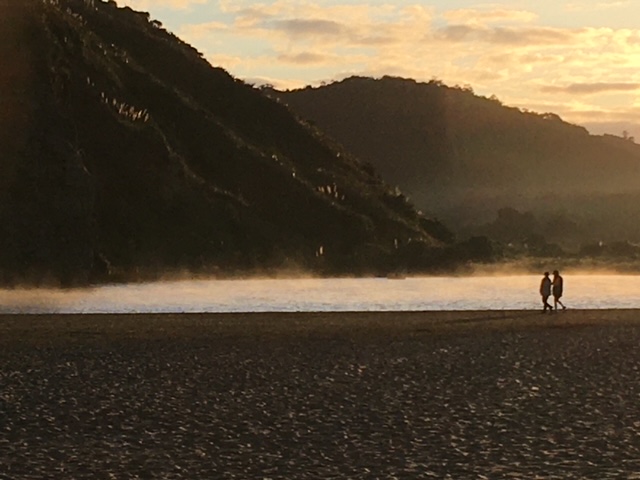
My most recent collection The Track (Seraph Press) was written as I walked the third day of the Queen Charlotte Track with a broken foot in a wild storm. To keep walking I used the alphabet to compose poems and returned home with a book-length sequence. Whenever I have read from it, I am right back in the storm diverting pain with words. A strange feeling indeed. But I also have the early mornings at Te Henga Bethells. Walking on the near empty beach in the early morning light is an opening for poetry. Glorious.
I am currently reading Foxtrot and Other Collisons, Shari Kocher’s sublime second collection. In her endnote she says the poems were written over a five-year period. She wrote:
No poem in this collection was written before it was walked: arbitrary or otherwise, the rule I applied to the book’s organic growth was that each poem was to be ‘discovered’ on foot, and many continued to be composed peripatetically across many drafts while out walking in ways dedicated to that terrain.
The poems I have selected are not so much about walking but have a walking presence that leads in multiple directions. Many of the poems are longer rather shorter and take you on glorious excursions. Once again I am grateful to publishers and poets who are supporting my season of themes.
The Poems
Travelling light
She is walking at the edge of the sea
on the wet shining sand.
The bright sky is behind her.
She is travelling
on a sheet of grey light.
We pass, and I wave.
She laughs. Of course.
A woman who walks at the edge,
on light, would laugh.
Adrienne Jansen
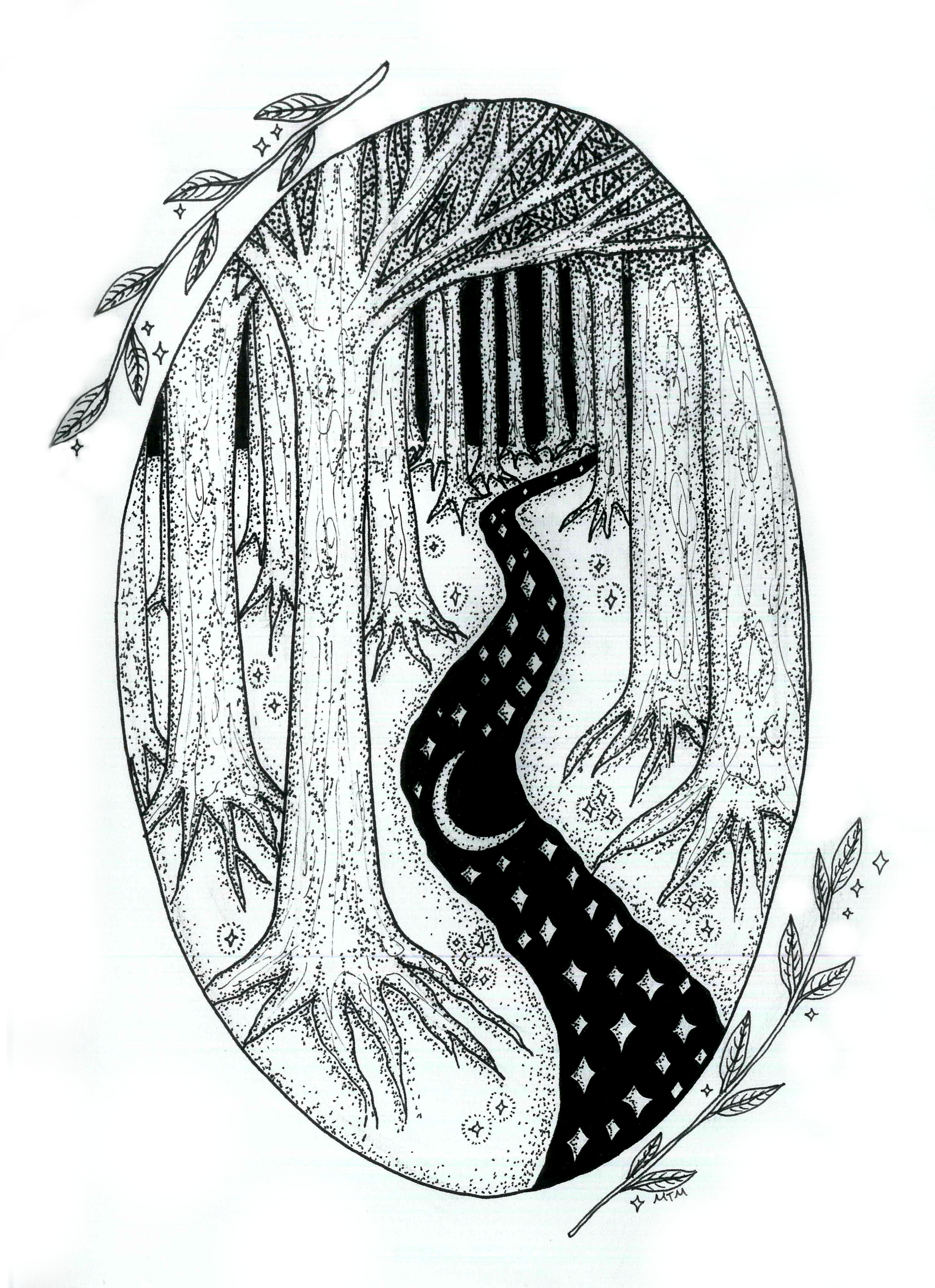
Madeline McGovern’s ‘Enchanted forest’, source of Rose People’s poem
A path of stars
There are many things
I would like to tell you,
my darling
My darling,
I would like to tell you
in this life
everything will be okay
I would like to tell you
that you will walk upon a path of stars
that you will travel through the forest
and never lose your way
I would like to tell you
to look only at the stars
and not the gaps between them
to look at the sun
and not the clouds.
My darling, I would like to tell you all these things
for the same reason we read fairy stories to children
and weave their years with mythologies
because there is comfort is such lies
because I want the world you live in
to carry more magic
and less sharp edges.
But, on this dark night
I have run out of comforting lies.
My darling,
I cannot promise you a path of stars.
some days you will walk upon
unforgiving concrete or sharp-edged gravel
some days you will wade through quicksand.
Tonight, I cannot conjure stars
without the black between them.
My darling, I can only wish
when you walk through the dark and tangled forest
and lose your way a thousand times
that one day
you come across a clearing
where you can sit
and where the sun will find you
and warm your face
and where you can rest.
My darling
you can rest.
Rose Peoples
My Maunga
we’re monitoring pests at the Maungatautari reserve
gluing bait to ink slick cardboard with peanut butter
extracted from a single hole in the finger of a latex
glove bulging with the breakfast spread
our hands were all sticky fingers and dirt
made it to the first true slope
gorse brushing our knees the angle necessitating
a fuck-this what-are we doing crawl upwards
the trees move back and forth
poles caught in a tide
swinging long ways
between sickly white clouds
and glare-blue sky
a miromiro sitting plump on a ponga
squeaking like a mouse
then fluttering caught blurry on a camera
there are no edgerleyi in sight
Māhinaarangi’s perfume a ghost in the clouds
replaced by sweat-stink
the trip back down is a chorus of snaps
and low groans from wood and soil
giving way under our weight grown careless
with exhaustion
then we’re back through the mechanical gate
one shuts and locks for the other to unlock and open
pull it back on its squealing hinge
to leave the reserve behind
it’s a short trek down the hill back to the car
the air made pungent by cowpats
essa may ranapiri
from Ngā Kupu Waikato: an anthology of Waikato poetry, ed Vaughan Rapatahana, Waikato Press, 2019, selected by Aimee-Jane Anderson-O’Connor
A Walk with Your Father
Before you do anything else, check your lungs.
Are they the right size for you, are you the right size for them?
Are they nice and snug against your ribs and spine?
Don’t worry if they’re a bit big for you, you’ll grow into them.
They must be full, however; you don’t want them empty.
You have a long way to go.
Put your hand inside your mouth and make sure
everything’s in it’s place, check that all the pipes and hoses
leading from your lungs into your mouth are in position and in good nick.
You don’t want any leaks or sudden explosions
this is your air we’re talking about.
Close your mouth securely around this apparatus.
Next check your weight. If you are too heavy
or too light you won’t get anywhere. By the way
there’s no need to take a whole lot of extras with you.
Some people strap expensive knives to their legs and wear protective gloves.
There’s no real need for any of this – an ordinary old sharp knife
from the kitchen drawer will do. And just your bare hands.
You may need to signal to each other.
Now pay some attention to your skin.
It should feel secure and warm
but also allow plenty of room to move freely.
There are any number of colours available nowadays –
they all do pretty much the same job.
Your feet, are they the right size?
If they’re too large you will tire quickly,
too small and you’ll be left behind.
You’re probably looking at feet
about the same size as his.
Your eyes – spit in them.
It keeps everything clear.
That step you’re about to take
will have to be wider than you’re used to.
Don’t forget to move forwards, not backwards.
Keep your hand on your mouth so everything stays in place
when you break the surface.
Mihi to Tangaroa. Mihi to Hinemoana.
Now get yourself in under there,
immerse yourself.
Do it now, go.
He’ll be right behind you.
Hinemoana Baker
from mātuhi / needle, Victoria University Press, 2004
When I Head Home I Like To Be On The Left Side Of The Road SoAs To Be Closer ToWhere I Am Heading
I walk home with a bouquet of flowers held up
like an explorer holding up a torch,
in the early days of these days.
The flowers do not emanate
light, but they do catch the eyes of the people
I might like. The flowers will sit by my bed
waiting for when I open my nose from sleep.
Maeve Hughes
from horse power, printed by Fernbank Studio, 2019
The verb ‘to be’
It is foggy.
There is a mountain.
I am climbing the mountain.
She is climbing the mountain.
The path is slippery.
She says, ‘It is all right.
It will all be all right.’
She is right.
There are people behind us.
They are climbing the mountain.
They are in the fog.
Their voices are broken.
There is a shout.
There is laughter.
We are all climbing the mountain.
She is climbing ahead of me.
There is fog in her hair.
Her hair is glittering.
The wind is cold.
There is a man with a walking stick.
There are names scratched on the stick.
He carries the names as if they were eggs.
They could fall and smash.
We are carrying names too.
They are carved on bone.
They are scratched on skin.
We are all carrying names up the mountain.
There is a chapel at the top.
It is locked.
Its walls are damp.
There is broken timber.
There are fallen stones.
It is cold here.
Now we are turning.
We are going down.
She is running.
She is sliding down the mountain.
I am following her.
She is running ahead in the fog.
That is how it is now.
That is how it will be.
That is how it will be
till she is and I am not.
She will be.
I will not be.
The verbs slip under our boots,
like small changeable stones.
Fiona Farrell
from The Pop-Up Book of Invasions, Auckland University Press, 2007
A note about ‘The verb ‘to be’’
This poem was written when I had a writing fellowship in Ireland. My younger daughter took leave from her job working with kakapo recovery on Codfish Island and came to stay for a month. We climbed the high hills.
We climbed Croagh Patrick, up the slippery path from the enormous carpark and visitor centre to the crest where the fog was thick and the chapel was closed and a chill wind tore at the flimsy remnants of shelters built to give some protection to the thousands who come here each year. Toward the top we met a man who was climbing using a camán (the stick used in hurling or the women’s version of the game, camogie) as a support on the stony ground. He showed us some names written on the flat head of the camán. ‘You’ll recognise these’ he said. We didn’t, and felt awkward for not knowing. It was an All-Irish champion camogie team he had coached, his daughter’s name among them. Some time after their victory she had become ill and was now in hospital, and he had made a vow to climb Croagh Patrick 30 times, if only she could be made well. He carried the camán each time. This was his 29th pilgrimage.
We climbed Errigal, a steep-sided hill in Donegal. Irish is still spoken around here and the man who ran the hostel was passionate for the language. It is subtle, he said. There are, for instance, two verbs meaning ‘to be’: one suggests permanence (‘this is the floor’). The other suggests transience and is used, for example, when speaking of the weather (‘it is sunny’).
I walked up the tracks behind my daughter with her strong legs, her dreadlocked hair. Not that long ago, I led her. I can still feel the weight of her in my arms, carrying her when she didn’t want to walk any more between banks of tussocks and flowering hebes on the track at Tongariro, or through the bearded bush at Dawson Falls, or on some sunny Sunday walk near Pohangina. The feel of her little duffel coat and her red tights and her feathery hair, usually chopped into a jagged fringe by herself using the toenail scissors. Now she takes the lead and I’m following, and behind us, there’s that long queue of people, living and dead, stretching back down into the fog.
Fiona Farrell
Pacing Poem
Past the green flowers
past the red stool
past the drying towels
past the letter from school
past the newspapers
past the glass fruit bowl
past the decanter
past the ‘Hoptimist’ doll
and into the kitchen.
Past the oven
past the breadbin
past the broken dishwasher
past the empty tomato tin
and towards the table.
Around the red chair
over the floorboards
past the stairs
and onto the rug.
Past the lamp
past the outside world
past the radio
past the Argentinian print
and around the bassinet.
Past the novels
past the poetry
past the proteas
past the pottery
and into the sun.
Past the breeze
past the ottoman
past the unwrapped cheese
past the pestle
past the wine rack
and nestled
under my armpit:
two deep eyes
still shining wide,
so we keep circling
until sleep arrives.
Amy Brown
from neon daze, Victoria University Press, 2019
Travelling
How normal it feels to get around new places— how basely, physically normal it is for our feet to touch the ground and propel us forward, step after step exactly as they do anywhere.
And if these roads home one day become the rivers they once were— though we might have to pedal the currents or steady our soles on pebbles— we’ll soon get used to it.
A flavour’s only new at first taste; and common sights become invisible; and love dulls into something necessary; and in grief we think this new lack is impossible to live with but we do.
Jane Arthur
from Craven, Victoria University Press, 2019
By the Bosphorous Strait I sat down and wept
Breathe in
when Istanbulites woke to find the water a bright turquois they thought
the worst, a curse had taken over the city or toxins seeped from textile
factories but scientists agreed it was just an explosion of plankton migrating
from the Black Sea, a milky blessing heralding the summer calm, I am told
it’s serene.
breathe out
I did not find out I was colour blind until they tested our class at the library
in Form 2, it explained so much, why I always coloured grass in brown and
tree bark green, why I’d clash my outfits and no one is impolite enough
to tell me, my parents must have thought I was stupid or acting out, the
scientists agreed it was neither
breathe in
my manager told me that things can be difficult here, but when you walk
along the Bosphorous it makes it all worth it, sometimes I think this
city is magical, other times I’m sure it is cursed, a dark pact signed in its
catacombs centuries ago threatening to explode, most of the time it is sad,
mourning a lover lost or a friend it couldn’t save
breathe out
everyday at 12.30pm I walk out of the office and stand at its mouth waiting
for a sign, for the air to return, the explosions in my lungs to subside, the
panic attacks are a daily occurrence, a striking in the middle of a meeting, a
hungry mall, a dolmus packed with strangers and I tense my abdomen and
squeeze my shirt with my hands and try not to remember
for the life of me all I can see is blue, even the scientists are at a loss on this
one, they tell me to relax my shoulders and focus on my breathing, not
worry about time I can’t unwind
it’s amazing how something can be right in front of you and you just can’t see it
Mohamed Hassan
from National Anthem, Dead Bird Books, 2020, selected by Alison Wong
Locus
as you walk you become the vanishing
as you walk you lose the point
as you walk you snow
though autumn
the ranges hold the storm
the ranges bite the neck
and night and day unfix
and night and day turn stone
snow monkeys sit with ice on lashes
coast monkeys pick snails from pools
shop monkeys flip fish in milk and flour
as you walk through autumn, the ranges
unfix snow, and pool you lose
ice-pick, milk-lash, snail-bite—
turn your neck to the day—
Nicola Easthope
from Working the tang (The Cuba Press, 2018).
Duet
I became an old woman
age eleven
Doctor and physio
circling my fingers
around a stick
bone on wood
Swinging my legs
to a new rhythm
wood on bone
bone on wood
Instructing me
in the art
of walking a duet
heel toe
bone wood
stick stick
Trish Harris
published NZ Listener, 1999
Crunch
(i)
She collected broken things: fragments of a delicate speckled eggshell she found on the gravel driveway, a starfish arm from the beach. She kept them in a leadlight box, along with her imaginings.
(ii)
He was the one who knew the way back: just to the left of the forked piece of driftwood standing upright on the shore. Over the bed of African daisies and ice plants. Past the clump of marram and close to the flat patch of sand where they’d lain together that time. That time he hardly thought about any more.
(iii)
She walked briskly, in a way that made you think the act of walking was the purpose of the walk. Not the view of the island, nor the chirrup of pipits camouflaged in the dunes. Not the way a shoe sinks into the sand, nor the sight of a collie hurtling after a stick. No, her walk was for the sake of walking and she’d dressed accordingly: the sneakers, the sun visor, the sensible orange windbreaker.
(iv)
The sheets were so bright against the dull sky, he almost couldn’t bear it. He wanted to take a pot of red paint and throw it against them. He wanted to tell her, you bring out the red in me.
(v)
She lay on top of the duvet being a starfish, each of her hands touching an edge of the bed. She thought how nice it would be, not to have to share.
(vi)
He found himself walking up and down the gravel driveway, just to hear it crunch underfoot as the stones scraped against each other. When he noticed her watching him from the bedroom window, he just kept crunching.
(vii)
She lifted the speckled egg from its cotton wool cradle in the leadlight box and fitted the pieces together to make it whole again. There was one piece missing. She turned the shell so she couldn’t see the gap.
(viii)
Pounding the driveway. Grinding the stones. He supposed he could do it all day. His heavy tread. His trample. He didn’t see her leave the house.
(ix)
The beach was a beacon, making her way clear. She could feel the island’s solid presence, even when she couldn’t quite see it.
(x)
He recognised her footsteps, getting louder. There she was at his shoulder, joining her crunching pace to his. His foot, her foot. Stamping together on a firm earth. Her foot, his foot. Two in step. A two-step. She smelt like biscuits. He reached for her hand.
Janis Freegard
from Kingdom Animalia: the Escapades of Linnaeus Auckland University Press, 2011
Hill walk
We often wonder what moves us in a day – was it words in a sequence that surprised us
or notes played by someone who kept their mouth closed & let the sound leave their broken body
or maybe after years it was the sight of your brother nursing his leg down the hill catching up with you
so you could walk on together to discuss what bird that was in the bush making the sound
neither of you were certain of.
Richard Langston
from Five O’Clock Shadows The Cuba Press, 2020
walking with Dorothy
a dog bothers the scraps
of food around the compost bin
it howls at the murmur of the village stream
ignoring the voice calling from the hill
the trees gleam with overnight rain
each tree, taken singly, was beautiful
the bees emerging
from their wooden house
mistake me for
a flower and for
a moment I am one
hopelessly lacking in pollen
swaying in the breeze
and taking up space
standing still in the mud
unmaking myself amid
leaves I’ve seen a thousand times
and never wondered the names of
some trees putting out red shoots
query: what trees are they?
a fantail flits from branch to branch
something bigger than language
in its movements
which lose
their sheen when captured
and later the sky between
apartments and streetlamps
empties but for the full moon
and Venus striving to be seen
as brightly
all the heavens seemed in one perpetual motion
grit on the footpath like glitter
the roads very dirty
a morepork somewhere in the dark
oblivious to me and better for it
Ash Davida Jane
from How to Live with Mammals, Victoria University Press, 2021
The Poets
Jane Arthur lives in Wellington, where she is the co-owner and manager of a small independent bookshop. Her debut poetry collection, Craven, won the Jessie Mackay Award (Best First Book) at the 2020 Ockham NZ Book Awards.
Hinemoana Baker is a poet, musician and creative writing teacher. She traces her ancestry from Ngāti Raukawa, Ngāti Toa Rangatira, Te Āti Awa and Ngāi Tahu, as well as from England and Germany (Oberammergau in Bayern). Hinemoana’s latest poetry collection Funkhaus (VUP, 2020), was shortlisted for The Ockham NZ Book Awards 2021. She has edited several online and print anthologies and released several albums of original music and more experimental sound art. She works in English, Māori and more recently German, the latter in collaboration with German poet and sound performer Ulrike Almut Sandig. She is currently living in Berlin, where she was 2016 Creative New Zealand Berlin Writer in Residence, and is completing a PhD at Potsdam University. Hinemoana’s website
Amy Brown is a writer and teacher from Hawkes Bay. She has taught Creative Writing at the University of Melbourne (where she gained her PhD), and Literature and Philosophy at the Mac.Robertson Girls’ High School. She has also published a series of four children’s novels, and three poetry collections. Her latest book, Neon Daze, a verse journal of early motherhood, was included in The Saturday Paper‘s Best Books of 2019. She is currently taking leave from teaching to write a novel.
Nicola Easthope (Pākehā, with roots in Orkney, Scotland, England and Wales) is a high school English and psychology teacher, and mentor of young activists and writers. Her two books of poetry are: leaving my arms free to fly around you (Steele Roberts, 2011) and Working the tang (The Cuba Press, 2018). She has appeared at the Queensland, Tasmanian and Manawatū poetry festivals, as well as LitCrawl in Pōneke. Nicola’s very occasional blog is gannet ink.
Fiona Farrell publishes poetry, fiction, drama and non-fiction. In 2007 she received the Prime Minister’s Award for Fiction, and in 2012 she was appointed an Officer of the New Zealand Order of Merit for Services to Literature. Her most recent publication, Nouns, verbs, etc.Selected Poems (OUP 2020) has been warmly reviewed as ‘a Poetry Treasure House…a glorious book’ (Paula Green, Poetry Shelf), and ‘an excellent retrospective… remarkable for drawing small personal realities together with the broad sweep of history.” (Nicholas Reid, The Listener). After many years in remote Otanerito bay on Banks Peninsula, she now lives in Dunedin.
Wellington-based Janis Freegard is the author of several poetry collections, most recently Reading the Signs (The Cuba Press), as well a novel, The Year of Falling (Mākaro Press). She was the inaugural Ema Saikō Poetry Fellow at New Zealand Pacific Studio and has previously won the Katherine Mansfield Short Story Prize and the Geometry/Open Book Poetry Prize. She grew up in the UK, South Africa and Australia before her family settled in Aotearoa when she was twelve. ‘Crunch’ was placed third in the Manawatu Festival of New Arts Poetry for Performance competition and performed in Palmerston North.
Trish Harris has written two books – a poetry collection (My wide white bed) and a memoir (The Walking Stick Tree). She teaches non-fiction on the Whitireia Creative Writing Programme, is co-founder of Crip the Lit and edited their 2019 pocketbook, ‘Here we are, read us: Women, disability and writing’. She says she’s a part-time crane operator…but maybe she’s dreaming?
Mohamed Hassan is an award-winning journalist and writer who has lived in Egypt, Aotearoa and Turkey. He was the winner of the 2015 NZ National Poetry Slam, a TEDx fellow and recipient of the Gold Trophy at the 2017 New York Radio Awards. His poetry has been watched and shared widely online and taught in schools internationally. His collection, National Anthem, was shortlisted for the Ockham New Zealand Book Awards, poetry category.
Maeve Hughes is a recent graduate of English literature with a minor in creative writing. She lives in Wellington where she loves to walk home.
Ash Davida Jane’s poetry has appeared in Mimicry, Sweet Mammalian, Starling, The Spinoff and elsewhere. Her second book, How to Live with Mammals, was published by Victoria University Press in April 2021. She lives and works in Wellington.
Adrienne Jansen writes fiction and non-fiction for both adults and children, but for her, poetry is where the magic is. Her fourth collection of poetry, All of Us, published in 2018, is a series of poems, with carina gallegos, around the themes of migration and refugees. She is the co-founder of Landing Press, a small Wellington poetry publisher. She lives at Titahi Bay, north of Wellington. Website
Richard Langston is a poet, television director, and writer. Five O’Clock Shadows is his sixth book of poems. His previous books are Things Lay in Pieces (2012), The Trouble Lamp (2009), The Newspaper Poems (2007), Henry, Come See the Blue (2005), and Boy (2003). He also writes about NZ music and posts interviews with musicians on the Phantom Billstickers website.
Rose Peoples is from Te Awakairangi/Lower Hutt. She is a student at Victoria University and, having finished her law degree last year, decided that the logical next step was to embark upon a Masters in Literature. She is a bookseller at Good Books. Her work has previously appeared in Cordite, Mimicry and Starling.
essa may ranapiri (Na Guinnich, Ngaati Wehi Wehi, Highgate, Ngaati Raukawa) is a Tainui poet from Kirikiriroa living on Ngaati Wairere land / they want everyone to know that the Echidna they write about isn’t a spikey mammal but a lady with two long snake tails instead of legs / go figure / tino takatāpuitanga 4eva
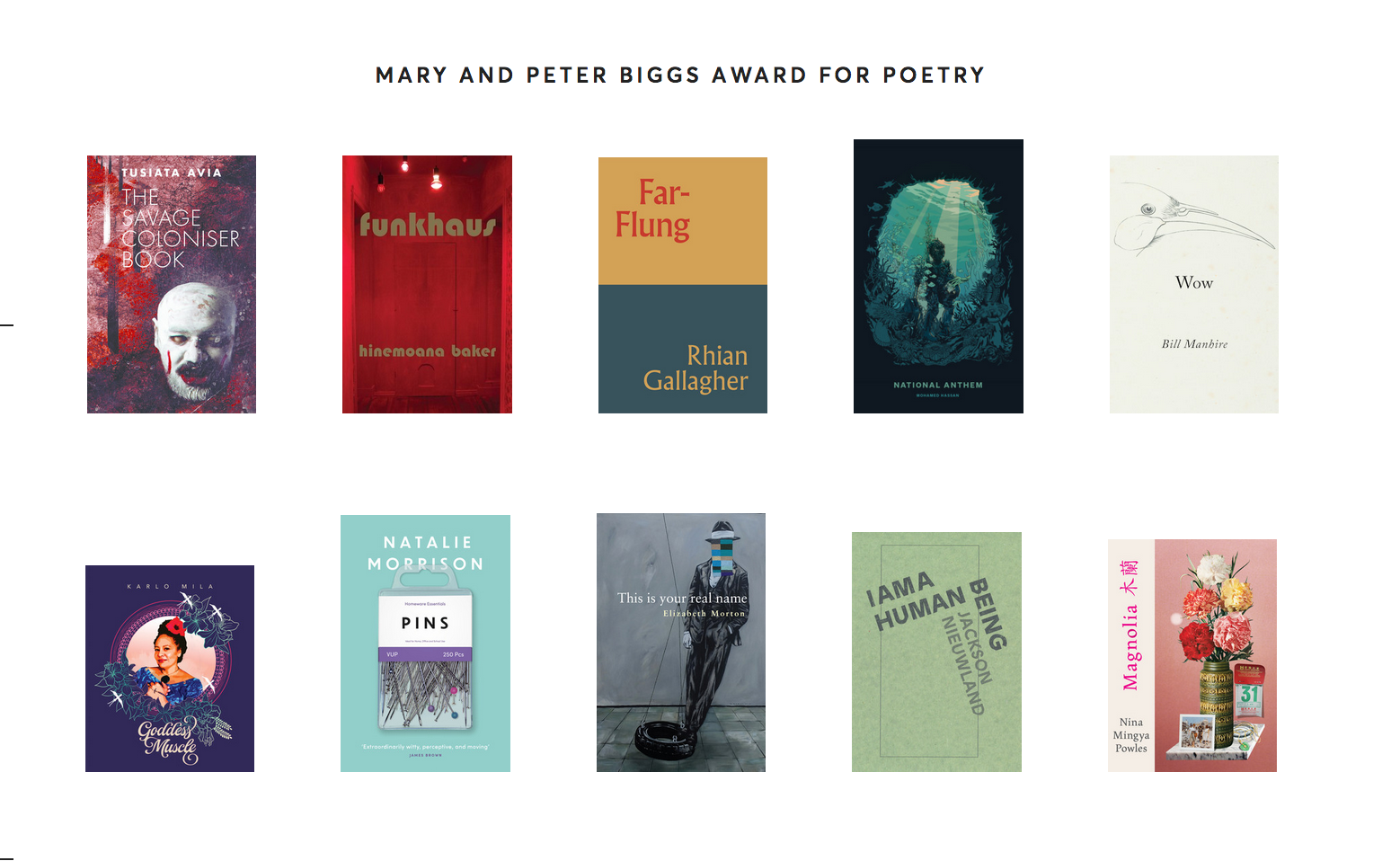
“Poetry collections published in Aotearoa in 2020 show a wealth of exceptional and original work. It’s an exciting situation for New Zealand poetry. The four shortlisted collections are striking, all exhibiting an acute global consciousness in difficult times,” says Poetry category convenor of judges Dr Briar Wood.
I was so excited about the poetry longlist, I spent the last few months celebrating each poet on the blog. What sublime books – I knew I would have a flood of sad glad feelings this morning (more than on other occasions) because books that I have adored were always going to miss out. I simply adored the longlist. So I am sending a big poetry toast to the six that didn’t make it – your books will have life beyond awards.
I am also sending a big poetry toast to the four finalists: your books have touched me deeply. Each collection comes from the heart, from your personal experience, from your imaginings and your reckonings, from your musical fluencies. The Poetry Shelf reviews are testimony to my profound engagement with your poems and how they have stuck with me.
Over the next weeks I am posting features on the poets: first up, later this morning, Tusiata Avia.
Mary and Peter Biggs CNZM are long-time arts advocates and patrons – particularly of literature, theatre and music. They have funded the Biggs Family Prize in Poetry at Victoria University of Wellington’s International Institute of Modern Letters since 2006, along with the Alex Scobie Research Prize in Classical Studies, Latin and Greek. They have been consistent supporters of the International Festival of the Arts, the Auckland Writers Festival, Wellington’s Circa Theatre, the New Zealand Arts Foundation, Featherston Booktown, Read NZ Te Pou Muramura (formerly the New Zealand Book Council), the New Zealand Symphony Orchestra, the Featherston Sculpture Trust and the Kokomai Arts Festival in the Wairarapa. Peter was Chair of Creative New Zealand from 1999 to 2006. He led the Cultural Philanthropy Taskforce in 2010 and the New Zealand Professional Orchestra Sector Review in 2012. Peter was appointed a Companion of the New Zealand Order of Merit for arts governance and philanthropy in 2013.
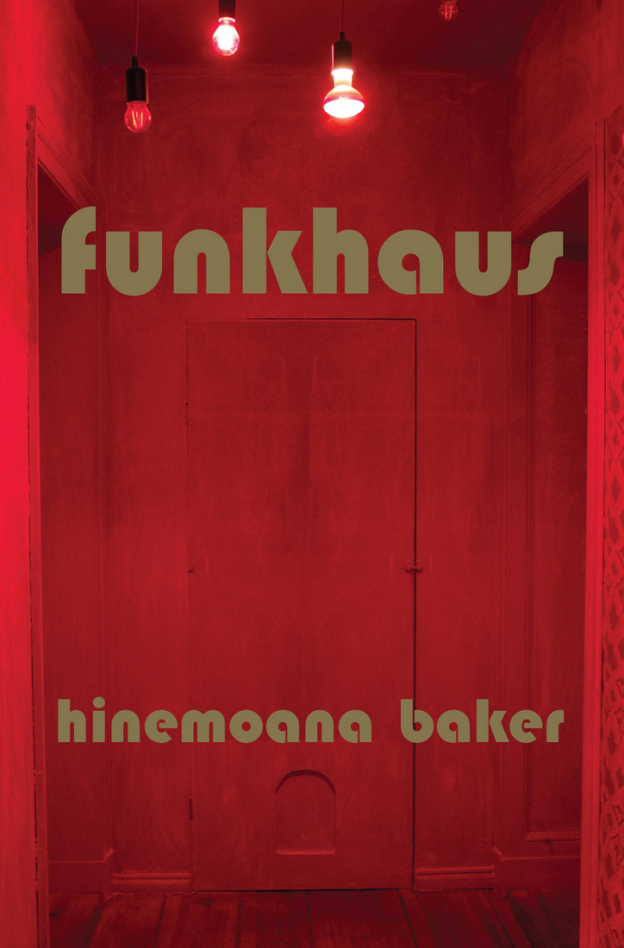
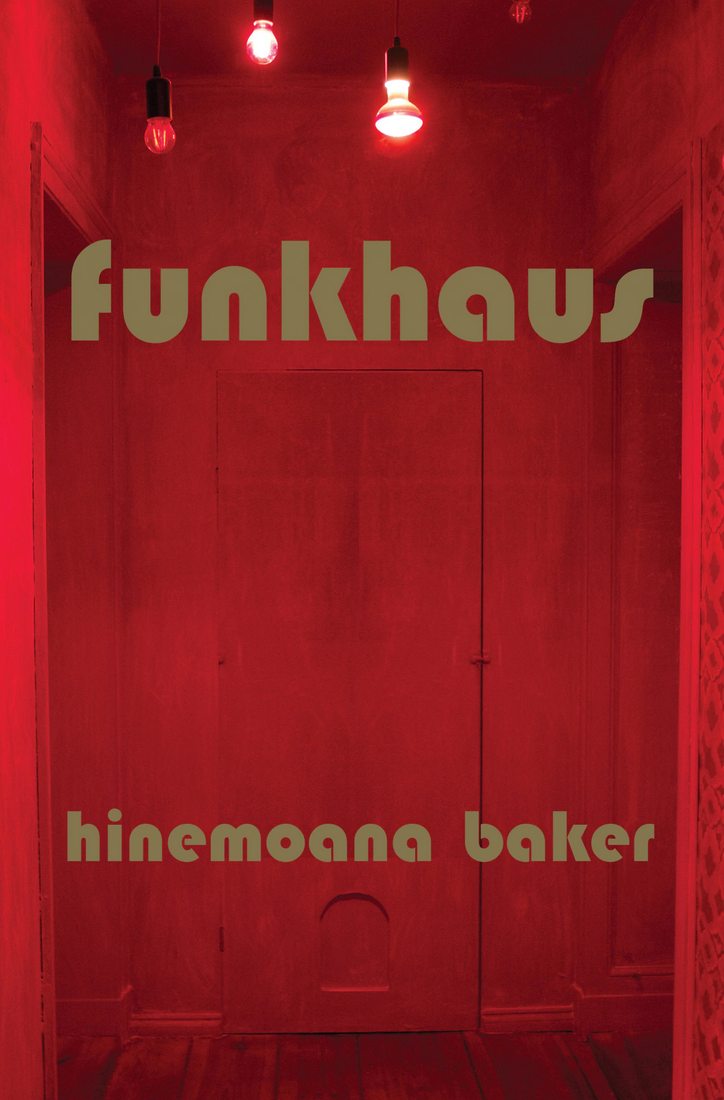
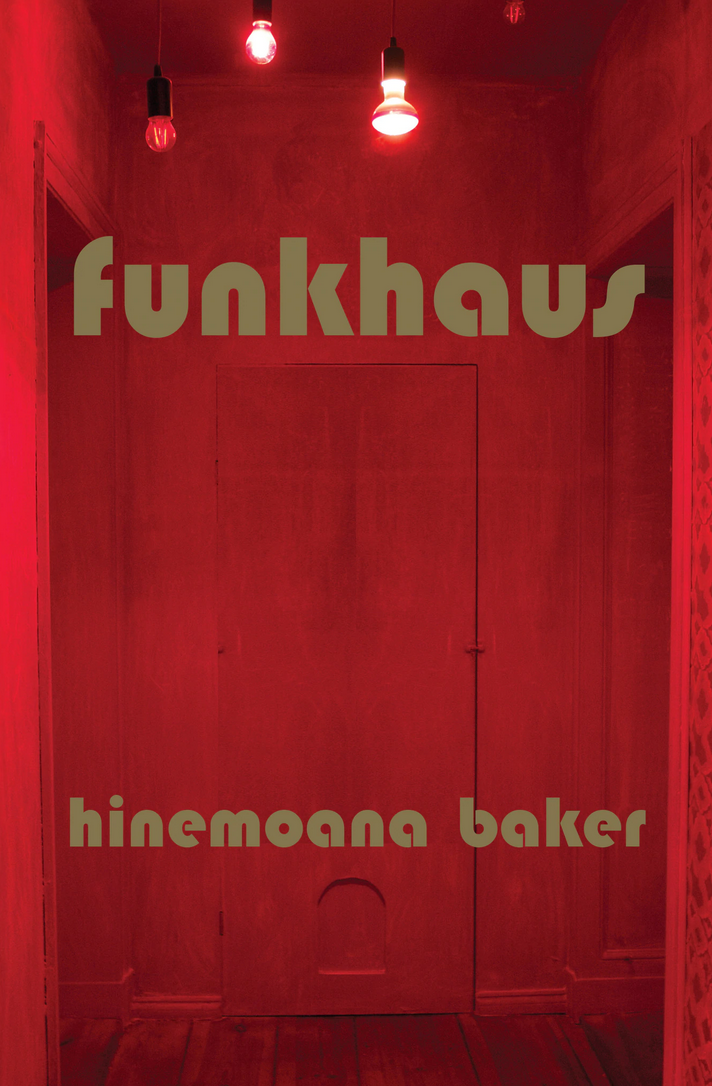
Hinemoana Baker funkhaus Victoria University Press, 2020
A woman carries in her arms
a heavy rectangle of sky –
roofs and treetops.
She places it in the back seat
of her car to calm down.
You and I sit
like separate circles
of a Venn diagram
unaware of the fabled
tasting zones of the tongue.
from ‘flomarkt’
Hinemoana Baker’s new poetry collection is peppery, salty, sweet. The poems form a bridge between two homes, Aotearoa and Berlin, and the overall effect is a book you want to keep reading. Again and again and again. I have been reading funkhaus since it arrived in my postbox May last year. Some books are like this. The German word ‘funken’, we learn in the blurb, is ‘to send a radio signal’. I love the idea that poetry becomes a form of broadcast. I love being an antenna, picking up the static, the silences, the connections across eight months.
funkhaus is on the Poetry category longlist of the Ockham New Zealand Book Awards. The shortlist will be announced on March 3rd.
Hinemoana has always achieved a stop-you-in-your-tracks fluency, maybe because she is a musician and her ear is attentive to the sound of the line, regardless of the subject matter, the personal admissions, the political acumen, the light along with the biting dark. I am listening to funkhaus and admiring the pared back melodies, both the acoustic and the electric.
Pepper blacks the pan so never
Shake it near me, wait
For the flagrant animation
In my bed base
In mountain situations
Sleep swaddled, wake ecstatic
from ‘Narcissist advice column’
What has gripped me more than anything – and maybe this particularly matters in these Covid times – is the way most poems are peopled. Yes there is a mesmerising view out the window where the birds are flying in formation. Yes there is a new vacuum cleaner. Yes there is the question of whether extinct species might be revived. But touch the beating pulse of this collection and you will feel people. Unlike the camera that gravitates towards the people-emptied landscape, Hinemoana draws people in close. Think loved ones, friends, family, passersby. Sometimes a poem is infused in the surreal and you imbibe a scene that tilts and sticks. This is is the start of ‘friday night’, a little beauty of a poem:
Way down south
in the south
of the south island of himself
over greyscale trees.
Eagles and meteorites are not.
On other occasions the poem is grounded in the personal. There is always the gap, the quavery silence, the unnamed pronouns (I, we, you, he, she, they), the spiky detail that fascinates, the heart of experiencing, of imagining, of replaying. I especially love ‘aunties’, a poem Hinemoana read for Poetry Shelf (2019). This glorious tour de force of a poem makes people (aunties) utterly, movingly, wittily, wincingly, gorgeously present.
We had a marching auntie and an eyelash-curler aunty, a
headscarves one, a lavender talcum powder aunty and a satin
running shorts one. We had an aunty who was laid out on the
sheepskin rug by that uncle when she was six, and seven and
eight. These might be the same aunties. We had an aunty who
died on the same day as her own sister and turned into that
white horse on the green hill. A drawn-on-eyebrows aunty who
said I don’t care how good they are at yodelling they’re giving
country music a bad name those girls.
Ah but I also love ‘mother’, ‘waitangi day’, ‘if i had to sing’, waiata tangi’. Find the book. Find your own clearings.
Hinemoana crafts poetry as flourishing movement. In part as melodic flow but also in the way poems come into being in surprising ways. The unexpected paths and sideturns. The underlays and overlays. The semantic chords and the visual alerts. In ‘fox’, an animal is spotted outside in the snow (‘The most powerful things / are the ones we simply come across’). The poem entrances as you move from this sweet epiphany to loss of appetite, your own child dying, to the skin as kidney to:
Climbing into the air outside your door
a tufty plant grows from a cobblestone.
And there –
there is the sandwich board with pictures of fruit
and words you don’t understand
which make nothing happen.
Another sublime example is ‘flohmarkt’, the poem I quoted from at the start of the review. Here we move from the striking opening image of woman and sky to tongue myths to dog and bike owners, and then to chairs. This is how poetry can move. It is gap and it is breathtakingly resonant. Here is the end of the poem:
I live with a surplus
of chairs, mostly empty.
My one, with its smooth
wooden arms and your one
if you were here.
The kind of chair you never want
to get up out of
the kind of chair for which
prepositions were invented.
Maybe this sounds old-fashioned but for me Hinemoana’s poetry gets down to the essence of things. There is an addictive economy that opens out into lush and surprising fields of reading. Like a yin and yang effect. Like poetry as a basket of essential oils that you flick on your wrist and carry all day. That work for each of us differently. That sustain and delight, that get you moving and thinking. That change as you wear them over the course of eight months. Poetry as essential. Poetry as skin tingling essential. It feels essential to Hinemona – to be writing poems, to be travelling across the poetry bridge, that arc of static and connection between Berlin home and Aotearoa home, to be grounded in her friends and whānau, her writing support crew. She acknowledges the vital support of those who have offered aroha and wisdom, publication and recording opportunities, reviews, translations, festival invitations in her endnotes. I offer a small thank you to Hinemoana – each book is a gift and we are all the better for residing within your latest one.
HINEMOANA BAKER is a poet, musician and creative writing teacher. She traces her ancestry from Ngāti Raukawa, Ngāti Toa Rangatira, Te Āti Awa and Ngāi Tahu, as well as from England and Germany (Oberammergau in Bayern). She is the author of the poetry collections Funkhaus (VUP, 2020), waha | mouth (VUP, 2014), kōiwi kōiwi (VUP, 2010), and mātuhi | needle (co-published in 2004 by Victoria University Press and Perceval Press).
Hinemoana has edited several online and print anthologies and released several albums of original music and more experimental sound art. She works in English, Māori and more recently German, the latter in collaboration with German poet and sound performer Ulrike Almut Sandig. She is currently living in Berlin, where she was 2016 Creative New Zealand Berlin Writer in Residence, and completing a PhD at Potsdam University.
CONGRATULATIONS to all the poets. This is the best longlist I have seen in years. I have loved all these books to a sublime degree. I am also delighted to see a mix of university presses and smaller publishers, and those inbetween. I plan to review Hinemoana and Karlo’s books over the coming weeks (Goddess Muscle, Karlo Mila, Huia Press and Funkhaus, Hinemoana Baker, Victoria University Press).
For end-of-year Poetry Shelf wraps, I have usually invited a swag of writers to pick books they have loved. It has always turned into a mammoth reading celebration, mostly of poetry, but with a little of everything else. This year I decided to invite a handful of poets, whose new books I have loved in 2020, to make a few poetry picks.
My review and interview output has been compromised this year. I still have perhaps 20 poetry books published in Aotearoa I have not yet reviewed, and I do hope to write about some of these over summer.
The 8 Poets
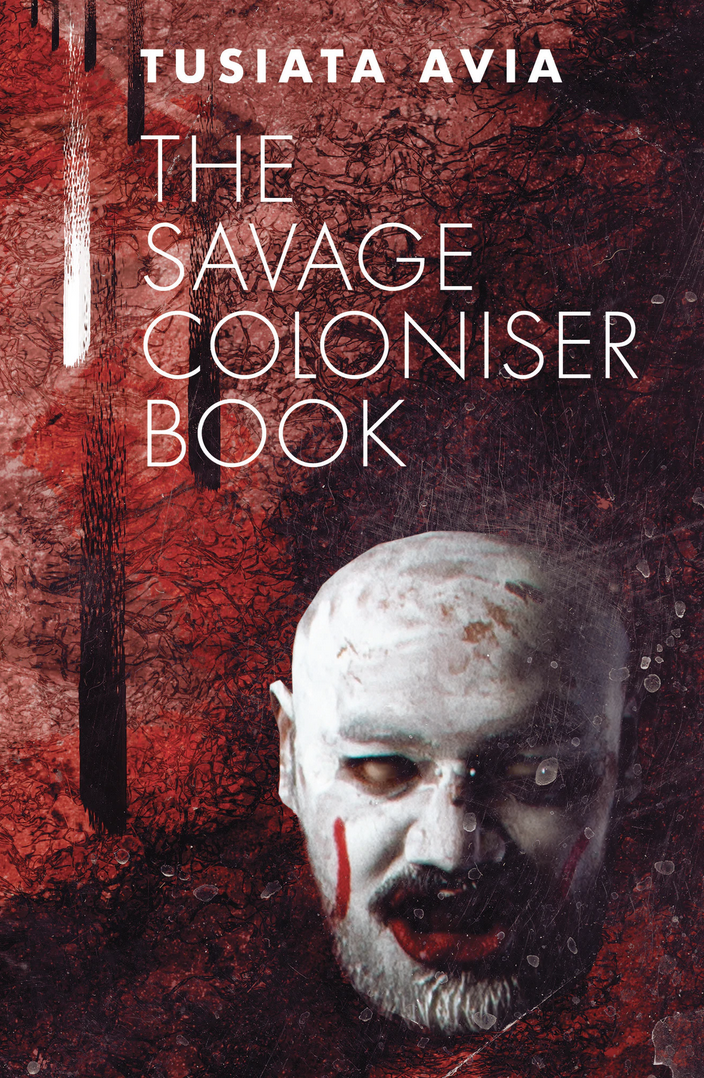
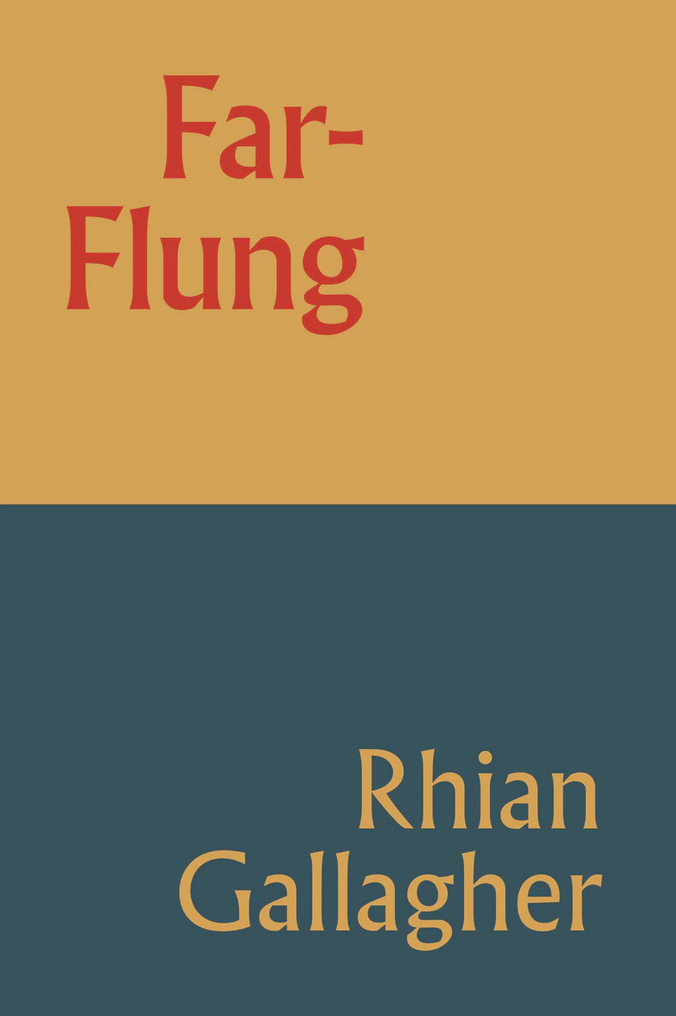
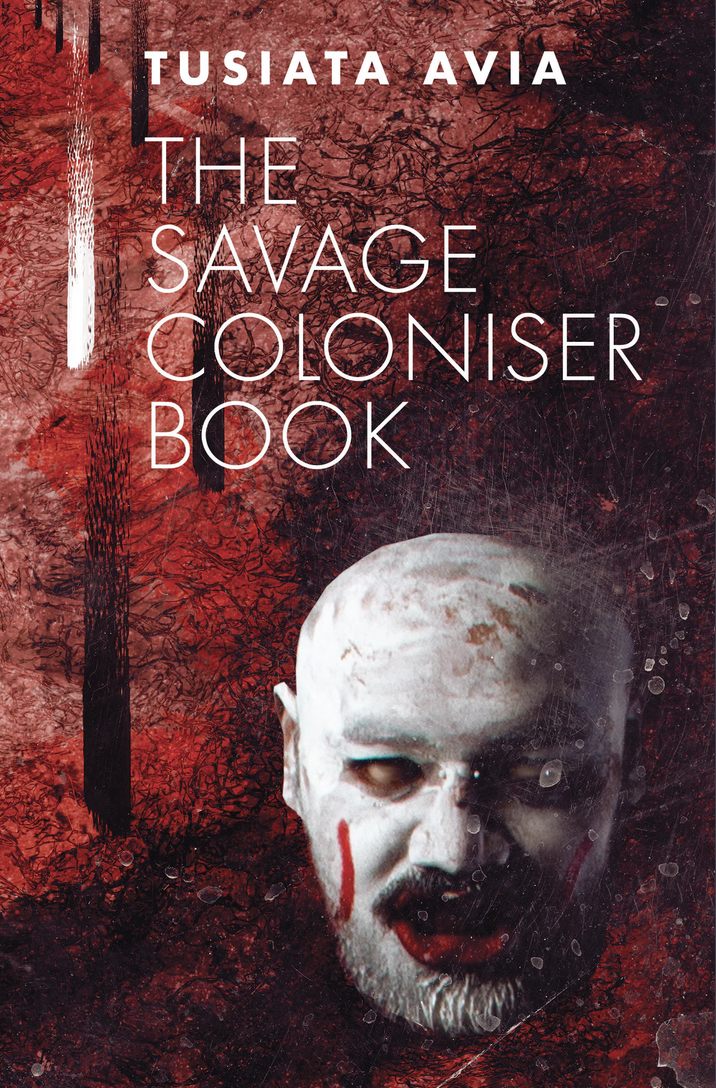
Among a number of other terrific poetry reads (Oscar Upperton’s New Transgender Blockbusters for example), here are eight books that struck me deep this year (with my review links). Tusiata Avia’s The Savager Coloniser (VUP) is the kind of book that tears you apart and you feel so utterly glad to have read it. Tusiata has put herself, her rage, experience, memories, loves, prayers, dreads into poems that face racism, terrorism, Covid, inequity, colonialism, being a mother and a daughter, being human. An extraordinary book. Rhian Gallagher’s Far-Flung (AUP) is a sumptuous arrival, a book of exquisite returns that slowly unfold across months. Her poetic craft includes the lyrical, the political, the personal and the contemplative in poems that reflect upon the land, experiences, relationships.
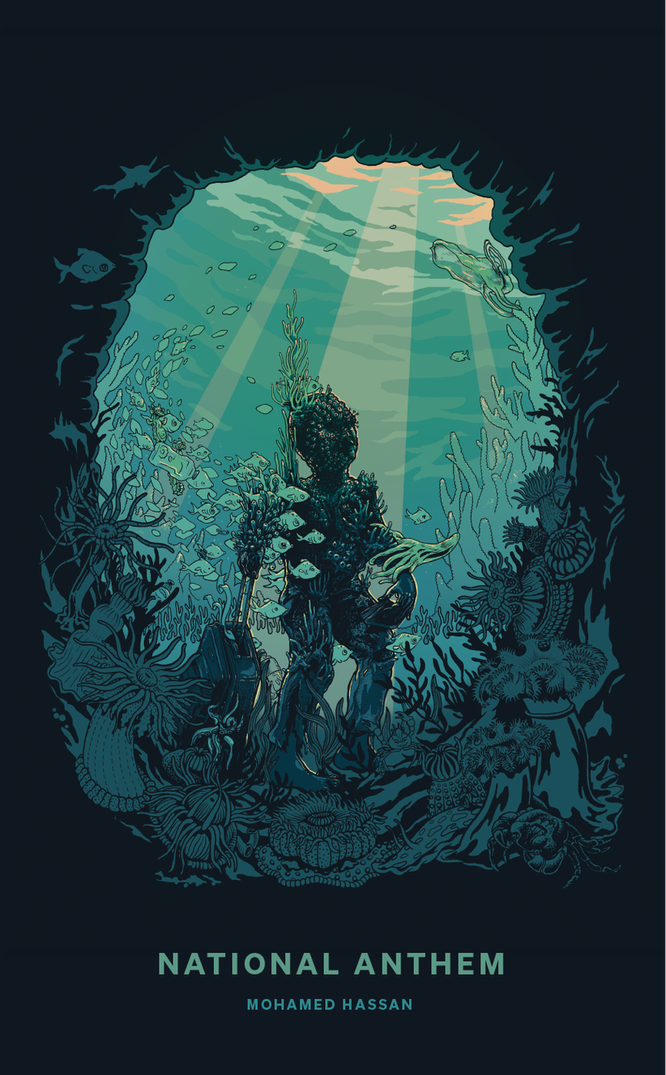
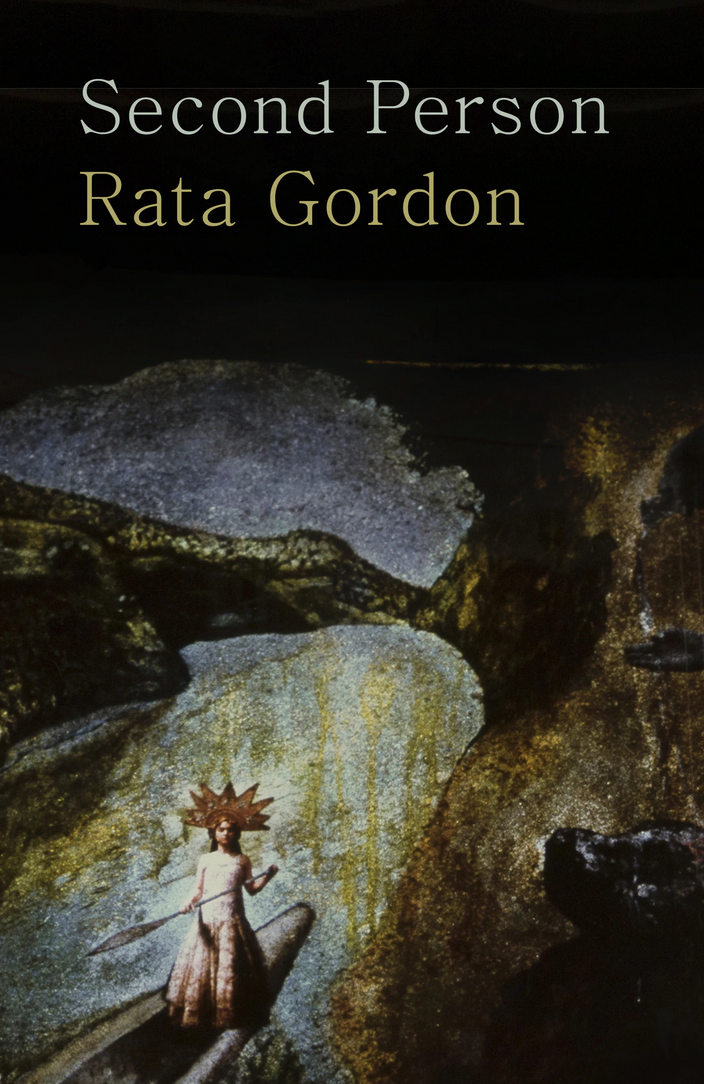
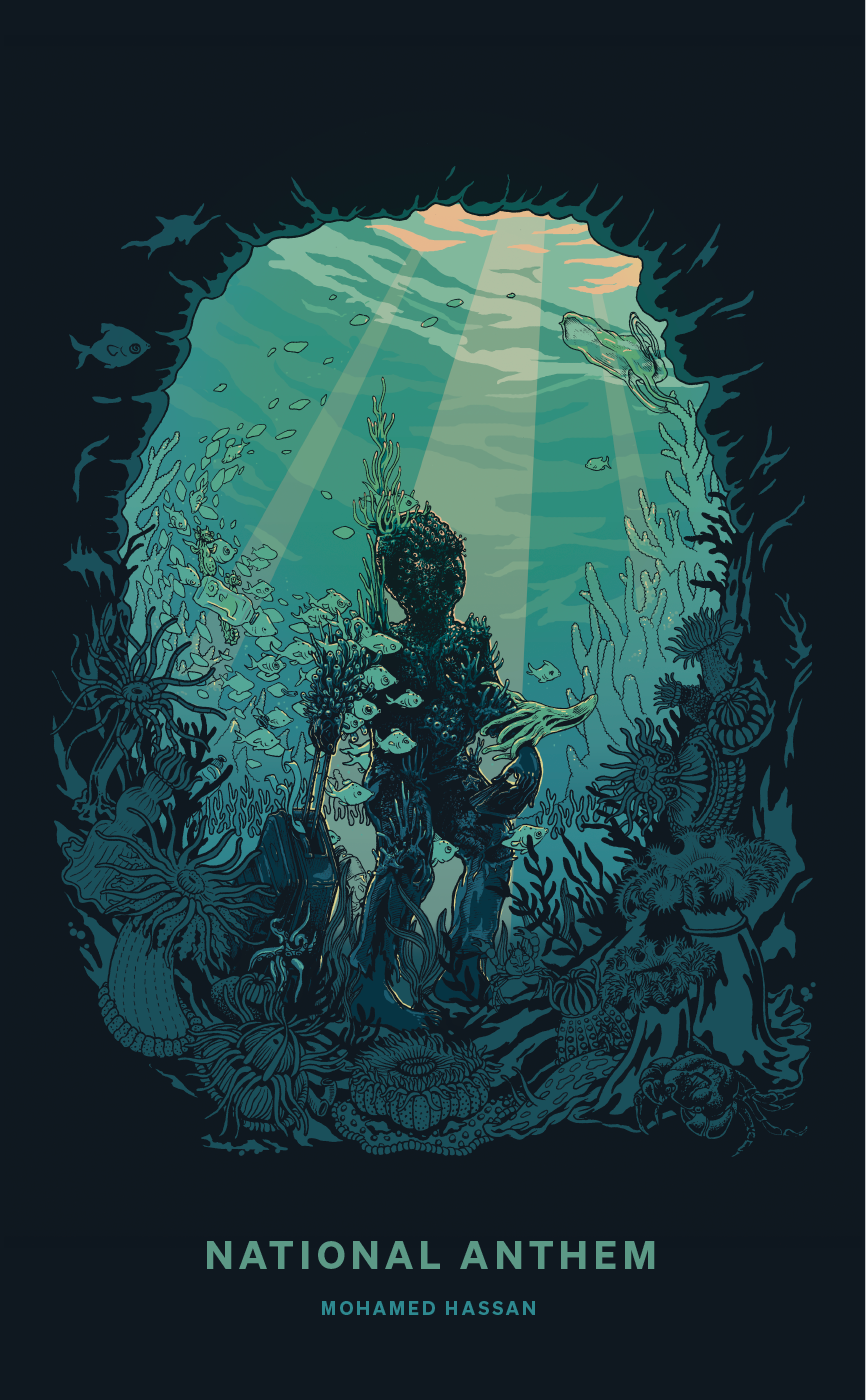
Rata Gordon‘s Second Person (VUP) is fresh, layered and utterly captivating. This is a book of birth, babies, death, the universe, love, motherhood, water, sky, wildlife. It is a book that celebrates the present tense, the way we can inhabit the now of being. Reading Mohamed Hassan’s new collection, National Anthem (Dead Bird Books), opens up what poetry can do. It widens your heart. It makes you feel. It makes you think. It gets you listening. It makes you think about things that matter. Humanity. Family. Soil. Ahh!
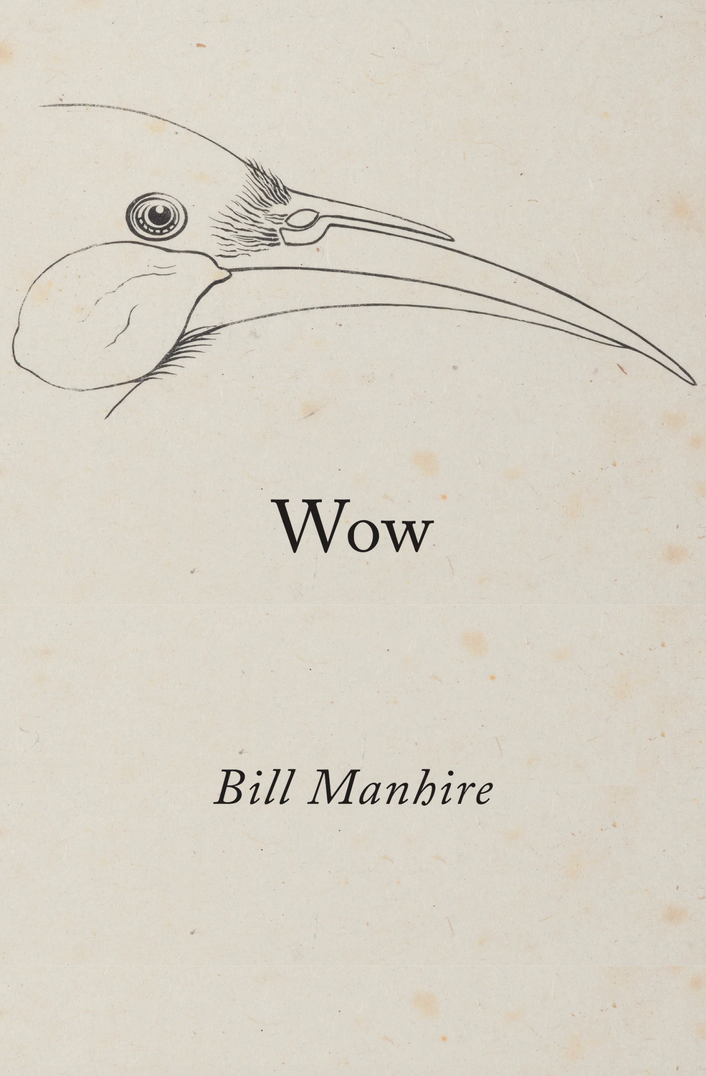
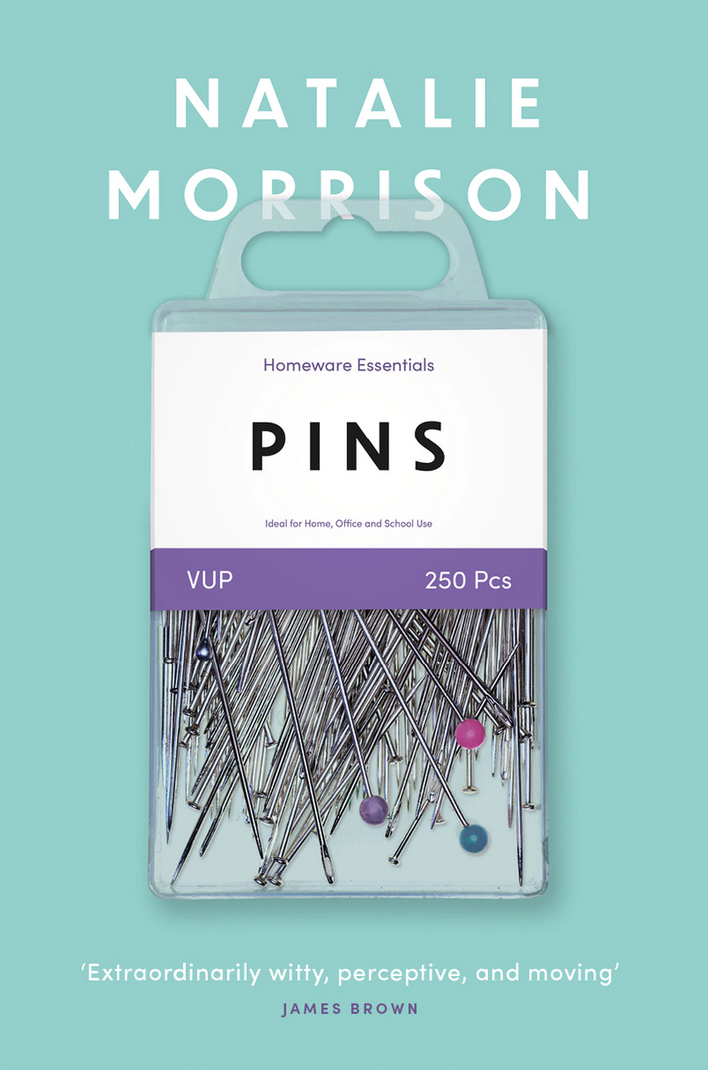
Bill Manhire‘s Wow (VUP) will haunt you – so many of these poems have joined my list of memorable poetry encounters. The baby in the title poem says ‘wow’ while the big brother says ‘also’. This new collection sparks both the ‘wow’ moments and the ‘also’ moments. Get lost in its glorious thickets and then find your way out to take stock of the ordinary (and out-of-the-ordinary) world about you. Like Rhian’s collection this is a book of poetry astonishments. Natalie Morrison‘s (VUP) debut collection Pins is exquisite, both melodious and tactile, economical and rich. There is both a quirkiness and a crafted musicality, resonant white space, yet perhaps a key link is that of narrative. I filled with joy as I read this book.
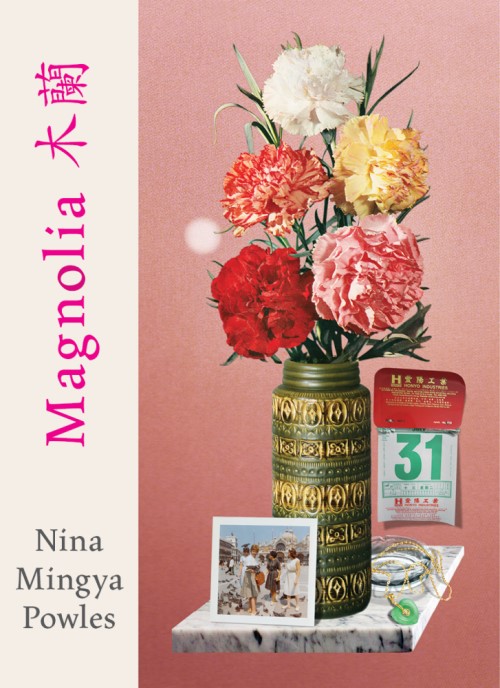
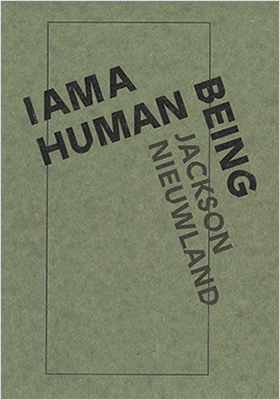
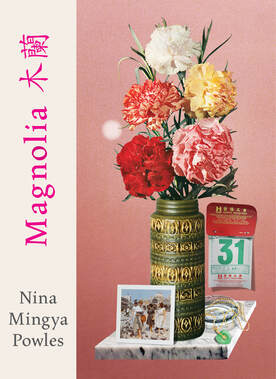
Jackson Nieuwland‘s I am a Human Being (Compound Press), so long in the making, lovingly crafted with the loving support of friends, with both doubt and with grace (think poise, fluency, adroitness), this book, in its lists and its expansions, moves beyond the need for a single self-defining word. I knew within a page or two, this book was a slow-speed read to savour with joy. Nina Powles‘s Magnolia (Seraph Press) is the book I am currently reading. I have long been a fan, from Girls of the Drift to the glorious Luminscent). Nina’s new book is so immensely satisfying as it navigates home and not-home, identity, history, myth, the lives of women – with characteristic nimbleness, heavenly phrasing, open-heart revelations, the senses on alert, the presence of food, multiple languages. Reading bliss!
The poets and their picks
Tusiata Avia
I’m a terrible book buyer. I tend to read books given to me (because I’m cheap like that) and the shopping-bag full of books my cousin, playwright, Victor Rodger, lends to me on the regular. He has the best taste! I should probably be a better reader of New Zealand poetry in particular, but I reckon I’ve got enough things to feel guilty about.
The top three on my list of books I have read this year and love:
Funkhaus by Hinemoana Baker (Victoria University Press)
I love the way Hinemoana uses language to make the ethereal and the mysterious. I’m happy to not immediately be able to pin down meaning; her language allows me to be suspended between what it does to me and what it means. Poems like the incantatory Aunties and Mother – which I think of as more ‘rooted’ – make me want to sit down immediately and write a poem. In fact that is exactly what I did do when I read this book. I love a book that makes me write.
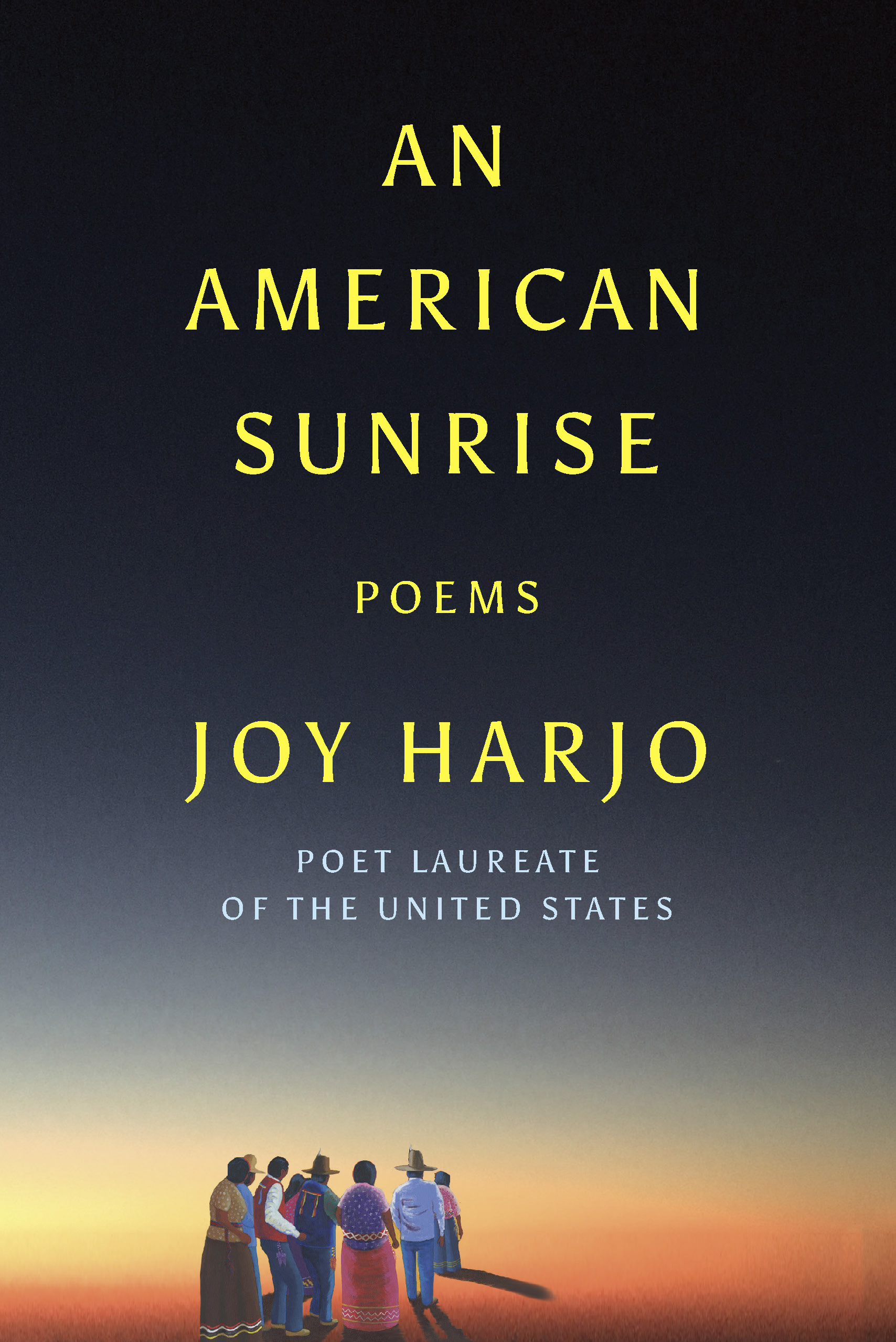
An American Sunrise Joy Harjo (WW Norton & Co)
An American Sunrise is Joy Harjo’s most recent book of poetry. Joy is Poet Laureate of the United States. I love everything Joy Harjo has written. And I mean everything. She Had Some Horses (from an early book of the same name) is one of favourite poems of all time. Elise Paschen says of her, “ Joy Harjo is visionary and a truth sayer, and her expansive imagination sweeps time, interpolating history into the present.”. I would add to that she is taulaaitu, mouth-piece for the ancestors, gods and spirits. While you’re reading Joy Harjo’s poetry, read Crazy Brave, her wonderful autobiography. It will stay with you forever.
National Anthem by Mohamed Hassan (Dead Bird Books)
When I was looking for favourite lines in this book, I couldn’t decide, sooo many – like small poems in themselves. Mohamed speaks with an iron fist in a velvet glove. His poetry is elegant and beautiful and it tells the damn truth. Someone needs to tell the damn truth – about March 15, about being Muslim in New Zealand (and in the entire western world), about the things that happen so close to us – and inside us – that are easy (and more comfy) to avert our eyes from.
Some favourite lines from White Supremacy is a song we all know the words to but never sing out loud: ‘Please come and talk on our show tomorrow/ no don’t bring that up/…
‘This isn’t about race/ this is a time for mourning/ this is about us/ isn’t she amazing/ aren’t we all’…
‘Let us hold you and cry/ our grief into your hijabs’…
Who can tell these stories in this way but a good poet with fire in his fingers, love and pain in equal measure in his heart and feet on the battleground?
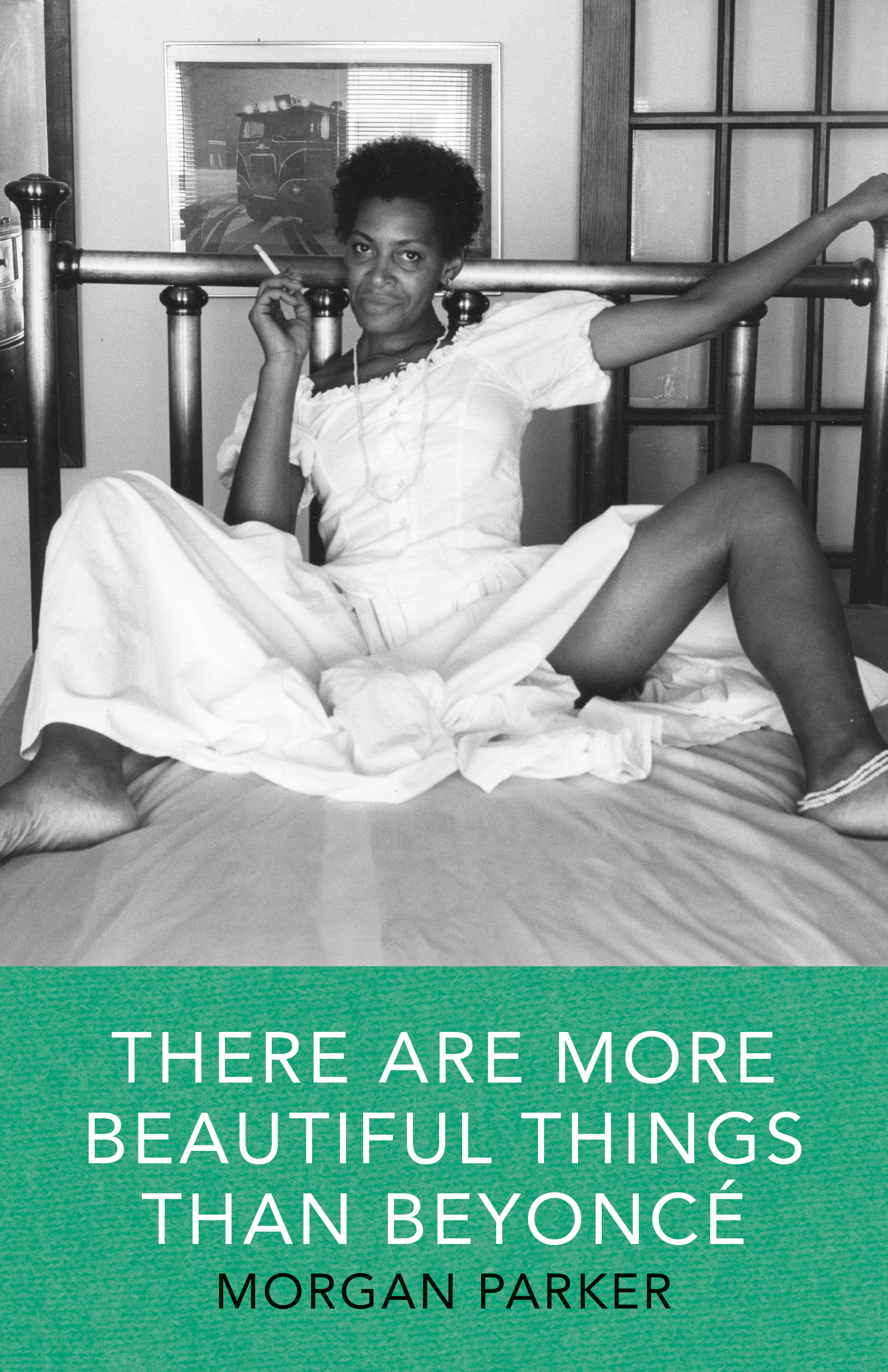
There are More Beautiful Things Than Beyonce Morgan Parker (Tin House)
I have to add, There are More Beautiful Things Than Beyonce by Morgan Parker to every list I write forever. In my opinion, no reader of poetry should miss this. If it doesn’t grab you by the shoulders, the heart, the brain, the belly – you might be dead. From the epigraph: ‘The president is black/ she black’ (Kendrick Lamar). Morgan Parker is PRESIDENT.
Rhian Gallagher
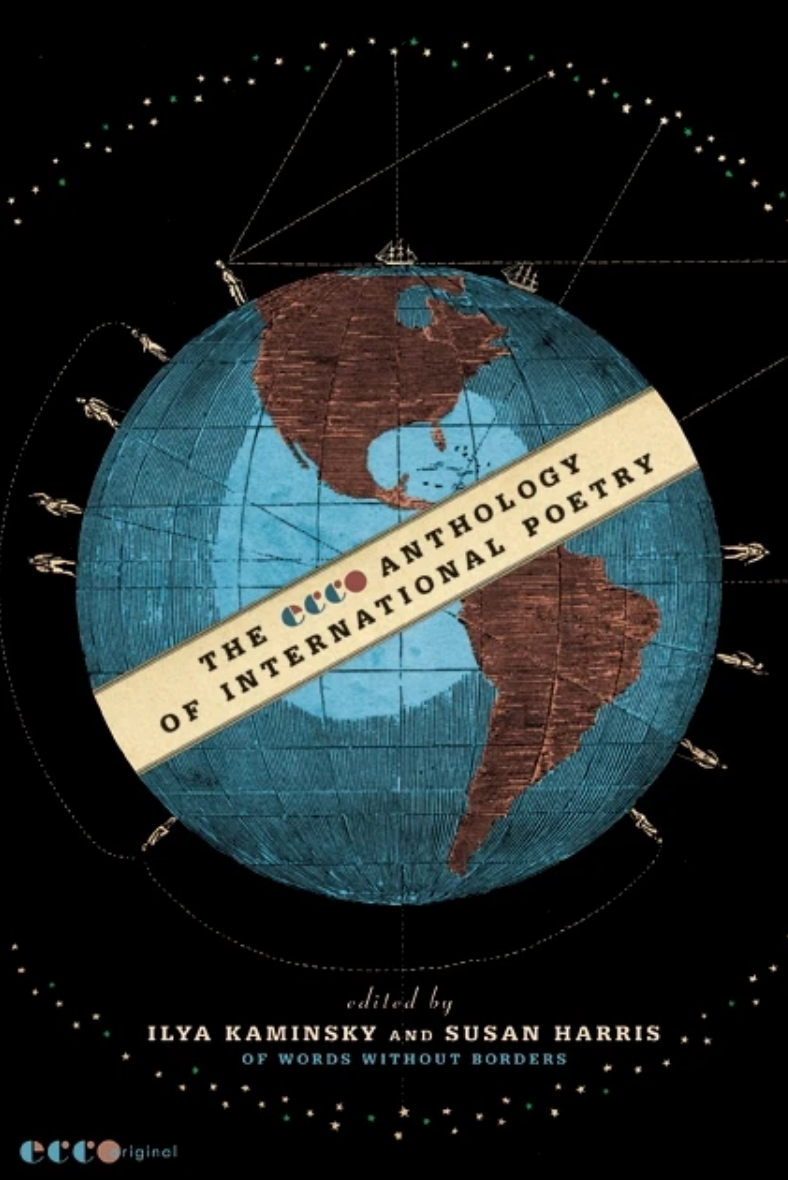
The Ecco Anthology of International Poetry (HarperCollins) edited by Ilya Kaminsky and Susan Harris features translations of 20th century poets from around the world and is packed with surprises.
Amidst all the books I have enjoyed during 2020, this is the one that I have read and re-read and continue to come back to. It was first published in 2010. I have been slow in coming to the book.
When a poem in another language is re-cast into English, through the empathy and skill of a translator, it seems to unsettle notions of line, rhythmn, word choice and form. Translation pushes and tugs at the boundaries of the ‘rules’ and introduces a kind of strangeness. This strangeness I experience as an opening; a feeling of potential, slippery as a an eel to articulate. It recalibrates predetermined notions and generates excitement about what a poem can do or be.
There are well-known names here: Cavafy, Lorca, Akhmatova, Ritsos, Milosz, Symborska among others. There are also many poets previously unknown to me, and many whose work is either out of print or difficult to source. It’s a diverse, inspiring array of poetic voices and, as Kaminsky says in the introduction, puts us ‘in conversation with a global poetic tradition’.
Making discoveries is one of the great pleasures of anthologies. I now have a brand new ‘to read’ list.
Rata Gordon
When I’m reading something that inspires me, I have the urge to inhabit it somehow. I find that entering into a creative process by writing with, and around, another’s words helps me to absorb them into my internal landscape. This poem was created with snippets of some of the poetry I have met recently.
Soon, we are night sailing (Hunter, p. 71)
This is the closest you can get to it:
the void, the nothing,
the black lapping mouth of the sea
and the black arching back of the sky. (Hunter, p. 71)
One still maintains a little glimmer of hope
Deep down inside
A tiny light
About the size of a speck
Like a distant star
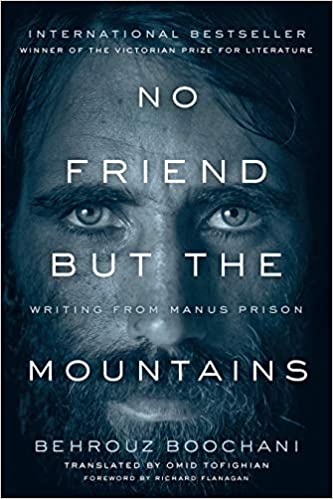
Is spotted on the horizon this dark night (Boochani, p. 26)
Swish swish swish
as quiet as a fish. (Ranger, p. 13)
… holy women
await you
on the shore –
long having practiced the art
of replacing hearts
with God
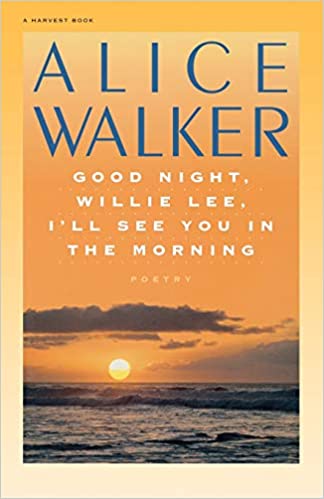
and song (Walker, p. 7)
Today you are tumbling towards her like the ocean.
… you are becoming nearer and nearer to someone other
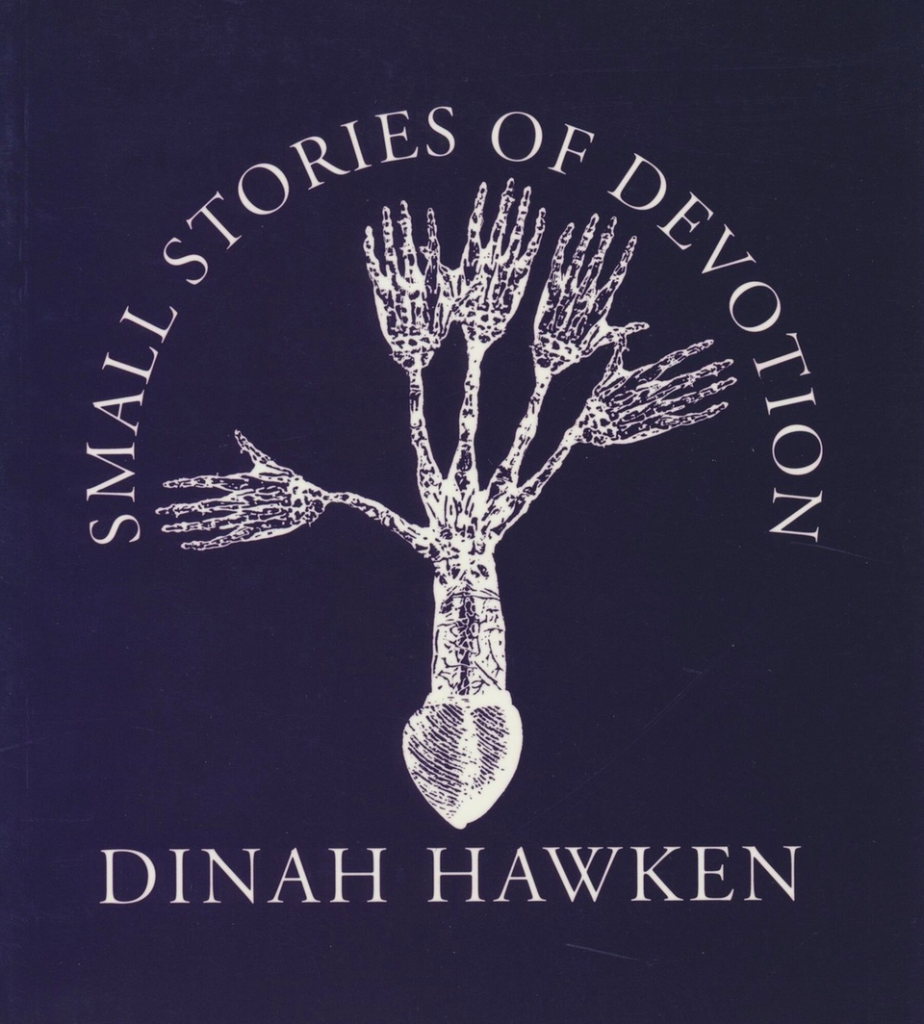
than yourself. (Hawken, p. 49)
I have … imagined my life ending,
or simply evaporating,
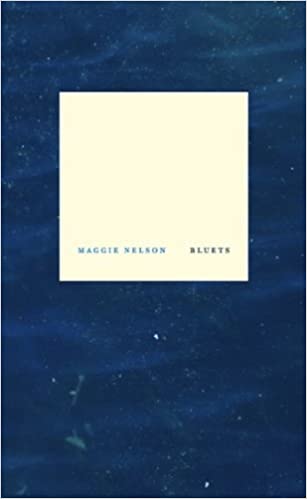
by being subsumed into a tribe of blue people. (Nelson, p. 54)
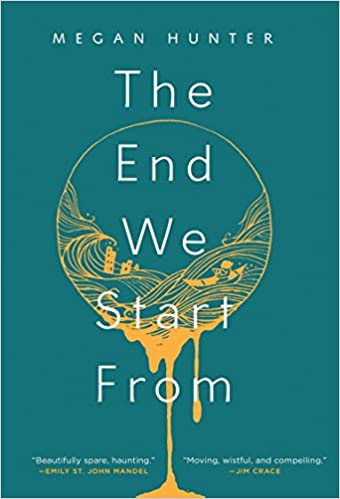
The End We Start From by Megan Hunter (2017, Picador). (Not strictly poetry, but the book feels so much like a long poem to me). Line breaks added by me.
No Friend but the Mountains by Behrouz Boochani (2020, Picador).
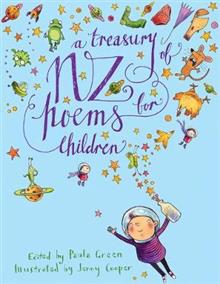
‘Autumn Leaves’ by Laura Ranger. In A Treasury of NZ Poems for Children edited by Paula Green (2014, Random House).
Good Night, Willie Lee, I’ll See You in the Morning by Alice Walker (1975, The Women’s Press).
Small Stories of Devotion by Dinah Hawken (1991, Victoria University Press).
Bluets by Maggie Nelson (2009, Jonathan Cape). Line breaks added by me.
Mohamed Hassan
Tusiata Avia’s The Savage Coloniser Book (Victoria University Press)
A few weeks ago, I sat in the audience at a WORD Christchurch event and watched our former poet laureate Selina Tusitala Marsh read a poem from Tusiata Avia’s new collection. It began as such:
Hey James,
yeah, you
in the white wig
in that big Endeavour
sailing the blue, blue water
like a big arsehole
FUCK YOU, BITCH.
The hall fell pin silent and a heavy fog of discomfort descended from the ceiling, and I sat in the corner brimming with mischievous glee. It was a perfect moment, watching two of the country’s most celebrated poets jointly trash the country’s so-called ‘founder’ in the most spiteful way imaginable. The audience squirmed and squirmed and I grinned and grinned.
This is how Avia’s book begins, and it never lets up. As the title subtly implies with a hammer, Avia has things she wants to say, and doesn’t care how people feel about them. She delights in the spiteful, burrows down into the uncomfortable and the impolite and pulls out nuggets of painful truths with her bare hands. They are all truths that must be said bluntly and Avia drills them home.
In Massacre, Avia reflects on her youth fighting the demons of Christchurch, and asks us if our ‘this is not us’ mantra is divorced from the history carried in the land, haunted instead by the white spirits that rose to claim lives on March 15.
The book crescendos with How to be in a room full of white people, a dizzying poem that traps us in a single moment in time and forces us to witness and squirm and eventually, hopefully, understand what it is like to be the only brown body in a foreign space, in all its literal and metaphorical significance.
This has been my most cherished book this year, bringing together Tusiata Avia’s firecracker wit and her uncanny gift of conjuring worlds that feel vivid in their weight and poignancy. Abandoning all diplomacies, this is a blazing manifesto for honest and confrontational poetry that speaks with an urgency that puts me as a writer to shame, and demands more of me at once.
Bill Manhire
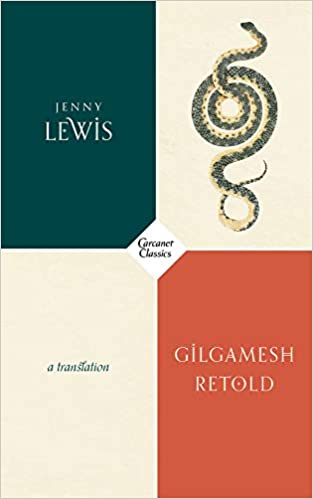
Jenny Lewis, Gilgamesh Retold, (Carcanet)
I love the way poetry re-visions the past, especially the deep past. I’m thinking of books like Matthew Francis’s reworking of the Welsh epic The Mabinogi and Alice Oswald’s Memorial, a book that abandons the main storyline of Homer’s Iliad in favour of narrating the death scenes of minor characters, accompanied by extra helpings of extended simile. I’d always known about the Epic of Gilgamesh, which I have owned for about 40 years in a yellow 1960 Penguin paperback. I’ve hardly opened it, but it’s one of some nine translations of the poem that Jenny Lewis has consulted for Gilgamesh Retold, published by Carcanet some four thousand years after the stories first circulated in oral form. (Her publisher at Carcanet, Michael Schmidt, has himself written a much admired book about the poem’s origins and afterlife)
Locally Dinah Hawken has worked with this ancient material, particularly writing about Inanna, the goddess of beauty and fertility and, sometimes, war, who is one of the major figures in the Gilgamesh cycle. Dinah’s feminist sense of the ancient stories accords with Jenny Lewis’s decision, as the blurb says, to relocate the poem “to its earlier oral roots in a Sumerian society where men and women were more equal, … [where] only women were allowed to brew beer and keep taverns, and women had their own language – emesal.”
It’s as well Inanna has such a significant role in Gilgamesh, for otherwise it would be a tale about male adventuring and bonding (Gilgamesh and Enkidu) and the discovery that even the greatest heroes can never overcome death. The world of Gilgamesh also gives us a Flood, which matches and in some ways outdoes the Old Testament. I love the way Jenny Lewis has retold these stories. She doesn’t try to pad them out to produce the sorts of coherence and pacing that contemporary readers and movie-goers find comfortable, while her phrasings have an unreductive clarity and a genuinely lyrical grace. The most audacious thing she has done, and has carried off brilliantly, is to use different metrical forms to reflect the ways in which a range of different custodians/retellers have voiced and revoiced the story. You admire the 21st-century poet’s craft even as she inducts you into a baffling and unfamiliar world. All stories, Gilgamesh Retold tells us, are made by many voices, and the best of them will journey on through many more.
And now I must try and summon up the courage to give the latest version of Beowulf a go!
Natalie Morrison
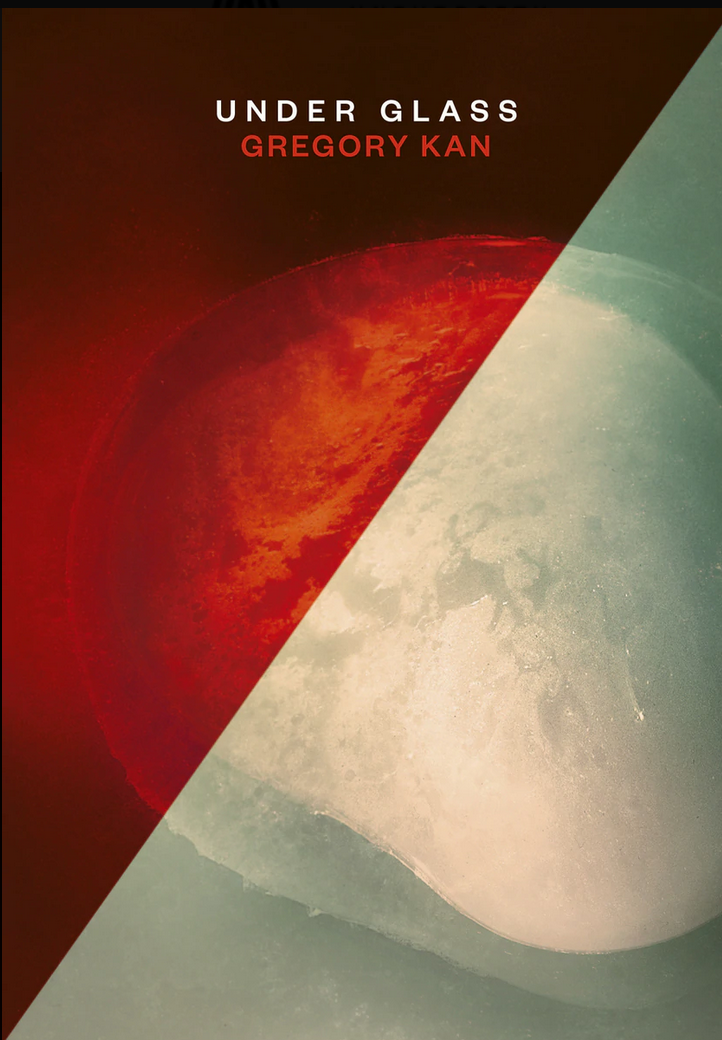
Gregory Kan, Under Glass(Auckland University Press)
My esteemed colleague, with one hand around his Friday swill-bottle: ‘I hate poetry – no one cares, no one reads it anymore.’
Gregory Kan, with two suns infiltrating the long ride on the train to Paekākāriki, illustrates otherwise: Under Glass lulls like a really disquieting guided meditation.
After lockdown, it is the first book I read outside our ‘bubble’. Threading through an internal landscape, somehow a place I recognise. ‘Here, there are two suns. The ordinary sun is in the sky overhead. The other sun is eating its way out from inside me.’
Certain lines, with their mystical insistence, snag on me and come back again from time to time: ‘Everything that surrounds the second sun is not part of it but nonetheless makes it what it is.’ It’s as if some lines have been dreaming of themselves. The book invites a gentle inspection. A glass bead held right up against the eye. A shutter flipped open over a stark interior.
‘When you move a look moves inside me and eats there what I eat.’
Once, a kind individual in Paekākāriki, their hands busy with a teapot, told me: ‘Those who know what it is, fall on it like starving people.’
When Litcrawl comes, we make our way to some of the events. The room has sucked a crowd in. Spells for 2020, with Rebecca Hawkes, Rata Gordon, Stacey Teague, Arihia Latham, Rachel McAlpine and Miriama Gemmell (thank you for your entrancing words), reminds me of how poetry is still something people might come in search of. Visitations of bees, airline heights and morphing walls. There is a sense of relief.
A crowd still feels like a dream, and a dream still feels like the sea. Gregory writes that ‘the sea is a house made of anything. The sea is a story about anything, told by someone unfit for storytelling. More than what I can know, and much more than I can understand.’
Under Glass, which wasn’t exactly written for this year (no ordinary year), seems to slot into it.
My steamed colleague, with one hand steadying the banister: ‘I guess Bob Dylan is okay, though.’
Note: I asked my colleague’s permission for quoting him. He said he was fine with it, as long as a mob of angry poets didn’t come knocking.
Jackson Nieuwland
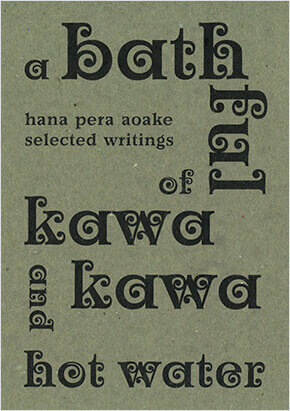
2020 was the year we finally got a book from Hana Pera Aoake (A bathful of kawakawa and hot water Compound Press). I had been waiting for this for so so long. It’s a taonga that I am incredibly grateful for. Ever since I first read Hana’s work they have been one of my favourite writers. Their writing is both clever and wise, of the moment and timeless, pop culture and fine art, Aotearoa and international.
This is a book I will be returning to over and over again for inspiration, electrification, nourishment, and comfort. I would recommend it to anyone.
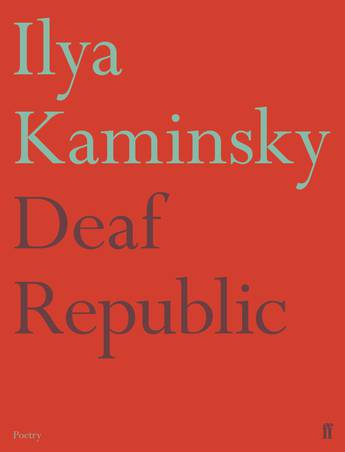
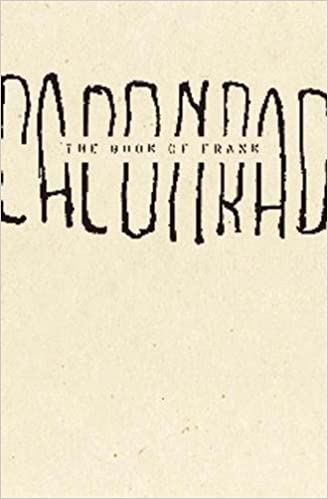
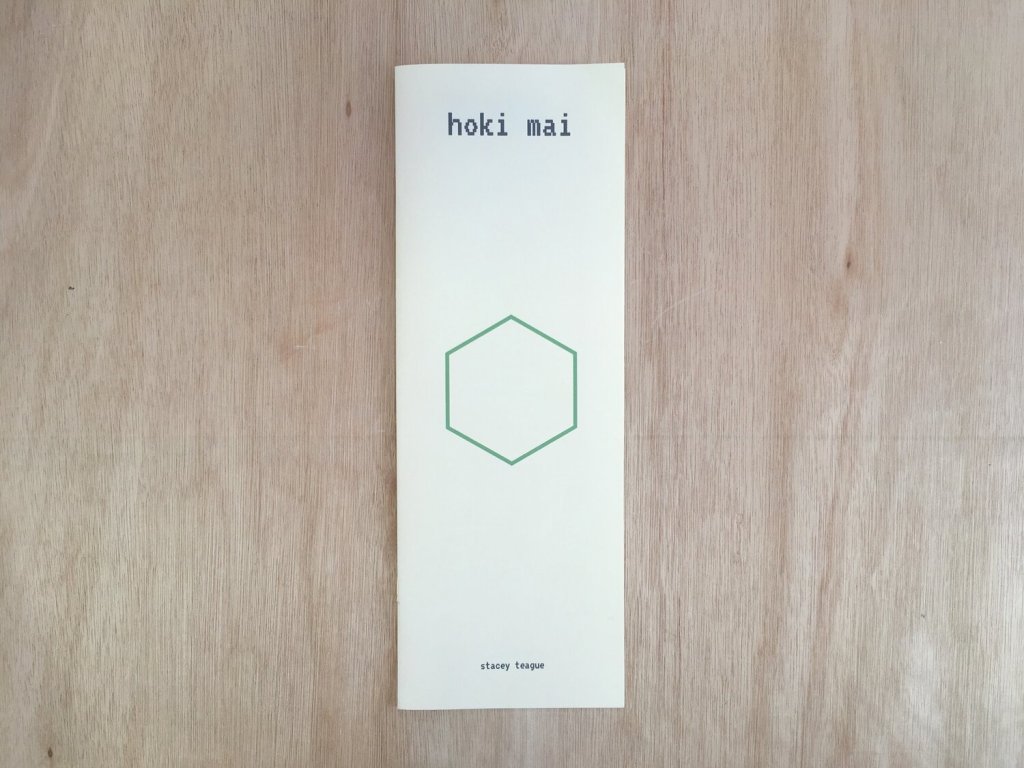
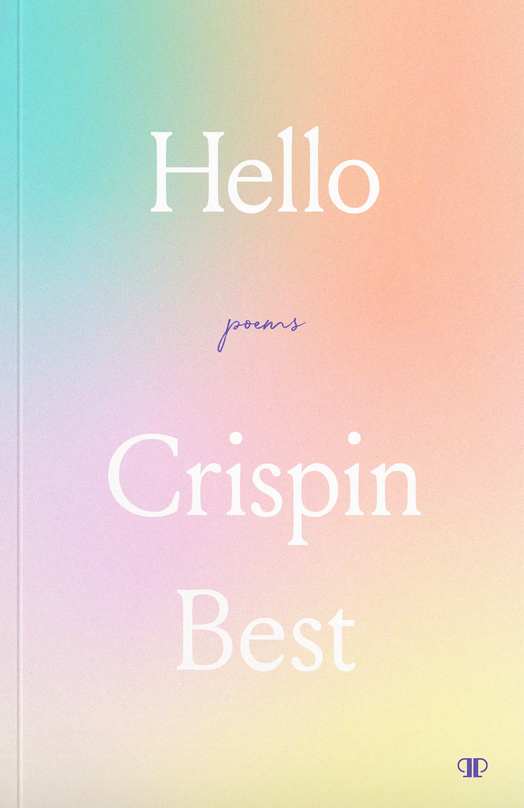
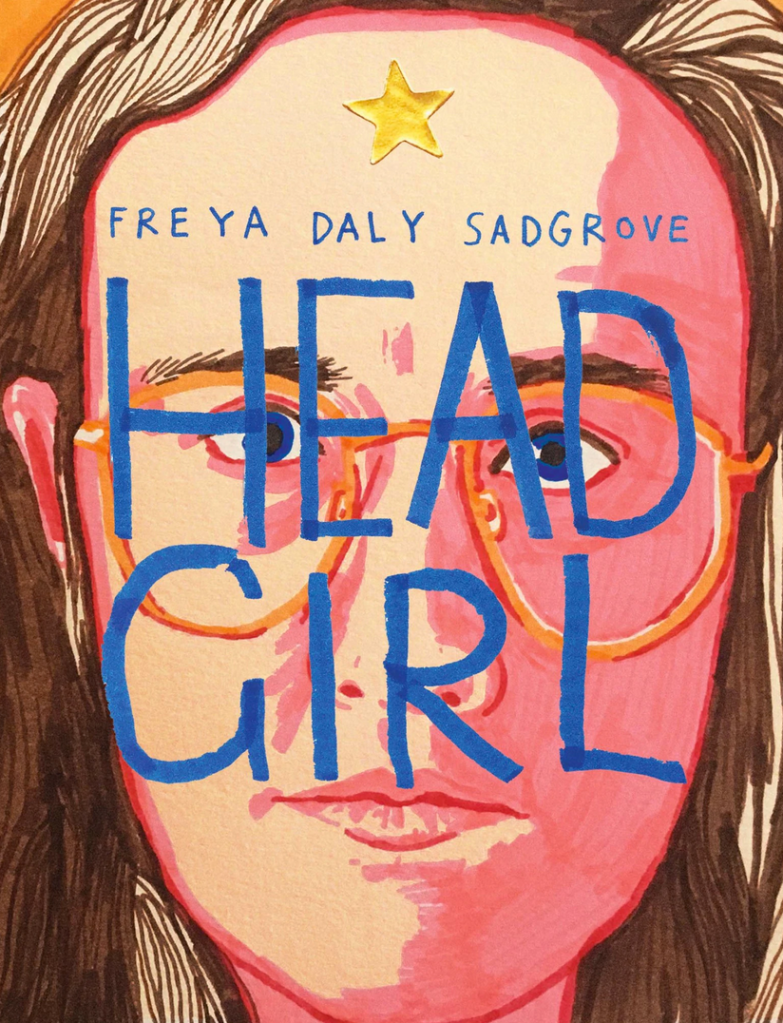
Other poetry books I read and loved this year: Deaf Republic by Ilya Kaminsky, The Book of Frank by CA Conrad, hoki mai by Stacey Teague, Hello by Crispin Best, and Head Girl by Freya Daly Sadgrove.
Nina Mingya Powles
For most of this year I could only read things in fragments. I could only hold on to small parts of poems, essays, short stories in my head before they floated away. This year I sought out poetry by Indigenous writers. Of these two books, the first I read slowly, dipping in and out like testing the surface of cool water. The other I read hungrily all at once.
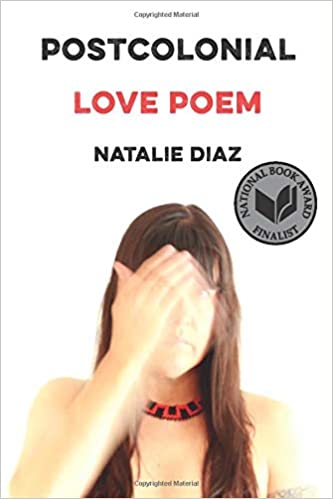
Postcolonial Love Poem by Natalie Diaz (Graywold Press) reminded me why I write poetry, at a time when writing anything at all felt impossible. Diaz’s heavy, melodic love poems circled around my head for days: “My lover comes to me like darkfall – long, / and through my open window.” But it is her writing about water and the body that changed me. In this book, water is always in motion, a current that passes through time, memory and history. Her long poem “The First Water of the Body” is a history of the Colorado River, a sacred river: “I mean river as a verb. A happening. It is moving with me right now.”
A bathful of kawakawa and hot water by Hana Pera Aoake (Compound Press) came to me when I needed it most, nourishing me and warming me. I haven’t yet held a copy of the book, but I read it on my laptop over two days and have carried parts of it around in my body ever since: “I speak broken French and Português into the broken yellow gloaming.” A bathful of kawakawa and hot water is a searing, lyrical work of poetry, memoir, and political and cultural commentary. Like the title suggests, it was a balm for me, but also a reminder of the ongoing fight for our collective dream of a better world, and most importantly, that “racism is not just a product of psychological malice, but a product of capitalism.”
‘We are making our grandchildren’s world with our words. We
perceive a world in which everyone sits at the table together, with enough for everyone.
We will make this country great again.’
Joy Harjo from ‘Advice for Countries, Advanced, Developing and falling’ in An American Sunrise (2019)
A weekend in Wellington is always a treat – especially when there are writers and readers events on. I had a blue-sky, social-charging time and I loved it. Laurie Andersonon the Friday night delivered an improvised platter of musical quotations with a handful of musicians that together created a wow blast of sound and exquisite individual turns on percussion, strings, keyboards. Ah transcendental. Just wonderful. Read Simon Sweetman‘s thoughts on the night – he describes it far better than I can.
One bowl of muesli and fruit, one short black and I was all set for a Saturday of listening to other authors. First up Coming to our Senses with Long Litt Woon(The Way through theWoods) andLaurence Fearnley (Scented). Laurence is on my must-read stack by my reading sofa. Her novel engages with the landscape by way of scent, sparked perhaps by by her long interest in the scent of the outdoors. I loved this from her: ‘Writing about the South Island is a political act – I’m digging my heels in and see myself as a regionalist writer’. I also loved this: ‘I’m not a plot-driven novelist. I tend to like delving into sentences. I like dense descriptions. I imagined the book as dark brown.’
Next went to a warm, thoughtful, insightful conversation: Kiran Dass and Jokha Alharthi (Celestial Bodies). Fabulous!
And of course my poetry highlight:Selina Tusila Marsh in conversation with USA Poet LaureateJoy Harjo. I had been reading Joy in preparation for my Poetry Live session and utterly loved her writing. This is how I introduced her on Sunday:
Joy Harjo is a performer, writer (and sax player!) of the Muscogee Creek Nation. She’s the current US Poet Laureate with many awards and honours and has published nine poetry collections, a memoir, a play, produced music albums. She lives in Tulsa Oklahoma where she is a Tulsa Artist Fellow. Reading Joy’s poems, words are like a blood pulse as they question and move and remember – in place out of place in time out of time. I have just read Conflict Resolution for Holy Beings and An American Sunrise. This was what I was thinking when we have to endure the multiple offensiveness of Trump in our faces even at the bottom of the world to pick up Joy’s poetry is a balm that takes you behind and beyond and above and below into a different USA and it is heartbreaking and wounding and the poems might be like rooms where you mourn but each collection is an opportunity for breathtaking body anchoring travel that allows you to see and feel afresh. Joy’s poetry is so very necessary, If you read one poem this weekended read ‘How to Write a Poem in a Time of War’ from An American Sunrise.
But if you went on Saturday night you got to hear Joy read a good sized selection of poems, including the poem I mention above! Joy’s response to her appointment as the first Native American Poet Laureate in USA: ‘a profound announcement for indigenous people as we’ve been so disappeared. I want to be seen as human beings and this position does that. Human beings write poetry. Even if it’s oral, it’s literature.’
So many things to hold close that Joy offered: ‘No peace in the world until all our stories have a place, until we all have a place of respect.’
She suggested we could think of poems as ‘little houses, little bird houses for time grief joy heartbreak anything history what we cannot hold. Go to poetry for times of transformation, to celebrate and acknowledge birth, to acknowledge death. We need poetry.’
Joy: Indigenous poets are often influenced by oral traditions – a reading voice singing voice flute voice more holistic.
Joy: You start with the breath. Breath is essentially spirit.
Joy: You learn about asking, asking for help.
Joy: Probably the biggest part is to listen. You have to be patient.
Joy: The lessons get more intense.
Joy: If you are going to listen to a stone, what range is that?
My energy pot was on empty so was in bed by 8 pm, and so very sadly missed Chris Tse’s The Joy Of Queer Lit Salon. From all accounts it was a breathtaking event that the audience want repeated.
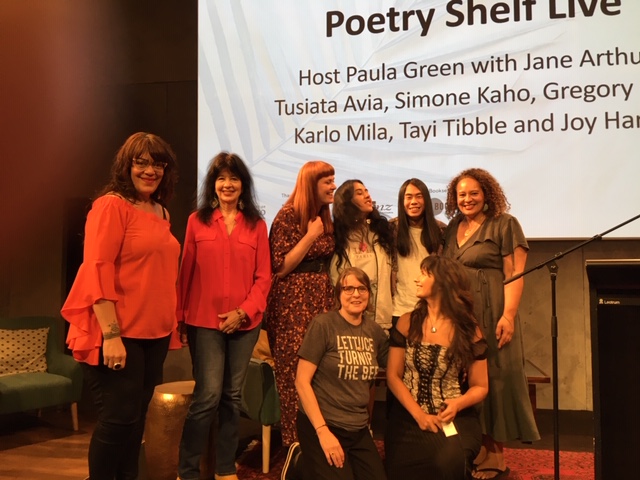
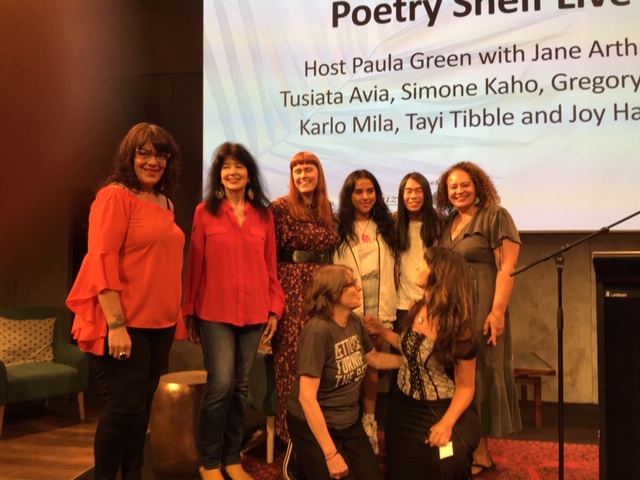
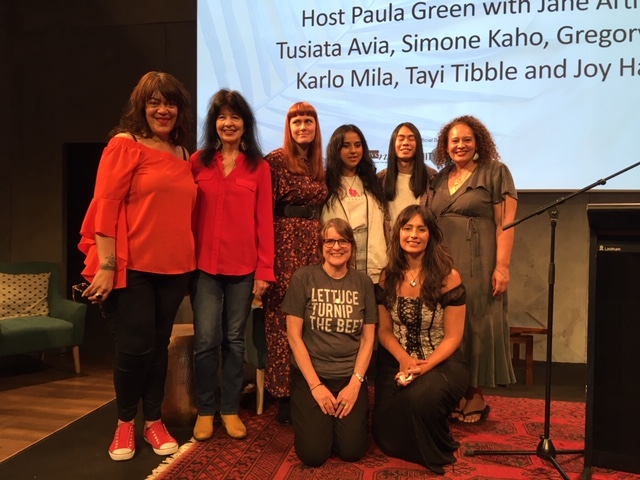
Sunday and I hosted Paula Green’s Poetry Shelf Live.Lynn Jenner was unwell (I was so looking forward to hearing her read as her inventive and moving Peat is so good). My dear friend Tusiata Avia was in town coincidentally so she stepped in and read instead along with Karlo Mila, Simon Kaho, Gregory Kan, Jane Arthur, Tayi Tibble and Joy Harjo.
I love the poetry of my invited guests and got to sit back and absorb. I laughed and cried and felt the power of poetry to move in multiple directions: soft and loud, fierce and contemplative. Ah if a poem is like a little house as Joy says, it is a house with windows and doors wide open, and we are able to move through and reside there as heart, mind and lungs connect.
A friend of Hinemoana Baker’s from Berlin came to me at the end crying and speaking through tears and heaving breath about how moved she was by the session. I got what she was saying because I felt the same way. I guess for all kinds of reasons we are feeling fragile at the moment – and poetry can be so vital. After four years of Wild Honey reading, writing, conversing and listening I have decided the connective tissue of poetry is love aroha. I felt and said that, ‘We in this room are linked by poetry, by a love of it, and that matters enormously’. I felt that at this session.
So thank you Wellington – for all the book fans who supported the events. For the poets who read with me.
I also want to thank Claire Maybe and her festival team. Claire has such a passion for books and such a wide embrace, you just feel the love of books, stories, poetry, ideas, feelings. Yes I would have LOVED to hear Elizabeth Knox, Witi Ihimaera, Lawrence Patchett and Kate Tempest (for starters) on at other weekends but this was a highlight of my year and I am so grateful.
‘Come on Poetry,’ I sigh, my breath
whitening the dark. ‘The moon is sick of you.’
We walk the white path made of seashells
back to the orange light of the house.
‘Wait,’ I say at the sliding door. ‘Wait.’
Hinemoana Baker from ‘manifesto’ in waha / mouth (2014)
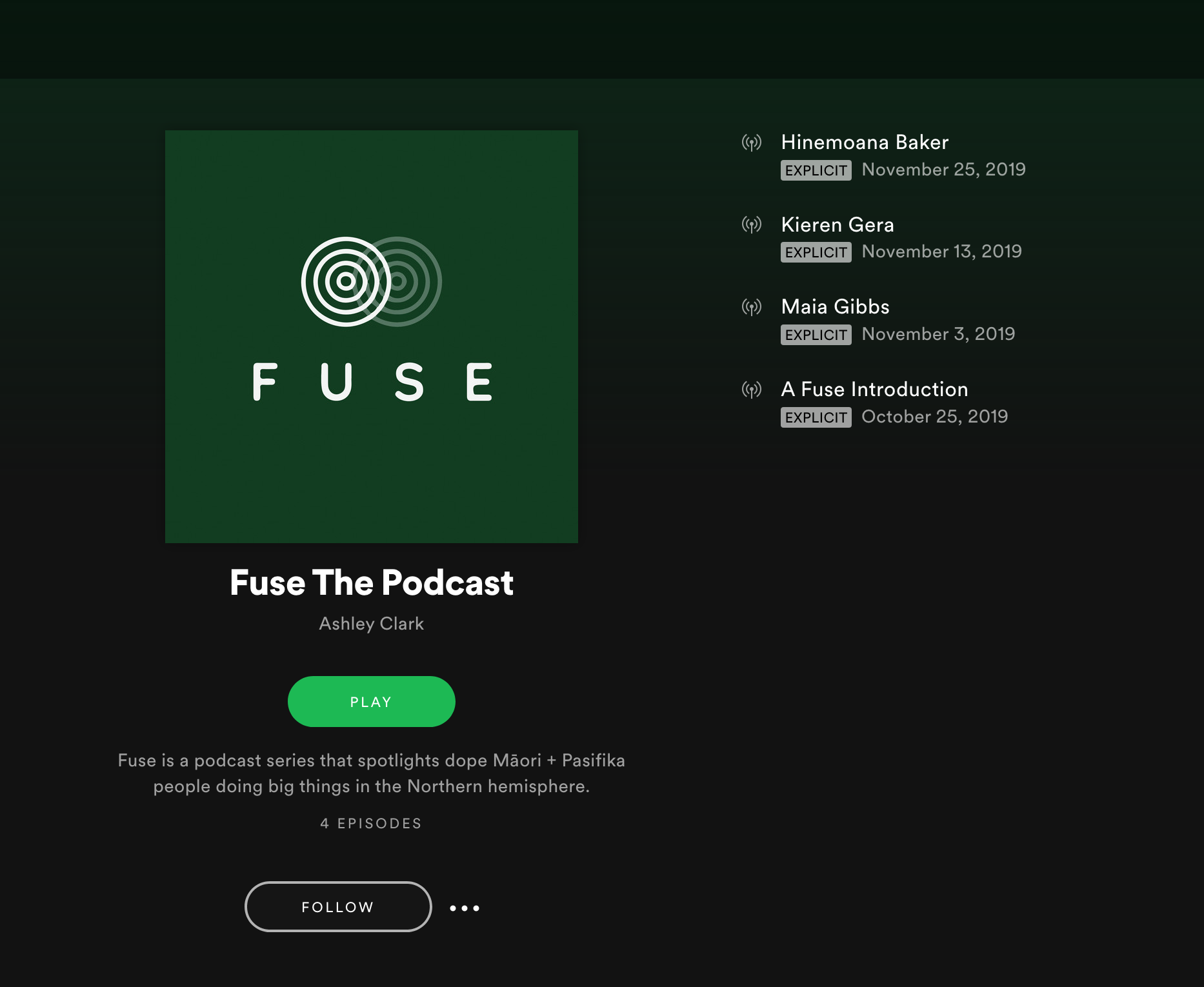
For those of you who follow Spotify there is a new project worth checking out: Fuse The Podcast featuring ‘dope Māori and Pasifika people dping big things in the Northern hemisphere’. The latest episode is an interview with Hinemoana Baker.
Madeleine Slavick is a poet, photographer and communications manager at Aratoi Wairarapa Museum of Art and History, Masterton. She has reviewed Hinemoana Baker’s recent performance there – a thoughtful review that is as much poetry as it is critique. Brava!
Read Madeleine’s full piece here but here is the beginning:
Funkhaus
Funkhaus – the working title of Hinemoana Baker’s upcoming collection. ‘Funk’ as in funk, and also ‘broadcast’ in German, as the ‘haus’ in Berlin where the poet-singer-songwriter once lived, or squatted, had been a GDR radio station. A saxophonist was also there, and Hinemoana would be sleepless in her tiny cubicle. Born in 1968, Hinemoana says she’s too old to live like that, but I don’t see her living any other way. She lives and dives at once. Follows the river out to sea. Hinemoana. Woman of the Ocean.
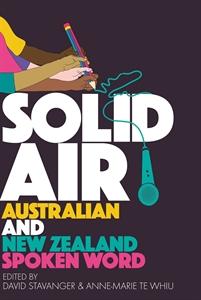
Solid Air: Australian and New Zealand SpokenWord (University of Queensland Press, 2019) is edited by David Stavanger and Anne-Marie Te Whiu. David is an award-winning poet, performer, editor, cultural performer and lapsed psychologist. Anne Maire, Te Rarawa, born and raised in Brisbane, is a cultural performer, weaver, theatre practitioner and emerging poet. David and Anne-Marie co-directed the Queensland Poetry Festival from 2015 to 2017.
Solid Air showcases over 100 spoken word artists from Australia and Aotearoa, from 2008 to 2018. In the introduction, the editors outline the increasing presence and vitality of spoken word. Festivals for example are willing to feature poets who have not published books but who perform to diverse audiences in diverse settings. As we see in New Zealand, the form resembles an open house that welcomes everyone without preconceptions or misconceptions on what a poem ought to do or be. Community is important: ‘Central to the ecology of spoken word is the artist returning back to the community.’ Here is the concluding paragraph of the introduction – as you can imagine it strikes a chord with me:
The pieces within this collection have their own agency and spirit, we have merely invited them into this space to create a place where they can join as a chorus and amplify each other. There is not one poetry or poetry audience; there are many and all of them are welcome to enter here. Solid Air is not only a gateway to the multiplicities of poetry available in our region – it is a house in which poetry resides, a speculative investment, constructed from open windows and unlocked doors.
One of the key attractions for me is the diverse range of Australian poets that are brought into view. I wonder if this is the same for Australian readers meeting Ken Arkind, Tusiata Avia, Hinemoana Baker, Hera Lindsay Bird, Ben Brown, David Eggleton, Anahaera Gildea, Jordan Hamel, Mohamed Hassan, Dominic Hoey, Selina Tustiala Marsh, Courtney Sina Meredith, Kiri Piahana-Wong, Ray Shipley, Grace Taylor, Tayi Tibble, Taika Waititi, Jahra ‘Rager’ Wasasala’. It makes a difference when I play an Aotearoa track because I play it in the voice of the performer. There is something electrifying about being in the actual room, about hearing the voices spin and spark. I found myself googling unfamiliar poets with the hope their voices would fill my room.
Yes the book is a wide open house but it is also a map that I can hold in my hand and then navigate richnesses for both my ear and heart.
The poems speak of connection, movement, disconnection, flight, anchors, home, origins, love, not love, war, peace. The poems are personal, the first person pronoun stands up and is speaking. The poems are often political; frequently the personal and the political are steeped in the same poetic brew where the edge of one is the edge of the other, as in Quinn Eades’s magnificent ‘What it’s really like to grow up with lesbians in the 70s and 80s’.
You will go to your first peace march before you can walk.
You will say handy person, fire fighter, police officer, and automatically refer to all
doctors as ‘she’ as if their gender has not been defined.
Your favourite song when you are four will be ‘Oh Bondage Up Yours!’ by X-ray
Specs.
The poetry is radioactive, heated lines popping with detail and admissions, and then on other occasions the admissions come in quiet waves, small ripples that carry undercurrents of feeling, experience, reflection. One of my favourite poems – Anahera Gildea’s ‘Sedition – a letter to the writer from Meri Mangakāhia’ – makes clear the importance of language, the importance of one’s own nouns and phrases and ‘defiant speak’. I would love to share the whole poem (I respect copyright) but here is the first stanza:
Here’s what I had in mind, kōtiro, this
clipping at words like overgrown maikuku –
return the blankets of domestic life; don’t fold
washing or wear shoes, polish these rerenga kē.
If this anthology is an open home, a map, it is also a handbook on existence, on navigating a world under threat, along with its pasts and its futures. I pick a poem, any poem, and then linger upon the way language matters, the way story matters, the way a poem can start with one person speaking, offering words that spring to life in the air/ear and then open our relations with the world in myriad directions. My reading begins close up and personal, and then reaches wide into a global embrace. It’s essential reading.
and by default –
an open sea,
what language will not meet me
with rust?
They convince my mother
her voice is a selfish tide,
claiming words that are not meant
for her;
this roiling carcass of ocean
making ragdolls of our foreign limbs.
In the end our brown skin
married to seabed,
Eunice Andrada from ‘ (Because I am a daughter) of diaspora’


 NZ Poetry Shelf