Tag Archives: helen lehndorf

Poetry Shelf noticeboard: Helen Lehendorf poetry launch

Event by Helen Lehndorf

Palmerston North City Library

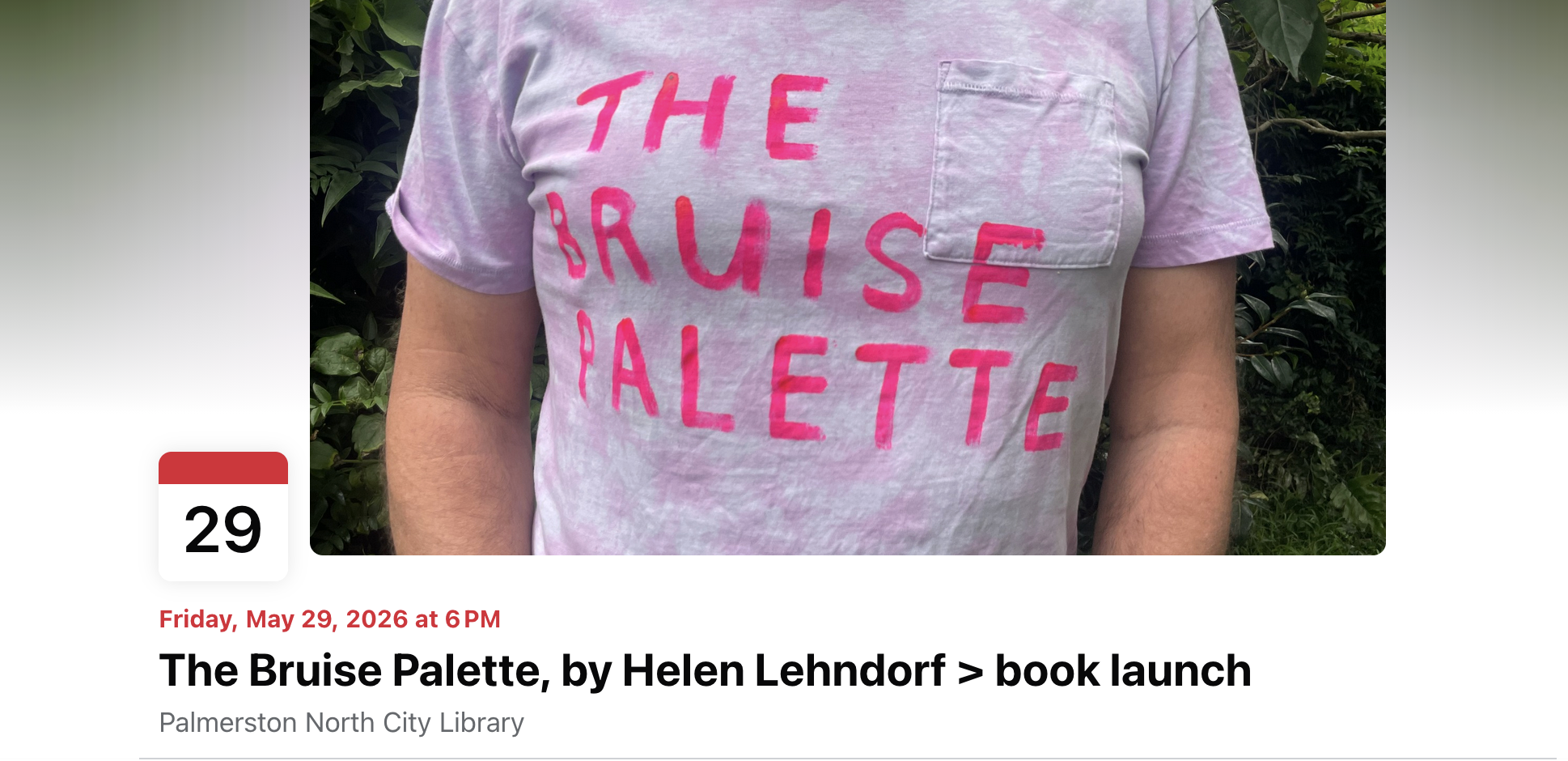
You are cordially (and green ginger wine-ly) invited to help me launch my fourth book (second volume of poetry) The Bruise Palette (Firestarter Press).

Come at 6pm, share a glass, there will be (brief) kōrero from me, writing friend Carly Thomas, publisher Anthony Behrens and a special treat from local legend Abi Symes-Button. I’ll read a coupla the poems, too.

I entered this book into the Kathleen Grattan Poetry Award (for an unpublished poetry manuscript) last winter and it was longlisted…a boost which gave me the confidence to proceed with publication.

Here’s an excerpt from the blurb:

‘With the grounded lyricism readers loved in The Comforter and A Forager’s Life, Helen Lehndorf captures the beauties and burdens of entanglement with people and with place.

The poems of The Bruise Palette move through the demands of care, complexities of community and raw radiance of deep nature connection.’

Hope to see you there. x

Firestarter Press, Manawatū, Aotearoa.
Release date – 29/5/26

Poetry Shelf cafe reading:  Pot Luck: Poems about food

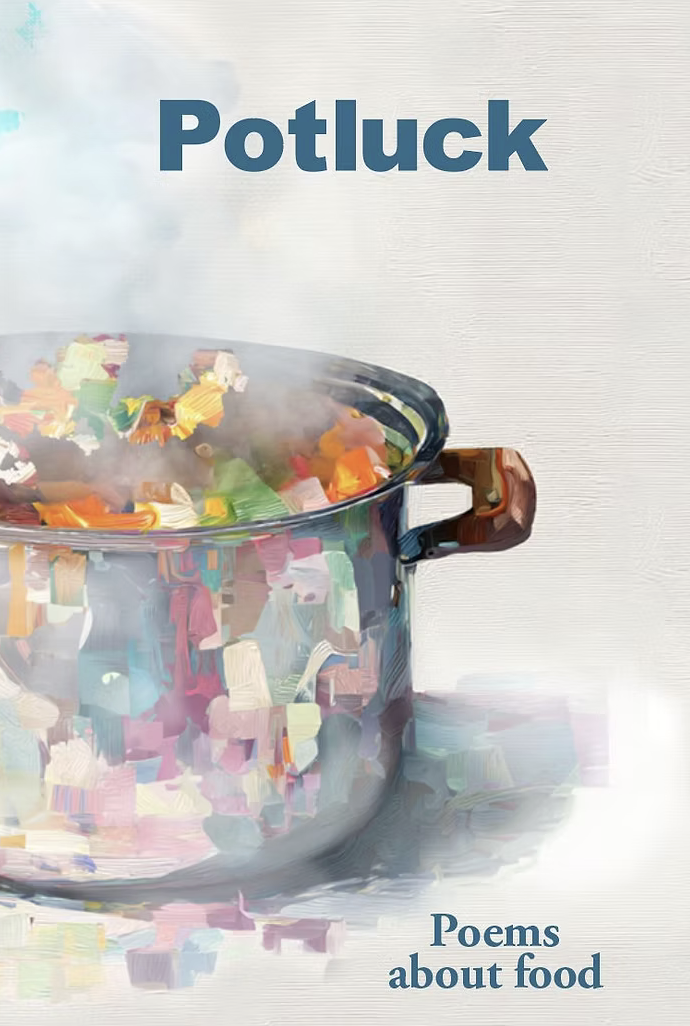
Pot Luck: Poems about Food was published by Landing Press in 2025. Ninety-three food-related poems to get our taste buds salivating. Yes, the poems celebrate the sweet sour savoury delights of food that nourishes and uplifts, food that brings people together at a table for physical and heart nourishment. Food that crosses family trees, cultural choices, vital memories. Inventive, traditional, satisfying. Food as part of mourning or significant occasions. Every day food. Illness food. Composting food. Food chains. Holiday food. Wellness food. Recipes.

Yet importantly the anthology is also mindful of a world awry, of empty bellies, of the starvation and food queues in places such as Gaza, of eating disorders, of toxic food. This book makes me re-feel the world. And that matters.

The seven editors sought a range of voices that showcase the vital range of poets in Aotearoa, from the well known to the emerging, those living here and those overseas. Landing Press also held workshops to extend the range of voices as much as possible.

I am a big fan of food in poetry – I have always, for example, loved how food enhances the collections of Ian Wedde! My links with poetry and food reach right back to my very first collection, Cookhouse (AUP, 1998). I used food as titles for the poems, and food as a metaphor both for the caring experience of mothers (myself), and my concern for language and those who work with words.

And today, in 2026, as much as I love simmering poems and nourishing our poetry communities through the joy and reach and connecting power of words, I love cooking and baking every day, stretching how food nourishes and connects us.

Pot Luck is special! A culinary and poetry delight. A book to get us reading and writing poetry, and to get cooking and sharing food. To celebrate I invited a few of the poets to read their poems. I would have loved to have been at a banquet hearing them all read!

Thank you poets – it is a treat indeed.

Meanwhile submissions are open for the next Landing Press anthology on the theme of water. The submission guidelines are here  and if stuck for inspiration, check out  these water-related ideas. Note that the email for submissions is landingpresswater@gmail.com. You have until 30 June – lots of time to get thinking and writing. 

The readings

Etienne Wain 黃義天 

Etienne Wain 黃義天 (he/any) is Peranakan Malaysian-Chinese (客家人Hakka, 海南人 Hainanese, 福建儂 Hokkien) and Pākehā (Scottish, English). He is in his final year of PhD study with Te Kauhanganui Tātai Ture (the Law Faculty) at Te Herenga Waka (Victoria University of Wellington), researching what it means for tauiwi (settler/migrant) communities to understand ourselves as “Tangata Tiriti” (people whose belonging in Aotearoa New Zealand is based on Te Tiriti o Waitangi). Etienne writes poems on being Tangata Tiriti, his experiences as Malaysian-Chinese diaspora, and hope.

Hanadi Hammad Al Bakhas

Hanadi Hammad Al Bakhas is a Syrian-born writer now living in Aotearoa New Zealand, with a deep love for her hometown of Homs. Her poetry draws on memories of home, culture, and tradition, often using food as a way to explore identity, belonging, and connection across generations. Through her writing, she reflects on the stories carried in everyday moments and the ways they travel across borders.

Diane Brown

Diane Brown runs Creative Writing Dunedin and specialises in hybrid forms.  Her ninth book, a collection of poems, Growing Up Late, will be published in March 2027 and she is now writing a prose/poetic exploration of female ancestors, Straight as A Pound of Candles.

Githara Gunawardena

Githara Gunawardena is a fourth year English literature student at Victoria University. She moved from Sri Lanka to Wellington in 2020 and has since had her work featured in Starling magazine’s 20th issue, as well as in the 2nd issue of Nine Lives journal. 

Helen Lehndorf


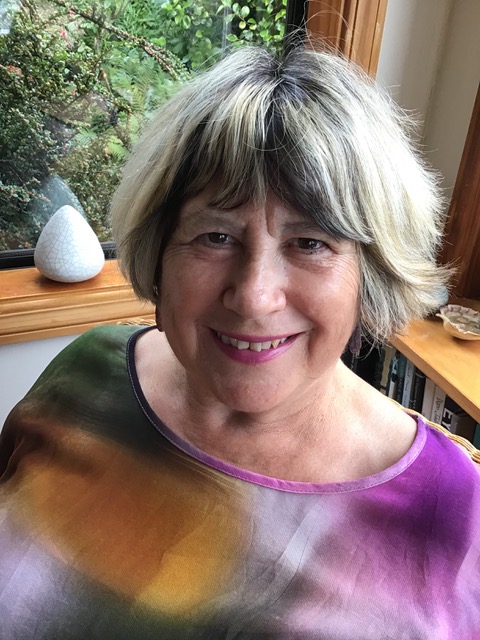
Helen Lehndorf is a writer, editor and teacher from Taranaki who lives in the Manawatū. She is the author of The Comforter, Write to the Centre, A Forager’s Life and has a new volume of poetry, The Bruise Palette, coming out in late May 2026. Helen’s website

Tui Bevin

Tui Bevin is a former medical researcher from Ōtepoti  Dunedin who was born in Lower Hutt to Danish immigrant parents. She enjoys the freedom and challenge of writing poetry, memoir and essays as a way of processing her understanding of the world and preserving stories for her grandchildren. She has been placed in poetry and writing competitions and published in MINDFOOD, Tui Motu, Flash Frontier, The Otago Daily Times, and Landing Press, NZ Poetry Society and other anthologies. 

Janice Marriot

Janice Marriot has written many books, stories, plays and poems for children. She has co-authored four books examining the differences between women’s lives in urban and rural environments.  Her preoccupations now are poetry and storytelling, and helping other people to perfect their own writing. 
She lives in inner Auckland in a small garden and spends a lot of time learning from her grandchild.

Desna Wallace

Desna Wallace is a poet, flash fiction writer and children’s writer. Her work has been published in various anthologies and her micro fiction has been short-listed a few times. Desna enjoys the challenge of word limits and trying to find the best words. She works as a school librarian, teacher aid and tutors creative writing to students at Writeon the School for Young Writers.

Poetry Shelf review: Helen Lehndorf’s A Forager’s Life

A Forager’s Life: Finding my heart and home in nature, Helen Lehndorf,
HarperCollins, 2023

I read Helen Lehndorf’s new book, A Forager’s Life: Finding my heart and home in nature, in two sittings. The first sitting was both short and long. I read the opening pages, that focus on a childhood blackberry memory, and then stalled because Helen’s recounted memory affected me so much. I returned to the book the next day and devoured the remainder. It was an all encompassing reading experience.

The book begins with the arrival of a baby brother when Helen is aged four. She goes for a ride on her dad’s motorbike. He wants to head to more rugged terrain with his mates so leaves her on a log momentarily. She is wearing her beloved magnifying glass around her neck and scrutinises the world about her: “The magnifying glass has given me a new way of looking.” She is unsettled by the beady glare of a squawking magpie. She finds comfort in a nearby blackberry bush, gathering and eating the fruit, collecting some for her dad in her handkerchief. The event, both scary and illuminating, feels like a turning point for the adult reflecting back: “I’m not the same kid who rode into the valley that morning.” The perfect steeping stone into a memoir of foraging, of self care, and of challenges.

I muse on the blackberry episode and consider about how we become stitched into books that affect us, and how books that affect us are stitched into us. On the one hand, our own experiences chime and rattle the surface of reading. On the other hand, Helen’s incident reverberates keenly in the context of a foraging life, and how life might offer us new and invigorating ways of looking, existing.

In her author’s note at the start of the book, Helen underlines the need to be careful eating foraged plants, and to eat what you are sure of. She also acknowledges her ancestry and that ancestral connections and knowledge “is utterly different for tangata whenua, the first people of Aotearoa”. She offers “respect and gratitude to all tangata whenua, who suffer many fractures to their intergenerational cultural transmission due to the actions of Aotearoa’s early ‘invasive species’: the European ancestors of Pākehā New Zealanders, like my own, and Pākehā today.”

Take the blackberry bush for example. This may feature in nostalgic memories for many of us who went foraging with families as children, made apple and blackberry pies, and devoured the sweet juicy fruit by bucket loads. But along with the benefits, the introduced plant is an invasive species, “a rampant coloniser”, not kind to locals.

A Forager’s Life includes recipes at the end of each chapter, featuring foraged plants, often with healing properties. There is an excellent guide to the art of foraging, to the principles of permaculture, and a useful bibliography. But aside from being a handbook on foraging, the book is a riveting memoir. It is a memoir in which foraging plays a key role, almost as a key to survival. We move from the awkward schoolgirl whose haven is the school library (book foraging) to the lessons learnt from her butcher dad who took her hunting, to her move into punk music, her meeting of kindred spirits at university and to becoming a community activist. There is the early marriage, the time in the UK and Europe with her husband, the birth of her first son back home, and the second son who was eventually diagnosed as autistic. There is a constant pull to both write and forage.

I adored reading this book. It’s one of those books that arrived at just the right time, when life is corrugated but certain things are anchoring. I found the idea of foraging such an uplift, a vital anchor for Helen in the midst of grief, challenge, the unexpected. In the blurb, Wendyl Nissen writes that the book will get you “looking at your neighbourhood with new intent”. Yes indeed, but it will also get you looking at your own life with new intent.

Beautifully written and carefully structured, this handbook to life and living is one to hold close. I loved it.

Helen Lehndorf is a life-long forager and Taranaki writer who lives in the Manawatu. She co-founded the Manawatau Urban Foraging group. Her first book, The Comforter, was published by Seraph Press in 2012, and her second book, Write to the Centre, a nonfiction book about the process of keeping a journal, was published by Haunui Press in 2016. Her work has also appeared in anthologies and journals such as Sport, Landfall and JAAM.

HarperCollins page

Poetry Shelf Theme Season: Eighteen poems about love

Ah. Love is my final theme. My seventeenth gathering. I chose love because love is the ink in my pen, it drives the pencil filling my notebooks. It’s the reason I keep two blogs running when, at times, it seems impossible. There is the love of reading and writing stretching back to childhood. Love poetry can embrace many subjects, moods, objects, experiences, relationships. So many poetry books in Aotearoa are steeped in love. In what is written and, just as importantly, in the infectious love poets feel for the power of words. For the possibility of the line, silence, music, physical detail. As readers, writers, publishers, reviewers, booksellers of poetry, we are connected through a shared and invigorating love of poetry. Ah.

To celebrate the end of my theme season I have ten copies of Wild Honey: Reading New Zealand Women’s Poetry to give away. I will sign one for you or for a friend. You can leave a comment on the blog, on FB or Twitter: Which theme resonated for you? What theme do you suggest if I should ever do this again? Or just email me if you have my address.

Grateful thanks and aroha to all the poets, publishers and readers who have supported my season of themes. I so loved doing this!

The poems

Poem

So far
it has worked
by imagining you
in all the places I would
like you to be

*

this is the one I love.
he is not here
but the air is still warm
from where he
might have been

*

we have spent hours
circling each other
with words-thinly
vowelled embraces

*

how to translate these
words into silences
or the silences
into words

*

when I cannot fix you
behind my eyes
I carry your absence
like stars
on the blue roof

Jenny Bornholdt

from Selected Poems, Victoria University Press, 2016

Catch

Two sitting at a table
two at a table sitting
two and two
a table in the grass
in the grass a table
and on the table
empty almost with a little
a little empty almost but
with a little water
there sits a jar for love
on the table a jar for love
not a fresh jar every day
fresh every day
nothing in the jar that lasts
always fresh they are sitting
sitting at the table
looking they are looking
at the jar at the table
at each other they are
sitting looking sitting
at the table at the jar
looking looking sitting
now is nearly the day
the day is nearly now now
go to sleep go to love
go to jar go to look
look looking look
sit sitting catch that catch
two sitting at a table
two at table sitting
two and two and two
a table in the grass

Murray Edmond

from Fool Moon, Auckland University Press, 2004

Because of you

(for Darae)

My Son,

in you I see the shape of the heart
all poets try to explain

you, the greatest poem
I could never pen

how blessed I am
to mother a son
to exercise hope and love
when everything else is absent

Son,
your are a gift to men
because of you
I pray for men
still love men
hold hope for me,
for you.


Grace Iwashita-Taylor

from Full Broken Bloom, Ala Press, 2017

The wind has shaken everything out of the quince tree.
Behold the bony gullets of fledglings
as yellow as the towers of rock that arise in Wyoming.
‘Stop blocking the gangway,’ the old woman
used to say, cutting away long roils
of yellow clay with her spade, hell bent on re-configuring
a brand new version of genetically modified
melancholy. ‘Never forget how the old ones
arrived from Dubh Linn, the Place of the Dark Pool,
formed from the union of the River Liffey
and the River Poddle. Never forget
that we are arisen from a line of proud people.’
And here I am, holding onto my end of the string
and I know, my love, that you are holding onto the other.     

Bernadette Hall

Aroha Mai

Aroha mai
I was trying to get to you
but the wind kept changing direction

Aroha atu
she hates it when institutions use Te Reo in their signatures
she hates it when my wet hair drips all over the bedsheets

Aroha mai
I couldn’t see you this time
I was down a rabbit hole
along the coast beside the point

Aroha atu
love given love received
there isn’t enough room in this house to house our love
the brick square flat beneath a rectangle sky

Aroha mai
your baby finally came
the angels found your address submerged in yesterday’s current
and she’s clapping in every photo

Aroha atu
my feet don’t touch the ground these days
take the stairs to stay fit
I keep my car full of gas
it is easy to recycle the past 

Aroha mai
my ghost is in town
and I don’t know if I should email her back

Aroha atu
already the skeleton wings of this year are casting long shadows
we don’t know what’s for dinner but next door’s
Tui keeps singing all the buried bones to life

and you’re opening every can of beans in the cupboard
to feed the tired warrior in my arms 

Courtney Sina Meredith

from Burnt Kisses on the Actual Wind, Beatnik Publishing, 2021

Helping my father remember

My father
is in the business
of transmissions.
A radio technician,
the basic premise being
that a message is sent out,
then received. Except something’s
gone wrong with the wiring,
and he didn’t teach me
how to fix it. I see him, standing
at the kitchen bench,
his hand hovering
over an orange and paring knife;
trying to think
what he had planned.

*

There is evidence that sound
helps restore memory:
the sound
of a cricket ball colliding
with tin fence; lemonade
meeting beer
in a shandy;
sticks smouldering
in the air, when pulled
from a camp fire.
The doctor says
depression, my sister says
stress, my father says
stop being
so bloody dramatic.

*

They say
I am the most like you,
and that we
are like your mother.
I am following you through
tall grasses, as high
as my head. You’re in
your angling gear.
It’s summer, I can hear
the cicadas.
There’s a wind up,
but its warm.
We’re heading
to the river.
You find Nana,
and I’ll find you.
We won’t be lost
if we’re together.

Louise Wallace

from Bad Things, Victoria University Press, 2017

The love poem

I haven’t read a single
new book since I’ve been
with you. I’ve been so busy
peering into your eyes
where I can see dark
passages & feinting
canaries & gold &
mine
mine
mine
mine

Plus I’ve been preoccupied
with the joy of sex
the science of living
the interpretation of dreams
& my undiscovered self.

So today I read
a love poem.

But when I looked
at it, it just said
your name.

It was very repetitive.
It just kept skipping
over itself. Skipping
to the important bits.
Slipping into something
more comfortable.

I looked away for a second
& when I looked back the
love poem had filled the
whole room. It was thrusting
against the ceiling & had
burst through the open window
pushing the vase of sunflowers
right out.

I tried to call to you to come
& look but the love poem
was so big that it caught
in my throat. There were fainting
canaries everywhere like the
fallen petals of sunflowers
gasping
yours
yours
yours
yours

Hannah Mettner

from Fully Clothed and So Forgetful, Victoria University Press, 2017

Strummer Summer

All that summer we kissed outside 
because we had nowhere inside 
to be alone. We had matching Clash t-shirts
and black outlooks. After my shifts 
at Seafood Sam’s I would pick you up 
in my Dad’s ute and we’d drive to the river

so I could swim off the chip grease. I’d 
light a fire while you showed me the riffs
you’d learned that day on your unplugged
Fender. /I’ve been beat up, I’ve been thrown out,/
/But I’m not down, No I’m not down./
 I requested 
Blondie but you said it was chick-music. 

Poking the fire with a stick, the tinny twang 
of your dead strings. We thought we had it 
pretty bad. Your Dad didn’t like me because
I was “the wrong flavour”. I craved city life. 
Packed my army bag and left home, but not before 
I withdrew half my chip money and bought you an amp.

Helen Lehndorf

from The Comforter, Seraph Press, 2011

The library


The library is full of people looking for love. At the
sound of footsteps approaching, a boy turns around with
a meaningful glance, and casually slips a pencil behind his
ear. Girls pause on the landings, clutching armfuls of books
to their breasts. Sometimes, you feel sorry for these people.
You wish this wasn’t happening. All you want is a book,
and all the shelves are filled with eyes of longing.

Airini Beautrais

from Secret Heart, Victoria University Press, 2006

Always on Waking

Always, on waking, I look out into treetops:
I lie beside you in the shimmering room
Where, whether summer morning, shell of dawn
Or dazed moonlight patterns leaves on walls
I wake to wide sky and the movement of treetops.

As the leaves flicker (thin scimitars of opaque
Dull green the eucalyptus bundles over her bark strips)
They become lucent; leaves lined with sunlight
With moonlight are no longer drab
But seem scimitars shining, are not now opaque.


While you are there I am nested among leaves;
As sparrows come each morning for breadcrumbs
So I look for your still face beside me;
Without your calm in the face of what wild storm
I am no longer nested, but desolate among these leaves.

Ruth France

from No Traveller Returns: The poems of Ruth France, Cold Hub Press, 2020

Honey

It was manuka honey, the best kind,
in a big, white plastic bucket, given to you
by someone with bees, because you’d been helpful,
so much honey, it looked like it might last a lifetime
and you being you, and maybe why I love you,
you spooned it out into carefully washed jars
and gave it to your uncle, your mother, your brothers,
our friend with the little boy, your mother’s neighbour
who had the birthday, so much honey, and after
all that you gave away, there was still so much left for us.

Janis Freegard

from Meowing Part 1 (the Meow Gurrrls zine).

Is It Hard to Follow Your Heart When You Have Three?

(on the story of the giant octopus from Aelian’s De Natura Animalium)

is it hard to follow your heart when you have three?

one for circulation
two for breathing

i am the stone jar of pickled fish
you are the giant octopus

i wait in the dark for you
you crawl up the sewer for me

we cast our votes
two are for breathing

Claudia Jardine

from The Starling 9

Toikupu aroha 1

I waited all night for you to come home
to plant kihikihi into your cupped palms

now as you sleep I glide my fingers
memorising the tracks that led me here

to this chest – arms – manawa
with such vastness and proximity

I lean down taking in the entirety
of your pulse and there my hā quickens

above lifelines grooved
with spacious and honest certainty.

Iona Winter

from Gaps in the Light, Ad Hoc Fiction, 2021

For Baukis

There are four extant poems written by the ancient Greek poet Erinna. Three of these concern the death of her childhood friend, Baukis.

you lost her, didn’t you?
the one that made it worthwhile
to be underneath the sun and breathing

you remembered her, didn’t you?
the days you played 
chasing the tortoise topsy turvy,
falling from all the white horses

you missed her, didn’t you?
when marriage came like a thief
and snatched her away 
the ribbon of your world

you mourned her, didn’t you?
when the ribbon was torn
the bright eyes empty,
the breath stilled

you cried for her, didn’t you?
raw, with it heaving out 
the wet thick language 
of snot and tears

you loved her, didn’t you?
even more than a friend, 
the closest companion 
the only one

you wrote for her, didn’t you?
wove her memory through hexameters 
to stave off oblivion 

and, now, 
for her
we read.

Hebe Kearney

When the Person You Love Leaves You in the Night


When the person you love leaves you in the night, it is only natural to get out of bed and follow them. It is also only natural for your pyjamas to be all crumpled and your hair sticking up at the back. It is only natural to feel confused, and alone.

Nine times out of ten, a light will be on and you will walk into the living room, squinting. The person you love will probably be making human body parts out of plasticine, or playing video games. They will look up and say ‘Hello’ and smile at you like you’re some kind of lost baby animal. You will feel a little bit found.

If there is no light on in the house, it is important that you check the garden. If there is no garden, check the balcony. The person you love will be out there, staring at the moon and not crying. You are the one who cries. Except that one time… and the other. Don’t ask them if they’re okay because they will just say ‘Yeah’. Besides, you are the one who was left alone in the night.

Just look at them in the moonlight, and let them look at you. Stay very still. Then take their hand in slow motion and walk to the kitchen. The person you love will follow you, and so will the moon. Pour some milk into a pan and simmer gently. You will see a quivering white circle. The moon will be in there somewhere. Slice cheese onto bread and turn on the grill.

When you have two pieces of cheese-on-toast, put them on a plate. Pour half the milk into the mug with Peter Rabbit on it and half into the souvenir mug from Sweden. There will be sugar on the floor and it will stick to your feet. Swing yourself up onto the kitchen bench. You and the person you love will sit with your feet dangling side by side. The sugar will fall without a sound. You will drink your milk. The person you love will eat their grilled cheese, with sips of milk in-between. Peter Rabbit will eat his radishes.

Congratulate yourselves for drinking calcium. Sit at opposite ends of the couch with your legs tossed over their legs. Talk until you wake up the birds.

It is important that at some point during the night the person you love reminds you that you are the person they love. It is also important that they thank you for the grilled cheese. If they don’t, give them a pen and a piece of cardboard. Drop them on the side of the road. Tell them, ‘You can hitchhike from here.’

Joy Holley

from Starling 4

Love Poem with Seagull

I wish I’d seen it from your side of the table
when the horrid gull attacked my fish and chips,
the springy baton of haddock in my hand
a signal for the post-saurian psycho
to swoop at my talon-less fingers as they moved toward my mouth
in their classically dithering mammalian way,
because if I’d had the privilege to see
the stress-warped, flexuous face behind
my bat-like ultrasonic shrieks of shock
as I fought off the bird unsuccessfully
then I’d have some idea of what it means
for you to love me, the sort of person who manages
to always look like this or feel like this
regardless of how much easier being normal is.

Erik Kennedy

from There’s No Place Like the Internet in Springtime, Victoria University Press, 2018

Found Again

our love is a tracking device
more sure than any global
positioning system

just carve us into wooden tablets
then imprint us on opposite corners
of a mighty length of siapo
and watch tusili’i spring forth

making bridges to connect us
over rock-bound starfish
scampering centipedes and
the footprints of bemused birds

we have many stories of
losing and finding each orther

of getting lost
and losing others

but today all is well

I lie beneath the old mango tree
smothered with coconut oil
embellished with wild flowers
and droplets of your sweat

your aging shoulders
still fling back proud

and I still arch towards you
like a young sweetheart

you have whispered in my hair

found again

and we both know
this is our final harbour

Serie Barford

from Tapa Talk, Huia Press, 2007

Everything

This morning when I looked out my window
they were the first thing I noticed.
I saw them flocking outside my house.
I like to look at them from my window.
I get the sun there. I’ll go out and stroke them.
I wonder what they think of me.
Some people don’t have anything much
but if you put a hen on their knee they start looking.
I’m not fast on my feet. I have bother with my eyes.
I’ve got friends that can’t get out.
Everything goes downhill.
I would go back to when I was younger.
I love the first things.
When you’re young you’ve only a future.
I’ve made no plans for dying. I haven’t paid for anything.
I’d be terrified if they made a mistake.
I do love everything about living though.
I love being able to see.
I like to look out my windows and see the leaves
like a blanket on the ground. I love the autumn.
I love the hens in the autumn.
They’re beautiful.
I couldn’t imagine my life without them.
They’re everything to me.

Ashleigh Young

from How I get Ready, Victoria University Press, 2019

The poets

Serie Barford was born in Aotearoa to a German-Samoan mother and a Palagi father. She was the recipient of a 2018 Pasifika Residency at the Michael King Writers’ Centre. Serie promoted her collections Tapa Talk and Entangled Islands at the 2019 International Arsenal Book Festival in Kiev.  She collaborated with filmmaker Anna Marbrook to produce a short film, Te Ara Kanohi, for Going West 2021. Her latest poetry collection, Sleeping With Stones, will be launched during Matariki 2021.

Airini Beautrais lives in Whanganui and is the author of four poetry collections and a collection of short fiction. Her most recent poetry collection is Flow: Whanganui River Poems (VUP 2017). Bug Week and Other Stories recently won the Ockham NZ Book Fiction Award 2021.

Jenny Bornholdt is the author of many celebrated collections of poems, including The Rocky Shore (Montana New Zealand Book Award for Poetry, 2009) and Selected Poems (2016), and editor of several notable anthologies, including Short Poems of New Zealand (2018). In 2005 she became the fifth Te Mata Estate Poet Laureate, during which time she wrote Mrs Winter’s Jump (2007). In 2010 she was the Creative New Zealand Victoria University Writer in Residence. In 2013 she was appointed a Member of the New Zealand Order of Merit for services to literature. In 2016 she edited the online anthology Ōrongohau | Best New Zealand Poems. Jenny’s most recent collection is Lost and Somewhere Else (2019). 

Murray Edmond, b. Kirikiriroa 1949, lives in Glen Eden. 14 books of poetry (Shaggy Magpie Songs, 2015, and Back Before You Know, 2019 most recent); book of novellas (Strait Men and Other Tales, 2015); Then It Was Now Again: Selected Critical Writing (2014); editor, Ka Mate Ka Ora (http://www.nzepc.auckland.ac.nz/kmko/);  dramaturge for Indian Ink Theatre. Forthcoming: Time to Make a Song and Dance: Cultural Revolt in Auckland in the 1960s, from Atuanui Press in May, 2021.

Ruth France (1913–68) published two novels: The Race (1958), which won the New Zealand Literary Fund’s Award for Achievement, and Ice Cold River (1961); and two volumes of poetry: Unwilling Pilgrim (1955) and The Halting Place (1961), under the pseudonym Paul Henderson. Poems from a third collection, which remained in manuscript at the time of her death, are published as No Traveller Returns: The Selected poems of Ruth France (Cold Hub Press, 2020).

Janis Freegard is the author of several poetry collections, most recently Reading the Signs (The Cuba Press), and a novel, The Year of Falling. She lives in Wellington. website 

Bernadette Hall lives in the Hurunui, North Canterbury. She retired from high-school teaching in 2005 in order to embrace a writing life. Fancy Dancing is her eleventh collection of poetry (VUP, 2020). In 2015 she was awarded the Prime Minister’s Award for literary achievement in poetry and in 2017 she was made a Member of the New Zealand Order of Merit for services to literature in Aotearoa New Zealand.

Joy Holley lives in Wellington and has recently completed her Masters in fiction at the International Institute of Modern Letters. Her writing has been published in Starling, Sport, Stasis and other journals.

Claudia Jardine (she/her) is a poet and musician based in Ōtautahi/Christchurch. In 2020 she published her first chapbook, The Temple of Your Girl, with Auckland University Press in AUP New Poets 7 alongside Rhys Feeney and Ria Masae. For the winter of 2021 Jardine will be one of the Arts Four Creative Residents in The Arts Centre Te Matatiki Toi Ora, where she will be working on a collection of poems.

Hebe Kearney is a queer poet who lives in Tāmaki Makaurau. Their work has appeared in The Three Lamps, Starling, Oscen, Forest and Bird, a fine line, and Poetry New Zealand Yearbook 2021.

Erik Kennedy is the author of There’s No Place Like the Internet in Springtime (Victoria University Press, 2018), and he is co-editing a book of climate change poetry from Aotearoa New Zealand and the Pacific forthcoming from Auckland University Press later in 2021. His second book of poems is due out in 2022. His poems, stories, and criticism have been published in places like FENCEHobartMaudlin HousePoetryPoetry Ireland Review, the TLS, and Western Humanities Review. Originally from New Jersey, he lives in Christchurch, New Zealand.

Helen Lehndorf’s book, The Comforter, made the New Zealand Listener’s ‘Best 100 Books of 2012′ list. Her second book, Write to the Centre, is a nonfiction book about the practice of keeping a journal. She writes poetry and non-fiction, and has been published in Sport, Landfall, JAAM, and many other publications and anthologies. Recently, she co-created an performance piece The 4410 to the 4412 for the Papaoiea Festival of the Arts with fellow Manawatū writers Maroly Krasner and Charlie Pearson. A conversation between the artists and Pip Adam can be heard on the Better Off Read podcast here

Courtney Sina Meredith is a distinguished poet, playwright, fiction writer, performer, children’s author and essayist, with her works being translated and published around the world. A leading figure in the New Zealand arts sector, Courtney is the Director of Tautai Contemporary Pacific Arts Trust, an organisation committed to championing Oceanic arts and artists. Courtney’s award-winning works include her play Rushing Dolls, poetry Brown Girls in Bright Red Lipstick, short stories Tail of the Taniwha and children’s book The Adventures of Tupaia. Burst Kisses On The Actual Wind is Courtney’s new collection of poetry, the book was released just this month. 

Hannah Mettner (she/her) is a Wellington writer who still calls Tairāwhiti home. Her first collection of poetry, Fully Clothed and So Forgetful, was published by Victoria University Press in 2017, and won the Jessie Mackay Award for best first book of poetry at the 2018 Ockham New Zealand Book Awards. She is one of the founding editors of the online journal Sweet Mammalian, with Sugar Magnolia Wilson and Morgan Bach.

Grace Iwashita-Taylor, breathing bloodlines of Samoa, England and Japan. An artist of upu/words led her to the world of performing arts. Dedicated to carving, elevating and holding spaces for storytellers of Te Moana nui a Kiwa. Recipient of the CNZ Emerging Pacific Artist 2014 and the Auckland Mayoral Writers Grant 2016. Highlights include holding the visiting international writer in residence at the University of Hawaii 2018, Co-Founder of the first youth poetry slam in Aoteroa, Rising Voices (2011 – 2016) and the South Auckland Poets Collective and published collections Afakasi Speaks (2013) & Full Broken Bloom (2017) with ala press. Writer of MY OWN DARLING commissioned by Auckland Theatre Company (2015, 2017, 2019) and Curator of UPU (Auckland Arts Festival 2020 & Kia Mau Festival 2021). Currently working on next body of work WATER MEMORIES.

Louise Wallace is the author of three collections of poetry published by Victoria University Press, most recently Bad Things. She is the founder and editor of Starling, and is currently working on a PhD in Creative Writing at the University of Otago.

Iona Winter (Waitaha/Kāi Tahu) lives in Ōtepoti Dunedin. Her hybrid work is widely published and anthologised in literary journals internationally. Iona creates work to be performed, relishing cross-modality collaboration, and holds a Master of Creative Writing. She has authored three collections, Gaps in the Light (2021), Te Hau Kāika (2019), and then the wind came (2018). Skilled at giving voice to difficult topics, she often draws on her deep connection to land, place and whenua.

Ashleigh Young is the author of Magnificent Moon, Can You Tolerate This?, and How I Get Ready (Victoria University Press). She works as an editor at VUP.

Ten poems about clouds

Twelve poems about ice

Ten poems about dreaming

Eleven poems about the moon

Twelve poems about knitting

Ten poems about water

Twelve poems about faraway

Fourteen poems about walking

Twelve poems about food

Thirteen poems about home

Ten poems about edge

Eleven poems about breakfast

Twelve poems about kindness

Thirteen poems about light

Thirteen poems about song

Sixteen poems of the land

Poetry Shelf Theme Season: Twelve poems about ice

Photo credit: Alison Glenny

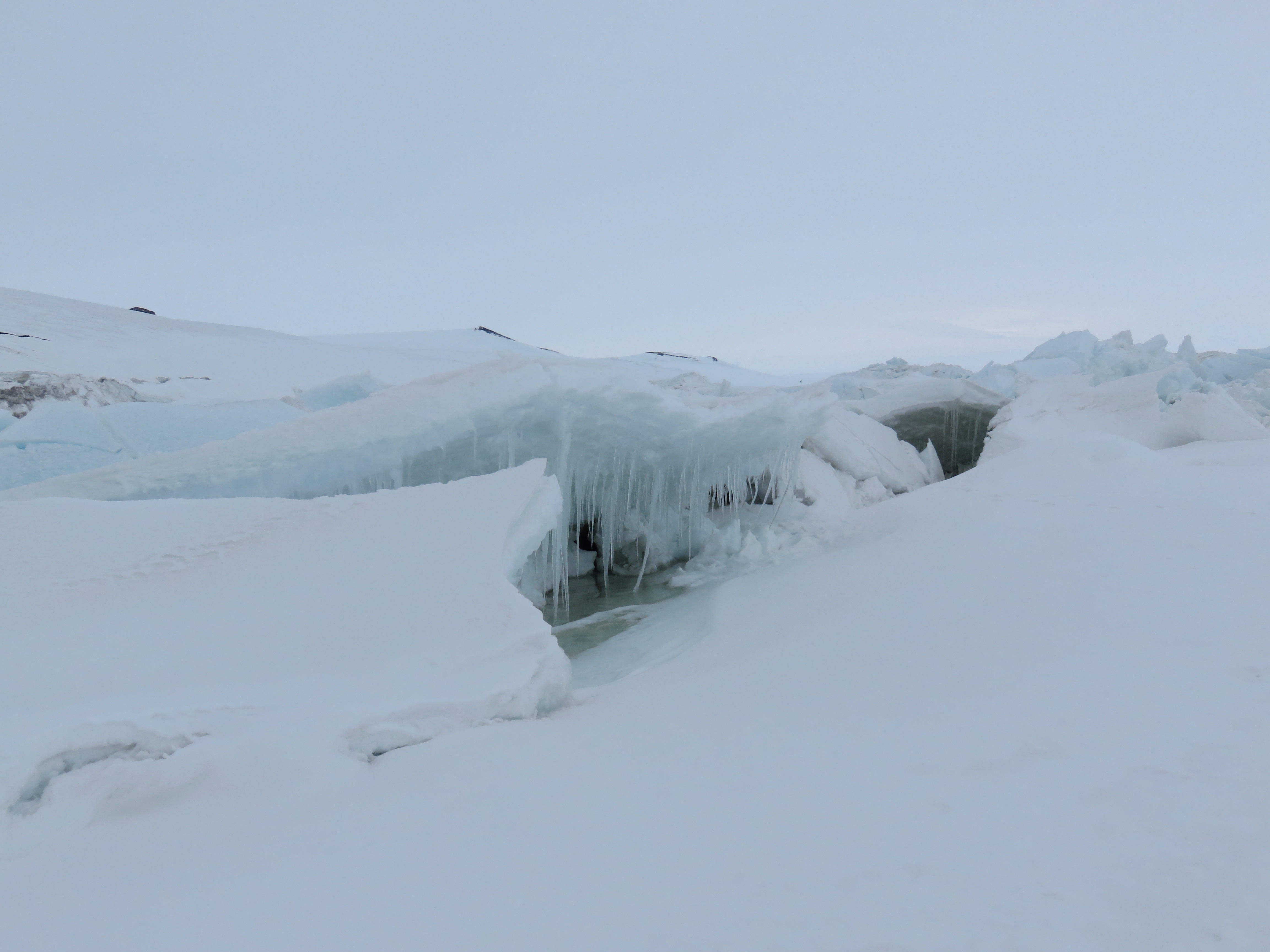
Some poetry books catch you on the first page and you get goosebumps and your breathing changes and you know this is a book for you. I felt like that when I first read Alison Glenny’s sublime The Farewell Tourist with its luminous connections to Antarctica. There is something about poetry that takes risks, that never loses touch with heart, is unafraid of ideas, and is able to sing on the line. You just want to camp up in the book for days, with a thermos of tea, and all your devices unplugged.

I felt the same way about Bill Manhire’s extraordinary poem ‘Erebus Voices’ (Lifted, Victoria University Press, 2005). You can read the poem at The Spin Off here and listen to Bill read the poem here. Thinking of Alison’s book and Bill’s poem, I knew ice had to be one of my themes.

Ice in poems: it might be a hint, a hurt, an underlying coldness, an icy image, a heart freeze, a trip to the snow-capped mountain, a melting ice-cream, an avalanche.

I am so grateful to all the poets who have supported my extended thematic poetry gatherings. Thank you.

The Poetry Shelf Theme Season runs every Friday until mid August.

In the morning the mountains beckon

Blue and clear like bells; glaciers feed upon

Light pouring from heaven brighter than ice-stone.

Ruth France (1913-1968), from No Traveller Returns: the selected poems of Ruth France, Cold Hub Press, 2020

Twelve poems about ice

Some afternoons a fog rolled down the hallway. On others, the staircase groaned with moisture. A finger laid carelessly on a bannister dislodged a ledge of rime. She lifted the hem of her dress to avoid the damp in the passageway, wore knitted gloves in the kitchen. She was lying in the bath when the glacier pushed through the wall. She sank deeper into the water to escape the chill that settled on her shoulders. Trying to ignore the white haze, to lose herself between the pages of her book.

Alison Glenny

from The Farewell Tourist, Otago University Press, 2018

He Manawa Maunga

We are dwarfed by a snow bank

that reaches beyond our eyes,

a single hole punctuating its white sheet.

Your hand covers my small eyes

and I feel you shielding me in the warmth of your jacket

as we move though.

I open them to a palace of ice and snow

meticulously carved by strangers

long gone down the mountain.

We sit together in silence,

deep in the mountain’s quiet heart.

Watching our breath melt away

the walls around us.

Ruby Solly

from Tōku Pāpa, Victoria University Press, 2021

Pencarrow Lighthouse

Mrs Mary Jane Bennet saw frost on the ground

circling the lighthouse where her children sleep.

At the cliff edge where wildflowers were,

gulls wash seafoam up the shore.

You, gulls, over hoofprints on the track,

over the dunes, over pearl beams ghosting

out from the lighthouse,

in your thousands over clean seashells.

The wind spins dead things in circles.

Collect up the wintertime, won’t you,

crack it on a rock,

drop it from a height.

But, you bird whose wing cuts the tops off waves,

shut your wings for the children

of Mrs Mary Jane Bennett.

Let loose a grey feather.

She will tuck it into the knot

of the blue satin ribbon

ion her eldest daughters hair, the one

who dreams of white things circling.

Nina Mingya Powles

from Girls of the Drift, Seraph Press, 2014

Wabi-sabi

I was thirty-three before I learned
people stuck in snow
can die from dehydration.
I would melt icicles
on my tongue for you, resist
the drinking down, drip it
into you. Then repeat, repeat
until my lips were raw.

Deep snow squeaks. We
stop on the Desert Road
because of the snow. You
throw snowballs at the
‘Warning: Army Training Area’ sign.
I take macro-photographs of
icicles on tussock.

When we drive up the Desert Road
we lost National Radio, we lose
cellphone reception, we lose
all hope. I was thirty-seven before
I considered not trying to always fix
things. I read an article in the New Yorker 
about wabi-sabi – the beauty in the
broken and the worn. The integrity
of the much-used utilitarian object.

But then there was another article
about a woman flying to Mexico
to be put into a coma
so she can wake up mended. It is 
like rebooting a computer, said the doctor.

Despite wabi-sabi, I want that.
To live in snow and not be thirsty.
I want good reception all the way
up the country. I want a shiny, clean
version of myself. Closedown,
hibernate, restart.

Helen Lehndorf

from The Comforter, Seraph Press, 2011

Girl Reading

She overhears the sound of things in hiding.

She bites an apple and imagines orchard starlight.

Each time she licks her thumb, its tip,

she tastes the icy branches,

she hears a sigh migrate from page to page.

Bill Manhire

from Zoetropes, Victoria University Press, 1981

Opa

They would ice-skate:

he worked the canals

with speed.

My grandparents,

between villages, on ice

above the level of the land.

*

Amsterdam in the fifties:

a row of white stone houses

on a paved street.

*

New Zealand’s blue sea

lapped at sloping shores,

knew its place

at the flank of land.

Wide stars, small shells,

the open span of sand.

*

A wooden villa 

changed you.

Housed you.

Those years of good

morning, goodnight,

pudding and bread,

climbing in

and climbing out of bed.

*

Your skates 

hang on the wall.

Blond varnished wood.

Braided laces.

Those blades, sweeping,

never shook off the ice.

Angela Andrews

from Echolocation, Victoria University Press, 2007

Island girl Tokoroa

ice-cream puddle licks bare feet

a sky so bright and blue

the sun rimming its yellow stain

make-believe it is summer

yet winter bites frozen fingers

gloves and scarves for some other child

in her hands she holds the key

a coin for lunch one Sally Lunn, miss

creamy pink-smothered bun

there is no word for luxury beyond

this daily walk in winter sun

she can almost taste it

morning flicks by chafing

children

head down she holds out her hand

winter may snow for all she cares

the skies can turn black

one Sally Lunn, miss

is heaven and blue

and forever

Reihana Robinson

from Her Limitless Her, Mākaero Press (Hoopla series), 2018

Ben Lomond  

Three people in the snow  

two linked by marriage  

memorising fault line  

                                         by fault line  


and every  now and again  the head of the summit  

tails in

     and out of sight  


three people with backpacks and knees in the snow  

threading the  mountains  with a silence   

that once broken   

would make you cry  


and every now and again  the head of the summit  

tails  in

     and out of sight  


like the early love of a  June morning  

first an accent  and  then the hearing  

and the sky is a blanket wishing it gone  


late  on  the  summit a sparrow  

whittling alone    

                              and away 

Modi Deng

from A Clear Dawn: New Asian Voices from Aotearoa New Zealand, eds Paula Morris & Alison Wong, Auckland University Press, 2021

Avalanche        

There was the war on TV,

the snow, the people lying on plastic

in the snow, death arriving

with his suitcase full of tools,

the delivery out of this world

offers such a dazzling

variety, and the snow, forever this

white tableau becomes forged

with the recollections of your last

oncology visit

and the people lying on the plastic

in the snow.

At the doctor’s I sat with

my tiny hands held in my lap the way

I’d been taught, two lovebirds,

but the flesh was as cold as sheet ice

I was up to my elbows

in frostbite and snow.

There were stories in the news

each day and in the morning paper,

death can happen overnight, may

be in your house if you don’t move

fast enough, in a trench, or

the dreadful football-stadium one,

under the trees in a dark

wood, against a hedge, or even lying

on plastic in the wan snow.

Such soft subdued footfalls,

but a goodly advance

over a long stretch of time.

Others shift their seats away from me

leaving a pencil

-thin cavity, a subtle margin,

but you and I are crouched

together in the snow reading the

avalanche instructions;

they are torn and dirty, tacked to

the cobwebbed wall of some

wild and woody alpine mountain hut:

Construct earthen fortifications

Behind your village. In the case

of serious exposure it is

best to wait for rescue dogs.

We must read the instructions

we must read the instructions

but there are no instructions

I believe there are no instructions.

Vivienne Plumb

from Avalanche, Pemmican Press, 2000

The Icicles

Every morning I congratulate

the icicles on their severity.

I think they have courage, backbone,

their hard hearts will never give way.

Then around ten or half past,

hearing the steady falling drops of water

I look up at the eaves. I see

the enactment of the same old winter story

– the icicles weeping away their inborn tears,

and if only they knew it, their identity.

Janet Frame

from The Goose Bath: Poems, eds. Pamela Gordon, Denis Harold, Bill Manhire, Vintage, Random House, 2006, picked Hebe Kearney

You can hear Janet Frame read ‘The Icicles’ here

At Home in Antarctica

In this place, silence has a voice
wide-ranging as the continent.
Some say it’s on the cusp
of madness, the way it hums
and stutters, mutters to itself
in quietest tones.

In this place, the universe brims.
Inside absence, presence.
Inside distance, dust
and our sleeping earth
dreaming beneath her thin blue
mask of ice.

In this place, the necessity
of memory, recollections
of a loved one’s face, shape
of laughter, weight of breath.

In this place, nostalgia
roams patient as slow
hands on skin transparent
as melt-water. Nights are light
and long. Shadows settle
on the shoulders of air.

Time steps out of line
here stops to thaw
the frozen hearts of icebergs.
Sleep isn’t always easy in this place
where the sun stays up all night
and silence has a voice.

Claire Beynon

from Open Book – Poetry & Images (Steele Roberts, 2007).

Suggested by Jenny Powell. The poem has also been a prompt for various musical compositions, including a piece Antarctikos by US composer, Jabez Co (2010) and The Journey Home (2012) for soprano, tenor, baritone, choir and orchestra by NZ composer John Drummond.

Visiting Rita at Sydney Street West

Wellington rains in a cross-hatch tantrum.

Wind blasts batter everyone backwards.

Lost in a volley of ‘after the hill second street right

follow your nose’ I have taken the wrong hill,

veering left with an eye on the clock.

Landmarks stream down my spectacles,

couplets of directions waterfall out of my head.

Lost in a valley of paper map ink-splash,

folds between us disintegrate. In the if-only world

my fingers wrap a hot cup of tea, my coat dries by your heater.

Sticks torn from moorings shoot down white-water gutters.

Wind race of paper packets eddies in high-speed gusts.

I am lost in solitary panic.

An onslaught of sleet freezes my face.

Jenny Powell

from Meeting Rita (forthcoming June, Cold Hub Press)

Angela Andrews lives in Auckland with her family. Her PhD in Creative Writing at Victoria University examined the relationship between medicine and poetry. She has previously worked as a doctor.

Claire Beynon is a Dunedin-based artist, writer and independent researcher. She works collaboratively on a diverse range of on- and off-line projects with fellow artists, writers, scientists and musicians in NZ and abroad. These group activities are buoyed and balanced by the contemplative rhythms of her solo practice. Websites here and here.

Modi Deng is a postgraduate candidate in piano performance at the Royal Academy of Music on scholarship. Currently based in London, Modi received a MMus (First Class Honours, Marsden research scholarship) and a BA from Auckland University. Her first chapbook-length collection of poetry will be part of AUP New Poets 8. Her poems have also appeared in A Clear Dawn (AUP), Starling, the Stay Home Zine (Bitter Melon Press), and on NZ Poetry Shelf for National Poetry Day. She cares deeply about literature (especially poetry, diaspora), music, psychology, and her family.

Janet Frame (1924 – 2004), born in Dunedin, was the author of thirteen novels, five story collections, two volumes of poetry, a children’s book and a three-volume autobiography. She won numerous awards including the New Zealand Book Award for poetry, fiction and non-fiction titles, and the New Zealand Scholarship in Letters. She received New Zealand’s highest civil honour in 1990 when she became a Member of the Order of New Zealand. She was awarded the Prime Minister’s Award for Literary Achievement in 2003 and was named an Arts Foundation Icon Artist in 2004.

Alison Glenny’s collection of prose poems The Farewell Tourist, was published by Otago University Press in 2018. A chapbook, Bird Collector, is being published by Compound Press in 2021. She lives on the Kāpiti Coast.

Helen Lehndorf’s book, The Comforter, made the New Zealand Listener’s ‘Best 100 Books of 2012′ list. Her second book, Write to the Centre, is a nonfiction book about the practice of keeping a journal. She writes poetry and non-fiction, and has been published in Sport, Landfall, JAAM, and many other publications and anthologies. Recently, she co-created an performance piece The 4410 to the 4412 for the Papaoiea Festival of the Arts with fellow Manawatū writers Maroly Krasner and Charlie Pearson. A conversation between the artists and Pip Adam can be heard on the Better Off Read podcast here

Bill Manhire founded the creative writing programme at Victoria University of Wellington, which a little over 20 years ago became the International Institute of Modern Letters. His new book Wow is published by Victoria University Press in New Zealand and Carcanet in the UK.

Vivienne Plumb writes poetry, short and long fiction, drama, and creative non-fiction. She held the Creative New Zealand Berlin Writing Residency in 2018, and has held several other writing residencies (both in N.Z. and overseas), and has been awarded the Hubert Church Prose Award and the Bruce Mason Playwriting Award, amongst others. Her work has been widely anthologised. A new chapbook of her poems will be released in July, 2021. 

Jenny Powell is a Dunedin poet and performer. Her work has been part of various journals and collaborations. Her next collection, Meeting Rita, is inspired by the artist Rita Angus, and is due from Cold Hub Press in June 2021.

Nina Mingya Powles is a poet and zinemaker from Wellington, currently living in London. She is the author of Magnolia 木蘭, (a finalist in the Ockham Book Awards and the RSL Ondaatje Prize 2021), a food memoir, Tiny Moons: A Year of Eating in Shanghai, and several poetry chapbooks and zines. Her debut essay collection, Small Bodies of Water, will be published in September 2021. 

Reihana Robinson is a writer, artist and farmer living in the wilderness of the Coromandel. She has written two collections, Aue Rona and Her Limitless Her, has had work published in Aotearoa, Australia, France and USA. She is a contributor to the Dante-themed anthology More Favourable Waters and the just published Ora Nui Māori Literary Journal New Zealand and Taiwan Special Edition.

Ruby Solly (Kāi Tahu, Waitaha, Kāti Māmoe) is a writer, musician and taonga pūoro practitioner living in Pōneke. She has been published in journals such as LandfallStarling and Sport, among others. In 2020 she released her debut album, Pōneke, which looks at the soundscapes of Wellington’s past, present and future through the use of taonga pūoro, cello, and environmental sounds. She is currently completing a PhD in public health, focusing on the use of taonga pūoro in hauora Māori. Tōku Pāpā, published in February 2021, is her first book.

Ten poems about clouds

Wild Honey in Palmerston North


IMG20190917195036.jpg


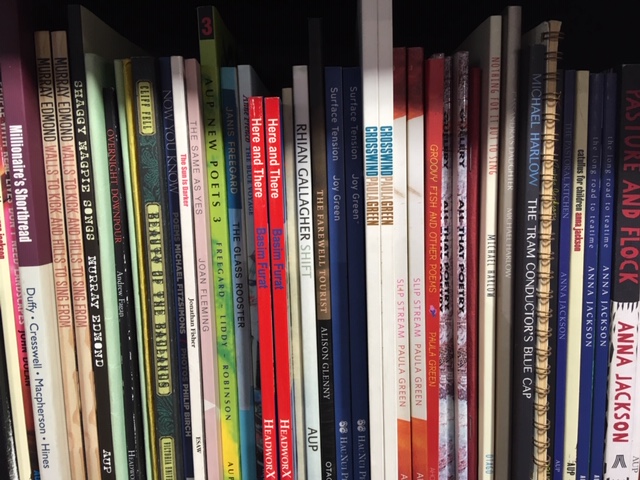
Thank you so much Palmerston North poets and poetry fans for a special night celebrating women. Before the event started I discovered the poetry section in Bruce McKenzie Bookshop next door and spotted so many treasures. What a gorgeous book haven this place is. I could have spent hours there and bought a truckload of books – but was limited by what I could fit in my carry-on bag. Really one of the best gatherings of NZ poetry books I have seen in ages. Now I wish I had taken notes of all the books I had wanted to get – including some of mine that are out of print.


IMG_5078.JPG

Bruce McKenzie Bookshop, Palmerston North


What I have found special about the Wild Honey readings is the way other women are brought into the room through the poems read. This time among others Tusiata Avia, Alice Te Punga Somerville, Vivienne Plumb, Nina Mingya Powles, Elizabeth Smither, Ruth Dallas, Maria McMillan, Joan Fleming and Lauris Edmond. It was particularly moving that the event was held on the fourth anniversary of Joy Green’s passing, and that her friend Hannah Pratt read one of her poems (‘The Cardboard Box’). It was also great to have two fiction writers (Tina Makereti and Thom Conroy) read poems they love by NZ women. And I was especially moved that Jo Thorpe had driven down from Gisborne and Marty Smith from Hawke’s Bay to be there.

Marty and I had a lively conversation – and it reminded me why poetry matters. I forget there is an audience when I get to talk poetry with someone (on the radio, on stage, in an interview) and feel utterly enthusiastic about what poetry can do. Poetry is always a cause for celebration. Even when it is laying down challenges, speaking of tough things, getting complex and difficult, opening up self. It is sound and it is heart and it is interlaced.

I loved this event so much but I am also the kind of writer who likes two tablespoons of public light and acreages of privacy. It feels like it’s time to move back into secret terrain and times having had such support in bringing my new books into the world. Particularly Wild Honey.

Thank you Palmerston North: Bruce McKenzie Bookshop, Genny Vella and Palmerston North Library and the writers: Johanna Aitchison, Paula Harris, Thom Conroy, Paula King, Helen Llehndorf, Marty Smith, Hannah A Pratt, Jo Thorpe, Janet Newman and Tina Makereti.

Thanks to everyone who has bought the book, shared the book and supported my other equally special events in Auckland, Wellington and Dunedin. I will be doing more next year!

Thanks especially to my publicist Sarah Thornton and to Nicola Legat, my publisher at Massey University Press.

This is my book of love and connections.

Thank you!


EEqK0hCUYAAK-l9

The three Paulas!


EEqMHq_U4AYOrOI.jpg

Conversing with the delightful Marty!

A taste of friendship: an audio sampling – four poets reading in Palmerston North


I am heading to Palmerston North next week to do a a few things at the RealM Manawatu conference so thought I would organise a poetry reading with friends.

Johanna Aitchison, Helen Lehndorf and Tim Upperton don’t live in the same city as me, I’ve hardly ever met them, but I have had enduring friendships with their writing. When I was trawling through the poetry archives for a year or so, for Wild Honey, I was captivated by friendships among the early women poets. These involved exchanging letters, drinking tea and sharing secrets but also included sustained engagements with each other’s writing. I liked that.

I got to thinking about the diverse communities we write in and how we also have support crews whether people or poetry: poetry friendships. I most certainly do.

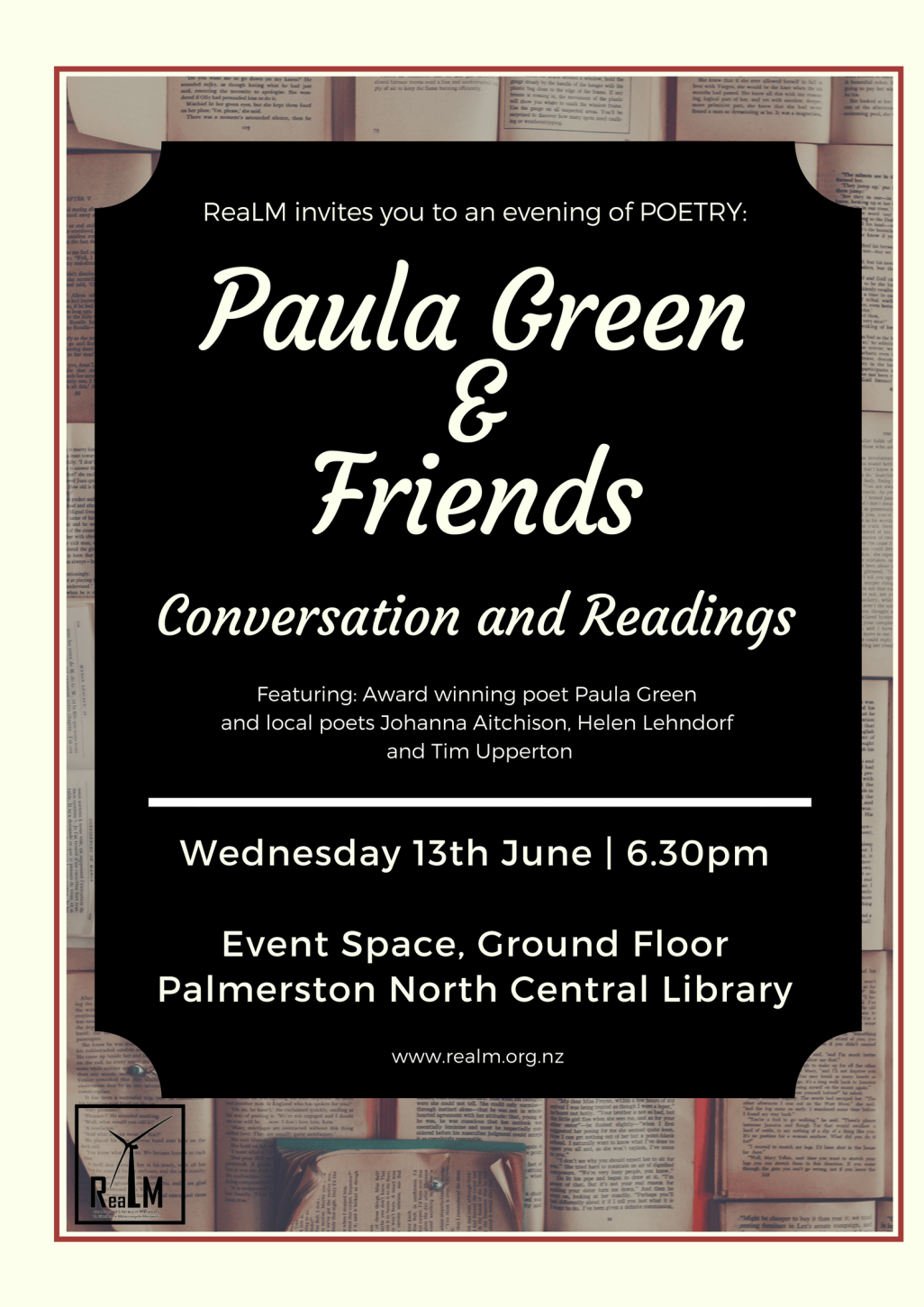
So on Wednesday 13th June, at 6.30 pm,  I will be in conversation with Helen, Johanna and Tim at the Palmerston North Central Library. In the meantime you can hear a poem from each of us  – an online miniature poetry reading.


An audio tasting platter


Image-1.jpg

Photo credit: Barira Nazir


Johanna Aitchison reading ‘Cockroach’


Johanna Aitchison is a doctoral candidate at Massey University examining alter egos in contemporary lyric poetry. Her hobbies are running, op-shopping, and she’s always keen for a good karaoke session.


helen_2018.jpg


Helen Lehndorf reading ‘the things you are not ready for’


Helen Lehndorf is a writer and writing teacher. Her book ‘The Comforter’ made the New Zealand Listener’s ‘Best 100 Books of 2012 and her poem ‘Wabi-sabi’ was selected for Best New Zealand Poems in 2011. Her second book, about the practice of journaling, ‘Write to the Centre’ was published by Haunui Press in 2016. Her essay ‘The Sensory Seeker’ appeared in Massey University’s 2017 anthology ‘Home’. She loves permaculture, community activism and helping people access their innate creativity.


Author photo - Poetry Magazine.jpg


You can hear Tim Upperton read ‘My Lazy Eye’ at The Pantograph Punch here

and he reads ‘The truth about Palmerston North’ with a discussion by the editors at Poetry Foundation here


Tim Upperton’s second poetry collection, The Night We Ate The Baby (Haunui Press), was an Ockham New Zealand Book Awards finalist in 2016. He won the Caselberg International Poetry Competition in 2012 and again in 2013. His poems have been published widely in magazines and journals including Sport, Landfall, NZ Listener, and North and South in New Zealand, and Poetry, Shenandoah, and Agni in America.  His work is also anthologised in The Best of Best New Zealand Poems (Victoria University Press), Essential New Zealand Poems (Random House), Villanelles (Everyman), and Obsession: Sestinas in the Twenty-First Century (Dartmouth University Press). He reviews books occasionally for the NZ Listener, Metro, The Pantograph Punch, Landfall, and The Spinoff, and is completing a Creative Writing PhD researching the poetry of Frederick Seidel.


And here is me reading ‘School House Bay’:


Poetry evening (2).png


Poets on Tour: Airini Beautrais and Maria McMillan take to the road, July 2017

Airini Beautrais and Maria McMillan have written up their poetry road trip. I am so hoping this becomes a thing – two poet friends on tour with new books.    


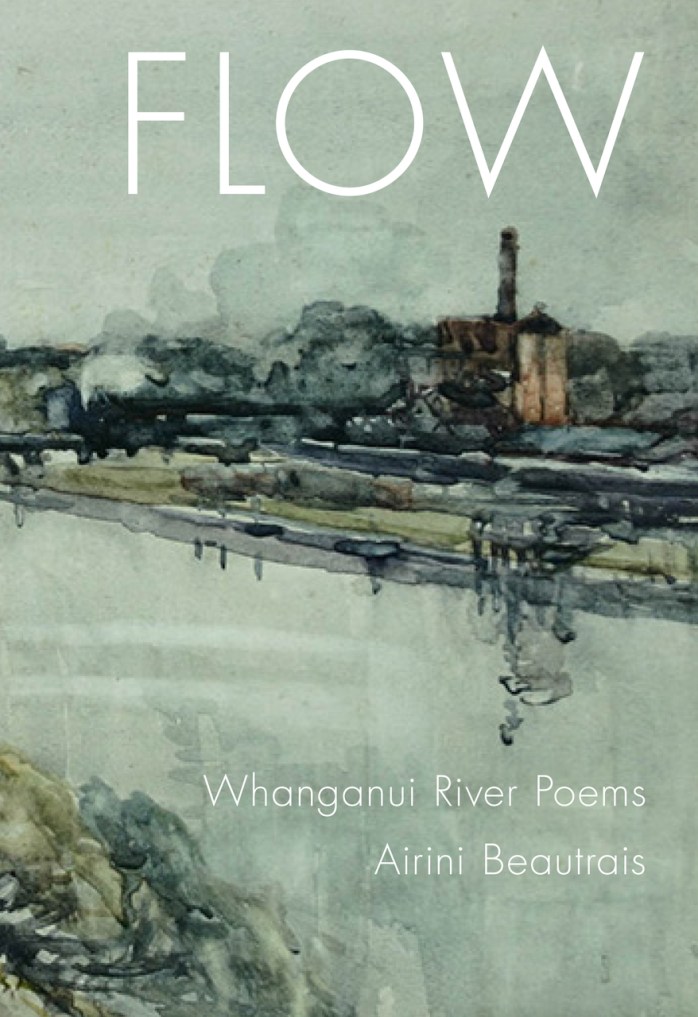
Flow_cover__41926.1492985261.jpg  The_Ski_Flier__98472.1493171166.jpg

both Victoria University Press, 2017

We’ve known each other since the early 2000s, and both of us have been writing poetry for even longer than that. Some common threads in our work include feminism, social justice, environmentalism, and an interest in the possibilities of form. Over a cup of tea one afternoon in Maria’s lounge we agreed that as we both had books coming out this year, we should go on tour. Maria had been working hard in non-poetry related paid gigs, Airini was battling some difficult personal circumstances, and some time on the road reading with other women poets seemed like just what the doctor (of creative writing) ordered.

Somehow the tour got planned amidst the mad mess of everyday life. Sarah Laing kindly agreed to let us use her drawings for promotional purposes. Airini made a DIY poster with the help of scissors, glue, wallpaper and blu-tack. The word went out. The car got packed.


On Friday 14 July Airini held a book launch for Flow: Whanganui River Poems, at the Whanganui regional museum. Maria was the main support act on the night, reading from her recently-released The Ski Flier (Airini had also read at Maria’s launch a month earlier). Jenny Bornholdt read a poem by Joanna Margaret Paul. Other local booklovers read some favourite Whanganui-linked poems. VUP publicist and talented novelist Kirsten McDougall gave a fantastic launch speech.

IMG_3930.JPG

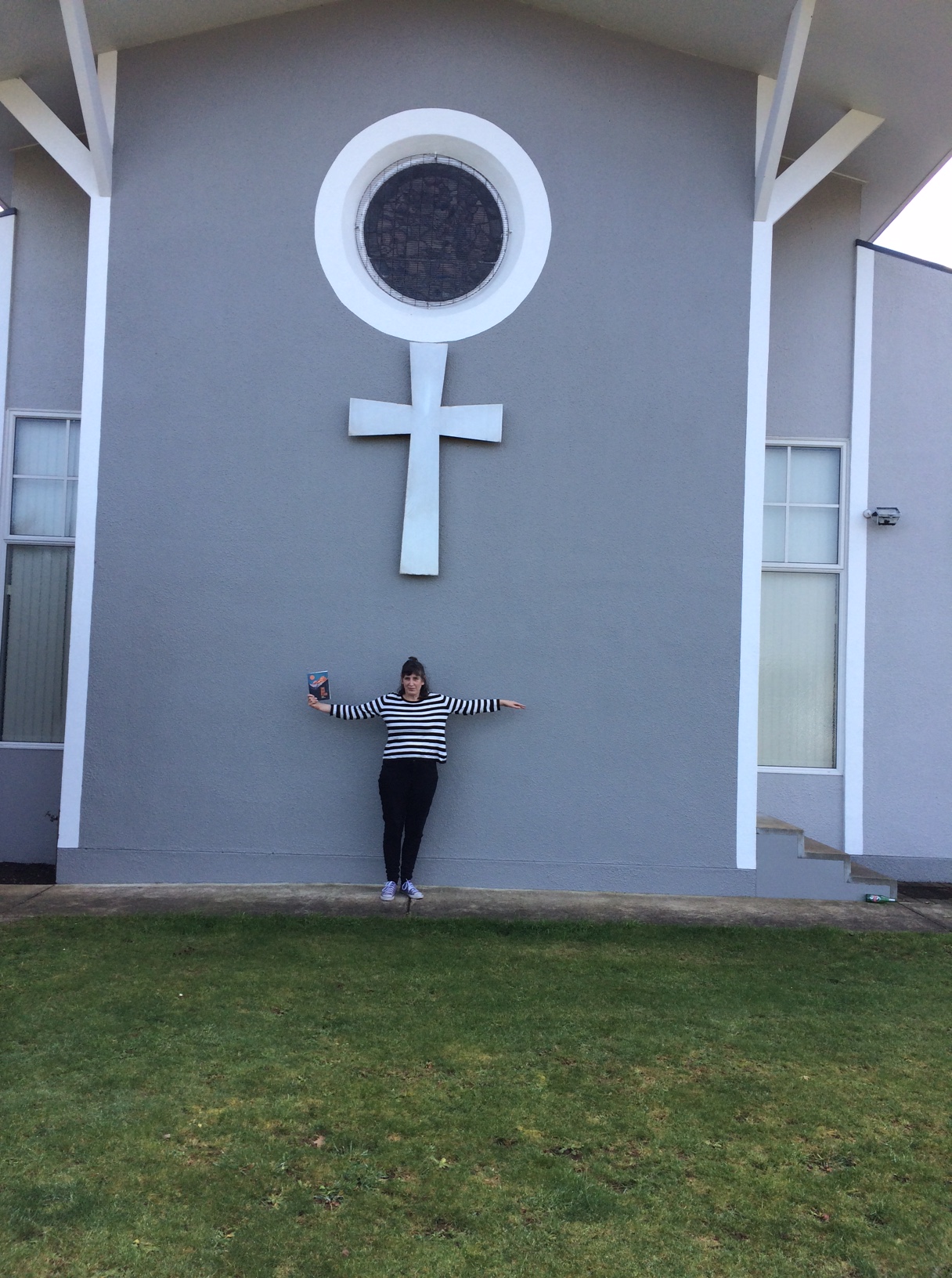
Accidental ankh, Dannevirke

In the morning it was coffee, porridge and a quick trip to Whanganui’s famous SaveMart ‘The Mill’. Then onto the back roads of the Manawatu with a battered road atlas and smartphones which were largely ignored. We made it over the Pohangina Saddle, and lunched on launch leftovers in Dannevirke, where we discovered a church with a possibly accidental (we think maybe not) ankh – a perfect opportunity for posing with our books. On to Napier where it appeared we had entered a time warp. Airini’s dirty old Honda suddenly looked new alongside the vintage cars sweeping around the waterfront, driven by flappers and dapper gentlemen. The thought occurred to us that it was Deco weekend.


IMG_3937.JPG

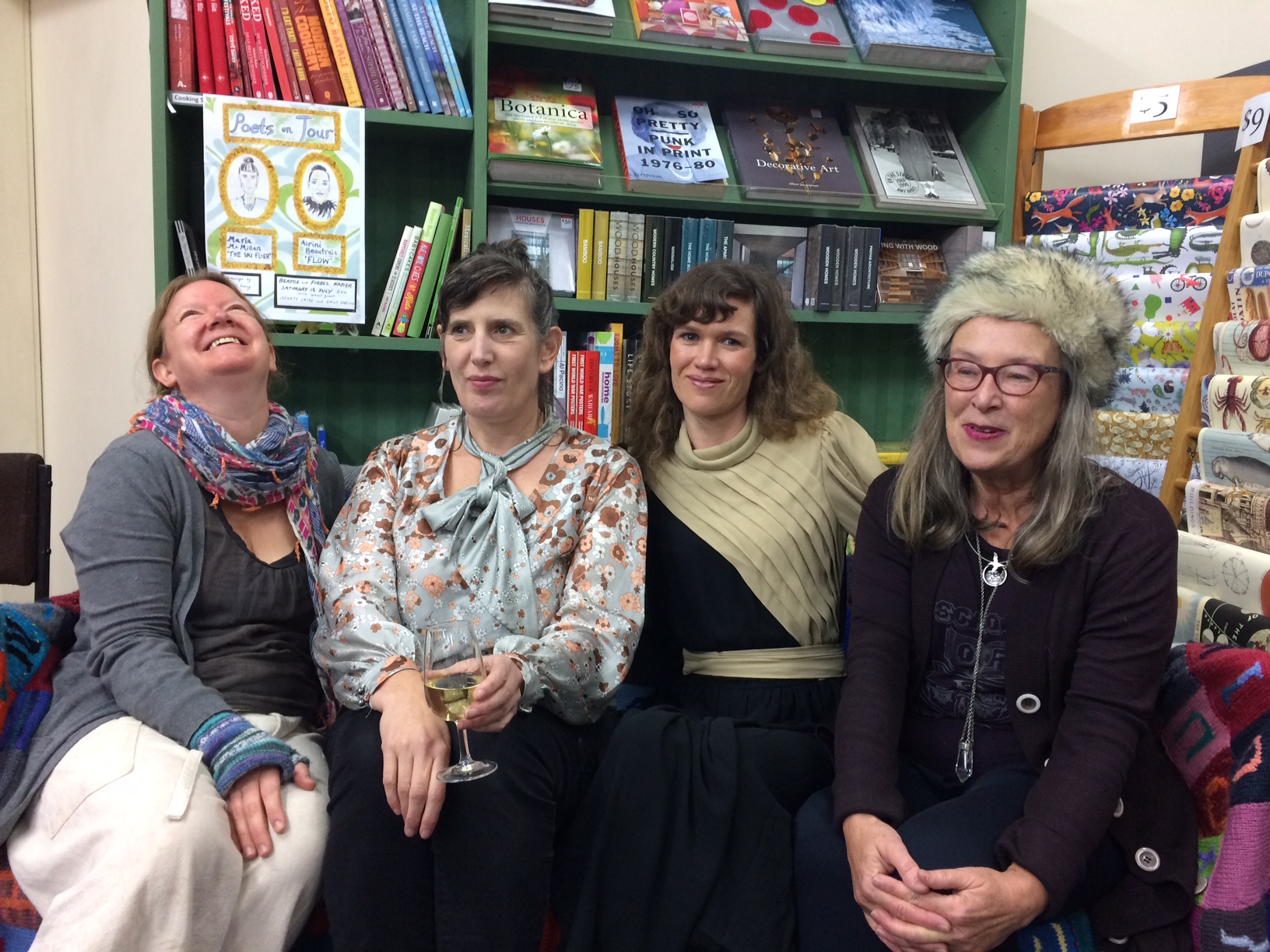
Beattie and Forbes Booksellers with Marty and Emily

Beattie and Forbes Booksellers is a must-visit independent bookstore near the sea in Napier. They opened up on a Saturday evening so we could read, with Marty Smith and Emily Dobson. Old friends and new turned up, along with members of local poetry groups. It seems that anywhere you go in New Zealand, there’ll be a poetry group of some sort, and a reading will draw at least some of them out of the woodwork. A highlight of the evening was Emily reading a poem owing a debt to her young daughter, called ‘Thea’s ‘gina song,’ which ended ‘It’s a ba-ba-ba-ba-ba-ba-BAGINA!’ Both Marty and Emily are accomplished poets and readers and it was a privilege to read alongside them.


IMG_3941.JPG

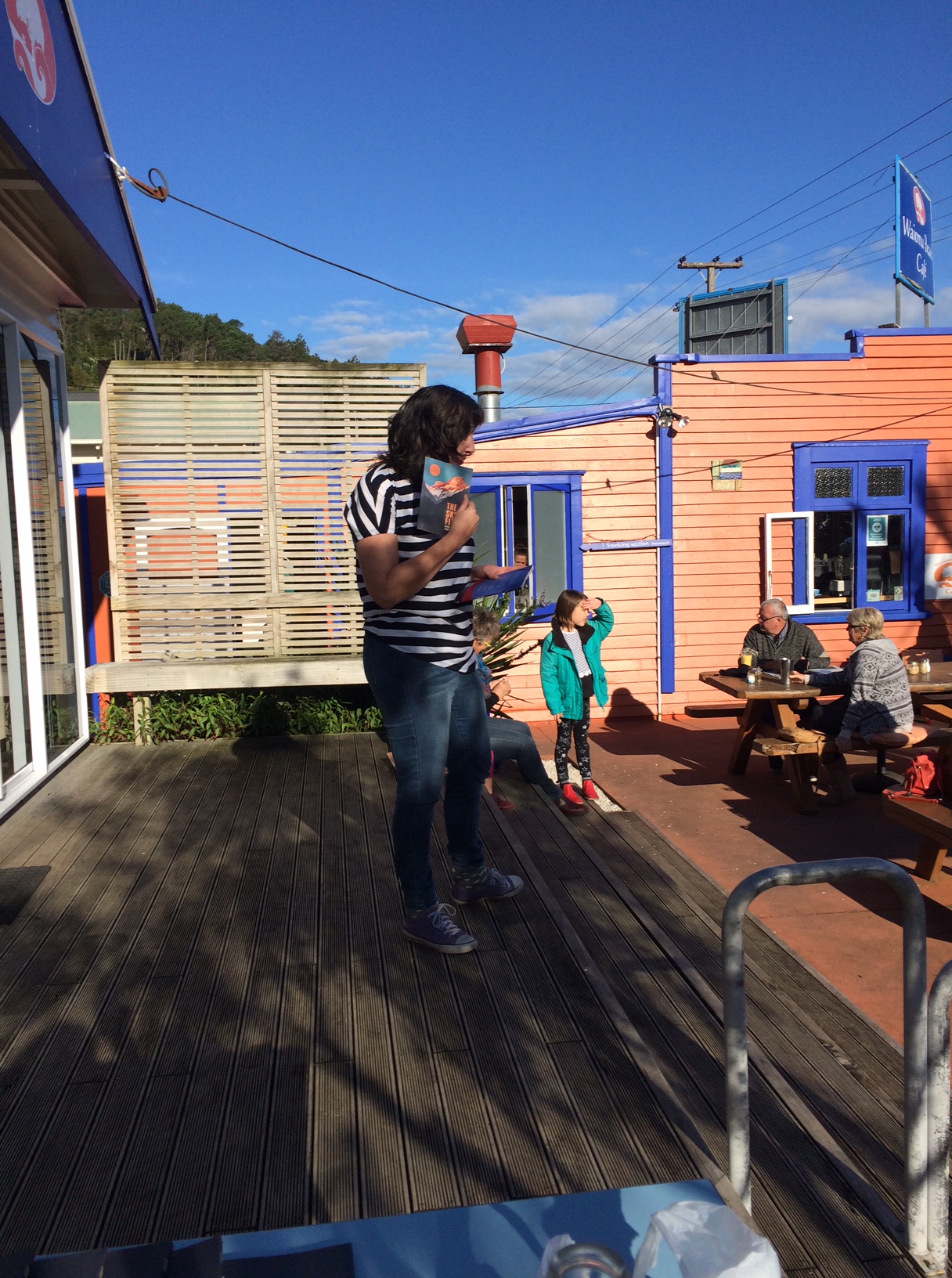
Maria at Waiomu Cafe


Sunday 16th we set off from Marty’s picturesque country house, on our big drive through to Thames. The roads had opened, but were still lined with snow.  We made it to our reading at Waiomu Beach Café with five minutes to spare. The café is in a beautiful spot and draws in regulars driving around the Coromandel coastal road. It’s run by Maria’s cousin Julie, who was an amazing host. Airini also met some extended family members at the reading. More FM were there, and interviewed us. We read in the outdoor courtyard, adjusting our volume according to the passing traffic. Over the road, a cop issued speeding tickets. A kereru landed in a tree alongside. We posed for more book photos under the pohutukawa, took Julie’s dog for a walk, and enjoyed the scenery.


IMG_3968.JPG

The Big House, Parnell with Tulia and Emma

Thames seems like the kind of place one could stay in forever, but on Monday morning we carried on to Auckland.  We parked the car and went to hear a reading at the Auckland Art Gallery with Steve Toussaint, Simone Kaho, Elizabeth Morton, Johanna Emeney and Michael Morrissey. Everyone read well, but a disgruntled audience member booed, hissed and heckled during question time at the end. Chair Siobhan Harvey did an excellent job of shouting him down. We looked at each other and wondered if this was how poetry readings always went in Auckland. But our reading that evening at the Big House in Parnell, with Simone Kaho and Tulia Thompson, was a very warm and homely affair. Many of the house’s 25 occupants joined us by the fire to listen and talk, and housemate Emma also read some of her poems with us.


FullSizeRender.jpg

Airini at Poetry Live, Auckland


Tuesday night’s gig was Poetry Live, at the Thirsty Dog on K Road. Like the Big House, Poetry Live is an institution that’s been going for decades. We were lucky to be there for the farewell to regular MC Kiri Piahana-Wong. There was a great turnout and the venue and audience were friendly and welcoming. We read by turns in our guest poet slot, feeling like proper rockstars against the backdrop of a drum kit and stage lighting.

By Wednesday we were tired, and ready to head home. We stopped for tea and toasted sandwiches in the Pink Cadillac diner in Turangi. We parted ways at the Desert Road, after which Maria had some variable hitchhiking experiences, and Airini zig-zagged back and forth around the mountains navigating road closures. We’d had a great time and were looking forward to the second leg.

IMG_3994.JPG

Vic Books in Wellington with Pip and Freya


The next leg kicked off on Friday 28 July with a lunchtime reading at Vic Books. We were joined by superstars Pip Adam, reading from her brand spanking new The New Animals, and Freya Daly Sadgrove, whose poetry is performative and highly entertaining. Maria read her poem, inspired by Pip, ‘In which I attain unimaginable greatness,’ in which the narrator attains superhero powers, achieves amazing feats, and at the end declares ‘This is how I begin. This is my first day.’


IMG_4001.JPG

Palmerston North with Helen and Jo

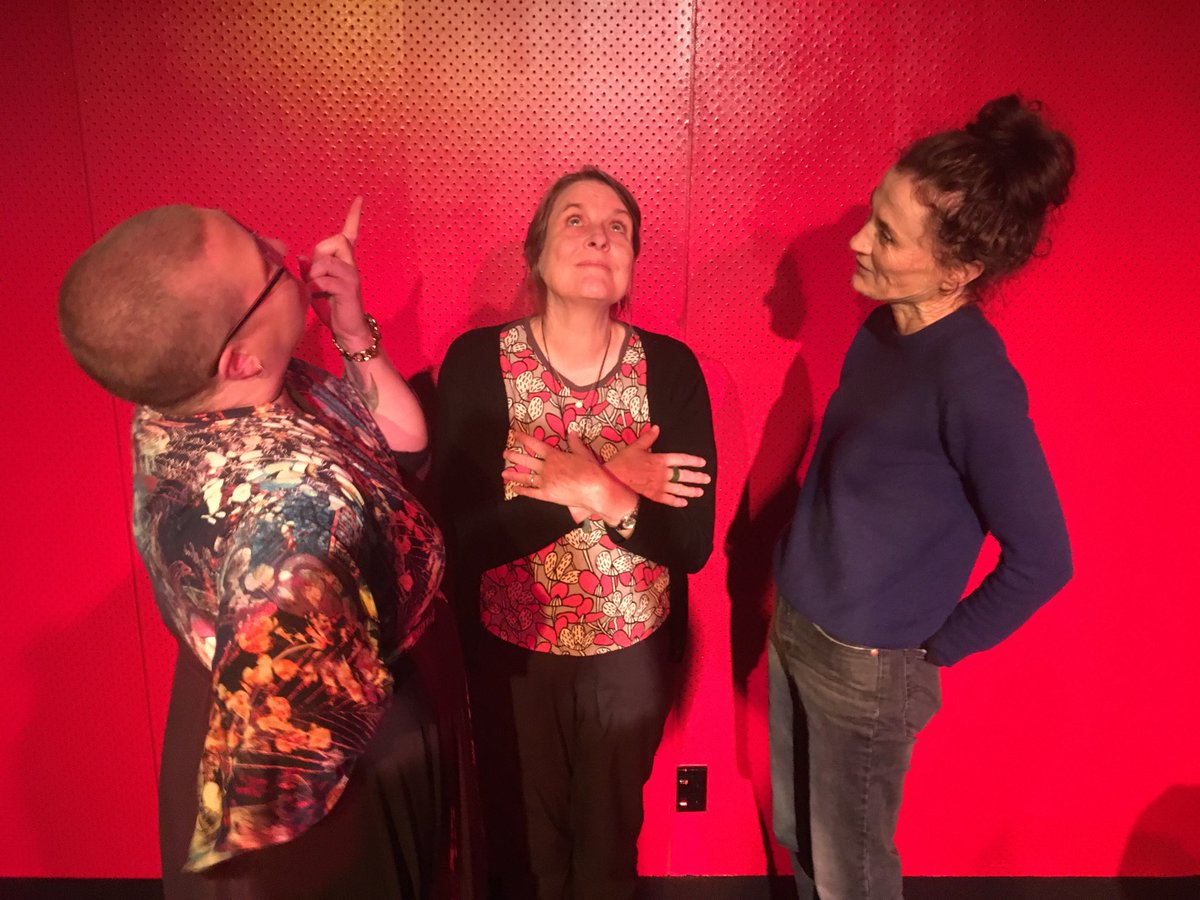
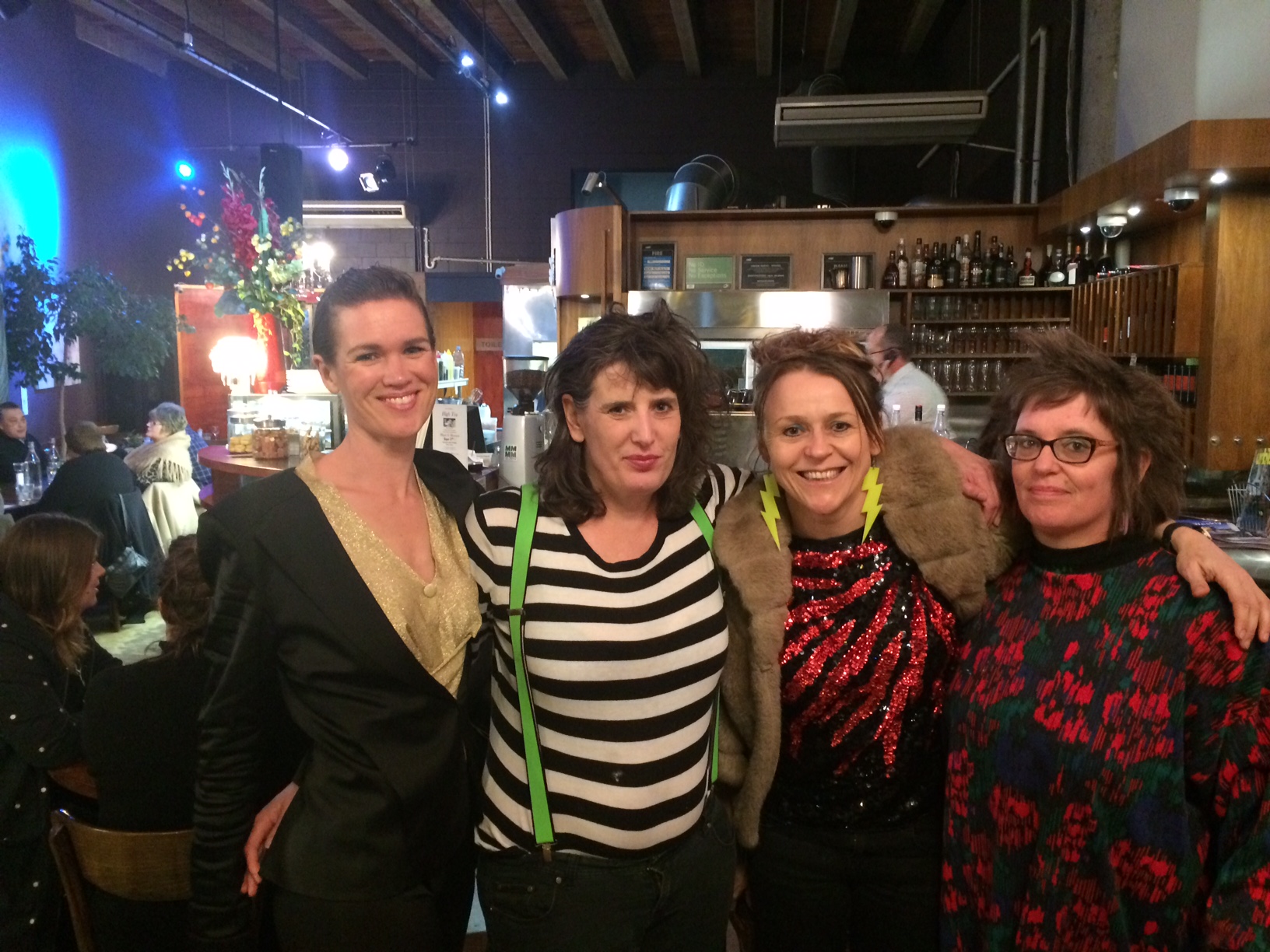
Palmerston North City Library on Saturday evening was possibly the highlight of the tour. The library is a great place to read, hosting numerous literary events throughout the year. The big windows feature poems by local Leonel Alvarado, and pedestrians have a way of peering in through the letters, wondering what’s going on in there. We’d decided on a dress up theme of ‘80s trash with our fabulous co-readers Helen Lehndorf and Jo Aitchison, which got us some funny looks in New World, but definitely improved our performances. Helen’s hair was particularly spectacular. We had a small crowd but a great vibe. A kebab and whisky party kept us awake until the wee small hours.


IMG_4009.JPG

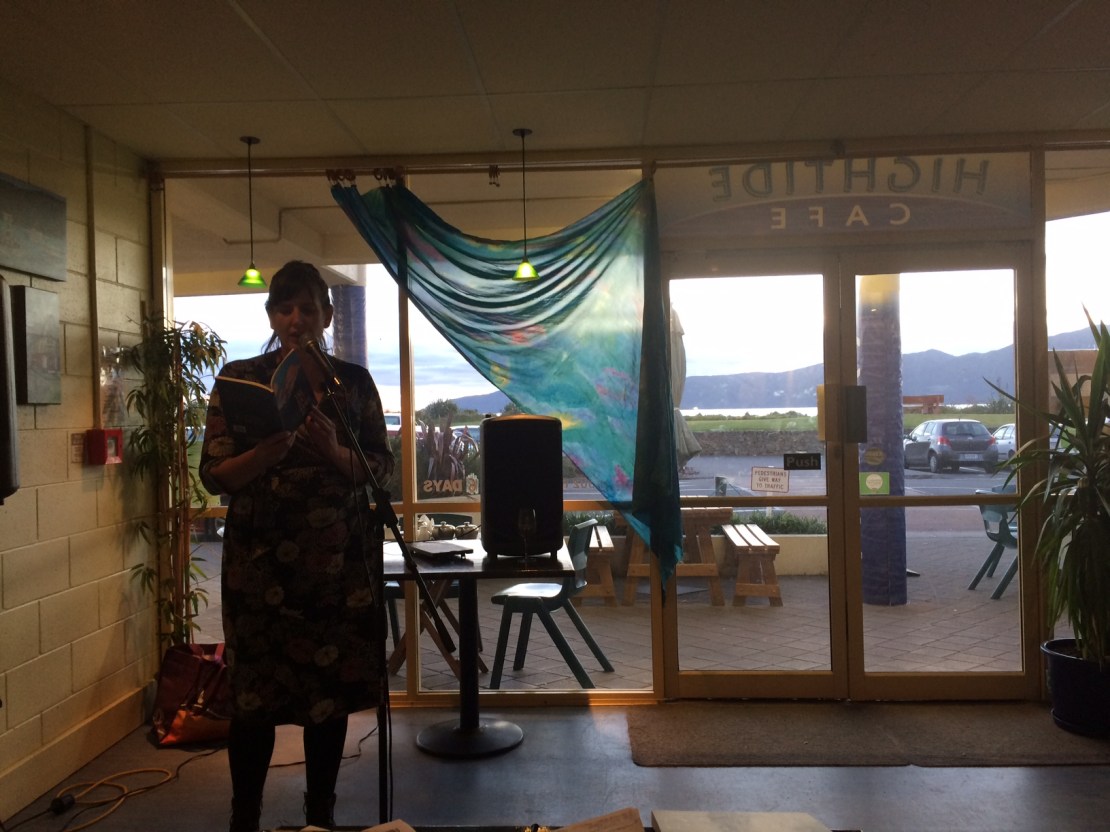
Maria at Hightide Cafe

Helen’s chickens laid us our breakfast, and we revived ourselves with bottomless pots of tea. Maria’s superpowers became evident when she managed to drive us safely to our last gig, Poets to the People at Hightide Café in Paraparaumu. The sun was setting over Kāpiti as we drank coffee and listened to the open mike. Again, this is an event that’s been running for years, and there’s a sense the regulars know and love one another. We went home to a beautiful roast cooked by Maria’s partner Joe. The tour was over, but the fight continues! We had some great conversations in the car over those two weeks, and some good catch-ups with family and friends along the way. There was a lot of fighting talk, a lot of laughter and also a few tears. A big part of the tour was affirming ourselves as poets, mothers and radical women, and by the end of it, our unimaginable greatness was hard to deny.


Airini Beautrais and Maria McMillan, September 2017


my conversation with Airini

my review of The Ski Flier

VUP page for Airini

VUP page for Maria


from Landfall Online: Helen Lehndorf reviews Hannah Mettner and Kate Camp

fully_clothed_and_so_forgetful_mettner.jpg     the_internet_of_things_camp_2.jpg

Fully Clothed and So Forgetful by Hannah Mettner (Victoria University Press, 2017), 91 pp., $25; The Internet of Things by Kate Camp (Victoria University Press, 2017), 61 pp., $25

One quality I love about first volumes of poetry is that they often contain an element of the poet’s origin story. Hannah Mettner’s Fully Clothed and So Forgetful certainly does: there are poems referencing childhood, relationships with siblings and wider family, elements of cultural confusion after an across-the-world move, parenthood – all described with deftness, wit and originality. How about that title? It’s a delight … inviting, and very human.

full review here