Tag Archives: Janet Newman

Poetry Shelf weekend reading, listening and invitations

photo credit: Kristine Zipfel

A new artwork has been added to Wellington Writers Walk – the Walk’s first sculpture in te reo Māori, and the first addition to the Walk since 2013.

Philippa Werry: Since the unveiling of the first eleven sculptures in 2002, the Wellington Writers Walk has become a much-loved part of the Wellington waterfront, with its series of sculptures that honour and celebrate the lives and works of New Zealand writers – poets, novelists, and playwrights, all with a connection to the city. The Walk’s first new sculpture since 2013, and the first in te reo Māori, was unveiled last month in time for Matariki. It features text by Ben Ngaia (Te Āti Awa) – gifted to the Walk by Te Wharewaka o Pōneke, with design by David Hakaraia (Ngāpuhi, Ngāti Paoa) and landscape design by Tama Whiting (Te Whānau-ā-Apanui). It looks especially beautiful in the evening when its backlit letters glow against the backdrop of the harbour.
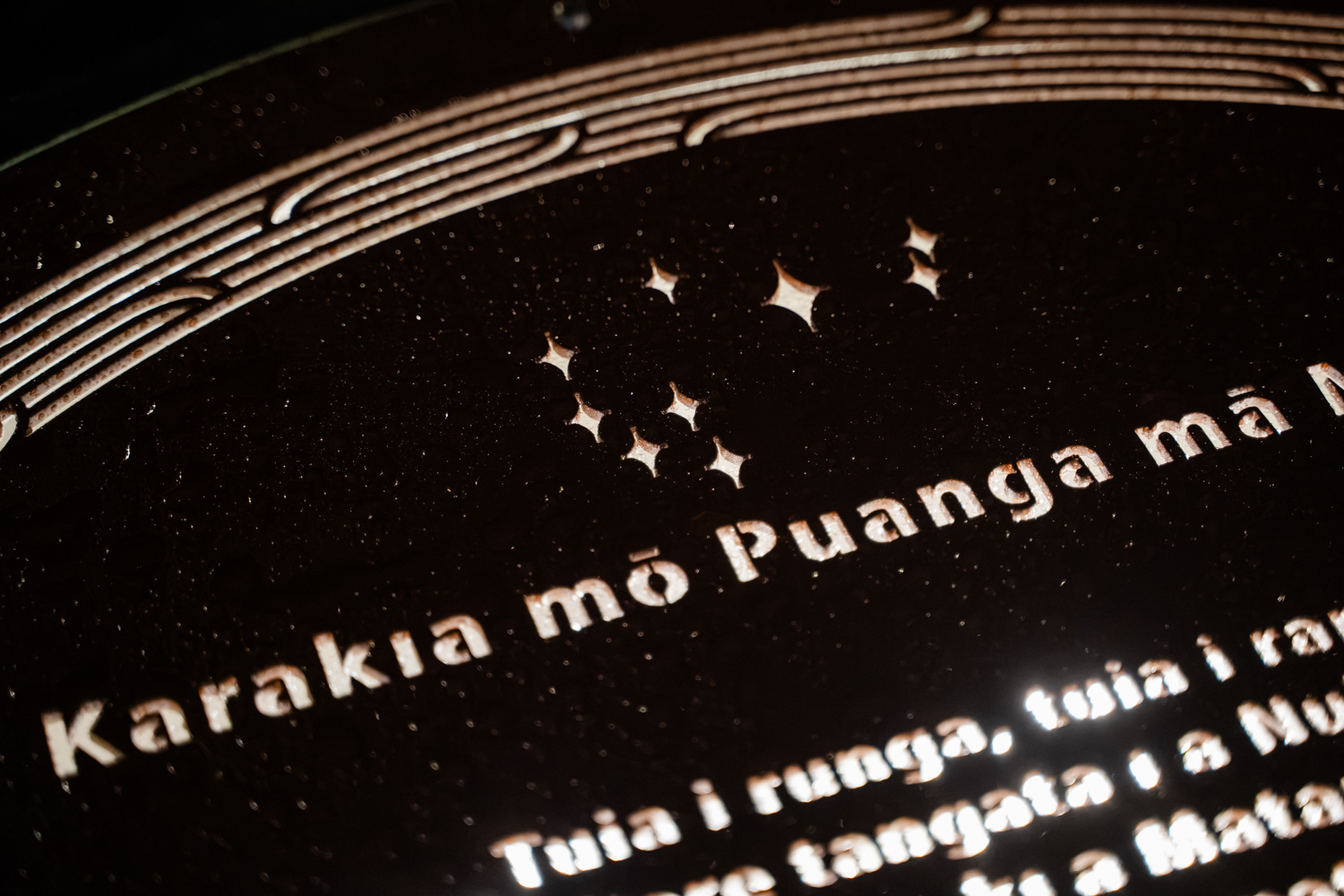
photo credit: Kristine Zipfel

the week on Poetry Shelf

Monday: Monday Poem: Crossing by Rhian Gallagher

Tuesday: Poetry Shelf Speaks Out: Practical Navigation by Lyndsey Knight

Wednesday: Poetry Shelf Playing Favourites: Damien Levi picks Liam Jacobson
Much to Liam Jacobson’s chagrin, I have lip-synced along to this poem (often incorrectly) at many places and spaces across Tāmaki Makaurau. One of my favourite contemporary New Zealand poems, ‘THE DAY MELTS AMONG ME’, paints a specific picture, though with a much more discerning hand than a landlord’s. Liam

Thursday: Poetry Shelf Pocket Reviews: Janet Newman on Lynn Jenner’s The Gum Trees of Kerikeri
‘Yet this is not a pessimistic book. It is a journey of enquiry in a life filled with everyday joy and confusion. Each poem feels satisfying yet curious: a small offering of humanity with a grounding effect at a time of crisis.’ Janet

Friday: audio and conversation with Airini Beautrais
“At my launch I said that poetry is my first love, and it is my favourite genre to write in because I feel that it is where words meet spirit. To me it matters in more of a psychological and spiritual way than an aesthetic or intellectual way. Poetry is very diverse and means lots of different things to different people, but I see a strong connection between poetry and prayer, chant, meditation and music.”

Invitations

I am very sorry but in order to manage my tiny energy jar I do not publish unsolicited poems.

An invitation: If you have a poem that fits my ongoing series Speaking Out To For With – do send – political gets personal, personal gets political, poetry speaks out and sideways, whether quietly or loudly. paulajoygreen@gmail.com

An invitation: Choose a poetry book published in Aotearoa in 2025 or 2026 and write a paragraph in response to why you are drawn to the book. With permission from the poet/publisher I could include a poem. paulajoygreen@gmail.com

My public postal address: PO Box 58, Waitākere, 0660
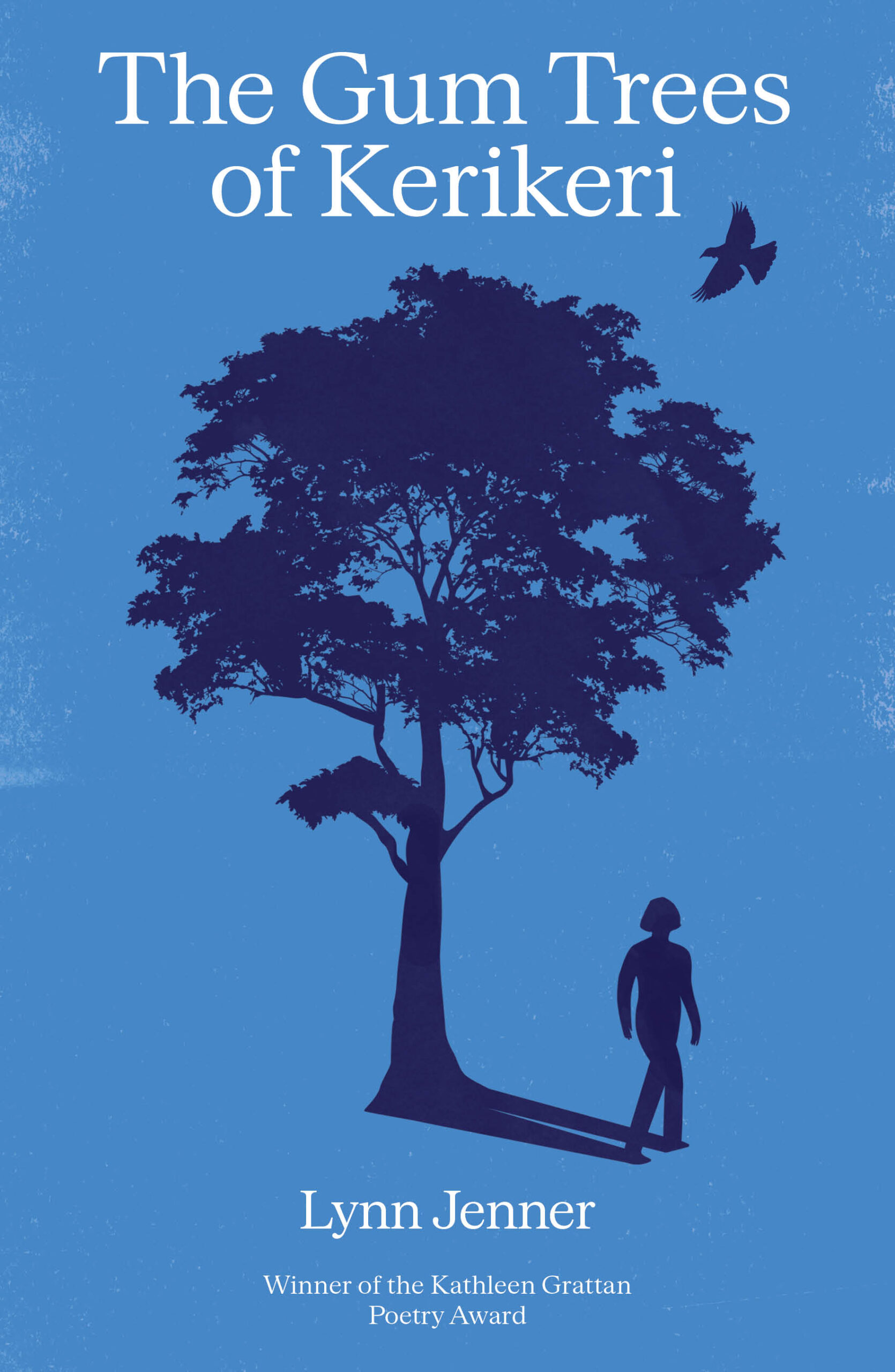
Poetry Shelf Pocket Reviews: Janet Newman on Lynn Jenner’s The Gum Trees of Kerikeri

The Gum Trees of Kerikeri, Lynn Jenner
Otago University Press, 2026

41.

Our talk has no official beginning, no structure and no
official end: it starts when the first person says what has
been on her mind; that could be the problem of finding a
parking place at the supermarket at New Year, or it could
be that she has planned a trip and her husband doesn’t
want to go; no-one is criticised or blamed, including the
husband: our conversation is a river with eddies and
currents. We have children who fight with us as though
we were the enemy; men who have taken themselves off
to other countries and left us with mortgages; we have
diseases with scary names: this is deep water but we are
not scared of deep water. We make gardens, we paint, we
write songs and poems, we record stories from the past
and we create adventures for ourselves so that our spirit
won’t slowly die: there are cool shady pools in this river.
We are not optimistic for the earth and its people, but we
think the best idea is to be as optimistic as possible in our
personal lives. Someone always says that and although
we all look a bit shifty and our eyes slide away, we nod.

Lynn Jenner

Poems in The Gum Trees of Kerikeri are disarmingly matter-of-fact given their subject matter: existential crises, climate catastrophe, war, alongside the things that make life worth living: rivers, trees, the sweet taste of fruit. They offer daily optimism while also asking the hard global questions: Is this the age of the death of the planet? Do you see deliverance and redemption anywhere? Is this the Promised Land? And most chillingly, given that the collection was written before the current war in the Middle East, are we there yet?

Referencing the work of philosphers, writers and artists, Jenner doesn’t provide solutions, rather different ways of looking. She draws connections betweeen disparate thoughts leading to a sense of gentle yet rigorous reflection. In one poem, she tells us Ursula Le Guin searched near the end of her life ‘for a way to resist the unfolding political and environmental catastrophes of these days.’ This quotation perhaps summarises the collection’s raison d’etre. Yet this is not a pessimistic book. It is a journey of enquiry in a life filled with everyday joy and confusion. Each poem feels satisfying yet curious: a small offering of humanity with a grounding effect at a time of crisis.

Janet Newman

Janet Newman is a poet, editor and farmer from Horowhenua. She holds a PhD from Massey University for her thesis: ‘Imagining Ecologies: Traditions of Ecopoetry in Aotearoa New Zealand.’ Her collection Unseasoned Campaigner (OUP, 2021) won the 2022 NZSA Heritage Book Award for Poetry. She is an editor of Koe: An Aotearoa ecopoetry anthology (OUP, 2024). 

Lynn Jenner is the author of Peat (OUP, 2019), a collection of essays and glossaries which consider the construction of the Kāpiti Expressway in the light of aesthetic and ecological ideas drawn from the writings of Charles Brasch. Lynn’s first book Dear Sweet Harry (AUP, 2010) won the NZSA Jessie Mackay Best First Book of Poetry prize and her second book Lost and Gone Away was shortlisted in the Non-Fiction category of the Ockham New Zealand Book Awards. Lynn lives in Waipapa, near Kerikeri.

Otago University Press page

Poetry Shelf occasional Poems: weekend diary and Janet Newman’s ‘Goodbye Kukutauaki Road’

The rain is dampening down the day before it has even started, but I plan on reading books in bed, making fish tacos for dinner, eating cheese scones and writing some more poems for children. I posted Claire McLintock’s cancer thoughts from Canvas on social media and felt so many connections. YES to living each day fully. It may be sleep or dream or reading or writing. But the choices I make – I know some of you might think I am crazy busy but I’m not – mean I live in a state of unbelievable happiness, calm and strength. It is like a miracle, and that I love words helps no end.

Claire and her husband are selling fundraising TShirts for Sweet Louise with Workshop.

This morning I was thinking about how important conversations and connections are when you are cut off from ‘normal’ life. I can’t imagine getting on a plane for a long time, or laughing in a crowded cafe. Or even going to festivals and launching books. But I can imagine connections and conversations through the exquisite reach of blogging. Even doing my own secret writing!

With these words drifting in my head, I read Janet Newman’s email. She writes:

Reading Robert Sullivan’s Rākaihautū there [on reawakened Poetry Shelf] and Anna Jackson’s response made me think of a poem I wrote after another poem from Tūnui / Comet. My poem reflects on the loss of productive farmland to lifestyle blocks, an old issue that is finally starting to seep into national and political consciousness. I thought you might like to read it. 

I loved reading Janet’s poem – and I love how conversations and connections keep rippling out from Robert’s poetry, from the poem that relaunched Poetry Shelf, and from Anna’s. Poetry has the power to forge links with who, where and how we are in the world, the way we connect with and care for the land, the way we connect with and care for our own wellbeing. It is wonder and it is joy.

Goodbye Kukutauaki Road

“… there’s only a certain percentage of elite soils in this area, or even around the country. And once those are gone, they’re gone forever. You can never get them back.”

––Pukekohe farmer Stan Clark


my old friend.
I know how far you travel.
            Back to my no-gear,
pedal-brake bike tyres
catching in dull gravel,
school bus
turning in smoky dust, Dad milking Jerseys
in a walk-through shed: six sheds, six houses
and a sheep farm at your end.
Back to war veterans clutching
marbles in your land ballot.
Back to Te Rauparaha’s boundary:
Kukutauaki Stream near Paekākāriki,
a snare for catching kākāriki.
           Out west, sunsets
over Waitārere Beach. East, rainbows
over the Tararua Range, colourful
as your jam-packed letterboxes jostling with wheelie bins 
for shoulder space.
Yet why do I see your bitumen shine
as loss my friend, your slick curves
as enclosure?
           You’re smooth
as a black cow and our vehicles slide down
your spine all the way to Wellington,
coast nose-to-tail through the gully. Return
to pūkeko stalking lifestyle blocks, kererū
ghosting rural retreats.
           I wave as my car swings past
your long, blue sign. Bye, bye
no exit Kukutauaki Road.


Janet Newman

(after ‘Hello Great North Road’ by Robert Sullivan)


Janet Newman is a poet and scholar. Her debut poetry collection is Unseasoned Campaigner (OUP 2021), the manuscript of which was shortlised for the 2019 Kathleen Grattan Poetry Award. Her poems have been anthologised in Manifesto Aotearoa (OUP 2017) and No Other Place To Stand (AUP 2022). Raised on a Horowhenua dairy farm she now farms beef cattle. She holds a PhD in English from Massey University for her thesis Imagining Ecologies: Traditions of Ecopoetry in Aotearoa New Zealand (2019).

Poetry Shelf review: Janet Newman’s Unseasoned Campaigner

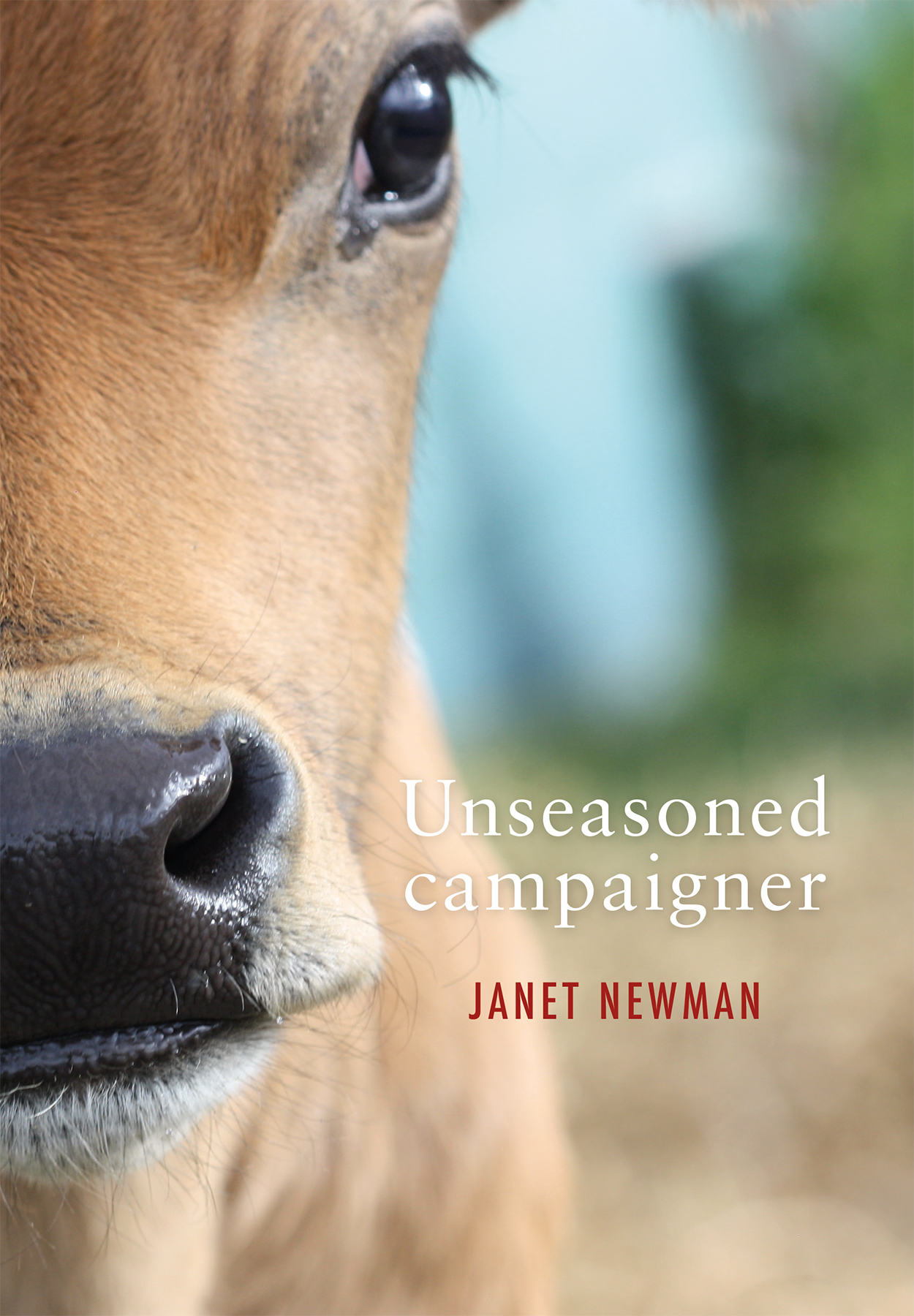
Unseasoned Campaigner, Janet Newman, Otago University Press, 2021

Poet Janet Newman lives at Koputaroa in Horowhenua, where she farms beef. Her debut collection, Unseasoned Campaigner, is nourished beyond description of scenic beauty to a deep love and engagement with the land and farming. Women writing the land is not without precedent. Ruth Dallas comes to mind initially. She spent time as a Herd Recording Officer during WWII and found cities restrictive and dull afterwards. When she was living in Dunedin in later years, writing enabled returns to her beloved rural settings. Janet dedicates several poems to her. The second poet that springs to mind is Marty Smith, whose rural background has featured in her poetry, and who is also unafraid of over and underlaying an idyllic landscape with the grit and reality of farming life.

Janet’s first section, ‘How now?’, places the reader one hundred percent in rural experience: managing livestock, a diarrhea-soaked calf that doesn’t make it, drenching, the slaughter house in graphic detail, blood and sweat. There are water restrictions, water anxiety, drought. A dead river. More dead stock. Horses led to shade and grass. Scenic routes and beauty spots are off the menu.

I applaud this revised view but it is the people who hold my attention to a significant degree. While farmers are currently under scrutiny for diverse reasons, particularly climate change, some are speaking out about how tough it is. Listening to RNZ National’s excellent Country Life, it is clear there is no hold-all definition for the contemporary farmer and their diverse practices. In the book’s middle and final sections, Janet also opens up what “farmer” means, and that adds significant and poignant layers to the first poems.

In the second section, ‘Tender’, Janet draws us to close to a father, and I am assuming her father. He was a complicated, multifaceted human being: a farmer, father, husband, war veteran. He was a man of few words and myriad actions, toil and more toil. He cursed war on television and kept a belt by the door. He is memory, because he has passed, and he fills the speaker with mourning. The poems are vividly detailed with the physicality of daily life, and it is through his presence farming is made prismatic, beyond stereotype. When I pivot on the word “tender”, I see the poems as an offering to both mother and father, to us as readers. I see too the tenderness in the care of animals, and tender as the sore spot that is parental absence, maternal and paternal memory.

His language is electric rhythm of pump and wire,
gush of couplets from the artesian bore,

a flighty heifer enjambed
with a low rail,

stanza of cloud over the back paddock
threatening rain,

the fuck, fuck, fuck
of a dead bull in the drain.

from ‘Man of few words’

The mother is an equally haunting presence with her preserves, her baking and her plums. She too is drawn close through a focus on the physical detail of everyday actions. She is mourned and, in dying first, is an unbearable hole in the father’s life. The parental poems scratch the surface of my skin. Preserving, for example, brings back my own pungent memories. And preserving is also the tool of the poet, poems are stored in sweet and salty brine, held out to be savoured by both poet and reader.

Preserving

Red plums give up
round plump bodies
when I cut out their stones.
I hear my mother’s long-ago voice:
‘Don’t overdo it.’ The boiling
and much else. In the photograph
she is smiling behind glass, my memory
of her steeped in absence. Now,
even that faithless call sounds sweet
as in preserving jars sour plums
surrender to sugar syrup.

The third section, “Ruahine”, moves and adjusts to loss. It also finds footing on scenic routes. In the final poems, the poet is out driving and absorbing the birds and trees, mesmerising hills, the land bereft of vegetation. The landscapes have widened further to carry farm practices, daily challenges, connections to the land and to making a living. But of course it is not as though the farmer is blind to beauty. The final cluster of poems become song, act as sweet refrain, where upon in each return to a view, the view shifts in nuance. Just like poetry. Just like the way life is nuanced and resists deadening dichotomies. ‘Beach’ catches the elusiveness of what we sometimes see and feel so exquisitely:

Some days the clouds disappear
on the drive to the coast

the way the things you wanted to say
evaporate when you get there.

Sentences float to the pencil-line horizon
between sky that is nothing but blue

and sea that is as blue as …
but words fail you,

smudge like fishing boats
in the distance without your binoculars

from ‘Beach’

Janet writes with poise, each line fluent in rhythm and accent, and in doing so achieves a collection that matches heart with sharp and bold eye. Her collection belongs alongside the very best of Marty Smith and Ruth Dallas, a fine addition to how we write the land, whoever and wherever we are.

Janet Newman was born in Levin. She won the 2015 New Zealand Poetry Society International Competition, the 2017 Kathleen Grattan Prize for a Sequence of Poems and was a runner-up in the 2019 Kathleen Grattan Awards. Her essays about the sonnets of Michele Leggott and the ecopoetry of Dinah Hawken won the Journal of New Zealand Literature Prize for New Zealand Literary Studies in 2014 and 2016. She has worked as a journalist in New Zealand and Australia, and a bicycle courier in London. She has three adult children and lives with her partner at Koputaroa in Horowhenua, where she farms beef cattle.

Otago University Press page

Review: Siobhan Harvey for The NZ Herald

Interview: Standing Room Only, RNZ

Feature: Koputaroa farmer and poet Janet Newman writes thesis on ecopoetry

Interview: Janet Newman discusses ecopoetry, RNZ

Interview: The Big Idea

Poetry Shelf connections: Janet Newman’s ‘My daughter returns’


My daughter returns


I meet her in a hotel carpark

separated by traffic cones,

call an austere hello

across a conveyance of air

where anything transmittable

falls to the ground,

resist the urge

to sink to my knees

with the want to hug and hold

one who is afterall a measure of me,

let her go quietly

to the quarantined room,

make the lonesome drive

down the unlit road

where the only ease

is the silky moon

settling a lightness

on the surrounding sky

above the island rising

mountainous from the sea

hugging in comfort

what looks to me

like the broad shoulder

of the horizon.


Janet Newman


Janet Newman is based in Horowhenua. She has a PhD in creative writing from Massey University for her thesis entitled: “Imagining Ecologies: Traditions of Ecopoetry in Aotearoa New Zealand.” Her poetry collection Unseasoned Campaigner was a runner up in the 2019 Kathleen Grattan Award and will be published by Otago University Press next year. She was the winner of the 2017 IWW Kathleen Grattan Prize for a Sequence of Poems, the 2015 New Zealand Poetry Society International Poetry Competition, and the 2014 and 2016 Journal of New Zealand Literature Prize for New Zealand Literary Studies.


Wild Honey in Palmerston North


IMG20190917195036.jpg


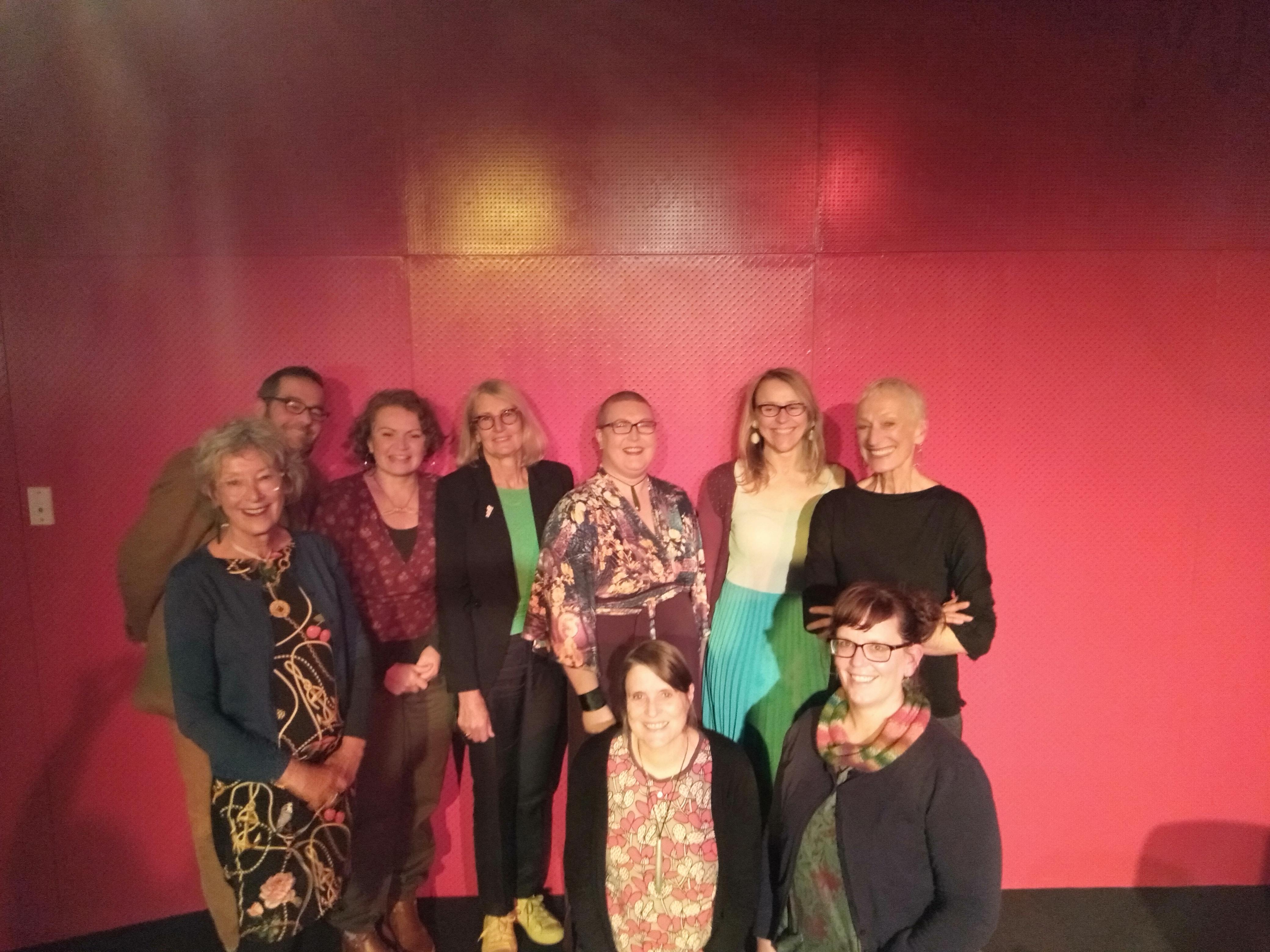
Thank you so much Palmerston North poets and poetry fans for a special night celebrating women. Before the event started I discovered the poetry section in Bruce McKenzie Bookshop next door and spotted so many treasures. What a gorgeous book haven this place is. I could have spent hours there and bought a truckload of books – but was limited by what I could fit in my carry-on bag. Really one of the best gatherings of NZ poetry books I have seen in ages. Now I wish I had taken notes of all the books I had wanted to get – including some of mine that are out of print.


IMG_5078.JPG

Bruce McKenzie Bookshop, Palmerston North


What I have found special about the Wild Honey readings is the way other women are brought into the room through the poems read. This time among others Tusiata Avia, Alice Te Punga Somerville, Vivienne Plumb, Nina Mingya Powles, Elizabeth Smither, Ruth Dallas, Maria McMillan, Joan Fleming and Lauris Edmond. It was particularly moving that the event was held on the fourth anniversary of Joy Green’s passing, and that her friend Hannah Pratt read one of her poems (‘The Cardboard Box’). It was also great to have two fiction writers (Tina Makereti and Thom Conroy) read poems they love by NZ women. And I was especially moved that Jo Thorpe had driven down from Gisborne and Marty Smith from Hawke’s Bay to be there.

Marty and I had a lively conversation – and it reminded me why poetry matters. I forget there is an audience when I get to talk poetry with someone (on the radio, on stage, in an interview) and feel utterly enthusiastic about what poetry can do. Poetry is always a cause for celebration. Even when it is laying down challenges, speaking of tough things, getting complex and difficult, opening up self. It is sound and it is heart and it is interlaced.

I loved this event so much but I am also the kind of writer who likes two tablespoons of public light and acreages of privacy. It feels like it’s time to move back into secret terrain and times having had such support in bringing my new books into the world. Particularly Wild Honey.

Thank you Palmerston North: Bruce McKenzie Bookshop, Genny Vella and Palmerston North Library and the writers: Johanna Aitchison, Paula Harris, Thom Conroy, Paula King, Helen Llehndorf, Marty Smith, Hannah A Pratt, Jo Thorpe, Janet Newman and Tina Makereti.

Thanks to everyone who has bought the book, shared the book and supported my other equally special events in Auckland, Wellington and Dunedin. I will be doing more next year!

Thanks especially to my publicist Sarah Thornton and to Nicola Legat, my publisher at Massey University Press.

This is my book of love and connections.

Thank you!


EEqK0hCUYAAK-l9

The three Paulas!


EEqMHq_U4AYOrOI.jpg

Conversing with the delightful Marty!