Tag Archives: Chris Tse

Poetry Shelf noticeboard: Best NZ Poems is now live


We both know a language is waiting inside my tongue.

Please put down the adze, the skillsaw, the file:
Speak gently to me so I can recognise what’s there.

Alice Te Punga Somerville from ‘Rākau’


Kei te mōhio tāua, he reo kei tōku arero.

Waiho ki raro te toki, te kani, te whaiuru:
Kōrerotia whakamāriretia kia kite ai au he aha rā kei reira.

Translation from ‘Rākau’ by Te Ataahia Hurihanganui


Poet and novelist Fiona Farrell selected poems from 2018 that held her attention in diverse ways  – from books, journals and online sources. She questioned ‘best’ (a vague term), ‘New Zealand’ (poets needed to have been born here or lived here for some time) and ‘poem’ (she went to the Greek and cited a poem as ‘something made’).  Poetry offered her numerous reading pleasures:

Those hundreds of poems, gathered over a single year, formed a massive anthology, and if that means ‘ an arrangement of flowers’ – as it does by definition – then New Zealand poetry often reminds me of a garden I saw once, inland from Te Horo. Its flowers were a host of golden margarine containers and tin cans tacked to sticks. It was beautiful, this New Zealand version of common or garden. It was startling and provocative. What is beauty, after all? What is form and order? Why do we choose this and not that? Why does beauty exist in distortion? Why do we find it beautiful when a person stands on one calloused toe rather than with both feet firmly on the ground? Or when an apple is reduced to a crimson cube? Or when a sequence of words is forced from the patter of everyday speech? I’ve thought about that garden while plucking the blooms of 2018.


The refreshed site looks good;  you can hear some poets read and you can read notes from some poets on their selected poems (love these entries into poems). We get a new anthology – a harvest of poems that spark and simmer and soothe in their close proximity.

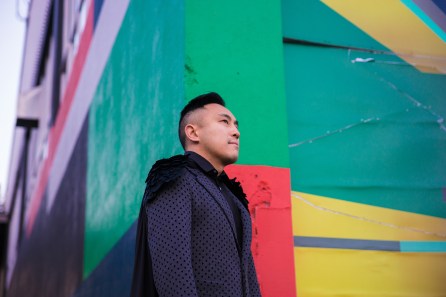
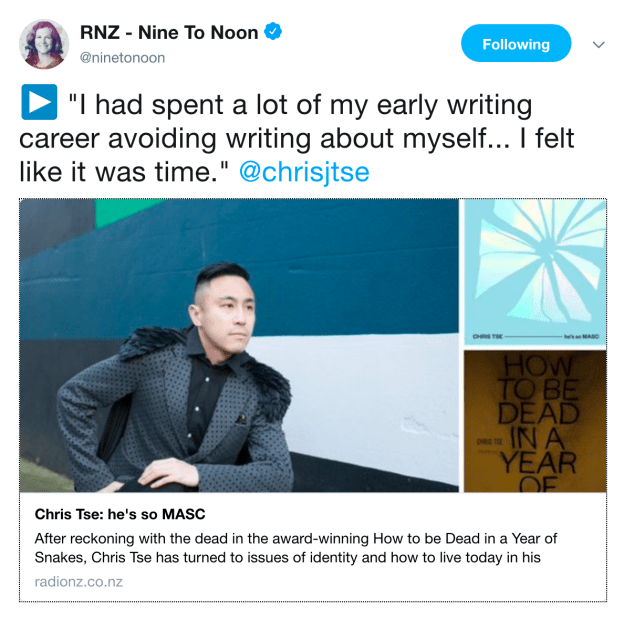
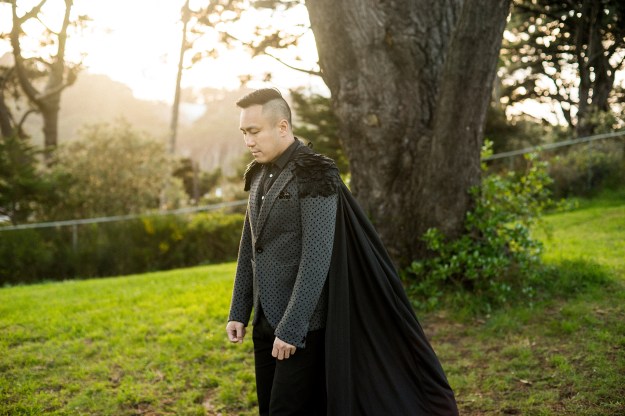
Tusiata Avia’s ‘Advice to Critics’ is like a backbone of the poet and it makes me sit up and listen to the sharp edges, the witty corners. There is the rhythmic hit of Hera Lindsay Bird’s love poem, there is the measured and evocative fluency of Nikki-Lee Birdsey’s ‘Mutuwhenua’, and the equally measured and evocative fluency of Anna Jackson’s ‘Late Swim’. Mary McCallum’s ‘Sycamore tree’, with its delicious syncopation and resonant gaps, first held my attention in her XYZ of Happiness. Bill Manhire’s ‘extended joke’ takes a bite at social media and I laughed out loud. Chris Tse’s poem reminds me of one of my favourite reads of 2018, HE’S SO MASC (and he has the best poet photo ever!)/. There is the inventive lyricism of Sophie van Waardenberg and the aural electrics of essa may ranapiri.
Fiona steps aside from notions of community, and questions of representation but these remain important to me. Part of the impetus of my blog is to nurture our poetry communities by showcasing and fostering connections, overlaps, underlays, experiences, events, ideas, feelings, heart. I am acutely aware that certain communities have not achieved the same representation as others, so I still check anthologies to muse upon the range of voices visible. Yep community is a slippery concept, heck I am consistently asking myself where I belong for all kinds of reasons, but as a white woman I most definitely afforded privilege, access and visibility even when I feel like an outsider. I have sat on the edge of the bed this morning stuck on the word ‘community’. Over the four years of writing and producing Wild Honey it was a key word, for all kinds of reasons, and it kept me going.


I love Fiona’s selection – the poems form an invigorating and uplifting day trip that offers breathtaking moments, surprising twists and turns, unfamiliar voices, old favourites and a welcome reconnection with some of my favourite reads of 2018 (I am thinking of Sam Duckor-Jones’s People from the Pit Stand Up for example). An anthology-garden that is well worth a day trip over Easter! I’ll be going back because I prefer to dawdle when I am travelling so still have sights to take in.


see me see me
by the sycamore tree
each child a propeller
sorry each child has a
propeller & is throwing
it up  & the dead seeds
spin & spin & spin & they
shriek my little ones & pick up another

Mary McCallum from ‘Sycamore Tree’


Visit Best NZ Poems 2018 here.


Celebrating poetry 2018 in pictures and words


m y    h i g h l i g h t s


I have had endless opportunities to transform the days and nights of 2018 with poetry musings. What good is poetry? Why write it? Why read it? Because it energises. Because it connects with the world on the other side of these hills and bush views. Because it gives me goose bumps and it makes me feel and think things.

I am fascinated by the things that stick – the readings I replay in my head – the books I finish and then read again within a week – the breathtaking poem I can’t let go. So much more than I write of here!

I have also invited some of the poets I mention to share their highlights.


2018: my year of poetry highlights

I kicked started an audio spot on my blog with Chris Tse reading a poem and it meant fans all round the country could hear how good he is. Like wow! Will keep this feature going in 2019.

Wellington Readers and Writers week was a definite highlight – and, amidst all the local and international stars, my standout session featured a bunch of Starling poets. The breathtaking performances of Tayi Tibble and essa may ranapiri made me jump off my seat like a fan girl. I got to post esssa’s poem on the blog.

To get to do an email conversation with Tayi after reading Poūkahangatus (VUP) her stunning debut collection – was an absolute treat. I recently reread our interview and was again invigorated by her poetry engagements, the way she brings her whanau close, her poetry confidence, her fragilities, her song. I love love love her poetry.

My second standout event was the launch of tātai whetū edited by Maraea Rakuraku and Vana Manasiadis and published by Seraph Press. Lots of the women read with their translators. The room overflowed with warmth, aroha and poetry.

At the same festival I got to MC Selina Tusitala Marsh and friends at the National Library and witness her poetry charisma. Our Poet Laureate electrifies a room with poems (and countless other venues!), and I am in awe of the way she sparks poetry in so many people in so many places.

I also went to my double poetry launch of the year. Chris Tse’s  He’s So MASC (AUP) – the book moved and delighted me to bits and I was inspired to do an email conversation with him for Poetry Shelf. He was so genius in his response. Anna Jackson’s Pasture and Flock: New and Selected Poems (AUP) delivers the quirkiest, unexpected, physical, cerebral poetry around. The book inspired another email conversation for the blog.

Tusiata Avia exploded my heart at her event with her cousin Victor Rodger; she read her challenging Unity and astonishing epileptic poems. Such contagious strength amidst such fragility my nerve endings were hot-wired (can that be done?). In a session I chaired on capital cities and poets, Bill Manhire read and spoke with such grace and wit the subject lit up. Capital city connections were made.

When Sam Duckor-Jones’s debut collection People from the Pit Stand Up (VUP) arrived, both the title and cover took me to the couch to start reading until I finished. All else was put on hold. I adore this book with its mystery and revelations, its lyricism and sinew; and doing a snail-paced email conversation was an utter pleasure.

I have long been a fan of Sue Wootton’s poetry with its sumptuous treats for the ear. So I was delighted to see The Yield (OUP) shortlisted for the 2018 NZ Book Awards. This is a book that sticks. I was equally delighted to see Elizabeth Smither win with her Night Horses (AUP) because her collection features poems I just can’t get out of my head. I carry her voice with me, having heard her read the poems at a Circle of Laureates event. I also loved Hannah Mettner’s Fully Clothed and So Forgetful (VUP), a debut that won best first Book. How this books sings with freshness and daring and originality.

I did a ‘Jane Arthur has  won the Sarah Broom Poetry Award and Eileen Meyers picked her’ dance in my kitchen and then did an anxious flop when I found Eileen couldn’t make the festival. But listening to Jane read before I announced the winner I felt she had lifted me off the ground her poems were so good. I was on stage and people were watching.

Alison Glenny won the Kathleen Grattan Award and Otago University Press published The Farewell Tourist, her winning collection. We had a terrific email conversation. This book has taken up permanent residence in my head because I can’t stop thinking about the silent patches, the mystery, the musicality, the luminous lines, the Antarctica, the people, the losses, the love. And the way writing poetry can still be both fresh and vital. How can poetry be so good?!

I went to the HoopLA book launch at the Women’s Bookshop and got to hear three tastes from three fabulous new collections: Jo Thorpe’s This Thin Now, Elizabeth Welsh’s Over There a Mountain and Reihana Robinson’s Her limitless Her. Before they began, I started reading Reihana’s book and the mother poems at the start fizzed in my heart. I guess it’s a combination of how a good a poem is and what you are feeling on the day and what you experienced at some point in the past. Utter magic. Have now read all three and I adore them.

At Going West I got to chair Helen Heath, Chris Tse and Anna Jackson (oh like a dream team) for the Wellington and poetry session. I had the anxiety flowing (on linking city and poet again) but forgot all that as I became entranced by their poems and responses. Such generosity in sharing themselves in public – it not only opened up poetry writing but also the complicated knottiness of being human. Might sound corny but there you go. Felt special.

Helen Heath’s new collection Are Friends Eectric? (VUP) was another book that blew me apart with its angles and smoothness and provocations. We conversed earlier this year by email.

A new poetry book by former Poet Laureate Cilla McQueen is always an occasion to celebrate. Otago University Press have released Poeta: Selected and new poems this year. It is a beautiful edition curated with love and shows off the joys of Cilla’s poetry perfectly.

Two anthologies to treasure: because I love short poems Jenny Bornholdt’s gorgeous anthology Short Poems of New Zealand. And Steve Braunias’s The Friday Poem because he showcases an eclectic range of local of poets like no other anthology I know. I will miss him making his picks on Fridays (good news though Ashleigh Young is taking over that role).


Highlights from some poets


Sam Duckor-Jones

I spent six weeks reading & writing poems with the students of Eketahuna School. They were divided on the merits of James Brown’s Come On Lance. It sparked a number of discussions & became a sort of touchstone. Students shared the poems they’d written & gave feedback: it’s better than Come On Lance, or, it’s not as good as Come On Lance, or, shades of Come On Lance. Then someone would ask to hear Come On Lance again & half the room would cheer & half the room would groan. Thanks James Brown for Come On Lance.


Hannah Mettner

My fave poetry thing all year has been the beautiful Heartache Festival that Hana Pera Aoake and Ali Burns put on at the start of the year! Spread over an afternoon and evening, across two Wellington homes, with readings and music and so much care and aroha. I wish all ‘literary festivals’ had such an atmosphere of openness and vulnerability!


Jane Arthur

Poetry-related things made up a lot of my highlights this year. I mean, obviously, winning the Sarah Broom Poetry Prize was … pretty up there. I’m still, like, “Me?! Whaaaat!” about it. I discovered two things after the win. First, that it’s possible to oscillate between happy confidence and painful imposter syndrome from one minute to the next. And second, that the constant state of sleep deprivation brought on by having a baby is actually strangely good for writing poetry. It puts me into that semi-dream-brain state that helps me see the extra-weirdness in everything. I wrote almost a whole collection’s worth of poems (VUP, 2020) in the second half of the year, thanks broken sleep!

A recent highlight for me was an event at Wellington’s LitCrawl: a conversation between US-based poet Kaveh Akbar and Kim Hill. I’m still processing all its gems – hopefully a recording will show up soon. Another was commissioning Courtney Sina Meredith to write something (“anything,” I said) for NZ Poetry Day for The Sapling, and getting back a moving reminder of the importance of everyone’s stories

This year I read more poetry than I have in ages, and whenever I enjoyed a book I declared it my favourite (I always do this). However, three local books have especially stayed with me and I will re-read them over summer: the debuts by Tayi Tibble and Sam Duckor-Jones, and the new Alice Miller. Looking ahead, I can’t wait for a couple of 2019 releases: the debut collections by essa may ranapiri and Sugar Magnolia Wilson.


Elizabeth Smither

Having Cilla McQueen roll and light me a cigarette outside the Blyth

Performing Arts Centre in Havelock North after the poets laureate

Poemlines: Coming Home reading (20.10.2018) and then smoking together,

cigarettes in one hand and tokotoko in the other. Then, with the relief that

comes after a reading, throwing the cigarette down into a bed of pebbles, hoping

the building doesn’t catch on fire.


Selina Tusitala Marsh

To perform my ‘Guys Like Gauguin’ sequence (from Fast Talking PI) in Tahiti at the Salon du Livre, between an ancient Banyan Tree and a fruiting Mango tree, while a French translator performs alongside me and Tahitians laugh their guts out!

Thanks Bougainville
For desiring ‘em young
So guys like Gauguin
Could dream and dream
Then take his syphilitic body
Downstream…


Chris Tse
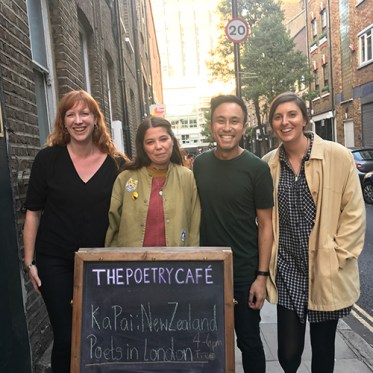
kiwis-in-london.JPG


This year I’ve been lucky enough to read my work in some incredible settings, from the stately dining room at Featherston’s Royal Hotel, to a church-turned-designer-clothing-store in Melbourne’s CBD. But the most memorable reading I’ve done this year was with fellow Kiwis Holly Hunter, Morgan Bach and Nina Powles in a nondescript room at The Poetry Cafe in London, which the three of them currently call home. It was a beautiful sunny Saturday that day, but we still managed to coax people into a dark windowless room to listen to some New Zealand poetry for a couple of hours. This is a poetry moment I will treasure for many years to come.


Sue Wootton

I’ve had the pleasure of hearing and reading plenty of poems by plenty of poets this year. But far and away the most rejuvenating poetry experience for me during 2018 was working with the children at Karitane School, a small primary school on the East Otago coast. I’m always blown away by what happens when kids embark on the poetry journey. Not only is the exploration itself loads of fun, but once they discover for themselves the enormous potentiality in language – it’s just go! As they themselves wrote: “Plant the seeds and grow ideas / an idea tree! Sprouting questions … / Bloom the inventions / Fireworks of words …” So I tip my cap to these young poets, in awe of what they’ve already made and intrigued to find out what they’ll make next.


Cilla McQueen

1

25.11.18

Found on the beach – is it a fossil?

jawbone? hunk of coral? No – it’s a wrecked,

fire-blackened fragment of Janola bottle,

its contorted plastic colonised by weeds

and sandy encrustations, printed instructions

still visible here and there, pale blue.

Growing inside the intact neck, poking out

like a pearly beak, a baby oyster.


2

Living in Bluff for twenty-two years now, I’ve sometimes felt out on a limb, in the tree of New Zealand poetry. I appreciate the journey my visitors undertake to reach me. A reluctant traveller myself, a special poetry moment for me was spent with Elizabeth Smither and Bill and Marion Manhire at Malo restaurant, in Havelock North. Old friends from way back – I haven’t seen them often but poetry and art have always connected us


Tayi Tibble

In September, I was fortunate enough to be able to attend The Rosario International Poetry Festival in Argentina. It was poetic and romantic; late night dinners in high rise restaurants, bottles of dark wine served up like water, extremely flowery and elaborate cat-calling (Madam, you are a candy!) and of course sexy spanish poetry and sexy poets.

On our last night, Marcela, Eileen and I broke off and went to have dinner at probably what is the only Queer vegan hipster restaurant/boutique lingerie store/experimental dj venue in the whole of Argentina, if not the world. Literally. We couldn’t find a vegetable anywhere else. We went there, because Eileen had beef with the chef at the last place and also we had too much actual beef generally, but I digress.

So anyway there we are eating a vegan pizza and platter food, chatting. I accidentally say the C word like the dumbass crass kiwi that I am forgetting that it’s like, properly offensive to Americans. Eileen says they need to take a photo of this place because it’s camp af. I suggest that Marcela and I kiss for the photo to gay it up because I’m a Libra and I’m lowkey flirting for my life because it’s very hot and I’ve basically been on a red-wine buzz for five days. Eileen gets a text from Diana, one of the festival organisers telling them they are due to read in 10 minutes. We are shocked because the male latin poets tend to read for up to 2584656 times their allocated time slots, so we thought we had plenty of time to like, chill and eat vegan. Nonetheless poetry calls, so we have to dip real quick, but when we step outside, despite it being like 1546845 degrees the sky opens up and it’s pouring down. Thunder. Lightening. A full on tropical South American storm!

It’s too perfect it’s surreal. Running through the rain in South America. Marcella and I following Eileen like two hot wet groupies. Telling each other, “no you look pretty.” Feeling kind of primal. Throwing our wet dark curls around. The three of us agree that this is lowkey highkey very sexy. Cinematic and climatic. Eventually we hail a taxi because time is pressing. Though later that night, and by night I mean at like 4am, Marcella and I, very drunk and eating the rest of our Vegan pizza, confessed our shared disappointment that we couldn’t stay in the rain in Argentina…  just for a little while longer….

We get to the venue and make a scene; just in time and looking like we’ve just been swimming. Eileen, soaking wet and therefore looking cooler than ever, reads her poem An American Poem while Marcella and I admire like fangirls with foggy glasses and starry eyes.

“And I am your president.” Eileen reads.

“You are! You are!” We both agree.


Alison Glenny

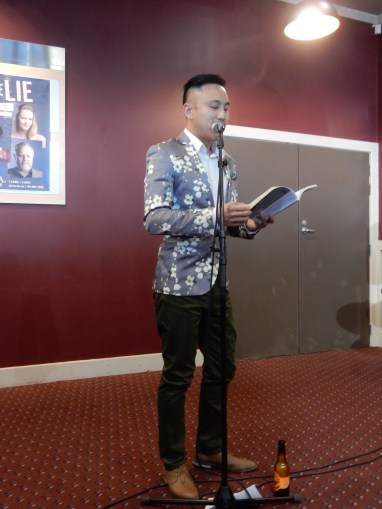
A poetry moment/reading. ‘The Body Electric’ session at this year’s Litcrawl was a celebration of queer and/or non-binary poets (Emma Barnes, Harold Coutts, Sam Duckor-Jones, essa may ranapiri, Ray Shipley ). Curated and introduced by poet Chris Tse (looking incredibly dapper in a sparkly jacket) it was an inspiring antidote to bullying, shame, and the pressure to conform.

A book. Not a book of poetry as such, but a book by a poet (and perhaps it’s time to be non-binary about genre as well as gender?). Reading Anne Kennedy’s The Ice Shelf I was struck by how unerringly it highlights the salient characteristics of this strange era we call the anthropocene: crisis and denial, waste and disappearance, exploitation, and the destruction caused by broken relationships and an absence of care.

A publishing event. Seraph Press published the lovely tātai whetū: seven Māori women poets in translation, with English and Te Reo versions of each poem on facing pages (and a sprinkling of additional stars on some pages). An invitation, as Karyn Parangatai writes in her similarly bilingual review of the book in Landfall Review online (another publishing first?) ‘to allow your tongue to tease the Māori words into life’.

Best writing advice received in 2018. ‘Follow the signifier’.


essa may ranapiri

There are so many poetry highlights for me this year, so many good books that have left me buzzing for the verse! First book I want to mention is Cody-Rose Clevidence’s second poetry collection flung Throne. It has pulled me back into a world of geological time and fractured identity.

Other books that have resonated are Sam Ducker-Jone’s People from the Pit Stand Up and Tayi Tibble’s Poūkahangatus, work from two amazingly talented writers and friends who I went through the IIML Masters course with. After pouring over their writing all year in the workshop environment seeing their writing in book form brought me to tears. So proud of them both!

Written out on a type-writer, A Bell Made of Stones by queer Chamorro poet, Lehua M. Taitano, explores space, in the world and on the page. They engage with narratives both indigenous and colonial critiquing the racist rhetoric and systems of the colonial nation state. It’s an incredible achievement, challenging in form and focus.

I’ve been (and continue to be) a part of some great collaborative poetry projects, a poetry collection; How It Colours Your Tongue with Loren Thomas and Aimee-Jane Anderson-O’Connor, a poetry chapbook; Eater Be Eaten with Rebecca Hawkes, and a longform poetry zine; what r u w/ a broken heart? with Hana Pera Aoake. Working with these people has and continues to be a such a blessing!

I put together a zine of queer NZ poetry called Queer the Pitch. Next year I’m going to work to release a booklet of trans and gender diverse poets, I’m looking forward to working with more talented queer voices!

The most important NZ poetry book to be released this year, it would have to be tātai whetū. It was published as part of Seraph Press’s Translation Series. It features work from seven amazing wāhine poets; Anahera Gildea, Michelle Ngamoki, Tru Paraha, Kiri Piahana-Wong, Maraea Rakuraku, Dayle Takitimu and Alice Te Punga Somerville. These poems are all accompanied by te reo Māori translations of the work. I can only imagine that it would be a super humbling experience to have your work taken from English and returned to the language of the manu. By happenstance I was able to attend the launch of tātai whetū; to hear these pieces read in both languages was a truly special experience. It’s so important that we continue to strive to uplift Māori voices, new words brought forth from the whenua should be prized in our literary community, thanks to Seraph for providing such a special place for these poems. Ka rawe!


Anna Jackson

This has been a year of particularly memorable poetry moments for me, from the launch of Seraph Press’s bilingual anthology Tātai Whetū in March and dazzling readings by Mary Rainsford and Tim Overton at a Poetry Fringe Open Mike in April, to Litcrawl’s inspiring installation in November of essa may ranapiri and Rebecca Hawkes hard at work on their collaborative poetry collection in a little glass cage/alcove at the City Art Gallery. They hid behind a table but their creative energy was palpable even through the glass. I would also like to mention a poetry salon hosted by Christine Brooks, at which a dog-and-cheese incident of startling grace brilliantly put into play her theory about the relevance of improv theatre theory to poetry practice. Perhaps my happiest poetry moment of the year took place one evening when I was alone in the house and, having cooked an excellent dinner and drunken rather a few small glasses of shiraz, started leafing through an old anthology of English verse reading poems out loud to myself, the more the metre the better. But the poems I will always return to are poems I have loved on the page, and this year I have been returning especially to Sam Duckor-Jones’s People from the Pit Stand Up, while I look forward to seeing published Helen Rickerby’s breath-taking new collection, How to Live, that has already dazzled me in draft form.


happy summer days

and thank you for visiting my bog

in 2018


A feast of poetry at Going West


Serie Barford.jpg

Serie Barford: The Curnow Reader


Going West always dedicates a significant part of its programme to poetry and this year is no exception.

‘New Zealand’s leading authors, poets, playwrights and musicians offer audiences a fortnight of fresh ideas, future-thinking, language and laughter at the 23rd Going West Writers Festival 1-16 September.’   Good location & food!


8 September                          Going West Poetry Slam. Glen Eden Playhouse

14-16 September               Going West Writers Festival weekend. Titirangi War Memorial Hall


Full programme here


Gw18 Poetry Slam Horiz graphics.jpg

Screen Shot 2018-08-05 at 11.07.25 AM.png

Word Up! is an exciting performance competition which gives 13–21 year-olds the opportunity to present their original work

If you think poetry is all about fields of daffodils and iambic pentameters, think again. Here, at the Going West Poetry Slam, poets lay it on the line to see who’s got the chops to rise to the top.

The weekend poetry events (14th -16th September):

Poet Serie Barford is the Opening Night’s Curnow Reader

Does a city a writer make? Three visiting Wellington poets – Chris Tse, Helen Heath and Anna Jackson – explore what it’s like to live, work and write in the windy city with Paula Green.

Going West is honoured to partner with Auckland University Press to host the launch of a new collection of poetry from C.K. Stead, That Derrida Whom I Derided Died: Poems 2013-2017.


As we incorporate artificial intelligence, automation and robotics into our lives and even our bodies, we continue to wrestle with what it all means for us as humans. Helen Heath and Dr Jo Cribb are joined by Vincent Heeringa to discuss these issues.

Helen Heath.jpg

Anna Jackson copy.JPG

Chris Tse - October 2017 - 02x - Photo by Rebecca McMillan.jpg

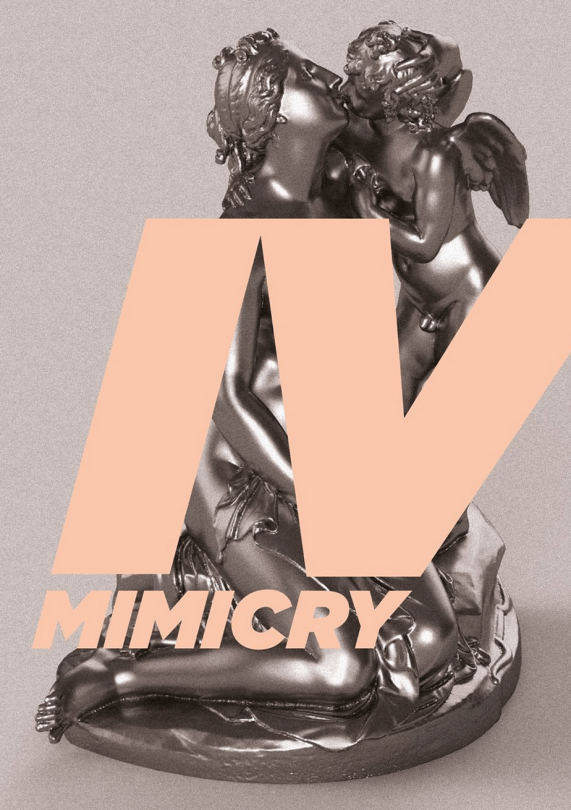
In the hammock: reading Mimicry IV

Screen Shot 2018-06-04 at 1.04.01 PM.png


Holly Hunter has edited the latest issue of Mimicry. She has drawn together an eclectic package of art and writing that will place your finger on the pulse of emerging (well mostly!) voices. The magazine is devoted to poetry, fiction, nonfiction, comedy, music, art, photography and design. It is slim but is abundant in reading currents.

You even get a mix tape at bandcamp to listen to as you read.

Often when I pick up a poetry journal I gravitate to the familiar poets whose work I already love – like a music hook. I will share my initial hooks with the rain thundering down outside. In this case Morgan Bach because I  haven’t read anything from her for awhile and I just loved her debut book, Some of Us Eat the Seeds. Her two poems here are honed out of cloud and snow and blood because they are light and airy and serious.


Looking for balance to the red interiors

in a calm sea of grasses, the dull love

of dust on a hillside, the caress of each

muscle as it contracts and expands

to pull me to a summit. That place

I would reuse to leave if I could,

but the hours have me by the ankles.


from ‘Terrific’


After hearing Emer Lyons read in Wellington last year, I jump to her poems in an instant. She is nimble on the page and in the ear, and tacks in fresh directions that retune me as poetry reader.


i talk too much at parties

every bee i see is dead or dying

people set fire to the sky

set the dogs howling

record themselves singing the same thing

on repeat

repeating

(and The Fish goes

A A X B B X

1 3 8 1 6 8)


from ‘strays’


Chris Tse’s latest book, HE’S SO MASC, is a sublime read. I love this book because it risks and it opens. The poem here is ultra witty but dead serious.


20. It’s the way we step out of a burning theatre as if nothing’s wrong.

21. As if the smoke in our eyes is a lover’s smile caught in sunlight.

22. An uncontrollable fire is perfectly fine, given the state of the world.

23. Then why do I feel so angry?

24. Are you angry?

25. I’m angry.


from ‘Why Hollywood won’t cast poets in films anymore’


Essa Ranapiri was a highlight for me at Wellington Readers and Writers week this year.  Their poem, ‘her*’, catches the way they make words ache and arc and slip between your ribs. You need to read the whole thing. To quote a glimpse is barely fair (two lines out of thirteen).


i left him wrapped in curtains

to stall the acid action of my stomach


from ‘her*’


I have only just discovered Rebecca Hawkes on The Starling. She is so good. The poem here is a linguistic explosion on the page: like an intricate and lush brocade that amasses shuddering detail and smatters expectation. You want to spend the weekend with this poem.  (I want to hear her read so will be posting an audio clip of a Starling poem soon)


I ask their name and they make an unpronounceable sound / like the

curdling clink of cooling obsidian / so I call them the ultimate war machine

 / they hurl rocks into my enemies and when they beat the earth with their

fists / I feel the world quake under me / this is how I know I have fallen in

love / but also onto the ground


from ‘Crush’


We are served well with fresh young literary journals at the moment (literary doesn’t seem to catch what they do). They keep you in touch with poets that continue growing on you but also take you into new zones of reading, with unfamiliar voices making themselves felt. Indelibly!  I have just read Sophie van Waardenberg’s three poems and they touch me, make me want to write with their viscosity and tang.


my girl becomes a calendar and I curl up inside her

my girl becomes a tongue twister and I curl up inside her

my girl lets the spring in through her hands

she puts her hands over my ears and I remember how it feels


from ‘schön’


Cheers to a well-stocked journal to keep you going through wet wintry days. I am saving the rest of the journal for the next wild weekend. First up Louise Wallace (author of much loved Bad Things), Aimee-Jane Anderson-O’Connor (the winner of the Landfall Young Writers Competition 2018) and Rachel O’Neill (who was recently awarded a NZ Writers Guild Puni Taatuhi o Aotearoa Seed grant to develop her screenplay).

The pleasure of good writing journals is that keep you in touch with what you know and catapult you into the unfamiliar where you accumulate new must-reads. Mimicry does exactly that.


See Mimicry on Facebook

Enquiries: mimicryjournal@gmail.com

Writers on Mondays at Te Papa: 4 poetry highlights

vic-university-wellington-logo_1.png


Mon 16 Jul – Mon 1 Oct 2018, 12.15pm–1.15pm

Poetry is at Te Marae, Level 4, Te Papa


Cost Free event, every Monday lunchtime


Full programme here

Winter Eyes: Harry Ricketts

July 30, 12.15–1.15pm

Harry Ricketts – a poet, editor, biographer, critic, and academic, is joined by editor and Victoria University Professor of English Jane Stafford to discuss his latest work.

Harry has published over thirty books, including the internationally acclaimed The Unforgiving Minute: A Life of Rudyard Kipling (1999), How to Catch a Cricket Match (2006), and Strange Meetings: The Lives of the Poets of the Great War (2010).

His eleventh and most recent collection of poetry is Winter Eyes (2018). Winter Eyes has been described as ‘Poetry as comfort, poetry as confrontation’.

These are elegiac and bittersweet poems of friendship, of love’s stranglehold, of the streets and buildings where history played out.


Poetry Quartet: Therese Lloyd, Tayi Tibble, Chris Tse and Sam Duckor-Jones

August 6, 12.15–1.15pm

Come and hear the new wave of New Zealand poets in a reading and discussion chaired by poet and essayist Chris Price.

These poets write works of boldness with an acute eye on relationships in the modern world. Therese Lloyd’s The Facts, Poūkahangatus by Tayi Tibble (Te Whānau ā Apanui/Ngāti Porou), He’s So MASC by Chris Tse, and People from the Pit Stand Up by Sam Duckor-Jones are diverse and exciting books of poetry.

Each writer engages with language in innovative ways to explore and reimagine love, trust, intimacy, and the politics of being.


Pasture and Flock: Anna Jackson

August 13, 12.15–1.15pm

Pastoral yet gritty, intellectual and witty, sweet but with stings in their tails, the poems and sequences collected in the career-spanning new book Pasture and Flock are essential reading for both long-term and new admirers of Anna Jackson’s slanted approach to lyric poetry.

Jackson made her debut in AUP New Poets 1 before publishing six collections with Auckland University Press, most recently I, Clodia, and Other Portraits (2014). Her collection Thicket (2011) was shortlisted for the New Zealand Post Book Awards in 2012. As an academic, Jackson has had an equally extensive career authoring and editing works of literary criticism. She is joined by poet and publisher Helen Rickerby for an exploration of her career as poet, essayist and critic.


Best New Zealand Poems 2017

August 20, 12.15–1.15pm

Best New Zealand Poems is published annually by Victoria University’s International Institute of Modern Letters.

Get ready for Phantom Billstickers National Poetry Day on 24 August by coming along to hear seven of the best read work selected for Best New Zealand Poems.

Poets Airini Beautrais, Chris Tse, Marty Smith, Liz Breslin, Greg Kan, Makyla Curtis, and Hannah Mettner are introduced by Best New Zealand Poems 2017 editor Selina Tusitala Marsh.

Visit the Best New Zealand Poems website (link is external) to view the full selection.


Poetry Shelf Audio Spot: Chris Tse reads ‘I want things that won’t make me happy’


1520467973785.jpg      1520467973785.jpg


Chris Tse, ‘I want things that won’t make me happy’, He’s so MASC, Auckland University Press, 2018

Auckland University Press page


Chris Tse to join LitCrawl 18 as a programme curator


DSCN9466


Well this is good news! It seems the Wellington literary extravaganza just gets better and better.

Looks like a trip to Wellington is in order!

Chris Tse to guest curate LitCrawl 2018

Poet Chris Tse is the inaugural guest curator for LitCrawl. We are tremendously excited to welcome Chris to the programming team where he will be conjuring up events alongside directors Claire Mabey and Andrew Laking. 

Chris is the author of two poetry collections published by Auckland University Press: How to Be Dead in a Year of Snakes (finalist at the 2016 Ockham New Zealand Book Awards and winner of the Jessie Mackay Award for Best First Book) and HE’S SO MASC. Chris has a long history of involvement with some of Wellington’s leading arts and culture events, including roles with the New Zealand International Film Festival, Wellington on a Plate, Young and Hungry, and the New Zealand Young Filmmakers Showcase. As well as writing, Chris is an occasional actor and musician, and a keen photographer.

We know Chris will help curate an amazing programme for LitCrawl. Why? Because he gets what it’s all about:

‘LitCrawl is the biggest little literary festival in New Zealand. I wish I could say that I’ve seen it grow from the beginning, but I missed the very first LitCrawl in 2014 (I was bawling my eyes out at a Tori Amos concert in Melbourne). But! I’ve had the privilege of appearing in each LitCrawl since then and I’m thrilled to be on board this year as a guest curator.

The audiences at LitCrawl are some of the most diverse you’ll see here in New Zealand or abroad. Survey the faces present at any given event and you’ll see people from all walks of life brought together by a common curiosity. Although literature is front and centre, I love the cross-pollination with other arts and culture circles that happens during LitCrawl. There’s an exhilarating energy at every event, and the post-match party has become the social event in Wellington’s literary calendar.’


Poetry Shelf interviews Chris Tse


Chris Tse - October 2017 - 01x - Photo by Rebecca McMillan.jpg


Chris Tse is a poet, actor and musician whose poetry first appeared in AUP Poets 4. His award-winning debut collection, How to be Dead in a Year of Snakes, responds to a moment in history – a 1905 murder – not so much by narrating that history but by installing a chorus of voices. I loved the book as you will see here.

I consumed Chris Tse’s new poetry collection, He’s so MASC, in one sitting, because I was caught in its grip. The knottiness belies the grace and fluidity of writing, but the tangle of self – the laying on the line and the holding in reserve – haunted me. It feels utterly exposing, playful, inventive and daring. It is warm, vulnerable, strong. I began to fear a review might appear heavy-footed alongside its lithe connections; like a delicately balanced house of cards, a review might miss the point and topple it over. Instead I have opted for an unfolding email conversation.

Chris made a deeply personal speech at his launch, acknowledging heartfelt gratitude to his friends and family. His tears, in hoping his friends and family were proud of him, moved me to tears. He told us that, for the first time in his poetry, ‘the speaker is one hundred percent me’.  This is the book that matters. Chris also hoped the book might find its way into the hands of people who might ‘see themselves in it’.


      1517533295117.jpg   1517533295117.jpg

Chris Tse, He’s So MASC, Auckland University Press, 2018


Paula: Are you hesitant to answer questions about this book? I am hesitant to ask them! In the first poem we meet wolves. The wolf is also there in the last poem and makes a number of appearances in between, with teeth and claws and transformations. They can never settle to a single trope or behaviour or ache. I don’t want to explain the wolf. I just want to say they were a subterranean sharpness that clawed me. I can’t stop talking about the wolf. They are plot device, semantic undercurrent, emotional barometer, love infected, unreliable protagonist, hidden key. Ah, there is that glorious knottiness. Can you say anything about the wolf?


The wolves are closing in

on the ballroom while the band members

look out and brace themselves

for the conflict to come. Shit just got real.

They pick up their instruments

and clear their throats.

from ‘Intro’


Chris: For me, a big part of getting this book ready for publication was figuring out how I’m going to talk about it. With Snakes, it was like there was a safe following distance between me as author and the book as a literary/historical object. With this book, I don’t feel the safety of that distance given its themes and content, and honestly that’s a little terrifying. I work in communications and part of my job is to train our staff in how to deal with the media and select committees. We drill them on all the possible questions they could be asked and the best ways to answer them so that nothing throws them. I’ve been feeling I need to do that for myself for this book just to make me feel less anxious about it!

I like to think of each of the poems in this book being a single wolf roaming the terrain of my personal history. The first wolf poem I wrote for the book was ‘Lupine’, but it began life as a poem about my brother and I. Eventually, as the poem begin to take shape, it was clear that my brother had nothing to do with what I was trying to say in the poem. From there on, the image of the wolf and its association with transformation and masculinity felt like a good fit for what I wanted to explore, and so wolves began to pop up in other poems. I love how you’ve described the wolves as an ’emotional barometer’ – that’s a really apt description of what I wanted them to do in the book. They seem to have a habit of popping up in poems where I’m feeling uncertain, heartbroken, or angry.


Paula: I think the diverse self exposures is one reason why this book has affected me so much – and the sway between distance and intimacy. Things are at a distance and things keep disappearing. Presence is handlocked with vanishings, and not just the speaker in the poem. That flitting in and out of view intensifies the emotional impact for me, the unspoken. I am wondering too if distance is also coupled with masquerades and masks?


I can almost run my fingers through

the sun-streaked strands of those days


when I was nothing but a silhouette

disappearing into fog—just a sketch.


I could step into a crowd and never

resurface. No one would suspect anything.


from ‘Belated backstory’


Chris: The masquerades and masks are definitely there for distance. I’ve been performing my entire life – in public and private – so it was essential that this book, as unflinchingly open and true to my experiences as it is, also acknowledged the masks I’ve worn to protect, to give myself confidence, and to play. Those masks have been an important tool of survival and a way to make sense of the mess that sometimes builds up in my head. It’s also in part a response to having a somewhat public life now and the expectations that some people have of me as a Chinese New Zealand writer, especially given how few there are of us. I’ve talked at length in the past about being piegeon-holed, so I won’t go into all of that again, but sometimes I do feel like I’m performing the part of a Chinese New Zealand writer to appease others and meet a certain need. I can’t and won’t ever deny that side of me, but this book was a chance to draw from the intersectionalities of who I am.


Paula: Yes! The Chinese New Zealand part surfaces here and there – I was thinking like little teeth marks teeth to carry on the Wolf presence:


I’ll go to my next grave                     wondering

whether I pushed them hard enough to never settle

for being the token Asian in a crowd scene or

the Asian acquaintance in an ethnically diverse television series

from ‘Punctum’

I like the way intersectionalities of self are so important. The ‘coming out as a poet’ poems feel high risk when masks and arm’s lengths are dropped or reduced. I found these poems witty and raw and touching a chord. Yet there is also the nerve-ending intersections with coming out sexually. The one standing in for the other.


There’s no such thing as the perfect time or the best way to tell loved

ones about your poetry inclinations. You need to muster up every

ounce of courage in your being and just say it: I am a poet. You could

say ‘I write poetry’, but there’s something non-committal about

that phrasing, like you only dabble now and then and would prefer

not to attach labels to your preferences. Prepare yourself for a full

spectrum of emotional reactions, from ‘You’re still the same person

to me’ to ‘I can’t be friends with a poet’.

from ‘I was a self-loathing poet’


Paula: Is this an example of letting the poetry do the talking?


Chris: Absolutely. And not just letting it talk, but also letting it have the last laugh, so to speak. It was important to me that a poem like that (which dealt with something that I don’t exactly fondly look back upon!) had a healthy dose of humour in it to soften some of the emotional barbs for me as a writer. It’s not that I’m trying to run from the memory of that moment in my life or downplaying its significance. Rather, I see it as a way to embrace it for what it is while still being able to continuously learn from it and move forward.

Those intersectionalities of the self are important, and possibly even more so for readers who are trying to find someone they can identify with. On the flip side, those intersectionalities can be so easily carved up and used as labels to make someone or something appear more palatable or accessible. Even I’ve been guilty of this: as this book was coming together I would joke with my friends that this was “the gay book”, but it could just as easily have been “the break-up book” or “the pop music book”.


Paula: Sometimes poetry books should come with playlists at the back! This was what I was listening to at the time.

Is there a poem that particularly resonates with you – where everything has fallen into place and it just works or it matters in other ways? For me it is ‘Release’. I gasped when I read this. Maybe it is feeling that is both intense and restrained. I love this poem. Then again I like the surprise and momentum of ‘The saddest song’. I also adored ‘Wolf Spirit —Fade’, the last poem, but readers have to discover this poem for themselves.


Chris: Well, being the mix tape/playlist geek that I am, I’ve made two playlists for this book: Side A and Side B! They feature songs and artists that inspired the poems or feature in the poems themselves.


I can fit the saddest song in the world in my carry-on.

I can fit the saddest song in the world in my right-side brain.

But I can’t fit it in my lungs or hold on to it with confidence

when underwater.               And I can’t fit the saddest song

on one side of a 90-minute cassette tape without

an uncomfortable interlude cutting into its breath.

from ‘The saddest song in the world’


‘The saddest song in the world’ is the poem that resonates the most for me – I consider it the heart and soul of the book. Writing ‘Release’ was a very confronting experience. I read that poem now and I feel so vulnerable, but it was important to me that it had a place in the collection. Every time I had to revise what was in or out, I fought for it to be in, even though it feels like a ‘selfish’ inclusion because of its personal significance, so I’m glad it resonated with you as a reader! I’ve never performed it and I don’t know if I ever could. ‘Punctum’ and ‘Performance—Part 2’ were the last two poems written for the collection, after my publisher had already seen a final-ish version of the manuscript. They were both based on two separate lines that I’d been holding on to for a long time but just didn’t want to play with any of the other poems. When those two poems were finished it felt like I’d clocked a video game – those two lines were the things I needed to complete my quest!


Paula: One of the great attractions in the collection is movement. There are vital points (themes, events, revelations, states of being) that shine out, that repeat and overlap, a bit like a constellation. But it is the movement between that creates the knottiness I first mentioned, and I am not thinking of an ugly mess of a knot, just intricacies and complications.

What attracts you in the the poetry of others. Did you read any books that got under your skin while you were writing this?


Chris: I can’t pinpoint what attracts me to a particular poet or type of poetry – keeping an open mind is essential – but lately I have been drawn to poets and books that aren’t afraid to be sassy, funny or messy.

Unsurprisingly, I read a lot of poetry by gay male poets while writing this book: D.A. Powell, Richard Siken, Stephen S Mills, Ocean Vuong, Saeed Jones, Danez Smith, Andrew McMillan and Mark Doty, to name but a few. D.A. Powell was one of the first contemporary gay poets that I remember reading while I was an undergraduate and being absolutely shaken by his syntax and the emotional intensity of his writing.

Reading Hera Lindsay Bird’s first book was a revelation – a real YES! moment that in its own little way gave me the confidence to carry on with the types of poems I wanted to write for the book. Maggie Nelson’s The Argonauts and Bluets have also had a profound effect on me recently. Her work is often described variously as memoir, essay or genre hybrid. It’s all drawn from her personal experiences, which are then filtered through many layers of what interests and excites her. That, to me, is poetry. The way she’s able to draw in so many threads to weave a net of support over a single narrative is fascinating to experience as a reader.


Paula: Finally, I love the title. It feels like a little challenge. You are opening the space of masculinity – stretching poems wide open to its possibilities. As our conversation so clearly shows your book challenges us as much as it challenges you. I am really intrigued how certain books, such as this one, matter so much to me – often it is because they anchor themselves in human experience in distinctive ways. This seems like a scary, tricky question but what do you love about your book?


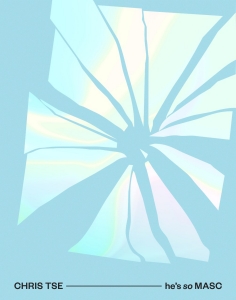
Chris: That is a scary question! It’s apt that you’ve mentioned the title because that is what I would pick. For the longest time – even before Snakes was published – I thought I knew what the title of this book would be. But somewhere along the way it became clear that my working title wasn’t going to cut it, and this book needed something spikier with loads more character. HE’S SO MASC instantly felt right – it’s cheeky, it’s a little irreverent and there’s a pop music connection (Cyndi Lauper’s She’s So Unusual). And I love what Greg Simpson, the cover designer, has done with it too – the dash drawing my name into the title, the italicised ‘so’. In a way the title is a challenge – the word ‘MASC’ is so loaded in gay culture and I wanted to turn that on its head. It’s my way of pushing back on everything I’ve ever been told that made me feel like I wasn’t enough or didn’t fit in.


Auckland University page

Chris Tse website

Friday poem at the SpinOff