


‘So when people say that poetry is a luxury, or an option, or for the educated middle classes, or that it shouldn’t be read at school because it is irrelevant, or any of the strange or stupid things that are said about poetry and its place in our lives, I suspect that the people doing the saying have had things pretty easy. A tough life needs a tough language – and that is what poetry is. That is what literature offers – a language powerful enough to say how it is.
It isn’t a hiding place. It is a finding place.’
Jeanette Winterson (courtesy of Nicola Strawbridge)
The annual compilation of well-loved books on Poetry Shelf has no rules – any country, any genre, any time. Usually I ban any mention of me but Janet Charman snuck in with the first contribution. It is such an off-centre and inspired take on New York Pocket Book, with discomfort, I decided to break my single rule this year.
Thanks to everyone who participated and everyone who got back to me. Thanks also to all those who support the blog: publishers, authors, readers.
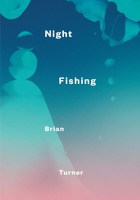
I have loved so many New Zealand books this year (all the glorious fiction and poetry on both my montages above as my reviews on this blog and for Fairfax attest), but I want to mention a few that aren’t repeated favourites below. Cilla McQueen’s In a Slant Light (OUP). I adore this book because it hit me at so many levels: the way Cilla shines like a diamond when you travel through decades of NZ poetry, the way the memoir lights up what it was like for one groundbreaking woman making her way across the literary terrain of men, the way poetry and memoirs can do so many different things. Frankie McMillan’s My Mother and the Hungarians (CUP) is a sequence of small fictions that would surely entice the most reluctant reader into this genre. Fresh, energised, sparkling. The poems in Brian Turner’s Night Fishing (VUP)are a perfect acoustic chamber for meditation, glimpses of a startlingly beautiful physical world and the necessity of love. Rachel Bush’s Thought Horses (VUP) affected me more than any other book this year. I wrote this on my blog:
Rachel’s collection sits on my top shelf with a handful of poetry books that rise above the bulk to become something astonishing. Why? Because the heart is engaged. Because the writing is as contoured and as musical as the world no matter which way you look. Because this book was written so close to death, yet it shows the joy of life in little things, in big things, in ideas, relations, places. We all do this. We all write the world. But Rachel has made the word incandescent and in taking us back into the grit and light of living changes us. If you buy one poetry book this year, make it this one.
More than anything I have loved hiding away in the archives and reading my way through the books and archival material of early New Zealand women poets: Jessie Mackay, Blanche Baughan, Eileen Duggan, Ursual Bethell for starters. I can take nothing for granted as every reading blasts apart all expectation and simply adds to the prismatic joy of reading and writing poetry.
These groundbreaking women, who dared to write poetry and dared to speak out, feel like fine foundation stones for NZ literature. I carry them with me now. That Sarah Laing has hit the spotlight in 2016 with her superb graphic memoir, Mansfield and Me, a book that resists formula and is of itself, is a contemporary example of the beacon passed.
And this sweetly crafted New-Yorker review of Jamacan poet, Ishion Hutchinson, sent me tracking down his poetry.
(NOTE: I can still add to this list if I have missed you out in my daze. Let me know. Or if I have missed errors. I have no backup staff.)
H a p p y
d a y s
f i n d i n g
treasure in t h i s
lovingly t e n d e d
trove.
John Adams:
Tender Girl by Lisa Samuels (Dusie, 2015) – Fabulous dislocations, lovely disturbances, challenging channels. With oblique referencing of experimentalists from Stein to Hejinian; on an imagined quest broad as Joyce’s Ulysses, Girl is tendered through poetic experiences that any half-shark/half-woman might experience. Glorious reading.
This Paper Boat by Gregory Kan (AUP, 2016) – My reading of Kan’s collection noted his attentiveness to family. That attentiveness absorbs fragments from Robin Hyde into an individually woven chorus that builds during reading. Lovely, generous, rewarding. Touching.
Lucky Punch by Simone Kaho (Anahera Press, 2016) – Kaho speaks in an engaging modern voice, distinctively Pacific Island (Tongan) Kiwi . This important material necessarily navigates a cross-cultural without shedding the universality of its resonances. Kaho’s experience in performance poetry informs her editing of these gems so they sparkle.
Johanna Aitchison:
When I started reading Ashleigh Young’s collection of personal essays, Can You Tolerate This? I felt like I did when I first met Emily Perkin’s, Not Her Real Name. Jealous. Ashleigh does back flips. She lands perfectly. She makes it look easy.
I picked up Eduardo C. Corral’s collection, Slow Lightning, when I was in Baltimore visiting a friend. It’s quite old (2012), but it’s a game-changer and utterly relevant given the anti-immigrant racism currently being peddled by He Who Shall Not Be Named. I was stunned by the lusciousness of his English-Spanish blend, in poems that vividly evoke the experience of the Mexican-American immigrant. He colours in lives, which are bilingual and fraught with risk; his titles are long and run-on:
In Colorado My Father Scoured and Stacked Dishes
In a Tex-Mex restaurant. His co-workers,
unable to utter his name, renamed him Jalapeño
(you can see the rest of the poem here
Palmerston North has produced some great poetry recently. The local press HauNui put out the Ockham Book Award (2015) finalist, The Night We Ate The Baby, by Tim Upperton. I love Tim’s poetry for his dexterity with form (he does a bloody good villanelle), his offensiveness, and the fact that he is sometimes hilarious. Bryan Walpert is another local who is slaying it (although he’s just ditched us for Auckland) in Native Bird Mākaro Press). As an American transplant he documents the immigrant experience – my particular favourite is ‘Manawatu Aubade.’
If James K. Baxter and Nicky Minaj had a love child, it would sound something like Courtney Sina Merideth’s poetry. I’m very late for the party, I know, but what a party! Brown Girls in Bright Red Lipstick is a standout for its taut language and slam-poetry sensibility. And, of course, thank God for Hera Lindsay Bird. A self-titled high-low smash hit. Enjoy the ride.
Ros Ali:
The challenges of recent months have brought the solace and strength of poetry once again to the fore. To counter the unease was the joy of some special discoveries:
Inventive and intriguing is Canadian writer, Anne Carson’s new collection, Float. Twenty-two individual chapbooks ‘float’ inside a transparent case. The works, poems, essays, lists and reflections may be read sequentially or however the whimsy takes you, inviting connections to each and to the whole. This was initially challenging, then absorbing. Much of the poetry is playful, curious and lyrical. My favourite perhaps, ‘Wildly Constant,’ including the lines of Proust on the kinds of memory: ‘the daily struggle to remember / where we put our reading glasses / and there is the deeper gust of longing / that comes from the bottom / of the heart / involuntarily. / At sudden times. / For surprise reasons.’
Also playful and rich in scope and colour, is Beside Herself by Chris Price. In this book too, the exploration of selves, of someone else, others, weave connections with each other and the reader. At the heart of this book for me, are the power of voices, and the play of sound, meaning and music, as in ‘Spell for a Child to Remember’ and the lyrical and layered, ‘My Mother as a Tree.’
Exploring Jenny Bornholdt’s new collection, Selected Poems, brought the warmth and confidence of re-visiting someone compassionate, gentle and special, with her wisdom and insights into our lives. There is also the reminder that standing tall on my class wall posted high, is Jenny’s, ‘Instructions for how to get ahead of yourself while the light still shines.’
A gift to a dear friend of the new edition of e e cumming’s, I carry your heart with me, with its nifty multi-media illustrations by Mati McDonough, was an assertion of beauty and certainty– and a perfect offering for someone you love, of any age.
Finally, a collection that is beautiful in its heart and craft; a devastating insight into the dying and loss of someone deeply loved. Michael Faber’s, Undying, A Love Story, is a compelling, harrowing and deeply tender journey with his wife in her struggle with multiple myeloma. Honesty and grace prevail. From ‘Barley Fields, Fearn, 16 August, 8 O’Clock’:
The light is how you like it.
Where on earth are you? I have gathered
all your shoes together, and the night
must fall
on time.
Serie Barford:
Fale Aitu/Spirit House by Tusiata Avia. VUP 2016
I almost missed the launch of Fale Aitu because access to the venue was via a flight of stairs and I was marooned in the vestibule with a broken leg. Then a gallant stranger scooped up my mobilty scooter, leaving me to crawl in his wake until I reached the landing and a view of Tusiata reading “This is a photo of my house”; a poem that entices us past benign pink bricks and a big tree into dangerous zones that harbour imprints of past events and ghosts:
‘I am cutting a big hole in the roof. Look down through the roof, there is the top of the man, you can’t see his face, but see his arm, see it moving fast.
I am removing the outside wall of the bedroom. Look inside, there are the Spirits, that’s where they live.’
Tusiata’s poems are fine threads (tusili’i) that link visible and invisible worlds across Time and Space. In Feagaiaga/Covenant we are reminded of the traditional sacred covenant between brother and sister.
My brother and I are Siamese twins
I graft him to me
his pyjama holes to my buttons
and we sleep face to face
Spiritual aspects of this covenant were transferred to priests of the new religion – Christianity. It is ‘men of the cloth’ who are now afforded much of the protection, loyalty and honour that historically cloaked Samoan sisters.
Calamity, a critical eye and compassion zig-zag through the collection. We join Tusiata as she frantically drives through broken, flooded streets in search of her daughter after the Christchurch earthquake in “Mafui’e: 22 February 2011”. We feel Tusiata’s anguish in a litany of reasons of why ‘I cannot write a poem about Gaza’ and in familial conflict in ‘Tableau’. We sense a shift of power and perception in ‘I enter my throat and you are there too’:
I flower like ink in water.
I try to feel fury
but I see you when I close my eyes
living in your elderly body, the thinly clothed bones
the soft folds of your skin
your earlobe melting between my imaginary fingers.
Waybread & Flax by Belinda Diepenheim. Steele Roberts 2015
Belinda Diepenheim grew up in Wellington and worked as a horticulturalist in the Botanic Gardens and Otari Native Plant Museum. She dedicated Waybread & Flax to Janet Charman, who gifted me the collection as a Christmas present because she knows I love poetry and plants and have an elementary knowledge of rongoa – Maori traditional medicine.
The book is beautifully illustrated with coloured botanical plates and is divided into three sections. The first, “Woden’s nine herbs charms – a 10th century cure” sets the scene with an Anglo-Saxon poem for the treatment of poison and infection by the preparation of nine herbs:
A worm came creeping and tore assunder a man.
Then took Woden nine magick twigs and smote the serpent
that he in nine pieces dispersed.
Magic, history and medicine entwine. Extracts from the traditional poem head each of Belinda’s contemporary poems, standing like a pou whenua (a carved land post) to mark boundaries and places of significance:
Caramine hirsuta, bittercress
Stune is the name of this herb, it grew on stone,
it stands up against poison, it dashes against poison.
…..Tonight fine rain gathers, merges to drops heavy
enough to make the ripe seeds explode from my
siliques. The woman takes off her hat, hair trickles
down her back. She shuts her eyes and drinks from
a tin flask. Birds roost in hawthorn. The ambiguous
light sucks colour from blue violets.
The second section, ‘Voyage out: Cook and the colonists bring plants to New Zealand’ contains poems for introduced plants such as gorse, lavender, roses and wheat. Explorers and colonists sow the new world with old ideas and familiar seed stock.
She said she’d go to this new land
to build a life, we shall begin again,
but she’s not leaving home behind.
Will the tulips be allowed to come
over the border of those islands?
The final section ‘Rongoa – Maori traditional medicine’ showcases Belinda’s love of native plants and her horticultural background without reference to indigenous magic and mystery. There is no mention of Tane, Papatuanuku or any of the gods of Aotearoa who are evoked by rongoa practitioners who connect to plants through Mātauranga Māori (Maori knowledge and comprehension of the visible and invisible universe). It is the colonisers’ pagan and Christian gods who underpin the spiritual connection between plants with humans in this collection. Nevertheless, I enjoyed Waybread & Flax.
Lucky Punch by Simone Kaho Anahera Press 2016
Simone’s childhood in the suburb of Waterview is separated from mine by a generation (I’m old enough to be her mother) and a short drive over a causeway that straddles islands and links peninsulas where vegetable gardens, trees and community spaces continue to fall prey to Auckland’s tentacles as the city moves West. In ‘Waterview’ Simone laments:
The oak tree is gone, the fruit trees; apple, feijoa,
peach, the banana tree which thrust out a pod of fruit one summer
against all expectations, finger-length and three times as fat, all
gone. The vegetable garden is covered over with a garage, a
concrete driveway….
and in ‘Bulls’:
… we never went
back to pick blackberries again and after a few years the bushes were
gone and then so were the bulls.
Simone is Urbanesian without relinquishing her empathy or ancestral connections to Nature:
I don’t know the name of this bush, this plant, this flower or that it
grew this big, just that it is from the islands… You plucked one of the plain
creamy flowers for me once and told me to smell it. I carried it in
my pocket for months, a crumpled wing. (from ‘Still’ )
There was a red sea on his knee with scalloped skin shores. (from ‘Red Sea’):
He smiles but his eyes
stay on the wall. It’s a busy wall, mould sprays like faded flowers, a
hook trailing cobwebs, daddy longlegs drifting through squashed
mosquitoes, distant black stars. (from ‘Stars’)
In ‘Pretty’ Simone is distanced from her Tongan heritage by her “own” people. ‘You’re too pretty to be Tongan,’ yet in ‘Home’ Simone defies her father and insists on staying with her family:
Dad didn’t want me to stay with our family in Tonga because there
was no shower, only a tin bucket.
Simone explores love but doesn’t shy away from violence. In “Sheep” an incarcerated man is beaten by another prisoner for ‘hitting a sheep in the head with shears’ so badly that ‘its eye had come out.’ In ‘Fight’ two males slug it out and in ‘Punching’ the boy who proposed to her when she was four is grown up and about to die;
Henry has so many scars. Some of them are beautiful like the
spidery lattice on his knee from when he went through a sliding
door. A white cross on his inner arm from punching a window.
Sarah Jane Barnett (Poet and Books Editor for The Pantograph Punch):
There are three collections that that come to mind when someone asks me to recommend poetry. The first is Gregory Kan’s debut, This Paper Boat (AUP). The collection follows the author as he traces his own history through the lives and written fragments of Iris Wilkinson (aka Robin Hyde), his parents, and their parents. These poems broke my heart and put it back together again. I loved it so much I had to interview Greg about his work.
Another book that I return to is Claire Orchard’s debut collection, Cold Water Cure (VUP). Claire writes such funny, quietly experimental, and beautifully crafted poems, and her work often reminds me of Jenny Bornholdt. Everyone should read her poem ‘Settling for Action Man.’ Everyone should read this collection.
The final collection that I loved is Bill Nelson’s debut, Memorandum of Understanding (VUP). Bill and I have been friends and fellow poets for nearly a decade, and I couldn’t wait for this collection to come out. Bill’s poems are funny and strange and often love poems in hiding. The final sequence of poems, ‘How to do just about anything,’ is so, so damn good:
The dogs will find you first.
Even under the snow
they can smell the fear and sweat
and polypropylene socks.
Your grandfather can smell it too.
He pulls you out by the scruff of your neck.
You are strapped into a pair of skis.
Edward Scissorfeet. Disturbed,
eating a sandwich with metal poles
dangling from your arms.
— From, ‘How to do just about anything’ in Memorandum of Understanding
Airini Beautrais:
Tusiata Avia’s Fale Aitu: Spirit House was the poetry book I was most excited about in 2016. Tusiata’s work always goes straight to the heart. Hera Lindsay Bird’s eponymous debut gave me lots of belly-laughs, and I think it has earned its popularity. Nick Ascroft’s Back With the Human Condition spoke to the word-lover and the formalist in me; I enjoyed this collection very much. I am very much looking forward to reading Simone Kaho’s recently released sequence of prose poems, Lucky Punch. I also want to mention a non-poetry book by a poet, Helen Lehndorf’s Write to the Centre, something like a guidebook for writing a journal. I think it will prove useful to many poets out there.
Francesca Benocci:
My favourite read of 2016 has been Poroporoaki to the Lord My God: Weaving the Via Dolorosa by Anahera Gildea, published by Seraph Press.
Another favourite read was Dolce Marcescenza (Sweet Decay) and Italian/English bilingual edition by Indian poet Tishani Doshi (this was published in 2015 here you can find an excerpt of the book here.
Tail of the Taniwha by Courtney Sina Meredith is not strictly poetry, but it is poetry to me anyway.
I have also worked on and really enjoyed Fale Aitu by Tusiata Avia and Hera Lindsay Bird by Hera Lindsay Bird.
Diana Bridge:
Earlier this year I shared the launch platform at Unity Books with distinguished anthropologist and poet, Michael Jackson. Soon after, I pounced on the poems in his Walking to Pencarrow: selected poems (cold hub press). Reading in order over several nights, I arrived at a richly faceted, variously grounded narrative and a stronger than usual sense of a poet’s voice. This voice is never less than probing and mature, its insights often attractively wry and self-deprecating. Lines studded with images remain entirely accessible. From the beginning, in and out of persona, the poet circles the nature of home and the great attendant themes of belonging and separation. It gives an extra dimension to the poems if you have read the author’s superb memoir, The Accidental Anthopologist.
Elizabeth Smither’s poems lie in the bookshelf on the shelf behind my head and I regularly dip in and out of them. There was no new Smither collection this year but I was given the bilingual edition of Best New Zealand Poems 2014 (Wai-te-ata Press, 2016), and found there a gem, ‘Putting a line through addresses’. You can see from the title the writer’s trademark characteristic of starting small, very small here, and swelling to the largest human themes that absorb us. ‘Now the book is so cross-hatched it looks/ like an exercise in defence. Barbed wire/ thrown up, dark obliterated trenches.’
Chosen by Vincent O’Sullivan, this small volume is a worthwhile collection, even if you only look at the English on the left-hand side. Translations are by Liang Yujing.
French poet Yves Bonnefoy died in Paris in July at the age of 93. Bonnefoy, who was also art critic, translator, essayist and more, wrote a gorgeous hybrid of a book, L’Arrière-pays, translated many decades later into English as The Arrière-pays (Seagull Books, 2012). The translation by poet Stephen Romer is limpid, lyrical and obviously intent on preserving the subleties of the poet’s thought. It is accompanied by reproductions of paintings and author photographs which glance off ideas in a more than ordinarily illustrative dialogue with the search which is the book’s topic. L’Arrière-pays itself turns out to be a conception envisaged as as distant as a Roman outpost in the desert and as up-close as a remembered vision from childhood. It is impossible to capture in a sentence but that is the point of the investigation. After the poet’s death, I read again this not quite classifiable text, extended here by three newer shorter pieces, reading for the beauty of its explorations, its questioning lyrical prose.
JR Prynne is described on the back of his monumental Poems, out last year from Bloodaxe, as ‘Britain’s leading late Modernist poet’. He is tough going because of the syntactic disruption and experimental nature of his work. In fact he is a poet to bend your mind. I am not to grips with the dismantling that occurs in his latest work but a 1969 collection, The White Stones, was reprinted by NYRB this year and I have much enjoyed the tussle with a variously and ingeniously stocked mind and, which is what drew me first, the vibrant, concrete, lyric half- lines and scraps of rather wonderful connection that emerge. It helped to read a fine review of Prynne in Prospect by Jeremy Noel-Tod.
I have been waiting for Australian poet Judith Beveridge’s latest book ever since I read some of the poems to be included in it in a couple of Best Australian Poems. Like others, I wish it had become almost as natural for us to read Australian literature as it is to read our own. Beveridge is up there with the very best.
Devadatta’s Poems (Giramondo Poets, 2014) arrived on my desk just before Paula’s deadline, but long enough to confirm the singular quality of this book. Beveridge comes at her poems from unforseen angles. Sometimes, as here, they emerge from entirely unexpected characters. Following on from her sequence written in the person of the Buddha, she has turned to Devadatta, envisaged here as the Buddha’s jealous cousin, in love with the wife the Buddha abandoned as he set out on his search for enlightenment. Devadatta’s voice is sensual and grounded in the dirt and joys of earth. His view of the world is a Shakespearian blend of comic, touching and sinister. His narrative is envisaged with breath-taking assurance and mastery of detail. The texture of Beveridge’s writing is as lush as grass, her structures as spare, compressed and uncompromising as the line of a tree stripped by fire. She is my favourite Australian poet.
Diane Brown:
Poetry Reading (but not writing) has been a bit neglected this year, dropped for the lure of planning a trip, then travelling. I always travel with the best of intentions to keep reading but then I’m diverted by sights and, of course, newspapers – especially in the UK, and then my head is so filled with horror at what might become of us that poetry is lost. I did read again W.B. Yeats’s ’The Second Coming’ and wished it did not seem so relevant.
Philip and I did go to a reading in London by Michel Faber who talked about his poetry collection, Undying, which is about the slow death of his beloved wife, Eva. Such a lovely intelligent man, he applies his ex-nurse’s unflinching eyes and tenderness towards the terrible ravages bone marrow cancer inflicts upon Eva. The poems are so devastating, I am reading them slowly and alone. The language is appropriately raw: ‘Your ashes are heavy/ More than I thought.’ A fine tribute to Eva and a testimony to enduring love.
The Old Woman, the Tulip and the Dog by Alicia Suskin Ostriker, in which an old woman, a tulip and a dog all give their view on a variety of subjects, was a real treat. The old woman looks back on her life with wry amusement, the sexy tulip is a little narcissistic, always aware of her beauty, the dog is very doglike and accepts whatever comes his way: ‘Time to take a nap/ says the dog.’ Full of psychological wisdom, simply but elegantly expressed and occasionally laugh out loud.
And it is a real pleasure to talk about As The Verb Tenses, by Lynley Edmeades, which is long-listed for the Ockham Book Awards. It’s a listing richly deserved for its vivid childhood memories and witty exploration of contemporary life. Above all, it’s a cohesive collection which pays acute attention to language, composition and sound in poems which take the reader into the moment with terrific clarity. Lynley has a quiet, confident and mature voice, wise in the ways of friendship and love and longing. There’s no showing off, in a look at me way, but there’s plenty to show off. From ‘Picture’:
There we were
doing that family-thing together
lolling about in a shortage of adjectives
where truth lurked behind
what was said.
Marion Castree (Vic Books):
I have enjoyed thoroughly many poems published this year and their quality of production. However I realise I have not read any volumes completely. I have chosen one of my all-time favourite poets whose books I have read again & again. It’s really timely to have a ‘Selected Poems’ appear this year. I have not mentioned all her prizes and accolades. Put them if if it’s appropriate.
Selected Poems
Jenny Bornholdt
VUP
Bornhold’s poems are renowned for their pitch perfect, word perfect pared down delivery. Her poems are always a pleasure from first reading to multiple moments over the years and sharing with others. Ever since her first volume, This Big Face, I was smitten. Someone once commented, she makes the personal universal. I don’t know how she does it and I am happy with the mystery. She is also very very funny.
It gives me enormous pleasure to now have a copy of the newly published Selected Poems. It would have bee a hard task to compile.
Congratulations to VUP, Deborah Smith for the author and cover photos, and Dexter Murray for the cover design on such a splendid queenly edition.
Janet Charman:
New York Pocket Book, Paula Green, Seraph Press, 2016.
Waybread and Flax, Belinda Diepenheim, Steele Roberts, 2015
Man Alone, John Mulgan, 1939, Penguin Books, 2010
Disclaimer: Paula said I could write about whatever books I liked in this end of year comment. And I am taking her at her word. I make no apology for the unmediated subjectivity of these remarks.
In her latest poetry collection New York Pocket Book (Seraph Press, 2016) Paula introduces the feminine persona Josephine. I read this as an instance of an artist’s refusal to deny in their work, the symbolic presence of the ‘archaic woman m/Other’. But in adopting this “feminine” persona Paula also automatically disqualifies herself from contention as the Genius-Hero.
That is because the Genius-Hero is in reality the Ego, as structured by the Oedipus complex. And for Bracha Ettinger the theorist of the Matrixial domain, it is thus by definition, male. ‘Anyone male or female who takes upon him – or herself this hero configuration becomes by definition a man who eliminates the archaic Woman-m/Other.….As long as this pattern of that hero is the only possible model, only a dead woman-artist or a woman artist that is in principle out of the procreation cycle, can become such a “genius” and represent the creative symbolic begetter.’ (Ettinger, severally, 2006,174.5)
After refusing the terms of the ‘Genius-Hero complex’, as Paula does by asserting the explicitly feminine persona she adopts in her collection, what is she left to work with, as an artist, in order to occupy the position of the ‘creative symbolic begetter’?
In fact there is another route to the role of ‘creative symbolic begetter’. Bracha Ettinger considers that ‘the concept of the matrix moves the womb from nature to culture, making it the basis for a supplementary feminine difference that is the human potentiality for a shareability and a co-poiesis where no “hero” can become creative alone.’ (Ettinger, 2006, 180.1) So this matrixial-feminine potentiality is one that men can jointly share.
As Paula’s Josephine wends her way around Manhattan, she encounters at every turn the talismans, detritus and iconography of those who have passed this way before her: John Ashbery, Emily Dickinson, Alice Notley, Barbara Guest, Frank O’Hara, Allen Ginsberg, Denise Levertov…Josephine pokes through their museums and refuels at their diners, snatches close-ups of the tools they used and values the minutiae of their lives. All as found at the heart of the monumental US empire in which, as artists, they strove and struggled. It’s company that is never cozy since these meetings are conducted in the matrixial spirit in which the “unknown other” is an object, but in self-fragilization, a subject also. In this borderlinking, Josephine dares to twitch ‘the hems of men’s intellectual coat tails’; to meet the dispossessed of Europe; to register losses that in a caught breath are ‘still, unbearable in fact,/ a daughter or son’.
As a poet Paula Green is adamantly not, either in practice or ‘in principle out of the procreation cycle’. So those of her readers more used to the appetites of the Oedipal Ego, may hardly know what to make of the [un]heimlich and transgressively maternal ‘milk of childhood’ she serves here.
The poetry collection Waybread and Flax by my friend Belinda Diepenheim (Steele Roberts 2016) is a discussion of colonization as voiced through the personified plants that have insinuated themselves into our wild places, gardens, lives and memories. Who invited them? Nobody. What did they find when they arrived? A scene made strange by their very presence. And yet in these poems these interlopers speak as if they have always belonged in this place – “as if” – indeed!
This collection positions its-self as a kind of ‘Where’s Wally?’– ‘Where’s Waari? of the natural world, with each freaky, yet suddenly recognizable figure in it, then subjected to a gradient of equivocal evaluation. Is this really my dear old enemy? Why has it changed its name? Hmmm…perhaps it’s my longstanding colleague in disguise. A plant that before I can pull it out, presses forward to shake my hand with compelling authority – as it picks my pocket and my brains.
Last of all, before the glossary, there is the Rongoa – Maori traditional medicine. These particular poems recognize in all asperity that custodianship of the land does not imply ownership of it. Poem-plants that despite their mourning and displacement have forgotten nothing the reader cares to remember.
Belinda’s collection wasn’t submitted to the Ockham this year because the prize’s rescheduling could not accommodate her publishers’ own time frames. This is a badly missed opportunity for all. The book’s wonderful full colour illustrations offer eloquent testimony both to Roger Steele’s confidence in the collection and to the leading role his publishing house is taking in showcasing Aotearoa New Zealand talent.
Finally, I have spent most of this year reading and writing about Man Alone. Unearthing from a Matrixial perspective the buried homoerotic subtext of this extraordinary pre-WW2 Aotearoa New Zealand novel by John Mulgan. It has gripped my imagination in a way that continues to astonish me.
I had thought to encounter in it a woman-extinguishing ‘Genius-hero’. Instead I heard a wholly subversive voice offering subtextual access to the matrixial feminine and offering an accompanying wit(h)ness to the ‘archaic woman m/Other’ as creative symbolic begetter.
Works cited: Ettinger, Bracha, (2006) The Matrixial Borderspace, University of Minnesota Press.
Gina Cole:
Fale Aitu/Spirit House Tusiata Avia
One of my favourite poems in this collection is ‘Demonstration’. I had the pleasure of hearing Tusiata perform ‘Demonstration’ at the National Writers Forum in Auckland in September 2016. It is a poem about rape. At the end, her voice gets louder and louder. She told us she didn’t go full volume like she usually does when she performs this piece in a theatre. We were in a lecture hall in the Owen G Glenn building at the University of Auckland – not so sound proof. It is a powerful piece. This whole collection spoke powerfully to me as a woman of the Pasifika diaspora, ‘We are the diasporas’. I also appreciated the international flavor ‘I cannot write a poem about Gaza’ (…behind that human shield- is a human), ‘Manahatta’ about the indigenous Lenape/Algonquin people of New York. Passionate, political, Pasifikan poetry/\.
Hera Lindsay Bird Hera Lindsay Bird
I like the deliberate and unselfconscious metapoetic stream throughout this wonderful collection. Sometimes I laughed aloud at the cleverly juxtaposed imagery. I also found myself reading out passages to whoever was around me at the time, as I felt it essential that they hear. As an unabashed sci-fi nut, I did enjoy ‘Planet of the Apes’ and the ending with the same image as the original movie, of the Statue Liberty in ruins. I also loved ‘The Ex-Girlfriends Are Back From The Wilderness’ and its ending down ‘the waxed fuck-off chute’. Funny, brave and exciting poetry.
Tim Corballis:
I confess (can I confess this?) to not being much of a poetry reader, and not being a heavy reader at all. I’m picky, grumpy, slow and only read a few books every year. So my list would contain only one item, not quite poetry, but not far off it either:
László Krasznahorkai’s 2008 novel, or short story collection if you prefer, Seiobo There Below (translated 2014). The chapters are, with one exception, each composed of a single, long sentence. Art and artists often feature—they’re perhaps a little too tortured, a little too much of the romantic genius, but this was redeemed for me by the language, which drives forward through beautiful, image-rich compositions of movement and stillness, always finding release at some conclusion, bleak or exultant. The opening chapter places a single, unmoving stork (I think) waiting for prey in a river at the centre of all of the meaningless commotion of the city. This is kept up for the length of the chapter until the bird strikes, and the result is exhilarating. It also sets the scene for much of what follows: the distinction between frenzied activity and the intense focus of the artist. It’s almost a work of negative theology I guess, of a humanity in need of redemption but unlikely to find it anywhere, not in art, not in nature, not in religion. Required reading.
Lynn Davidson:
Because I have been away; because I haven’t read enough of the new NZ poetry this year to compile a list; because some of the new collections that I want to read are on their way to the Scottish Poetry Library but haven’t got there yet, I thought I would focus on just one book that I have read and loved this year. It’s a book that made it into the tiny pile of books I brought with me to Edinburgh: Thought Horses by Rachel Bush. It’s such an interesting book that thinks about thinking – the opening poem introduces the ‘thought horses’ that ‘ride over and look at you’ with their ‘big protruding eyes’ when you are trying to sleep. It often mentions sleep and dreams, desire and the cost of desire, and death of course. Rachel died of cancer just after the publication of this book. But it’s a lively book. It’s a book that flashes with light.
Rachel was a curious, intelligent reader, and Thought Horses is woven through not just with references to the works of writers from Ovid to Beckett to Anne Carson, but with the rhythms of their lines. And they are there purposefully, thoughtfully. They draw towards the thing at the centre of the book, the coming of death. In ‘Quick and Good’ the line ‘Lente lente currite noctis equi’ from Ovid’s ‘Amore’ asking the horses pulling Time’s chariot to slow down, appears alongside the January sun, the mizuma rocket and the iceberg lettuce and with the clatter of the rescue helicopter flying overhead. Although the line’s weightiness is somewhat undercut by the line before it, ‘until I call out by mistake’, it is chilling to hear the lament that Time’s chariot is going too fast with the clatter of the rescue helicopter in the background. The poems of Thought Horses are unafraid to be afraid. They are intelligent, gritty and loving. And they are funny. In ‘Hands and Birds’, the last poem in the book, Rachel writes about giving the left hand a turn at things, like ‘actively’ washing ‘a few dinner plates’, not just holding them, or having a go at writing: ‘If I insist, it will hold the pen. Slowly, with great and/ clumsy emotion, it will make large, just legible letters.’ Bravo Rachel Bush. I wish you were still with us.
Emily Dobson:
The thing I loved reading most this year was H is for Hawk by Helen MacDonald.
Doc Drumheller:
Seven Notebooks, by Campbell McGrath. I had the pleasure to meet Campbell at the Granada International Poetry festival in Nicaragua last year. We exchanged books, and I have become a big fan of his work. In Seven Notebooks, Campbell combines poetry with journal entries that link to his family, observations of the USA, and his work as a lecturer at the Florida International University in Miami, in particular teaching a seminar on Neruda, and Whitman. There are odes to The Blueberry, The Plantar Fascia, and to Bureaucrats; dedications to Walt Whitman, as well as Basho, Issa, and haiku entries combined with prose. A familiarity with the aforementioned poets’ work, (especially Neruda’s odes, Whitman’s Leaves of Grass, and Specimen Days, the Haiku of Issa, and Basho, and Basho’s Narrow Road to the Interior) helps to understand how Campbell creates such a beautiful narrative of his life over the span of one year. His incredible imagination is matched by his tremendous vocabulary, which is complimented by his humour and humanity. I read this book in 2015, and read it again in 2016, and several poems I have read numerous times, it was my standout favourite read last year, and still is in 2016.
Nicola Easthope:
Poetry I’ve loved this year includes Janet Frame’s The Goose Bath (a collection of ‘leftover’ poems published posthumously – so good, I had to reread them), Rangi Faith’s divine Rivers without Eels, snapped up second hand from Down under Books in Picton, and Bill Manhire’s Collected Poems, which accompanied and comforted me through a death in the family, mega earthquake(s), and an astonishingly large load of marking in Terms 3 and 4. I also imbibed Anatomize and Triptych Caliform – Natasha Dennerstein’s colourfully striking collections, Poroporoaki for the Lord My God: Weaving the Via Dolorosa – Anahera Gildea’s sublime work of ekphrasis in hand-bound chapbook form, and Everything is here – Rob Hack’s engaging debut.
Teaching Year 13 and Scholarship English gives me the chance to bring new texts to enthusiastic young readers, and they are just as likely to recommend me texts they love as I am to them. We have been most moved and impressed by Tina Makereti’s novel Where the Rekohu Bone Sings (top student says enviously, “Oh, how does she write so stonkingly well?”), and the anthology Octavia’s Brood – Sci-Fi stories from social justice movements, inspired by Octavia Butler’s works – a must for any teacher wanting to diversify their dystopian selection. My students lament how there just isn’t enough life left to get through all the books they want to read… I nod supportively, and, at one’s insistence, add Noam Chomsky’s On Anarchy to the summer reading list.
Lynley Edmeades:
Mouth: Eats Colour, by Sawako Nakayasu with Chika Sagakawa
This is a wonderfully vibrant collection of what Nakayasu calls “translations, anti-translations and originals.” Nakayasu translates and un-translates some works of the modernist Japanese poet Chika Sagawa. It circulates in and upon itself, showing the impossibilities of translation and both the flexibility and the inflexibility of language.
How to be Dead in a Year of Snakes, by Chris Tse
Innovative and original, Tse’s first book of poetry is effectively a book length poem exploring his Chinese ancestry in Aotearoa. One of the poems reads, “a slip of the tongue could demolish/entire histories,” which seems to capture something of the sentiment of the book. A beautiful meditation.
Fale Aitu | Spirit House, by Tusiata Avia
My pick of the year. I’ve enjoyed Avia’s work for a while now, but she just seems to be getting better. This collection is raw and real and honest and funny and brave. I can’t recommend it enough.
Murray Edmond:
John Dickson’s Mister Hamilton (Auckland University Press, 2016) – erudite and ironic, droll and tender, demotic and alarmed. There are two poems titled ‘Doubtful Sound’ and Dickson is very good at producing ‘doubtful sound.’ The book is full of ‘lost things’ – old soldiers, dead Manapouri tunnellers, drunks in flash clobber, ageing steel workers from Prague, Southland rock ’n roll. ‘The persistence of football results on Bealey Ave’ reminds me of the plays of the mid-twentieth century Russian playwright Aleksander Vampilov – both writers are “no longer over-stayers in the land of promises.” Dickson might be right in ascribing the acronym UAV (Urban Assault Vehile) to me; he is certainly right to propose of the poet R.A.K.Mason, “Long may his verses be read.” I agree. Perhaps we can speak of a Mason-Dickson Line in New Zealand poetry.
Dickson’s book contains an entertaining poem in 11 sections: ‘Sixties relic surveys his lawn.’ Lawn-mowing is at the heart of Kiwi culture, the epitome of the colonial enterprise, the national desire to reduce the whole country to a mat of level green grass where everyone can kick a footy round. Olivia Macassey has got the idea too: “lawnmowers rising from their Sunday/ graves and whining.” Her first book of poems, The Burnt Hotel (Titus Books), which came out in 2015, but escaped my notice, is also about ‘lost things’ – “this is the way the world forgets to end” – as she mockers up the margins of society and, frighteningly, those trapped and forgotten in oubliettes where “the endless thereness of here has ended.” Sometimes abject, sometimes hilarious, sometimes incantatory, there are pleasures here: I’m grateful for her invention of ‘epistemohaemophilia’ and the sardonic exuberance of ‘The cunt poem.’
Another first book that will reward is Wes Lee’s Shooting Gallery (Steele Roberts, 2016). She knows about violence: “my flatemate appeared in the hall/covered in blood of his own making.” But also about love: a pair of lovers hunting a flea together in bed makes for a comic, erotic dance (pace John Donne). “The body is where you begin” could be a tag for this whole book of short sharp poems that knock against your skull. There’s a woman living in a car, there’s a clown living in you, there’s a couple living in a barn with a dog and a boar, there’s a memory living in a hotel, there’s a self living in a mirror. Transcendental this is not. A book stuffed with tough stuff.
Almost all the poems in Sudesh Mishra’s The Lives of Coat Hangers (Otago University Press, 2016) are busy transcending. Mishra makes a floating world, borne up by his “capacious muse.” That muse loves to be paradoxical, contrary, contradictory, absurd, anachonistic and to prod you with koan-like incitements: the is-ness of the improbable, the karma of the just-so. We are transported everywhere all over the world: Hanuman’s poor heart, Yudhishthira’s dog, Lorca’s death, Hektor’s Troy, Basho’s moon. Occasionally, as in the longer poem ‘Page’ political realities ground the playfulness.
And the publishers: Auckland University Press; Titus Books; Steele Roberts; Otago University Press. Praise to them for putting out the poetry. Mishra’s, with its John Pule cover, is generously formatted, with lots of white paper. Dickson’s is modest, contained, plain, as befits. Macassey’s elegant, wide format cradles her long lines. Lee has done her own art work for the cover, some sitting ducks to aim for.
Johanna Emeney:
Michel Faber’s Undying: A Love Story is an arresting, upsetting book that does not shy away from the ugliness of illness. Faber tells the story of his wife’s death from myeloma in a series of poems that interweave medical and lyrical language. One example is “Lucencies”, a poem in which Faber contemplates the ill-fittingness of the soft, beautiful-sounding name for “those pale glows/revealed by radiography” signalling the cancer’s spread: “these ghostly holes embedded in your skull, / your humerus, your pelvis and your spine.”
Later, in “Lucencies (2)”, Faber rights the wrong of a noun so connotative of light and brightness having being used in this medical context; he reclaims it for the personal world by setting it to work as the title of an elegy. This time, the “lucencies” become the traces left in the world of his wife’s goodness and kindness:
But you left lucencies of grace
Secreted in the world,
Still glowing.
Frantumaglia: A Writer’s Journey, featuring various writings of Elena Ferrante is an essential book for any Neapolitan Tetralogy fan. Ferrante reveals many ideas surrounding her craft and process, and a lot of the correspondence between her and her editor is rich in Ferrante’s vignettes of childhood, as well as her considered responses to intelligent, poignant questions from Sandra Ozzola.
C.K. Stead’s latest book of stories The Name on the Door Is Not Mine is remarkable for some new works, and a number of revisions of old stories. I particularly enjoyed a small psychological thriller called “Anxiety”, and the first story, “A small apartment in the rue Parrot”, which has all the customary Stead ingredients—wit, good characters, credible, bantering dialogue, plus a pleasing blend of New Zealand and European sensibilities.
Seraph Press continues to produce original books of high quality, and Maukatere: Floating Mountain by Bernadette Hall, with drawings by Rachel O’Neill, is one of those. It is not only very innovative and attractive, with its multiple voices and different structures and styles, it is experimental and inspiring, too—a pleasure to read, and to hold in the hands.
Lastly, Annual from Gecko Press (edited by Kate De Goldi & Susan Paris) has to be the best thing to happen to Australasian Middle School-age children’s literature in ages (that and Tracy Lacy Is Completely Coo-coo Bananas). What a varied, fun, sophisticated book for young people. Annual is not only the result of many talented NZ writers and illustrators being brought together by judicious editors, it is the result of money being spent wisely on this sector of NZ readers, who richly deserve this kind of stunningly presented product.
Riemke Ensing:
I no longer even try to keep up with all the new publications. The house is full of poems, and books – poetry and otherwise – collected over the many years, hold up the walls of the house and could make a small shop if one had the energy or inclination.
It’s reassuring to be able to reach out to a favourite friend and sit down to read – after spending time in the garden, for instance, which at the moment needs a lot of work, having been, like everything else around me, neglected for a good while. Ursula Bethell (1874-1975) for example, whose Collected Poems edited by Vincent O’Sullivan is still on my wish list. Bethell is an enduring poet who keeps one focussed on the fact that ‘Everything is for a very short time.’
I came across her again just recently in Toss Woollaston’s Sage Tea which has a chapter on ‘Miss Bethell’. Almost invariably now, when I’m ‘earnestly digging’ I contemplate the fact ‘that in a very little while / The Mother of all will take charge again / And soon wipe away with her elements / Our small fond human enclosures.’ ‘Fond’ as in foolish as well, probably, which again makes me wonder whether there is any point in slaving away trying to stake tomatoes against the wind or keeping the beans watered when soon they’ll be available for tuppence ha’penny in the shops.
New books do come my way and nothing could be more marvellous and totally unexpected than to have a volume of new poems by Vincent O’Sullivan dedicated to and inscribed ‘with decades of affection and respect to an admired writer.’
And so it is came by post in April, less than a millisecond away it seemed, from the richly packed Selected Poems: Being Here (2015), the short story collection Families (2014) and the still being relished and stickered with coloured markers Us, then (poems 2013). Where does the man get so much energy, so much connectedness, so much ‘taking in’? ‘You’d scarcely expect / it to think of something fresh each morning’ but like the Irving Berlin song (‘Even better when it’s whistled’ for Ross, p.72) ‘when the song’s / ended, there’s no life out there to go back to, / only to start again’.
The title poem probably sums it up. ‘If you’re up at six the beginning of this brilliant morning /Everything is clear as if pared on light’s sharpest knife edge’ and then you read and watch and listen and feel the sensuous ‘wind stroking the flank /of a hill, the hill looking as though / each grain of it knew the beauty / of what it looked like, stroked: (“Enough Surely?” For Meg and Alex, p.23).
Alan Roddick’s new collection Getting it Right – poems 1968-2015 also resonated.
This, in part, is a letter I wrote to him after having spent some time with the volume.
I started at the back – as I usually to do with poetry books – and immediately found a great deal to relate to. In fact I was struck by the fact that we had been thinking along similar lines and have quite a few things in common – not least that we both landed here at impressionable ages and came from Protestant backgrounds – although luckily my parents had already lapsed and it was only my paternal grandmother (grandfather was more joyful) who ‘kept the faith’.
Like you, I too have been revisiting my childhood and there were many echoes in your poems that moved me a great deal. Reading them made me disagree somewhat with the ‘cool’ poet Karl Stead makes you out to be. Certainly I didn’t feel that ‘reserve’ and implied distance he suggested on the back cover. For me, it was all very close.
You made that part of your life live poignantly right there on the page as though it was all happening this very moment, and, as readers, we were transported back to those frequently harsh and sad times. The title poem, written ‘In gratitude to Seamus Heaney’ captures so well that dreadful sense of separation so artificially and determinedly created by misguided ideas of national loyalty or history – and at such costs. ‘A James? Perhaps, but not a Seamus.’ How sad can it get? And then the realization at the end. ‘Years later then, transplanted /to this far side of the world,/ when I first found your words / I knew my childhood’s landscape in your people, your place names, / and learned for the first time / how we failed to make it our home.’ The dreadful irony of it all.
That poem, ‘Getting it Right’ particularly reminded me also of Kendrick Smithyman whose poems I’ve been re-reading, but whose Dwarf With A Billiard Cue remains a favourite and more especially that stunning poem ‘After Zhivago’.
‘Anywhere between people fences and spaces, / some style or other of forbidding or defeat. / If I stand at a point where fences meet, / I can look to another corner. Is that you / over there? Truly, is that you? / To cross a field, sometimes it isn’t easy.’
Thank you Alan for giving us this new collection of poems. Kevin (Cunningham) would certainly love the one you wrote about him for Charlotte, and didn’t Gregory make a splendid cover? He too got it just right.
Laurence Fearnley:
During the past couple of months I have been reading poetry for two projects. The first of these relates to an anthology of New Zealand Mountaineering Writing I am co-editing with Paul Hersey. Mountaineering and poetry are deeply connected and it has been a real pleasure to encounter such a wide range of work from well-known poets including William Pember Reeves, Arnold Wall, Fleur Adcock, Jack Lasenby, Sam Hunt, Rhian Gallagher, Brian Turner, Sara Knox, Caoilinn Hughes and others alongside writing by mountaineers — such as poems in hut books, journals, bulletins and the like. The more personal project I am working on relates to landscape and scent and I have been making notes of novels and poems that mention perfume, scent or smell. Walt Whitman’s “Song of Myself” is a particularly rich source: “…the shelves are crowded with perfumes/ I breathe the fragrance myself and know it and like it…” Paula Green’s wonderful New York Pocket Book includes a ‘smell’ poem, ‘The New York Times’. This has been one of my favourite books of 2016. The protagonist, Josephine, is alert and because of this the poems manage to capture not only visual details but also the sounds and smells and motion of the city. It’s very clever and catches the traveller’s experience of sitting on the edge, watching others while seeing yourself.
Catriona Ferguson:
I’ve been taking comfort in E.E. Cummings of late.
Sue Fitchett:
It’s been a pleasure this year to return to a New Zealand poet of another era – Lauris Edmond, because of my involvement in an anthology project. ‘Mindfulness’ is taught as a therapy in the 21st century. Lauris had the perceptiveness and craft to create poems that are the essence of ‘mindfulness’. Her poems often ‘speak’ of a moment with the same fresh intense experience as they did when she penned them. I am right there when I read: ‘I saw a woman in a car/opening her mouth as wide as the sky‘ (‘Epiphany’ – Selected Poems 1984)
Some collections I dip into in the year of their publication, then come back to for a deeper, quieter read. A collection that grew on me during 2016 is Roger Horrocks Song of the Ghost in the Machine (VUW 2015). Horrocks, tired of contemporary loose free verse, has created a very different collection – meditative, philosophic, riddled with the author’s idea sources and adhering to his own unique 2 rule form. Despite many differences I find myself remembering William Carlos Williams as I re-read, especially, Horrocks’s meditation on walking ……’my body is dated equipment/and I ride it as though I borrowed it/for the day taking its senses on a test flight‘ (pg 8). This put in me in mind of exhorting lines from Williams’ Paterson V: ‘WALK in the world/(you can’t see anything/from a car window. ‘ Both poets have made the connection between walking and seeing. Both poets are experimenters/ innovators and break/broke the rules of their time. Both are poets whose work grows on me over time. William Carlos Williams’s Kora in Hell – Improvisations, which among other things includes reverie, philosophizing and aphorisms, was not well received at the time of publication (1920). It is pleasing that Roger Horrocks Song of the Ghost in the Machine has received acclaim in 2016 and for me, to quote Horrocks, (it is) ‘a candle in a dark room, straining to illuminate the corners.’
Charlotte Gibbs (editor ToiToi):
One of my highlights of 2016 was meeting New Zealand poet Kerrin P Sharpe through Toitoi. I went to the book launch of her third collection of poetry Rabbit Rabbit (VUP, 2016) and also met many of her wonderful young creative writing students. I love her poetry. It is sharp-witted and big-hearted and open to possibility, like Kerrin herself.
I really loved Upstream by American poet Mary Oliver (Penguin, 2016). It is a series of deeply personal essays about her life, her art, her heroes (Whitman, Poe, Emerson, Wordsworth) and her connection to the natural world. She is an advocate of attention, sympathy and empathy, and her work is an example of the richness and steadfastness of an inner life. I read it in one sitting and found it deeply moving. Here is a favourite passage:
I don’t mean it’s easy or assured; there are the stubborn stumps of shame, grief that remains unsolvable after all the years, a bag of stones that goes with one wherever one goes and however the hour may call for dancing and for light feet. But there is, also, the summoning world, the admirable energies of the world, better than anger, better than bitterness and, because more interesting, more alleviating. And there is the thing that one does, the needle one plies, the work, and within that work a chance to take thoughts that are hot and formless and to place them slowly and with meticulous effort into some shapely heat-retaining form, even as the gods, or nature, or the soundless wheels of time have made forms all across the soft, curved universe — that is to say, having chosen to claim my life, I have made for myself, out of work and love, a handsome life.
Two of my other favourite reads of the year are books about books. I liked James Wood’s The Nearest Thing to Life (Brandeis University Press, 2015) which came out of the Mandel Lectures in the Humanities that he gave in April 2013. It is a mixture of memoir and criticism in which he encourages “serious noticing” and “using everything” in both reading and writing. I love the way Wood writes about literature and what it can tell us about life.
I also enjoyed Robert Gottlieb’s memoir Avid Reader (Farrar, Straus and Giroux, 2016) chronicling his adventures in New York publishing. It tells behind-the-scenes stories of many of the biggest novels in the 20th century and I couldn’t put it down.
Anahera Gildea:
The two standout books for me this year were A Little Life by Hanya Yanagihara and Puna Wai Korero, edited by Reina Whaitiri and Robert Sullivan.
A Little Life is a bona fide tome and has been widely criticised for heaping one bleak thing upon another until its inevitable and desperate end but don’t let the naysayers deter you. I loved it. The language was rich, stunning and deeply accomplished; the kind that both delights and surprises you in its sheer mastery. I enjoy books that are unafraid to rip into the complicated and often dark side of the human psyche, and if that’s you, then I can’t recommend this enough.
Puna Wai Korero was published in 2014 and spans the entire history of poetry written in English by Māori authors, starting with Apirana Ngata in 1904. It is a privilege to read and hear the voices of so many of our Māori poets, whispering and commenting on every aspect of life through the last one hundred-plus years. It’s a brief sojourn through a century of New Zealand Māori prosody in response to a radically changing world.
Can you tolerate this? by Ashleigh Young is a collection of insightful and nuanced lyric essays that are deeply personal and incredibly brave in their revelations. Of all the books I read this year, this is the one that inspired me most to write (and speak with a Texan drawl). Every essay in the book is fresh and intimate, making it feel like your sister is huddled up next to you and the two of you are sharing secrets.
Hera Lindsay Bird’s much lauded book of poetry was satisfyingly irreverent and able to poke intelligent fun at the establishment, all the while delivering a selection of really outstanding poems. It’s exciting to read a book of poetry that has its blood so close to the surface and I will wait with anticipation for more from her.
Nic Low is a New Zealand Māori writer living in Australia, who’s book of short stories, Arms Race was an unexpected surprise. Story after story delivered clever, fun and witty commentaries on contemporary issues ranging from discrimination to octopi without batting an eyelid. It’s a fantastic read that both titillates and educates.
The last book I’d like to mention was one I picked up in a second hand shop and had not heard of before. It was Vivienne Plumb’s The Diary as a Positive in Female Adult Behaviour (1999) and it was an utter delight. It’s clear my preference is for books that like to imply the proverbial middle finger using beautiful prose and with intelligent commentary.
Bernadette Hall:
Pororpororaki by Anahera Gildea, published by Seraph Press. Sub-titled, Weaving the Via
Dolorosa, it’s a response to McCahon’s Walk (Series C). I love this little book for its stillness,
its simplicity and its beauty. Each page is a contemplative space with a few lines, Maori
interwoven with English. The poems are described as forming a kahu-kuri, a dog-skin
cloak, a funeral offering: ‘I have just now taken it off the line and / folded it with the sun
still fresh on its limbs’. As the world’s noise and hurtle threaten to overwhelm (it’s only
just December yet for weeks already they’ve been selling us Christmas), a simple
statement of faith and love like this seems very precious.
Hera Lindsay Bird by Hera Lindsay Bird, published by VUP. I have to laugh even as I type
the double banger handle. This book is the world’s noise and hurtle. And I love it. It’s a
shot in the arm, a breath of fresh air, a defribillator recharging our poetic pacemaker. It’s
clever and quick and wise and hilarious. It’s tender and anxious as well as outrageous. ‘My
hate is a genial hate with “a modern-vintage aesthetic “/ like clocking someone with a
non-stick frying pan’. There you go. As I said when I was invited to speak at the launch of
this book, I can see, in the future, Hera Lindsay Bird taking Hera Lindsay Bird on a
wonderful ride, probably world-wide or at least to Australia. And people will look up and
wave their arms, their hair flying and big grins on their faces, just like in a Quentin Blake
illustration. And they’ll all feel so alive.
Fale Aitu / Spirit House by Tusiata Avia, published by VUP. This is a wonderful book,
Tusiata’s third and her best, I believe. It’s as if she’s stepped out from behind the mask of
the Bingo Bingo girl, away from broken English, away from the small stage of a Pacific
Island (of which New Zealand is one among many) and out into the big wide world where
she’s taking her place proudly and impressively as an international artist. ‘I cannot write a
poem about Gaza’ is extraordinary, it burns on the page. As does ‘Apology,’ another litany
with a similar devastating authority: ‘My body is the Qur’an, the Torah / my body is the
Christ / my body is the prophetess, the Samoan goddess of war’. The poet is fearless. The
world enters her and she welcomes it, the broken bits, the wild bits and the laughter.
What’s not to love here? We should be very proud of her.
There were lots of other books I’ve loved reading. Especially Lila by Marilynne Robinson and The History of Silence Lloyd’s latest. And Damien’s Max Gate and + and + and.
Siobhan Harvey:
There were so many wonderful, addictive poetry collections published in New Zealand last year, it’s proven a very hard task to choose just a few of those I loved reading:
Paula Green, New York Pocket Book, Seraph Press
I love the way the poems in this book transport the reader through word and energy to the beating heart of the Big Apple. And the orange/pink pocketbook Seraph Press design is just cool.
Kerrin P Sharpe, Rabbit Rabbit, Victoria University Press
Sharpe is a sumptuous wordsmith, her narratives alive with the most skillful twists and turns of meaning and nuance. I love this book, One of the few that unjustly, I think, missed a place on the Ockham New Zealand Book Awards Poetry long-list.
A couple of my other favourite reads of the year did deservedly make the long-list:
Tusiata Avia, Spirit House, Victoria University Press
I was fortunate enough to see this book develop into its final form from a very early stage, so perhaps I’m biased, but Spirit House’s energy, which is geographic, spectral, political and personal, makes it a collection I have loved reading again and again this year.,
Gregory Kan, This Paper Boat, Auckland University Press
This story of migration, alienation, fighting and searching for the essence of author, Iris Wilkinson/Robin Hyde’s life is utterly powerful, meditative and moving. Kan packs so much – and with such punch and veracity – into each of the prose=poems in this work.
Lynley Edmeades, As the Verb Tenses, Otago University Press
In this startling first collection, Edmeades language is so finely tuned and her structures so song-like that reading each poem feels like tuning into the tracks on a classical album. Along the way, memory, migration, childhood and love are examined with a joyous mix of wit, satire and seriousness.
Michael Harlow:
Vincent O’Sullivan’s And so it is yet another wonderfully crafted, and witty—in the right measure of scrupulous attention—selection of poetry. There is a great deal of pleasure in the reading to be had here, and not at the expense of other matters of the heart that keep surfacing in poem after poem. O’Sullivan is a maestro (sans hyperbole) musical voice, adept at making poems that are first poems of discovey and not mere ‘invention’. A poetry where ‘deep equals true’.
And so it is, Is. If you are interested in getting insights into that ubiquitous, no less than archetypal search about how we are so mysterious to ourselves and the world-at-large, then this assembly of poems should be high priority on your list. O’Sullivan is a first-rate observer of human behaviour; and he consistently turns those insights into a poetry of sometimes searing, and even skewering commentary. But, if you read carefully and pleasurably enough, this is commentary informed by a quietly voiced tender regard—how important that is. Surely, this is one of the poetry books of the year, or any year for that matter.
One very good reason for reading and re-reading Lynley Edmeades’ As The Verb Tenses is that for starters it inspires confidence in the reader—that you are reading and hearing a voice of wonderful poetic clarity of the imagination. Thing well begun make strong themselves… A poet who already (a first book of poems) knows things– that sooner or later most of us want and need to know about the complexities and fascinations we encounter in ourselves and in the world ‘out there’. . Edmeades also knows that understanding is one thing, knowing is another, keeping in mind a ‘good many things go around in the dark besides Mr and Mrs Santa Claus’; and that poetry can often be a way to look through to that world where light and dark lie down together. You will find this, in one way or another, in a great deal of the poetry in this volume.
And there is a very welcoming, leavening wit running throughout; wit, with a purpose more subltle than obvious, which adds considerably to the reading pleasure of As The Verb Tenses. Treat yourself for starters by looking at and listening to ‘Between Speech and Song’ (p. 19).
Elizabeth Heritage (this review is reproduced here with permission):
One of the poetry books I enjoyed most this year was In the Supplementary Garden by Diana Bridge. Here is my review from Landfall Review Online:
I’m not sure what the technical term is for when a poem hits you in the brain; when you read a particular phrase and your whole mind stops and goes “…huh”. And it’s like the light on a square moves and you realise it’s actually a cube. Whatever that is, Diana Bridge does it. A lot.
From “A Book of Screens”:
She celebrates herself
in an arc of tea …
(Ever since I read that, every time I pour out a cup of tea, I think: I am celebrating myself.)
Bridge’s latest book is In the Supplementary Garden from Cold Hub Press in Lyttleton. Editor Robert McLean says he chose these new and selected poems to demonstrate Bridge’s best and most diverse work, drawing on her five previous books published over the past 20 years. In her introduction, Janet Hughes describes Bridge’s poetry as “uncompromising”, and I think that’s absolutely right.
From “Court Poem of Almost Any Period”:
Behind it all is someone else’s image,
repeatedly breaking the surface.
The other keyword here is ‘serious’. As I worked my way slowly through the nearly 170 pages of In the Supplementary Garden, I began to fall under the spell of Bridge’s seriousness. She is, I was unsurprised to learn from the author bio, an academic: has a PhD in classical Chinese poetry, has researched early Indian art history, amongst other things, and has taught at Hong Kong University in the Chinese department. She has lived in many different countries, and, I gather from reading her poems, has taken the nature and culture of each country very seriously.
From “The Route”:
… to read the sharp calligraphy
of birds carved on the air, to ambush
nature into telling, you need to stay
in one place for more than a year.
Many of Bridge’s poems are her responses to particular artworks or landscapes. I imagine her standing in a garden with a clipboard, frowning earnestly, and bringing the entire weight of her intellect and experience to bear on a single flower. She considers not just this particular flower, but also the history of flowers, and the history of poems about flowers. She thoughtfully weighs up what poetry can and cannot do to illuminate and communicate her complex artistic response to this flower. She then crafts poetic and lines and images that somehow bring it all together in a way that pulls the reader towards her and insists ‘focus on this’.
From “Sequence, Sarnath”:
It’s obvious, I’d say; you like your statue leavened
with a dash of theory. I am simply addicted to looking.
From “Closing the Border 2”
… an unidentifiable fragrance
blows across centuries
demanding a precise response.
From “Jars, Bubble Bowls and Bottle Vases”:
The more we gaze, the more we want a story
… the mind decides what it sees.
From “French Doors”:
We trim a thought still, crop a word, as we fit half to
half, hoping to find a symmetry that jolts the heart
and soothes the mind with the illusion of completion.
We lean on matter till it morphs into a bird.
From “Spider Lily”:
The base of the calyx is all autumn.
Bone-thinned limbs twist and splay over
dribbles of string: a last-ditch calligraphy.
Roger Hickin
Since it was such a privilege to publish them, & I continue to marvel at their beautifully crafted ways of saying things that matter, I can’t help but mention Diana Bridge’s new and selected poems: In the supplementary garden, and Michael Jackson’s selected poems: Walking to Pencarrow (both Cold Hub Press 2016).
My most recent poetry purchase was the handsome new VUP Collected Poems of Alistair Te Ariki Campbell. What a fine craftsman Campbell was. A boozy young Baxter might have boasted of being able to take Fleur Adcock off Campbell any time he wanted to, as Campbell reveals in one of his ‘Poets in Our Youth’ poems, but Campbell’s word-music laurels (“More than six degrees of frost, / and another day seeps into my room / silting my veins with weariness”) were beyond contention.
Leaving our own backyard, I enjoyed the company of an Argentinian & a Peruvian . . .
Extracting the Stone of Madness: Poems 1962–1972 (New Directions 2016) is the long-overdue first full-length selection in English of Alejandra Pizarnik, one of the greatest poetic voices of the 20th century. Valiant translations by Yvette Siegert––best read with an ear to the Spanish––of a playful, magical, desperate poet who asked: “What does it mean to translate yourself into words?” and wrote “to ward off fear and the clawing wind that lodges in my throat”.
Gregory Racz’s translations of the Peruvian Eduardo Chirinos read as if they were poems written in English. Which is what translations should do. Medicine for the Ailments of Falcons (Literal Publishing, Mexico, 2015), Chirinos’s nineteenth & final collection, was written while he was dying of cancer. He described these poems as having been written “beneath the somber flapping of a mordant, demanding raven or, perhaps, a falcon that demanded medicine to treat its maladies and alleviate its ailments, as did I”. A marvellous, hallucinatory, last-gasp savouring of language, literature & the senses.
Still offshore. American midwesterner Jared Carter is a poet who should be better known. Now in his late seventies, this master of metaphysical, lyric & narrative verse is the kind of poet who is desperately unfashionable these days. I can do no better than quote from Ted Kooser’s introduction to Carter’s new and selected poems Darkened Rooms of Summer (University of Nebraska Press 2014): “This poet can employ the most difficult of literary forms with such remarkable ease and grace that you won’t even notice the scaffolding. He can tell an authentic story on the wings of speech . . . He calls our attention to things within our reach that it seems we’ve never noticed.” His haunting 1995 collection After the Rain, is a book I return to time & again. It’s worth the price of admission for just one of its poems, ‘Moiré’––an extraordinary reflection on the bending, blurring & slipping of memory, which somehow failed to make it to the selected.
Back in our own backyard, Leonard Lambert’s selected poems Somewhere in August, snuck out from Steele Roberts’s capacious stable & pretty much under the radar earlier this year. It’s a well whittled-down selection, but good to see my favourite Lambert poem ––‘To market, to market’–– made the cut, with its “lettuce like a light folded breeze, / long French loaves, the small fellowship of eggs”. I think Neruda might have envied those lines.
Kerry Hines:
Most of my poetry reading this year has involved volumes published pre-2016, ranging in time from Diana Bridge’s Landscape with Lines (1996) to Gregory O’Brien’s Whale Years (2015). Among those that particularly intrigued and engaged me were collections that other people have mentioned here in previous years, including Airini Beautrais’ Dear Neil Roberts and Chris Tse’s How To Be Dead in a Year of Snakes.
More recent collections I’ve read to date have been highly pleasurable, including Gregory Kan’s This Paper Boat (AUP) and Paula Green’s lovely New York Pocket Book (Seraph Press). Tim Jones’s New Sea Land (Mākaro Press) includes the very nice ‘Floodplain, harbour, city’, with its couplets repeating the refrains ‘I would say’ and ‘He would say’ – including:
I would say, you are looking at the rear of archery targets.
He would say, my little boat is too small for this river.
and
I would say, no flat space escapes a mobile home.
He would say, everything below the gulls is ocean.
The book that has probably had the biggest impact on me this year is C. D. Wright’s One With Others [a little book of her days], published in 2010. It’s several things in one – a portrait of an old friend and mentor, ‘V’, and the story of how she joined a Civil Rights walk through her Arkansas town in 1969 (the only white person to do so); what was going on in the town, including black high school student protestors being held in an empty swimming pool for several days; and the past-in-the-present, reminiscences, forgetting and resistances noted by the poet when she was researching the book. It’s also a satisfying whole in which everything is connected (even the bio note is integral to the book). It’s moving, disturbing, absorbing. One of the statements Wright attributes to ‘V’ – ‘If religion is the opiate of the masses, fundamentalism is the amphetamine’ – seems very 2016 as I re-read it now.
Jeffrey Paparoa Holman:
Here in Christchurch, I’ve enjoyed Kerrin P. Sharpe’s fine new collection, Rabbit Rabbit (VUP) and Marissa Cappetta’s first foray, How to Tour the World on a Flying Fox (Steele Roberts). A jeweller by profession, Marisa’s poems are certainly finely crafted pieces with weight and light to burn.
Tusiata Avia’s powerful and disturbing Fale Aitu/Spirit House (VUP) is essential reading. It may be hard to confront what is driving many of these dark utterances, but she forces the reader to face them squarely. Should be mandatory for beginning CYFS social workers.
My Serendipity Poetry Book of the Year is a lovely Faber and Faber hardback in the Nature Poets series, John Clare (selected by Paul Farley). He’s brilliant on birdlife, on the non-human world: “The wild duck startles like a sudden thought/And heron slow as if he might be caught”. (Autumn Birds)
I have bought, but hardly surface-scratched the massive hardback edition of Paul Celan’s Breathturn Into Timestead: The Collected Later Poetry, translated and edited by Pierre Joris in a bilingual edition (FSG). He almost single-handedly made poetry possible, after a Holocaust he only just escaped.
And finally, Ali Smith’s Autumn (Hamish Hamilton), a novel but replete with poetic flashes and interlocutions, the first of a series of seasons with Winter soon to come, we hope. Just published, but flush with the heat and the madness of Brexit addressed head-on, it’s the story of a young girl’s relationship with an aged refugee next door, in a world that seems on the cusp of disintegration. Beautifully made, polyphonic and inspiring.
Ingrid Horrocks:
I was reminded of the pleasure of reading Sarah Jane Barnett’s second collection, WORK (2015), when her long poems ‘Ghosts’ was performed by two actors as part of the litcrawl My First Time event in November. That’s my belated poetry pick for 2016. The litcrawl experiment between writing and theatre helped to bring out the immense orality of Sarah’s poems, and her skill with creating dialogue in verse. I love the way in which her lines work at once as conversations between people and as interior monologue. The six long poems in Work make for a wonderfully satisfying read, stretching language and thought by the mixing of discourses.
My local highlight from the year’s local fiction publishing was Tracey Slaughter’s stunningly dark, Deleted Scenes for Lovers. Tracey seems to have access to parts of New Zealand society few writers do and she never pulls her punches. It’s powerful, searing stuff.
David Howard:
Three Country Classics
By international standards all New Zealand publishing is small press publishing. This country is home to only 4.73 million people. Recently The New Zealand Listener, which enjoys a weekly circulation of 64,000, presented what it claimed were ten of the best poetry collections of the year: six were from Victoria University Press, while Auckland University Press and Otago University Press produced two apiece. Independent small presses such as Cold Hub, Makaro, Seraph, and Steele Roberts were overlooked despite some of their titles charting on Nielsen Weekly Bestsellers. Journalism worth reading sees beyond the obvious; it is not myopic, preferring to survey the whole farm rather than just the fenced paddock next to the homestead.
A list is a hierarchy, but one that prioritizes pleasure over excellence. To make a list of favourites is to recover the joy of discovery. To say ‘favourite’ is not to suggest ‘best’, although I believe these books, which The Listener failed to hear, are secrets that demand to be whispered over and over…
Nothing For It But To Sing by Michael Harlow (Otago University Press)
I’m not often taken by poems that overgrow the border between verse and prose. With Nothing But Switzerland & Lemonade (Hawk Press, 1980), Michael Harlow introduced the prose-poem to New Zealand. He already knew that rhythm pivots upon silence as much as it does upon a stressed syllable. In Nothing For It But To Sing his attack is striking and he fixes the decay on each word as surely as a concert pianist controls that on each note. Harlow knows how much air each line should be assigned on the page, and when to stop. To my ear this collection scores silence – where meaning becomes memory – more powerfully than any New Zealand collection since The Limits by Alice Miller (AUP, 2014).
Shipwrecks/Shelters: 6 Contemporary Greek Poets edited and translated by Vana Manasiadis (Seraph Press)
I’m not often taken by an aesthetic of imperfection, which the forceful Hera Lindsay Bird asserts ‘allows room for ugliness and error’. I prefer ugliness and error to announce themselves as subject-matter: they do in this beautiful chapbook. Each translation is a refugee from the original Greek (one arrives in te reo Māori through the care of Hemi Kelly). Bringing them over, Vana Manasiadis attends to how the sound of a word determines resonant emotion, as in these lines by Lena Kallergi: ‘who howls for presence, who is hungry for muscle/ who navigates mythic distances/ for an epiphany, a faint flicker.’ How wonderfully the foreign is made familiar here.
Water For Days Of Thirst: Selected Poems by Blanca Castellón, translated by Roger Hickin (Cold Hub Press)
I’m not often taken by the confessional lyric, its intimacy can seem presumptuous. Yet Blanca Castellón presumes nothing. Her poems are orphans on a journey towards the idea of their mother: ‘Mother do you believe I’m looking/ can you see me seeing?’ Each piece hangs on the page like a half-knitted garment so that the pattern, however incomplete, is apparent. There are no loud colours, but ‘Something’s going on in the overall/ order of ordinary things// Clouds understand me.’ And so do we.
I’m not often taken by poems that overgrow the border between verse and prose, I’m not often taken by an aesthetic of imperfection, I’m not often taken by the confessional – yet I am taken (many places) by these collections. The two translations show that Seraph and Cold Hub have more range than their larger counterparts. They are bringing us the world, as the Greek-American-Kiwi Michael Harlow sings, ‘To let words loose in their looking, and to hear/ what it is that shines a light in the world’s ear’.
Holly Hunter (editor Mimicry):
This Paper Boat by Gregory Kan. AUP
Kan’s quietly beautiful autobiographical poems are interweaved with bits and pieces from the life of ‘I.’, Robin Hyde. I had this one on my bedside table for a few months and I digested it slowly in parts, late at night.
The Lesser Bohemians by Eimear McBride. Penguin Random House
I have a love-hate relationship with this book, but nonetheless it earns a place on my list for its style alone. The prose is like poetry, and I found I had to unclip logic wires in my brain to understand it (in a good way). There is sex on every second page, so don’t make the mistake I did and read this on the plane. You will sit next to a nosy elderly man. He will read over your shoulder and it will become increasingly uncomfortable.
The Selfishness of Others: an essay on the fear of narcissism by Kristin Dombek. Farrar, Straus and Giroux
After reading about this book in the New Yorker, I ran down to Unity in my lunchbreak and ordered in a copy. In her essay, Dombek takes us through archetypal narcissists (bad boyfriends, millennials, artists, serial killers, etc.) and essentially myth-busts them by analysing each case against decades of psychological studies on narcissism. Though it sounds like dense reading, it’s really not. Dombek writes in accessible, funny and familiar language.
Anna Jackson:
This has been a wonderful reading year, with Paula’s New York Pocket Book flying all the way over to France to astonish me with the agile movement between narrative and detail, fiction and truths of all kinds, and with the wonderfully inventive and funny drawings by Estelle Hight. At the time I was also reading Chris Price’s Beside Herself, particularly loving the strange heft and warp of the Churl sequence, with its evocation of a damp and loamy medieval life. Other poetry I have loved this year: the brilliant translations published by Seraph Press, Marco Sonzogni and Tim Smith’s translations of Italian poet Claudio Pasi, and Vana Manasiadis’ translations of contemporary Greek poetry; Lee Posna’s lyrical and rich Arboretum; Anahera Gildea’s spare and beautiful Poroporake; and the dazzling, inventive, hilarious and moving poems by Nick Ascroft in his new collection Back to the Human Condition.
It has been a terrific year for reading about poetry too, with Jonathan Culler’s Theory of the Lyric the book I keep returning to over and over again, alongside Shane Butler’s The Ancient Phonograph, about how classical poets expected their poetry to be heard, Stephen Burt’s attentive readings of contemporary poems in This Poem is You, Ben Lerner’s The Hatred of Poetry and Joshua Clover’s essay “Unfree verse” on writing poetry on a salary, along with his brilliant (and free online – look it up) “Red Epic,” a long poetic essay on poetry in the age of late-capitalism. And I’ve been working my way through everything Robert Dessaix has written which, whether about writing and our relationships with dead authors, or about his own life, seems somehow to inform my thinking about the poetry I am reading, and wanting to write.
Lynn Jenner:
Everything is Here, by Rob Hack. Escalator Press, 2016.
This is Rob Hack’s first published collection and it has rewarded me more with every reading. Rob has a light touch with serious subjects, and the poems will definitely make you laugh, or at least smile. Rob writes about the Cook Islands, where his mother came from, Niue, Australia and several different New Zealands, including the one that greeted him when he was a small brown skinned boy recently arrived in Cannons Creek. He also writes about his writing life and everyday life here on the Kaapiti coast. These poems really rock when Rob reads them himself, but even on the page they speak gently, poignantly, occasionally angrily, and often with love.
Anne Kennedy:
Poroporoaki to the Lord My God: Weaving the Via Dolorosa: Ekphrasis in Response to Walk (Series C) by Colin McCahon, by Anahera Gildea (Seraph Press). This spare, meditative sequence has a haunting beauty, and is a gorgeous object, with its harakeke fly-leaves. Also recommended: hearing the author read the book aloud, as I did at VicBooks on Poetry Day.
Hera Lindsay Bird. A couple of years ago, a tiny poem by Hera Lindsay Bird leapt out at me from a not-very-well-known publication for its original sound. (I quickly asked her to send work to Ika 3, and there she is!) If you’ve read about this poet but have not yet read Hera Lindsay Bird you might not know that her work is drenched with new imagery and that it aches with ideas.
Simone Kaho’s Lucky Punch (Anahera Press) is a series of exquisite prose poems that make up a moving family story, and also a love-letter to the Auckland back yard in all its semi-tropical beauty and complexity. There isn’t another book like this out there.
Catching up on last year: That Winter the Wolf Came, by Julianna Spahr (Commune and AK Press), gets engrossed in the state of the place (ecology, politics) in an emotionally transcendent way. I found these essay-poems inspirational, especially right now. Spahr should be as well-known as Anne Carson.
Fiona Kidman:
There have been some pleasures amongst a fair bit of dross this year. Of course, there always are. Some of my favourite New Zealand poets have made their inimitable contributions. Nothing wrong with tried and true. Michael Harlow can be relied on for words that sing and that is reflected in the title of latest collection Nothing for it but to sing (Otago University Press). He knows a good and true verb when he sees/hears it:
The morning the colour of steel.
And voices like skywriting
on air, the dark ripple of news
that stills the day in its tracks.
From “Reflections: in the wider world”
That word stills, it’s utterly perferct.
Vincent O’Sullivan’s And so it is (Victoria University Press), demonstrates the author’s wit and acuity as sharply as ever:
A colleague walked up and down thinking, in vain
in vain, while a good breakfast settled
From “Once Derrida Died”
And, of course, there are the sudden darts of tenderness in unexpected places. The voices of grandchildren nudge at his elbow. Find them for yourself; read “This week then,” a closing note to a lovely collection.
I am really taken with Anne French’s new collection The Blue Voyage and other poems (Auckland University Press) although, wait, wasn’t that last year? Well, no matter. After eleven years silence, a bit of chiming from one year to the next is good. The poems are strong, connected to the sea, the elements. Lynley Edmeades was a revelation to me . I was impressed by As the verb tenses another Otago University Press offering – what a fantastic cover. The inflections are interesting, unmistakably Irish.
In brief, I heard Claire Orchard read in Wellington this year and my (regular as Santa Claus) Christmas book tokens will go towards buying her Cold Water Cure (VUP) and Paula Green’s New York Pocket Book (Seraph Press). My best poem of the year, Elizabeth Smither’s wonderful “The heart heals itself between beats” first appeared on The Spinoff last October. It starts with the following lines:
When the Middlesex Hospital was coming down
I walked through empty corridors to the chapel
and stood behind a rood screen, admiring
self-sacrificing matrons and eminent surgeons.
The heart heals itself between beats.
The heart heals itself between beats.
The last stanza is a refrain that echoes throughout the poem with ascending intensity.
And to end on an offshore note, I was fortunate to be a guest at the Frankfurt Book Fair this year. The opening night, attended by the King and Queen of Holland and the King of Belgium because their countries were the combined Guest of Honour, consisted of some passionate speeches By European heads of state about world unity (if only). It closed with a work for two voices called Without Belly Button, an astonishing work performed by writers Charlotte van den Broeck (from Holland) and Arnon Grunberg (from Belgium)
Paradise is a story. In the best of cases we hope that, a few times
at least, we will find ourselves in a state and situation that
resembles the story, free from shame
It came in an exquisite little white book that was a gift to those of us at the ceremony
Sarah Laing:
My best of list only includes 2 poetry books – Paula Green’s and Hera Lindsay Bird’s – because I don’t read much poetry. I have just bought myself Diana Bridge’s book though, as I met her, and we live nearby.
As far as NZ lit goes, I’ve got Damien’s Dad Art, Emma’s Billy Bird, Gina Cole’s Black Ice Matter, Ashleigh Young’s Can You Tolerate This?, Helen Lehndorf, and Tracy Slaughter. I also read Louise Wareham Leonard 52 Men, which was AMAZING. Oh! And I read Thomasin Sleigh too – she was great and weird and unsettling. In retrospect, I read quite a lot of NZ lit!
International – I loved Charlotte Wood’s The Natural Way of Things, Ann Patchett’s Commonwealth, Curtis Sittenfeld’s Eligible, Lucia Berlin’s Manual for Cleaning Women, Han Kang’s The Vegetarian, Max Porter’s Grief is a thing with Feathers. I finally got round to reading Knausgaard and it was so great and compulsive. I have to read some more! My Name is Lucy Barton was haunting and wonderful too.
Graphic novels – Helen Lehndorf’s Write to the Centre was beautiful and inspiring. I always love Brecht Evens and he put out a book called Panter, and I discovered Mari Naomi but I seem to have hardly any graphic novels on my “read” list this year – I am having trouble with the Wellington library system (they only let you have books out for 5 weeks max and they are brutal in the fines, which has put me off. Or maybe I’m just watching too much telly!!)
Vana Manasiadis:
Unpredictability, courage, surrender, iconoclasm: those are things that I look for in poetry, and that I found in many of the amazing collections I read this year.
My love affair with US experimental prose writer Thalia Field has continued; and while I’ve found time to re-read last years glories (Bird Lovers, Backyard, for example), I read an earlier work of hers this year Incarnate: Story Material. Field’s writing plays with convention, expectation; is prose, poetry, prose-poetry, lyric essay all at once. And I find the merging of these contestable boundaries brash and brave, the language elating and political. From ‘Land at Church City’: ‘he is aching in worship, and with hands that strive to forgive the height of churches’, ‘Churches, for a lack of a better word, fake the orange cones at detours consummating.’ Poet Forrest Gander (whom I also love) says that ‘Field leads the reader by the ear to participate in literature [that is] radically expressive, energetic and transformative’ – and that’s the goal isn’t it?
I have enjoyed getting to know performance poet and novelist Kate Tempest this year for the same reasons. In Hold Your Own, her first collection after winning the Ted Hughes Award, (and she is up for the Costa with her latest), she intersects her story with the story of Tiresias, (‘Shuffling, lonesome, sipping black / lager, /Park-drunk. Spouting maniacal /laughter’), and the writing is polemic, jubilant, furious, and bare. (‘How many yous have you been?/ How many, Lined up inside,/ Each killing the last?’). Tempest hasn’t had it easy, hasn’t played by the rules, and she’s a bit blues, perhaps a bit Janis Joplin. (‘Youth hates age, age loves youth. This means we are born for unhappiness. This means we will keep buying outfits’, ‘I saw the best minds of my generation destroyed by payment plans’).
Louise Gluck’s seventeenth collection Faithful and Virtuous Night, might arguably counterpoint Tempest’s first. Calmly powerful and seer-like, here she is seventy plus contemplating time, (times), childhood, death, and the logic/ reality/ illusions behind all the givens. There is much less certainty, more doubt – but doubt is Ok, and so is mis or reinterpretation. From ‘Theory of memory’, ‘Great things, she said, are ahead of you, or perhaps behind you; it is difficult to be sure. And yet, she added, what is the difference? Right now you are a child holding hands with a fortune-teller. All the rest is hypothesis and dream’. Also this easy address, this eureka moment: ‘I lay in the dark, waiting for the night to end. /It seemed the longest night I had ever known, /longer than the night I was born. / I write about you all the time, I said aloud. /Every time I say “I,” it refers to you’.
Back home, I found Bernadette Hall’s Mauketere: Floating Mountain inhabiting similar territory. It is muscular and vulnerable, mysterious and present. The line, ‘What joy in the new experimental poets – up early throwing stones into the lake’, encapsulates the book for me, the ways it articulates experiment, flight, and parenthesis. ‘My intention’, introduces the central character, ‘The Tangler’, ‘is to feely and madly and inaccurately write down the substance’. And there is a substance in this gorgeously produced book which feels important and emphatic; if also below the surface. Rachel O’Neill’s beautiful and otherworldly drawings add to the magic.
Mask, play, linguistic back flips, associative kicks and surprises, and music in bucket loads can be found Beside Herself by Chris Price. And I really feel the book is made to be read/performed aloud: ‘ I am the wrong / way round, my north, / your south, my up, / your down, your Krone / my Crown’. There is rhythm, precision and craft in each letter – let alone word – and the result reads like a medieval tapestry, with small perfect tales being represented concurrently in all its sections. There is multiplicity, but also air: ‘Step sideways./Now look back at whatever’s /left standing in your shoes’. And like in Maukatere, artwork (by Leo Bensemann) signposts the various quests/plays/selves.
Lastly, I’ve been meaning to read Lisa Samuel’s exploration of memory, Anti M, for ages, and have finally started. I am currently being blown away.
Janice Marriot:
On holiday I take Philip Larkin and Billy Collins everywhere – the dark and light of poetry for me.
At home I like more local fare: Bernadette Hall, Fiona Farrell and Emma Neale are favourites.
I’m always looking for new poetry that I can relate to. A bonus of festivals and events is that they create serendipitous meetings between otherwise geographically isolated writers and this year they have introduced me to poets I hadn’t heard of previously.
I heard Kerrin Sharpe read from Rabbit Rabbit recently at a literary event organised by the Auckland Women’s Bookshop, and felt excited by the shocks in her poetry. I like the unexpected writhings in her work.
I enjoyed Marty Smith’s Horse with Hat. Evocative of small town childhoods spent outdoors, and the darker side of domestic life often seen through a child’s eyes. Very concentrated, modest verses that replay many readings. I met Marty in Havelock North at an Arts Festival.
I admire James Norcliffe’s activism. He’s busy teaching children to write poetry, and published the excellent Packing a Bag for Mars as a resource to back up his work in schools. He also herded poets together to produce Leaving the Red Zone – 150 poems from 87 poets about the earthquake in Christchurch. He co-edited the Random House Essential New Zealand Poems: Facing the Empty Page. I like anthologies rather than complete works, and this one is ideal for the holiday season. It looks beautiful too. Dip your hand in and enjoy.
Kirsten McDougall:
I loved:
Memorial by Alice Oswald
Hera Lindsay Bird by Hera Lindsay Bird
Dear Boy by Emily Berry
We Have Always Lived in the Castle by Shirley Jackson
And a novel that VUP will publish next year by Pip Adam – as yet untitled.
Carolyn McCurdie:
Poetry:
Udon by the Remarkables Harvey Molloy
Salt River Songs Sam Hunt
Getting it Right Alan Roddick
Nothing for it but to Sing Michael Harlow
The Unexpected Greenness of Trees Roddick and Beynon (ed)
As the Verb Tenses Lynley Edmeades
Soundings Cilla McQueen
The Blue Outboard Nicholas Williamson
Ungainly Jennifer Compton
Ocean and Stone Dinah Hawken
New Sea Land Tim Jones
Fiction:
Strip Sue Wootton
Billy Bird Emma Neale
The Graveyard Book Neil Gaiman
Heat and Light Ellen van Neerven
Snow Falling on Cedars David Guterson
The Petticoat Men Barbara Ewing
The Secret River Kate Grenville
Bring up the Bodies Hilary Mantel
The Chimes Anna Smaill
The Wizard of Earthsea Ursula K le Guin
Non-fiction:
The Boy Behind the Curtain Tim Winton
The Case of the Missing Body Jenny Powell
World as Lover, World as Self Joanna Macy
The Wave in the Mind Ursula K le Guin
If Women Rose Rooted Sharon Blackie
Searching for the Secret River Kate Grenville
Frankie McMillan:
Kerrin Sharpe, Rabbit, Rabbit (VUP) for its startling imagery, compassionate tone and mix of droll humour and tragedy. The poems often veer off into unexpected territory:
‘after the ice swallowed
her favourite horse my mother’s
Astrakhan coat became smarter’ (‘when a crayfish could feed 6 men’)
Miklós Radnóti 1909 -1944 Foamy Sky ( Corvina) for its ability to give witness to catastrophe while still affirming the power of love:
‘hungry clouds eat up the gentle blue of the sky
and as it glooms over your young wife holds you close’ (‘The Poet as Prophet’)
Dark Days at the Oxygen Café, James Norcliffe (VUP) for its wry humour and deeply felt observations. His is a world that is often delightfully askew. Myth, pop culture and politics inform the work:
‘We ought to invade
that goddam country
where the linen comes from’ ( ‘Dark Days at the Oxygen Café’)
Anybody reading this who wants to give me a Christmas present, please send – Lynley Edmeades, As the Verb Tenses, Paula Green, New York Pocket Book, Vincent O’Sullivan, And So It Is and Tusiata Avia Fale Aitu/Spirit House.
Courtney Sina Meredith:
Chicago Review, Ed Roberson: Retrievals
ISSUE 59:04/60:01
I simply cannot round up my year of reading without including this particular edition of the Chicago Review because of its exquisite feature on Ed Roberson and his poetry. You get this incredible sense of questing leafing through MPH: The Motorcycle Poems, a collection that Roberson physically set himself against the elements to craft from chants, war and shamanic power songs, praises and prayers – the results being what he calls ‘the poetry I lived as a black man in America.’
An excerpt from ‘Cause’
‘didn’t the westward push opening
the country turn middle passage trying to shut
us out panicked at the plow flat and hardness
of our feet having stood on each other
didn’t we open the rock like our hearts
didn’t it bleed too to yield too to eat
didn’t it
didn’t it didn’t it rain
didn’t it rain’
Fale Aitu: Spirit House by Tusiata Avia
Speaking from Samoa, Africa, Aotearoa and the Middle East, Tusiata’s new book is an exploration of the spiritual and physical self: snapshots of family life and the small wars that go with it, relentless grief of both intimate and galactic proportions. I’ve loved Avia’s writing for years and still pinch myself that I get to work alongside her at MIT, a truly gifted artist and tusitala in every sense of the word.
This Is How You Lose Her by Junot Díaz
The third of Junot Díaz’s books to feature his recurring protagonist Yunior – sure, he’s a bit of an arse at times, but there’s something about his incessant over-thinking and a naivety to his relationships with women (the title gives a good sense of just how successful he is with the ladies) that repulses and endears me in tandem. What I loved about the book was its pace, electric prose that doesn’t sugar coat tough themes of poverty, dislocation and obsessive love. A favourite article that I’ll keep returning to is MFA vs. POC by Díaz, published in the New Yorker back in 2014 – and there’s no sugar coating there either, Díaz is a leader for contemporary writers of colour the world over and the stories in this book – brutal and stinging as some of them may be, are well worth the hike beyond your comfort zone.
A Wild Swan: And Other Tales by Michael Cunningham
This is dark and full of unhappy endings and I can’t get enough of it. I’ve had this little black book on my person from Iowa to New York to Sitka – like a ridiculous new testament. It might have something to do with being raised on a diet of festival films – my mother refused to take me to blockbusters – Lion King being the only exception, which I walked out of at 9 years old unimpressed with the sexism and racism – give me a documentary about conjoined twins or a slow-moving love story with little to no dialogue that ends halfway because there was obviously no budget for an ending – any day! I like seeing so many conventions being broken in one place and the social commentary is priceless – Jack has late night visits from both men and women and Snow White gets into her glass case and pretends to sleep because it turns her partner on to wake her up again. Full of humour and colour, I’ll be re-reading my favourites over summer for sure.
Dickinson: Poems (Everyman’s Library Pocket Poets): Emily Dickinson
Like having diamonds in your possession that you can take out and fondle in public greedily without anyone trying to steal them away. I’m a huge Elizabeth Barrett Browning fan and unlike lots of readers who perhaps get a bit disinterested because of some of the language used from that era and in even earlier works, I like the distance it creates on the page and that you have to make little mental pilgrimages from what you know to sometimes what you can hardly fathom – there’s gold in that journey alone. For me, this book is more about feasting than simply reading, the pattern to return to while I’m cutting my own designs.
Hannah Mettner:
It’s not poetry, but I have spent the entire year, off and on and in and out, reading In the Light of What We Know by Zia Haider Rahman and I’ve found that it’s informed a lot of what I’m thinking about and how I’m thinking about it in a broader political sense (maybe it’s just these times), as well as bringing my attention to the construction of writing. Rahman’s style is so very concise and articulate that each sentence is like a pebble plonking into a lake and radiating ripples. I remember once being mocked in a literature lecture for liking D.H. Lawrence (maybe I was in on the joke, I still can’t tell), but I love this book for the same reason I love Lawrence: the way you can read a paragraph and then spend a week turning it over in your head.
In a similar vein, I’ve loved reading Lee Posna’s Aboretum. Sometimes I feel that in New Zealand we don’t get enough actually lyrical, actually beautiful, actually intelligent (in a large and roaming way) poetry. I don’t know why this is, and certainly wouldn’t want to cast damning aspersions, but this book was a breath of air, if not anything as basic as ‘fresh’ air, then certainly a snow-smelling with high notes of sap and green and ancient dusty air. It is poetry that gently persists in your head while you’re going about your days, and which pulls you back for more and more detailed unravellings. While these poems feel historical in both a true sense and a vaguer (but maybe truer) mythic sense, they feel very personal too, like the opening lines of the poem ‘Birch’:
But a melody can go so unheard
it bitters. I’m tired of warning you
what will always be
your life under that tree.
or the closing lines of the final poem ‘A late Sukkah’:
—oh look
these words must be
alive, they carry me away
from you to another
planet in another
country, as if I had this
kind of energy or agency—
which do seem to comment on the nature of writing poetry like this in a place and time like this.
It’s not all bleak and real though, the poem ‘Gnossienne No. 4’ narrates the three voices of Perseus, Medusa and the TV presenter of the evening news while sitting on boulders. So many of the poems are just fun to read, the words and sounds and thoughts are just so good.
Obviously I’ve enjoyed reading Hera Lindsay Bird’s book Hera Lindsay Bird and Greg Kan’s book This Paper Boat as have, I think, the majority of New Zealanders. So I don’t need to go into any detail, except to say that if you haven’t read these books, you should.
The poems of Freya Daly Sadgrove have made me very happy this year, sometimes I’ve been so happy hearing her reading them that I’ve laughed till I’ve cried. List of links to some of her poems online…
Read them!
Other excellent poetry books I’ve been reading this year are John Mortara’s Some Planet and Kimmy Walters’ Uptalk. The Kimmy Walters is very cute, very tongue in cheek, with lots of love and sex and surrealism. She delivers ludicrous lines with a wry simplicity, so that you think you’re being asked to take her seriously, but then you realise at the end of the poem that the poem is laughing at you and posting unflattering photos of your confused face to Instagram. Lines like…
something about the word woman
is too sexual for me
I am a king girl instead
and an anthem for the unemployed young people
starting now I’m only printing my resume with edible ink
and only onto big cakes
and if you don’t give me an interview
a woman is going to come out of the cake
like happens at parties for rich,
stupid, hungry men on television
They’re small little thought-process poems, almost existing entirely for a punchline, which is never the punchline you thought it’d be, if you were expecting a punchline. I also love how interested (almost obsessed) they are with a kind of gorily feminine physicality. They’re fun to read.
Where Kimmy’s book is small and snapshotty, John Mortara’s is large in format and in scope. It journeys out to space in poems like ‘blues for a red planet’ and ‘my heart is an alien spacecraft’, it repeats the poem title ‘experiment’ at intervals through the book, with different results each time. The formatting is experimental too: the poem ‘gideon’s bible hotel room’ has empty lines spread across two pages with references to a bible verse in brackets beneath each line, relying on the reader’s memory or research to fill out the poem. The book has a couple of fold-out pages, one of which contains a poem in the form of a flow-chart, and one of which is the template for a folded fortune teller which the reader must cut out and use in order to make a poem. It’s a beautifully produced book, definitely, but aside from that, the poems themselves are generous and wise and questing deeply into ideas about self and learning and love.
Carolyn DeCarlo, who introduced me to Some Planet, has written a much cleverer review of it at which includes a link to buy the book. Two poems from the book can be read here and my personal favourite poem in the book, ‘your whole heart is a forest’ can be read here.
Actually Caro probably introduced me to Kimmy too, as her work can be found in the totally gorgeous anthology LEFT that her partner, Jackson Nieuwland, made. You should buy/read that too, I saw a few copies in Matchbox Wellington the other day.
As far as I know you can still buy copies of the beautiful first poem in Lee’s book, also titled Aboretum from Compound Press and you can read a very small section of that poem on Sweet Mammalian.
Bill Nelson:
Dean Young, Shock by Shock, Copper Canyon Press. The title of this book says it all, each line is a little defibrillator for the brain. I’ve dipped into this book throughout the year – whenever I needed affirmation that poetry can go anywhere and do anything.
Andrew Johnston, Fits and Starts, Victoria University Press. I love the brevity, unusual rhythms and playfulness of these poems. The sequence of five-couplet poems structured around the phonetic alphabet is particularly brilliant.
from ‘Romeo’
If it rains, call me–
from the cradle of prehistory,
from a cave, if it rains.
Don’t call me, it’d kill me–
it’s raining, call me,
I’m dying anyway’
Gregory Kan, This Paper Boat, Auckland University Press. Amongst the formal invention of this book there are intertwined threads of family and literary history that were wonderful to get tangled up in.
Nick Ascroft, Back With the Human Condition, Victoria University Press. This book is intelligent and hilarious and works at the edges of vocabularly. The poems do acrobatic tricks with language that shouldn’t be possible in contemporary poetry and yet, somehow, they get away with it.
Ashleigh Young, Can You Tolerate This, Victoria University Press. Not a book of poetry but written by a sometimes poet at least. With it’s stories of lonely dogs, habitual liars and eccentric siblings these are the most personal of personal essays. I’m still thinking about this book.
Rachel O’Neill:
I absolutely loved Tail of the Taniwha (Beatnik Publishing) by Courtney Sina Meredith, which I had the pleasure of reviewing on Radio NZ. ‘Aotahi’ is one of my favourite works in the book. It’s printed on deep blue paper, and the text is written in different colours ranging from pale blue, through to white. The white text feels more dominant, yet the same words appear on the next page in a paler font. The voice slips to the background. So there is this amazing ebb and flow of voices, assertions and intimacies that build the narrative. The story begins as just a few lines on the page and builds to crowd the white, I mean, blue space. The sentences don’t unfold in chronological order, we jump back and forward across time and place. Whether these are stories or poems or something else, the collection embraces form-travel as much as it does time travel. So many exquisite moments.
Other collections I’ve loved this year include WORK by Sarah Jane Barnett, This Paper Boat by Gregory Kan, Hera Lindsey Bird by Hera Lindsay Bird, Lost and Gone Away by Lynn Jenner, Arboretum by Lee Posner and Poroporoaki to the Lord My God: Weaving the Via Dolorosa: Ekphrasis in Response to Walk (Series C) by Colin McCahon, by Anahera Gildea.
Claire Orchard:
jane (a murder) by Maggie Nelson (Soft Skull Press, 2005) is a poetic memoir of the murder of Nelson’s maternal aunt, a young law student, in 1969. Nelson uses newspaper accounts of the crime, police records and Jane’s diary entries in her work as she tries to reconstruct her unknown aunt (the murder occurred a few years before Nelson was born), the crime that took her life and the aftermath for her family. Okay, this sounds dark and dire but it really isn’t. Incredibly moving, sad in parts, it is ultimately life affirming. It also had me thinking about the role of the media in our lives, the nature of violence, about being female, and how much we can ever hope to know about another person.
In Doctor No’s Garden (Jonathan Cape, 2002) by English writer Henry Shukman. Insightful poems encompassing domestic scenes, rites of passage, family and love. Shukman’s touch is assured, never overwrought. An engaging and satisfying collection.
Collected poems, Ruth Dallas (OUP, Second Ed. 2000) I picked up my copy in a second-hand store and it has become a favourite. Flip to any page to benefit from an injection of pure poetic energy. These poems are the real deal: carefully crafted, often tinged with wry humour, occasionally brutal, utterly beautiful.
Common Land, Lynn Davidson (VUP, 2012) A deft blend of prose and poetry, this collection is superb. Emotionally stirring, imaginative and engaging, the ideas and events in this book remained with me long after I reached the final page.
Some of us eat the seeds by Morgan Bach (VUP, 2015) is a collection I’ve returned to often since its publication last year. Witty, tender at times, wistful at others, always thoughtful and full of heart, these poems speak of childhood, relationships and travel with originality and elegance. Bach’s language is refreshing, her poems full of extraordinary images that are simultaneously, inevitably, right: ‘it’s like the plummet / of bees to the hive, arrow-heavy and skin / submissive to what it carries.’
And finally, Where the fish grow by Ish Doney (Mākaro Press, 2016) is a gem of a book, full of sensitive, finely wrought poems of moving (between countries, between relationships), love and longing, family, the passage of time, distance and departure. A remarkable debut.
Tim Page:
I haven’t read a lot of poetry this year, but I have recorded a large amount for 6-Pack sound… so that would be my pick for the year.
Holly Painter:
This year, I started teaching writing at the University of Vermont and have been putting in requests for the library to buy NZ poetry books. But when I went to order Brian Turner’s All That Blue Can Be, it was already on the shelf, signed and dedicated to a local couple. Obscure and mysterious connections, no doubt. All That Blue Can Be (John McIndoe) is one of those books that hangs around in the back of my mind, prompting me to hunt it down and reread it every couple of years without remembering exactly what I’m after except that it’s something to do with very big sky and the stickiness of this:
Blue is the word for the feeling we want
when blue’s the meaning we need
The Lover’s Inventory (Math Paper Press) by Cyril Wong is delightfully obscene. The poet, a well-known figure in a city-state where gay sex is illegal, addresses the men with whom he’s had sexual relationships and encounters, recreating the scenes they’ve shared with details both graphic and mundane. The writing is by turns bitter, gleeful, gentle, and nostalgic, but always direct. In my favorite poem, “Milo,” a casual lover makes the poet a cup of Milo after sex. Not understanding a look that seeks something more, the poet lets the cup grow cold and leaves. Wong ends the poem with the simplest observation made poignant by the frustration of hindsight:
In the following weeks, I returned to fuck
you once or twice more, but these next few times
you never made me another drink.
Finally, late to the party as ever, I read Anna Smaill’s The Chimes (Sceptre) this year. I’m a sucker for YA(ish) dystopian fiction, and it was an added treat to have a poet at the helm. I particularly enjoyed the slow-paced world-building of the first half – the pleasure of trying to figure out what was going on was the same pleasure I find in deciphering a particularly dense and allusive poem.
The general consensus worldwide seems to be that 2016 was a disaster, but reading-wise, I think we made out quite well!
Mark Pirie:
It’s hard to write down a few poetry books in a list, as working for the Poetry Archive of NZ Aotearoa I regularly come across dozens of poets and poetry books each year.
This year, I read and bought lots of great collections by Bernadette Hall, Brian Turner, Diana Bridge, Michael Jackson, Tim Jones, Stephen Oliver, Hera Lindsay Bird, Nick Ascroft, Rob Hack, Polina Kouzminova, Harvey Molloy, Jenny Bornholdt, Sam Hunt, Bill Sutton, Michael O’Leary’s Die Bibel, Mary Campbell as well as Alistair Te Ariki Campbell’s new Collected Poems. And published HeadworX books by two poets I admire: MaryJane Thomson and Brentley Frazer. I should mention here Paula’s own New York Pocket Book, a neat collection which interested me as I once published a London Notebook myself.
But as there are so many to mention and this is not a Best Of 2016 list, what I will do is give some attention to Five Poetry Books I loved reading this year, mainly by overseas poets.
Adventures in Form edited by Tom Chivers (Penned in the Margins, London, 2012)
I started out the year by collecting UK poetry by younger or emerging poets, such as Sam Riviere, Joe Dunthorne, R T A Parker, and others. Among the books I bought from overseas was the anthology Adventures in Form, A Compendium of Poetic Forms: Rules and Constraints, that I heartily recommend just as the Poetry Book Society has done. The editor Tom Chivers has been published by Salt and is an energetic and enterprising figure among the emerging UK writers. His anthology produces quite a few surprises such as Joe Dunthorne’s poems written using football formations ie 4-4-2 or 4-3-3. This means each line has two four-letter words and one two-letter word for instance. One marvellous poem by Chrissy Williams uses source code too, something I have recently been trained in at work.
Genesis by Angelina Fay (self-published, available on lulu.com, 2016)
Lulu, which Mark Young uses to sell print editions of Otoliths, an e-journal, has an independent bookstore that I had a good look through recently. There are good titles here like Matt Hill’s Integral Process (which includes poems for Clark Coolidge and Philip Lamantia), and one of the Lulu-sold books I stumbled across (after seeing the attractive photo on the cover) was by a young American poet, Angelina Fay. It’s free-flowing Ginsbergian lines interested me. It’s highly energetic and centres around a young person’s growing pains: ‘new york made us old’. The characters are vividly drawn, much like imagining Sonic Youth or Lana Del Rey’s songs have become a poetry book to hold in your hands:
I learned to never apologize for burning too brightly or
for collapsing in on myself every night.
that is how galaxies are made.
ashes to ashes. stardust to stardust.
lithic typology by Mark Young (Gradient Books, Finland, 2016)
I would like to mention Mark Young again, an important Hokitika-born New Zealand poet living in Australia. His poetry is available at www.lulu.com. His journal Otoliths is impressive but so is his poetry. I bought several books by him this year. He is an engaging social commentator on pop culture and the internet with its widespread misinformation. “…Nothing / actually stays the / same, not even / the Beach Boys’ / song” (‘Good Vibrations’). Young is an essential poet for our times, as he writes: “here is the news from white-wing Amerika”.
Dance of Blue Dragonflies by Ron Riddell (Printable Reality, 2016)
Early on the New Zealand poet Ron Riddell was praised by the Faber poet Norman Nicholson. Riddell who has lived an interesting life devoted to poetry and performance, now lives between Colombia and Auckland. This year he published a significant collection of his lyric work through Gus Simonovic of Printable Reality and handsomely produced. There are memorable poems in this book, notably on the late poet David Mitchell. But there is also a sonnet, written before the death of Leonard Cohen, which reads now as a haunting tribute:
He had in his hands an old guitar
he paused to play for a bird on the wire.
The street was blazing red and gold
he paid no mind to the coming cold.
Songs from under the river by Anis Mojgani (Write Bloody, 2013)
Around 10 years ago, I bought the anthology The Spoken Word Revolution, and this year I was excited to hear read and meet the writer Anis Mojgani at the NZ International Festival of the Arts, one of the finest US slam poets. Anis says in the book he signed for me: “Mark, keep your words big!” A nice thing to say. I liked him as a person and poet. ‘Direct Orders’ was one of my faves from his reading that day in St Peter’s Hall, Paekakariki:
You have been given a direct order to rock the fuck out.
….
Rock out like Jimi has returned carrying brand new guitar strings.
….
Rock out like this was the last weekend,
like these were the last words,
like you don’t ever want to forget how.
This poem struck a chord with me as this year I had my own book published: Rock and Roll: Selected Poems in Five Sets (Bareknuckle Books, Brisbane).
Vivienne Plumb:
Early in 2016 I read Anne Carson’s red doc> (2013) and found the poems in this cool experimental verse-novel type collection staying in my thoughts long after I’d returned the book to the library. Then, terrifically, during the middle of the year Pegausus Books in Wellington hosted an evening of readings and mini-talks surrounding Ann Carson’s work, and this presentation helped me set red doc> chronologically beside Carson’s other collections, such as Autobiography of Red.
Robert Lowell’s Life Studies (U.S.A.) won the National Book Award for Poetry in 1960. It was Lowell’s fourth collection. The poems are serious, very personal pieces of writing, the sort of confessional writing that had previously been rated as being a little ‘taboo’ but resulted in a new genre of ‘Confessional Poetry’. This was a re-read for me and I enjoyed Life Studies even more than my previous reading of it.
George Perec’s W or the Memory of Childhood (1975) consists of chapters that alternate between autobiography and fiction but the entire text could best be described as an allegory. There is an intense, incessant force in Perec’s writing. This book gave me strange dreams at night, W or the Memory of Childhood really crept under my skin.
Finally, I will mention Lynn Jenner’s Lost and Gone Away (2015, AUP), which was on the shortlist last year for a N.Z. National Book Award. Jenner is a Kapiti-based writer. Lost and Gone Away features fragments of autobiography and history that create a moving narrative, ultimately focused on human loss. Jenner is also a poet.
Lee Posna:
Magdalena Tulli, Dreams and Stones (Archipelago, 2004).
This book-length prose poem, which is probably categorised as a novel but has, it seems to me, more in common with poetry, strikes me as a kind of industrial, Eastern European update of Calvino’s sublime Invisible Cities, another work that resists easy classification. After reading it to myself I read it aloud with friends, it’s that good. Here’s a link to the (legally reproduced) first few paragraphs of the book.
Jean-François Lyotard (tr. Geoffrey Bennington), Sam Francis, Lessons of Darkness (Leuven University Press, 2010).
The second volume in Lyotard’s Writings on Contemporary Art and Artists, this book is comprised of 42 ekphrastic pieces (with plates of the corresponding paintings) which, at their best, can be described as a philosophical, French prose-poeticised version of Anne Carson’s Short Talks. They address the impossibility of painting late in the postmodern era, and take on the double impossibility of postmodern-era ekphrasis.
T. Zachary Cotler, Elegies for Humanism (Rare Bird Books, 2015).
Whether you agree or not with all of Cotler’s positions on art, this is a forceful little ‘anti-manifesto’ on writing poetry in the 21st century. It speaks very much to Camus’s Myth of Sisyphus of the changing nature of the poet’s labour in our age. The hill, the boulder, the sky have all changed shape, and we need to reckon with that. A short, pithy tract of 64 pages. Read it!
Jenny Powell:
Some Favourite Poetry Reads of 2016
Extracting the Stone of Madness, Poems 1962-1972 by Alejandra Pizarnik (New Direction Books, Translation 2016)
Now available in English, her exploration of solitude, madness, speech and silence, and form, couldn’t fail to grab me.
Water For Days of Thirst by Blanca Castellon (Cold Hub Press, 2016)
A Nicaraguan poet immersed in the poetic tension of a melancholic music seeking expression in words:
to be a poet
the main thing is to be a poet
to know by heart
the best route to take
to the great beyond
and back
Nothing For It But to Sing by Michael Harlow (Otago University Press, 2016) Here’s Harlow at his singing best.
Collected Poems by T. S. Eliot (Faber and Faber, 1974) Eliot forms part of my thinking on the turning of arts movements and style.
The Cinnamon Peeler by Michael Ondaatje (Bloomsbury 2004) Returning to a powerful master of theme and variations, of condensation and amplification, of unpredictable alchemy.
Rhyming Planet by David Eggleton (Steele Roberts 2001) Returning to another master and the high octane energy of verbal density that’s an Eggleton trademark.
Under Milkwood by Dylan Thomas – recording – (BBC Radio Collection, 1963) How I love the lilt and sway and rhythm of speech of Southern Wales. I dream of drifting on the sloeblack, slow, black, crowblack, fishingboatbobbing sea.
Vaughan Rapatahana:
For me there was one book of poetry that stood out this year and that is Fale Aitu by Tusiata Avia (VUW 2016.) Visceral, vital, vitriolic in turns; nothing else in the all-too-often pale spaces of Aotearoa New Zealand came anywhere near close. Here is the link to my LRO review.
I read a fair bit of poetry and – when re-reading some stuff for the Jacket 2 commentaries of late 2015-early 2016 – I thought to myself, ‘Yunno, it’s about time Hinewirangi (aka Rosemary Kohu) finally got the attention she deserves as a harbinger wahine kaituhi Māori’ (Māori woman writer.) Her first collection of poems, Broken Chant, came out on the late lamented Moana Press imprint waaaaaaaaay back in 1983 and the Foreword says it all, given that the words here are shared with Robert de Roo:
These poems are unpretentious. Sometimes modern poetry is very complex; and we feel that when such poetry is disentangles, analysed and finally comprehended, there is often nothing left of any real value.
Tika tau kōrero e hoa.
So what we read are gut-lines such as these ones, eh (from ‘Taken’ p.20.):
Taken from my whare of health,
only to have ‘kutu inspection.’
Then the de-licing with nitkiller
tipped all over my head.
The stink, the humiliation of white, pointing
fingers. Taken from a healthy whare
to have white medicine forced
into my small body – revolting olive oil capsules.
‘To get on in this world you must be Pākehā.’
The reader may well want to check out her later compilations such as Screaming Moko too…if you can find them.
Writing more about inspiring past work, I also re-read during 2016, the wonderful and really quite nutty 1980 novel a Confederacy of Dunces by John Kennedy Toole, and cannot recommend it enough. It’s actually sui generis and the tragedy of it is that the novelist never lived to see it ‘succeed’. It took his stalwart mother years and innumerable trips to countless publishers before it was ever printed.
What has this novel got to do with Aotearoa New Zealand poetry? Not so obvious maybe; but I reckon some of our own more pusillanimous poets might well benefit from a touch of the zany zeitgeist pervading it…
Helen Rickerby:
The first poetry book to blow my mind this year isn’t a new one – it was one that was lent to me about 16 years ago, and though I’d tried reading it a few times before, I hadn’t yet learned how to read it. But when I opened up Lyn Hejinian’s My Life in January it suddenly made sense to me; I understood it, and how it was working, and that I should just go along with it. And it’s patchwork technique, its use of the sentence as its unit, sparked for me the solution I needed to pull together the long poem I was working on. This fabulous book-length sequence tells the story of the poet’s life in a very non-narrative fashion, but is full of patterns, connections and beautiful sentences. I read the revised edition from age 45 – apparently she keeps updating it as her life continues.
Another mind-blowing book that also connected with what I was working on in my own poetry isn’t actually poetry, but when I started reading Maggie Nelson’s The Argonauts I felt very strongly that it was a prose poem and, not only that, but it was doing the same thing I was doing in my long prose poem. My alarm settled down as I went on in the book, as it became less poetry and more prose, and turned out to not be exactly what I was trying to do, but something different and wonderful. I love the mixture of memoir and philosophy, confession and criticism, and I love her neat marginal referencing system and am totally going to steal it.
Closer to home, I think my favourite book of New Zealand poetry of the year is Gregory Kan’s This Paper Boat. I didn’t know his work at all before this book, but I liked the sound of the mixing of memoir and biography, and so got myself a copy. I started reading it one morning, and couldn’t stop. I loved how it was, on one hand, straightforward, while also being enigmatic and layered; I loved its weaving of poetry and prose, the I of the narrator and the I. for Iris, the way the placement of the words on the page is a clue to the text. I loved how it impressed me, and it moved me.
I got to read Simone Kaho’s Lucky Punch while proofreading it, and am so impressed with this debut collection. Poems that are individually charming and whimsical come together to build a wider story. Again, it appears to be straightforward, but is more like a sucker punch.
Less widely available are two little green books that you pretty much had to be at events to get: Lee Posna’s collection Aboretum was given away the launch and Anna Jackson gave away her lovely little long-poem chapbook Dear Tombs, Dear Horizon at the LitCrawl event she, I and Sarah Laing did at the Katherine Mansfield Birthplace. Aboretum contains poetry that is sometimes challenging, but is ambitious and meaningful. My favourite poems put me in mind of some of Anne Carson’s experimental pieces. Dear Tombs, Dear Horizon is a reflective diary/essay Poem Jackson wrote while in Menton as the Katherine Mansfield Fellow – once again the combination of genres and forms gets me excited. (Don’t lament that you’ve missed out on it – we have plans to re-release it as a Seraph Press chapbook.
And, finally, not poetry at all, but often about poets: I have fallen in love with Richard Holmes and his biographical essays. A calm, reflective voice in the midst of a crazy world.
Harry Ricketts:
The poetry collections I’ve read with the most pleasure this year are Robert Wells’s A Last Look (Mica Press, 2016), Christopher Reid’s Six Bad Poets (faber and faber, 2013) and the late U. A. Fanthorpe’s Selected Poems (Enitharmon, 2013). Wells, whose previous books are published by Carcanet, is a slow-burner. He writes about England and Italy, landscape, old coins, loss, moments of illumination, rapport. There’s never a wasted word. Reid’s farce-in-verse about the shenanigans, preening and pratfalls of the London poetry scene is as good (and as witty) as Byron; enough said. Fanthorpe didn’t publish her first collection until she was nearly fifty and is another of those poets, whose work steadily grows on you. You feel she always says what she means. She can be very funny and has a mystical side.
Elena De Roo:
After being moved to tears listening to Tusiata Avia perform some of her poems from Fale Aitu / Spirit House, I am now engrossed in reading her powerful collection. I love the cacophony of images, and the way tough subjects are sometimes served up with a side dish of dry humour.
Every year I dip into my copy of Shel Silverstein’s collection of poems and drawings, Where the Sidewalk Ends. So far, my favourite remains the poem of the title and I can’t help a little quaver in my voice whenever I read it out loud.
There is a place where the sidewalk ends
And before the street begins …
Jack Ross:
Jen Crawford. Koel. Introduction by Divya Victor (Melbourne: Cordite Books, 2016).
Jen Crawford’s wonderful new book of poems is my first pick for 2016. Mind you, there’s been nothing simple or straightforward about Jen’s development as a poet – from the fractured narratives of Admissions or Pop Riveter to the post or trans-human thoughtscapes of her latest book. Anything can speak in a Crawford poem: a rock, a bird, a human – but does it choose to? That’s the question. Also, what might it have to say? The world can no longer be divided up neatly into natural and artificial halves in her vision: nor is it any longer talking to us or trying to instil moral lessons. Rather, it is, and the question of what it is (or might be) is a matter of pressing concern to Jen. The Koel is a bird with a particularly loud and raucous call – a little like the dredgers that inhabit the canals, half-amphibious, half-land-creatures, in the Eastern cities where so many of these poems were written in (as she tells us) a hypnagogic state between waking and sleeping. This is a book to read over and over again – to experience in many moods.
Christopher Ricks & Jim McCue, ed. The Poems of T. S. Eliot: The Annotated Text. 2 vols (London: Faber, 2015).
Ever since I first picked up The Waste Land as a teenager and fell under its spell, I’ve been wondering just how Eliot got there – and what happened to him afterwards. If any of you have similar questions then this rather monstrous version of his complete poetical works will offer you as many answers as there have been commentators on his immense, almost unprecedented eminence over modern English-language poetry. There’s a tidied-up version of the “original” Waste Land here – free of its editing by Ezra Pound. There are notes and drafts and commentaries beyond all reason and proportion. It’s either a treasure trove or a madhouse: it’s hard to decide which. I certainly wouldn’t be without it, though – and while it may not be all that easy to read through, it’s very rewarding to browse in.
Anne Carson. Float: “A collection of twenty-two chapbooks whose order is unfixed and whose topics are various. Reading can be freefall” (New York: Alfred A. Knopf, 2016).
It’s quite funny to see just how mixed is the response on Amazon.com to this, Anne Carson’s latest opus. The fans are fine with it, of course: yet another example of her wide-ranging erudition and versatility of invention. The less whole-hearted complain about the difficulty of actually reading this collection of mini-chapbooks. And, to be honest, the whole thing does resemble the little sets of pamphlets one often gets issued with in offices far more than the kind of arthouse production represented by NOX or Antigonick. One guy actually said he was waiting for the hardback version (I presume there will never be a hardback version?). Needless to say (for anyone who’s ever looked into one of my own books), I’m fine with gimmicky layouts, so I’m really just looking forward to getting to grips with the wide-ranging set of Carsonian idées fixes on offer here.
Don W. King, ed. The Collected Poems of C. S Lewis: A Critical Edition. Kent, Ohio: The Kent State University Press, 2015.
I don’t quite know why I have such a soft spot for C. S. Lewis’s poetry. I was brought up on the Narnia books, then switched my allegiance to the science fiction trilogy and Till We Have Faces when I got a bit older. But why the poetry? How could the same person who enjoyed the fractured Modernist deathscapes of Eliot and Pound enjoy the simple pieties of C. S. Lewis? I guess because there’s nothing simple about them: from his early attempts to write long narratives in verse, to the wonderfully crafted (albeit somewhat occasional) poems he produced in later life, there’s a definite charm to almost all of his work in this genre. While his First World War poems cannot bear comparison to Owen’s or Rosenberg’s, they do have their own logic and place in his development as one of the most arrestingly visual of Fantasy writers. Some of the early pieces about his love for his birthplace, County Down in Ireland, are also beautiful: quite perfect in their way. Who cares whether a poet can be called “major” or not – writing a few poems a reader feels compelled to go back to is, to my mind, the only praise worth having.
Ila Selwyn:
Katie Donovan Off Duty, Bloodaxe Books, 2016
Janet Charman At The White Coast, AUP, 2012
Paula Green New York Pocket Book, Seraph Press, 2016
Alice Walker Horses Make A Landscape More Beautiful, The Women’s Press,1985
Serie Barford Entangled Islands, Anahera Press, 2015
Miriam Barr Bullet hole riddle, Steele Roberts, 2014
Carol Ann Duffy Feminine Gospels, Picador, 2002
Karlo Mila Dream Fish Floating, Huia, 2005
Anne Kennedy Sing-Song, AUP, 2003
Lorna Crozier Angels of Flesh. Angels of Silence, McClelland and Stewart,1988
C. K. Stead The Yellow Buoy, AUP, 2013
Sylvia Plath Crossing the Water, Faber and Faber, 1971
Some novels, all of which contain beautiful poetic writing.
Tove Jansson The Summer Book, Penguin, 1977
Keri Hulme The Bone People, Spiral, 1983
Louise Erdrich Tracks, Flamingo, 1994
Robin Hyde Wednesday’s Children, New Women’s Classics, 1989
Linda Grant The Clothes on Their Backs, Virago 2008
Jennifer Johnston Foolish Mortals, Headline Review, 2007
The Railway Station Man, Review, 1998
Suzanne Glass The interpreter, Century, 1999
Maxine Hong Kingston The Woman Warrior, Picador, 1977
Nigel Cox Tarzan Presley, VUP, 2004 [and all his other novels]
Emily Bronte Wuthering Heights
J. D. Salinger The Catcher in the Rye
Margaret Atwood Lady Oracle, Seal Books, 1976
Tea Obreht The Tiger’s Wife [library]
Patrick Ness The Crain Wife [library]
Stef Penny The Tenderness of Wolves [library]
Rachel Joyce The Unlikely Pilgrimage of Harold Fry [library]
Actually I could go on and on. My criterion is that the writing and story must be poetic [by that I mean beautiful]. That can be assessed in the first page. I also always check if a book is recommended, not just by another author, but by a reputable paper or magazine such as The Guardian, New York Times, The Listener, etc.
Life is too short to waste time reading poor quality writing, particularly as I like to take time and savour a book. And I have to admit, I read a lot more novels than poetry books.
Marty Smith:
Fale Aitu/Spirit House by Tusiata Avia
Stand outside in the dark and watch the rays come out through the holes— those are the people’s feelings.
—This is a photo of my house.
The most important book I’ve read all year, because of its raw hard honesty and courage, its anger and beauty. Light pours off these exquisitely made poems, and demands that the voices in them are heard; they’re impossible to turn away from.
Hera Lindsay Bird by Hera Lindsay Bird
What to say about Hera? It’s all been said, and better, but, sigh of pleasure reading them, they’re so great. Startling images stuffed one after another into beautiful language until you wonder how many you can absorb, but you can, you can.
Like the stained glass of an ancient church
vibrating in the sunlit rubble
of the twentieth century
—Love comes back
Londoners by Craig Taylor
It’s a fascinating, addictive kaleidoscope of 80 Londoners talking like, sometimes Cockney amusing, sometimes weird as the underwater drains or the Under-Sherriff of London, but always enchanting. It’s the voices and vices of people who love London, people who hate it; it’s ways to survive comforts and discomforts, living and dying— it’s the rabble of the whole human race played out in the city of London.
Elizabeth Smither:
Ruth Fainlight: New & Collected Poems, Ruth Fainlight, Bloodaxe, 2010.
Can I have just one name in neon lights in Times Square? Born in New York , eloped with Alan Sillitoe, friend of Sylvia Plath, Anne Sexton, Jane Bowles. Sister of wild and beautiful Harry Fainlight who threatened to blow up the offices of Faber & Faber if they didn’t return his poetry ms. We met in a train on the way to Kings Lynn, poring over newspapers. On the return journey we were friends. Ruth has a special relationship with the moon and sibyls; she has a lovely reticence, she would never betray a confidence, she is discreet, wise, utterly feminine. She can turn office girls shopping in their lunch hours into magic or re-create a life in a stub of lipstick. Pulling her inscribed copy of Selected Poems off the shelf is like reaching for a comfort blanket or a staff. Frequently it is on loan, and frequently I demand it back. ‘I am a poet who is a woman, not a woman poet,’ she has stated.‘A poem is a unique combination of unassailable laws and the entirely unexpected’. There is nothing she cannot face or ponder about: she is writing her life. Is that a new line on her face? She will acknowledge it. She is having problems with her teeth: there is an odd comfort in planetology. I’d like to be sitting at her feet or jumping up to follow her, as I did at Kings Lynn, when it was my turn to read. How warm the spot she had vacated felt.
Nicola Strawbridge (co-director Going West):
My poetry (mostly) top three this year
New York Pocket Book – Paula Green
When Paula asked me if I’d like to contribute to this list, I expressed my disappointment that her glowing orange Pocket Book didn’t make the Ockham short list and wondered if telling her that it was one of my favourites this year was a bit smarmy. I’m wondering the same now including it at the top of this list. But it’s true, so there! Its words sing “out from a line… lifting above the whiteness of the page”. I’ve loved the way it travels and have found myself reading it on car journeys and on the bus. I was transported with Josephine to my own time in New York, and revisited it with her. The Lower East Side, Spring Street, Ellis Island, so much to explore in this densely rich little package not least of which excellent anti-smoking advice from Allen Ginsberg: “you don’t need to smoke if you read a breathe a poem correctly - you get a shot of blood to the head as the shifting vowel sounds spill breath.”
The Rocky Shore – Jenny Bornholdt
Given to me the year it was published; it remains my most revisited collection. The wonderful ease, that conversational style that lets you in and walks you along in a way that you know looks easy but is hard won. The leading you through the ever evolving garden, the toothaches and the overheard conversations. It’s so intimate, a special feeling of being invited in. And I particularly enjoy the poet ‘talking’ out her ideas right there on the page – “Fitter Turner is an occupation I’ve been thinking about lately. The words doing just that in my head. It’s because of my father’s ankle.”
Why Be Happy When you could be normal? – Jeanette Winterson
Definitely not poetry, but I revisit it to reread or share her moving reflections on how poetry and literature have saved her life. After describing how discovering T.S Eliot made an unbearable day less so, she writes: “So when people say that poetry is a luxury, or an option, or for the educated middle classes, or that it shouldn’t be read at school because it is irrelevant, or any of the strange or stupid things that are said about poetry and its place in our lives, I suspect that the people doing the saying have had things pretty easy. A tough life needs a tough language – and that is what poetry is. That is what literature offers – a language powerful enough to say how it is.
It isn’t a hiding place. It is a finding place.”
*Suggest deleting this fragment if quote too long, or you could just start quote at “A tough life needs…”
Brian Turner:
Just about the only collections of NZ poetry I’ve read this year are new books, good ones, by my friends – for instance, Vincent O’Sullivan, Michael Harlow, Jillian Sullivan, Sue Wootton, Emma Neale and so on. Another new collection I liked a lot is Paul Schimmel’s Reading the Water (Steele Roberts). Endorsing it, I said, ‘He seeks to understand nature’s language, to divine what it says about both nature and ourselves, to shed light upon what we feel about what we find.’ I also read and liked new collections by Jo Emeney and Lynley Edmeades.
Helen Waaka:
Poems, shorties and a novel
Puna Wai Kōrero. An Anthology of Māori Poetry in English, Auckland University Press 2014, edited by Reina Whaitiri and Robert Sullivan. A book to keep on the coffee table with its vast collection of poetry from 79 distinct Māori voices. Moving poems of identity, injustice, love and loss. These poems should be savoured, read one or two at a time, out loud if possible. Winner of the 2015 Ngā Kupu Ora, Te Tuhinga Auaha category award. A tāonga for lovers of poetry and Māori writing.
Tender Machines by Emma Neale, Otago University Press, 2015. Tender Machines will always remind me of my first festival appearance at ‘Going West’ in Titirangi and the kindness of Emma Neale who, experienced in festival culture, helped settle my nerves. The title ‘Tender Machines’ suggests a strength beneath the softness. One of my favourites ‘Awake’ tells of an exhausted mother giving two bible doorknockers a short shrift. Another, ‘Tender Machines’ shares the anguish of parents whose child is undergoing anaesthesia.
Ngā Hau e Wha, Stories on The Four Winds, Huia Publishers 2016, edited by Brian and Robin Bargh. I was pleased when asked to contribute to this collection of short stories and then honoured when I received advance copies and read the contents page with its list of contributing authors. Patricia Grace, Albert Wendt, James George, Tina Makereti, Paula Morris, Renée. I had to pinch myself. Readers will too. Ngā Hau e Wha, stories blown in on the Four Winds and my personal favourite? There are several but ‘Hey Dude’ by Patricia Grace captured me, a beautiful story of aging, memories, whānau and love.
The Sky People by Patricia Grace, Penguin books 1994
Another collection of short stories published by Penguin back in 1994 and discovered during my year at Whitireia. A battered copy sits on my writing desk reminding me it is okay to write about the dark stuff. Second story in, ‘Flower Girls’ explores the long-lasting and far-reaching impact of child abuse. A powerful story.
The Party Line by Sue Orr,Vintage 2015
Set in rural New Zealand in the 1970’s a community turns a blind eye to domestic violence in its midst. I was given a copy of this book to read prior to our interview session at ‘Going West’ and couldn’t put it down. I enjoyed the present day chapters and the conversations Nicola has with her dead mother highlighting their differences, but exposing the love too. The washhouse scene is particularly close to the bone.
Sophie van Waardenberg:
‘Why I Am Not a Painter’ and other Poems by Frank O’Hara (Carcanet, 2003)
Because I am new to this world and ignorant, this was the year I properly discovered Frank O’Hara and I am very grateful to myself for buying a book that has in it the line:
oh Lana Turner we love you get up
Grief is the Thing with Feathers by Max Porter (Faber & Faber, 2015)
I have a feeling I will read this book many times every year for many years. It just makes sense. For example, ‘Once upon a time there were two boys who purposefully misremembered things about their father. It made them feel better if every they forgot things about their mother.’
A Little Life by Hanya Yanagihara (Doubleday, 2015)
Some reviews, understandably, were grumpy about this novel’s pure, gratuitous devastation. And it is devastating, but it is has generosity that any synopsis would belie. It reminded me that sometimes storytelling can profit from expanse rather than brevity.
Falling Awake by Alice Oswald (Jonathan Cape, 2016)
This collection is a kind of flurry of nature and myth; its final, longest poem, ‘Tithonus’, charts a 46-minute sunrise, ‘the sound of Tithonus meeting the dawn at midsummer.’ It is very hard to describe a poem about the dawn without saying that it shimmers and is bright – and those things are true:
two sounds you can hear at this tucked-up hour
when a man rolls over and pulls his grief to his chin and his feet have no covers
first this: the sound of everything repeating
then this: the sound of everything repeating
Ian Wedde:
I had a very busy year and spent far too much of it not reading books I’d have liked to. Some great exceptions were read a bit at a time while having a coffee in the morning or another glass or two of wine late in the day.
Some of these books delivered the added pleasure of being by old friends whom of course we read critically (they expect no less) but with affection. My Aussie mate Barry Hill’s latest book of poems, Grass Hut Work (Shearsman 2016) is in large part the result of travels and meditations in Japan while researching his massive and radical book-length essay Peacemongers (University of Queensland Press 2014). Where the big book’s interweaving of personal odyssey and peace-related research was rich and complex, the Grass Hut poems have distilled Barry’s thoughts and perceptions into what one of the poem’s epigraphs (from Elias Canetti, Conscience of Words) describes as ‘precision, tenderness, and responsibility’.
I enjoyed Nick Ashcroft’s poems in Back with the Human Condition (VUP 2016) for almost the opposite reasons—their apparent irresponsibility, whimsy, wit and fun—though of course quite a lot of serious stuff shows through: love, grief, death (there’s a whole section devoted to that), and above all a delight (which is kind of serious) in the liberation of language from brow-furrowed intentionality.
Another old friend, John Dickson, published one of his rare and long-worked-over books in 2016, Mr Hamilton (AUP), and as expected the poems are witty, exact, economical, and—surprising given their laconic vernacular registers—covertly or even subversively scholarly. This has always been one of John’s most enjoyable traits, in his conversation as well as in his poems, and readers of Mr Hamilton should have a good look at the Notes and Acknowledgements at the back of the book, which are entertaining in their own right (and sound a lot like John on the phone). The notes conclude gracefully with the following: ‘Finally, I thank those closest to me, who over the years have assisted in speeding up my stubborn slowness.’ For myself, I’m grateful for John’s ‘stubborn slowness’.
The great big bilingual Yale Anthology of Twentieth-Century French Poetry (2004) edited by Mary Ann Caws was a fantastic bedside book for many months and had the added advantage of sending me back to the work of a poet not included there, Sophie Loizeau, whose book Environs du bouc (Éditions Comp’Act 2005) jubilantly rewrites the goaty sexuality of myth while at the same time overturning the conventions of ‘la langue des pères’. Nick Ashcroft’s cover blurb informs us that his mother taught French to Fiona Farrell. I sense a subversive connection.
Finally there’s been Jenny Bornholdt’s Selected Poems (VUP 2016), a book that in many ways is a miracle of concision, a word Jenny pillories gently in one of the poems. How did she decide what to leave out? I’m glad she left in ‘Then Murray Came’ because, as in ‘Fitter Turner’, Jenny quite gracefully but mercilessly encourages the thought ‘it’s not poetry’. But it is, and that’s why, though not as brusque as Sophie Loizeau’s nor as amiably louche as Nick Ashcroft’s, Jenny’s language constantly stays ajar to the surreal, usually camouflaged just a bit as the real.
and as it’s the end of the day
you can take this [leaf] sandwich down
to the beach, where, you remember,
there’s always sand and sometimes
a wedding.
(from ‘Autumn’)
Albert Wendt:
On my list is THE COLLECTED POEMS OF ALISTAIR TE ARIKI CAMPBELL edited by Andrew Campbell and Robert Sullivan. For me it is the most important poetry collection to come out in 2016.
Nick Williamson:
The only book that I have loved reading recently was One of Us by Asne Seierstad. It is not poetry. It is the story of Anders Breivik and the Massacre in Norway. I found it to be very moving.
Stephen Daisley’s novel Coming Rain was pretty good too.
Magnolia Wilson:
Sarah Jane Barnett’s WORK. I couldn’t put this book of long poems down. And I don’t even really like long poems, unless they’re by me. I sat on a couch in a bach at Foxton Beach and read it cover to cover with only one break in the middle to imbibe an incredible gin and tonic made by cocktail maker extraordinaire, Hannah Mettner. The G&T wasn’t altogether dissimilar to Sarah’s writing. Clean, deftly wrought with an essence that quenches a thirst for frankness and beauty. OK, so I might be overegging the G&T somewhat, but not the book. It’s fantastic. There is something about the way that Sarah writes that feels as if she’s combined a style that has come about through really hard work, with a natural talent for scalpeling beauty out of wordzezez and langoo-aje. I gained an immense amount of physical/sensory satisfaction from reading this WORK and I felt like it was something, in both form and content, that I hadn’t read before. It felt new and exciting and I appreciated Sarah doing Sarah.

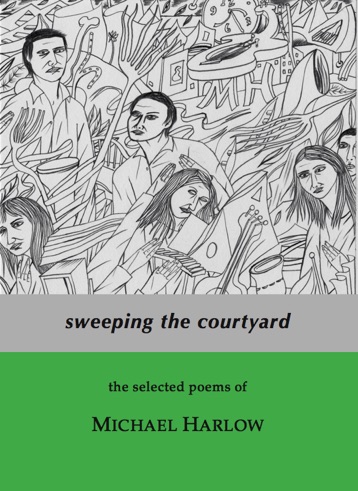
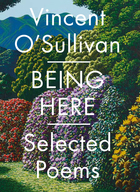
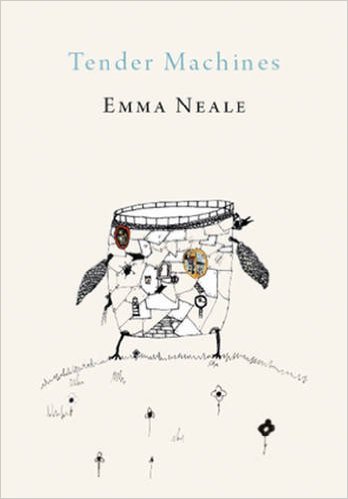
 NZ Poetry Shelf