Poem Friday: Dinah Hawken’s ‘Stone’ – Its window catches any number of lights


Stone


Stony this, stony that. They are cold

today, these stones on the desk.

Stone cold. Stone blind. Stone deaf.

Heart, reception, stare, silence.

They remember the slingshot.


It is said he is a man to reckon with.

He hasn’t spoken to his son for years.

It is said that words will never hurt you.

‘To be hard in hard times,’ he announces,

‘we must build an expressway like an arrow


through the quiet heart

of your coastal town.’ Cold facts

say one thing, cold politics another.

We remember the ballistic missile.

The falling debris and the striking edge.


© Dinah Hawken Ocean and Stone Victoria University Press, 2015


Author bio: Dinah Hawken is one of New Zealand’s most critically acclaimed poets. Born in Hawera in 1943, she trained as a physiotherapist, psychotherapist and social worker in New Zealand and the United States. Most of the poems in her award-winning first collection It Has No Sound and Is Blue (1987) were written in New York in the mid-1980s while she was studying at Brooklyn College and working with the homeless and mentally ill. Her two most recent books, One Shapely Thing: Poems and Journals (2006) and The Leaf-Ride (2011), were both shortlisted for the New Zealand Book Awards. Dinah was named the 2007 winner of the biennial Lauris Edmond Award for Distinguished Contribution to Poetry in New Zealand. She lives in Paekakariki.


Note from Paula: This poem is in Dinah’s new collection just out from Victoria University Press. It is an utterly beautiful book in every detail (the feel of the pages, the choice of font, the simplicity of the cover and of course the billowing beauty of the poems themselves. I have been a Dinah-Hawken fan for a long time. I remember the pleasure of writing a long essay on Small Stories of Devotion as part of my Masters degree. There has been a sustaining chord between Dinah’s work and my writing since those far-off days. In part it is to do with the grace, the elegance, the economy, the lyricism. In part it is to do with the sumptuous view that settles as you open the window of the poem. In part it is the curious self that questions the world and the way we do things.

This poem is a thing of beauty, and it draws upon all the things I have detailed above. There is the lyricism that builds out of stress, meter and repetition (‘Stone cold. Stone blind. Stone deaf.’) There is the way a thing (stone) shakes with life and possibility. There is the way, with that small frame of the window ajar, we fall upon the beauty of an object (a stone) and then fall away to the hurt we inflict upon each other — at the level of the individual, the level of a town, the level of a nation. It really is the kind of poem that needs to speak for itself, to shimmer on the page in its own marvelous way. Its window catches any number of lights.


Victoria University Press page

NZ Book Council page

Auckland concert launch of Small Holes in the Silence CD – I’ve heard a few tracks and they’re tremendous

Manhire Auckland Concert flier

‘The approach taken by Bill, Norman, Hannah and Colin has been one that seeks to marry the words and music as seamlessly as possible. Performances include readings of the poems by Bill, sometimes accompanied by an anecdote or brief explanation to illuminate the poem’s genesis followed by performances of the poems as songs. Hannah’s nuanced interpretation of these words is complemented by Colin’s obligatos and solos and as a trio (with Norman at the piano) the three make delicate music that draws from European jazz, from the folk traditions of Great Britain and New Zealand, and from popular song.’

Bill Manhire (narrator)
Hannah Griffin (voice)
Norman Meehan (piano)
Colin Hemmingsen (clarinet,bass clarinet, saxophone)
Blair Latham (clarinet, bass clarinet, saxophone)
See details of the rest of the Chamber Music tour here

Poetry Shelf review: Johanna Aitchison’s Miss Dust – Simple, everyday cores of truth that have as much to do with how you feel the world as how you see the world

8507862    johanna-aitchison-for-web


Johanna is a poet who was living in Palmerston North (quite a hub of poetry activity!) but currently in Iowa. I haven’t read her debut chapbook from Pemmican Press, Oh My God I’m Flying (1991), but I really loved her second collection, Long Girl Ago (Victoria Press, 2007). The poems felt fresh, playful, finely crafted, and surprising in the little revelations, particularly in the poems that placed little frames on Japan. The book was shortlisted for best book of poetry the following year. Johanna’s new collection, Miss Dust, was recently released by Seraph Press. It is a collection in two parts with many bridges between, and the freshness, the economy and the diligent craft remain a vital feature.
What catches me with these new poems is the heightened degree of surprise. This is poetry tilted on its axis. The first section is devoted to a sequence that gives life to Miss Dust. When read together, the section forms a long narrative poem, or perhaps you could say, a long character poem in pieces. In trying to liken the startling effect of reading this life, I came up with a hybrid analogy: it is like an Eleanor Rigby portrait meets a Salvador Dali painting meets a dislocating dream state meets a short film by Alison Maclean meets Edward Lear meets a veiled memoir.

The idea of dust is ephemeral — it leaves traces and smears, it veils and it clouds. Perfect word for a character that hides behind tropes, white space and poetic jump cuts. The tropes are borderline surreal (‘The curtains of her house are ash’). At dinner with her online date, he ‘ordered for her the dark.’ Yet even though things are strange, it is the effect of the bridges and the gaps that augment the mood, the portrait, the arc of a life. Take ‘Miss Dust and the Affair.’ The little leaps from one thing to the next, from one action to the next, miss the gritty details that might pepper confession, exchanged story. The poem is mysterious and haunting, but if you lift out the stepping stones (that occur on other occasions throughout the book) you get a terrific story of love lost: affair kiss lips lines waves rocks cheeks. That story is the undercurrent of the poem, hiding in the dust. Miss Dust, herself, would sum up the undercurrent with two words (‘black heart’), words that crop up in a number of the poems.

The movement between things is also surprising or disconcerting in the poems and feeds into the crucial threads of loss and love and life. In ‘Miss Dust makes a promise to her black heart,’ every line seems to offer a new twist —  the way the dreaming mind takes the ordinary and then skews it to show a deep-seated feeling pulsing through.


Here is the cure: sitting

on someone else’s carpet,


she makes herself a promise,

with the help of a chisel


and a block of A4 refill.

She chips out a beach scene


three streets away, hammers in

stones that warm or cool


You can’t just read this poem and walk away. It holds you tight as Miss Dust walks into the beach scene and ‘lowers the plunger/ onto one more set of grounds.’ There is that jarring kink between the scene carved (hope, therapy, cure) that catapults the black heart to elsewhere and the chore of making coffee. For me, the word ‘grounds’ flicks and shifts. Yes, the coffee is ground (the daily chore/grind) but also, like the beach scene, ground is another place to lay down roots. To tend damaged roots. Soil, black like the black heart. A single word, and you can set up camp for hours.

I don’t know of a sequence in New Zealand poetry quite like this (maybe I got whiffs of the early surrealness of Gregory O’Brien). Reading and lingering in the half light of Miss Dust, is utterly moving as you fall between the gaps of her life.


The second half of the book is not Miss Dust but there is a similar degree of surprise, little echoes that seem familiar (the half house), the dislocating and then relocating pieces, the way nouns and verbs startle (‘I’m starting to skin your loneliness Miss Shoulder’). There is a stunning Japanese poem, ‘Jun,’ that pulls you back to the previous collection with its final, breathtaking stanza.


one of the saddest things i did in japan was to teach to jun’s photo

on his empty desk i asked the students to count the students

in the class the students said do we count jun


Johanna has delivered a new collection that never lets the dust settle (excuse the pun). Each poem reproduces a glorious jittery, shimmery movement between things, between actions and between things and actions. At the core of that movement: feeling. Yes, you enter a world that is, at times, a little like the bewildering jumps and turns of a dreamscape, but just as with the dream, you fall upon cores of truth. Simple, everyday cores of truth that have as much to do with how you feel the world as how you see the world. I loved this collection.


Seraph Press page

do like this poem by Ashleigh Young posted on The Spin Off’s Friday Poem

a regular feature at The Spin Off  … Friday is Poetry Day!

Ashleigh’s poem here

Poetry Shelf review: Jennifer Compton’s Mr Clean and The Junkie – a fabulous read – the kind of book you devour in one gulp


large_cleanjacket   large_cleanjacket   large_cleanjacket   large_cleanjacket

Jennifer Compton, Mr Clean & The Junkie Mākaro Press, 2015


Jennifer Compton’s new poetry collection, Mr Clean & The Junkie, is a fabulous read – the kind of book you devour in one gulp. It is a long narrative poem in four parts with a coda. Each section is written in couplets – shortish lines that deliver the perfect rhythm for the occasion. This is a 1970s love story set in Sydney (and briefly NZ), yet it is a love story with a difference. It reminded me a bit of Pirandello’s play Six Characters in Search of an Author, in that the stitching is on show — how you tell/show the story, along with the choices you make, is as much a part of the narrative as plot, characters and so. The difference here, though, it is like a poem in search of a character in search of a film director in search of character in search of a poem. Self-reflexive behaviour on the part of authors has been done to death in recent decades, so it has the potential to appear lack lustre. Not in this case. I loved the way the poetry is a series of smudges. A bit like the way life imitates cinema as much as cinema imitates life.

I spent ages on the first page. It got thoughts rolling. I loved the voice. I loved the intrusion of the director (we figure that out as we read) and I loved the way I kept putting the poem in the role of the camera (long shots to gain wider perspective or distance, tracking shots, surprising angles, refreshing views) or the editing suites with jump cuts and smooth transitions. Or sitting back and admiring the composition within the frame. Or tropes. The slow reveal.

The two main characters (My Clean and The Junkie) are definitely in search of flesh and blood, yet you can also see this as genre writing – a narrative poem that is part thriller, part whodunit, part crime writing. Then again it is part feminist critique and part postmodern explosion.


Here is a sample from the first page:


Our hero is discovered sleeping.

We find him as the camera finds him.


Our hero is dreaming of the white mouse

cleaning his whiskers in extreme close-up.


As he dreams we snoop about his habitat.

Everything is there for a reason and we will


see it from another angle before we reach The End.

I imagine ambient sound during the credit sequence.


The mouse begins to run the wheel because

the wheel is there under his paws.


The slow zoom out reveals the wheel is in a cage,

of course.


And fade to the floor-to-ceiling, slatted blinds,

chocked ajar,


looming over our man asleep on his futon.

What do they look like? Bars.


The writing is tight. The plot pulls you along at break-neck pace and then stops you in your tracks as the director’s voice pulls you out of plot and character with wry stumbling blocks.  Little flurries of sidetracks. Or how to proceed? The central idea’s beguiling (poem version of a film version of a love story), the dry humour infectious (after a curtain is pulled back to reveal a spectacular view of Sydney’s Harbour Bridge and Opera House: ‘If you’ve got it/ flaunt it.’). But there is poetry at work here. It is there in the cadence of each line, the end word and the rhythm. It is there in the use of tropes that arch across the length of the book in little delicious echoes. The caged mouse on the wheel stands in for the symbolic cage of the hero (his father’s expectations and life choices). Most of all, however, the poetry sparks and flicks in the white space; the bits that are left on the editor’s floor or the angles that the director chooses not to show. Things are hinted at. Significant events that give flesh to character are caught within a line or two. That white space, that economy, is what gives this long poem its magnetic pull.

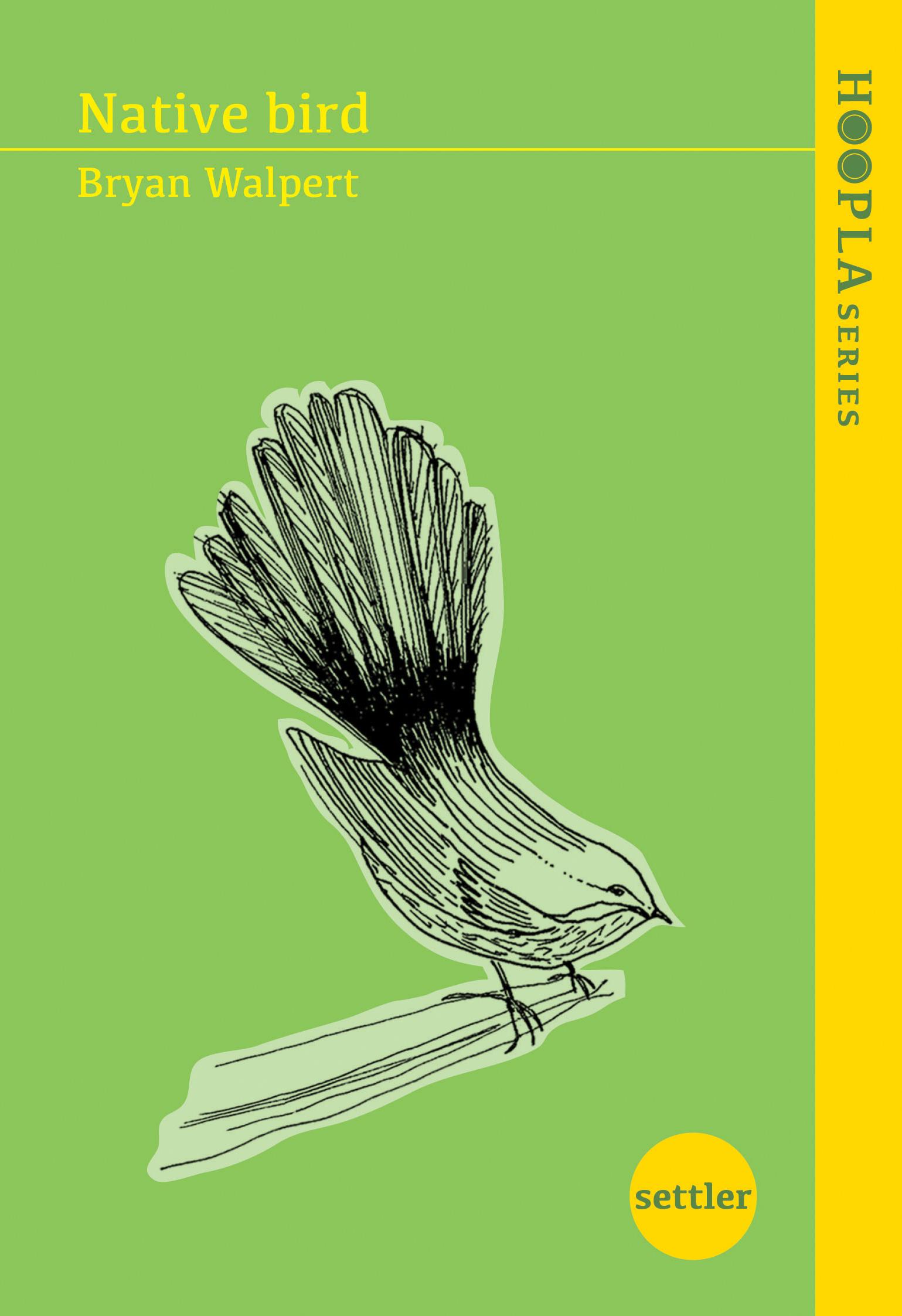
The collection is released as part of Mākaro Press’s 2015 Hoopla series. The beautifully designed books share design features and size, and include a new poet, mid-career poet and late-career poet. The other poets this year are: Carolyn McCurdie (Bones in the Octagon) and Bryan Walpert (Native bird). Jennifer is an award-winning poet and playwright who has lived in Australia since the 1970s. She has won both The Kathleen Grattan Award for Poetry (This City, Otago University Press, 2011) and The Katherine Mansfield Award.

Reading Mr Clean and The Junkie is entertaining, diverting, challenging, laughter inducing. How wonderful that a poetry collection can do all of this. I loved it!

Poem Friday: Emma Neale’s ‘Origins’ … At the core, heart.


Origins


When my father made love to my mother

and their salts and foams seethed and lifted

so that a child washed up on their tides,

perhaps they held each other

in an old rotting villa with cracks and gaps

that let the rooms’ winter breath

unravel along the street

like spider silk adrift on the air.


Perhaps outside that house

an untrimmed, straggling macrocarpa

tossed in the wind like a woman in fever sheets

and the clouded sky came close and tight

as a fist screwing a lid on a jar

while nearby the city’s river cried deep in its bed,

birds circled but found they couldn’t alight;

as a chill hide of questions

grew a stubborn lichen

across the corroding, rented roof.


For there are days when the human heart

feels like spit rubbed in mud,

the mind a junk room

of broom handles and wheel-less prams,

must-stink chair nobody will sit in,

little black fly heads

sprinkled in a corner web,

ear bones of vanished mice,

single bits of faded jigsaws,

carpet littered with broken envelopes

addressees illegible,

and even when love creeps close

over the slanting floorboards,

sorrow drifts in with the smell of snow

clustered on its skin.


© Emma Neale

Originally printed in Landfall; appears also in Tender Machines (Otago University Press, 2015).

Author bio: Emma Neale works as an editor. On alternate years, she runs a one-semester poetry workshop at the University of Otago. She has published five novels and five collections of poetry, the most recent of which is Tender Machines (Dunedin: OUP, 2015).

Note from Paula: Usually in my Friday poem slot I have invited poets to write a note about their poem and I have added my own thoughts. Some poets are happy to provide sideways anecdotes or points of origin for their poems; others prefer to let the poems speak for themselves. I have no dogmatic stance on either option. Notes on poems can be utterly fascinating and provide unexpected roads into your reading. I don’t think they ever shut a poem down — as readers, when we press a poem’s start button, anything can happen. So I have decided to make the ‘note’ aspect of my  Poem-Friday feature flexible – taken up on a case by case basis.

This poem stalled me. It is the sort of poem I love to write about because it engages every part of my body — my eye, my ear, my heart and my mind. A poetry coup. Yet I wanted the poem to stand in its off-white space on the screen – shimmering, flickering on a cerebral and aural scale. Without my commentary. Intruding static. Yet I can’t help myself. Just a tad. I adore the loving craft of each line, the words and word connections that catch you by surprise, the surprise upheld like an internal beat, the way physical detail judders and then sets you off on memory tangents. At the core, heart.

This poem is the first poem in the book. Read it, and then you can’t wait to devour the poems that follow. Within the next weeks I will post a review.


Cleaning my study, five wine boxes to unpack and a parcel that gives me goosebumps

photo

Today I am clearing my study ready to start writing a book on New Zealand women’s poetry. I am working my way through deadlines (almost done). I have finished my astonishing visit as Writer in Residence at Fairburn School in South Auckland. Still so many books to review and share here. Interviews to do. Friday poems to kick start again.

Thanks to Chris Else, I have borrowed his collections of Landfall, Sport and Takahe before they moves on to a good home. Five wine boxes full — what discoveries will I make within their pages? It is so very exciting and so very helpful when I am not attached to a university. I am full of gratitude.

Then today the most lovely surprise package from Laurence Fearnley who had discovered a collection of poetry books in a second-hand bookshop in Dunedin. I have neither of these books, beautiful much-loved editions that I will treasure. I got goosebumps as I held them. Again I am full of gratitude.

It makes me feel I am part of a very supportive writing community.

I face this project that I am about to start on Monday (full strength) with a mix of nerves, terror, pleasure, doubt, excitement — the way once you start reading and writing anything can happen as you traverse the unexpected, the unfamiliar, the wayward and the illuminating.

I can’t wait.


Going West Festival: The Poetry of Place, with Paula Green, Kerry Hines & Leilani Tamu

I loved having this conversation!

booksellersnz's avatar

pp_kerry_hinesPaula Green’s NZ Poetry Shelf is a blog I pop in on regularly. Green claims that she only writes about poetry that she enjoys, which makes her reviews a breathe-easy and pleasurable read. She reliably sniffs out great local poetry, so my interest was roused when she announced that both session guests, Kerry Hines (right) and Leilani Tamu (below), had been subjects for her blog. Hines and Tamu are very different writers. But Green expressed that both drew uncannily similar responses in her reviews. As if to echo the uncanny, when asked to read from their collections, each chose poems with a titular ‘beach’. In both cases, the poems were atmospheric, and anchored to place.

Concept of place features heavily in both writers’ work. It is discussed that place can be temporal as well as spatial, and that place is often about people, politics, and the memories people have of…

View original post 158 more words

Massey University Poetry News

Massey poets on a winning streak


Two Massey University poets from the School of English and Media Studies are on a winning streak, with one shortlisted for a top international prize and another taking out a national poetry award.


Dr Jo Emeney                                          Janet Newman


A poem by Master of Creative Writing student Janet Newman has won the Open category of the New Zealand Poet Society’s 2015 International Poetry Competition.

Ms Newman says her poem, Biking to the Manawatū River, evokes the natural beauty as well as artificially transformed features of the environment. Judge Harvey Molloy said her poem shows “great focus and restraint.”

“Through description we see what might glibly be called our ‘environmental impacts’, but there’s also a personal, subjective mind present in ‘leaves like curled hair’ and roots ‘wrenched up like memory’. Nothing here is overstated or forced and yet an atmosphere of understated disquiet pervades – there’s violence at every turn,” he said in his report.

Ms Newman is nearing completion of her degree, which she has worked on for the past two years. She has been writing poetry for a number of years, and is working on a collection of new poems, as well as researching the eco-poems of New Zealand poet Dinah Hawken, for her thesis.

Another Master of Creative Writing student, Gail Ingram, earned a Commended award for her poem Once Were Elvers.

The New Zealand Poetry Society was founded in 1973 by Wellington writer Irene Adcock, and will host a poetry conference in Wellington from November 13 – 15.

Auckland-based poet and creative writing teacher Dr Johanna Emeney has made the shortlist of 50 for the Montreal International Poetry Prize from some 2,000 poems entered from around the world.

The winner will be announced in early December. She and Associate Professor Bryan Walpert, who teaches creative writing at the Manawatū campus, were both selected for the long list of 70 announced last month.

This year’s is the third prestigious biennial award, worth C$20,000 (NZ $21,500).

Dr Emeney’s poem, There will be no more horses here, will be published as part of the organisation’s anthology, and is already available to read and as an audio recording on its website.

She recently gained her PhD in Creative Writing on medical language and themes in poetry, and hopes to publish a collection of poems, titled Family History. The poems are about her mother, and were written as part of her doctoral thesis.

This year’s Montreal Prize judge is Irish poet, Eavan Boland, one of Dr Emeney’s favourites. “Having taught the poetry of Eavan Boland to many classes of sixth form students in the UK, I get to experience the fantastic feeling of knowing that she’s holding my poem in her hands and reading it. That’s crazy!”

The Montreal Prize publishes the top 50 poems of each competition in its Global Poetry Anthology Series with Vehicule Press. Its website says the competition is; “committed to encouraging the creation of original works of poetry, to building cross-national readership and to exploring the world’s Englishes”.

Listen to Dr Emeney read her poem on the Montreal International Poetry Prize website here.

MEGA-READING AT OGH LOUNGE 23 SEPTEMBER 5.30-7 PM

ALL WELCOME!

LOUNGE #46 Wednesday 23 September
Old Government House Lounge, UoA City Campus, Princes St and Waterloo Quadrant, 5.30-7 pm

Featuring work in progress by the Masters of Creative Writing class of 2015:

Caroline Barron
Ruth Bayley
Sarah Costelloe
Stephanie Davidson
Jacqui Hammond
Harley Hern
Ann Neville
Rachel O’Connor
Juliet Robieson
Tom Romeo
Phill Simpson
Dianne Starrenberg

Free entry. Food and drinks for sale in the Buttery. Information Michele Leggott  m.leggott@auckland.ac.nz  or 09 373 7599 ext. 87342. Poster: http://www.nzepc.auckland.ac.nz/events/lounge46_poster.pdf

The LOUNGE readings are a continuing project of the New Zealand Electronic Poetry Centre (nzepc), Auckland University Press and Auckland University English, Drama and Writing Studies,  in association with the Staff Common Room Club at Old Government House.

LOUNGE READINGS #45-47: 12 August, 23 September, 21 October  2015

***