
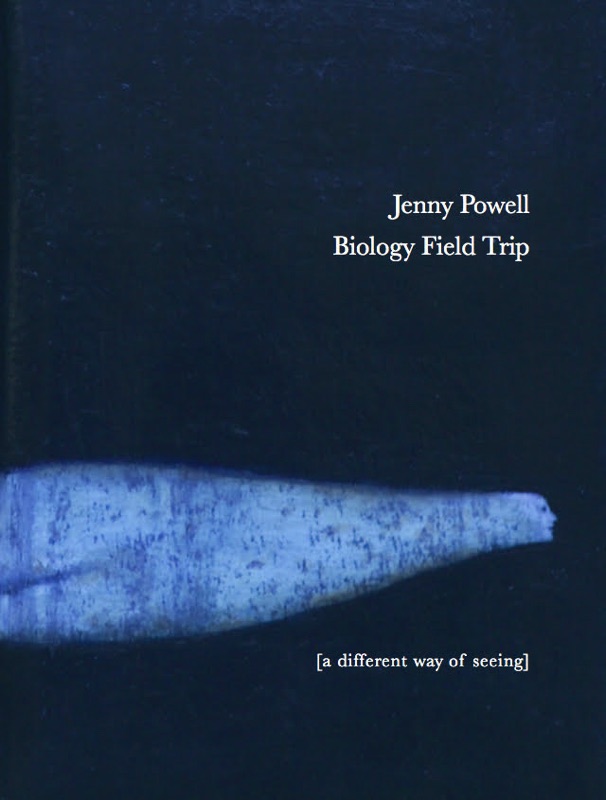
Biology Field Trip
Jenny Powell
Cold Hub Press, 2026
Cold Hub Press page
Toroa Albatross Egg Sitting
Before you are out
you are in me like breath,
in me like wind and sea.
With an opening too small
for exit, I will hold you
in my lightness.
Jenny Powell
Jenny Powell’s new poetry collection, Biology Field Trip, is a lyrical gathering, an ebb and flow symposium, word by precious word, with light and shadows, with vision and envisioning, certainty and uncertainty, blind spots and beauty scenes, with the power of verbs, the doing and being, the gifts of nouns, the physicality of place and occasion. As the title of one poem suggests: ‘No seeing but in closeness’. And we are drawn in close, we are drawn in very close to experience this terrific collection.
A reading
‘Optic Nerves’
‘Rafters’
‘A Different Way of Seeing’
A conversation
Under mountain divides under dammed rivers
under mounting debt under hard labour
under worked to your bones under bankruptcy
under overworked flocks of undertakers
under social upheaval under critical protest
under secret surveillance under constant reprisals
under circling cyclonic anxiety
under spewing volcanic uncertainty
under landslide delays under floods of dismay
underneath the unbuttoning of us
our grief
Jenny Powell
from ‘Unbuttoning’
Paula: Your new collection is an extraordinary navigation of “a different way of seeing” and it moved me immensely.
Before I explore what I love about your book, a key question: What matters to you when you write a poetry book? When you write a poem?
Jenny: To write a poem I need an initial jolt or spark. Something has to matter enough to trigger my imagination and thinking. The ‘spark’ arrives in many forms, such as hearing that Hoiho (little blue penguins) arrived at their colony in rafts. My visual imagination flicked to wooden rafts at sea navigating the waves. How did the rafts stop for penguins to get on? Was it like a bus stop, where small groups gathered and signalled the paddlers to slow down for entry? And so it went on.
In Biology Field Trip some events were a matter of happenstance, such as the arrival of a Weddell seal, just down the road from where I live. When Kay McKenzie Cooke and I were poetry in Southland, a Sperm whale had washed up along from Aparima Riverton. We went to visit it.
Biology Field Trip, and previously Meeting Rita, have definite themes. If I write this kind of collection my creative consciousness seems to be on alert, picking up possible material as I go about my everyday life.
Paula: What is important to you when you read a poem by someone else? What poetry books have travelled with you, vitally, essentially?
Jenny: Ah. I have just finished the ‘Poetry and Music’ course at uni. There were many poems of wonder in the course, but my current favourite is ‘The Last Quatrain of the Ballad of Emmett Till’ by Gwendolyn Bookes. On the surface it is a quiet, reflective poem. In reality it definitely isn’t. There is nothing flashy or overwritten, yet whole lives, endless love, and political chaos are contained in this wonderfully constructed short poem.
I tend to hold dear the work of people rather than specific volumes. Hone Tuwhare’s poetry has remained with me since teenage years. My aural memory bank responds to the rhythmic lilt of Dylan Thomas. I keep at hand Pascale Petit, Blanca Castellón, Alejandra Pizarnik, Ted Hughes, Anne Carson. There are too many to mention.
royal jlly
vnom
wax
propoli
from ‘Without Bees’
Paula: Did anything in particular spark the arrival of this collection?
Jenny: My son said to me that he didn’t think the world would still exist by the time his daughter was an adult. This is an unbearable thought. I know he is not the only person to suffer such anxiety. As a mother and grandmother, a poet and person, I had to respond in the best way I knew. Generally, I’m quite introverted and look inwards (too much), but during the writing of Meeting Rita I developed a different way to see the outside world, to write about the detailed view she was depicting in her art. This focused external gaze, combined with my own way of seeing and interpreting, formed the base for Biology Field Trip.
This way seeing offered in the collection is also my responsive gift, acknowledging people who, during my life to date, have shown me unexpected kindness. I wanted to encourage the importance of this. I recall a bus driver who once who gave me a free ride and conversation when I most needed it. In my twenties I was generally broke. Someone I knew turned up one day and gave me $500. No strings attached. Then there was a lovely person who sorted out transport and carried my suitcase when a taxi failed to arrive. Such kindnesses can be as simple as standing beside someone when it matters. Human acts of interconnectedness sustain us, just as particular people do. Interconnectedness of our whole ecological system sustains us, literally and emotionally.
paper boats
whirling in wind
rainforest cloud
of blue-winged moths
fish leaping
through hooks of light
shower of thoughts
written in shorthand
from ‘Drizzle of Birds’
Paula: I am drawn into the unpacking of vision and visibility, that is at times misty misted mysterious. It feels like an utterly inventive way of getting political, of moving through uncertainty and shadows to grief and concern at endangered nature, whether birds or bees or swans. Tell me about getting both political and poetic in this collection. And maybe personal.
Jenny: It is my version of political, although I didn’t notice it until the collection was complete. As a species we survive through interconnectedness with our natural world. How is the necessity to sustain this not immediately apparent to our leaders? My protest rises from darkness in the first poem and ends with an albatross blessing in the final poem; an actual message delivered out of the blue.
I tried to reflect the diversity of wildlife through varied poetic form. I remained open to all possibilities when writing. There was a time when I became stuck with where to go. I had just seen the white ballet swans in Christchurch but couldn’t decide if I would write about them. What could be left to say? During a poetry lesson I asked a class of Year 9 students why the swans were called Mute swans. Their verbatim answers form part of the swan poems. That diversity of answers, for me, illustrates the necessary future diversity of thinking to keep us all on track. Compassionately.
I was initially worried that the wealth of writing opportunities presenting themselves around Dunedin would give the collection a ‘regional’ label. The intended reach of the poems is wider than that.
Paula: Your agility with words is symphonic. I love the repetitions, the lyricism, there is beauty in the lines that echoes the beauty in nature. Tell me about the musicality of the poems.
Jenny: When I left school I studied music, so it is not surprising that I hear poems in my head as I write. The older I become the more intensely it happens. In the process of writing a poem I read it aloud many times to establish a rhythmicality. In terms of structure there is quite a musical organisation of sections in a poem like ‘Every Particle Attracts Another’.
Paula: Living in West Auckland, with its history of devastating floods, was an acute point of connection for me to the floods in the book. I jotted down that word – connection –because the poems are rich in connections – amongst each other and with tendrils out in the world. It serves as a way of reconnecting. I have been musing on how motifs in the book are connection rich. Take mask or blind spot or an eye in a jar or the track or the stream. So many ways to speak of these. Do you have any key motifs? Connections?
Jenny: There was always going to be a recurrent strand of eyes and seeing. I didn’t plan other connections. They arrived like gifts. Young people’s different way of being. The water, and more water. Birds. Whales. Sea-life visitors to the city. Although I was trying to avoid wildlife death, during the years of writing Biology Field Trip it naturally occurred in life cycles and through human actions. I wrote about both as they happened.
Home,
my little feather cloud,
is here.
Cradle of land before the sky,
nest of learning before the sea.
Today we begin
with the language of wind
slant of its talk, pitch of its call
shout of temper.
from ‘Nest of learning’
Paula: I keep asking poets this question and it seems especially vital alongside your book. What matters to you in this ravaged and tilted world with its precious glints of hope?
Jenny: I think we must be sustained by hope. It might involve a different way of seeing for some people. In practical terms, focusing on a single leaf, is enough to begin the process of opening the shutters of the self. Our own reverent responses to the world around us do make a difference. And small kindnesses to others may seem irrelevant in the big picture, but they have the capacity to be repeated and increased until perhaps this humane practice of caring becomes our expectation in personal and political life.
Paula: Choose a poem from the collection for the reader of our conversation to linger on. Why this poem?
Jenny: I choose ‘ Different Way of Seeing’. It is a poem that thoroughly embraces a different way of seeing from the poet and the human subject. If the man on the couch hadn’t bothered to phone DOC about the creature he noticed when checking a surf camera, we would never have developed our knowledge regarding the world’s rarest whale. As the man on the couch said in a local newspaper interview, he thought DOC would already have known about it, and he didn’t want to annoy them. There were many things going on for the man but in the end as he said, “I actually put my big kid pants on and rang it in.” What a hero. I’ve recorded the poem so you can hear its chant, its language consideration, and it is my homage to the man and his different way of seeing.
A DIFFERENT WAY OF SEEING
A whale washed ashore at the place of shining water
could be the world’s rarest.
A whale washed ashore at the place of shining water
could be a male, spade-toothed.
The whale washed ashore at the place of shining water
was first seen by a man on a couch, sipping his tea,
yearning for the sea.
‘World’s rarest whale found by man having cuppa on couch.’
Words trouble the whale unable to write or type
alterations. Anatomy of flippers ill-equipped
for holding a pen or cup of tea. Or coffee.
The whale’s dictation too advanced for artificial intelligence.
Or people.
The place of shining water or shining river, also known
as the place of spring tides, also known as Taieri Mouth,
once known as Taiari, is where the whale was first seen
by the man, and the whale, having a cuppa,
raises the question: why he would surface for comfort
on a fabric couch?
The man on the couch, sipping his tea, yearning for sea,
has noticed, at the place of shining water or spring tides,
seagulls looking like surfers, surfers looking like boats,
logs like dolphins, porpoises like whales and the man on his couch
unsure of what he was seeing, reported the possibility
of a porpoise, or a whale.
‘The Dunedin man was checking a live stream of swell
in hopes of going out for a surf.’
Mouth of the Taieri River is not a stream.
Life gathered from inland basins, active faults,
upfolds, downfolds, ranging ridges, gorged valleys
tributary lakes, jostles onwards in gravity’s urge
until bodily contents surge in suicide, fresh
water identity lost to ocean’s liberty.
No wonder the whale has trouble with words.
Dead in the water before he arrived, beaked spade-toothed whale
Was, on social media not dead but unalive.
Unalive, as if a softness encompassed the trauma to his head.
Unalive, as if it absolves us
from any connection with death.
Dead Sea, lowest part of Earth’s surface
now unalive. Below sea level, we are not dead certain
of measurement, we are unalive certain.
Dead heat in a high jump final, dead heat in Olympic
freestyle, dead heat in the Great Northern Steeplechase
dead heat in the Oxford Boat Race dead heat in the polls
all null and void. Invalid.
‘A breakthrough in the study of the world’s rarest whale
was found by a Dunedin man.’
At the place of shining water or spring tides
where Taieri River surges to sea,
the man on the couch did not locate
a breakthrough in a study, did not intend
any momentary fame, did not knowingly discover
the world’s rarest whale and did not forecast
such interest in life
through death.
A whale washed ashore at the place of shining water
was the world’s rarest.
A whale washed ashore at the place of shining water
was a male, spade-toothed.
The whale washed ashore at the place of shining water
was first seen by a man on a couch, yearning for the sea.
Jenny Powell
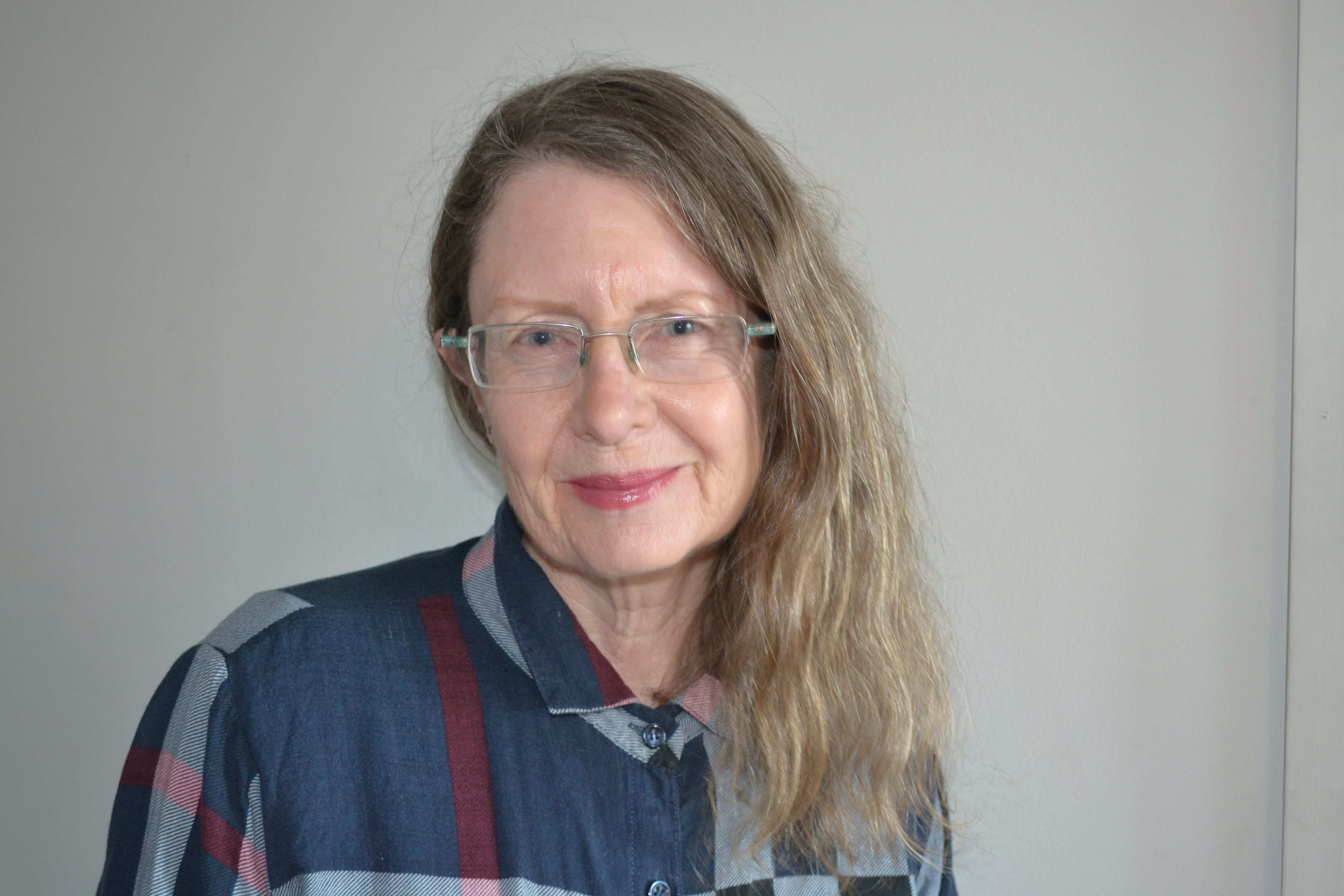
Jenny Powell lives and writes in Ōtepoti Dunedin. She is well published nationally and internationally. Her poems have been finalists in the Aesthetica Creative Works Competition, the UK Mslexia Poetry Competition, the UK Plough Poetry Prize, the Wales Poetry Prize, the Lancaster monologue competition, the Dunedin Theatre Awards and has work has been nominated for the Pushcart Prize and the Best of Net Prize. .
Powell is the City of Literature South D Poet Lorikeet. In this role she facilitates and promotes poetry projects and workshops throughout the community. . Outcomes have included posters, decals and a series of vibrant community publications in conjunction with the City of Literature.
Biology Field Trip [a different way of seeing] is her latest poetry collection and is published by Cold Hub Press.

