Tag Archives: Poetry Shelf conversations

Poetry Shelf conversation and reading: Jenny Powell

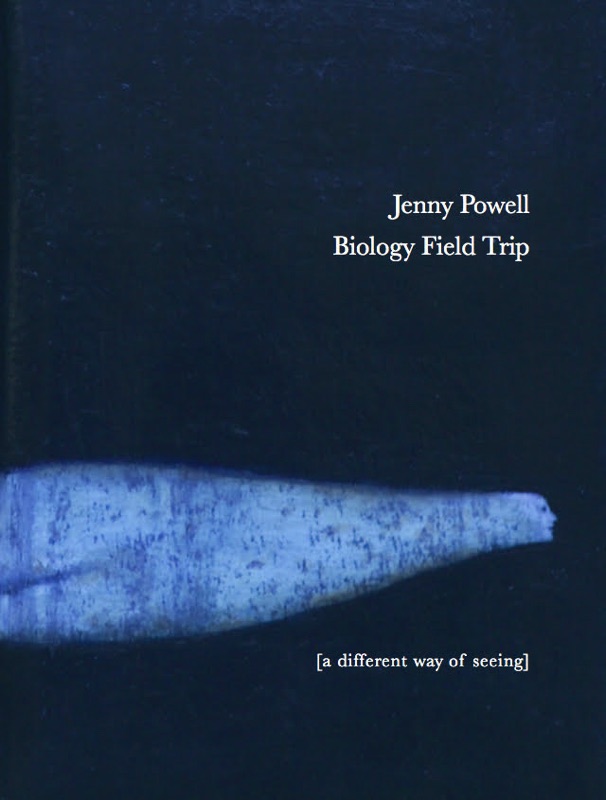
Biology Field Trip
Jenny Powell
Cold Hub Press, 2026
Cold Hub Press page

Toroa Albatross Egg Sitting

Before you are out
you are in me like breath,
in me like wind and sea.

With an opening too small
for exit, I will hold you
in my lightness.

Jenny Powell

Jenny Powell’s new poetry collection, Biology Field Trip, is a lyrical gathering, an ebb and flow symposium, word by precious word, with light and shadows, with vision and envisioning, certainty and uncertainty, blind spots and beauty scenes, with the power of verbs, the doing and being, the gifts of nouns, the physicality of place and occasion. As the title of one poem suggests: ‘No seeing but in closeness’. And we are drawn in close, we are drawn in very close to experience this terrific collection.

A reading
‘Optic Nerves’

‘Rafters’

‘A Different Way of Seeing’

A conversation

Under mountain divides under dammed rivers
under mounting debt under hard labour
under worked to your bones under bankruptcy
under overworked flocks of undertakers
under social upheaval under critical protest
under secret surveillance under constant reprisals
under circling cyclonic anxiety
under spewing volcanic uncertainty
under landslide delays under floods of dismay

underneath the unbuttoning of us
our grief

Jenny Powell
from ‘Unbuttoning’

Paula: Your new collection is an extraordinary navigation of “a different way of seeing” and it moved me immensely.

Before I explore what I love about your book, a key question: What matters to you when you write a poetry book? When you write a poem?

Jenny: To write a poem I need an initial jolt or spark. Something has to matter enough to trigger my imagination and thinking. The ‘spark’ arrives in many forms, such as hearing that Hoiho (little blue penguins) arrived at their colony in rafts. My visual imagination flicked to wooden rafts at sea navigating the waves. How did the rafts stop for penguins to get on? Was it like a bus stop, where small groups gathered and signalled the paddlers to slow down for entry? And so it went on.

In Biology Field Trip some events were a matter of happenstance, such as the arrival of a Weddell seal, just down the road from where I live. When Kay McKenzie Cooke and I were reading poetry in Southland, a Sperm whale had washed up along from Aparima Riverton. We went to visit it.

Biology Field Trip, and previously Meeting Rita, have definite themes. If I write this kind of collection my creative consciousness seems to be on alert, picking up possible material as I go about my everyday life.

Paula: What is important to you when you read a poem by someone else? What poetry books have travelled with you, vitally, essentially?

Jenny: Ah. I have just finished the ‘Poetry and Music’ course at uni. There were many poems of wonder in the course, but my current favourite is ‘The Last Quatrain of the Ballad of Emmett Till’ by Gwendolyn Brooks. On the surface it is a quiet, reflective poem. In reality it definitely isn’t. There is nothing flashy or overwritten, yet whole lives, endless love, and political chaos are contained in this wonderfully constructed short poem.

I tend to hold dear the work of people rather than specific volumes. Hone Tuwhare’s poetry has remained with me since teenage years. My aural memory bank responds to the rhythmic lilt of Dylan Thomas. I keep at hand Pascale Petit, Blanca Castellón, Alejandra Pizarnik, Ted Hughes, Anne Carson. There are too many to mention.

royal jlly
vnom
wax
propoli

from ‘Without Bees’

Paula: Did anything in particular spark the arrival of this collection?

Jenny: My son said to me that he didn’t think the world would still exist by the time his daughter was an adult. This is an unbearable thought. I know he is not the only person to suffer such anxiety. As a mother and grandmother, a poet and person, I had to respond in the best way I knew. Generally, I’m quite introverted and look inwards (too much), but during the writing of Meeting Rita I developed a different way to see the outside world, to write about the detailed view she was depicting in her art. This focused external gaze, combined with my own way of seeing and interpreting, formed the base for Biology Field Trip.

This way of seeing offered in the collection is also my responsive gift, acknowledging people who, during my life to date, have shown me unexpected kindness. I wanted to encourage the importance of this. I recall a bus driver who once who gave me a free ride and conversation when I most needed it. In my twenties I was generally broke. Someone I knew turned up one day and gave me $500. No strings attached. Then there was a lovely person who sorted out transport and carried my suitcase when a taxi failed to arrive. Such kindnesses can be as simple as standing beside someone when it matters. Human acts of interconnectedness sustain us, just as particular people do. Interconnectedness of our whole ecological system sustains us, literally and emotionally.

paper boats
whirling in wind

rainforest cloud
of blue-winged moths

fish leaping
through hooks of light

shower of thoughts
written in shorthand

from ‘Drizzle of Birds’

Paula: I am drawn into the unpacking of vision and visibility, that is at times misty misted mysterious. It feels like an utterly inventive way of getting political, of moving through uncertainty and shadows to grief and concern at endangered nature, whether birds or bees or swans. Tell me about getting both political and poetic in this collection. And maybe personal.

Jenny: It is my version of political, although I didn’t notice it until the collection was complete. As a species we survive through interconnectedness with our natural world. How is the necessity to sustain this not immediately apparent to our  leaders? My protest rises from darkness in the first poem and ends with an albatross blessing in the final poem; an actual message delivered out of the blue.

I tried to reflect the diversity of wildlife through varied poetic form. I remained open to all possibilities when writing. There was a time when I became stuck with where to go. I had just seen the white ballet swans in Christchurch but couldn’t decide if I would write about them. What could be left to say? During a poetry lesson I asked a class of Year 9 students why the swans were called Mute swans. Their verbatim answers form part of the swan poems. That diversity of answers, for me, illustrates the necessary future diversity of thinking to keep us all on track. Compassionately.

I was initially worried that the wealth of writing opportunities presenting themselves around Dunedin would give the collection a ‘regional’ label. The intended reach of the poems is wider than that.

Paula: Your agility with words is symphonic. I love the repetitions, the lyricism, there is beauty in the lines that echoes the beauty in nature. Tell me about the musicality of the poems.

Jenny: When I left school I studied music, so it is not surprising that I hear poems in my head as I write. The older I become the more intensely it happens. In the process of writing a poem I read it aloud many times to establish a rhythmicality. In terms of structure there is quite a musical organisation of sections in a poem like ‘Every Particle Attracts Another’.

Paula: Living in West Auckland, with its history of devastating floods, was an acute point of connection for me to the floods in the book. I jotted down that word – connection –because the poems are rich in connections – amongst each other and with tendrils out in the world. It serves as a way of reconnecting. I have been musing on how motifs in the book are connection rich. Take mask or blind spot or an eye in a jar or the track or the stream. So many ways to speak of these. Do you have any key motifs? Connections?

Jenny: There was always going to be a recurrent strand of eyes and seeing. I didn’t plan other connections. They arrived like gifts. Young people’s different way of being. The water, and more water. Birds. Whales. Sea-life visitors to the city. Although I was trying to avoid wildlife death, during the years of writing Biology Field Trip it naturally occurred in life cycles and through human actions. I wrote about both as they happened.

Home,
my little feather cloud,
is here.

Cradle of land before the sky,
nest of learning before the sea.

Today we begin
with the language of wind
slant of its talk, pitch of its call
shout of temper.

from ‘Nest of learning’

Paula: I keep asking poets this question and it seems especially vital alongside your book. What matters to you in this ravaged and tilted world with its precious glints of hope?

Jenny: I think we must be sustained by hope. It might involve a different way of seeing for some people. In practical terms, focusing on a single leaf, is enough to begin the process of opening the shutters of the self. Our own reverent responses to the world around us do make a difference. And small kindnesses to others may seem irrelevant in the big picture, but they have the capacity to be repeated and increased until perhaps this humane practice of caring becomes our expectation in personal and political life.

Paula: Choose a poem from the collection for the reader of our conversation to linger on. Why this poem?

Jenny: I choose ‘ Different Way of Seeing’.  It is a poem that thoroughly embraces a different way of seeing from the poet and the human subject. If the man on the couch hadn’t bothered to phone DOC about the creature he noticed when checking a surf camera, we would never have developed our knowledge regarding the world’s rarest whale. As the man on the couch said in a local newspaper interview, he thought DOC would already have known about it, and he didn’t want to annoy them. There were many things going on for the man but in the end as he said, “I actually put my big kid pants on and rang it in.” What a hero.  I’ve recorded the poem so you can hear its chant, its language consideration, and it is my homage to the man and his different way of seeing.

A DIFFERENT WAY OF SEEING

A whale washed ashore at the place of shining water
could be the world’s rarest.
A whale washed ashore at the place of shining water
could be a male, spade-toothed.
The whale washed ashore at the place of shining water
was first seen by a man on a couch, sipping his tea,
yearning for the sea.

‘World’s rarest whale found by man having cuppa on couch.’

Words trouble the whale unable to write or type
alterations. Anatomy of flippers ill-equipped
for holding a pen or cup of tea. Or coffee.
The whale’s dictation too advanced for artificial intelligence.
Or people.

The place of shining water or shining river, also known
as the place of spring tides, also known as Taieri Mouth,
once known as Taiari, is where the whale was first seen
by the man, and the whale, having a cuppa,
raises the question: why he would surface for comfort
on a fabric couch?

The man on the couch, sipping his tea, yearning for sea,
has noticed, at the place of shining water or spring tides,
seagulls looking like surfers, surfers looking like boats,
logs like dolphins, porpoises like whales and the man on his couch
unsure of what he was seeing, reported the possibility
of a porpoise, or a whale.

‘The Dunedin man was checking a live stream of swell
in hopes of going out for a surf.’

Mouth of the Taieri River is not a stream.
Life gathered from inland basins, active faults,
upfolds, downfolds, ranging ridges, gorged valleys
tributary lakes, jostles onwards in gravity’s urge 
until bodily contents surge in suicide, fresh
water identity lost to ocean’s liberty.

No wonder the whale has trouble with words.

Dead in the water before he arrived, beaked spade-toothed whale
Was, on social media not dead but unalive.
Unalive, as if a softness encompassed the trauma to his head.
Unalive, as if it absolves us
from any connection with death.

Dead Sea, lowest part of Earth’s surface
now unalive. Below sea level, we are not dead certain
of measurement, we are unalive certain.
Dead heat in a high jump final, dead heat in Olympic
freestyle, dead heat in the Great Northern Steeplechase
dead heat in the Oxford Boat Race dead heat in the polls
all null and void. Invalid.

‘A breakthrough in the study of the world’s rarest whale
was found by a Dunedin man.’

At the place of shining water or spring tides
where Taieri River surges to sea,
the man on the couch did not locate
a breakthrough in a study, did not intend
any momentary fame, did not knowingly discover
the world’s rarest whale and did not forecast
such interest in life
through death.

A whale washed ashore at the place of shining water
was the world’s rarest.
A whale washed ashore at the place of shining water
was a male, spade-toothed.
The whale washed ashore at the place of shining water
was first seen by a man on a couch, yearning for the sea.

Jenny Powell

Jenny Powell lives and writes in Ōtepoti Dunedin. She is well published nationally and internationally. Her poems have been finalists in the Aesthetica Creative Works Competition, the UK Mslexia Poetry Competition, the UK Plough Poetry Prize, the Wales Poetry Prize, the Lancaster monologue competition, the Dunedin Theatre Awards and has work has been nominated for the Pushcart Prize and the Best of Net Prize. .

Powell is the City of Literature South D Poet Lorikeet. In this role she facilitates and promotes poetry projects and workshops throughout the community. . Outcomes have included posters, decals and a series of vibrant community publications in conjunction with the City of Literature.

Biology Field Trip [a different way of seeing] is her latest poetry collection and is  published by Cold Hub Press.
Poetry Shelf conversations: Helen Rickerby

How to live through this

We will make sure we get a good night’s sleep. We will eat a decent breakfast, probably involving eggs and bacon. We will make sure we drink enough water. We will go for a walk, preferably in the sunshine. We will gently inhale lungsful of air. We will try to not gulp in the lungsful of air. We will go to the sea. We will watch the waves. We will phone our mothers. We will phone our fathers. We will phone our friends. We will sit on the couch with our friends. We will hold hands with our friends while sitting on the couch. We will cry on the couch with our friends. We will watch movies without tension – comedies or concert movies – on the couch with our friends while holding hands and crying. We will think about running away and hiding. We will think about fighting, both metaphorically and actually. We will consider bricks. We will buy a sturdy padlock. We will lock the gate with the sturdy padlock, even though the gate isn’t really high enough. We will lock our doors. We will screen our calls. We will unlist our phone numbers. We will wait. We will make appointments with our doctors. We will make sure to eat our vegetables. We will read comforting books before bedtime. We will make sure our sheets are clean. We will make sure our room is aired. We will make plans. We will talk around it and talk through it and talk it out. We will try to be grateful. We will be grateful. We will make sure we get a good night’s sleep.

Helen Rickerby, from How to Live

I am stuck at home, not doing author trips, not catching up with friends in person, never hanging out in cafes, so I’ve been doing email conversations with poets whose work I have loved. A couple have sublime new books out, but with others it was an excuse to revisit writing I have carried with me.

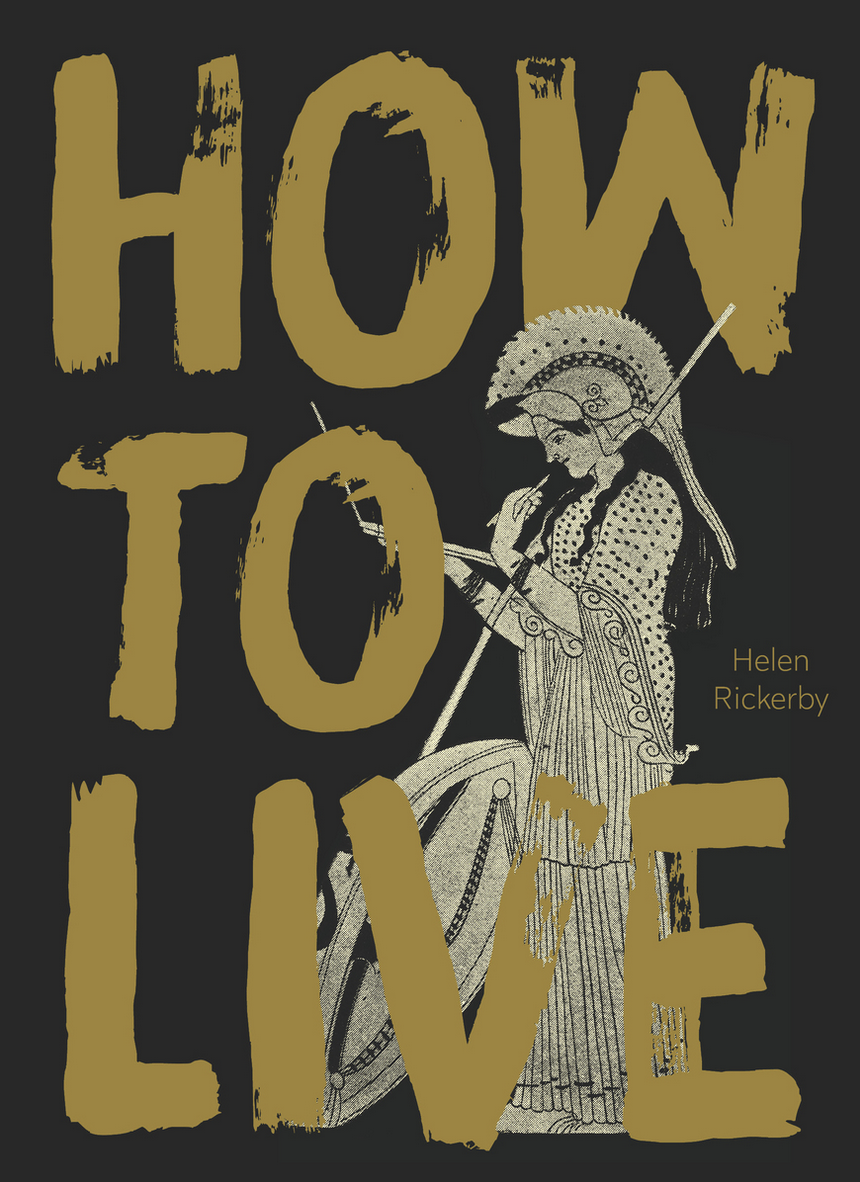
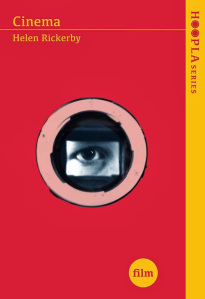
Last up in this series is Helen Rickerby. Helen is a writer, editor and publisher. She has published a number of poetry collections, including Cinema (Mākaro Press, 2014) and How to Live, which won the 2020 Ockham New Zealand Book Awards – Mary and Peter Biggs Award for Poetry (Auckland University Press, 2019). Helen was co-managing editor of the literary journal JAAM from 2005–2015 and single-handedly runs Seraph Press, the boutique poetry press.

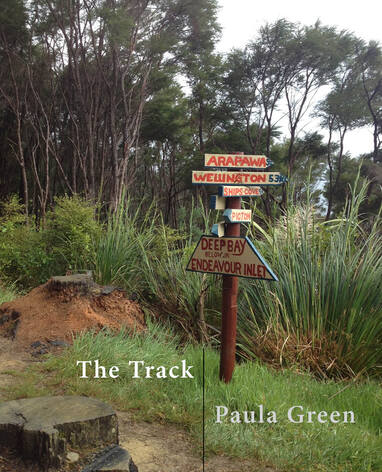
I have been a fan of Helen’s poetry for a long time, but she has also published a number of my own collections (The Baker’s Thumbprint 2013, New York Pocket Book 2016 and The Track 2019). I have loved working on each book with her.

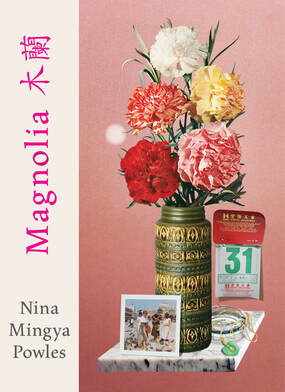
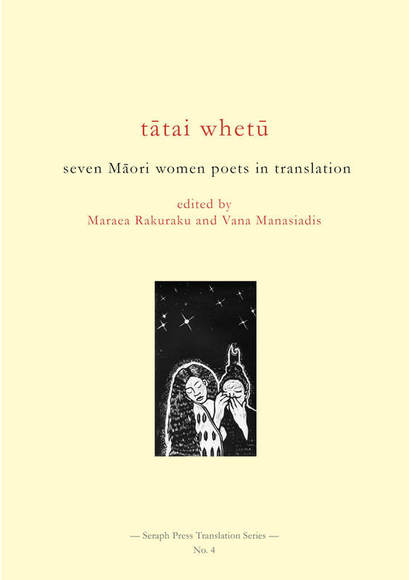
Seraph Press’s list of publications include some of my favourite poets in Aotearoa: Anna Jackson, Bernadette Hall, Nina Mingya Powles, Anahera Gildea, Vana Manasiadis, Helen Llendorf, Maria McMillan, Johanna Aitchison, Vivienne Plumb – plus the terrific anthology, Tātai Whetū: Seven Māori Poets in Translation (2018).

It has been such a pleasure to touch base with books and poetry in email conversations..

Paula: In these tilted and jagged times diversions are so important. For me, reading and secret writing projects are essential. So many sublime books are being published in Aotearoa and around the world at the moment, of all genres. What has helped you? Any books that have lifted or anchored or transported you? I can so identify with your words in Chris Tse’s new Auckland University Press book, Super Model Minority (‘these poems cut my heart before warming it’).

Helen: Yes, I’m also sticking pretty close to home just now, and while I am still seeing my friends, mostly in our own homes, I am also needing to find my joys near at hand. Over the last week while I’ve been finding a lot of comfort and joy, and also a bit of challenge, in creative non-fiction – particularly in books that could loosely be described as memoir, but which are much more. There’s something about the mixture of narrative, life, ideas and poetic writing (if not actual poetry) that’s my thing right now. Recent highlights include Joan Didion’s The Year of Magical Thinking and Blue Nights, Daniel Mendelsohn’s An Odyssey: A Father, a Son, and an Epic, Patricia Grace’s From the Centre and especially Deborah Levy’s autobiographical trilogy.

During last year’s lockdown a friend left a care package of books in my letterbox. One of the books was Real Estate, the third (red) volume in Deborah Levy’s trilogy. It’s kind of about her making a new life for herself after her daughters leave home, but it’s so much more than a memoir, as are the other two books in the trilogy. It’s poetic and philosophical and, collage-like, full of quotes from other works of literature that she’s having conversations with – I felt an affinity, it felt allied with what I’ve been doing in poetry in recent years. I read my way backwards through the trilogy, borrowing the second (yellow) volume, The Cost of Living, from a friend who lives downstairs and, as soon as we got to Level 3, buying the first (blue) book, Things I Don’t Want to Know, from the lovely Volume bookshop in Nelson (because no Wellington bookshops had it and I knew Volume could get it to me quickly, and I needed it immediately). And then when I finished that, I started reading them all again, forwards this time. I found them so calming, like the eye of a storm. I was finding everything a bit hard at the time, mainly in my head, and I would just take a little bit of time with these books and I could feel myself calming down. Even though her experiences were very different to mine, I loved the way in these books she kind of rises up above her life and looks down on it, and writes about it, from a calm height. It made me feel like I could do the same.

I confess to being someone who is looking for quite a lot of comfort in life and literature, but I also know that growth doesn’t usually come from comfort, and a bit of discomfort is really important. Super Model Minority is a fabulous book, and one that did at times make me feel uncomfortable. Some of the things he’s writing about are uncomfortable and even painful, and there’s definitely anger. But the poems make you think, and make you see and appreciate, and in the midst of it all there’s humour and hope and beauty. I’m always keen on some humour and hope and beauty.

Paula: Ah – now I am dead keen to read the Levy trilogy. And yes! That’s exactly what Chris’s collection does. And you do come away with the word hope.

I want to talk about how I love your poetry, but first, which poets would you choose to have conversations with (let’s say dead or alive, home or abroad). Poets who have affected your travels and engagements as a writer and a reader.

Helen: Hmmm, that’s a tricky question. I have a bit of a fear of meeting my heroes, in case it’s terribly disappointing, or they don’t like me (or I don’t like them), or we had a mediocre conversation. So much pressure! Also, quite a few of my heroes are women I don’t think I would get along with very well: Katherine Mansfield, Sylvia Plath, Virginia Woolf, George Eliot, etc… I also feel that if I really love someone’s work, I don’t necessarily want to talk to them about it, I wouldn’t want to break the magic. So I would be very nervous to talk to Anne Carson, for example, even though her work has been very important and inspiring to me in showing the breadth of what poetry can do. I was reminded today of the wonderful book-length poem Memorial by Alice Oswald today, and I would be interested in talking to her about that. While it was Heather Cristle’s The Crying Book, which is not strictly speaking poetry, that really got me, she is a poet I might risk talking to. I have had great conversations about poetry with poets who are my actual friends, perhaps particularly with Anna Jackson, who I’ve run a few conferences with, though we talk about other things too. From the past, Sappho would be very interesting to converse with, though we’d need to use some kind of translator. I would be intrigued to meet Byron, but it might not be poetry we’d talk about.

Paula: Ha! I never thought of that. Yes, I feel nervous when I review a book as that feels like a conversation that could go terribly wrong on my part. I want to navigate the paths, corridors, alcoves, wide open windows of a book and make discoveries. No interest in listing all the things a poetry collection doesn’t do.

What matters to you when you write a poem? What do you want your poem to do or be or feel or activate (I keep coming up with more and more verbs)?

Helen: I probably have as many answers to that question as poems I’ve written – possibly more! And what matters to me changes over time, and maybe changes back. But some things that come to mind are to capture something  – a thought, a feeling, an experience, the thinking through of an idea, an image, a memory. I want to communicate, but not too clearly or simply, I want to create layers and textures and possibly contradictions. I want the reader to get something out of my poem, but I don’t want them to necessarily be able to decode the whole poem. I don’t want to be able to decode the whole poem. I want the sound and language to feel right for the poem, and I want the words to be beautiful, even if only ugly beautiful. I want it to feel fresh to me and/or the reader, but I want it to feel true to them in some way, which is not the same thing as factual. I want the poem to be more than the sum of its parts, and I want the poem to be a bit bigger than me, maybe wiser?  I want to open some doors or windows in my own head, and the heads of at least some of my readers. I want to feel like the poem doesn’t have too much, or too little – I have a bit of a thing for a long, spacious poem, when appropriate. I want to feel that it’s a bit worthwhile, in some or other way. I don’t want to reread it and think ‘Yeah, and so?’ I want to have learned something, through writing the poem, even if only about myself. I’m not sure I can do all of these things at once!

from ‘How to Live’, in How to Live

Paula: How to Live (Auckland University Press, 2019) is one of my all time favourite poetry collections. It is a book I am taking to hospital with me. I so loved reviewing it on Poetry Shelf. Like many contemporary poets you are cracking open poetic forms – widening what a poem can do – as though taking a cue from art and its ability both to make art from anything and in any way imaginable. So richly layered. In fact everything you say above!

‘How to live’ is a question open to interpretation as it ripples through the poems; and it makes poetry a significant part of the myriad answers. I haven’t read a book quite like this and I love that. The writing is lucid, uplifting, provocative, revealing, acidic, groundbreaking. The subject matter offers breadth and depth, illuminations, little anchors, liberations, shadows. I am all the better for having read this book. I just love it. (Poetry Shelf)

If windows and doors open in your head as you write a poem they open in mine as I read the collection. Particularly in view of the presence of women. What did you discover writing this book?

Helen: Aww, thank you Paula! I learned a lot while writing this book, though I finished it more than three years ago, and so have forgotten a lot! It was definitely a book of thinking through –  and feeling through – and making connections. So there’s a lot of me in there, and my own thoughts and experiences and attempts at figuring things out, but there’s also a lot of research. I learned quite a bit about philosophy and about philosophers, and that got me thinking about why I didn’t really know of many, if any, women philosophers. Turns out the main reason is the same reason we don’t know about a lot of women from the past: because they’ve been erased and forgotten. I am always quite delighted to discover women from the past who have done cool things – there are lots of them. It was also while writing this book that I started thinking about the way my poetry, and the work of other poets that I’d been noticing, was crossing over with essay, and I got quite excited about that. I’m really interested in poetry that explores and thinks through ideas – that journey – I’m probably less interested in the destination. I love the way poetry can leap over gaps and fragments, happily hold contradictions and layers and non-binaries. Both/And.

Palimpsest is a word I have to look up every time
A palimpsest is a parchment from which the words have been scraped off so it could be used again
but the old words still show through

Earth / late summer

This is the place of intersection your life
my life
my time
and the little I know about yours the little I know about mine
the little I know

from ‘Ban Zhao’

Paula: I so love the title and the poem it references. I am wondering if poetry so often responds to this question, overtly or opaquely. It made me want to write my own version, borrowing your title. Did anything in particular prompt the poem?

Helen: It’s a question I think we all need to keep asking ourselves all the time, for our whole lives. There’s no one answer, and the answer for each of us keeps changing, but in order to be a good person in society and a happy person in our own lives, I think we need to think about this, and also to act. Everyone could write a book of this title, and I would love to read yours! Multiple books probably – I have continued developing my ideas about how to live since I finished writing this book. They now involve more fun and dancing.

My original idea for this book was quite different, but with the same title. About a decade ago Sean, my husband, was diagnosed with cancer. It turned out to be of a very treatable kind, which was very fortunate, but the whole dealing with the medical system, let alone mortality, was a bit of a thing. I was also becoming increasingly aware that I was no longer a youth, and of the finiteness of time, and wanting to make the most of that time. During all of this, especially during Sean’s treatment and recovery, I was writing poems about this experience and exploring the idea of living as in not dying, and living as in really living. These poems weren’t entirely successful, but they had something in them, and I ended up cutting them up and using them as the basis of the long title poem, which explores these same ideas, as well considering ideas about what poetry is, and, you know, everything!

Paula: Is there a poem (or two) which has fallen into charismatic place for you? Two longer poems are particularly magnetic: ‘Notes on the unsilent woman’ and ‘George Eliot: a life’. Both function as fascination assemblages. They allow the reader to absorb lyrical phrases, humour, biography, autobiography, insistent questions. Biography is enlivened by such an approach, as is poetry. Ah, really the whole collection, magnetic, eclectic, electrifying.

Helen: I’m not quite sure what you mean by this question. Of my own work? This might not be what you mean, but I had a similar experience with both the first poem in the book ‘Notes on the unsilent woman’ (which was the last poem I wrote for the book) and the last poem in the book ‘How to live’, where I had this idea of what I wanted to do in the poem, and I had all these fragments, but I didn’t know how to make the poem I wanted it to be. But with each, while feeling like I would NEVER get there, I had a kind of epiphany about the form, which gave me the tone, which made everything else fall into place. I have found this encouraging since – that you can feel completely hopeless, but if you keep on going you might be quite close to creating the thing you want to. I think this recent tweet by Heather Cristle evokes this beautifully: ‘I love it when form writes the book for you. It is like you are trying to screw something together and form is watching you impatiently until it says ‘just give it to me’ and you do and form puts everything together so fast while you lie down admiring its movement and shape.’

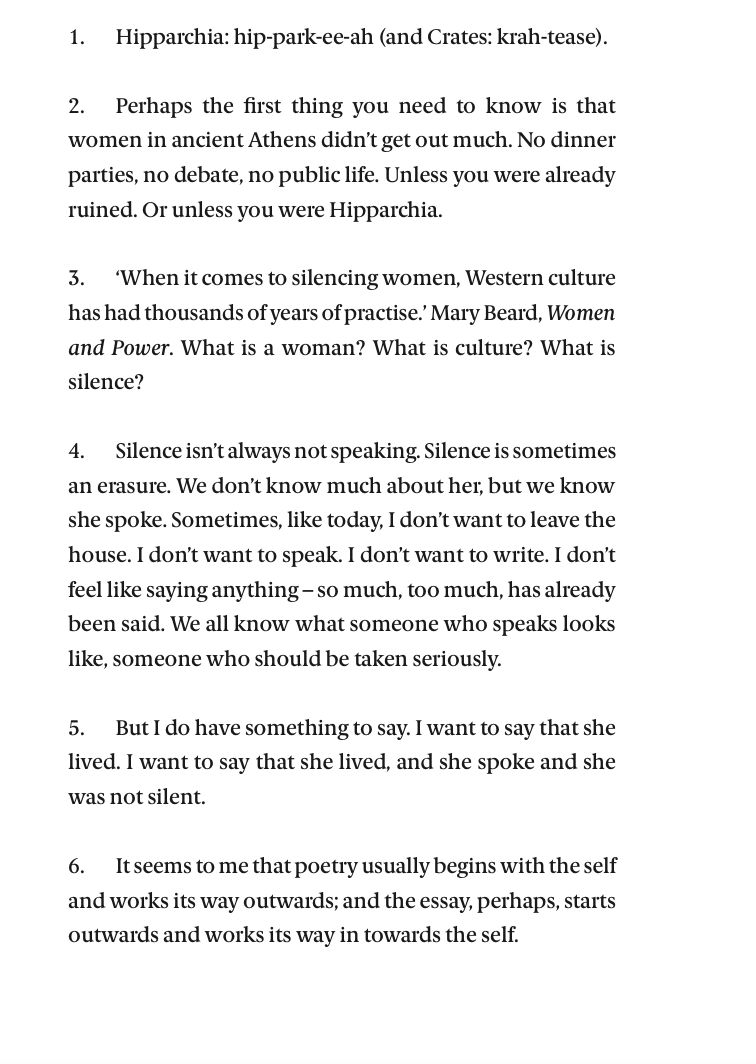
from ‘Notes on the unsilent woman‘ Hipparchia of Maroneia c. 350–c. 280 BC

Paula: I was over the moon when it won the 2020 Ockham New Zealand Book Awards – Mary and Peter Biggs Award for Poetry. Did the judges recognise something in the book you hadn’t seen? I love it when that happens – when you look through the open windows of a poem and things surprise you. And how was it winning the award?

Helen: It was all a bit of a blur! Google photos tells me it was two years ago this week. It was also at the end of the first lockdown – quite a nice way to end it. I was in complete shock – I was pretty certain that Anne Kennedy would win, and when they said my name there was quite a lot of screaming (and a little bit of swearing) at my house. Book awards are weird things. I’m fully aware that they’re never an objective ranking, which isn’t even possible, but are just what those three judges managed to agree on at that time, but it was still very lovely that it was my book they agreed on. I don’t think there was anything the judges said about my book that surprised me, but I appreciated that they got what I was exploring. And winning meant that more people sought out my book, which was also lovely.

Paula: I find myself drawn to poems of all lengths – for a while I favoured the long poem as I could carry it in my pocket and keep adding to it as I mothered and worked and cooked. Now I quite like small poems, sweet mouthfuls that are verging on stream of consciousness. What do you like about the long poem?

Helen: There is something nice about a little gem of a poem, but I do love a good long poem the most. I love the way it has space to breathe and move and meander and be a bit messy. To look at things from a bunch of angles and maybe not favour any of them. I have come to accept that I’m a digressive conversationalist, perhaps a digressive person in pretty much everything except my day job (I’m an editor/technical writer, which is all about plain-language, clear structure, unambiguity – basically the opposite of poetry), and I really enjoy interesting digression in what I’m reading, and what I’m writing. Though, it won’t be entirely a digression, because it will almost certainly connect to everything else in some kind of way. A long poem has enough time to set up resonances within itself, it can tell stories rather than just capture moments. Not that I don’t love a great poem that just captures a moment! And because I’ve been interested in the essay poem, longer poems have more space for the essaying, the thinking through, the exploration. And I guess they have the space to be about several things at once, and about the connections between those things. Probably I should give some examples, but I’m immediately struck by everything I would miss out! Possibly my all-time favourite long poem, and all-time favourite poem, is ‘The Glass Essay’ by Anne Carson, which isn’t quite book length (it comes in at 45 pages), but which manages to be about the end of a relationship, Emily Brontë, Wuthering Heights, a visit to the narrator’s mother, and the decline of a father with dementia, and some other stuff, and is all beautifully written.

Paula: I am delighted to see so many boutique presses springing up – bringing us such a wider range of voices. You have published a number of my poetry collections though Seraph Press, and it has been a special relationship. I have loved the look of each book, am grateful for your editing. The collections are all so different. I love that! And I discovered Nina Mingya Powles through you! How does publishing the work of poetry impact on your own writing? You put so much love in to the books you published. What matters to you when you make the book of someone else?  [do you think publishing is something you are moving away from now to give more time to your own work?] 

Helen: I do love making books, both as collections of words and ideas, and also as physical objects. And I have loved working with different writers to get their words out into the world. Some of them, like you, were fully formed poets when I started working with you, while others – such as Nina, who was only 21 when I published her first chapbook containing some of the very first poems she’d written – were just beginning and I’ve got to see them bloom in close quarters. I have made some great connections and am really proud of making books that I think are beautiful and worthwhile. I try to work with each author so we’re both happy with what we’re putting out, and happy with how it looks. Because it’s something that I do in my own time and almost entirely with my own money, I have had to basically be in love with the books to make it worthwhile. It has taken a bit of a toll on my own writing sometimes, because when I’m working on someone else’s book, that has obligations and deadlines, whereas my own writing doesn’t and gets pushed back. Especially as I’m not an especially great multi-tasker, am usually also working a day job or two, and am by nature quite lazy and so my inclination is generally to just muck around instead. As much as I love publishing, or rather some aspects of publishing (because I do pretty much everything, there are definitely things I’m less interested in and less skilled at – like marketing, for example), after getting a bit burned out I am having a hiatus on the publishing front, and focusing on my own writing, and my own life, for a while. I’m sure I haven’t published my last book though!

Meanwhile, I’m really excited to see the new publishers coming through, doing things their own way, getting important work out there, and increasingly being noticed by mainstream awards. This not at all an exhaustive list, but I’m thinking right now of Anahera Press, Compound Press, We Are Babies and new kid on the block Taraheke | Bushlawyer. Exciting times!

Paula: Indeed – so exciting to see the new presses supporting terrific new voices. I feel like we have had a very long lunch, with the most delicious food and roving conversation. It means a lot, to be part of wide stretching poetry communities.

Helen reads ‘How to Live Through This’

Poetry Shelf Monday Poem: Helen Rickerby’s ‘Mr Anderson, you heartbreaker you’

Poem ‘How to die’ at the Spin Off

Seraph Press

Auckland University Press page

Mākaro Press page