Overland magazine comes to New Zealand with a terrific issue: Launch in Wellington coming up

This looks fabulous! Great list of writers involved. Haere mai Overland.

Screen shot 2015-05-26 at 8.24.56 AM

Come celebrate the launch of a special New Zealand issue of one of Australia’s oldest literary magazines!

This month, Overland magazine is publishing its first ever edition dedicated exclusively to the work of some of their closest writerly neighbours: those residing in Aotearoa / New Zealand.

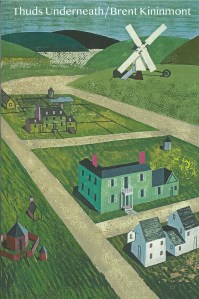
The issue showcases the finest literary talent from across the country including fiction from Pip Adam, poetry from Murray Edmond and Selina Tusitala Marsh, nonfiction from Nicky Hager, Morgan Godfrey, John Clarke and Faisal al-Asaad, and artwork from Marian Maguire.

Its essays travel from the kava circles of Tonga to the streets of Ferguson and Gaza; from the Waikato at war to provincial New Zealand in the 1970s; from the offices of the ‘Daily Telegraph’ in London to the locations in which one might meet a whistleblower.

The launch will feature readings from the writers, as well as words from the editors, Giovanni Tiso, Jolisa Gracewood and Robert Sullivan. And Overland’s editor, Jacinda Woodhead, will be coming from Australia to join the festivities.

The evening will be a chance to mingle with the issue’s editors and writers and make some long-lasting connections to stretch across the Pacific. The issue will be for sale on the night.

Founded in 1954, Overland is one of Australia’s major contemporary literary magazines. Overland’s mission is to foster new, original and progressive work exploring the relationship between politics and culture, especially literature, and to bring that work to as many people as possible.

Screen shot 2015-05-26 at 8.23.28 AM

Poem Friday: Ashleigh Young’s ‘Become road’ clung to me like a poetry limpet as I left the room

Become road

When the car stops we are beginning already to become road.
A little taken apart and buried, the way birds, leaves
become road. Become road beneath
the burying of cars. All become driven over,
all become under. Even weather is taken
a little apart and buried. That we have been hit tonight
is relief; we no longer need to wonder when. Pain becomes
a story we will tell you years from now.
Sound becomes the dream you’ll nurse us from.
For now we are a passenger belted in
to the happening, looking back
at our tame furred moon. On our way home
the night had been too pleasant: rows and rows
of blue glass jars like the BFG’s jars
of dreams: the night was too pleasant
for what we had done. As we cycled uphill
the person we once were was cycling downhill
and each exhalation pushed us further apart.
Before we got hit we saw the shadows of trees
become road. Then the trees. A woman walking
a dachshund through the trees become road.
We saw the dog’s eyes glinting in the road.
The shine of his leash, caught in the road.
We heard voices in the trees become road, and the sound
of someone’s phone ringing in the trees become road.
As traffic clears, the road softens and takes us
deep in its arms, which though hard, accommodate
everyone. Early morning, as the road begins
its upward surge we hear footsteps nearing
from somewhere inside the road, as if
we have been recognised.

© Ashleigh Young


Note from Paula: This was one of the poems that Ashleigh read out at the Auckland Writers Festival in the session for the Sarah Broom Poetry Award. Ashleigh was a finalist in the award along with  Alice Miller (I was her stand in)  and Diana Bridge (winner). This poem really struck a chord with me, clung to me like a poetry limpet as I left the room. Curiously, as I listened, it was a little hallucinogenic — time slowed down, the world stretched out to a state of dissolve and all that mattered was the elongated moment of the poem. Everything inside the poem seemed bright, shining, crystal clear yet simultaneously unreal, mysterious, out of reach. Disconcerting. Strange and estranging. The words so perfectly catching the momentum of anecdote yet lilting sideways, looping back like a Zen master as everything becomes road and time laps back upon itself (‘As we cycled uphill/ the person we once were were was cycling downhill’). Really, that state I had to snap out of as I sat on stage in front of the packed audience is the state embedded in the poem — when catastrophe strikes. The world stretches like chewing gum to become so real it is unreal. This is what poetry can do; it can take those unfathomable, unspeakable moments and cast them within a poetic frame that recasts you. You get to see and feel and shift a bit. Thank you Asheigh Young, thank you.


Sarah Broom Poetry Award judge’s comments (Vona Groarke) on Ashleigh here.

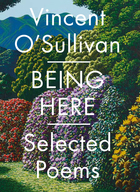
NZ Poet Laureate Vincent O’Sullivan sings the praises of Rhian Gallagher

poetlaureate-rhiangallagher

Over the past two years, Vincent O’Sullivan, current New Zealand Poet Laureate, has posted on the Laureate blog the work of poets he admires enormously. This has been a great way to dip and delve into New Zealand poetry. Rhian won the NZ Post Book Award for Poetry in 2011 with her debut collection (I was one of the judges) in year that was particularly strong in poetry. Fingers crossed these terrific new poems signal a new collection in the pipeline.


He writes:

When Rhian Gallagher returned from almost two decades out of the country, and won the NZ Post Award in 2011, it seemed to me that there was a perceptible addition to what went on in our poetry. Here was a freshly attentive linguistic edge, a direct sensual intensity, a focus and gutsiness in writing of memory and regret, that seemed just that bit different from what any other writer here was doing. One reviewer called her poems ‘assiduously polished’, another picked up on ‘the visceral strength of her language’. What I admired then I find there again to admire in these unpublished poems. I’m glad my almost last laureate blog becomes the forum to display them.

– Vincent O’Sullivan

You can see the selected poems here.


Screen shot 2015-05-23 at 10.50.09 AM

Janis Freegard double Wellington launch


57d9b5e4-74c5-4d9f-930d-55fe99a2cfd4 b29bd332-e0bd-4d61-b50d-7b8b2a95fd90


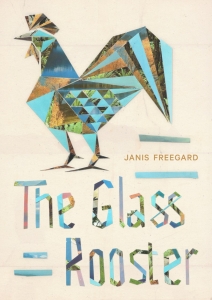
Join us to celebrate the combined launch of
The Year of Falling (Mākaro Press) and
The Glass Rooster (AUP) by Janis Freegard.

5:30- 7 pm, Tuesday 16 June
Meow,
9 Edward Street, Te Aro.
Wellington
Bar tab for first drinks.

RSVP  by June 12 to Auckland University Press
pressmarketing@auckland.ac.nz, 09-373-7528

f4b843c6-239a-4c59-880c-c3df45b3a02b

Counting blessings @JohnJCampbell @CampbellLiveNZ

photo

Running (again) into the beauty of Bethell’s this morning and instead of the zen-like empty head breathing in and out, or the line for a poem or a picture-book story flicking though, I began to count blessings. It has been a punch in the gut of many to axe (that brutal word) Campbell Live. And now a flurry of why this is so on social media and other places. I felt like I was running into a pocket of grief. A word that crops up in tweets, blogs and articles is John’s humanness. His ability to care. To take a stand. He is a good person and in this age of greed, violence and hunger we need good people. He shows us  … us. The little stories, the big stories. The famous people, the Joe Greens. Yes, I should be at my desk starting work on this fabulous new project I have invented, but today I feel stalled by grief at the implications of this loss.

The balm. To count sidetracking blessings as I ran into the wild beauty pitch of the West Coast.

1. National Radio and all its presenters, reporters. Thank heavens for Morning Report. For Guyon and Suzie. For the astute and searching mind of Kathryn Ryan, her humanness and that warmth. For Lynn Freeman for drawing us into our wider arts, so beautifully.

2. To courageous blogs such as Public Address. Thank you Russell Brown.

3.  To The Listener (thank you Jane Clifton) and Metro for showcasing New Zealand books and issues.

4. For The Herald for publishing incisive commentary. Thank you Toby Manhire (see Toby on John Campbell here).

5. For New Zealand publishers publishing New Zealand books against all odds. Thank you.

6. For New Zealand booksellers selling New Zealand books against all odds. Thank you.

7. For Anne O’Brien and her team creating an astonishing literary festival in Auckland that celebrated us here and now as much as the wider world. Thank you.

8. For everyone who has the courage to stand and make a difference in both a world and a ‘here’ that is damaged by greed, hunger, violence. To what extent are our decisions always motivated by the good of ourselves as opposed to the good of the whole?

Campbell Live, in whatever measure we care to assign, acted as a conscience of society — a role universities once exemplified in their ability to critique the ideologies, the customs, the structures, the laws, the expectations, the narratives and the images that both sustain and constrain us.

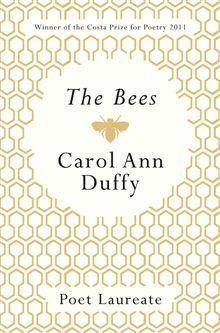
Thank you John Campbell. Heck, that moment when you came out to introduce Carol Ann Duffy, and there was this extraordinary lingering applause, with whoops and heartfelt cries, gave us goosebumps. Even then we were on the verge of tears. That is us now. In that auditorium, giving the whoops and the claps. But now it is a standing ovation. Cheers, John.


Katherine Mansfield Menton Fellowship: Applications now open

APPLICATIONS INVITED FOR 2015 KATHERINE MANSFIELD MENTON FELLOWSHIP Established and mid-career New Zealand writers are invited to apply for the Katherine Mansfield Menton Fellowship 2015. The Fellowship is one of New Zealand’s longest-standing and most prestigious literary opportunities. In 2015 it offers a residency of three months or more in Menton, France and an allowance of NZ$35,000 to cover return travel to France and living and accommodation expenses. The support of the city of Menton enables a New Zealand author to work at the Villa Isola Bella, where Katherine Mansfield lived and wrote during the latter part of her life. Applications are sought from established writers across all genres of creative writing: fiction, poetry, literary non-fiction, children’s fiction and playwriting. Since it was established in 1970, there have been 45 recipients of this fellowship including Janet Frame, Michael King, Lloyd Jones, Witi Ihimaera, Vincent O’Sullivan, Bill Manhire, Ian Wedde, Elizabeth Knox, Dame Fiona Kidman, Jenny Pattrick, Ken Duncum and the 2014 recipient, Mandy Hager. The Fellowship is an initiative of the Winn-Manson Menton Trust and is administered by Creative New Zealand. Applications close at 5pm on Friday 26 June, 2015 For application information on The Katherine Mansfield Menton Fellowship To find out more about the Fellowship go here.

Winner announced at AWF- Sarah Broom Poetry Prize 2015


 Diana Bridge

Wellington poet Diana Bridge was announced as the winner of the Sarah Broom Poetry Prize at the Auckland Writers Festival on Sunday 17 May.

Bridge has published five collections of poems, the latest of which, Aloe & other poems, came out in 2009. She was awarded the Lauris Edmond Memorial Award in 2010, for her distinguished contribution to New Zealand poetry, and her essay, “An attachment to China” won the 2014 Landfall essay competition.


The award-winning Irish poet Vona Groarke was guest judge for the prize in 2015. She describes Bridge’s poems as “colourful and playful, but also careful, thoughtful and wise.”  “There is a kind of fierce beauty to this work, alongside its rigorous intellect and formal grace.” Bridge accepted the $12,000 award at the Sarah Broom Poetry Prize event.


“I am overwhelmed and proud to be the recipient of an award set up to honour the work of Sarah Broom”, she says.

“I like to think that a tiny particle of her courage served to stiffen my spine the day I chose the poems I sent off. For I picked poems not in the hope that they might just work in a New Zealand context, or in what I imagined might be the context of the competition. I chose the poems that mattered most to me.”

“So – in went the story of Arjuna, from the Hindu text, the Baghavad Gita; in went a poem that was a response to the whole – prolific – output of the formidable professor of poetry at Oxford, Geoffrey Hill; in went a poem called ‘The Henrys’ that tackles all those terrible medieval and Tudor executions we have been subjected to in print and on the screen in recent years.”

“I am excited that we are ready for poems that spring from anywhere on the globe.”

The prize, now in its second year, was established to celebrate the life and work of Sarah Broom (1972-2013), author of Tigers at Awhitu and Gleam.


Vienna-based Alice Miller and Wellington’s Ashleigh Young were also shortlisted.


Diana Bridge
Bridge, who has a Ph.D. in Chinese poetry, has worked on the China-based poems of Robin Hyde and published an essay, “O to be a dragon”, and a Translation Paper, “An Unexpected Legacy: Xie Tiao’s poems on things”.  She is at present working on the translation of a selection of classical Chinese poems.

Vona Groarke writes: “Whether it is the violence of medieval history, the engagement with nature, or a re-imagining of Ovid that is the subject, Diana Bridge’s poetry has authority and elegance. Technically sophisticated, this work is complex but never obscure; lyrically charged but never sentimental. It is unflinching in its observational commitment, but also enjoys its ability to fashion unusual and arresting imagery. There is a kind of fierce beauty to this work, alongside its rigorous intellect and formal grace. In a description that rings true of much of her work, her poem ‘Prospero’s Stones’ notes, ‘driven phrases that lap /around each other’: this is a poetry that is linguistically alert, but that also remembers to ply sound and meaning into the kind of poetic weave that is colourful and playful, but also careful, thoughtful and wise.”


#AWF 2015 A Letter to Poetry Shelf: Laurence Fearnley on being a Festival Chair

This is a terrific letter — open, honest, generous, thoughtful and it is the mark of the kind of writer Laurence is, the kind of woman she is. I was at her session, and yes, I felt uncomfortable at the point she got heckled. For the audience, for the other panelists and for Laurence herself. To be honest, I was sitting in the front row, and because I could almost reach out and touch the speakers, at times I almost started joining in! Truely, I had to stop myself and say, no I am NOT on this panel! That is a measure of the vitality of the conversation. Yes, there might be ways to improve as chair (I always feel this no matter what I do!) but this session sparked all kinds of thoughts in my head. All credit to the chair. I was also utterly impressed with Laurence’s level of engagement with the work. When someone takes time out to read your books and to think about your books it is incredibly moving (not all chairs do this!).

I think there are many ways to be a chair. We are all different as this glorious festival demonstrated. You had the nerves and infectious enthusiasm, that utter passion for poetry from John Campbell, and the ensuing poetry conversation with Carol Ann Duffy. A special occasion indeed. You had the measured way of Jim Mora that welcomed the general reader as much as the writer when he spoke with Tim Winton. Equally special. You had the sparkling reach of Noelle McCarthy in conversation with Helen Macdonald. Gold! All different, all producing different kinds of vital conversations. These are all professional talkers so does it make a difference when the chair is a writer?

I like the fact Laurence asks for help here. Perhaps the festivals could build a short list of experienced chairs willing to briefly mentor (answer the questions of) fledgling chairs. In a reply to my festival post Laurence poses some of the questions she might ask.

What about the heckler? I agree with the points below wholeheartedly,  but I have been guilty of this to the point I ended up on the front page of the Sunday Star Times and was hounded by reporters. At the now infamous session that Kim Hill chaired where she was rude to the international panelists, and talked at length without allowing them to speak, I yelled at her from the back “We have come here to hear three fabulous writers speak, not three fabulous writers under attack.’  Etched in brain. The audience stood and clapped in unison. I felt like I was going to faint. You had to be in the room to understand what happened. Perhaps I am responsible for this new species of festival hecklers. I am the hugest fan of Kim’s radio show, her interviews are the best but I felt a line was being crossed. I guess Kim has never forgiven me. I was rude. Alice Sebold hugged me. There is always a price when you speak out publicly, even as a heckler.

It all comes back to that word that Eleanor Catton floats: kindness. We need kindness. We need critical debate. But we don’t need to knock the stuffing out of people. Read the article  I posted before this one on reviewing books.

If I could, I would reach and give Laurence a hug. Thanks heavens someone did. I admire your courage enormously.

Paula Green


Hi Paula

You raised the issue of chairing in your blog and I’d like to reply. At the weekend I chaired a session ‘Art of the Novel’. Despite having been a writer on upwards of 50 panels, it was my first time as a chair for a group of novelists and the combination of my inexperience, nerves, and over-enthusiasm (and probably over-thinking) proved to be a a disaster. Twenty minutes into the session an audience member started heckling me. I couldn’t hear what he was saying but it was soon communicated that I was talking too much and interrupting.

As the Auckland festival becomes larger I can see problems concerning chairing increasing. Audience members clearly have little tolerance for poor chairs so dissatisfaction will increase.

There are some fantastic, skilled chairs out there (Fiona Farrell, Paula Green, Kate de Goldi, Jolisa Gracewood, Emily Perkins to name a few I have had the pleasure of meeting) and I was wondering if there might be value in including a back-stage, 40 minute chairing session at the start or end of each festival day for people like me who have not chaired a panel, or for people who feel a little rusty. I know we are sent notes on chairing (which I re-read, believe me) but it would have been fantastic for my nerves if I had been able to ask an experienced chair a couple of questions concerning problems I had. For example: reading the panelists works raised some complex ideas that I wished to discuss. How could I have communicated those questions, maintaining the complexity of the idea without the question becoming confused, and needing additional clarification or follow-up questions that interrupted the writer? I am sure, that with your experience, you would have ideas on how to tackle those problems.

So, would any of you be prepared to offer help in this way?

I don’t think heckling is the answer to shaking up a poor session. I think it creates a flee or fight response in the chair, makes the audience apprehensive (is it a one-off heckle, is the audience member nuts and will continue heckling, what impression is this making on the panelists), and the panelists uncomfortable (because they are usually nice, sympathetic people).

After my panel – when I had already got the message – a woman came up to me, grabbed my arm and snapped, “learn to button your lips.” It was a shit remark, coming at the end of a bad session, and surplus to requirements. Thank God for the kindness of Stephanie Johnson, Jill Rawnsley and Charlotte Henry.

Laurence Fearnley


Jonathon Sturgeon on Literature as a Chain Letter Among Friends: On the Fantasy of Critical Distance

This is interesting. I review a fair volume of NZ poetry books (not enough by any measure, so many miss out!). Yet I know a fair chunk of the poets to different degrees. I have lunch and dinner with some. I go for walks with others. I discuss poetry with many. I tell my own secrets (not those of others!) to a handful. I have also reviewed a lot of New Zealand novels because that was my primary love at university and the focus of my Masters and Doctoral theses. Again the same shades of friendship apply. Should I be doing this when I am clearly embedded in this intricate web of connections and friendships? I found this piece fascinating. It was posted on Flavorwire.


Here is the start of the blog:

Screen shot 2015-05-19 at 9.06.07 AM


You can read the middle here.


Here is the end of the blog:

Screen shot 2015-05-19 at 9.06.33 AM