AWF15 bouquets and brickbats

This morning I ran along the beach into the hit of the west-coast wind, and it felt like a hinge between four glorious days at the Auckland Writers Festival and getting back to work. As I ran, I pictured myself asking Murakami running questions. Where does he like to run? Is it in a wild space where you hardly see another soul as I do and your mind empties as the rhythm of the run takes over. You might see a puffed up dotterel out of the corner of an eye or a pied stilt wading. The rhythm of the run sends me into a pre-writing state but mostly it is is just me and breathtaking beauty.

This morning as I ran it took awhile to get into that equilibrium of silence as the festival keep drifting through. What I loved. What I loved a little less.


My bouquets in no particular order

1. To Anne O’Brien and her team for creating a dazzling programme that pulled me out of hermithood into the city for four full-to-the-brim, glorious days, that filled an auditorium over and over, that offered free sessions. This was one of the best festivals I have attended yet in terms of the range and quality of voices on offer. The audiences.

2. The new dedicated focus on children’s writing with the School Days, Family Day and sessions featuring a children’s author. I was coming out of a session and saw David Walliams at his signing table and was incredibly moved. He was looking with careful attention at a picture a young child had drawn for him, taken the time to pause and wonder, when his signing queue had stretched out into the square at the start of my session. It seems to me the festival has also become a gift for our emerging readers and writers, our thinkers and our scientists, our comics and our leaders. Thank you!

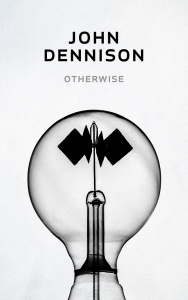
3. The amount of poetry this year. Sure I still love a line up of ten poets like a tapas tasting lunch that shows you the terrific width of our poetry communities. But I love the way poets now read along side international authors and local fiction writers in panels. This exposes our poets to a much wider audience. One stand out for me (sadly I missed some poets I had wanted to see due to clashes) was John Dennison. I have just reviewed his stunning debut collection on the blog but his poems lifted and became even more exquisite as I listened and shut my eyes. Two poets came to mind: Gregory O’Brien and Bill Manhire. I could hear a faint, appealing somethingness  of them in John’s intonations, the pauses, the repetitions, the stresses — the downright joyous musicality. If you don’t have John’s book, I highly recommend it. Maybe you can find him reading a poem or two on YouTube.

4. More poetry. The session with Anna Jackson and Daniel Mendelsohn on translation gymnastics was fascinating. I had Anna’s new book, I, Clodia, and a bilingual edition of Catallus in my bag all weekend as I am working on a review. I think I will save some of the gems from Anna until I do the review. But hearing the poems read aloud, we all leaned forward into the beauty of them. Gorgeous!

5. The Gala Night story tellers hit the mark. Sometimes I have been at previous ones counting how many to go. Not this time. The last one spoke, the time was up and I had stayed glued to every word.

6. Mrs Dalloway: I was in awe of Rebecca Vaughan maintaining those weaving voices for ninety minutes, pulling us into the shifting detail, moods, revelations.

7. Amy Bloom in conversation with Carole Beu. I had just read Lucky Us. Sparkling, scintillating, sent me straight to the book stall to buy the short stories.

8. Kim Thúy, a Vietnamese-Canadian novelist, in the panel session on Asian Histories. I didn’t know her at all but loved the little stories that ballooned out from a single word. Loved it when she said Vietnamese don’t show the feelings so much, and that her parents never asked her how she felt, but would ask her if she was hungry, then feed her mood. Dashed to the bookstall and bought Man. This writing is astonishing and I want to read everything she has written. I bumped into her when she was talking to her friend Anne Kennedy and so she inscribed my book. Ah the joy of lucky moments at festivals.

9. More poetry. Hearing Chris Tse reading a breathtaking selection from his debut collection How to Be Dead in the Year of Snakes.

10. Some favourite chairs: John Freeman, Carole Beu, Noelle McCarthy, Catherine Robertson, Christine O’Brien, Ruth Harley (many I missed sadly).

11. The privilege of sitting on stage with Edwin Thumboo to talk about poetry and Singapore was an utter highlight. He is, as I said in the session, like Margaret Mahy was, and Michele Leggott and Bill Manhire are: writers whose work fills you with endless admiration but who also occupy the world as writers in a way that is extraordinary. He is a Singaporean national taonga, so how good he read and spoke to a packed house. We barely scratched the surface of what we could have traversed, but to hear his poems hit the air/ear was such a treat. Preparing for the session sent me on new paths of thinking. I am so grateful to the festival for this opportunity.

12. David Mitchell in two sessions. In the first he was jet lagged and in the second, in a panel. Here are some of the gems I loved: He used to make his own Middle Earths with card and paper. He was a low maintenance kid! He stalled on a sip of tea then talked on the über novel, then cautioned new writers to be careful naming things as the name sticks. On character: A character moving into a new book brings a suitcase of credibility from previous ones. On discussing how to pronounce ‘archipelago’ with Catherine Robertson,  they both slide into an hilarious word jam. On links between books: there are doors wormholes tunnels from one book to next but not many. Ponders on how to make many different things coexist in one book: one way is to compartmentalise. He apologises for bringing his wife into the discussion (she was back stage!) on entering the female mind as a writer of his protagonist. He has five friends on earth, three of whom don’t read him! Question: Do you have an attic mind?  Mitchell: a junk shop mind. On names: high scrabble scores generally make useful names. They stick to the eyeball.  On the intensity of writing: You get through the intense immersion of the current novel underway ‘with little kisses of thinking about the next one.’ On fear: you should go outside your comfort zone. Have I bitten off more than I can chew? is important. He offered to read a Stephanie-Johnson draft when she said showing unfinished novels to others was an imposition. He said he wasn’t a novelist; he writes novellas with bridges and tunnels between. [I love this idea the connection can go through air or underground!].

13. Emily St. John Mandel on editing: Retype your entire draft, read the whole thing aloud to yourself, edit pages in random order.

14. Helen MacDonald. Now I have to read her book, H is for Hawk. Things I loved she said: We use nature to prove our concepts to us. On the joy of festivals: They let thoughts and words be said that aren’t normally available in everyday life.  There’s no past or present when you are flying a hawk. When you have a big loss: After a year of grief, I started to grow around the holes. It was all about love.

15. Carol Ann Duffy. Carol Ann Duffy. Carol Ann Duffy.  Carol Ann Duffy. Hearing her read. And loved this bit from John Campbell on the joy of reading her poems: (can’t quite remember exact words) but ‘drilling down into your particular way of knowing.’

16. The fabulous Tim Winton: I  think perhaps people are wired to hope.

17. Hearing Ashleigh Young read her remarkable new poems, especially the casino one and the road one. They felt like a glorious step up from her debut. Fresh, elastic, lyrical, effervescent, surprising. I am going to post one on the blog as soon as possible so I can talk about it. I do hope a new book is on the horizon line.

18. Anne Kennedy talking about Janet Frame’s Owls Do Cry, the Great Kiwi Classic this year. She was so lucid, so on the button, with what she said. Reading the book for her was like a sock between the eyes. She loved the way the vernacular had been transformed into the poetic, but that it was above all a triumph of kiwiness. Anne said Janet rescued kiwiana and polished it like a gem. For Courtney Sina Meredith reading it was like a rite of passage. She said she was terrified of it at university (if you can’t get into this, you can’t get into New Zealand literature) but then she became deeply connected. Wonderful! Damien Barr cried after he read it (hearing his autobiographical anecdote I am not surprised). Great session steered by Kate De Goldi, but more audience involvement would have been good. I think that is the intent of the NZ Book Council that it becomes a very interactive session.

19. The Honoured NZ Writer: CK Stead. Wonderful movement through his life and career. Loved the poems breaking into the conversation. Like the way he said Catallus gave him a persona where he could go to the edge of things that had sometimes happened to him, or that were an invention. It became an area of freedom when he was not mentally a confessional poet. He had returned to NZ because he wanted to be a NZ writer and turned down the option of a very different academic career in Britain. He doesn’t regret it but sometimes ponders the possibilities of that different track.

I have been especially drawn to Karl’s recent poetry collections, their reflectiveness, musicality, ability to matter and move. You saw that a bit in the conversation. On being a critic: I was too dogmatic, too excited, things could have been said more subtly. I discovered what it was like to be characterised by what was a small part of me. On rereading Death of the Body for this ‘ordeal’ decided it was so much cleverer than I am now. A terrific way to end the festival.

20. Hearing fabulous Irish poet, Vona Groarke read her own poems and talk so beautifully about the finalists in the Sarah Broom Poetry Awards. I am so tempted to get to Wellington to hear her talk and read for a whole hour!

21. Stepping into the shoes of Alice Miller to read her finalist poems at The Sarah Broom Poetry Awards. I was amazed at how reading the poems of another poet out loud in front of an audience drew me so much closer into the very heart of them. The poems were breathtakingly good. I should do this more often. Find a special place to stand and read aloud the poems of another.

22. Ah! Murakami. Ah what a tremendous session. Ah! Ah! My daughter gave me some of his novels to read over summer and I was hooked. How had I not read him before? The outright surprise, wonder and delight of where he leads you. So to find out he was coming to the festival was the absolute highlight. I loved the fact he wrote his first novel and cast it into the bin as dreadful. He then wrote it in English as he had a limited vocabulary and stock of phrases. He translated it back into Japanese and achieved the simplicity, the economy and clarity of writing that is now his trademark. He likes his writing to be unpredictable to himself, which it is why it is so gloriously unpredictable to the reader. He feels he can be anybody when he writes (not all writers feel this!). He enjoys reading his books that have been translated into English (a few years after the original) as it is like reading it afresh and he can’t remember what happens. He likes Japanese tofu and donuts! Maybe a tofu donut! The chair, John Freeman, was exceptional. What made this session so utterly special were the silences, the long pauses that became little pivots of contemplation for both speaker and audience. One writer said Murakami says more in his silences than some writers say with truckloads of words. The t shirt he was wearing:

Keep

calm

and

read

Murakami


23. The volunteers, the lovely stage crew, the festival team and of course all the readers and writers who filled the Aotea Centre with a buzz of ideas and response. Astonishing!

Thank you thank you thank you


The brickbats that aren’t really brickbats at all

I. I wish Anne O’Brien could get to see more than the odd session. To sit back and enjoy the fruits of her labour.

2. Missing out on a ticket to The World’s Wife. My fault. From all accounts it was fabulous.

3. I was a chair, so feel free to criticise me (like all chairs I walked away wondering how I could have done a better job!), but sometimes the research and commitment as chair takes over whereas it should take the back seat along with your own ego. It seems we now live in an age where audiences have no problems in letting a chair know when they are dominating the conversation. Fair enough maybe, as it keeps us on our toes. The other tricky thing is that the audience will be a clashing mix of expectation, and equally varied mix of experience of the subject and writing under the spotlight. We are all different kinds of readers searching for different things. The sessions where the writers opened out into a warm and and sparking conversation were gold.

4. Why didn’t I run to the free sessions to make sure I got a seat?! Missed out on a few gems.


Sue Wootton on Vona Groake at Dunedin Writers’ Festival (what a delicious breakfast!)

Vona Groake in conversation with Liam McIlvanney, Dunedin Writers’ and Readers’ Festival

10 May 2015

It was a dreadful slot on the schedule—nine o’clock on a Sunday morning, on Mothers’ Day, to boot—but an hour with Vona Groake? No contest. The conversation between her and Professor Liam McIlvanney (here wearing his academic-teacher-of-contemporary-Irish-poetry hat, not his crime writer’s hat) was an absolute delight. Liam’s well-informed but gentle and open-ended questions prompted a flowing conversation, further extended and deepened near the end of the session when Vona responded to questions from the floor. Liam’s approach allowed Vona to articulate—uninterrupted!—some ideas on the source and sustenance of her craft. Their erudite, thought-provoking (and often funny) discussion probed the way that poetry grows out of language itself, looked at the influence of tradition on contemporary poem-makers, and was interspersed with readings of some of her poems. Ah, nourishment. And what a delicious breakfast.

Sue Wootton


Where else to catch Vona:

Auckland: Vona is at the Auckland Writers Festival this weekend where she is announcing the winner of The Sarah Broom Poetry Award and reading a few of her poems.

Upper NZI Room, Aotea Centre, Sunday May 17th, 1.30 to 2.30 


Wellington: On Thursday May 21st (12.15 to 1.15) Vona is conversation at the City Gallery in Wellington.

Ten things to love about Landfall 229

photo


Shortly after Sport arrives in my box, I get a bright new issue of Landfall. My little list below maps my ‘loves’ so far — like little ‘like’ ‘share’ ‘favourite’ or ‘retweet’ buttons. Editors might compile a journal with an arc of contours (aural, thematic, emotional pitch, genre, experimentation, quietness and so on) as I have always done with an anthology so you move through shifting readerly experiences from start to finish. However, I never read a journal like this.  It’s dip and delve.

1. Straight to the review section to books I have missed, and books I have reviewed. Ha! I Have missed (all meanings intended) reading Ian Wedde’s The Grass Catcher: A digression about home (Victoria University Press). Martin Edmond’s scintillating review meditates on the implications of writing the past alongside his critique of Ian’s illuminations of his own. ‘Home’ was a key notion that came under scrutiny within my doctoral thesis and within the context of Italian women writing novels in the twentieth century. It still fascinates me. This review has sent me scuttling to buy the book. In particular: ‘This is not one of those writer’s memoirs that says: here is how I became the resplendent creature I am today. It is too multi-faceted, too in love with the world, you might say, to serve such a purpose.’

2. Rata Gordon’s poem  ‘Tinkering’ is like an electric train on electric tracks. You get to the end and you want to travel that route again. Wow!

3. Discovering Michael Harlow picked  Sue Wootton’s poem, ‘Luthier,’ as the winning entry in The Caselberg Trust International Poetry Prize (2015). This poem is sumptuous in detail and that detail evokes mood, music, character, place in a transcendental kind of way. I would love to hear this poem read aloud to hear the poet lift and connect and pause, the hit of certain words on the line (flitch, slink, Sitka, bedrock). Sue demonstrates the way a poem can take a small moment/thought/action/thing and then open out intimately for the reader. A word that comes to mind and that is so overused when speaking poetry is luminous. But this poem is utterly and breathtakingly luminous.

4. Discovering Christina Conrad still writes poems.

5. Short poems can be very very good. So much happens in the white space that holds them This is the case with Louise Wallace’s ‘Mirage/Arizona.’

6. Tina Makeriti’s essay, ‘This Compulsion in Us.’ Strikes a chord because I am fascinated by museums too; enthralled by the things that stick to the objects that only you can see or hear or feel. Loved Tina’s exploration of a museum’s paradox, in that it preserves treasures yet ‘also captures and immobilises things that make sense only in motion, that should breathe and transform.’

7. Runner-up in The Caselberg Trust International Poetry Prize (2015), the opening lines in Jessica le Bas’s ‘Four Photographs from a Window’ : ‘The first is a shot in the dark/ buttoned up and black suited’

8. An Elizabeth Smither short story that underlines what an exquisite hand she has when it comes to fiction (‘The Trees’).

9. The way Sue Reidy’s poem, ‘The primitive,’ became etched on my skin.

10. Lots more delights but I have to mention the Unity-Books, standout ad. A child reading a book, thank you!

photo


On reading Sport 43

Sometimes a literary journal is just the ticket for rainy-day blues, diversion, or the need to put a finger on a literary pulse. Ha! The notion of a literary pulse is where debate ensues. Each finger will be sensitive to different nuances, different implications.  I strongly believe that national anthologies that claim to represent a wide group ( New Zealand, for example) must be challenged if gender, ethnicity, age or geographic-location biases fuel significant blind spots. For decades, women were the blind spot in anthologies and journals, and now, at times it seems there is token representation of  work by Māori, Pasifika and Asian authors. Literary journals, however, are often the bloodline of a place, a niche, a literary disposition, and nearly always reveal the predilections of the editor. Sport comes out of Wellington, and it is to a great degree of Wellington (not in subject matter, but in terms of authors selected). It is a celebration of the writing by both established and emerging writers that have some connection with the city, often through Victoria University or its Press.  I have no problem with this.  I most definitely have no problem with this when the work included catches my attention and sends me in directions both familiar and unfamiliar.

The latest issue worked a treat for my rainy-day blues.

Seven essays are sprinkled through the selection of poetry and fiction, and if this is a new feature, it is a feature I applaud in this climate of idea-sharing in creative and stimulating forms. Long may it continue.

When I first picked up the book, I went straight to Chris Price (out of longing for a new collection perhaps) and immediately did a tweet review. Tucked away at the back of the book, it felt like the best had been saved for last with the playful, audacious flick and flash of words that catch your ear and send you flying to a nursery rhyme or Murphy’s Law or cheeky wit or the subtle twist and let’s-be-serious of the last word, ‘unspoken.’

Screen shot 2015-05-12 at 10.14.03 AM

This time I went to an unfamiliar name first, ‘Ruth Upperton,’ and what a discovery. Think I must have yearning for the comfort and absolute pleasure of poetic musicality (why I like the poems of Michele Leggott and Bill Manhire so much). Ruth has appeared in other journals, has just finished a law degree and lives in Palmerston North. Her five poems are different, the one from the other, but are linked by gorgeous rhyming (off, aslant, sliding), infectious repetitions, aural chords, sumptuous words. There is poetry out of sentences and there is poetry out of curiosity. You shift between comfort and strangeness.


from ‘The lonely crow’

Nothing sadder than a lonely river.

Nothing darker than a single crow.

Shiver at the strong’s surrender.

Play a tune on your June piano.


James Brown’s terrific poem, ‘Mercy,’ made me hungry for a new James Brown collection.

Anna Jackson’s three cooking-show poems suggest she is just getting better and better ( I am working my way through Catallus so I can review her new collection soon). I love the way the ingredients (excuse the pun) in these poems shift and flicker from one poem to the next, and in their new baking dishes taste a little different. The sort of poems that evoke a steady engagement at the level of sound and narrative.

Sarah Jane Barnett’s sequence of poems, Addis Ababa,’ caught me by surprise. They take me to an elsewhere, the elsewhere of  displacement, of otherness, of immigrants. The poems step up from everything Sarah has previously written, and then take another step into risk, empathy, inquiry, experience. What a combination.


Rachel Bush’s ‘Long and short,’ is a poem that moved me with its exquisite detail and revelation, a family story (true or false) that catches in the throat. The poetic glue: the baked bread.


So many things accumulate. They weigh us

off balance. We struggle to stay upright,

we lurch and are precarious. Our feet are flat

and sudden. It was easier when we had

a mum and dad. Easily we could blame them

when we were less than we desired.


Still most essays and fiction to read, but started here: Damien Wilkinson’s lecture/essay navigates a subset of the ‘ought’ and ‘ought not’ of narrative: the way it ought/ ought not represent some kind of personal change (character based). Fascinating following the thread of argument. Is this a requisite ingredient in poetry? That poems ought to navigate some kind of change? I raise this because, and I am shifting tack a little here, I am fond of poems that exhibit some kind of movement (and movement may be zen-like and hold change within its sameness and vice-versa). Poetic movement need not be on a grand, spectacular scale. It might be miniature shivers in the poem, sweet little movements that you catch out of the corner of your eye, or a flicker in your ear, or a faint tremble of your heart, or the tug of an idea that is itching to confound, challenge and pull you elsewhere. That is what I felt when I read, ‘She cannot work,’ Ashleigh Young’s foray into fiction. It is what I felt reading this issue of Sport, a catalogue of movements that displaced my state of fatigue.


Sport: miniature shivers in the writing, sweet little movements that you catch out of the corner of your eye, or a flicker in your ear, or a faint tremble of your heart, or the tug of an idea that is itching to confound, challenge and pull you elsewhere.


Abandon Normal Instruments – an editorial Kirsten McDougall has written for Horoeka Reading

Abandon Normal Instruments: A Call for Change in New Zealand Literary Arts

  • by Kirsten McDougall

    In 2015 the public face of the literary arts in Aotearoa is in a sad state, a worn discarded toy that many people have forgotten how to play with. Publishers here and internationally have been caught like a possum in headlights by the dramatic changes to the industry and society at large. Those responsible for the guardianship of the literary arts in Aotearoa have failed to respond adequately to the pressures they are under and they are stagnating. It is time for writers and arts advocates to abandon their normal instruments, their usual ways of working. It is time to show real leadership and move the scene to a position of renewal. We need to articulate the value of literature to our society and clearly demonstrate the various ways it enriches our existence.

    For the rest of this timely piece go here. The recent losses/holds are like splinters in NZ Literary Arts. As readers and writers we exist in a state of continual erosion. Do we need a holistic approach? Do we need numerous little initiatives buzzing from the ground up? Do we need the big agencies facing our current challenges together?

    Brava Kirsten! This was sparking.