Amy Brown’s Ekphrasis Lessons – this is really useful

Amy Brown has provided an easy, approachable introduction to ekphrasis for students, teachers and anyone who wants to do some creative writing but isn’t sure where to start.

The project was supported by the Ian Potter Museum of Art – all the images come from their wonderful Grimwade ‘Miegunyah’ Collection.

Here’s the link.

Poem Friday: Sue Wootton’s ‘Lingua incognita’ –


Lingua incognita


Some words dwell in the bone, as yet

unassembled. Like the word you want


for Weary Of The City, for Soul Tired; the word

you seek for Confusion Where Affection Once Existed


or the single vowel-filled syllable which would accurately render

Sensation of Freefall Generated by Receipt of Terrifying Information.


Down in the bone the word-strands glimmer and ascend

often disordered, often in dreams,


bone-knowledge beating a path through the body to the throat

labouring to enter the alphabet.


Maybe the bones ache.

Maybe the throat.


Your cells your language, occasionally articulate

in a rush of ease, the body clear as wellspring saying this is


The Moment of Illumination When One Allows that Water Yields to Rock, and Always Flows


and sometimes the only word to assemble in the throat is Yes

and sometimes the only word to assemble in the throat is No.


© Sue Wootton 2015


Author bio:  Sue Wootton’s poetry and fiction has been widely published, anthologised and translated. Her most recent publication is Out of Shape, a letterpress portfolio of poems hand set and printed by Canberra letterpress artist Caren Florance. She was recently placed second for the Gwen Harwood Poetry Prize, and longlisted for the 2015 Canberra University Vice Chancellor’s Poetry Prize. A former physiotherapist, Sue has a special interest in the practice of the creative arts in healthcare. She holds a Master of Arts in Creative Writing from Massey University, awarded with distinction, on the subject of creative fiction and the phenomenology of illness. She lives in Dunedin and is the current selecting editor for the Otago Daily Times Monday Poem column. Her novel, Strip, is forthcoming next year from Mākaro Press.

Sue’s website

Paula’s note: I love the way this poem grapples with the elusiveness of words, building in momentum from that point in the bone to that point in the throat. Inventive. Surprising. The elusive moments/notions/images glint as they escape. The ending shifts the pitch of the poem and delivers, for me, a moment of poignancy. I love this.


Six artists respond to the poetry of Joanna Margaret Paul


Thursday 26 November, 6.30pm
Six artists respond to the poetry of Joanna Margaret Paul
Light House Cuba

Fresh from the recent screening at Experimenta 2015, the BFI London Film Festival, the programme features short moving image works by Nova Paul, Rachel Shearer, Sonya Lacey, Miranda Parkes, Shannon Te Ao and the collective Popular Productions.

A prolific film-maker, poet, photographer and painter, Joanna Paul (1955-2003) quietly observed the intimate poetics of the domestic and the modest grace of her immediate surroundings. This programme presents an ambitious range of new moving image commissions shot in various spaces, including out of doors and within an artificial building complex made from salt. Each film has been inspired by a selection of Paul’s poetry, proving the resonance of her work in 2015.

According to a recent review in Frieze magazine: “New Zealander Joanna Margaret Paul’s films were made in relative artistic isolation from avant-garde film discourse in the mid-1970s, but are rooted in an acute feminist politics that focuses on concerns of shared female social spaces and everyday domestic situations.”

This screening of Six artists respond to the poetry of Joanna Margaret Paul is presented by CIRCUIT in association with the Adam Art Gallery’s current exhibition Fragments of a World: Artists Working in Film and Photography 1973–1987 (3 October – 18 December 2015) which features moving image and photographic works by Popular Productions, Joanna Paul and a number of her contemporaries.

$10 adults, $8 students/Adam Art Gallery Friends and Supporters
Seating is limited – to book email stephen.cleland@vuw.ac.nz

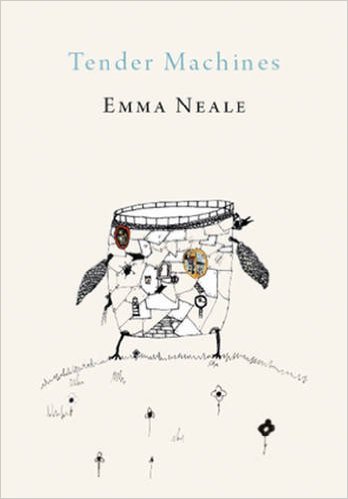
Poetry Shelf review — Emma Neale’s Tender Machines takes you into a deep private space in her writing; in ways that sing and challenge, that move and muster every poetic muscle and tendon as you read

418MHC3lAEL._SX346_BO1,204,203,200_    418MHC3lAEL._SX346_BO1,204,203,200_


Emma Neale Tender Machines Otago University Press 2015

Emma Neale’s new poetry collection features a striking drawing by her son, Abe. Surprising, inventive, poetic even. The poetry is Emma’s best yet, dare I say it. To step off from the title, tenderness meets sharp edges meets exquisite moving parts, small yet perfectly formed. The collection holds you in the intimate embrace of home, yet takes you out into the wider allure of the wider world. Issues, ideas, preoccupations.

The first section, ‘Bad Housekeeping,’ is where poet tends hearth. Mostly, and movingly, Emma navigates her relations with her young son.  She is up against the elbows of insistence, demands, resistance. The mind of the mother is anchoring, roving, admitting. She is in the heart of a toddler tantrum and in the palm of world issues. These poems affect you. You can savour the poetic craft that is honey for the ear. Such musical harmonies and schisms. That is one joy of reading. You can enter the toughness and rewards of motherhood. It is as though maternal experience is the stock pot that is simmered and concentrated to a syrup that is both sweet and tart on the tongue.  The poems become the kind of poems you can hang stories upon; of this child and that child, of this moment of mothering and that. Poetry has the ability to bear story, experience, imaginings, ideas, music — all in its one tender machine (oxymoron and all). These remarkable poems do this. ‘Hard Task, Master’ is a miniature snapshot of the child — its ending breathtaking:


as he tries

to build and build

the deck of himself

against the hard, tall wall

of the world.


At times it is the concatenation of verb or noun on the line that catches you in a knot of maternal thought — son glued to mother, mother glued to son. As in ‘Towards a Theory of Aggression in Early Childhood Development’:


Hit, push, lash, scratch,

these cheeks, this jaw, this shoulder,

are these in truth our edges, outlines, will we cry

as he does, daily, nightly, sky-wrenching as sunrise

yet still hold him in our arms


There is poetic braveness here that doesn’t loiter in conventional maternal paradigms. This is a poet opening layers of skin to get to where it hurts, confuses, demands, yet never loses sight of the enduring bond. The love. This is from ‘Domestic’:


you’re our darling our treasure.


You fling a tea cup at the cat,

plump up her spine like a goose-down pillow,


jab your thumbs at your father’s face

as if to pull out its two blue plums


but ah, little fisty-kins, honeyghoul, thorny-pie,

grapple hook of your daddy’s flooded eye,


stitch by stitch hope’s small black sutures

sew love’s shadow behind you.


The rest of the collection represents a mind engaged with the world at large. There is a strong political vein that never relinquishes the notion that the personal is political and that, importantly, the political is personal. Big issues such as consumerism, the compromised state of the planet, greed, waste are there potency ingredient in the ink of the pen, yet Emma’s ideas find poetic life in a variety of ways. Always there is an attentiveness to sound, to the way the poems hit the ear before the eye/mind drifts elsewhere. Assonance is plentiful. Delicious. The musicality is a first port of admiration that sends you back to reread with ears on alert. One poem, overtly and self-reflexively, plays with musical effects, yet delivers a subterranean plea for the earth (‘”Properly Protecting the Most Pure Marine Ecosystem Left on Earth Was Not Consistent with the Government’s Economic Growth Objective”‘. Here is a sample:


The spring tries to write

its long lyric poem again:

grass blade rhymes wing tip;

leaf rim, gull keen;

salt foam, thought arc;

surf break, line break;

historical break, heart break;

riven river, toxic stream;

smoked ozone, glacial melt.


So many standout poems. I especially loved the way ‘Suburban Story’ moves. It begins with a ‘shopkeeper at my old corner store’ and then travels through a poignant catalogue of losses, minor and major. Again the exquisite ear at work, again the pulsating detail.

This is a collection of reflection, revelation, absorption. Emma wrote many of these poems during her tenure as The NZSA/Beaton Fellow, The Otago Robert Burns Fellow and The University of Otago/ Sir James Wallace Pah Homestead Writer in Residence. Such awards benefit the poet immeasurably with the gift of writing space and time. You can see it in the gold nuggets of this book. In another favourite poem, ‘Sleep-talking,’ the clogged channels of thought become poetry. Emma takes you into a deep private space in her writing; in ways that sing and challenge, that move and muster every poetic muscle and tendon as you read — in this poem and in the book as a whole.


Perhaps for the self to hold its own air

it must be played in the key of sleep:

the body an instrument that over time

we must keep pitched, soaked in night like a reed softened in water,

while dreams tune the mind’s strings with a touch that seems

as precise as if the musician’s ear cranes deep


Otago University Press page

RNZ review

Emma Neale on her title

From the book: ‘Origins‘ posted on Poetry Shelf

Ah poem bliss: Summer Noelle is giving poetry a little spot in the sun

Summer Noelle has invited a number of New Zealand poets to talk about and read a poem they wish they had written.

I have just pre-recorded my choice with Noelle (you will have to wait until summer to find out which poem!)

What a treat to have a conversation with someone who has read and loved the poem too with such enthusiasm. After I finished, I realised I spend a lot of my time writing poems, and writing abut poems, but very rarely having conversations about poems. Ha! It is such a pleasure.

Maybe I need to invent a poetry book club.

Bravo Summer Noelle and RNZ!


A taster of what’s to come:

Bill Manhire’s kicking us off plus Paula Green, Michele Leggot, Ashleigh Young, Joan Fleming, Airini Beautrais, Elizabeth Smither.  Plus many more to come.

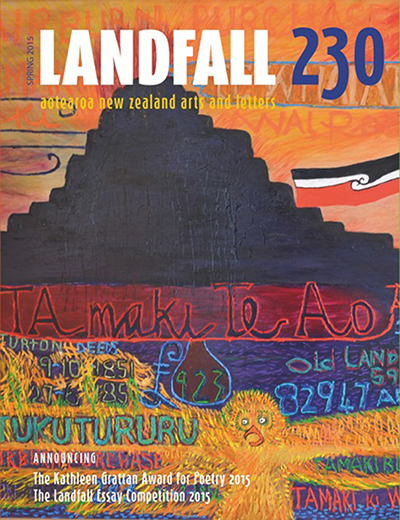
Just out: Landfall 230 is a strongly multicultural issue – includes Grattan Awards poems

Landfall 230


Press release:


Landfall 230 is a strongly multicultural issue, reflecting the diversity and energy of contemporary New Zealand writing, with contributions by, among others, writers of Mexican, Samoan, Rotuman, Chinese, Irish and Indian backgrounds.

A significant series of just-completed small oil paintings by Jeffrey Harris make up the first stunning art portfolio in this issue, followed by a series of 2015 paintings by Emily Karaka.


Featuring new poems by Riemke Ensing, Michael Harlow, Fiona Kidman, Cilla McQueen, Robert Sullivan, Peter Olds, Bernadette Hall, Airini Beautrais, Olivia Macassey, Kay McKenzie Cooke, Carolyn McCurdie, Hannah Mettner, Joanna Preston and Rogelio Guedea (translated by Roger Hickin) — Landfall 230 demonstrates the vitality and range of current poetic practice in New Zealand.

The Landfall Review includes, among other reviews, William Dart’s commentary on a recently published collection of writings by composer Douglas Lilburn; Peter Simpson’s review of Charles Brasch: Selected Poems; David Herkt writing about novelist James Courage; and Paul Moon’s review of Tony Ballantyne’s Entanglements of Empire: Missionaries, Māori and the question of the body.

Emma Neale, judge of the 2015 Kathleen Grattan Poetry Award, takes us through the difficult process of choosing a winner; and there is a showcase selection of the four best essays from the 2015 Landfall Essay Competition – eloquent, passionate, exhilarating non-fiction delivered by Tracey Slaughter, Philip Braithwaite, Louise Wallace and Therese Lloyd.

Celebrating the power of the literary imagination with inside stories and true confessions, short fictions and thoughtful critiques, Landfall 230 is testament to the rich variety and dynamism of the current state of New Zealand culture.


Landfall 230

Edited by David Eggleton

Release Date: November 2015

ISBN 978-1-877578-91-5, $30

http://www.otago.ac.nz/press

Serie Barford’s book launch

Screen shot 2015-11-07 at 7.35.41 AM

Kia ora koutou,

You are warmly invited to the launch of Serie Barford’s poetry and short story collection, Entangled Islands, published by Anahera Press, and held in conjunction with Poetry Live. With music by Brendan and Alison Turner, and readings from the book by Serie. MC-ed by Kiri Piahana-Wong. Entangled Islands will be launched by Karlo Mila. Food and drink available from the bar. Thanks to Creative New Zealand for supporting the publication of this book.

8 pm: Brendan and Alison Turner (folk/blues duo)
8.45 pm: Book launch
9.15 pm: Poetry Live resumes with open mic – all welcome to read

Poetry is off to Menton

SAM_0467 (2)

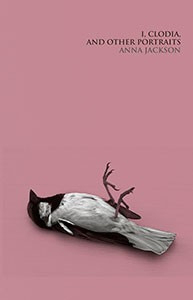
I am so delighted Anna Jackson is the 2016 Menton recipient. When a poet goes to Menton, poetry benefits (thinking of Bill Manhire and Jenny Bornholdt).

Last Friday, with no inkling of the news, I posted this poem by Anna. I can’t wait to see what she does in France.


Scenes from the photographer’s childhood: wardrobe


She kneels in the red light of her wardrobe, leaning

over one tub of chemicals to pull out the dripping

sheet from the one in the far corner, the space so

small, the smell so sharp, the image not that

of her mother, poking her amused face

around the bathroom door as she heaved

it open, pushing across the floor the barricade

set up to keep her out, nor of her own fury, still

sharp days later, but the shot she had taken

seconds earlier of her body, her legs

half shaven, still half dressed in foam.

Every night, without fail, whatever

time she takes her bath, within minutes

her mother suddenly just has to wash

her hands. It is this, even more than the

ruined image, that makes her scream

when her mother opens the wardrobe now,

an extended scream that the exhausted

mother next door, in her faded blue thrift

shop dress, covered in spilt milk, thinks will

never end, and so joins in, even though

it will wake the baby, which it does: and now

they are all screaming, the girl in B, the neighbour

in G, and the baby in F, a long, tense chord

of such helpless rage, almost a panic, it seems

it must rise up, it will ruin them all, there

can never be any release, their throats, all three,

scraped raw, the scream continuing, the

exhausted mother holding, perfectly, her note

of G, as the baby drops to E, the photographer

rising to C, holding for four beats and then

stopping, just as the baby stops, and so

the mother stops too and for the long moment

before the baby starts again, stands rapt

in the most perfect silence

she has ever known and will ever know

again, milk all through her dress, blue

jug in pieces on the floor,

exactly at the midpoint of her life.

© Anna Jackson 2015


Author bio: Anna is the Programme Director in the English Department at Victoria University. She has published five poetry collections, including Thicket, which was shortlisted for the New Zealand Post Book Awards in 2011. Her latest collection  I, Clodia, and Other Portraits was published by Auckland University Press in  2014 (my review here). Anna is currently organising a Ruapehu Writer’s Festival with Helen Rickerby to be held in Ohakune, March 2016 (Facebook page here).

Paula’s note: This surprising poem, holds narrative in its palm, a sharp moment that reverberates  with implication. I get to the end and I am pulled back to the beginning, again and again. The musical chord that holds the moment together (and thus the poem)  jars, unsettles — until that moment of silence and it feels like time has iced over. Within that silent beat, poetry blooms. Ha! I need to get to work but this poem keeps distracting me. I adore the power of poetry to do just that.
 

1415925155755    1415925155755


Auckland University page

New Zealand Book Council page

Anna Jackson’s poem, ‘Afraid of falls?’ on Poetry Shelf.

Anna Jackson’s interview on Poetry Shelf


I have had this new CD on repeat: Small Holes in the Silence


Small_Holes_in_t_55beb4afb57d4_222x198      Small_Holes_in_t_55beb4afb57d4_222x198

Small Holes in the Silence Rattle VUP

The CD looks good with its striking cover but what matters is that this CD sounds spectacular. Norman Meehan on piano, Hannah Griffin on voice and Hayden Chisholm on saxophone have taken a number of New Zealand poems (terrific poems) and transformed them into song.

For example: Hone Tuwhare’s ‘Rain’, Bill Manhire’s ‘Ballad of the Hurting Girl,’ James K Baxter’s ‘High Country Weather,’ Alistair Campbell’s ‘Blue Rain,’ Eileen Duggan’s ‘Frost,’ David Mitchell’s ‘Yellow Room.’

Tricky stiff — translating poetry into song when the new score might muffle the internal music to such an extent the poetry suffers. How does word meet external melody?

In this case, the poem becomes something different, a wonderful different that almost needs a new word to signal its poetry/music status. Word becomes music and music becomes word. Like a yin yang kind of thing. Two sides of the one cloth.

I loved the enticing interplay between silence, chord, harmony, counterpoint, key, movement and word. The arcing melody of instrument and voice step out from a word or phrase. Lightly. Surprisingly. Beautifully.

And the voice. The glorious voice that makes hairs stand on end. Hannah takes a word and savours it in her mouth. The word itself becomes aural poem with its dips, lifts and extensions.

Ah. Poetry becomes melody, melody slips into the pores of your skin and when you return to the poem on the page there is this haunting refrain. The voice, the piano, the saxophone — secret aural undercurrents as you read.

Plus there is a great introduction by Bill Manhire. I especially agree with this: ‘The music doesn’t overpower the words; but neither does it defer to them.’


I highly recommend this!