Tag Archives: Norman Meehan

Poetry Shelf celebrates the Bill Manhire Honoured Writer session at AWF 2026

access the video here

Poetry Lane

It leads down to the river
where you can sit all day imagining
the slow walk home.

Bill Manhire
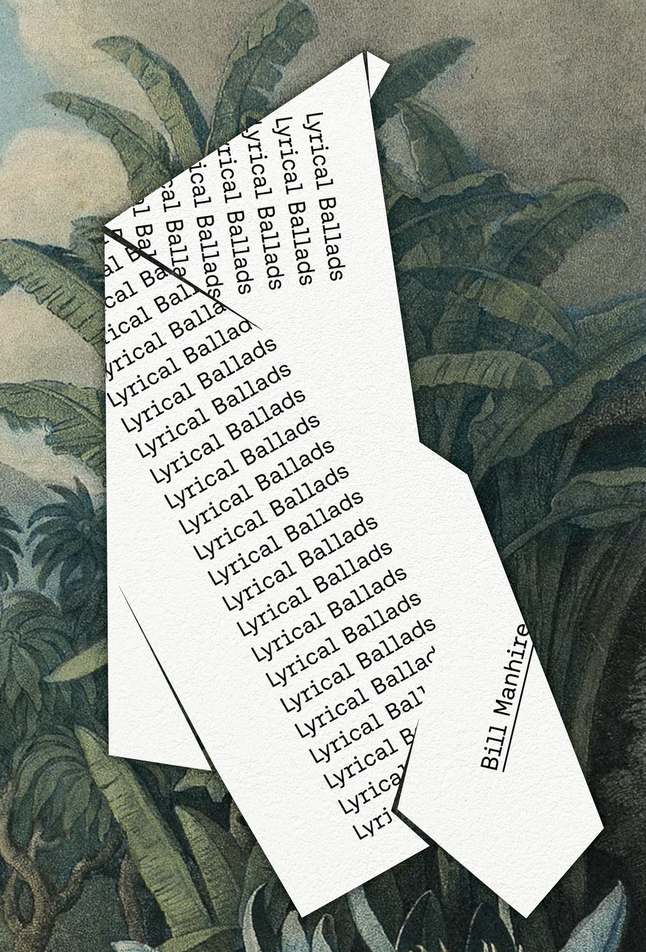
from Lyrical Ballads, THWUP, 2026

My must-go-to event at the Auckland Writer’s Festival was the 2026 Honoured Writer session. I was utterly gutted not to go, and extremely grateful to the festival for making the session video available. I have travelled with Bill Manhire’s poems for a long time, his collections are my go-to destinations for poetry that offers musicality, movement, intricacy, economy, agility, wit, surprise, storytelling, deep-seated feeling, his heart and mind engaging with what is close at hand along with the beating heart of the wider world, both physical and imagined. I get to feel his poetry, I get to think his poetry, I get to head off into extraordinary states of reading where poems simply and utterly and complexly shine. Think poetry with wings.

Bill has published some of my all-time favourite nz poems – poems which dance and tremble and echo on the page, poems that dance and tremble and echo in the ear / air. To hear Bill perform his poetry is an utterly breathtaking experience.

Thought I’d offer my provisional top-ten Bill poems as a reading starting point for you, and yes, every day the list shifts a little to suit my mood.

a provisional top ten

‘It Is Nearly Summer’
How to Take off Your Clothes at a Picnic, Wai-te-ata Press, 1977

‘The Ladder’
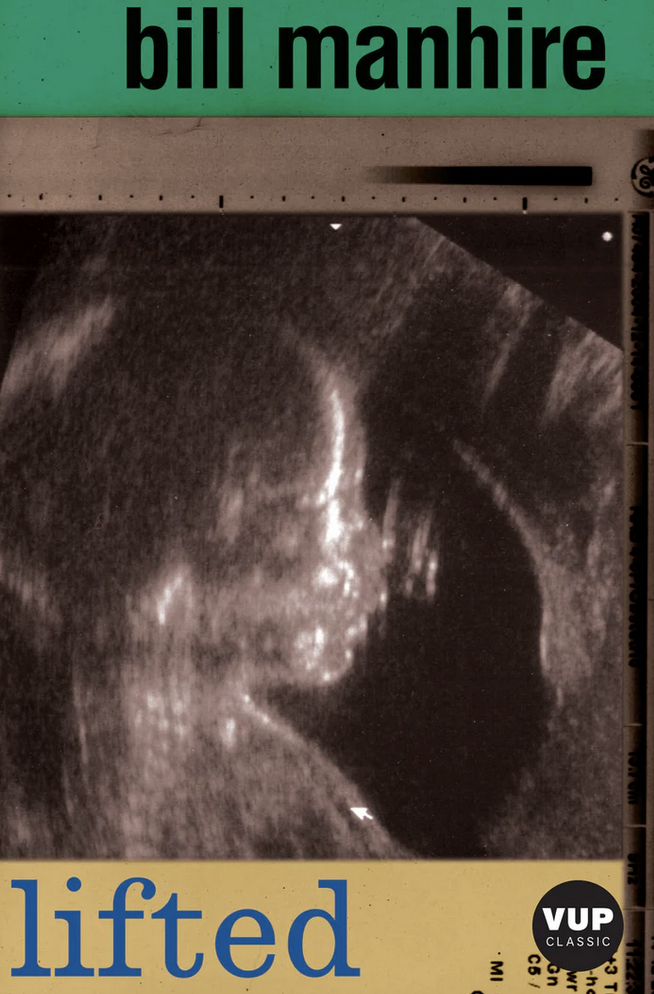
Lifted, THWUP, 2005

‘Making Baby Float’
The Victims of Lightning, VUP, 2010

‘1950s’
The Victims of Lightning, VUP, 2010

‘Erebus Voices’
Lifted, THWUP, 2005

‘Hotel Emergencies’
Lifted, VUP, 2005

‘My World War 1 Poem’
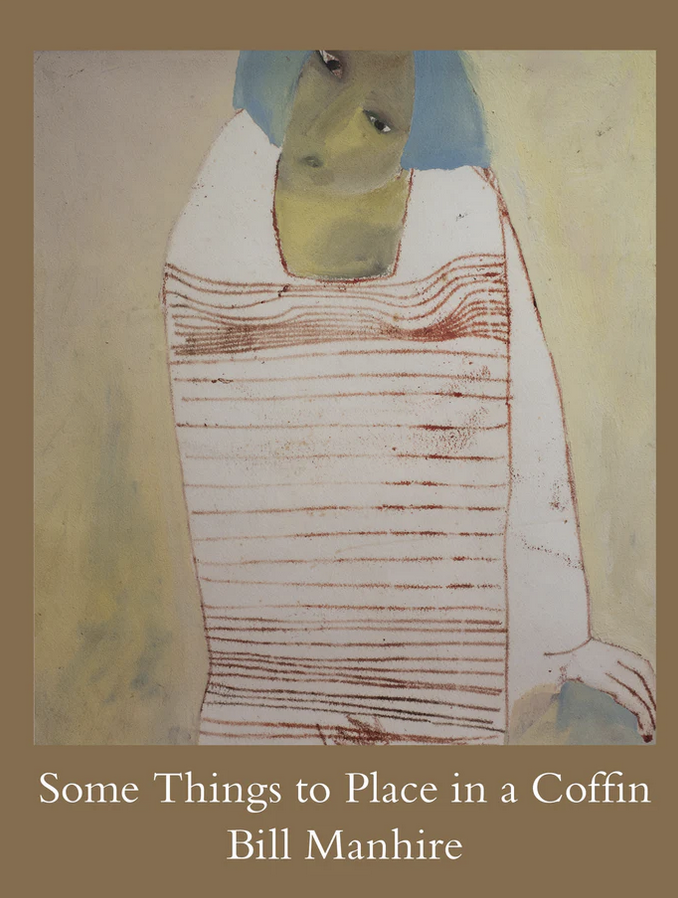
Some Things to Place in a Coffin, VUP, 2017

‘Little Prayers’
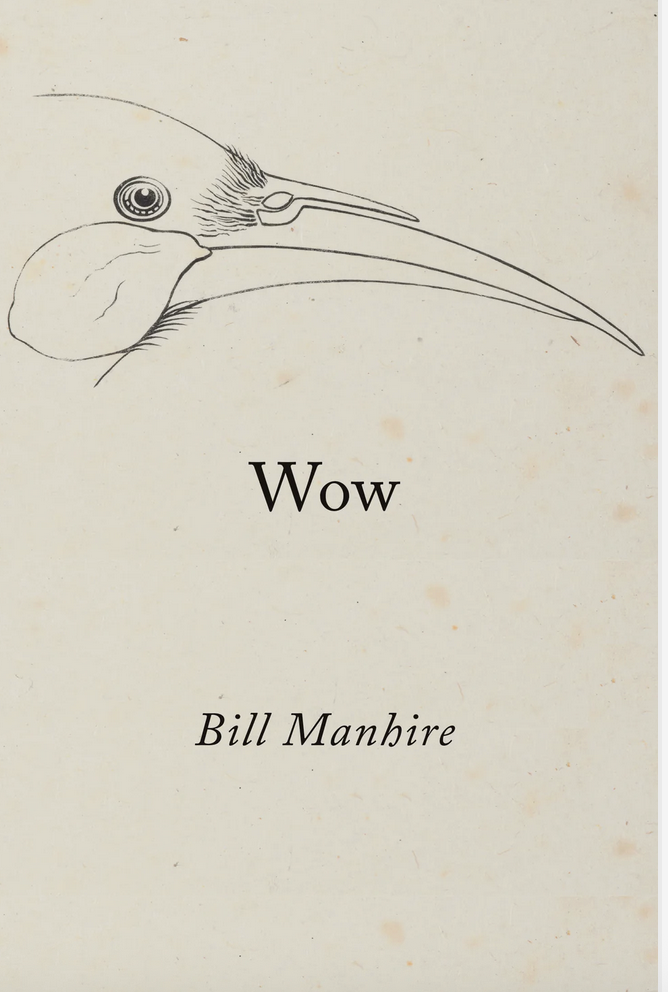
Wow, VUP, 2020

‘Kevin’
Lifted, VUP, 2005

‘A Lullaby’
The Victims of Lightning, THWUP, 201

Plus this year, there’s the arrival of Bill’s new poetry collection Lyrical Ballads iTHWUP 2026). Spend a weekend sojourn with this remarkable book.

I wrote on Poetry Shelf: And of course there’s the ink steeped in music, with rhyme and repetitions, loops, the exquisite lyricism that audio-marks each ballad. My dream is to sit in the Titirangi hall again and listen to Bill read us the whole book as we sit spell bound, before moving to the side room to the spread the locals have put on, to return with plates of food balancing on our knees, and to talk poetry and life until our voices are hoarse.

Is it possible to consider this collection in the light and possibilities of tracing paper, where each poem is a set of overlaid sheets, where story is overlaid upon song, which is overlaid upon the personal, which is overlaid upon philosophy and contemplation, and where every layer is embued with humanity, what it means to be human and humane, kind and caring, and every layer is shining through and adding myriad possibilities? What will the insects sing next? What will I hear in the kissing room? What do I picture when I picture the bend in the road?”

After the rain

we climb out
onto the roof

& tiptoe right
to the edge

we want to see
where the water

shakes its wings

Bill Manhire
from Lyrical Ballads, THWUP, 2026

The Honoured Writer Session

Publisher Fergus Barrowman chaired the session with Ian Wedde, Norman Meehan, Emily Perkins and Elizabeth Knox, each choosing a poem to read and to use as a prompt to talk poetry. While Bill was unable to attend the session, we got to hear him read courtesy of a laureate event.

Anna Rawhiti-Connell, deputy chair of AWF, introduced the session with some scene-setting words. Bill was gifted a pounamu that carried the warmth and gratitude of the people in the room.

Anna: “To try and quantify the generative and multi generational impact of Bill Manhire’s work and leadership across the decade would be akin to dropping a hefty scroll on the stage, having it unfurl, roll up the aisle onto Queen Street and float out onto the Waitematā”

I am picturing testimonies from writers, students, readers on the scroll, and I am agreeing with Peter Simpson: “Bill has done more for poetry in nz than any other writer.”

Gaza

The dead boy tries to open his eyes.
He wants to se the world he is leaving.
But there is nothing to see here,
nothing and nothing, and anyway he is gone.
His parents held him while he died
but they are both dead, too.
Or he held them, no one remembers.

Bill Manhire
from Lyrical Ballads

a highlight WOW exchange

Elizabeth spoke first and it was edge of the seat for me as she read and identified two key words: lightness and buoyancy: “The poetry is lighter than air and can carry great loads. When you enter a Bill poem you don’t know whether you are going to be carried up, and you’re always carried up, into sunshine, or whether you’re going to end up in the dark storm clouds. He’s got this buoyancy that takes you somewhere, but there might be rain there.”

Emily added negative space: “it can feel like buoyancy but it can feel very weighted and full of subtext, and you enter a poem, and it might just turn a corner, and in fact it probably will definitely turn a corner and you’ll find yourself somewhere totally new. The one I am going to read has a very intentionally enigmatic quality. One of the things the poems do for me they just work on the level of sound and you want to let that happen and not worry too much at them with the front of your mind.”

Elizabeth: “They’re not twist surprises he’s built into the poem, the place he’s going to take you to, but he’s done it, so you don’t see it until you end up there, and it’s always amazing every time. It’s like WOW! Like the title of that book of his.”

Ian: “I always like the way there’s a kind of self deprecation in the way that Bill writes, where he establishes his presence and then just gently removes it and leaves the presence to what the poem is doing and it’s a very subtle process and its a very understated one, but it’s also at a very basic level an immensely skillful one.”

Norman: “I’d been setting ee cummings poetry as music twenty-five years ago and said to Fergus I’d like to work with something closer to home. The great thing about asking a publisher a question like that is you leave his office with a box full of books. What I found with Bill’s work there was a musicality in how these poems performed themselves on the page and as I read them it suggested music to me and there were some that leapt of the page so a poem like Kevin, it was instantly telling me stories about the kind of music it wanted to live with.”

You get a clip of Bill reading at the National Library Poets Laureate event (28 November 2025). He reads the hilarious and serious poem, ‘Too Many Draculas’ . He also reads ‘Gaza’, with its ache and heart smash: “One of the things that the Poet Laureate position did for me and I think maybe does for other people too is it made me a little braver about using poetry as a thing where you could say what you thought about public events, things in the world, rather than things that just happened to be in your muddled brain and heart.”

The session ends with a video clip of Norman and Hannah Griffin singing Making Baby Float. Extraordinary.
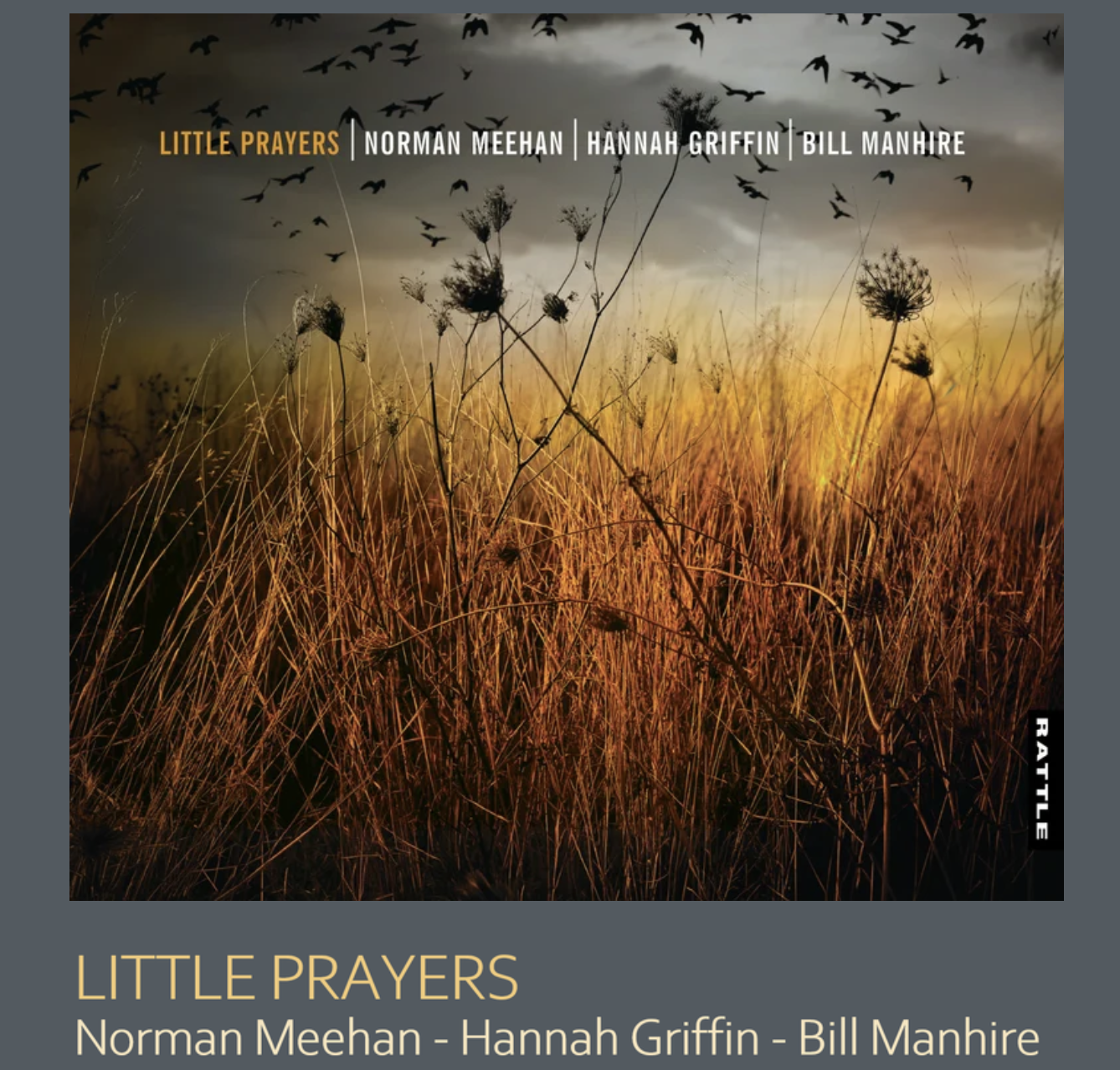
Little Prayers will be released this Saturday, June 13 at 6.00 pm
at a concert in the Hall of Memories as part of the 2026 Lõemis
Festival. Tickets are available HERE.

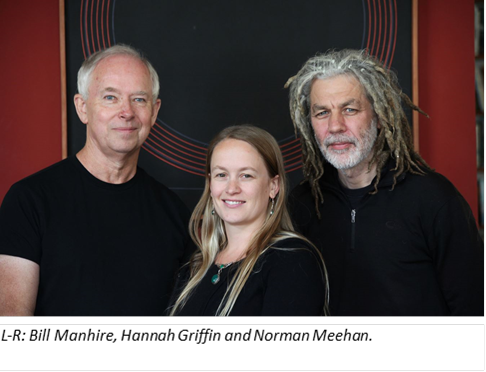
Hannah Griffin (vocals)
Norman Meehan (piano)
Martin Riseley (violin)
Zephyr Wills (viola)
Brenton Veitch (cello)
Bill Manhire (texts)

Following the horrific events in Christchurch in 2019, Bill wrote “Little Prayers”, a poem that surprised him. “I want to say I didn’t know I had it in me, but of course I didn’t have it in me—it was always out there in the world. My work was to catch it, edit it hard, and get the choreography right.”
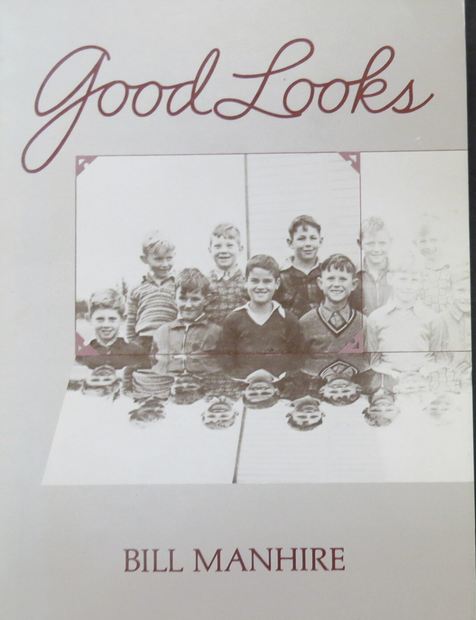
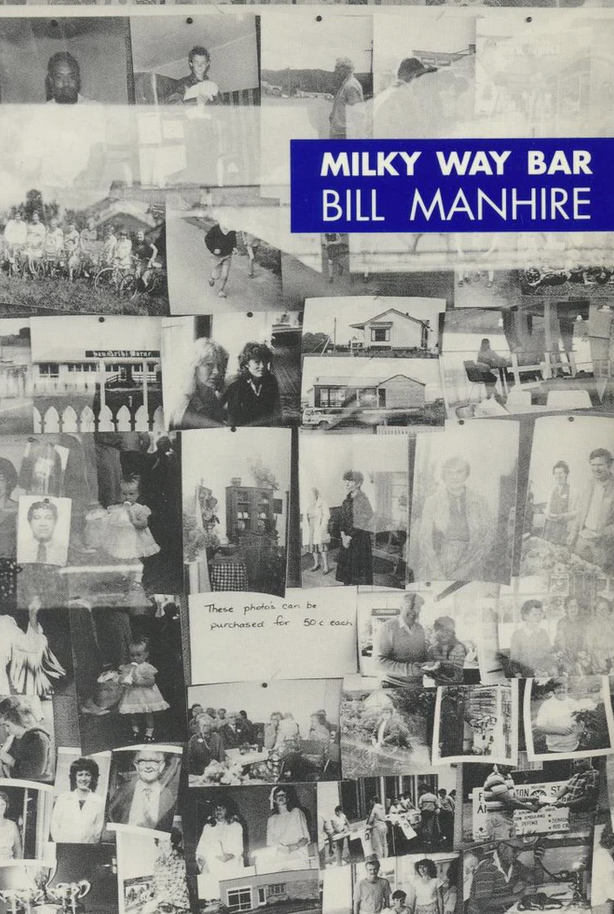
Bill Manhire (CNZM’)s latest book, Lyrical Ballads (2026). His books include Wow (2020), Some Things to Place in a Coffin (2017), Tell Me My Name (with Hannah Griffin and Norman Meehan, 2017) and The Stories of Bill Manhire (2015). He has won the New Zealand Book Award for Poetry five times, and was New Zealand’s inaugural Poet Laureate. He founded and directed the International Institute of Modern Letters at Te Herenga Waka—Victoria University of Wellington. He has edited major anthologies of New Zealand literature, including, with Marion McLeod, the now classic Some Other Country: New Zealand’s Best Short Stories (1984). In 2018 Manhire was awarded an Icon Award Whakamana Hiranga from the Arts Foundation.

Te Herenga Waka University Press page
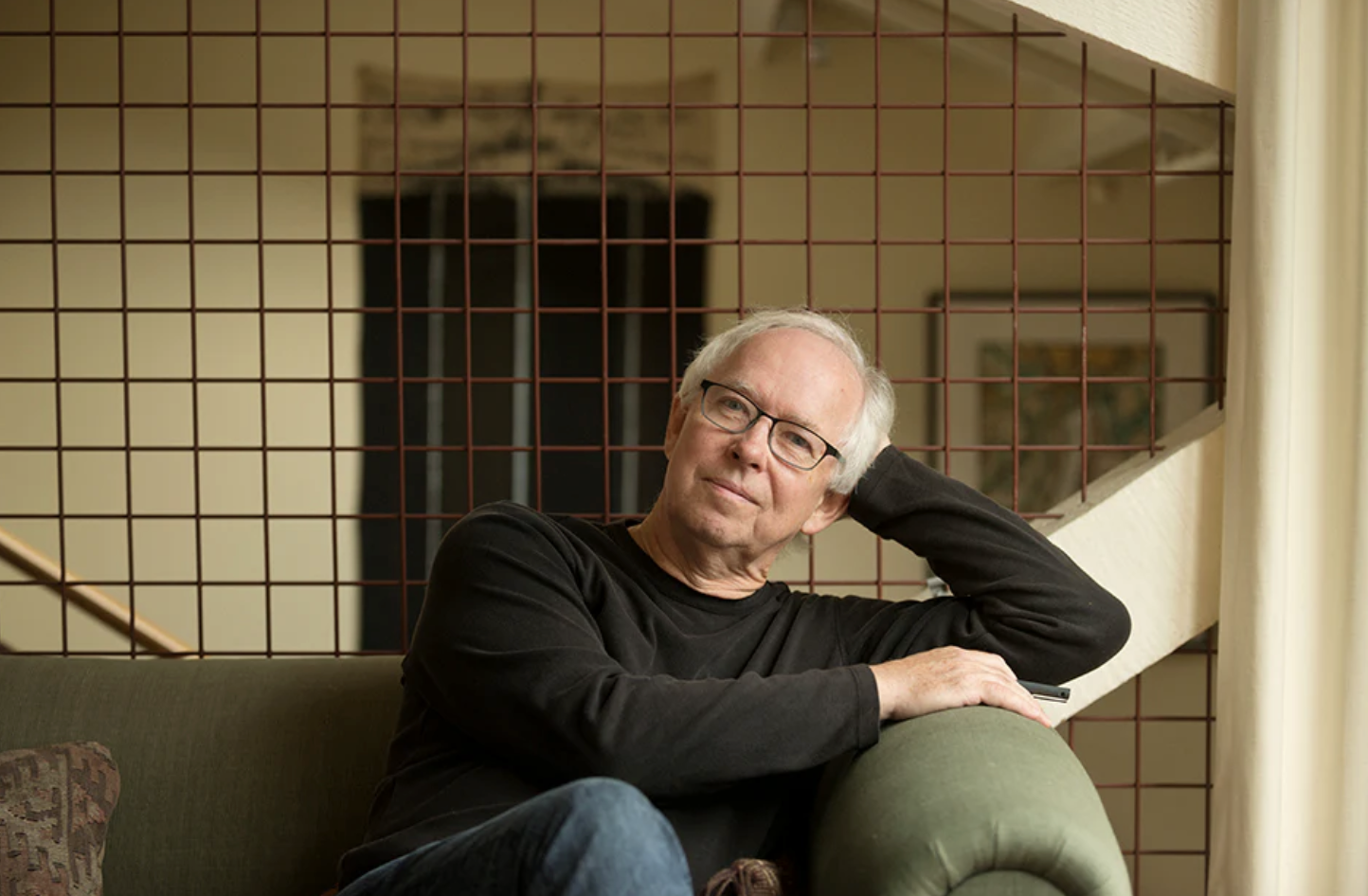
Photo credit: Grant Maiden

Poetry Shelf noticeboard: Going West podcast – Paula Green in conversation with Bill Manhire and Norman Meehan

This is one of my favourite sessions I have chaired ever!

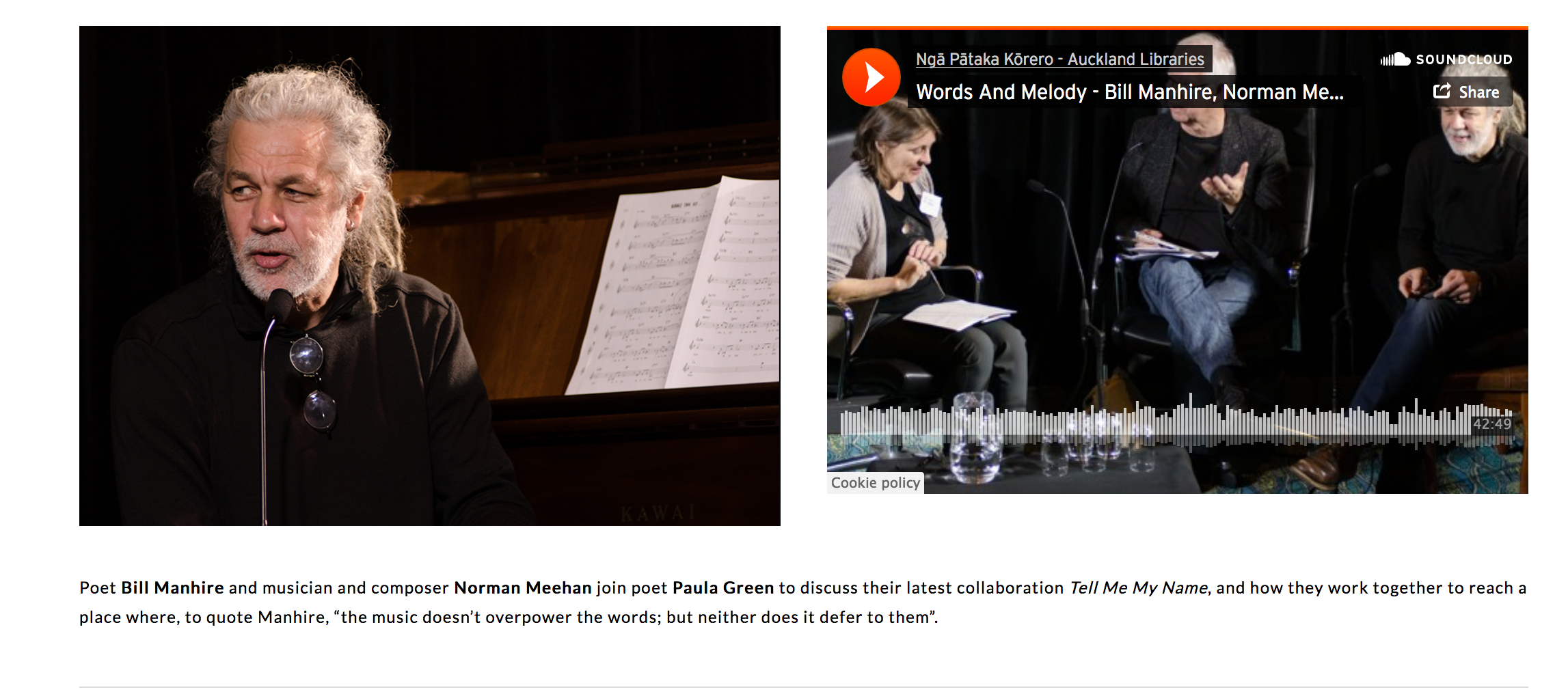
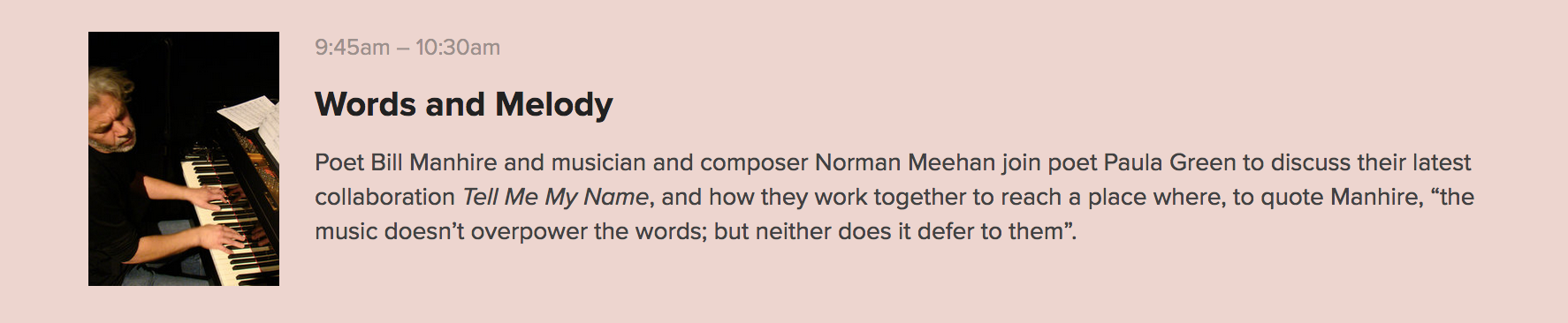
Paula Green, poet, anthologist, reviewer and children’s author, with her newly minted honours and awards, shares the stage in a charming conversation with poet, short story writer and academic Bill Manhire, and jazz composer and performer Norman Meehan, as they disclose the alchemy of setting poetic text as song. They discuss their latest collaboration, the riddle project, Tell Me My Name, and along the way Bill Manhire reads two of his poems Frolic and I am quiet when I call.

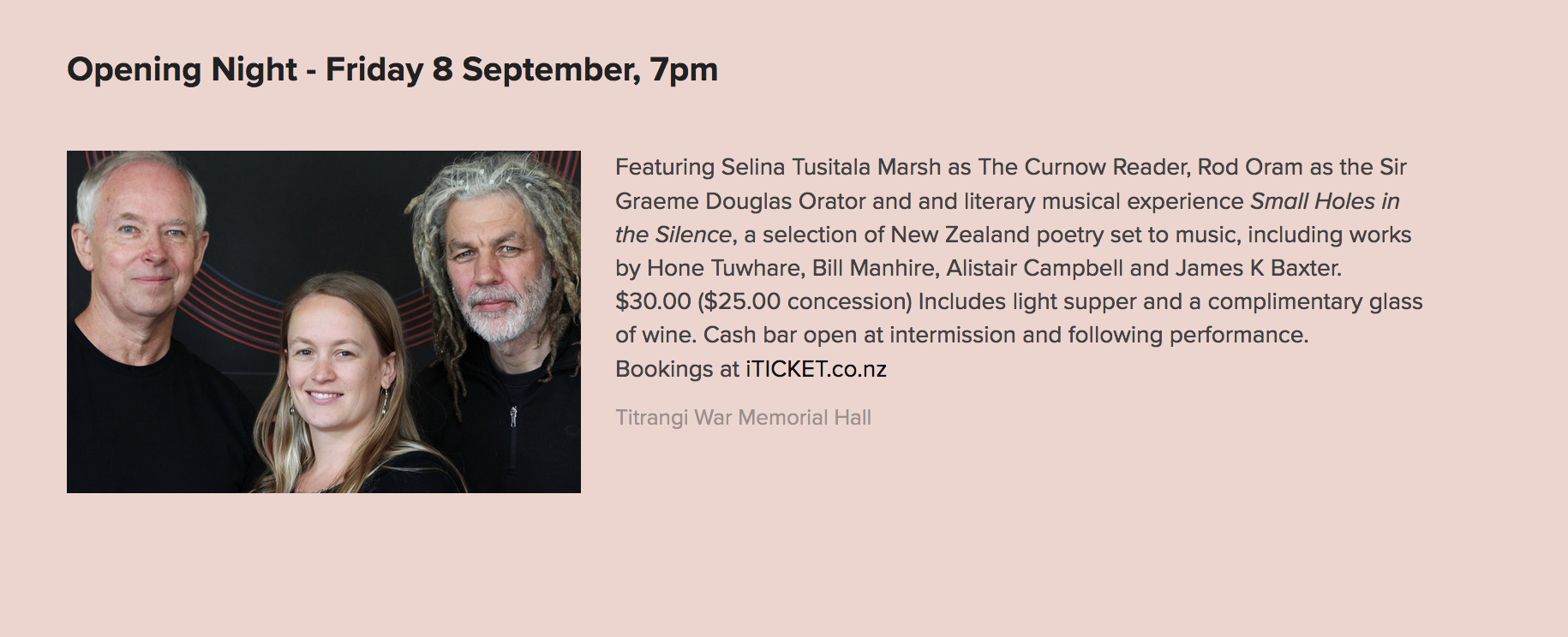
This session took place the day after Manhire, Meehan and friends delivered a captivating opening night performance, Small Holes in the Silence for the Going West audience.

Listen here

Going West Podcasts 2017: Words and Melody – Bill Manhire and Norman Meehan with Paula Green


Screen Shot 2018-08-22 at 1.01.11 PM.png


Listen to the podcast here


Going West was a hit with me


Going West is a festival that devotes itself 100 per cent to showcasing an eclectic range of New Zealand writers: local, ultra-local (Westies), from out of Auckland. It draws upon fiction, poetry and nonficton and never fails to delight.

Due to the fire in the roof of Titirangi hall the festival moved into the beautiful ex Waitakere council chambers – better parking, not so far to drive for me, excellent green room, cosy space for sessions but I missed the hall and the bush and the village. As a temporary last minute venue – which must have been such stress on the team – it worked just fine.

As usual the food and shared conversations were excellent. Usually I go the whole weekend – but this year, just the Friday night and Saturday was possible. It means I sadly miss out on a suite of sessions today.

On Friday night we got to see our new Poet Laureate, Selina Tusitala Marsh in performance and, just as she sparks the poetic hearts of students in South Auckland (and elsewhere), she sparked the poetic hearts of festival goers. She delivered her Laureate ‘thank you’ speech again, a speech which acknowledges the people that have supported her, in the form of a list poem.  She read her poem for the Queen with generous anecdotes to accompany it along with the revenge poem (he who shall not be named did not shake her hand), and the poem on three Queens, the last being Alice Walker.

The tokotoko was passed round for everyone to touch and imbue the stick with individual mana. Skin prickling for so many of us.

Every New Zealand Poet Laureate has gifted something to poetry fans. Selina, one of our beloved poetry icons, with the charisma of Sam Hunt, Hone Tuwhare and Glenn Colquhoun, is one of the most important Laureate choices to date. Those of us lucky enough to hear her on Friday night, will know just what treasures we have in store.  It matters, as she says, that she is a brown face. It matters to every brown poet, every fledgling brown poet, and every student white and brown, who has yet to discover the liberating power of poetry.

It matters because Selina’s poetry shows how words can make music in the air, build vital connections to heart and mind, and challenge how we view the world.

If you get a chance to see her over the next few years – take it!


In a perfect and unplanned arc, Bill Manhire, our first Poet Laureate, and another beloved poetry icon, was part of the final session of the night. With jazz musician Norman Meehan, vocalist Hannah Griffin and Blair Latham on sax, we got to hear tracks from their new collaboration: Small Holes in the Silence. I have heard them before but the magic intensifies if anything on a subsequent hearing. The alchemy of word, musical score and manuka-honey voice is simply exquisite. It is absolutely breathtaking.

The next day, in our session, I described how listening to their new album/book, Tell Me My Name, is like a flotation aid. You listen and you lift above domestic routine, chores, head clutter. So yes, I floated home, adrift still in the after-effects.


Saturday was a long day, a good day. I had only managed a few hours sleep for various reasons so felt  like I was in between here and there, wwhich is the theme of the festival. On the way I passed so many ALTERNAT ROUTE signs I wondered if I would find my way home through all the detours that might then be in place. I felt like I was entering a found-poem trap and I would get stuck in it.

Sitting on stage with Bill and Norman for our session was a bit like sitting in a cafe – I wanted Norman to hit the keyboard and play melodies here and there. I loved the idea of him playing something while we listened to see what word score unfolded in our heads.  The inverse of Norman taking Bill’s poem and seeing what melody surfaces. It was fun to talk – people just happened to be listening!

Sadly I missed Diana Witchel and Steve Braunias – but I am going to make up for that and read the book: Driving to Treblinka. The audience loved this session.

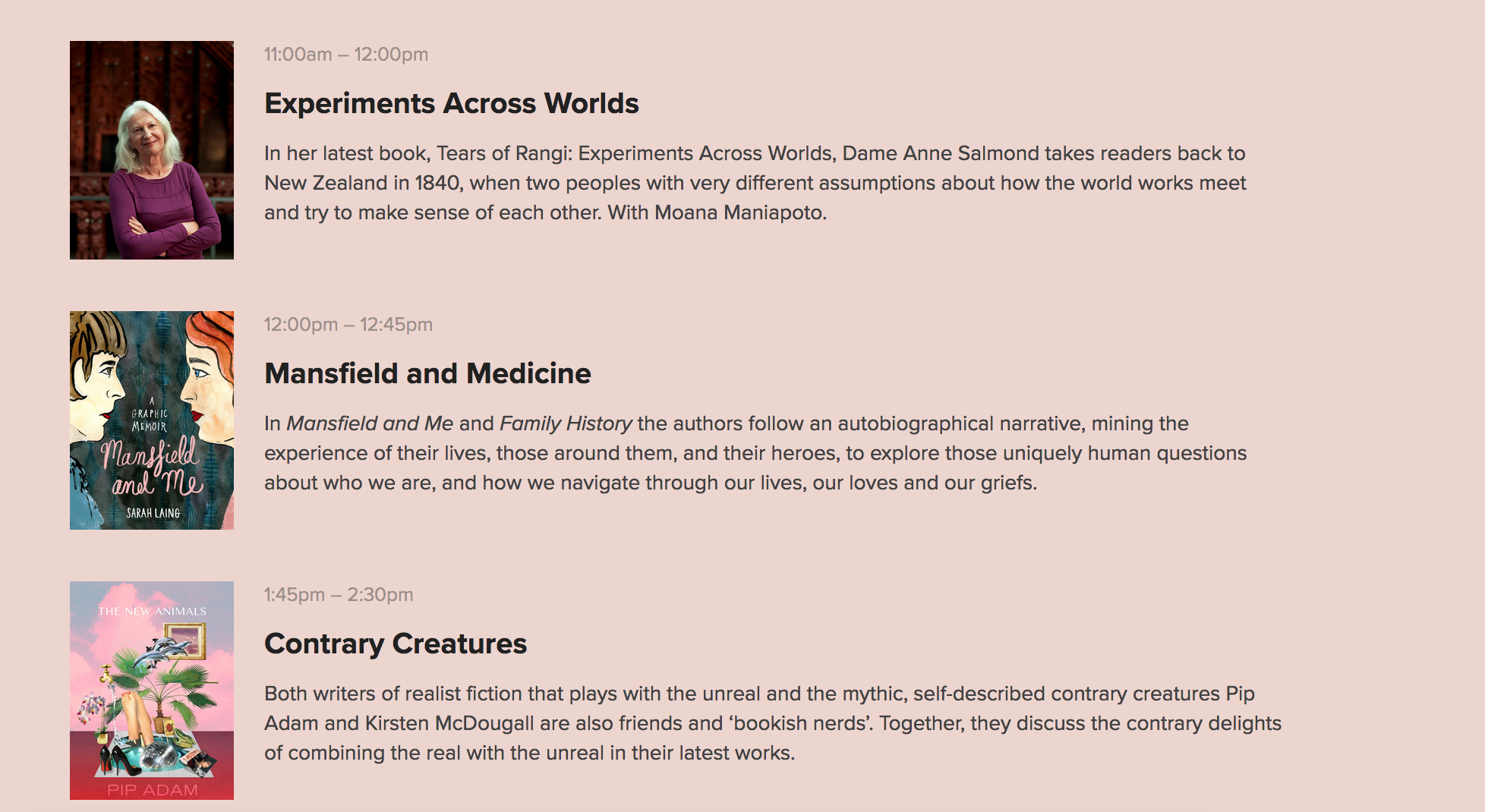
I did hear Dame Anne Salmond in conversation with Moana Maniapoto and it was for many of us, an extraordinary thing. The conversation just flowed – it felt unafraid of anything: wisdom, human warmth, tough stuff, vulnerabilities, empathy.

In 1960 Anne met Māori and asked herself: ‘How come I’ve grown up in this country and know nothing about these people and this world?’

Eruera Stirling advised her: ‘If you are really interested in Māori Studies then the marae is the university for you.’

Anne: ‘I am a scholar but there’s a lot of stuff you can’t learn with your mind – you have to learn through your skin.’

Anne: doesn’t necessarily agree with the idea of one world with different views but prefers perhaps the  idea of a ‘mulitverse with different realities.’

Anne: ‘You can’t be an expert on the Treaty if you can’t speak Māori.’ She said  it would be like someone who couldn’t speak French acting as an expert on the French constitution.

Anne: ‘If the river is dying I am too.’

This is why I am both a reader and writer and a festival attendee. Because someone like Anne in conversation with someone like Moana can blast apart my thinking and feeling.

I have a copy of Tears of Rangi by my bed to read.


I got to hear Sarah Laing and Johanna Emeney read and talk. I have to say I love both the books (Mansfield and Me and Family History) and have written about both.  I love the way they showed that poetry/memoir does not need to stick to facts (Airini Beautrais said the same thing in her interview with me). The gold of this session was hearing the multi-talented Sarah read an extract with an enviable array of accents. Wow!

Loved hearing tastes of Pip Adams and Kirsten McDougall’s new novels – and the way the unreal can unravel the real in such innovative ways. They worked double hard not to spoil the reading experience, for those of us who still have the treat in store, by giving too much away. Just little tempting clues.

Loved hearing the very articulate Linda Cassells talk about the genesis of the Allen Curnow biography she edited after the death of her husband, Terry Sturm, and the way Bill Manhire stepped into the gap, with CK Stead ill,  read us a few poems, and shared a few anecdotes.

Thanks Going West. This was one very good festival – I was delighted to participate as both reader and writer.


This year’s Going West programme is a poetry treat

This is an excellent programme with the usual eclectic array of NZ voices/writers.

Poetry at Going West:

Screen Shot 2017-07-28 at 9.22.39 AM.png


Screen Shot 2017-07-28 at 9.23.32 AM.png


Screen Shot 2017-07-28 at 9.24.11 AM.png


Screen Shot 2017-07-28 at 9.24.35 AM.png


Screen Shot 2017-07-28 at 9.25.15 AM.png


Plus this little run of highlights:

Screen Shot 2017-07-28 at 9.25.54 AM.png

And many more!

Riddling music of Manhire and Meehan launches Writers on Mondays


image006.png

Writers on Mondays 2017, hosted by Victoria University of Wellington’s International Institute of Modern Letters (IIML), brings together a line-up of new and established talent to showcase what’s happening in the world of New Zealand writing and beyond.
image006.png
To launch the 2017 programme the IIML is presenting the first free Wellington performance of Tell Me My Name, Bill Manhire’s sequence of thirteen riddle poems set to music by composer Norman Meehan and performed by vocalist Hannah Griffin and Victoria New Zealand School of Music violinist and lecturer Martin Riseley. The concert takes place at 5.30pm, Tuesday 11 July at Meow, 9 Edward Street.

The popular lunchtime series at Te Papa Tongarewa begins on 17 July and the first three weeks feature award-winning authors from America, Australia and New Zealand.

It kicks off with Catherine Chidgey, winner of the $50,000 Acorn Fiction Prize at the 2017 Ockham New Zealand Book Awards, in conversation about her prize-winning book The Wish Child and her writing career to date.

On 24 July, 2016 Stella Prize winner Charlotte Wood, one of Australia’s “most original and provocative writers” (The Australian) appears with New Zealand novelist and convenor of the IIML Master of Arts fiction stream Emily Perkins.

On 31 July, American poet and essayist Marianne Boruch joins the IIML’s poetry and creative nonfiction convenor Chris Price to explore how her work approaches the big topics of love, death and human knowledge. Marianne Boruch’s restless curiosity ranges across science, music, medicine and art, asking questions such as “why does the self grow smaller as the poem grows enormous?”.

Director of the IIML Professor Damien Wilkins says the combination of new voices and established writers in Writers on Mondays is wonderful.

“This free series is a great way for readers and writers to get together for entertaining, informative, uplifting, even perplexing sessions of talk and performance.”

On 7 August poet and novelist Anna Smaill introduces a quartet of poets with exciting new books. Featuring work from the cutting edge of NZ poetry with Louise Wallace (Bad Things), Hannah Mettner (Fully Clothed and So Forgetful), Maria McMillan (The Ski Flier) and Airini Beautrais (Flow).

In Hopeful Animals, 14 August, Damien Wilkins, Tracey Farr and Pip Adam discuss and read from their recent novels, and consider how fiction continues to provide a vital lens on contemporary life.

Writers on Mondays will acknowledge National Poetry Day with the annual Best New Zealand Poems reading on 21 August. Best New Zealand Poems 2016 editor and Arts Foundation Laureate Jenny Bornholdt introduces this lively session featuring 13 poets at the top of their game.

On 28 August The Fuse Box gathers some of our best writers to shine a light on the creative process. Playwright Gary Henderson, novelists Rajorshi Chakraborti and Elizabeth Knox, and poet James Brown join editors Chris Price and Emily Perkins to take a look at the wiring of creative writers and celebrate the launch of this collection of essays on creativity from Victoria University Press.

Acclaimed playwright Victor Rodger, the Victoria University/Creative New Zealand Writer in Residence for 2017, has assembled a panel of writers to explore how the work of others can inspire and challenge. Mitch Tawhi Thomas, Moana Ete, Jamie McCaskill and Faith Wilson discuss the dynamics of creative communities on 4 September.

The final month of events showcases work from the current cohort of writers in the Masters in Creative Writing Programme at the IIML. It begins with fiction, poetry and creative nonfiction writers in The Next Page, 11 and 18 September, then moves to Circa Theatre for Short Sharp Script, 25 September and 2 October, where actors perform dynamic new work by participants in the Master of Arts scriptwriting workshop.

The Writers on Mondays series runs from 17 July to 2 October, 12.15–1.15pm, Te Marae, Level 4, Te Papa Tongarewa, with the exception of the opening concert at Meow and the two Short Sharp Script events at Circa Theatre. Admission is free and all are welcome.

The full 2017 Writers on Mondays programme is can be viewed and downloaded from the IIML’s website.

Writers on Mondays is presented by Victoria University’s International Institute of Modern Letters with the Museum of New Zealand Te Papa Tongarewa, and additional support from Circa Theatre and National Poetry Day.

For more information contact Pip Adam on pip.adam@vuw.ac.nz or modernletters@vuw.ac.nz.


On reading Bill Manhire’s Tell Me My Name

Tell_Me_My_Name_front__47436.1482273132.1280.1280.jpg


The road goes by the house

the wind sings in the tree

we sing the travelling worlds

we sing quietly

(we sing quietly)


from ‘1’


I have never learned to meditate but running on the beach is a way of being completely in the moment, of absorbing sky, sea and sand, with everything else on hold. I find the same thing happens when I do cryptic crosswords—whether as a bedtime ritual or in a waiting-room—the head clatter dissolves. I have, courtesy of Bill Manhire’s Tell Me My Name, discovered a new floating aid: the riddle poem.

Bill’s book is a collection of riddle poems with alluring photographs by Peter Peryer and a CD where the riddle poem becomes song, courtesy of Hannah Griffin’s voice and Norman Meehan’s music.


I’m made of where you’re going

I’m made of north and south

I’m made of possibility

I’m made of somewhere else


from ‘4’


Upon first reading, I meet the poems with the riddleness waiting in the rhyme, the echoes, the porousness, the enigma, the sweetly crafted melody.  I let song wait and then the poems start to sing themselves because they are music rich. There is such openness, as though you enter a vast field that might be corn or might be sunflowers, that generates both movement and stillness.

Upon second reading, I pay attention to the riddles and drift in and out of an atlas, a memory, a shadow. Now I have my floating aid. I am not sure what things are or the answer to the riddles, and that is the unexpected joy of it (like the rhythm of running or cryptic clues where there is a Ha! at arrival which is good but not as good as the travel). One day I will look at the end page and discover the names of things, but it will puncture the delight of currently never knowing (in many cases). Perhaps I have found a bridge, an ocean, an echo, a family tree, a watermelon, a muddy puddle, ice, the dark, longitude and latitude. I am thinking this is the perfect book to take on a long haul flight, to have in my bag for steamy queues, but I don’t want to lose it. The riddle poem as flotation aid is like a strip razor sharpening your mind, a shot of vitamins that restores equilibrium.

And now the CD. I keep playing it over and over to fall into the honey gravel lift and dip of Hannah’s voice or the textured music, the delicious pared-back feel so that each note— whether violin, piano, whistles or voice—resonates.

Victoria University Press has produced a beautiful hard-cover book. It is going in my carry-on bag.


I’m always at the cinema

I’m always at the beach

I’m waiting in that secret place

that lovers try to reach


from ‘5’


Victoria University page

Interview with Kathryn Ryan on RNZ National

Maria McMillan on Wordsongs


Wordsongs, St Peters Hall, Paekākāriki, 3rd March 2016


I go partly because there’s like a major poetry type gig in Paekākāriki and I’m a Paekākāriki poet and it feels a bit rude not to go. Imagine, I think, if there’s only six people there without me and they decide never to have anything poetry related in our village ever again. Yes, we call it a village and I needn’t have worried. Having scoffed down as much of a delicious fried-rice concoction as I possibly could in 94 seconds  I arrive three minutes late and take the Very Last Seat. It’s an actual excited crowd, in carefully arranged tiers. They’ve turned St Peters Hall around so we face the direction of the sea and one long side of the hall with its cool house-shaped wooden-window shutter things. The huge red velvet curtain hangs over the stage to our left and the doors to the village main street to our right.

I love this hall but truthfully, I’m a bit wary of poetry set to music. It’s the puritanical killjoy in me which says, honey, you need to decide, music or poetry. Just get away with your weird, not very interesting bongo drumming interspersed with a man saying two words usually something like organic tomatoes in  a quiet yet loud, yet well modulated, yet with working-class-solidarity voice and then pausing a full minute while making eye contact with every member of the audience before saying wet. But I know it’s kind of prudish of me and I need to open myself to new experiences so I am willing and here and listening.

Local poet, Dinah Hawken, who starts us off, makes me feel very comfortable. She reads her poetry sans music, the way it should be (sorry) and she starts with a good long poem about environmental catastrophe. The poem earns its length and I enjoy Hawken’s meditative delivery. She reads slowly and thoughtfully and the poem turns from lament to challenge to conversation. I feel like I’m hearing more and more poetry like this, laced with planet grief and helplessness and wonder. I’m glad it’s being written.

The main act is  Bill Manhire with singer Hannah Griffen, pianist Norman Meehan and Hayden Chisholm on saxophone and clarinet. To begin with I think Chisholm is tuning up, his sax is breathy and rough and understated and there’s no clear strong notes but then I realise this is part of it all. He’s throat clearing and then the other clear notes come, but through the set I see this replication of human noises, and also the absorbing of other sounds and instruments. I hear reverb and the plucking of a guitar, slow growling, didgeridoo and the noise of traffic all through his instruments.

In this first song, an interpretation of Baxter’s High Country Weather, the piano and singing come in beside the brass and I’m startled by how much action, how much sound can be produced by just three people. Griffin’s voice is like some really good jazz club singer. I get that vibe through the night. I want to be sitting at a small lamped table having intimate conversations. She sings big, beautiful and clear, high and low.  Next Bill, congenial and with charming anecdotes that thrill the poetry nerd in me, reads Rain by Hone Tuwhare and then the three musicians play it back to us. I get it now. I can listen to the poems read as poems, and listen to the music as music. No bongo drums. No organic tomatoes and soulful stares. It’s a relief. And when I hear Rain sung I’m struck by how lineation changes with the music, the words become split and lumped in different way. We can hear hidden rhymes and rhythms which may be a subtle backbone to verse on the page but in music are drawn out and played with. Cool.

Meehan tells us the set is pretty much the album Small holes in the silence, featuring versions of  Manhire and other poets’ work as songs. We hear interpretations of Alistair Te Ariki Campbell, Manhire, David Mitchell, and my favourite piece, two poems by Eileen Duggan. I can’t actually hear the words as Griffin sings so perfectly in tune with the sax, so my liking this all the same proves how thoroughly mature I’ve become about the whole poetry and music mash up. What I love in this song is the way the sax more than ever takes the role of a voice; for a moment the sax and the singer are a duet and in a kind of heady triumph. After that the two seem to swap places; Griffin no longer singing words but sounds become another instrument and the saxophone becomes a human voice. It’s a meandering interesting work. I also love Manhire’s stories about and poem for Cornish poet Charles Causley. The evening ended with a spoken and then musical interpretation of Manhire’s rhyming list poem ‘1950s.’ The crowd loved it, they threw flowers, they cheered, they stomped. Well, they didn’t but I’m sure if they thought of it they would have. They applauded long and hard. I wander out into the Paekākāriki night. Now the traffic sounds like a saxophone. The crossing signals go off. A train, windows bright, rumbles past us on its way to Waikanae. I wave.

Maria McMillan


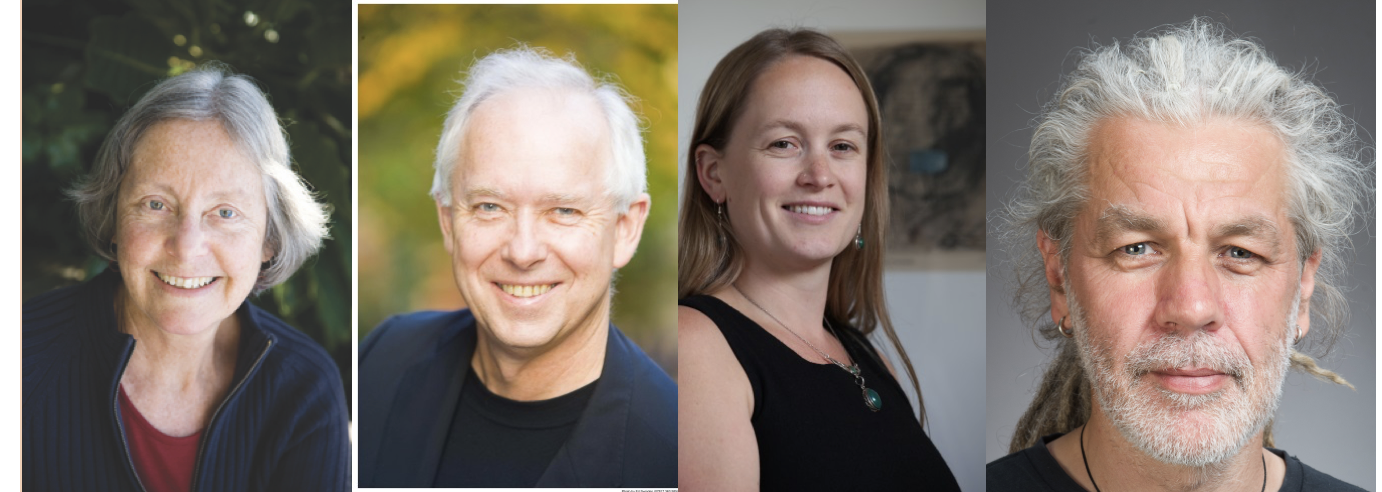
Dinah Hawken to open WORDSONGS

I seem to have been a roving poetry reporter these past few weeks but time to shut the hatches and stay at home. This event will be good – I judge this on my experience of hearing Hannah sing Bill at the AWF a few years ago. Transcendental experience.

I urge you to check this poetry event out and would love a wee response from a poetry patron to post on the blog.


Screen Shot 2016-03-23 at 10.12.24 AM.png


Screen Shot 2016-03-22 at 6.28.24 PM.png


Tickets $20 from Eventfinder or Darcey’s Fruit Shop.  Limited door sales at $25.

QUERIES: Gilbert Haisman.  Tel 04 904 8428 or 022 0122 103. Email: thewordshop@paradise.net.nz

I have had this new CD on repeat: Small Holes in the Silence


Small_Holes_in_t_55beb4afb57d4_222x198      Small_Holes_in_t_55beb4afb57d4_222x198

Small Holes in the Silence Rattle VUP

The CD looks good with its striking cover but what matters is that this CD sounds spectacular. Norman Meehan on piano, Hannah Griffin on voice and Hayden Chisholm on saxophone have taken a number of New Zealand poems (terrific poems) and transformed them into song.

For example: Hone Tuwhare’s ‘Rain’, Bill Manhire’s ‘Ballad of the Hurting Girl,’ James K Baxter’s ‘High Country Weather,’ Alistair Campbell’s ‘Blue Rain,’ Eileen Duggan’s ‘Frost,’ David Mitchell’s ‘Yellow Room.’

Tricky stiff — translating poetry into song when the new score might muffle the internal music to such an extent the poetry suffers. How does word meet external melody?

In this case, the poem becomes something different, a wonderful different that almost needs a new word to signal its poetry/music status. Word becomes music and music becomes word. Like a yin yang kind of thing. Two sides of the one cloth.

I loved the enticing interplay between silence, chord, harmony, counterpoint, key, movement and word. The arcing melody of instrument and voice step out from a word or phrase. Lightly. Surprisingly. Beautifully.

And the voice. The glorious voice that makes hairs stand on end. Hannah takes a word and savours it in her mouth. The word itself becomes aural poem with its dips, lifts and extensions.

Ah. Poetry becomes melody, melody slips into the pores of your skin and when you return to the poem on the page there is this haunting refrain. The voice, the piano, the saxophone — secret aural undercurrents as you read.

Plus there is a great introduction by Bill Manhire. I especially agree with this: ‘The music doesn’t overpower the words; but neither does it defer to them.’


I highly recommend this!