LAUNCH – BROWSERS BOOKSHOP VICTORIA STREET HAMILTON SUNDAY 31st March at 4.00 pm.
All very welcome. Many contributors will read their poems and copies will be available to purchase. Refreshments available.
Find more poetry and the AWF programme here.
I want to congratulate Anne O’Brien for showcasing poetry to such a degree and for always paying attention to New Zealand/ Aotearoa poets and spoken word performers.
Brava!

Anne Michaels – among other things – is currently Toronto’s Poet Laureate, and her latest collection of poems All We Saw has garnered rave reviews.

Hughes’ debut poetry collection Gathering Evidence was similarly feted, winning The Irish Times Shine/Strong Award, and making it on to several shortlists including the NZ Post Book Award for Poetry.

Counting Patti Smith among his fans, poet and performer Luke Wright presents an hour of his best poems, in which he struggles with Brexit, doubt, duty and channels half-cut nights spent shouting impotently at the telly, namely at the BBC’s Question Time.

includes Friday Poem readings, and short poems with sweet cookies from The Receptionist coffee kiosk – all presented by an array of the writing great and good. Join Michele A’Court, Aroha Awarau, Gina Cole, Elaine Castillo, Avi Duckor-Jones, Emma Espiner, Steff Green, Kirsty Gunn, Karyn Hay, Chessie Henry, Dominic Hoey, Jeffrey Paparoa Holman, Chloe Honum, Nathan Joe, Stephanie Johnson, Kelly Joseph, Simone Kaho, Ahi Karunaharan, Erik Kennedy, Renee Liang, Lana Lopesi, Nic Low, Vana Manasiadis, Liam McIlvanney, Courtney Sina Meredith, Karlo Mila, Tze Ming Mok, Emma Neale, Bob Orr, Ruby Porter, Tess Redgrave, Isa Pearl Ritchie, Victor Rodger, Nick Sheppard, Carl Shuker, Damian Skinner, Michael Steven, Tayi Tibble, Jamie Trower, Kirsten Warner, Ian Wedde, Lisa Williams, Annabel Wilson, and Ashleigh Young
a feast of poets in this lot!!

MC’d by Grace Taylor, each poet takes turns to riff off the final line of the previous poem. Featuring Kyla Dela Cruz, Stevie Davis-Tana, Carrie Rudzinski, Dietrich Soakai, and Jahra Wasasala.

Bob Orr and Jeffrey Paparoa Holman

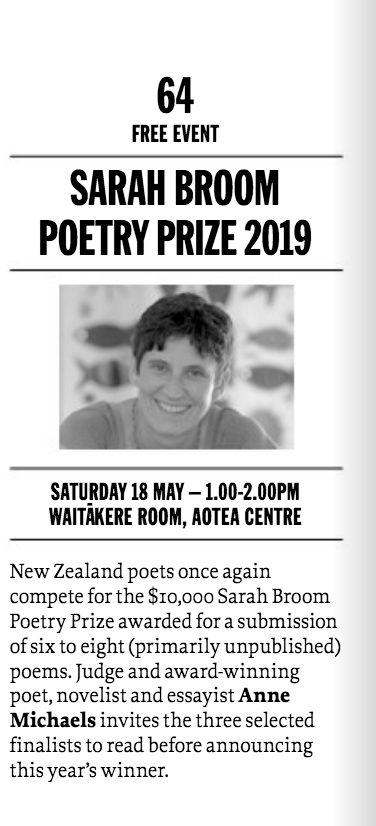
Judge and award-winning poet, novelist and essayist Anne Michaels invites the three selected finalists to read before announcing this year’s winner.

Bruce Ansley (Wild Journeys), Patrick deWitt (French Exit), Gregory Kan (Under Glass) and Ruby Porter (Attraction)

includes Ockham NZ Book Awards shortlisted poet Helen Heath (Are Friends Electric?)

Join US-Filipina novelist Elaine Castillo (America Is Not The Heart) and New Zealanders Isa Pearl Ritchie (Fishing for Māui), Tayi Tibble (shortlisted for the Ockham NZ Book Awards for Poūkahangatus) and Sugar Magnolia Wilson (Because A Woman’s Heart is Like a Needle at the Bottom of the Ocean)

BACK AGAIN BY POPULAR DEMAND! VERSE US 3 LIVE POETRY with Special Guest Daren Kamali Also featuring Fiona Stevens Ivy Alvarez Vana Manasiadis…

Bob Orr will be reading poetry in Kāpiti
Sunday 31 March. It’s 4-6pm, open mic first (one poem each) $5 cover charge.
Robert Harris Cafe, Coastlands Mall, Paraparaumu. New Venue.
Talking to a Tree Fern
1.
You’re not ashamed of your past.
It hangs there in rust-coloured layers
and you curve out of it
fully at ease.
2.
Behind you the bay
sports expensive speed boats. More and more
they force their vibrations right up
your root-tips.
3.
You used to live here with other natives.
Now willows and poplars flickering gold
have proudly established themselves.
4.
I’ve heard you discussed as an item
of our international trade. They
conceive of you standing in each
pebble garden of suburban Los Angeles.
5.
The man at the back
has asked how much I care about you.
He says you impede his view.
6.
In the bush near here
you gather in tight bunches
your pasts hanging down and spreading
over the ground like soft mats.
I want to crawl under there
I need to know what you’re chatting about.
7.
Rowing out as usual
to the calmest part of the lake
I hear a chain-saw preening itself
and sense the spikes stiffening on your trunks.
8.
Once I saw you at a Marist Centre
stiff and brittle like an empty erection,
no fronds, no flow.
Mary was cramped into a grotto nearby
totally into pleasing God.
9.
I was just wondering whether
Christ had risen again this year or not
(Good Friday was April Fool’s Day)
when I saw three fantails fooling around
in your fronds, in the rain.
10.
Under your dark arms
that night with no moon
I decided to let my life
climb up quietly
like the rata on your trunk.
11.
It leans so superbly
your long black trunk
perhaps it is frightening
the man at the back.
12.
Suddenly, in the city,
staked into a neat fence
you poke out your black tongue.
Keep coming and coming
back into my life.
©Dinah Hawken, from It Has No Sound and Is Blue, VUP 1987
Therese Lloyd writes:
“Talking to a Tree Fern”, like so many of Dinah Hawken’s poems, is one of those gentling breathing poems that I find myself returning to again and again. Despite the quiet, contemplative place this poem smooths out for the reader, it is also studded with glorious sparks of irony and cynicism. But make no mistake, this is also a fiercely political and feminist poem.
Broken into twelve discrete stanzas, each one acts like a tiny meditation, similar to a haiku, that brings the reader right into the present. The sections create a natural pause after each one before moving on to the next.
Part of the immense appeal of this poem is the way Hawken seamlessly weaves together such hefty concerns as spirituality, the natural environment, sexuality, patriarchy, and capitalism.
The fourth section for example, reads:
I’ve heard you discussed as an item
of our international trade. They
conceive of you standing in each
pebble garden of suburban Los Angeles.
While Hawken’s relationship with her tree fern is personal, here she ends each line with a distancing word, a way to remind her reader of the commodity humans have made of the earth.
The poem is also gorgeously sensual. Words like ‘curve’, ‘flickering’, ‘soft’, and ‘leans’, are peppered throughout. But then there’s the striking simile in Section 8 that always stops me in my tracks: ‘stiff and brittle like an empty erection’. It always makes me wonder, is this a sexy poem? I think it is. There’s Mary, that once pregnant virgin of course, ‘totally into pleasing God’, and the repetition and urgency of the final two lines, ‘Keep coming and coming/ back into my life’, have an undeniably seminal urge behind them.
Poems that resonate with me are the ones that change with each reading. Reading this poem now as a 44-year-old woman is a completely different experience to the one I had when I first read it in my 20s. Back then I was attracted to the poem’s gentle touch, the soft earth that the speaker wants to crawl under. When I read it now, in the light of huge global events such as #Me Too movement, and children marching for climate change, I’m inspired by its quiet bravery. Dinah Hawken’s poems have always found fascination in the way the natural world shapes our everyday human consciousness, and this poem is a brilliant example of that. But its power is in its gentle but firm insistence. Like the fern in the poem, it pokes out its tongue at us.

Therese Lloyd is the author of the chapbook many things happened (Pania Press, 2006), Other Animals (VUP, 2013) and The Facts (VUP, 2018). The Facts has been shortlisted for the 2019 Ockham New Zealand Book Awards.
Dinah Hawken’s first book, It has no Sound and is Blue, won the 1987 Commonwealth Poetry Prize for ‘Best First Time Published Poet’. Her seven subsequent collections include Oh There You Are Tui: Selected Poems and her most recent, There is no harbour, (2019). Four of her books have been shortlisted for the New Zealand book awards. In 2007 Dinah was named the winner of the biennial Lauris Edmond Award for Distinguished Contribution to Poetry in New Zealand. She now lives in Paekakariki on the Kapiti Coast.
Poetry Shelf review of There is no harbour
Vitoria University Press author page
CALL FOR FEATURED STUDENT POET
For a fine line magazine’s Winter edition, we are searching for our first Featured Student Poet.
Any New Zealand poets who self-identify as a student are welcome to send in their work for consideration.
The chosen poet will have their poetry featured in a fine line’s next edition, and they will receive a book token as payment for publication.
They will also receive the following prizes:
Students, please email a selection of up to 4 poems (max 40 lines each) to editor@poetrysociety.org.nz, with the subject line “Featured Student Poet”.
Deadline: 10 April 2019. Good luck!
see here