Category Archives: Uncategorized

Poetry Shelf summer reading: essa may ranapiri’s ransack


Screen Shot 2020-02-04 at 6.54.10 AM.png


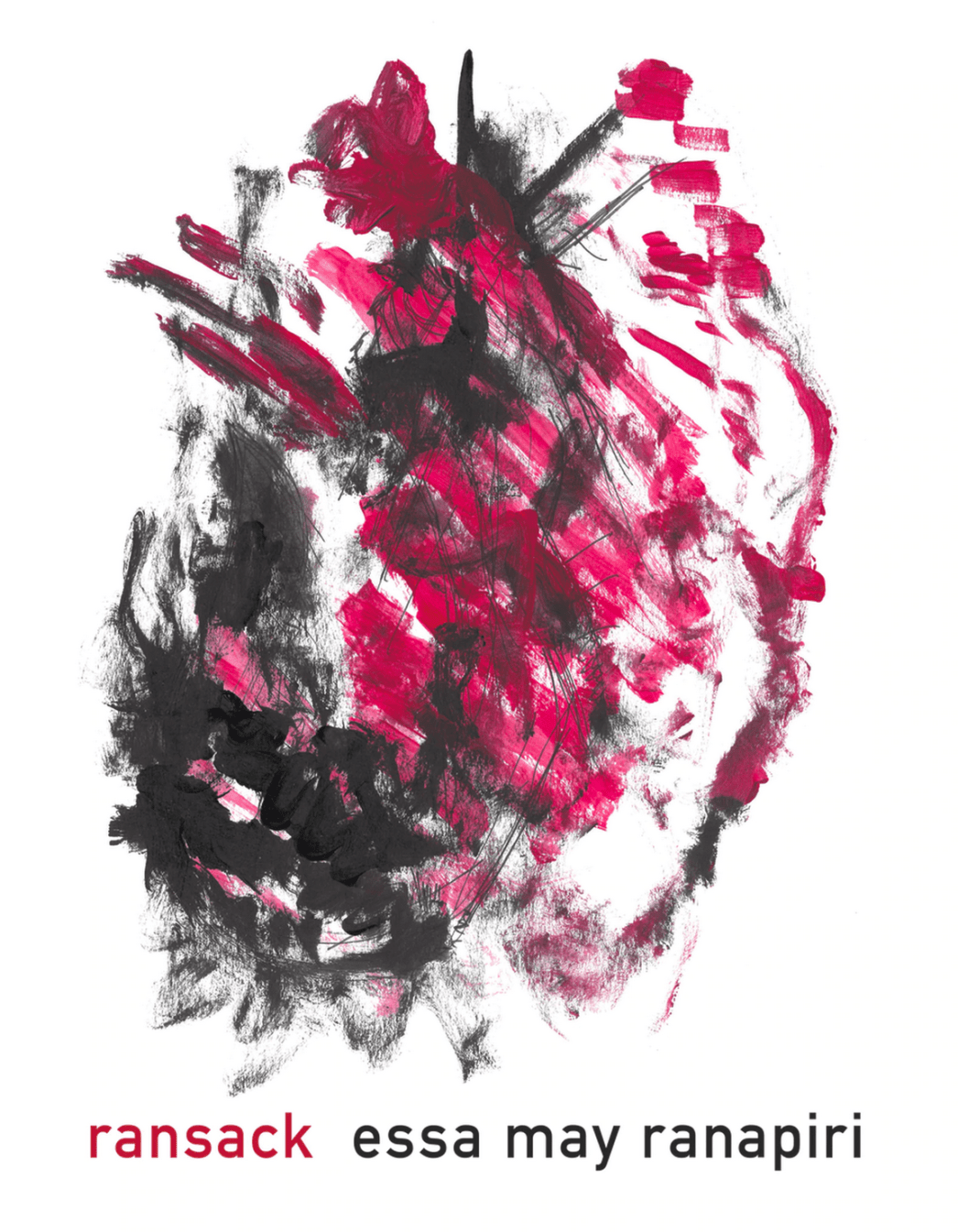
ransack, essa may ranapiri, Victoria University, 2019


he is like a bumblebee stinger on my tongue when I say it’

from ‘Dear Orlando’


essa may ranapiri begins their debut poetry collection ransack with a quote from Virginia Woolf’s gender-switching Orlando: ‘Ransack the language as he might, words failed him. He wanted another landscape, and another tongue.’

When I was doing my doctoral thesis (Italian) I carried a Virginia Woolf quote from A Room of One’s Own with me and I still do: ‘Mary is tampering with the expected sequence.  First she broke the sentence; now she has broken the sequence. Very well, she has every right to do both these things if she does them not for the sake of breaking, but for the sake of creating.’

Sometimes we need to break language, to smash how we do things in order to begin again, in order to find form and fluidity for our voices. Sometime language fails us. Sometimes we have to smash muteness and test our way into a new musicality, a new sequence of connections. We may be fierce and we may be vulnerable.

I dipped in and out of ransack last year, and loved every snatched moment, but a few weekends ago I sat down in the cool shade and read the book slowly, cover to cover, and felt myself upturn, overturn, inturn and sideturn as the poetry pulsed through my being (I am thinking of that as a verb). This is what a book can do.

essa’s book is a glorious sequence of creating – of ransacking what has been, in order to refresh what will be. Letters written to Orlando make an appearance – like a epistle spine for the collection or a poetry pivot for both reader and writer.

The opening poem ‘my tongue as rope’ lays down a thicket image – the kind of image that hooks you, especially when you think of  writing, speaking and even self as braid. The braided rope is the anchor, the preserver, the tough knot, ‘the single knot’, the finder.

essa writes: to pull in sound / draw in lists / the endeavour hits the land’. Can the poems be a form of rope? ‘my tongue-rope wraps itself until it is a single knot.’

A single poem breaks apart in my mouth and heart. The break in the flow creates a new current.


fetal


a mothe

r returnin

g to the grown ground like a gow

n of weeds got a stretching motion

n to stil

l body corps

e the wood in the wax in the flowe

r chains a bab

y stil

l bor

n rattling i

n the mutton skie

s chubby in the loa

m to no mor

e


Reading ransack allows me to absorb the nonbinary experience afresh. Unsettling the line on the page unsettles the line of thought, the entrenched dichotomies of either / or / male / female / she / he / soft / hard / weak / strong

A long poem ‘Con-ception’ is dedicated to essa’s mother and is a reading explosion of arrival, pregnancy, forming embryo, forming mother. I have never read a piece that breaks into and out of the maternal that has affected me so much. I am going to give you a quote that is also right-hand margin justified, but not all the book is (the forms are dancing on their toes in an exuberant display of variousness:


in the world and into the world of tubes

ride the machine

incubate in plastic

and drench in yellow light

the air is whole new in-the-world

and out of the old world

recognise voices

am i

an i?


put in

alove?

When she finally has a shower afterwards she is crying.


Reading the ransack sequences and I am feeling poetry. essa tells Orlando ‘You never had to discover yourself in a book. You never questioned your gendered nature – you moved from one perfect set of genitalia to another according to Aristophanes and the great round people of concave and convex, of female and male.’

essa places body and experience at its white hot core – a gift in its sharpness, its broken cutting lines and its sweet fluencies as the writer navigates how to be, how to be body, how to be bodymindheart in the world. Part of the writing of experience, with that backstory sting of ‘he’, is claiming name, celebrating a pronoun:


u said you liked the ‘th’ sound in they and them the softening of it

and how it fitted around my rage

made it/for it

to be okay to touch

i talk you through other constructions

ones that subverted phonetics

me as a slice of not that

when expecting this

the xe sound like zay


from ‘a phone call about the nature of pronouns gendered and otherwise’


ransack is a skin-prickling, heart-blasting, mind-opening glorious feast of a book that in the spirit of Virginia breaks up language in order to create something breathtakingly new.


essa may ranapiri, Ngāti Raukawa, is a poet from Kirikiriroa, Aotearoa. They graduated with an MA in Creative Writing from Victoria University of Wellington (2018) and their work has appeared in many local journals. They are the featured poet in Poetry Yearbook 2020 (Massey University Press). ransack has been longlisted for the Ockham NZ Book Awards 2020.


essa may ranapiri website

Victoria University Press page

The Pantograph Punch Jackson Nieuwland reviews ransack

RNZ interview

Poetry Shelf: essa reads ‘Glass Breaking’

essa on being at IIML with Tayi Tibble


Poetry Shelf Monday poem: Vaughan Rapatahana’s ‘Aotearoa New Zealand’


Aotearoa New Zealand


‘Kotahi ano te kōhao o te ngira 

E kuhuna ai te miro ma te miro whero me te miro pango ‘

– Pōtatau Te Wherowhero

]There is but one eye of the needle,

Through which the white, red and black threads must pass.]


ko Aotearoa te ingoa o tēnei whenua ātaahua.

land of the long white cloud for many

nestling in a sea of verdant green,

surrounded by a brilliant blue ocean

& where the All Blacks often reign.


yet of course New Zealand

is also the name of these islands

some say that maybe –

with our increasingly multi-cultural crew

Pākehā, Māori, Asian, Pasifika –

it is time for a new name,

stressing our interconnections?

after all, we are rowing together

in this waka nowadays

heading in the right direction –

learning how we can all work closely

to include, as well as to respect, all our

sometimes confusing cultural credos

and to kōrero together in spite of them

in a continuous talanoa.


ni hao 

talofa lava 

tēnā koe  

geddaye

malo e lelei

as-salam alaykom


different, yes and yet, respecting this diversity,

this contrasting, this sometime conflicting mix,

where Te Tiriti o Waitangi is the foundation document,

where journalism has flourished for well over 150 years

with upfront news & freedom of views

in the two key tongues, te reo Māori rāua ko te reo Ingarihi,

& Hindi is now the fourth most spoken language – namaste!

together we can connect and thrive.


āe ko Aotearoa te ingoa

throughout both North and South

we are birds singing several different waiata

tui, takahē, kōkako, kiwi

striving to make one mighty nest;

our own place for all –

one of a kind, the very rare huia,

a heaven on earth.

pristine air; clean water; prime food,

scenic vistas second to none,

what else could anyone want?


āe, ko Aotearoa te ingoa

let’s be thankful about who we are

& what we have –

the sense of fair play

the spirit of helping those in need,

sharing & supporting

including one and all.


thank you my friends 

kia ora taku hoa  

fa’afetai outou o a’u uo 

xie xie wo peng-youmen

salamat po mga kaibigan

shukraan lakum ‘asdiqayiy


there is so much to celebrate

in this lengthy land,

tō mātou whenua tino waimarie

& we should all be proud.


Vaughan Rapatahana

from ngā whakamatuatanga / interludes  (cyberwit, 2019)


A poet, novelist, teacher, critic, translator and editor, Vaughan Rapatahana, Te Ātiawa, commutes between homes in Hong Kong, Philippines and Aotearoa New Zealand. He is widely published across several genres, in multiple countries, in both his main languages, te reo Māori and English, and his work has been translated into Bahasa Melayu (Malay), Italian, French, Mandarin.

In 2019, he published five books, participated in World Poetry Recital Night, Kuala Lumpur and Poetry International at London’s South Bank Centre and in the launch of Poems from the Edge of Extinction and in Incendiary Art: the power of disruptive poetry. His poem tahi kupu anake included in the presentation by Tove Skutnabb-Kangas to the United Nations Forum on Minority Issues in Geneva in November 2019. His PhD thesis from the University of Auckland is on Colin Wilson and subsequently published a collected works about Wilson,  More than the Existentialist Outsider (Paupers Press, Nottingham, UK, 2019.)

His latest poetry collection ngā whakamatuatanga/interludes was published by Cyberwit, Allahabad, 2019) and Aotearoa New Zealand. Atonement (University of Santo Tomas Press, Manila) was nominated for a National Book Award in Philippines (2016). He writes a series of commentaries pertaining to Aotearoa New Zealand poetry for Jacket 2 (University of Pennsylvania, USA): a 2015–2016 series and again during 2018-2019.

His poetry teaching resources have been published in Hong Kong SAR, Brunei Darussalam, Australia, and New Zealand, including the first bilingual (Māori and English) such resource in 2011, Teaching Poetry. In 2019, book three of the series Poetry in Multicultural Oceania has been published by Essential Resources, Christchurch, New Zealand – with a new resource Exploring Multicultural Poetry for younger students due at the end of 2019.

Rapatahana will be participating in The Foundation and Cultural Organization International Academy Orient-Occident. Curtea de Argeş, Romania in July 2020.

Rapatahana is one of the few World authors who consistently writes in and is published in te reo Māori – in all of his books and also poetry publications in Aotearoa NZ (for example, Mayhem, Poetry New Zealand, takahē), USA (Antipodes), Canada (The Capilano Review), Australia (Meniscus), U.K. and so on. It is his mission to continue to do so and to push for a far wider recognition of the need to write and to be published in this tongue.

His New Zealand Book Council Writers File


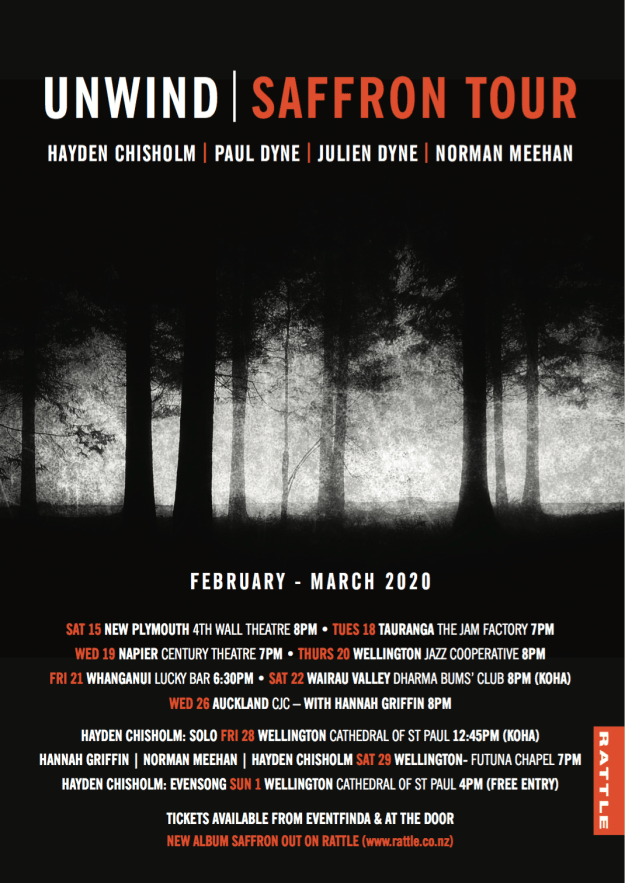
Poetry Shelf noticeboard: Unwind Saffron Tour – Norman Meehan, Hannah Griffin, Hayden Chisholm

Great tour news: I am a big fan of what these musicians do with local poetry. Breathtakingly good!

Norman Meehan be performing in Auckland and other centres  later this month – Wednesday February 26 – with vocalist Hannah Griffin and saxophonist Hayden Chisholm. We’ll be playing song settings of NZ poems, including a number of new texts by some wonderful poets who are recent additions to our songbook: Hinemoana Baker, Eileen Duggan and Cilla McQueen. We’re joined by bassist Cameron McArthur and Julien Dyne.


Screen Shot 2020-02-02 at 9.27.17 AM.png


Poetry Shelf poem festival: Trees


DSCN9848.jpg

our place, January 2020


In 2020 Poetry Shelf will host a monthly, theme-based festival of poems.

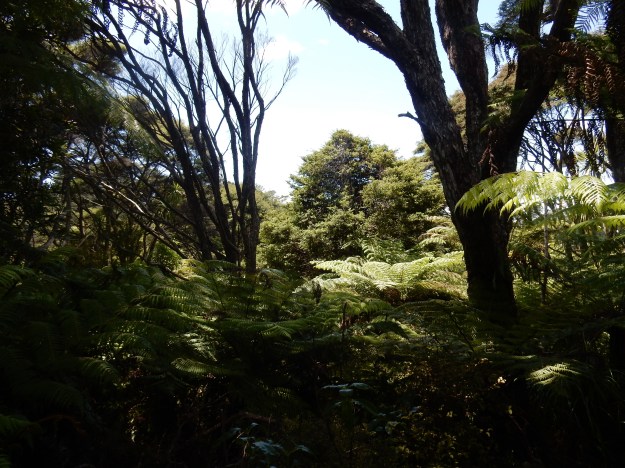
First up: trees. I chose trees because I live in a clearing in the midst of protected regenerating bush. It is a place of beauty and calm, no matter the wild West Coast weather. We look out onto the tail end of the Waitātakere Ranges knowing we work together as guardians of this land.

I chose trees because like so many other people the need to care for trees is strong – to see the fire-ravaged scenes in Australia is heartbreaking.

I love coming across trees in poems – I love the way they put down roots and anchor a poem in anecdote, life pulse, secrets, the sensual feast of bush and forests, political layers.

I could plot my life through the books I have read and loved, but I could also plot my life through my attachment to trees.
 

DSCN9841.jpg


Let me Put in a Word for Trees


Let me put in a word for breathing.

Let me put in a word for trees.

Let me put in a word for breathing.


Dinah Hawken

from Water, Leaves, Stones (Victoria University Press, 1995)


After a long hard decade, Miranda asks for a poem about feijoas


Small hard green breasts budding on a young tree

that doesn’t want them, can’t think how to dance

if it has to put up with these;


yet over summer the fruits swell and plump:

frog barrel bodies without the jump or croak

limes in thick velvet opera coats


love grenades to throw like flirt bombs

for your crush to catch and softly clutch

before they release their sweet seductions


and when the congregation and the choir

in the Tongan church next door exalt in hymns

while their brass band soars and sforzandos in,


a fresh feijoa crop tumbles to the grass

as if the tree’s just flung down its bugle mutes

in a mid-life, high-kick, survival hallelujah.


Emma Neale


Heavy lifting

Once, I climbed a tree
too tall for climbing
and threw my voice out
into the world. I screamed.
I hollered. I snapped
innocent branches. I took the view
as a vivid but painful truth gifted
to me, but did not think to lay down
my own sight in recompense.
All I wanted was someone to say
they could hear me, but the tree said
that in order to be heard I must
first let silence do the heavy lifting
and clear my mind of any
questions and anxieties
such as contemplating whether
I am the favourite son. If I am not,
I am open to being a favourite uncle
or an ex-lover whose hands still cover
the former half’s eyes. I’ll probably never
have children of my own to disappoint
so I’ll settle for being famous instead
with my mouth forced open on TV like
a Venus fly-trap lip-synching for its life.
The first and the last of everything
are always connected by
the dotted line of choice.
If there is an order to such things,
then surely I should resist it.

Chris Tse

from He’s so MASC (Auckland University Press, 2018)


Reverse Ovid

Woman running across a field
with a baby in her arms . . .
She was once the last pine tree on Mars.

Bill Manhire


My mother as a tree

I like to think my mother may have been a tree
like Fred’s, the oak whose Elizabethan
damask skirts each year spring-clean
the hillside opposite, in front of the house
where Fred was born. Her royal foliage
clothes a peasant’s weathered fingers,
the same unfussed embrace.
Fred never sees her now,
he’s in a rest-home up the coast
and doesn’t get out much
and so, in lieu, she fosters me
from unconditional dawn
to dusk and through the night,
her feet in earth, her head
in air, water in the veins, and what
transpires between us is the breath
of life. In the morning birds
fly out of her hair, in the evening
they are her singing brain
that sings to me. My mother as a tree:
my house, my spouse, my dress
and nakedness, my birth, my death,
before and afterwards. I like
to think my tears may be her
watershed, not just for me.


Chris Price

from Beside Herself  (Auckland University Press, 2016)


Objects 4


It’s the close of another year.

Stunned, I walk through the Gardens

feel them draw the numbness out of me.

This is another ‘I do this, I do that’ poem

I learnt in New York from O’Hara.

This is a New York poem set in a garden

styled in colonial civics on an island

that is not Manhattan.

I hurry to the hydrangea garden,

their shaded, moon-coloured faces

so much like my own. As a child I was posed

next to hydrangeas because the ones

next to an unremembered house

were particularly blue—

to match my eyes, presumably.

There are no hydrangeas in New York City.

I rush past the Australia garden but I stop

dead at the old aloes, their heavy leaves

so whale-like, gently swaying flukes

thick and fleshy, closing up the sky.

Some kids have carved their

initials and hearts in the smooth rind,

a hundred years against this forgotten afternoon.

I bend to the ground and sit as if to guard them

in the darkening sun.

The spread of rot constellates out of the kids’ marks

as if to say

look at the consequences,

look at me dying.


Nikki-Lee Birdsey

from Night As Day (Victoria University Press, 2019)


I Buried the Blood and Planted a Tree


Love is the thing that comes

when we suck on a teat and are fed.

Love is the food we can eat.


The food we can’t eat we give

to the ground

to the next day.

We pat the earth

like it is our own abdomen.


If I could have drunk a hot enough tea

to boil it out

I might have.

If I could have stood

on a big red button

and jumped once

to tell it to exit


like the highest note on the piano.

It was a sound I couldn’t feed.

I gave it to tomorrow.

I buried the blood and planted a tree

so she, unable to be fed, could feed.


Maeve Hughes


The sepia sky is not one for forgetting. Even fragmented, looking up at it from beneath a canopy. The flash of light through leaves more twitch than twinkle. Therapists and yoga teachers say It’s important to let yourself to be held by mother earth, to let yourself be. I used to feel relief in the arms of a tree, but now I feel unease. Is it my own chest trembling or the trees? Oxygen spinning from the leaves, boughs holding birds who were once such a chorus they almost drove Cook’s crew back to sea. Invisible roots bearing the weight of me, through the deep dark, where trees talk in voices I am too brief to hear.

Simone Kaho


Trees


Place is bottled lightning in a shop,

or in a chandelier’s glass tear-drop,

or in a glow-worm’s low watt grot,

or in street neon’s glottal stop —

wow-eh? wow-eh? wow-eh?


Place is the moulded face of a hill,

or lichen like beard on a window sill,

or the bare spaces that shadows fill,

or ancestors growing old and ill,

or descendants at the reading of a will,

who frown and examine their fingernails

before plunging off down the paper trails

of diary and letter and overdue bill.


Place is the home of family trees —

family trees to wrap round plots of soil,

tree roots to shrivel into umbilical cords,

tree branches to spill bones and skulls;

but even trees are just a spidery scrawl

against the shelf-life of a mountain wall.


Place is a brood perched on power-poles:

bellbirds with shadows of gargoyles,

korimako who clutch the power of one,

like an egg, to trill their familiar song.

Place is grandsons who sprawl

in the family tree with laughter;

place is the tree windfall,

gathered up in the lap of a daughter.


David Eggleton

from Rhyming Planet (Steele Roberts, 2001)


13

Te Mahuta Ngahere
the father of the forest
a livid monster among saplings.

A swollen aneurism grips his bole.
Below bearded epiphytes
a suppurating canker swarms with wasps.

Derisively lyrical
the tuis in his crazy, dreadlocked crown
pretend to be bulldozers.


Ian Wedde

from ‘Letter to Peter McLeavey – after Basho’, from Three Regrets and a Hymn to Beauty (Auckland University Press, 2005)


Last night I sat outside and looked at the moon. Up there, like it has been since the dawn of time.
Same one the cavemen looked at.
Sickle phase.
I know, scientifically, about the forces that hold it in place.
And suddenly I felt I knew too much.
The grass had been cut, while flowering.
The flowers were still there, they’d either sunk below the blades or reflowered.
I noticed grass flowers look like kowhai post-flowering. When the stamens hang long and white after the flower has fallen away.
The night was still. Cones on the street let me know men would come the next day in matching orange tunics and I should not park there.
The moon was still there.
The stillness and the quiet was misleading.
Everything had a perfect and terrible design that didn’t need me to know it.
I know the trees above the mangroves are called macrocarpas, some bird calls sweetly from the macrocarpa as the sun sets every evening. Orange, purple and pink from the verandah of my flat.
I don’t ever want to know that bird’s name.


Simone Kaho


Song from the fallen tree which served as a twelve year old’s altar to the wild gods

i am a hundred years more girleen since before you were a seed
i fell to mouldering in this darkleaf cathedral where you come

to bury the bones of brief chittering things and burn candles
in roothollows ah you young girleen life all aflickering past short
roots unplanted

i am all your church and ever the altar at which you girleen kneel
i all goldenarched around by sunbeam and sapling green

with my many rings i share with you rootlessness and in winter
you brush away my cloak of snow humming your warmblood
girleen beatsong to soften my ache of frost

while you ask knowing of what time is to the forest and you sing
up your low girleen voice to the horned and feathered kind which
do not walk the rustling hymn of season same as we all

then twice up here you come bringing anothergirl girleen
you open your arms to the sky saying this is your heart and

home yes this the forest that sings you by name and girleen
it is true we the trees know you but you never learned from us

the songs called shyness and slowly and the next time girleen you
bring your brighthaired friend you kiss her in the pricklebelly
shadow of the holly

where i feel you like a seed unhusked shiversway as she
branchsnap slams whipslap runs so when again you dewyoung
girleen come to me you come alone

ungrowing girleen and withering back your shoots as you
bitterbrittle freeze your sapling blood into something thinner
than lancewood leaf

which cracks you through to the heartwood solvent veinsap
dizzily diluting girleen you can barely make your mountainwalk
up to me

until for two snowmelts you do not return but even once your
starved arterial taproot has begun sucking in again greedy sunlight
and sugar to colour your suppling girleen bark back alive

you have disremembered every prayersong taught you by we the
trees and i rot in the forest you called your heart and girleen
you do not visit


Rebecca Hawkes


The Gum-Tree


Sitting on the warm steps with you

our legs and backs supported by timber

looking down to the still trunk of the gum-tree

we are neither inside ourselves

as in the dark wing of a house

nor outside ourselves, like sentries

at the iron gates – we are living

on the entire contour of our skins,

on the threshold, willing to settle

or leap into anywhere.


Here’s to this tree we are standing in.

Here’s to its blue-green shelter,

its soft bark,

the handy horizontal branch

we have our feet on

and the one supporting our shoulders.


Dinah Hawken

from Water, Leaves, Stones (Victoria University Press, 1995)


Nikki-Lee Birdsey was born in Piha. She holds an MFA from the University of Iowa Writers’ Workshop and a BA from New York University. She has been published widely in the US, UK, Canada, and New Zealand, and she is currently a PhD candidate at the International Institute of Modern Letters. Her first book Night as Day was published by VUP in 2019.

David Eggleton’s most recent poetry publication, Edgeland and other poems, was published by Otago University Press in 2018. He is the New Zealand Poet Laureate 2019 – 2021.

Dinah Hawken was born in Hawera in 1943 and now lives in Paekakariki. Her eighth collection of poetry, There is no harbour, was published by Victoria University Press in 2019.

Rebecca Hawkes is an erstwhile painter-poet and accidental corporate-ladder-ascender. Her chapbook Softcore coldsores was launched in AUP New Poets 5 in 2019 and she performs with the poetry troupe Show Ponies. She wrote this tree poem in her previous occupation as a teen and hopes it will survive repotting after all these years.

Maeve Hughes lives in a tall house in Wellington. She has studied Fine Arts and Creative Writing. Her first publication Horsepower won the 2018 Story Inc Prize for poetry and was launched in October last year.

Simone Kaho is a New Zealand / Tongan poet and a graduate of the International Institute of Modern Letters. She published her debut poetry collection, Lucky Punch, in 2016. Simone is noted for her poetry performance and writes for E-Tangata.co.nz.

Bill Manhire’s new book of poems will be published later this year. It might well be called Wow because he is so surprised by it.

Emma Neale is the author of 6 novels and 6 collections of poetry. She is the current editor of Landfall.

Chris Price is the author of three books of poetry and the hybrid ‘biographical dictionary’ Brief Lives. She convenes the poetry and creative nonfiction MA workshop at the International Institute of Modern Letters in Wellington. In May 2019 she and her guitarist partner Robbie Duncan will be among the guests at Featherston Booktown.

Chris Tse is the author of How to be Dead in a Year of Snakes and HE’S SO MASC. He is a regular contributor to Capital Magazine’s Re-Verse column and a book reviewer on Radio New Zealand. Chris is currently co-editing an anthology of LGBTQIA+ Aotearoa New Zealand writers.

Ian Wedde’s Selected Poems were published in 2017 – Te Mahuta Ngahere can be found there and we hope will survive in the bush. Wedde’s historical novel, The Reed Warbler, will be published by Victoria University Press in May, and a collection of essays 2014-2019 is in development.



Poetry Shelf 2020


DSCN9851.jpg


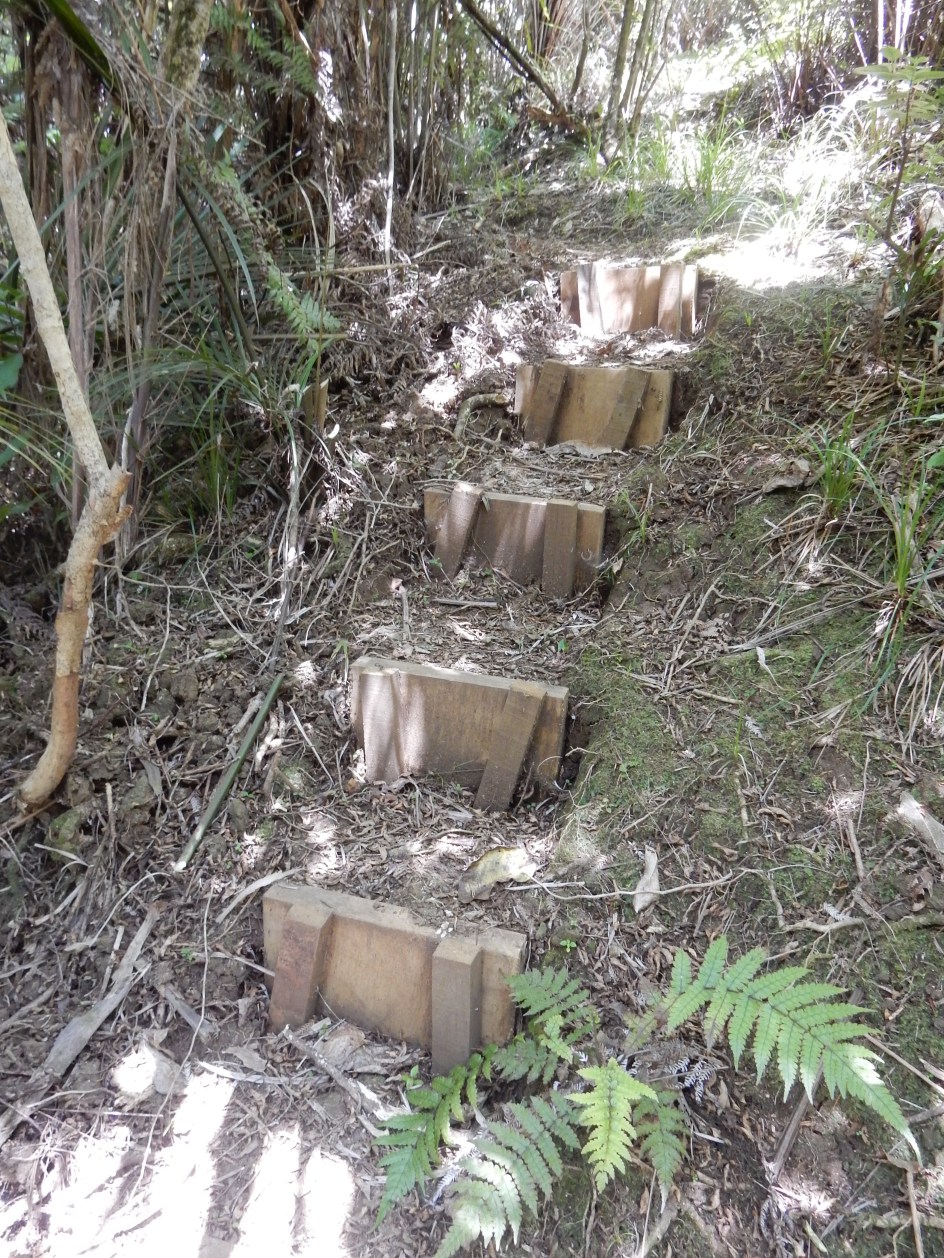
Our track steps! Got me musing we have multiple tracks and hand-built steps when it comes to poetry.


With my three books out in the world, a carefully managed calendar for 2020, secret writing projects to sustain and a couple of anthologies to edit, I have so much more energy for Poetry Shelf.

Most weeks you will see the Monday Poem, an audio poem, something from our poetry archives, Friday talk spot where poets talk/write about anything to do with poetry (this will also include podcasts from other poets).

Poets are writing on an international poetry book they love.

Reviews and interviews will appears as per usual. I still have books from 2019 that I really want to feature because it was an excellent year for local poetry.

Finally each month I will pose a question to a group of poets and also host a poetry theme.

Happy Poetry Days!


Poetry Shelf audio poem: Maeve Hughes reads ‘I Buried the Blood and Planted a Tree’


DSCN9783


Maeve Hughes reads I ‘Buried the Blood and Planted a Tree’ from Horse Power


Maeve Hughes lives in a tall house in Wellington. She has studied Fine Arts and Creative Writing. Her first publication horse power won the 2018 Story Inc Prize for poetry and was launched in 2019.

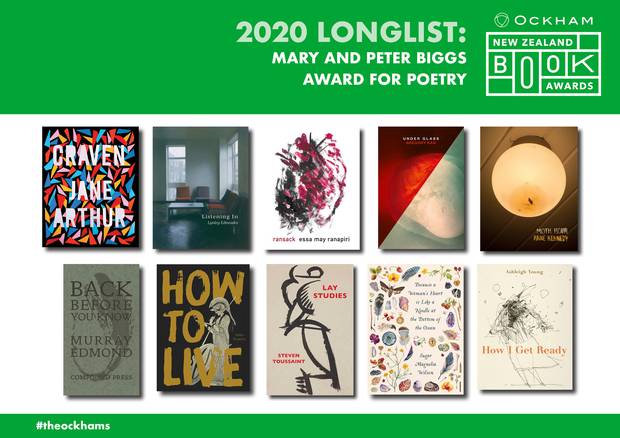
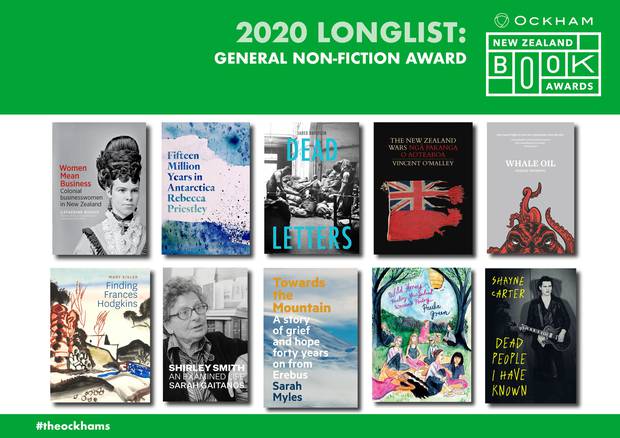
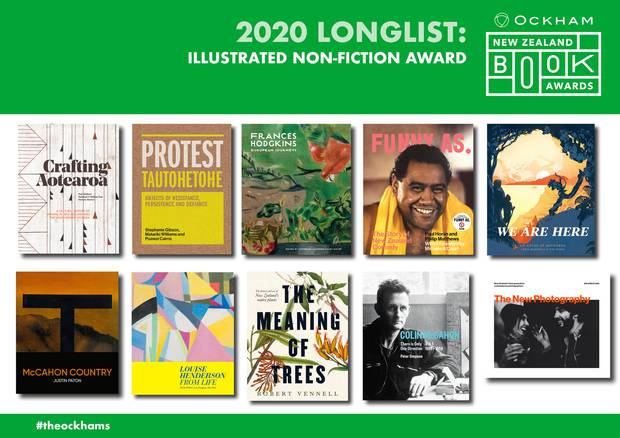
Poetry Shelf noticeboard: The 2020 Ockham NZ Book Awards longlists announced


This is a time to celebrate books published in Aotearoa over a range of categories. I offer warmest congratulations to those authors with books selected. One of my two favourite fiction books made it (Elizabeth Knox’s magnificent The Absolute Book) while the other other did not (Lawrence Patchett’s astonishing The Burning River – my review).

2019 saw a terrific array of local poetry published. I have reviewed and celebrated many of the longlist collections on Poetry Shelf – and have a review of  essa may ranapiri’s magnificent ransack appearing soon. I will also be reviewing Jane Arthur’s wonderful Craven. I selected Jane and Gregory Kan to appear in my Poetry Shelf Live session at the Wellington Writers Festival, along with 5 other poets, including USA Poet Laureate Joy Harjo.

Yes there are New Zealand poetry books from 2019 I have loved and celebrated on my blog that are not on the poetry longlist – but that is a good thing. How alive and vibrant and necessary our poetry communities are. The books just couldn’t all fit!

The shortlist will be announced on Wednesday, March 4 while the winners, including the four MitoQ best first book awards, are announced on Tuesday, May 12 during the 2020 Auckland Writers Festival.


XKNE7I5BFBHTPHERT4GNV2IJFA.jpg

Mary and Peter Biggs Awards for Poetry:

Craven by Jane Arthur (Victoria University Press)     Poetry Shelf Jane’s poem ‘Situation’

Listening In by Lynley Edmeades (Otago University Press) Poetry Shelf review

Back Before You Know by Murray Edmond (Compound Press)  Poetry Shelf review

Under Glass by Gregory Kan (Auckland University Press) Poetry Shelf conversation

Moth Hour by Anne Kennedy (Auckland University Press)   Poetry Shelf review

ransack by essa may ranapiri (Victoria University Press)   Poetry Shelf essa reads ‘Glass Breaking’

How to Live by Helen Rickerby (Auckland University Press) Poetry Shelf review plus poem ‘Mr Anderson. you heartbreaker you’

Lay Studies by Steven Toussaint (Victoria University Press)  Poetry Shelf conversation

Because a Woman’s Heart is Like a Needle at the Bottom of the Ocean by Sugar Magnolia Wilson (Auckland University Press)  Poetry Shelf conversation

How I Get Ready by Ashleigh Young (Victoria University Press) Poetry Shelf conversation and poem


I am very delighted to see Wild Honey in the General Nonfiction longlist! The joy of being an author is in the writing of a book – anything else is an unexpected bonus. I am also delighted to see Mary Kisler’s wonderful Finding Frances Hodgkins here. I reviewed it!


NZU2D6234RECFCAI3IXMRJ3WJM.jpg


ZGQXXPVB3JGYHJKBE7IJJILKC4.jpg

ZWFE2KHXLBGSZCFFFA642FMCLQ.jpg


Congratulations to all those shortlisted!  You can see more details here

Poetry Shelf noticeboard: Starling 9 is now online plus launch details

Visit issue here


fda18754-9b1b-4271-98b4-937cb3b45b21.jpg


21263ca4-3aa1-47fb-b1c3-57473f8c3498.jpg


Salt crystals. Dirt. Domesticated wheat. A giant octopus and a taniwha. Starling 9 is here, with the best new poetry and prose from New Zealand writers under 25!

Featuring new work from: Jessica Thompson Carr, Modi Deng, Leah Dodd, Erin Donohue, Rhys Feeney, Tate Fountain, Erin Gourley, Joy Holley, Ash Davida Jane, Claudia Jardine, Ruby Macomber, Shanti Mathias, Eleanor Rose King Merton, Sophie Newton, Kōtuku Titihuia Nuttall, Ellis Ophele, Caroline Shepherd, Naomi Simon-Kumar, Ruby Solly, Sophie van Waardenberg, and Helen Yeung.

New writing and cover art by poet and embroiderer-extraordinaire Stacey Teague, and a dazzling interview on writing, mental health and friendship with Eamonn Marra & Freya Daly Sadgrove.


fef3303c-e5a5-4e4f-8879-11d522e6d694.jpg


Wellingtonians, don’t miss this! Issue 9 launch, Sunday 2 February 3pm at Book Hound, 132 Riddiford Street, Newtown. A reading absolutely jam-packed with talent, featuring: Erin Donohue, Ruby Solly, Ash Davida Jane, Rhys Feeney, Joy Holley, Claudia Jardine, Leah Dodd, Eleanor Rose King Merton, Stacey Teague, Eamonn Marra & Freya Daly Sadgrove.

Poetry Shelf noticeboard: Robert Burns Poetry Competition winners

With a theme of migration it is no wonder the Robert Burns Poetry Competition 2020 attracted some poignant entries. Nearly 50 published and unpublished writers entered the annual competition, which marks the Scottish bard’s birthday on January, 25 1759. 

The entries are judged by the University of Otago’s Robert Burns Fellow. For 2019 that was Emily Duncan, who was joined on the judging panel this year by Dunedin-based poet Caroline McCurdie

The poetry competition prizegiving was held at the Dunedin City Library at the weekend.

PUBLISHED POETS

Screen Shot 2020-01-29 at 9.18.58 AM.png

Siobhan Harvey. Photo: supplied


FIRST: SIOBHAN HARVEY

BIO: From England, lives in Auckland, 46.

OCCUPATION: Author of poetry, fiction and creative nonfiction, as well as journalism, reviews and associated writings. Lecturer in creative writing at Auckland University of Technology.

REACTION TO WINNING? Elated, particularly given its  theme, migration.

SO, WRITING POETRY: I’ve been writing since I was a teenager, and have been a published writer (first in literary journals in the UK such as The Rialto) for nearly three decades. I was the sole writer, and the first in my known family to go to university. So in following my writing passion, I entered the unknown, the different, the other and unexpected.

WHY DO YOU LIKE IT? It’s like being home. It’s as though each time I commune with the page I commune with tipuna whose names and being and residences I don’t know but who sit with me.

YOUR COMPETITION ENTRY:  I see poetry as the voice of reason in an age of contested truth and divided politics.  I live the experience of the exile  and it is never a comfortable existence to live in the liminal space between the geography you left behind and the geography you arrive at. My poem  is about that experience.

OTHER POETRY: Includes the poetry collection Cloudboy (Otago University Press, 2014), which won New Zealand’s richest prize for poetry, the Landfall Kathleen Grattan Award.


Emer Lyons. Photo: supplied

Emer Lyons. Photo: supplied


SECOND: EMER LYONS

BIO: From Bandon, Cork, lives in Dunedin, 31.

OCCUPATION: PhD candidate in English.

REACTION TO PLACING: Surprised. I have entered before without success — I entered this year because the theme suited my work.

SO, WRITING POETRY: I’ve been writing poetry forever, but only started taking it seriously a few years ago. By that I mean reading a lot more poetry.

WHY DO YOU LIKE IT? I like the ability to go beyond normative forms of linearity.

YOUR COMPETITION ENTRY: I was inspired by Cherry Smyth and Mary Dorcey, two Irish lesbian poets I am studying who both have a poem with the same name.

OTHER POETRY: Has been published by The Stinging Fly, Poetry Ireland, Takahe, The SpinOff, The Tangerine, Queen Mob’s Teahouse.


Sophia Wilson-Gunther. Photo: supplied

Sophia Wilson-Gunther. Photo: supplied


THIRD: SOPHIA WILSON-GUNTHER

(writes as Sophia Wilson)

BIO: Grew up in Australia, lives in Woodside, south of Dunedin, 49.

OCCUPATION: I’ve worked as a medical doctor, but more recently  been looking after and home-schooling our three children — busy with land, vegetable growing, animals and kids.

REACTION TO PLACING: I was delighted.

SO, WRITING POETRY:   At the beginning of 2019 I was inspired to write a series of poems with medical and environmental themes. For a few weeks, I wrote at least one poem every morning before the kids got up.

WHY DO YOU LIKE IT:   The  main satisfaction comes when a poem manages to communicate something helpful or meaningful for other people.

YOUR COMPETITION ENTRY:  The idea of past and present being united by current environmental concerns was the main inspiration for the poem. I recently discovered a wealth of local family history, previous to which I knew little of my early immigrant heritage. I was moved to learn that my maternal grandfather was especially close to iwi in te Urewera and made an ‘‘honorary Maori chief’’. Another of my relatives was probably
an unpopular, drunkard owner of the Berwick pub.  With all this in mind, I was inspired to write a poem I hoped would acknowledge the past without glorifying, or over-vilifying, the early pioneers.

OTHER POETRY: Some of the poems I wrote earlier this year have been published in New Zealand, Canada, the US and Australia in various places including newsletters, poetry cards, medical humanities journals and literary journals. Some have been shortlisted for 2019 national poetry competitions.

UNPUBLISHED POETS

Lily Knox. Photo: supplied

Lily Knox. Photo: supplied


FIRST: LILY KNOX

BIO: Born and raised in Dunedin, 15.

OCCUPATION: I’m a year 11 at St Hilda’s.

REACTION TO WINNING: I was overjoyed and surprised. It honestly feels kind of unreal.

SO, WRITING POETRY: I’ve always loved writing, but I guess I never really thought it would be anything more than random notes on my phone.

WHY DO YOU LIKE IT?  Calling it poetry feels strange because it’s nowhere near as sophisticated! I guess, writing is an outlet.  The best moment is when all these ideas come together and everything clicks.

YOUR COMPETITION ENTRY: I’m part of a writing group at school and we took a trip to Toitu to get some inspiration. I spent my time in the portrait gallery. I think it’s fascinating looking at the faces and names of all these different people, and trying to think about what stories they held and the lives they led.

James James. Photo: supplied

James James. Photo: supplied


SECOND: JAMES JAMES

BIO: Originally from Tasman and the Pacific, lives in Dunedin, middle-aged.

OCCUPATION: Onion slicer, flaneur, sequential artist.

REACTION TO PLACING: Any place is better than no place at all.

SO, WHY POETRY: I met a girl from Ohai Nightcaps who taught me words and books and stuff. That was a while ago.

WHY DO YOU LIKE IT? I like playing with words; I’m rubbish at scrabble.


Karen Judge. Photo: Linda Robertson

Karen Judge. Photo: Linda Robertson


THIRD: KAREN JUDGE

BIO: Originally from Lower Hutt, I’ve lived in Dunedin for  more than 35 years, 62

OCCUPATION: I was a science technician at the University of Otago.  Currently do volunteer work and am pursuing some non-science interests.

REACTION TO PLACING: Astounded and delighted.

SO, WRITING POETRY:  I joined a writing group two years ago just to see if writing was of any interest to me.  We write for one hour a week, mostly poetry.

WHY DO YOU LIKE IT? I like searching for the right word or combination of words, which will accurately describe what I have in mind, what I can see.

YOUR ENTRY: I was inspired by a trip to Christchurch on the weekend following the massacres at Al Noor mosque and Linwood Islamic Centre. My parents and other family are buried at cemeteries and memorial gardens in Linwood/Bromley.

I sat up late that Sunday night knowing that the only way I could express the grief and the tumult was by writing. For me this is a grief poem, personal because of my own loss;  social, because of the double hit that Christchurch has had to bear.  It is short because I had no words.


Poetry Shelf summer reading: Amy Brown’s neon daze

Screen Shot 2020-01-20 at 11.11.45 AM.png

neon daze, Amy Brown, Victoria University Press, 2019


The title of Amy Brown’s new collection neon daze hooked me. Having published extracts from the book on the blog, I knew the collection came out of motherhood. I mused on the way you can be caught in a blazing daze as you invent your own mother role. How moments can also gleam with light, the miracle of a newborn baby you are responsible for. Not everyone chooses or can be mothers and there is no standardised mothering role. Thanks heavens. Women have written mother poems for centuries despite denigration from men. I came across the denigration in my Wild Honey travels, but I also came across a rich harvest of mother poems that shed light on the multiplicity of experience, experience that shaped the way poems were written as well as the content. I also encountered relentless doubt – doubt about whether what women were writing could be claimed as poetry when it retained a domestic or maternal focus.

I still encounter this!

At the Poetry & Essay conference in Wellington (2017), I sat with Amy, Joan Fleming and Brian Blanchfield over lunch and we talked about how being a mother does not shut down the option of being a poet, of being a published poet, of being read and valued. And most importantly, about the significance of publishing poems about motherhood, about sons and daughters and domestic matters.

Amy’s glorious evocation of motherhood tests how poems form on the page. neon daze raises questions about both writing and mothering and resists turning away from the difficult, the intensely private. There is a sense of inquiry, contemplation and play, along with the doubt and constrained time. Amy discusses the genesis of the title – she had ‘Neonatal’ to being with and then began playing:


(…) Too clinical to be appropriate now,

I play with the cursor, like the baby plays with the

nipple when he wants comfort rather than food.

I keep Neon: a bright, new, elemental word

like a swipe of highlighter over these days

in the calendar. I add Days, then change it

to Daze. This is where I am, in a floodlit

stupor, so bright I can barely see, like in Dante’s

Paradise, shadowless knowledge so pure it’s empty.


from ‘9 October 2016’


Amy admitted she told people she was writing even when she privately thought ‘this writing didn’t count’. She kept a verse journal for three months after her baby was born – subsequently editing and adding footnotes which pick up on a word or idea prompted by the poem.  The footnote titles track a mind musing, raising questions, allowing doubt to surface and resettle. They are like an infinitive-verb poem:

to admit, to edit, to push, to sate, to repeat, to define, to expect, to hallucinate, to dream, to dance, to address, to winter, to resolve , to heal, to regret, to visit, to abstract, to doubt, to donate, to sever, to touch, to cringe, to name, to eat, to earn, to permit, to wake, to care, to wean, to wave, to finish

The footnotes ( I want to call them something else) form their own vital presence, not as asides, but as a sequence of numbered prose pieces that enervate the poetry.

I cross the bridges between poems and prose. Sometimes I make a clearing for the poem and surround it with silent beats like the white space on the page. Sometimes I dwell on the pirouetting trains of thought in the prose and let the questions gain momentum. I am particularly interested in Amy’s double self-exposure in both poetry and prose. The writing is called into question. Is it poetry? Is it poetry of value? Does it make a difference that the writer is a woman? A mother? What lines are crossed? What lines are tested?

I am affected by this collection because it draws me deep into the challenges of writing and motherhood. How can I write when I am so depleted? How can I write anything of worth? I still feel this.

The poetry exposes both physical and emotional realities. At times it underlines the relentless day-in-day-out routines that both exhaust and provide uplift, while at other times the poetry holds a scene (still, luminous) for us to absorb. This is a personal record of mothering: of baby stages, breastfeeding, a need to avoid baby bragging, to settle baby to sleep, to listen to baby coos and baby cries. This is a personal record of climbing to the rock summit, behind baby and father, like a baby mountain goat up the less than easy walk. The poem reverberates with feeling (sharp, understated, complicated)


(…) I have seen you fall, your father replies.

And I think it has something too do with you thinking

you are a mountain goat. The words are said tensely

as he holds his left arm around you and balances

with his right palm against a rock. The sky is

granite too – shimmering, hard and slick.


from ’16 0ctober 2016′


For me neon daze satisfies on so many levels. Lines spring out with musical and visual agility. Scenes shimmer with a sensual underlay. The poetry is fluent, intricate, detail-rich. A question could stall me all day such as the thorny issue of writing the lives of others; of making public what is intimate and private. Amy admitted when she was younger she ‘had no qualms / about giving air and light to what now / seems better off private’. But now she is more inclined to keep secrets yet is compelled still ‘to expose private parts of life’. She claims: ‘now I see that even if it is just / me on display, there is still a problem: / I no longer own myself’. After Amy heard Jenny Bornholdt read a poem about the death of her father and her friend Nigel Cox at the Poetry & Essay conference she asked Jenny a question:


During the reading, Jenny invited questions, so I asked about the responsibility of writing about loved ones – Where I asked, do you draw a line? I don’t, she replied, firm and gentle at once. I don’t draw a line.


from ’26 To Permit’


Ah, this is a question pertinent to the making of neon daze. But the strongest presence is the mother poet, the poet mother. I am drawn into her world, her challenges, her delights, her epiphanies. She has placed herself on show but she had to think equally hard about putting her son and husband in the poetry frame. This questioning of the line Amy may or may not cross, and the various revelations she makes that place family and friends in good and bad lights, affected me as I read. How to write those closest to us?

I love this book. I love navigating the alleys and the undergrowth. I love coming across the hard stuff and then falling into a piquant scene. The mother rests on the sofa with her baby sleeping and watches the men in the garden working. This exquisite juxtaposition of stillness and movement is heightened by the poet’s movement of thought. She meanders from clods of earth and labour to dreams of the future, of what may or may not be. It enters me like the wind. I am replete with the movement of this book. Grateful this book exists.


What if, I wondered, looking at Alison Lester’s illustrations

of things parents want to give their child – a cosy bedroom

with a view of a tree full of wattlebirds; a garden rippling

with tulips and roses; a perfectly weeded vegetable patch

with benign insects for a child to discover; friendly cats,

dogs and horses; a rock pool full of rainbow-coloured fish;

a kaola above us in a tree; a woollen blanket and a steaming

mug of tea at the fireside. What if we never have a garden?

Or pets. or perfect holidays. At least he will know

that we wished such pleasures would be his. This book

is a petitionary prayer of sorts, and I realise now

that the answer to these requests is here, dilapidated

and overgrown and snake-infested, but here.


from ‘8 October 2016’


Amy Brown is a poet, novelist and teacher. In 2012 she completed a PhD in creative writing at the University of Melbourne. She is the author of The Propoganda Girl (VUP, 2018), which was shortlisted in the 2009 NZ Book Awards, and The Odour of Sanctity (VUP, 2013), a contemporary epic poem. She is also the author of Pony Tales, a series of children’s novels.


The Spin Off – ‘Turning on the Light Ladder: Amy Brown on motherhood and writing neon daze

Radio NZ – Harry Ricketts reviews neon daze

Poetry Shelf – excerpt from neon daze

Victoria University Press author page