Category Archives: NZ poetry book

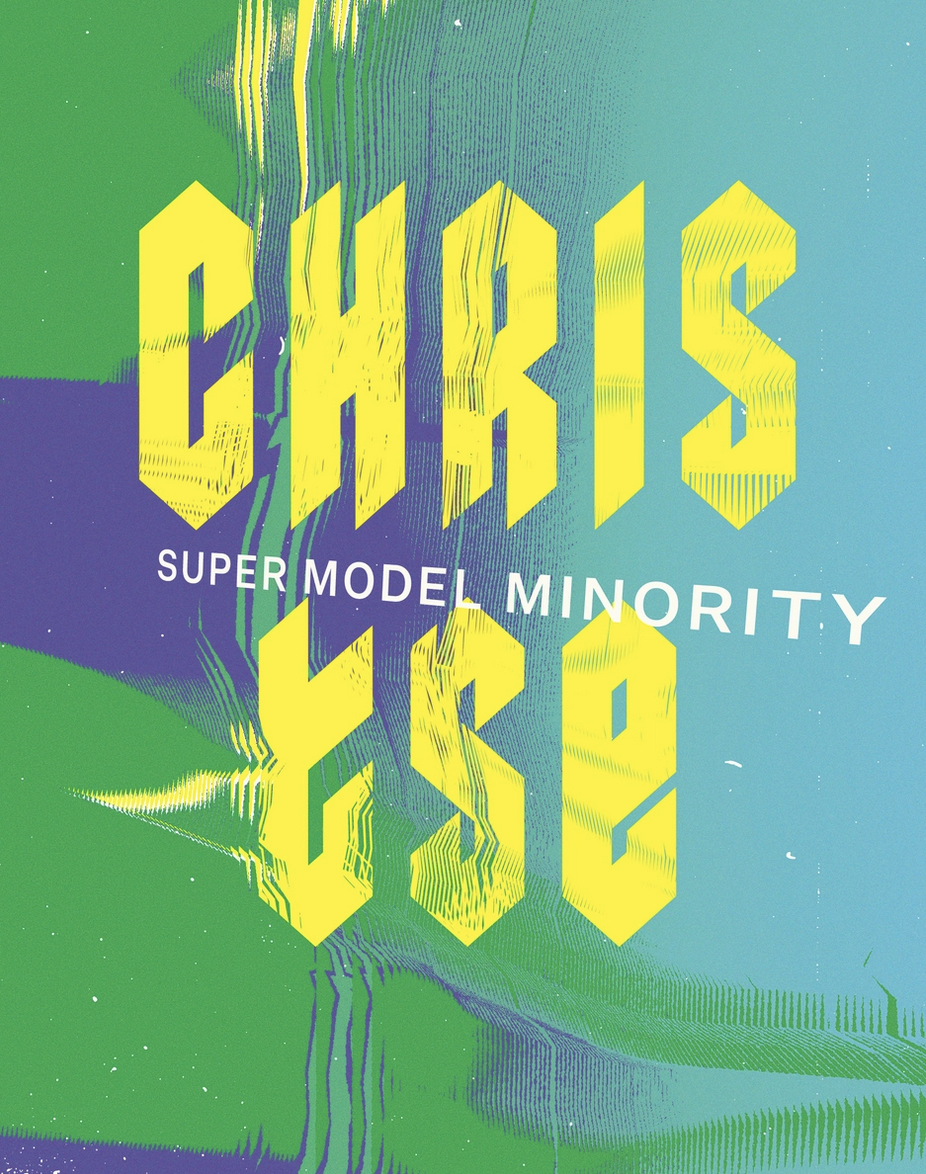
Poetry Shelf celebrates new books: Chris Tse reads from Super Model Minority

Super Model Minority, Chris Tse, Auckland University Press, 2022

Chris reads ‘Tomorrow, and tomorrow, and tomorrow’

Chris reads ‘BOY OH BOY OH BOY OH BOY’

Chris Tse is the author of three poetry collections published by Auckland University Press: How to be Dead in a Year of Snakes (winner of Best First Book of Poetry at the 2016 Ockham New Zealand Book Awards), HE’S SO MASC and Super Model Minority. He and Emma Barnes are the co-editors of Out Here: An anthology of Takatāpui and LGBTQIA+ writers from Aotearoa.

Poetry Shelf celebrates: Ursula Bethell Collected Poems

Today is International Women’s Day. At breakfast, I read NZ Supreme Court Judge Susan Glazebrook’s terrific story about her ongoing ZOOM efforts to help get women Judges out of Afghanistan last year (with the help the International Association of Women Judges). The story is in the February issue of North & South and it is unmissable. It feels like we are living and breathing under such a blanket of darkness at the moment. We know the list: the pandemic and its ripple effects, misguided protests, impending war, human suffering under despots across the globe, misguided journalism, mis-and-disinformation, poverty, greed. At times it is too much. I switch off social media, the radio, the papers to avoid toxic voices creeping in with their destructive influences influencing the vulnerable and the disenfranchised. But here I am reading a magazine presenting good journalism under Rachel Morris’s astute editorship. Rachel is stepping back now from the role, but I am grateful for the issues she has presented (not forgetting worthy attention to books in Aotearoa).

It seems an eon since Wild Honey appeared in the world, yet it was only last year I was doing the online Ockham NZ Book Award celebration for it. But it is fitting to remember this project of love – I set out to celebrate and retrieve women poets in Aotearoa. The younger generations of women poets are vibrant, inspiring, active, revealing, political, personal, edgy, lyrical, path-forging and it is a joy to read them. To write about their work on Poetry Shelf. But I don’t write out of a vacuum. I write out of the women poets who preceded me. Who also wrote with vigour, with various connections to the personal and the political. And so to celebrate International Women’s Day, to celebrate women’s poetry in Aotearoa, I draw your attention to Te Herenga Waka University Press’s reissue of Ursula Bethell’s Collected Poems.

I have several copies of Wild Honey to give away. Email or DM or leave a comment if you would like a copy.

Let’s shine lights this week on all the wonderful things women are doing – but hey, not just women, everyone. Let’s shine lights on humanity’s goodness.

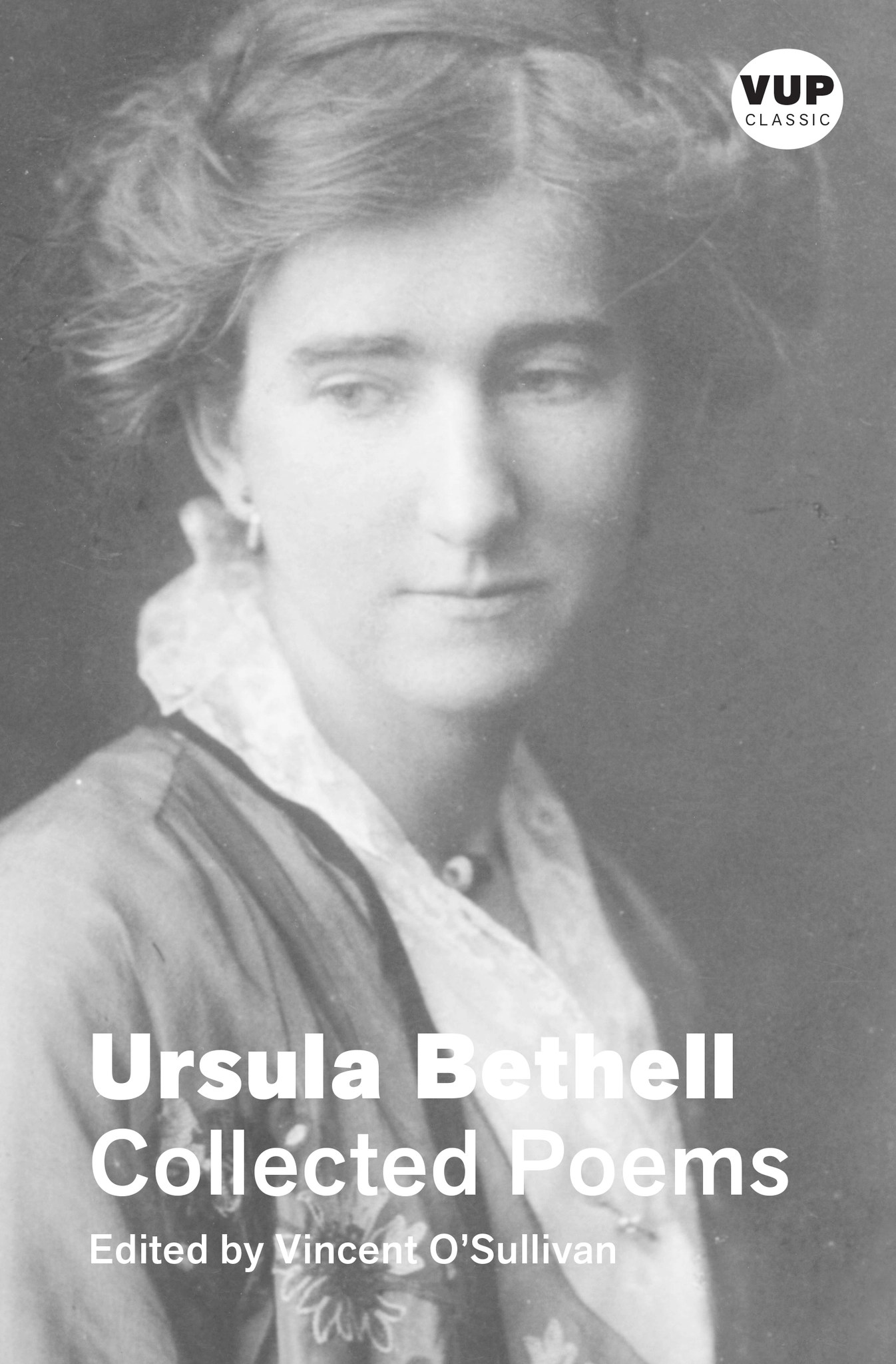
Ursula Bethell Collected Poems, ed Vincent O’Sullian, VUP Classic, 2021

Detail

My garage is a structure of excessive plainness.
it springs from a dry bank in the back garden.
It is made of corrugated iron,
And painted all over with brick-red.

But beside it I have planted a green Bay-tree
— A sweet Bay, an Olive and a Turkey Fig,
— A Fig, an Olive, and a Bay.

Ursula Bethell, From a Garden in the Antipodes, 1929

Ursula Bethell is the kind of poet I turn to when I want uplift, when I crave the poetic line as transport beyond ongoing despair at this sad-sack world. Ursula Bethell’s reissued Collective Poems is now a member of the VUP Classic series. Oxford University Press originally published the collection in 1985, and it was reissued in 1997 with corrections and a new introduction by editor Vincent O’Sullivan.

I utterly loved engaging with Ursula’s poetry in Wild Honey. I considered it in three parts:

“I want to approach her poetry as three distinctive garden plots with a memorial garden to the side: From a Garden in the Antipodes (1929), Time and Place (1936) and Day and Night (1939) and ‘Six Memorials’. You could consider the debut collection as poem bouquets for friends, the second as a poetry posy handpicked for Pollen after her death, while the final collection, a late harvest from the same ground, almost like a consolation bouquet for self. The memorial poems were penned annually on the anniversary, or thereabouts, of Pollen’s death.”


I wrote in my Wild Honey notebooks:

Bethell published three collections of poetry in her lifetime, all anonymously, with the poems chiefly drawn from a decade she devoted to writing, gardening and her cherished companion, Effie Pollen. For ten years, the two women lived in Rise Cottage in the Cashmere Hills, until Pollen’s premature death, at which point Bethell’s life was ripped to unbearable shreds.  The more I read Bethell’s poetry and letters, and the more I muse beyond her characteristic reserve, I feel as though this is the woman to whom I would devote an entire book. She is a knotty collision of reticence, acute intellect, acerbic advice, crippling heartbreak and poetic dexterity. Bethell rightly counters the claim that she ‘knows no school mistress but her garden’, with the point that the garden was ‘a brief episode in a life otherwise spent’. Yet her gardening decade was the most joyous of her life, responsible for the bulk of her poetry, and a period she could not relinquish in letters and the grief that endured until her death. She moved back into the city with ‘no cottage, no garden, no car, no cat, no view of mountains’, no dearest companion and an impaired ability or desire to write poetry.


I was uplifted by individual poems and by the threads and luminosity as a whole:

“How can poetry ever match the joy and beauty a garden offers? Bethell brings us to the pleasure of words, the way words bloom and bristle. For Ruth Mayhew, a close friend to whom she dedicated a number of poems, Bethell builds her green garden symphony in ‘Verdure’: an abundant foliage of lemon, myrtle, rosemary, mimosa, macrocarpa. Without these variations, Bethell confesses she ‘should have, not a pleasaunce, not a garden/ But a heterogeneous botanical garden display’. The word, ‘pleasaunce’, is the spicy fertiliser waiting to explode the poem into new richness. Bethell favours flowers over produce, a pleasure enticement for the senses over fruit and vegetables for the kitchen (‘I find vegetables fatiguing/ And would rather buy them in a shop’. Her poetry ferments as a form of pleasaunce where the ‘plausible’, easily digested details of domestic routine, the house interior, daily conversations, intimate preferences and relations are sidestepped for words that provoke sensual and intellectual variegation in an outside setting.” from my Wild Honey notebook


To re-enter Ursula’s poetry is an act of restoration, just for a blissful moment, because it’s a way of feeling the warmth of the ground, the warmth of humanity (as opposed to its cruelty and ignorance). It is reminder that our literature offers so many rewards, on so many levels, and it is at times like these, poetry can be such necessary solace, respite, prismatic viewfinders, idea boosters. I am toasting the poetry of Ursula Bethell with thanks to Te Herenga Waka University Press.

Vincent O’Sullivan is the author of the novels Let the River Stand, Believers to the Bright Coast, and most recently All This by Chance. He has written many plays and collections of short stories and poems, was joint editor of the five-volume Letters of Katherine Mansfield, has edited a number of major anthologies, and is the author of acclaimed biographies of John Mulgan and Ralph Hotere.

Ursula (Mary) Bethell (1874-1945) was born in England, raised in New Zealand, educated in England and moved back to Christchurch in the 1920s. Bethell published three poetry collections in her lifetime (From a Garden in the Antipodes, 1929; Time and Place, 1936; Day and Night, 1939). She did not begin writing until she was fifty, and was part of Christchurch’s active art and literary scene in the 1930s. A Collected Poems appeared posthumously (1950). Her productive decade of writing was at Rise Cottage in the Cashmere Hills, but after the death of her companion, Effie Pollen, she wrote very little. Vincent O’Sullivan edited a collection of her poetry in 1977 (1985).   

Te Herenga Waka University Press page

Poetry Shelf noticebaord: Paula Green reviews AUP New Poets 8 at Kete Books

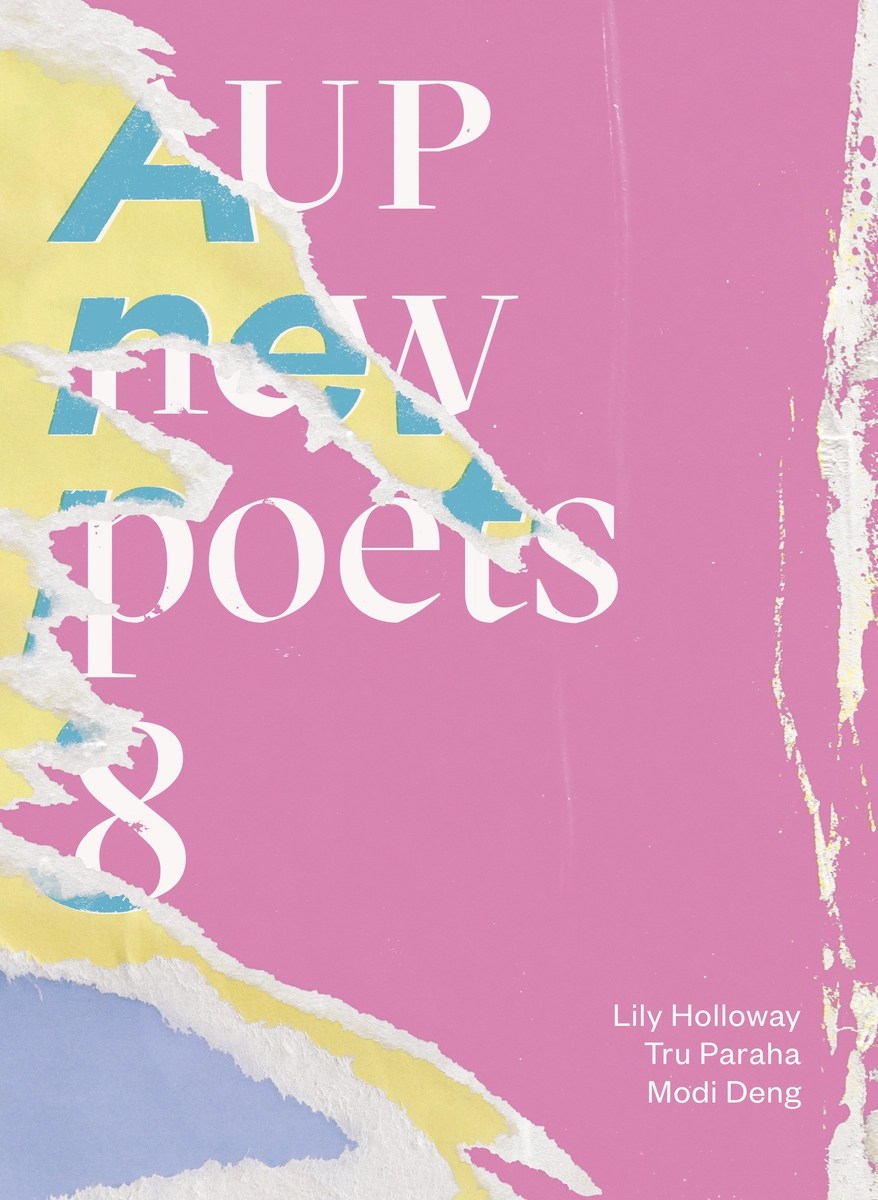
AUP New Poets 8: Lily Holloway, Tru Paraha, Modi Deng, Auckland University Press, 2021

Review extract:

Editor Anna Jackson has selected three distinctive poets for AUP New Poets 8 and has placed them in the perfect tonal order.

The title of Lily Holloway’s suite, a child in the alcove, reminds me of poetry’s alcove-like features. Poems can be miniature shelters, places of refuge, an interplay of dark and light, secret, mysterious, challenging, bulging with nooks and crannies. Reading the work is to read across myriad directions, to peer into captivating cubbyholes and, as Jackson writes in her terrific foreword, to read distance and depth.

Holloway is an award-winning writer and postgraduate student who has been published in numerous journals. I have long admired her poetry: her aural and linguistic deftness, the sweet measure of surprise, the variegated forms, the connecting undercurrents, the honey, the bitterness. Her poems run on the rewarding premise that poems don’t need the full explanation, that tactile detail and deft juxtapositions can unmask love, desire, razor edges, self-exposure. Pocket narratives are equally sublime.

Full review here

Listen to the three poets read

Auckland University Press page

Lily Holloway (born in 1998, she / they) is a queer writer and postgraduate English student. While she mostly writes poetry, she has also tried her hand at non-fiction, fiction and playwriting. You can find her work in places like Starling, Midway Journal, Scum, The Pantograph Punch and The Spinoff amongst various other literary nooks and crannies. In 2020 she was honoured to receive the Shimon Weinroth Prize in Poetry, the Kendrick Smithyman Scholarship in Poetry and second place in the Charles Brasch Young Writers’ Essay Competition. In her spare time she enjoys op-shopping, letter writing, visiting small towns and collecting vintage Teletubbies paraphernalia. She is passionate about survivor advocacy and taking up space. You can find a list of her writing at lilyholloway.co.nz.

Tru Paraha resides in Tāmaki Makaurau in the suburb of Tukituki Muka (aka Herne Bay). She works as a choreographer and director, having enjoyed an extensive career in experimental dance, theatre and audio-visual arts. She is currently in the final year of a postdoctoral research fellowship in the English and Drama department at the University of Auckland. Moving between choreography, philosophy and creative writing, Tru produces live performances, artists’ pages and poems drawing on materials from deep space. She is a member of the International Dark-Sky Association and advocate for the preservation of the night sky as a world cultural heritage.

Modi Deng is a pianist based in London, currently pursuing postgraduate performance studies on a scholarship at the Royal Academy of Music. Her Chinese name 默笛 means ‘silent flute’, which her father drew from a poem by Tagore. Performances with her ensemble, the Korimako Trio, have taken her throughout the UK and her concerts have been broadcast on BBC Radio 3 and RNZ Concert. After growing up in Dunedin, she went on to complete a Master of Music with First Class Honours on a Marsden research scholarship, while completing a Bachelor of English at the University of Auckland. Modi cares deeply about literature (diaspora and poetry), music, psychology and her family.

Poetry Shelf celebrates new books: AUP New Poets 8

AUP New Poets 8: Lily Holloway, Tru Paraha, Modi Deng, Auckland University Press, 2021

I am loving the AUP New Poets series under the astute editorship of Anna Jackson. Each volume draws new voices into compelling view, each volume sparks essential poetry conversations. How we write. Why we write. What we write. How we write ourselves and how we write the imagined.

This on AUP New Poets 8, from my Kete Books review appearing shortly: ‘Editor Anna Jackson has selected three distinctive poets for AUP New Poets 8 and has placed them in the perfect tonal order. The title of Lily Holloway’s suite, ‘a child in that alcove’, reminds me of poetry’s alcove-like features. Poems can be miniature shelters, places of refuge, an interplay of dark and light, secret, mysterious, challenging, bulging with nooks and crannies. Reading the work is to read across myriad directions, to peer into captivating cubbyholes and, as Anna writes in her terrific foreword, to read distance and depth.’

This is an arrival to celebrate – and how better than with a suite of readings – not as good as book launch for sure – but online readings offer a lounge of returns. Make a coffee, a cup of tea, pour a glass of wine, you choose, find a sweet spot and have a listen. I raise my glass to Anna, Lily, Tru, Modi and AUP. This is essential listening (and reading!).

The readings

Lily Holloway

Photo credit: Angela Zhang

Lily Holloway reads ‘Reverb or Aftermath’

Lily Holloway reads ‘return again’

Tru Paraha

Tru Paraha reads ‘Paradox’

Tru Paraha reads ‘Postcard from Israel’

Modi Deng

Photo credit: Mikayla Bollen

Modi Deng reads ‘field notes on Lewis Hyde’s ‘The Gift’’

Modi Deng reads ‘unrest • an wei’

Modi Deng reads ‘now and then things come in tandem’

The poets

Lily Holloway (born in 1998, she / they) is a queer writer and postgraduate English student. While she mostly writes poetry, she has also tried her hand at non-fiction, fiction and playwriting. You can find her work in places like Starling, Midway Journal, Scum, The Pantograph Punch and The Spinoff amongst various other literary nooks and crannies. In 2020 she was honoured to receive the Shimon Weinroth Prize in Poetry, the Kendrick Smithyman Scholarship in Poetry and second place in the Charles Brasch Young Writers’ Essay Competition. In her spare time she enjoys op-shopping, letter writing, visiting small towns and collecting vintage Teletubbies paraphernalia. She is passionate about survivor advocacy and taking up space. You can find a list of her writing at lilyholloway.co.nz.

Tru Paraha resides in Tāmaki Makaurau in the suburb of Tukituki Muka (aka Herne Bay). She works as a choreographer and director, having enjoyed an extensive career in experimental dance, theatre and audio-visual arts. She is currently in the final year of a postdoctoral research fellowship in the English and Drama department at the University of Auckland. Moving between choreography, philosophy and creative writing, Tru produces live performances, artists’ pages and poems drawing on materials from deep space. She is a member of the International Dark-Sky Association and advocate for the preservation of the night sky as a world cultural heritage.

Modi Deng is a pianist based in London, currently pursuing postgraduate performance studies on a scholarship at the Royal Academy of Music. Her Chinese name 默笛 means ‘silent flute’, which her father drew from a poem by Tagore. Performances with her ensemble, the Korimako Trio, have taken her throughout the UK and her concerts have been broadcast on BBC Radio 3 and RNZ Concert. After growing up in Dunedin, she went on to complete a Master of Music with First Class Honours on a Marsden research scholarship, while completing a Bachelor of English at the University of Auckland. Modi cares deeply about literature (diaspora and poetry), music, psychology and her family.

Auckland University Press page

Poetry Shelf review: David Eggleton’s Throw Net | Upena Ho’olei

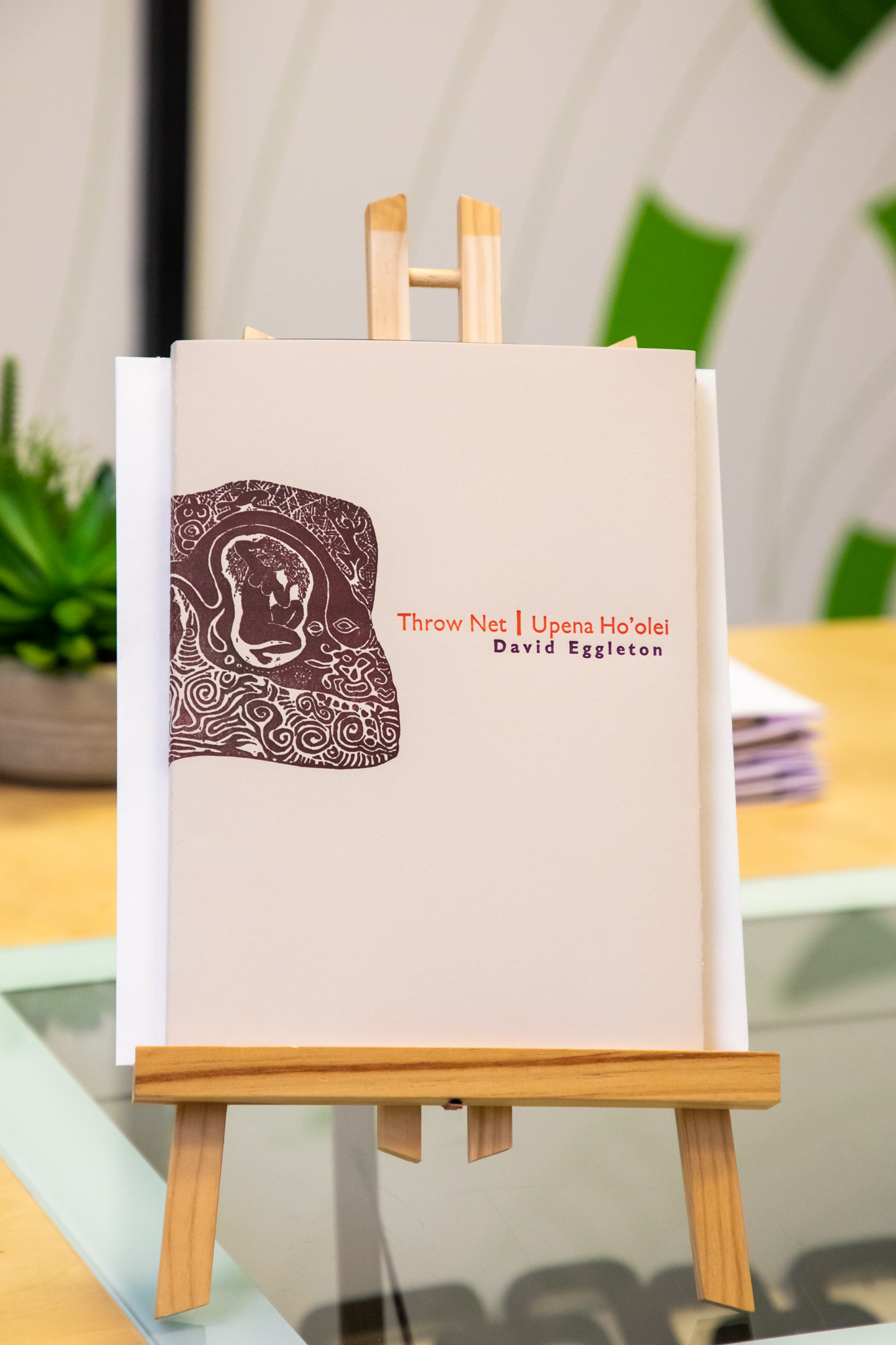
Throw Net | Upena Ho’olei, David Eggleton, artwork by Tonu Shane Eggleton, National Library / Fernbank Studios, 2021


I’m mesmerised by the sunshine’s sheen,
and every minute particular feels mine.

The sea disgorges its catalogue of shells
on the white page of sand for no-one.

On my hotel bed, I dream and sail.


from ‘Tourist Island’

Our current Poet Laureate, David Eggleton, has published a handset, hand-bound collection of poetry with artwork (woodblock prints) by his brother Tonu Shane Eggleton. Brendan O’Brien, beautiful-book craftsman extraordinaire, has produced an edition of 100 at his Fernbank Studios. The book is exquisite. I run my hand over the rough edged paper (Kerkall, plus Stonehenge for the covers). It is book joy. Holding this book. Holding this beauty. The artwork is an evocative sheen on the page.

The National Library, which has administered the New Zealand Poet Laureate Award since 2007, published the book. The award was established by Bill Manhire and winemaker John Buck as the Te Mata Poet Laureate Award n 1996. Throw Net | Upena Ho’olei is fittingly dedicated to John.

In 2018 David spent three months at the University of Hawai’i’s Moana Campus, as the Fulbright-Creative New Zealand Pacific Writer Resident. The poems began in notebooks while he was there, and were completed upon his return.

Throw Net | Upena Ho’olei, with nine poems and a scattering of artworks, is the perfect place to sojourn.

This is poetry that celebrates the moment. It feels like the poet is inhabiting a particular place, at a particular time, and slowly breathes in the experience. The poem establishes a heightened relationship with place, a translation of experience within measure poetic form. The treasured details offer sound and visual explosions to the point I am imbibing a poetry feast, a delectable banquet. I am unashamedly drawn to food metaphors because poetry is a form of nourishment on the tongue, in the heart, in the lungs. This is poetry that is so very nourishing.

There is quietness, there is melody, there are shifting keys and multiple forms. I am breathing in salt and ocean, and undulating voyage. I am lingering over vignette and anecdote. In this time of limited travel and strict local borders, poetry is a travel plan, an itinerary of respite and joy. You might swim with turtles and hear the church bells ring out. There is ‘the chop of waves’ and ‘ukelele strums’. Expect mountains and lava and sun, much much sun. I am feeling skin glazed as I spend a whole Saturday drifting in and out of these poems. Pleasure crafts. Such honeyed vessels.

I love this lovingly crafted chapbook. Such economy, such fluidity, such reach. I dream and I set sail.


The snores of a sleeper on a beach towel
recite genealogy under volcano’s glow.
A sunken raft of manta rays stirs after dark.

Hands hula-hula, shaping sandwiches
into islands; mechanically, a shark
takes a bite out of the moonlight.

Someone slings a hammock between trees.
Each wave is a line; each line is breaking;
and even the mountains are setting sail.


from ‘Throw Net’

David Eggleton NZ Poet Laureate blog

You can order a copy at the Library Store at $70 per copy. email: natlib-retail@dia.govt.nz

NZ Poetry Shelf interview

Otago University Press page

NZEPC page with poems

Poetry Shelf review: Jack Ross’s The Oceanic Feeling

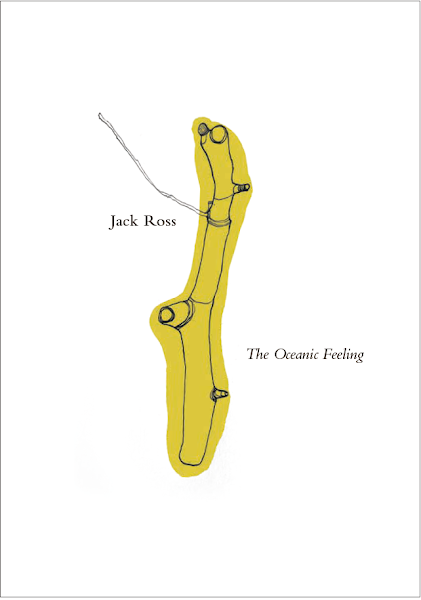
The Oceanic Feeling, Jack Ross, Salt and Greyboy Press, 2021

Here I go reviewing a book again with the subterranean feeling I experienced last March, barely articulated, drenched in uncertainty, fearing for the well being of Aotearoa, fearing for the well being of our frontline workers, fearing for our understaffed hospitals, fearing that supermarkets will deal with aggressive behaviour from some shoppers, yet full of gratitude for our Government’s swift response, for everyone choosing to stay at home and wear a mask. The subterranean Covid effect saw me drifting around the house yesterday with Jack Ross’s new poetry collection, The Oceanic Feeling, in my hand. Not writing a word. Word-drifitng in and out of countless books. Worrying about Afghanistan. Listening to Reb Fountain. Worrying about Haiti. Sydney. All the people living alone. The homeless.

The title is so fitting. The oceanic feeling.

Layer it up. Stand by the ocean and get an intake of ocean beauty. Sit at my kitchen table looking onto the tail end of the Waitākere ranges and my potential for worry is oceanic. Below the surface in my blood and bones. Above the surface in those intruding thoughts that I try not to let settle at the station.

I love this title. This beautifully produced book with its white cover and striking image holds an ocean of feeling. Add in the white space, the unsaid. Add in the physical, the images that glint and hold your attention.

The cover drawing is by Swiss-New Zealand artist Katharina Jaeger, and is part of the suite of images included in the collection. Bronwyn Lloyd’s afterword explores the connections between the drawings and the poetry. Katharina was inspired by her father’s manic pruning, and rather than use the the pile of clippings as prunings, drew them instead. Bronwyn makes a vital link between prunings and the skeletons in the artist’s closets, in the poet’s closet, and by extension in our closets.

Poetry is both pruning and planting and, at times, opening the closet door is to shine a light on the tough, the difficult, the surprising.

Jack’s terrific new collection does just this. The poetry seeks perspective in the corrugations and felicities of the everyday. In the little and larger events that shape and have shaped life. That nurture love, that spark a sense of humour, that trigger contemplation. The poems occupy the present but they also recuperate the past. I am moved by this.

The book is essentially in two sections, like two halves of a heart, with ‘Family Plot’ alongside ‘Ice Road Trucker’. Family poems alongside poems that consider the academy, poetry journals, travel, public art, reading, thinking. There is also a tiny cluster of small poems and of translations.

The poetry peers into the mist, and swivels to embrace the clearly sighted.

A sublime example is ‘What to do till the sentinels come’. The poet’s mother (I am making this assumption) has forgotten to feed Zero the cat when they are away. The cat hides in the garden shed, unfed. Here is the mist and the close at hand. The poem as the pruned twig.

it’s not that my mother
neglected her task
on purpose
she’d written in her diary

FEED THE CAT!
it’s just that her mind
now fills in blanks
with certainties

not doubts
there was a slight pause
before that “fine”
all I know is our cat

left alone
in the storm
my mother alone
in the fog of her brain

In the opening poem, ‘Lone Pine’, a tree crew are pruning the pines. The physical scene unfolds, and in reaching the visual impact of the tallest tree with its branches stripped bare, the loss doubles back. This is the pruned branch laid on the page: ‘standing bare / just like my father at the end’.

2021 is the season of memoirs. Long form and all revealing.

And yes, The Oceanic Feeling is a form of memoir. Fragmented. Selective. Revealing. It is also a form of engagement with both ideas and feelings. Poetry as a way of discovering chords between here and there, this and that, now and then. So many layers. So many connections. ‘Family skeletons’ does this. The sister with her suicidal thoughts, witnessed throwing a rope over a tree, who later succeeds with pills, is both presence and absence. Again I am picking up a branch laid upon the page and I am feeling it deeply.

Ah, I am moving in so many directions, as I read Jack’s collection, from the cars loved and then replaced, to bookshelves and superstitions, to wrangling over the colours of a graduation hood, to a university department lovingly built up over time, to be faced with cutbacks.

What makes this book resonate so deeply with me is movement. Physical and emotional movement. Not on a grand over-the-top flare of sentimentality but in small measured steps that favour contiguity. I relish the shift between what is easily witnessed in the everyday and what is much harder to fathom, what is retrieved in glimmers and shards across time. it is a collection that warrants a prolonged sojourn. Glorious.

I am going to leave you with ‘What do you want?’. The poet is in a Feilding library, having driven down for a function. The poem swerves and I am utterly affected.

What do you want?

said the librarian
       in Friendly Feilding
to come in from the cold
       was my reply

we’re closing an hour early
       for a function
the function I’d driven down for
       I walked away

he’s crying
       but he doesn’t know
why he’s crying
       said my sister

to the primer one teacher
       who wanted to know why
I guess I do too
       I guess I do

I was small and afraid
       of a brand-new place
so many people
       but what remains

is kindness
      my sister
trying to help
      unavailingly

Jack Ross

Jack Ross works as a senior lecturer in creative writing at Massey University. He is the author of five poetry collections and eight works of fiction, most recently Ghost Stories (Lasavia Publishing, 2019) and The Oceanic Feeling (Salt & Greyboy Press, 2021). He blogs here

Jack reads from The Oceanic Feeling

Notes to The Oceanic Feeling

Jack reads and comments on ‘1942’

Poetry Shelf celebrates new books: Dinah Hawken reads from Sea-light

Sea-light, Dinah Hawken, Victoria University Press, 2021

Cover: Breaker Bay, Looking South, Gerda Leenards, 2007

Dinah Hawken reads ‘Haze’, ‘The sea’ and ‘Faith’ from Sea-light

Dinah Hawken is one of New Zealand’s most celebrated poets. She was born in Hāwera in 1943 and now lives in Paekākāriki. Sea-light is her ninth collection of poetry.

Few writers have the skill to return to the land and the sea with such originality and genuine knowing as Hawken.’ —Sarah Jane Barnett, NZ Booksellers

‘As a poet she utilises economy on the line to build richness above, between and beyond. That plainness of talking makes the impact even stronger, deeper, wider.’ —Paula Green, NZ Poetry Shelf

Victoria University Press page

Poetry Shelf review: Courtney Sina Meredith’s Burst Kisses on the Actual Wind

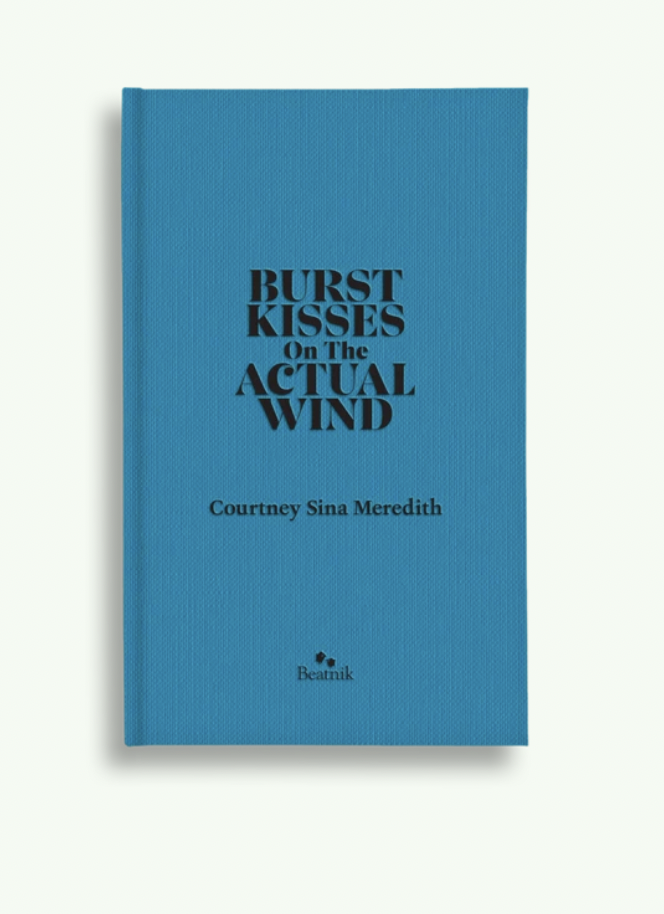
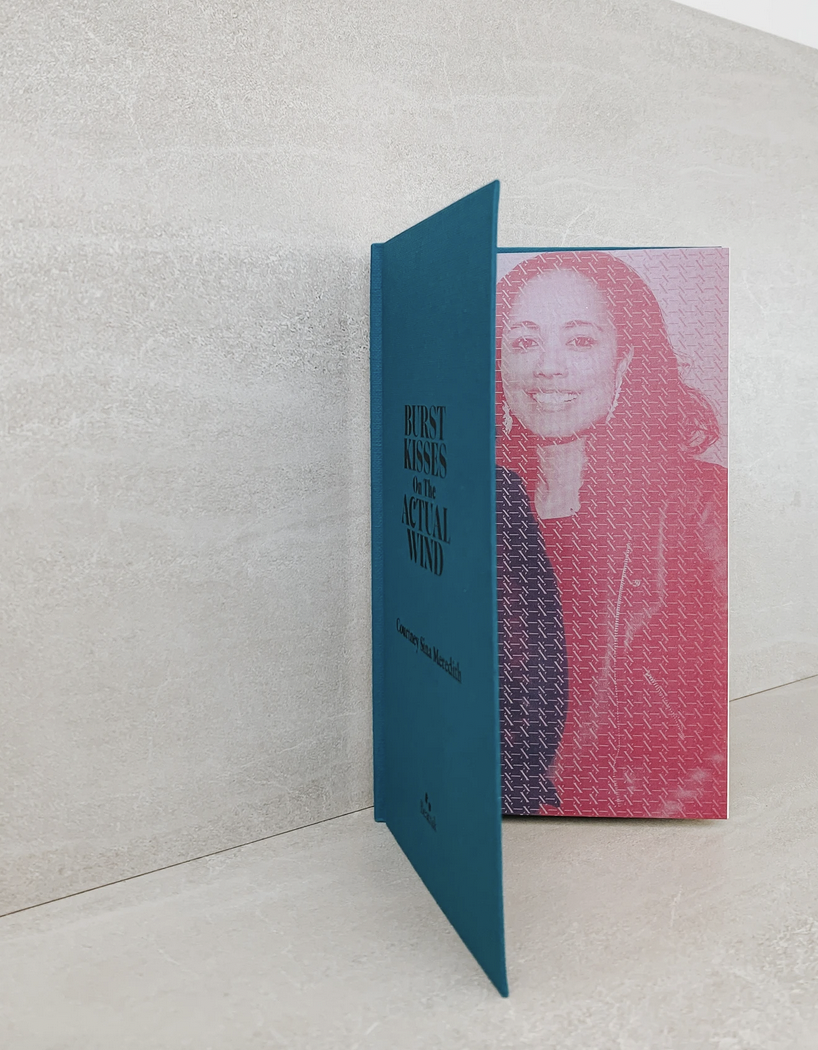
Burst Kisses on the Actual Wind, Courtney Sina Meredith, Beatnik Books, 2021

Courtney Sina Meredith’s mother, poet Kim Meredith, has edited Courtney’s new collection and has written a moving introduction. I love this. And I love the gratitude list at the back, where thanks is offered to her editor, publisher, true love, village and children. It infuses the book with love.

This is a book of love.

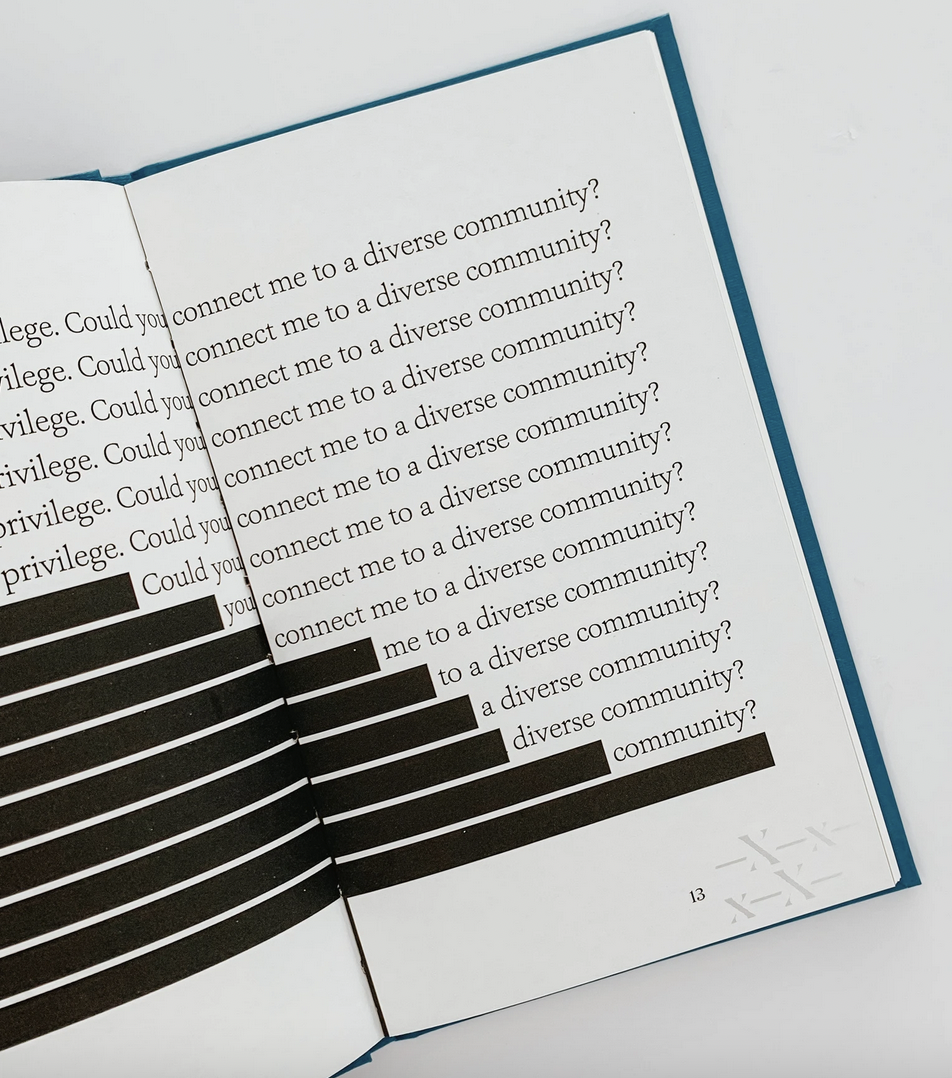
The opening poem is like a staircase, with the opening line (‘I am aware of my privilege. Could you connect me to my community?’) dropping a word, one by one, to become ‘community’. For me this collection is the incandescent, life-affirming bridge between ‘I’ and ‘community’.

And if the collection is a poem bridge, it is built with diverse material, every time you shift your eye it shifts form, becomes visually distinct. The love and themes that hold the collection together are a constant; think love, travel, dailiness, mother, daughter, lover. Self and community. I adore this fluctuation between constancy and a mobility of form. The mind and heart go flying. The mind and heart are grounded.

This is a book of self.

One poem resembles a vessel, a mouth, a self container. The opening and closing lines (‘How about being a woman?’) move, one extra word at a time, to the fullness of the middle line (‘How about being a young brown queer single educated professional creative woman?’). It is a song, a chant, a plea, a mantra. It resonates thorough the connection as a whole.

A second poem, ‘eye’, removes the letter ‘i’, and enacts missing self, elusiveness, restless, regret, arrival, departure. The peppery gaps are signposting the vagabond ‘I’, so full of possibilities.

This is a book of travel.

Foreign cities, physical travel away from home, charting the distractions and attractions of elsewhere (New York, London, Mexico City, Iowa, maybe Chicago). Yet the travel is also internal, inscribing the pathways home, to an interior home. Coming home to self. Poetry is most definitely a sublime means of travel.

This is a book of the matter of fact and this is a book of the intensely moving.

I made a big curry for all of my friends.
One of them gave me Twenty Love Poems and a Song of
Despair.

My cousin went to see another friend at a bar. A guy
asked them for a threesome. They said no.

I read about Nelson when everybody left.


from ‘Aso fanau’

I have stolen away into the secret room

mothers build inside their daughters

I am feeding on a dowry centuries old

the bones sucked dry

a feast of bright quiet.


My mother’s dreams are here

beside the red gold river

born of shame and laughter

the shifting bank won’t hold.


from ‘I have stolen away into the secret room’


Courtney’s poetry is so lovingly crafted, the silence as potent as the kinetic line, the evocation of the physical, the need to feel the word and the day and the vital connections. In Burst Kisses on the Actual Wind, the poems open out, gloriously, and as readers we are invited to step in. My only misgiving is the smaller font is a challenge for the visually impaired. But this is a joy to read. A beautiful object thanks to Beatnik. In the final poem, ‘Avondale Heights’, the poet is home, and in the final line, ‘The horizon is vast’, the possibilities of life stretch wide. And that includes poetry. Sublime.

Courtney Sina Meredith is a distinguished poet, playwright, fiction writer, performer, children’s author and essayist, with her works being translated and published around the world. A leading figure in the New Zealand arts sector, Courtney is the Director of Tautai Contemporary Pacific Arts Trust, an organisation committed to championing Oceanic arts and artists. Courtney’s award-winning works include her play Rushing Dolls, poetry Brown Girls in Bright Red Lipstick, short stories Tail of the Taniwha and children’s book The Adventures of Tupaia. Burst Kisses On The Actual Wind is Courtney’s new collection of poetry, the book was released in 2021 by Beatnik Books. 

Beatnik Books page

Courtney reads from Burnt Kisses on the Wind

Poetry Shelf review: Sam Duckor-Jones’s Party Legend

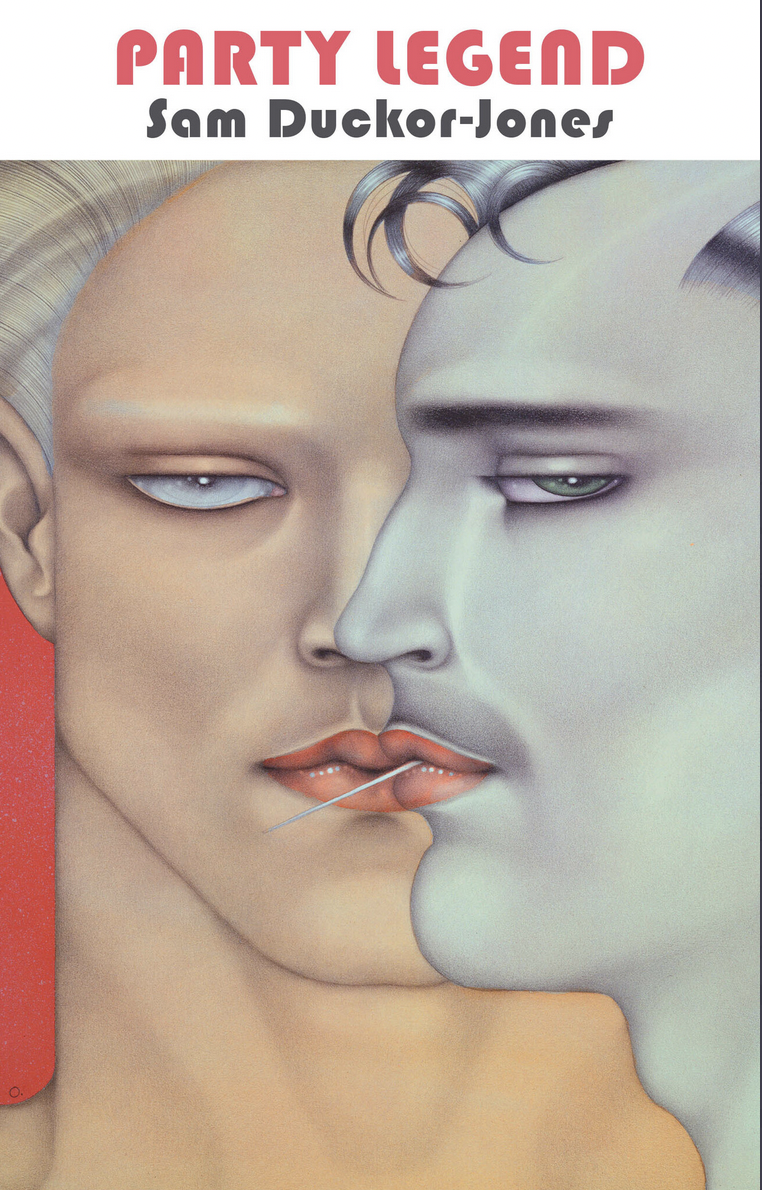
Party Legend, Sam Duckor-Jones, Victoria University Press, 2021

Dedications


To Anita: complete with scissors and buttons
For Donovan: a lesson
To Christopher: humming a little tune
For Neil: we tried
To Jack: a pasture of hens
For my grandfather: the standard question
For Amy: empty nutshells
To Janet: harder than quartz


Sam Duckor-Jones


Some poetry books offer a sweet flowing current, other books twist and spin with connections, disconnections, changing hues. I love both. I love a fluency of voice, and I love it when voice cracks and reforms afresh. Sam Duckor-Jones’s second collection, Party Legend, is utterly inventive as it redirects the current, swaps over form, upholds fluency, surprises you at each turn of the page.

First love: the sequence of fascinating epigraphs that hold the collection together. I am reminded of a leaf skeleton. Look though the weathered mesh and you enter the realm of existence. This is an epigraph fest: Dorian Corey, Ken Bolton, Charles Darwin, Bernadette Bassenger, Karen Kamensek, Sophie Zawistowski, Dr Ruth-Anne Tibbets.

And then the beating heart of the book, a long sequence, ‘The Embryo Repeats’, a sequence to luxuriate in, a God alphabet of making and breaking and coveting, and a what-the-heck God, and God is everywhere, think anecdotes and silence and chuckles. An alphabet of arrivals. Desire dissatisfaction curiosity.

Switch currents, and the ‘Allemande’ poems transpose Bach’s lettered notes in the same order of his Cello Suites. Well yes. The lexicon is lush and elbowed. Expect fêtes and golden fools and dick. Genius.

Take time out for Sam’s refreshment of the found poem. Has to be the best salt-and-pepper cluster of found poems I have encountered in a long time. There is the ha! moment when you discover the poem is found language. The ha! moment at the revelation of source. The way you go back to the poem and it spins like enriched dough in your head and the poem rises and lifts, and is more than our immunity to the language we encounter daily. It is a trapdoor into reverie. Musing on existence. Little thoughts. Big thoughts. Sam borrows from the dedications and final lines in a book he found in a BnB (poem above), from emails about Talmund with his mother, an overheard conversation in a bookshop, RNZ reportage of the Kaikoura earthquake. And!! a complete list of Israeli prime ministers mashed up with Mary Holmes interviews on RNZ National. Genius, again, genius.

The poetry of Sam Duckor-Jones is a refreshing gust in my head. It’s audacious and funny and real. It’s mind-roaming, and heart-attaching, and blisteringly good.

Sam Duckor-Jones is a sculptor and poet. In 2017 he won the Biggs Poetry Prize from the International Institute of Modern Letters at Victoria University of Wellington. His first book was People from the Pit Stand Up (VUP, 2018).

Victoria University Press author page

Review, Faith Wilson on RNZ, Nine to Noon

Review, Greg Fleming at Kete Books

‘Party Legend’ at The Spin off

‘The Embryo, Repeated’ on Poetry Shelf

Sam reads two poems for Poetry Shelf

Poetry Shelf review: Tayi Tibble’s Rangikura

Rangikura, Tayi Tibble, Victoria University Press, 2021

Cover: Xoë Hall

‘I love words so much they blind me.’

from ‘Mahuika’

Tayi Tibble caught my poetry heart with her debut collection – Poūkahangatus – and the hearts of a galaxy of poetry fans. Rangikura is snaring my heart again. Gloriously so.

Why is it so good to read this book? It is stepping into liquid currents of words, river currents of ideas, images, feelings: incandescent, life-affirming, fast flowing. The poem is the water current and the lightness current, and it is the vessel-on-the-water current. I am climbing in, word splashed, and drenched in joy. The poet is deep diving, skimming the shallows, riding the rough, revelling, honouring, exposing.

Feel the vernacular, the te reo, the melodies along the line, and it is so skin-prickling good.

The first part reclaims the girl. This is girlhood and it is feminism. It is dangerous and vulnerable, mermaid girls racing the boys in the water, girl bonding, girl bounding, the step-brother test, horoscopes, delivering kittens, armouring the danger-girl, becoming winter, the East Coast map carried inside. A road map of adolescence. And always the scintillating rapids of writing. Bliss.

And I remember the year
we were the two strongest ‘girl swimmers’
in our syndicate. This meant
we were forever forced to race
the boys for Western feminism
and you would always win,
even against the boys who were so like men
the teachers treated them as if they were
more muscle than human.

from ‘Lil Mermaidz’

The middle section is a sequence of she he prose poems, a shift in key, a miniature novel in verse, where love is threaded at a distance, and we all might have different things to say about the he, about the she, the tyranny of separation, and the tyranny of waiting. The sexiness of everything. Hierarchies. The love affair, the love relationship, ah what to call this, as dialogue and desire unfold in restaurants and hotel rooms, and the restaurants are sweet and soured with taste and preference. I am almost eating the rice and peanuts (well not the meat), relishing the ‘tacky’ surroundings. And it is sharp edge reading this love, this like love like suite. Think of the way you might look at a photograph and everything is sharp edged with life. And light. And yes the dark shadow jags.

The third section returns to free verse, freedom to break the line, to make it clear that sometimes politics is personal, and that maybe politics is always personal, and that poetry is the the whenua, the maunga, the ocean, the awa. Poetry is sky and breath and beating heart. Tayi’s poetry is grounding liberating speaking out singing. This is what I get when I read Rangikura. It is poetry, but it is also life, more than anything this is poetry as life.

Tayi’s collection is framed by an opening poem and a last poem, ancestor poems, like two palms holding the poetry tenderly, lovingly. Hold this book in your reading hands and check out the electricity when you stand in the river, the ocean. Reading Tayi spins you so sweetly, so sharply, along the line, off the line. I love this book so much.

I sat in the lap of my great-grandmother
until the flax of her couldn’t take it.
So she unravelled herself and
wrapped around me like a blanket
and at her touch the privilege of me
was a headrush as I remember
making dresses out of sugar packets,
my bro getting blown up in Forlì,
my grandfather commemorated under one tree
even though he forced himself into our bloodline
and then abandoned me and me and me.

from ‘My Ancestors Ride with Me’

Tayi Tibble (Te Whānau ā Apanui/Ngāti Porou) was born in 1995 and lives in Wellington. Her first book, Poūkahangatus, won the Jessie Mackay Best First Book of Poetry Award in 2019.

Xoë Hall: xoehall.com

Victoria University Press page

Paul Diamond review on Nine to Noon, RNZ National

Faith Wilson responds to Rangikura at The Spinoff

Kiri Piahana-Wong review at Kete Books