Category Archives: NZ poetry

The Ockham New Zealand Book Awards Poetry shortlist


NZ-book-awards-trust_logo@2x.png

All shortlists here

Book awards draw attention to books that hook judges for any number of reasons. Hopefully the awards attract new readers and generate new conversations. Check out reactions at The Spin Off to all four lists. In 2017, and I seem to say this every year, New Zealand published an astonishing array of poetry from a diverse range of presses. I loved so much of it, I would have turned down an invitation to judge an award. Yes there were books I utterly loved that didn’t make the long list. Yes there were books from the long list that I utterly loved that didn’t make the short list.

I am really familiar with three of the books on the short list, while the fourth is a pleasing discovery. Each of these books contain poems that gave me goosebumps. So in the spirit of generosity I celebrate the judges’ choices.

What do these poets have in common? Attentiveness!
 

1497223465774.jpg

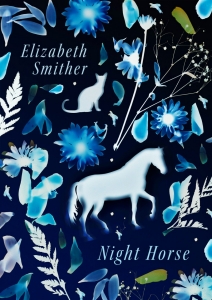
Elizabeth Smither’s Night Horse   (Auckland University Press)

Last year I read through the captivating stretch of Elizabeth Smither’s poetry: from Here Come the Clouds published in 1975, to the new collection, Night Horse. I was drawn into melodious lines, pocket anecdotes, bright images and enviable movement. Harry Ricketts talked about the transformative quality of Elizabeth’s poems in an interview with Kathryn Ryan, and I agree. As you follow reading paths from the opening line of the first poem — ‘Once, near nightfall, I drove past my mother’s house’—there is always  some form of transformation. The poetry, from debut until now, is meditative, andante, beautiful.

I see a continued poetic attentiveness and an ability to assemble detail that both stalls and surprises the reader. I was thinking the poems are like little jackets that can be worn inside out, and outside in, because Elizabeth offers stillness in movement, and in movement stillness. She generates musicality in plainness, and in plainness there is music. In the strange, there is the ordinary, and in the ordinary, there is strangeness.

Elizabeth so often slows down the pace of her poems so we may linger upon an image, a word, an anecdote, a side-thought to see what surfaces.

I especially love the ongoing friendship and granddaughter poems, but I particularly love the first poem, ‘My mother’s house.’ Kate Camp and I heard Elizabeth read this at the National Library’s Circle of Laureates last year and were so moved and uplifted that we asked for copies! In the poem, unseen, Elizabeth observes her mother move through the house from the street (she told us this autobiographical fact) and sees her in shifting lights. The moment is breathtaking; are we are at our truest self when we are not observed? There is characteristic Smither movement through the poem, slow and attentive, to the point of tilt and surprise. The final lines reverberate and alter the pitch of looking: ‘but she who made it/who would soon walk into the last room/of her life and go to sleep in it.’


It was all those unseen moments we do not see

the best of a friend, the best of a mother

competent and gracious in her solitude


from ‘My mother’s house’


TheYield-360-360x530.jpg


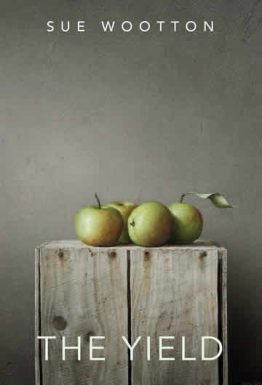
Sue Wootton’s The Yield  (Otago University Press)

Sue Wootton’s shortlisted collection is a sumptuous read, a read that sparks in new directions, while clearly in debt to everything she has written to date. You enter a sumptuous feast of sound and image amongst other glorious things. Several poems feature knitting, and knitting is a perfect analogy for the way Sue’s poems interlace the aural and the visual to produce sensual patterns. The poems have enviable texture and that texture engages both mind and heart.

As I read, the poetry of David Eggleton and Michele Leggott comes to mind.  They both write out of their own skin in ways that are quite unlike the local trend to write conversational poetry. I can see a similar idiosyncratic pulse driving Yield poems as though Sue is pushing boundaries, resisting models, playing and challenging what she can do as a poet.

I am also struck by the heightened musical effects. Sue has always had an attentive ear, but this collection almost feels baroque in the leapfrogging alliteration, assonance and sweet chords. There are traces of the personal in the poems—deaths, a family picnic, illness, a declaration to live life to the utmost, friendship—but I would suggest Sue hides in the crevices. Some of the poems (‘The needlework, the polishing,’ ‘Pray,’ ‘Priest in a coffee shop,’ ‘Graveyard poem,’ ‘Poem to my nearest galaxy’) engage with some kind of spirituality, either through a church building or prayer.

So many poems in the collection stand out for me (and indeed there are a number of award-winning poems here). I especially love ‘Calling,’ ‘Wild,’ ‘Lunch poem for Larry,’ ‘Admission,’ ‘Picnic,’ ‘Unspooling,’ ‘Strange monster,’ ‘A treatise on the benefits of moonbathing,’ ‘The crop,’ ‘Daffodils.’ Ha! Quite a list of poems that matter.

The alluring cover befits the allure of the poems within.


Measure my wild. Down to my last leaf,

my furled, my desicated. This deciduousness,

this bloom. Calculate my xylem levels,

my spore count, fungal, scarlet

in a bluebell glade. Whoosh,

where the foliage closes on a great cat.


from ‘Wild’


Rawahi-Front-Cover_high-res.jpg


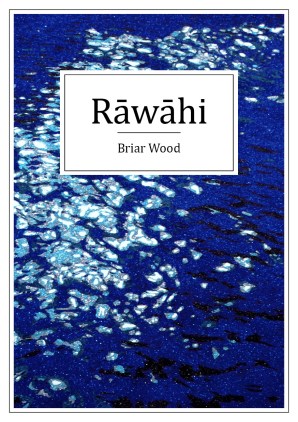
Briar Wood Rāwāhi   (Anahera Press)

Briar Wood’s poetry collection gathers, with a wide embrace, details of travel and living, and as the lived-in world grows on the page, the poems set up all manner of conversations. This book draws upon whakapapa, love, relations, ecology, the past and the present. Its warmth and its empathy are infectious.

Briar offers poetry that is both spare in delivery and rich in connection because people and places matter. The book cover glitters white on blue – and for me that is a treat of reading within. Words shine out like little gold nuggets on the line, layering and overlapping, and never losing sight of what matters deeply to the poet.

Poetry can be a way of laying down roots and setting up home in the poem, and on these occasions, it is as though Briar sings home in to being.


The sea at night is blacklit,

kikorangi, kōura, topazerine, pango,

a haul of images pouring from nets,

darker than oil underground


from ‘Paewai o Te Moana’


9780473411046.jpg


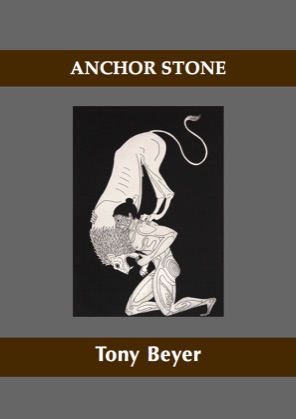
Tony Beyer’s Anchor Stone (Cold Hub Press)

Tony Beyer was such a discovery for me, I now need to track down his back list. Anchor Stone offers a distinctive voice with each poem judiciously layering detail that animates people, places and events. I am drawn to the measured pace, the slow and steady revelations that beguile and compound. The mix of economy, surprise, wit and physicality is glorious. You get linguistic agility, askew slides and a touch of daring.

No subject is redundant when it comes to poetry – think the land, friendship, trees and stones –  as Tony underlines. ‘Paths’ demonstrates such poetic fluidity, in a sequence of 100 small poems that furnish the outbreath and the inbreath of writing. It is as though each little poem walks its way into thought. Contemplation. The title suggest that these poems are miniature anchors but they are also kite-like in their imaginings and renditions and our need to attend to the physical world we inhabit.

Poetry can embrace beauty, flawed or otherwise, along with ways of belonging.


there is someone

everywhere in this house

living or

having lived here

their presence preserved

by a window fastening

the way a door

closes or partly closes


from  ‘Paths’


Each of these collections generates distinctive and diverse poetry pleasures. A big hug to the poets and big hug to all those who missed out on either list. Poetry awards can be tough times when you write, especially when exceptional books don’t make lists, long or short. But for these deserving four poets, it is time to crack open the bubbles and celebrate.


At Pantograph Punch: A fabulous Nina Powles letter from Shanghai


luminescent-cover-low-res_1_orig.jpg     8854932.jpg


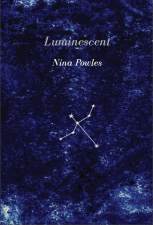
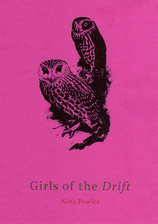
Nina Powles – the author of one my favourite 2017 poetry reads (Luminescent) –  writes of her experience living in Shanghai and two New Zealand authors who preceded her: Agnes Moncrieff and Robin Hyde. I also recommend Nina’s little chapbook, Girls of the Drift, that invents a letter conversation between Jessie Mackay and Blanche Baughan.

See the Pantograph Punch feature here.


‘The way I write about home changes when I’m away. The sea gets bluer, the hills become sun-drenched. But our ideas of ‘home’ and ‘away from home’ are becoming increasingly less fixed; they are no longer polar opposites but different, parallel ways of feeling and being. I am one of a growing number of New Zealanders who feels at home in two different cultures and in multiple places in the world. Writing to and about home from somewhere else is more than just an act of maintaining connection or keeping a record. For those of us who identify as mixed race, we are trying to keep hold of something, to tether ourselves to somewhere familiar while we go off in search of other homes, both old and new. ‘

Nina Powles


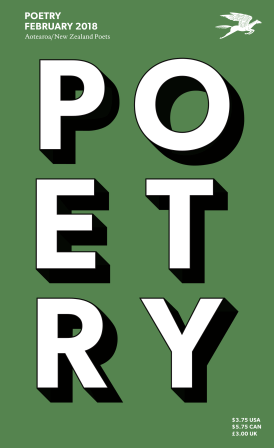
The NZ edition of Poetry


feb2018-front-cover.png


I know I find it hard to listen.

I read too much. I often need a drink.

It isn’t the world that makes us think,

it’s words that we can’t come up with.

Sure, I can work up fresh examples

and send them off to the committee.

But the poetry is in the bird. And in the pretty.


Bill Manhire, from ‘Polly’


International poetry traffic is so often dependent upon fortuitous connections. The degree of familiarity with poetry from elsewhere is utterly paltry compared with the degree of familiarity I have with local writing. Yes I have studied American and British poetry but I am more aware of the luminous stars in these poetry constellations than the grassroot outings.

On the other hand, we are no longer dependent upon ocean voyages and the constraints of distance, but to what degree does our poetry travel (compared say with fiction)? Or our poetry conversations extend beyond our lapping tidelines.

I am acutely aware of my impoverished relations with contemporary Australian poetry. Perhaps Joan Fleming and Amy Brown could guest edit a local journal with an Australian focus? But then again our journals are often annual and offer vital but scant opportunities for local poets.

This is not the first time an overseas journal has showcased New Zealand poetry, but it is perhaps the example I am most excited by. The editors – Stephanie Burt (USA), Paul Millar (NZ) and Chris Price (NZ) – have worked hard to present a distinctive and diverse overview of our current poetry. The selected poets cross all manner of borders: age, geographical location, style, university affiliation, gender, ethnicity. This matters if we want to move beyond the legacy of white male predomination, urban bias and privileged poetry models. I cannot name a NZ journal that has achieved such movement.

Yes the five books Daisy Fried reviewed – from the fifteen 2017 publications she was sent – were all Victoria University Press. Her selection certainly does not reflect the contours of that year, and we can all stand on the sidelines and shout (or sing) about the books we loved, but I have no issue with reviews reflecting individual taste. However I do take issue that a short intro and five VUP books can respond to her opening question: ‘How to characterise a national poetry?’ Why would you even try! It is a personal take on five excellent books.

The rest of the journal is an altogether different joy. The effect of reading is symphonic in the different hues and chords. Every single poem lifts off the page and catches both ear and eye. Such freshness, such lightness, darkness, musicality, room to breathe, surprising arcs and links and undercurrents. I keep swaying between Anna Jackson’s glorious bee poem and the flickering titles that coalesce in Nina Powles’s offering or the infectious wit of James Brown, Ashleigh Young and Tim Upperton.  I am pulled into the bite of Anahera Gildea, Chris Tse and then Tayi Tibble and stop in the tracks of reading. Travelling with Janet Charman and the revelatory suite makes me weep. Switching to Anne Kennedy and the momentum coils and overlaps and poetry transforms a starting point into elasticity on the line. Bill Manhire flips me over into the second stanza, and the lacework of reading – intricate yet full of holes – offers mystery, surprise, wit, curious things.


The time of breathing into clasped hands

hovering over a lighter to make a flame


not knowing

that an angry man threw his eyes into the night


the belly of his shattered father

weeping rain for separation of earth and sky


Jessie Puru from ‘Matariki’


The editors did not feel beholden to poetry that targets versions of New Zealand/ Aotearoa; our poetry might do this and then again it might not. The poems have the freedom to do and be anything whether they spring from spoken-word rhythms or  talkiness or thinginess or anecdotal revelations or sumptuous Baroque-detail or story or slanted humour or cutting political edges.

The poets: Anna Jackson, Kate Camp, Michele Leggott, Therese Lloyd, Jessie Puru, Essa Ranapiri, Tayi Tibble, Robert Sullivan, Kerrin P. Sharpe, Hera Lindsay Bird, Dylan Horrocks, James Brown, Murray Edmond, Jenny Bornholdt, Anne Kennedy, Bill Manhire, Nina Powles, Janet Charman, Anahera Gildea, Bernadette Hall, Vincent O’Sullivan, Courtney Sina Meredith, C.K. Stead, Chris Tse, Tim Upperton, Gregory O’Brien and John Pule, Faith Wilson, Ashleigh Young, Albert Wendt, Steven Toussaint, Erik Kennedy

This issue is a cause for celebration – I absolutely love it – and my celebration will take  the form of a subscription. New Zealand poetry has been well served – congratulations!


Poetry here


everything I never asked my grandmother

I can understand but I can’t speak

no one has played that piano since

New Zealand is so far away from here

let me translate for you the poem on the wall


Nina Powles from ‘Some titles for my childhood memoir’

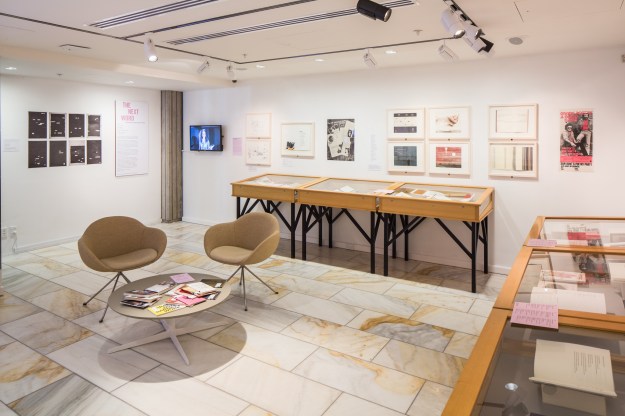
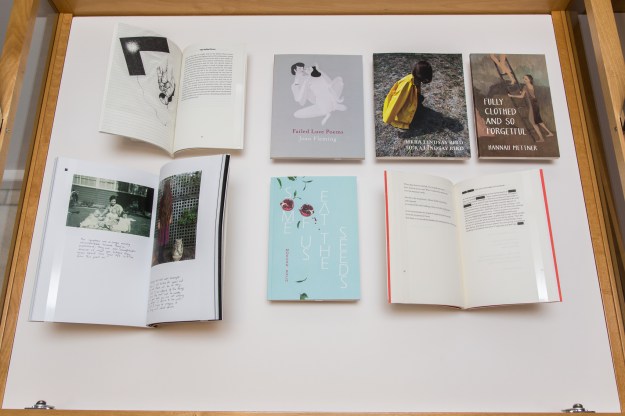
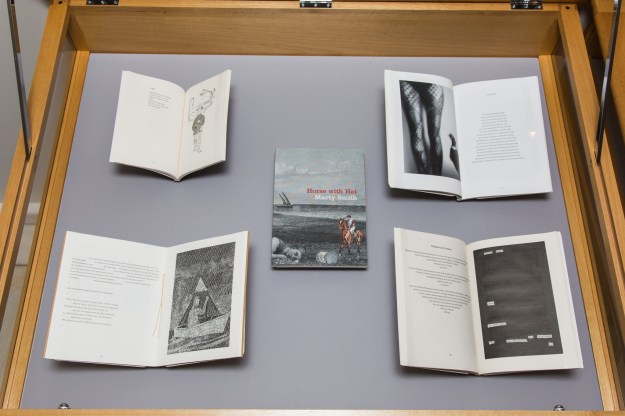
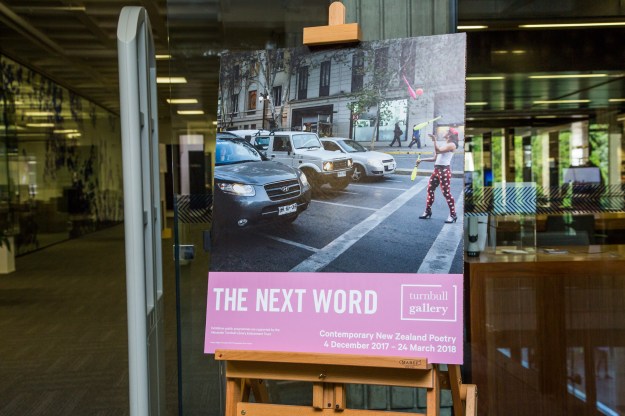
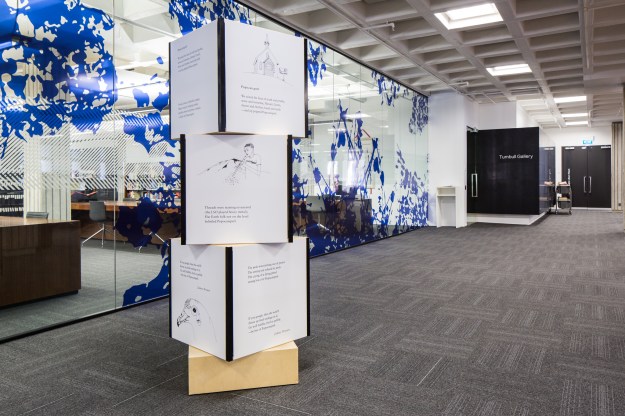
The Next Word at the Alexander Turnbull Library is a poem oasis

20171208_ATL_TG_Next_Word_005.jpg

All photo credits:  Imaging Services, Turnbull Library


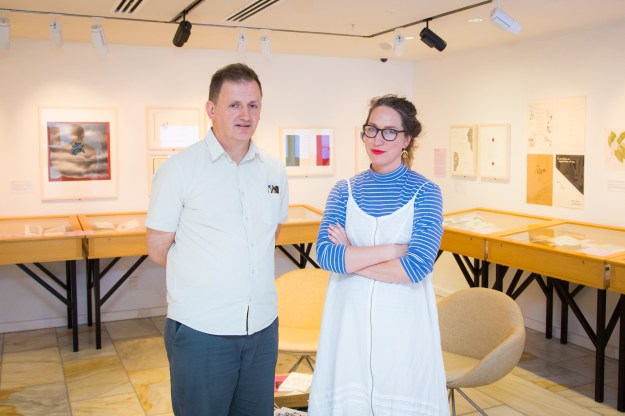
Hannah Metttner and Brendan O’Brien have curated an exhibition of contemporary poetry at the Alexander Turnbull Library. The key aim is to offer an overview of the past thirty years in various spots in the gallery. There is an art video put together by Hana Pera Aoake and and a carousel showcasing a James Brown poem on the ground floor.

The little reading room is a poetry treat.

The curators have drawn from the poetry riches of the Alexander Turnbull Library to set up reading pathways between poems and poets, in the books on display, yet the eye is also drawn to poetry as visual object. You land upon a poem and alight upon an exquisite image. There are countless possibilities for travel: politics, aesthetics, music, confession, place, time, edge, rebellion, love.

Poetry is lovingly tended.

I am reminded that our poetry families are distinctive and diverse with many connections and necessary bridges. Nina Powles’s set of booklets, Luminescent, was a 2017 highlight for me; then again I am struck by the way so many of these books have glowed (Morgan Bach, Hinemoana Baker, Hera Lindsay Bird, Hannah Mettner, Chris Price, Joan Fleming, Bernadette Hall with Rachel O’Neill).

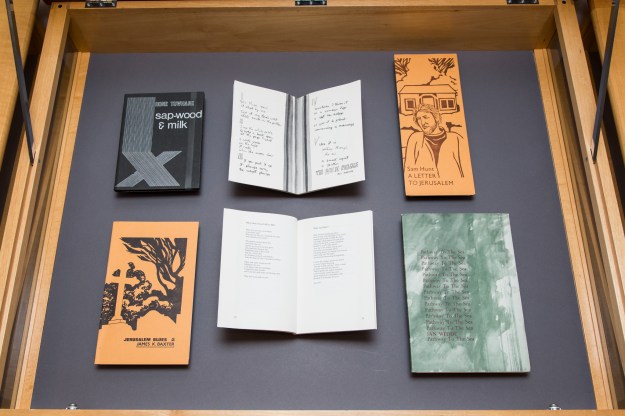
I love the way a book falls open at a poem in the glass case and we must stall on that to give a single poem devoted attention.

There are posters and prints and trips back in time (Sam Hunt, Ian Wedde, Hone Tuwhare, James k Baxter).

I went into the room after doing my final book checks at the library and it felt like an oasis, a place of retreat where the joy of poetry is the joy of stalling and savouring.

I highly recommend a visit before it closes on March 24th.

There is a lunchtime reading (12:15-1) on March 22nd with Chris Tse, Therese Lloyd, Anna Jackson, Gem Wilder and Sugar Magnolia Wilson. I am tempted to fly down!

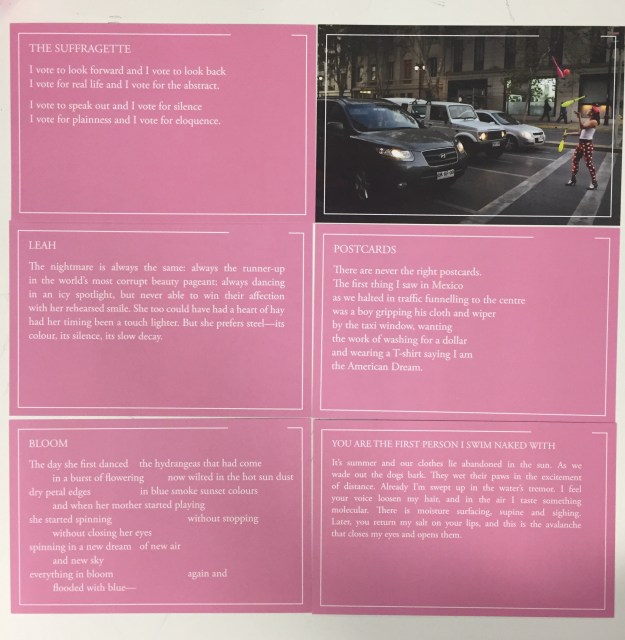
There also some postcards on offer including my Suffragette poem.

One visit is not enough! I plan to loiter there before our Call Me Royal event next week.


20171205_ATL_TG_Next_Word_021.jpg


20171205_ATL_TG_Next_Word_022.jpg

20171205_ATL_TG_Next_Word_025.jpg


20171205_ATL_TG_Next_Word_026.jpg


20171205_ATL_TG_Next_Word_027.jpg


20171205_ATL_TG_Next_Word_028.jpg


20171205_ATL_TG_Next_Word_001.jpg


IMG_8767.jpg

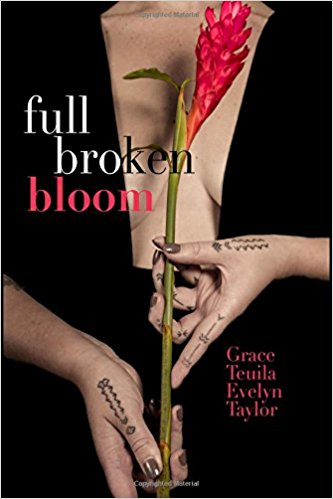
Summer Postcard: Grace Teuila Evelyn Taylor’s Full Broken Bloom


41Fr+rwwxCL._SX331_BO1,204,203,200_.jpg


Full Broken Bloom, Grace Teuila Evelyn Taylor,Ala Press, 2017


I have unpacked my eyes

and have seen the sharks.

Licked their wounds

while they gnawed stars into my neck.

They exchanged no promises

only letters forming words.


from ‘sharks as lovers’


Grace Taylor, of Samoan, English and Japanese descent, has been writing poems since 14 and performing spoken-word poetry since 2008. Her second collection, Full Broken Bloom, is a gift for her son and a gift for herself. The son is between the seams of writing – the beloved to write from and towards.

The collection is a gift for self as it is steered by crucial turning points: by a decision not to be defined in relation to, or by men, and to nourish ways of being in the world. This is not a teaching handbook or poetry as lesson – on how to be a strong woman – but an acute and goose-bump reflection on scars and wounds (broken) and healing and self-recognition (bloom).

The collection marks the slowing down of the performance beat, an awareness of body, and ability to love self. Words scatter across the page, in various tonal hues, breathless and breath-taking because much is at stake here. Form is fractured and then drawn together in glorious little cohesions.

Poems navigate relations with men, gods and goddesses.  As Grace travels through the complexity of living and loving, with the overriding current of ‘bloom’ and ‘broken’ – we enter a rich poetry space that is all heart and feeling and revelation. I am very moved by this book.


I drag stars over the bones of the ocean

a necessity to one

and a grave to another

both created myths of me.


from ‘moon pulls the tide


It is fortunate

my jawline is not strong

lessons have made it malleable

a supple bone

that can flex her teeth

or bend to the kiss.

That can hold her tongue

and not destroy a man,

but allow him to fall into his own reckoning

a monument

no longer.


from ‘water: desert

Are NZ poetry reviews an endangered species?


DSCN9226.jpg


I have a swag of poetry books from 2017 that I have not yet got to – but over the next months I am flagging them through a suite of Summer Postcards.

How important is it that our poetry books get reviewed?

Poetry books get so little attention in the media these days. NZ Books still offers a handful of poetry reviews.  Not sure about Takahe. There is Landfall-on-line steered by poet Emma Neale and the occasional attention in print media (Siobhan Harvey in The Herald). For members there is the quarterly NZ Poetry Society Review. There are a few reviews at The Spin Off or in The Listener. Poetry (USA) recently did a NZ cluster and you find some in the Poetry New Zealand Annual. Pantograph Punch has supported poetry, but until they can pay reviewers a decent amount, they are no longer doing reviews.


From The Pantograph Editors:

The Hardest Call

Because of these changes, we’ve made the difficult decision to hit pause on publishing reviews. It’s been one of the toughest decisions we’ve made.

During the existential crisis of 2017 (refer above) we came to the somewhat crushing realisation that in underpaying our writers (sometimes as low as $50 a review), we were contributing to a structure that systematically devalues those writers and privileges voices who can afford to write for low pay. In trying to support critical culture, we were simultaneously contributing to its decay.

It’s one of the hardest decisions because it feels so contradictory: we’re stopping doing one of the exact things we believe in the most.

We strongly believe in critical dialogue, and one of our areas of focus for 2018 is finding a way to bring reviewing back. We’re committed to creating a sustainable pathway for future critics, so one of the things we’ll be doing is creating a fund which will be dedicated to commissioning reviews. Our commitment is to be able to pay reviewers a minimum of $300 per review, and if you feel as strongly about this as we do, we invite you to donate to that fund here.

Pantograph Punch


You can read the full piece and contribute to the funding call here. They favour posting less (one a week) and building a climate of critical dialogue. This is exciting news. Bravo PP!


We are hungry for critical forums. Joan Fleming recently started a vital discussion on reviewing with her Facebook friends:


The Question of Claws

As I step into a new role at Cordite Poetry Review – that of NZ Commissioning Editor – I have been troubling my head about how critical to be of New Zealand poetry books that strike me as undeveloped. Particularly when I’ve admired a writer’s poems in journals, and am frustrated by their book; or am struck by the first few stunning poems of a collection, which then disappointingly levels out. It is tough to be honest in a poetry culture that is so intimately small. Often in our poetry reviewing, there is gentleness where I want rigour, and there is faint praise where I want productive disagreement. We are overly careful because we are reviewing friends and colleagues. We don’t want to offend. It is tricky. Do aesthetic battles push writers to better writing, or ought we to only support and encourage each other, trusting that we are all already pushing ourselves?

On the one hand, the stakes are so low: there is no money, there is no fame (except for the occasional meteoric anomaly!), and poetry is hardly a career. On the other hand, the stakes are painfully high. We are talking about our raw-edged souls on the page here. In a Facebook thread, I asked the question (provocatively worded, I suppose): “Should we be showing our claws more often?” For claws, read: Do I dare to write a thoughtful yet unfavourable review?  I hope to think there is nothing in me that wants to tear down other writers because of agendas, grudges, or jealousies – but we all have our lenses and leanings, our sometimes-unconscious preferences and biases.

I, myself, am trying to thicken up my own dreadfully thin skin. A solution to this bind (and this is not an original thought – I think Ellie Catton suggested this way back) is to foster more trans-Tasman reviewing: New Zealand poets reviewing Australians, and Australians reviewing New Zealand books. At Cordite, we’re doing a little of this. We have lots of NZ books on our review list. I wonder if a New Zealand publication might take up this challenge? (Pantograph Punch: I’m looking at you!)

Joan Fleming


Last week I posted a piece on my Poetry-Shelf aims to see if it was worth keeping up the blog. Is it relevant? Does it matter that I do this? I want to post poems and do reviews, interviews, news, events, musings on local and international poetry. And at times involve other people (as I have done), but in the current drive for decent payment, how can this possibly work?

I strongly believe we need a go-to-place for NZ poetry that crosses borders of all kinds. I like the idea of a mix of reviews (long and short) so that a decent number of published books catch your attention. Ha! so there is a new James Brown out! Or Joan Fleming is reading from a new book at TimeOut (if only!). 

To have a long review of your book where the reviewer has paid utmost attention is ideal. But to have no reviews and feel like your book has drifted into the ether is heartbreaking.

I posted this on Joan’s Facebook feed:

I review books on my blog that I love. My life is too short to absorb the toxic fallout of writing about books that I don’t love. I aim to celebrate and explore what a book of poetry might do.

I so often read negative reviews that incense me because the writers seems straitjacketed by a narrow reading and clear bias (I don’t like experimental poetry but here I am reviewing it kinda thing!). Or poets and reviewers who insist there are certain things a poem must do, and if it doesn’t, then it is a failure.

I am not afraid to put my claws out when an important book warrants it – as with the AUP literary omnibus. That attracted utter venom towards me on social media and affected me in all kinds of other ways – but I would still do it. My doctoral thesis (Italian) challenged the way the academy is driven to deconstruct and tear apart, rather than forge connections and produce different intellectual models of thought.

That said, in a world that continues to privilege the status of white men, we still need claws to unpick the ideas that shape us and that we so easily become immune to and accept.

Ellie Catton once used the word kindness in talking to students about writing. Our PM has used the word in view of governing a nation. I want to review out of kindness. That doesn’t mean I will say things I don’t mean when I talk about your poetry. It doesn’t mean I only say good things. It means I pay attention to the fact a human being has written it. It means I work hard to find path ways through a book that might present itself with shuttered windows on foreign pathways on a first reading.

Sometimes the bridge between the reader and a book fails. When I can’t cross that bridge, I am going to share a book where I can.

I believe we can have critical discussions and write out of state of kindness.

This may not be the majority point of view, but it is my view. I have almost finished a book that rescues some of the women from the past who have been misread, unread, muted and sidelined by men with their claws out because in their view the women were not writing poetry.

We, as women poets, have come a long way since our banishment to the shadows, but things are still not ideal. So I will continue to be part of the small (and it is SO very small) group of writers who go public on what they love (outside institutions, financial reward and so on, so beholden to nobody) because I want you (in the widest reach a pronoun is capable of) to fall in love with poetry and what a poem can do.

As I said at the Poetry & Essay conference in Wellington in December this is a matter of JOY!


Summer Postcard: min-a-rets,  issue 7, spring 2017


Issue7Spring2017_webcover.png


This slim adorably-produced poetry journal is a treat to read and hold (my favourite looking NZ volume – who wouldn’t want a poem in here!). It is rich in voice and edges.

The editor:

Zarah Butcher-McGunnigle has brought min-a-rets to life after a three-year hiatus. She states the original aim was to champion ‘openness & intensity in poetry, with a focus on NZ, but also including a few international writers each time’. She has stuck to the same poetic impulse and she has included some Melbourne poets – she is currently based there.


The poets:

Hana Pera Aoake, Eden Bradfield, Owen Connors, Anna Crews, Craig Foltz, Rebecca Nash, Rachel O’Neill, Ursula Robinson Shaw


The poems:

I open upon Rachel’s title, ‘The sky is a wide, unmoving chest’, and then fall into a poem that is wide but full of movement, strange and supple. Three poems from Eden catch air in their double spacing, floating talk, the everyday adrift. Ursula’s ‘2 Poems’ also float on the page, but here the talk static intensifies. The fragments startle first as little pieces, and then achieve a stuttering breathfilled momentum.

Voice – the speaking surge and spurt – marks Owen’s ‘4 untitled fragments’. This is not disembodied writing but is flush with sex and disenchantment and living.


Highly recommend this. Check out the journal here

Submissions closed for the next issue at the end of January – so look forward to that!


A 2017 poem toast to you – from Mere Taito’s splendid debut


Feed

the sea
gate-crashes your lunch
through an opening
in the bus shelter wall

it salts your chips
makes you squeeze
the tomato sauce out of your words
onto the battered fish

the butcher’s paper
grabs the name of your crush
and coats it with the hot oil
before the wind blows it
through the door of the Metrolink bus
E.R.I.C

(sigh…)
deliriously happy
you mouth feed the seagulls


©Mere Taito, The Light and dark in Our Stuff (2017)


Mere introduces herself at the start of her debut poetry book – a book that I like very much indeed.

‘The island of Rotuma is my ancestral-mapiga (grandmother) home. It looks like a whale on Google Earth. Fiji is my I-grew-up here-home and New Zealand, my right-now home. I moved to New Zealand in 2007 because my father ‘talked up’ this country – he said it was a great country to live in. Except for winter, I have no reason to believe otherwise.’

The book is a book of two halves; five dark poems and five light poems. I have read it twice, sitting on the beach at the end of my run, finding the shift from dark to  light sparking even sharper in a dramatic setting. Mere offers music, challenges, an attentive eye and heart, and it feels like a little guidebook to living. On this particular occasion, in this particular way. Wonderful.

So with this poem, and permission from Mere, a warm seasonal, poetry toast to you all!

xx

Powerful poetry collection wins Adam Foundation Prize

image012.jpg

A “powerful, restrained but unafraid” collection of poems that explore the lives of four generations of Māori women has been awarded the 2017 Adam Foundation Prize in Creative Writing by Victoria University of Wellington’s International Institute of Modern Letters (IIML).

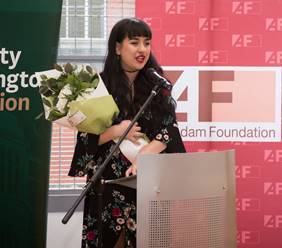
Tayi Tibble, 22, wrote the winning work—In a Fish Tank Filled with Pink Light—as part of her 2017 Master of Arts (MA) at the IIML.

Tayi describes winning the Adam Foundation Prize as incredibly encouraging. “It was a privilege and a pleasure to have spent the year so deeply immersed in the world of writing with such talented, intelligent, and generous friends. I believe it was the high calibre of work from my peers that stimulated my growth as a writer, as well as the guidance and encouragement from Louise Wallace and Chris Price. Although I am sad to see the end of this invaluable year, winning the Adam Foundation Prize signals the beginning of a new chapter.”

Wellington-born Tayi (Te Whānau a Apanui/Ngāti Porou) went to school in Porirua and holds a Bachelor of Arts in History and Social Policy from Victoria. She has regularly appeared in Wellington’s LitCrawl Festival, and her work has been published in Starling—the journal for writers under 25—and Landfall.

Supported by Wellingtonians Denis and Verna Adam through the Victoria University Foundation, the $3,000 Adam Foundation Prize is awarded annually to an outstanding student in the MA in Creative Writing programme at the IIML.

Chris Price, a senior lecturer at the IIML and co-convenor of this year’s Master’s programme, says it’s been a pleasure to read the poems as they have developed over the course of the year.

“Tayi is an ambitious writer who has seized every opportunity to extend her craft and her range of subject matter. Her poems speak to contemporary urban realities, and to the histories that created them. They are also charming, funny and on point.”

This is the second year running that the Adam Foundation Prize has gone to a 22-year-old writer, after Annaleese Jochems’ novel Baby received the prize in 2016.

“Tayi joins the incoming wave of young writers who are forging the future of literature in this country. We are confident she will make her mark,” says Chris.

Previous Adam Foundation Prize recipients include acclaimed authors Catherine Chidgey, Ashleigh Young, Hera Lindsay Bird and Eleanor Catton.

Seraph Press interviews Nina Powles

Luminescent is one of my favourite poetry reads in 2017. Check out this new interview with Helen Rickerby.


Screen Shot 2017-12-13 at 9.04.29 AM.png