
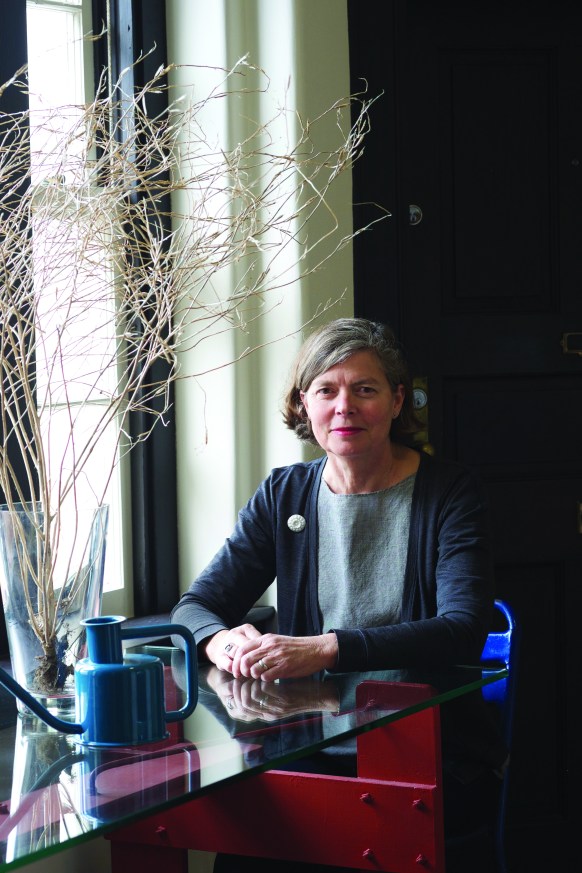
Photo credit: Deborah Smith
‘The moon came up
and all our thinking
went sideways.’
from ‘Full Moon’
Jenny Bornholdt is one of my favourite New Zealand poets, so a new Selected Poems is an occasion worth marking. Her poetry traverses decades; her poems never lose sight of the world at hand, are unafraid of the personal or little ripples of strangeness, and underscore a mind both roving and attentive. There is an ease of writing that might belie slow craft but Jenny’s poetry is exquisitely shaped from line to form. Returning to the early poems, I was taken once again by their enduring freshness. A lightness of touch, honeyed lines. As poet, Jenny harvests little patches of the world and transforms them into poems. Patches that might be ordinary or everyday, offbeat or linked to feeling something – patches that stall me as reader. I love that. When I read the poems, I get access to a glorious poetry flow yet there are these luminous pauses. If I were writing an essay, it might explore the poetics of pause and currents.
When I was editing Dear Heart, I pictured a little chapbook of Jenny Bornholdt love poems because she has written some of my favourites whether for husband, father or child (‘A love poem has very long sentences,’ ‘Poem,’ ‘Pastoral,’ ‘Mrs Winter’s Jump,’ ‘The inner life’ ‘Full Moon’ for starters).
To have this new book is a gift. Thanks Jenny for the interview.
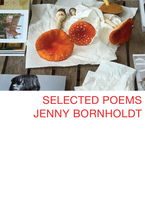
Selected Poems Jenny Bornholdt, Victoria University Press, 2016
Did your childhood shape you as a poet? What did you like to read? Did you write as a child? What else did you like to do?
Yes, I think it did. I was one of those kids who read a lot – anything that was going. I loved the Readers Digest. My mother took us to the library every week and I got out four books, which was the limit then. I also spent a lot of time outside – we had kids our age next door and over the road and we spent most of our time with them.
When you started writing poems as a young adult, were there any poets in particular that you were drawn to?
I didn’t write any poems til I was about 18. I read a lot of novels and if I thought about being any kind of writer it’d would’ve been a novelist, or journalist, which is the direction I headed in. I’d read some of the Mersey poets when I was younger and I remember liking Roger McGough’s casual, ‘talky’ style.
Did university life transform your poetry writing? New discoveries or directions?
University was where I discovered poetry. I really had no idea about anything before I went there. Everything was exciting – from Middle English to contemporary American poetry. And I did the ‘Original Composition’ course, which changed everything.
‘So careless the trees—
having remembered their leaves
they forget them again
so they fall on us, big
as hands.’
from ‘ Autumn’
Your poetry reflects a quiet absorption of the world that surprises, moves and astonishes. Sometimes it feels as though you tilt the world slightly for us to see. What are key things for you when you write a poem?
Each poem is different, but there’s always a feeling, a kind of charge, when a poem is making itself known. It’s a matter of trusting yourself and following the direction of the poem.
Reading your new Selected Poems sent me back to the original collections with admiration and delight. It is fascinating reading across the arc of decades—gathering echoes, favoured motifs, shifting melodies. Do you think your poetry has changed over time? Did you spot points of return such as leaves, the garden, or baking?
There are many points of return. One thing that surprised me was the number of tea towels in my poems.
It was really interesting making the selection for this book – there seemed to be such a strong sense of continuity. I can see changes, though, and that’s good. I think I’m writing better poems – they seem stronger to me. Over time I think I’ve let myself get a bit weirder.
Ha! I love the idea of tea towels. I never spotted them. I think I need to send you a poetry tea towel to celebrate. I am always drawn to the conversational tone that is both of the everyday and rises beyond it in your poems. How do you see your poems working as conversation?
They’re probably a conversation with myself. Me saying things out loud to see what happens.
Some of your most moving poems document illness. Do you think illness made your writing life more difficult or did writing give you solace and energy? Or something altogether different?
Illness definitely made my writing life difficult. I was out of action for a year with bad hip pain and didn’t write anything. I could barely get out of bed. Then, after surgery, I spent a year recovering and during that time my writing life began to surface and I found enormous solace in it. Writing gave me a way of processing what had happened – of making it into something else. It was like turning the awfulness around and sending it off in another direction.
‘For six weeks now I’ve been outside of weather
and of reading. Outside of myself.’
from ‘Along way from home’
The result for the reader is a cluster of poems that draw you into that experience of illness, then lead you in so many other directions. You have never been afraid of a longer poem, of longer lines and and a slow unfolding of subject matter like a storyteller holding a listener in the delicious grip of attention. Do you have one that particularly resonates for you?
I love all the poems in The Rocky Shore. You’re probably not meant to say that about your own work, but there you are. Those poems resonate because they’re so much about my life and what’s important in it. Those poems really found their form.
I love the Rocky Shore too. I agree they have found just the right form and within that form a perfect alchemy of ingredients. It is on my shelf of classic NZ poetry books. When you were putting the selection together was there an older poem that surprised you – like coming across a long-lost friend?
I was surprised by ‘Waiting Shelter.’ I think that one’s still got something.
‘How you remember people. To remember
them as well as they remember you.
To remember them with abandon. To
abandon remembering them. Which is
better? or worse? Rooms and rooms
and always people moving in
and out of them. Love,
love, a knock on the door. A
heart murmur to remember you by.’
from ‘Waiting shelter’
What poets have mattered to you over the past year? Some may have mattered as a reader and others may have affected you as a writer.
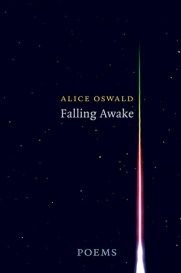
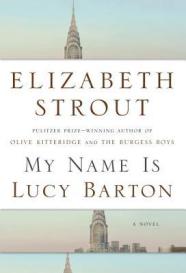
I’ve read and re-read Mary Ruefle’s book of essays Madness, Rack, and Honey – it makes me want to write. I find prose writers often affect me strongly – I’ve just read by Elizabeth Strout, for the third time this year. It’s one of the most affecting books I’ve ever read. Alice Oswald’s new book of poems Falling Awake is a marvellous, strange thing.
What New Zealand poets have you been drawn to over time?
Dinah Hawken, Bill Manhire, Andrew Johnston, James Brown, Mary Ursula Bethell, Geoff Cochrane.
Michele Leggott has talked about a matrix of early women poets in New Zealand who supported each other. Have you sustained a vital conversation with poet friends on your own work and on the whole business of writing poetry?
Greg (O’Brien) and I talk about poetry a lot – it helps to live with someone who does the same thing you do. And I often talk to friends (some of them writers) about writing and reading. It’s so much a part of my life that I can’t imagine not talking about it.
Some poets argue that there are no rules in poetry and all rules are to be broken. Do you agree? Do you have cardinal rules? Do you have rules you particularly like to break?
I think it’s more that there are conventions and, as in any art form, these can be done away with as long as what happens ‘works’. Poems are strange things – they have their own logic and find their own forms.
‘This poem was always going to end there, with Frankie
and the toast. That image has been the engine
of the poem, but then
more happened.’
from ‘Big minty nose’
The constant mantra to be a better writer is to write, write, write and read read read. You also need to live! What activities enrich your writing life?
Most things, except doing my tax return.
Finally if you were to be trapped for hours (in a waiting room, on a mountain, inside on a rainy day) what poetry book would you read?
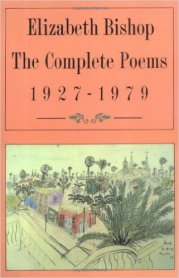
Elizabeth Bishop’s Compete Poems.
Victoria University Press author page
Daffodils Lip Sync
I wandered longwise as a crab
that floats a ‘hi’ and flaps a claw
when on the wall I spied a tap
and hosed a golden Labrador.
* *
I wandered Langley with a cold,
like drones on high that veil the ill.
Vanilla white, we spies of old
would roast a cold in Benadryl.
* *
A squalid mauve miasmic cloud,
whose frozen height in ladles spills
one awful stench that flies enshroud:
your nose is blown, it’s daffodils.
©Nick Ascroft, Back with the Human Condition, Victoria University Press, 2016
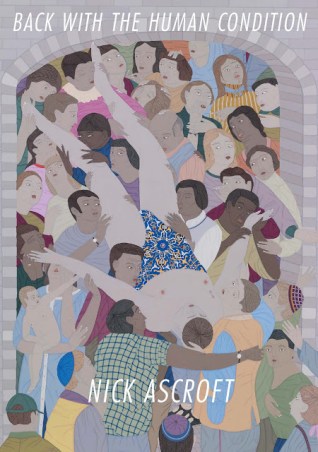
Nick Ascroft’s new collection is in four parts: Love, Money, Complaints, Death. He exhibits an enviable linguistic palette with words on the lines languid, sideways darting, playful, ever playful, wriggling and exquisitely calm. You see all that in the ‘The Tide.’ Ascroft’s poems will sound good when read aloud; the poet resisting monotone, shifting then settling in surprising places, catching love and humour. I adored ‘A Hill’ – glorious in its slow contemplation, tender detail compounding. And ‘The Sad Goose,’ a concrete poem stamping the shape of a goose on the page. This book is a treasure trove of poetry delight; one to savour slowly to get the full dance of flavour on the tongue (or in the ear).
Nick and VUP have kindly granted permission to post ‘Daffodils Lip Sync.’ I love the idea of a poem in skewed lip sync with its predecessor. I laughed out loud, mesmerised next step by the word play, and the madcap images that buffet/buff the original.
After this brief sample, I recommend you get the book and read poems in altogether different but equally satisfying keys.
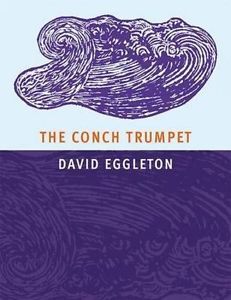
Prime Minister’s Literary Award for Poetry 2016: David Eggleton
To celebrate David Eggleton’s well-deserved honour, here is a poem from his award-winning book, The Conch Trumpet. Having just watched the second presidential debate, reading this lucid lament was a perfect antidote to my allergic reaction to stupidity.
David has gifted us a sumptuous and kinetic weave of lines across decades. He dares to challenge. He makes words sing. He lets us into an idiosyncratic and warm absorption of the world about him, whether it is back country or city streets. Read one of his poems, and you get to see the world a little differently. Hear him read one of his poems and you are shuffling on your feet. His poetry is a banquet of constant return.
Congratulations David!
Clocks, Calendars, Nights, Days
Bitterness of bees dying out,
honeyless clouds, forest drought,
red, yellow, charcoal’s grain,
eyes smarting from a world on fire,
air thick with grit; cleave to it.
by clocks, calendars, nights, days
Bog cotton frenzy of winter
dancing erasures over hills,
leaf litter corrected by snow;
fog quickly swallows the sea,
then starts in on the shore.
by clocks, calendars, nights, days
Skerricks of twigs skim high,
flung far from grips of fists;
remember to dip your bucket
deep into the morning sun,
but don’t drown in apathy.
by clocks, calendars, nights, days
Then down in earth’s mouth,
a slow song about the rain,
as you heave from the dark
to hear a thunderous beat
clocking on the old tin roof.
by clocks, calendars, nights, days
By fast, slow, high, deep;
by sing, dance, laugh, sleep;
by climb, fall, jump, walk;
by chance, breath, cry, talk;
by clocks, calendars, nights, days.
by clocks, calendars, nights, days
© David Eggleton, The Conch Trumpet, Otago University Press, 2015
Selected Poems
Jenny Bornholdt
Victoria University Press, $40
Jenny Bornholdt, a former New Zealand Poet Laureate, much honoured and widely loved, has published nine poetry collections and a number of chapbooks. She has also co-edited an edition of love poems and the award-winning Oxford Anthology of New Zealand Poetry in English.
Victoria University Press has recently released an exquisite hardcover edition of her Selected Poems. The beauty of returning to the start of a poet’s work and traversing the contours of a writing life is to experience the delight and wonder of the poetry all over again.
for full review go here
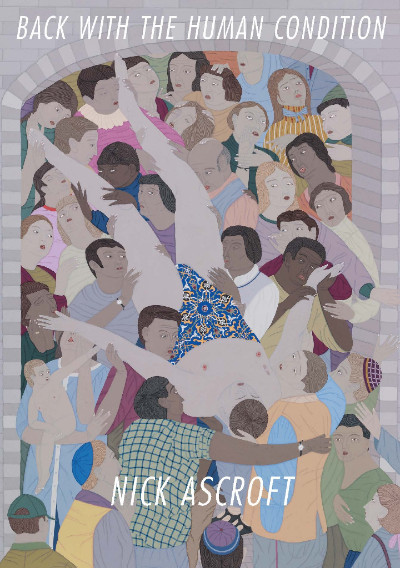
Victoria University Press warmly invite you to the launch of
Back with the Human Condition
by Nick Ascroft
on Monday 10 October, 6pm–7.30pm
at The Guest Room, Southern Cross Bar
39 Abel Smith St, Te Aro, Wellington.
Books will be available for purchase courtesy of Vic Books. p/b, $25.
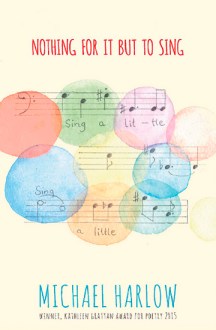
‘Sometimes there is nothing for it but to sing;
to discover what there is in you to attain, when the light
comes stealing in’
from ‘Nothing but for it Sing’
Nothing for it but to Sing, Michael Harlow, Otago University Press, 2016
Michael Harlow has published ten poetry collections, one of which, The Tram Conductor’s Blue Hat, was a finalist in the New Zealand Book Awards. He has held numerous fellowships and residencies and his latest collection, Nothing for it but to Sing, won the Kathleen Grattan Award for an unpublished manuscript.
This shiny, ethereal collection, full of paradox and light, follows curved lines, follows song. The poems are written out of being and unbeing, out of the unconscious and the dreamed world, out of lived experience. More than anything, it almost seems like there are no things but in ideas, because this is poetry of an itinerant mind, of a heart absorbing a world that is hypothesis, abstract thought, love, attachment and continuity.
This is poetry of the unlived as much as it is of the lived.
The poetry is of strangeness to the point it delivers philosophical relations to the oxymoron: ‘What it was he saw ‘beyond’/ where his looking had gone, there’s no telling.’ ‘I’m looking for nothing/ you could put a name to right now.’ ‘[M]y mother died before she was born.’
Some of the poems are like songs for the departed:
‘And you know,
drawing the ‘short straw, you are finally
going to have a crack at the silky darkness.’
‘Until one morning when no birds sang,
emptied of all that can be said,
soul-window open—he woke up dead.’
More than anything, Michael sings his poetry into being. Song is there, steering the line, but it is also there as an echoey and insistent motif:
‘All his life
he kept looking for the one song
to sing him. A high-wire troubadour
on air, he said that writing
is the painting of the voice.
His wish that not one word be unsung.’
Elizabeth Smither writes on the blurb: ‘His poems ask the hardest questions we are capable of and answer them in fables, discourses and unquenchable curiosity.’
The book did set me thinking about my attachment to things in poetry. Is it necessary? Do I want the grit and the everyday settling along with the mind daydreaming along the course of a line? This collection overturns our contemporary insistence on locating feelings, ideas and human activity in the world of physical things. It is what I am so often pulled towards as I write. It is what I am drawn to as I read.
This is a very lovely, overturning, uplifting collection.
Ka Mate Ka Ora: A New Zealand Journal of Poetry and Poetics issue #14 is now live.
This issue features:
John Newton on Allen Curnow: ‘Running with the Fast Pack.’
Michele Leggott on soldier poet Matthew Fitzpatrick: ‘Touching the Taranaki Campaign: The Poems of Matthew Pitzpatrick August-November 1860.’
Makyla Curtis on bilanguaging in poetry: ‘Ngā Toikupu o Ngā Reo Taharua: e Tākiri ana te Aroā Pānui/The Poetics of Bilanguaging: an Unfurling Legacy.’
Vaughan Rapatahana discusses his theory and practice: ‘Writing Back (to the centre): practicing my theory.’
Ricci van Elburg on Second World War poets in Holland: ‘Pekelkist: some poets’ responses to war.’
Brian Pōtiki remembers Rowley Habib/Rore Hapipi: ‘The Raw Man’ and also provides an account of Rowley’s tangi.
AND PLEASE NOTE:
Issue #15 of Ka Mate Ka Ora will be devoted to work by postgraduate student writers and scholars. This is a first call for essays, discussions, theory and polemic from postgraduate students. Please send contributions to:
Murray Edmond, Editor, Ka Mate Ka Ora: m.edmond@auckland.ac.nz
MEDIA RELEASE from NZSA
13 September 2016
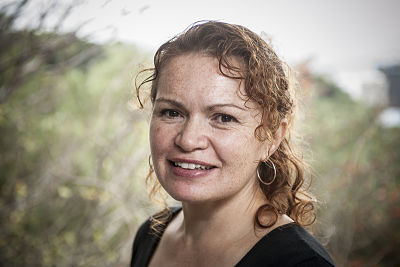
Kapiti Coast writer Tina Makereti is the recipient of the New Zealand Society of Authors Peter & Dianne Beatson Fellowship 2016.
The NZSA Peter and Dianne Beatson Fellowship of $7,000 is awarded each year to a mid-career or senior writer to work on a project that shows a high level of literary merit and national significance.
Tina Makereti will use the fellowship to work on her fiction project the Imaginary Lives of James Pōneke. Tina said “I’m so very grateful to receive the NZSA Peter & Dianne Beatson Fellowship as it means I’ll be able to take valuable time out to complete this novel. The Fellowship not only supports the project financially, but provides crucial encouragement and just the right amount of time pressure to get things done! Ngā mihi nui ki te whānau Beatson mō tēnei taonga miharo.”
Selection panel convenor Joan Rosier-Jones commented: “there were a number of most worthy applications for the fellowship and the final eight applications were so close in merit that the task of choosing one was enormous. The panel were eventually unanimous in their choice of Tina Makereti for The Imaginary Lives of James Poneke. It is very fine writing and an entertaining concept which should guarantee a wide market”.
This annual award is made possible with grateful thanks to the generosity of the Beatson’s. In 2015 the fellowship was awarded to Michael Harlow who used the time to work on his manuscript All the Pianos in the Wood. He also used the stipend to accept an invitation to represent NZ at the ‘Europa in Versi’ Poetry Festival at Lake Como, Italy. Previous recipients have included Emma Neale, Mandy Hager, Carl Nixon, Glenn Colquhoun, Sue McCauley and Marilyn Duckworth.
We congratulate Tina Makereti and also the applicants who were shortlisted.
 NZ Poetry Shelf