Category Archives: NZ author

Poetry Shelf review: Vaughan Rapatahana’s ngā whakamatuatanga / interludes


41hCAfQPNvL._SX307_BO1,204,203,200_

Vaughan Rapatahana   ngā whakamatuatanga / interludes  Cyberwit 2019


Vaughan Rapatahana, Te Ātiawa, commutes between Aotearoa, Hong Kong SAR and the Philippines. He writes in multiple genres (chiefly poetry, criticism and commentaries) in both his main languages, te reo Māori and English. He graduated with a PhD (on Colin Wilson) from the University of Auckland, and has published several poetry collections both here and overseas. Atonement was nominated for a Philippines National Book Award in 2016 and he won the Proverse Poetry Prize the same year. He edited Ngā Kupu Waikato: an anthology of Waikato poetry (2019).

Vaughan is a terrific champion of poetry in Aotearoa – he shines a light on poets that deserve far more attention than they currently get, particularly in his articles posted at Jacket2. He has also edited multicultural books of poetry with poetry exercises for secondary schools (Poetry in Multicultural Oceania – Book 1, Book 2 and Book 3, and the most recent teaching resource Exploring Multicultural Poetry 2020). He is a much admired poet in his own right.
 

IMG_5754

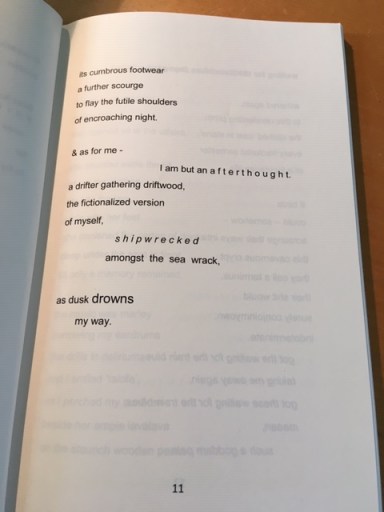
from ‘te araroa foreshore, mid-winter’


Vaughan’s latest collection ngā whakamatuatanga / interludes appeared in 2019. It is a sequence of six parts that go deep into human experience, draw upon multiple languages and exhilarating linguistic effects. You will move with the sky, rain, trees, from home to home, from the Christchurch attacks to collecting driftwood, to a Waitangi dawn. I am hard pressed to find a local poet as linguistically agile and testing, perhaps Michele Leggott, although in a very different way. The aural intricacy, with its infusion of te reo and English, is like entering poetry cascades, poetic thickets, where you start with sound and are then delivered to radiant cores of experience, anxiety, ideas, feelings, observations, memory.


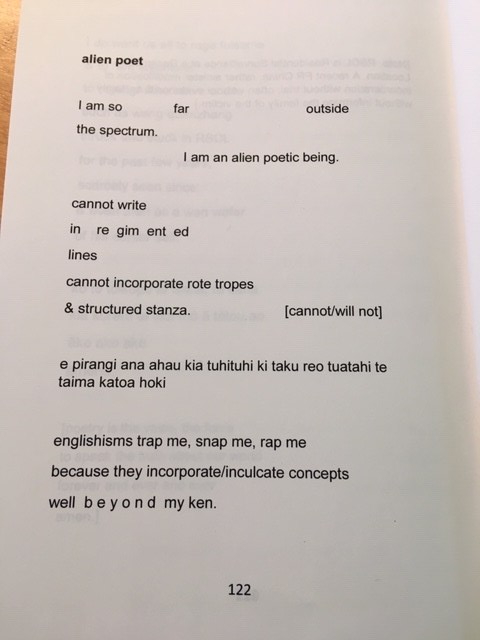
In ‘alien poet’ the speaker admits:
IMG_5752


The poet is linguistically on the move. Lines are kinetic: words fade, elongate, go bold, change font or size, jam against a wall of white space, cram together, relish the the pause, the silent beat, the jumpcut. The movement affects the ear and the eye, and it feeds into the poet’s admission he is so far outside the spectrum as he writes in English. The movement also links to both heart and mind, because these poems, deeply knotted and deftly crafted, present fracture alongside connectivity, jarring alongside assonance.

Vaughan is writing with his tongue in multiple worlds – we are who we speak – we are how we speak – we are, we speak. At times, the lexicon is difficult, unfamiliar words gleam on the line. It reminds me that any language can appear brittle on the tongue, with meaning stonewalled, and with vital little keyholes. But also that poetry, as this collection shows, can adopt the honeyed fluency of conversation.


The collection begins with the section ‘ngā wāhi/places’, the ground to stand upon, to return to, to step off from. The first poem ‘Waitangi, 2017’ transports us to a particular occasion where we hear the karanga, the karakia, where noses press in hongi. The aural movement resonates. The words tough, soft consonants, hard consonants (‘that scurfy scrub’). The poem itself is the ‘cascade escalier’. I grew up in Northland, and have had many visits to Waitangi, and always find it is a place you feel. I feel Vaughan’s poem.


the karanga guitar solo

sustained ethereal,

is a cascade escalier

we strive to scale

in our unkempt scansion.


The second section ‘ngā whanaungatanga/relationships’ is also an occasion to feel poetry. The poet moves in close to a violent father who drank, the love of his Filipino wife, grief at the death of his son, his daughter distanced in Australia. He is tracking the cycle of birth and death, and the bridges of living. The poems exude heat, strong feelings, vulnerability, pain grief love. At a time when our world feels so wobbly and uncertain, scary even, it matters to be able to read these poems, to feel these poems, where the poet is exposing his relations, wobbly and steady, with those closest to him. Intimate. Exposed.


let me  r e c l i n e  by  the fire

that is your heart,

insulated from

the squalling of

those squalorous hovels,

which

you never permit

to ruin,

your

magnific

haven.

from ‘inhabit’


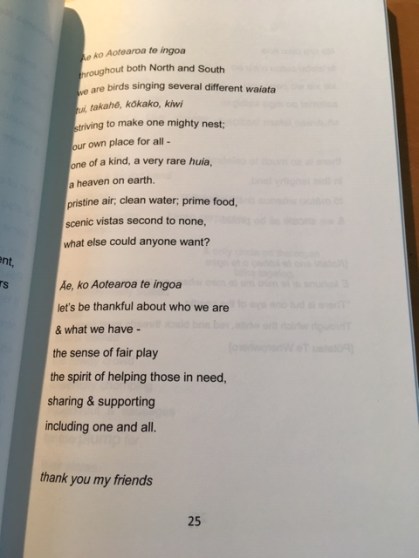
What I love about this book is that it is demanding and prickly, yet utterly welcoming to me as reader, in fact to me as human being. A kaleidoscopic glorious trajectory of life and living that is scrutinised. What does it mean to be a father, an Asian father? To call several places home? To live in Aotearoa ‘with our increasingly multi-cultural crew’? He asks whether it is ‘time for a new name, stressing our interconnections?’  His relationship with issues that matter are never monotone but strike sharp and sweet, political and personal. The poem ‘Aotearoa New Zealand’ is like a blessing, ‘we are birds singing several different waiata‘. It searches for conjunctions, connections.
 

IMG_5753


Another poem, near the end of the book, in the section ‘ngā toikupu/poetry’, strikes a more strident note. This is a section where the poet grapples with what it is to write poetry (‘sometimes / writing a poem / is like / driving /  a / bus / under  / water’ – the words fall, stretch, flick back on page). It is writing on the edge, on the outside, face to face with ignorance. It is resisting form, going for the barbs, going for the honey, refusing the tropes.


I don’t want

(on the occasion of reading for p.e.n)

I don’t want to hear any more prattling lyrics about

verdant trees dancing beneath scudding clouds.

screw that shit.

                                                              kinfolk are being massacred in christchurch.

I don’t want to read any more verbose verse

rambling forever on about a lost love or three.

screw that shit.

                                                              kiribati is sinking steadily into the sea.

I don’t want to see any more pale-pampered poets

clutching a microphone like a baby’s bottle.

screw that shit.

                                                              kids continue to live in cars in winter


I do want us all to rage fulsome

& to rant articulate.

to highlight the brave ones,

such as Wang Quanzhang

struck and stuck in RSDL

for the past few years,

scarcely seen since:

& even then as a wan wafer

of his earlier self.


while Behranz Boochani

remains remote

on Manus, six years plus

thanks to Australia

& its white-folks-are-us

code.


ko te toikupu te waha, te kaha

kia kōrero te tika mō ā tātou ao

āke ake ake

āmene.


[poetry is the voice, the force

to speak the truth about our world

forever and ever and ever

amen.]


    1. RSDL = Residential Surveillance at a Designated Location. A recent PR China, rather sinister modification of incarceration without trial, often without evidence & certainly without informing the family of the victim.


The roots of Vaughan’s poems feed on the then, the now, and the what will be. It is a collection to spend time with, to listen to, to look up words in the dictionary, to muse on your own burning experiences, to absorb the weather that smashes, and the wind that calms. You can’t package this book in a neat and tidy review, you can’t leave yourself out of the reading, it feels like a reckoning, it is a book that glows with humanity and, at the moment, that matters more than anything. One person’s poetry, one person’s experience, one person’s views, have the ability to touch so very deeply.


Listen to Vaughan read a new poem

Vaughan’s ‘Aotearoa New Zealand’

Vaughan on  Poems from the Edge of Extinction


Poetry Shelf Monday poem: Airini Beautrais’s ‘Last days’


Last days


In the last days of the supermarket

I walked through the fresh section,

wet-stained bins where there used to be fruit.


In the bakery my son said ‘Can we have meringues?’

They looked dubious but I said OK.

The coffee was long gone, the only tea was herbal.


I had better leaves at home.

‘Can we have Fanta?’ the kids asked,

‘Yeah ok,’ I replied, no use worrying about teeth.


There weren’t many shoppers, and no one re-stacked shelves.

In the frozen aisle all I could hear

was the low growl of the freezer motors


and my son saying ‘Ice cream!’

Whaddya know, they still had his favourite.

We could eat it before it melted.


No such luck in the wine and beer.

I knew I had a bit of whiskey in the cupboard.

‘Can I have a Turkish?’ my son said


in the confectionery section, ‘Yeah, you can

have a Turkish,’ I said, and his eyes lit up.

It was still so good to see that.


When the internet went down there was half an hour

of screaming, and I said maybe we’ll try again later,

although I knew that was bullshit. Then the phone


network dissolved and we lost touch

with the grandparents.

When the power blackout came I said let’s pretend


we’re camping and we got out the gas stove

and made a fort out of blankets.

I made them each a milo.


No bath so we went straight to bed

and read Harry Potter seven with a candle

up to where Harry sees the silver doe in the forest.


Every time they said one more chapter I said OK.

When the candle burnt out I said snuggle up.

One head on each of my shoulders.


‘Tomorrow can we go to the pond?’ asked the eldest.

‘Sure,’ I said. I’d told him fantastical things

in the past, like that there really are fairies


inside trees, that willow is a magic wood,

and that crystals can calm us.

The sky seemed thicker than I’d ever seen it,


and I didn’t like the noise, or lack of noise maybe,

that hovered behind the car alarms and occasional dog.

I knew the streets were lined with rubbish,


I heard the wind breathing in the last leaves.

‘Sleepytime,’ I said, and the boys slowly went quiet.

I missed the cats, the way their feet would press into my back


as I lay in bed. My arms were going dead

from the weight of my children’s minds.

I lay there and breathed.


Airini Beautrais


Airini Beautrais is a writer and teacher based in Whanganui. She writes poetry, short fiction, essays and criticism. Her work has appeared in a range of journals and anthologies in NZ and elsewhere. Her first book Secret Heart was named Best First Book of Poetry in the Montana New Zealand Book Awards 2007; it was followed by Western Line (2001), Dear Neil Roberts (2013) and Flow: Whanganui River Poems (2017).


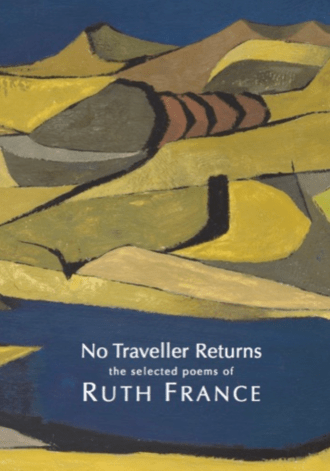
Poetry Shelf review: No Traveller Returns: the selected poems of Ruth France


Screen Shot 2020-06-15 at 1.49.52 PM


No Traveller Returns: the selected poems of Ruth France, Cold Hub Press, 2020


While Trying to Study Phonetics on a Spring Morning


This immense arch of sky

Is a palate, on which ring

Day’s consonantal sounds


Voicing the clarity of bell air

Which breaks about and above us

Like tumbled, exploding plosives


Tripping on the teeth; these

Rear up, far off; sharp sounding-board

Or white, guardian mountains.


Here all is implicit; perhaps we have

No need of such conceits;

Yet without them words remain dumb


Where we, tiny on the tongue

Of the plains, consider how sweet

How sweet is the taste of morning.


Ruth France


Ruth France was one of a number of women poets who didn’t make it into Wild Honey; not because I wasn’t fascinated by her poetry or ideas. I made it clear I was offering a provisional home that needed more rooms, more poets, and more versions written by others writers, especially Māori and Pasifika. When Ruth was writing, most women poets were not lauded to the degree men were, and too often praise was offered on the judgement scale of men. Anthologies only ever included a handful of women and ‘women’s writing’ was often disparaged, undervalued, silenced. I am sitting at the kitchen table where I wrote Wild Honey and I am feeling an overwhelming sadness at the historic invisibility of twentieth-century women poets that is still in effect today. I spent four years writing Wild Honey and didn’t have room for everyone. This has to be an ongoing project.

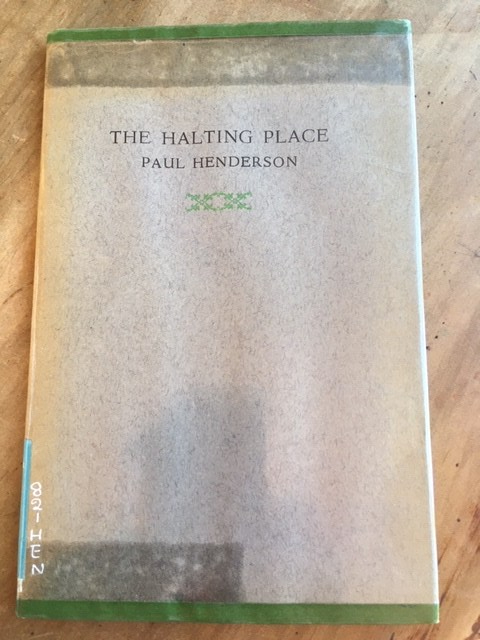
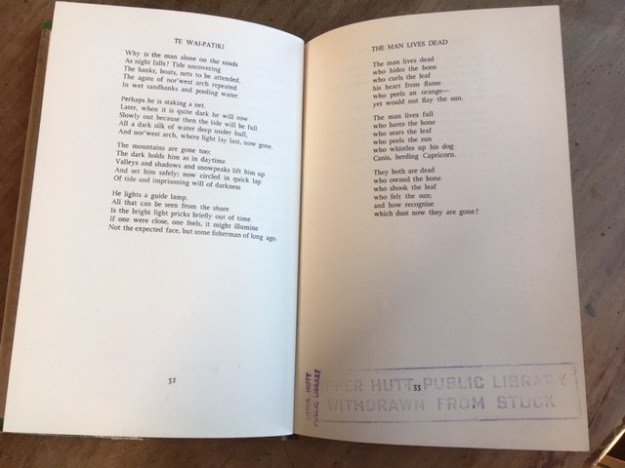
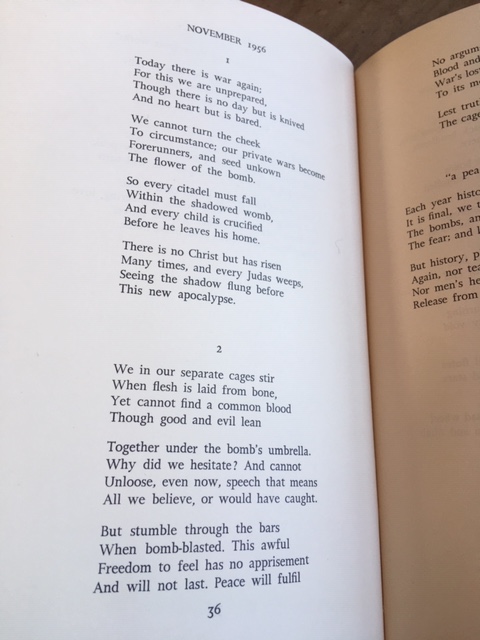
Ruth France (1913 – 1968) was a poet and novelist. She wrote two novels, with her debut The Race (1958) winning NZ Literary Fund’s Award for Achievement. She published two collections of poetry under the name Paul Henderson, a handful of which made it into two anthologies (not all women of her era were selected). Editor Robert McLean (himself a poet with a new collection out) has selected poems from Ruth’s published books (Unwilling Pilgrim 1955 and The Halting Place 1961) along with poems from an unpublished manuscript, ‘No Traveller Returns’. To have this lovingly edited collection of her poetry underlines what readers have missed with her work not readily available.

Robert’s introduction considers the poetry and states that as the poems do not offer explicit biographical details neither will his introduction. Yet her biography (not that we have easy access to much) is as intriguing as the poetry. Yes, we can let poems stand on their own feet and we can find our own invigorating pathways through, but autobiography can make poems glint in unexpected ways. In fact, as is my habit, I read the poetry first, wrote most of this, then read Robert’s introduction and hunted out her appearances in New Zealand anthologies. She is largely invisible.

Te Ara / The Encyclopedia of New Zealand has a biographical entry. She was born in Canterbury, her mother wrote poems and short stories and was published in the Christchurch Press while her father was a shopkeeper. Ruth attended secondary school and then worked as a librarian before marriage at 21. For over three years, she and her husband lived on a yacht at Lyttelton; she rowed her husband to work and her son to kindergarten. After the second son was born they settled at Sumner. Her father had been a devout Catholic and was incensed his daughter had married a non-Catholic.


Ruth published her first collection of poetry at the age of 42 as Paul Henderson. According to Te Ara she wrote letters to the press under her own name and had a strong social conscience and her poems were published in various newspapers and journals. Te Ara also suggests her contemporaries claimed she wrote under a male pseudonym as it freed her from ‘poetess mannerisms’. Crikey! I am so infuriated by these two words. Ruth is said to have held herself at arm’s length from the Christchurch writing community as she didn’t like the way women were treated as inferior. I am thinking of the Caxton Press and all the power it exerted but also of the gatekeepers at a national level (there were notable exceptions). This is what it says in Te Ara:


Already well known for her poetry written under her own name, it is unclear why she felt a need for a male pseudonym. Contemporary male critics suggested it freed her from ‘poetess mannerisms’ and contributed to her success. Today, the best features of her poetry are judged to be the plain, serviceable language and syntax in, for instance, ‘After flood’ or ‘New Year bonfire’.


I am so infuriated by this dismissiveness, I want to write another book. Ruth’s poetry is so much more than ‘plain, serviceable language and syntax’. Where do I begin? For a start plain serviceable language can offer a thicket of copious reading delights. Secondly her beautifully crafted lines offer all manner of musical rewards. Economy and richness coexist.

I am sitting at my kitchen table with a thousand questions mounting. Why wasn’t her last ms published? Her poetry had a vital political edge to it yet, for whatever reason, her poems did not raise questions about the status of women, whether as wife, mother, poet or woman. Ruth refers to ‘men’ to denote all people encompassed in her narrating ‘I’: ‘All men I, and I, living, all men’. It was the convention of the time to subsume women within ‘men’, but some women poets were resisting this tradition. I am reminded of Mary Stanley’s ‘I’ in Starveling Year (1953) as she navigated what it was to be a woman writing (see ‘The Wife Speaks’). Yes I am a little disconcerted that women (and ‘she’) do not make an appearance in Ruth’s poems but we see the world through Ruth’s eyes.  It in no way detracts from the myriad rewards her work offers. But it makes me curious about her views on the status of women.

As with many women poets, global issues mattered to Ruth – war, the bomb, atomic energy, equality of men, invasions. You will find clear evidence of her political acumen, along with heart-moving love poems and an attraction to the seas, hills, mountains, shifting tides, seasons. Her poetry is a sumptuous feast of ideas and physical layers. I think she needs a book devoted to her writings, her opinions, her life.


While you are there I am nested among leaves;

As sparrows come each morning for breadcrumbs

So I look for your still face beside me;

Without your calm in the face of what wild storm

I am no longer nested, but desolate among these leaves.


from ‘Always, on Waking’


No Traveller Returns: The Poetry of Ruth France


‘Living’, an early poem from Unwilling Pilgrim intrigues me. Here is the first verse:


What shall I sing?

It has all been sung before

But time did not begin

Till child my mother bore.


The poem faces the haunting and perhaps persistent nag that however we write our experience it has all been written before. Yet when I read this potent line – ‘Tears bit me in the brief / Salt stream for the first time’ – I am on reading edge. Shortly later I read this: ‘So for each one was new / The shattering love and war’. The poem was written around  the year of my birth and I am spinning on its axis. Grief, love, war, pain – poetry has never abandoned these topics, poets have never lost the ability to affect us, to present unique versions of experience that challenge or soothe or inspire.

Ruth concludes the poem with this:


So let me sing for all

And sing old songs again.


I am filled with curiosity about this poem. Ruth is galvanised into song, and I am wondering if the reclaimed subject matter is also a reclaimed how. How we sing matters as much as what we sing. And in this context how we make poems. Is she singing the songs of men? Is she singing her own cerebral activity into poetry?


In ‘Object Lesson’, also from the first collection, the idea that human experience is individually unique is key (although connected by countless universals such as our need to eat and love and grieve). In this poem a hill is a hill but when a particular hill is filtered through a man’s knowing, it is ‘a hill through the eyes of one human’. I see the seeds of subsequent theory here on the role of the reader, the spectator, the creator.


I am finding Ruth’s poetry utterly unique – she is a poet both thinking and feeling, hiding and exposing. Her poems are intricate considerations on what it is to love, write, exist. Never fully in the open. This from ‘How Shall I?’:


Then how shall I do this?

Confine the mind to a reasonable process

Beguiling thought by beguiling thought through a tight

Web to a firm conviction? No moonlight

Must persuade, nor smile chance

To alter the grave march of circumstance.


There is song and there is not song. There is love and there is not love. There is also and always uncertainty, a mind open to movement and a resistance to absolutes. Time and time again I divert the overground ideas to the making of a poem; the way poetry is uncertain, open to multiple interpretations, steered by gut and daring as opposed to rigid maps and regulations. I love the way the landscape is a constant presence – think of it as an anchor, homeplace and a series of travel routes. The poem ‘Road Map’ reiterates the inability of a map to catch everything. The traveller’s aid may guide us across physical terrain, but equally it references the terrain of the mind. It is the blank page of the poet writing.


For all was unexpected that we found;

Rivers were marked, but what map could foretell

The scouring of spring floods, the changed ford,

How the great boulders fell?


There is no absolute of place to be drawn

In neat precision with a mapping pen:

Lakes are hemmed in by thought as well as hills,

That has branched through many men.


Ruth keeps returning to the idea that we are in the land and the land is in us, and how the relationships will be marked by memory, experience, uncertainty, hesitancy, predilection. Here are the final two verses:


Place will be integrate, but not on paper;

The mind’s net flung and hauled, it is a silver catch;

Here was the limestone bluff, the sharp bend,

There was iced snow to watch.


But later, in what deep valley of hesitation

We consider time, and place, and thought

As tiny scratches on what surface, an ultimate

No map, or mind, has caught.


The poetry of Ruth France is a treasure house of gold-nugget poems. Like any good treasury, it reveals its physical and abstract luminosity across the course of many readings. I am utterly fascinated by this writer, by her inquiring mind and her poetic deftness. Go hunt this glorious book down. Bravo Robert McLean and Cold Hub Press.


The island belonged to my father,

Or rather it belonged to nobody.

It wasn’t even real considered against

Men and Material, War and Atomic Energy.

Reality rejected too the hut I built, now ruined,

But then, so did the island. Its own core

Was a reality immune even from wind the eroding stranger.


from ‘The Island’


Cold Hub Press author page


My first edition copy of the second collection

IMG_5675


IMG_5676


IMG_5705


Poetry Shelf Monday Poem: Ash Davida Jane’s ‘undergrowth’


undergrowth


at dusk the birds by the road

are loud as a fire                      so much noise

from such small lungs

we say

it seems impossible but what’s worse is

we should be able to hear this anywhere

the branches

always ripe with nests

in spring


birdsong so big

we could almost dance to it

but the next day

we’re overheating in the park

& everyone’s too busy worrying

to notice our spot under the trees

I’m imagining a giant ballroom with

this leafy canopy for a roof

the floor a pool of cool green light


nobody’s been here for centuries &

most of the birds are gone too

but an ant crawls

across the cracked marble

& somewhere in the silence our buried

forms turning

back into earth             are still

in love

& the flowers pick themselves

up & carry on


Ash Davida Jane


Ash Davida Jane is a poet and bookseller from Te Whanganui-a-Tara. She has a Master of Arts from the International Institute of Modern Letters. Some of her recent work can be found in Peach Mag, Turbine | Kapohau, Best New Zealand Poems, and Scum. How to Live with Mammals is due to be published by Victoria University Press in 2021.


Poetry Shelf audio spot: Adrienne Jansen reads ‘Bread’


All-of-Us-736x1024


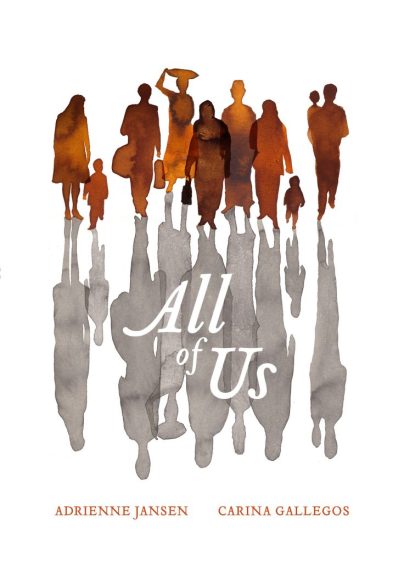
Adrienne Jansen reads ‘Bread’ from All of Us, poems which tell small stories of migration, co-written with carina gallegos. Published by Landing Press, 2018, and longlisted for the Okham NZ Book Awards 2019. Adrienne is a Wellington writer who writes poetry as well as fiction and non-fiction. She’s also involved with Landing Press, which publishes poetry that many people can enjoy.


Poetry Shelf connections: Grace Iwashita-Taylor’s ‘my heart is in my mouth’


my heart is in my mouth


my mama didn’t prepare me for this, but her illness did

a forced pause for the heartburn of a worlds over consumption

isolation, a foreign concept for villages of homes

with more bellies than the home-belly can house

but indeed the sky has stopped bleeding, is now naked and breathing

standing outside under nights blanket I try to sink my breath in tune with it

the mouths of the monsters to our own making are now unveiled, are you listening?

my heart is in my mouth

baited

&

breathing


Grace Iwashita-Taylor


Grace Iwashita-Taylor, breathing bloodlines of Samoa, England and Japan. An artist of upu/words led her to the world of performing arts. Dedicated to carving, elevating and holding spaces for storytellers of Te Moana nui a Kiwa. Recipient of the CNZ Emerging Pacific Artist 2014 and the Auckland Mayoral Writers Grant 2016. Highlights include holding the visiting international writer in residence at the University of Hawaii 2018, Co-Founder of the first youth poetry slam in Aoteroa, Rising Voices (2011 – 2016) and the South Auckland Poets Collective and published collections Afakasi Speaks (2013) & Full Broken Bloom (2017) with ala press. Writer of MY OWN DARLING commissioned by Auckland Theatre Company (2015, 2017, 2019) and Curator of UPU (Auckland Arts Festival 2020).


Poetry Shelf Monday poem: Brian Turner’s ‘Between Shingle Creek and Fruitlands’


Between Shingle Creek and Fruitlands


Cast your mind back to the first time you came this way,

the road windy, corrugated, dusty,

the surface mostly the colour of yellow clay, cuttings

stained with the leer of water seeping.


On the left the ever-ascending slopes,

the Old Man Range, white flecks

in blue gullies near the summit,

and your young old man wondering when


we’d ever get to Alexandra, your mum complaining

about ‘the blessed dust’, both of them

cursing the ‘wash-board surface’ and you thinking

about the number of times she told your father


that ‘it didn’t matter’ when it clearly did. And that

was the way it always was with them,

it is with you, it is, period. Until, you might say,

something happens that’s never happened before.


Like love came back and sent hate packing

never to return, and peace of mind arrived

like a dove from afar, decided to stay, and you

no longer dreamed of what might have been.


Brian Turner


Brian Turner was born in Dunedin in 1944. His debut collection Ladders of Rain (1978) won the Commonwealth Poetry Prize. He has published a number of collections including Just This which won the NZ Post Book Award for Poetry in 2010. He has received the Prime Minister’s Award for Poetry (2009) and was NZ Poet Laureate (2003-5).  He lives in Central Otago.

In April 2019 Victoria University Press published Brian’s Selected Poems, a hardback treasury of poetry that gains life from southern skies and soil, and so much more. When I am longing to retreat to the beauty of the south, I find refuge in one of Brian’s poems. The economy on the line, the exquisite images, the braided rhythms. Read a poem and your feet are in the current of a gleaming river, your eyes fixed on a purple gold horizon line. His poetry presents his beloved home in shifting lights, but the range of his work offers so much more.

Brian became an Officer of the New Zealand Order of Merit for services to poetry and literature in the 2020 Queen’s Birthday Honours. He was to be the honoured writer at the Auckland Writers Festival year – he would have been on stage with John Campbell so am very sad to miss this event.


Poetry Shelf interview with poems and images: Eliana Gray’s Finland residency

Screen Shot 2020-06-03 at 10.55.15 AM


For all of February I was lucky enough to be selected to undertake a month-long residency in a tiny town in the middle of Finland called Sysma. The only outcomes were that I had to write a report of my time at the end for the cultural institute that sponsors the residency. I went to continue working on my second collection but mostly just wanted to see what would happen once I was there. I was given a room in a giant house on the edge of town near Finland’s second largest lake with a piano and a sauna. For the majority of the time I shared it with just one other person, who became my dearest new friend. The incredibly talented poet from Germany: Ricarda Kiel. Below is a small and disjointed account of this time.


Did you have any epiphanies? Life or writing?

 Both. Vigorously. The biggest epiphany had to do with my ideas of what ambition is, what constitutes work, how terrible capitalism is (as if we didn’t already know) and how I want to live my life. It sounds lofty, but can be summed up as this: Capitalism has fucked everything and jobs can kiss my ass. I’ve always enjoyed doing things that are valued weirdly by capitalism: youth work, music, poetry, sexual violence survivor support. Nobody wants to pay you to do these things. I used to think that the way to get around this was just to get very famous. You wanna do music Ellie? Well ok! You better be a popstar then. Ohh, you like doing poetry now do you? Well then, you better fucking hustle until you become the one poet that is allowed to make a living from poetry at any one time. I’ve now realised that, not only does doing the level of work required to become these things burn me the fuck out and strip me of my passion for whatever t is I’m doing. But also! I fucking hate attention! And I hate to be the centre of it! Even if by some weird reason I did become famous enough to make a living off my work I’d most likely become deeply unhappy as a result of it. I’d always thought that once I found my ‘area of work’ that working would no longer be a stress and a drain. That once I was employed in my preferred ‘career path’ I’d be happy. Big time lies my friends. Turns out it’s the working that sucks. My plan now is to work for as long as it takes to go bush with a goat and a veggie garden and then never be seen or heard from again.


Is there something you miss?

I miss everything to be honest. I miss waking up at six am and the soft blue light. I miss padding into the quiet kitchen before anyone else is up and staring at the snow with a cup of earl grey tea with oatmilk. I miss everything being made out of oats. I miss the white painted wood floors and the radiators and how the house we always warm even when outside was negative ten degrees. I miss watching the sunrise every morning. I miss noticing the changing trajectories and placings of icicles, ice and snow. I miss waking up to a fresh blanket of flakes and seeing where the birds had been. I miss how quiet and still everything feels underneath snow clouds. I miss how the snow refracts the light and absorbs the sound. I miss walking out onto the frozen lake everyday and dancing by myself. I miss the sense of romance that comes from playing by yourself in the snow. I miss the patterns ice makes from frozen water. I miss the woodpeckers and the hares. I miss seeing the stars from a different angle. I miss Marabou chocolate bars and cheap jars of lemon pesto. I miss the Finnish language and the adventure of a forgien supermarket. I miss Ricarda. I miss our quiet kitchen conversations and how we each needed a similarly small amount of human interaction. I miss walking with her to the abandoned house by the lake and trying to decipher the Finnish graffiti. I miss stargazing and crunching on the frosted moss. I miss the sheets of ice that push up onto the shores of Lake Paijanne and the blankets of pine needles. I miss getting naked and plunging my body beneath the icy water. I miss smiling as the blood rushes to the top of my skin. I miss the intense solitude of being in a place where no one knows you. I miss the comfort of an always warm, well-built house. Of knowing that Ricarda is just upstairs should I need her. That she’ll come knock on my door after nightfall and ask if I’m ok. That if I’m not we can talk about it and she’s so much smarter and calmer than me that it will always be ok.  I miss nightly saunas. I miss sitting naked with my new friend in the sauna as we sweat and discuss German history and politics. I miss living in a culture that isn’t terrified of the naked body. I miss my wonderful new friend. I miss the way my body feels so boneless after a sauna that I fall directly asleep. I miss my life in Sysma. I miss Ricarda. I miss not having a job. I miss having my writing be a valued part of my time. I miss being able to live my life in a way that only pleases me. I miss everything.


What books did you take?


Head Girl – Freya Daly-Sadgrove

Mayhem #7- edited by Tracey Slaughter

This gender is a million things that we are more than – edited by essa may ranapiri

Sport 47– edited by Tayi Tibble


I spent a lot of time picking which books I would take with me. It was a balance between bringing necessary inspiration and ensuring that my backpack could be carried by my back.

I took Head Girl because Freya is a beautiful genius but also because I was working on a review of it for the Minarets website. This is how I justified bringing a book by a single author.

The rest of the selection are all tomes filed with a breadth of writers from Aotearoa that I’m obsessed with. It made me feel so grateful for the glut of exciting work in this country. That I could take three volumes and have with me more poetry from my favourite poets than I could get through is such a blessing.

A lovely happening that spun off from my carrying these books is that I was able to lend them to my residency mate and new sweet friend Ricarda, an incredibly talented poet from Germany.

A big big heartfelt thank you to all the beautiful poets in these volumes for inspiring me and keeping me company during this residency.


Screen Shot 2020-06-03 at 10.55.56 AM


P o e m s


Pile of bodies like the dead


You look like spilled milk, celestial

Sitting on your bed in the early afternoon

We’ve been fucking for days


I passed out in the shower

Steam heat smothered my brain till it stopped working

slid me down the humid glass

Your hands all over

could have held me up

Against you, been fucking me for days


I wake up on the floor in the hallway and you’re yelling

dragging my hair back to the bedroom

I pretend you’re tender

Pretend I like it

not to notice you’re embarrassed cause


You know lonely men

shouldn’t fuck seventeen year olds


Airways unconstricted by age

we swallow up steam like we’re starving

And yeah I’m ready to try anything

look how hungry they’ve kept me


Like sitting at an empty birthday party

How pathetic to invite people

to enjoy yourself

Spend all your time stringing

balloons on a letterbox


Bag of homemade favours by the door

Everybody gets one

Except for you


new piece


I feel so fucking………mature

Fragrant flesh lobed and so

Ripe, it’s a little embarrassing


But so sweet!

The earnest growth of sugars

Both natural and bred

My body a sum of traits innate

And selected, curation not mine

And still authentic


How I swell

My pith extending

Cell walls expanding

Strain creating bitterness, as a warning

A balance to the sweetness, again


How beautiful I’ll be when I stop

Reach my peak of consumption

Aesthetic requirements fulfilled

Skin appropriately thickened, still porous

Still able to be hooked

Gripped between forefinger and thumb

Penetrated, peeled back


They’ll marvel at my outside

Puckered yes, but how shiny!

My skin: a good thickness

My pith present, inoffensive

But providing some necessary ‘grit’


I am beautiful

They tell me I’m beautiful

They hold me in their hands

They press me to their mouths

I am waiting for them to bite down


Screen Shot 2020-06-03 at 10.56.15 AM


‘The Top Ten Types Of Boys You’ll Date In College’


Shoes scraping the carpet thread

Bare. Your eyes, heavy-lidded

Rounded, like the cushions

Your skate shoes are dirty

Caked with dirt

You talk to me about Heidegger and

I couldn’t give less of a shit


Temporality temporalizes as a future

which makes present in the process of having been


You say, passing the bong as if its

The idea itself. As if we

Heavy-lidded, were so present

as to be dust. Settled

On everything without notice


Run our fingers through the air

And come up coated

You’re still looking at me


You’re still looking at me and

I can feel it

Like how you say you can feel it

When I roll my eyes behind your

Back but I know you’re lying because

I only ever roll my eyes

When you leave

The room


You’re cool

You’re dust

You’re reclusive

But you have so many FRIENDS

At least a thousand by my last count

Everyone is one of your boys


Understanding of being is itself a determination of being


You say

passing the bong

As if this isn’t

a worse version

Of the same joke ten minutes before


We still laugh, of course

We wouldn’t want you to be

Uncomfortable


Above your head there’s a poster

Tits out. BIG tits. Red bikini

Hair flying! Straddling

A motorcycling! She’s

Tougher than you, she’s

Seen some shit, man


I smile at her, but keep my lids low

So it still looks

Like I’m smiling

At you


Screen Shot 2020-06-03 at 10.56.25 AM


Eliana Gray is a poet from Ōtepoti. They like queer subtext in teen comedies and not much else. They have had words in: SPORT, Mimicry, Minarets, Mayhem and others. Their debut collection, Eager to Break, was published by Girls On Key Press (2019) and they are the 2020 writer in residence at both Villa Sarkia, Finland and St Hilda’s Collegiate, Ōtepoti.


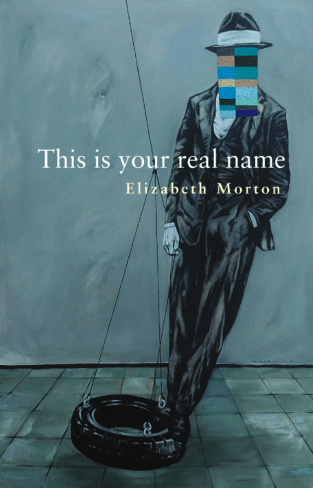
Poetry Shelf review: Elizabeth Morton’s This is your real name


Screen Shot 2020-05-27 at 12.47.57 PM


This is your real name, Elizabeth Morton, Otago University Press, 2020


There were days I spent gulping sky,

picking every star off the plate

with the stub of a thumb.


from ‘The eating of sorrow’


Elizabeth Morton grew up in Auckland. Her poetry has been published in various journals, both in New Zealand and internationally, and has achieved a number of award placements, including the 2015 Kathleen Grattan Award. Her terrific debut collection, Wolf, was published by Mākaro Press. She recently finished an MLitt in Creative Writing at the University of Glasgow with Distinction.

This book was one of two poetry collections that I kept returning to during lockdown (plus Oscar Upperton’s). I found I could drift in and out of a poem, I could write phrases on sheets of paper, but I couldn’t string sentences together, let alone articulate a reaction to a book. What I could say was I loved it.

The epigraph felt uncannily fitting: ‘For people who wait and people who are alone.’

I had written down the word ‘detail’. Elizabeth’s deft handling of detail forms the visible stitching of a poem. It offers hue and texture to the multiple poem threads. The detail is a gateway to threads that are personal, universal, engaged in storytelling, recollection, contemplation, association, inquiry.

There are reading footholds and there are wobbly boards, especially in poems that are a mix of real life, memory, fable, fiction, enigma.  The real is often elusive, but lands in shards, both striking and evocative. In ‘After’, two lines in particular catch this movement, and echo throughout the collection as a whole (and with me during lockdown):


Night comes apart, like everything else.

We know the landmarks for their hardness.


At the poem’s start, the speaker suggests closing one’s eyes is enough. Shutting one’s eyes is contemplative, an escape device, a pause. This is me in lockdown. I keep shutting my eyes and waiting. The poem features the last polar bear cage-pacing at Auckland Zoo and a butterfly caught on a truck’s windscreen. Two sad notes that alter the way we view the ‘you’ whom the poem addresses. It is the kind of poem you keep reading to absorb the dislocation, the absences, the mournings, the complexities. The ending catapults you back to the beginning which then returns to the eyes closing at the start. The ending:


When I open my eyes I’m in the same cage I was in yesterday.

I am the same yellow bear driving the same haulage truck

over ice sheets, thin as a prince’s hairline.

What night is this? We talk about the butterfly like it got away.

We talk abut you, like you are here. Like you never left.


Every poem works its magic on me – and the breathtaking effects are now heightened by lockdown. I am musing on how I have read this book before, during and after levels 3 and 4. I am writing this review in level 2, and I am wondering when everything I read and write won’t be touched by my Covid experiences. Yet this was the book that held my fuzzy attention.

Most of the poems are dense thickets, interconnected threads, offbeatness and misty bits to get lost in. The beginnings of poems are exquisite hooks:


You might make it, if you sprint.


from ‘Gap’


I’m not going to cry. All winter the television

sulks in the corner of our love. You put the lentils

in a colander to flush the ugly bits.


from ‘You can’t, always’


Here I am turning the pages of the book, writing a review with my thoughts and feelings close up, because I stall on every poem and want to set up a coffee club in a cafe so we can talk about how we move through the poem thickets. Take ‘Aubade with hold music’ for example. You start with the image of a phone booth: ‘The phone booth was skull-cracked, / and caulked with soggy directories.’ Again the uncanny link. The reference to all the people we never know reverberates acutely in lockdown because that’s how I feel about the global Covid statistics. And how I have often felt when I drive down streets and wonder at the lives of the people I see.

The poem moves about a phone call to a mother, but then a central cluster of lines ‘shake’ the phone booth and you wonder what is going on behind the scenes of the poem:


The morning smelled like fire,

like the sun projecting simple stories

against the warehouse brickwork

and I wonder whether you know

you are melting.


Yes I could say this poem is about a phone call, a phone call about to be made; there is a small boy with coins, there are the White Pages, but then there is this: ‘This poem sets you apart, and / you are a small forest pressed against the city’. So mysterious. So ripe with meaning and possibilities. Each poem is like a little forest. Each poem is like a little forest pressed against us. How can we not stall and wonder. These lines stand out.


Writing a poem is a political act.

I want you to know, what you feel

is more than politics.


This is the joy of poetry: you think a poem and you feel a poem. It might be political or personal or a dense thicket, with multiple pathways and myriad connections to a peopled world. Elizabeth’s subject matter is wide ranging. Stories appear like neon lights or fleeting shadows or veiled self exposures. Sometimes it feels like the sun is out and sometimes like pitch-black night. The reading rewards are glorious. Find the book, make a coffee, and then let me know what you think. I am ever so grateful for the arrival of this book.


Otago University Press page