Category Archives: NZ author

Poetry Shelf Monday poem: Serie Barford’s ‘The midwife and the cello’


The midwife and the cello


I was perched amongst pīngao
contemplating a paragliding instruction

Don’t look at what you want to miss

when a woman sat beside me

pointed at the lagoon’s mouth
breaking into hazardous surf

crooned I’m a midwife
sing and play cello

I observed her eloquent hands
sand burying sprawling feet
lines networking a benevolent smile
dreads tied with frayed strips of cotton

remembered you returning home
buoyant with the miracle of birth

the baby with omniscient eyes
you eased into this world

how she lay within your arms

didn’t cry


Serie Barford


Serie Barford was born in Aotearoa to a migrant German-Samoan mother and a Palagi father. Her latest collection, Entangled Islands (Anahera Press 2015), is a mixture of poetry and prose. Serie’s work has appeared in numerous journals and anthologies. She was awarded the Seresin Landfall Residency in 2011 and is a recipient of the Michael King Writers’ Centre 2018 Pasifika residency. Some of Serie’s stories for children and adults have aired on RNZ National. She has recently completed a new collection, Sleeping with Stones.


Poetry Shelf picks from new books: Michele Amas’s ‘The Documentary’


The Documentary

A grandson takes a stone
from a southern Pacific coast
carries it in his wallet
across the world
to place on a grave

His fingers feel for distant music
above this limestone pit
this morbid formation
Wearing a borrowed yarmulke
his hand sweeps the soil
his head is full of old notes
the blood maps of history

We are no relation
but every relation
here amongst this baby bowl
pelvis, these anonymous thigh bones
removed of salt, more beach wood
than bone, these splinters and knuckles of pumice
you might find floating at the sea’s edge
this scattered ancestry

Bone is what bone is
a composition of elements
like air, like music
but once we were naked
at gunpoint
and I was a wife who lost her memory

Maybe you are my grandson
but I forget
Beside me a man
who clutched a satchel
of Stravinsky and Debussy
to cover his nakedness
A musician like you
that was his transport
clutched to his lungs
that was his oxygen

Hear our chorus
our bony percussion
our grandson, our grandson’s sons
hear us claim his future
and our escape
Do not be caught unarmed
bring your film, your press, your theatre
your manuscript, your piano, your pencils
bring your keepsake gift, your promise
bring your stone


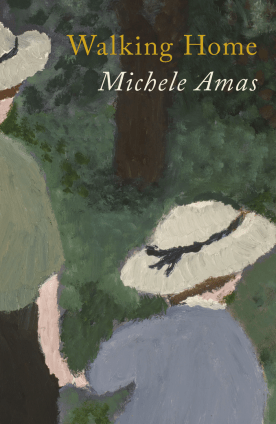
Michele Amas from Walking Home, Victoria University Press, 2020


Michele Amas (1961 – 2016) was a poet and actor. In 2005 she completed an MA in Creative Writing at IIML and was awarded the Adam Prize. Her debut collection After the Dance appeared the following year and was shortlisted for the Jessie Mackay Best First Book of Poetry Award. Ken Duncum has edited a posthumous collection, Walking Home selecting poems from across the decade, including the final poem she wrote.


Victoria University Press author page

Poetry Shelf review of Walking Home


Paula: I am completely in the grip of this poem. Phrases roll about in my head – it is in debt to the private circumstances of the poet, but it is snug in this world-wobbly moment. The poem resembles a fable designed to keep both writer and reader going. It is song and it is anchor and it is ache. It is family. I am thinking – in these uncertain and unsettling days – of pinning the the final stanza to my wall, maybe my heart, because there is so much we can bring and create and connect with. It’s strange, but this poem both fills me with joy and makes me cry. Read the book – it is breathtakingly good.


Screen Shot 2020-06-29 at 11.51.08 AM


Poetry Shelf – Poets on their poems: Reihana Robinson reads ‘After the Fall’


IMG_1083.JPG


Reihana Robinson reading from Of Her Limitless Her (Mākaro Press, 2018),  in Gisborne


Reihana reads ‘After the Fall’ originally published in Cha: An Asian Literary Journal, October 2018


Reihana Robinson (pehea Ngati wai, he whangai) is a writer and artist and organic farmer living for most of the year in a remote part of the Coromandel and involved with environmental research, in particular New Zealand’s controversial use of aerial poisoning of wild animals.

My writing has been published in the USA, Australia, and New Zealand in a number of journals, including Cha:An Asian Literary Journal, Landfall, Cutthroat, Hawai’i Review, Trout, Melusine, Takahe, Cezanne’s Carrot, subTerrain, Cordite Review, Overland and Blackmail Press. My poems have appeared as part of AUP New Poets 3, Auckland University Press, 2008; and my first volume, Aue Rona, was published by Steele Roberts, Wellington, NZ, 2012. My second collection Her Limitless Her, was published in 2018 as part of Hoopla, Makaro Press

I have held artist residencies at the East West Center, Honolulu, Hawai’i, and the Anderson Center, Red Wing, Minnesota. Artwork is held in collections in Europe, USA, and the Pacific. I was the inaugural recipient of the Te Atairangikaahu Award for Poetry.


WHY I CHOSE AFTER THE FALL

I chose After the Fall, a poem from 2014, as it fits with my present state of mind that whirls up and down and around the screaming injustices pulsing the planet in the form of never-ending wars.

Keiji Nakazawa wrote Barefoot Gen about the hibakusha, the “survivors of the atomic war” to remind us of the work it takes to create peace. I haven’t talked about the poem as a poem, however the reviewer Reid Mitchell does in Cha an Asian Literary Journal  https://finecha.wordpress.com/2014/05/08/after-the-fall/

I was also inspired by Karlo Mila’s reading of her beautiful For Tamir Rice with Love from Aotearoa

In the graphic novel on which this poem is based the child has a name. It is this naming that brings some kind of hope in the face of deep atrocity. It is why I end the poem with the child’s name. As Brecht wrote when the atrocities come like falling rain/ no one calls out ‘stop’

As a teenager I imbibed as if fed, Joan Baez singing There but for fortune and so it goes. Writing poems to lift the siege, to smear the graffiti, asking friend and stranger to love more and to cry out in the dark— i te ao marama.


‘After the Fall’ published in Cha: An Asian Literary Journal


Poetry Shelf review: AUP New Poets 6


AUP_New_Poets_6_frontcover_HiRes-1__53429.1579568941.jpg


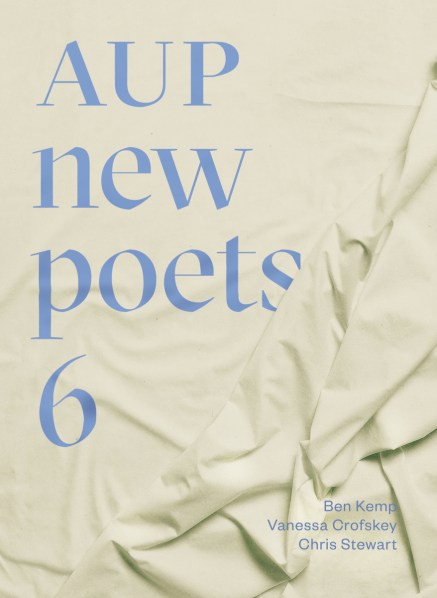
AUP New Poets 6 Ben Kemp, Vanessa Crofskey, Chris Stewart, edited and introduced by Anna Jackson, Auckland University Press, 2020


Salt my song …

I have to love you,

and this farmland upon which I live.

I evolve here.


One day I will journey to the sea,

become that river and dissolve into the essence of I.


Ben Kemp from ‘The Esssence of I’


The Auckland University Press series devoted to new poets was launched in 1999 and featured the work of Anna Jackson, Sarah Quigley and Raewyn Alexander. Each volume features three poets, a number of whom have since published highly regarded collections of their own (for example Chris Tse, Sonya Yelich, Reihana Robinson). Anna Jackson took over as editor with AUP New Poets 5 (Carolyn DeCarlo, Rebecca Hawkes and Sophie van Waardenberg).

Volume 7 will be out in August, but first I want to mark the arrival of AUP New Poets 6: Ben Kemp, Vanessa Crofskey, Chris Stewart. The collection was launched on Poetry Shelf during lockdown, level four, with a series of readings, poems and interviews. This was a challenging time for new books when many of us felt tilted as readers and writers, and our major contact with the world was via our screens. The events and mahi that did occur during this time is pretty special. There were opportunities to hear people read and talk about things beyond our local venues. Getting to hear the three poets read at the online launch expanded tha audience, and am keen to make online readings an ongoing feature on Poetry Shelf.


However we are now at level one, the sun is shining after endless rain and thunder, the political point scoring is on mute, I am listening to opera divas in my earpiece, the bread is cooling, and I can return to the collection with more focus. For me, reading during level four was like collecting gleams and shards. This word stuck, that phrase, this image. I had the attention span of a gnat. Now I am luxuriating in the way a sequence of poem unfolds, the way it takes you surprise and transports heart and mind. Still at a snail’s pace.

AUP New Poets 6 includes three very different poets – delivers three different reading impacts. Truth is such a dubious word, unstable, hard to pin down, we all know that, but truth seems to matter so very much in a world threatened by liars, catastrophe. I love the way the poetry moves into the truth of their experiences, thoughts, admissions. To be reading at such a human and humane level is significant. I want this complexity of comfort and challenge. Of how being human is neither formulaic nor flippant. This poetry is witty, vulnerable, challenging, complicated …. yes!

Anna Jackson’s lithe introduction (which I read after reading the poems as is my habit) confirms her role as an astute and surefooted editor of this series, with her fine eye for poetry that holds and satisfies attention regardless of the world that bombards.


Chris Stewart’s sequence, ‘Gravity’, navigates the miraculous within everyday settings. He faces big subjects such as birth, death and love, and rejuvenates them to the point your skin pricks as you read. He embeds the physical in order to evoke the intangible, the hard to say. There is darkness and there is light.

The title poem is a gem (well they all are!) as it stencils birth on the white page:


I hear nostalgia for the womb

the way light misses the hearts of stars

we glove the light in our skin

find sleep in solar wind

wrap ourselves in the gravity

of your arrival


from ‘gravity’


The agile syntax (‘we glove the light’) signals a heightened state, the sense of miracle, the wonder. I am hard pressed to think of a poet who has evoked birth, fatherhood, parenthood, so beautifully. I am reminded of Emma Neale’s power to deliver wonder and awe in a poem. Turn over the page, and again there is a shift between light and dark, a sense of awe:


the first time we bathed

our daughter in the lounge

it was dark except for the fireplace

she lay between us and flickered


from ’embers’


This is poetry at its rejuvenating best. There is rawness to the point of wound, such as in the poem, ‘a tooth emerges’. The father is wakened by a teething baby at night. The poem spins on the page, a spinning vignette of fatherhood, sharp, on edge, knowing. Here are the final verses:


now I am sore tooth pulled

from a soft bed


my swollen nerves erupt

you only see my crown


but my roots are still

embedded in the bone


Ah. Every poem in this sequence hits the right potent note. One poem links the health of the newborn to the health of a genealogy of grandmothers. Yes, family is the glue that holds the sequence together, along with the poet’s astute and probing gaze into experience. A couple of poems near the end situate the poet as son, and the ominous mother father portraits hold out dark hints. There are holes in the telling, dust-like veils, and startling images. These poems are why I keep reading poetry, and why I very much hope Chris has a book in the pipeline.


Vanessa Crofskey’s poetry was already familiar to me but her sequence, ‘ Shopping List of Small Violences’ widens my appreciation of where and how her poetry roams. She braids the personal and the political as she moves into the truths of her experience. As she does so, writing poetry is testing and playing with form, discovering form. I am reminded of how language shapes us as much as we shape the languages we use. It comes down to our mother tongue, to languages that are imposed, expectations on how we use language, and our own private relationships with how we speak ourselves. How we might stutter or provoke or soothe or struggle with words.

Just as with Chris’s sequence, the poet produces poems that matter greatly, that broadcast self along myriad airwaves. There is political edge and personal vulnerability. One poem fills a passenger arrival card, another completes a time sheet. There are white-out poems and black-out poems, shopping lists, and graphs. As she navigates form, she navigates being comfortable in her own skin.

The poem ‘dumplings are fake’ sits on the page with verses and measured space, moves with a conversational flow and that characteristic probe into self. There is wit at work, but it is also serious – reading poetry becomes a way of listening.


i’m so authentic i use chopsticks to eat macaroni

watch  hentai on my huawei

and go to ponsonby central to eat chinese


i don’t carry hot sauce in my bag but i do bring soy to the party

my favourite movie of all time is studio ghibli

and my dad is the white side of the family


every time auckland council says ‘diversity targets’, my phone vibrates

i get suggested ads for the national party in chinese

and that think piece on bubble tea is a redirect to my

dot com slash about me


Again I am very much hoping there is a book in the pipeline.


Ben Kemp’s The Monks Who Tend the Garden with Tiny Scissors’ also assembles poetry as a way of listening. Ben currently lives in New Guinea with his diplomatic wife and three children. He was born in Gisborne, has Rongowhakaata roots, grew up in Manutuke and Matawhero, lived in Australia for six years and ten in Japan. For me his poems are deeply attached to home, to a way of grounding place, of establishing anchors. Of being home when home is mobile. The sequence establishes a series of bridges between Japan and Aotearoa. He carries Aotearoa into every poem, regardless of the setting, while his experience in Japan also deeply permeates his point of view. The poetry welcomes both here and there.

Ben’s poetry is alive with physical detail, sometimes ornate, sometimes shimmering with the deceptive simplicity reminiscent of haiku or tanka. From ‘Food to Song’:


Rekamaroa,

a bed of hot riverstones,

under the earthern blanket,

steam rises, the buttery smell of pork belly.


Perhaps the most  gripping poem is the longer ‘The Essence of I’, an ode to Walt Whitman. Reading this, I am hoping there is a book in the making.  I find the poem deliciously quiet, slow paced, speaking of homeplace and ancestors, oceans and rivers. Astonishing. There is love and there are longings. I keep reading Ben’s poems and adjusting what I think poetry is and what it might be. Poetry, for example, is a way of becoming. And listening. And building bridges. ‘The Essence of I’ signals a way of becoming.


Underground are the ancestors lined up in single file,

feathers in their hair, with paintbrushes for fingers and flutes for mouths.

In the darkness that is their light they are whole,

yet the line they form is for me,

carrying the burden of my impatience, they vent it.

I often pierce my hands through the earth, arms dug deep,

softer in the tractor tracks, we tough hands.

The movements in hand, saying we love each other …


The northeastern tip is the desert,

I hitched a ride on that wind-blowing orchestra,

and I found a well,

my consciousness, and perfect white sunlight on a vast bed of sand …

The well was filled with embers, breathing smoke,

I sat for days contemplating its meaning to me,

these loose and odd snippets.

Why burn? Why burn?


AUP NEW Poets 6 is a glorious read. Exactly what I want to be reading now. I am hungry for poetry that offers facets of humanity, of humaneness. The anthology brings together  voices speaking in multiple poetic forms, across multiple subjects, in shifting tones and hues. Glorious, simply glorious.


AUP NEW Poets 6 launch: listen to the poets read here

Auckland University Press page


Poetry Shelf Monday poem: Emma Neale’s ‘Wanting to believe in the butterfly effect’


Wanting to believe in the butterfly effect


I collect a box of groceries from cold storage,

take it to the drop-in centre, break open bread rolls


fill them with salad, cheese, mayonnaise; leave goofy notes

about extra cucumber for beauty treatment, or vegans,


in the hope that giving migrates invisible currents

to distant continents, pollinates oil barons’ and despots’ hearts —


They feel their hearts!


Yet our children watch polar ice-caps collapse on TV;

learn to say sixth mass extinction with furious fluency,


choose to walk to school all weathers, forego meat and dairy food,

their eyes the soot of burnt-out stumps.


Other days, they kneel with us, postures half hopeful, half bereft,

to press electric-white seedling roots, skinny wires


into the rich, dark sockets of a field’s edge, to try to light

cool lamps of leaves, to banish the creeping dread


that even planting trees might be as impotent

as fingers kissed to magpies, green forbidden on first-time brides.


Our young sons help us squash the sluggy pearls of grass grubs

that would eat the seedlings in their new-born cribs


but as the news reports that fresh forest fires blacken

the planet’s treasure map, one boy asks, in a toneless blank,


‘Why do people even have children?’

The other hugs me, his body’s slim shuttle


shaken with the gravity of the mind’s strain.

‘You shouldn’t have had us, Mum.’


But we had you because we loved the world.


Stern young faces gavel-blunt, their twinned silences

sentence me as yet another militant of double-speak:


In order to show our love for the planet,

we wanted children who could grieve for it.


Emma Neale


Emma Neale is the author of six novels and six collections of poetry, the most recent of which is To the Occupant (OUP, 2019). She works as a freelance editor in Otepoti/Dunedin, where she also occasionally teaches creative writing. This year she received the Lauris Edmond Memorial Award, a prize given biennially for a distinguished contribution to New Zealand poetry. She is the current editor of Landfall.


Poetry Shelf connections: Janet Newman’s ‘My daughter returns’


My daughter returns


I meet her in a hotel carpark

separated by traffic cones,

call an austere hello

across a conveyance of air

where anything transmittable

falls to the ground,

resist the urge

to sink to my knees

with the want to hug and hold

one who is afterall a measure of me,

let her go quietly

to the quarantined room,

make the lonesome drive

down the unlit road

where the only ease

is the silky moon

settling a lightness

on the surrounding sky

above the island rising

mountainous from the sea

hugging in comfort

what looks to me

like the broad shoulder

of the horizon.


Janet Newman


Janet Newman is based in Horowhenua. She has a PhD in creative writing from Massey University for her thesis entitled: “Imagining Ecologies: Traditions of Ecopoetry in Aotearoa New Zealand.” Her poetry collection Unseasoned Campaigner was a runner up in the 2019 Kathleen Grattan Award and will be published by Otago University Press next year. She was the winner of the 2017 IWW Kathleen Grattan Prize for a Sequence of Poems, the 2015 New Zealand Poetry Society International Poetry Competition, and the 2014 and 2016 Journal of New Zealand Literature Prize for New Zealand Literary Studies.


Poetry Shelf poets on their poems: Vaughan Rapatahana reads and responds to ‘tahi kupu anake’


Vaughan Rapatahana, Te Ātiawa, commutes between Aotearoa, Hong Kong SAR and the Philippines. He writes in multiple genres (chiefly poetry, criticism and commentaries) in both his main languages, te reo Māori and English. He graduated with a PhD (on Colin Wilson) from the University of Auckland, and has published several poetry collections both here and overseas. Atonement was nominated for a Philippines National Book Award in 2016 and he won the Proverse Poetry Prize the same year. He edited Ngā Kupu Waikato: an anthology of Waikato poetry (2019).

Vaughan is a terrific champion of poetry in Aotearoa – he shines a light on poets that deserve far more attention than they currently get, particularly in his articles posted at Jacket2. He has also edited multicultural books of poetry with poetry exercises for secondary schools (Poetry in Multicultural Oceania – Book 1, Book 2 and Book 3, and the most recent teaching resource Exploring Multicultural Poetry 2020). He is a much admired poet in his own right.


My review of Vaughan’s latest collection, ngā whakamatuatanga / interludes,  Cyberwit 2019


Poetry Shelf Monday Poem: Chris Tse’s ‘Ghost poem #3—The other side of the glass’


Ghost poem #3—The other side of the glass


I was working a sausage sizzle fundraiser

on the day George Michael died. His ghost

sat with me in my car while I scrolled through

social media exploding with grief and links

to his greatest hits. George took my hand

and told me not to cry before asking why I

smelt of burning flesh. Are we in hell? he asked.

Lower Hutt, I replied. My sunburnt neck

pulsed with residual heat or perhaps it was

the spark of a memory of watching him

perform at Sydney Mardi Gras in 2010 flanked

by shirtless cowboys, leather daddies and

policemen in latex pants. I think about it

all the time. Every now and then I crave to

feel that night again, slick trepidation running

down my spine every time I locked eyes with

another guy, hoping my smile would be returned

favourably. A certain beat can unlock the body

heat of that glittering night and all the other nights

of careless yearning since then tumbling

from limb-crushing dancefloor into the crisp

3AM air with his voice still ringing in my ears:

You’ve got to go to the city.

You’ve got to reach the other side of the glass.

Some of us are neither sunburst nor shade

but a symptom of formative summers caught

somewhere in between like hands pressed against

the edge of the rest of our lives. The glass was

my own making and all my future wonders were

one swift and decisive thought away. I wrote all

my desires in my breath for anyone to read them.


Chris Tse


Chris Tse is the author ofHow to be Dead in a Year of Snakes and HE’S SO MASC. He is co-editing an anthology of LGBTQIA+/Takatāpui New Zealand writers due to be published by Auckland University Press in 2021.


Poetry Shelf connections: Ruby Solly premieres a video for her new album Pōneke and a wānanga with essa may ranapiri


Today we have a poetry and music video premier from Ruby Solly with film created by Sebastian Lowe and Viktor Baskin, as well as a wānanga around toi kupu, music, and writing into place between Ruby Solly and essa may ranapiri.


The video can be watched here:


Pōneke can be streamed and purchased here


essa may ranapiri Kia ora Ruby

I’ve been reading your poetry forever (since before I even knew you) and have been so privileged to hear you play and sing in public, and these songs on Pōneke are just giving me so much life recently! Just stilling those anxious jitters I’ve been struck with after the end of lockdown. It feels so of the outside as well. To me the songs create this river where you dip in and out of such a strength of emotion, I go from chilling and vibing to crying and humming along; face wet! It feels like something I’ve been needing for a long time. And there also poems that go with each one!

Before I ask you anything about the album could you talk a bit about how you got to where you are, your whakapapa and journey here to this time/place?


Ruby Solly Kia ora Essa!

Kā mihi nui for opening this wānanga space. I was a reader of yours before we met too! I love how we get to be woven together in this way, it’s very special to me. I really like the idea of these pieces forming a river as when I was recording them, I looked at a lot of old river routes from pre-colonial times. I like to think of the water under the concrete and how it can be heard in these pieces. After I finished the album I was actually gifted some of the original river stones from the Te Puni Stream which runs under my street, which joins up to the Waimapihi which features on the album. Was a perfect taonga to be given to mark being able to bring those songs and sounds out into the world again.

I whakapapa to Kai Tahu and Waitaha on my taha Māori, but I also have Jewish, Irish, Scottish and English whakapapa within me. I whakapapa back to Waihao as my tino marae in Te Wai Pounamu, from the Rōpa whānau. I was really lucky to grow up on the foot of Mount Ruapehu where I learnt koauau from my primary school teacher, Maria Kuppa, which was my first time meeting ngā taonga puoro. I started playing cello when I was about seven when we lived in Taupo, which also features on the album.  I started playing taonga puoro again at university under the korowai aroha of mentors such as Al Fraser, Ariana Tikao, and Rob Thorne. I’ve lived in Pōneke for seven years and over that time have been lucky to receive teachings on our whakapapa here from Kai Tahu kaumātua, as well as learn from locals and historical records about this place and how my histories are placed within it.


essa Sounds like the album is such a culmination of things for you, everything is of course, but it’s cool to pay attention to the whakapapa of our mahi so thank you for sharing that e hoa.

So the songs are lyricless but you wrote these little pieces of toikupu to go with the waiata (which i love!) it really gives context to the music but they work so well as pieces of music themselves. They are full of stories from around the region, what was something (or some things) you learnt that really stuck out to you and why?


Ruby Completely, I think with me when I get an idea it’s not necessarily a poetry idea or a music idea or an art idea; it’s just an idea in and of its self and I get to grow it into whatever direction I choose depending on how I treat it and feed it.

I did! It was hilarious because I wrote these very dry factual explanations of each track and then showed one of my cousins who pointed out how academic and dry they were. I’d just finished my masters so I was in this very academic Pākehā writing frame of mind and it reminded me to break out of that. I thought about how so much of our histories have been given to us and passed down through toikupu and song, and that maybe this work is adding to that tradition. I wrote all the poems in one big day during lockdown, but I had all the info in my head from the descriptions I’d written previously which took a lot longer. That’s often how I work as a writer anyway with a research and thinking phase taking up a lot of time and the actual writing just coming in at the end, I call it the internal blackboard a lot to explain it. The original descriptions can still be seen on the bandcamp page though in case that style suits people better.

I think the things that stuck with me the most were the places that I could whakapapa too, which says a lot about representation within arts and the importance of it. Pieces like the two Karaka poems / songs, and the ones with tohu from ōku mātua tūpuna like Koukou are so special to me. Something I love about taonga puoro is the presences that show up for you when you play, and learning to not only read those tohu but play with them.

I thought about you for this wānanga because one, I love your work, and two, because I’ve heard you read some hōhonu, beautiful pieces about place and your connection or disconnection with it. I love the way you unpack these things like taking things out of a messily packed suitcase, then show us everything inside then pack it neatly so we can see the whakapapa behind these feelings. It really inspires me as a writer and an artist. For you personally, how does writing about place affect you as a Māori writer?


essa I just want to speak to something you were saying at the top there before answering your question. It’s so true that the lines between forms are colonial constructions and it makes so much sense for me for this art to take on many forms, I often have paintings and poems and songs that speak to similar things like a little family work. I don’t know I just think that smooshing of form is really cool!

Writing about place is everything really, it hurts a lot, it challenges me, it makes me feel everything I lack, but also it’s everything we are and will be and have been. Because it’s all about place right? The whole state of things is due to where we are placed, where we are displaced. I wrote a poem about my marae, a place I have only passed on the highway or “visited” via the google maps and the work really does summon something, like just putting words into the world establishes some tenuous connection point. Like a little gift from my ancestors. But also I do worry I fetishize that disconnect sometimes, make my life about the things I don’t have rather the opportunities and connections that I can make. It’s also funny as well because growing up I feel like a lot of things teach you that place doesn’t matter like all the names of the streets are some dead colonizers from Britain and the shows on TV are American, none of us present on the box. It has really been a learning experience for me over the last ten or so years finding place or even coming to see it.

And that is another thing about Pōneke that I really love is how it seems to cuts through that noise – that hypermarketed, hyper commercialised, there is always an ad waiting noise, especially with the melodies that keep returning and returning (we see that spiral again) and the all that incidental sound of place itself. And also it’s so layered, taonga puoro, instruments, found sounds, voice, and bird’s song. Would you be able to talk a little bit about the recording process?


Ruby Yes! The idea of art, or just expression in general being placed into different categories is really colonial when you boil it down. Being able to communicate across mediums and languages is a strength we have inherited from our ancestors that we continue to build upon.

I feel that sense of being challenged. Place is so… present in te ao Māori, we’re asked where we’re from before we’re asked who we are which is both a beautiful thing, and a very complicated thing for those of us who have not been privileged to have that relationship with turangawaewae cultivated in the physical sense. Writing into a place is a very Māori way of creating I think, and yes, it hurts to do it and to move through it. But it definitely gave me a deeper sense of understanding and helped me work through the kind of fetishizing that can happen with any diaspora. I’ve heard it referred to as “competitive pain” within our Jewish diaspora, and I really wanted to be able to choose how I presented that pain and how I wove it with all the other emotions that come with it, the full spectrum of it.

Thank you! When I create complete works like a book, or album, or a large piece without a major prompt I like to try and have it so even if no one was ever to see it but me (and my descendants possibly); we would still grow and learn from it. Then I decide whether I want that to be shared wider. I think in many ways that can cut out the subconscious desire to make something to fit the norm or to serve others, which in many ways serves people who don’t always have their needs met in media usually.

For the recording process I recorded taonga puoro within the different environments, responding to them in real time. Then I layered up cello at home afterwards to support the taonga puoro. Some tracks have some extra layers of sounds from the places when I wanted to really tune in to particular sounds like the gulls on Matiu-Somes island for example (they were also dive bombing me so I had to have a few goes). The whole thing was actually recorded on an iPhone four which I haven’t told anyone until now because I was super whakamā about it! But I learnt a lot about recording and took principles from how jazz bands recorded around one singular microphone in the 1920s with things being placed different distances from the mic. The mixing really added to the sound too which was done by Al Fraser.


essa I have listened to a lot of pro stuff recorded on phones there is a lot of life in those kinds of set ups I think! There is even a strange ideology I think behind those pristine soundproofed spaces set aside for recording, it benefits the subject matter so much for the recordings to done in the spaces they’re responding to!  The mix is awesome, brings it all together so well, Al did a great job!

Some final questions, what would you want people to take from this record if just one thing?

Also you have a book of poetry coming out next year do you feel there is an overlap between that work and this?


Ruby Completely! It’s given so many people so many more options! I think as well it can be used as a tool to remove the ’sacred room’ element of recording where we try to eliminate all noise in a studio, and through that it can bring the environment back into the music as a contributor. I think acknowledging the space you’re in and all that brings is a big part of te ao Māori and it feels really good to be able to look at recording in that way as a method of decolonizing the recording process. Al is awesome! We both had finishing off the album and all its components as a sort of lockdown project, and it was so good to have someone who really understood the work and how I’ve developed as a player and a person through it.

I think if I could pick one thing for people to take away… it would be an increased ability to listen to and feel histories in places, with more of a sense of presence. To show people that idea that the repercussions of the past are still here, and we kind of get to look back at them in a way where we see the good and the bad all mixing together, and we get to decide where we go with that information. I’ve had lots of conversations with friends and whānau recently about matakite and te ao wairua, and I think my path into that world is being able to hear places and their histories. It’s deep work to be able to share that and I feel grateful to be walking on that path.

I do! I think for me there again is that creative process where there is a seed of an idea or an experience, and I get to choose what I feed it with and how I grow it. With the book, I started writing it long before I realised. So many of my pieces were about growing up on mount Ruapehu and Turangi, or my family histories and relationships, and then I just saw this thread with my connections to Kai Tahu and all these other people and places through my Dad and that was what was growing as the book. I’m excited for people to read the book because it does that same thing I think, it acknowledges that there is the good and the bad and all of it is our history and has lead to us. There’s a real narrative of me starting to see and hear that through my childhood and figuring out how I choose to live with it. I’m super fascinated too with the parts of our culture we don’t always acknowledge. Things like how we raise children, or the things we value, or the way we structure our speech. I think those things are often the parts that colonisation struggled to remove, and through them that’s often how we find and reclaim our ways of being and so much of our matauranga. Dad used to get me to swim down this river every summer, while everyone else had boats and life jackets, because he wanted me to be a strong swimmer because it was a survival skill for us and our environment. Little pieces like that are often misunderstood, but can be great gifts. I’ve saved myself from drowning many times.


Poetry Shelf poets on own Johanna Emeney reads and discusses ‘Night Nurses’

Each week Poetry Shelf invites a poet to read and discuss a poem of their own that has mattered to them.


Johanna Emeney reads ‘Night Nurses’ from Family History Mākaro Press 2017


Johanna Emeney’s two collections of poetry are Apple & Tree (Cape Catley, 2011) and Family History (Mākaro Press, 2017). Her nonfiction work focuses on medicine and poetry: The Rise of Autobiographical Medical Poetry and The Medical Humanities (Ibidem, 2018) “Disability in Contemporary Poetry” in Routledge’s Companion to Literature and Disability (2020). She was 2020’s editor of Poetry New Zealand, and judge of the Open section of the New Zealand Poetry Society’s annual competition. Jo has a background in English Literature, Japanese and Education—subjects which she read at Pembroke College, Cambridge. She is a senior tutor at Massey University, Auckland.