Category Archives: NZ author

A Feast of Poetry at Going West – kick starts tonight and a photo from the archives

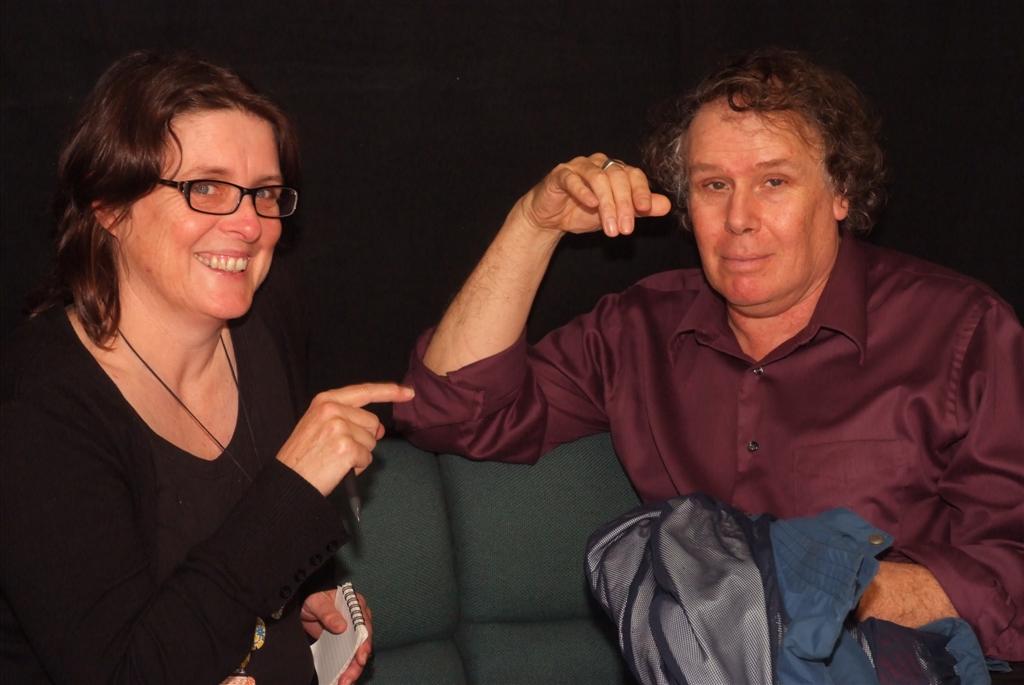
DSCF0102 (Large)

Paula Green & Harry Ricketts at the Going West Books & Writers Festival 2009.
Photo: Gil Hanly, Going West Trust Archives.

(fascinating photo! my little notebook, finger pointing, yep he’s the poet up tonight!)

I love this family festival. I love the sliding doors opening in the breaks and everyone tucking into food and conversation like one big poetry family. I love the eclectic programme and the way you can sit back in the same chair and get taken on a thousand voyages. Three cheers to the hard-working Going West team. I am honoured to be part of the festival, on your 20th celebration.


This year you hear:

Friday (tonight)

7.20 In Remembrance: Glenn Colquhoun

7.30 Curnow Reader: Harry Ricketts

8.20 Myths and Legends of the Ancient Pakeha: Glenn Colquhoun


Saturday night

8.30pm Poetry Slam (Harry, Glenn and I are judges)


Sunday morning

9.30 am  The Poetry of Place: Kerry Hines and Leilani Tamu in conversation with me


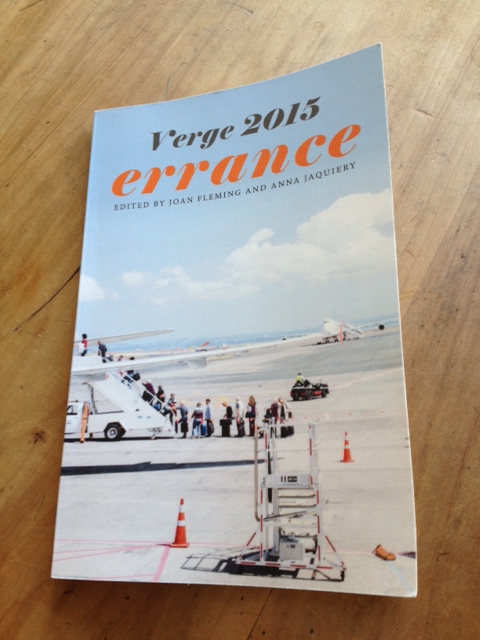
Verge 15 — If all the issues have this vitality, and take you to a verge in such distinctive ways, it is worth a subscription

photo


poetry is the mouthpiece of the unspeakable

Verge is a literary journal published by Monash University Publishing. The Press aims to bring ‘to the world publications which advance the best traditions of humane and enlightened thought.’

This issue is edited by two women with New Zealand links. Joan Fleming is a poet currently writing a doctorate on ethnopoetics at Monash University. Her second poetry collection, Failed Love Poems, has just been released by Victoria University Press. Anna Jaquiery is a Wellington based novelist. Pam Macmillan (UK) have published two of her crime novels. She is also completing a doctorate at Monash University in Creative Writing.

This issue contains poems and short fiction, and includes a number of writers with New Zealand connections (including Emma Barnes, Amy Brown, Lynn Davidson, Rosa McGregor, Lee Posna, Erin Scudder, Steven Toussaint, Sugar Magnolia Wilson).


Joan has written a terrific introduction that sent me down trails of sparking thought in view of my new project on NZ women’s poetry. She introduces the life-blood theme of the issue: errance (‘1. the act of travelling from one place to another without any clear destination 2. a wandering of the mind’).

Such a poetic prompt stands in for the way many writers work. Yes, there is a starting point but you then let go into uncertainty, discovery, uncertainty, electricity. Joan writes: ‘What we know and can’t know is a personal obsession of mine. I try and practice a mode of attuned, sensitive ignorance in my own poetry, as well as in my research.’ The word ‘can’t’ — a tiny hook as though taboo or impenetrable or withheld.

‘Errance’ also stood for the way I engaged with the issue as reader. In a sense (aural, visual), the work is afterness (Post Language) in that it steps out of Language Poetry. A thin, almost invisible guy rope. You enter into murkiness, the unfamiliar, difficulty, miniature theatrical stages, staged heart, aural agility, sumptuous image building, dissolution, elusive meaning, skerricks of story, smidgeons of character, semantic hinges. Aural chords. Visual melodies. Sharps and flats for ear and eye. What binds this collection of writing is an utterly infectious joy of language. A love of the word on the page — of the way this word electrifies that word. Or mutes. Or sidetracks.

I loved the metonymic kick between this word and that word, this presence and that absence, this gesture and that arrival.

Always poetic currency fermenting in the gaps.


Here are some of the poems I loved:

Cody-Rose Clevidence (I can’t reproduce the title correctly as the first word is crossed out) but the poem is from ‘Flung Throne.’ The looping, loping syntax brings you back to the word, then steers you to a pulsing visual tapestry. Hairs raising on the back of my arm as I read this.

Lee Posna ‘Job’s Clouds’ The poem takes ‘cloud’ as its poetic core and then surprises you at every twist and turn. The last line catches you, utterly.

Steven Toussaint from ‘Aevum Measures’ Reading this for me is a Zen-like experience where I get drawn into the moment of a line ( a word, a phrase) and everything stalls. The language — resplendent for the eye, divine notes for the ear. Poetry then becomes transcendental. Uplifting. Leads you elsewhere. Beyond this, for me, the surprising metonymic glints are a vital feature.

Cy Mathews ‘Old Song’ This is like a road poem, a skinny road poem (part fable)  spining down the page where nothing much happens, like that view that is always the same, never shifting, until you spend time and learn to look and there you are nestled in its alluring grip and difference.

Shari Kocher ‘Errancy: A Primer, after Emily Dickinson’ Poems split in two halves with an empty backbone that makes reading variable. You move through honeyed melody and crackling connections. Over that split between left and right. Up down. I acquired a compendium of phrases I want to keep with me for awhile.


Reading this issue it felt as though there is something in the air we are breathing. A poetry mist/spray that gets into our lungs. Motifs echo. Poetry here invites a different way of reading, yet never lets go of eye and ear. And still, in the very best examples, you meet that drumming heart. In the white space, the cracks, the cloudy patches, in the inbetween.

If all the issues have this vitality, and take you to a verge in such distinctive ways, it is worth a subscription. Bravo!


A call for earthquake poems

Call For Submissions

Proposed anthology of poems prompted by the Canterbury Earthquakes

There has already been a range of wide range responses to the earthquakes  – from moving to darkly comic, from passionate to offbeat and quirky.

All of this suggests – despite its rather bleak subject matter – a nuanced and richly varied collection of poems might be gathered together for possible publication in book form.

Local poets and editors Joanna Preston and James Norcliffe are currently gathering such material and would be interested in receiving work that might be appropriate.

The anthology is still very much at the projected stage and there is no certainty it will proceed. It is also proposed that any proceeds beyond publication costs be donated to appropriate earthquake recovery projects so that no individual payment will be offered.

We would be interested in considering either published or unpublished material.

Submissions, which should be sent to either

James Norcliffe normel@clear.net.nz  or  x-msg://2/normel@clear.net.nz

Joanna Preston  preston.joanna@gmail.com  or x-msg://2/preston.joanna@gmail.com

Deadline:  October 30.

check out ‘catch and release: Poems from Manawatu’ edited by Helen Lehndorf

catch and release:  Poems from Manawatu’ is the first e-publication from City Libraries and Community Services.  As part of the experimental poetry programme KUPU – PoetryBeyondWords, the book is one of a series of initiatives designed to engage the community in poetry writing.  Around two hundred and fifty submissions of poetry and proverbs were received and we’re thrilled with the response.

One of the aims of KUPU is to provide an avenue for poets of all levels to develop their engagement activities with local audiences, and act as a stepping stone in artistic development.  The point of the ebook was to create a piece of work that the contributing poets could use to profile their poetry.  “It is challenging starting out” says Genny Vella, City Cultural Coordinator.  “Being able to include publications in personal profiles and biographies adds a little more weight to the body of work poets are able to call on to demonstrate their talent”.

Ten poems were selected from forty submissions.  The result is a lovely anthology of works by known and previously unpublished poets about Manawatu – the creative expression of heart and place.

read them here

from Manukau Institute, Amber Esau’s striking essay is live at Horoeka Reading- panic, the inbetween

‘On Having My Card Decline at Countdown’ by Amber Esau

  • The checkout girl dropped the Nashi pears in with the dried goods and they’ll probably bruise. Do the job properly mate. I think she’s in the sixth form but you can never really tell these days even though I haven’t been out of high school long enough to get away with thinking that. A man in line at the next counter over holds his baby against his shoulder so that she’s facing me. Her milky spit dribbles down her dad’s back in time with the beeping of the wiry haired checkout girl. Louise, as her name tag reads, calls the total and I fumble around in my bag for my wallet. My least favourite part is finding it. My boyfriend says that I buy too much food for us but he’s never seen how my family has to shop. I pull my card out, swipe and punch in the pin. The blue digital daggers of shame strike up on the screen and I start sweat-shaking. I often panic, like a lot of people, about being too broke for everyone.

    Growing up in a house with no walls, sharing is expected and enforced by the way the air gels everything in place. The TV, the bodies, the sun slicing in through only the kitchen window at half past one; each finds themselves stretched amongst many hands. Everything is defined by relation. As the Samoan poet and novelist Albert Wendt writes: “We can only be ourselves linked to everyone and everything else in the Va, the Unity-that-is-All and Now.”

    This is a fabulous read. A timely read. Rest of essay at Horoeka Reading here 

Sarah Jane Barnett is launching Work at Vic Books soon

images-1


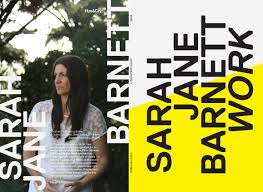
You are warmly invited to join Hue & Cry Press and Sarah Jane Barnett in launching WORK at Vic Books, Victoria University. All welcome.

In these six long poems Sarah Jane Barnett explores how people fight for a normal life. Set in Ethiopia, Paris, Norway, and New Zealand these astonishing poems take you into the lives of others—a grieving man leaves Ethiopia at the end of the civil war; a polyamorous couple have a child; a woman hunts a black bear on a New Zealand sheep station. Original and spellbinding, these poems walk the line between poetry and fiction.

WORK will be launched at Vic Books, Wellington. Sarah will read from ‘Ghosts,’ a speculative poem set in Norway’s northernmost town, Svalbard. The poem includes dialogue between the characters Diane and Fowler, who will be read by Wellington writers Therese Lloyd and Matt Bialostocki. Get ready for a performance!


where: Vic Books, 1 Kelburn Parade, Wellington

when: Thursday 22nd October, 5.30pm start with the reading 6-6.15pm.

Hue & Cry Press
Vic Books

If you can’t make the launch, WORK can be pre-ordered from Hue & Cry Press store:

2015 NEW VOICES – Emerging Poets Competition – the results

Congratulations!

Ria Masae 1

2015 NEW VOICES – Emerging Poets Competition

The Divine Muses Poetry Reading and Penguin Random House New Zealand are pleased to announce the winner, runner up and highly commended entries in the 2015 NEW VOICES – Emerging Poets Competition.

The winner of the 2015 NEW VOICES – Emerging Poets Competition is Manukau Institute of Technology student Ria Masae for her poem, ‘Native Rivalry’. Writing of the winning entry, our judge commented, “I chose this poem as the winner because it is a beautiful poem, with layers I can ruminate on, and though I read this poem over and over, I never tired of it, in fact I always found a little something more to enjoy each time. It is a sharp observation, yet written with affection, and is very easy to love.”

Our huge congratulations to Ria who holds a BA from the University of Auckland, and is currently studying towards a BCA at MIT.  Her work has been accepted for publication by Blackmail Press, Potroast, Ika,and Otoliths. She is a member of SAPC (South Auckland Poets Collective).

Runner up this year was Auckland University of Technology Masters in Creative Writing graduate, Georgina Monro for her poem, ‘Student Nurse’. This, says Allan, “is a compassionate poem, which utilises figurative language to express modes of communication in unusual forms.”

Monro is a graduate of the Masters in Creative Writing program at Auckland University of Technology. She has been a finalist in the Going West Poetry Slam and the Auckland Writers and Readers Festival Slam.

Additionally there were two Highly-Commended entries are, ‘Murmur’ by Auckland University Philosophy graduate, Sahanika Ratnayake and ‘Colour me true’ by Michelle Chote who is in her 2nd year of study in Italian and French.

Ria Masae and Georgina Monro join our winners and runners up, many of whom have gone onto have work widely published in journals here and overseas, including Elizabeth Welsh, Elizabeth Morton and Rosetta Allan.

There were over 70 entries to this year’s competition. Of those works submitted, Allan said, “The breadth of subject matter was vast, and the forms of poetry went from Rhyming iambic pentameter, right through to freeverse.”


newvoices300dpi    Logo-RGB_PRH-NewZealand

Blanche Baughan’s Selected Writings and a new project

41zKiXHKKtL._SX322_BO1,204,203,200_     41zKiXHKKtL._SX322_BO1,204,203,200_

I am currently kick starting a new project that will take a fair chunk of my energy over the next couple of years. It is both scary and exciting because it is the book I have wanted to write for a very long time. It feels as though all roads (my poetry, my reviewing, my Masters and Doctoral theses) have led to this. So while I like to keep poetry collections close to my chest until they appear in book form, I will share this secret – I am writing a book on New Zealand women’s poetry. If you know the name of a woman poet who is not yet out of the shadows but whose work you admire let me know and I will go delving.

My first venture to The Alexander Turnball Library was to go hunting in the archives for Blanche Baughan (1870 – 1958). Looking at letters and manuscripts made the hairs on my arm stand on end. Really, I want the poems to speak to me as I write this book rather than peripheral material, but there is in some way a little rocket that goes off inside you when you step into archives.

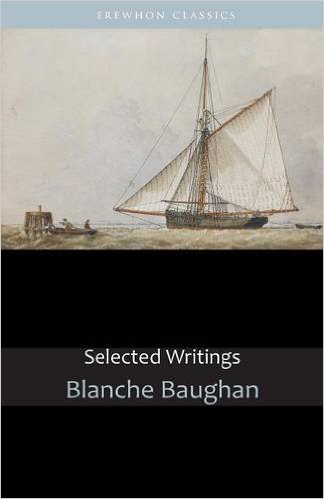
Damien Love recently edited Selected Writings: Blanche Baughan (Erewhon Press, 2015) which brings together her poetry, prose and non-fiction (especially travel writing). While I have battered copies of a number of her works, it is terrific to have this selection readily available. Open this book and you enter the pages of a woman who stretches from the mystical to the political; who made writing a full time obsession rather than a Sunday afternoon hobby. At a certain point in her life she stopped writing poetry and short stories and devoted herself to a more political role (this fascinates me!). In particular, she sought reforms in the penal system (her pen tuned to writing that backed her aims).

Damien’s introduction gives a brief overview of her publications, her strengths and weakness as a writer, as a poet in particular. Blanche was ‘the first woman to write significant poetry in New Zealand.’ I agree with Damien that it is important to engage with her writing within the context in which was written. She is a woman who paved the way for me to write. Reading the selection is opening a window on colonial life, on a woman’s life at the time. She, like so many women was plagued with self doubt, yet writing poetry was a vital part of her existence for a number of years. How does her poetry reflect the form and poetic etiquette of the times? Does it make a difference she is a woman writing? Her writing leads you into the domestic but it also takes you beyond the domestic walls into sky and land. Land becomes a poetic anchor, a way of securing a sense of home.

The selections are drawn from: Verses, Reuben and Other Poems, Shingle-Short (poetry); Brown Bread from a Colonial Oven (stories); Studies in New Zealand Scenery and People in Prison. The poems include key examples (‘A Bush Section’ and ‘The Old Place,’ for example) that have been previously anthologised and praised as well others less known.

Damien writes: ‘We cannot choose our founding fathers, our founding mothers either. If we could, we would choose a more cogent author than Baughan. But she is what we have, and recognising the felicities in her minor verse may help save us from overestimating the minor verse of our own day. Appreciating the verve encased in her Edwardian journalism may help us discern the timebound limitations of our own journalistic output. And her sometimes critical patriotism may still shed light on a few of our own vanities.’

I applaud the arrival of this astutely edited book, a book that enables us to navigate the complex engagements of one of out writing pioneers.


from ‘A Bush Section’

Logs, at the door, by the fence; logs, broadcast over the paddock;

Sprawling in motionless thousands away down the green of the gully,

Logs, grey-black. And the opposite rampart of ridges

bristles against the sky, all the tawny, tumultuous landscape

Is stuck, and prickled, and spiked with the standing black and grey splinters

Strewn, all over its hollows and hills, with the long, prone, grey-black logs.


Happy Poetry Day from Poetry Shelf – 20 things to do that aren’t on the poster!

photo

  1. read a poem
  2. buy a poetry book for yourself
  3. buy a poetry book for a friend
  4. read a poetry book in a public place
  5. write an off-the-cuff poem and hide it until next Poetry Day
  6. write a poem in the sand or on the pavement
  7. start a crowd writing a poem in the sand or on the pavement
  8. send a letter to your favourite poet
  9. cut up someone’s poem and shape it into something new
  10. check out the poem that Jack Ross (an all-time favourite poet of mine!) included in my birthday book: he is reading in Hamilton’s Poetry Day festivities
  11. check out the poem that our wonderful new Poet Laureate, CK Stead, included in my birthday book. Today is his welcome-to-Poet-Laureateship do. I will be there to celebrate! Congratulations!
  12. write a review of a NZ poetry book for me to post on Poetry Shelf
  13. tell someone about a poetry book you have read and loved in the last few weeks –  me: Joan Fleming’s Failed Loved Poems (VUP, 2015)
  14. go to a poetry event near you today. Send me a write up for Poetry Shelf with photos
  15. send me a paragraph on why you love poetry and I will post
  16. send me a paragraph on a NZ poetry book you have loved this year and I will post
  17. read a poem to a child
  18. write a poem for a child
  19. go hunting in a second-hand bookshop for a poetry surprise (I did this yesterday and got a gorgeous volume of Ruth Dallas’s I’d never seen before!)
  20. read a poem

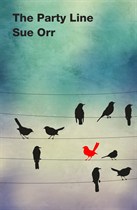
Sue Orr’s The Party Line – my launch speech

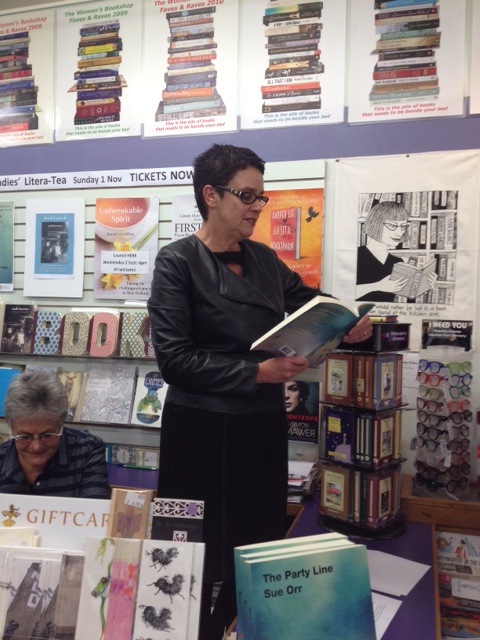
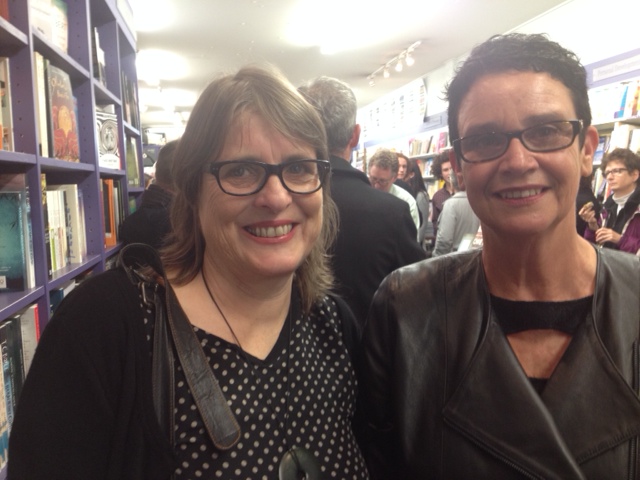
photo 2   photo 1

This is the speech I gave to launch Sue Orr’s new novel at the Women’s Bookshop. It was a packed room with many novelists and poets present. Such support.


Sue’s debut novel is pitch perfect. It reminded me of why I loved reviewing fiction for the NZ Herald so much. I was delighted to be invited to launch The Party Line, this utterly perfect book, of a dear friend and a fellow Penguin Random House author. Then to open my pristine copy and discover it was dedicated to me was so very moving. Thank you!

I got to see a near final draft of the ms and was captivated at every level by the power of Sue’s narrative. Even when you enter a world of flickering and uncertain light and dark such as this, you enter the joy of narrative — what story gifts us as readers. To read the published book, was to read afresh, and as I read over the weekend, everything else faded to dim (hanging out the washing, feeding the cats, answering emails). I just wanted to read in one slow gulp –and that is what I did.

This is the kind of novel that a reviewer could so easily diminish the effect of by giving away plot and character twists. Instead I want to share four reading pleasures this book gave me.

Firstly, the narrative is so surely anchored in a particular place and time, nostalgically so, for someone of my age. The judicious degree of detail renders both time and place vitally present: seersucker shorts, Happen In, the click of the eavesdropper on the party line, 4711 perfume, a candlewick bedspread, handkerchiefs, sharemilkers on the move, the paddock, getting in the hay, big brown bottles of beer.

Secondly, and most importantly, the characters resist the narrow confines of ink and paper and become seemingly real – and in that provisional realness expand to the point they affect you on a deep level. Husbands, wives, mothers, fathers, daughters. It is as though all roads lead to character in The Party Line: dialogue, plot, setting, turning points, epiphanies. Take any character, teenage Gabrielle coming to terms with the loss of her mother, or Joy facing brittle lines of communication with her daughter, Sue’s characters, all of them, ache with flaws, vulnerabilities, strengths. How one lives and loves and loses. So much of what we experience, have experienced and will experience defies words – yet this novel nails the kaleidoscopic, gut-wrenching, grey routine, survival instincts, good intentions, misguided ignorance, symphonic highs, comatosing lows, elusive dreams, startling courage, misread difference, kindness, meanness, rebelliousness, conformity, silence as a form of collusion or consent, the make do and the make believe of what it means to be human. These characters got to me. I felt them puncture and punctuate my heart rhythm. They startled me and they cajoled me. And what made the human complexity matter so very much, was the way they grew out of Sue’s lovingly tended sense of time and place.

Thirdly, while the narrative embeds you in the lure of its inhabited world – as you absorb character, place and event – this too is a novel of ideas. The way ideas ferment in the cracks and overlaps. There is the pervading notion of eavesdropping/seeing what one oughtn’t. The architecture of tight-knit communities. Gender roles. Human behaviour in the light of human error. Our ability to misread and misjudge human difference. Hierarchies with misplaced power.

Fourthly, this is a novel beautifully crafted in the light of structure but also at the level of the sentence. Each sentence, a honeyed fluency. Economical. For example:

‘Gabrielle Baxter was all butter voice, and butter hair and butterflies.’

‘She couldn’t call it menace, the tone in her husband’s voice, but she sensed the warning, clear and final.’

‘The pile of white linen spilled over the top of the basket at Audrey’s feet.’

If you scan the last few decades of NZ fiction, I am not sure how many novels have buried roots in the rural, in the back blocks, the peat paddocks, the farm kitchen, the country lanes and the local hall. That The Party Line is a novel of a farming community, of small town NZ, is to be celebrated. That the novel returns you to the world rejuvenated, a little transformed, is because this one small part of the world rendered in fictional form illuminates that which is real both past and present. It makes you think and it makes you feel. Not all novels do this. You feel like you have been the eavesdropper, seen what ought not to be seen, head and heart shaken apart, so that everybody near you and everybody at a distance seems acutely alive and precious. This is an astonishing novel, not in a big brash show off way, but in an intimate and empathetic way. I am delighted to declare it launched!
9781775537557    9781775537557    9781775537557    9781775537557