Category Archives: NZ author

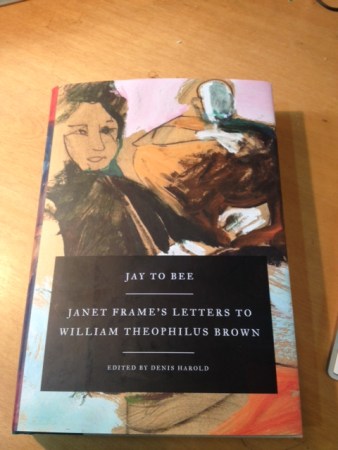
Very excited to spend time with Janet Frame


IMG_3527.JPG


Just got a copy! This book looks like a treasure trove.

On music, silence and having guests:

‘How valuable my solitude & silence seem! My guest is very pleasant & more or less goes her own way but I am looking forward to her going & she is wise enough to know it & understand it. I have moved my record-player into the sitting-room so she can listen to it & my study is like death without it & I did not realise the music had been so absorbed into the very walls of the study. The room is alive with it, as a past experience, but while the phonograph is in the sittingroom it is death in here, the whole room so yearns for it. How pathetically fallacious one can be!’


Poetry Shelf Postcard: Anahera Gildea’s Poroporoaki

6688514.jpg

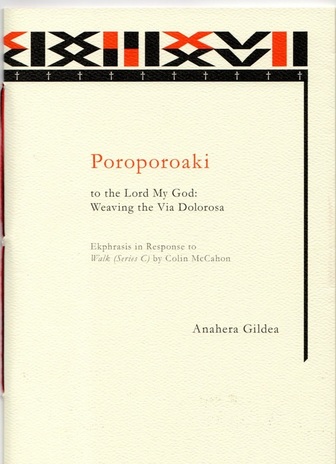
Poroporoaki to the Lord My God: Weaving the Via Dolorosa: Ekphrasis in Response to Walk (Series C) by Colin McCahon 

Anahera Gildea, Seraph Press, 2016

Designed and produced by Helen Rickerby of Seraph Press, this is the most exquisite chapbook imaginable. Add the gorgeous paper stock to the extra heavenly endpapers, the hand stitching and an internal design that is elegant and minimalist and you have a rare poetry treat. It is a work of beauty and all poets will be dreaming of their very own chap book. I for one!


XIV

Sometimes it is enough

to sit and look out.

Other times you have to walk

across bone, stone and shell.


Anahera Gildea’s poem is written in response to ‘Walk (Series C)‘ by Colin McCahon and is as much for James K Baxter as it is a response to the painting. It is an example of poetry as gift/taonga. Each line carefully stitched like the stitching in the kahu-kuri she makes for Baxter. This poet knows you don’t need many lines on the page to entice a reader to linger. You are walking alongside McCahon’s painting, you are walking along the wild and dark threat and wonder at Muriwai Beach, you are walking the Stations of the Cross and you are walking the poem. It is, for me, a very moving sequence.


Anahera (Ngāti Raukawa-ki-Te-Tonga, Kāi Tahu, Te Āti Awa, Ngāti Toa, Ngāi Te Rangi) is a Wellington-based writer who has had her poems and short stories published in a variety of journals. She recently completed the Masters of Creative Writing at Victoria University of Wellington and is currently finishing her first novel.
Seraph Press page

Auckland Mayoral Writer’s Grant winner announced: poet Grace Taylor!

congratulations!
Papatoetoe resident Grace Taylor has been awarded the second annual
Auckland Mayoral Writers Grant.
Grace’s winning proposal was for
City of Undone Darlings, a poetry collection
intended for publication in paperback and as an e-book, and for performance.
Mayor Len Brown established the $12,000 grant in 2014 to capture Auckland life
in the written word. It is awarded to local writers on completion of a quality text
work about living in Auckland.
“I established this grant to support our local literary talent to capture our young
city in the written word,” says Len Brown.
“Auckland has a relatively short history, but it is a great history to reflect back on
and a great future to look forward to as our city undergoes a major
transformation.”I’m thrilled at the response we’ve had 55 entries in all, covering a wide range of styles and genres.”
The two other shortlisted writers were Louise Tu’u of Kingsland for Magdalena ofMangere, a script for theatre and film and Professor Tony Watkins or Karaka Bay for Taurere: A history of Karaka Bay -non-fiction.
The grant assessors agreed all three shortlisted finalists were outstanding candidates who demonstrated heart and talent.
They praised Louise Tu’u’s script for its “ambitious reach and fresh and imaginative perspective” and highly commended the scope and range of the ideas in Professor Watkins’ proposal as well as the originality of its emphasis on looking back at the history
of Taurere Karaka Bay in order to look forward.
The assessors also had universal enthusiasm for Grace Taylor’s proposal to
evoke the social landscape of Auckland through five diverse and credible
characters presented with humour and affection.
Dr Scott Hamilton of Glen Eden won the inaugural grant  in 2015 for his project,
Fragments of the Great South Road

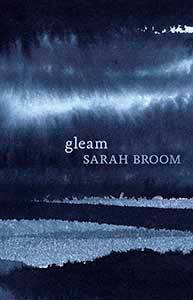
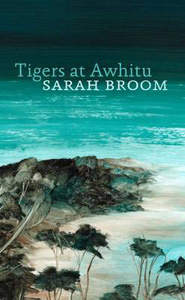
#awf16 Going to the Sarah Broom Award


(excuse my photos but I have managed an eerie poetry light on everyone!)
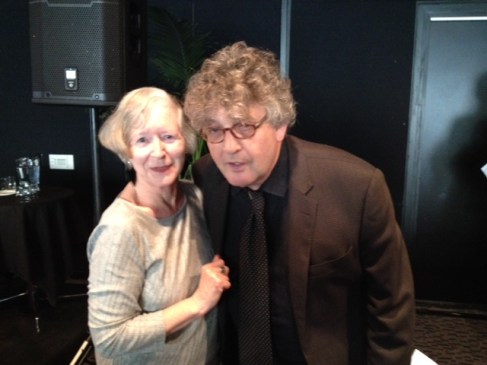
IMG_3461

Going to the Sarah Broom Award is always a sad-glad occasion for me as I get to remember a wonderful poet and to celebrate the vitality of New Zealand poetry.

This year was no exception. The award is a gift from Sarah’s husband, Michael Gleissner. His dedicated drive to support NZ poetry offers an award for a poet at any stage of their career. For the past two occasions, an overseas judge has selected the shortlist and winner. This year, acclaimed Irish poet, Paul Muldoon, was judge. He had no idea who wrote the poems and insisted on reading all the entries (over 250) because he wanted to find the entries that ‘judge you, that read you and impress themselves upon you.’


Paul’s short list: Airini Beautrais, Elizabeth Smither and Amanda Hunt

Paul began with a moving tribute to Sarah, Sarah’s family and her poetry. He read her poem (among others) ‘Holding the Line’ and said: ‘We’re all trying to hold the line of poetry which seems a little perilous, but that’s what we’re all trying to do.’

Each poet read a handful of poems.
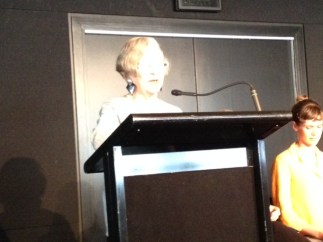
 

IMG_3452

The winner, Elizabeth Smither read the poem about her mother that she read at the Laureate Circle event in Wellington. Kate Camp and I were in a frenzy to read it again. Elizabeth so kindly gave Kate her copy and signed it and emailed me one. It is the kind of a poem that has built a room of its own in my head. The sort of poem that rises and pierces your heart with the acute depiction of a moment. Elizabeth is outside in her car in the street seeing her mother move through her house without realising her daughter is watching. Elizabeth followed it with a poem, ‘The name in the fridge’ that made me laugh out loud. She and friend had put the name of someone they wished ill of in the freezer but nothing bad happened (see poem below). As Paul said, Elizabeth has the skill to blend humour with seriousness. Yes, her poems can handle that and so much more. The stillness, insight and deep connection to humanity makes Elizabeth a poet writing at her very best.

Elizabeth is a former NZ Poet Laureate, has published numerous poetry collections that have garnered awards and high praise, along with short stories and novels. She lives in New Plymouth.


The name in the fridge

Someone we both disliked: you wrote

his name on a slip of paper

folded it, and inserted it in the freezer


under a tray of ice cubes, next to

a frozen chicken, frozen vegetables

a casserole sectioned into cartons.


You’d read about it. Nothing too serious

would happen. Perhaps he’d lose his job

or his dog would need taking to the vet.


The dog would recover, the bill be huge.

His wife might flirt with someone at a party

and be noticed: notice was a big part of it.


When nothing happened after six months:

his dog had puppies, he got promoted

we took out the paper, ice-encrusted


and brushed it against our jerseys. Soft

powder fell into the sink. You said

you’d take it with you when you went to England


as if it would be more potent there.

A huge fridge near an Aga

stuffed with grouse and pheasants and wild boar.


©Elizabeth Smither
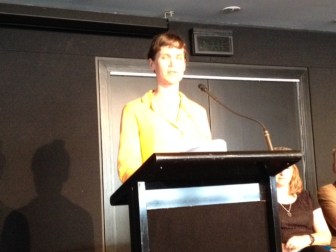
 

IMG_3456


Airini Beautrais read from a sequence of poems that forge links with the Whanganui River. As a poet she bends the line and then makes it glow with luminous detail so that as you listen to the contours of voice you are both skimming the slopes of  every day living and doing little side jumps to out-of-the-everyday. It all comes down to voice. To human beings finding their way in different circumstances. As I listened I felt like I want to read the river, to read the whole sequence, and follow people as much as river currents.

Airini has published three collections of poetry and is a graduate of IIML. Her most recent collection, Dear Neil Roberts, was longlisted for the Ockham NZ Book Awards in the Poetry Category. Like Amanda she studied ecological science at university. Her debut collection was named Best First Book of Poetry at the Montana NZ Book Awards 2007. She lives in Whanganui.

Airini acknowledged the significance of  Sarah’s poetry: ‘As a mother and writer I find Sarah’s poetry particularly moving, and also inspirational. I am inspired by her bravery and strength. She has left us an important legacy.’


Observatory


Kids, who wants to look up through the telescope?

This is the largest unmodified refractor telescope in use

in New Zealand. Birthday girl, you first. I hope

you’ll see a planet up there, with rings. That might come loose

if you fiddle with it, be careful. It looks like smoke?

That would be a cloud. Is that really a planet? Yes.

Nah, I stuck a picture up on the end. That was a joke.

Could an asteroid destroy humanity? Well, I guess

there’s a chance. No object we know of threatens us any time soon.

Is there life like ours, out there? Keep looking up, wave a little.

Parents, bring your kids back one Friday night, maybe the moon

will be visible. Who hasn’t had a turn yet? Look there, and it’ll

be right in the middle. Ha, that’s what everyone says. You know how

they called this planet Saturn? They really should have named it Oh wow.

©Airini Beautrais
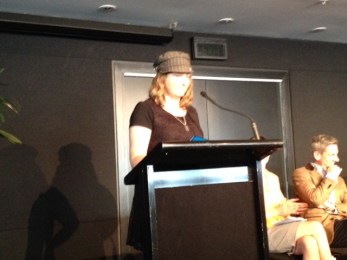
 

IMG_3453


Amanda Hunt read a bunch of native bird poems that were glorious renditions of birds but offered so much more in terms of life and living. Like Elizabeth she had the ability to make us laugh and pause. There was the joy of hearing a poet for the first time that you know absolutely nothing about and have no idea what effect her poems will have on you. I loved the static between visual detail and people doing things.

Amanda is a poet and ecologist based in Rotorua and, while she has been writing poems for awhile, is beginning to seek increased publishing opportunities. She studied medicine and environmental science at the University of Auckland. She has worked in environmental and resource management throughout New Zealand and Australia, but returned to her home town a few years ago.

Amanda said that she ‘felt the award helps to keep Sarah’s amazing work very much alive and it was a real honour to be reading at this event in her name.’


Overture

He says

the grey warbler sounds

like the beginning of a Bizet aria


a small pale bird

ruffling its feathers

inside a red dress

one wing outstretched

as its sings the same song

over and over


all our birds have

funny names and

our voices are strange so

he has to ask us to repeat

what we say

over and over


the cold is on the border

of being worth dressing for

he came without gloves

it’s still winter and the

wind blitzes us from the south


but in the morning he’s not sure

if it’s snow he sees on the hills or

the sun in his eyes


we drive on the wrong side of the road

there are no newspapers in his language

and he still wakes late with jet lag


and yet

every morning

in the kowhai tree behind his house

the first notes of a song

he already knows.

©Amanda Hunt
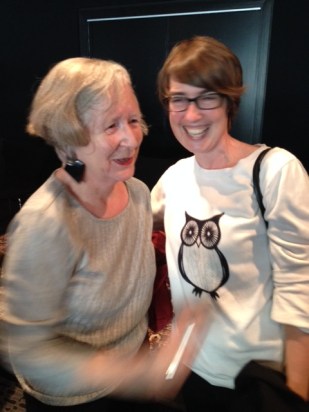
 

IMG_3459

(Elizabeth with her AUP editor, Anna Hodge)

When Elizabeth was announced as winner she was a little shocked (I do think the finalists could be told back stage so they don’t have to sit on stage for an hour, with the the sizable store of nerves that build when you are about to read in public). She searched in her bag for a piece of paper while Paul supplied her with another poem to read.

I thought her thank-you speech was very moving. She said, ‘It feels like having your first poem accepted again. The chase is always on the for the next poem that might be better though it is always moving out of reach.’

Elizabeth was reminded of her short story where a young girl, notebook in arm, struggled to be a writer in Paris. Elizabeth had included this quote from Mavis Gallant in her story: ‘She was sustained by the French refusal to accept poverty as a sign of failure in an artist.’

Elizabeth said that poets would be familiar with this and ‘That is why the Sarah Broom Award is so marvelous. Sarah and Michael have exactly understood the position, the amount is perfect, the conditions are wonderful.’

Like Airini and Amanda, she paid moving tribute to Sarah’s poems: ‘I heard that a whole new cluster of planets has just been discovered. That’s how I think of Sarah’s poems: flying through space, serene and beautiful, wrought from tragedy and beauty.’

Elizabeth also thanked the audience! She made us feel that as readers we matter: ‘And I want to thank the audience for being present. Poetry could not survive without you. The girl in the French cafe was counting on that: if she could write something, someone would read it and she then would be a writer.’

Thanks to AWF for hosting this event.

Thanks for a terrific occasion Michael. Three very special writers. One very special award.
IMG_3458

cp-gleam.jpgcp-tigers-at-awhitu.jpg

Poetry winner, David Eggleton’s seven best things to make a poem memorable

35.jpg

David Eggleton won the Ockham Book Award’s  Poetry category this year. Here are his Seven Things That Make A Poem Memorable. Gems.

1. The first thing is the poetic license, the dispensation, a poem grants allowing the poet to take liberties with language, with literary form, to yoke together like with unlike, the probable with the improbable, in a tiny space, and create a kind of explosion — sometimes thermonuclear, as in T.S.Eliot’s Modernism-defining 1922 poem ‘The Waste Land’. Virginia Woolf wrote shortly after this was published: ‘I sun myself upon the ravishing beauty of one of his lines, and reflect that I must make a dizzy and dangerous leap to the next. . .line.’

2. The second thing is the wonderfully mesmeric power of a poem’s metre, the entrancement of its heartbeat, its rhythm, its breathing, as these two lines from a Samuel Beckett poem indicate: ‘the churn of stale words in the heart again/ love love love thud of the old plunger. . .’ Allen Ginsberg shows another way the metre can memorably become stirring, march-like, uplifting, as well as amusingly sardonic, in his poem ‘Howl’: ‘buried alive in their innocent flannel suits on Madison Avenue amid/ blasts of leaden verse & the tanked-up clatter of the iron regiments of fashion/ & the nitroglycerine shrieks of the fairies of advertising/ & the mustard gas of sinister intelligent editors. . .’


for the rest of the list on The Ockham Book Award site see here

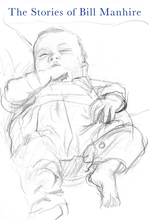
The Stories of Bill Manhire – a wee review and a wee interview – ‘I think that by and large I’ve written against rules’

bill_front_jacket__25142.1439156427.220.220.jpg  bill_front_jacket__25142.1439156427.220.220.jpg  bill_front_jacket__25142.1439156427.220.220.jpg

Bill Manhire occupies a significant position in our literary landscape — as both a poet and as founder of the International Institute of Modern Letters. As poet he is lauded on an international stage and at home was recognised  as our inaugural Te Mata Poet Laureate. As teacher and mentor at Victoria University, his outstanding contribution to our writing communities was honoured by the naming of the Bill Manhire House at IIML (April 2016). I have read Bill when he is not writing poems and have admired his clarity and elasticity of thought, but I had not read the early fiction in his recently released The Stories of Bill Manhire (VUP). Things escape us for all kinds of reason. In the 1990s, I focused on all things Italian as I wrote my doctoral thesis and missed too many local things. What a loss!

Amongst so many books I have loved, three books have really got under my reading skin in the last month: Cilla McQueen’s memoir, In Slanted Light, Tusiata Avia’s Fale Aitu, and Bill’s short stories.

Each of these books took me by surprise. Like little thunderbolts where you can feel your heart rate pick up as you read. Bill’s book didn’t cleave me apart like Kafka’s axe to the head or heart (he says the frozen sea within) but felt like the utterly satisfying thirst-quenching intake of sparkling water.  Writing that is effervescent, clear, restorative. I guess that is doing something miraculous to your parched state (a different kind of frozen sea). This is what words can do.

To celebrate this book – a short review from me and an interview with Bill.


A wee review:

The stories in this collection are gathered from The New Land: A Picture Book, South Pacific and Songs of My Life. There are previously unpublished stories, The Brain of Katherine Mansfield where you choose your own adventure, and the memoir, Under the Influence.

The writing is inventive, refreshing, surprising, on its feet skipping kicking doing little jumps.

How can I underline how good it is? As I read my way into days of reading pleasure, I squirmed cringed gasped laughed out loud sighed did wry grins wriggled on the spot leapt over the gaps laughed out loud again and felt little stabs that moved.

The stories highlight place and character, become nostalgic with detail that glints of when we were young (well for me anyway). You might move from the Queen’s visit and telling jokes to a dog named Fairburn, to a sci-fi keepsake on the tongue, to questions and answers on writing, to a dead-end job. Yes, the subjects are captivating but it is not so much what the stories pick as a starting point but how they travel. Take any story and it is a rejuvenating read. ‘Nonchalance’ for example, is like a series of postcards, travel or writing tips; or arrival tips with love and broken heart, soldiers, soldiers’ wives and the locals. You enter a realm of first things and floating elements. The readerly effects are kaleidoscopic.

To give you a taste of the book (I hope this doesn’t ruin things for you), here are some of the first and last lines. So important in a short story – these just nail it.


First lines:

Some critics write me off as just another ghost character activist, whereas I think I add up to a lot more than that.

The bishops come ashore.

Through here?

You are just an ordinary New Zealander.

The poet looks at the poet’s wife and says: You are my best poem.

He says: ‘Give me something significant.’

A slight scraggy moustache.

There are many tricks I have used repeatedly throughout my career to date, and others that I have done only really as one-offs.


Last lines:

Like a gasping in the chest.

The paddocks are left grey, stretching out to the edge of the frame.

Clouds pour across the sky and my lungs fill with air as though they might be sails.

No.

But jokes are too difficult: I’m getting someone else for that.

God bless him, and all the other poets.

That is how it is, adventure and regret, there is no getting away from it, we live in the broad Pacific, meeting and parting shake us, meeting and parting shake us, it is always touch and go.


The ‘Ghost Who talks’ made me laugh out loud with all its literary references alongside or inside the tricky business of getting ‘you’ and ‘I’ active in a story. Ha! It felt like the pronoun ghost out stalking. Then again the playful absurdities in ‘Kuki the Krazy Kea’ made me squirm with its dry wryness. Or the magician’s performance tips. Head back to the stories at the start of the book and the bits that taste a little different:  details of a nuclear winter, Ghandi’s funeral pyre, the melancholy of an empty pool, a mother colour-tinting photographs at the kitchen table. Bill enters the story to give writing tips here and there, to tilt the world a touch so you have to steady your reading feet (where next! What next!), to frame a judicious amount of missing bits, to be a little bit cheeky, to catch something provocative or lovely or poignant. This is a book I will recommend to friends.


A wee interview:


What satisfies you about writing a story?   

Pretty much what satisfies me about writing a fully-functioning poem.  There’s pleasure in the mix of surprise and inevitability, which needn’t be plot and character based. Sometimes it can just be a sense of musical completion.

I also like it if readers are given room to move and even a little work to do, and they end up feeling pleased about this, rather than grumpy. Maybe that’s explicit in The Brain of Katherine Mansfield, which is my shot at a choose-your-own-adventure story. But the best writing always invites readers to make choices as they go along. I’ve always liked Whitman’s take on the text-reader relationship: “I seek less to state or display any theme or thought, and more to bring you, reader, into the atmosphere of the theme or thought—there to pursue your own flight.”


Were there any rules you wanted your stories to obey? Or disregard? I love the way some of the stories sneak in instructions for start-out writers.

I think that by and large I’ve written against rules and tried to avoid what’s sometimes called the beige short story, of which the great exemplar is probably Joyce’s ‘The Dead’.  Glorious stuff, but . . . well, Joyce didn’t want to go on doing it, did he? Mark Haddon was writing about beige stories in the Guardian recently: ‘modest, melancholic stories, not arcs with beginnings, middles and ends, so much as moments and turning points.’  I’m a big fan of melancholy, but you read too many stories like that in a row, quiet epiphany after quiet epiphany, and the whole world starts to feel a bit insipid.

I suppose those instructions for beginning writers represent a complaint against the formulaic. What I mean is this sort of advice, which comes from a New Zealand book called How to Write and Sell Short Stories published back in the 1958:


PLOTS TO AVOID

(a)  Plots with a sex motif.

(b)  Where religion plays a dominating role.

(c)  Plots where sadism or brutality appear.

(d)  Plots with a basis of divorce.

(e)  Plots where illness or disease must be emphasised.

(f)  Plots dealing with harrowing experiences of children.

(g)  Plots dealing with politics.


And so on. Remove plots like those, and it’s hard to see what’s left.  I’m generally quite troubled by short story writing manuals, and by creative writing workshops that behave like short story manuals.


I also love the detail that catapults the reader to specific times and places  — how much did that sort of thing matter to you?

Getting the voice right in each case felt like the most important thing, and of course details are a crucial part of that.  Quite a few of the stories are really dramatic monologues, opportunities to try out some other voice or personality. That’s most obvious when they’re written in first person, but also in a strange way it’s also there in close third person.  The story called “Highlights” is third-person but it comes across in a flat, somewhat affectless voice – because it’s about a rather passive person. Anyway, the voice thing mattered to me, and I found myself trying on a range of idioms. I don’t think in general it’s a good idea to read a lot of short stories in a row, especially if they’re by the same writer, but I hope there’s quite a variety of narrating voices in the book.


Can you recommend some short-story writers?

There’s so much I haven’t read, but I’d go for Grace Paley every time.  Also Donald Barthelme and Lydia Davis. Gogol is my greatest favourite, especially “The Nose”, which I was once able to read in Russian. Early Sargeson.  Some of Ashleigh Young’s personal essays feel to me like beautifully told short stories – they just happen to be true, or true-ish. And the best of Barbara Anderson’s stories go on being brilliant – full of such sudden things. William Brandt’s collection, Alpha Male, has rather dropped out of sight, but it’s pretty fantastic – he does these wonderfully indignant, damaged narrators.


Do you have a favourite in the collection?

Probably “The Days of Sail”, though that may be because I know the back-story – it’s prompted by a covered-up assassination attempt on the Queen in Dunedin during the 1981 Royal tour.  A 17-year-old took a potshot at her from the top of a Med School building in Great King Street. Imagine if it had been successful! Dunedin would be totally on the map! Anyway, I built a rather cranky story around that fact.  There’s a nice radio adaptation that used be in the RNZ archive that I’d quite like to hear again.  It ends with a children’s choir singing “God Defend New Zealand”.


Do you find endings difficult (I have to say I loved the endings!)?    

Yes, they’re the hardest things.  I think I manage to get them right most of the time – except maybe for “The Death of Robert Louis Stevenson”, which of course is obliged to end with his death.  Not exactly a twist in the tail. Maybe the best ending is in “The Brain of Katherine Mansfield”.  Or, I should say, endings. I’ve met people who feel quite put out by the apparently brutal instruction, “Close the Book”, which comes at the close of several of the plot strands.

But “The Brain” is also about white middle-class complacency and its right-wing tendencies – so there is a “real” ending, too.  I won’t quote it, but anyone who wants to see what I mean can try to get to section 50 online, courtesy of Richard Easther and Jolisa Gracewood:   I’d also advise readers to pause on Greg O’Brien’s illustrated section headings.  There are lots of good visual arts jokes, along with a couple of depictions of C K Stead as a mad Nazi brain surgeon.


Victoria University Press page

Tusiata Avia’s book launch gave me the goose bumps

0b1eb042-a027-4f9f-bae5-5ca96dfd4ed5.jpg       IMG_3432

Fale Aitu / Spirit House Tusiata Avia, Victoria University Press, 2016

Last night I drove into the city into some kind of warm, semi-tropical wetness —like a season that no longer knew what it ought or wanted to be — to go to the launch of Tusiata Avia’s new poetry collection. Tautai, the Pacific Art Gallery, was a perfect space, and filled to the brim with friends, family, writers and strong publisher support. I loved the warmth and writerly connections in the room. I have been reading Tusiata’s book on planes as poetry now seems to be my activity of choice in the air. I adore this book and have so much to say about it but want to save that for another occasion. I was an early reader so have had a long-term relationship with it.


the launch

The room went dark and an MIT student, bedecked in swishes of red, performed a piece from a previous collection, Blood Clot. Mesmerising.

Tusiata’s cousin and current Burns Fellow, Victor Rodger, gave a terrific speech that included a potted biography. I loved the way he applauded Tusiata not just as a tremendous poet, but as a teacher and solo mother. Her names means artist in Samoan and he saw artist in the numerous roles Tusiata embodies. Writing comes out of so much. He identified her new poems as brave, startling, moving and political. Spiky. I totally agree.

Having dedicated her book to her parents, Tusiata said that it was hard to be the parent of a poet who wrote about family. When she told her mother what she was writing, her mother embraced it. She opened her arms wide. She said the skeletons need to come out. The atua. Tusiata’s speech underlined how important this book is. It is not simply an exercise in how you can play with language, it goes to the roots of that it means to be daughter, mother, poet.  It goes further than family into what it means to exist, to co-exist, in a global family. When a poet knows how to write what matters so much to her, when her words bring that alive with a such animation, poise and melody, it matters to you.

Four poems read. Lyrical, song-like, chant-like, that place feet on ground, that open the windows to let atua in and out, that cannot turn a blind eye, that hold tight to the love of a daughter, that come back to the body that is pulsing with life.

Yes I had goose bumps. You could hear a pin drop.

Fergus Barrowman, VUP publisher, made the important point that these poems face the dark but they also face an insistent life force.

Congratulations, this was a goosebump launch for a goosebump book.


Poetry Shelf congratulates the winner of the poetry category at the Ockham NZ Book Awards

OLYMPUS DIGITAL CAMERA   35

Photo credit:  F. J. Neuman


‘Stone clacks on stone

so creek lizards slither,

runnels slip through claws,

each cloud’s a silver feather.’

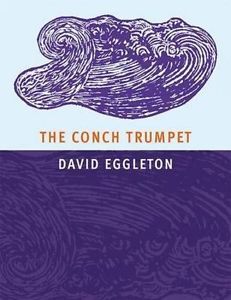
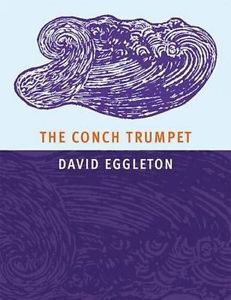
from ‘Raukura’ in The Conch Trumpet (OUP)


I was chuffed to see David Eggleton win the Poetry category for his terrific collection, The Conch Shell.

David did a wonderful interview to coincide with the publication of this book last year. He is a very fine poet who has contributed much to our writing communities.

My hearty congratulations.


from the interview:

These new poems offer shifting tones, preoccupations, rhythms. What discoveries did you make about poetry as you wrote? The world? Interior or external?

My poems like to dwell on the silver wake of a container ship, or the wet sand beneath the upturned hull of a dinghy, or the half-seen, the overheard. Poets re-arrange, but they have duties of care. X.J. Kennedy has pointed out that: ‘The world is full of poets with languid wrenches who don’t bother to take the last six turns on their bolts.’

It’s been five years since my last poetry collection Time of the Icebergs appeared, and one reason my collections have been regularly spaced that far apart is the need for more elbow-grease and line-tightening to get the burnish just so.

The poet’s mind, like anyone else’s is made up of reptilian substrate, limbic empathy and neo-cortical rationality. These shape your reveries and hopefully together lift them out of banality. Our ideas are dreams, styles, superstitions. We rationalise our temperaments, draw curtains over our windows, but poems carry an anarchic charge that reveals the force that through the green fuse drives the flower.

A poet is in the business of the unsayable being said, showing you fear in a handful of dust. A poet is amanuensis to the subconscious ceaselessly murmuring, and indeed to the planetary hum, the gravitational pull of the earth, the wobble of placental jellyfish in the womb — anything alive, mindless and gooey.

the rest of the interview here

My two poetry readings to launch my new book feature some of my favourite poets

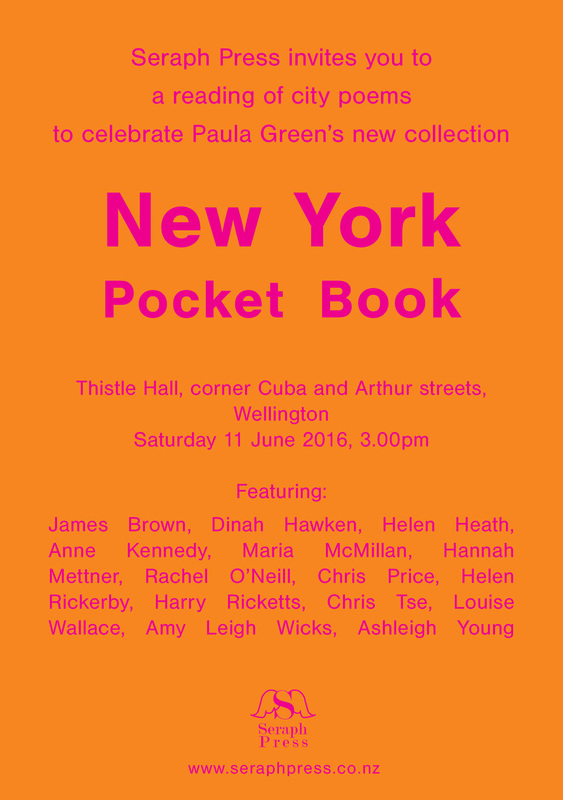
Like so many poets, I loathe people making speeches about me or my work. Much better to stage a poetry reading and celebrate the pull of cities.

My new poetry collection comes out of ten exceptional days I spent in New York with my family awhile ago. So I have invited a bunch of poets I love to read city poems by themselves and others. Big line-ups but it will free flow and leave time for wine and nibbles.

Once I got to fifteen I realised what poetry wealth we have in these places. I could have hosted another 15  in each place easily. That was so reassuring.

If I had time and money, I would have staged similar events in Christchurch and Dunedin where there bundles of poets I love too.

Please share if you have the inclination.

And you are ALL warmly invited!

Auckland:


7601147_orig.jpg


Wellington:


Auckland:2434463_orig.jpg