Author Archives: Paula Green

Poetry: The Unexpected Greenness of Trees

Unexpected-greeness-e1479015700984.jpg

From Caselberg Trust

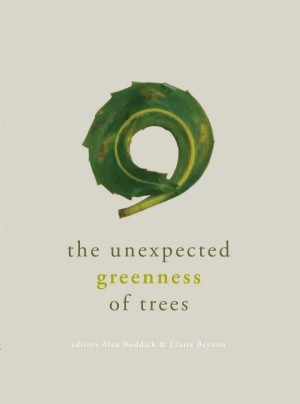
Christmas is coming and what better way to celebrate it than by supporting us and purchasing a copy of our beautiful poetry book “the unexpected greenness of trees”. Celebrating 6 years of the Caselberg Trust International Poetry Prize, it includes both winning and highly commended entries, judges reports and a forward by organiser Alan Roddick. This is a wonderfully diverse collection of poetry.

If you would like a copy they are $27.00 each, with $5.00 postage within New Zealand. If you want to pick one up locally we can arrange it. Please PM me if you would like to purchase a copy, or go to our website shop.

Inaugural Poet Laureate of the Navajo Nation Luci Tapahonso in Auckland

Two free public events, 28-29 November

Writing Workshop:  Monday 28th, 12-2pm, University of Auckland, Arts 2,  Room 501, Pat Hannan Room.
Luci Tapahonso Reading: Tuesday 29th, 12-1pm, University of Auckland, Arts 1, Room 209.

All Welcome!
For more info, contact Selina Tusitala Marsh, s.marsh@auckland.ac.nz

Thanks to: University of Auckland School of Humanities, Academy of New Zealand Literature, in partnership with Wai-te-ata Press, Victoria University, and the Embassy of the United States of America.

Brief bio:

Luci Tapahonso (1953) was born in Shiprock, New Mexico, where she grew up on a farm within the Navajo culture. Tapahonso received her B.A. and M.A in 1980 and 1983 respectively from the University of New Mexico, where she was a Professor of English Literature and Language. Tapahonso has served on the Board of Directors at the Phoenix Indian Centre, was a member of the New Mexico Arts Commission Literature Panel, steering committee of Returning the Gift Writers Festival, Kansas Arts Commission Literature Panel, Phoenix Arts Commission, Telluride Institute Writers Forum Advisory Board, and commissioner of Kansas Arts Commission. She is a member of the Modern Language Association, Poets and Writers, Inc., Association of American Indian and Alaska Native Professors, and New Mexico Endowment for the Humanities. In 2013 she was named the inaugural poet laureate of the Navajo Nation. Tapahonso is the author of three children’s books and six books of poetry, including A Radiant Curve, which was awarded the Arizona Book Award for Poetry in 2009. Tapahonso’s work has appeared in many print and media productions in the U.S. and internationally. Her poems have been translated into German, Italian and French. She was featured in Rhino Records’ CDs, “In Their Own Voices: A Century of American Poetry” and “Poetry on Record: 98 American Poets Read Their Work” and in several PBS films. Tapahonso received the 2006 Lifetime Achievement award from the Native Writers Circle of the Americas and a Spirit of the Eagle Leadership Award for her key role in establishing the Indigenous Studies Graduate Studies Program at the University of Kansas. The Native Writers Circle of the Americas named Tapahonso the 1999 Storyteller of the Year. She has also received a Kansas Governor’s Art Award, and Distinguished Woman awards from the National Association of Women in Education and the Girl Scout Council of America. She was honoured as Grand Marshal for the Northern Navajo Fair Parade (1991, 1999) in her hometown of Shiprock, New Mexico.

Vaughan Rapatahana wins THE PROVERSE POETRY PRIZE

THE PROVERSE POETRY PRIZE
FOR SINGLE POEMS PREVIOUSLY UNPUBLISHED IN ENGLISH
ANNOUNCEMENT OF RESULTS
The inauguration of the international Proverse Poetry Prize (single poems)
was announced at The Proverse Publishing Parade in November 2015.
The first entries were received and judged atthe same time and by the same judging panel as the international Proverse Prize for unpublished book-length work submitted in English. Depending on the standard of the poems received in any year as entries for the international Proverse Poetry Prize (single Poems), cash prizes will be awarded to those judged first, second and up to four third winners. Selection to appear in an anthology of entries is also awarded by the judges as a prize.
The results of the inaugural (2016) competition were announced at the “Proverse Publishing Parade” held on Tuesday, 22 November, in Central Hong Kong. They are as follows:
First Prize: Vaughan Rapatahana, for ‘tin yan don’
Second Prize: Maria Elena Blanco, for ‘Temple of Chamundi, Mysore’
Third Prizes:
Joy Al-Sofi, for ‘White Water’;
Gili Haimovich, for ‘Pedestrians’ Cheer’;
Luisa Ternau, for ‘Spring in My Heart’.
Winners of a place in the Proverse Poetry Prize Anthology 2016
Aytül Akal · Joy Al-Sofi · Maria Elena Blanco ·Hei Feng · Gili Haimovich · Akin Jeje · Susan Lavender · Liv Lundberg · Marta Markoska ·Mathura (pen-name of Margus Lattik) · Glória Sofia Varela Monteiro · Keith Nunes ·Sam Powney · Vaughan Rapatahana · Angelo Rizzi · Hayley Solomon · Dong Sun ·Luisa Ternau · Carter Vance · Mavisel Yene
The Proverse Poetry Prize Anthology 2016
will be published and the cash prizes for first, second and
third place winners will be awarded at or immediately after the next Proverse event, which is expected to take place in or about April 2017.
The places of birth of the twenty writers whose work will be included in the anthology range from Scandinavia to the Far East, to the southern hemisphere; and
include Canada, Cap Verde, Cuba, Estonia, Italy, Macedonia, New Zealand, Norway, the People’s Republic of China, Turkey, the UK and the USA. Of those who live or presently live in a country other than their place of birth, one or more writers live in
Austria, Chile, Holland, Hong Kong, Israel, the Philippines, Spain and
the USA. For most of them, English is not their mother tongue. — A truly international group of talented and thoughtful people!
PRACTICAL DETAILS
Entries for the 2017 Proverse Poetry Prize will be received from 7 May 2017 until 14 July 2017.
Updated
information is available
from the free Proverse E-Newsletter, published every 4-6 weeks and also from
To be kept informed of the progress of the annual cycle of the
international Proverse Prizes, please send a request to join the mailing-list for the Proverse Hong Kong E-Newsletter, <info@proversepublishing.com>.

Sarah Jane Barnett interviews Steph Burt for Pantograph Punch

How We Are: A Conversation with Steph Burt

On the occasion of Steph Burt’s visit to New Zealand, Sarah Jane Barnett talks to the American writer and critic about living as two genders, poetry, criticism and the body.

Poet and critic Stephen Burt has been described as ‘one of the most influential poetry critics of his generation’ (NY Times). Burt is a professor at Harvard University and has published three full-length collections of poems – Popular Music (1999), Parallel Play (2006), and Belmont (2013) – along with several chapbooks, most recently All-Season Stephanie (2015). Burt is also well known for criticism, most recently, The Poem is You: 60 Contemporary American Poems and How to Read Them (2016).

In 2012 the New York Times Magazine ran a profile on Burt with the headline ‘Poetry’s Cross-Dressing Kingmaker,’ identifing the poet and critic for the first time in public as transgender. Burt – who answers to Stephen, Steph, and Stephanie – has since written about having two genders in poetry and in essays such as ‘My Life as a Girl’ and ‘The Body of the Poem.’ Photo of Steph by Alex Dakoulas.


Sarah Jane Barnett: First, would you like me to call you Stephanie or Stephen, or simply Steph? In December you’re giving a public masterclass in Wellington called, ‘Close calls with nonsense, or how to read new poetry’ (the class sporting the same name as your book which was a finalist for the National Book Critics Circle Award). What has brought you to New Zealand?

Steph Burt: Steph or Stephanie in person; Stephen is the name on the books. This summer I’m an Erskine Scholar at the University of Canterbury in Christchurch; they’ve brought me over – and by they I mean the university, but also the wonderful critic and Baxter scholar Paul Millar – so that I can teach a summer course in modern poetry. Of course I’ll be doing some readings and public events, in addition to traveling around both islands with our family, while I’m here.

SJB: You have such enthusiasm for helping people read poetry. Did you grow up with this love of language and literature? You’ve said, ‘I understand the world best, most fully, in words’; can you talk about what happens when you read a poem? I often think that poetry moves through the mind to create an experience in the body – that reading is performative and the poem is created new each time. What do you think about that idea?

SB: I think it’s correct. My colleague Helen Vendler (echoing a letter of Gerard Manley Hopkins’s) has described lyric poetry as a score for performance by the speaking voice: the poem becomes yours when you take it into yourself, which also means taking it into your body, your voice: both the body you have, and the body you wish or imagine that you ought to have.

That’s a general model for what happens when we read lyric poems. When I myself read a poem I also feel like I’m testing out the sonic and the semantic relations among all the words, to see whether I’ll want to come back to them. A good poem is a poem that I want to come back to, again and again.


Full interview here

Submissions open for Sport 44

Sport 44

Sport has now opened its call for submissions for Issue 45: deadline 31 December 2016 for publication May 2017.


Sport 43 New Zealand New Writing 2016

A5, pbk, 276 pages,
RRP NZ$30
Publisher: Fergus Barrowman
Publication: 10 March 2016

Packed with new essays, poetry and fiction from 56 leading and new New Zealand writers, Sport 44 is an essential overview of current New Zealand writing.

Edited by Fergus Barrowman with Kirsten McDougall and Ashleigh Young and published by Fergus Barrowman.

Cover: Elyjana Roach, ‘Body Language’

The print edition is available at RRP NZ$30 from good bookshops or directly from Sport.

The ebook is available on meBooks and Amazon.

New submission deadline 31 December 2016.

Poetry Shelf congratulates The Ockham NZ Book Awards Long List

9780143770053.jpg  Mansfield_and_Me_final_cover__50890.1467692638.220.220.jpg    TWC_front_corrected_dimensions__88547.1470790944.140.215.jpg   Hungarians-catalogue.jpg

Woohoo happy days Sarah Laing’s graphic memoir makes a list and Victoria Press has had a boom year of quality publishing. Congratulations to all those shortlisted and to those who didn’t make the cut: it all comes down to the way a love of writing transcends and the way books endure.

That said, I am dressed in black not seeing Cilla McQueen’s In a Slant Light: a poet’s memoir here somewhere. I adored this book.

It is not easy being a judge but these lists underline what good heart our literature is in. Bravo!


POETRY

  • Back with the Human Condition by Nick Ascroft (Victoria University Press)
  • Fale Aitu/Spirit House by Tusiata Avia (Victoria University Press)
  • Hera Lindsay Bird by Hera Lindsay Bird (Victoria University Press)
  • In the Supplementary Garden: New and Selected Poems by Diana Bridge (Cold Hub Press)
  • Thought Horses by Rachel Bush (Victoria University Press)
  • As the Verb Tenses by Lynley Edmeades (Otago University Press)
  • Fits & Starts by Andrew Johnston (Victoria University Press)
  • This Paper Boat by Gregory Kan (Auckland University Press)
  • And So It Is by Vincent O’Sullivan (Victoria University Press)
  • Beside Herself by Chris Price (Auckland University Press)

Judges: Harry Ricketts, Vivienne Plumb, Steven Touissant

This is a strong list and underlines the excellent work Victoria University Press is doing as one of our key poetry presses. I have reviewed and adored virtually every one of these books on the blog. The ones that have haunted and stuck and spiked or uplifted: Tusiata, Hera, Rachel, Gregory, Chris, Diana, Lynley. Already too many for a shortlist!


FICTION (The Acorn Foundation Fiction Prize)

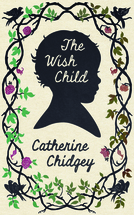
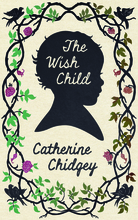
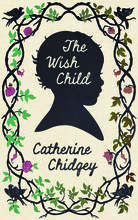
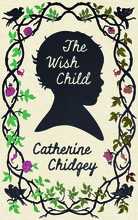
  • The Wish Child by Catherine Chidgey (Victoria University Press)
  • A Briefcase, Two Pies and a Penthouse by Brannavan Gnanalingam (Lawrence & Gibson)
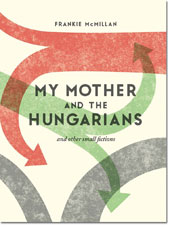
  • My Mother and the Hungarians by Frankie McMillan (Canterbury University Press)
  • Love as a Stranger by Owen Marshall (Penguin Random House)
  • Tail of the Taniwha by Courtney Sina Meredith (Beatnik Publishing)
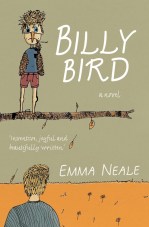
  • Billy Bird by Emma Neale (Penguin Random House)
  • Deleted Scenes for Lovers by Tracey Slaughter (Victoria University Press)
  • The Name on the Door is Not Mine by CK Stead (Allen & Unwin)
  • Dad Art by Damien Wilkins (Victoria University Press)
  • Strip by Sue Wootton (Makaro Press)


Judges: Bronwyn Wylie-Gibbs, Peter Wells, Jill Rawnley (and an unnamed international judge?)

I love the diversity of style in this list and recognise what a tough and brilliant field of entries. I mourn Laurence Fearnley’s  The Quiet Spectacular but am delighted to see small fiction makes an appearance (Frankie McMillan) along with several fiction writers that can astonish with both content and craft (Catherine Chidgey, Courtney Sina Meredith, Emma Neale). Tracey Slaughter’s book hit me like no other and I think Damien Wilken’s is one of his best. I loved it. On another note, in terms of the missing, I haven’t read Fiona Kidman’s yet but it has got great reviews. This is my favourite list although I have only read six on it. Making a shortlist out of this gold cloth seems impossible let alone picking a winner.


GENERAL NON- FICTION (Royal Society of New Zealand Award for General Non-Fiction)

  • Goneville: A memoir by Nick Bollinger (Awa Press)
  • This Model World: Travels to the Edge of Contemporary Art by Anthony Byrt (Auckland University Press)
  • My Father’s Island by Adam Dudding (Victoria University Press)
  • New Zealand’s Rivers: An environmental history by Catherine Knight (Canterbury University Press)
  • The Broken Decade: Prosperity, depression and recovery in New Zealand, 1928-39 by Malcolm McKinnon (Otago University Press)
  • The Great War for New Zealand: Waikato 1800-2000 by Vincent O’Malley (Bridget Williams Books)
  • The Big Smoke: New Zealand Cities, 1840-1920 by Ben Schrader (Bridget Williams Books)
  • The World, the Flesh and the Devil; The Life and Opinions of Samuel Marsden in England and the Antipodes, 1765-1838 by Andrew Sharp (Auckland University Press)
  • Being Chinese: A New Zealander’s Story by Helene Wong (Bridget Williams Books)
  • Can You Tolerate This? By Ashleigh Young (Victoria University Press)


Judges: Susanna Andrew, Professor Tom Brooking, Morgan Godfrery

Delighted to see Ashleigh Young makes the cut as this is a top read – and although I haven’t read the book yet, Helene Wong’s extract at The Ladies Litera-Tea was topnotch. Have several others on my must read list (Adam Dudding, Nick Bollinger).


ILLUSTRATED NON-FICTION

  • Islands: A New Zealand Journey by Bruce Ansley & Jane Ussher (Penguin Random House)
  • A History of New Zealand Women by Barbara Brookes (Bridget Williams Books)
  • A Whakapapa of Tradition: One Hundred Years of Ngati Porou Carving 1830-1930 by Ngarino Ellis with Natalie Robertson (Auckland University Press)
  • 101 Works of Art by Ken Hall, Jenny Harper, Felicity Milburn, Nathan Pohio, Lara Strongman, Peter Vangioni (Christchurch Art Gallery Te Puna o Waiwhetu)
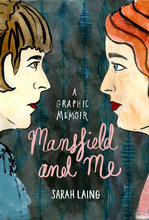
  • Mansfield and Me: A Graphic Memoir by Sarah Laing (Victoria University Press)
  • New Zealand Wine; The Land, the Vines, the People by Warren Moran (Auckland University Press)
  • Futuna: Life of a Building by Gregory O’Brien (Victoria University Press)
  • A Beautiful Hesitation by Fiona Pardington (Victoria University Press)
  • Dark Matter by Ann Shelton (Auckland University Press)
  • Bloomsbury South: The Arts in Christchurch 1933-1953 by Peter Simpson (Auckland University Press)

Judges: Paul Diamond, Linda Tyler, Bronwyn Labrum

So very glad to see the extra good Mansfield and Me here. I want this one to win. Let’s see a graphic memoir sing from the rafters. Because it is so very good. Not familiar with the other books so very biased!

Catherine Chidgey writes novels with the ear of a poet: Love this SST interview with Eleanor Black

TWC_front_corrected_dimensions__65592.1470791012.220.220.jpg   TWC_front_corrected_dimensions__65592.1470791012.220.220.jpg   TWC_front_corrected_dimensions__65592.1470791012.220.220.jpg

This is a terrific novel and a terrific interview. As Sue Orr said: read this book!


The Wish Child, Catherine Chidgey, Victoria University Press

‘Now the book: The Wish Child, classically Chidgeyesque in its complexity, its velvetine language and its dash of stardust, it considers the state-sanctioned brutality in Germany in the years leading up to and including World War II – how such a thing can be normalised and even embraced.

Centred on two children who meet in a bombed-out Berlin in April 1945, it is narrated by a mysterious all-knowing presence (whose identity is not revealed until the end) with clinical detachment and devastating power.

It is Chidgey’s fourth novel, and she finished writing it at the end of last year, leaving 2016 clear for baby adoration and a new writing project. There might even be another Chidgey book out next year, which is a bright and shiny gift for readers who have wondered why we got three novels in six years
– In a Fishbone Church, Golden Deeds, The Transformation – and then nothing for 13 years.’

For the complete interview see here

My review of Simone Kaho’s Lucky Punch in Your Weekend

Lucky-Punch-cover-low-res.jpg

Lucky Punch
Simone Kaho
Anahera Press, $25

Simone Kaho, an Auckland poet with Tongan ancestry, graduated from the International Institute of Modern Letters with a Masters in Creative Writing. Her debut poetry collection, Lucky Punch, delivers a sequence of lucid prose poems or small fictions. At the heart—and this glorious arrival has heart—family, friendship, love. Scenes are so evocative you can smell and taste them. Anecdotes offer honeyed soft patches with sharp spikes.

For the review see here

from ‘The Shed’

There was a flurry of bush between us and the neighbours. One bush grew glowing green seed capsules we wore as earrings, there was a sticky bamboo hedge and the rotten log sat solidly in a gap. The bush was hick enough for birds to nest in, dark patches in the twigs that cried in spring. Sometimes we’d hear strangled shrieks and sprint to retrieve dying bodies from cats’ mouths; saving lives for a few months. Dad said we’re allowed to pick flowers to put on graves but otherwise it’s a waste.

Still time to submit prose poems/small fiction/flash fiction to Bonsai


IMMEDIATE CALL — ACCEPTING SUBMISSIONS THROUGH NOVEMBER 30!

Editors Michelle Elvy, Frankie McMillan and James Norcliffe are seeking submissions for a comprehensive book of compressed fiction to be published in 2017. This is an ambitious project, the first of its kind in New Zealand, and we aim to include the very best small fictions from around Aotearoa.

The book will be a wide-ranging collection in three parts: one section will feature the best of previously published work; one section will feature considerations and essays by noted practitioners on the short narrative form and its development/ growth in New Zealand; one section will feature entirely new work, to showcase the fast-changing landscape of New Zealand small fictions.


Contribute to this uniquely New Zealand collection by sending your best work, up to 300 words not including title, with ‘BONSAI’ in the subject line.


  • Send new work as well as previously published pieces to: bonsaifiction@gmail.com
  • Up to three new pieces; up to three previously published pieces.
  • Please include your name and contact details.
  • Please send a .doc or .docx file with all submissions in the same document; no pdfs, unless absolutely necessary to demonstrate the layout of specific formatting.
  • Deadline for story submissions: November 30, 2016.


There is no theme for this anthology. We will include a variety of stories exploring a range of topics and themes – from humorous to wicked to sublime. We encourage experimental writing, as well as haibun, prose poetry and stories in te reo (accompanied by an English translation). We encourage new and experienced writers. We encourage very short flashes of inspiration or stories that take up the full 300 words. We want to see stories that light up the page and take readers to unexpected endings. We are looking for stories that leave us breathless, wanting more. We aim to put New Zealand flash fiction on the map even further, so give us your shiniest stuff!


Whatever approach you take, make every word count.

The editors’ decision will be final and no correspondence will be entered into. Payment will be in copies of the anthology.

Deadline for story submissions: November 30, 2016.


Poetry Shelf Congratulations: Janet Frame Memorial Award goes to Laurence Fearnley

NZSA is delighted to announce Laurence Fearnley as the recipient of the Janet Frame Memorial Award 2016

The NZ Society of Authors Janet Frame Memorial Award of $3,000 is awarded to an author of literary or imaginative fiction or poetry with the purpose of supporting a mid-career or established writer in furthering their literary career.

Laurence Fearnley is a novelist and non-fiction writer who lives in Dunedin, a UNESCO Creative City of Literature. She plans to use the award developing her current project – writing a series of short pieces structured in such a way that each story responds to the traditional development and dry-down of perfume. That is, the volume will open with ‘top notes’, develop through the ‘heart notes’ and end with ‘base notes’.

Laurence says “I have long been interested in landscape and ‘place’ and have explored aspects of both in novels such as The Quiet Spectacular, The Hut Builder, Edwin and Matilda. But I am also interested in perfume and scent, and over the past year I have been thinking about ways to approach landscape through smell, rather than through sight (or sound). I believe that by taking notice of the scent of my surroundings, I have come to appreciate a more detailed, intimate relationship with the places I visit.”

Selection panel convener Owen Marshall commented “the selection panel were in agreement in their choice of a very strong shortlist of five, all authors who would be worthy recipients of the award. The final selection of a winner was a difficult task, but we are delighted to be able to give the award to Laurence Fearnley.  Her application and publishing record are impressive. We congratulate Laurence Fearnley and shortlisted writers Siobhan Harvey, Tracey Slaughter, Tina Shaw and Riemke Ensing. We also wish well all those writers who applied.”

The New Zealand Society of Authors Janet Frame Memorial Award has run biennially since 2008, thanks to a gift from the Janet Frame Literary Trust, to support a mid-career or established writer of poetry, literary or imaginative fiction. Past recipients are Emma Neale, Tim Jones, Diane Brown and Elizabeth Smither. This is the final award in a series of five.