Author Archives: Paula Green

A conversation and poem from the Sarah Broom Poetry Prize finalists: Stuart Airey


DSCF1969.jpg


Horse on the Ice


at first horse and rider rode easily

it was cold and bright across the ice

the frozen lake

we can’t feed you all

you’ll have to go to New Zealand

the next ride was still clear

a little mist hugged the surface

perhaps joinery carpentry building

then a little icy fog formed on the brow

some sort of motorcycle racing

a fall at night and a broken wrist

permanently numb fingers on one hand

now the rider dismounted halfway across

knelt down to get a closer look

if you peered carefully there were fine cracks

a web of spidery blue veins

a small stone bridge in the Lake District

uncle Franks boat accelerating an arc

to test the waterskier

but not last week last month last year

the horse and rider snorted steam

riding faster the crack of hooves on ice

the sure clip of memory

its web of fissures and creaking pressures

he was sure we were sure i was sure

we were all nearly quite certain

it could take the weight


©Stuart Airey


If you were to map your poetry reading history, what books would act as key co-ordinates?

In primary school I loved Louis Untermeyer’s Golden Treasury of Poetry especially the limericks and ‘The Highwayman’. There’s a fair bit of a lull after that until my brother passed away and then I turned a lot to The Oxford Book of English Verse – particularly Thomas Hood’s ‘The Sea of Death’. A few years back I discovered the Bloodaxe ‘Staying Alive’ trilogy which opened up a whole new world of modern poems and poets, particularly shorter ones. (Poems that is). I started writing more seriously about this time. Favourite writers would be Carol Ann Duffy, Wislawa Szymborska, Stephen Dunn and especially Alden Nowlan – a Canadian genius and earthy, accessible poet.


What do you want your poems to do?

I think that first of all I write for myself. I have discovered that quite often the poem is telling me something about myself that I couldn’t get to another way – a sort of self-therapy I guess. If I’m writing about an idea or a feeling it’s a way of turning it over and looking at all the edges. Sometimes it’s the poem that tells me how I’m feeling. After that though I definitely enjoy sharing (mostly) the poem with others and seeing if it touches some vital part of being human. It’s a real kick when others find layers of meaning that I was unaware of or hadn’t really intended. Some are written just to be enjoyed, a bit of a laugh or even more visceral.

A few to provoke though this rarely raises much angst.


Which poem in your selection particularly falls into place. Why?

I find this quite a difficult question. As none of my poems have (yet!) been published I had quite a few to select from for the competition. I have submitted to a few journals and competitions, as yet unsuccessfully, so I found it really hard to gauge which poems I should put in – actually I think I got a little cavalier with the entry. I think ‘Mercury’ fell into place as the last to be picked as it’s one of the earliest poems I wrote and got excited about. I love the word Mercury so much I’ve written several poems all with that title but the one I’ve included is the original.


There is no blueprint for writing poems. What might act as a poem trigger for you?

I’ve found that poems come to me in quite different ways. Usually the best or at least easiest to write is when a first line comes out of the blue, closely followed by the last line. I’m not sure exactly what the prompt in these instances is, whether a scene or a feeling or just a thought. Perhaps a glimpse into someone’s life. Then there are poems that start with an idea or a feeling I want to convey. These are a little harder to write but if the idea or feeling is quite solid they carry through and if they don’t they often morph into something else. I love it when the poem ends with so much more than it started with. I have also written a few poems to a particular theme (one was borders) – these are usually a little slower to start but once momentum kicks in they get there. There’s a lot of polishing that goes on. It’s a real high when a poem is finished.


If you were reviewing your entry poems, what three words would characterise their allure?

So I think you mean if I could detach myself from the poems in a sort of impartial way? In that case variety, accessibility and aftertaste.


You are going to read together at the Auckland Writers Festival. If you could pick a dream team of poets to read – who would we see?

Carol Ann Duffy, Paul Muldoon, Carolyn Forche, Stephen Dunn, perhaps John Burnside. Would have loved to have heard John O’Donohue live but at least we have Youtube.


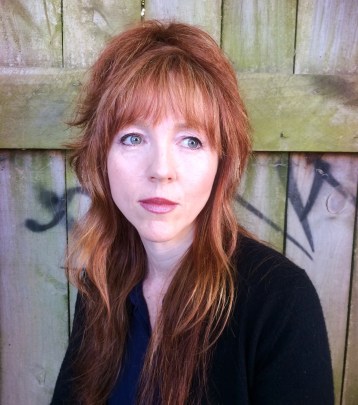
Stuart Airey graduated in Optometry from Auckland University in 1986 and has worked in this role for over 30 years. He also has a post-graduate Diploma in Theology from Laidlaw College. He is married with three children and lives in Hamilton. Apart from dabbling in short stories in high school Stuart began writing poetry more seriously after the Christchurch earthquake which resonated with personal loss in his family. Stuart has enjoyed performing some of his poetry in a series of dedicated evenings featuring a mix of drama, audio-visual, lighting and special effects. His poems are currently unpublished and he feels he is very much on the threshold of an unknown yet inspiring path.


The four finalists will read from their work at the Sarah Broom Poetry Prize event at the Auckland Writers Festival on Sunday 20 May, 3.15-4.15pm. 

Sarah Broom Poetry Prize page.

Monday Poem: Jack Ross’s ‘My Uncle Tommy’


My Uncle Tommy


‘In the end they had to put him

in a home 


Tommy had grown too heavy

for Dad to carry 


Dad worried about it

till he went to visit


tried to hug him

Tommy didn’t know him


was not aware

of where they were


it was my mother

I was sorry for


she thought she was to blame

for having him


my brother shared a room

with him


all night he’d rock

inside his cot


one winter he got sick

and never spoke


again

no-one


could visit us

because


of Tommy’


©Jack Ross 2018


Jack Ross is the managing editor of Poetry New Zealand, and works as a senior lecturer in creative writing at Massey University. His latest book, The Annotated Tree Worship, was published by Paper Table Novellas in 2017. He blogs here


Read Siobhan Harvey’s launch speech for Janet Charman’s 仁 surrender


Read it here at Communion Arts Journal


Screen Shot 2018-05-07 at 8.43.39 AM.png


A conversation and poem from the Sarah Broom Poetry Prize Finalists: Wes Lee

Wes Lee.jpg


Lifesaving

They don’t do it anymore,
breathe into the mouth to save.

We had learnt it reluctantly,
lined up beside a recumbent dummy,

waiting to take our turn to kneel at that mouth.
The simplest things disturb –

at night when the fluoros shut off and the cover is pulled,
the tiles swabbed – there it lies open,

not even a ventriloquist’s dummy
is so exposed.


©Wes Lee    ‘Lifesaving’ won second place in The London Magazine‘s 2015 Poetry Competition


A conversation:


If you were to map your poetry reading history, what books would act as key co-ordinates? 

I have always admired truth-tellers: Anne Sexton (The Awful Rowing Toward God), Raymond Carver (All of Us), Denis Johnson (The Throne of the Third Heaven of the Nations Millennium General Assembly), Dorothea Lasky (Thunderbird), Sharon Olds (Satan Says), Rachel Wetzsteon (Sakura Park), Claudia Rankine (Don’t Let Me Be Lonely), Douglas Wright (Laughing Mirror), Alice Anderson (Human Nature). To name a few.

One of my favourite poets at the moment is a Lovelock Paiute writer from Nevada, Adrian C. Louis (Ceremonies of the Damned), who blows my hair back, and makes me laugh out loud! He speaks such truths, I am in awe of him.

I also recently loved Michel Faber’s first book of poems on the subject of his late wife’s struggle with cancer: ‘Undying’. Brilliant book.

I am waiting to receive (through the mail) the Collected Poems of Jane Kenyon.


What do you want your poems to do?  

Sharon Olds has said that she wants her poems to do something useful. I agree with that.

I want my poems to be brave, to connect, to surprise. I want to trust my voice, to resist self-censorship; to learn something each day about my own drama, as I learn each day from other poets. A journey of surprise and discovery.


Which poem in your selection particularly falls into place. Why?  

I suppose a poem like: ‘Mania Come Back!’ which goes against the grain of the prevailing idea that the stable world is the desired world. It’s a poem that grinds against the flat plane of balance.


There is no blueprint for writing poems. What might act as a poem trigger for you? 

I read poetry every day, and often other people’s writing is a trigger. Not only poetry but articles, essays, interviews, world news, movies, etc. And of course lines come up from “nowhere” and set the thing off.


If you were reviewing your entry poems, what three words would characterise their allure?

Resilient.

Ordnance.

Sly.


You are going to read together at the Auckland Writers Festival. If you could pick a dream team of poets to read – who would we see?


Probably poets I would like to meet, reading from the following collections:

Julian Stannard (The Parrots of Villa Gruber Discover Lapis Lazuli)

Michel Faber (Undying)

Vicki Feaver (The Book of Blood)

Elspeth Smith (Dangerous Cakes)

John Burnside (Black Cat Bone)

Martin Figura (Whistle)


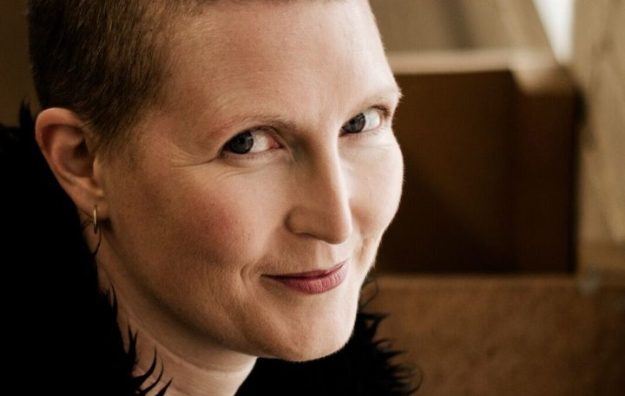
Wes Lee is the author of Body, Remember (Eyewear Publishing, 2017), Shooting Gallery (Steele Roberts, 2016), and Cowboy Genes (Grist Books, University of Huddersfield Press, 2014). Her work has appeared in the Poetry New Zealand Yearbook 2018, New Writing Scotland, Westerly, The London Magazine, Landfall, Cordite, Poetry London, Irises: The University of Canberra Vice-Chancellor’s Poetry Prize Anthology 2017, and many other journals and anthologies. She has won a number of awards for her writing including the BNZ Katherine Mansfield Literary Award; The Short FICTION Writing Prize (University of Plymouth Press); The Bronwyn Tate Memorial Award. She is currently working on her third poetry collection, By the Lapels


The four finalists will read from their work at the Sarah Broom Poetry Prize event at the Auckland Writers Festival on Sunday 20 May, 3.15-4.15pm. Guest judge Eileen Myles will introduce the finalists and announce the winner.

Sarah Broom Poetry Prize page.


Poetry Shelf audio spot: James Brown reads ‘Soft Returns’


large_9781776561599.jpg


James Brown’s latest poetry book is Floods Another Chamber (VUP, 2017). You can find ‘Soft Returns’ in this collection.

Victoria University Press page


Selina Tusitala Marsh has edited Best NZ poems 2017 – the Pasifika way

Screen Shot 2018-05-02 at 10.03.51 AM.png


Yes!  What a breath of outstandingly fresh air. I love Selina’s approach to picking the poems – you need to read the whole piece here

And it is a crackingly good selection. I can’t wait to read and listen.  Some of my favourite reads from 2017 included. Content’s page here


From the intro:

‘I dedicate this last 12 months of choosing the ‘best’, to my friend and mentor, the late Associate Professor Teresia Teaiwa, whose Memorial Scholarship Fund continues to help give Pasifika peoples a choice.

Everybody loves free books (excluding my sons). I accepted this invitation to judge 2017’s batch of newly published poems because frankly, I wanted the books. I wanted to be able to map the latest constellation of Aotearoa’s poetry stars and navigate the various poetic journeys being offered from a particular time and place. I wanted to be inspired. After reading what seemed like, say, 3000 plus poems, I got what I wanted.

But I soon discovered that this was not an easy task. It wasn’t just a matter of reading a few poems and picking the ones I liked ‘best’. The sheer variety of form, tone, subject matter and lyricism soon problematised what I had thought was the ‘best’. Many a judge before me has acknowledged the impossibility of the task ahead. Most point to the bright sticky pink bubble gum of subjectivity that clicks and pops in the mouth whilst reading: ‘click, I like this one; pop, don’t like this one. Blow, I’m in my own bubble anyway.’ Presumably, this lets one off the hook. But I soon discovered that what I liked was too small a cage in which to read these free-range poems—just to further mix my metaphors in the post-euphoria of having climbed the Mt Everest of 2017’s poetic metaphors. Note to self: stop with the tongue in cheek stuff and get on with the serious business of writing this Introduction! (Aah, but whose tongue and in whose cheek?)

As a Pasifika Poet-Scholar, I wanted a more egalitarian way to ‘judge’ the ‘best’. I wanted to do something different, more collaborative, more epistemologically Pasifika—recalling Sia Figiel’s famously poetic passage nestled in the middle of her novel, Where We Once Belonged:

there is no ‘I’
only ‘we’

So, I decided to seek out the opinions, responses, reactions of the ‘we’ for a select numbers of poems that I hadn’t liked enough to include in my measly top 25. I gave out books and I gave out poems (with the payment that they could keep what they liked). My readers? Fellow Waiheke Trail Tribe runners, real estate agents, book club members, students, teachers, family members, people at the bus stop I saw often enough to bug. I asked them to give me 1-3 poems they liked and why.’


Selina with fue - 2 FLS.JPG


Selina at the Tokotoko Laureate event.  Photo credit:  Fiona Lam Sheung


At Cordite Review: Anahera Gildea’s Bone Shame: Grief, Te Ao Māori, and the Liminal Space where Translation Fails

‘Wherever there is a need for translation there is discomfort – a chasm that must be scaffolded, or connected by branch, bond or bridge. There is almost a desperation in the need to both enlighten and to be understood. In te reo Māori (the Māori language) the concept of te wheiao represents this liminal or transitional space. It is a term that has appeared in our incantations of mythology from the beginning of memory. It is a phrase that acknowledges a place between places, a third space, a chamber of waiting and uncertainty and one that has no set time, nor prescribed gestation period. It is also a place that is unavoidable and through which we must travel in order to gain full understanding. It is after darkness, but before light. It is the birth of all ideas. It can be the site of great discovery, or rampant anxiety, but regardless, it is a necessary place. There is no other way to reach te ao marama (the world of light). And it is in no way associated with shame.’

This is essential reading and you can read it here


Phantom Billstickers pay tribute to the nation’s poets as they announce National Poetry Day 2018

 Screen Shot 2018-04-16 at 2.19.38 PM.png


New Zealand is a nation of poets and poetry lovers. Last year Phantom Billstickers National Poetry Day broke all records, with 120 events taking place in cities and towns all over the country.

This year, Phantom Billstickers National Poetry Day (#NZPoetryDay) will be held on Friday 24 August 2018 and is set to be even bigger. Expect chances to read poetry on public transport, street posters and footpaths; to hear it in special events in cafes, bars, bookshops, libraries, schools, universities, theatres, clubs and community centres; and to enter your own work in to poetry competitions for all ages.

 Phantom Billstickers National Poetry Day 2018 will feature a range of events and activities, from readings headlined by Poet Laureate Selina Tusitala Marsh to Slam Poetry contests to events that celebrate local writers and places. David Merritt’s ‘Poetry in a Box’ will see poetry bricks in 25 different locations around the country – in schools, cafés, libraries, galleries – culminating in a co-ordinated “simultaneous reading” on the day.


The cut-off date for organisers to register events and apply for seed funding is Wednesday 23 May 2018 at 5:00pm. Events can be registered online via this link. For enquiries about registering an event or applying for seed funding, please contact National Administrator Harley Hern on email poetryday@nzbookawards.org.nz.  For full information go here

Held on the fourth Friday in August, National Poetry Day is a popular fixture on the nation’s cultural calendar. For the third year Phantom Billstickers are supporting this through a naming rights sponsorship, and plan to proudly ‘splash poetry across New Zealand’ in the weeks leading up to National Poetry Day with a massive street poster campaign.

Phantom Billstickers NPD 2018 Poster.jpeg


Paula Morris, National Poetry Day spokesperson for the New Zealand Book Awards Trust said, “Last year’s twentieth-anniversary celebrations brought out more great poets, charismatic performers and avid readers than ever before. Poetry has the power to speak to and for us, from the personal to the political – to mark our big occasions, comment on our society, and challenge the way we see the world. National Poetry Day is a chance to encounter poetry in unexpected places, and to engage with the many things it’s able to do and say.”

The poetry winner of the prestigious Ockham New Zealand Book Awards, announced on Tuesday 15 May 2018, will be available to take part in selected events on Phantom Billstickers National Poetry Day, as will the other poetry finalists. The shortlisted writers for the Poetry prize are: Tony Beyer (New Plymouth), Elizabeth Smither (Taranaki), Briar Wood (Northland), and Sue Wootton (Dunedin).


Nicola Legat, New Zealand Book Awards Trust Chair, said: “In the year that we celebrate 50 years since New Zealand’s prestigious book awards were first established, it’s rewarding and affirming to reflect on how many great books of poetry have been celebrated in the awards’ winner lists. These books of poetry were noticed, brought richness to readers’ lives and are eminently worth rereading. They have held their ground and their authors constitute a poetry hall of fame: Allen Curnow, Bill Manhire, Fleur Adcock, Elizabeth Smither, Brian Turner, Vincent O’Sullivan, Michelle Leggott, Hone Tuwhare, Kate Camp, Ian Wedde, Jenny Bornholdt, Glenn Colquhoun and so many more. Here’s to New Zealand poetry!”

Some poems from the Ockham NZ poetry finalists: Sue Wootton’s ‘Wild’


Wild


Measure my wild. Down to my last leaf,

my furled, my desiccated. This deciduousness,

this bloom. Calculate my xylem levels.

My spore count, fungal, scarlet

in a bluebell glade. Whoosh,

where the foliage closes on a great cat.

Test me: how many tigers in my jungle,

how many lions at roam? Map my rivers,

deltas, estuaries. Mollusc, whelk, worm.

Monitor my silt. Do I have spoonbills, 

high-stepping and watchful over the darting fish?

Rainfall on pines. Dappled sunlight

in my dells. Under moss, the fallen log, under

the log the hibernating hedgehog. Late my dates,

or soon? Return of the albatross, godwits

gathering. What clouds me, shifts,

but: indigo thunder-stack, pink wisp. Count the mice.

What will survive me, O my cockroaches, O my lice?

Scaffold me with metal, cage me in glass, tube me,

needle me, fill me, flush me. Saline solution:

the ocean. Oxygen therapy: the sky.

Mineral deficiency: socks off. Soil. Dark

rot, eye-less wriggle, while the roots seek, seek.

Un-diagnosable, that ticklish insect.

Mountain peak speak only snow, and thus

I am diminished; thus I rest in my pulse. Sweet

heart. Monitor my yearn, and treat it with trees.

Un-pane me. Wilden my outlook.

Membrane animal, skin mammal under the osmosis moon.

Allow my tides. All this to say, in love we nest, and on Earth.


©Sue Wootton from The Yield


Sue Wootton lives in Dunedin where she writes fiction and poetry and, as a PhD candidate at the University of Otago, is researching the importance of literature to health and wellbeing. Her debut novel, Strip (Mākaro Press), was longlisted for the fiction prize in the 2017 Ockham NZ Book Awards, and her most recent publication, The Yield (Otago University Press) is shortlisted in the 2018 poetry category of the awards. She is the selecting editor for the Otago Daily Times Weekend Poem column and edits the weekly Health Humanities blog Corpus: Conversations about Medicine and Life, found at corpus.nz

The poem “Wild” was awarded 2nd place in the International Hippocrates Prize for Poetry and Medicine in 2013. Sue’s website is suewootton.com