
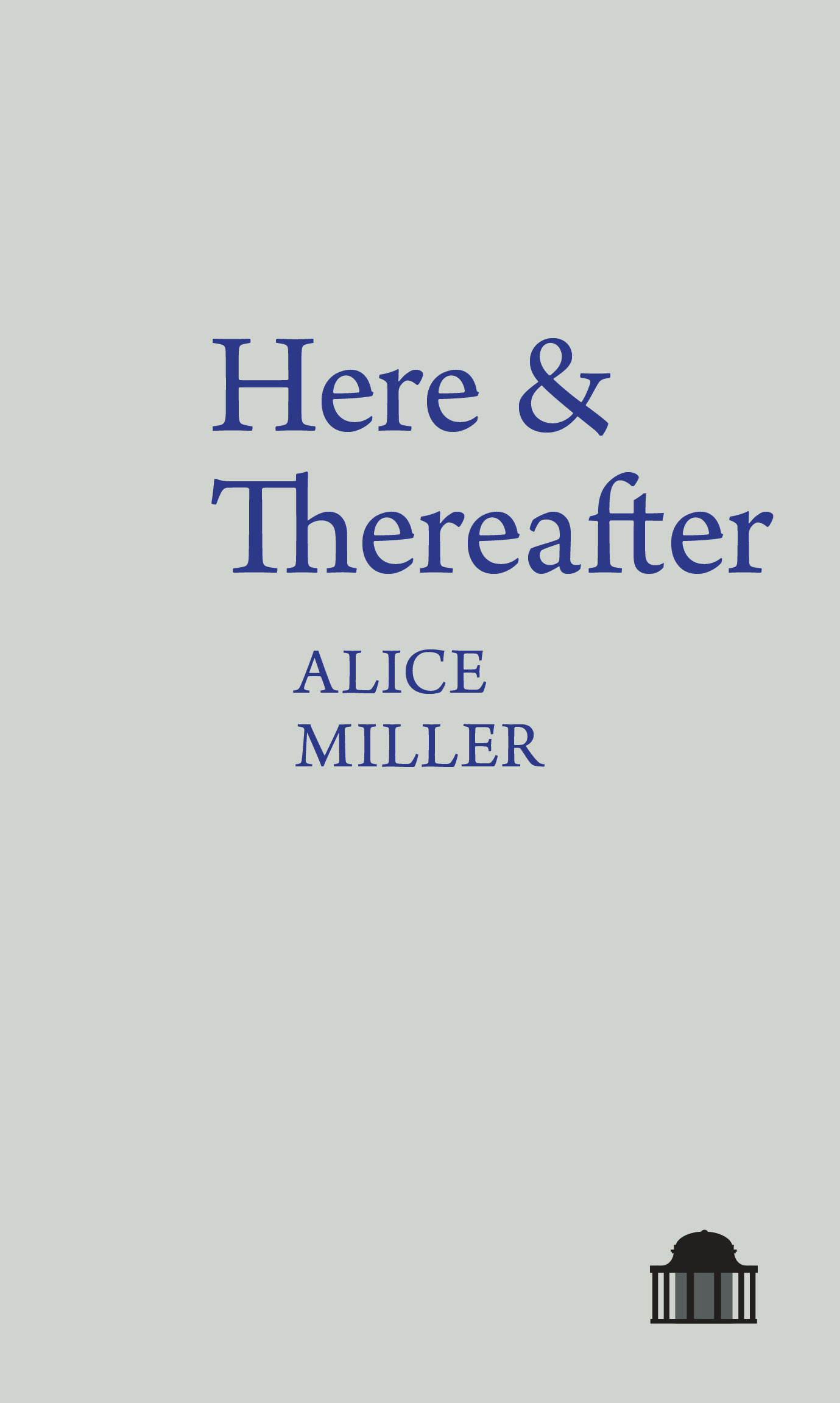
Here & Thereafter, Alice Miller
Liverpool University Press, 2026
When we’re young we know poems matter, later we
still know but have to admit there’s no way they can.
After all, much more than sandcastles are vanishing.
With these odds, one part must keep singing
and it’s that proof we keep.
Alice Miller
from ‘Old Romantic’
Paula: Often when I read a new poetry collection, it shifts and resettles what poetry can be and do, refreshes the light and dark of the world. Your new collection is an incredible conduit for light and dark. What was tough and what was illuminating as the book came into being?
Alice: Thank you. It feels quite mad writing poems when the world’s perched on the brink of apocalypse and we’re only coming up with more alarming ways to tip ourselves over the edge. But with poems, I still want to multiply the world, to blast it open, to see a thousand places at once. The machinery of poems—the page, the line break, the stanza break—are all so exciting. What lightness is acceptable in such darkness? I don’t know the answer, but this book certainly grapples with that question.
I left the death certificate of my grandmother
in our mailbox for days, as if to invite
her back to Berlin where she was born,
as if she might like to have come last night
to the Akademie der Künste
for the talk by Claudia Rankine
about the new words
we’re not allowed to say.
from ‘Future Proof’
Paula: I also embraced the collection as an echo chamber. I was drawn to the movement between past and present, especially the past and present of Anna, your German Jewish grandmother, especially on the brink of WWII, and especially as we face multiple brinks and unfoldings of war in 2026. How did contemporary circumstances affect you as you wrote?
Alice: Yes, there are very noisy echoes between past and present here. The month before my son was born, Russia invaded Ukraine and troops were shooting at a nuclear power plant a thousand miles from where we live in Berlin. And I realised, oh right. I’d thought my family stories were these dramatic war stories (and they are, about the Holocaust, WWII bombings in London, the creation of the atom bomb), but I also saw how much they’re just stories from a continual flow of conflict. As I was writing about my grandmother fleeing Germany in the 1930s, the German Government was supporting Israel to carry out a genocide in Gaza, and we were all forbidden from saying the word “genocide” in public. As if our silence could erase the fact that it was occurring.
I don’t think we can stay here.
Anna left to get as far as she could from Europe
and now we see it again. But what use leaving
for those who can’t? What use speech?
Out on the Strip, a woman sings, glint
of gold at her wrist. Moon’s own
slice of sky. Ragged waves pull
at sand, again, and again.
from ‘Gaza’
Paula: I love how you return to the mantra, the personal is political, and flip it so acutely to the political is personal. I get to think and feel your poems. Your poetry is intimate at the level of self and family stories and equally vital in a wider more global reach. How important is it to both speak out and challenge and to share an intimate self?
Alice: I’m so glad that works. It was important to me that this book did that, or at least tried to. I found the balance really difficult.
Paula: I love Bill Manhire’s endorsement: “There aren’t many historians who sing, but singing is exactly what Alice does in this new book”. You sing so much into being, into remembering, into imagining: the horrors and catastrophes, a newborn baby, forgotten stories, home, most especially home. Your book is still singing in me. Are there other poets or whose poetry books who sing in you?
Alice: Definitely. I love Diane Seuss’ Modern Poetry, which I recommend to anyone who’s lost their faith in poems (it happens to us all sometimes). We were lucky enough to see Anne Carson read recently, and she’s such an extraordinary writer—and performer, too. I keep going back to Jericho Brown’s The Tradition and the ways he plays with form. I’ve also been reading Vicente Huidobro’s fragmentary, urgent Arctic Poems, translated by Tony Frazer. Closer to home, I definitely need to catch up, but I’m a fan of recent (recent to me!) books by Rebecca Hawkes and Erik Kennedy.
Paula: I picture us in a cafe drinking coffee and sharing favourite lines from the collection, lines that stop me in my reading tracks. Like: “how the poet knows how / to keep the whole world from spilling into her”. And like: “always the river / stepped in up to my neck, soaking me in time”. And this: “and how tremendous we are / when we go back home / if only we can remember / which song home is”. Can you share a couple of favourite lines?
Alice: I love this idea. I tried to add to this, but I find every line insists on clinging to the next! But I like your collection of lines very much. Thanks, Paula.
In the dream my friends were all suddenly architects.
It had something to do with holding things up.
A bridge had collapsed, and everyone I knew was talking
about how they would fix it, or else how
they wished they’d never studied architecture
and instead become an actor. There were lemurs
on the fallen bridge; fur-covered creatures leaping
between weeds that now were building their green shots
through the broken concrete.
from ‘Bridges’
a reading
‘Everyone’s Here, Stranger’
‘Unpromised Lands’
‘Now and Never’
‘Relief’
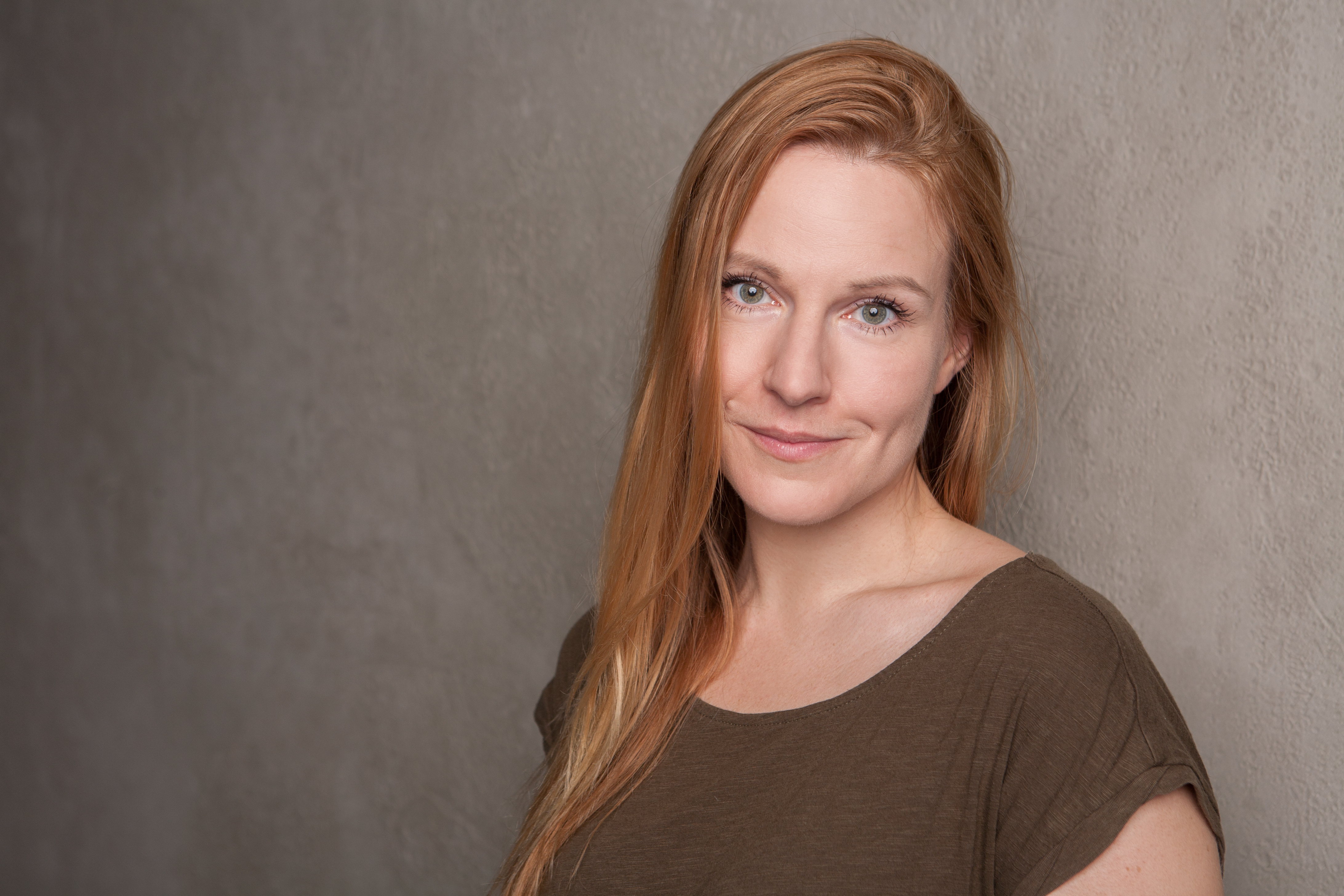
Alice Miller’s fourth poetry collection is Here & Thereafter (Pavilion, 2026). She is also the author of a novel, More Miracle than Bird (Tin House). Alice lives in Berlin, but she and her family are planning to return to Aotearoa in 2027.
Liverpool University Press page


Pingback: Poetry Shelf weekend reading and listening and an invitation | NZ Poetry Shelf