Measure a black thread. Roll one end between forefinger and ball of thumb to a small knot tangle. Thread the other, moistened by lips to a point, through the eye of the needle. Consider the hole in the heel. Engage with the sock. Mercury’s wing would fit. There is no ironic distance between us, Sock, for I must remove my glasses to obtain a microscopic view of you.
Is what I perceive as a void, such as the void in Eridanus that intrigues me, so from your viewpoint? Do you know that you have nothing in you – an unravelling place, a shirking, Sock, of the looping continuous cause that defined you, shaped your ideal, but for the hole, the void wherein there is no matter, not a skerrick? I’d like to go to Eridanus when I die. Meanwhile darn it, the steel tip needling in and out between there and not there, defines edge where there was none, fell whereon the latticework will be attached, as is, between the gutter and the house, tautened the pragmatic architecture of spiders.
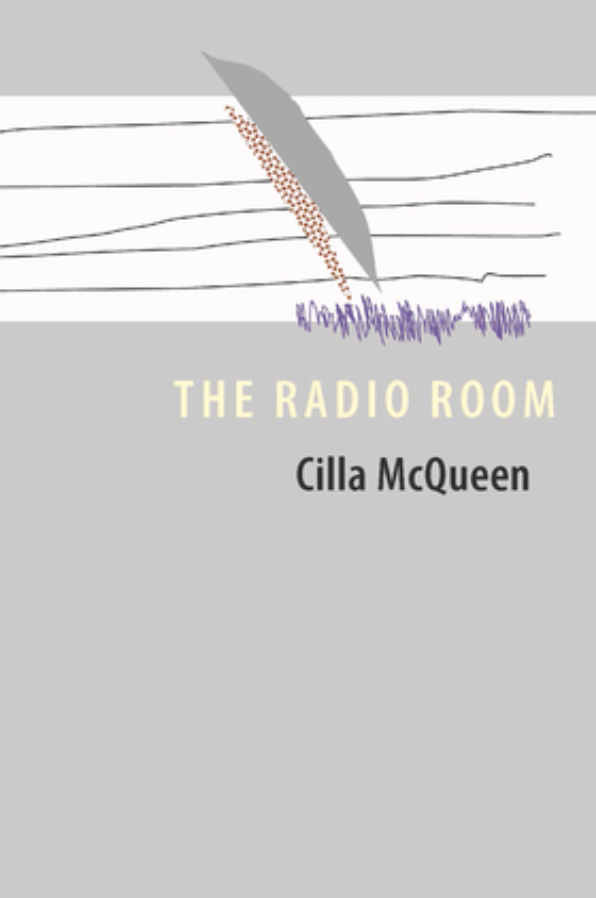
Cilla McQueen from The Radio Room Otago University Press, 2010 (also in poeta: selected and new poems, Otago University Press, 2018)
I adore poems that peer through ordinary things into the universe. Pull on the threads of this one and fascinating things happen. ‘The Hole’ starts as a poem of instructions. This is how to thread a needle as I remember my mother doing, as I did as a child, squinting with the effort. The poem has me at “Engage with the sock.” The voice sparkles with Cilla McQueen’s trademark humour and intelligence. I love the hint of a combat about to kick off between the speaker and recalcitrant matter. Or rather, the lack of matter: the hole.
One of the reasons this poem remains a favourite of mine is that it still generates questions. I’m not completely sure what Mercury is doing there, patching the gap with his hypothetical wing. But I’m fine with not knowing. That a deity associated with eloquence pops up just then feels right. Engaged with the sock, glasses off, the poet is gearing up for flights of imagination.
Poetry has long been fascinated with the borders of our perception at both ends of the scale, the microscopic and the majestic. The sock’s “void” brings us to the gap in Eridanus, which I learned from this poem is a constellation. I love that we’re prompted to muse on the mysteries of space by considering a sock. A black sock, the opening line suggests, with a black hole in its heel.
Sock is nothing special, a bit lacking. But engaging with Sock in open curiosity takes us vast distances. To me, the two questions at the heart of the poem are as confounding as koans, almost absurdly deep. Can a sock have a “viewpoint”? Of course, I can’t help turning the second-person “you” on myself: “Do you know / that you have nothing in you …?” That could be a lifetime’s meditation. Or it could be poking satirical fun at navel-gazing. Either works. There’s the creative cause with an ideal in mind, and then there’s reality wilfully “shirking” that destiny. There’s the beautiful hope of travelling into the stars after death—then we’re brought back to earth with a pun. I love this bouncing between the playful and the profound. From darning to dark matter.
Sewing becomes a metaphor for poetry or any act of creation at the edge “between there and not-there.” It’s both a daring act, the poem suggests, and one as “pragmatic” as a spider’s web. The closing simile is artfully natural, almost offhand, as if the poet has just glanced out the window. It also ties everything together beautifully. Yet the poem is named for the hole in the fabric of things, and that’s why it keeps bringing me back to wonder.
Megan Kitching
Megan Kitching is an Ōtepoti Dunedin poet. Her debut collection At the Point of Seeing (Otago University Press, 2023) won the Jessie Mackay Prize for Poetry in the 2024 Mātātuhi Foundation Best First Book Awards and was awarded Best International First Collection in the UK Poet Laureate’s The Laurel Prize 2024. In 2021, Megan was the inaugural Caselberg Trust Elizabeth Brooke-Carr Emerging Writer in residence.
Cilla McQueen MNZM is a poet, teacher and artist, and a three-time winner of the New Zealand Book Award for Poetry. She received an honorary doctorate in literature from the University of Otago in 2008 and was New Zealand Poet Laureate from 2009 to 2011. In 2010 she received the Prime Minister’s Award for Literary Achievement (Poetry). In 2020 she was appointed a Member of the New Zealand Order of Merit for services as a poet. Cilla lives in Bluff, at the southern tip of New Zealand’s South Island.
The Midnight Plane: Selected and new poems, Fiona Kidman Otago University Press, 2025
It’s the same again this weekend, wild weather, rain and delays, and a long way south, suspension on a cloud, books take you everywhere.
from ‘On small planes’
Reading your way through the poetry collections by a particular poet can be such a rewarding experience. I recently read Chris Tse’s poetry books and felt utterly moved. I sat at the kitchen table thinking this is why I write my own poems, and read, review and blog all-things poetry. Poetry is the ultimate prismatic experience for heart and mind, eye and ear. It is sustenance, it is challenge, beauty and balm, multiple-toned music. It is deep-rooted aroha.
For a number of years, I read and researched every possible woman poet who had published poetry in Aotearoa. It was illuminating, heartbreaking and felt utterly necessary to shine a light on the women who have written and published poems for over 150 years, to question their scant representation in anthologies, in publishing and award lists, in public appearances. The visibility of and attention paid to women poets has changed to a remarkable degree, but I am always suspicious of any critique or review that promotes a hierarchy of style or subject matter, that dismisses the domestic, the personal, the tricky-and-impossible-to-define feminine.
In the 1970s, women poets were finally catching the attention of readers. In an interview with me in 2016, Fiona mentioned some of the women who were publishing poetry and performing at venues together: Lauris Edmond, Elizabeth Smither, Marilyn Duckworth, Meg Campbell and Rachel McAlpine among others. A handful of women joined the young men countering the poetry traditions that had preceded them with calls for the new, but others, such as Fiona, advanced the rewards of the domestic in poetry. Rachel made it intoBig Smoke: NZ Poems 1960 – 1975 (AUP, 2000), while Fiona, with her attention to the domestic, did not. Yet in my view, both women liberated words for women, inspired women to write. Like Fleur Adcock and Rachel, Fiona has favoured the first person pronoun. It is personal and intimate, and I feel like I’m sitting in the same room as the poem, entering the terrain of autobiography. The relationships, the acute observations and anecdotes, carry me within and beyond a domestic setting.
In her preface to The Midnight Plane, Fiona tellingly writes: ‘I am a plain poet; some critics would describe my early work as ‘confessional’, others as ‘domestic’. Perhaps I was such a poet, and at heart still am, although I am not given much to such labels. What I know is poetry still has the power to shake the heart.” And that is exactly what Fiona’s poetry does for me. It shakes my heart.
Let’s listen to Fiona read:
Fiona Kidman at home
Photo credit: Robert Cross
‘The midnight plane’
‘What I do’
Otago University Press has gathered a selection of poems from Fiona’s books, along with some new ones. The beautiful production, with a hard cover, lovely paper stock, and a gorgeous cover, acknowledges the work as a national taonga.
Fiona’s debut collection, Honey & Bitters (1975), is one of my all-time favourite poetry collections. It is a series of both actual plantings and memory plantings, a matrix of movement and stillness, physical views and revealed feelings, where what is not said rubs alongside what is said. The writing is agile, surprising, holding out the rhythm of slow-paced observation. I read a poem, I stall and have to read it again, and again.
In the field the sheep are scattered like hail, this pale dun landscape with small quaint cottages we’ve driven miles to find, for sale, near trees
whose scribble branches wait for spring, scratch barren messages across the sky. But a man, a boy, a girl and I are here.
from ‘Wairarapa Sunday’
The poem, ‘Kohoutek’ is dedicated to the comet, but draws our attention to the preciousness of each day, to the ‘voyages of discovery’ in a new house, to the trees bursting in green, and the sunlight patches. Fiona writes: ‘These are the miracles of the everyday’, and this for me is a miniature poetry manifesto. It is one I hold close to my heart, sitting at the kitchen table where I have written so many books, celebrated so many books by other poets, shared so many meals.
I like the way you stand, fingers trailing over the back of a chair before a velvet curtain looped with braid, your eyes fierce and direct, a hat like a guardsman’s helmet tilting on your brow, a telltale ruffle of lace at the wrists because you are my grandmother fluted silver vases stand poised above my bookshelves because you are my grandmother I wear old fine gold and mother-of-pearl because, because of this, I wear this hair shirt of guilt the settlers’ shame
from ‘Speaking with my grandmothers’
In Where Your Left Hand Rests (2010), another collection I adore, there is a poem I would love to post in its entirety on Poetry Shelf. ‘Speaking with my grandmothers’, is a poem that threads past and present, that forms a braid of spike and silk as Fiona reflects upon the grandmother ancestors she never met, and the stolen land she stands upon. Here are the final lines: “Tonight I want to sit quietly by this window. There is so / little silence, so many voices.” Ah, we can take this moment and hold our line of grandmothers close, and for some of us, the stolen land we stand upon.
This Change in the Light (2016) is another go-to collection for me, with its haunting portrait of Fiona’s mother in ten sonnets, its travels from Paris to Provence to Singapore to a cancer ward. The poem, ‘What I do’, is one I could pin to the wall; it navigates mornings devoted to writing books, afternoons to preparing food, suggesting the mornings may not be cut and dried like food, but how love seeps though the whole day. It feels like I see myself in the poem’s mirror, with my endless hoard of cookbooks, my love of cooking and writing every single possible day. And then, and then movingly then, the exquisite final poem, ‘So far, for now’, a loving tribute to her beloved husband Ian. I am holding this poem to my heart. I wanted to share lines but it felt wrong to take a handful out, you need to read it in full, and let it unfold in you over the course of a day.
On the cover of the book, a photograph shows Fiona sitting in her lounge looking out the window at the Wellington sky and harbour. A perfect image for poetry that embraces both lounge and sky, that depends upon slow observation and the dailiness of living, a mind that goes travelling. Sitting at my kitchen window looking out across the ever-changing expanse of bush and sky, as I pick my way along a road thatched with spike and sweetness, I am crying, strangely crying, because somehow, I know that for so many of us, poetry is a gift, a gift we do and a gift we share. Fiona’s poetry winds about me, I gather it in, the shifting lights and the vital substance, knowing in her work there is always heart, her fingers on the pulse of humanity, and that is why the poetry of Fiona Kidman matters so very much.
Dame Fiona Kidman is a poet, fiction writer and memoirist. She has also written for the screen industry. Her internationally published work has won numerous prestigious literary awards, and her honours include a damehood (DCNZM), an OBE and the French Legion of Honour (La Légion d’Honneur). She lives on a cliff top in Wellington.
Landfall 249: aotearoa new zealand arts and letters Autumn 2025, ed Lynley Edmeades Otago University Press
Sometimes I pick up a literary journal such as Landfall and dip and dive in over a few weeks, but today I have decided to read it cover to cover. Yes, today I have booked myself in for a Landfall road trip, sundried-tomato muffins in the oven, oatmeal coffees lined up. The journal has been in existence for almost 80 years and maintained its consistent dedication to writing in Aotearoa New Zealand. I know my road trip will include poetry, nonfiction, fiction, art and reviews.
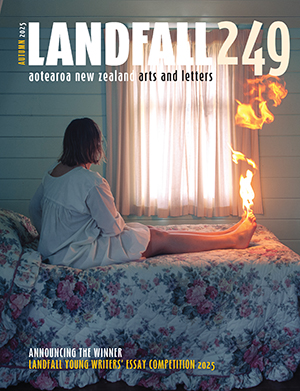
First up the spellbinding artwork on the cover: Tia Ranginui’s ‘Cold Feet’ (pigment ink on Hahnemühle Photo Rag). It’s a taster for the sequence inside, a taster that moves both symbol and personal narrative into a zone of extraordinary wonder. I am hooked.
The issue includes the winner of the Landfall Young Writers’ Essay Competition 2025, selected by Landfall editor Lynley Edmeades. Her judge’s report signals the record number of entries this year and offers a fascinating snapshot of the engagements and anxieties of young writers. The winner, Ava Reid, resists attempting to tell us how the world functions, choosing instead to use the essay as a space “for trying to work things out, to notice and to try to make sense of the world”. I love the essay, and am already sidetracked into slow travel reading, musing on the attraction to flotsam and jettson, discarded objects, those inherited, excavated, misplaced or abandoned. Ava is musing on the back story to the ‘artefacts’ in her fields of vision. For some reason I find myself returning to a still life by Giorgio Morandi, picturing the daily clutter beyond the frame of his orderly compositions. It is writing at its most sublime.
What if I were to write a tiny poem, a sweetly arranged still life where I show you the green leaf on the wooden deck, the wet pattern of winter rain, and then abruptly pull you away into a clamorous narrative beyond, that may or may not be true.
Let’s turn the page and absorb the volume of a vegetable in Rhian Gallagher’s sublime poem, ‘Potato’, crossing a bridge between Dunedin and Donegal, a father memory, the layers of soil as pungent as the layers of narrative held beyond the frame of revealing. On the opposite page, Rhian’s ‘Early Autumn’, is equally rewarding. wondering how place is also a narrative harbour, past and present. The listening, the observing, the recalling. Rhian writes with both economy and richness, thought and feeling, an autumnal view a hub of beginnings and endings and beginnings. I am backtracking back to reread Ava’s essay.
A duet of poems and I have pulled into a roadside cafe to linger, knowing Landfall is not a single day excursion for me. I am stalling on Ariana Tikao’s haunting lament, ‘Te Tārere a Hikaiti’. Then Riemke Ensing’s moving eulogy for Vincent O’Sullivan, ‘Blue’. Her final lines glue me to my chair. You need to read the whole poem.
No getting away from it. I am slow traveller whether reading or writing or blogging. I need a week at least to read this treasure-trove issue. I need to be taking side roads and overbridges, relishing pools of thinking, skipping to familiar voices, sparked by those new to me. Jodie Dalgleish’s ‘Skin-Water-Skin: Repeat’ is like fertilised word buds bearing incredible aural rewards.
Landfall is shaping up to be a perfect road trip – a plethora of surprises, points of wonder, comfort. I am a big fan of Wes Lee’s poetry, so what a delight to read ‘December’. It’s physical, it’s rich in absence as much as presence, it’s symbolic and so utterly fluent.
And then I pull into another cafe diversion where laughter is on the menu. Alistair Du Chatenier’s ‘But Will It Fly’ is a tongue-in-cheek poem that takes us into Bill Manhire’s workshop where he is building a flying saucer (a surrogate poem?). Ah what you can create from shredded journals and anthologies.
Oh and now it’s Zoë Meager’s ‘it one was one of those nights’, a prolonged moment of reading that hooks you with its opening words ‘when the moon kept getting out of bed just to have a look around’ and then upturns you with its final revelation. Ooh.
I am having overnight stays in the work of the two artists in the issue. Eliza Glyn’s contemporary gouache paintings offer table settings: a gathering of objects in muted colours, verging on the kinetic, with a hint of Cubism, Frances Hodgkins, a daily diary, a closely packed huddle of predilections, angles askew. I love them.
The cover artist, Tia Ranginui’s work forms a sequence entitled ‘Ahi Teretere’, with the title referencing the flickering flame. Her work I read, “plays on the complicated and nuanced emotions provoked by returning home, particularly the artist returning to her papa kāinga on Te Awa Whanganui”. She navigates both ice and flame, as she seeks home with both embrace and defiance, a hunger for warmth, and with the help of her daughters who appear in the artworks. Extraordinary.
I toast this issue. It inspires me to keep reading writing blogging looking art. Planning road trips, within the pages of books and out there in the real world. Thank you.
Lynley Edmeades is the author of two poetry collections, As the Verb Tenses (Otago University Press, 2016) and Listening In (Otago University Press, 2019), and a poetry and art picture book for adults, Bordering on Miraculous (Massey University Press, 2022), in collaboration with Saskia Leek. She has an MA in creative writing from the Seamus Heaney Centre for Poetry at Queen’s University of Belfast and holds a PhD in avant-garde poetics from the University of Otago. In 2018, she was the Ursula Bethell Writer in Residence at the University of Canterbury, and she currently teaches poetry and creative writing on the English programme at the University of Otago.
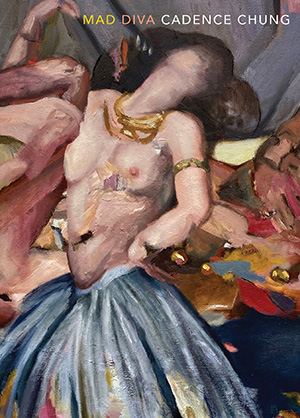
Mad Diva, Cadence Chung Otago University Press, 2025
But lo! Here’s my heart in my hands, clots squished on my sleeve, all sinewy and stringy in that way organs are. If you don’t want to take it, well, I wouldn’t blame you. But it’s the same heart those poets had once. One with reckless abandon, always finding love in every little corner and squashing it flat on the page.
from ‘Love Lyrics’
A recurring word that epitomises poetry collections I have read and loved this year is heart. The word is particularly applicable to Cadence Chung’s second collection, Mad Diva. Not only does the poetry offer heart ripples, it is rich in ear and art, and most definitely heat. A symphony of heart. And yes, as the title suggests, we are entering the addictive terrain of opera, a chorus of intensity, an intensity of chorus, with threads of painting and poetry making moving in and out of view.
I once sat in an auditorium listening to Alessandra Marc sing arias and you could hear a pin drop. It was a full scale body reaction. I could scarcely breathe. I get that when I put Maria Callas singing Bellini’s Norma on repeat on the turntable. Listen to ‘Casta Diva’ and let that settle under your skin. I was raised with an opera soundtrack and grew deep into loving it, but I was surprised how my relationship with the music changed when I had finished my PhD in Italian and could understand the words! Suddenly I was catapulted into everyday language delivering scenes of desire and betrayal and amore. I think of this haunting scene of listening because here I am in Mad Diva and it is grit and grandeur and intake of breath . . . and yes, catapulting us into different ways of listening reading understanding. Ancora. Ancora. Ancora.
Mad Diva‘s opening poem ‘Mélodie’ spirals around song, a singing heart, an off-key dream, and stands as a vital entry point into the poems to come, the way poetry is pitched in diverse keys, with harmony and disharmony, solo flights and connecting chords. Or the way languages generate melody with their different pronunciations and accents on vowels and consonants. The musical notes of speech. One of the delights of reading poetry is the surprise arrival – especially individual words on the line. Janet Charman is a whizz at this. As is Cadence. This is poetry to listen to. This is poetry to feel from your seat in the auditorium.
O, the night that stretched before us! The cool lamplight of it, shining like cicada-wing.
from ‘VI. O, the night’
Thematic subject matter is a unifying thread in the collection. It is like we venture into an opera house to witness performance, to move in and out of opera scenarios, but these divas are out and about in the world as much as they inhabit the skin of a character. Let’s move in deeper. Let’s listen in wider. These mad divas. Let’s move behind the scenes and the surface brocade. Across two acts, these poetic performances, dig deep into yearning and fancy dress, painted bodies and madness, weapons and treasures. It’s personal. It’s imagined. It’s sung across centuries.
In One Thousand and One Nights, Scheherezade told stories to stay alive, to witness the next dawn, but in the mesmerising poem ‘Scheherezade’, she is Ubering into town with the poet/speaker. The poet/speaker is musing on what it would be like to be locked in a bind of telling, never speaking herself. And herein is a glittering hook of the collection: yes it’s a dazzling navigation of divas in performance, on and of stage, but it’s also the navigation of a poet in the seismic heart of poem making, drawing upon other poets as aids. What to tell? What to speak? How to speak? The voice sometimes appearing in italicised dialogue, sometimes not: ‘How do I write about the Great Themes?’ Or: ‘They say all poetry is about Love, Death, / and Time. What a horrible thing a poet is, / writing about these things instead of living / them, deep inside a lover thinking about / what a sensual poem it will make.’
The poem ‘Scheherezade’, feels like a pulsating core of a collection that portrays a poet as much as it portrays divas. It is personal vulnerable tactile aromatic as it speaks to the way making poetry can never be pinned down to exactitudes. It is gauze for us to peer through:
I try to be like her, swallowing my histories in rattles of metal, hide my grandmother’s jade in the back of my jewellery box. But my foreignness finds me anyway, in mispronounced names and schoolyard games and men leaning in ever closer on the bus. I call to her: with a clink of long earrings she looks at me. Tell me Scheherezade, I try to say. When does the telling end? Tell me, When does the silence come? I fill every space with poems and only in the dull hum of the ride home do I realise how stupid, how stupid it all sounds. She can only tell, I can never ask. She is as distant to me as a ship gauzed by time.
Ah. So much to say about this sontuosa collection. It is akin to unpacking a heart basket packed with entangled treasures, with flakes of wound, multiple perfumes, pinpricks of discovery tragedy epiphany, the fireworks and nuances of recognition . . . because every time you unpack this precious basket (just liking putting on a much loved album), you hear and discover something anew, behind the scenes, behind the character, that new connection, an idea that trills, an idea -knot to play with, a ‘cicada-wing’ spark of what poetry can light. So it’s a standing ovation: Bravissimo! Bravissima!
a reading
‘Habits’
‘Ulysses’
‘Fire Island’
a conversation
Were there any highlights, epiphanies, discoveries, challenges as you wrote this collection?
I guess in a way, Mad Diva was a whole series of tiny epiphanies. It’s a bit of a culmination of different manuscripts that hadn’t quite worked out. I’d written very glitzy, narrative-based ones, and also very confessional ones, and this manuscript merges the two in a combination of the fantastic and the lyric. Many of the poems are named after and in the voice of famous divas in the canon — Carmen, Delilah, Salomé, Scheherazade — and I discovered how easy it is for me to drive a poem through a character voice. It was what helped me combine the two facets of my writing: a first-person confessional voice combined with a character façade. It’s a bit like a recital, where you’re still yourself, but a heightened, slightly over-the-top version. I think that’s an important balance in poetry, and a tricky one to pull off! Readers often assume the lyric ‘I’ is the poet, and while that is true in a sense, I never want to just be recounting a true experience without transforming it in some way. Especially when some of the poems in the collection deal with topics of madness and mental illness, I wanted to keep some distance, for both myself and the readers, while still staying truthful to the lyric project.
What matters when you are writing a poem? Or to rephrase, what do you want your poetry to do or be?
Really, I hope that a poem is whatever the reader needs it to be! Having your poetry read by different people is such a strange experience, because you get so many different responses and interpretations. When I read a poem that I love, it shocks me, gives me a little jolt that I carry throughout the day. I want to see something in there that I couldn’t have written myself, that makes me see things just a little differently. I’m always going on about transformation, but I think it’s really true. A poem transforms the poet’s experience or thoughts, then the poem transforms the reader, and so on: a chain of tiny differences is created.
Are there particular poets that have sustained you, as you navigate poetry as both reader and writer?
The poets I’m constantly reading are my contemporaries in this new generation of poets. In particular, my beautiful friends Jackson McCarthy, Amelia Kirkness, Zia Ravenscroft, Maia Armistead, and Joshua Toumu’a. I’m really inspired by the boldness and assuredness of new writers, and the heavy lyric moment we’re returning to. Being self-effacing is out, being insecure is out, cringing at earnestness is out. Love is in!
We are living in hazardous and ruinous times. Can you name three things that give you joy and hope?
The biggest thing that keeps me going is being part of the strong arts communities I’m in. Being in a bookshop or concert hall or theatre or dive bar and having it full of enthusiastic people is so special. Three specific things that have been giving me joy lately: going to and running literary events, rehearsing for operas with my music friends, and playing with my little cat Hebe.
Tell us about your tour
As part of Mad Diva’s release, I went on tour to four cities: Te Whanganui-a-Tara | Wellington, Tāmaki Makaurau | Auckland, Ōtepoti | Dunedin, and Ōtautahi | Christchurch. These launch events featured guest poets Jackson McCarthy, Zephyr Zhang 张挚, Rushi Vyas, Claudia Jardine, and Amelia Kirkness, as well as guest singers from the New Zealand School of Music, and Sarah Mileham, Tomairangi Henare, Teddy Finney-Waters, and Emily-Jane Stockman. It was such a fun and chaotic time. It took place over the span of a week, so I tried to cram in as much sightseeing as I could while also performing and connecting with friends around the country! We had a great turnout at all of the events and I was so thrilled to meet new people, as well as people I’d only ever met online. I had no idea what to expect with the tour, so I was really heartened to see people coming out to support new poetry.
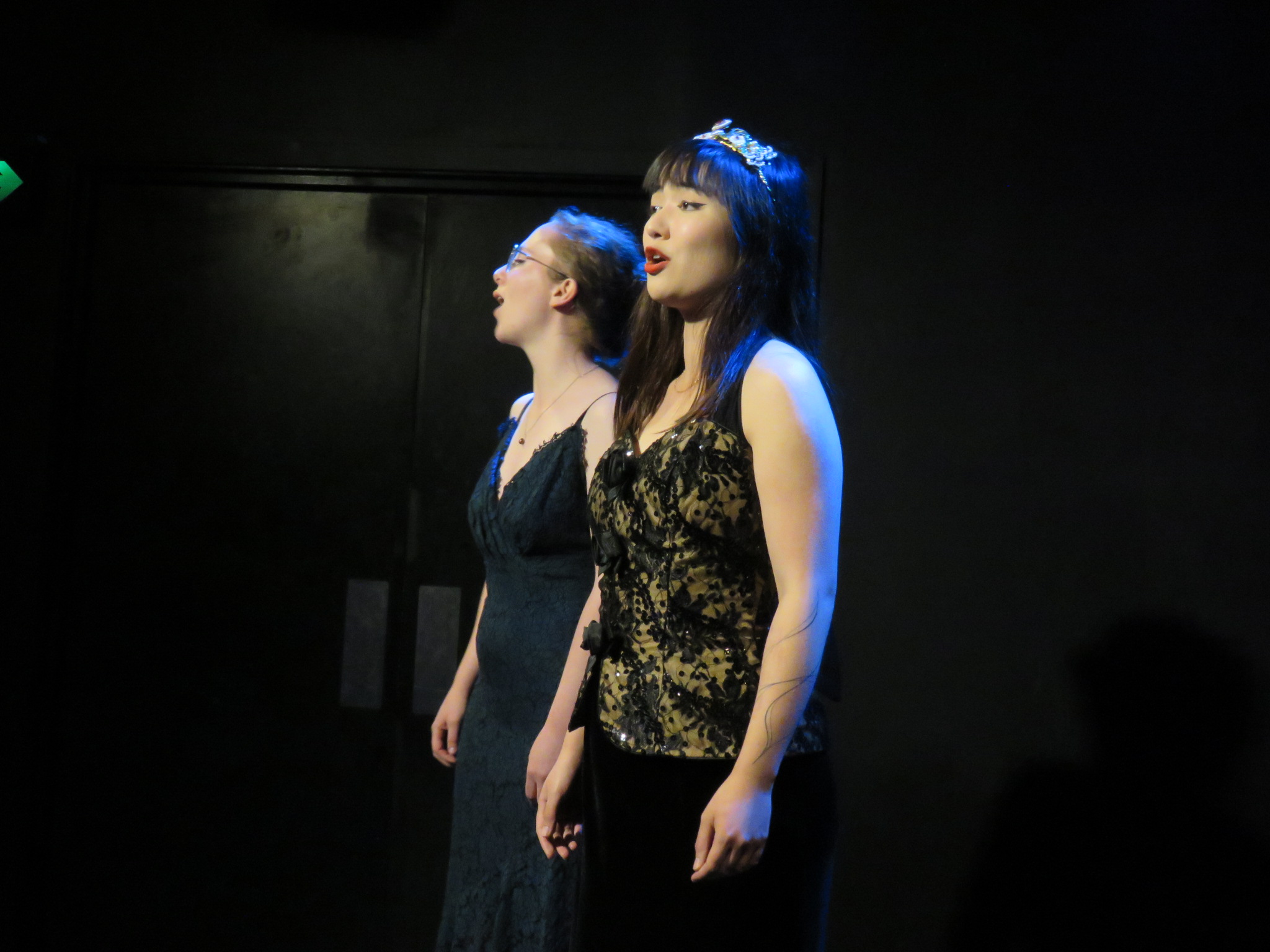
Cadence with Emily-Jane Stockman, at Little Andromeda, Ōtautahi Christchurch
Cadence Chung is a poet, composer, and singer currently in her Honours year at the New Zealand School of Music. Her nationally bestselling chapbook anomalia was released in 2022 with Tender Press, and her anthology of young artists, Mythos, was released in 2024 with Wai-te-ata Press. Her next book, Mad Diva, was released in April 2025 with Otago University Press. She also performs as a classical soloist, presents on RNZ Concert, and co-edits Symposia Magazine, a literary magazine for young New Zealanders.
Letter to ‘Oumuamua, James Norcliffe, Otago University Press, 2023
In these uncertain times I gravitate towards quiet poetry. It may sound corny but it is like sitting on the edge of a mountain embracing silence as a form of retreat, and then savouring the way the world is alive with sound. I find myself retreating into poetry collections as a form of balm, relishing the solitude, the complications, the edges.
James Norcliffe, recently awarded the 2023 Margaret Mahy Medal, writes with a pen fuelled by the physical world, and a sense of interiority that allows both confession and piquant ideas. His writing is witty, thoughtful, fluid and rich in movement. The opening poem, ‘Letter to ‘Oumuamua’ nails it. Dedicated to “the first known interstellar object to pass through the solar system”, the letter is as much about where it is written from, as where it is written towards. The rural scene is balm – with its hint of spring and new leaves. Yet the layers prickle as I hold onto the embedded notion that the scene is both beloved and under threat.
Poetry can be the heightened awareness of a moment, of a particular place or experience. James offers many such poems and it is impossible to hold them at arm’s length. This is a form of poetry as retreat. Take ‘The Coal Range’ for example. The poem ventures back in time to pay tribute to an aunt and a location. James slowly builds the scene with acute detail, and I am breathing in the smells, tasting the baking, and back in the embrace of my grandmothers.
The burning coal and smoke smell of Auld Reekie, of far-away home. Pinned on the Pinex walls are calendars: Scottie dogs, pipers and Greyfriars Bobby.
Sentiment sweetens distance, as drop scones, ANZAC biscuits and peanut brownies sweeten the sour pervading presence of damp coal, smoke and tea-tree.
I love the way the collection offers drift and movement, resistance to fixture. Nothing is as it seems. Everything is as it seems. “Knowing What We Are” is a gloriously haunting rendition of movement, of oscillation. The birds gather on the “shining mudflats”. I’ll share a couple of stanzas with you – then you can track down the book and read the whole poem.
Any day soon, the birds will fly far beyond the red-rimmed horizon.
Much later they will return. Neither here nor there is home, yet both are.
Knowing what you are, I take your hand. Neither here nor there, I try to count the days.
‘Insomnia’ navigates the knottiness of a sleepless night; a restless mind grappling with big questions and small diversions as it fixes upon turning points in life. The what-ifs and T intersections. I muse upon the way the collection offers myriad movements from loop to overlap, from twist to slide, from spiral to scatter.
That path is no more real now than the trees on the bed. The pigeon recovered and flew away. The child was found and lost and found again. The woman died. The man makes you laugh and makes you weep and makes you laugh.
He makes you weep and makes you laugh and makes your weep, but nothing can make you sleep.
Ah, so many poems I want to share with you in this slender tasting platter. There is a sequence dedicated to Vivaldi’s Four Seasons. There is a return to childhood by way of Granity Museum. There is love and tenderness such as in the exquisite “Sauerkraut”:
(…) One pace at a time: take care of the steps so that the miles take care of themselves; conserving ourselves, preserving, avoiding pretty prickles, but still pressing the white cabbage that will be sauerkraut into a bright green crock.
There are multiple pathways through Letter to ‘Oumaumau. Numerous nooks and crannies for extended sojourn. Reading this was both solace and restoration. I picked up my pen and wrote a poem. I opened the book and returned to poetry that haunts and sticks. It’s James’s best book yet. Glorious.
James Norcliffe is a poet, children’s writer and editor. He has published 11 collections of poetry and 14 novels for young people. His first adult novel, The Frog Prince (RHNZ Vintage), was published in 2022 and his most recent poetry collection, Deadpan (Otago University Press), was published in 2019. He has co-edited major collections of poetry and short fiction, including Essential New Zealand Poems: Facing the Empty Page (RHNZ Vintage, 2014), Leaving the Red Zone (Clerestory Press, 2016), Bonsai: Best small stories from Aotearoa New Zealand (Canterbury University Press, 2018) and Ko Aotearo Tatou: We Are New Zealand (Otago University Press, 2020). He has had a long association with the Canterbury Poets’ Collective, takahē, the ReDraft annual anthologies of writing by young New Zealanders and, more recently, Flash Frontier.
The Pistils Janet Charman, Otago University Press, 2022
little lapping waves to inundate the shoes of makers whose texts i’ve addressed and assessed in the dark inland towns of my imagination the large waves of the fire siren call me out in the middle of the night
from ‘welling’
I started reading Janet Charman’s poetry when I emerged from my poetry cocoon with Cookhouse, my debut collection, and she knocked my socks off. First up it was Janet’s musical ear: an elasticity with words, linguistic play, surprising syntax. And then, so essential when my academic research focused on women and writing, her feminist core. Not an adjunct, nor a side track, but an essential feminist core. When I walked across the university threshold onto Simmonds Street, with my PhD and carton of books, I walked out of the academy into life as a poet. And a hunger to immerse myself in an Aotearoa New Zealand context. To discover the women who had written before me, who were writing alongside me, and who would write ahead of me. Janet Charman was busting out of the men’s canon and opening up notions of ‘she’, ‘i’, ‘we’, ‘you’, ‘they’. The ink in her pen and her preferences were placed centre stage, whether in trousers or skirts, folding nappies or building houses.
Janet’s new collection The Pistils opens with a terrific sequence, ‘High days and holy days’. Twelve poems that mark holidays or significant occasions (Waitangi Day, Parihaka Day Guy Fawkes Night, Wahine Day, Matariki, Picnic Days). Each poem contributes to a life – within a sequence of panels. Bare bones. Ample white space. A miniature narrative of excavation. Remember when. Remember how. Remember why. The sequence opens scenes, moments, places – and we enter the collection grounded.
winds drain to the horizon tides lap below the wrought-iron railing
here we are sheltered in the hollow of the year the hollow of the day
blowflies loll and bang the afternoon to a close the windows
from ‘1. Northland Panels‘ from ‘high days and holy days’
Move into the heart of the book, and the mind leaps and bounds along the rhythm of the line. Exquisitely crafted. Scored. Composed. In ‘Mrs Valentine’s instructions’, the rhythm of revelation shapes memory. On the next page, in ‘hometime’, attention to the sound of the line is equally arresting. Memory is translated into music and image. It is a portrait of the child but it is also a portrait of the mother. In parings and traces. Surprising arrivals. It is religion and Freud, a mother lost in a novel, it is fingers worn to the bone, the news on the radio, family dinners, walking home. Life and death. It is home.
and the mother weighting at the top of the hill her red roof tile her front windows black blank shine her white two-storeyed weatherboard authority of home time —untangle the latch race the path hunt through the house to find her where she sits adrift in a novel or conducting her day in some regimen of intellectual longing with Freud and Jung in the sunroom —on three sides light pulses in Father Son and the Holy Ghost summer on summer through glass the great gum nods
from ‘hometime’
Rhythm is so important. It renders Janet’s poetry fully charged, and accumulates life, detail, confession, insight, opinion, grief, reflection. It feels real, it feels personal, it feels political. The mother is a constant presence, in the shadows and in the light, a vital connection. Rhythm accommodates the feminist spotlight on life. The stamen and the pistil, the difficulty of childbirth and a baby in an incubator, a war memorial, waste management, Pakehā privilege, an aging body image, a breast removed, James K Baxter’s rape boast, literary criticism, sex, grief, having breakfast while watching John Campbell rather than listening to National Radio because your beloved has gone. It is the rhythm of mourning. Ah. So many layers.
i waited into the summer for my diagnosis saw how a benign White Island only became Whakaari for the pakehā after an eruption with deaths
from ‘bra dollars’
I speak of rhythm in such glowing terms but it is of course part of a sonic festival. Janet’s poetry strikes the ear (as Rebecca Hawke’s debut collection does). This leaning in to listen is rewarding: the leapfrogging alliteration, assonance, short lines, slightly longer lines, punctuating breath, free flowing currents. Again Janet’s agile music enhances my engagement with her roving subject matter. With the sharp edges and the necessary subterranean questions. How to live? How to live and love on planet Earth? How to speak against subjugation based on gender or skin colour? How to see your parents? How to go on when your beloved is no longer there? How to continue probing and resisting? How to be yourself? Ah. Such layerings.
Reading Pistil is exhilarating. I am loving this book because it is vulnerable and open, it is edgy and crafted, and because it shines a light on how it is for women. We still need that persistent light. We still need poetry that misbehaves as much as it makes music on the line. The poems call out and call for, stand out and stand for. It is a stunning collection.
Janet Charman is one of New Zealand’s sharpest and most subversive writers. In 2008 she won the Montana Book Award for Poetry for her sixth collection, Cold Snack. In 2009 she was a Visiting Fellow at the International Writers’ Workshop of Hong Kong Baptist University. In 2014 she appeared as a Guest Reader at the Taipei International Poetry Forum. Her collection 仁 Surrender (2017, OUP) chronicles her writing residencies in Hong Kong and Taiwan. This is her ninth collection of poetry.
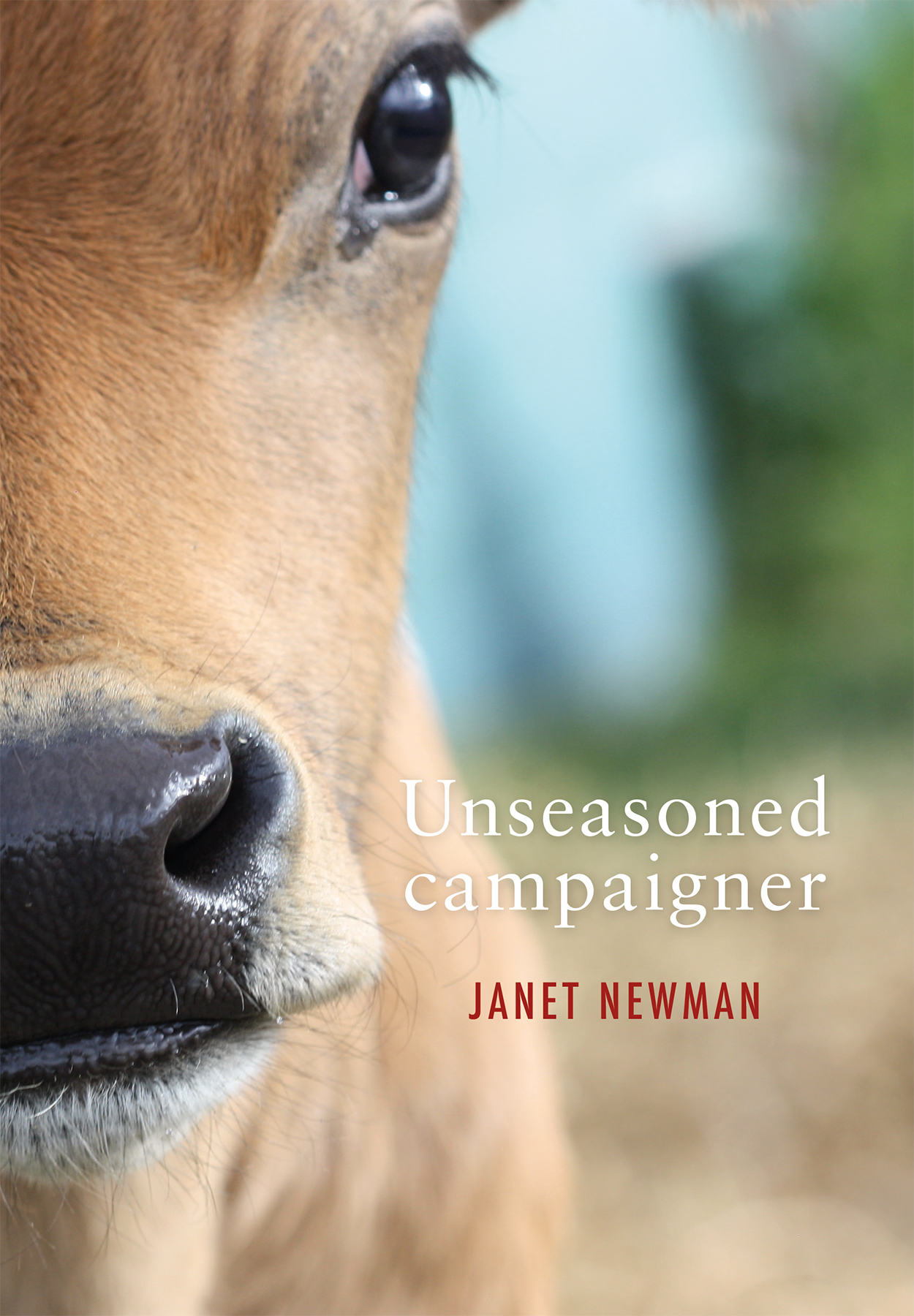
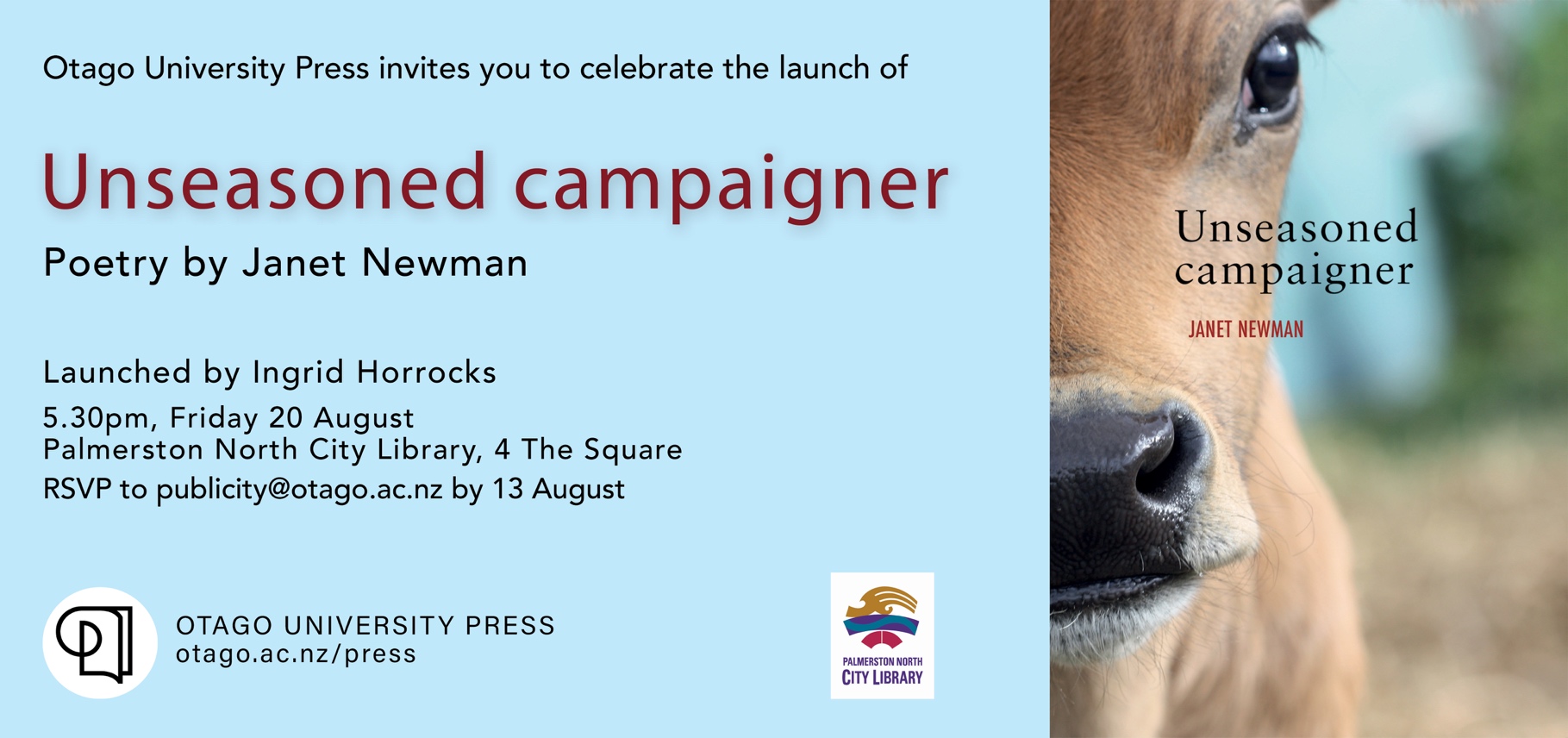
Unseasoned Campaigner, Janet Newman, Otago University Press, 2021
Poet Janet Newman lives at Koputaroa in Horowhenua, where she farms beef. Her debut collection, Unseasoned Campaigner, is nourished beyond description of scenic beauty to a deep love and engagement with the land and farming. Women writing the land is not without precedent. Ruth Dallas comes to mind initially. She spent time as a Herd Recording Officer during WWII and found cities restrictive and dull afterwards. When she was living in Dunedin in later years, writing enabled returns to her beloved rural settings. Janet dedicates several poems to her. The second poet that springs to mind is Marty Smith, whose rural background has featured in her poetry, and who is also unafraid of over and underlaying an idyllic landscape with the grit and reality of farming life.
Janet’s first section, ‘How now?’, places the reader one hundred percent in rural experience: managing livestock, a diarrhea-soaked calf that doesn’t make it, drenching, the slaughter house in graphic detail, blood and sweat. There are water restrictions, water anxiety, drought. A dead river. More dead stock. Horses led to shade and grass. Scenic routes and beauty spots are off the menu.
I applaud this revised view but it is the people who hold my attention to a significant degree. While farmers are currently under scrutiny for diverse reasons, particularly climate change, some are speaking out about how tough it is. Listening to RNZ National’s excellent Country Life, it is clear there is no hold-all definition for the contemporary farmer and their diverse practices. In the book’s middle and final sections, Janet also opens up what “farmer” means, and that adds significant and poignant layers to the first poems.
In the second section, ‘Tender’, Janet draws us to close to a father, and I am assuming her father. He was a complicated, multifaceted human being: a farmer, father, husband, war veteran. He was a man of few words and myriad actions, toil and more toil. He cursed war on television and kept a belt by the door. He is memory, because he has passed, and he fills the speaker with mourning. The poems are vividly detailed with the physicality of daily life, and it is through his presence farming is made prismatic, beyond stereotype. When I pivot on the word “tender”, I see the poems as an offering to both mother and father, to us as readers. I see too the tenderness in the care of animals, and tender as the sore spot that is parental absence, maternal and paternal memory.
His language is electric rhythm of pump and wire, gush of couplets from the artesian bore,
a flighty heifer enjambed with a low rail,
stanza of cloud over the back paddock threatening rain,
the fuck, fuck, fuck of a dead bull in the drain.
from ‘Man of few words’
The mother is an equally haunting presence with her preserves, her baking and her plums. She too is drawn close through a focus on the physical detail of everyday actions. She is mourned and, in dying first, is an unbearable hole in the father’s life. The parental poems scratch the surface of my skin. Preserving, for example, brings back my own pungent memories. And preserving is also the tool of the poet, poems are stored in sweet and salty brine, held out to be savoured by both poet and reader.
Preserving
Red plums give up round plump bodies when I cut out their stones. I hear my mother’s long-ago voice: ‘Don’t overdo it.’ The boiling and much else. In the photograph she is smiling behind glass, my memory of her steeped in absence. Now, even that faithless call sounds sweet as in preserving jars sour plums surrender to sugar syrup.
The third section, “Ruahine”, moves and adjusts to loss. It also finds footing on scenic routes. In the final poems, the poet is out driving and absorbing the birds and trees, mesmerising hills, the land bereft of vegetation. The landscapes have widened further to carry farm practices, daily challenges, connections to the land and to making a living. But of course it is not as though the farmer is blind to beauty. The final cluster of poems become song, act as sweet refrain, where upon in each return to a view, the view shifts in nuance. Just like poetry. Just like the way life is nuanced and resists deadening dichotomies. ‘Beach’ catches the elusiveness of what we sometimes see and feel so exquisitely:
Some days the clouds disappear on the drive to the coast
the way the things you wanted to say evaporate when you get there.
Sentences float to the pencil-line horizon between sky that is nothing but blue
and sea that is as blue as … but words fail you,
smudge like fishing boats in the distance without your binoculars
from ‘Beach’
Janet writes with poise, each line fluent in rhythm and accent, and in doing so achieves a collection that matches heart with sharp and bold eye. Her collection belongs alongside the very best of Marty Smith and Ruth Dallas, a fine addition to how we write the land, whoever and wherever we are.
Janet Newman was born in Levin. She won the 2015 New Zealand Poetry Society International Competition, the 2017 Kathleen Grattan Prize for a Sequence of Poems and was a runner-up in the 2019 Kathleen Grattan Awards. Her essays about the sonnets of Michele Leggott and the ecopoetry of Dinah Hawken won the Journal of New Zealand Literature Prize for New Zealand Literary Studies in 2014 and 2016. She has worked as a journalist in New Zealand and Australia, and a bicycle courier in London. She has three adult children and lives with her partner at Koputaroa in Horowhenua, where she farms beef cattle.
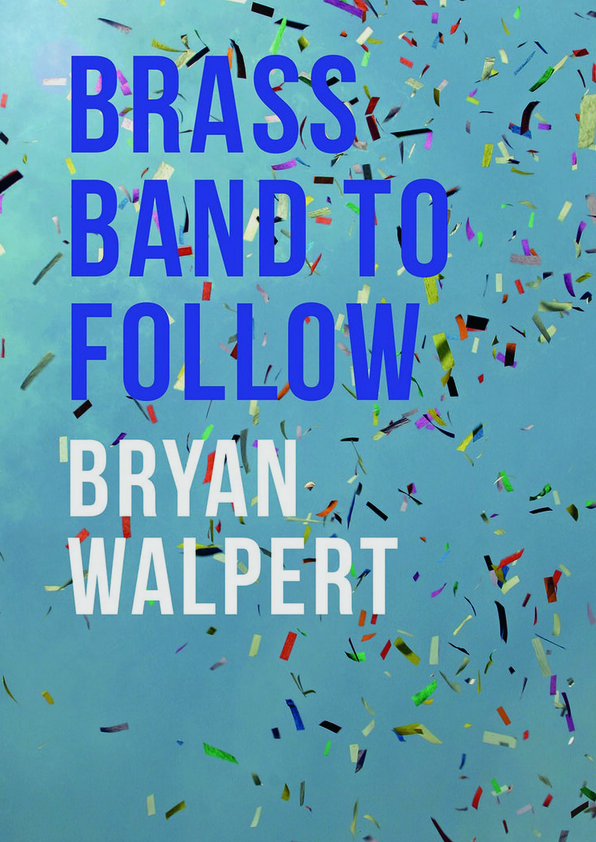
Brass Band to Follow, Bryan Walpert, Otago University Press, 2021
Bryan Walpert, professor of creative writing at Massey University, has published three previous poetry collections. His fourth, Brass Band to Follow, is a rewarding read with distinctive tones and exquisite layers. The book’s opening quotes suggest we are entering poetic engagements with middle age. Yes, age is a visible concern but the poems are alive with movement that includes but stretches beyond time passing.
The book is thoughtfully structured: you move in and out of dense single-verse poems along with airy multi-versed examples. A rocky outcrop on one page, thistle kisses on the next. It is like listening to music that favours both solo violin and the greater orchestra.
Brass Band to Follow, Bryan Walpert, Otago University Press, 2021
Bryan reads ‘In the lull’
Bryan reads ‘Brass Band to Follow’
Bryan Walpert is the author of four collections of poetry—Etymology, A History of Glass, Native Bird and most recently Brass Band to Follow (Otago UP). He is also the author of a novella, Late Sonata, winner of the Viva La Novella prize (Australia); a collection of short fiction, Ephraim’s Eyes; and two scholarly books: Poetry and Mindfulness: Interruption to a Journey and Resistance to Science in Contemporary American Poetry. A novel, Entanglement, is forthcoming with Mākaro Press in October. His work has appeared in New Zealand, Australia, UK, U.S., and Canada and has been recognized by, among others, the Montreal International Poetry Award, the New Zealand International Poetry Competition, the Royal Society of NZ Manhire Award Creative Science Writing Award (fiction), The Rattle Poetry Prize (US), and the James Wright Poetry Award (U.S). He is a Professor in Creative Writing at Massey University, Auckland. More on Bryan can be found at bryanwalpert.com.





 NZ Poetry Shelf