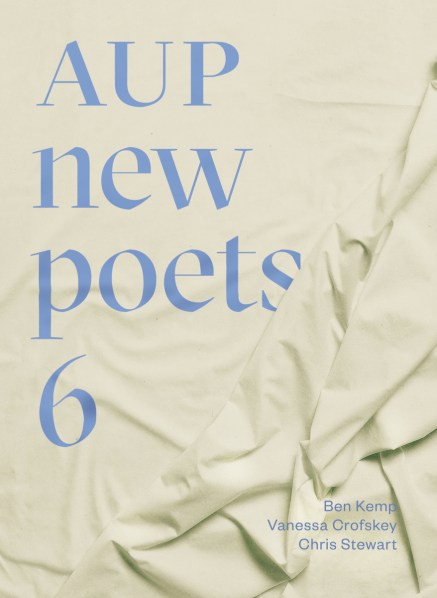
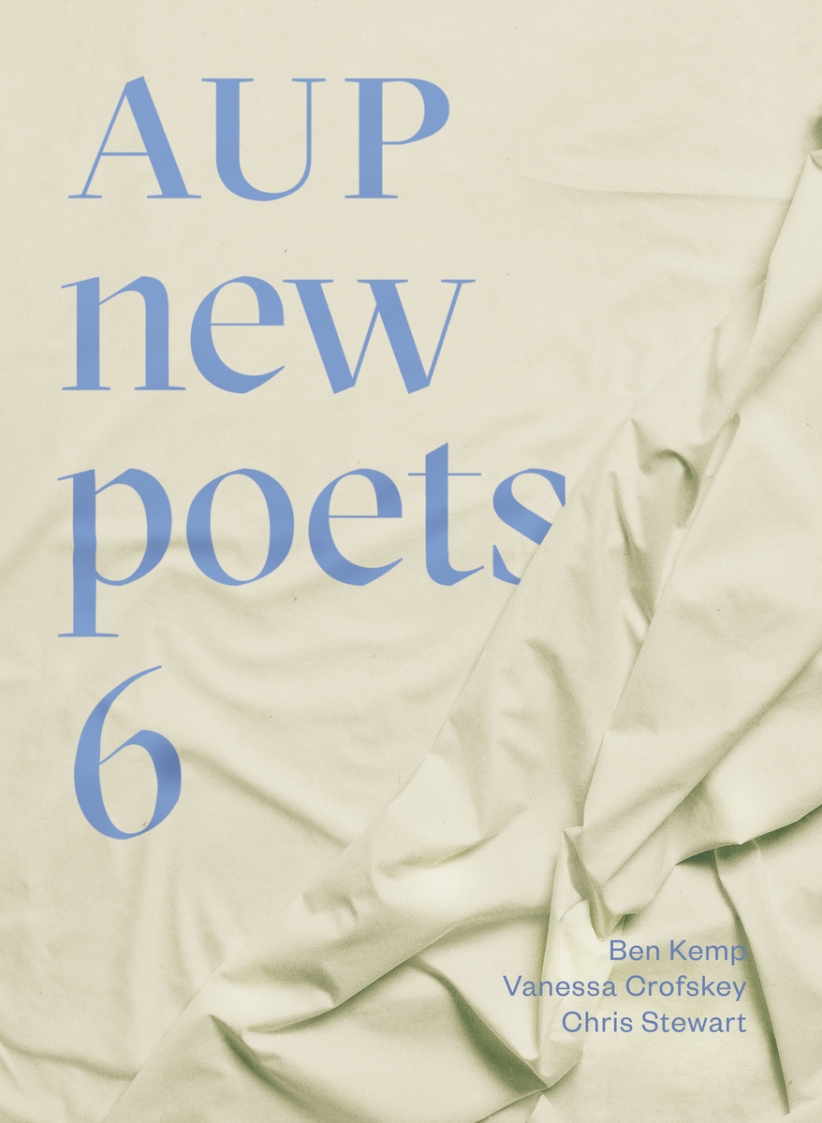
AUP New Poets 6 Ben Kemp, Vanessa Crofskey, Chris Stewart, edited and introduced by Anna Jackson, Auckland University Press, 2020
Salt my song …
I have to love you,
and this farmland upon which I live.
I evolve here.
One day I will journey to the sea,
become that river and dissolve into the essence of I.
Ben Kemp from ‘The Esssence of I’
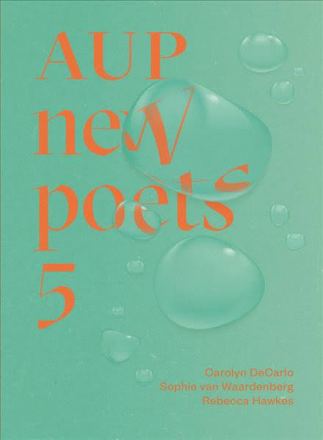
The Auckland University Press series devoted to new poets was launched in 1999 and featured the work of Anna Jackson, Sarah Quigley and Raewyn Alexander. Each volume features three poets, a number of whom have since published highly regarded collections of their own (for example Chris Tse, Sonya Yelich, Reihana Robinson). Anna Jackson took over as editor with AUP New Poets 5 (Carolyn DeCarlo, Rebecca Hawkes and Sophie van Waardenberg).
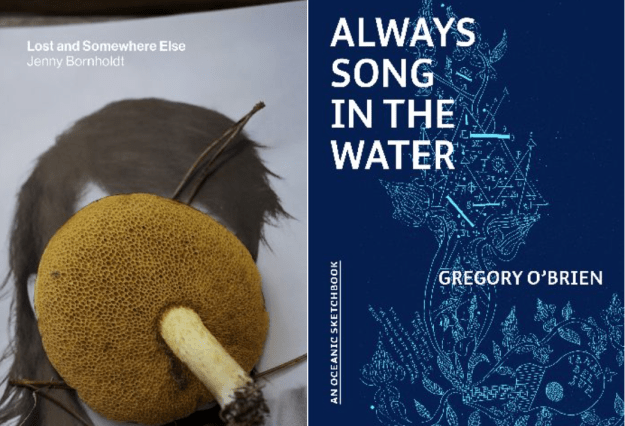
Volume 7 will be out in August, but first I want to mark the arrival of AUP New Poets 6: Ben Kemp, Vanessa Crofskey, Chris Stewart. The collection was launched on Poetry Shelf during lockdown, level four, with a series of readings, poems and interviews. This was a challenging time for new books when many of us felt tilted as readers and writers, and our major contact with the world was via our screens. The events and mahi that did occur during this time is pretty special. There were opportunities to hear people read and talk about things beyond our local venues. Getting to hear the three poets read at the online launch expanded tha audience, and am keen to make online readings an ongoing feature on Poetry Shelf.
However we are now at level one, the sun is shining after endless rain and thunder, the political point scoring is on mute, I am listening to opera divas in my earpiece, the bread is cooling, and I can return to the collection with more focus. For me, reading during level four was like collecting gleams and shards. This word stuck, that phrase, this image. I had the attention span of a gnat. Now I am luxuriating in the way a sequence of poem unfolds, the way it takes you surprise and transports heart and mind. Still at a snail’s pace.
AUP New Poets 6 includes three very different poets – delivers three different reading impacts. Truth is such a dubious word, unstable, hard to pin down, we all know that, but truth seems to matter so very much in a world threatened by liars, catastrophe. I love the way the poetry moves into the truth of their experiences, thoughts, admissions. To be reading at such a human and humane level is significant. I want this complexity of comfort and challenge. Of how being human is neither formulaic nor flippant. This poetry is witty, vulnerable, challenging, complicated …. yes!
Anna Jackson’s lithe introduction (which I read after reading the poems as is my habit) confirms her role as an astute and surefooted editor of this series, with her fine eye for poetry that holds and satisfies attention regardless of the world that bombards.
Chris Stewart’s sequence, ‘Gravity’, navigates the miraculous within everyday settings. He faces big subjects such as birth, death and love, and rejuvenates them to the point your skin pricks as you read. He embeds the physical in order to evoke the intangible, the hard to say. There is darkness and there is light.
The title poem is a gem (well they all are!) as it stencils birth on the white page:
I hear nostalgia for the womb
the way light misses the hearts of stars
we glove the light in our skin
find sleep in solar wind
wrap ourselves in the gravity
of your arrival
from ‘gravity’
The agile syntax (‘we glove the light’) signals a heightened state, the sense of miracle, the wonder. I am hard pressed to think of a poet who has evoked birth, fatherhood, parenthood, so beautifully. I am reminded of Emma Neale’s power to deliver wonder and awe in a poem. Turn over the page, and again there is a shift between light and dark, a sense of awe:
the first time we bathed
our daughter in the lounge
it was dark except for the fireplace
she lay between us and flickered
from ’embers’
This is poetry at its rejuvenating best. There is rawness to the point of wound, such as in the poem, ‘a tooth emerges’. The father is wakened by a teething baby at night. The poem spins on the page, a spinning vignette of fatherhood, sharp, on edge, knowing. Here are the final verses:
now I am sore tooth pulled
from a soft bed
my swollen nerves erupt
you only see my crown
but my roots are still
embedded in the bone
Ah. Every poem in this sequence hits the right potent note. One poem links the health of the newborn to the health of a genealogy of grandmothers. Yes, family is the glue that holds the sequence together, along with the poet’s astute and probing gaze into experience. A couple of poems near the end situate the poet as son, and the ominous mother father portraits hold out dark hints. There are holes in the telling, dust-like veils, and startling images. These poems are why I keep reading poetry, and why I very much hope Chris has a book in the pipeline.
Vanessa Crofskey’s poetry was already familiar to me but her sequence, ‘ Shopping List of Small Violences’ widens my appreciation of where and how her poetry roams. She braids the personal and the political as she moves into the truths of her experience. As she does so, writing poetry is testing and playing with form, discovering form. I am reminded of how language shapes us as much as we shape the languages we use. It comes down to our mother tongue, to languages that are imposed, expectations on how we use language, and our own private relationships with how we speak ourselves. How we might stutter or provoke or soothe or struggle with words.
Just as with Chris’s sequence, the poet produces poems that matter greatly, that broadcast self along myriad airwaves. There is political edge and personal vulnerability. One poem fills a passenger arrival card, another completes a time sheet. There are white-out poems and black-out poems, shopping lists, and graphs. As she navigates form, she navigates being comfortable in her own skin.
The poem ‘dumplings are fake’ sits on the page with verses and measured space, moves with a conversational flow and that characteristic probe into self. There is wit at work, but it is also serious – reading poetry becomes a way of listening.
i’m so authentic i use chopsticks to eat macaroni
watch hentai on my huawei
and go to ponsonby central to eat chinese
i don’t carry hot sauce in my bag but i do bring soy to the party
my favourite movie of all time is studio ghibli
and my dad is the white side of the family
every time auckland council says ‘diversity targets’, my phone vibrates
i get suggested ads for the national party in chinese
and that think piece on bubble tea is a redirect to my
dot com slash about me
Again I am very much hoping there is a book in the pipeline.
Ben Kemp’s ‘The Monks Who Tend the Garden with Tiny Scissors’ also assembles poetry as a way of listening. Ben currently lives in New Guinea with his diplomatic wife and three children. He was born in Gisborne, has Rongowhakaata roots, grew up in Manutuke and Matawhero, lived in Australia for six years and ten in Japan. For me his poems are deeply attached to home, to a way of grounding place, of establishing anchors. Of being home when home is mobile. The sequence establishes a series of bridges between Japan and Aotearoa. He carries Aotearoa into every poem, regardless of the setting, while his experience in Japan also deeply permeates his point of view. The poetry welcomes both here and there.
Ben’s poetry is alive with physical detail, sometimes ornate, sometimes shimmering with the deceptive simplicity reminiscent of haiku or tanka. From ‘Food to Song’:
Rekamaroa,
a bed of hot riverstones,
under the earthern blanket,
steam rises, the buttery smell of pork belly.
Perhaps the most gripping poem is the longer ‘The Essence of I’, an ode to Walt Whitman. Reading this, I am hoping there is a book in the making. I find the poem deliciously quiet, slow paced, speaking of homeplace and ancestors, oceans and rivers. Astonishing. There is love and there are longings. I keep reading Ben’s poems and adjusting what I think poetry is and what it might be. Poetry, for example, is a way of becoming. And listening. And building bridges. ‘The Essence of I’ signals a way of becoming.
Underground are the ancestors lined up in single file,
feathers in their hair, with paintbrushes for fingers and flutes for mouths.
In the darkness that is their light they are whole,
yet the line they form is for me,
carrying the burden of my impatience, they vent it.
I often pierce my hands through the earth, arms dug deep,
softer in the tractor tracks, we tough hands.
The movements in hand, saying we love each other …
The northeastern tip is the desert,
I hitched a ride on that wind-blowing orchestra,
and I found a well,
my consciousness, and perfect white sunlight on a vast bed of sand …
The well was filled with embers, breathing smoke,
I sat for days contemplating its meaning to me,
these loose and odd snippets.
Why burn? Why burn?
AUP NEW Poets 6 is a glorious read. Exactly what I want to be reading now. I am hungry for poetry that offers facets of humanity, of humaneness. The anthology brings together voices speaking in multiple poetic forms, across multiple subjects, in shifting tones and hues. Glorious, simply glorious.
AUP NEW Poets 6 launch: listen to the poets read here
Welcome to AUP New Poets 6 launch. Settle back with a glass of wine or a cup of tea and enjoy the launch. You can order the book from your favourite bookshop once they are open. The book is beautiful – I can’t wait to share my thoughts on it soon.
Congratulations Anna Jackson, Vanessa Crofskey, Ben Kemp and Chris Stewart.
Cheers!
From publisher Sam Elworthy:
Thanks to editor Anna Jackson’s mighty work, AUP NEW POETS has come back with a bang. And in AUP NEW POETS 6 (our second in the new format, this time a book in rumpled bed sheets), the poets turn things inside out and upside down. Ben Kemp, our first poet coming down the line from Papua New Guinea. Vanessa Crofskey, our first poet to lead us to include fold-outs and colour in a poetry book (and excel graphs and arrival cards). And Chris Stewart, well his poetry is from Christchurch as a husband and a father, which may or may not be a first for us but we like it very much.
So I’m sorry that our launch can only be virtual because I would have loved to see Vanessa and Chris in live action (and Ben coming in over the ether) but thanks to Paula for hosting us here and to the great team who made the book: editor Nic Ascroft and proofer Louise Belcher; designer Greg Simpson; Creative New Zealand for the funding and the lovely AUP team, Katharina Bauer, Sophia Broom and Andy Long.
From editor Anna Jackson:
This is a collection of poems that deserves a party so thank you to Paula Green for organising this poetry party on Poetry Shelf, and thank you to Time OutBookstore who would have been hosting an actual launch with people actually at it, if we weren’t all now in lock-down. They can’t process orders now but please remember to support the bookshop and support the poets by placing an order that can be filled after the lockdown is lifted.
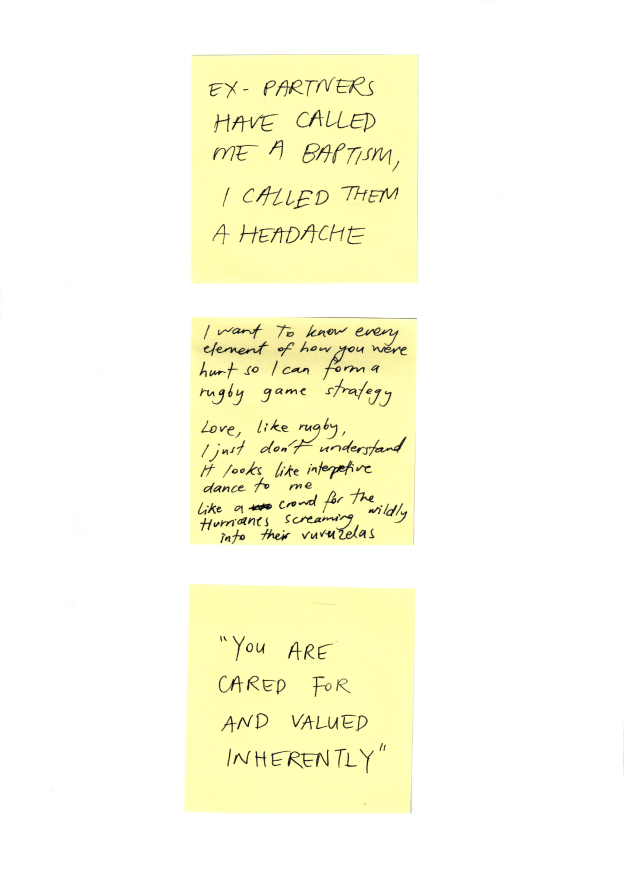
I love this collection, which brings together three such different poets as Ben Kemp, Vanessa Crofskey and Chris Stewart. It moves from Ben Kemp’s slow-paced attentive readings of place and people, in a selection moving between Japan and New Zealand, to the velocity of Vanessa Crofskey’s fierce, funny, intimate and political poetry, which takes the form of shopping lists, post-it notes, graphs, erasures, a passenger arrival card and even *poetry*, and finally to Chris Stewart’s visceral take on the domestic, the nights cut to pieces by teething, the gravity of love and the churn of time.
There is so much in this anthology, poems about whale strandings, teething, dispossession, loss, the pain of physical exercise, the embarrassment of swimwear, the gravity of responsibility, the love you feel with the shiver of your skin, friends to watch Ferris Bueller’s Day Off with a parent to the rescue, cherry blossom, the chatter of 10.000 sea-gulls, clean sheets, rice, bathing a child, white washed pages, red ink and more. We need poetry at a time like this and if we can’t buy books, we can read the books we have, and if we run out of books, we won’t run out of poetry on the internet, and if we have to self-isolate, we don’t have to be alone.
Thank you to the poets for their poetry, to Sam Elworthy and all the team at Auckland University Press and to editor Nick Ascroft, for bringing this book into the world.
Poet Erik Kennedy says a few words and reads a poem by Chris Stewart:
And now for the AUP poets (Chris Stewart, Ben Kemp and Vanessa Crofskey):
Chris Stewart reads three poems:
Ben Kemp reads:
Vanessa Crofskey reads ‘I used to play the silent game even during the lunch breaks’
Ben, Chris and Vanessa in conversation
Chris to Ben: You make links between cultures in your poems. What ideas do you want to ‘get at’ in this way?
When I was a child, we used to visit the local marae every Wednesday and listen to the elders tell stories. These experiences really shaped me. The stories were mystical and deeply embedded in the natural world. Years later, I came into contact with the films of Akira Kurosawa, and I was immediately struck by a familiar energy. I explored Japanese film, theatre and literature for a number of years, and began to explore ways to fuse.
The Fauvist movement, and particularly the paintings of Paul Gauguin also greatly influenced me. The contrast and the juxtaposition of colours has always inspired me. In poetry, the concept of plucking two unfamiliar images from different cultures, and placing them alongside each other often creates a fascinating reaction, and a new energy.
As artists, we are all searching for new ground. In poems, we endeavour to express emotions in a new way, constantly exploring alternative perspectives and all the space in between.
Chris to Ben: I like how you use space in your poems (e.g. the poem oto (sound)). How important do you think space on the page is to a poem, and what informs your choices about that in terms of form?
Miles Davis claimed that the most important notes were the ones you don’t play. Every word must serve a purpose and be innately linked to the whole of the poem. For that reason, I spend quite a lot of time on the editing and refining process. I like space, and the careful arrangement of the poem on the page creates breathing space for the eye. I also often use space to replace punctuation because it declutters the page.
Chris to Ben: The essence of I seems to have some connection to song of myself by Walt Whitman. What parts of Walt Whitman appeal to you, and how do you think they appear in your poems?
Both Walt Whitman and Henry Miller outlined a process where the person must die in order for the artist to grow from the ashes. I had a similar experience in my early twenties. Both writers have been influential on me. Walt Whitman, because he so acutely mined his own consciousness, both evolution and devolution. Whitman is a celebration of everything that is light and dark in the human spirit. The other aspect of Whitman that I have always enjoyed is the way he is able to weave tenderness, fragility, intimacy and brazenness. His lens is so wide, but he is able to pull it all together into his single stream of consciousness.
Chris to Ben: My favourite poem of yours is Ranginui’s tomb. I loved the flow and sound of the sentences, but can you expand on what meaning the last line ‘the tree that grows in someone else’s garden’ has for you?
I guess the line is more a reflection of my own feelings of displacement i.e. being both Maori and Pakeha. I love humanity and hate it at the same time. I will often draw humanity in with affection, then in the next line, throw it away in disgust. I fear for the environment and our disregard for it horrifies and frightens me. Personifying the natural world enables me to express how poorly we treat it. I used Maori gods and placed them in an unfamiliar setting, in order to sharpen a sense of displacement.
Ben to Chris: In Gravity (btw it’s stunning) It seems you’ve drawn on the place and experience before birth. Why were you drawn there?
OK so what happened with that was there was a very clear trigger for that poem, and it was the birth of my second daughter. It was supposed to happen in hospital… but it happened on the veranda on the way to the car. Luckily, the midwife was there! It went waaaay better than the hospital birth for our first daughter – Jo (my amazing) said it was kind of a healing experience for her. Gravity was more drawn from the place and experience of the immediate post birth: The midwife was fiddling around with the placenta (we’ve still got them in our freezer!) and commenting on what it looked like and what it meant. It reminded me of some sort of neolithic wizardy person reading the rune stones, and I thought that I could write a poem about that kind of cosmic stuff. I mean, childbirth is kind of a cosmic experience. Of course that was just the trigger, and you do tend to go away from the trigger a bit in the writing process. I did feel a bit like I really had to get it down; the initial brainstorm happened very quickly, but it took me about three months to work on it. It was one of those poems that was like an ice sculpture; the big block of ice was frozen in place quite early, and the chipping away of small pieces around the edges happened bit by bit over time until I kind of just knew it was done. A big shout out to the Sweet Mammalian crew for selecting it (Hannah Mettner, Magnolia Wilson, and Morgan Bach); I think it was the second poem that I ever got published, and it really made me think, ‘yeah, I can do this’.
Ben to Chris: How do you develop the rhythm and structure of each poem? Is it instinctual? Why have you chosen not use commas throughout?
Yes. I think it is instinctual. I do think that people must just have their own sense of rhythm that comes out in their writing style, in the same way as you can listen to some people talk, and others: not so much… I don’t set out to write ‘rhythmic’ poetry – I do try to work with symbolism and imagery purposefully, though. I definitely edit stuff if I think it needs to ‘sound better’ or if there are awkward sentence structures that need ‘smoothing out’.
The commas thing: well, I don’t usually like using punctuation at all for a variety of reasons. Firstly, punctuation is used to make things clear when clarity is a primary purpose. In poetry, I don’t think clarity is a primary purpose; there are a lot of interesting effects that happen in the reader’s mind as they read without punctuation. I also want the line break to do work: surprise, ambiguous meanings, pace etc… In saying that, I do shy away from finishing and starting different sentences on the same line without full stops. The poem ‘mummy’ is one example of where I’ve done that, though – I think that’s more about pace than meaning. Punctuation tends to ‘direct’ the reader, and I don’t want to do that. Kerrin P Sharpe is a NZ poet who really goes to the limit of the whole ‘say no to punctuation’ thing. If you want to get a sense of the effects it can create in terms of ambiguity and pace, check her stuff out.
Ben to Chris: Stepping back from poetry, how has the birth of your children changed and reshaped you as an artist and a person?
As an artist: I manage my time better! Being a creative person, it’s really difficult to settle into a creative process. It takes a lot of brain space to organise yourself in order to create art… I get very little time that I can actually allocate to that; it’s usually between 8-10pm, and I’m usually buggered from the non-stop day, so unless I have a specific idea for a poem that is churning away and I’m really motivated to drive that forward, I just don’t do it. I find I write my best stuff if I’ve been thinking about poetry and writing regularly for at least a couple of weeks (I’ve heard it called ‘oiling the machine’), and sometimes I’m in that mode, and sometimes I’m not. It happens in fits and starts. Poetry / writing is definitely something that I come back to and is there in me; it will always come out eventually.
As a person: my priority is family. Every decision I make is about ‘how will this affect my family?’ That includes putting work and writing behind that. I feel quite guilty if I think I’m not ‘present’ for my kids. In saying that, as a secondary school teacher, I often feel I put more energy into other people’s kids than my own kids. Also a source of guilt. When I get home I’m often too tired to really give them the best of me. I’ve started to have very little patience for people who waste my time, too, because having kids means you have to be efficient if you want to achieve anything.
Ben to Chris: Why do you write poetry? What drives you? What does the craft give you in return?
Fantastic question. I write poetry because I want to make things. I like making things out of words – things that sound cool and mean something. Sometimes I kind of just get a feeling that I want to bash certain images together or that I want to write something about something-or-other, and I can’t get rid of the urge until I’ve sat down and got it out in a poem. It can actually affect my relationships, like, if all I want to do is sit down and write a poem, and someone else needs me to do something, then I can get quite irritated. The craft gives me what people often call ‘flow’. I get that when i’m in the middle of writing something and it gets to the point where the language I’ve gathered starts to fit together and it all seems to drive itself. I think writing is like putting a puzzle together, but you have to create the pieces yourself as well. That’s the fun bit. I enjoy the feeling of potential when I sit down to do a poem.
Chris to Vanessa: The poem PTSD memes for the anxious / avoidant teen: I find the grid form quite innovative. What effect do you think that adds to the poem? How is it different to other structural techniques that you could have chosen to separate the units of meaning within the poem?
The structure of this poem had to be split up to accommodate page sizing, but it is meant to be like a Bingo grid!
I was inspired by the bingo memes I saw all over the internet that related common experiences to each other, it seemed like a way to confess certain behaviours or feelings without making yourself isolated or vulnerable.
So I wanted to replicate that in my poems to be able to speak about how I felt about something personal, which was sexual trauma.
Chris to Vanessa: Some of your poems seem to be ‘getting at’ the subject of ‘identity politics’ (e.g. every time auckland council says ‘diversity targets,’ my phone vibrates). What do you think your poems are saying about that?
I think identity politics in general can be a bizarre and wild minefield to navigate. It is one I feel aware of in my everyday experience.
I think it’s ironic that people own your identity more than you do yourself. I suppose I’m writing from a place of only just beginning to know myself and yet it feels like that is such a public journey, people put things and assumptions on you before you even make the first step. So you’re always battling against something or clearing away the debris before you find your pathway.
Chris to Vanessa:‘peak hour Kmart lines of salmon dancing’. I love the surprising imagery and incongruous juxtapositions in your poems. What work do you want juxtaposition and imagery to do in your poems?
I have ADHD so I think I just jump around in my brain anyway!!!! Lol. I suppose I’m interested in breaking up the narrative tone people assume, or the given pathway of a poem. I like using metaphor and imagery to surprise people, which makes them have to reorient themselves in a written landscape. You can take someone anywhere.
Chris to Vanessa: In the poem ‘Beauty‘, I’m interested in the ‘redaction’ technique you’ve employed. What effect do you want that to create for the reader?
I think I wanted to make my process of retraction and deletion visible, to show the process that occurs prior to a surface feeling smooth.
I think that’s what beauty feels like to me, dangerous and bumpy, so it didn’t make sense for the way it was written to be glossy. I want people to think about what’s been removed and hidden, and perhaps why.
Vanessa to Chris: Ben might have asked u this already!!! But what draws you to lowercase? Is there anything in particular that makes you feel more comfortable using a more casual style of grammar?
Hhmmm… yep. I do feel comfortable using a more relaxed style of punctuation because it opens bits of a poem more to interpretation – I don’t think my grammar is casual, though. I do try to make my sentences sound ‘correct’. But the lower case thing… I guess what I’d add to my answer to Ben’s question would be I think some poets, for example Nick Ascroft is one, use capitals at the beginning of every line, and I think this might be an appeal to tradition… Maybe I don’t really care about tradition? I like to strip it all back to the essential nature of words themselves. I was told to use capitals for words like ‘Russian’ and stuff like that, though, and I didn’t mind that. There are a couple of poems in there that I’ve punctuated ‘correctly’.
Vanessa to Chris: I am interested in how the domestic unfolds into the astronomical in your writing. What motivates you to write about a specific moment in particular?
I suppose elevating the mundane is one way of putting it. I’ve always been taught that small moments are powerful in writing, so I guess I do try to focus on moments in detail just because I think that’s what good writing does… A specific moment in real life can be a trigger, and I find once I start to unpack it in writing, a lot of symbolism and meaning can fall out of it, so unpacking a moment works for me. I think there’s only a couple of poems that play with astronomical imagery. I guess it’s the bigness of the universe that I draw on to compare to the small moments that seem big. Vanessa to Chris: There is a force of nature that lies beneath your poems. How do you think your present surroundings/ being from Aotearoa New Zealand impacts the way you write?
I’m really interested in what you mean by ‘force of nature’. Do you mean they seem powerful in some way? If so, thanks for the compliment! Is that a mood / atmosphere thing? A mate of mine, Erik Kennedy, said that he thought I was good at creating moods, so maybe that’s what you mean. Is there a particular poem that you think is a good example of that? I take the stance that writing is just words, rather than being in any way connected to, like, my spiritual essence or something. Once the words come out, I’m quite detached from them in the editing process; I just want to make them ‘work’ as a piece of writing, and sometimes that involves ‘deleting’ those lines and phrases that I may feel the most connected to – you’ve got to be a bit detached from the ‘forces of nature’ if you’re going to ‘kill your babies’ so to speak. IDK whether that’s what you meant, though.
I have definitely tried to write poems about being from Aotearoa, but I don’t think any of them have been good enough to be published! I think that most of the poetry I read comes from NZ poets; I like to keep up to date with the contemporary journals, and of course there may be some features of language that happen subconsciously in my poems that are just because I’m ‘a New Zealander’, but putting ‘New Zealandness’ into my poems is not something that is ever at the forefront of my mind when I sit down to write.
Vanessa to Ben: Your writing is so beautiful! What is the place of food in your poetry?
Food is a sensory experience, the transition from material, to the tongue, to chemicals in the brain, to emotion is mind-blowing to me. It epitomises everything that is extraordinary and mystical about the experience of living one single life.
Food also forms the cornerstone of a culture. Generally, we can trace a handful of key ingredients in every culture. Defining culture through one ingredient is fascinating to me. It’s challenging but interesting!
Vanessa to Ben: Your writing spans several languages through words and phrases – from English to Japanese to te reo Māori. What is interesting to you, or important, about using the phrases of the original languages (without necessarily prefacing or explaining them)?
Interesting question. I think it is a lot about the phonetic beauty of language and how they interact with English when placed alongside each other. As poets, we explore meaning, but the phonetic composition is equally as important, drawing from other languages broadens the palette. I have also drawn on quotes, which allows me to go directly to the source, or the essence of the person who uttered them.
Vanessa to Ben: Writing from the perspective of being a Māori person living in Japan feels both curious and insightful, a place to discover both foreign and common cultural connections anew. Which poem were you most surprised by, in terms of what you wrote or gained insight around?
I have always been drawn into Maori culture, but it has never really accepted me. I am of mixed ethnicity and that has always created huge tension in me. I’m not sure any poet truly accepts themselves! I think ‘The Japanese Moko’ was my boldest attempt to blend. The poem/vessel is so short/small, but I feel that I was able to get both Japanese and Maori words/images to snuggle into each other comfortably. I think that the title ‘The Japanese Moko’ is very risky, but I was happy to put it out there.
The poets
Ben Kemp works as a primary school teacher in Papua New Guinea where he has lived for the past three years with his diplomat wife and three children. Gisborne-born Kemp arrived in the Pacific following six years in Australia and ten years in Japan. Tokyo was where he discovered his passion for Kabuki theatre and Japanese film and literature. Between 2003 and 2010 he recorded three studio albums with his band Uminari and toured in Japan, Australia and New Zealand. His artistic work has often explored the nexus between Japanese and Māori/Polynesian culture. He credits the late Taupo-based Māori writer and mentor Rowley Habib with helping him tap into poetry and original writing in his twenties.
Vanessa Crofskey (born in 1996) is a writer and artist of Hokkien Chinese and Pākehā descent. She graduated from Auckland University of Technology with a degree in Sculpture in 2017. Through her practice she investigates social connection: how we form identities through intimacy, inheritance, location and violence. Vanessa has published and presented widely as an interdisciplinary artist – in performance spaces, galleries, festivals plus digital and print publications. She has written for The Spinoff, Gloria Books, New Zealand Herald, Dear Journal, Hainamana and other serious publishing places. She is also a two-time poetry slam champion and award-winning theatre maker but we promise that doesn’t detract from the rest of her career and personality. Vanessa currently works for The Pantograph Punch as a staff writer, and as a curator at Window Gallery (University of Auckland). She advocates for complex trauma survivors and those with attention deficit disorder, plus is very funny and knows a lot about what snacks to eat.
Chris Stewart was born in Wellington but grew up in Christchurch. He has a BA in History and Art History with minors in English and Education from the University of Otago and two graduate diplomas in teaching. After completing the course at the Hagley Writers’ Institute in 2015, winning The Margaret Mahy Prize, his poems have been published in New Zealand journals such as Snorkel, Takahē, Sweet Mammalian, Brief, Catalyst, Mimicry, Blackmail Press, and Aotearotica. He regularly attends the monthly open mic event ‘Catalyst’, a forum for literary and performance poets in Christchurch. Most importantly, he is a son, a brother, a husband, and a father.
Thanks everyone – do mark this book on your list to buy once bookshops are back in business. I am raising my glass and declaring this beautiful book well and truly launched.
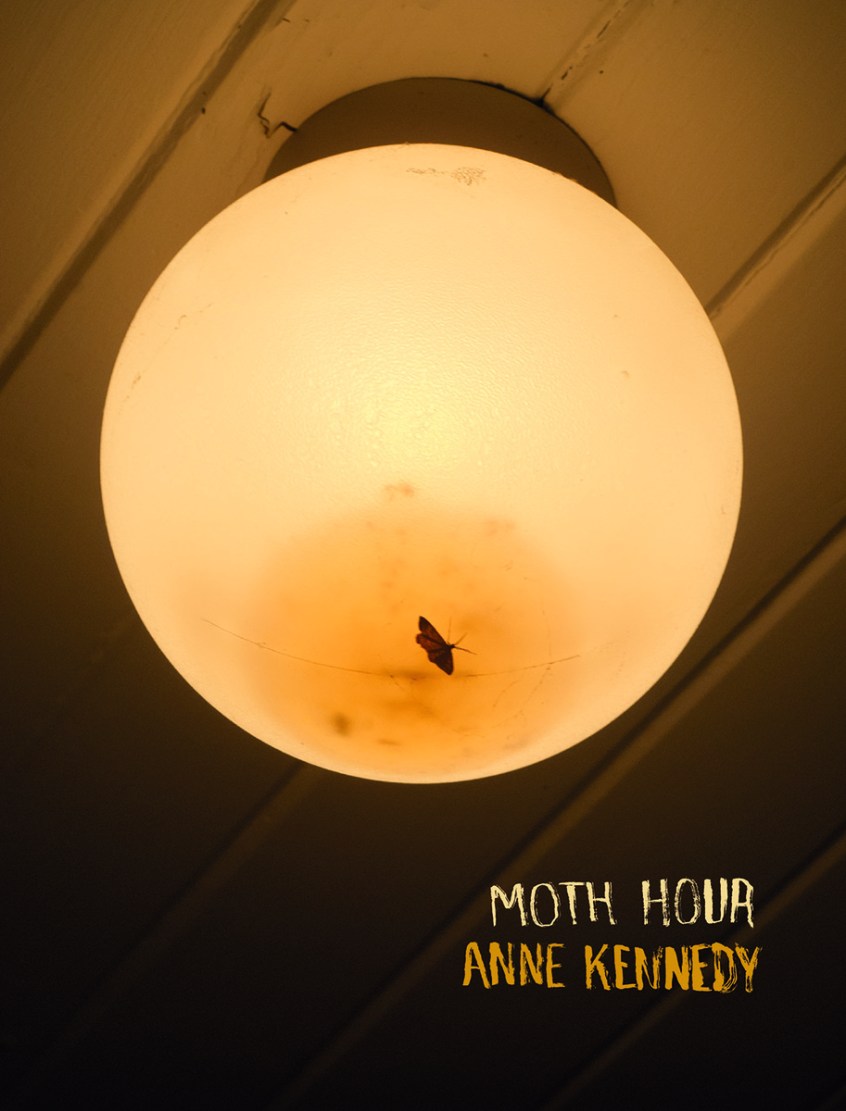
Anne Kennedy, Moth Hour, Auckland University Press, 2019
1.
The thing in the jar
always dies!
The rice cooker steams
so the sun goes down
Deep in the house
sepia gathers
The pencil has eaten
the fragile book
from ‘Thirty-Three Transformations on a Theme of Philip’
I first read Anne Kennedy’s new collection Moth Hour as a piece of music that traces the contours of grief. Words form little melodies, solo instruments sound out, there is echo, overlap, loop and patterning. Above all there is a syncopated beat that leaves room for breath, an intake of pain, an out-sigh of grief, an intake of observation, an out-breath of recognition. There is the fragile word-dance to the light.
Moth Hour responds to a family tragedy; in 1973, at the age of twenty-two, Anne’s brother, Philip, accidentally fell to his death. Anne, her seven siblings (she was the youngest and aged fourteen) and parents now lived with unbearable grief and loss, separately, diversely, as a family.
The book is in three parts: the long sequence ‘Thirty-Three Transformations on a Theme of Philip’, a coda poem ‘The Thé’ and an essay (‘Pattern/Chaos: Afterword’).
Over time Anne had read Philip’s book collection (think a 1970s gathering of books ) along with his poetry. She begins Moth Hour with one of his poems, an affecting piece that forms both the bony skeleton of her book and a fragile yet insistent pattern of echos. A voice calling out over the crevice, a voice that keeps returning. In Philip’s poem a speaker imagines being caught by a child and placed in a jar on a windowsill along with edible leaves, The Book of Tea, paper and a pen. The power of imagination is evoked.
These elements keep returning and if there is syncopation, a form of stutter, a difficulty of transmission, of speaking and retrieving, there is also fluency. The way both music and poetry can pull you into an utterly absorbing connective movement.
The second time I read Moth Hour I listened to Ludwig van Beethoven’s Thirty-Three Variations on a Waltz by Anton Diabelli because Anne had listened to this as she wrote the book. She had first listened to it over and over after Philip’s death.
Catch me little child and put me in a jar.
Ajar is small and a view of everything.
Hopefully we will always want and want for nothing.
Shall I seize you? Yes, I mean no. Please seizure.
We will live in a jar.
I will live in a jar. And the jar is a house.
Place inside a place inside.
That is how we will look out. Look out.
I am being very straight with you.
Look no hands.
In the language.
from ’19’ Thirty-Three Transformations on a theme of Philip’
The poetic fluency of Moth Hour carries so much in its momentum. There are detailed locations: a Wellington family home, the contemporary Auckland of the poet. Signs of the times (the 1970s). Surreal intrusions. Politics (again think the 1970s). There are contrasts: new / dead / breath; some / any. There are the rebounding questions. Ideas, feelings, words waver as though nothing can be fixed and certain. Such movement evokes a sense of linguistic play but it also performs the difficulty of the subject matter. Death is impossible to pin down. Grief equally so.
Such a symphonic effect means the reader participates in dis-equilibrium – the unease of unknowing along with the whoosh of connection.
If there are no air holes in the jar we cannot breathe but this book is all about breath. Breath is life sustaining and freedom. And yet this breath, this sustained breath of writing and recall, comes in gasps and puffs.
The second poem, ‘The thé’, reflects the concerns of the first – the reverberating motifs appear in a present tense of grief and observation – but now the short lines float apart on the page. A pattern of drift; the white space fractured like hicccupy breaths. Yet each line (melody) offers a moment of certainty. I am back to the music pooling inside me.
The poem burns off an hour.
We walk along the street many times.
The street is practice for death.
The chairs are aching in and out.
He staggers to his feet.
The the is ready to go through.
Ritual finally occupies the body.
Thoughts burst the shelter of the room.
The people swarm into the streets.
from ‘The Thé’
Like a mesmerising, lung-like piece of music, Moth Hour is a book of return-listening. Every time you place the poetry on the turntable of your reading you will hear something different. It blisters your skin. It touches you. But above all Moth Hour fills you with the variation and joy of what a lithe poet can do.
Anne Kennedy is a writer of fiction, film scripts and poetry. Her debut poetry collection Sing-song was named Poetry Book of the Year at the 2004 Montana New Zealand Book Awards. The Time of the Giants was shortlisted for the same award in 2006, and The Darling North won the 2013 NZ Post Book Award for Poetry. Her novles include The Last Days of the National Costume, shortlisted for the NZ Post Book Award for Fiction in 2014, and The ice Shelf was longlisted in the 2019 Ockham NZ Book Awards. She lives in Auckland.
AUP New Poets 5: Carolyn DeCarlo, Sophie van Waardenberg, Rebecca Hawkes, edited by Anna Jackson, Auckland University Press
Auckland University Press’s New Poets collections began in 1999 and, after an eight-year hiatus, has relaunched the series. Anna Jackson, who appeared in the debut issue, has edited volume 5 and written the foreword. The series serves as welcome launchpad for emerging poets and has, for example, included the work of Chris Tse, Sarah Quigley, Sonja Yelich, Erin Scudder and Reihana Robinson in previous volumes.
The recent launch at Unity Books (Wellington) was packed with an attentive audience – the reading highlighted three distinctive voices linked by poetic charisma: Carolyn DeCarlo, Sophie van Waardenberg and Rebecca Hawkes.
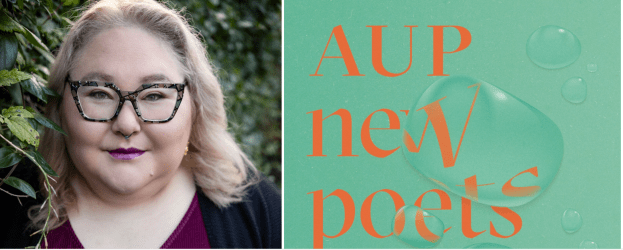
Carolyn DeCarlo, originally from USA, has read at various literary events including Welington’s LitCrawl, and runs the literary reading series Food Court. Her writing delivers mesmerising physicality, detail that illuminates the present tense, a moment that might be hyperreal in ways that startle or soothe or move you.
The opening poem ‘Spy Valley’ is a sumptuous rendition of a scene to the point it glows with heat and crackling light: it’s sensual, surprising, moreish. Every word is pitch perfect and every word adds to a building physicality that clings to you as you read.
(…) Their calls cleave the
valley like lightning, crackling in the air,
striking the dirt beneath your toes,
and when the drops of rain hit your face
thick as bread you’re unafraid,
you open wide, you spread your arms
and soak your skin in sanguine heat,
its spongy hug lulling you to sleep.
Carolyn offers textured poetry – almost as though you can brush your fingers over the surface of a poem and feel grains of feeling, its physicality, its movement. The poems often bridge the hyperreal and an everyday real, relishing the slow occupation of a moment, a place, a state of being. In ‘Fields of Glass’ the speaker stands musing on a glass hill – there is a building (sometimes sad and green, sometimes uncomfortable) driving the movement of the poem, the thoughts of the muser. Everything is slightly mysterious, anchorless, as though each stanza is a shortcut to censored feeling, reserved circumstances. Again the reading effect is addictive.
Another time, we danced
on the floor. Do you remember that?
Our socks bunched up
around our ankles
then our ankles around our knees
and so on.
I am eating tomatoes and crying,
if you sit beside me
I will let you carry the juice,
I am carrying the rain.
Much thought has been given to the order of the poems – water and rain ripple through, along with birds, trees, piquant colour. In the middle the speaker is anchored in the land, their body made visible, and anxiety appears like little body fractures, the physicality of the writing potent. This from ‘The Year I Let My Heart Go Asunder’:
I am crouched down on the bank of Wellington Harbour
and I am huge as the hills.
I am squatting with my bottom on Khandallah,
my feet in the harbour and the water barely splashing my ankles.
I love Carolyn’s selection of poems (Winter Swimmers) so much: it’s beautifully crafted, aurally satisfying, surprising in turn and revelation. There are a number of poems named ‘Winter Swimmers’; like a swelling and shifting contemplation that keeps changing hue and effect, yet never losing sight of the water, the swim stroke, the breath necessary for living, for writing, for reading. This selection is like a pair of lungs inside me, expanding and dilating, expanding and dilating. Glorious.
At the time of publication Sophie van Waardenberg was working at the Open Book in Ponsonby. She has completed a BA at the University of Auckland and is now undertaking an MFA in poetry at Syracuse University, New York State. Her poetry has appeared in a number of journals.
Sophie’s selection of poems – does a potato have a heart? – navigates learning the world in all its brittleness and wonder, especially through the glints and sharp edges of love.
In ‘Unhatched egg/two girls at easter’, a precious bird’s egg is discovered, wrapped and held close to the girl’s belly. The egg’s potential life is in razor contrast to the felled trees, the scarred landscape, but then life delivers the little blow with the cracked egg, the cracked future.
in the morning we two bury the fresh-cut shell by the river
where her parents had their honeymoon
and at hot noon with downy arms we swim there
under trees our failure has grown for us so quickly.
Love is a constant infusion, whether of a particular person close or at a distant. In ‘schön’ a woman (a beloved one) appears in a lyrical list poem like a chant; the love portrait builds sweetness and good feeling, along with topple and enigma:
my girl becomes a calendar and I curl up inside her
my girl becomes a tongue twister and I curl up inside her
my girl lets the spring in through her hands
she puts her hands over my ears and I remember how it feels
it is nice and nice and nice
One poem – ‘all the friendship bracelet makers have retreated’ – hooked me with its evocation of yearning and ache: of missing someone, missing home, of negotiating elsewhere and of being apart. The writing is confessional, yet prismatic in its different slants. Dislocation tempers location, location tempers mascara-smudged cheeks. The middle stanza is the exquisite heart of confession, the simile potent in meaning:
I want to be far away but I want to be home.
breath by breath I want these things.
let me show you how little I want to know:
make a fist and let no air in.
I want to make the world as tight around me
as I make my single duvet cover in winter.
On the adjacent page, ‘to keep all the bees out’ signals love’s potential pain and potential joy. The poem, with intricate and surprising detail, layers what ‘we’ do. Sophie is refreshing the scope and dimensions of confessional poetry; not everything is visible, not everything is stable, not everything is knowable. The hills they climb together ‘are eaten by their own edges’. Such a striking image of mist and uncertainty heightens the final stanza:
and the right ventricle of the human heart
does not have doors heavy enough
to keep all the bees out, and their stings
Sophie’s selection of poetry haunts me; it is an atlas of love, experience and feeling, with pronouns shifting to accommodate you and you and we and I, and poems that keep drawing you back. It feels fresh and original, and I love it.
Rebecca Hawkes grew up on a high-country farm near Methven. She graduated in media studies and then completed an MA in creative non-fiction at Victoria University.
As the title suggests Softcore coldsores is an audible kaleidoscopic rendition of life: startling, a sonic explosion in your ear, acutely visual, utterly satisfying. The poems move from milking cows to trying to go vegetarian, sexual fumblings, all manner of hungers and yearnings. ‘Gremlin in sundress’ is an intense and captivating blast of sound that catches an intensity of living and craving for life. I have heard Rebecca read live several times and it is an addictive experience – the sonic rewards find new traction in the air / ear. Here is the middle bit of the free-flowing, page-long ‘Gremlin in sundress’:
gimme something pretty but with brains
I can crack open gimme salt’n’pepper
tentacle dredged from the abyss and deep
fried gimme hot cephalopod gimme yer cold
shoulder gimme drunkenness gimme the vomitorium
next door to the buffet gimme mortal clay
with tingle and baby fat to live in
gimme glory gimme eternity gimme your likings
There are many paths through Rebecca’s poetry but every reading path is an intricate interplay of the visual and the aural. I keep rereading a poem to savour the music and and the visual impact. Maybe it makes a difference that Rebecca is a painter with a richly-hued palette and eye for massed and sensual detail. She takes me to the edge of vertigo at times, even squeamishness, in both her art and her poetry. Reading her poetry becomes a whole body experience (as it so often is) and I find myself unable to move onto the next thing, the next book, the next chore, the next outing. Perhaps at the core is the notion want: I am thinking of its varied meanings as Rebecca’s poetry pivots upon desire and upon lack.
With her high-country childhood it is not surprising the back blocks feature in some poems. The magnificent and utterly surprising ‘Dairy queen’ begins in the milking shed with an image of a shedhand:
you’re the other shedhand on the early morning shift
and you work shirtless
under your heavy rubber apron
which I appreciate from behind –
muscles moving under your tan
perspiring glossy as a cold can of golden pash
unfortunately the overall effect is ruined
by your bleach-blonde dreadlocks Grinch fingers
dyed greenish by weeks of cowpat splashback
Lust makes way for private musings on love and sadness, on loving people for their sadness and equally resenting a desire to be loved despite internal sadness. I am out of the cowshed into the secret moment, the little confession on the power of trust and tenderness: ‘all summer / I’ve been skittish and gentle like a puppy / saying hello by resting my whole mouth around your hand but not biting’. This sweet piquant moment is like a eyecatching flash before we return to the cowshed, the sexual pulls, and an image of the speaker in a water trough, bathed in barley seed and molasses.
I am also entranced (held in the grip of) by ‘Add penetrant to preferred broadleaf herbicide & devastate the wildflowers’. The poem brings the rabbit-infested, lupin-covered Mackenzie Country into sight by interweaving opposing views, both opinion and what you frame in your camera lens. Driving through the beauty in this poem is to drive through the Mackenzie basin with reactivated eyes:
as the lupins bloom out the summer in their splendid blushing colonies
both the planters of lupins & their weedkiller neighbours insists
that nature should take its course
but they can’t agree on what nature means:
conserving shrivelled unpalatable tussock or letting slip
the lupine war on the landscape
Rebecca’s poetry has such potency the poems stick to your skin and you carry them all day, reflecting back on the twisty turns, the compounding rhythms that act as both torrent and ripple, the bits that make little bites which get you thinking and feeling. For a small cluster of poems to do this is astonishing.
A welcome return, AUP New Poets 5 delivers three poets who fit together beautifully. Their writing is complex, unafraid of feeling, physical, invigorated and invigorating. Yet each poet offers a distinctive voice that is highly addictive; it is like getting to swim in three very different locations with three very different impacts on your body as you move. I can’t wait for the next volume (it’s in the pipeline) and I can’t wait for debut collections from these three fresh voices.
And at the same time as the prince married the princess and the Little Mermaid turned into not even sea foam, but air, Andersen wrote to his friend Edvard Collin, who was also about to marry: ‘I languish for you as for a pretty Calabrian wench … my sentiments for you are those of a woman.’ Collin later wrote in his memoir, ‘I found myself unable to respond to this love, and this caused the author much suffering.’ Gosh, I can barely move for the shards of broken hearts beneath my feet.
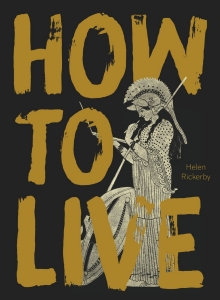
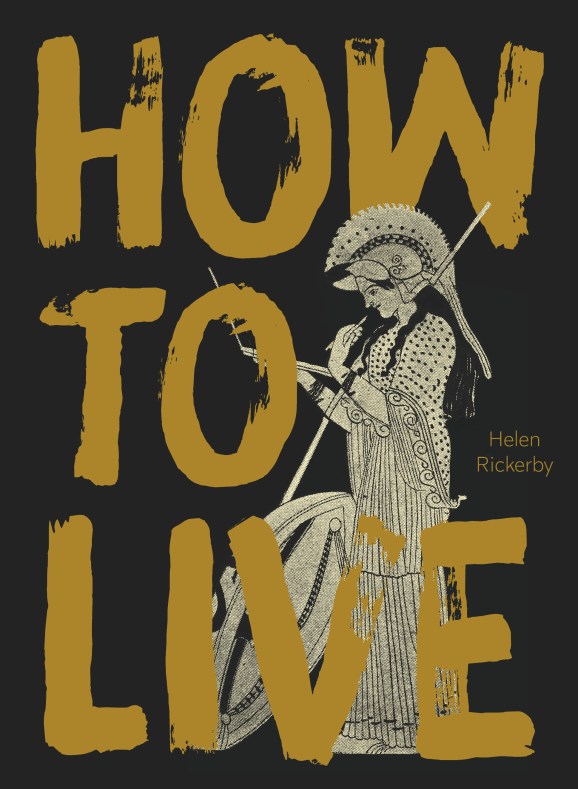
Helen Rickerby, How to Live, Auckland University Press, 2019
Helen Rickerby is the author of four collections of poetry, most recently How to Live (Auckland University Press, 2019). She likes questions even more than answers. Since 2004 she has single-handedly run boutique publishing company Seraph Press, an increasingly important publisher of New Zealand literature, focusing on poetry. Helen lives in a cliff-top tower in Aro Valley, and works as an editor.
How to Live, Helen Rickerby, Auckland University Press, 2019
When that philosopher said life must be lived forwards
but can only be understood backwards
he was not thinking of me
I have lived all kinds of lives
from ‘A pillow book’
Helen Rickerby’s latest poetry collection How to Live is a joy to read. She brings her title question to the lives of women, in shifting forms and across diverse lengths, with both wit and acumen. Like many contemporary poets she is cracking open poetic forms – widening what a poem can do – as though taking a cue from art and its ability both to make art from anything and in any way imaginable.
Reading this book invigorates me. Two longer poems are particularly magnetic: ‘Notes on the unsilent woman’ and ‘George Eliot: a life’. Both function as fascination assemblages. They allow the reader to absorb lyrical phrases, humour, biography, autobiography, insistent questions. Biography is enlivened by such an approach, as is poetry.
6. It seems to me that poetry usually begins with the self
and works its way outwards; and the essay, perhaps, starts
outwards and works its way in towards the self.
from ‘Notes on the unsilent woman’
Thinking of the silent woman I am reminded of Aristotle’s crown of silence that he placed upon she. I then move across centuries to Leilani Tamu’s poem ‘Mouths Wide Shut’ where she sits on a bus with her mouth taped shut silent. The skin-spiking poem (and the protest) considers silence in the face of racism. Even now, even after the women’s movements of the 1970s and the explosion of feminism and feminisms over ensuing decades, men still talk over women, still dismiss the women speaking (take women in power for example, or a young woman at the UN challenging climate-change inertia).
What Helen does is remind us is that silence is like snow – it is multi-hued and deserves multiple names and nuances: ‘Silence isn’t always not speaking. Silence is sometimes / an erasure.’
Ah the stab in my skin when I read these lines. In ‘Notes on the unsilent woman’ Helen draws me in close, closer and then even closer to Hipparchia of Maroneia (c 350 – c 280 BC).
5. But I do have something to say. I want to say that she
lived. I want to say that she lived, and she spoke and she
was not silent.
Helen gathers 58 distinctive points in this poem to shatter the silence. Sometimes we arrive at a list of women who have been both audible and visible in history, but who may have equally been misheard, misread and dampened down. At other times the poet steps into view so we are aware of her writing presence as she records and edits and makes audible. In one breath the poet is philosopher: ‘Silence might not be speaking. It might be / listening. It can be hard to tell the difference.’ In another breath she apologies for taking so long to bring Hipparchia into the picture.
Elsewhere there is an ancient warning: ‘”If a woman speaks out of turn her teeth will be / smashed with a burnt brick.” Sumerian law, c. 2400 BC.’
A single line resonates with possibilities and the ‘we’ is a fertile gape/gap/breathing space: a collective of women, the poet and her friends, the women from the past, the poet and I: ‘There are things we didn’t think we could tell.’ Yes there are things we didn’t think we could tell but then, but then, we changed the pattern and the how was as important as the what.
Another single line again resonates with possibilities for me; it could be personal, it could equally be found poetry: ‘I would like to be able to say that it was patriarchy that stopped me talking on social media, but it wasn’t, not / directly.’
I read ‘Notes on the unsilent woman’ as a poem. I read this as an essay. I am tempted to carry on with my own set of bullet points as though Helen has issued an open invitation for the ‘we’ to speak. Me. You. They. She quotes Susan Sontag: ‘The most potent elements in a work of art are, often, its silences.’
The other poem I dearly love, ‘George Eliot: a life’, is also long form. Like the previous poem this appears as a sequence of numbered sections that are in turn numbered in smaller pieces. It is like I am reading a poem and then an essay and then a set of footnotes. An assemblage of fascinations. Biography as fascination allows room for anything to arrive, in which gaps are curious hooks, reflective breathing spaces and in which the personal is as compelling as the archives. Helen names her poem ‘A deconstructed biography’ and I am reminded of fine-dining plates that offer deconstructed classics. You get a platter of tastes that your tongue then collates on the tongue.
To taste ‘George Eliot: a life’ in pieces is to allow room for reading taste buds to pop and salivate and move. This is the kind of poem you linger over because the morsels are as piquant as the breathing spaces. It delivers a prismatic portrait of George Eliot but it also refreshes how we assemble a biography and how we shape a poem. Helen brings her acerbic wit into play.
10.7.1. But the fact is, and I don’t want to give you spoilers, that for such an
extraordinary woman she sure did create some disappointing female
characters. Even the heroines don’t strike out – they give up, they stop,
they enclose themselves in family, they stand behind, they cease, they die.
They found nothing.
10.7.2. Did she think she was too exceptional to be used as a model for her
characters? Did she think that while she was good enough to be involved
in intellectual life, and she could probably even be trusted to vote, the same
could not be said for her inferior sisters?
A number of smaller poems sit alongside the two longer ones including the moving ‘How to live though this’, a poem that reacts to an unstated ‘this’. ‘This’ could be anything but for me the poem reads like a morning mantra that you might whisper in the thick of tough times or alongside illness or the possibility of death.
‘How to live’ is a question equally open to interpretation as it ripples through the poems; and it makes poetry a significant part of the myriad answers. I haven’t read a book quite like this and I love that. The writing is lucid, uplifting, provocative, revealing, acidic, groundbreaking. The subject matter offers breadth and depth, illuminations, little anchors, liberations, shadows. I am all the better for having read this book. I just love it.
Launched in 1999, AUP New Poets first introduced readers to Anna Jackson, Sonja Yelich, Janis Freegard, Chris Tse and many other significant New Zealand voices. Relaunching this year under the editorship of Anna Jackson and with a bold new look, AUP New Poets5 includes substantial selections from the poetry of Carolyn DeCarlo, Sophie van Waardenberg and Rebecca Hawkes.
Helen Rickerby’s ‘Notes on the Unsilent Woman, Note 2’: ‘Perhaps the first thing you need to know is that women in ancient Athens didn’t get out much. No dinner parties, no debate, no public life. Unless you were already ruined. Or unless you were Hipparchia.’
Times have changed – and here we all are – to launch Helen Rickerby’s How to Live alongside AUP New Poets 5.
Before I talk about How to Live, I want to thank Sam Elworthy for supporting my wish to see the AUP New Poets series relaunched, for sharing my enthusiasm for poetry and projects generally, and for all he does for New Zealand poetry. I’d also like to acknowledge Elizabeth Caffin’s role in launching the series of AUP New Poets in 1999, and Anna Hodge’s support of the series under her editorship, and I’d like to thank the whole AUP team for everything they have done to support this beautiful collection of poems I love so much from Rebecca Hawkes, Sophie van Waardenberg and Carolyn DeCarlo. Most of all I want to thank the poets themselves for the extraordinary poetry which is setting this series back in motion.
I first knew Helen Rickerby when we were both fairly new poets ourselves, and I knew her poetry before I met her. I was very taken by her Theodora character in her first collection Abstract Internal Furniture, and the way the whole collection glitters with dark comedy, rapid shifts of scene, and exuberant detail. ‘I think I’ll edit out those long silences’, she writes in one poem from that book, though even back then she was deciding to ‘leave in some of the shorter ones for effect.’
Now – several books of poetry and many years later – we have the book-length considered take on silence – and outspokenness – of How to Live: book-length because the ‘Notes on the Unsilent Woman’ which opens the book sets up questions and ideas that resonate all through the collection.
Notes on the Unsilent Woman, Note 53:
Hipparchia wrote treatises such as Philosophical Hypotheses, Epicheremas and Questions to Theodorus. Letters, jokes, philosophical refutations. All are lost. (Crates wrote Knapsack and Praise of the Lentil.)
A small note can say a lot, and it is a characteristic Rickerby move to pair the loss of intellectual history represented by Hipparchia’s lost treatises with the pointed addition of the titles of the work of Hipparchia’s more famous philosopher husband, to whose life she typically appears as a footnote, at best. His place in this note, in parentheses, after the main point is made, is just one of the many lightly undertaken total overhauls of intellectual history this book of poetry offers.
Its own title – How to Live – indicates its philosophical reach: this is a book that asks the biggest questions. The title poem references Susan Sontag, Helen Keller, Empedocles, Adorno and other philosophers and writers, alongside friends discussing the big questions in person and on facebook – ‘I am forever putting my friends in’, Helen confesses, and her friends are forever finding themselves caught up in extended conversations that take in the details, big and small, of their own lives.
The collection as a whole takes in questions such as how to choose a good fork or how to choose a house; how to read and how to listen; when we choose to suffer – ‘It all depends on / what the other choice is’ – and the question of what poetry is for, what is poetry? It is an urgent question for a poet constantly questioning her own practice, constantly experimenting with form: about the prose-like appearance of some of these poems on the page, she says, ‘I have long struggled against the tyranny of the line break. Am I afraid that if I let the words leak out, they’ll mix with oxygen and become prose?’
What happens in fact is a collection which rewrites the boundaries of poetry and prose to dazzling effect, as, for instance, the interest in portraiture that goes right back to the Theodora character of her first book now gives rise to entirely new forms of biography – the sharply comic, occasionally personal, often poignant and brilliantly illuminating verse essay on George Eliot, in thirteen numbered sections (with sub-sections); the ‘poem for three voices’ moving between the perspectives of Mary Shelley, Victor Frankenstein and the monster himself; the meditation on the life of Ban Zhao as palimpsest, pillow book and personal essay.
If Helen Rickerby is New Zealand’s most intellectually exciting writer (and I think she is), it is not although but because she writes always as a poet, with a poet’s interest always in form. And it works just as well to turn the equation around to say she is one of the most formally innovative poets in New Zealand, because her interest in formal innovation is always driven by the intellectual ideas she grapples with.
And she’s funny. For all its formal interest and intellectual brilliance, what I really most love about the book is the voice – but for that, I can do no better than to hand over to Helen herself.
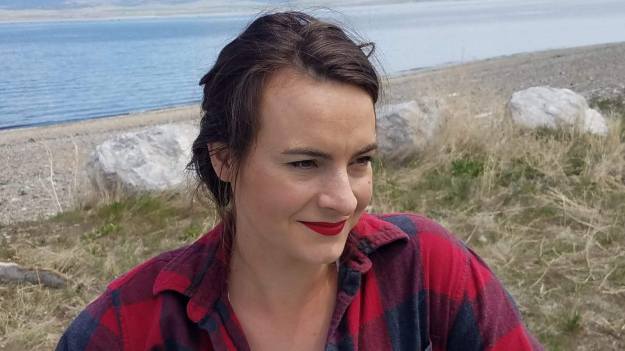
Amy Leigh Wicks holds a PhD from the International Institute of Modern Letters at Victoria University. Originally from New York, her debut collection Orange Juice and Rooftops appeared in 2009 while her poetry has also appeared on The Best American Poetry blog and in several local journals. She lives in Kaikōura with her husband.
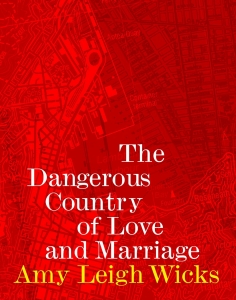
Amy Leigh’s new collection The Dangerous Country of Love and Marriage is an intricate weave of themes, motifs, forms and sound effects that offers much for the reader. Strangeness and discomfort sit alongside beauty and soul searching as a woman writes between her birthplace and her new home. The enigmatic gaps in the narration are counterbalanced by sumptuous detail, exquisite images, tiny admissions; the melodic lines build both the music of place and the music of character. As much as it is a physical world marked by mountains, oceans, anchors and salt, it is an abstract world marked by conversations with God. It is a collection that has stuck with me.
Amy Leigh Wicks, The Dangerous Country of Love and Marriage, Auckland University Press, 2019
Paula: When did you first start reading and writing poetry?
Amy Leigh: I remember coming across a box in my grandparent’s attic when I was about seven. The box was filled with mostly handwritten poems by my Grandma. They mostly rhymed, and her writing was in cursive, so I couldn’t make out all the words. I felt I had found a treasure box. Later, I locked myself in Grandpa’s office and emerged however many hours later with a poem I’d written that I gave to Grandma. She cried a little when I read it aloud to her, and took me out for an ice-cream sundae, which was as good as winning the lottery as far as I was concerned.
Paula: Oh what a wonderful memory. Were there any poetry turning points and/or epiphanies between that young girl writing and your recent collection?
Amy Leigh: A whole sky full of stars map the journey between little Amy Leigh writing and this collection. The epiphanies and turning points are bright pinpricks against a darker subconscious, and the constellations that I see, clear as Orion, are comprised of poems, lectures, exhibitions, drawings on napkins. Reading Nikki Giovanni’s poem Ego Tripping in high school alongside Shakespeare’s sonnets; sitting in Lorene Taurerewa’s Brooklyn studio as she described walking to school beside the barefoot James K. Baxter in Whanganui; working on sestinas and villanelles with locals in Kaikōura after the 7.8 earthquake: these are some of the influences that shape the way I read and the way I write.
The house is quiet and then the sound of bees
gather at my head. Will you let me be swallowed
by this? Another wave, another scalloped
rim of water on top of quiet water.
from ‘Impasse’
Paula: Your new collection weaves multiple themes and poetic effects. I view it as both a long narrative poem and a sequence of intensely connected pieces. What do you like your poetry to do?
Amy Leigh: When selecting poems for this collection, I wanted the reader to be able to let the book fall open and read a single poem without feeling they’d missed something vital. I also wanted a cover-to-cover reading to feel like one unfolding narrative that moved forward in time and backwards through memory in order to recover things that may have been lost along the way.
When the roof is pried from
the house and I am a sardine
(blinkless before you)
what will you say to me?
I see your hills, and yes,
every night a different
sun leaves slamming the door,
rattling the handle behind it.
from ‘Psalm III’
Paula: At times it felt like poetry as prayer. Did it ever feel like that to you?
Amy Leigh: Very much. The sestinas offer a sort of liturgical reprieve, and Epiphany deals directly with the uncertainty and catharsis of prayer—‘it was just me, alone with the bruise/ of a bad decade, finally asking toward the sky/ for a little help, shuddering ugly tears until/ I was dry in the silence of an answer I’m still/learning to understand.’
expatriate
it is like heaven
here and every
where else too
but some sad
-ness hangs in
the air and I do
not know if I
carried it or of
it carries me
Paula: I am drawn to the way the collection layers the strange, unknowable and the unsettling within the context of a marriage and multiple homes. Does it make a difference where you are when you write?
Amy Leigh: Yes, I believe it does. I’ll write where I am, regardless of the environment, but Kapiti Island at sunset in Plimmerton, wooden tables cluttered with tea cups at writing group in Kaikōura—these things affect my writing the way altitude, rainfall, and sunlight affect the flavour profile of a coffee bean.
Where else is there to go once I’ve got
paper, a new pencil with a green eraser
and half a peanut butter and jam sandwich? If
I could erase one year of my life
what would fill the hole? (..)
from ‘August’
Paula: How much of yourself do you let into the sequence and how much do you hold at arm’s length? In some ways I see the poems as both losing and finding things (including self).
Amy Leigh: While the poems in this collection are based on happenings in my life, the only confessional elements of the work that I’ve retained, are those elements that feel necessary to the advance the poem, or the collection. I have kept and discarded facts intentionally while putting this book together, in an attempt to perform the artist’s task as Louise Gluck describes, which ‘involves the transformation of the actual to the true.’
Paula: I have many favourites (‘Psalm II’, ‘Psalm III’, ‘Water Song’, Psalm X’, ‘Log No. 4’) but which poem particularly resonates for you? In either subject matter or resolution?
Amy Leigh: It depends on the day for me. Usually my favourite poem is the one I’ve just finished writing, until a bit of time goes by and I can look at it more objectively and less like an offspring of mine that needs nurturing. At the moment I’m fond of ‘Remnant’. Just a little poem, but it makes me smile to be sharing a personal revelation that I find a little embarrassing in such a public way.
Remnant
Once I said, I want
to be a lawyer, a doctor,
and a ballerina—
I woke twenty years later
writing these poems.
Paula: Are there any poetry books that you have read in the past year or so that have particularly mattered?
Amy Leigh: I’m reading Sugar Magnolia Wilson’s Because a Woman’s Heart is Like a Needle at the Bottom of the Ocean at the moment. I met her at a reading in Wellington recently, and I felt as if someone had filled the room up with champagne while she read her work and we were all floating in it. Her voice and her words had this incredibly soft effervescent quality. Then when I held the book in my hands and let it fall open (which is what I like to do first before I begin reading a collection from start to finish) I opened to Full moon celebrations and I thought, this is really something. To feel such resonance and joy at reading a stranger’s words is an incredible thing.
Paula: What do you love to do when you are not writing?
Amy Leigh: I love to dance and cook, and paint, although not usually at the same time. I also love to curl up with a stack of books on a rainy day, but if I’m not careful, before long I end picking up my pen and notebook.



 NZ Poetry Shelf