A screen shot to hook your interest and a link.


Kia ora koutou,
You are warmly invited to the launch of Serie Barford’s poetry and short story collection, Entangled Islands, published by Anahera Press, and held in conjunction with Poetry Live. With music by Brendan and Alison Turner, and readings from the book by Serie. MC-ed by Kiri Piahana-Wong. Entangled Islands will be launched by Karlo Mila. Food and drink available from the bar. Thanks to Creative New Zealand for supporting the publication of this book.
8 pm: Brendan and Alison Turner (folk/blues duo)
8.45 pm: Book launch
9.15 pm: Poetry Live resumes with open mic – all welcome to read

I am so delighted Anna Jackson is the 2016 Menton recipient. When a poet goes to Menton, poetry benefits (thinking of Bill Manhire and Jenny Bornholdt).
Last Friday, with no inkling of the news, I posted this poem by Anna. I can’t wait to see what she does in France.
Scenes from the photographer’s childhood: wardrobe
She kneels in the red light of her wardrobe, leaning
over one tub of chemicals to pull out the dripping
sheet from the one in the far corner, the space so
small, the smell so sharp, the image not that
of her mother, poking her amused face
around the bathroom door as she heaved
it open, pushing across the floor the barricade
set up to keep her out, nor of her own fury, still
sharp days later, but the shot she had taken
seconds earlier of her body, her legs
half shaven, still half dressed in foam.
Every night, without fail, whatever
time she takes her bath, within minutes
her mother suddenly just has to wash
her hands. It is this, even more than the
ruined image, that makes her scream
when her mother opens the wardrobe now,
an extended scream that the exhausted
mother next door, in her faded blue thrift
shop dress, covered in spilt milk, thinks will
never end, and so joins in, even though
it will wake the baby, which it does: and now
they are all screaming, the girl in B, the neighbour
in G, and the baby in F, a long, tense chord
of such helpless rage, almost a panic, it seems
it must rise up, it will ruin them all, there
can never be any release, their throats, all three,
scraped raw, the scream continuing, the
exhausted mother holding, perfectly, her note
of G, as the baby drops to E, the photographer
rising to C, holding for four beats and then
stopping, just as the baby stops, and so
the mother stops too and for the long moment
before the baby starts again, stands rapt
in the most perfect silence
she has ever known and will ever know
again, milk all through her dress, blue
jug in pieces on the floor,
exactly at the midpoint of her life.
© Anna Jackson 2015
Author bio: Anna is the Programme Director in the English Department at Victoria University. She has published five poetry collections, including Thicket, which was shortlisted for the New Zealand Post Book Awards in 2011. Her latest collection I, Clodia, and Other Portraits was published by Auckland University Press in 2014 (my review here). Anna is currently organising a Ruapehu Writer’s Festival with Helen Rickerby to be held in Ohakune, March 2016 (Facebook page here).
Paula’s note: This surprising poem, holds narrative in its palm, a sharp moment that reverberates with implication. I get to the end and I am pulled back to the beginning, again and again. The musical chord that holds the moment together (and thus the poem) jars, unsettles — until that moment of silence and it feels like time has iced over. Within that silent beat, poetry blooms. Ha! I need to get to work but this poem keeps distracting me. I adore the power of poetry to do just that.
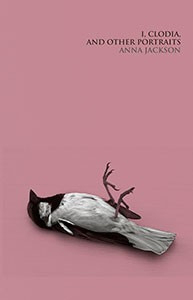
Auckland University page
New Zealand Book Council page
Anna Jackson’s poem, ‘Afraid of falls?’ on Poetry Shelf.
Anna Jackson’s interview on Poetry Shelf
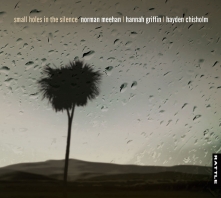
Small Holes in the Silence Rattle VUP
The CD looks good with its striking cover but what matters is that this CD sounds spectacular. Norman Meehan on piano, Hannah Griffin on voice and Hayden Chisholm on saxophone have taken a number of New Zealand poems (terrific poems) and transformed them into song.
For example: Hone Tuwhare’s ‘Rain’, Bill Manhire’s ‘Ballad of the Hurting Girl,’ James K Baxter’s ‘High Country Weather,’ Alistair Campbell’s ‘Blue Rain,’ Eileen Duggan’s ‘Frost,’ David Mitchell’s ‘Yellow Room.’
Tricky stiff — translating poetry into song when the new score might muffle the internal music to such an extent the poetry suffers. How does word meet external melody?
In this case, the poem becomes something different, a wonderful different that almost needs a new word to signal its poetry/music status. Word becomes music and music becomes word. Like a yin yang kind of thing. Two sides of the one cloth.
I loved the enticing interplay between silence, chord, harmony, counterpoint, key, movement and word. The arcing melody of instrument and voice step out from a word or phrase. Lightly. Surprisingly. Beautifully.
And the voice. The glorious voice that makes hairs stand on end. Hannah takes a word and savours it in her mouth. The word itself becomes aural poem with its dips, lifts and extensions.
Ah. Poetry becomes melody, melody slips into the pores of your skin and when you return to the poem on the page there is this haunting refrain. The voice, the piano, the saxophone — secret aural undercurrents as you read.
Plus there is a great introduction by Bill Manhire. I especially agree with this: ‘The music doesn’t overpower the words; but neither does it defer to them.’
I highly recommend this!
Writing ‘The Stain of Blood’: A Symposium on Poetry and History
will be held at Victoria University of Wellington on 4–5 December 2015.
Read the call for papers here.
Scenes from the photographer’s childhood: wardrobe
She kneels in the red light of her wardrobe, leaning
over one tub of chemicals to pull out the dripping
sheet from the one in the far corner, the space so
small, the smell so sharp, the image not that
of her mother, poking her amused face
around the bathroom door as she heaved
it open, pushing across the floor the barricade
set up to keep her out, nor of her own fury, still
sharp days later, but the shot she had taken
seconds earlier of her body, her legs
half shaven, still half dressed in foam.
Every night, without fail, whatever
time she takes her bath, within minutes
her mother suddenly just has to wash
her hands. It is this, even more than the
ruined image, that makes her scream
when her mother opens the wardrobe now,
an extended scream that the exhausted
mother next door, in her faded blue thrift
shop dress, covered in spilt milk, thinks will
never end, and so joins in, even though
it will wake the baby, which it does: and now
they are all screaming, the girl in B, the neighbour
in G, and the baby in F, a long, tense chord
of such helpless rage, almost a panic, it seems
it must rise up, it will ruin them all, there
can never be any release, their throats, all three,
scraped raw, the scream continuing, the
exhausted mother holding, perfectly, her note
of G, as the baby drops to E, the photographer
rising to C, holding for four beats and then
stopping, just as the baby stops, and so
the mother stops too and for the long moment
before the baby starts again, stands rapt
in the most perfect silence
she has ever known and will ever know
again, milk all through her dress, blue
jug in pieces on the floor,
exactly at the midpoint of her life.
© Anna Jackson 2015
Author bio: Anna is the Programme Director in the English Department at Victoria University. She has published five poetry collections, including Thicket, which was shortlisted for the New Zealand Post Book Awards in 2011. Her latest collection I, Clodia, and Other Portraits was published by Auckland University Press in 2014 (my review here). Anna is currently organising a Ruapehu Writer’s Festival with Helen Rickerby to be held in Ohakune, March 2016 (Facebook page here).
Paula’s note: This surprising poem, holds narrative in its palm, a sharp moment that reverberates with implication. I get to the end and I am pulled back to the beginning, again and again. The musical chord that holds the moment together (and thus the poem) jars, unsettles — until that moment of silence and it feels like time has iced over. Within that silent beat, poetry blooms. Ha! I need to get to work but this poem keeps distracting me. I adore the power of poetry to do just that.
Auckland University page
New Zealand Book Council page
Anna Jackson’s poem, ‘Afraid of falls?’ on Poetry Shelf.
Anna Jackson’s interview on Poetry Shelf
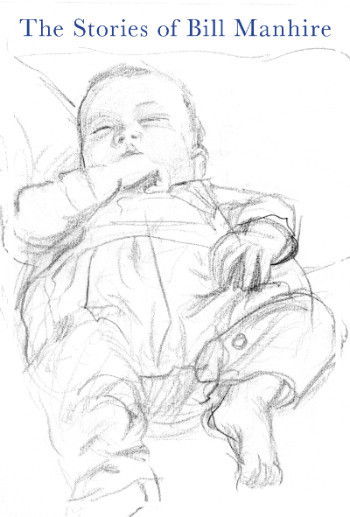
You are warmly invited to attend the launch of
The Stories of Bill Manhire
on Thursday 12 November, 6pm–7.30pm
at Unity Books,
57 Willis St, Wellington.
The book will be launched by Damien Wilkins.
Bill will be available to sign copies.
$40, hardback.
cover illustration, ‘Sleeping Baby’ by Peter Campbell
About The Stories of Bill Manhire
Sheep-shearing galas, Antarctic ponies, human clones, the Queen’s visit to Dunedin, a pounamu decoder, a childhood in the pubs of the South Island, the last days of Robert Louis Stevenson—this is Bill Manhire as backyard inventor, devising stories in which the fabulous and the everyday collide.
THE STORIES OF BILL MANHIRE collects the stories from The New Land: A Picture Book (1990) and those added to South Pacific (1994) and Songs of My Life (1996). In addition there are previously uncollected and unpublished stories, the choose-your-own-adventure novella The Brain of Katherine Mansfield (1988), and the memoir Under the Influence (2003).
In particular, we are interested in submissions for the Cafe Reader, 3000 words or less, in the form of short stories or editorial. The Cafe Reader is published quarterly and 12 to15 authors typically appear per issue.
We also publish poems in the zine but typically no more than three per issue so competition for that space is aggressive.
Our authors’ Honoria for the Cafe Reader are $250.00 for fiction and editorial (3000 words or less plus an authors’ bio and whatever input the author can contribute regarding an illustration for the piece – no additional compensation is available for use of photos or original art work used to illustrate each piece; however, we will assist with finding illustrations as necessary).
We pay $150 for poetry submissions that are accepted for the Cafe Reader. This compensation covers anywhere from 1 to 4 poems per author depending on length.
Submissions to the Cafe Reader must be previously unpublished in any format. Copy Rights are retained by the author. However, the author agrees that Phantom Billstickers has the right to use the piece in both the Cafe Reader hard copy and digital formats (the Cafe Reader is currently available for download on Amazon.com) for both domestic and international distribution.
By submitting, they also agree that the piece published in the Cafe Reader will not be published in any other format between the publication date of the issue where it appears and the publication date of the next quarterly issue of the Cafe Reader. We do not guarantee which issue any piece will appear in. When a piece is scheduled to appear a layout will be provided to the author for review and approval prior to publication.
Submission Format – editable WORD document submitted via email is the preferred format. The author should provide some background information about themselves in conjunction with the submission.
The following is a blurb about the Cafe Reader which may be helpful in pointing writers in the right direction regarding themes:
The Phantom Billstickers Cafe Reader is a quarterly literary zine featuring short stories, poems, art and editorial by New Zealanders. The stories we publish are heartfelt glimpses into family, community, and the more colourful aspects of the creative life in New Zealand. Many of our articles and stories revolve around Kiwi music. Our contributors range from globally recognized Kiwi authors to emerging artists who deserve to be heard.
Additionally, Phantom Billstickers publishes 8 poem posters per quarter that are not published in the Cafe Reader. Poets are not compensated for the first poem we publish on a poster but are paid $75.00 for additional poems that are selected for use over time. We have been running the poems on posters program for 7 years now and there are many poets who have been published on 2 or more occasions over that time.
Message from Karen Ferns:
The New Zealand Book Awards Trust (NZBAT) has been talking to The company Phantom Billstickers a prominent street poster company who also invest some of their time and energy -into producing poems on posters and a café reader they produce and distribute quarterly. The café reader is edited by David Eggleton and contains poetry, short fiction and non-fiction.
As we have talked together NZBAT have discovered Phantom would like more submissions from poets and writers. They want more submissions from women as currently they receive more submissions from men, but are also interested in widening their talent pool in a variety of ways so anything goes.
The email to send submission to is submissions-cafereader@0800phantom.co.nz
Poetry Shelf extends warm congratulations to Michael and the Highly Recommended poets.
Press release:
Michael Harlow has won the Kathleen Grattan Poetry Award 2015 with his collection of poems Nothing For It But To Sing.
‘Michael Harlow’s poems,’ says Emma Neale, judge of this year’s Grattan Award, ‘are small detonations that release deeply complex stories of psychological separations and attractions, of memory and desire.’
‘This is a poet with such a command of music, the dart and turn of movement in language, that he can get away with words that make us squirm in apprentice workshops or bad pop songs – heart, soul – and make them seem newly shone and psychically right.’
On hearing the news Michael Harlow said, ‘I’m absolutely delighted particularly because it involves publication with Otago University Press. It will be wonderful to be on the OUP list.’
Michael was at a World Poetry Festival in Romania when he received the news. Commenting on the $10,000 award money he said, ‘it will buy time – the thing that all writers need. I’m planning to use the time to work on a book of prose poems.’
The award attracted 109 entries. Six poets were highly commended: Hannah Mettner, Elizabeth Morton, David Howard, Nick Ascroft, Alice Miller and Victoria Broome.
The Kathleen Grattan Award is one of the richest poetry prizes in New Zealand. Otago University Press accepts the winning manuscript for publication and the winner also receives a year’s subscription to Landfall.
Auckland poet Kathleen Grattan, a journalist and former editor of the New Zealand Woman’s Weekly, died in 1990. Her daughter Jocelyn Grattan, who also worked for Woman’s Weekly, shared her mother’s love of literature. Jocelyn generously left Landfall a bequest with which to establish an award in memory of her mother.
Previous winners are Joanna Preston (The Summer King, 2008); Leigh Davis (Stunning Debut of the Repairing of a Life, 2009); Jennifer Compton (The City, 2010); Emma Neale (The Truth Garden, 2011) and Siobhan Harvey (Cloudboy, 2013).
The biennial award will next be granted in 2017 (see Otago University Press website for further details: http://www.otago.ac.nz/press).
About Michael Harlow
Michael Harlow has published ten books of poetry: Giotto’s Elephant (AUP, 1991) and The Tram Conductor’s Blue Cap (AUP, 2009) were both finalists in the national book awards. Harlow has held numerous fellowships and residencies including the Katherine Mansfield Fellowship and the Burns Fellowship. In 2014 he was awarded the prestigious Lauris Edmond Memorial Award for Distinguished Contribution to New Zealand Poetry. This year (2015) he received the Beatson Fellowship for writers. Michael Harlow lives and works as a writer, editor and Jungian therapist in Alexandra, Central Otago.
 NZ Poetry Shelf