Ah poem bliss: Summer Noelle is giving poetry a little spot in the sun

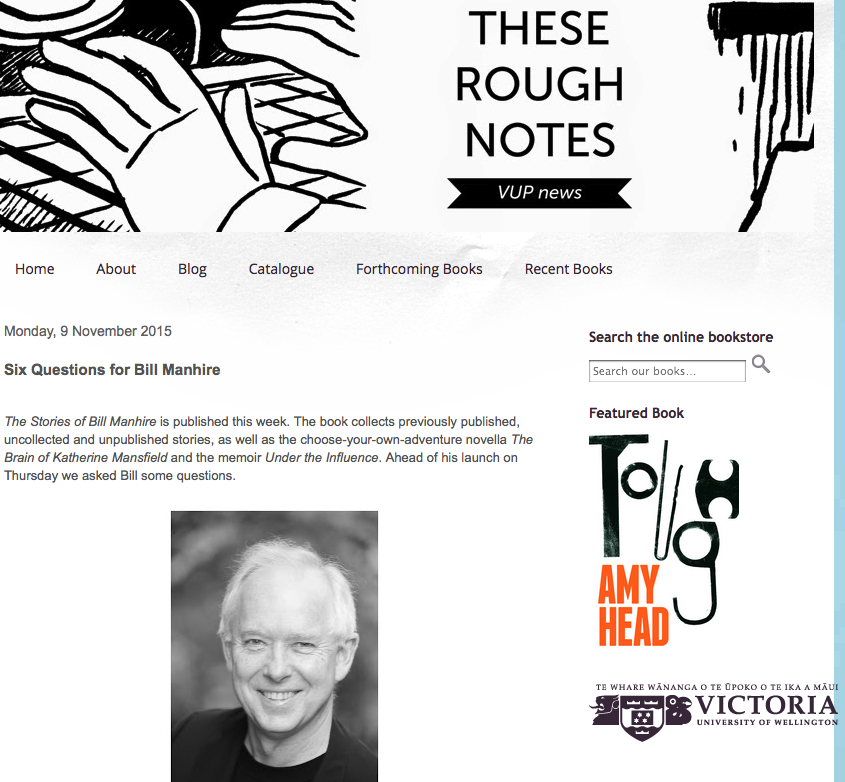
Summer Noelle has invited a number of New Zealand poets to talk about and read a poem they wish they had written.

I have just pre-recorded my choice with Noelle (you will have to wait until summer to find out which poem!)

What a treat to have a conversation with someone who has read and loved the poem too with such enthusiasm. After I finished, I realised I spend a lot of my time writing poems, and writing abut poems, but very rarely having conversations about poems. Ha! It is such a pleasure.

Maybe I need to invent a poetry book club.

Bravo Summer Noelle and RNZ!


A taster of what’s to come:

Bill Manhire’s kicking us off plus Paula Green, Michele Leggot, Ashleigh Young, Joan Fleming, Airini Beautrais, Elizabeth Smither.  Plus many more to come.

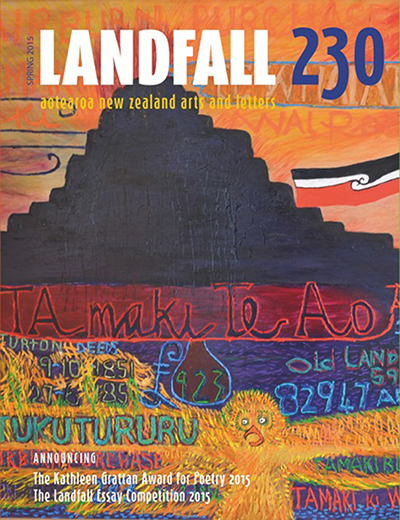
Just out: Landfall 230 is a strongly multicultural issue – includes Grattan Awards poems

Landfall 230


Press release:


Landfall 230 is a strongly multicultural issue, reflecting the diversity and energy of contemporary New Zealand writing, with contributions by, among others, writers of Mexican, Samoan, Rotuman, Chinese, Irish and Indian backgrounds.

A significant series of just-completed small oil paintings by Jeffrey Harris make up the first stunning art portfolio in this issue, followed by a series of 2015 paintings by Emily Karaka.


Featuring new poems by Riemke Ensing, Michael Harlow, Fiona Kidman, Cilla McQueen, Robert Sullivan, Peter Olds, Bernadette Hall, Airini Beautrais, Olivia Macassey, Kay McKenzie Cooke, Carolyn McCurdie, Hannah Mettner, Joanna Preston and Rogelio Guedea (translated by Roger Hickin) — Landfall 230 demonstrates the vitality and range of current poetic practice in New Zealand.

The Landfall Review includes, among other reviews, William Dart’s commentary on a recently published collection of writings by composer Douglas Lilburn; Peter Simpson’s review of Charles Brasch: Selected Poems; David Herkt writing about novelist James Courage; and Paul Moon’s review of Tony Ballantyne’s Entanglements of Empire: Missionaries, Māori and the question of the body.

Emma Neale, judge of the 2015 Kathleen Grattan Poetry Award, takes us through the difficult process of choosing a winner; and there is a showcase selection of the four best essays from the 2015 Landfall Essay Competition – eloquent, passionate, exhilarating non-fiction delivered by Tracey Slaughter, Philip Braithwaite, Louise Wallace and Therese Lloyd.

Celebrating the power of the literary imagination with inside stories and true confessions, short fictions and thoughtful critiques, Landfall 230 is testament to the rich variety and dynamism of the current state of New Zealand culture.


Landfall 230

Edited by David Eggleton

Release Date: November 2015

ISBN 978-1-877578-91-5, $30

http://www.otago.ac.nz/press

Serie Barford’s book launch

Screen shot 2015-11-07 at 7.35.41 AM

Kia ora koutou,

You are warmly invited to the launch of Serie Barford’s poetry and short story collection, Entangled Islands, published by Anahera Press, and held in conjunction with Poetry Live. With music by Brendan and Alison Turner, and readings from the book by Serie. MC-ed by Kiri Piahana-Wong. Entangled Islands will be launched by Karlo Mila. Food and drink available from the bar. Thanks to Creative New Zealand for supporting the publication of this book.

8 pm: Brendan and Alison Turner (folk/blues duo)
8.45 pm: Book launch
9.15 pm: Poetry Live resumes with open mic – all welcome to read

Poetry is off to Menton

SAM_0467 (2)

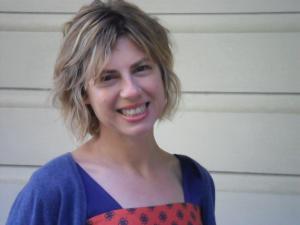
I am so delighted Anna Jackson is the 2016 Menton recipient. When a poet goes to Menton, poetry benefits (thinking of Bill Manhire and Jenny Bornholdt).

Last Friday, with no inkling of the news, I posted this poem by Anna. I can’t wait to see what she does in France.


Scenes from the photographer’s childhood: wardrobe


She kneels in the red light of her wardrobe, leaning

over one tub of chemicals to pull out the dripping

sheet from the one in the far corner, the space so

small, the smell so sharp, the image not that

of her mother, poking her amused face

around the bathroom door as she heaved

it open, pushing across the floor the barricade

set up to keep her out, nor of her own fury, still

sharp days later, but the shot she had taken

seconds earlier of her body, her legs

half shaven, still half dressed in foam.

Every night, without fail, whatever

time she takes her bath, within minutes

her mother suddenly just has to wash

her hands. It is this, even more than the

ruined image, that makes her scream

when her mother opens the wardrobe now,

an extended scream that the exhausted

mother next door, in her faded blue thrift

shop dress, covered in spilt milk, thinks will

never end, and so joins in, even though

it will wake the baby, which it does: and now

they are all screaming, the girl in B, the neighbour

in G, and the baby in F, a long, tense chord

of such helpless rage, almost a panic, it seems

it must rise up, it will ruin them all, there

can never be any release, their throats, all three,

scraped raw, the scream continuing, the

exhausted mother holding, perfectly, her note

of G, as the baby drops to E, the photographer

rising to C, holding for four beats and then

stopping, just as the baby stops, and so

the mother stops too and for the long moment

before the baby starts again, stands rapt

in the most perfect silence

she has ever known and will ever know

again, milk all through her dress, blue

jug in pieces on the floor,

exactly at the midpoint of her life.

© Anna Jackson 2015


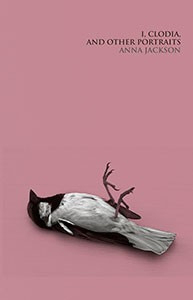
Author bio: Anna is the Programme Director in the English Department at Victoria University. She has published five poetry collections, including Thicket, which was shortlisted for the New Zealand Post Book Awards in 2011. Her latest collection  I, Clodia, and Other Portraits was published by Auckland University Press in  2014 (my review here). Anna is currently organising a Ruapehu Writer’s Festival with Helen Rickerby to be held in Ohakune, March 2016 (Facebook page here).

Paula’s note: This surprising poem, holds narrative in its palm, a sharp moment that reverberates  with implication. I get to the end and I am pulled back to the beginning, again and again. The musical chord that holds the moment together (and thus the poem)  jars, unsettles — until that moment of silence and it feels like time has iced over. Within that silent beat, poetry blooms. Ha! I need to get to work but this poem keeps distracting me. I adore the power of poetry to do just that.
 

1415925155755    1415925155755


Auckland University page

New Zealand Book Council page

Anna Jackson’s poem, ‘Afraid of falls?’ on Poetry Shelf.

Anna Jackson’s interview on Poetry Shelf


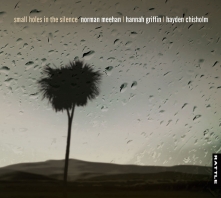
I have had this new CD on repeat: Small Holes in the Silence


Small_Holes_in_t_55beb4afb57d4_222x198      Small_Holes_in_t_55beb4afb57d4_222x198

Small Holes in the Silence Rattle VUP

The CD looks good with its striking cover but what matters is that this CD sounds spectacular. Norman Meehan on piano, Hannah Griffin on voice and Hayden Chisholm on saxophone have taken a number of New Zealand poems (terrific poems) and transformed them into song.

For example: Hone Tuwhare’s ‘Rain’, Bill Manhire’s ‘Ballad of the Hurting Girl,’ James K Baxter’s ‘High Country Weather,’ Alistair Campbell’s ‘Blue Rain,’ Eileen Duggan’s ‘Frost,’ David Mitchell’s ‘Yellow Room.’

Tricky stiff — translating poetry into song when the new score might muffle the internal music to such an extent the poetry suffers. How does word meet external melody?

In this case, the poem becomes something different, a wonderful different that almost needs a new word to signal its poetry/music status. Word becomes music and music becomes word. Like a yin yang kind of thing. Two sides of the one cloth.

I loved the enticing interplay between silence, chord, harmony, counterpoint, key, movement and word. The arcing melody of instrument and voice step out from a word or phrase. Lightly. Surprisingly. Beautifully.

And the voice. The glorious voice that makes hairs stand on end. Hannah takes a word and savours it in her mouth. The word itself becomes aural poem with its dips, lifts and extensions.

Ah. Poetry becomes melody, melody slips into the pores of your skin and when you return to the poem on the page there is this haunting refrain. The voice, the piano, the saxophone — secret aural undercurrents as you read.

Plus there is a great introduction by Bill Manhire. I especially agree with this: ‘The music doesn’t overpower the words; but neither does it defer to them.’


I highly recommend this!

A call for papers Victoria University is a hive of poetry activity: Writing ‘The Stain of Blood’: A Symposium on Poetry and History

Writing ‘The Stain of Blood’: A Symposium on Poetry and History

will be held at Victoria University of Wellington on 4–5 December 2015.

Read the call for papers here.

Poem Friday: Anna Jackson’s ‘Scenes from the photographer’s childhood: wardrobe’ — Within that silent beat, poetry blooms


Scenes from the photographer’s childhood: wardrobe


She kneels in the red light of her wardrobe, leaning

over one tub of chemicals to pull out the dripping

sheet from the one in the far corner, the space so

small, the smell so sharp, the image not that

of her mother, poking her amused face

around the bathroom door as she heaved

it open, pushing across the floor the barricade

set up to keep her out, nor of her own fury, still

sharp days later, but the shot she had taken

seconds earlier of her body, her legs

half shaven, still half dressed in foam.

Every night, without fail, whatever

time she takes her bath, within minutes

her mother suddenly just has to wash

her hands. It is this, even more than the

ruined image, that makes her scream

when her mother opens the wardrobe now,

an extended scream that the exhausted

mother next door, in her faded blue thrift

shop dress, covered in spilt milk, thinks will

never end, and so joins in, even though

it will wake the baby, which it does: and now

they are all screaming, the girl in B, the neighbour

in G, and the baby in F, a long, tense chord

of such helpless rage, almost a panic, it seems

it must rise up, it will ruin them all, there

can never be any release, their throats, all three,

scraped raw, the scream continuing, the

exhausted mother holding, perfectly, her note

of G, as the baby drops to E, the photographer

rising to C, holding for four beats and then

stopping, just as the baby stops, and so

the mother stops too and for the long moment

before the baby starts again, stands rapt

in the most perfect silence

she has ever known and will ever know

again, milk all through her dress, blue

jug in pieces on the floor,

exactly at the midpoint of her life.

© Anna Jackson 2015


Author bio: Anna is the Programme Director in the English Department at Victoria University. She has published five poetry collections, including Thicket, which was shortlisted for the New Zealand Post Book Awards in 2011. Her latest collection  I, Clodia, and Other Portraits was published by Auckland University Press in  2014 (my review here). Anna is currently organising a Ruapehu Writer’s Festival with Helen Rickerby to be held in Ohakune, March 2016 (Facebook page here).

Paula’s note: This surprising poem, holds narrative in its palm, a sharp moment that reverberates  with implication. I get to the end and I am pulled back to the beginning, again and again. The musical chord that holds the moment together (and thus the poem)  jars, unsettles — until that moment of silence and it feels like time has iced over. Within that silent beat, poetry blooms. Ha! I need to get to work but this poem keeps distracting me. I adore the power of poetry to do just that.


1415925155755    1415925155755


Auckland University page

New Zealand Book Council page

Anna Jackson’s poem, ‘Afraid of falls?’ on Poetry Shelf.

Anna Jackson’s interview on Poetry Shelf


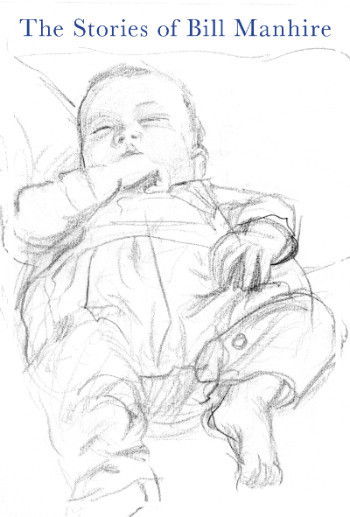
A wee reminder: You are warmly invited to attend the launch of The Stories of Bill Manhire

62f6377b-1dcd-4d64-9e60-012cf0241973


You are warmly invited to attend the launch of

The Stories of Bill Manhire

on Thursday 12 November, 6pm–7.30pm
at Unity Books,
57 Willis St, Wellington.

The book will be launched by Damien Wilkins.
Bill will be available to sign copies.

$40, hardback.
cover illustration, ‘Sleeping Baby’ by Peter Campbell

About The Stories of Bill Manhire
Sheep-shearing galas, Antarctic ponies, human clones, the Queen’s visit to Dunedin, a pounamu decoder, a childhood in the pubs of the South Island, the last days of Robert Louis Stevenson—this is Bill Manhire as backyard inventor, devising stories in which the fabulous and the everyday collide.

THE STORIES OF BILL MANHIRE collects the stories from The New Land: A Picture Book (1990) and those added to South Pacific (1994) and Songs of My Life (1996). In addition there are previously uncollected and unpublished stories, the choose-your-own-adventure novella The Brain of Katherine Mansfield (1988), and the memoir Under the Influence (2003).

More info from Phantom Billstickers on poetry submissions

In particular, we are interested in submissions for the Cafe Reader, 3000 words or less, in the form of short stories or editorial.   The Cafe Reader is published quarterly and 12 to15 authors typically appear per issue.

We also publish poems in the zine but typically no more than three per issue so competition for that space is aggressive.

Our authors’ Honoria for the Cafe Reader are $250.00 for fiction and editorial (3000 words or less plus an authors’ bio and whatever input the author can contribute regarding an illustration for the piece – no additional compensation is available for use of photos or original art work used to illustrate each piece; however, we will assist with finding illustrations as necessary).

We pay $150 for poetry submissions that are accepted for the Cafe Reader.  This compensation covers anywhere from 1 to 4 poems per author depending on length.

Submissions to the Cafe Reader must be previously unpublished in any format.  Copy Rights are retained by the author. However, the author agrees that Phantom Billstickers has the right to use the piece in both the Cafe Reader hard copy and digital formats (the Cafe Reader is currently available for download on Amazon.com) for both domestic and international distribution.

By submitting, they also agree that the piece published in the Cafe Reader will not be published in any other format between the publication date of the issue where it appears and the publication date of the next quarterly issue of the Cafe Reader.  We do not guarantee which issue any piece will appear in.  When a piece is scheduled to appear a layout will be provided to the author for review and approval prior to publication.

Submission Format  – editable WORD document submitted via email is the preferred format. The author should provide some background information about themselves in conjunction with the submission.

The following is a blurb about the Cafe Reader which may be helpful in pointing writers in the right direction regarding themes:

The Phantom Billstickers Cafe Reader is a quarterly literary zine featuring short stories, poems, art and editorial by New Zealanders.  The stories we publish are heartfelt glimpses into family, community, and the more colourful aspects of the creative life in New Zealand.  Many of our articles and stories revolve around Kiwi music. Our contributors range from globally recognized Kiwi authors to emerging artists who deserve to be heard.

Additionally, Phantom Billstickers publishes 8 poem posters per quarter that are not published in the Cafe Reader.  Poets are not compensated for the first poem we publish on a poster but are paid $75.00 for additional poems that are selected for use over time.  We have been running the poems on posters program for 7 years now and there are many poets who have been published on 2 or more occasions over that time.