Launch of A TransPacific Poetics


Screen Shot 2017-07-03 at 9.20.10 AM.png


A TransPacific Poetics, Litmus Press, 2017

Edited by Lisa Samuels & Sawako Nakayasu


Thursday 27 July 530-7 PM, Gus Fisher Gallery, 74 Shortland Street, Auckland


With Murray Edmond, Ya-Wen Ho, Melanie Rands, & Lisa Samuels


Join us as we launch A TransPacific Poetics, a new collection of poetry, essays, and poetics committed to transcultural experimental witness in both hemispheres of the Pacific and Oceania. The works in ATPP re-map identity and locale in their modes of argument, resituated genres, and textual innovations. A TransPacific Poetics includes Lisa Samuels, Don Mee Choi, Melanie Rands, Jai Arun Ravine, Ya-Wen Ho, Murray Edmond, Susan M. Schultz, Eileen Tabios, Craig Santos Perez, Corey Wakeling, Lehua Taitano, Stuart Cooke, Sean Labrador y Manzano, Barbara Jane Reyes, Myung Mi Kim, and Sawako Nakayasu, with cover art by Dagmar Vaikalafi Dyck, who will also be present for this launch event.


Free & all welcome. Book copies available for a celebratory reduced price of $30 (cash only).


from Landfall Online: Helen Lehndorf reviews Hannah Mettner and Kate Camp

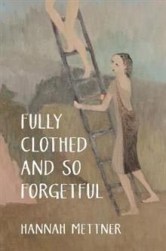
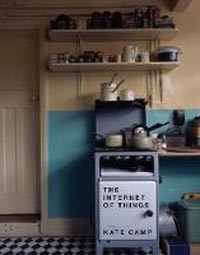
fully_clothed_and_so_forgetful_mettner.jpg     the_internet_of_things_camp_2.jpg

Fully Clothed and So Forgetful by Hannah Mettner (Victoria University Press, 2017), 91 pp., $25; The Internet of Things by Kate Camp (Victoria University Press, 2017), 61 pp., $25

One quality I love about first volumes of poetry is that they often contain an element of the poet’s origin story. Hannah Mettner’s Fully Clothed and So Forgetful certainly does: there are poems referencing childhood, relationships with siblings and wider family, elements of cultural confusion after an across-the-world move, parenthood – all described with deftness, wit and originality. How about that title? It’s a delight … inviting, and very human.

full review here

Poets on Tour: Airini Beautrais and Maria McMillan

As Rick Stein would say, we need more of this! Such a very good idea.

19467708_1052419191560472_5223254982623851632_o.jpg


From Maria and Airini:

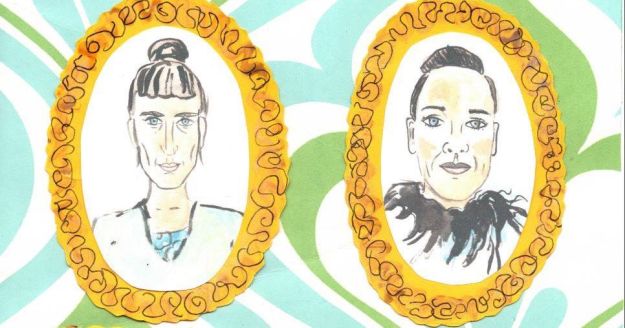
‘(Our portraits are by the wondrous Sarah Laing) Airini and Maria are going on tour in July! Like rock stars only way cooler. Napier 15th, Thames 16th, Auckland tbc, Wellington 28th, Palmerston North 29th and Paraparaumu Beach on the 30th. We’re promoting our new books: Maria‘s and Airini‘s.’

See here for details

Paula’s seven thoughts on Maria’s new book here.

Maria McMillan’s The Ski Flier: Nine thoughts


The_Ski_Flier__98472.1493171166.jpg


The Ski Flier  Maria McMillan, Victoria University Press, 2017


  1. The content’s page is in the shape of a mountain, in a book that lets mountains loom large along with little things like snowflakes, bread and goggles. Maria’s repeating mountain motif draws the bigger beyond, that is beautiful and mysterious, closer. Sometimes it is as though I enter a fable.


The mountain and sky push each

other but just enough so the mountain

is held up by the sky, and the sky

does not fall into the sea.


from ‘The Ski Flier’


  1. Unlikely things coexist and the connections are electric. In the first sequence, ‘Eleven,’ eleven poems comprise eleven lines each, and the real world is like the bony spine upon which curiosity hangs. ‘11.1’ juxtaposes a teapot, a cat and an All Black to illustrate the way we think in metaphors, or conversely, that ‘the teapot is only/ red to me and shines only like itself.’ The gap between the physical object and the thought hosts the eyes of the cats that ‘appear brilliant, appear blind,’ in the light. The poem puts me on a thought loop and I love it.


‘11.3’ leapfrogs from dream static to the body as satellite and this time the loop is heart. The other dreams her uniformed children go to war:


(..) and my sadness is larger

than my ability to take them to some

place hidden by the sheer force of my fury

and I wake knowing myself ordinary

and afraid.


The leapfrog movement, like a musing mind alighting on this and then that, takes you to a satellite base which leads to this strange and genius ending:


(..) Our lives

so many small signals that could no longer

fall onto the ground and receive rain and rot.


  1. The first lines are little hooks: ‘I, myself, have always wanted to be a

monster’ ‘There will be no mountains in this poem/ only people walking along footpaths in flat cities.’ ‘Whoever knows my name/ knows the sky was dark.’


  1. The last lines are spinning tops: ‘All your troubles sluiced off you./ You were sycamore leaf and hot standing foal.’ ‘They can see a long way in any direction/ but there is nothing to see.’ ‘I wake each morning as one buried.’


  1. Dragons stalk the pages with tough days on their backs or querulous children or mountains beneath them. ‘The dragon is as least as likely as our cat.’


  1. Music changes key; introduces different harmonies and counterpoints.


  1. Daily life hides and reveals so that you feel something sharp:


By breakfast you’d remembered how we were all cruel

and the starry jacket I bought you was wrong.

Every room is painted the spectacular colour of your yelling.


  1. Boundaries are porous. Ideas are at work here, and so is heart. This becomes that and that becomes this. It is as though the world is driven movement:


(…) And

there is a movement when they pass,

the snow and the ski flier,

each taking on the character of the other.


  1. Reading this book lets you into the domestic fracas and then sits you on a mountain to review the sky. It is a puzzle and it pays homage to magnificent things, and is one of the knottiest and most alluring reads I have read in ages. I keep going back to find different pathways through its poetry thicket because each route is rich in rewards.


Victoria University Press author page

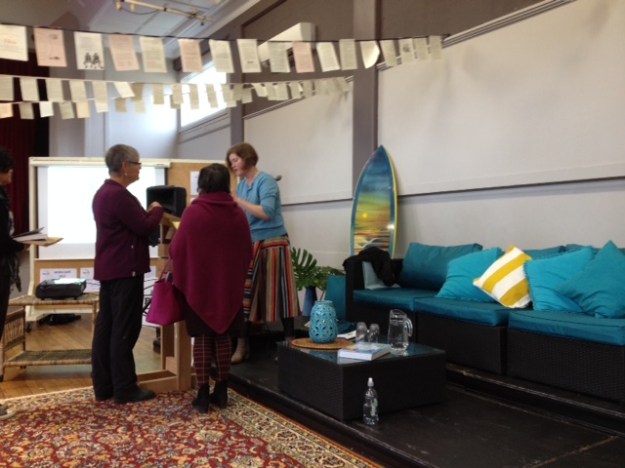
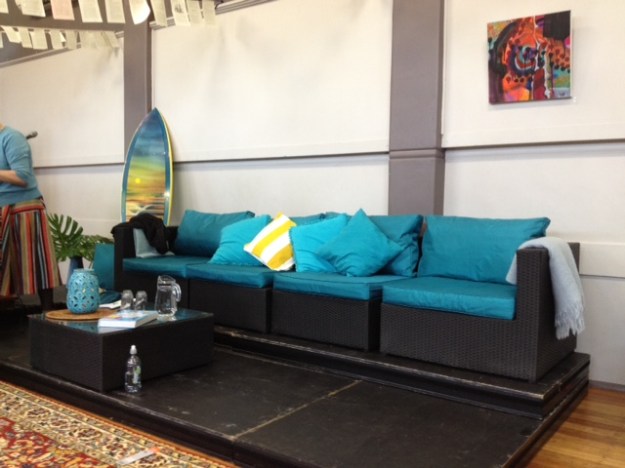
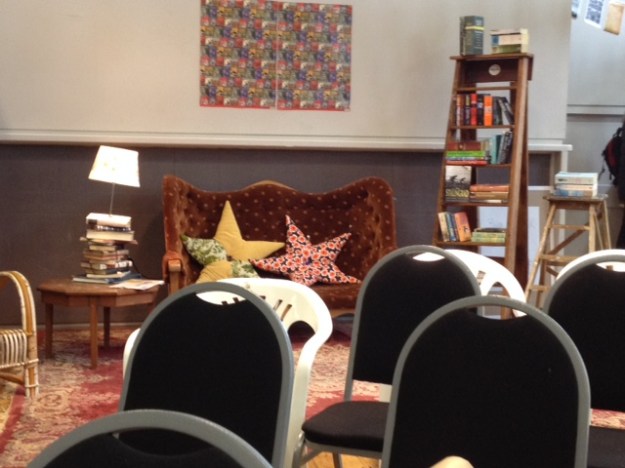
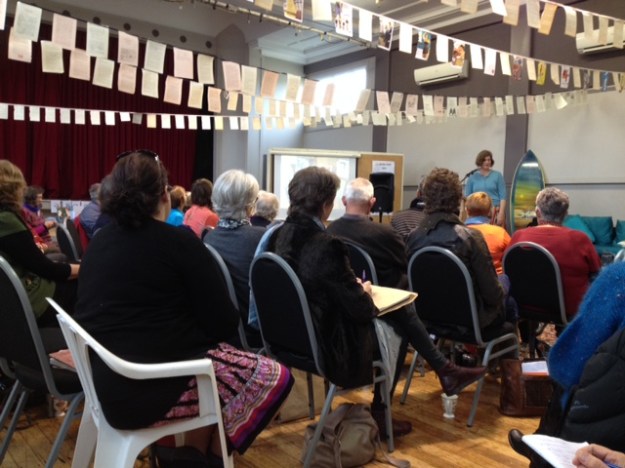
Lovely to be at Word Cafe in Raglan

This is the cosiest literary-festival hall I have been to. The organisers have worked hard to make such an inviting space. Yesterday I got to hear Sarah Laing give and illustrated talk on her Katherine Mansfield graphic model and it was inspired and inspiring. Loved seeing how the book took shape and how life, doubt and discovery sparked its final form.

Looking forward to my poetry session at 11.30 this morning.


IMG_4395.JPGIMG_4396.JPGIMG_4398.JPGIMG_4394.JPG

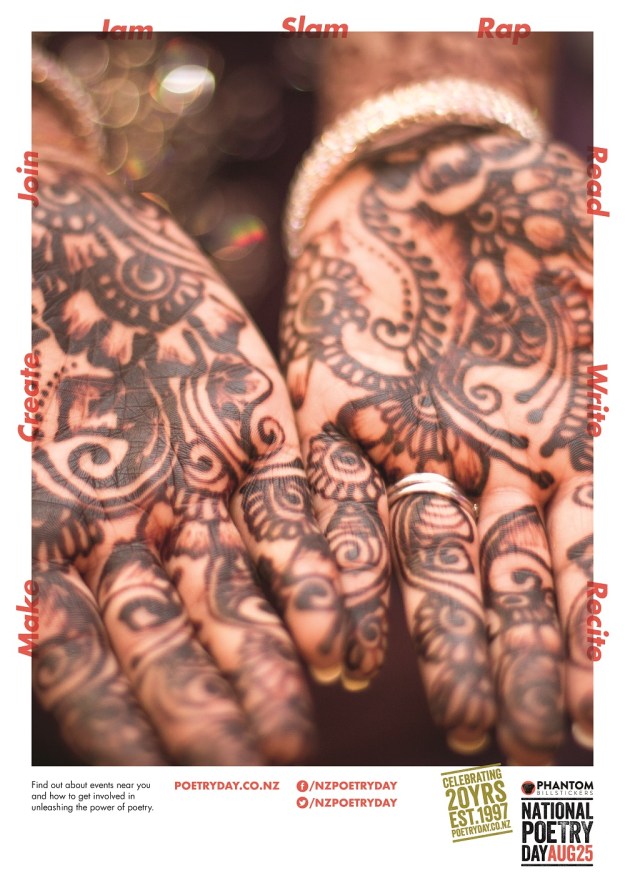
Group Two of Phantom Billsticker’s 20/20 online poetry collection goes live today – here’s Kevin Ireland’s pick (Gregory Kan)


17-NPD-20YRS-Posters-2017-Hands-A.jpg


After lunch my mother walks into the dining room

and my father and I both

blow our noses.


In the past when I thought about people my parents

were somehow

not among them. But some wound stayed


wide in all of us, and now I see in their faces

strange rivers and waterfalls, tilted over with broom.

You are watching the brown-paper covers of books grow


out around your father, as he dreams there

against the wall, thinking perhaps

how rocks are not quite lands.


Gregory Kan, from untitled sequence in This Paper Boat (Auckland University Press, 2016)

Kevin Ireland picked Gregory’s poem and had this to say: “Gregory Kan’s sequences in This Paper Boat are full of self-discoveries and surprises. The words really do swirl around and head off in different directions — just like the paper boats that inspired them.”
Group Two (go here for poems)


Tusiata Avia
‘I cannot write a poem about Gaza’
Fale Aitu/ Spirit House
(VUP, 2016)

picked:

Teresia Teaiwa
‘Fear of Flying (in broken Gilbertese)’
Poetry Foundation site


Kevin Ireland
‘Flying across Australia’
Looking out to sea
(Steele Roberts, 2015)

picked:

Gregory Kan
[Any of the sequences]
This Paper Boat (AUP, 2016)


Diana Bridge
‘Big Bang’
In the supplementary garden
(cold hub press, 2016)

picked:

John Dennison
‘Sleepers’
Otherwise
(AUP, 2015)


Andrew Johnston
‘Deuteronomy’
Fits and Starts (VUP, 2016)

picked:
Bill Nelson
‘The whys and Zs’
Memorandum of Understanding (VUP, 2016)


Michael Harlow
‘The late news’
Nothing For It But To Sing (OUP, 2016)

picked:

Paul Schimmel
‘With Words’
Reading the Water (Steele Roberts, 2016)


Phantom Billstickers National Poetry Day celebrate 20 years with diverse

poetry collection

To mark the 20th anniversary of Phantom Billstickers National Poetry Day (NPD), 20 leading Kiwi poets were asked to select one of their own poems, something they felt spoke to New Zealanders now. They also chose a poem by an emerging poet, writers they feel make essential reading for us in 2017.

The result is the 20/20 Collection – 40 poems by New Zealand poets who represent the diversity and vibrancy of talent in our contemporary national literature. The list includes Poet Laureates, Ockham New Zealand Book Awards winners, and strong new voices from recent collections and anthologies.

NPD has been running continuously since 1997 and is always celebrated on the last Friday in August. Poetry enthusiasts from all over New Zealand organise a feast of events – from poetry slams to flash and pop-up events – in venues that include schools, libraries, bars, galleries, surf clubs, and parks. This year’s NPD will be held on Friday 25 August.

Launched on May 24, the 20/20 Collection will be published in groups of ten poems between now and NPD. Featured poets are: Jenny Bornholdt and her pick, Ish Doney; Paula Green and Simone Kaho; Vincent O’Sullivan and Lynley Edmeade; Apirana Taylor and Kiri Piahana Wong; Alison Wong and Chris Tse; Tusiata Avia and Teresia Teaiwa; Kevin Ireland and Gregory Kan; Diana Bridge and John Dennison; Andrew Johnston and Bill Nelson; Michael Harlow and Paul Schimmel; C.K. Stead and Johanna Emeney; David Eggleton and Leilani Tamu; Elizabeth Smither and Rob Hack; Richard Reeve and Michael Steven; Robert Sullivan and Ngahuia Te Awekotuku; Bill Manhire and Louise Wallace; Selina Tusitala Marsh and Reihana Robinson; Cilla McQueen and David Holmes; James Norcliffe and Marisa Capetta; and Brian Turner and Jillian Sullivan.


Paula Morris, NPD spokesperson for the New Zealand Book Awards Trust, said that she was “excited to see the range of voices selected here, and the ethnic and geographic diversity in the poets chosen by our twenty established writers. This list speaks to a ‘new’ New Zealand literature, and reflects how much our culture is changing and growing.”

Many of the poets featured in the 20/20 Collection will take part in events on 25 August, Phantom Billstickers National Poetry Day 2017. Event organisers are encouraged to register their poetry event online as soon as possible: http://www.nzbookawards.nz/national-poetry-day/how-to-register-your-event/.


Now into their second year of naming rights sponsorship of National Poetry Day, Phantom Billstickers will support NPD and 20/20 on the ground, online and in print, with funky billstickers that celebrate our nation’s poets. Business Development Manager Kelly Wilson says, “If given a platform, poetry speaks to people. We are very proud at Phantom to support National Poetry Day and provide platforms all around the country for the poetic voice of New Zealand.”


Phantom Billstickers National Poetry Day is proudly administered by the New Zealand Book Awards Trust.


Notes to Editors

National Poetry Day was established in 1997 with a mandate to celebrate discovery, diversity, community and pushing boundaries. It is a one-day national poetry-event extravaganza held on the last Friday of August each year. This is the second year of National Poetry Day operating under the sponsorship of Phantom Billstickers.


Phantom Billstickers is a street poster company which has consistently helped New Zealanders express themselves since 1982. Recognising and supporting home-grown talent has always sat comfortably alongside its commercial campaign work. Phantom actively promotes New Zealand music, art, poetry and culture around the country and across the world, putting poetry on posters and a literary mix of work into cafes via its quarterly magazine Café Reader.

The New Zealand Book Awards Trust was established as a charitable trust in 2014 to govern and manage the country’s two major literary awards – The Ockham New Zealand Book Awards and the New Zealand Book Awards for Children & Young Adults – as well as National Poetry Day, and to ensure their longevity and credibility.

The 20/20 Collection features work by living New Zealand poets with one exception: Tusiata Avia’s selection of a poem by Teresia Teaiwa. Sadly, Teresia died of cancer in March, aged just 48. She was a much loved and influential

figure in Pacific studies, and ​the committee hopes that her inclusion in 20/20 encourages more people to seek out her important creative and critical work.


Paula Morris (Ngati Wai, Ngati Whatua) is an award-winning novelist, short story writer and essayist. A frequent book reviewer, interviewer and festival chair, Paula holds degrees from universities in New Zealand, the U.K. and the US, including a D.Phil from the University of York and an MFA from the Iowa Writers’ Workshop. She is convenor of the Master in Creative Writing programme at the University of Auckland in New Zealand.
 

17-NPD-20YRS-Posters-2017-Street-A.jpg

Off to Word Cafe in Raglan

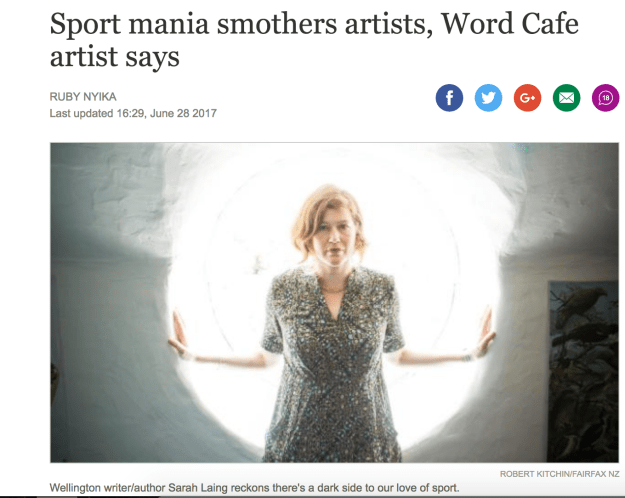
I am off to Word Cafe in Raglan this weekend to do a poetry session on Sunday morning – might get to see Sarah Laing talk about her book on the Saturday.


Screen Shot 2017-06-29 at 9.25.53 AM.png


Full article with Sarah’s musings here

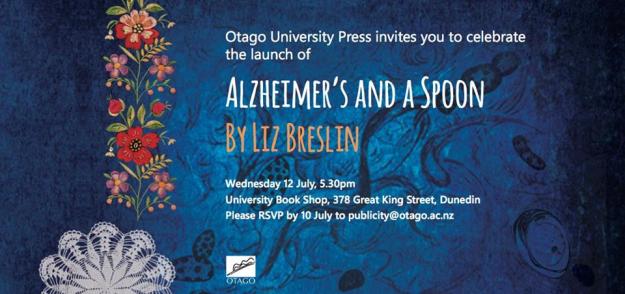
Double launch details plus listen to Liz Breslin read ‘Dichotomy’ from her debut collection

invitation dunedin.jpg


single page invitation.jpg


1498689321729.jpg


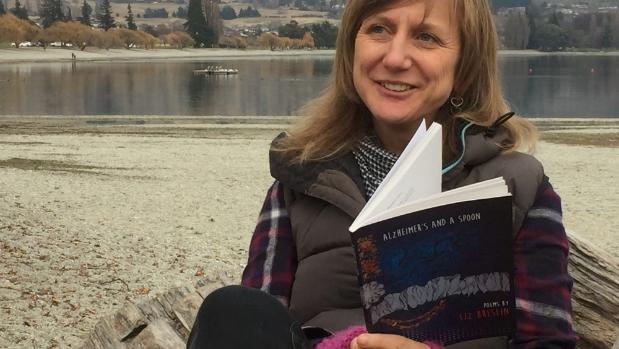
Wanaka poet, Liz Breslin, reads her poem ‘Dichotomy,’ from her first published collection of poems, Alzheimer’s and a Spoon, published by Otago University Press, and to be launched in Wanaka on July 13th.


From Liz:

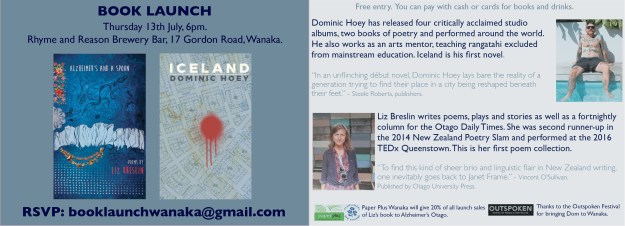
What’s better than a book launch? A double book launch. A double book launch with beer. A double book launch in Wanaka with beer brewed in Wanaka. Words by Liz Breslin and Dominic ‘Tourettes’ Hoey. Books – a novel and some poems. Beer.

Come and listen to Dom and Liz launch their new books. Dom’s novel has been called ‘an unflinching début’ and Liz’s poems have got ‘sheer brio and linguistic flair.’ Since Liz has got the rhymes covered, is Dom bringing reason? Maybe. Probably. Possibly.

He describes his novel, Iceland, as “a tragic love story set in the neighbourhood. It’s about what happens when people are forced to live in a memory of their home. There’s also lots of funny stuff too.”

You’d think funny stuff would be short on the ground in a book about Alzheimer’s, but there’s also humour in Liz’s book. Her back cover blurb says –

“Alzheimer’s and a Spoon takes its readers on a tangled trip. Public stories – a conversation at the Castle of the Insane, online quizzes to determine if you’re mostly meercat or Hufflepuff. #stainlessteelkudos. Personal tales, of Liz’s babcia, a devout Catholic and a soldier in the Warsaw Uprising, who spent her last years with Alzheimer’s disease. There is much to remember that she so badly wanted to forget.”

Dom’s coming to the launch thanks to the Outspoken Festival – and he’s definitely an outspoken entertainer himself. Luc Bohyn, Outspoken’s originator, is excited to bring Dom down as it creates the synergies he enjoyed about Outspoken. Different voices in the same space always make for an interesting evening.


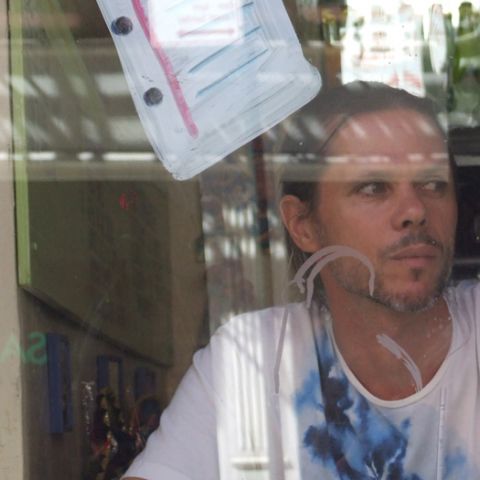
Liz and Dom’s books are as diverse and entertaining as their creative careers are to date. Dom has two poem collections and four studio albums to his name – this is his first novel. He also performs spoken word, is working on a one-man play  and spends his time teaching rangatahi excluded from mainstream education.

Liz is known to some people locally for her fortnightly column in the Otago Daily Times, or for her plays, and though she’s had individual poems published, this is her first collection.

“I’m totally completely massively delighted to be published by Otago University Press,’ says Liz. “They’ve been brilliant to work with, and I love having the professional standards and support.”

Liz and Dom are both “pretty good performers” and looking forward to entertaining people when sharing their words at Rhyme and Reason.


And what a great place for a celebration! Apart from the name being an obvious fit, Rhyme and Reason have got their own beers on tap, a selection of other local brews, a tonne of enthusiasm and their own font. And what word nerd doesn’t want to have a ook launch in a brewery that has its own font?
Launch details:

Thursday July 13th, Rhyme and Reason brewery bar, 17 Gordon Road, 6pm.

No entry charge. You can pay cash or EFTPOS for books and drinks.

Paper Plus will be selling books and donating 20% of all launch sales of Liz’s book to Alzheimer’s Otago.


rsvp: booklaunchwanaka@gmail.com


@TheSpinoffTV: Kelly Ana Morey on being a ‘Māori’ writer

A personal essay by Kaipara novelist Kelly Ana Morey. ‘I can’t be the ‘Māori’ writer people want me to be,’ she writes, ‘all I can be is myself.’

Two weeks ago I buried my father. He had a good innings and largely got to die in the privacy and comfort of his own home due to sterling care-giver work by my brother. For which I will be forever grateful to him. It’s not an easy job. After the service we took Dad up to Kaitaia cemetery which has sweeping views across Pukepoto and out to Ahipara. It was a still hazy day and out near the coast a tyre fire raged. Thick black smoke roiling across a galvanised sky as the home fires burnt. I looked around the extended Far North family gathered at the graveside. So many brown faces. If I ever have any doubt about exactly who at least half of me is, all I have to do is come back to Kaitaia. “You’re a Hori just like the rest of us,” the cousins joke as we sit on car bonnets afterwards, frantically sucking at cigarettes and talking about how long it’s been since we gave up the smokes.

And they’re right. I am a Māori. In my own funny way. And it’s connected to here, the Far North where my great grandfather, the Jewish trader, met and married Katerina, a high-ranking Ngāti Kuri woman. They started a family and set up trade stores to service the far northern gum fields. This should be the place I feel the most grounded, and yet I don’t. To be honest I don’t even know why I feel so ambivalent about the north. I think it’s somehow tangled up with my mother’s trenchant unhappiness that is deeply buried here in a location she never learned to love.

Full article here

Good news: NZ poet, Charles Olsen, receives Spanish poetry award

CharlesOlsen-genoma-foto Lilián Pallares.jpg


New Zealand poet Charles Olsen receives the XIII Distinction POETAS DE OTROS MUNDOS (‘Poets From Other Worlds’) awarded by the Fondo Poético Internacional (‘International Poetry Fund’) in recognition of the high quality of his poetic oeuvre.

Son of an Anglican priest and an opera singer, Charles Olsen moved to England in 1981 and to Spain in 2003. He travelled to Spain because of his interest in the Spanish painters Velasquez and Goya, and to study flamenco guitar. He has published the poetry collections Sr. Citizen (Amargord, 2011), which includes a foreword by New Zealand poet Pat White, and Antípodas (Huerga & Fierro, 2016). His poems have been included in anthologies in Spain and Colombia as well as Blackmail Press (editions 28 and 39) and the latest NZ Poetry Yearbook 2017 (Massey University Press). Although he didn’t speak Spanish before moving to Spain now writes many of his poems in Spanish and has also translated many Spanish and New Zealand poets.

He has also taken his poetic vision into different areas such as the performance Agita Flamenco which premiered in the New Zealand pavilion of the Venice Biennale – a show including flamenco dance and piano – and his poetry films, which have been shown in festivals such as Liberated Words (Bristol), Sinestèsia (Barcelona), and ZEBRA Poetry Film Festival (Berlín). He collaborated with video-creations in the show Parpadeos, presented this year in the Netherlands Flamenco Biënnale.

For the last six years he has run the online poetry project Palabras Prestadas (Given Words) with the participation of poets from throughout the Spanish-speaking world and this year he is running a special edition of Given Words in English for the Phantom Billstickers National Poetry Day which is open to all New Zealanders.

His partner, Colombian poet Lilián Pallares, with whom he runs the audiovisual producer antenablue – the observed word, has been awarded at the same time the XIV Distinction POETAS DE OTROS MUNDOS. In 2011 she was selected as one of the ten best young writers of Latin America by About.com, New York. Charles recently translated her book of short stories ‘Sleepwalking City‘ into English.

The awards will be presented by the Aragonese poet, Ángel Guinda, president of the Fondo Poético Internacional, on Sunday 9th July of the current year, in Madrid, Nakama Bookshop (Calle Pelayo 22), at 12:30 midday.

The previous distinctions have been awarded to the poets Theodoro Elssaca (Chile), Subhro Bandopadyay (India), Zhivka Baltadzhieva (Bulgaria), Mohsen Emadi (Iran), Ahmad Yamani (Egypt), Inés Ramón (Argentina), Rubén Grajeda Fuentes, ‘Leo Zelada’ (Peru), Nicanor Parra (Chile), Abdul Hadi Sadoun (Iraq), Mohamed Alfaqueeh (Libia), Soleh Wolpé (Iran) and Luljeta Lleshanaku (Albania).