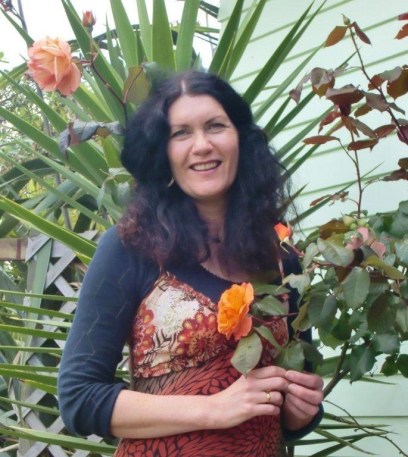
RIP: Poet Jill Chan


Screen Shot 2018-03-28 at 4.48.24 PM.png


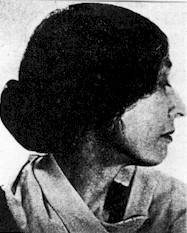
I was very sad to discover this news last week – and could not quite believe it. But I want to raise a toast to a wonderful poet and much loved woman.

When I first discovered Jill’s debut collection, The Smell of Oranges’, I was drawn to her freshness of voice, the vital human core, the open windows of the poems. Her writing continued to move in distinctive directions but she never lost her poetic freshness or her finger on the pulse of the world. That combination produced poetry that mattered.

My thoughts go out to friends, family and poetry fans at this sad time.

One poem, in particular, I have kept in a room in my head for those poems that never leave.


The Smell of Oranges

My mother would ask

if I wanted them cut or peeled.

I’d answer that I wanted them peeled

if only to see her fingers hold them

like clay to be molded.

After peeling their husk,

she would put her thumbs in the centre

and break each into halves;

later separate the slices, one by one.

I marvel at the flexible skins

pulling away,

not ever breaking at the pressure.

Jill Chan


A letter from Jill’s family


Dear All,

The family of Jill Chan would like to offer our heartfelt gratitude for your kind expressions of sympathy during our time of grief. We find comfort in knowing that Jill is now with God in Heaven.

Jill very much appreciated your firm support of her poetry and fiction writings. We hope you’ll continue to enjoy reading and revisiting Jill’s work, long into the future.

Jill Chan was a poet, fiction writer and editor. Her work has been published in various New Zealand and international literary magazines both in print and online. She was one of the poets featured in the New Zealand Poetry Sound Archive.

Jill authored four books of prose: Alone and Other Flash Fiction (2017); What We Give: a novella (2017); Phone Call and Other Prose Writings (2017); The Art of It: Three Novellas (2011); and six books of poetry: What To Believe (2017); On Love: a poem sequence (2011); Early Work: Poems 2000-2007 (2011); These Hands Are Not Ours (ESAW, 2009), winner of the Earl of Seacliff Poetry Prize; Becoming Someone Who Isn’t (ESAW, 2007); and The Smell of Oranges (ESAW, 2003).

Jill was the editor of Subtle Fiction at the time of her passing.

Jill Chan passed away on February 28, 2018 after a 9-month illness. She was 45 years old.

Official website

Aotearoa NZ sound archive

Thank you very much.


You can read a recent poem, ‘Poetry’, published in latest Poetry NZ here


Poetry Review: Heather McPherson’s This Joyous, Chaotic Place

Screen Shot 2018-03-28 at 7.26.25 AM.png


This Joyous, Chaotic Place, Heather McPherson, Spiral, 2018

(cover image by Joanna Margaret Paul with a portrait of Heather on the back by Allie Eagle)


Heather McPherson (1942 – 2017) published 4 poetry collections in her lifetime, with her first, A Figurehead: A Face, paving the way for future poets. It was the first poetry book by an out lesbian in Aotearoa/ New Zealand.  In 1974 she founded both the Christchurch Women Artists group and Spiral, a women’s literary and arts journal.

Before her death, Heather asked poet Janet Charman to edit her garden poems while Lynne Ciochetto and Marian Evans formed a Spiral collective to publish the volume.

When I think of garden poems, I think of Ursula Bethell and the decade she devoted to writing and gardening when she lived with her beloved companion, Effie Pollen. I have thought about these intensities a lot, and write about them in my forthcoming book.

To enter the glades of Heather’s final collection, lovingly tended by Janet, is to enter a garden rich in aroma, with diverse plantings and seasonal changes. As with Ursula, to view Heather’s writing through a garden lens is extremely productive.


This graveyard’s a bit like the one

where we buried my mum and dad. Oldish,

a small town Anglian acreage


from ‘At Rangiora’s Ashley Street Cemetery’


We begin at Ursula’s grave, and while the poem draws us in close, it also generates little waves that connect admired poet – mentor almost – to Heather’s parents: one grave seeking pilgrimage as much as the next. And herein lies the delight of the poetry, the way the visual piquancy (‘the bird droppings// and twigs’) interweaves with the many selves: daughter, poet, companion, political attendee.

Attendance is vital because this is a poet who paid attention to things, small and large, the one nestled in the other, crafted within the reflective surface of poems. At times it is the joy of the thing itself that matters:


but this shape-shifter tree blossoms

tight thick-skinned buds like thrusting rose-hips


from ‘fragment’


On other occasions the poem is a vehicle for story or anecdote, and a way of tending vital bonds, personal experience, inner movement. Age is a preoccupation as is the necessity of companionship.


No. No. See, it’s like old age, he says, eyeing my face.

Goes slack and perishes. Soon as I touched it, it gave way.

Dangerous. Gone holey. I’ll get you a tow.


from ‘Waiting for the breakdown truck’


I spend time in Heather’s poetic glades, because the senses are on alert, the description compounding, and it imbues my own contemplative state. I like that. I like the way my mind wanders through my open window to the kereru plundering the cabbage tree, and then I am back within an intensity of poppies:


Poppies poppies poppies … red-headed

black-bellied upright masses on light green

sea-milk stalks – surely such riotously

frilly leaves can’t be edible – can’t be

blanched – baked – boiled – toast …


from ‘Poppies’


In a poem for Fran, Heather responds to her friend’s paintings, and it seems to me, the astute observation might also be applied to the poems.


But I don’t have lots of things in

my work – like Anna does, you said;

ah, I said, but your painting traps

amazing movement in it – it moves,

it moves – whether or not your

subject does  – it moves internally

& moving, spills (…)


from ‘Things shift’


As much as stillness gifts Heather’s poetry a translucent layering, the internal movement – the links and arcs, the revelations, the richnesses and the reserve – offer an uplift along with countless movements. By paying attention to the garden in which she lived, and the people close to her, her poetry establishes contrasting intensities – from the joyful to the chaotic. It is a pleasure to read.


Until April 14th

‘This Joyous, Chaotic Place: He Waiata Tangi-ā-Tahu’ is a multi-media project to celebrate poet and lesbian activist Heather McPherson (1942-2017) and her peers in the Aotearoa New Zealand’s women’s art and literature movement of the 1970s and 1980s. It is a #suffrage125 project, funded by Creative New Zealand and includes an exhibition, a collection of Heather’s ‘garden poems’ and a shopfront cinema showing 70s and 80s short films and raw footage.

Screen Shot 2018-03-27 at 9.23.05 PM.png

In Jacket 2 – Vaughan Rapatahana on Bending the Genre: Flash fiction/prose poetry in Aotearoa New Zealand

Screen Shot 2018-03-28 at 10.04.25 AM.png


Full article here


‘The creation of flash fiction/prose poetry is increasing exponentially in Aotearoa, New Zealand. It has always been around, but nowadays there are more exponents, more outlets, more coverage, more academic ‘acceptance’ of the form. It is a significant presence and — to me — a very valuable and viable method to further  w  i  d  e  n  the horizons of poetry and literature in this country. Which has always been the focus of these commentaries.

What is this form and why have I written flash fiction/prose poetry as a Siamese twin? Well, that is a good question. There is often no clear-cut distinction between prose poetry and flash or short fiction, most especially as — obviously — both are economical in terms of the number of words used, given that prose poems can sometimes extend well beyond the word limits defining flash fiction.

However, given the amorphousness here between such subgenres, flash fiction does attempt to tell a story, to at least set up a narrative with some characterization; to plot a plot if you will. This does not occlude storytelling via prose poetry, but the tendency of the latter is to also concentrate on not only the ‘traditional’ poetic tropes of imagery, yet also wordplay, unusual discourse, novelty of effect; to
s  t  r  e  t  c  h  poetry beyond the staid, into freedom from constraint. If in so doing, a prose poem seems to replicate a slice of flash fiction, it is a happy coincidence. This is a very simplistic overview, however, because the more I delve into the difference, the more I discern that there is no clear difference! ‘

Vaughan Rapatahana


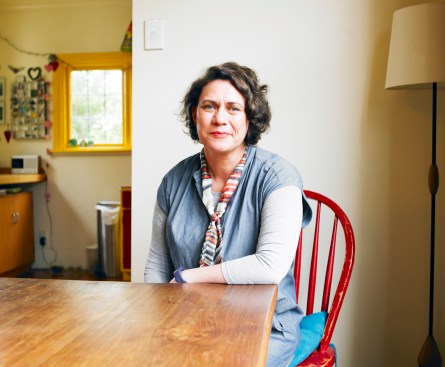
12 Questions for the Ockham NZ Book Awards poetry finalists: Briar Wood

2E4A6298BriarWood.jpg


Congratulations on your short-list placing!

Kia Ora.


What poetry books have you read in the past year?


Say Something Back – Denise Riley

The Bonniest Companie – Kathleen Jamie

Dark Sparring – Selina Tusitala Marsh

Citizen – Claudia Rankine

Deep River Talk Hone Tuwhare


What other reading attracts you?


Fiction – La Rose Louise Erdrich; Parable of the Sower Octavia Butler; A Girl Is a Half-Formed Thing Eimear McBride; Sleeps Standing Moetu Witi Ihimaera with Hemi Kelly; Foreign Soil  Maxine Beneba Clarke

History  – Tuai Alison Jones and Kuni Kaa Jenkins; Inglorious Empire: What the British Did To India Shashi Tharoor

Journalism and Essays –   Feel Free Zadie Smith; False River Paula Morris; The Best and the Brightest David Halberstam


Name some key starting points (or themes) for your collection

wāhi, places, the ambience and etymology of words, kupu kōtuitui


Did anything surprise you as the poems come into being?

Yes, the thematic intensity and interconnections as the collection e-merged.


Find up to 5 individual words that pitch your book to a reader.

negotiating,  rerenga, ecoconscious, beò, karadow


Which poem particularly falls into place for you?

‘Kuramārōtini’


What matters most when you write a poem?

Aligning kupu


What do you loathe in poetry?

I don’t loathe anything or nothing in poetry.


Where do you like to write poems?

Near Maungatapere.


What are strengths and lacks in our poetry scenes?

Te reo writing and performance is a strength – there should be more promotion of it.

The performance and publishing scene is quite inclusive and can be more so.

More consistent newspaper reviews of poetry and media outlets paying to publish poems.


Have you seen a festival poetry session (anywhere) that has blown you off your seat (or had some other significant impact)?


Performances at hui for Te Hā ki Tāmaki – Contemporary Maori Writers by Whaitiri Mikaere and Te Kahu Rolleston pass on their energy and  aroha for te reo with an integrated intensity.


If you could curate a dream poetry session at The Auckland Writers Festival which poets would be there and who would mc or chair it?


Any of the poets could mc or chair it.

Kiri Piahana-Wong

Jacqs Carter

Te Kahu Rolleston

Paula Morris

David Eggleton

Brian Turner


Rawahi-Front-Cover_high-res

Anahera press page

Monday Poem: Maraea Rakuraku’s ‘When does it start?’


When does it start?


It’s not waving a flag, holding a banner, knowing what postcolonial theory

means and when to use it, memorising quotes and lining them up like

soldiers that are sent out in waves of attacks,


It’s not being polite, remaining open, listening fairly, vigilantly assessing

your motivation, re-writing your carefully worded response, marvelling

how the person who has cornered you on-line, at a party, work do or

rugby game is not hearing how every word they are saying is offensive and

they may as well be slicing through your heart, with the intent-sity of a

scythe clearing long grass,


It isn’t realising dressing up racist rhetoric in flash language is still just

racist rhetoric in flash language and sniffing that out in the first, I’m not

racist … but,


It isn’t recognising white privilege and entitlement, functioning under white

privilege and entitlement, loving under white privilege and entitlement,


It doesn’t start with the huge fucking disappointment when a brown

brotha is worse than the worst redneck you’ve encountered in your life,


It doesn’t start by standing up for your iwi, people, culture, colleague,

son, daughter, lover, missus, Koro, Nan, cuzzie, animals, Papatūānuku, or

even yourself,

Mō āhea tīmata ai? ka tīmata āwhea?


Ehara i te whakakakapa i te haki, i te pupuri ki te kara, i te mōhio ki

te ariā pōhi koroniara me te wā e tika ana kia whakamahia, i te tuhi i

ngā whakataukī ki te rae ka whakarārangi ai anō nei he hōia e tukuna

putupututia ana ki te whawhai,


Ehara i te mānawanawa, i te noho areare, i te tōkeke o te whakarongo,

i te mātai i ākinga ōu, i te whatatika i tō whakahoki kua āta tuhia, i te

whakamīharo ki te tangata nāna koe i whakaiti i te ipurangi, i te pāti, i

te kaupapa ā-mahi, i te kēmu whutupōro rānei me tana kore i rongo ki te

hākiki o ia kupu āna, me e haehae ana i te ngākau, he rite tōna kaha ki te

kotinga o te haira e whakawātea ana i te pātītī roa,


Ehara i te kitenga o te kōrero kaikiri kua whakareia ki te kupu whakaniko,

me te mōhio tonu iho he kōrero kaikiri tonu kua whakareia ki te kupu

whakaniko, ehara au i te kaikiri … heoi anō,


Ehara i te whakamārama i te huanga me te āheinga kiritea, e mahi ana i

raro i te huanga me te āheinga kiritea, e aroha ana i raro i te huanga me te

āheinga kiritea,


Kāore e tīmata i te mutunga kē mai o te matekiri i te mea he kino noa ake

te tūngāne kiriparauri i te kakī whero tino kino rawa atu kua tūpono i

roto i ō rā,


Kāore e tīmata i tō tū tautoko i tō iwi, i ō tāngata, i tō ahurea, i tō

kaimahi, i tō tama, i tō kōtiro, i tō whaiāipo, i tō wahine, i tō koro, i tō

kuia, i tō whanaunga, i ō mōkai, i a Papatūānuku, i a koe anō hoki,

It starts,

with that first step from the margins into the glare of light

and

opening

your

mouth,

that started

when the idea of you was born and took seed

that started

when the idea of you was born and took seed

that started

when the idea of you was born

that started

with the idea of you.

Ka tīmata,

i te tapuwae tuatahi i te paenga ki te kōnakonako o te tūrama

me te

hāmama

o tōu

waha,

i tīmata tērā

i te tinakutanga me te tupu o te whakaaro ki a koe

i tīmata

i te tinakutanga me te tupu o te whakaaro ki a koe

i tīmata

i te tinakutanga o te whakaaro ki a koe

i tīmata

i te whakaaro ki a koe.


©Maraea Rakuraku  Translated by Jamie Cowell, Tātai Whetū: Seven Māori Poets in Translation, Seraph Press, 2018.


Maraea Rakuraku is an award-winning playwright, poet, short story writer, critic, reviewer and broadcaster who lives in Wellington and the Bay of Plenty. She creates work that investigates, examines, calls out and celebrates Te Ao Māori and our navigation of 21st century Aotearoa New Zealand.

Her thoughtful, fierce intellectualism, and grounding in her Tūhoe and Ngāti Kahungunu identity, is matched only by her heart and commitment to giving voice.

With Vana  Manasiadis, Maraea is the co-editor of and contributor to Tātai Whetū: Seven Māori Poets in Translation, which has just been published by Seraph Press.

In 2018 she started a PhD in Creative Writing at the International Institute of Modern Letters, Wellington.

In the hammock: Martha Batalha’s The Invisible Life of Euridice Gusmao


517rCJDlrSL._SX311_BO1,204,203,200_.jpg

The Invisible Life of Euridice Gusmao, Martha Batalha, One World, 2017 (originally published by Companhia das Letras, 2016)


After studying journalism and literature in Brazil, Marta Batalha moved into publishing, and to California. This is her first novel. It was translated form Portuguese by Eric M B Becker.

This was another book I discovered in authors’ picks in the Guardian for 2017. The binding of the novel made it one of the most difficult books I have read in an age – at times I got sick of  trying to bend back the book. Truly I found myself skimming the edges because it was such a pain holding the book wide open.

Maybe that fits a character who is invisible in the eyes of her husband because he decided she was not a virgin on her wedding night – I just upped the degrees of invisibility. To compensate for her housewife role and lack of status – this reads more like offbeat realism than kitchen sink grit – she invents intense projects for herself that always amplify neighbourhood suspicion. She cooks with flair and invention beyond the expected daily staple and assembles a cookbook that ends up in the trash. Cooking is replaced with sewing – she sews herself into visibility by making the best clothes for the neighbourhood. The sewing machine ends up in the trash.

Her sister had vanished and near the end she returns with her own complicated story and the sibling relationship becomes one of rescue, of finding a way to be visible in the world, to matter and be of worth. The issue of female invisibility has affected women for centuries, along with shaping self to suit oneself. How do we make ourselves beyond the stereotyped role of mother and wife? How do we speak ourselves and make choices the furnish presence, worth?

Writing also has a role to play in Euridice’s invisible life and quest for presence.

If I had not felt like throwing the novel in the trash half the time, because I couldn’t keep the book open, I might have loved it 100 percent – but something, perhaps the strangeness coupled with the acute reality, the caustic wit and the pulsing Rio, the intricate and subtle rebellions, still made this compulsive reading.

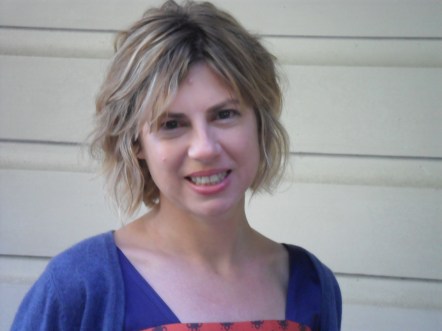
12 Questions for the Ockham NZ Book Awards poetry finalists: Elizabeth Smither


DSC_0067.jpg


Congratulations on your short-list placing Elizabeth!


What poetry books have you read in the past year?

Everything by Wislawa Szymborska and the Penguin Modern Poets series (3 poets in each clutch purse-sized collection): Emily Berry/Anne Carson/Sophie Collins; Malika Booker/Sharon Olds/Warsan Shire etc.


What other reading attracts you?

Almost anything. At the moment I am re-reading Rex Stout and the yellow pyjama-wearing detective Nero Wolfe.


Name some key starting points (or themes) for your collection.

I never discover a theme until a collection is put together. The connections between individual poems can be as subtle and perverse as the most delicate rhyme or rhythm.


Did anything surprise you as the poems come into being?

Perhaps the secret life of animals?


Find up to 5 individual words that pitch your book to a reader.

‘The heart heals itself between beats’ because it was a commission with an extra scoop of fear attached.


What matters most when you write a poem?

Depth and uncertainty.


What do you loathe in poetry?

Nothing. It’s important not to loathe anything.


Where do you like to write poems?

Propped up on a bank of pillows in bed, with the concert programme on the radio and perhaps a glass of wine.


What are strengths and lacks in our poetry scenes?

The chutzpah of our independent publishers; a tendency for too much adulation.


Have you seen a festival poetry session (anywhere) that has blown you off your seat (or had some other significant impact)?

Margaret Atwood and Hans Magnus Enzensberger at the Aldeburgh festival. I read first and sat down between them, shivering.


If you could curate a dream poetry session at The Auckland Writers Festival which poets would be there and who would mc or chair it?

I think I’d do a Dead Poets session. Keats and Shelley, Robert Lowell, William Empson, John Crowe Ransom, Tomas Tranströmer, Szymborska, of course… the possibilities are endless. It might have something of the bitchy tone of ‘The Real Housewives of Melbourne’.  To chair it one of the Paulas: Green or Morris.


Night Horse AUP author page


1497223465774-1.jpg


Albert Wendt is reading at The Thirsty Dog


1396039023448-1.jpg


Talofa, Everyone,

I’m giving a poetry reading at the THIRSTY DOG TAVERN, 469 Karangahape Road, Auckland, on Tuesday 3 April, starting at 8 pm. Musicians will also be performing.

COME AND ENJOY THE EVENING WITH US. Ia manuia le aso.

Al Wendt

David Hill asks whether writers exist in Taranaki on the Spin Off

A lot of authors born in Taranaki have left the province on a permanent basis, to become successful or dead. The successful ones are Anthony McCarten and Stuart Hoar from New Plymouth; Dinah Hawken, Gaelyn Gordon, and Fiona Kidman from Hawera; June Opie from Mokau; Fleur Beale from Inglewood; Shonagh Koea from Eltham; Graeme Lay from Opunake, also Jackie Sturm, quondam wife of James K Baxter, and a much nicer human being to deal with; and Sylvia Ashton-Warner from Stratford. The dead one was Frank S Anthony of Midhirst, who wrote his gentle, innocent Me and Gus stories of dairy farms up skinny shingle roads and tongue-tied young men in hairy sports-coats, then sailed for England with a suitcase – a suitcase of manuscripts, and died from TB in a Bournemouth boarding house in 1927.

See full feature here


1510694907181.jpg


Lots of poets have connections to Taranaki but I would spotlight Michele Leggott who was born and raised in Stratford and whose latest book Vanishing Points offers  numerous returns. I am going to talk about this glorious book with Michele at some point this year for my blog. I loved it. One of my top poetry reads in 2017.