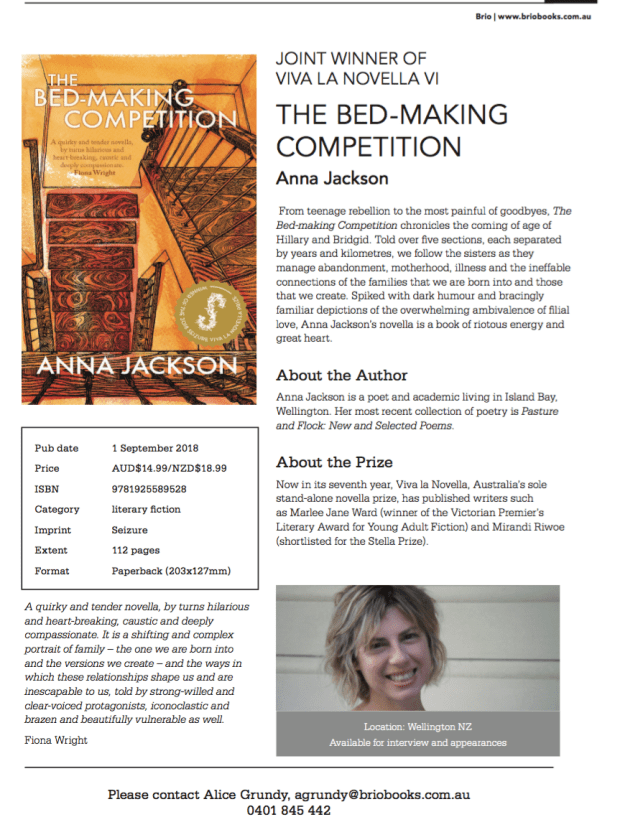
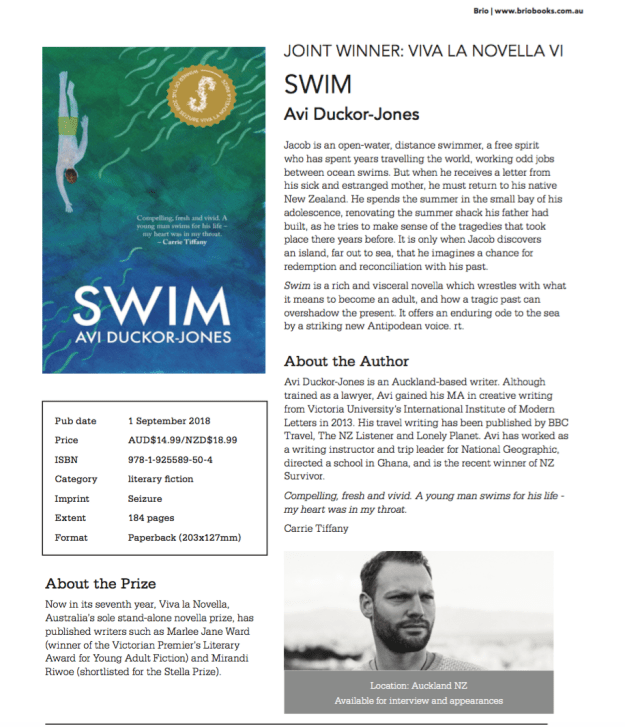

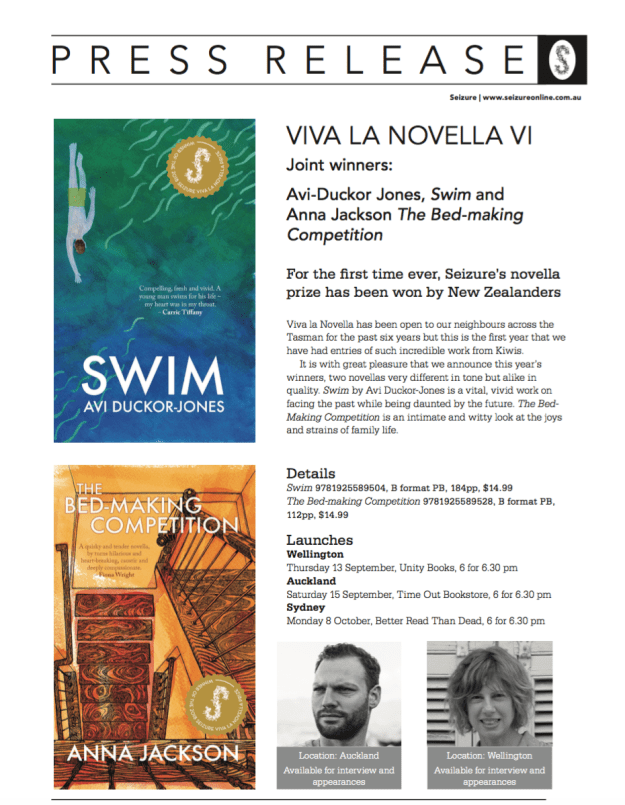
Warm congratulations to Anna and Avi. I am thrilled to be launching poet Anna Jackson’s novella in Auckland on September 15th at Time Out Book Shop and to share the delights of both books on my blog soon.
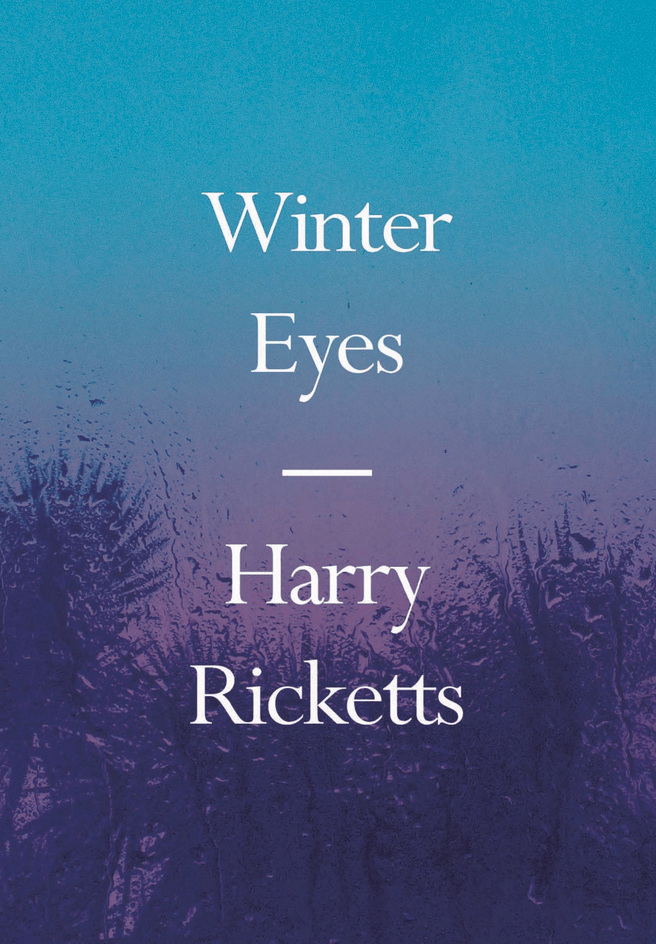
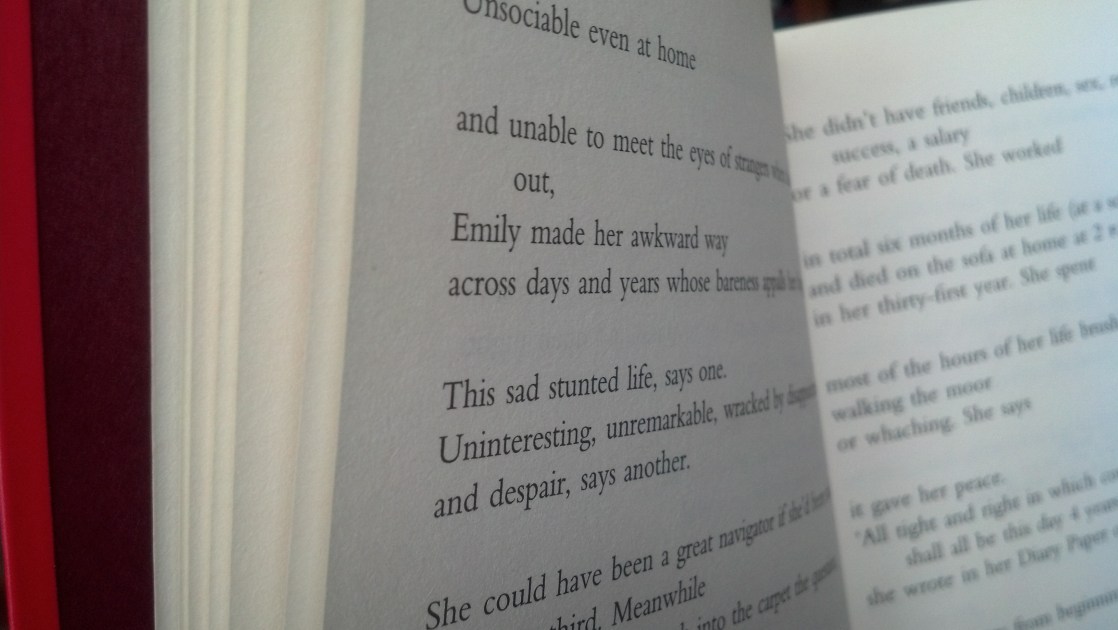
Harry Ricketts teaches English Literature and creative non-fiction at Victoria University of Wellington. He has published over thirty books, including eleven collections of poems. “Napier, Christmas 2017” is from his latest collection Winter Eyes (Victoria University Press, 2018).
terrific readings
divine afternoon tea
Anna Jackson reading poetry
I have my ticket
Eleven reasons why I am off to this event:
1.40pm Pip Desmond – ‘Song for Rosaleen’
A beautiful, compassionate but unflinching account of coping with a mother’s dementia; explores the practical & ethical dilemmas & also celebrates Rosaleen’s life.
2pm Anna Jackson – ‘Pasture and Flock’
New & selected poems from this highly regarded Victoria University Professor of English Literature. Pastoral yet gritty, intellectual & witty, sweet but with stings in their tails.
2.15pm Kate Duignan – ‘The New Ships’
A brilliant new novel set in Wellington, Europe & Asia, examining one man’s attempts to understand his own life – intimate, compassionate & absolutely absorbing.
2.35pm Amber Rose – ‘Wild Delicious’
The influences of growing up in rural NZ & travelling widely overseas, converge in this irresistible cookbook that prepares natural, seasonal ingredients to be eaten with delight.
2.55pm Afternoon Tea – With lamingtons, melting moments, asparagus rolls and more!
3.35pm Tess Redgrave – ‘Gone to Pegasus’
Beautifully capturing Dunedin in 1892, this wonderful debut novel explores music & the role of women & their friendships, just as Women’s Suffrage in NZ is about to happen.
3.55pm Dr. Jo Cribb – ‘Don’t Worry About the Robots
How to Survive & Thrive in the New World of Work. From former CEO of the Ministry for Women & current CEO of the Book Council, exciting ideas & practical tools for the future.
4.15pm Eileen Merriman – ‘Catch Me When You Fall’ and ‘Pieces of You’
This full-time consultant haematologist at North Shore Hospital has won awards for her short stories & both her brilliant young adult novels are finalists in this year’s NZ Book Awards.
4.35pm Jo Thorpe – ‘This Thin Now’
The story of love lost & the places the poet goes to find it still – from inside the space two hands make, to the numinous blue of sea & sky. Poems of dazzle & quiet – a rare gift.
4.50pm Dame Fiona Kidman – ‘This Mortal Boy’
An utterly compelling recreation of the events leading to one of the last hangings in NZ (1955). This beloved writer brings young Albert (Paddy) back to life – heart-wrenching.
5.10pm Megan Dunn – ‘Tinderbox’
Riffing on Ray Bradbury’s classic novel ‘Fahrenheit 451’, a brilliantly witty exploration of literature & culture, books & bookshops, aspiring authors, & life in the 21st century.
Ahi kā
At the top of the road
there is wind,
railways crossing at the corner,
of an old wooden prefab where
wine gums and popsicles, and
our feet in jandals fill
the one room dairy that is decades gone
toward the motorway
past the tree where Uncle hung himself,
is the highway
the marae-way.
Eels peg the line, and
Chip-dog is lazy barking.
Over the split verandah, you cross
the musty lounge, dark with the 70’s
squeeze down the hall past rooms so
clumsy you can smell the cob
out the window, into the land
blazing beneath this ancient copper;
we scrub on the washboard
of someone else’s clothes,
the broken down wringer where
this Auntie’s house is on the left,
that Auntie’s house is on the right;
the whole damn road is a gauntlet of aunties.
©Anahera Gildea
Anahera Gildea (Ngāti Raukawa-ki-te-tonga) has worked extensively as a visual and performing artist, a writer, and a teacher. She has had her poems and short stories published in multiple journals and anthologies, and her first book ‘Poroporoaki to the Lord My God: Weaving the Via Dolorosa’ was published by Seraph Press in 2016. She holds a BA in Art Theory, Graduate Diplomas in Psychology, Teaching, and Performing Arts, and a Master’s degree in Creative Writing from Victoria University.
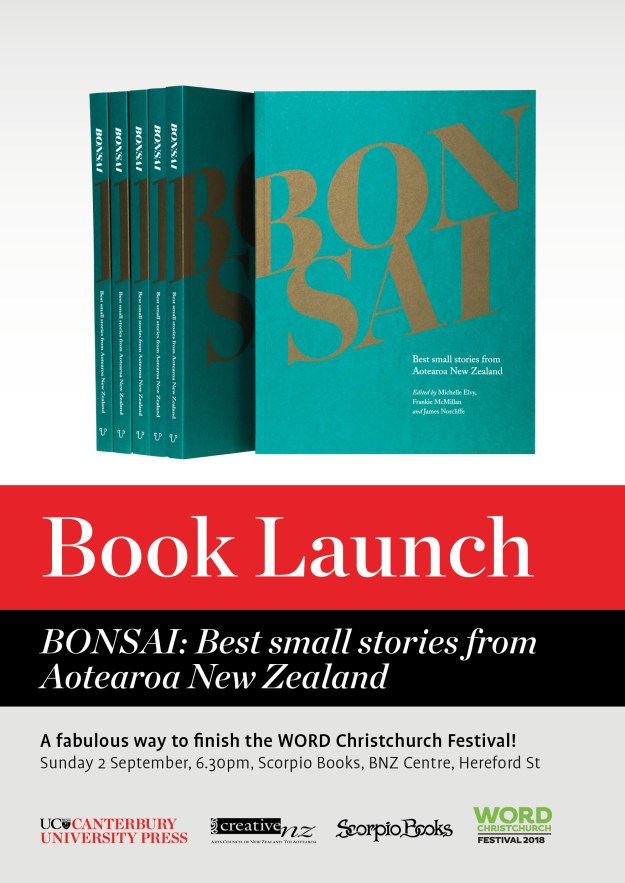
Wellington September 3rd Readings by Bonsai contributors and a discussion of the small form with Tim Jones, Nick Ascroft, Vivienne Plumb, Harry Ricketts, Annette Edwards-Hill and more.
Auckland September 6th The evening will include a discussion of the small form and readings by Bonsai contributors including Graeme Lay, Jack Ross, Tracey Slaughter, Siobhan Harvey, Allan Drew, Maris O’Rourke and more.
Whangarei September 12th
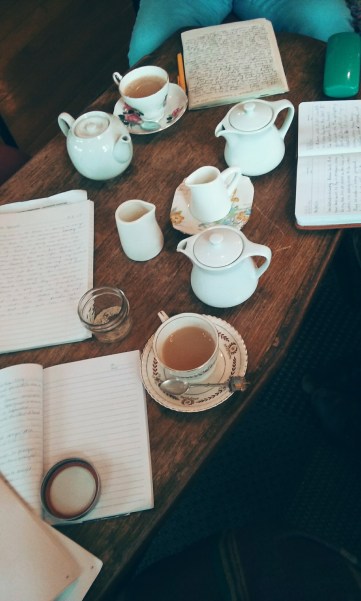
Amy Leigh Wick’s weekly writing group
Nick’s 100 words of NZ poetry snapshot
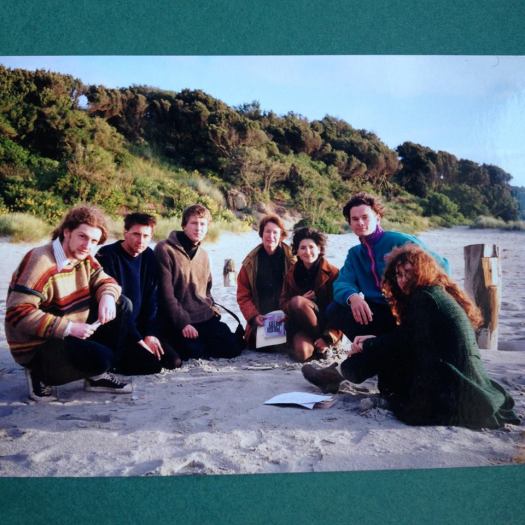
I have many namedropped stories of poet encounters. They are all slimy and desperate. But here’s an image of a time in Dunedin writing that feels, at least to me, important. On St Kilda beach in 1996 are some of the main poets of the Robbie Burns pub readings and soon to be the progenitors of Glottis magazine. Left to right it’s:
me
Blair Reeve (his TedX performance!)
Richard Reeve (no relation and still to me NZ’s best poet)
Bernadette Hall (1996’s Burns Fellow)
Kapka Kassabova (see all the awards her Border won)
Stuart Dymond
and Jocelind Dunford
Nick Ascroft
Mr Bird
“I remember telling my seventh-form English teacher (who told us his favourite film was Easy Rider; who had an amiable weary expression whenever I submitted a practice essay; whom I liked) that I thought I might write on poetry in the Bursary exam. ‘Oh, no, I wouldn’t do that,’ he said, as if I’d confessed to considering spending lunchtime smoking weed on the roof of the horticulture prefab. ‘Too risky.’”
Amy Brown
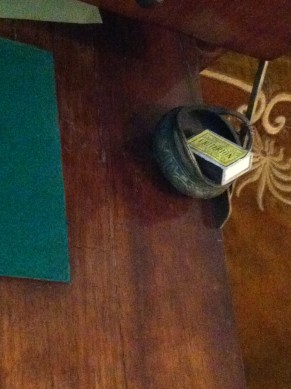
In 2012 I visited the apartment of Anna Akhmatova in St Petersburg. I love house museums anyway, but this one was just astonishing. She spent decades under house arrest, banned from writing, awaiting the knock at the door that would take her husband or her to the gulag or death. Assuming that the apartment was under constant surveillance, her only way of writing poetry was to memorise lines, and then write them on scraps of paper when a friend came to visit. While they pretended to discuss banalities, the friend would memorise a line or two, then Akhmatova would burn the scrap of paper in this ashtray.
In this way her poems were smuggled out in the minds of her friends, reassembled, and published out of the country. Also shown in the house were small “books” made of birch bark on which gulag prisoners had written out her poems from memory with the blackened end of a twig.
“When I hear what is coming toward me / I would be afraid / even if I were dead.”
That might be a misquote, but it’s how I remember the line of hers. What a woman.
Kate Camp
POETS Day today
Haha … what has stuck with me is my adult nephew, who was a builder’s apprentice at the time, telling me that every Friday his builder mates would tell him, ‘All good, bro, it POETS day today!’ When he asked them what they were talking about they replied, ‘It’s time to Piss Off Early … Tomorrow’s Saturday!’ Every poetry day I remember that.
Glenn Colquhoun
Josiah and the wind
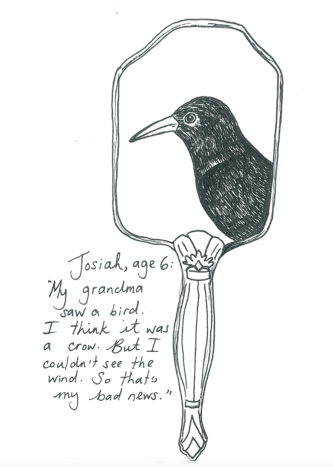
(drawing by Emily Cater, teacher/artist)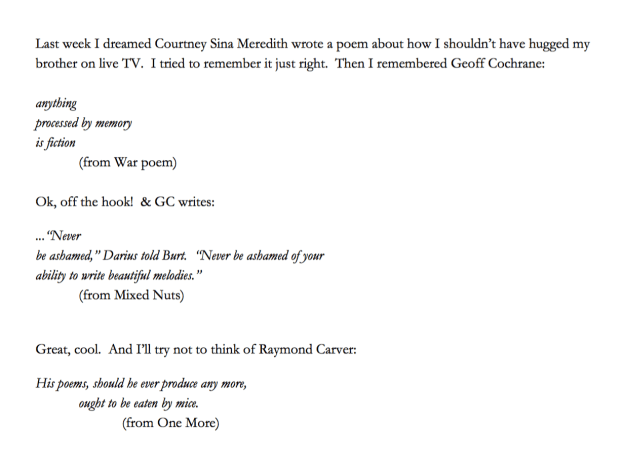
Sam Duckor-Jones
Reading at Alba
(a memory for Paula Green)
the audience
stretched away
the length of the bar
to the windows
and beyond
the street
gave glimpses of
proverbial women
and men
passing to and fro
one’s words were going
out over the heads
of this audience
and one caught oneself thinking
hmmm
this poem seems to
go across quite
well tonight
and at that moment
always
there came
the rubbish truck
its cataclysmic arm
hydraulic lifting up
the public bins
one by one by one
and so that poem
(the one that was going along okay)
grew quiet
poet and audience
waiting
until the rubbish truck
was gone
and the poem
went all the way back
to the beginning
to start again
Murray Edmond
First there were rhymes, the same words repeated in the same sequence, the chime of rhyme, the skip of rhythm, belying their terror. The mice with bleeding stumps where their tails should have been, the sudden vertiginous drop between someone’s knees as the horsie stumbled, the black bird that pecked off my nose. When I was four or so I tried out rhyme for myself. My uncle always said, ‘Fiona Farrell, the rickety barrel!’ whenever he saw me. And this time I said back, ‘Uncle Bill, the rotten pill!’ It made everyone laugh. They remembered it, still remember it. My first poem, my first audience. The dizzy power of words.
Fiona Farrell
I remember the first time I ever read at a writers festival. It was with Fiona Farrell at a vineyard near Nelson, and the only way I could get there was to borrow my uncle’s swish white BMW – which I felt really odd, really uncomfortable driving – and drive it over the Takaka hill. On the way – I was with my sister – we started to imagine that, upon arriving at the reading, I would step out of the BMW and be dressed all in flowing white chiffon robes, and a flock of white doves would be dramatically released from inside the BMW and into the air around me. Now, whenever I feel nervous before a reading, I put that image in my head and it makes me feel silly and much better.
Joan Fleming
In 1972 my Y12 English teacher told me I would never get anywhere in the world writing as I wrote. That year James K Baxter stood on the stage in bare feet, with scraggly beard and tatty suit, and read poems like a tuī. I went home and wrote dreadful Baxter poems. Seven days later he died. I painting his portrait in watercolour blue and pinned it to my bedroom wall. I wrote more dreadful Baxter poems. I walked into the school library with my buttoned-up melancholy and discovered Hone Tuwhare’s poetry and the thrill that words can do anything in poetry.
Paula Green
When I was about nineteen, I started going to poetry readings. Probably the biggest of these was by Paul Muldoon, after Hay but before he won the Pulitzer with Moy Sand and Gravel. There were maybe two hundred people there.
After about fifteen minutes, he stopped, looked straight at me, clearly annoyed, and said, ‘Would you like to continue doing that somewhere else?’ Everyone stared. ‘I’m dead,’ I thought. ‘So this is what the end of a poetry career looks like: getting kicked out of a Paul Muldoon reading.’
It turned out that there were two people sitting directly behind me who’d been talking loudly and I hadn’t even noticed. I’d been so caught up in the reading.
Erik Kennedy
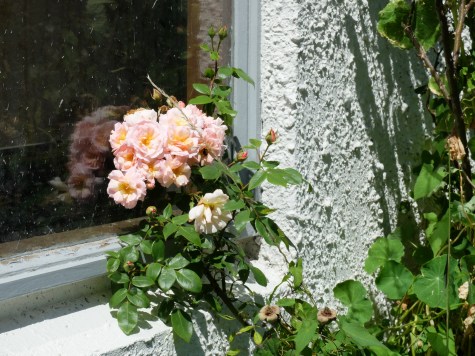
After reading Lucia Perillo’s ‘Logotherapy: After Betrayal’ I texted my friend, ‘i feel like i have to physically take a break.’ Every line in this piece has the power to undo me, it leaks with a quiet violence, a ‘grief of too much water having fallen in too few days’. ‘He gave me some new words: Faith, Reconciliation, Continuance…but they began to fill me up with grief /so I tossed them out the window’. When I read that line, I felt this watery, wet grasp of something that threatened to spill. This is what Perillo’s poetry does to me; it grows with urgency and breaks with force.
Wen-Juenn Lee
I am thinking of the moment in July 2001 when the New Zealand Electronic Poetry Centre (nzepc) went live. There’s only the briefest of mentions in our What’s New section: ‘We are pleased to announce the establishment of the New Zealand Electronic Poetry Centre (nzepc) at the University of Auckland on Montana New Zealand Poetry Day. This marks the culmination of a trial collaboration between several parts of the university and the poetic community. We welcome your comments and hope you will return often to check on progress.’ When poet librarian webmaster and co-founder Brian Flaherty pushed that button, six months of intense work with poets and publishers went out into the world in a single blissful instant. We’ve celebrated our birthday every year since, and it is with great pleasure that we announce the release of Six-Pack Sound #7 on Phantom Billstickers National Poetry Day 2018. The latest Six-Pack features audio by Owen Bullock, Chloe Honum, Courtney Sina Meredith, Jacob Shores-Argüello, Penny Somervaille and, yes, the redoubtable Brian Flaherty. Salutations to all six and to the touch of a button that brings their voices to our listening ears.
Michele Leggott
I’ll admit that the floral dress over hairy legs with big black boots caught my eye, but what really got me was the book. Was that really someone reading a poetry book, brazenly, in the middle of the day outside for everyone to see!? I knew it was only a matter of time before we met. And sure enough, one day later, in the New Zealand collection of the Waikato University Library, I met essa ranapiri. I introduced myself and we talked poetry for a while. Essa gave me Vaughan Rapatahana to read and I gave them Amy Brown. It was a good day.
Therese LLoyd
Wildlife with Michael Ondaatje
I remember some years ago taking Michael Ondaatje for a drive over to the Wairarapa when he was out here promoting The English Patient. It was whitebaiting season, so we went out to Lake Ferry: fish and chips, and an ancient man who shamefacedly displayed a couple of whitebait at the bottom of a yellow plastic bucket. Later, somewhere between Martinborough and Gladstone, Michael suddenly shouted, “Stop the car!” We pulled over, and he leapt out and picked up a hedgehog that was curled up in storybook manner in the middle of the road. He clucked and cooed over it, then placed it reverently on the grass verge. I think he had never seen a hedgehog before. Anyway, not a bad tally: two whitebait and a hedgehog. And after that he went on to win the Booker Prize.
Bill Manhire
Henry Reed’s `Naming of Parts’
In the early 1960’s I experienced compulsory military training at Waiouru, and subsequently became a territorial force officer. I came across Henry Reed’s `Naming of Parts’ and found the 1942 poem wonderfully apt in capturing the sense of wry disjunction often experienced in army training. It remains a favourite of mine. The first stanza:
To-day we have naming of parts. Yesterday,
We had daily cleaning. and tomorrow morning,
We shall have what to do after firing. But to-day,
To-day we have naming of parts. Japonica
Glistens like coral in all of the neighbouring gardens,
And to-day we have naming of parts.
Owen Marshall
The Sun
It’s as vivid as if I’d just done it today – lain on the concrete with closed eyes, the sun through my eyelids. Pink, gold, a burst of blue. Karori West Normal. A teacher – was it Mrs Mackerel with her back-combed blonde hair and orange shift dresses? – said write a poem. She said lie there in the sun and write what you think of. I wrote about the flaring colours and then addressed the sun itself.
I think in my mind was the story my dad used to read me about the fish who wanted the hat he saw in the sky, but the hat was really the sun. Being with my dad was all about love and warmth and looking for the sun in things. I was eight.
The poem I wrote for Mrs Mackerel was two or three lines long, written in pencil, with a grinning and colourful sun presiding over it. My mother kept the page – it’s in my papers somewhere.
From memory I wrote something like this … ‘the blue was a part and the gold was it all / and I said to the sun you’re the love of it all’. My first proper poem. I was so happy with it.
Mary McCallum
When the coast is clear
Fitz was one of my mother’s many boyfriends. He owned a book store in Wellington and when ‘ the coast was clear’ he’d visit carrying books in brown paper bags. The first book he gave me was a small illustrated book of Christina Rossetti’s poetry. Reading the book made me feel both glamorous and wise to the heartache of the world. I wanted to have learned conversations with him about poetry; somehow candles were involved and marshmallows toasted over a fire. Of course my mother was never present. She had her ankles deep in salty water, eyes scanning the coast line for any hint of trouble. There’s always somebody who’ll rock the boat, she’d say.
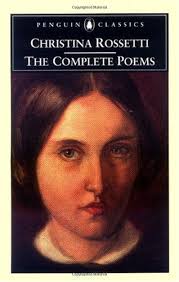
Frankie McMillan
We called it the sitting room. We would wash our hair on Sunday nights and lie in front of the fire to dry it. I received an anthology of poetry for my birthday and one night my mother asked me to choose a poem from it to read out loud. I read From a Railway Carriage by Robert Louis Stevenson. I heard the tripping rhythm, and the sound of the train, and the sudden clambering child and I felt quite still and strange. When my mother told me to choose another one, I asked, suddenly urgent, if I could read that one again.
Maria McMillan
A Lesson from Rosalie Carey
Silver birch, white gravel path, Globe Theatre garden.
Stand there and speak it to me over here,
said Rosalie, project the poem to me without effort.
O wild West Wind, thou breath of Autumn’s being
But you are shouting in your throat! Say it again,
go deeper, find that lower register, breathe with the diaphragm,
project the voice control the breath from deep inside
the ribs with intercostal muscles while the mouth
articulates the sound with clarity her voice to my ear
and mine to hers from far away Again, she says,
do it again, and give it some expression –
Thou from whose unseen presence the leaves dead
inside voice intercostal muscle flickering sunlight
Are driven like ghosts from an enchanter fleeing –
carried on my breath those very words
that Shelley must have heard inside his mind
assembling into fluent lines, until he took his pen
to write them down – taught me the physicality of poetry.
Cilla McQueen
Snapshot 01
I remember a poem my mother wrote about seeing her life side on
at the time I was a small child and she had included me
(I forget which stanza
but the impact was mighty)
It was the first time I saw myself on the page
I went to school the next day (Primary)
and all the colours I saw and all the children I played with
and all the turns I took down the slide were immortalised
Courtney Sina Meredith
When I was eleven I was obsessed with The Cure’s album Wish, and I remember reading in the liner notes, a line that read: “you were bigger and brighter and wider than snow.”
Of course, listening to the song, it had always sounded like “whiter” but the fact that the notes read “wider” was such a promising gesture into strangeness, beyond error, like glimpsing something that hadn’t quite happened yet.
Alice Miller
I came across Hone Tuwhare’s ‘Rain’ in an anthology textbook during a high school English class. I was meant to be reading something else; or perhaps someone was reading aloud in that painstaking drone of group reading, where teachers make everyone ‘perform’ a paragraph at a time, and you can sense even a brilliant story convulsing slowly like a fish on a dry ship deck… Tuwhare’s words trickled down the page with the purity and clarity of water. The classroom fell away. The poem brought a totally new feeling – something almost captured in Virginia Woolf’s phrase: “a basking, with every faculty alert, in the sun of pleasure” – some strange hybrid of revelation and arrival; ecstasy and calm.
Emma Neale
When I was little my parents took me to the beach. As we drove out of the hills toward the ocean, mum pointed out the window at the blue expanse and said ‘there’s the sea, Rachel’. I replied, ‘what can you see, Mum?’ I think poetry is a bit like this. Someone looks at the sea, another person sees a question. The reader brings a whole other reckoning, perspective, curiosity to the poem, and kind of sets eternal fire to all that carefully worded certainty.
Rachel O’Neill
Steven Toussaint during his time as Writer in Residence at the University of Waikato lent me a copy of Cody-Rose Clevidence’s book BEAST FEAST after I bemoaned the lack of poetry by gender-queer people. I often hunt for books that provoke the question: who is this person and how did they get away with this? And BEAST FEAST is exactly that, messy poems that try to inject some wild(er)ness into the English language. I remember standing in the faculty department looking down at the pages my mind boggled by what was on display. Ever since, I’ve tried my best to get at that animal feeling in my own work.
Essa Ranapiri
When I was a young man searching for something to address my own angst, my own existential abyss, I first read Daddy by Sylvia Plath. I learned the sheer power of great poetry.
This was not some distanced prance about clouds and trees.
This was blood and guts and massive pain and it sat me right up. Poetry such as this is vital. Cathartic. Raw, well away from clever-dick wordplay. Such is the angry agony, the poem convulses itself into a series of rhymes and assonance – and awful allusions to the domestic demons plaguing Plath.
It made me write a poem starting I am the brother of Sylvia Plath…
Link to Plath reading Daddy
Vaughan Rapatahana
I had been meaning to read Anne Carson ever since the book recommendation website told me that if I like The Passion by Jeanette Winterson then I should try The Autobiography of Red; but that was out, so I borrowed Glass and God instead. I started reading it straight away, sitting at the high bench in the café that overlooks the ground floor of the library, eye-level with the grey insulation that is meant to dampen sound, and which looks like clouds. It felt as if held my breath the whole time I was reading ‘The Glass Essay’, held spellbound by it: So that’s what you can do with poetry? The universe expanded. I closed the book and wrote a poem of my own.
Helen Rickerby
His name was Warner. We didn’t use first names. We’d been set a poem to write for prep. Mine was about our dog, Shot. It rhymed. I didn’t know the term ‘doggerel’, but that’s what my poem was: literally. I did realise it was awful, though. Poems sounded like ‘Cargoes’, which we’d learnt by heart and recited in class. When our prep came back, mine had squiggles under many lines. Warner was asked to read his poem aloud. It didn’t rhyme; it contained the phrase ‘curly kale’. Ever since, part of me has always thought of poems as ‘curly kale’.
Harry Ricketts
Being the youngest in a family of four tends to make you extra sensitive to snubs. My eldest brother was the brainy one, the next brother was the writer, and my sister was the arty one. So what was I?
One day my father came home with a little book of poems he’d picked up for my number-two brother (not present) in a second-hand bookshop.
“Why is everything always for him!” I screamed (was I ten, twelve at the time?). Off I ran to my room.
Later my father knocked on the door and, silently, put down the book beside my bed. It was the collected poems of A. E. Housman.
Its cover eventually came off from over-use. Housman’s poetry still moves me. It’s so simple, so right. It reminds me of my Dad.
Jack Ross
slam-rule ignorant
wild black wig, mesh-net tights
barely-covered-bum red dress
tail-coat, silver platforms
chain and whip slung over shoulder
didn’t win / couldn’t win
with costumes, props and a song
but did get to run
seven national Lopdell House poetry events
had to enter all going west slams after that
(except for the year my kidney was cut out)
then you, Paula, turn up with Glenn and Harry
and I win
that slam leads me down a path
to a new book
Ila Selwyn
I met Anis Mojgani in 2015 when he came to speak as part of Wellington Writers and Readers. I bought a copy of his newest book of poetry at the time, The Pocketknife Bible. He wrote a lovely dedication inside: “Emma – keep your words close and far”. Along with the lovely poetry in the book itself, this little dedication has been a reminder to keep aspiring to spread my voice as well as a reminder to stay close to the personal inspirations that surround my words.
Emma Shi
A writing group special
Last night! giving new poems a hit-out online with Tusiata Avia, Kate Camp and Stefanie Lash. Absent: Hinemoana Baker and Maria McMillan.
Tusiata’s dream poem was worrisome things in real life flicking up in odd settings, darkly funny in the theatre of the absurd: ’I’m a criminal lawyer” – that part is hilarious’. The second to last stanza is the more brilliant ending … against that, everyone wanted to keep the last line.
Kate’s poem was staggeringly tight, ‘it has that spooky other-worldly feeling even though it’s ordinary details’, perfectly paced, and ‘nostalgic without being twee, poignant without being mawkish’ and, the Russian dolls!
Stef’s poem was a fantastical push for anarchy in archaeology… (dinosaur… dynamite). Exquisitely subversive, the poem ‘wanders round with a strange kind of logic. (Is that even an actual dinosaur name?)
I wrote for the teachers on strike, and Kate said, I love this. It goes so far out in the relationship with the student beyond the report language,’ and though there was a sticking bit, it got cleared for flying.
Marty Smith
Aerogramme from Cal
When I was young and studious I used to read the complete poems of a major poet each year and this was Robert Lowell’s year. I was waiting in a bus stop, reading for the nth time ‘The Quaker Graveyard in Nantucket’ when suddenly the poem cracked open in all its glory. Impulsively I wrote to Robert Lowell, sending him a copy of my first book, and one day a blue aerogramme from R. Lowell, Bearsted, Maidstone, Kent arrived. ‘New Zealand is so far away I feel this may never reach you,’ he wrote. The excitement is still fresh.
Elizabeth Smither
In a Zagreb bookshop
‘When your armies are defeated,
your leaders dead or in exile,
your enemy in the Chancellery
and his militia on your streets,
it is then, my friend, your language
becomes a power.
‘It is the impregnable gate
and the house of your pride.
‘That is why if I should say
“He is a writer”
you will receive respect.
But if I should tell them
“He is a poet”
respect becomes honour.
‘Poets are the guardians of the language.
Pray you have them.
Pray you never need them.’
C. K. Stead
My poetry memory is of my 85 year old grandmother sitting in her bed, in her nightgown, with her eyes closed, listening intently as I read to her from my first book The Art of Excavation. Having lost her sight to glaucoma a few years prior, my beautiful nana loved hearing about the sights and sounds I was experiencing first-hand in the world ‘outside’ of her home, and enjoyed listening to my interpretations of that world through the poems that I wrote. Nana passed away in winter of 2018 and since then I’ve found it very hard to read my poems aloud. I miss her everyday.
Leilani Tamu
Before I even had my first book published I was invited to read and speak to a group of primary school students who were visiting the National Library for an exhibition about New Zealand poetry. It was the first time I had to field questions from an audience and they were all fantastic questions – to this day they have yet to be surpassed. My favourite was, “Are you good at rapping?”
Chris Tse
I got interested in poetry during my final two years (1960-61) at Otago Boys’ High School. I recall that the sonority and imagery of Matthew Arnold’s ‘The Forsaken Merman’ appealed to me. After leaving school I found I much liked work by some New Zealand poets, especially Alistair Campbell and James K Baxter. Then, in the early 1970s, when I was working for the NZ branch of Oxford University Press in Wellington, we represented several overseas publishers including Faber & Faber, so I had access to very many volumes by established and up and coming British and American poets in particular. By that time I was writing poems myself. I’ve never stopped. It’s a condition that I’ve not been able shrug off.
Brian Turner
Love Without Hope
In 1990, when I lived in London, I commuted to work on the Tube. Everyone read The Sun or The Times or the banner advertisements above the heads of the passengers opposite. Someone had the bright idea of filling vacant advertising spaces with poems – these were later anthologized as Poems on the Underground. And so it was that I first read Robert Graves’ poem, “Love Without Hope.” At only four lines long, it’s an easy poem to memorize:
Love Without Hope
Love without hope, as when the young birdcatcher
Swept off his tall hat to the Squire’s own daughter,
So let the imprisoned larks escape and fly
Singing about her head, as she rode by.
Even now, I can type it without checking for accuracy. It’s basically an extended simile, an abstraction made miraculously concrete. It’s the greatest love poem I know.
Tim Upperton
As a teenager, I did a weekend poetry workshop run by Kate Camp at Tairāwhiti Polytechnic in Gisborne. She brought in a box of postcards she had collected from second hand shops, many with messages written by strangers on the back, and we were to use the postcards as inspiration for a poem. Kate would have only been in her late twenties herself, and it felt so amazing to hear from a writer who was not so different from myself and to discover you could find poetry in everyday places.
Louise Wallace
In 1969-70 I was working in Amman, Jordan, and in the mornings would walk past some coffee shops to catch my bus. I saw men listening intently to radios. I thought they were listening to the news but learned it was broadcasts of poems by the likes of Mahmoud Darwish, Fadwa Tuqan and Samir al Quasim. This image of poetry as significant public discourse has stayed with me for fifty years, not as something I can pretend to emulate but as a reminder that there are places and situations where poetry matters like this.
Ian Wedde
Book Speak
For my twelfth birthday Aunt Sharon gives me a copy of Kahlil Gibran’s The Prophet. I carry it with me everywhere, careful to hide the nude sketches from Mom and Dad. I whisper the poetry aloud, as if it is a divine book that comes, not from the writer at all, but through the writer, from some divine source. Gibran describes desires I cannot yet express myself. He makes me want to write. He makes me want to learn the secrets of my own heart, “and in that knowledge become a fragment of Life’s heart” (Gibran).
Amy Leigh Wicks
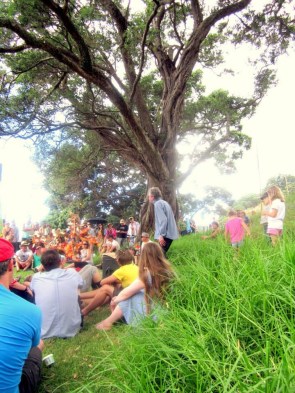
In the early afternoon of 15 February 2014 I was lying facedown on the grass at Tapapakanga Regional Park. I remember hearing small insects droning in my ears and the way the grass smelt fresh and stuck to my face. Then Sam Hunt started reading. He was standing under a beautiful old gnarled tree that looked like something out of Enid Blyton’s The Enchanted Wood. His voice rose and fell on the breeze. A moderate-sized crowd of enthralled children sat mesmerised by his words. I don’t remember now what he said, or what he read, just the inimitable intonation of his voice. It washed over me as I continued to lie semi-passed out on the grass with my friend beside me. It was wonderful, and magical, to lie on a hot summer’s day in the park with my face squished into the grass with poetry passing through and over me. (Splore Festival 2014)
Kiri Piahana Wong
Onslow College, Wellington. I was 16. The teacher handed out some pages, and I began to read. “You should have been told:/ only in you was the gold. / Mountain and river paid you no fee / mountain melting to the river / river to the sea.” The walls dissolved. And then I read the words, “country crumpled like an unmade bed” and was undone. It was the first time that a poem had spoken into me like that, giving me a recognisable image of our land, our place, the crumpled country where my own feet actually walked. I carried that little phrase within me from then on.
Years later, I crossed the crumpled country to live in Dunedin, fetching up in an old house in Sligo Terrace – a house, I discovered, where Denis Glover had lived as a small boy. The moment I learned that fact, well, there it was again … the walls dissolving – “mountain melting to the river / river to the sea”.
Sue Wootton
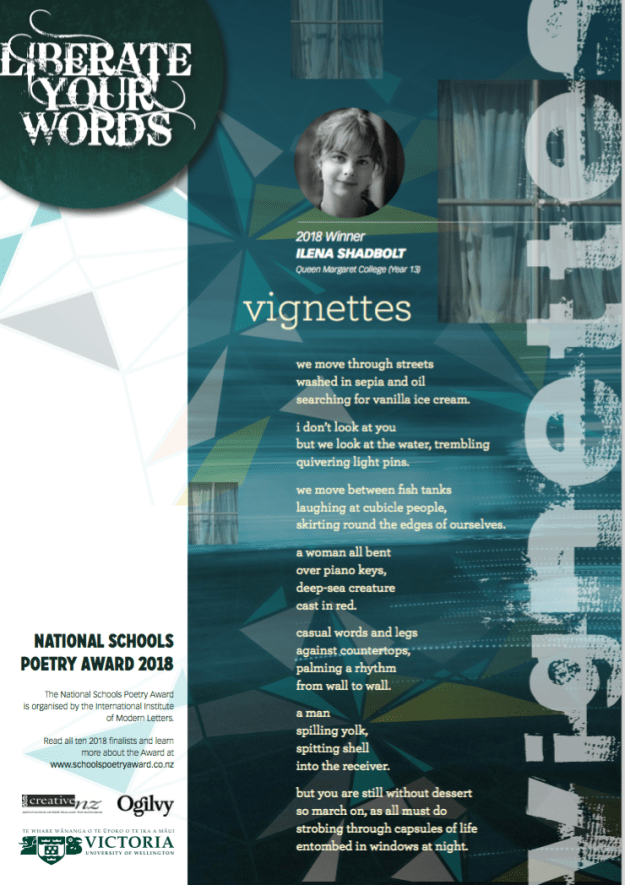
A Year 13 student at Wellington’s Queen Margaret College has won first place in the 2018 International Institute of Modern Letters’ (IIML) National Schools Poetry Award, with her poem ‘Vignettes’.
Ilena Shadbolt receives a prize of $500 and the opportunity to attend a poetry masterclass with poets James Brown and Hera Lindsay Bird at the IIML, home of Victoria University of Wellington’s prestigious creative writing programme. Ilena’s school library also receives a $500 book grant. Nine others were shortlisted in the awards and they will also attend the masterclass.
“I’m very excited to attend the masterclass with James Brown and Hera Lindsay Bird. I’m already a fan of Hera Lindsay Bird’s poetry and I’m really flattered and empowered to have won the award,” says Ilena.
“I wrote ‘Vignettes’ after my friend and I walked down to the dairy from my house at 9pm to get ice-cream. It was a strangely liberating walk; it felt like we were floating between all these glowing fish tanks dotted on the hills, pointing out to each other the little instances playing out in people’s living rooms and kitchens.”
Judge Louise Wallace—editor of Starling journal for young New Zealand writers and author of three collections of poetry—says the young poets who entered the competition are engaging sharply with the world around them, writing about gender, culture and identity, feminism and #metoo, our changing environment and political systems and their implications.
“Ilena Shadbolt’s subtly crafted ‘Vignettes’, is a beautiful observational poem, and as the title suggests, captures small glimpses of life. It is presented in the author’s natural voice, nothing feels forced, and as much is conveyed in what the poem doesn’t say, as in what it does. There is a nervous tension in this relationship, yet there is also a distance present between the speaker and the city—they are an outsider, looking in.”
Ilena Shadbolt will read her winning poem alongside leading Wellington poets at Unity Books Wellington, 12-1pm on Friday 24 August, to celebrate Phantom Billstickers National Poetry Day. National Schools Poetry Award founder and Victoria University Emeritus Professor, Bill Manhire, will introduce the event.
The nine shortlisted poets are: Stella Stevens, Motueka High School; Catherine Davidson, St Hilda’s Collegiate; Kushla Siemonek, Taumarunui High School; Patricia Alcartado, Hamilton Girls’ High School, Anna Doak, Cerys Fletcher, Cashmere High School; Ruby Rae Macomber, Harriet Carter, Northcote College; Cybella Maffitt, St Cuthbert’s College.
“This award has a fine history of uncovering some seriously talented young poets. The 2018 winner and the exciting new writers who are shortlisted receive a great boost from this recognition and are now perfectly placed to take their work to a new level,” IIML Director Professor Damien Wilkins says.
All shortlisted students receive an additional package of literary prizes provided by the New Zealand Book Council, Victoria University Press, Sport, Landfall, and the New Zealand Society of Authors, as well as $100. Flights and accommodation costs are covered for students outside of Wellington to attend the masterclass at the IIML.
The 2018 National Schools Poetry Award is organised by the IIML with the support of Creative New Zealand and advertising agency Ogilvy (formerly Ogilvy & Mather), with promotional support from Wonderlab.
The winning poem is attached. The judge’s report and all the shortlisted poems are available on the National Schools Poetry Award website.