
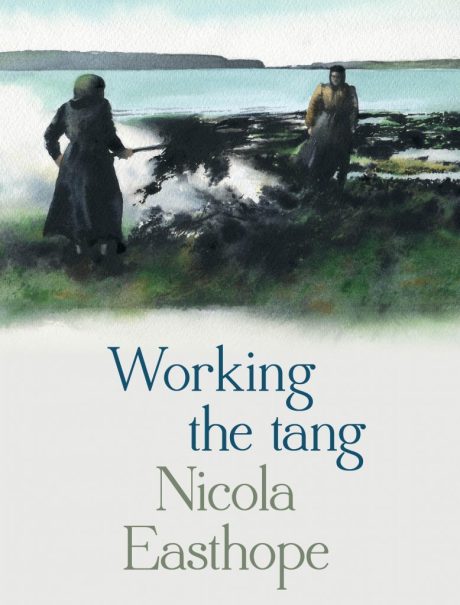
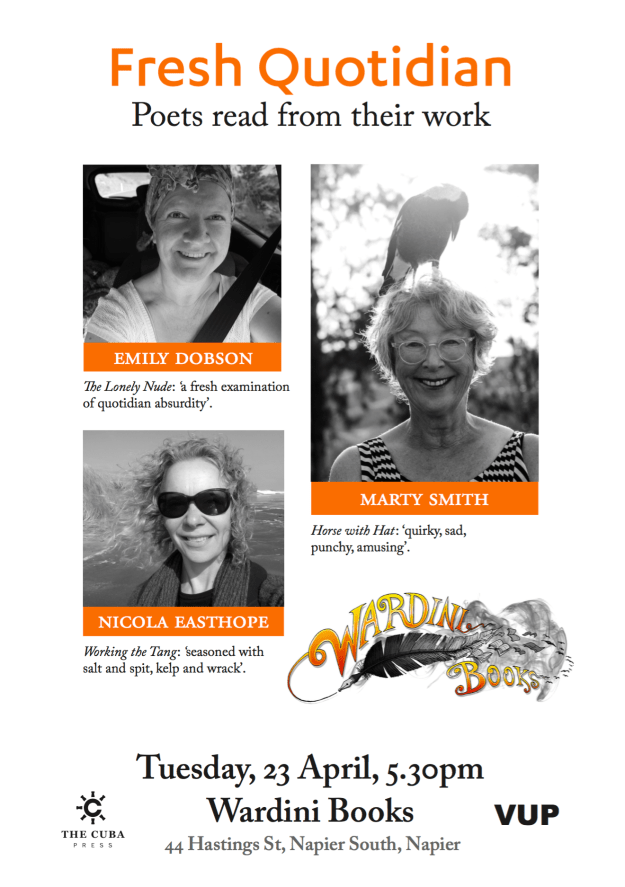
Nicola Easthope reads ‘Kitesurfing’ from Working the Tang The Cuba Press, 2018
Nicola Easthope is a teacher and poet from the Kāpiti Coast. Her first book of poems, leaving my arms free to fly around you, was published by Steele Roberts Aotearoa in 2011. ‘Working the tang, Birsay’ is inspired by her Orcadian roots and the etymologies and experiences of the Norse word for seaweed (among other things). She was a guest poet at the Queensland Poetry Festival in 2012, and at the Tasmanian Poetry Festival in October 2018.
The Cuba Press page
We both know a language is waiting inside my tongue.
Please put down the adze, the skillsaw, the file:
Speak gently to me so I can recognise what’s there.
Alice Te Punga Somerville from ‘Rākau’
Kei te mōhio tāua, he reo kei tōku arero.
Waiho ki raro te toki, te kani, te whaiuru:
Kōrerotia whakamāriretia kia kite ai au he aha rā kei reira.
Translation from ‘Rākau’ by Te Ataahia Hurihanganui
Poet and novelist Fiona Farrell selected poems from 2018 that held her attention in diverse ways – from books, journals and online sources. She questioned ‘best’ (a vague term), ‘New Zealand’ (poets needed to have been born here or lived here for some time) and ‘poem’ (she went to the Greek and cited a poem as ‘something made’). Poetry offered her numerous reading pleasures:
Those hundreds of poems, gathered over a single year, formed a massive anthology, and if that means ‘ an arrangement of flowers’ – as it does by definition – then New Zealand poetry often reminds me of a garden I saw once, inland from Te Horo. Its flowers were a host of golden margarine containers and tin cans tacked to sticks. It was beautiful, this New Zealand version of common or garden. It was startling and provocative. What is beauty, after all? What is form and order? Why do we choose this and not that? Why does beauty exist in distortion? Why do we find it beautiful when a person stands on one calloused toe rather than with both feet firmly on the ground? Or when an apple is reduced to a crimson cube? Or when a sequence of words is forced from the patter of everyday speech? I’ve thought about that garden while plucking the blooms of 2018.
The refreshed site looks good; you can hear some poets read and you can read notes from some poets on their selected poems (love these entries into poems). We get a new anthology – a harvest of poems that spark and simmer and soothe in their close proximity.
Tusiata Avia’s ‘Advice to Critics’ is like a backbone of the poet and it makes me sit up and listen to the sharp edges, the witty corners. There is the rhythmic hit of Hera Lindsay Bird’s love poem, there is the measured and evocative fluency of Nikki-Lee Birdsey’s ‘Mutuwhenua’, and the equally measured and evocative fluency of Anna Jackson’s ‘Late Swim’. Mary McCallum’s ‘Sycamore tree’, with its delicious syncopation and resonant gaps, first held my attention in her XYZ of Happiness. Bill Manhire’s ‘extended joke’ takes a bite at social media and I laughed out loud. Chris Tse’s poem reminds me of one of my favourite reads of 2018, HE’S SO MASC (and he has the best poet photo ever!)/. There is the inventive lyricism of Sophie van Waardenberg and the aural electrics of essa may ranapiri.
Fiona steps aside from notions of community, and questions of representation but these remain important to me. Part of the impetus of my blog is to nurture our poetry communities by showcasing and fostering connections, overlaps, underlays, experiences, events, ideas, feelings, heart. I am acutely aware that certain communities have not achieved the same representation as others, so I still check anthologies to muse upon the range of voices visible. Yep community is a slippery concept, heck I am consistently asking myself where I belong for all kinds of reasons, but as a white woman I most definitely afforded privilege, access and visibility even when I feel like an outsider. I have sat on the edge of the bed this morning stuck on the word ‘community’. Over the four years of writing and producing Wild Honey it was a key word, for all kinds of reasons, and it kept me going.
I love Fiona’s selection – the poems form an invigorating and uplifting day trip that offers breathtaking moments, surprising twists and turns, unfamiliar voices, old favourites and a welcome reconnection with some of my favourite reads of 2018 (I am thinking of Sam Duckor-Jones’s People from the Pit Stand Up for example). An anthology-garden that is well worth a day trip over Easter! I’ll be going back because I prefer to dawdle when I am travelling so still have sights to take in.
see me see me
by the sycamore tree
each child a propeller
sorry each child has a
propeller & is throwing
it up & the dead seeds
spin & spin & spin & they
shriek my little ones & pick up another
Mary McCallum from ‘Sycamore Tree’
Visit Best NZ Poems 2018 here.

And we’ve found a new venue for our poetry & song evenings. We’ll be holding these on the last Thursday of the month as usual (except in April when we have opted for Wednesday 24th so we don’t clash with Anzac Day). Our new home is FOUND Café in Surfdale. It’s such a cool spot, upstairs in the bohemian cocktail lounge. Plenty of room folks to bring your instruments (we provide the sound system) and your poems, with food and beverages available so you can whet your beak before warbling. Waiheke is lucky to have free events like these, so don’t be shy! FOUND Café 8 Miami Avenue Surfdale
Toroa: Albatross
Day and night endlessly you have flown effortless of wing
over chest-expanding oceans far from land.
Do you switch on an automatic pilot, close your eyes
in sleep, Toroa?
On your way to your home-ground at Otakou Heads
you tried to rest briefly on the Wai-o-te-mata
but were shot at by ignorant people.
Crippled, you found a resting-place at Whanga-nui-a-Tara;
found space at last to recompose yourself. And now
without skin and flesh to hold you together
the division of your aerodynamic parts lies whitening
licked clean by sun and air and water. Children will
discover narrow corridors of airiness between, the suddenness
of bulk. Naked, laugh in the gush and ripple—the play
of light on water.
You are not alone, Toroa. A taniwha once tried to break out
of the harbour for the open sea. He failed.
He is lonely. From the top of the mountain nearby he calls
to you: Haeremai, haeremai, welcome home, traveller.
Your head tilts, your eyes open to the world.
Hone Tuwhare
Originally published in Mihi: Collected Poems (Penguin, 1987) and subsequently published in Small Holes in the Silence: Collected Poems (Godwit, 2011). Published with kind permission of the Estate of Hone Tuwhare.
Note from Kiri:
Hone Tuwhare has written so many beloved and iconic poems, but for me, this poem – ‘Toroa: Albatross’ – has always particularly resonated. It’s a poem about a bird that is so much more than a poem about a bird. The poem speaks of death, loneliness and homecoming. It crosses effortlessly from the physical world into the metaphysical. When I read this poem, I hear the voices of my departed tūpuna calling from the other side. I hear the ineffable beat of wings.
Kiri Piahana-Wong, Ngāti Ranginui, is a poet and editor, and is the publisher at Anahera Press. Kiri is currently working on the fourth edition of Māori literary journal Ora Nui, due out this September.
Hone Tuwhare (1922- 2008) was a father, poet, political activist and boilermaker. He published at least thirteen collections of poetry, won two New Zealand Book Awards, held two honorary doctorates and, in 1999, was Te Mata Poet Laureate. In 2003 he was named an Arts Foundation of New Zealand Icon Artist.

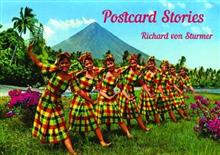
POSTCARD STORIES…a launching speech, VicBooks, Wellington, 12 April 2019
It’s over thirty years ago since Richard von Sturmer appeared on the cover of Robert Cross’s and my book about New Zealand writers Moments of Invention. Back in 1987 I remember Richard suggesting that Robert photograph him in his ‘most natural habitat’. So we went to Smales Quarry, near Lake Pupuke—a flooded, desolate, you could almost say post-apocalyptic zone—a lunar landscape with the occasional sprig of kowhai. After spending quality time in a trench-coat and mask (as the ‘Neanderthal businessman’ character, Mr Chipden), Richard donned striped overalls and a papier mache zebra-head.
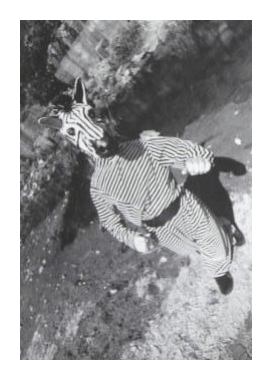
Was the zebra outfit a uniform or a disguise—an act of self-expression of concealment? Either way, the photo on the book’s cover raised the question, for me, of how it might be that writers, more generally, fit into this world. Richard was, and still is, proposing we should all look, listen and think beyond the obvious. Maybe the lesson of Smales Quarry is that we should look for answers in the direction of archaeology or possibly the analysis of dreams, rather than in the realms of sociology, cultural history or literary theory. The cover photo of Richard, zebra-headed and humanimal (in the adjectival sense), begged the question whether the life of the writer is ultimately an absurdity, a theatrical production or maybe even an inexplicable folly. More than anything else, the image reminds me of one characteristic of all good writers: they are up to something. They ask that we follow them somewhere new and surprising. ‘I think we should go into the jungle,’ as Barbara Anderson would have put it. Their jungle.
The cover photo was taken shortly after the appearance of Richard’s We Xerox Your Zebras appeared—a book which has long been something of a cult classic and which, infamously, upon publication prompted threats of legal action from Rank Xerox Corporation, on account of copyright infringement. Still in his twenties, Richard’s creative trajectory as a genre-bending, world-expanding writer was set, as was his now longstanding allegiance with, and commitment to, the unexpected, the odd and the illuminating. He struck me then, as he strikes me now, as an improving influence not only on the world of letters but on the world itself.
Over the three decades since then, there have been collections of poems from Richard and –to much-deserved acclaim upon its publication three years ago–a memoir about his father and grandfather, This Explains Everything. Yet, as the new book reiterates, nothing is ever really explained. Explanation is too often simply a misreading, simplification or a reduction of the matter at hand. Reality is full of live circuitry and ongoingness and expansiveness. We reach conclusions at our peril.
Richard’s books are working documents of a life-in-progress, a sensibility in the making and constant remaking. Reality is put, much of the time, through a Zen Buddhist filter, yet his writing can be as rowdy and colourful as the line-dancing Filipino women on the cover of Postcard Stories. Such a paradoxical, contrary state remains at the heart of his creative project. Also worth noting is a curious propensity for the transmutation or transubstantiation of the mundane or the misguided into a state of meaningful joyfulness.
What sort of narratives are on offer in Postcard Stories? Are these stories about postcards or inspired by postcards—or are these the stories the postcards themselves might have told, if they could speak. Through the first half of the book, Richard performs a visual/verbal two-step, offering short sequences of text—a hybrid of short story and haiku—to enhance, elaborate upon, subvert and embrace the images which they accompany.
Quickly enough, the book gets one thinking about the nature of postcards. It becomes a protracted meditation on that endangered if not dying species. In the era of the jpeg and digital file, postcard stands are becoming fewer and further between. Postcard Stories offers the gentlest of interrogations, a backward glance at these printed images, their industry and their format. It asks questions, but without, of course, requiring any kind of answer.
Most of the time, postcards relate to a specific location yet, as this book manifests, they often reflect a certain lostness, aimlessness, waywardness. You would not want to use them to get your bearings in the physical world. I remember, years ago when Jen and I were spending six months in the South of France courtesy of the Katherine Mansfield fellowship, Richard sent us—in Menton—an antique Greetings from Menton postcard which he had procured from a South Auckland second hand shop. As Richard’s new book attests, postcards, like the rest of us, lead paradoxical, complex and unreliable lives. In his bright and user-friendly introduction, he goes so far as to describe postcards as ‘cells in a giant, universal brain’ then adds, instructively: ’I like to dream with postcards’.
Traversing such inner and outer realities, the texts in Postcard Stories feature a surprising number of flowers. Ditto monuments, towers, clocks and water features. In deep amidst the imagistic ebb and flow, we are asked to consider how flowers flower differently in words than they do in pictures. We are back in the quarry. We are back at the beginning of the world, and the beginning of the word. We are once again keeping company with a zebra-headed youth in his wasteland-quarry. Yet we are also in the world of a film-maker, one half of the Humanimals who is now one half of a group called the Floral Clocks (greetings to the other half, Gabriel White, here with us tonight)… We are in the world of a man- or person-of-letters, an exemplary citizen of Aotearoa, a Buddhist, activist, free radical and traveller in the universe of postcards; a surveyor also of the lives contained in these most wistful of images and of the lives that continue to swirl around them long after they have been posted, received and put to one side.
Gregory O’Brien
.
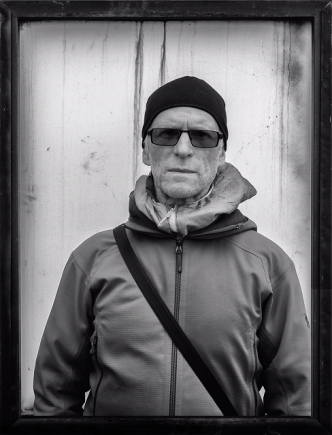
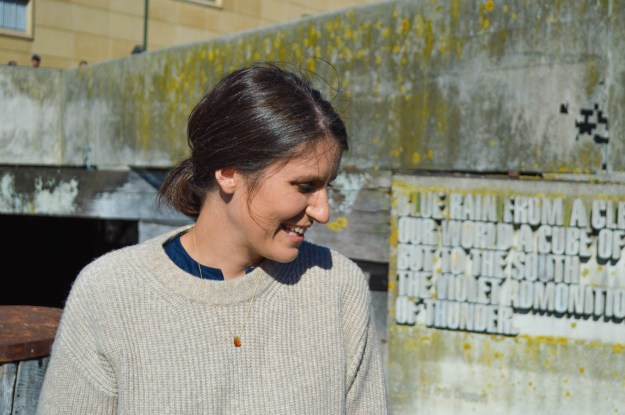
In September, David Howard from Dunedin (New Zealand) will visit Ulyanovsk. The author is going to develop a poetic sequence set in Ulyanovsk, as well as to collaborate with a local composer on a musical setting for his texts. Howard is the author of six books, a participant of several international residencies, was awarded several literary awards, was a participant of exhibitions and performances, an editor of several books, including the book, devoted to Russian authors. His works were translated into European languages; the book «The Ones Who Keep Quiet» (Otago University Press, 2017) featured in the New Zealand Listener’s Books of the Year. David received the New Zealand Society of Authors Mid-Career Writers’ Award (2009), the University of South Pacific Poetry Prize (2011), and the University of Otago Robert Burns Fellowship (2013).
Full details here
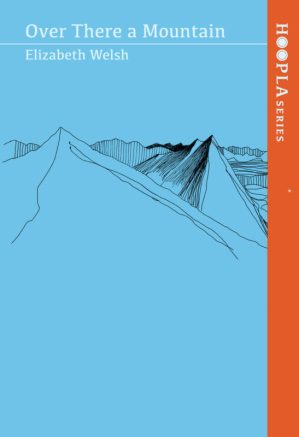
Elizabeth Welsh, Over There a Mountain, HoopLa Series, Mākaro Press, 2018
Elizabeth Welsh’s debut poetry collection, Over There a Mountain, is an exquisite read: surprising, absorbing, complex. She is an academic editor working for international university presses, she founded the online journal The Typewriter, and co-edited Flash Frontier. Her poetry has appeared in local and overseas journals and in 2012 she won the Auckland University Divine Muses Emerging Poets Award. She lives in Auckland with her family.
The collection brought Anne Kennedy’s marvelous Time of the Giants to mind as Elizabeth has also produced a long narrative poem made of glistening pieces and fluent lines. There is a sense of magic at work, a myth-like underlay, seams of real experience, and a satisfying blend of true and invented settings. This is the story of a daughter whose parents are mountains – who puzzles and struggles and faces what it is to be a mountain daughter, to be with a mountain mother and a mountain father. This is fable but this is also satisfyingly human as the mountain daughter navigates how she is formed ‘by’ and ‘outside’ relationships.
Over There a Mountain was one of my favourite poetry reads of 2018.
It’s hard to know how to be with a mother who is
a mountain. It’s hard to feel how to be with a father
who is a mountain. It’s hard to understand how to be.
It’s hard to explain that luminous bond, that bewilderingly
stretched distance.
Paula: Narrative and character mattered so much as I read Over There a Mountain. What poetic effects were you drawn to as you wrote?
They were slow-moving, glistening tail-lights
in the guttering of a kasrt dawn.
Elizabeth: Yes, both narrative and character are central to Over There a Mountain, given its form as a narrative poem. It was actually near to completion when the poem evolved and settled into a book-length narrative (albeit split into three distinct parts – the mountain-daughter’s childhood, adulthood and last years), tracing the arc of the mountain-daughter’s life and eventual transformation. As it is involved in, or at least plays with, contemporary myth-making, the oral quality and auditory effects were particularly important to me. When I was unable to find a specific sound or rhythm, I took liberties with words, much to the confusion of my publisher at times. I remember ‘alpinic’ and ‘huffly’ both resulting in interesting discussions.
Paula: I love the liberties with words, the sonic playfulness, because that added to the mysteriousness, the strangeness. You hear mystery. Poetry is all the better for made up words.
I was totally captivated by the protagonist daughter – the underlying daughterness – and her electric movements. What discoveries, joys and struggles unfolded as you wrote your way into the daughter?
Her mountain-father found it easy, catching sight of her
in a bottle-green jersey scaling a vertiginous cliff, shoulder
blades painted with a dipped sphere of wet Cheshire moon;
she became all manner of oceans.
Elizabeth: Thank you – I’m really pleased you felt that way about the mountain-daughter. It was an interesting exercise, as I fell pregnant and gave birth to my daughter around roughly the same time (tracing my notes back, it appears the mountain-daughter began to emerge about a year before I fell pregnant when I was living far from home in south London). Whether it was timing or synchronicity or chance, I became increasingly fascinated by familial bonds and ways to refigure, disrupt, defamiliarise them. The domestic is traditionally wrought as such a safe, sanitised space, but is so expansive in its reach; it maintains such a hold on us, even as we age. And the mountain-daughter is both us and not-us, she struggles in ways we don’t and struggles in ways we do; at times, it was quite liberating to construct her character. The particular challenge for me was tracing her ‘daughterness’ – I love that word(!) – throughout her later years as a chronicle of growth, with grafts and accretions, trying to do justice to the shape her inheritance would take. I’m sure we never lose our sense of being the child of our parent(s), whatever form that relationship takes.
They told her the mountain stories as love stories, taking
her each dusk to pick bear’s garlic together. Not touching,
they bobbed like pendulums as she murmured: we just keep
hardening and hardening and hardening until all we are
is unfolded, thrown wide.
Paula: I love the way I build a setting for the narrative in my head that draws upon my own mountain experiences. Did you have real places that loomed large in your imagination?
Sleeping afterwards in the southern heat of a midday sun,
she dreamed of Tākaha Hill, Pancake Rocks, both faint
and singing outlines.
Fa!
Elizabeth: The collection is deeply rooted in the New Zealand landscape, so there are quite a number of real places that surface throughout the poem. But while parts of the poem are specifically geographically located – including Mount Saint Bathans, Punakaiki, Mount Peel, Tākaka Hill, Mount Aspiring, Dolomite Point, Miranda and Picton – a significant portion of the narrative is deliberately hazy as to its precise location. The Southern Alps, around the Mackenzie country, particularly Lake Tekapo and Mount John, as well as Arthur’s Pass, heavily influenced ‘the mountain-daughter’s childhood’. And the edge where the Waitākere Ranges meets the Tasman Sea provided inspiration for the final section – that wild, untamed, rugged topography ‘what is this line of sea she came to? […] Bucking the empty trug to the picketed boundary of sopping, wolfing dunes’.
Also, venturing globally, a very fortunate and well-timed encounter with the ancient Montserrat (and the Benedictine Abbey there, complete with Holy Grotto), a multi-peaked mountain range that is part of the Catalan Pre-Coastal Range in Spain, spurred on the narrative and general ‘mountain thoughts’.
Paula: Ah maybe that is one part of the strong connections I feel with the book – like a channel for subconscious attachment- because I see the tail end of the ranges and smell the Tasman Sea from our place and I drive around the Mackenzie country and Central Otago with my partner artist.
Do you have a cluster of poetry books with which you have strong goosebump connections? Whatever they might be?
Elizabeth: Oh yes, I know what you mean – that feeling of simultaneous exhilaration and unease/disquietude. Poetry collections that I have felt an extremely strong kinship with over the years and which, without doubt, have hugely informed my creative practice include Maggie Nelson’s Bluets – these fragments/propositions change me, confront me every time I read them with their candour, urgency and meditative illumination – Anne Kennedy’s Sing-Song, Mary Oliver’s Swan, Alice Oswald’s Dart – the primal, polyvocal, experimental quality of this poem still haunts me – as well as Woods etc., Fleur Adcock’s Tigers, William Carlos Williams’ Paterson, Anna Livesey’s Ordinary Time – this collection is a true gift; it lived within arm’s reach when my daughter was very young – Max Porter’s Grief is the Thing with Feathers, Mary Stanley’s Starveling Year, H.D.’s Helen in Egypt and for its shimmering poetic sensibility, Jessie Greengrass’ Sight.


Paula: I love this list! I haven’t read Jessie Greengrass. I have been musing on activities that augment poetry writing. For me: running, walking, gardening, cooking and of course reading. Listening to music. What activities enhance writing for you or keep it in balance?
Elizabeth: So much of my life is filled with motherhood at the moment, which enriches and enhances my writing and thinking and being in every way (although actually getting words to paper can be somewhat challenging). In particular, baking bread with my daughter each week is such a therapeutic act for us both and always leaves me poetically inspired. Tending to our garden and wild span of bush also slows me down and reminds me to be patient, to be present.
Two mountains encase a flushed fire,
two mountains eat hot soda damper with their daughter.
Elizabeth reads from Over There a Mountain
Mākaro Press page
Extract at Turbine / Kapohau
What do you want?
said the librarian
in Friendly Feilding
to come in from the cold
was my reply
we’re closing an hour early
for a function
the function I’d driven down for
I walked away
he’s crying
but he doesn’t know
why he’s crying
said my sister
to the primer one teacher
who wanted to know why
I guess I do too
I guess I do
I was small and afraid
of a brand-new place
so many people
but what remains
is kindness
my sister
trying to help
unavailingly
Jack Ross
Jack Ross’s novel The Annotated Tree Worship was highly commended in the 2018 NZ Heritage Book Awards. He has written five poetry collections and six other volumes of fiction. He works at Massey University, and is the managing editor of Poetry New Zealand. His blogs here.
 NZ Poetry Shelf