


To allow for the Easter/Anzac holiday period, when many people are away on leave, nominations for the 2019 Prime Minister’s Awards for Literary Achievement will now close on Monday 6 May at 5pm (extended from 26 April).
This is to make sure all New Zealand citizens, residents and organisations have the chance to nominate writers who have made an outstanding contribution to New Zealand literature, in the categories of non-fiction, poetry or fiction. (Remember that writers can also nominate themselves.) Those nominated must be New Zealand citizens or residents and nominators must include a statement of up to 500 words about why they are nominating a writer (no attachments or support material are accepted). The email address to send your nomination(s) to is pmawards@creativenz.govt.nz
Nominations will be assessed by an external panel of literary experts who then forward their recommendations to the Arts Council of Creative New Zealand for approval. The awards – worth $60,000 in each genre – will be presented by the Prime Minister in a formal ceremony later this year.
Find out more about how to make a nomination
We value your participation – remember that without your nomination the selection panel will not able to consider a writer for these prestigious awards.
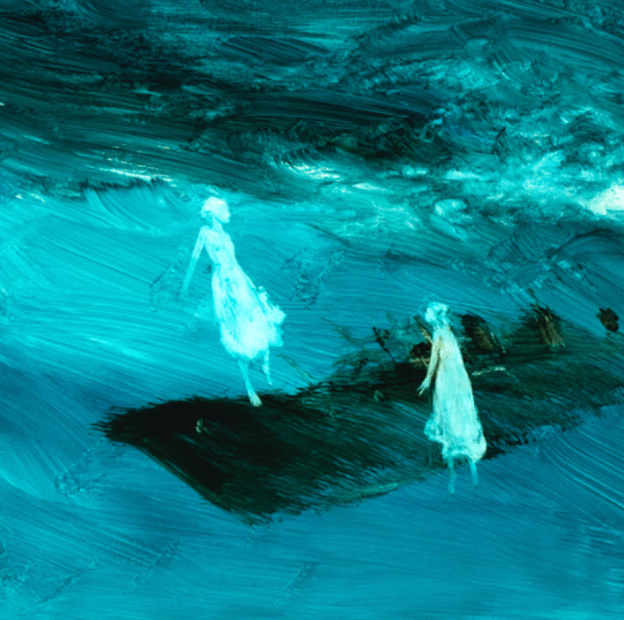
To go with the CD there will also be an art auction. My partner Michael Hight contributed a painting. Fingers crossed lots of money is raised to help the homeless.
THE OFFERING ART COLLECTION
30 April – 9 May
With original works and limited edition prints by Dick Frizzell, Lisa Reihana, Karl Maughan, Reuben Paterson, Séraphine Pick, Max Gimblett, Lonnie Hutchinson, Darryn George, Michael Hight, John Walsh, Justin Boroughs and Ray Ching.
Amano Loft
Level 1, 106 108 Quay St
(across the road from Auckland Art Fair)
Auckland
N.B. No entry through restaurant, please enter via Quay St
Murray Thom and Tim Harper are thrilled to present The Offering Collection with all proceeds to support The Salvation Army. Twelve of New Zealand’s finest visual artists have created original works of art inspired by twelve gospel hymns.
The works can now be viewed
The original works are scheduled to be auctioned on site at Amano Loft on Thursday 9 May at 6:30pm. Auction details to come.
The limited edition prints can be reserved from Tuesday 30 April at the official launch, or through the gallery from Wednesday 1 May. Email info@offering.org for more information. Orders will be confirmed on Friday 10 May.
Official Launch:
Tuesday 30 April, 5pm-9pm (by invitation only)
Public Viewing:
Wednesday 1 May, 10am-5pm
Thursday 2 May, 10am-5pm
Friday 3 May, 10am-5pm
Saturday 4 May, 10am-5pm
Sunday 5 May CLOSED
Monday 6 May CLOSED
Tuesday 7 May, 10am-5pm
Wednesday 8 May, 10am-5pm
Thursday 9 May, 10am-5pm
For further information, please email info@offering.org
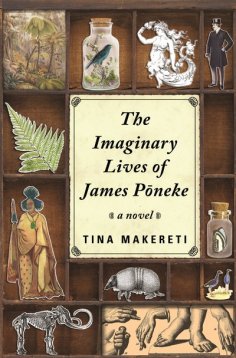
Tina Makereti, The Imaginary Lives of James Pōneke, Penguin 2018
Tina Makereti, Ngāti Tūwharetoa, Te Ati Awa, Ngāti Rangatahi and Pākehā descent, writes fiction that has always captivated me and her most recent novel, The Imaginary Lives of James Pōneke, is no exception. Published last year, and longlisted for the Ockham New Zealand Book Awards, I am awarding it my 2018 Fiction Bouquet.
I have invented this award to underline the supreme reading pleasures Tina’s novel gifted me. I begin with the language and the way her sentences are so exquisitely crafted. They carry story, character, setting and significant issues with ease and fluidity, as though they work behind the scenes giving life to the narrative features. Yet I am acutely aware of the writing. The way a particular word choice makes a sentence sing, the way voice gives flesh and feeling to James to the point he is utterly real to me.
James Pōneke was orphaned as young boy. His mother and sister were killed in a massacre, his father, a chief, left him with missionaries and was later killed. James became fluent in English and hungered for books and knowledge, but the ways of his people became more and more distant as he became more and more uncomfortable living in the mission. The book starts with a life- and trauma-worn James in London, confined to bed and aching to tell his story, to the maid, to the Artist’s sister and upon the paper he was given.
Through James’s eyes and voice we travel along the arc from orphaned boy to bedridden man. He places himself on show just as the Artist who brought him to London placed him on a show; a curiosity, an exhibit to accompany the paintings of Māori that the unnamed Artist had produced in New Zealand. James was a spectacle for the curious and disdainful spectator in the great British museum, but he turns the viewfinder and scrutinises them; not just as they watch him in the museum setting but out in streets that bear riches alongside aching poverty.
One reading track is the abundance of wonder and awe as James absorbs London on diverse settings. He admits he watches like a wide-eyed child or a wiser elder but mainly from the pitfalls of youth. Questions abound and those questions then unsettle any possibility of a ‘tidy’ and misrepresented past, particularly colonial.
A second reading track is the prevalence of cages and containments. There are the animals in London Zoo, the way the Mission upbringing, despite little kindnesses, forced James to break away and travel with another tribe. The London houses felt like cages after the New Zealand landscape where the largest and most beautiful things were trees. There is also the self-containment that was dictated by London social mores, and the way a cultural stereotype is a form of imprisonment. Reading this book I was reminded of Selina Tusitala Marsh’s reception when she performed her poem, ‘Unity ‘ at Westminster Abbey for the Queen for the Commonwealth Observance Day (2016). The disdain and rudeness of the distinguished guest seated next to her reduced Selina to an object in my view rather than an honoured international poet. Selina wrote of this experience in ‘Pussy Cat’ (both poems appear in Tightrope, Auckland University Press, 2017).
Perhaps the most important track is the way the telling becomes a remembering, the way the lost and faded self comes to light as James speaks to the past, the present and the future, to his imagined mokopuna. For me imagination, these imaginary stories, becomes a way of adjusting the viewfinder so that we may unsettle master narratives and engage with a different point of view. We get to see James as an acutely intelligent person who struggles with his own crises and trauma and who experiences his own joy and epiphanies. The book is a timely read. As we learn to make connections with respect and empathy, in a world that has privileged hierarchies and conflict, Tina’s novel is a welcome handbook on how to listen. It affected me deeply, at the level of both heart and mind.
Tina, please accept my 2018 Fiction Bouquet, with love, Paula.
Penguin author page
An extract
Ellen’s Vigil
Benjamin Isaac Tom
Passchendaele Ypres and Somme
three ovals float
on the cold wall
plastered whiter
than their bones,
young, khaki’d
their bud-tender eyes
premonition filled.
Ellen,
Her three boys gone,
transplanted seventy years
from Lurgan’s linen
no longer counts crops
in season
but digs diligently, delicately,
digs down
further down
her spade searching
her garden for
three lost sons
Thomas Isaac and Ben.
Lorna Staveley Anker
from Ellen’s Vigil Griffin Press, 1996
(The poem also appeared in The Judas Tree, 2013 and is published with kind permission from the Lorna Staveley Anker Estate)
I discovered the poetry of Lorna Staveley Anker in The Judas Tree, a selection edited by Bernadette Hall (2013, Canterbury University Press). The collection claims Lorna as New Zealand’s first woman war poet. She was born in Ōtautahi, Christchurch in 1914 and died in 2000. Her father died of throat cancer when she was two and her mother took in boarders to survive. Three of Lorna’s uncles were killed in WWI and her mother, Elizabeth suffered terribly. From childhood Lorna endured a lifetime of crippling nightmares, night terrors. She married Ralph Price Anker, a student she met at teachers’ college; they had four children and adopted a fifth. Lorna began writing and publishing in the 1960s, but her first collection, My Streetlamp Dances, did not appear until 1986. Two further collections appeared in her lifetime: From a Particular Stave (1993) and Ellen’s Vigil (1996). I so loved the posthumous volume, The Judas Tree, I reviewed the book on my blog.
Shortly after the review appeared, Lorna’s daughter, Denny, sent me a copy of Ellen’s Vigil and again the poetry resonated. Much later I found myself in the Turnbull Library doing research for Wild Honey and listening to various audio tapes. I was completely captivated by an interview between Lorna and Susan Fowke (from the Gaylene Preston Productions Women in World War Two oral history archive managed by Judith Fyfe).
There were many occasions when I was profoundly moved in the Turnbull and this was one of them. I was writing a book that engaged with the work of almost 200 poets and that required a very different focus to a book that considered a single poet or perhaps even ten. However sometimes a particular poet held my attention; I got lost in the maze and astonishments of unpublished writing, letters, interviews, diaries, scrapbooks. In Lorna’s case, to hear the poet speak was a special thing indeed. Gaylene has kindly given me permission to share some gems from Lorna on being a poet but I do encourage you to explore the oral history archive Gaylene has helped assemble.
♥
Lorna’s father sometimes wrote poetry, ‘particularly couplets’ for her mother and her mother ‘s meals ‘were a poem’: ‘she’d pickle nasturtiums and we’d have caper sauce with our mutton’. I can just picture the kitchen: ‘The shelves in the pantry would be shiny with rows and rows of goods.’
The poem ‘Ellen’s Vigil’ stems from the time Lorna’s grandmother went digging for her war-dead sons in her garden. Lorna said in the interview that her grandmother was ‘grandmother to all mothers and wives who had lost their beloved men – she was a symbol for me.’ Knowing this amplifies the ‘buried’ grief. Lorna had lived with her grandmother and grandfather for a period from 1921; her grandmother, we hear, had favoured imagination rather than ‘strict discipline techniques’.
Lorna suffered from an eye defect which hindered her reading but at the age of 52 she began writing: she said it was strange to have a slim reading history when then, at the age of 52, ‘out burst all this language and poetry’. In her introduction to The Judas Tree Bernadette muses on events that perhaps prompted Lorna’s poetry writing in the 1960s (the death of her son Staveley aged 21 and the fact his daughter was adopted out by the birth mother) and the way she began publishing after the death of her beloved husband (1983).
She recounts an incident where her poetry was rejected as middle-class rubbish: ‘I came home and I wrote out of indignation and rejection, passion, fury, disbelief, and it was the mildest poem the most restrained tender poignant poem about the death of affection’. Writing was often a physical thing for Lorna: ‘a fusing in my head’, ‘a rush of blood’.
Lorna shared a number of things on being a poet that stuck with me. She didn’t call herself poetic ‘but being poetic means you have a different print out’, and when you write poetry ‘your mind is going sideways’.
Lorna’s family helped publish her collections while Pat White, David Howard and james Norcliffe offered help and assistance with her debut collection. Two of her poems were published in Kiwi & Emu (1989) while Lauris Edmond selected her essay, ‘Has the Kaiser Won?’ for Women in Wartime (1986).
I recommend taking timeout in the archives and listening to the interview, tracking down Lorna’s individual collections and perusing the book that Bernadette assembled with such love and care. To return to the poetry with her autobiography, to remember the impact of war upon her well being and later her writing, to consider the way words flooded out when she was older rather than younger, is to enrich reading pathways through her work.
From my review of The Judas Tree
Lorna’s poems reflect a mind that engaged with the world acutely, wittily, compassionately. There is a plainness to the language in that similes and metaphors are sidestepped for nouns and verbs. These are poems of observation, attention, reaction, opinion, experience. The starting point might be the most slender of moments — and the poetry opens out from there, surprisingly, wonderfully.
In the first section (and indeed the largest section), war makes its presence felt; from the pain of departures, to the pain of the wounded, to the ache of loss. At times Lorna filters a poem through the eyes of her young self (for example, trying to make sense of Armistice Day). At times a concrete detail makes the poem more poignant (‘her spade searching/ her garden for/ her three lost sons’). In ‘Arie’s Tale’ the detail that renders the pain sharper is the ‘tyreless rims.’ In this poem the dead are carried away on a bicycle that makes such a clatter it is the hardest thing to bear (‘He felt it wasn’t respectful/ to his customers’). Lorna’s war poems stretch in all directions — they never forget the life that goes on and they never forget the heartbreak and loss that are etched indelibly. One of my favourite poems, ‘V.E.Day … and Neenish Tarts,’ moves beautifully between these two opposing but entwined forces. From the darkness of battle (now over), the poem moves to the grandmother dancing on the bed (as warm flesh weaves/ pink circles/ under a nightgown’; and from there to ‘Let’s have Neenish tarts for tea’ (this is cause for celebration). This first section of the book is a terrific addition to New Zealand war poetry because it casts a light on women at war (even when they remain in the kitchen).
‘Vision of Escape’, a poem by Lorna
Canterbury University Press author page
Low Tide, Aramoana
Sky with blurred pebbles
a ruffle on water
sky with long stripes
straight lines of ripples
sky-mirror full of
sand and long pools
I step into the sky
the clouds shiver and disappear
thin waterskin over underfoot cockles here and there old timber
and iron orange and purple barnacled crab shells snails green
karengo small holes
I look up from walking at
a shy grey heron on
the point of flight.
oystercatchers whistle stilts and big gulls eye my quiet
stepping over shells and seaweed towards the biggest farthest
cockles out by the channel beacon at dead low tide
It’s still going out.
I tell by the moving
of fine weeds in
underwater breeze.
takes a time to gather these rust and barnacle coloured whole
sweet mouthfuls
Low.
and
there’s a sudden
wait
for the moment
of precise
solstice: the whole sea
hills and sky
wait
•
and everything
stops.
high gulls hang seaweed is arrested the water’s skin
tightens we all stand still. even the wind evaporates
leaving a scent of salt.
•
I snap out start back get moving before the new tide back
over cockle beds through clouds underfoot laying creamy
furrows over furrowed sand over flats arched above and below
with blue and yellow and green reflection and counter reflection
•
look back to
ripples
begun again.
Cilla McQueen
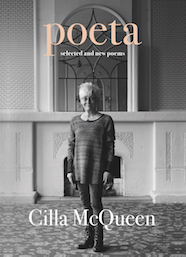
from Homing In (McIndoe, 1982), also published in poeta: selected and new poems (Otago University Press, 2018)
From Rhian Gallagher
Sometime in the early 1980s I heard Cilla read ‘Low Tide, Aramoana’ on TV. I was utterly spellbound.
Cilla does not so much read her poems as enact them. They seem written to a music score, a sound choreography. Her work is also very visual and ‘Low Tide, Aramoana’ is a big canvas.
Whatever expectations the title sets up are given a tilt at the outset. For it is not the tide that is encountered but the sky. It is a simple notion, the sky being reflected in the water, but I experience it in the poem as if it were a brand new thing and
‘I (too) step into the sky’
In more than one way ‘I step into the sky’. The tides are a condundrum, taking place on earth yet the movement is being conducted by the moon and sun. The spaciousness of the poem on the page has me feeling this mystery all over again — my mind is up there with the moon and the sun.
The meditative opening lines are followed by a hurried, heaped-up rhythm, detailing forms and life-forms encountered on the sand flats:
‘thin waterskin over underfoot cockles here & there old timber/& iron orange & purple barnacled crab shells snails green karengo small holes’
This alternating rhythmn shapes the poem. It is a movement from a contemplative interior to the external world and back again, flowing in and out, almost as a tide itself.
On one level this is a foraging poem: going ‘out to the channel beacon at dead low tide’ for ‘the biggest farthest/cockles’. Foraging is also a metaphor for the making of the poem: the gathering is going on right from the first footstep onto the sandflats and the poem is, indeed, made of ‘whole/sweet mouthfuls’.
Some decades past before I heard Cilla read this poem again, at the Dunedin Writers Festival. It was almost eerie. The poem has a tipping point. It takes us there, way out to the edge – a brink of change, when something amazing (or horrendous) is about to happen. That moment when ‘we all stand still’.
I may risk overloading the achieved simplicity of the poem. The environment it brings to life, the multiple invocations it sets going in me, is why it has stayed close. Cilla’s pared-down language and accessibility belies an underlying multi-layered sophistication. ‘Low Tide, Aramoana’ has never given up all its secrets.
— Rhian Gallagher
Rhian Gallagher‘s debut poetry collection Salt Water Creek (Enitharmon Press, 2003) was shortlisted for the Forward Prize for First Collection while her second collection Shift, ( 2011/ 2012) won the 2012 New Zealand Post Book Award for Poetry. Gallagher’s most recent work Freda: Freda Du Faur, Southern Alps, 1909-1913 was produced in collaboration with printer Sarah M. Smith and printmaker Lynn Taylor (Otakou Press 2016). Rhian was awarded the Robert Burns Fellowship in 2018.
Cilla McQueen is a poet, teacher and artist; her multiple honours and awards include a Fulbright Visiting Writer’s Fellowship 1985,three New Zealand Book Awards 1983, 1989, 1991; an Hon.LittD Otago 2008, and the Prime Minister’s Award for Literary Achievement in Poetry 2010. She was the National Library New Zealand Poet Laureate 2009 -11. Recent works include The Radio Room (Otago University Press 2010), In A Slant Light (Otago University Press, 2016), and poeta: selected and new poems (Otago University Press, 2018).

Lynn Davidson Islander Victoria University Press 2019
Time goes slower in the sea
and faster in the mountains.
Physics has taken over
where poetry left off.
from ‘Pearls’
Lynn Davidson’s terrific new poetry collection, Islander, travels between Scotland and New Zealand, between the place she grew up (Kapiti, Wellington) and the place she now lives (Edinburgh). Divided into five parts the poems move amidst light, fire and earth. Like Dinah Hawken, Lynn pays close attention to the world about her, the physical world, the inhabited world, a world buffeted by weather, seasons, time. Her poems are layered and fluent and measured.
The opening poem, ‘My stair’, sees the speaker (the poet?) looking out, in an eerie night light, from her second-floor window onto the bus depot. She evokes a scene through pitch perfect detail and a surprising simile (‘buses lightly lumber / into the yellow depot / like bubbles back / into solution’). But the surprise for me, the point of ruffle and ripple, is the mention of the father:
My father’s heart is failing, he fills up
with fluid (like an empty bus fills up with light?)
I look for flights.
One of the pleasures of this collection is the eclectic movement. There is movement born from departure, from the sway between presence and absence, birds in flight, the ripple of water, the movement of a musing and contemplative mind. A number of poems struck me. ‘A hillside of houses leave’ is mysterious, magical and rich in movement. Like many of the poems, there is a link to birds that might be symbolic but that is always physical.
Steeped in old weather the wooden houses
remember their bird-selves and unfold
barely-jointed wings.
The poem holds the conundrum of life – its impermanence, its fragility and the little anchors, the necessary bones.
People curl inside
the bones that keep them
that will not keep them long.
The presence of birds is fitting in a collection that navigates islands – the birds might signal the ocean’s presence, the multiple flights, the multiple nests, the bird on the poet’s sight line, the bird carried by heart, the bird house and the bird lungs.
I began to see the collection as a poetry chain; where this poem rubs against that poem and that poem rubs against this. Here the light of this day touches the light of that day which touches the light of the day before all the way back to ancient times. Dinah has a poem dedicated to her and I am reminded of Dinah’s ability to evoke the spare and the luminous within a cluster of lines that then open out with absorbing richness. Lynn is similarly dexterous. This from Lynn’s ‘Bonfire’:
The mainland is rendered down
silvers and is gone.
My heart is green and raw – a pea not a heart –
front to the fire back to the wind.
The groan of stone on stone unsettles
me as I unsettle them.
Islands is also inhabited with daily lives, with anecdote and incident, thus rendering landscape humane as well as wild and beautiful. At times it made me laugh out loud as in ‘Lineage’:
I was nine months pregnant, and waiting, when the man in the
Taranaki airport shop snapped this isn’t a library you know,
and when I turned my great belly full of fingernails and teeth-in-bud
towards him he asked (hotly) if I was actually going to buy anything.
The baby made exclamation marks with its soft bones,
glared with its wide open eyes – two Os. No I said I won’t buy
my news from you.
Lynn traces family, the children who leave, the children who make home solid, the unnamed boy who names home hame, the children half a hemisphere away. This from ‘Leaving Wellington’:
Hours go by and elements still gather.
Each day my waking children, just by naming
assembled all the solid things of world:
the bath, stove, chair, the bed, the window,
the shoe, the dinosaur, the door, the wall.
Then in a kind of via negativa
they composed two empty rooms by leaving home.
I said it was an anchor but it’s not.
It’s a shadow roughly like a kiss.
This is a book to slow down with – just as you slow down when you walk the perimeter of an island – gazing into a shifting sky vista and towards the unreachable but alluring horizon line –letting your own thoughts cascade and catch. It is a book where the view of a poem never settles but keeps revealing new lights, new joys, new surprises. I love this considered pace, this sharp revelation, this anchored heart. I love this book.
Victoria University Press author page
Lynn Davidson is the author of four collections of poetry, most recently How to Live by the Sea (2009, VUP) and a novel, Ghost Net, along with essays and short stories. She grew up in Kāpiti, Wellington and currently lives in Edinburgh.
Tour
The crows will be her friends.
They are waiting on powerlines in the rain.
It’s exciting to be in another country with different birds even if they’re black and mawkish, and it’s only England, so kind of coming home.
‘Do they think dark thoughts?’
He comes back from training and through unspoken agreement she holds him at bay, at first.
Later, he says – ‘You held me off just the right amount’.
It’s the only kind thing he says all day.
She watches British bunnies run across the green British lawn in the British mist, into a British hedge.
That evening New Zealand loses.
Someone has scrawled a rude note for him on a napkin, he sees her looking and says
‘You’re laughing’.
She’s not.
She wishes she could.
I don’t wonder how he is doing she thinks ‘Now’.
It doesn’t even creak.
Her heart pulp; memories.
The overwhelming smell of little old ladies’ heads at mass at the Vatican.
Crouching down between acres of knees.
Him lifting her onto his shoulders, in fresh air above the churchgoers, with her battered face and oversized sunglasses.
Pope John Paul passing so close in his glass cartoon car, she could have reached out and left a fingerprint.
Her queen wave.
The ornate courtesy of him helping little old ladies over the barricades.
His beaming, bashful, face, which had gotten battered too.
Him walking straight into the Vatican while a two-mile line formed behind.
Both kneeling before the Michelangelo, not noticing marble Mary was the same age as Jesus.
Noticing nothing but the stillness of her chest
until he shifts beside her
and she wants to take it all back,
the gravel in her face,
the gravel in his.
The bottles she threw at the hostel, his blazed green eyes on the bottom bunk as the cops knocked.
The contrite blowjob in the church graveyard behind the homestay.
I can’t help being helpless, your contempt is not helping me.
She rolls her eyes as he slaps her.
That vein in his forehead is pulsing again and in a way, it has something to say and no one knows any better and
she wishes he hadn’t thrown stones at her window
and she hadn’t opened it
and he hadn’t climbed in
and she wishes she had knees instead of jelly and
she wishes she could put her heart out of her body and
let it live wild in the bush
Simone Kaho
Simone Kaho is a New Zealand poet of Tongan descent. She was born in Auckland and received an MA in creative writing from the International Institute of Modern Letters at Victoria University of Wellington.
In the hopes of offering something immediate to those of us who can’t always afford to buy books, here are some brilliant poetry podcasts.
What a rich resource these have been for me. I listen to them most days. They have led me in so many great directions, and introduced me to some of my favourite poets.
Some days there is so much to read out there that I feel a bit flooded, unsure how to make my way in, trying to read it all at once inattentively. So it’s a total gift to be able to instantly climb inside just one poem—for free!—while on a long bus ride or chopping a pumpkin, and not only that, but a poem that has been carefully chosen, read aloud and discussed.
Writing is never really a solitary quest at all, and I want to hear about food and family and all those supposedly peripheral things. Admittedly it’s not always what you need and can even be dull; sometimes it’s important to reach out of the realm you spend the most time in. But for the most part, I find it so useful to listen to writers talking about their worlds: mundane and extraordinary rituals, who they like to read, why and how they write, their struggles and pleasures and anger and fears. By way of listening, I feel in communion with them.
It’s been difficult to narrow down my favourites as there are many and they just keep coming, but I’ve shared a few particularly memorable episodes below.
1. Commonplace with Rachel Zucker: Conversations with Poets (and Other People) with Rachel Zucker
A series of intimate and captivating interviews by Rachel Zucker with poets and artists about quotidian objects, experiences or obsessions, Commonplace conversations explore the recipes, advice, lists, anecdotes, quotes, politics, phobias, spiritual practices, and other non-Literary forms of knowledge that are vital to an artist’s life and work.
A few of my highlights:
Rachel Zucker speaks with poet CA Conrad about their Somatic poetry rituals, their childhood in rural Western Pennsylvania, becoming an avid reader, running away from home, the AIDS epidemic, writing The Book of Frank over an 18 year period, anti-efficiency, marketing research, the 1998 murder of CA’s boyfriend, Earth, using a somatic ritual to cure a pernicious depression, and CA’s recently published book, While Standing In Line for Death. CA Conrad describes their writing process, how to get ahead of one’s internal editor, revision, combating misogyny, animal rights activism, ACT UP, ecological disaster, ecopoetics, the vibrational absence of extinct species being replaced by the din of humanity, white rhinos, Walmart, the end of empire, teaching, the myth of writer’s block, how to write inside the hardest things, roadkill memorials, being alone, and accepting the elements.
Rachel Zucker talks with poet, editor, professor Gabrielle Calvocoressi, author of three full length collections, most recently Rocket Fantastic, about her new book. They also talk about wanting things, reading in New York, God, prayer, nystagmus (a neurological eye condition), practicing Judaism (but not converting to Judaism) in Los Angeles and in the South, gender identity, gender expression, sexual fantasies, gayness and queerness, butch lesbianism, bros, the symbol she uses in Rocket Fantastic instead of a gendered pronoun and how she reads that symbol, having and recovering from a nervous breakdown and panic attacks, mental health, not seeking out trouble, getting to know the animal you are, envy, jealousy, the granting and prize system in poetry, ambition, unionizing poets, and being honest.
Award winning poet, playwright, professor, editor, essayist, and critic Claudia Rankine speaks with Rachel Zucker about collaboration, poetry’s role in social change, and the investigation of feeling. In this episode, Rankine discusses the importance of ideas put forward by writers such as James Baldwin and Adrienne Rich, the known unknown, the arena of consciousness, being a spectator, willed ignorance, and the illusion of difficulty in poetry.
Conversation between Sheila Heti, Sarah Manguso
Rachel Zucker talks with Sheila Heti and Sarah Manguso about literary friendship, Sarah’s two recent books, Sheila’s manuscript in progress, maternal ambivalence, uncertainty, sacrifice of self, envy, curiosity, being a daughter, attachment and unattachment, shame, the sickening state of wondering whether or not to have children, abandonment, money, the things we cannot choose, choosing intolerable feelings, whiteness, class, the poetics of motherhood, purity, polluted writing, and motherhood as a sexuality category.
New Yorker Poetry is a bit more strictly poetry business than Commonplace. During the episodes, a visiting poet chooses a poem from the New Yorker’s archives to read, as well as one of their own, in between a bit of writerly chit-chat with the host. Best to listen to these in the podcast app rather than the webpage, as if you don’t have a New Yorker subscription access is limited.
A few of my highlights:
Kaveh Akbar reads Ellen Bryant Voigt
Kaveh Akbar joins Kevin Young to read and discuss Ellen Bryant Voigt’s poem “Groundhog” and his own poem “What Use Is Knowing Anything If No One Is Around.” Akbar is the author of the poetry collection “Calling a Wolf a Wolf,” as well as the recipient of a Ruth Lilly and Dorothy Sargent Rosenberg Poetry Fellowship, a Pushcart Prize, and the 2018 Levis Reading Prize.
Nicole Sealey reads Ellen Bass
Nicole Sealey joins Kevin Young to read and discuss Ellen Bass’s poem “Indigo” and her own poem “A Violence.” Sealey is the executive director at the Cave Canem Foundation and the author of the poetry collection “Ordinary Beast.”
Lucie Brock-Broido reads Franz Wright
Lucie Brock-Broido joins Paul Muldoon to discuss Franz Wright’s “Recurring Awakening” and her poem “For a Snow Leopard in October”.
(This was where I first heard Franz Wright’s poetry and it has led me deep into his work. It is a nice segue into the following…)
3. Transom: Two Years with Franz
This is such a beautifully told and deeply moving story. I treasured listening to Franz’s muttered poems, filled with grace, alongside his curmudgeonly spiels.
“What if you have a story that’s really complicated, and you have 546 tapes to listen to, and you get obsessed and don’t know where to stop? All of those things were true for “Two Years with Franz.” The “Two Years” refers to two years of tapes recorded by the Pulitzer-winning poet Franz Wright before his death, and then, the two years Bianca Giaever spent listening to them. This is a story of art and love, of madness and beauty, of youth and age and death.”
4. Between the Covers
Between the Covers is hosted by David Naimon, a writer, philosopher and Chinese herbalist with a brilliant mind. These are long-form in-depth conversations with novelists and essayists as well as poets.
A few of my highlights:
Ursula Le Guin (This is SO good – the best bit awaits you at the end, when Le Guin reads her marvellous piece ‘On Serious Literature’)
Rae Armantrout Fascinating interview in which she discusses among many things her interest in quantum physics.
Manon Revuelta (1990–) is a poet from Auckland. Her chapbook of poems and essays, girl teeth, was published by Hard Press in 2017. Her poems have been published in Minarets, Sweet Mammalian, Deluge, Brief and Turbine. She is currently enrolled in an MA in Creative Writing at IIML, Victoria University, Wellington.
 NZ Poetry Shelf