Poetry Shelf interviews Rachel McAlpine

How to Be Old: Poems Rachel McAlpine, The Cuba Press, 2020

Nobody knows your neck squeaks.

Nobody knows your heart

is a bowl of poems.


Everything you do is very very good

and very very good is good enough.


The past supports us

like a trampoline.

The future? Face it.

Unlace it. Embrace it.


At dusk I want to be with you and stay.

I love it when you ask about my day.


from ‘Fortune  cookies’


Wellington writer Rachel McAlpine blogs and podcasts about old age. She has published novels, songs, plays, books about writing as well as a number of poetry collections. To celebrate her 80th birthday she has published a new book of poems, How to Be Old. She kindly agreed to answer some questions for Poetry Shelf.

The Cuba Press page

Rachel’s blog Write into Life


Paula: Like me, you are a Minister’s daughter. I am wondering what you read as a child?

Rachel: Everything available! We (six girls) went to the library every Friday and came home fully loaded with books. But the Book of Common Prayer had the most irresistible and enduring influence on my language.

Paula: What books stood out in your teenage reading?

Rachel: Wuthering Heights, Jane Eyre, Tess of the Durbervilles spring to mind.

Paula: Can you name a few poets that have really mattered to you across the decades?

Rachel: Across the decades? Well, Allen Curnow was at university with my parents and was even engaged to my mother for two weeks: thus I was aware that some poets were living humans. This mattered to me because at school we read dead poets and only dead poets. My mother read Whim Wham in the Saturday Press which reinforced my arcane insider knowledge. Poets who first took my breath away include Pablo Neruda, Gerard Manly Hopkins, Emily Dickinson, Federico Garcia Lorca, Erica Jong and Adrienne Rich. Then a wave of young male New Zealand poets in the 1970s got me thinking hmm, maybe I could do that too…

When we bang on about our trips

and our memoirs and our blogs

and our grandchildren (best of kind)

our ills and pills and volunteering

our hearing aids and hips—

pay attention, don’t switch off

because this

is our first attempt at being old

and we’re wondering how to do it

not just for us but for you.


from ‘Templates’


Paula: I was really struck by your reaction to Sam Hunt’s contention in the 1970s that women either wrote very good or very bad poems: ‘just women scribbling their little women’s nothings’. So rather than mimic his lyrical voice–you wrote from life, and you wrote for women, and in doing so refused to see women’s writing (the how and the what) as mediocre. I love you for this. Your bolshiness. I see that inspirational bolshiness there in your new book! Am I right?

Rachel: Oh sure, I can’t help seeming bolshy even when I think I’m being most reasonable. Many of the poems in How To Be Old come from a bolshy approach to the clichés of old age. Come on now! What does that even mean, “age is just a number”? What is old age really, specifically, cold-bloodedly like—not to the observer but to the old person?

Paula: Do you think things have changed for women writers? I just checked out the latest Starling issue and its nearly all women (under 25s). Women poets are writing anything and everything, and are most definitely in the spotlights.

Rachel: Agree! Was it Arthur Baysting’s 1973 anthology The Young New Zealand Poets that included 19 men and one woman, Jan Kemp? With International Women’s year looming that was a red rag to a bull. Hard to imagine now.

Paula: Yes – although there is still a way to go. I talk about it in Wild Honey. I just love the energy and output from the current wave of young poets.

Your new book How to Be Old is a glorious evocation of old age. Such captivating self-exposure. Was this also a feature of your first collections? What angst made its way into your poetry then?

Rachel: Hey thanks, Paula! My first collection was basically shouting “I feel sad!” (as you need to sometimes). After that I jumped feet first into other issues, mainly feminist ones. My own experience is a good starting point for making a larger point digestible. Not much angst in How To Be Old, although some sadness tempers the joy.

In the seventies and eighties

as a mournful poet

and strident feminist

(there was no other sort)

I shouted loud and rude

mean and bold

waking up my sisters

with the stories of their lives.


from ‘Growing my brand’


Paula: You were a significant voice for me in the 1970s – did you feel part of a writing community, particularly women? What about now?

Rachel: In the 1970s and 80s I totally felt part of a community, a world of women who were busting to write about our own experience and women who needed to hear our voices, which were also theirs. Then I dipped out of the literary world for a couple of decades: I was very absorbed in my work with digital content until 2015. I did keep writing poems but didn’t publish. So as a poet I’ve been a bit of a loner since then, except for those who have followed my blog and podcast.

The bravest are millions


Out there living the bravest days

are the very old, the frail old

using every scrunch of the soul

for the next impossible chore.

The very old must win and win

on multiple fronts

day after trembling day.


Out there building the bravest lives

are the young

knowing what we knew

and did not do.


Rachel McAlpine


Paula: I think Wild Honey has really made me feel part of communities of women writing and supporting each other. Like you I am a loner poet but so many possibilities for connection these days.

Your new collection refreshes the way old age can be both viewed and lived. The poems are tender, vulnerable, provocative, entertaining. What prompted to you to publish a collection after a bit of a gap?

Rachel: Two things. A, I sold my business and had time on my hands. B, I turned 75 and abruptly realized that I might live another 25 years. So I needed a little hobby to keep me busy (joke). I went late and went hard at old age. Obsessed about it, researched it, decided to do at least one thing per month for a year to improve my chances of having a healthy old-old age. That project, my boot camp for the bonus years, shone a light on my own barmy ageism and society’s odd way of talking about old age. A year later, I started processing this strange interlude and the product was this book, How To Be Old. (Which of course is not a manual.)

I gave myself one year

to understudy for the role

of someone old.

I was confused but I was committed.

Month by month I tackled

housing and eating and exercise

finance and hobbies and friends and voice

happiness and brain and mind

and identity

and lastly, nervously

the existential bit.


from ‘My boot camp bonus years’


Paula: Let’s go back to old age. Just as there are continued pressures on young women to achieve ridiculous ideals there are equally ridiculous notions about old age: on ‘how to be old’. Your collection navigates this so beautifully – but can you comment on what delights and what bugs you about ‘how to be old’?

Rachel: That’s the nitty gritty, isn’t it? Well, no doubt about it, my own old age so far offers many delights. I’m alive, for one thing. At dawn I’m inclined to say, Good morning world! Thank you for having me! (I’m deeply privileged to have superannuation and a roof over my head and to live in this beautiful place.) I’m interested in my brain workings: my short-term memory is crap but the rest is working better and faster than ever… until too soon I get tired and it goes on strike. So in dance rehearsals I learn choreography at a perfectly acceptable rate—then instantly forget it. Puzzling, isn’t it? I like the So what? attitude that many old people report: that is rather obvious in my poems, I hope. What bugs me? Nothing so far except when I get a whiff of condescension from someone younger—but then that was me until I was 75, so I do understand.

A cold teabag on a sore eye feels good.

A cold mermaid on the eye

feels good too.


Tell you what, Granny.

What say I write a prescription

to stop you forgetting

that your friend is dead

because that makes you sad.


from ‘Alternative therapy’

Paula: Love love love this age attitude, and I love the tips for well-being in the last section of poems. Can you comment on this section?

Rachel: My lovely granddaughter Elsie was my life coach when she was little. I recorded her wise words for future reference and tickled them into poems. So the book ends with some of her tips. You could use them, Paula: then you would know how to breathe, what to do when zombies come up the toilet, and how to think. 

Paula: Thank you! What did you hope for the poetry as you wrote? In terms of the ‘poemness’ and the poems’ reception?

Rachel: Every now and then I let myself slip into something lyrical or mysterious. But the poems are intended to be read aloud by anyone and talked about over coffee (not studied at university) so I guess I wanted most of them to be clear, funny, challenging and sort of comforting. I’ve had great feedback from readers, who always bring so much to the table. An occupational therapist tells me she has been reading my poems to all her client groups. That is absolutely perfect: I couldn’t wish for more.

You are tourists in our land.

We are prisoners of slow.

That said, we’d rather be quick than slow

and we’d rather be slow than dead.


from ‘Slow’


Paula: I love the way you open pronouns wide – to embrace versions of you and welcome in the reader. Do you have no-go areas as a writer?

Rachel: I think in my old age I don’t judge people so much. (Or do I?) When it comes to aging, we’re all doing own best thing. And I have been many different people.

Paula: Do you bring autobiography and fiction together or did you navigate forms of truth?

Rachel: There’s no way I can control the way people read my poems so I might as well use myself as my own lab rat. My confidence is based on the certainty that I’m not a one-off. With How To Be Old I think I express ideas about aging that many others also think or have half-thought. That’s my wee gift to the world.

Paula: Indeed! What words fit you as poet? I think of provocative, personal, poetic fluency.

Rachel: I love hearing that, of course. Actually I mainly write for the joy of it so maybe that comes through?

Paula: Ah, my favourite poetry guide too – I write for love and joy! Do you have doubt tagging along? Is there a particular poem that was hard to write?

Rachel: I have a well of black muck inside me which converts to self-doubt if stirred. I’m human.

We take anecdotes and turn them to the light.

We polish them in private.

They are touchstones. So it goes.


from ‘How older people talk’


Paula: What else do you love to do apart from writing?

Rachel: Dance, sing, draw, read, think, do Pilates, tai ch’i, walk on Mt Victoria, watch Netflix and hang out with my friends and family.

Poetry Shelf noticeboard: the launch of Ko Aotearoa Tātou/We Are New Zealand.

Otago University Press warmly invites you to celebrate the launch of Ko Aotearoa Tātou/We Are New Zealand.
This is a free event but requires registration, which can be done here


We apologise if this system has caused any distress. We have been advised there are now limited numbers of tickets available and sincerely hope you are able to secure a place at what promises to be a very special event.
When: Friday 30 October, 5pm to 6pm, followed by a reception from 6pm to 7pm
Where: TBS Space, Tūranga, 60 Cathedral Square, Christchurch

  • This free event is part of WORD Christchurch Spring Festival 2020. Registration is required

Poetry Shelf Monday Poem: Pippi Jean’s ‘What We Owe to Each Other’

WHAT WE OWE TO EACH OTHER

Is teething at the river mouth. Burrowing down.
Between the dirt and wild things. Frozen breathing, rain,
this place, is smoking from the mountainside.
Is setting bush on fire.
Is suspended by wire pins. Browning alpine sunshine
slunk onto muck. Sky and the sailing moors,
all bright descended pictures,
falling on the roof.
Is passing under cars.
Is passerby. Non-belonging. Beating trails
where the road hitches and pulls from
snow, matted scrubland, country laid
in bird formation. Is burnt-out
with believing. Festering.
Splintered. Usually
self-inflicted.

Pippi Jean

Pippi Jean is seventeen and has yet to decide on a music taste. Her work has appeared in Signals, Starling, Poetry NZ Yearbook, Overcommunicate and Toitoi. Last year she was a finalist in the National Schools Poetry Award.

Poetry Shelf video Starling spot: Vanessa Mei Crofskey reads ‘”Something in the Water” by Brooke Fraser’

Vanessa Mei Crofskey reads ‘”Something in the Water” by Brooke Fraser’

This poem was published in the latest issue of Starling (Starling 10).

Vanessa Mei Crofskey is an artist and writer based in Tāmaki Makaurau. They are a staff writer at The Pantograph Punch, have a collection of poems out in AUP New Poets 6, and often write about the water.

Poetry Shelf celebrates te reo Māori

Te Henga, Waitākere

This week many of us have celebrated te reo Māori – I have listened and read and, as I listen and read, I try to imagine an Aotearoa where every child becomes fluent, where we hear and see and read te reo Māori everywhere, where we honour the whakapapa of Māori place names and pronounce them correctly. I support te reo Māori as essential learning in all schools.

When I failed school and left without UE I had no idea who and how I wanted to be, but I went to night school to learn te reo Māori. It was Whangārei. It was the 1970s. It was ban the bomb badges and women’s liberation groups. It was vegetarian food and Joni Mitchell retuning her guitar. It was discovering Hone Tuwhare in the high school library. But as much as I thought learning te reo Māori was important, it felt even more important to step back and give space and time to Māori to grow their language again.

A week celebrating te reo Māori is a wonderful thing. A year boosting it even more so. A decade, a lifetime. Language is so important. We are what we speak. Just as our multiple stories are important. That 17 year old young woman is carried inside me, now that I am an older woman, and it feels like I am being invited into the language nest. With small steps, without wanting to speak over or take over, I feel this warm and encouraging embrace. I will make mistakes, I will hear the rōreka, the kõrero. I feel my way as the seeds of a language are planted. Tēnã koutou.

Kia kaha te reo Māori.

I am learning to grow kūmara and potatoes

in my Waitākere garden,

learning to listen

learning to speak

learning to feel

learning to be

Poetry Shelf poets on their own poems: Marty Smith on Agnus Dei

Agnus Dei


I carried the lamb in a sack on my horse
the tongue hanging grey and limp.
It’s buggered, said Dad, throw it in the creek.
The creek leaped, dimpled. Small bubbles
whirled, it rumpled where I was looking
the water shadowed half-blue-black

deep just there with duckweed floating out
the yards behind all noise, the cattle swirling
up air swelled with dust and bellowing.
Flies lighted on and off the rails.
I took the lamb and kneeled in the pudgy mud
both hands under it, under the water,

laid it carefully into the shocked cold.
It hardly struggled, there was so little left.
Put the bloody thing out of its misery
I heard in my head as I pushed it under
and the water shuddered.
Get the hell out of that he yelled at my back

you macabre little bastard!
It might have been ghoulish, he was good with words.
The yards were sweating hot
Dad wiped his hatband, the sack smelling
of dry stiff flax, I wiped my nose
my hand all mud and numb.

The birds hummed. In rain, in wind
I go out all hours on my lambing beat
he’s the shadow of me, always riding beside me.
Let it go he said, quietly. I let it go floating
it bobbed and the sun caught the eye, closing.
Shush, shush, said the creek.

Marty Smith from Horse with hat, Victoria University Press, 2014

Agnus Dei

I used to think some of the connections and references I made for this poem were so obscure that the only people who would ever know (or care) about them were me and my Dad, and he was dead the whole time I was writing my book to him. 

But when I read it at Wardini Books, Erice Fairbrother was there, and she told the audience that every year when she takes the Easter Service in the Napier Cathedral, she reads Agnus Dei to her congregation. And I had the kind of reaction that comes straight from the subconcious where it was – Whoa! The poem is against religion! – but I also remembered that the poem walks away from me as soon as it’s written, and it’s Erice’s poem when she reads it and wants to use it at Easter. Besides, Agnus Dei still has a dollar each way, like all of the poems in the book that question faith. Dad never went to church and we hardly ever did, but his mother was very religious. His maternal grandfather was a Lutheran minister who had to give up running the Lake Ferry Hotel because he couldn’t square it with being a tee-totaller and a minister. I lay off some bets, just in case.  

I think I can see why Erice would choose to read Agnus Dei at Easter, and if we hadn’t been in lockdown this year, I would have snuck into her service. It’s a brilliant thing to do, to read a poem in a cathedral —accoustics! – and I knew for a fact she’d get it perfect because she’s a really fine poet and a beautiful reader. I imagine it’s the line, ‘He’s the shadow of me, always riding beside me.’ I’ve always been very pleased with that image, but I was not meaning that kind of father, I was meaning my actual father. He was so huge in my life that when I was riding my pony, it was not my shadow I cast, but his. I wondered what Erice sees– is it casting the shadow of God beside people when they walk? (What kind of shadow would he cast?) (Does he have weapons?)

When I say I’m having a shot at religion, I’m only giving it the side eye in this poem. By using a religious reference as a title, though, it talks to other poems in the book which question faith. Some of the poems have what I think of as mirror lines – when you read the mirror line, you get the reflection of the other poem. (See why I say I’m probably the only person who ever will read Horse with hat like this? )

The mirror line is ‘Put the bloody thing out of its misery’, which is in Emphysema for Aunty Gwen. Dad’s sister Gwen contemplates him in his final coma and remembers the pact they made after he came back from the war: that if ever one of them was helpless in hospital, at the mercy of stangers, the  other was to ‘put them out of their misery’.  

When Dad says, ‘Put the bloody thing out of its misery’, there’s the shadow of the idea that sometimes soldiers had to shoot their own men if they couldn’t survive their injuries but would lie alive in agony for days. To use the Latin for The Lamb of God, Agnus Dei, is to suggest that servicemen were lambs to the slaughter. In another poem, Aunty Gwen is looking back, and she says, They were so innocent. They didn’t know anything. They’d led such sheltered lives on the farm.

On the farm level, we were never to let animals suffer. They were always to be put down if they couldn’t be saved, and if it sounds shocking now to throw the lamb in the creek, but in the fifties, as my aunty puts it, it was just what people did.

The poem didn’t start out as anything other than an exercise I was doing for the International Writers’ Programme at Iowa, where we were asked to write like US poet Lyn Hijinian – not so much write like her, but to have a go at using the tools she uses – really dense, really packed layering up of tiny details. The exercise required you to pick out a tiny detail and write every small detail you could about that detail, building outwards and outwards and for some reason the detail that threw up was the duckweed floating out on the creek – that was all it was, but when you start a memory like that the details roll out until they turn into what it really is—how deep and cold the water was. Then the lamb came floating up. The lamb was always there. Then it was about innocence.

The tiny details became heat and dust and the noise of the cattle bellowing, and it was always going to Dad in the cattleyards. It was surprising to me how those details came out as sound. It made me think of my Iowa tutor Shannon Welch, who said, The language is older than you. Let the language take you. (She also said, The water is deep, don’t snorkel.)

The other voice on the audio for Agnus Dei is Maude Morris, who was about 15 at the time. Maude is now the band LEXXA, with her twin sister Julia.  It was Maude’s idea to loop the child’s voice, and make the heartbeat sound with the mic. Which stops. I asked her if she could make a sound that was recognisably birdsong, but with something wrong with it. An unnatural sound for an unnatural act, to go over the lamb going into the creek. Maude got a tui song and stretched it out, then played it backwards and chopped it off. You know it’s a tui, and you know there’s something wrong with it, but you don’t know what. Jeff Boyle from Jakob very kindly recorded it for us.

My father and uncles never talked about the war, because their gift to their families was for them not to have to know. Aunty Gwen said you never knew what they carried around with them. This poem has redemption at the end, because it’s all I can do, but they didn’t allow redemption for themselves.

Marty Smith’s Horse with hat won the 2014 Jesse Mackay award for Best First Book of Poetry, and was a finalist for the Poetry Award. One of the strands in the book is the cost to her father of carrying the war with him; another strand is the question of faith. Agnus Dei crosses religion over into war, although it looks like farming.
Marty grew up riding beside her father, hence the horse strand in Horse with hat, hence the book she is writing about the obsession of people who risk their lives to ride racehorses. She would risk her life right now to ride a racehorse, if she were allowed.

‘Agnus Dei’ was short-listed for the 2013 Bridport Prize (UK) and was a place getter in the 2013 Joy Harjo Poetry Award (US)

Marty is currently working on poems to go alongside the lockdown essay she wrote for her friend, Paul Davis, whose plans for the end of his life were ruined by lockdown.

Poetry Shelf interview with Kate Camp

Photo credit: Grant Maiden

‘And I think it is this sense of connection, in all Kate’s poems, which sent me scrambling for a word like spiritual. Because what I feel when I read Kate’s work is that the great mysteries of the world, the omnipresent magnificence, the unexplainable and the truly awesome, rest in being human among humans. Take your ley lines and chakras and give me the oesophagus and the eyeball, the memory of a dusty school hall, that night, that party, remember the small blasts of happiness, our bloody painful hearts.’

Maria McMillan, launch speech for Kate Camp’s How to Be Happy Though Human

Poet, essayist and literary commentator, Kate Camp has published six previous poetry collections. Her debut collection, Unfamiliar Legends of the Stars, won the NZSA Jessie Mackay Award for Best First Book of Poetry at the 1999 Montana NZ Book Awards. Her fourth, The Mirror of Simple Annihilated Souls, won the 2011 NZ Post Book Awards Best Book of Poetry. Her poems have appeared in magazines and journals in New Zealand and internationally. For a number of years she has discussed classic literature – Kate’s Klassics – on with Kim Hill’s Saturday spot on Radio NZ.

To mark Victoria University Press’s publication of Kate’s How to Be Happy Though Human, Kate answered a few questions for Poetry Shelf.

So many things can go wrong

inside a human life, it’s almost comical.

You find yourself in a house,

in a night, with everyone you love

breathing in and out somewhere

and if you thought about it properly

you’d just throw up in terror.


from ‘Panic button’


Paula: Have you always been an avid reader and writer?

Kate: Family legend is that I came home from my first day of school and told my mother I could read. She said, oh ok read this. I replied, well I don’t know any words yet.

I didn’t learn to read particularly early, but once I did I quickly became obsessive about it, all the usual reading under the covers, walking down the street with a book on my way to school, re-reading books over and over again.

Paula: Can you name a few poets that have caught your attention across the decades?

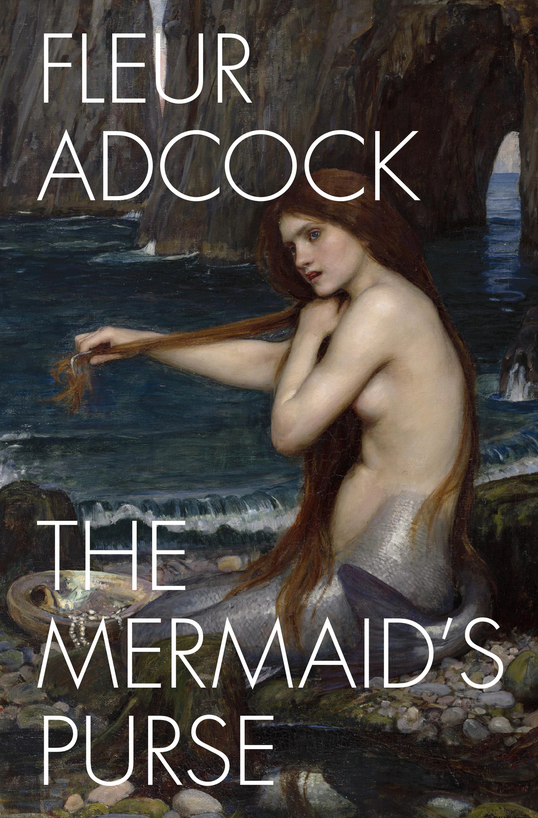
Kate: Lauris Edmond is a key one for me among New Zealand poets. I’m reading Fleur Adcock’s selected poems at the moment and remembering what an important influence she was for me early on. And Jenny Bornholdt, her work and mine are so different, and yet I always feel such an affinity with her poems.

In more recent years / decades I’ve got into a lot of poetry in translation. Czesław Miłosz is one I come back to again and again, and Wisława Szymborska. Like Bornholdt, Mary Oliver is a poet I feel is very different from me, but I love her.

Paula: You acknowledge your writing group. How important is it to be part of this as a poet?

Kate: My whole career I’ve had a writing group. When I first started writing seriously I was on the creative writing course at Victoria in 1995, so I was in a weekly workshop. After that finished, around half the course members formed a group together and we met for years. Then in 2003 I joined my current group and it’s been going that whole time.

They are my first readers, my best readers, my greatest motivators. We follow the “Iowa workshop” style where we read our poem aloud, the others talk about it, and the poet just listens and says nothing. It’s such a brilliant, powerful way to understand how a poem is landing.

A liquorice cable

wires hand to mouth.


Proud magpies

raced the dawn home.


Asphalt remains lively

weeks after its laying.


from ‘Unfamiliar Legends of the Stars’

Paula: Your debut collection Unfamiliar Legend of the Stars came out in 1998. Were you writing poetry much before this?

Kate: I’d always written poems in a notebook but never really shown them to anyone or thought I’d do anything with them. I knew about the creative writing course at Victoria, I was a student there studying English and I knew that Emily Perkins, who was the older sister of a school friend, had done the course and become a published author.

I thought, I’ll apply for the course three times, if I don’t get in I’ll just give up on it. I got in the first time I applied and it was really only then that I started writing with any focus or seriousness.

Paula: That first book really caught my attention – it felt fresh and rendered the world alive with possibilities. Can you remember what motivated you as a poet then, what mattered when you shaped a poem?

Kate: I think what motivated me then was a sense that I saw the world in a certain way and I wanted to share that way of seeing with others. And I guess I felt the power of poetry, and I wanted to wield that power myself.

What mattered to me then was to write a poem that was clever, surprising, and made you feel something.

Having said that, when I’m actually writing a poem I try not to think at all. About anything. I find that gets in the way. The Canadian poet Christian Bok said “take care of the sound and the sense will take care of itself.” That’s how I’ve always written, just going with what comes up and trying not to switch my thinking brain on until I’ve finished the draft, and it’s time to edit.

Violin was out the back of my flat when I was nineteen.

I would put the speakers in the garden

and play ‘Be Mine Tonight’ again and again

running inside to rewind the tape.

He’s shocked to find I am middle aged.

I’m not shocked. Inside me are Russian dolls

of the women and girls I’ve been before

each more beautiful and unhappy than the current.


from ‘One train may hide another’

Paula: Your new collection How to Be Happy Though Human (you have a deft hand with titles!) is a gathering of new and selected poems. I like the way you have placed the new poems first and then we move through your books from the debut to the most recent. Often the new poems go at the end. I love this choice! Any comments?

Kate: I read a lot of selected poems and I tend to read them backwards, in chunks, so that I’m reading the poet’s most recent poems first. Otherwise with a poet like Milosz you’re starting in the 1940s and the poems can feel really dated. But if you start with the new ones, by the time you get back there you’re kind of in the zone.

That doesn’t really apply to my selected though as my career hasn’t been that long, at least not by Milosz standards! I just wanted to start with new poems because, you know, new poems are always the ones you love the most. The best poem is the next one.

And I go back to Saturday

we dance with other people

other people’s children,

create community with physics.


Memory is a kind of  mourning.

We take each other’s hands

as if they were made for that

and we form a circle.


from ‘How to be happy though human’


Paula: Your new book offers perfect routes through the rewards of your poetry. The physical world is refreshed, relationships between things and people are made visible, there are surprising connections, and always a glorious poetic fluency. Did you encounter any poetry stumbling blocks or epiphanies across the decades?

Kate: There was a fairly big gap between Beauty Sleep and The Mirror of Simple Annihilated Souls. I was having a crap time in my personal life, and I felt really stuck creatively. I was scared to write about my failures, my despair, my loneliness, my fucked up life. And I was scared to write about “the human condition” like a Milosz or a Mary Oliver, I felt – who am I  to write about the meaning of life? On both fronts my ego and my vulnerability was in the way.

But then I realised, the artists I most admired were writing poems and songs of utter devastation and heartbreak and disaster. And I didn’t think they were losers, I thought they were magnificent.

And I realised that I was never going to be anything other than a middle class New Zealand woman who grew up on Timbacryl adverts and 70s singer songwriters, and that I had just as much right as the next poet to plumb the depths of the human psyche.

I think that book marked a “fuck it” point for me where I decided just to write the poems that are in me, however depressing, distasteful or megalomaniacal they may be.

I take the last few turns in darkness

steep, short of breath

these legs have been mine all my life.

Hot hands. Small nights within my lungs.


We are fortunate to live in a world.

We are fortunate to live in a world

where some person, some man

is painting railings on the zig zag


and when he finished

he could have raised his eyes

and seen, beyond the black-tree hills

some ragged and fast-moving clouds.


from ‘Walking up the zig zag’

Paula: I just adore the new poems housed under the title ‘How to Be Happy Though Human’. Now and then I post a poem that has really haunted me in a new collection – and this whole section haunts me. The poems stick to me – I think the title is a key. These poems are intimate and revelatory, physical and movement-rich. Again the surprising juxtapositions: hanging out the washing, Watergate, your mother. Scenes become luminous. Family matters. There is a poetic heartbeat. Would you see any changes in the poetry process?

Kate: Almost all of these poems have been written since I came back from the Menton fellowship, where I was writing prose – a collection of memoir essays. I can definitely see the influence of that. These poems are looser, more prosy in style, and in many cases are straightforwardly autobiographical. They’re also long. Pulling together this book made me realise that my poems have got very long lately!

Paula: Do you have doubt tagging along? Is there a particular poem that was hard to write?

Kate: Most poems I try to write either don’t happen at all, or turn out to be not that good and get abandoned. But every poem I write that turns out good, I write in one go, in an hour or so. I will revise it later but usually not a huge amount. That’s just my process, it’s kind of scattershot but when it’s working, it’s easy, so I don’t really find any poem hard to write. I just throw away a lot of attempted poems.  

My main doubt is whether I will ever write a good poem again. The first sensation when I write something I like is relief.

Tom Waits records the sound of frying chicken

that’s how he achieves his pops and crackles

Our old unit had a crooked arm,

it was a trunk of wood with woven speakers.


As I child I worried about forgetting:

the hexagonal handle, a creamy honey cell,

that flaw in the lino resembling Donald Duck

while the others of its kind looked like grey bells.


sometimes life would seem too big, even then

an empty Sunday when you drifted as a ghost.

I saw Bonnie and Clyde on such a day,

as I recall, in black and white


from ‘Snow White’s coffin’

Paula: What poem really works or matters to you?

Kate: The poem “Snow White’s Coffin” is an important poem for me. It covers a lot of abiding interests for me – found facts, childhood memories, what makes life meaningful when you’re an atheist. It draws on something I thought on a lot when I was living in Berlin, the tension between intellect as the most human thing of all and the intellect as dehumanising. There’s also a tone of anger and despair in it which is quite primal – the word “howling” is in it, which is not a word anyone puts in a poem lightly.

In my last few books, the title poem is a poem that is really important to me – one that functions as a kind of tuning fork for the whole collection.

Paula: Do you have any tips for emerging poets?

Kate: Read poetry by other people. If you don’t like reading poetry, you’re not a poet, you’re just a bit of a dick.

Paula: What else do you love to do apart from writing?

Kate: Conversations and laughing are my favourite things. I love to sing with my choir. I love to watch Netflix. I love to dance. I love to drink to excess, rarely but with gusto. I love doing escape rooms with my nephew. I love looking out the window while drinking tea and listing to podcasts about American politics.

Victoria University Press author page