Poetry Shelf celebrates new books: Emma Barnes reads from I Am in Bed with You

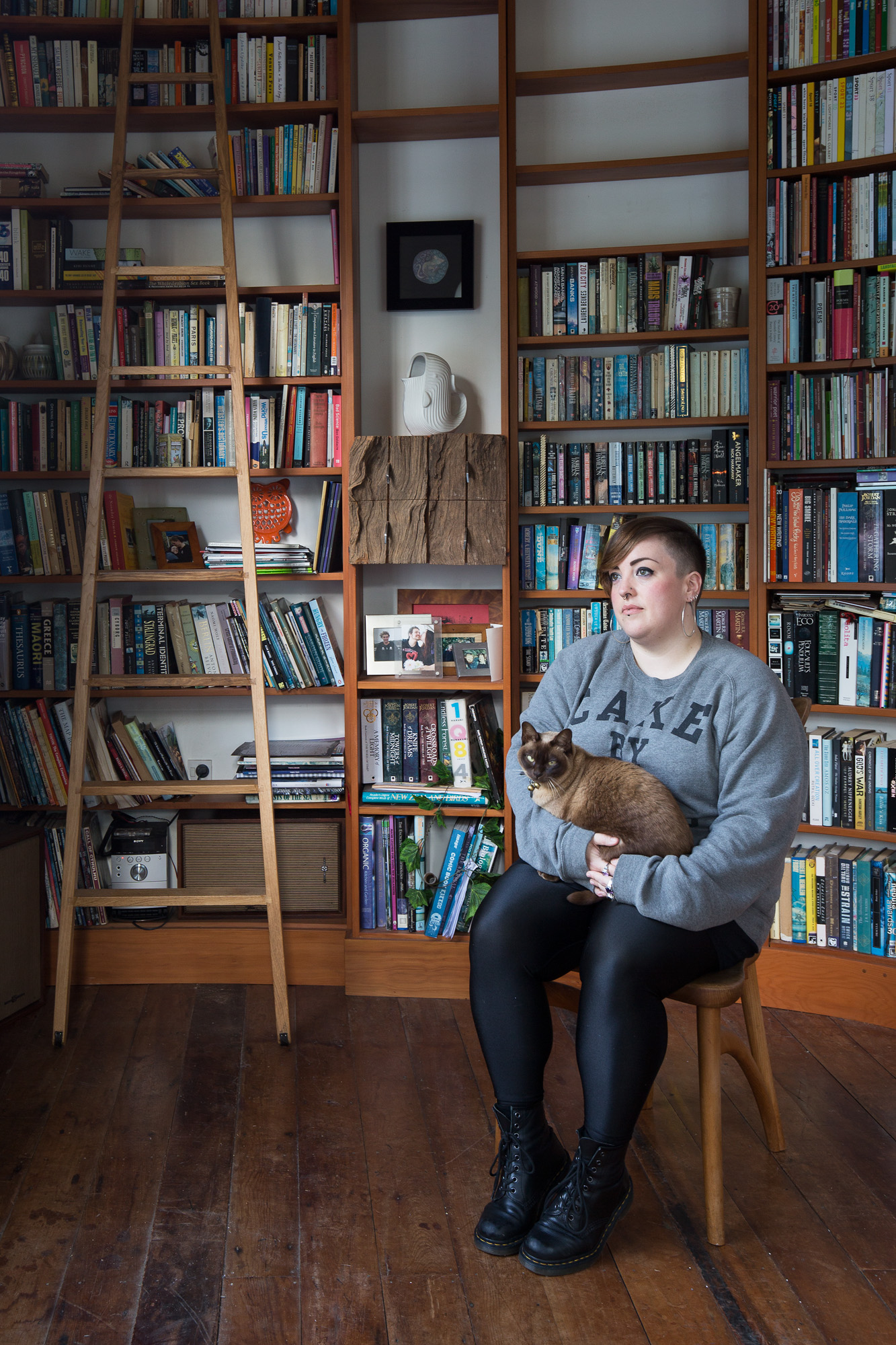
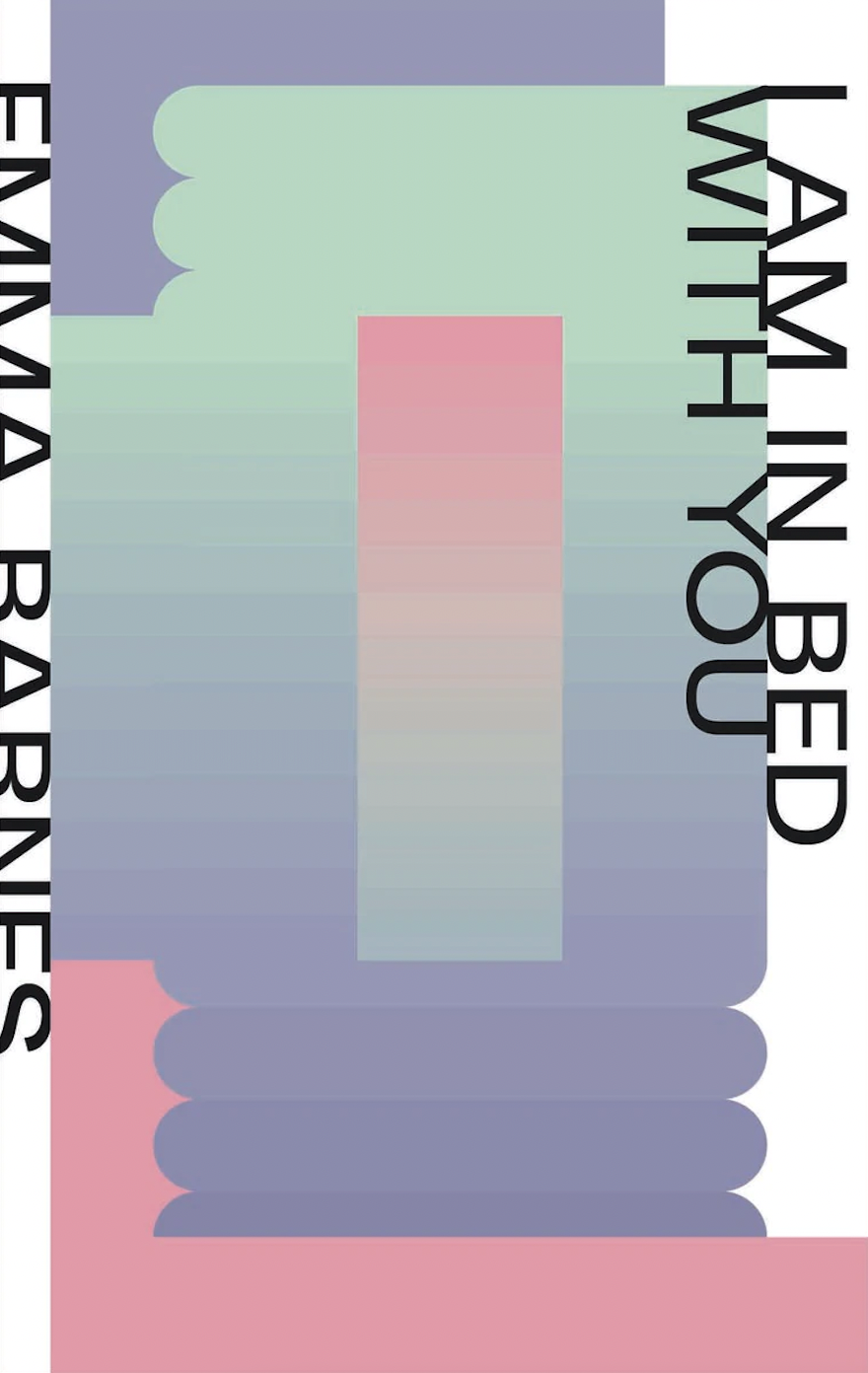
Emma Barnes reads four poems from I Am in Bed with You, Auckland University Press, 2021

‘Maiden Mother Crone’

‘Ohio’

‘Low boughs’

‘Completely dry riverbed’

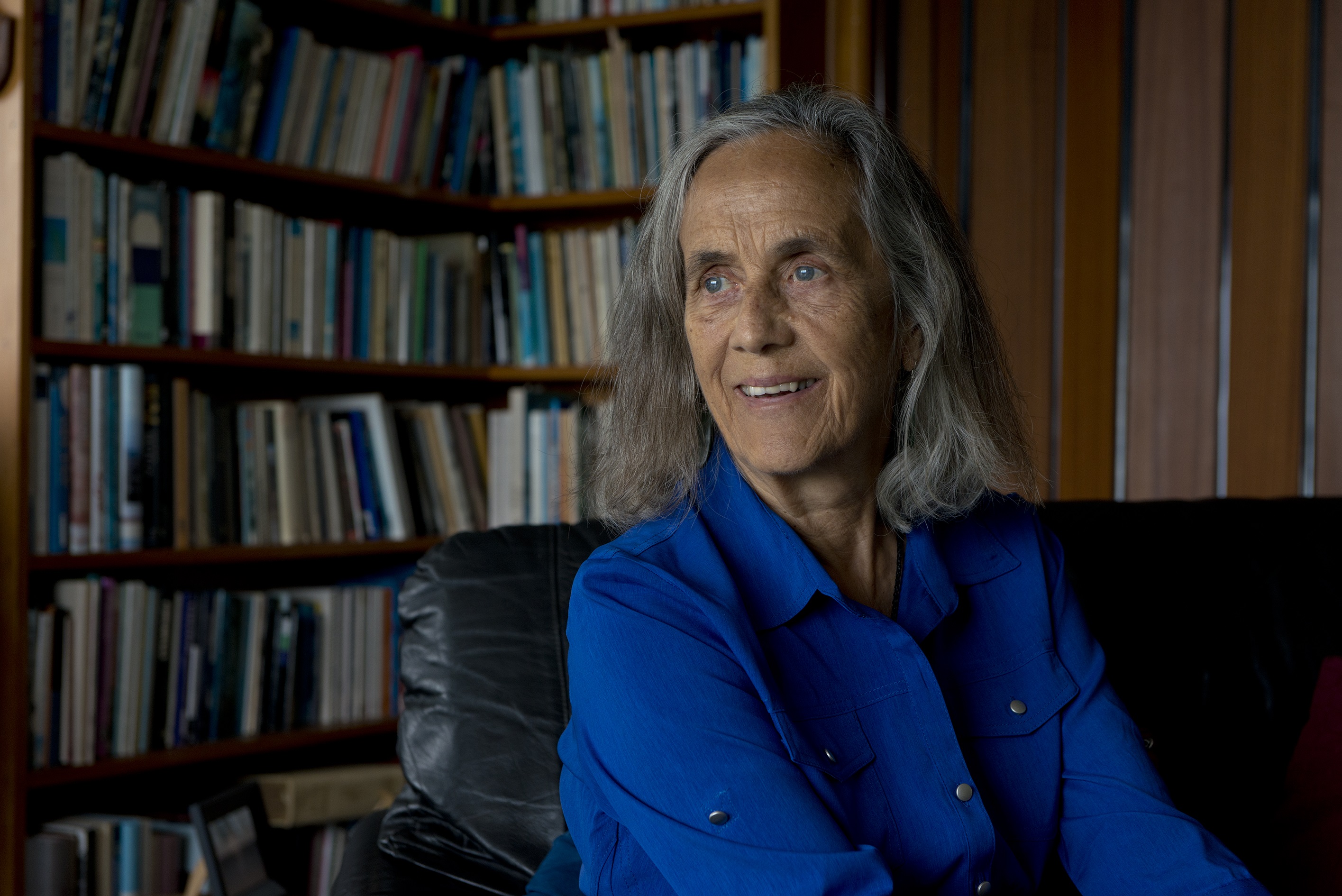
Emma Barnes lives and writes in Pōneke / Wellington. They have just released their first book I Am In Bed With You. For the last two years they’ve been working with Chris Tse on an anthology of LGBTQIA+ and Takatāpui writing to be released this year by Auckland University Press. They work in Tech and spend a lot of time picking heavy things up and putting them back down again. 

Auckland University Press page

Poetry Shelf Monday Poem: Reihana Robinson’s ‘Not even hurt’

Not even hurt

We are wearing the t-shirt proclaiming peace

We are walking the talk in the street

We are over sung and under weight

We are procreating far too late

We are smug and deceitful

We are crippled and smoke-filled

We are ripe with forgiveness with

none to forgive

We even pray for a moment —

it cant hurt to imagine

some finer godly cerebellum

We believe we breathe sanctuary

We believe we live well—

our fingertips tell us what we

believe in is hell

Click-clacking click-clacking like the

click of a pen, only treacherous seas

threaten to bring all to an end

From water we sloshed with mud on our shoes

to water we slither leaving no clues

A species a family a swarm and a tribe

And now not an echo of heartbeat inside

A gaggle a tangle a sleuth and a web

amoeba and diatoms what’s left just a thread

And so it goes

And

What will be?

Philosophers, painters rolled into one

We try to hook on but our claws are too short

Pride is deflated our nestlings all caught

One egg insufficient to keep up the plot

Chemical peels too late give over to rot

We sing and we diet and we cannot keep quiet

Like the stone and the river a ruckus a riot

Glue and cement a tiny toehold

Now withered, a memory of once was so bold

So this is the tale of what happens when

stories of heroes parade simulacra of men

Without texture, delight, humour or spice

heads bowed, genuflect, try to make nice

What is left are the tailings, the shit heap the pile

Naked mole rats shuffle and eat all our bile

Ant pathways like accordions filter the dirt

We feel nothing at all, not even hurt

Reihana Robinson

Reihana Robinson: Starting out near year end of 2019 there was the beautiful volume Ko Aotearoa Tatou/We are New Zealand (An anthology) I had the fortune to join. Next up was Nga kupu Waikato Kotahitanga online, video and exhibition with creator Vaughan Rapatahana at the helm.

Love in the Time of Covid Chronicle of a Pandemic through the good graces of Michelle and Witi brought me to the surface of writing after a spell of painting. Astonishing art and inspirational writing from around the world.

The year of 2020 was a year of editing both a new volume of poetry and a collection of poems for young voices. The new volume is woven, not like tukutuku or taniko (no absolute pattern). There are beginnings and a few endings that bleed, come together and come apart. Poems stitched with threads of rural misenchantment, misplaced desire and simmering memories that hover just over the horizon. Characters fledge their wings and some fly, some die. Language both gentle and brutal.

Poetry Shelf review: Ruby Solly’s Tōku Pāpā

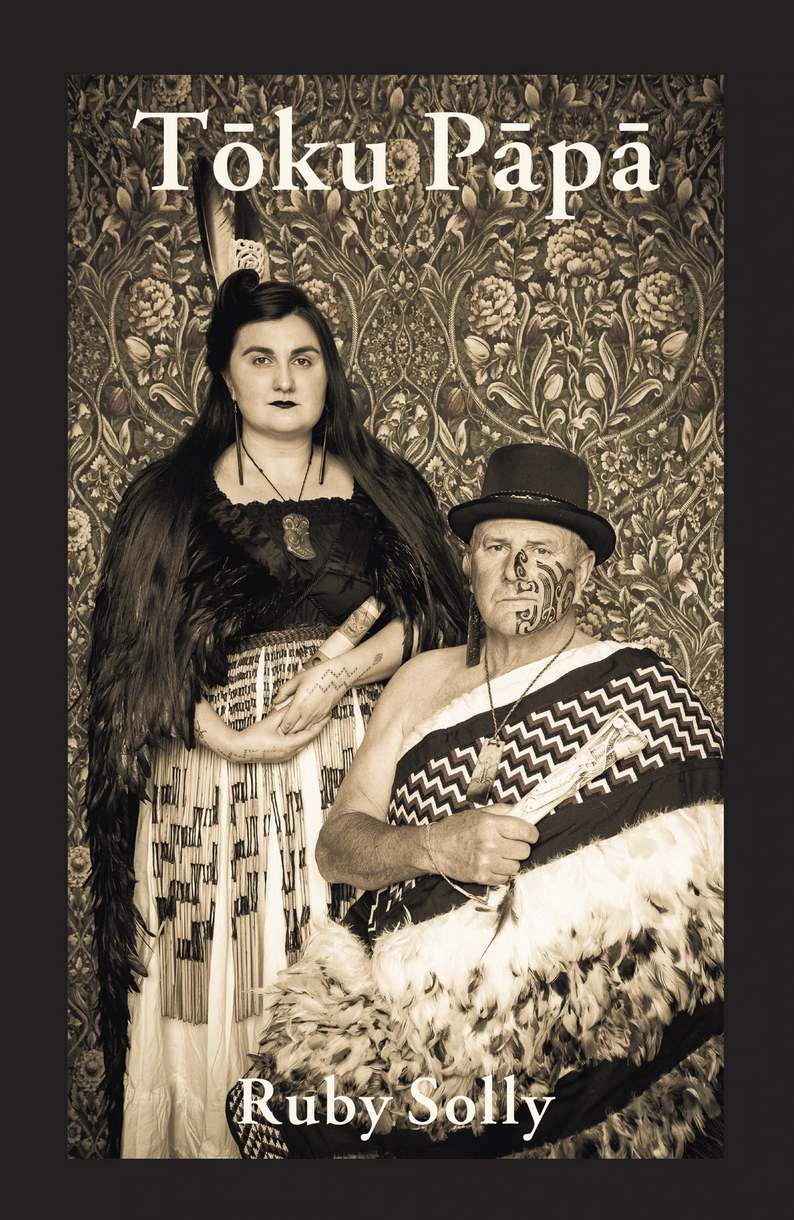
Tōku Pāpā, Ruby Solly, Victoria University Press, 2021

Over the past year, in all my musings and readings, books have felt so very precious. Books crossing myriad categories, books for adults and books for children. Poetry has been especially precious. Aotearoa is alive with poetry communities; there’s such a richness of voice on the page and in the air (and on the screen). And it is so valued.

Pick up a poetry book, hold the book in your hand and feel its preciousness. I picked up Ruby Solly’s debut collection and it felt like I was holding love. The love imbued in the stitches and seams of its making. The photograph will hold you still and steady and already you know that in this book people will be at its heart. Its core.

Enter a poetry book that catches your heart and every pore of your skin, and you enter a forest with its densities, its shadows and lights, canopies and breaths, re-generations. You will meet oceans and rivers and enter different ebbs and flows, different currents, fluencies. You will reach the sky with its infinite hues, dreamings, navigations, weatherings (storm washed, sunlit, moonlit). You will meet the land with its lifeblood, embraces, loves, whānau, anchors.

This is what happens when I read Ruby Solly’s Tōku Pāpā.

When you first told me

that you gave me the name of our tupuna

so that I would be strong enough

to hold our family inside my ribcage,

I believed you.

The collection is in two connected parts, like the two parts of a heart, ‘awe’ and ‘kura’, two nouns linked by feathers, leading us to the ‘essence of soul’, ‘strength, power, influence’ and the red feathers used as ‘decoration, treasure, valued possession, heirloom, precious possession, sacred, divine law, philosophy, darling, chief’, and the ability to glow.

The untitled poem that begins the collection (quoted in part above), before awe and kura, addresses ‘you’, and in this heart-opening the poet draws deep into the knowledge and love and whānau that shape and nourish her, the wairua, the dark places and the light.

I am reminded of Robert Sullivan’s terrific poem ‘Voice Carried My Family’ (AUP). Voice carries Ruby, and her voice ‘carries’ everyone she thanks in her acknowledgement page. The collection has myriad tributaries, but a key river is finding voice. She is addressing her Pāpā. She is voicing her relationship and that voice is modulated as musician, as poet, as human being. She is listening to the past and the present, she is writing a river, an ocean, the sky, the land. A forest. A whānau.

The words flow like a solo instrument, with the poet as bow and breath.

There is stillness and movement, and there is always heart. You will find yourself in the scene, and the scene will pulsate and be luminous with life:

We sit together in silence,

deep in the mountain’s quiet heart.

Watching our breath melt away

the walls around us.

from ‘He Manawa Maunga’

There is a road trip to the ballet and a machete blade to be readied for work. Custard tarts are eaten as a car fills with smoke. There are swimming lessons. There is underwater and above water. There is finding the current and then finding breath. There is warmth and there is wisdom.

I especially love ‘Eulogy’ and the father wisdom:

As a child

whenever I was angry,

inconsolable,

my father would tell me to write a eulogy

to the person who had caused me pain.

He said that by the end of it

I would see

that even those who cause us pain

are precious to the world.

from ‘Eulogy’

This precious book – that in its making, its stands, rests and journeys from and towards so much – is the reason why I cannot stop reading and sharing thoughts on and writing my own poetry. The book is a gift and like so many other readers I am grateful. Kia ora Ruby. Thank you.

Ruby Solly (Kāi Tahu, Waitaha, Kāti Māmoe) is a writer, musician and taonga pūoro practitioner living in Pōneke. She has been published in journals such as Landfall, Starling and Sport among others. In 2020 she released her debut album, Pōneke, which looks at the soundscapes of Wellington’s past, present and future through the use of taonga pūoro, cello, and environmental sounds. She is currently completing a PhD in public health, focusing on the use of taonga pūoro in hauora Māori. Tōku Pāpā is her first book.

Victoria University Press page

Ruby talks with Kathryn Ryan on Nine to Noon

On Poetry Shelf: Ruby’s poem ‘Pōria

On Poetry Shelf: Ruby’s poem ‘Dedication

Ruby Solly premieres a video for her new album Pōneke and a wānanga with essa may ranapiri

Cover photograph: Taaniko Nordstrom and Vienna Nordstrom, Soldiers Rd Portraits

Poetry Shelf noticeboard: Best NZ Poems 2020 goes live

Poet Laureate David Eggleton has edited the latest edition of Best NZ Poems 2020. He concludes his introduction with these words:

I hope you will enjoy reading these poems as much I have on my year-long odyssey for which I didn’t have to leave home. I’m glad to have had the privilege of the journey and its discoveries. Discoveries rather than judgements because poems are essentially playful and deeply wilful and a law unto themselves and won’t be judged. As the American poet Archibald MacLeish put it in his brilliant formulation about the art of poetry: ‘A poem should not mean/ But be.’

I had already read most of the poems – but I loved revisiting them. Poems are like albums; you can put them on replay and they just get better.

Go here for poems, introduction and audios.

Poetry Shelf noticeboard: Partricia Grace to judge 2021 Sargeson Prize

The 2021 Sargeson Prize launches today, on Thursday April 1.

The Sargeson Prize is New Zealand’s richest short story prize, supporting our country’s creative writing talent – including the younger generation. Now in its third year, the competition is named for celebrated New Zealand writer Frank Sargeson, and is sponsored by the University of Waikato. It was established by Catherine Chidgey, Senior Lecturer in Creative Writing at the University of Waikato, in 2019.

Acclaimed New Zealand writer Patricia Grace is the chief judge in this year’s Sargeson Prize. 

“We are enormously lucky to have her as a judge, and she brings such mana to the competition,” says Chidgey. “She’s put New Zealand literature on the map internationally, and she’s hugely respected. Her stories are well-known and loved.”

For more information on the Sargeson Prize, see the attached media release or visit the University of Waikato website here.

This year, winning stories in both the Open and Secondary Schools category will be published online on ReadingRoom, the literary arm of Newsroom.

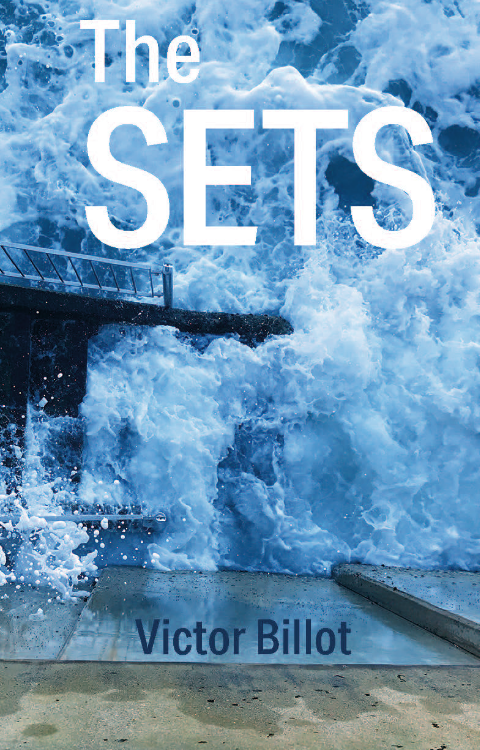
Poetry Shelf celebrates new books: Victor Billot reads from The Sets

The Sets, Victor Billot, Otago University Press, 2021

Victor Billot reads ‘The Sets’ from his collection plus two new poems: ‘An Award Winning Campaign’ and ‘The Youngest One’.

Victor Billot was born in Dunedin, New Zealand in 1972. He has worked in communications, publishing and the maritime industry. His collection The Sets was published by Otago University Press in February 2021.

In 2020 he was commissioned by the Newsroom website to write a series of political satires in verse and is now embarking on a new series. His poems have been displayed in the Reykjavik City Hall and in Antarctica.

Otago University Press page

Victor’s website

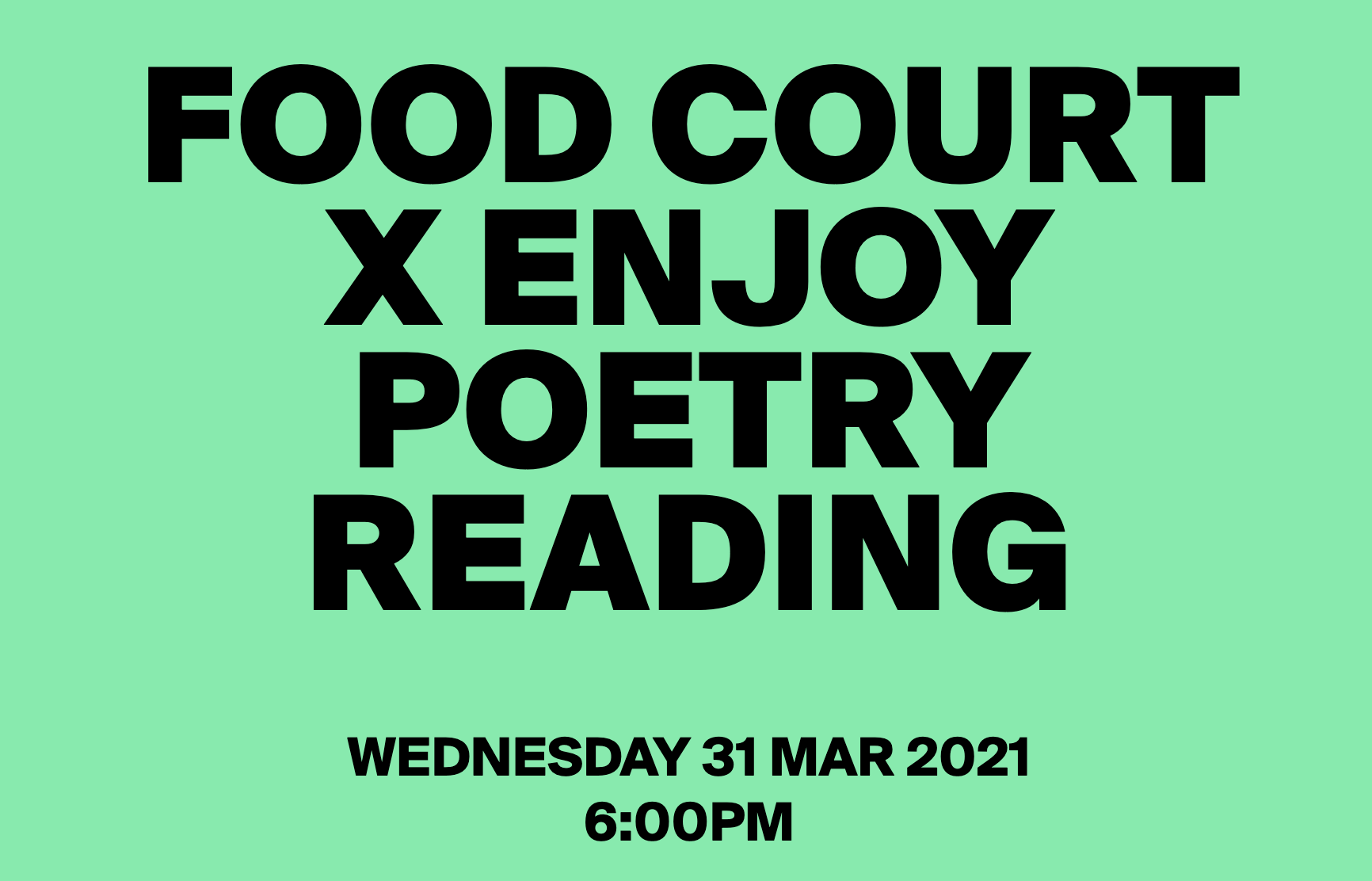
Poetry Shelf noticeboard: Tonight Food Court / Enjoy Poetry Reading

At Enjoy Contemporary Art Space 211 Left bank, Cuba Street

Join a selection of readers invited by Food Court Books and Enjoy Contemporary Art Space, writing around the edges of queerness and culture, intimacy and (literary) history.

Readers for the night include


Chris Tse
Sam Duckor-Jones
Khadro Mohamed
Dani Yourukova
Hannah Mettner
Joanna Cho
Areez Katki
With more to be announced.

This event is programmed alongside Areez Katki’s exhibition History reserves but a few lines for you, on until 3 April.

Poetry Shelf noticeboard: Poet Laureate David Eggleton picks two Peter Olds poems

The sky turned black as night,
sirens wailed, streetlights blinked
at stalled streets, the air streaked
like some New York modern painting:
Surreal, unreal, leaving high tide
marks of ice in the doorways of
mid-town shops

from ‘Hail & Water ‘ by Peter Olds

Two terrific poems by Peter Olds on The Poet Laureate site

Poetry Shelf noticeboard: Going West podcast – Paula Green in conversation with Bill Manhire and Norman Meehan

This is one of my favourite sessions I have chaired ever!

Paula Green, poet, anthologist, reviewer and children’s author, with her newly minted honours and awards, shares the stage in a charming conversation with poet, short story writer and academic Bill Manhire, and jazz composer and performer Norman Meehan, as they disclose the alchemy of setting poetic text as song. They discuss their latest collaboration, the riddle project, Tell Me My Name, and along the way Bill Manhire reads two of his poems Frolic and I am quiet when I call.

This session took place the day after Manhire, Meehan and friends delivered a captivating opening night performance, Small Holes in the Silence for the Going West audience.

Listen here