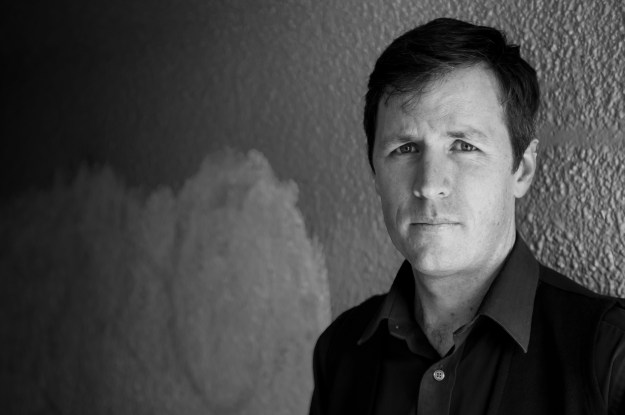
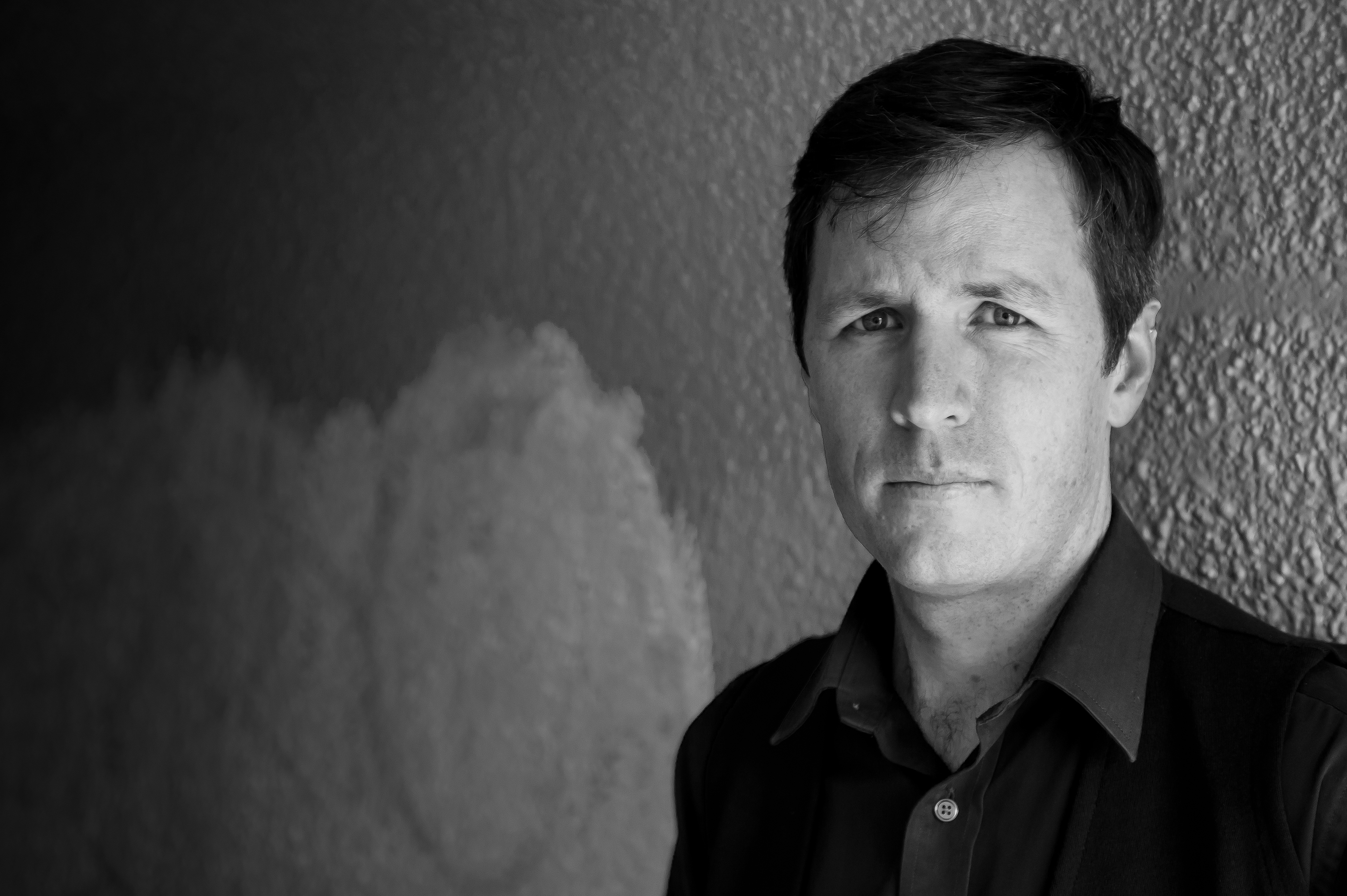
Photo credit: Robert Cross
John Dennison was born in Sydney in 1978, and grew up in Tawa. He has lived and studied in Wellington, Dunedin, and St Andrews, Scotland, and now lives with his family here in Wellington, where he is a university chaplain. His poems have appeared in magazines in the UK, New Zealand and Australia, and were anthologised in Carcanet’s New Poetries V (2011). A first collection, Otherwise, was published by AUP and Carcanet earlier this year.
To celebrate the arrival of this terrific debut, John agreed to be interviewed. I reviewed Otherwise here.
Did your childhood shape you as a poet? What did you like to read? Did you write as a child? What else did you like to do?
Life was rich and full as a kid. We’d no TV, and I spent a good deal of time in books and up trees, or absorbed in endless audiobooks. That’s attuned my ear to some degree; I’ve also my mother’s knack for picking up other voices. Dad had a handful of poetry LPs in his collection—Eliot reading his Quartets, a record of Hopkins’s verse, one of American poet Carl Sandburg weirdly, wonderfully intoning. We worshipped at an open Brethren assembly in Porirua—a lively, community-oriented, rather tribal affair. I think it was partly the Church that attuned me critically to language, and taught me to take words and address seriously. At the same time, the Church attuned me to the culture around, to the market and to public cant; I’ve still got a well-developed, somewhat from-the-margins suspicion of life as it’s sold and told by the powers that be. Another formative aspect of my childhood: I was born with severe club feet. The deformities were corrected early on, when I was a baby, but it shaped me. I think the pre-verbal memory of that wounding and re-shaping, and my later memories of struggling with sports, with running, has had an effect in some way. Growing up has, in one sense, been a growing into–accepting–the woundedness of my earliest weeks. All of this enters the poetry in some way.
When you started writing poems as a young adult, were there any poets in particular that you were drawn to (poems/poets as surrogate mentors)?
Gregory O’Brien was my flesh-and-blood example of how to be a poet—he was a key figure in my apprenticeship. I took a writing paper with him. More than the workshop, to be accorded dignity and friendship by this older, much more dedicated writer—that was gold. I was stoked to meet Michael Symmons Roberts, a Manchester poet, in person recently—he’s been another important model, via his work. Baxter always hovered in the background—ready mythology.
Did university life transform your poetry writing? Theories? Peers? Discoveries? Sidetracks?
It’s interesting that this question irks me—I guess I chafe at the recognition that the university has become the dominant patron of poetry in NZ and beyond, and I feel uneasy at such patronage. For all that I love the community of scholarship, and serve that community as a chaplain, I do wonder whether it might not impoverish one’s poetry and poetics to turn habitually to the university. There really is, for instance, wonder and joy, contemplation and professing, which the modern university is pretty much deaf to. But yes, for me the university put poetry on the table every breakfast without apology or concern, and with the kind of seriousness a thoughty 19-year-old man is bound to fall for. Poetry was a subject of study before it was a practice, and learning to read slowly and in good faith—assuming everything on the page signifies—was good apprenticeship in the craft. That, and reading poets’ own accounts of making. I guess I learned the traditions, those at home and those abroad—it was important to do that.
Are there any critical books on poetry that have sustained or shifted your approach to writing a poem?
There’s a few. Those of any real use were written by poets. David Jones’s reflections on poetry and sacramental theology in Epoch and Artist was a timely discovery. More recently, Wendell Berry’s essay ‘On the use of old forms’ has helped me to understand what is at stake in choosing to work one or other received tradition and form—terza rima, or a Shakespearean sonnet, as opposed to free verse, say. He describes the way in which such forms enable you to live forwards into the poem, calling you into the possibilities of the language via rhymes, metre, etc. Berry’s been a real practical help. There’s Neruda’s manifesto ‘Toward an Impure Poetry’—I love his refusal to make poetry a religion, to give it some priestly function. Otherwise, I’ve pocketed a handful of dictums: Hopkins in a letter to Bridges, ‘Take breath and read it with the ears’; also, a phrase Seamus Heaney misattributes to Mandelstam, ‘The Incarnation sets the world free for play’. Stunning.
What poets have mattered to you over the past year?
Jorie Graham’s Sea Change has been a recent discovery – it’s difficult, unstable ground, one of the more moving mediations on climate change and the larger state of things I’ve read. Really good public poetry. And her use of negative prefixes has really stuck with me. She’s been important. I’m grateful for Cliff Fell’s poems. Fell sets up large pressure systems—essay poems—in which the lyric voice rises to break the surface tension of the larger flow. In its Dante-esque scope, in its prolonged and evident apprenticeship, and in its pitch and reach across the several keyboards of the language, his stuff is brilliant.
What New Zealand poets have you been drawn to over time?
Again, Baxter loomed large early on—my Father worked with Colin Durning, Baxter’s friend, and so James K. was part of the fabric of things. I love the work of Bethell—she’s been important. More recently, it’s been Curnow and O’Sullivan.
Any other areas you are drawn to read in?
Well, apart from essays in poetics, I’m often reading contemplative theology: Augustine’s Confessions, most recently. I love a good essay on any topic—love the essay form. I’ve been slowly working through Chaim Potok’s novels which have been utterly captivating—My Name is Asher Lev, a story about a gifted artist born into a community of New York Hasidic Jews. And then, I read a lot of kids’ picture books at the moment.
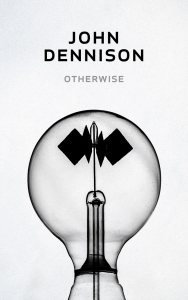
In my review of your debut collection, Otherwise, I identified one of the joys of the collection: ‘the way the poem grounds you in the marvellous detail of the here and now so you feel earthed, and then uplifts you to the transcendental possibilities of elsewhere.’ What are key things for you when you write a poem?
Mostly, poems begin with the musical suggestiveness of a line, or the emotional implications of an image, rather than in some premeditated transection of marvellous and the everyday. A poem is a thing made out of words pitched through some emotional acuity, in which language is pushed towards the condition of music and affective image. If there’s a trajectory I’m inclined to trace, that’s simply a piece with life more generally. It’s how I am. The coordinates you’ve remarked on—the marvellous of the here and now, transcendental possibilities—well, shoot, that’s the shape of things.
The poems are steeped in love. Did you set out to navigate love in poetic forms or is it a key and enduring ingredient in your ink?
No, nothing as confident as navigating love—gosh, I’m not sure how one could do that without stunning presumption. I just went fishing for poems. But it does seem to be a recurrent question in the collection—love’s strangeness, I hope, rather than the stuff that well-worn word normally conjures. I’m very interested in the way that the lyric, traditionally being concerned with a speaking ‘I’, can become a space of loving address. I’m not thinking of some poly-vocal instability, nor of self-esteeming self-talk; I’m thinking more of the kind of address you find in the Psalms – ‘why are you cast down within me, o my soul?’ It’s a kind of excoriating, unflinching yet loving address to the estranged self; I’m excited by finding ways to open the lyric up to that.
I mentioned the spiritual steppingstones in the collection (a particular path the reader can explore). Is poetry a vital means to explore your spirituality?
No, I’d not say that. At times the process of writing, with its emotional accuracies, serves as a mirror. You know, that moment when the finished thing speaks up and looks back and you say ‘gosh, is that who I am, is that what it is! Mercy!’ But no, poetry isn’t some kind of intuitive scripture; it’s not prayer. Prayer—that’s exploration. I’m very interested in prayer as a kind of activity which takes place in the middle voice (rather than the active or passive moods)—a kind of led, participation in an action one didn’t initiate. There is some kinship with the experience of writing a poem—negative capability, and so on. But there are important differences too.
Your critical book, Seamus Heaney and the Adequacy of Poetry, is forthcoming from Oxford University Press this year. What vital discoveries did you make about poetry as you wrote and researched this book?
The book is a critical history of Seamus Heaney’s prose poetics—the poetics which culminate in his brilliant volume of lectures, The Redress of Poetry. It’s the story of a young Catholic poet who abandons his childhood faith, transferring much of that religious impulse to poetry and a theory about poetry’s sufficiency in the face of history. It’s the story of a poet who believes his art has a restorative, morally pure function in the midst of the violence of public life—for Heaney, the Ulster Troubles. It’s also the story of the son of a cattle dealer from Co. Derry, who wins a scholarship to University and becomes one of the most lauded poets of his time—Harvard professorship, Nobel Prize, etc. So I learned a great deal about contemporary poetics and this post-Christian age. Personally, it helped me to sort out my own thinking on some key questions around poetry and life—for example, that I do not feel any need to ascribe to art some redemptive agency. Also, that I don’t believe a poem is morally pure or true by virtue of its self-verifying ‘rightness’—some poems are beautiful lies, and this problem should interest us.
What irks you in poetry?
Moral smugness; a lyric self-regard which cuts out the reader; despair as an existential pose; free-verse which is really prose with line-breaks; a lack of musicality; forms which are not needful.
What delights you?
An ear at work—alive to the mnemonic possibilities and serious play of language pushed towards a condition of music. A lyric voice which is undone in its moment of saying—the suspicion the poem has cost the poet something. A full keyboard of language and register in use (what could be more democratic?) Fully employed forms of which one becomes blithely unaware in their unfolding.
Some poets argue that there are no rules in poetry and all rules are to be broken. Do you agree? Do you have cardinal rules? Do you have rules you particularly like to break?
I guess I want to ask What is this talk of rules? A successful poem is not a matter of rule-keeping or breaking, but of faithfulness—trust in the possibilities of language and the various poetic traditions. Some forms have constraints, and I am very interested in the possibilities generated by working within and against these constraints. The question is not whether to use free-verse or strict forms, it’s about what’s needful, about the way each form sets up a micro-economy of agency and possibility within language. Free-verse, in an apparent paradox, foregrounds a kind of existential bind of constantly having to choose, having to assert control over language, to use it as a means of expression. In terza rima, on the other hand, one is constantly getting ahead of oneself (with the b-rhyme in the tercet) while glancing back from where you’ve been; it’s a promissory kind of form, constantly entrusting itself to unknown possibilities.
Finally if you were to be trapped for hours (in a waiting room, on a mountain, inside on a rainy day) what poetry book would you read?
Probably, right now, I’d take Thomas Merton’s Collected Poems, for its utter strangeness. It includes a very compelling and haunting sequence on the cargo cults in Papua New Guinea. I waded through it in my early twenties – probably due a revisit. And, given his surrealist edge, a waiting room inside a rainy mountain would be an ideal fit.
Auckland University Press page

 NZ Poetry Shelf