Category Archives: Uncategorized

Sarah Broom Poetry Prize – Entries now open

SARAH BROOM POETRY PRIZE

The Sarah Broom Poetry Prize is New Zealand’s most valuable poetry prize and aims to recognise and financially support new work from an emerging or established New Zealand poet through a $10,000 award.

The prize was established in 2013 in honour of the New Zealand poet Sarah Broom (1972-2013), the author of Tigers at Awhitu (2010) and Gleam (2013).

Entries open on 6 February and close on 2 March 2017

The Sarah Broom Poetry Prize is now in its fourth year, and we are pleased again to be working together with the Auckland Writers Festival to showcase and celebrate New Zealand poetry. The prize will be announced at the Auckland Writers Festival in May 2017. Shortlisted poets will be invited to read their poetry at a dedicated poetry event at the Festival, where the winner will be announced.

The judge for the 2017 prize is Carol Ann Duffy. Duffy is Britain’s Poet Laureate and is the first woman in the role’s 400 year history. She is one of the most significant names in contemporary poetry and the author of books for children, plays and many celebrated poetry collections including Mean Time (1993), which won the Whitbread Poetry Award and the Forward Poetry Prize, The World’s Wife (1999), Love Poems (2010) and The Bees (2011). She has been awarded numerous awards and prizes for her work including the T.S Eliot Poetry Prize.


For more information about the prize and Sarah Broom see here.

For more information about the Auckland Writers Festival, which will be held from 16 – 21 May 2017, visit here.


HOW TO ENTER

The prize is awarded on the basis of an original collection of poems by a New Zealand resident or citizen. Entries will be accepted from from 6 February 2017 until 2 March 2017.

Poets are required to submit six to eight poems, of which at least five must be unpublished. The recipient of the prize will be announced in May 2017 at the Auckland Writers Festival. Shortlisted poets will be invited to attend a dedicated event and read from their work.

Entries should be emailed to poetryprize@sarahbroom.co.nz Any queries should be emailed to enquiries@sarahbroom.co.nz


CONDITIONS OF ENTRY

1. Poets are required to submit six to eight poems of which at least five must be unpublished. 2. There is no maximum or minimum length – formatting and font size is your choice.
3. Entrants must be New Zealand permanent residents or citizens.
4. Only one entry per person will be accepted.

5. Entries must be the author’s original work. Any use of quotation must be acknowledged by attribution to its source.

6. Entries must be submitted as one electronic file per entrant, as an email attachment in Word or PDF format. No identifying details should be present in this poetry portfolio.

7. Your entry should also include a covering email with a brief personal statement, an indication of how you would use the award money, and contact details. These covering details are not provided to the judge.

8. The judge will assess the merits of submissions, and the Sarah Broom Poetry Trust reserves the right not to award a prize.

9. The prize recipient will be announced at the Auckland Writers Festival in May 2017 and in other appropriate publications.

10. No correspondence with the judge will be entered into.

11. The name and photograph of the prize recipient may be used by the Sarah Broom Poetry Trust for publicity purposes.
Josephine waits in a queue

Josephine waits in a queue


Josephine wears her Time Out Guide as a hat and then uses it as a fan

and then wears it as a hat again because she is caught in a queue

that is endless interminable bending about in the biting heat

with the buskers upstaging the Statue of Liberty and the Statue of Liberty


out there in the harbour like a pale welcome sign in the murky light.

Someone stands on a ladder dressed as the statue and doesn’t blink

or twitch, the classical green folds look like stone and next the bronze figures

stuck on the pier that might twitch or blink or be there for an eternity


one knee-deep in water with fingers outstretched missing the rescue

always not-quite saved the man stretching fingers down from the plinth

a boat and there’s an accordion frozen in time hands to mouth the bronze

tinged with liberty green a tableau of hope intense melancholy


that trips the woman up. For a moment Josephine thinks she’s an immigrant

taking off her shoes and belt and surrendering her bags, and then after three

hours and without warning she is moved into the fast lane as though she

is exactly what America wants.


©Paula Green New York Pocket Book Seraph Press, 2016


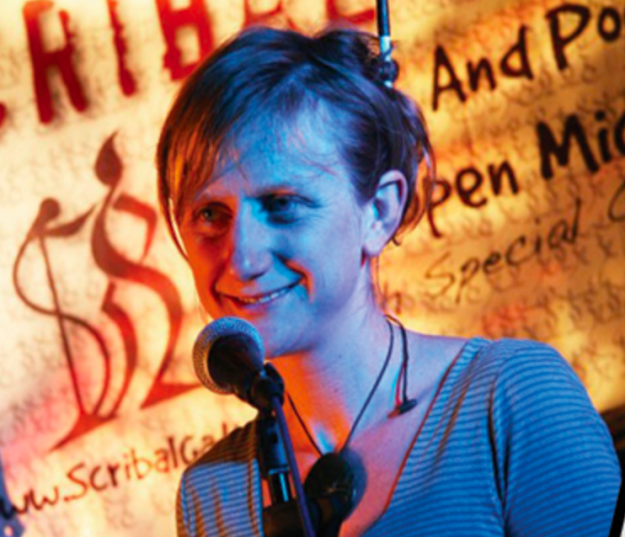
Liz Breslin, placed third in Charles Causley International Poetry Competition Winners 2016

Screen Shot 2017-02-01 at 7.17.09 PM.png

The Winners:

1st: ‘The Load’ by Jack Thacker (Bristol) – £2000 and a week at Cyprus Well

2nd: ‘The Year You Turned Into A Fish’ by Joanne Key (Cheshire) – £250

3rd: ‘Walk A Mile/ Stepping Out’ by Liz Breslin (Hawea Flat, NZ) – £100


As a child in the UK, Liz Breslin memorised Charles Causley’s poems, sitting in the bath. She now lives in Hawea Flat, New Zealand and writes poems, plays, stories, articles, and a fortnightly column for the Otago Daily Times. She also edits, parents, partners, skis badly, gardens sporadically, coordinates a school student volunteer programme, drinks too much coffee and loves getting her feet wet.

Liz’s first collection of poems, Alzheimer’s and a Spoon, will be published by Otago University Press in 2017. She is comfy on the page and the stage, was second runner up in the 2014 New Zealand Poetry Slam in Wellington and did an audience-response poem at the 2016 TEDx Queenstown. Liz took part in the ‘52’ project in 2014, where she discovered new voices and fantastic practices. Her poems can be found in Landfall, Café Reader, Takahē and other places in NZ, overseas and online, as well as brewing in the bath. Poems give her hope, connection and stoke. http://www.lizbreslin.com


Full details here.

Comments from Liz here.

You can find some of her poems here and they are good!

Exciting to see Liz has a collection out with Otago University Press this year.

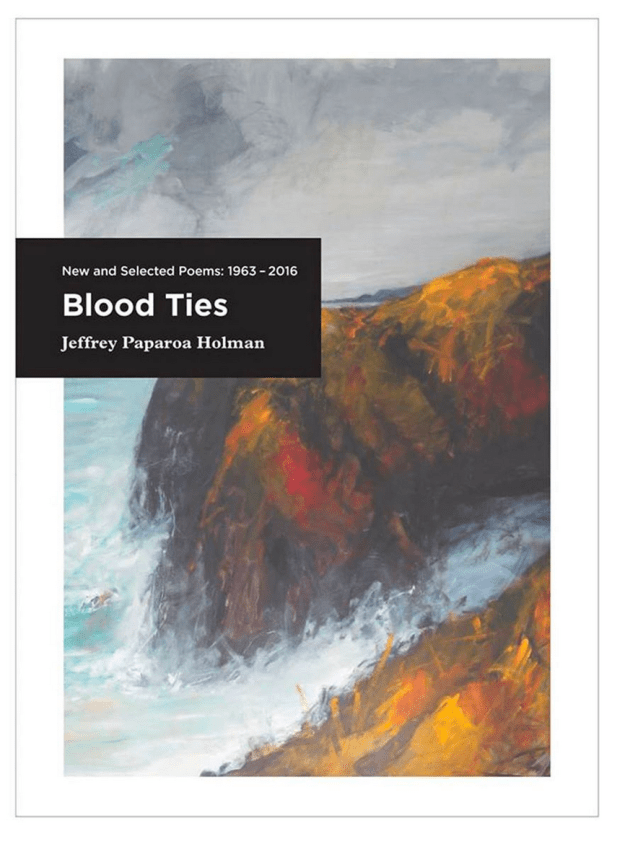
A Selected Poems from Jeffrey Paparoa Holman is out this month

BLOOD TIES: New and Selected Poems 1963-2016.
Jeffrey Paparoa Holman, Canterbury University Press,
978-1-927145-88-3, $25.00, due February 2017.

‘Blood Ties is a journey through a lifetime that is a parable of settlement, one man’s response to the challenge of living responsibly and with sensitivity to the question of where we are and what we must be. There are strong ancestors throughout, but, at the same time and very distinctively, the urgent sound of this river of poetry is all this fine poet’s own.’
Patrick Evans


Screen Shot 2017-02-01 at 7.10.52 PM.png

Poetry Live relaunches with Anne Kennedy and MW Sellwood

Screen Shot 2017-02-01 at 7.06.14 PM.png


Come one, come all, to our opening night of the year!

GUEST POET: ANNE KENNEDY
Anne Kennedy is a poet, novelist and screenwriter. Her awards include the NZ Post Book Award for Poetry for Sing-song and the Montana New Zealand Book Award for Poetry for The Darling North. Her novel, The Last Days of the National Costume, was shortlisted for the NZ Post Book Award for Fiction in 2014. In 2016 Anne was Writer in Residence at IIML, Victoria University of Wellington. She teaches fiction and screenwriting at Manukau Institute of Technology.

GUEST MUSICIAN: MW SELLWOOD
MW Sellwood is an up-and-coming Auckland blues artist from the city’s thriving underground music scene. Equally at home performing tunes on stage or a street corner, his groovy electric guitar riffs and playful vocals combine for a fresh take on Blues music in the new millennium!

POETRY OPEN MIC

KOHA ENTRY

MC: KIRI

Call for papers for a conference at Victoria University, December 2017: Poetry and the Essay

Helen Rickerby and Anna Jackson are organising another poetry-inspired conference!


6–8 December 2017, Victoria University of Wellington


‘They forsake narrative line, discursive logic, and the art of persuasion in favor of idiosyncratic meditation.’
John D’Agata on the lyric essay.


“…some people might think it’s not poetry.  Well…”

Jenny Bornholdt, from “Fitter Turner”


This three-day conference will bring together poets and scholars to explore the space where poetry intersects with the essay. Essay poetry has a long history, from classical poets, through Alexander Pope and Percy Bysshe Shelley, and in more recent years the lyric essay and other poems that explore ideas essayistically are pushing at the edges of the form. Some key contemporary practitioners include Anne Carson, Maggie Nelson, Eliot Weinberger, Alice Oswald, Claudia Rankine, Joshua Clover, Roger Horrocks, and Jenny Bornholdt.

We are seeking proposals for scholarly papers (20 minutes) and panel discussions. We are also seeking expressions of interest from poet-practitioners to read (and perhaps discuss) their own essay poems, either as a 10- minute reading or a 20-minute paper.

Topics and questions we would like to see addressed include:


  • Boundaries of form – what is an essay, what is a poem, what happens when the two meet?
  • Lyric theory and the essay: what does it mean to read the essay as lyric? Can lyric poetry approach the form of the essay?
  • Different types of essay poems: defining the sub-genres.
  • Forms used – prose poetry, found forms, tercets, couplets, quatrains; the place of rhyme and/or metre.
  • Language: polyvocality and code-switching, formal/informal language, voice.
  • Audience, in and out of the poem; the addressee and the reader.
  • Arguments and answers, questions and uncertainty. Logical and other modes of thinking, such as association, metaphor, lateral, subjective and experiential thinking.
  • The tensions arising from melding the forms – prose versus poetry, fact versus imagination, information versus art.
  • The lyric essay/essay poem as a literary tradition, from Horace to Pope to Shelley.


Abstracts should be sent to the organisers Helen Rickerby, Angelina Sbroma and Anna Jackson by 17 July, 2017. They can be emailed to Anna.Jackson@vuw.ac.nz.


For more information visit here


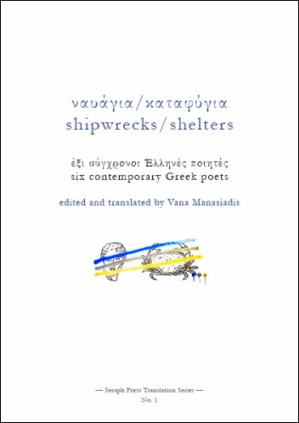
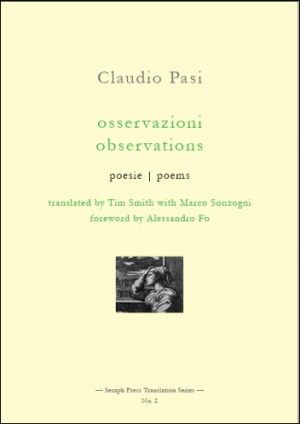
Seraph Press launches its translation series: tiny comments on ‘shipwrecks / shelters’


212964626.jpg               336495847.jpg


shipwrecks / shelters: six contemporary Greek poets edited and translated by Vana Manasiadis (No. 1) (includes a Greek title) Seraph Press, 2016

osservazioni observations: poesie poems   translated by Tim Smith with Marco Sonzogni with a foreword by Alessandro Fo (No. 2)  Seraph Press, 2016


Two beautiful handbound chapbooks featuring poems in translation came out towards the end of last year to launch Serpah Press’s new translation series.

Translation is such a fascinating thing to do and to contemplate. I spent a sizeable chunk of my life studying Italian within a university setting; the freight between English and Italian was glorious, mammoth, exhilarating. I remember meeting someone from the Italian consul in my first year of study and having to answer why I had picked Italian. Somehow I managed to find the words to say: ‘Because I want to read Italo Calvino in the original.’ That seemed like a bold and impossible quest at that point in time, but I did get to read him in Italian, along with countless other authors from Dante to Dario Fo to Renaissance poets to a century of women writing fiction.

From my point of view translation offers a ledger of gain and loss. The new version can never capture the aural complexities of the original, but it can offer something that moves the original in astonishing ways (or not!). New windows or booths or swing bridges or lily pads might emerge for the reader to explore.

For decades it has been quite the thing to translate poetry without knowing the original language (check out Anna Jackson’s terrific I, Clodia, and Other Portraits, AUP, 2014). This is where a poet goes freewheeling through available translations to come up with a version that sparks and connects in eclectic ways.

I am picturing all kinds of routes back to the original and what has been upheld – little kernels, chords, motifs, rhymes, feelings, fleeting truths, tiny anecdotes, drifting ideas, sidedrifts.


However, the two Seraph-Press books are translated by those fluent in both languages. Hearing them read (well I read the Italian) side by side at an event in Auckland, I was once again struck by the distinctive musicality. The way our own language works, makes it hard to break out of your mother-music-tongue when it comes to poetry. There is no way English catches the lyrical lilt and lift and rhyme of the Italian. You always get a different melody. Shut your eyes and listen. I felt like I was hearing four musical suites and became captivated by the effect upon my ear.

Musicality aside, it seems there is a vital political imperative to deliver these translations in this trembling world. Vana talked about how important poems are to Greeks at the moment – how there is a flourishing climate of poetry and that it is important to get the poems into the world.

These are poems of disruption, fragmentation, dystopia, departure, maternal folds. I am moved by them. I can’t make head nor tail of the Greek but the poems catch in my throat. Politics infuse each line, you have to look it straight in the eye, and yet there are other rewards. Each poem takes me by surprise. There is light and there is hope.

This is a very lovely book, essential.


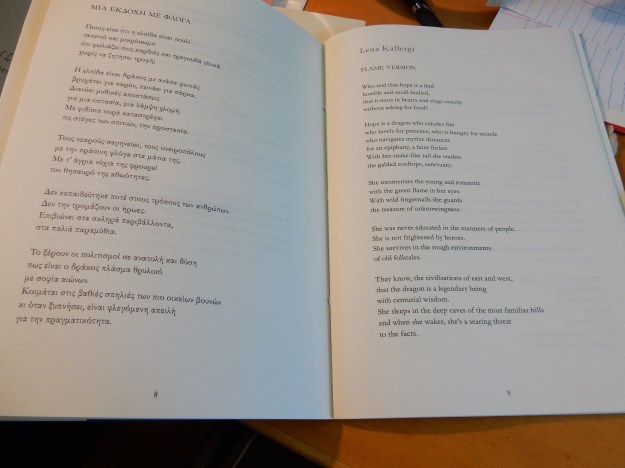
This from Lena Kallergi from the ‘Flame Version’ where the dragon that slumbers in the familiar hills might wake, ‘and when she wakes, she’s a searing threat/ to the facts’:


Who said that hope is a bird

humble and small-bodied,

that it nests in hearts and sings sweetly

without asking for food?


From Vassilis Amanatidis’s ‘Mother Country’:


[blindness – homelessness]


To avoid being startled by sight,

the mother has transformed herself into a blind.


Again the maternal imprint that moves; from Phoebe Giannisi’s ‘Chimera’ extract:


I watered you with pomegranate juice

I reared you – with milk, my godly fire

I plunged you inside it

shield your body when you are away from me.


DSCN7325.jpg


The 2017 National Flash Fiction Day competition opens February 15


The 2017 National Flash Fiction Day competition will open February 15, with entries accepted through April 30. Send your best 300-word story! Cash prizes equaling $1500!

First Prize: $1000

Second Prize: $400

Third Prize: $100

We are pleased to announce that the judges for this year’s competition are Michael Harlow and Emma Neale. Competition entry details will be posted in early February – watch this space.

And there are still a few days to submit to the February issue of Flash Frontier: An Adventure in Short Fiction. The issue will feature stories up to 250 words with the theme remnants; guest edited by 2017 NFFD judge Michael Harlow. Submissions close January 31. Details here.