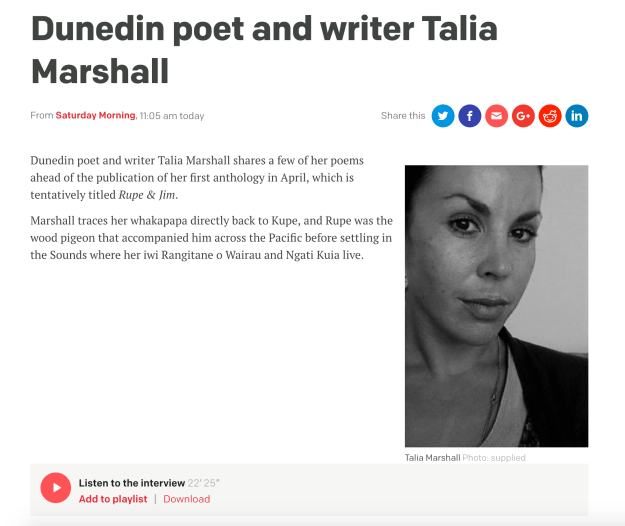
Good to see Radio NZ National deleting excellent poetry.
Poems can be heard here.

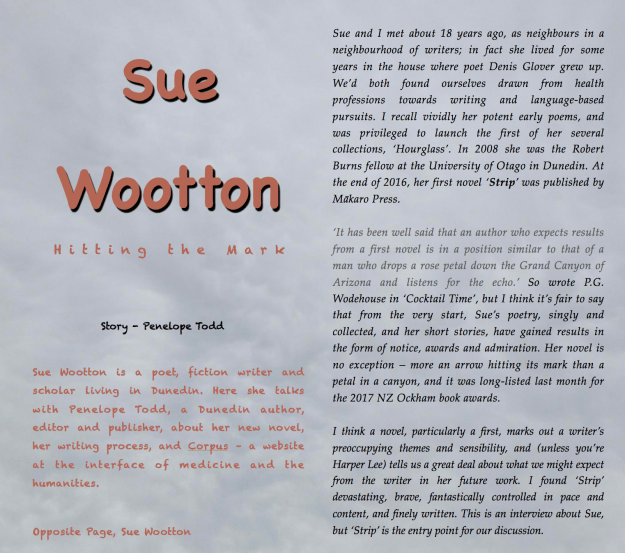
The complete interview may be found online in Down in Edin magazine.

In 2012 The New York Times called poet, critic and Harvard Professor Stephen Burt “one of the most influential poetry critics of his generation.”
In 2014, Victoria University Press editor Fergus Barrowman was made a member of the New Zealand Order of Merit for his commitment to publishing original New Zealand writing.
In a conversation chaired by UC Professor of English Paul Millar, Burt and Barrowman will discuss work by a range of poets from New Zealand and elsewhere, look at ways to gain New Zealand poetry a greater international readership, and also think about how contemporary poetry travels—or does not travel—between nations and across oceans. Come and have a drink and listen in to what is sure to be a lively discussion for all poetry lovers.
READING POETRY AROUND THE WORLD
SCORPIO BOOKS, 120 HEREFORD ST, Christchurch
THURSDAY, 26 JANUARY
6pm (Refreshments served from 5.30pm)
FREE – RSVP to Cassie.Paterson@canterbury.ac.nz

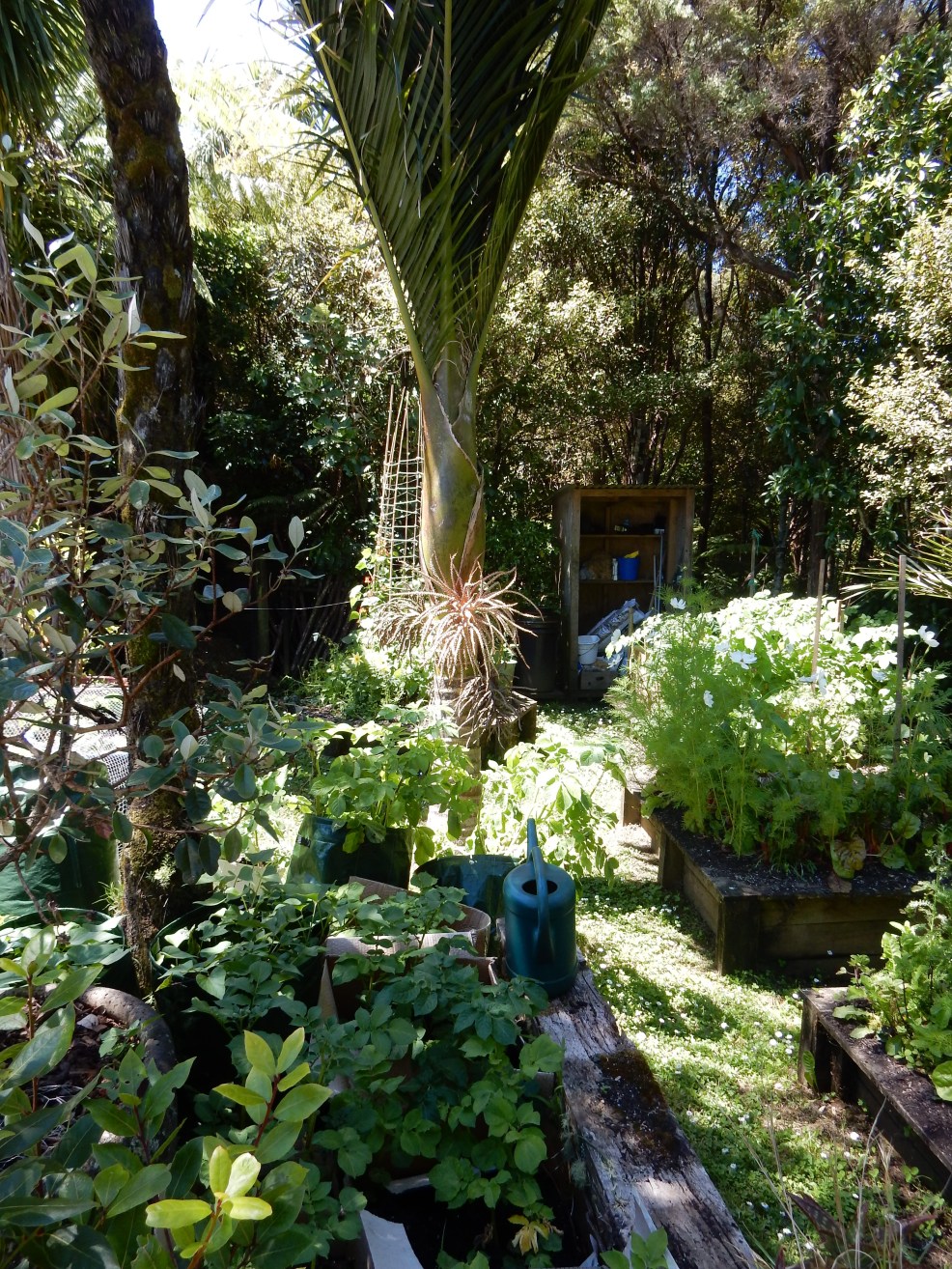
a snippet of my veggie garden going wild
It was a bit of shock getting a letter inviting me to accept a New Year’s Honour (Member of NZ Order of Merit). Like Eileen Duggan I felt a bit flabbergasted, embarrassed and touched by the invitation. I was busy reading my way through Eileen’s archives when I got the letter – which seemed slightly uncanny as I was reading her thoughts on her Queen’s Honour along with poetry, books and New Zealand.
I do want to thank everyone in New Zealand who supports poetry: all the poets, publishers, readers, booksellers, festival organisers, media, reviewers and children poetry fans.
It is a special honour and I am grateful.
And I am so delighted to see the very wonderful Bernadette Hall also honoured.
Helen Rickerby’s Seraph Press published poetry books by both Bernadette and I in 2016, coincidentally.
Best wishes for a fabulous year of poetry in 2017.
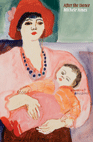
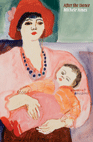
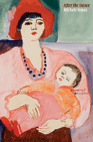
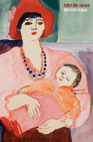
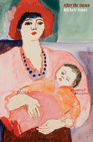
This is sad news. After a long battle with cancer, Michele Amas died on Boxing Day. A poet and actor, her first collection of poetry, After the Dance, was published in 2006 and was nominated for best first book of poetry in the Montana New Zealand Book Awards.
Her poetry is an exquisite meeting point for domestic experience, self and flickering shards of the wider world. Each poem satisfies, so very much, with images that surprise, juxtapositions that spark and a delicious clarity of line. There is a tenderness, a maternal chord that feeds the poems and ignites every mother cell in your body as you read.
My thoughts go out to friends and family.
A sample from After the Dance (Victoria University Press, 2006):
from ‘One way to read her’:
Above her, look for the angle
of clouds,
deliberate, weather stretched
from ‘Daughter’:
Get off my back
daughter
this is not dancing
you have sharpened your spurs.
from ‘Golden Delicious’:
She is sunny
She is sunny side up, my girl
running to meet me.
from ‘Reasons for ladders’:
I climb on Gaudi’s shoulders
to a windowsill overlooking
Barcelona, but still I see
the daughter from the corner
of my eye.
from Temporary beds’:
I will bring an umbrella ceiling
to hold over you at night
to keep the dark from falling.
from ‘The Caversham Project (ii)’:
I never liked the srtory
Edna told me of her wedding day,
how Charles took her aside
after their vows
making her promise
never to contradict him.
from ‘After the dance’:
After the dance
a quiet love
settles, sleeps
in collars, in clothes
thrown over a chair.
The house is dreaming.
from ‘The Caversham Project (iii)’:
Why do her only two regrets –
never learning
to ride a bike
never spending a night
in a tent –
shake me.
from ‘Repair’:
I am taking all the women
in this family to Japan.
Dead and alive we will
travel by bus
up the archpelago
to sit under the cherry blossom.
This for the end of a year
from a chorus of short-tongued alpine bees
Let us give thanks for the flushes and zones of colour
in the herb-field, for the alpine genera,
the wire rush and the tangle fern, the sheep sorrel
and the cats-ear, the gentians and the astelias and everything
that grows under the edge of a melting snow-bank.
Let us give thanks for the cranesbill geranium and
the mouse ear myositis, for the ranunculus (little frog mouth,
little friend), for the feathered myrrh of the nival zone,
for the bog moss in the tarn,
for all that is and all that has been and all that is to come.
It is for us to keep our courage firm,
to nurse our appointed pain,
to await ‘that which springs ablaze of itself. ’
©Bernadette Hall
(first published under a different title in Life & Customs VUP 2013)
Poplar tree, Tukituki River I
Head-
quarters of this
bird-brained
valley–
early summer–
tui brush
the sky’s blue
a quivering branch
signals another departure
endless comings and
goings–the blueness
of each black bird.
Poplar tree, Tukituki River II
Greenery, blue-
tail, tui
bloomery.
©Gregory O’Brien
Hasta la vista
Things were fatal but not urgent.
We used more make-up and less speed.
We saw the hectic colour on one side
and the blank space on the other.
What went up came down then drilled its way
metres deep into the earth. Under
the turned table we learned to live
on our own chewing gum
while unfamiliar implements played
dinner music above our heads.
We adapted — it was what we knew
how to do — but the sugar cubes kept
getting smaller. Whereas before
we had been known by name,
now we only crept to the watering holes
under cover of darkness, then sat
with chins on our knees and waited while
the new customers declined our terms
in favour of their own impenetrable
argot. Sign met size and came off
second best, bedding down with lice
and livestock in the basement of
the air we used to own. While
they were busy ransacking
the drawers there was still time to rue
our civilised discontents, but now
the sudden silence impends overthrow.
We stare at one another, suspended
in the pause before the shouting
and splintering Hollywood has, as it
turns out, so well prepared us for,
the breathless interval before our new
lives, hat and coatless in the snow.
©Chris Price First published in Sport 38
 NZ Poetry Shelf