Category Archives: Uncategorized

2018 Ockham New Zealand Book Awards judges announced

Prize-winning authors are among the twelve judges of the 2018 Ockham New Zealand Book Awards, joining journalists, academics and commentators charged with the task of selecting this country’s finest books of the year.
The Illustrated Non-Fiction category will be judged by Professor Barbara Brookes, whose A History of New Zealand Women won this category of the awards in 2017; Matariki Williams, (Tūhoe, Taranaki, Ngāti Hauiti, Ngāti Whakaue), a curator Mātauranga Māori at Te Papa, and Kim Paton, director of the public gallery Objectspace.
Poet and novelist Alison Wong, whose novel As The Earth Turns Silver won the New Zealand Post Book Award for Fiction in 2010, will be a judge in the Poetry category alongside Montana New Zealand Book Awards shortlisted poet Robert Sullivan, deputy chief executive, Māori, at Manukau Institute of Technology, and poet, publisher and librettist Michael Harlow.
The Fiction category judges, who will select the winner of the $50,000 Acorn Foundation Fiction Prize, are novelist, poet and academic Anna Smaill, whose first novel, The Chimes, was longlisted for the 2015 Man Booker prize; journalist and reviewer Philip Matthews, and bookseller and reviewer Jenna Todd of the Auckland bookshop Time Out, winner of NZ Bookseller of the Year award in 2016 and 2017.
Ella Henry, a lecturer in AUT’s Māori Faculty, is a judge in the Royal Society Te Apārangi Award for General Non-Fiction with editor and award-winning journalist Toby Manhire and former bookseller and publisher, Philip King.
New Zealand Book Awards Trust chairwoman Nicola Legat says the 12 judges in the 2018 awards bring great expertise and mana with them.
“It’s a major commitment to judge these important awards,” says Ms Legat. “We are hugely appreciative of the time and skills our judges bring to the assessment process. We look forward to their selections being announced.”
The judges will make their longlist finalists known on November 28, 2017 and their shortlist on March 6, 2018.
The winners will be announced at an awards evening held as the first public event of the Auckland Writers Festival on May 15, 2018.
The first round of submissions to the 2018 Ockham New Zealand Book Awards close on 4 September 2017. Titles published between 1 January 2017 and 31 August 2017 must be submitted no later than 5pm, on this date. Entries for titles published between 1 September 2017 and 31 December 2017 open on 5 September and close at 5pm on Thursday 5 October 2017.Entries can be made via http://www.nzbookawards.nz/new-zealand-book-awards/form/

The Ockham New Zealand Book Awards are supported by Ockham Residential, Creative New Zealand, The Acorn Foundation, Book Tokens (NZ) Ltd and the Royal Society Te Apārangi.
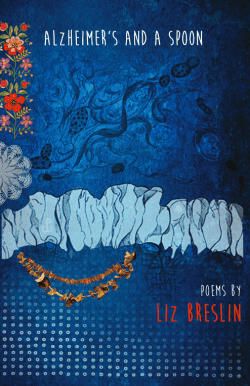
Poetry Shelf reviews Liz Breslin’s Alzheimer’s and a Spoon – this collection cuts into your skin as reader

Screen Shot 2017-08-26 at 11.32.27 AM.png   9780947522988.jpg


Alzheimer’s and a Spoon, Liz Breslin, Otago University Press, 2017


‘You have measured out your life in online quizzes. You are

a meerkat, Hufflepuff, Janet Frame.’


from ‘Click HERE to start’


Reading Liz Breslin’s debut collection, Alzheimer’s and a Spoon, is a timely reminder that poetry is a scoop for missing things. I am thinking spoon-scoop not breaking news. Even the cup on the table as I write is as hollow as it is present. I cannot remember the details of each morning at breakfast when I sip green tea. I cannot remember the thoughts I had, the articles I read, or the things I said. The cup is my breakfast hollow that contains any number of fading secrets. When I write poetry I might be scooping physical details of the present in order to chart a drifting mind and feeling heart but life is a mis-en-abyme of hard-to-decipher hollows.

For Liz the hollow is so much more resonant and sharp when the hollow is her grandmother, her babcia. A devout Catholic and a soldier in Warsaw’s uprising, the grandmother had Alzheimer’s disease in the last years of her life. It meant for Liz, the past was missing in a missing present.


the glass with the frame in

with holes in for looking

the white thing that holds

the white liquid for tea


from ‘riddle me these’


The collection draws you into the hollow of remembering and borrowing and excavating a woman, a beloved grandmother, and in that gathering all manner of things assemble: spam mail, passport rules, spoons, more spoons:


(..) I spoon feed stories

of my own uprisings, lost


in the hurry to move on, away.

Surprised at how little I

remember of me.


from ‘Spoon theory’


The words twitch on the line and I want to hear them in the air to soak up the aural agility.


Hold it for hours

in the sink of the kitchen

in a day drowned

dark without wondering.


from ‘How to make a cup of tea’


Visually the book is also on the move with cut-out words on some pages reforming to make poetry on the page. The movement underlines the memory fracture, akin to radio static, so we won’t forget that this life is a life hard to pin down. In a poem that calls upon a physical thing, a set of amber beads, the hunger to make chains is striking.


I am threading amber beads

from your old unbroken chain.

Some I will string for Lauren Marie.

She has of you her gymlegs,

fat plaits, doilies, feist.


from ‘Eulogy at the Oxford Oratory’


The final stanza cuts through to why this collection cuts into your skin as reader:


Warm with memory, some will

spill. Some I’ll keep in corners,

hidden glimmers. Much has been lost.


Liz’s debut offers a poetry thicket that snares and scratches your skin. I have read it at least five times because I am still finding my way through the dark and the light patches. Wonderful!


I hear the whispers of your stalwart war

but never from your tongue, never for real

it’s just stories, right? black and grey, blurry


from ‘dichotomy’


Otago University Press page

Liz Breslin website

ODT feature

Listen to Liz read


14986893217291.jpg

Applications open for Katherine Mansfield Menton Fellowship

Stop Press: New venue for Going West this year is in Henderson

Going West Literary Festival has shifted this year! So pleased a venue has been found.

You may have heard that the last weekend, the Titirangi War Memorial Hall’s roof caught fire due to an electrical fault and is out-of-action until well after the Festival. Having considered several alternatives, we are delighted to let you know an excellent new venue has been found in WAITAKERE CENTRAL, West Auckland’s Civic Building in Henderson.

This beautiful, sustainable building (opened in 2006) has excellent facilities, spacious council chambers for the sessions & ample space for catering and conversations.

Located at 6 Henderson Valley Road, it has plenty of parking, is right next to the Henderson Railway Station & is directly behind the main Henderson shops.

Tilly Lloyd from Unity Books gives Manifesto Aotearoa: 101 Political Poems a glowing radio review


otago642261.jpg     otago642261.jpg


Listen here


Screen Shot 2017-08-26 at 7.01.45 AM.png


Our new Poet Laureate

I am so so delighted that Selina Tusitala Marsh is our new Poet Laureate. 

To have this news on the day her terrific new book, Tightrope, is launched, is the cream on our national poetry day cake. 

In the next week or so I aim to post a feature on our new Laureate. 

Warm congratulations from me!

My Phantom Billstickers National Poetry Day poetry wish list …


  1.  We get to hear a poem on RNZ National before the 2pm news every Friday (or noon) – like a poem bird call.
  2.  We still get to read a Friday poem in a newspaper or monthly poem in a magazine.
  3.  Making up poems with your children goes viral.
  4. We get to read poems on buses and trains like you get in London.
  5. Someone picks a page and recycles the words into a poem to send to someone else like a bunch of irises (yep reading-writing Robin Hyde this week).
  6. Hundreds of poetry books get bought on Poetry Day so publishers big and small keep publishing this little species.
  7. I read Sarah Jane Barnett’s fabulous poetry picks and follow her drinks match.
  8. New Zealand poems get read in schools.
  9. Children read poems in retirement villages.
  10. I get to read all the new poetry books in my stack and share this week.
  11. Poetry workshops are active with refugees, women’s refuges, prisons, schools, libraries, bookshops.
  12. Some cafes have a wall poem.
  13. Libraries have interactive poem features (like National Library’s origami boat).
  14. On-line poetry activity continues to flourish like wildfire at The Spin Off and Pantograph Punch and other excellent sites.
  15. We have mixed up citytownruralyoungoldnorthsouthshortlongedgyheartsmackingnervetinglingbody moving poetry events.
  16. People make up poems in their head even when they think they can’t.
  17. The Hard to find Bookshop stays in business because it is poetry gold.
  18. Selina Tusitala Marsh shows young poets what poetry can do across the nation.
  19. We have a national poetry festival that blasts all borders.
  20. I get to have a long poetry lunch with good food and good wine and lots of poetry.


h  a p p y    p o e t r y    d a y


for SJB:

DSCN8738.jpg

National Schools Poetry Award celebrates New Zealand’s poets of the future – hear the winner at Vic Books today

image004.jpg

Zora Patrick, a year 12 student of Wellington High School, has won first place in the 2017 International Institute of Modern Letters’ (IIML) National Schools Poetry Award, with her poem ‘Dampening’.

Zora receives a prize of $500 and the opportunity to attend a poetry masterclass with judge Ashleigh Young and fellow poet James Brown at the IIML, home of Victoria University’s prestigious creative writing programme. Zora’s school library also receives a $500 book grant. Nine other gifted young poets were shortlisted in the awards and they will also attend the masterclass.

“I’m really happy to have received this award and am looking forward to reading the other shortlisted entries. I’m also looking forward to the masterclass and meeting other people interested in poetry. My other big interest is drama, which is similar to poetry in the sense that you have to be receptive to what’s around you, and that is a big part of my writing,” says Zora.

Judge Ashleigh Young—poet and winner of the 2017 Ockham New Zealand non-fiction book of the year prize for her collection of essays Can You Tolerate This?—says it is often the poems which frame the everyday or suspend a single moment that are the most compelling.
“When I came across Zora Patrick’s poem ‘Dampening’, in which we see a man at the seaside, oblivious to everyone else, diving under and sticking his legs up in the air, I saw someone watching a small, ordinary moment in time and holding it up. Zora’s poem does that marvellous thing of telling us just enough that we can imagine the possibilities of the day. I found myself thinking of stories that might surround the poem. What else had the man been doing that day? Was his family on the beach, watching him? What was his life like? It’s Zora’s deft handling of surprising detail that allows for myriad possible interpretations.”

Zora Patrick will read her winning poem at the Starling journal event–VicBooks Kelburn Campus, 10.45am, Friday 25 August–to celebrate Phantom Billstickers National Poetry Day.

The nine shortlisted poets are: Katie Gotlieb, Otago Girls’ High School; Antonia Smith, Rangitoto College; Hannah Wetzel, Kaitaia College; Logan McAllister, St Andrew’s College;
Tessie-Rose Poutai-Tipene, Te Wharekura o Mauao; Millie Hulme, Timaru Girls’ High School; Anna Doak, St Margaret’s College; Emily Rais, Homeschooled; Piper Whitehead, Diocesan School for Girls.

“This award recognises the ongoing vitality of poetry among young writers. It gives young poets a boost. It will also give readers of the top poems a boost to see the imaginative daring of these talented new voices,” IIML Director Professor Damien Wilkins says.

All shortlisted students receive an additional package of literary prizes provided by the New Zealand Book Council, Victoria University Press, Sport, Landfall, and the New Zealand Society of Authors, as well as $100. Flights and accommodation costs are covered for students outside of Wellington to attend the masterclass at the IIML.

The 2017 National Schools Poetry Award is organised by the IIML with the support of Creative New Zealand and advertising agency Ogilvy & Mather, with promotional support from Phantom Billstickers and Wonderlab.

The winning poem, the judge’s report and all the shortlisted poems will be available on the National Schools Poetry Award website from 8am on National Poetry Day, Friday 25 August.

For more information contact Alix Chapman on (04) 463 6908 or alix.chapman@vuw.ac.nz

Victoria University of Wellington: Capital thinking. Globally minded.
Screen Shot 2017-08-25 at 9.07.28 AM.png