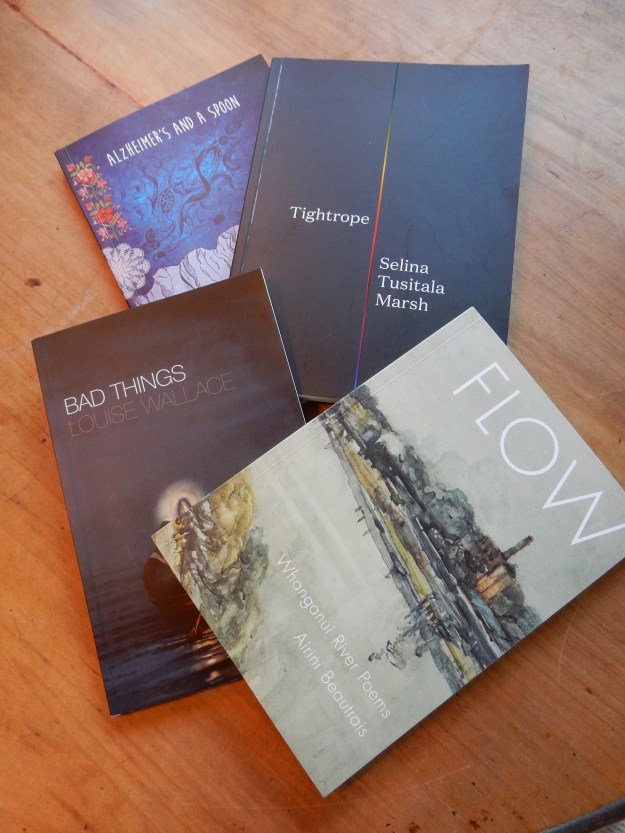
Alzheimher’s and a Spoon is by Liz Breslin

Alzheimher’s and a Spoon is by Liz Breslin
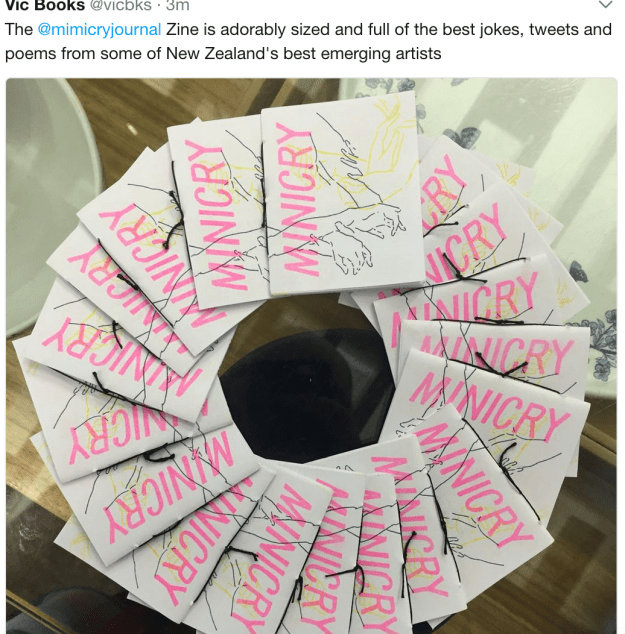
Reminders for December
cut
dig
gather
heel in
lift
protect
Author’s note: The words and title of this poem were taken from a tatty book I bought from a second hand fair called The Vegetable Garden Displayed, published in 1949. I like the instructional quality of the words when re-applying them from gardening to something like loss or heartbreak – as though it can be that simple to recover! The off-piste quality for me is the amount of blank space. The poem appears in my new book Bad Things, where each word stands alone on a separate page, which is a little dramatic – I’m grateful to have an understanding publisher who will go along with my vision! I liked how all that space cushioning each word, isolates and intensifies the emotions they may contain.
Louise Wallace‘s third collection of poems, Bad Things, will be published in August by Victoria University Press. In 2015 she was the Robert Burns Fellow at the University of Otago, Dunedin. In 2016 she represented New Zealand at the Mexico City Poetry Festival. She is the founder and editor of Starling, an online journal publishing the work of young New Zealand writers.
Louise’s new book will be launched on Thursday 10th August. Details here plus details for Writers on Mondays this Monday because Louise is with Hannah Mettner, Maria McMillan & Airini Beautrais. Unmissable!
From Paula: For Poetry Shelf’s Winter Season, I invited 12 poets to pick one of their own poems that marks a shift in direction, that is outside the usual tracks of their poetry, that moves out of character, that nudges comfort zones of writing. It might be subject matter, style, form, approach, tone, effect, motivation, borrowings, revelation, invention, experimentation, exclusions, inclusions, melody …. anything!

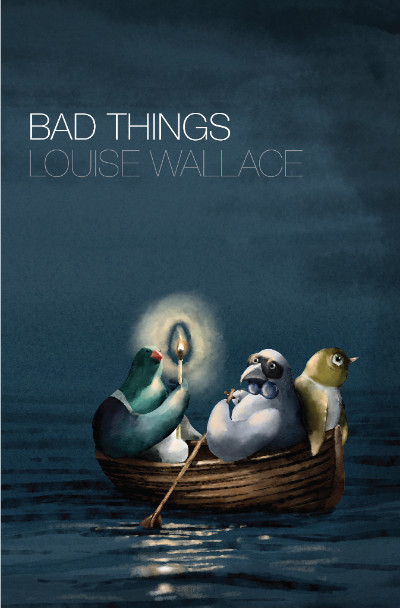
Victoria University Press warmly invites you to the launch of
Bad Things
by Louise Wallace
With readings from Lynley Edmeades, Bill Manhire, Tayi Tibble and Chris Tse. All welcome.
6pm–7.30pm on Thursday 10 August,
at Vic Books, Rutherford House, Pipitea
27 Lambton Quay, Wellington
Books by all authors available for purchase on the night, along with prints of the cover illustration by Kimberly Andrews.
WRITERS ON MONDAYS
Poetry Quartet: Louise Wallace, Hannah Mettner, Maria McMillan & Airini Beautrais
These poets write works of boldness and acute observation. Louise Wallace’s Bad Things, Hannah Mettner’s Fully Clothed and So Forgetful, Maria McMillan’s The Ski Flier and Flow by Airini Beautrais are diverse and exciting books of poetry. Each writer engages with language in innovative ways to explore and reimagine history, commerce, science, love and the things people do. Come and hear the latest New Zealand poetry in a reading and discussion chaired by poet and novelist Anna Smaill.
DATE: Monday 7 August
TIME: 12.15-1.15pm
VENUE: Te Papa Marae
Fourteen Daydreams through Spanish Translation
The wind rotates in the sky’s blue socket.
I wish Ryan would love me.
Okay, notice me. Look at me, even.
But not when I’m smiling with my braces showing.
‘Turn over your tests. You may start.’
Ode to Sunday.
Oh yellow sun, lonely armadillo,
cancel your gut’s groans
with a spade
under the sober trucks
a zap of cheese.
What? Starving. Skipped breakfast. Want cheekbones though.
My sandwiches cat-nap in my lunch box
all fat white stomachy with family love
big and bricky as awful school shoes.
In the cities
the dearness, the world,
agonise us, peg us
in the egg yolks
of the pulverised chicken.
That can’t be right
but the clock’s got hysterics, the minutes
are spilling down its face, gotta crack on with it …
We are suddenly gulping gold
accusing ourselves
with piety pie
and cactus spines
with hot stones
and the mouth
sulphurates
Rotorua. Smelly eggy air. We went there.
Dad was relaxed for once. Funny that it stunk.
More than all the gifts:
it has salt, the throat, the teeth,
the lips and the language
Ryan hardly speaks, but I’ve seen the soft hairs
on his upper lip and I haven’t minded them at all,
so do I smile too wide? Feelings coated all over me
in oily sheen? Do I clip my hair too tight?
Is it my ugly yellow school bag that cries out, gormless?
I know it is. I’m so ashamed. And of how near my breasts
the gap between my shirt-buttons pouches
on plump skin white as baby scorpions.
But Ryan, he’s café au lait calm,
he’s a cool bronze casting
of himself.
We want to drink cataracts
the blue night, the poles
and then, crucifying the sky,
the coldest of all the planets,
the round, the supreme,
the heavenly sanity.
Oh what? Change the title, quick! ‘Ode to Sanity’?
It is the fruit of the tree of salt.
It is the ballerina of green truth.
The ballerina of green truth!
Ryan — sanity is the ballerina of green truth.
Do you like that, would you agree?
I’ve heard your mother is very strict
she hasn’t been well, people say she isn’t coping
and I don’t really know what that means.
Could I help, like, somehow? With the dishes?
Is it hard to be so much older than your brother?
You shouldn’t be embarrassed; it makes you seem wiser,
the way you walk him in his carriage, your face so I don’t know,
iron of jawbone, so soccer-practice-serious,
looking like science somehow,
upright, serious science. But your baby brother:
that you have to be another father to him,
and your mother doesn’t like you to be with girls…
If I were thinner, if I were a dancer,
would you fall at my feet so I could laugh,
flick back my hair like some Follyfoot filly,
(‘Grow, grow the Lightening tree …’)
then say, Ryan, no! Stand up! Please don’t!
So you could say, ‘You are even worth asphalt scrape-holes
on my school uniform knees…’
It is the dry universe
all of a sudden stained
by this fresh heaven
Yes, yes, yes, Ryan when I see you,
it is the dry universe
all of a sudden stained
by this fresh heaven
Quiet water coffin
queen
of the fruit stall
(What? That’s a compliment?
I thought they said this poet was romantic.
If only Ryan would say,
my golden colt, my blazing girl,
my ballerina of the heart, my zap of cheese
it doesn’t matter that you are fat,
you are not fat to me ….)
earthly bistro of depth, moon.
Oh pure one
in your abundance
of undressed rubies.
Well that’s just rude.
blah, skip, skip, skip.
If I could see his soul … pink, glowy,
like when the sun shone through his ears
yesterday at the bus stop
and it wasn’t even geeky somehow, it was ….
We divide you in the soft salt
like a mini mountain
of splendid food
Oh crap, is this about FOOD?
Skip skip skip
blah blah blah
we haven’t even been given half this vocabulary
this test SUCKS.
Oh hell, the bell! I can’t revise, that was way too fast.
‘Papers to the front. Pack your bags.’
Oh my GOD my skirt’s side zip’s undone. Please don’t tell me Ryan saw that today. Shit-shit. He would have. It’s been undone all day. You can see the gap between where my shirt tucks in and — God my school regulation underwear. I hate my parents for buying them. I am going to pass out from shame. That’s why he looked away and hardly spoke. Thinks he’s so superior. I’m giving up boys forever. My big fat watermelon hips. My big fat watermelon belly. I’m skipping lunch. I’m throwing myself into my schoolwork from now on. Oh yellow sun. Oh lonely armadillo.ª
ª Fourteen is struggling with ‘Oda a la Sandía’ (‘Ode to the Watermelon’) by Chilean poet Pablo Neruda. The version set for the test (‘No dictionaries allowed. You have forty-five minutes, starting from now’) is reprinted in The FSG Book of Twentieth Century Latin American Poetry, edited by Ilan Stavans. The translation here is entirely her own.
© Emma Neale
Author note: I’ve been working and reworking this adolesecent girl’s monologue for a couple of years. I’ve submitted it elsewhere once or twice, immediately sticking my fingers in my ears as if waiting for an explosion (of distaste or mockery, etc.). As the two modes it uses are quite far apart – the teenager speaker’s bad translation, and her internal thoughts – it stretches the container of the poem so far it might split. Perhaps that feeling of excess is okay, though, for an adolescent voice. Young people can be so receptive, sensitive, energetic, inventive, critical, vulnerable, wise and yet also wildly unknowing, there’s a symphonic orchestra of emotions competing on any ordinary day during these years, it seems to me. And each emotion is such an intensely coloured version of itself, what single poem could contain them all, even if it limited itself to one class test, on one day?
Emma Neale‘s most recent poetry collection, Tender Machines, was long-listed in the Ockham New Zealand Book Awards 2016 and her latest novel, Billy Bird, was short-listed for the Acorn Prize at the same awards in 2017. She works as a freelance editor.
From Paula: For Poetry Shelf’s Winter Season, I invited 12 poets to pick one of their own poems that marks a shift in direction, that is outside the usual tracks of their poetry, that moves out of character, that nudges comfort zones of writing. It might be subject matter, style, form, approach, tone, effect, motivation, borrowings, revelation, invention, experimentation, exclusions, inclusions, melody …. anything!
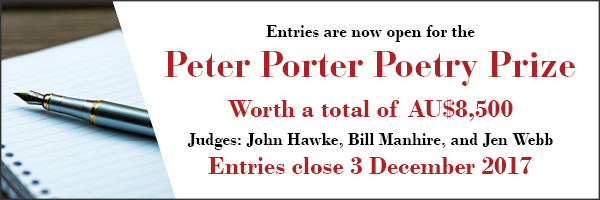
The Peter Porter Poetry Prize
(now worth $8,500) is open!
Australian Book Review welcomes entries in the fourteenth Peter Porter Poetry Prize. The Porter Prize, which is worth a total of AU$8,500, is open until 3 December 2017.\
The Porter Prize is one of Australia’s most lucrative and respected awards for poetry. It honours the life and work of the great Australian poet Peter Porter (1929–2010), an honoured contributor to ABR for many years. All poets writing in English are eligible to enter.
Judges: John Hawke, Bill Manhire, and Jen Webb
First Prize: AU$5,000 and Arthur Boyd’s etching and aquatint The lady and the unicorn, 1975
Second Prize: AU$2,000
Three other shortlisted poets: AU$500 each
Poems must not exceed 75 lines and must be written in English.
Deadline for entries is 3 December 2017
Click here for more information about the 2017 Porter Prize or to enter online.
Before entering the Porter Prize, all poets must read the Terms and Conditions.
Please read our Frequently Asked Questions before contacting us with queries about the Porter Prize.
Click here for more information about past winners.
More information
Contact Darren Saffin at Progressive PR and Publicity on (03) 9696 6417 or darren@progressivepr.com.au
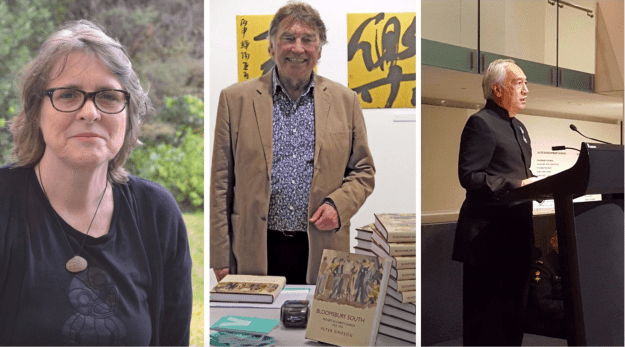
Creative New Zealand has announced the winners of the 2017 Prime Minister’s Awards for Literary Achievement. They are internationally renowned Māori novelist Witi Ihimaera, literary historian and fine arts writer Peter Simpson and popular poet and children’s author Paula Green.
Each will be awarded $60,000 in recognition of their outstanding contribution to New Zealand literature. Witi Ihimaera will be honoured for fiction, Dr Peter Simpson for non-fiction, and Dr Paula Green for poetry.
Arts Council Chair Michael Moynahan said, “Our congratulations to this year’s recipients who are being recognised for their extraordinary legacy of literary achievement. As leaders in their respective crafts, they have engaged New Zealand readers with their story telling and have inspired other New Zealand writers to build on their literary legacy.”
The awards will be presented at a ceremony at Premier House in Wellington, on Wednesday 9 August. The 2017 Creative New Zealand Michael King Writer’s Fellowship winner, Dr Philip Norman, will also be honoured at the ceremony.
The Prime Minister’s Awards for Literary Achievement were established in 2003. Every year New Zealanders are invited to nominate their choice of a writer who has made a significant contribution to New Zealand literature in the genres of non-fiction, poetry and fiction. New Zealand writers are also able to nominate themselves for these awards.
Nominations are assessed by an expert literary panel and recommendations forwarded to the Arts Council of Creative New Zealand for approval. This year’s selection panel was Rachael King, Nicola Legat, David Eggleton and Briar Grace-Smith.
A full list of previous recipients can be found on the Creative New Zealand website.
The Creative New Zealand Michael King Writer’s Fellowship is open to established writers of any literary genre who have already published a significant body of work. Valued at $100,000, it is awarded annually for a project that will take two or more years to complete.
Creative New Zealand and Unity Books invite you to a free literary event
The recipients of the 2017 Prime Ministers Awards for Literary Achievement will read and discuss their work with author Kate De Goldi.
This is a free event at Unity Books, 57 Willis Street, Wellington on Thursday 10 August, 12.30-1.15pm. All welcome. More info: http://bit.ly/2uD2ATe
For media enquiries, please contact:
Jasmyne Chung
Senior Communications & Advocacy Adviser
Creative New Zealand
jasmyne.chung@creativenz.govt.nz
M: 027 838 8868 | DDI: (04) 498 0727
2017 Prime Minister’s Award for Literary Achievement – Fiction
Witi Tame Ihimaera-Smiler, DCNZM, QSM (Te Aitanga-a-Māhaki, Auckland, born Gisborne)
Born in Gisborne, Witi Ihimaera is a novelist, short story writer, filmmaker, anthologist, librettist and playwright. He is of Te Whānau a Kai, Te Aitanga-a-Māhaki, Rongowhakaata, Ngāti Porou and Tūhoe descent. He has the distinction of being the first Māori writer, in 1972, to publish both a book of short stories and a novel. His novel, The Whale Rider, became an internationally successful feature film and Māori Boy: A Memoir of Childhood won the General Non-Fiction Award at the 2016 Ockham New Zealand Book Awards. His most recent books are Black Marks on the White Page, co-edited with Tina Makereti, and Sleeps Standing, with te reo translation by Hemi Kelly, about the Battle of Orakau.
Regarded as one of the world’s leading indigenous writers, Witi has held numerous writing residencies and fellowships. He holds an Honorary Doctorate from Victoria University of Wellington, and in 2009 he was honoured as an Arts Foundation of New Zealand Laureate as well as the supreme Māori arts award Te Tohu mō Te Arikinui Dame Te Atairangikaahu at the Creative New Zealand Te Waka Toi Awards. He was named a Distinguished Companion of the New Zealand Order of Merit in 2004. Last month the French Government appointed him a French Knight of the order of arts and letters (Chevalier de l’ordre des Arts et des Lettres) for his contribution to literature.
The selection panel described Witi as one of New Zealand’s most important post-colonial writers, who has consistently proved to be an outstanding storyteller, celebrated as a voice for Māoritanga and a literary leader.
2017 Prime Minister’s Award for Literary Achievement – Poetry
Dr Paula Green, MNZM (Auckland)
Paula Green is a poet, reviewer, anthologist, children’s author, book awards judge and blogger. She has published ten poetry collections, including several for children. In 2017, she was admitted to The New Zealand Order of Merit for Services to poetry and literature.
Paula has also co-edited a number of highly regarded anthologies, including 99 Ways into New Zealand Poetry, with Dr Harry Ricketts, which was short-listed for the 2010 NZ Post Book Awards. She runs two influential poetry blogs, NZ Poetry Box and NZ Poetry Shelf, and has been a judge for the NZ Post Book Awards, the NZ Post Secondary School Poetry Competition, and the inaugural Sarah Broom Poetry Prize in 2014.
Her recent publications include a collection of her own poems for children, The Letterbox Cat and Other Poems, which won Children’s Choice at the 2015 NZ Book Awards for Children and Young Adults, and an anthology of children’s verse, A Treasury of NZ Poems for Children. Her latest adult collection, New York Pocket Book, was published in 2016.
Paula has a Doctorate in Italian and was Literary Fellow at The University of Auckland (2005). She is a regular guest in New Zealand literary festivals and frequently performs and undertakes workshops in schools from Year 0 to 13.
The selection panel said Paula stood out amongst the nominees for this year’s Prime Minister’s Award for Literary Excellence in Poetry as an accomplished all-rounder, with special distinction as an author of children’s poetry. They described her as “a significant figure in New Zealand poetry as an anthologist and commentator” and as a leading poet.
2017 Prime Minister’s Award for Literary Achievement – Non-fiction
Dr Peter Simpson (Auckland, born Takaka)
Peter Simpson is a writer, editor, critic, curator and academic who has been writing about New Zealand literature, art and culture for more than 50 years. His first book, on Ronald Hugh Morrieson, was published in 1982; since then he has published eight sole-authored books, edited 12 other books, made substantial contributions to 25 other titles, published more than 100 articles in journals in New Zealand and overseas, and scores of reviews in newspapers, periodicals, scholarly journals and online.
He has taught at several universities in New Zealand and Canada between 1964 and 2008. Peter was co-founder and director of Holloway Press, 1993 -2013, publishing some 40 books. He has curated six exhibitions on Leo Bensemann and Colin McCahon for Hocken Collections, Auckland Art Gallery, Christchurch Art Gallery, Lopdell House Gallery and New Zealand Portrait Gallery.
Peter was awarded the 2012 Creative New Zealand Michael King Writer’s Fellowship. The book written during that Fellowship, Bloomsbury South: The Arts in Christchurch 1933-1953, was shortlisted for the illustrated non-fiction category of the 2017 Ockham NZ Book Awards.
The selection panel said Peter’s many books and other writing attest to his ability – both as a literary historian and as a writer on the fine arts – and that he has contributed significantly to the nation’s literary culture over many years.
2017 Michael King Writer’s Fellowship
Dr Philip Norman, CNZM (Christchurch)
Award-winning author and composer Dr Philip Norman has compiled three editions of the Bibliography of New Zealand Compositions, including biographies of some 120 New Zealand composers and descriptions of 4,000 of their works.
He has co-authored, edited or contributed to numerous other books and publications on New Zealand music. From 1980-1991 he was the principal music reviewer for The Press in Christchurch, writing more than 700 reviews.
In addition to being a writer Philip has composed more than 250 works, from orchestral, chamber music and opera through to choral works, musicals and ballet. He composed music for Footrot Flats, New Zealand’s best-selling musical, and for the Royal New Zealand Ballet’s successful Peter Pan, which is shortly to receive a repeat season in Perth, Australia.
About the Michael King Fellowship 2017:
The $100,000 Michael King Fellowship has been awarded to Dr Phillip Norman to create a history of New Zealand composers and their work from the start of European settlement to present day. Philip will use the fellowship to complete a lifetime of work studying New Zealand classical music identifying influential composers, works and performances, and tracing key developments through the decades.

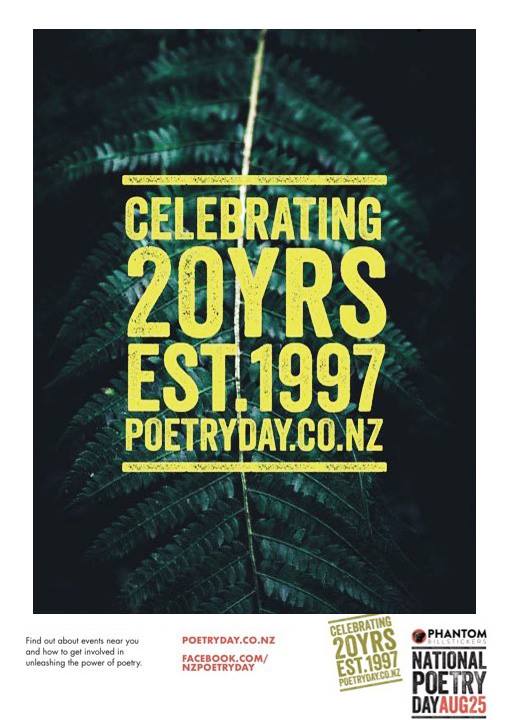
2017 CALENDAR OF EVENTS IS LAUNCHED!
To celebrate its 20th anniversary, Phantom Billstickers National Poetry Day offers its most ambitious and wide-ranging programme of events yet.
This year’s packed programme features more than 100 dynamic and accessible events, workshops and competitions, featuring acclaimed poets, new voices, young writers, and poetry enthusiasts. From Slam Poetry to sonnets, from stages to pavements, poetry will be created and enjoyed in a myriad of venues around the country: cafes, bars, schools, university campuses, community centres, retirement villages, marae, libraries and theatres – as well as on buses, trains and ferries.
For full information about all events, including places, venues, times, tickets and more, go to the Phantom Billstickers National Poetry Day 2017 Calendar of Events.
The way things are
When they’re going to give you medals they send you a letter.
When you go to get them you’ll be treading on old ground, though you won’t know it by your feet.
When you stand and salute you must keep your fingers straight, you must remember the promises you made. When they give you the medals it is symbolic, the freedom, the keys.
When I Skyped my Ma she said there are different things that the medal boxes say. Your babcia was in the Home Army and then there was a national medal, now, I’ve forgotten what it was and then that little booklet with the President’s stamp but they were different and the national armed military action medal and the cross of the Warsaw Uprising and krzyzem is cross but the grammar is different, it means with the cross, they’ve got different endings and we found two separate cross pins in a little plastic bag so we put them in the empty box and I showed them to people
when they came after she died because that’s what you do and I forgot to say, with the photos, match the booklet to the medals, because that’s how you do it, that’s the only way, I wouldn’t know otherwise, she never told me either. I wonder if it’s the key that’s missing, I don’t have an actual memory of seeing it. It clearly isn’t an actual key that opens an actual door because there’s clearly no such thing in an actual city. She could’ve had a lot of free bus rides with that card.
When my babcia did that interview, that once, she said and now that people are celebrating this Uprising, I think to myself was it really worth it, to pay such a price? And what for? What for? For we didn’t gain anything substantial, anything real.
©Liz Breslin
Author note: This poem was a departure for me because I usually obsess over line endings and over having less words doing more, whereas here I’ve tried to capture language as faithfully and actually and unravelled-ly as I could. It’s also new for me to allow myself prosey line endings. It used to bother me that I wasn’t quite sure what was flash fiction and what was prose and what a poem and now I’ve decided it’s whatever. It’s the way the words settle true.
Liz Breslin doesn’t know the difference between rhyme and reason but she can write her way out of a paper bag. Her first poem collection, Alzheimer’s and a spoon, is out now, thanks to Otago University Press. She also writes plays, short stories and a fortnightly column – Thinking Allowed – for the Otago Daily Times. Liz is comfy on the page and the stage, came third in the 2016 Charles Causley International Poetry Competition and was second runner up in the 2014 NZ Poetry Slam. Her website is here.
From Paula: For Poetry Shelf’s Winter Season, I invited 12 poets to pick one of their own poems that marks a shift in direction, that is outside the usual tracks of their poetry, that moves out of character, that nudges comfort zones of writing. It might be subject matter, style, form, approach, tone, effect, motivation, borrowings, revelation, invention, experimentation, exclusions, inclusions, melody …. anything!
 NZ Poetry Shelf