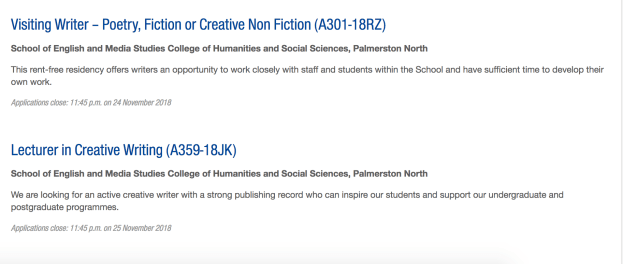

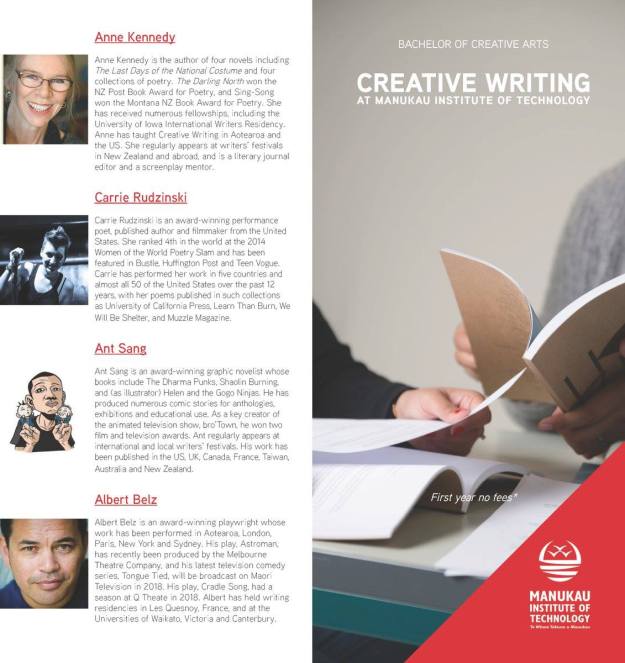


We don’t usually hold a launch for Sport but issue 46 is too crazy good not to. Please come celebrate!
With readings from Bill Manhire, Rose Lu, Jane Arthur, Oscar Upperton, Anthony Lapwood, Freya Daly Sadgrove and Nikki-Lee Birdsey.
Thursday 22 November (that’s next week!)
6pm-7.30pm
at Vic Books, Kelburn Parade, Victoria University of Wellington.
homework
she waits
for her children
to fall asleep
before she opens
their schoolbags
and studies their homework.
they learn
so much faster
and she’s falling behind.
they speak her language
with an accent now
and she can’t
understand what they say
when they speak
among themselves
in their new
mother tongue.
carina gallegos
Lost in translation
Lev has learnt
the word in English.
Rabbit.
He points at the book
and says in his thick accent
‘Rabbit.’
It’s freezing cold,
frost on the window.
‘Rabbit’ comes out
in a rush of smoke.
‘No’ I say,
‘that’s not a rabbit.’
I point at the book.
‘It’s a pig.’
He breathes heavily,
clouds of white steam
rising around him.
He goes to the window.
A dog is running
on the white grass.
‘Rabbit!’ he shouts
‘Rabbit! Rabbit! Rabbit!’
and bursts into tears.
Adrienne Jansen
©Adrienne Jansen and carina gallegos All of Us, Landing Press, 2018
Watch a clip from the book launch
Adrienne and carina gave me kind permission to post their conversation which forms the introduction to the collection.
Where did these poems come from?
Adrienne: I wanted to write a series of poems from two perspectives: what does someone from Syria, for example, experience when they go to a railway station, compared to what I experience going to a railway station? What would happen if we each wrote about our experience of the railway station?
So I started to write a series of poems that were about ‘there’ and ‘here’. One of the reasons it appealed to me was because I didn’t want to take on the voice of the migrant or refugee. I might be recording the stories and experiences they’ve told me, but I’m not taking on their voice.
Now you can talk about where your poems came from.
carina: my poems aren’t imagined either, they’re just sharing the experiences that people have shared with me. they’re the observations of ‘here’ and ‘there’, when you work with people or communities from refugee backgrounds, you hear these stories over and over again. the stories go on for days and people experience them in their heads every day, and to tell them in a poetic context brings them alive in a more succinct way. but we don’t get to experience the ‘there’, we only experience the ‘here’.
coming from a migrant background it was easy for me to relate to some of their stories too.
Adrienne: Both of us are retelling the stories that we’ve heard and heard and which we think are very important to pass on, and in this case, we’re recording them in poetry.
carina: exactly. it’s storytelling poetry.
that was the other part of the vision – that we were going to write poetry that was accessible to a wide range of people. it wasn’t conceptual poetry, it wasn’t difficult, it was poetry that a lot of people could read and understand, even if there were other layers of meaning, even if there were stories between the lines. there was something there, regardless of whether you could read between the lines or not.
Adrienne: Tell me why you don’t use capital letters.
carina: because i don’t like capital letters.
Adrienne: Because … ?
carina: ever since i was a little girl i’ve had an issue with authority (that’s a longer conversation). i don’t mean for the lack of capital letters to be an obstacle for people. it’s quite common for poets to play with capital letters and punctuation and with the aesthetics of letters and words. i love full stops and commas and use them in a very traditional way. i just don’t like capital letters. i don’t even use them to spell my name.
Adrienne: So that was a challenge for us, how to combine two quite different styles. I use capitals and punctuation because I see them as a kind of small signpost to the reader and a kind of fine-tuning for the writer. That would be my approach.
But there are other differences in style too. Like yours – would you describe your style as Latin American style? It’s more discursive.
carina: we talk a lot. latin americans, i mean.
Adrienne: You talk a lot. Right. And of course, New Zealanders don’t talk so much. This could be very interesting!
carina: we’re long-winded people.
Adrienne: That’s why you’ve got longer poems than mine. We’re both being true to type.
carina: and there’s also the weather factor. we’ve been told that in the poems it rains a lot. the weather here is not tropical. if we lived in central america or south america, we’d be writing about mugginess or bad hair days. but in new zealand the challenge is the weather, even for people who were born here. it’s the cold weather that challenges people.
Adrienne: So that’s why it rains a lot.
carina: that’s why it rains a lot.
Adrienne: In the poems.
carina: because in new zealand it rains a lot.
From All of Us, published by Landing Press November 2018
Carina Gallegos has a background in journalism and development studies. She grew up in Costa Rica, moved to New Zealand thirteen years ago, and has worked with refugee-background communities since 2011. She lives in Wellington with her family.
Adrienne Jansen has published numerous books (poetry, novels, nonfiction). She teaches on the Creative Writing Programme at Whitireia Polytechnic. For ten years she was part of the writing team at Te Papa, New Zealand’s national museum. She lives in Wellington.
I had a brief period last week where I didn’t hate everyone. But now I’m back to hating everyone. Someone from an online dating website asks me if I am going to this music festival because everyone he knows is going and he feels left out. I’ve never heard of it, I say, I don’t even know what that is. I say I don’t have any friends though so maybe that’s why I don’t hear about these things. He says, everyone loves to say they don’t have friends when they actually do. I say, Yeah, and everyone loves to say to people who say they don’t have any friends, that they actually do have friends because they’ve never been in a position where they haven’t had friends so they can’t actually imagine it. Well, your negative energy is probably putting off potential friends right now, he says.
Woke up to a message from someone I haven’t spoken to in a while that said “hey so if u could send me nudes that would be appreciated, I’m going to jail soon for 2-3 years.” The only thing I have going for me right now is that I have good nipples and good eyelashes. On the train on the way to a job interview I’m looking at my own nudes to build my confidence. The interviewer asked me what I was doing between 2013 and 2015 and I didn’t feel like I could say debilitating depression and poor physical health so I said I worked as an English tutor for an educational company, but then she asked for a reference from them.
Is the noise I can hear coming from the inside of the building or the outside, I can’t tell. No one is replying to any of my messages. Last week I was supposed to go on a date with someone who already cancelled on me twice. The first time he said he was too tired, the second time he said the weather was too warm. I said to him, look, if you have changed your mind about meeting, that’s ok, let me know, otherwise we could do Thursday. He didn’t acknowledge the part of the message about changing his mind or not, he just went ahead and made a third plan for Thursday. But when I woke up on Thursday, there was a message from him at 7.50am that said he couldn’t meet up. He said he’d gone to his therapist and realised he wasn’t in the right state to meet people at the moment. Well, I could have told you that for free, I wanted to say, but I didn’t reply.
©Zarah Butcher-McGunnigle
Zarah Butcher-McGunnigle is from Auckland, NZ and currently lives in Melbourne. She is the author of Autobiography of a Marguerite (Hue & Cry Press, 2014). Her chapbook, nostalgia has ruined my life, was recently a finalist for the Subbed In Chapbook Prize 2018. You can donate to their fundraising campaign here

Holes
On the fallen stone
the lead lettering of ‘died’
stands proud
the rest of the story
has dropped out
leaving only the peg holes of memory.
©Heather Bauchop
from Remembering a Place I’ve Never been: the past in three voices (Cold Hub Press, 2018)
Heather Bauchop was born in San Francisco to Scottish parents who migrated to New Zealand in 1972. She is a public historian living in Dunedin. Her poetry and fiction have appeared in a number of journals. She won Takahe‘s 2016 short story competition.

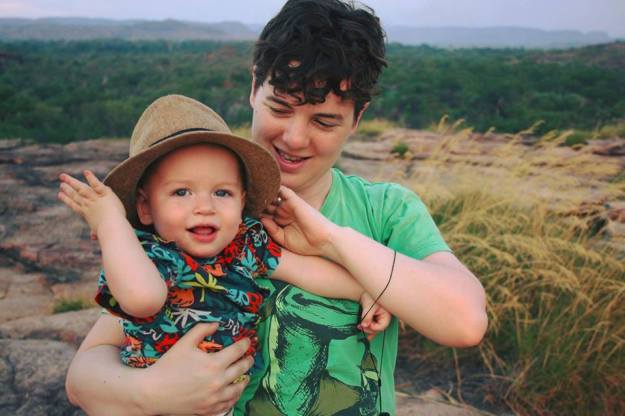
Photo credit: Emily Beam
Holly Painter reads ‘Mount Ebenezer Roadhouse’.
Holly Painter is the author of the poetry collection Excerpts from a Natural History (Titus Books, 2015). Her work has appeared in Sport, Landfall, the New Zealand Listener, JAAM, Arena, Barrelhouse, the Cream City Review, and others. She holds an MFA in Creative Writing from the University of Canterbury and lives with her wife and son in Vermont, where she teaches writing and literature at the University of Vermont. Holly is currently working on a non-fiction book on obsolete jobs and a poetry collection based on cryptic crosswords. Find out more here

Ground-breaking playwright and poet Lynda Chanwai-Earle has been appointed as the Victoria University of Wellington International Institute of Modern Letters (IIML) and Creative New Zealand Writer in Residence for 2019.
Ms Chanwai-Earle is a well-known public broadcaster, having worked for many years as a documentary producer at Radio New Zealand. She is a researcher for the Asia New Zealand Foundation and has been a guest writer at numerous festivals, including the Hong Kong Literary Festival, the Asia Pacific Poetry Festival, and the Shanghai Literary Festival.
Ms Chanwai-Earle’s first book of poetry— Honeypants—was shortlisted for the New Zealand Book Awards. She has published four plays and has been shortlisted three times for the Bruce Mason Playwriting Award.
During her residency, Ms Chanwai-Earle will work on three scriptwriting projects, including a film adaptation of her play Man in a Suitcase, based on the real-life murder of a Chinese student in Auckland. The other two scripts will complete her Antarctic Trilogy, which began with HEAT—a world first in green-powered theatre performed completely off-grid in theatres across New Zealand.
Director of the International Institute of Modern Letters, Professor Damien Wilkins, says, “Lynda has been a great advocate for the arts, especially across all sorts of cultural and social boundaries. She’s spent the last decade championing others. The writing residency sees her return to her own innovative, creative work. We’re excited to see what she produces.”
Commenting on the appointment, Ms Chanwai-Earle says, “It goes without saying that choosing to be a writer is choosing to sustain a financially challenged vocation. This residency is a rare thing. It creates vital, precious time and space. I’m anticipating an extremely productive year. The residency also gives me a chance to collaborate with acclaimed inter-disciplinary arts and science practitioners, as well as theatre and science communities within Wellington.”
Ms Chanwai-Earle takes up the residency at the IIML on 1 February 2019.
 NZ Poetry Shelf