Today’s list of comfort books is selected by New Zealand librarians. A number of readers have been celebrating the opening of our libraries this week on social media. Libraries were missed! I know of some book lovers who disinfected books and dropped them off in friends’ letterboxes. I have always loved libraries (along with bush and beaches). Whāngarei Public Library was a favourite haunt of mine as a child and I would walk out with the maximum number in my arms. I now imagine a book tower teetering as high as my head but I am sure they were in a bag. In recent times I have discovered the joy of library archives, most notably the Alexander Turnbull Library (Wellington) and the Macmillan Brown (Christchurch). Such joy to spend time there creating Wild Honey. Indeed if I think libraries …. I think joy, nourishment, expansion of mind and heart, comfort. The lists have gathered much loved books that offer comfort but that also offer such diverse and necessary reading experiences.
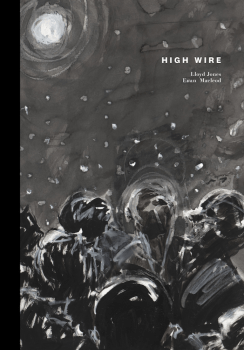
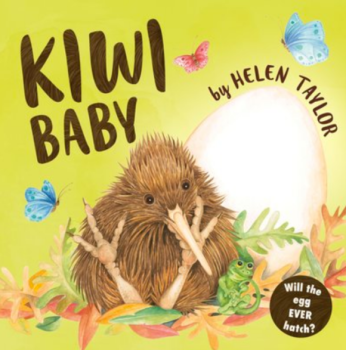
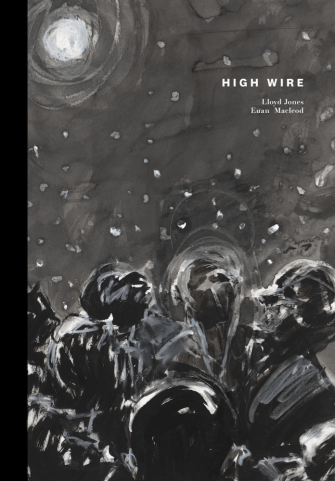
This week I have adored two books: High Wire by Lloyd Jones and Euan Mcleod (Massey University Press) and Kiwi Baby by Helen Taylor (Penguin Random House). I reviewed them both on the blog because both left me with a warm book glow that i am still feeling.
Thanks to everyone for contributing.
The book list
Crissi Blair (National Library Services to Schools Facilitator)
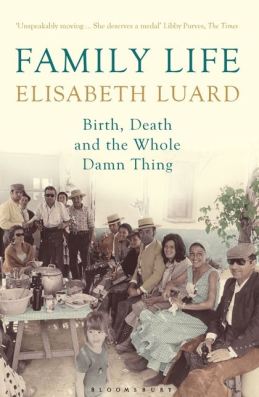
I haven’t found it easy to settle to reading during lockdown. A lot of my reading is compulsory, reading to review, but reading for pleasure? That was a little harder to find. There has been a lot of reading of recipe books, to fend off the boredom of constant home cooking, though I am much more likely to read the recipes than I am to make them, and my favourite of these is Nigel Slater’s Kitchen Diaries, filled as it is with details of everyday life along with delicious things to cook. I have long loved food fiction and memoirs and pulled out my very battered copy of My Family Life by Elizabeth Luard. The book itself has its own story – I bought it second hand in Wellington many years ago, after a hard-working few days, heading early to the airport and needing something, anything, to read. I read, I loved, I cried, I ate the glorious food in my imagination, and I recommended it to one person after another. Miraculously everyone who read it also returned it to me (not always the case) so I could dip in again now for some comfort reading.
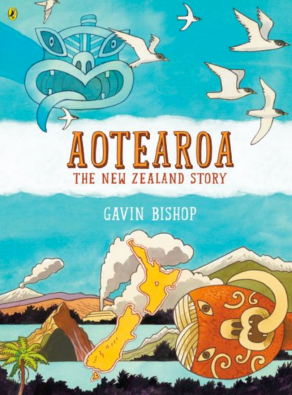
My other comfort reading has been delving through my children’s picture book collection, trying to make some room on the shelves and thinking about what to recommend, lend and pass on to the babies and small children that are in my life now – browsing through Gavin Bishop’s magnificent Wildlife of Aotearoa (and secretly loving the pages about farm animals and what we find inside our houses more than the native birds), having a delighted secret preview of Vasanti Unka’s dazzling new book I Am the Universe (due out in September), and diving into an old favourite resource and examining the book lists in Dorothy Butler’s Babies Need Books, remembering and re-reading favourites like the Ahlberg’s Each Peach Pear Plum and Peepo, and anything by Shirley Hughes and Sarah Garland, and thinking about what might replace books on the . Perhaps the highlight for me, in the lockdown array of children’s books being shared online, has been Oliver Jeffers reading all his picture books (I have every single one) and talking about how they came to be. I’m thrilled that so many children (and their adults) have been able to ‘meet’ the authors of so many books through the internet. Those personal connections add immeasurably to the experience of the book.
Fleur Coleman (Children’s and Youth Librarian Mahurangi East Library)
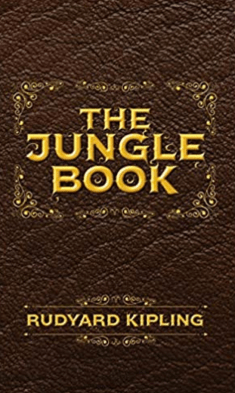
My ‘comfort book’ through this unprecedented time has been The Jungle Book by Rudyard Kipling, First Edition May 1894. Perhaps it has become a rite of passage book in our house? Lost in a sea of blankets I read to my third and final son who has just turned 13 during lockdown of Mowgli’s rejection from the jungle, his clever defeat of Shere Khan and his return to man – only to be cast aside once more for his differences. Mowgli feels like a go-between and the role his character plays in creating potential tolerance and understanding in the wider scheme is a powerful one.
COVID-19 certainly made me think about the survival of the fittest, as the supermarket shelves were emptied in haste – I worried for the people with little in their wallets. When all else fails, the law of the jungle may prevail? The fruit of the sci-fiction writer ripe for the picking?
Linley Earnshaw (Librarian, Rutherford College)
My favourites through the lockdown had to be (in descending order):
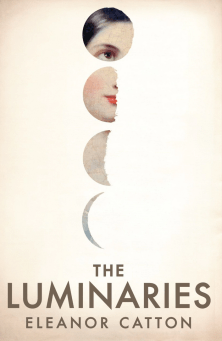
The Luminaries by Eleanor Cotton – it takes a while to read, so the timing was perfect and I’m loving the TV series.
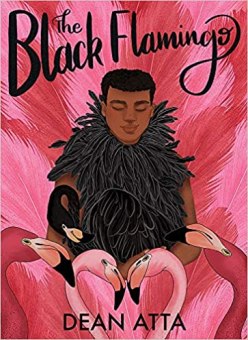
The Black Flamingo by Dean Atta was a very close second – look up the author…..he’s a superstar and the book is an awesome mix of poetry and prose describing the teen/college years of a gay trans man.
Shantaram by Gregory David Roberts – not for the fainthearted and very long (gangsters, drugs and poverty in Mumbai in the 80’s)
However, my go to book in times of real stress is……
Pride and Prejudice or anything by Austen except Emma – every word is valuable, no word is wasted.
Rachel Esson (Director of Content Services at the National Library and I’m also the current President of the Library and Information Association of New Zealand Aotearoa (LIANZA))
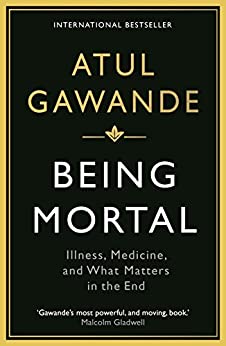
Being Mortal: Medicine and What Matters in the End Atul Gawande
My recommendation– strongly influenced by my time as a Medical librarian– is Atul Gawande’s Being Mortal. It might seem strange to be recommending a book about end of life during a global pandemic, but to me it seems more important now than ever. The book is about seeing people as individuals, and shows that enabling people to make their own choices makes their end of life more fulfilled, and families feel better. While the media is focussed on the numbers of the pandemic, this book reminds me that each number is a person with a story and family.
I first read this book as my parents were navigating increasingly poor health, and downsizing from the family home. Although the logical step was a retirement village, they chose an (only slightly) smaller house with, lower maintenance. They enjoyed nearly five years in that house. I take comfort from knowing that they made the right choice for them, and that’s ‘what matters in the end.’
Nova Gibson (Librarian, Massey Primary School)
I was one of those people who found it difficult to concentrate on a meaty novel even though I was excited about having ALL this time to read! After rereading the same page of a particular novel numerous times, I decided to lower my expectations of myself and roll with it. Our school started a Youtube channel and I read chapter books and picture books for our school community. I picked humorous books Mo Willem’s Elephant & Piggie books and these proved to be popular. Another thing I struggled with is the fact that our three kids and spouses live and work overseas. I miss them and wonder about when we can see them again. I read Resistance by Jennifer Nielsen. I love WW2 stories and found that it helped put this situation in perspective as those brave resistance fighters said goodbye to their loved ones not knowing if or when they’d see each other again. The other book I read was Canterbury Quake by Desna Wallace. In Christchurch, they went through horrendous times but as I thought about the way that community supported each other with physical help and contact, I challenged myself to find ways of supporting others but in a totally different way. I ended up delivering ‘sanitised’ books on my bicycle to people who had run out of reading material.
Corin Haines (Library and Archives Manager, Masterton District Library)
My book would be H is for Hawk by Helen Macdonald. This book was perfect for me as a lover of both memoir and grief based prose. As a sporadic reader this book drew me back into a period of intense reading on both grief and birds. I found Helen’s journey with Mabel her Goshawk and her grief compelling, moving and enriching. At once a celebration of life and the agony of coming to terms with death, it truly is one of the best things I have ever read.
Peter Ireland (Exhibition Specialist, Alexander Turnbull Library)
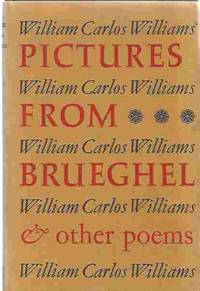
A few days before lockdown, long-awaited bookshelves arrived and were installed. This meant going through all the books in the house to sort, dust off, locate in the shelves; books, which in some cases, hadn’t been picked up since the 1970’s. It is like having access to a brand-new library. To add to this new/old horizon of reading were a few books on extended loan from the Public Library. I’ve not thought about books for comfort per se during this period, but I have enjoyed the comfort of discovering books again, realising how many books I have that are yet unread and browsing the new bookshelves. Reading poems, both loved and familiar, Being Here by Vincent O’Sullivan, for instance, and finding the unfamiliar; such as, Asphodel, That Greeny Flower by William Carlos Williams.
I bought this copy of Pictures from Breughel & other poems from a book seller in Greytown. I was as pleased to find it as he was sad to see it go, which seems to me the right terms of doing business. I fell for the cover, had to have it, bought the book home, leafed through it. It sat. Asphodel is a poem in which the elderly Williams is seeking redemption for wrongs against his wife Flossie. Discomfort is in part the prompt here as the poet attempts to come to terms with things for perhaps a final time.
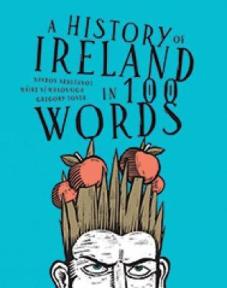
By contrast, I have enjoyed a book from the Kilbirnie branch of the Wellington Public Library – for which, in seemingly perpetual lockdown, we mourn. The History of Ireland in 100 Words appeared as a good prospect for someone with connections to Balleyhorsey in County Wicklow and so it has proved. One of the hundred words is file, poet. The word is thought to relate to a verb meaning sees, and given the high proportion of blind Irish poets, that’s, seeing in terms of prophecy. Ireland, what a country! Any place that had these lines on the reverse of their £5 note has a head start in my affections.
I am Raftery, the poet,
full of hope and love
with eyes without light,
silence without torment
Pamela Jones (Children’s & YA Librarian, South Taranaki District Libraries)
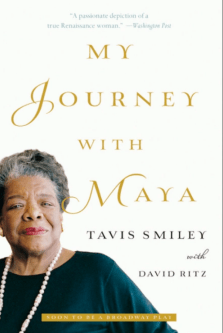
My Journey with Maya by Travis Smiley recounts the story of the author’s friendship with Maya Angelou. In this book I found peace, joy and yes, comfort, reading accounts by someone who’s life was profoundly impacted by this inspirational woman. Until I read it I only knew of Maya in passing, as a civil rights activist and poet. The book came to me at a perfect time in my life, inspiring me to begin my own journey with Maya. That journey has had me meditating on life lessons, taught me to forgive and accept myself, to accept life’s challenges without being reduced by them and most specially, to try to be a rainbow in someone else’s cloud. Maya Angelou encourages us to work at making kindness a habit and endeavour to make magic happen in others’ lives – something sorely needed in the past weeks of lockdown.
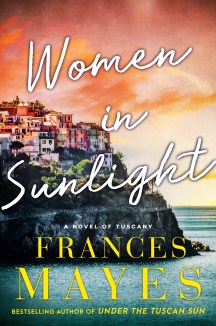
My second recommendation is Women in Sunlight by Frances Mayes.
This delightful, laugh out loud novel makes me wonder if the author too has walked someway with Maya’s voice in her head. The three women in the story, all of retirement age, make a decision to go against their families desire to place them in a retirement village (for their own good). Instead they take a leap of faith to follow their Heartsong and end up together in an Italian Village pursuing their dreams and passions. They learn to forgive & accept themselves and to make magic happen in their own lives. A wonderful example of Maya’s belief that life loves the liver of it! – and such a delight to read.
Cathy Mahone (Librarian, St Francis Catholic School)
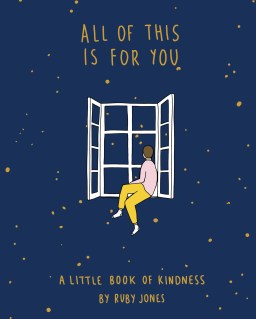
All of This is for You: A Little Book of Kindness by Ruby Jones
This is a gem of a book and so uplifting during this time of Covid19 when a little kindness can indeed lift the spirits. The beautiful simplicity of her drawings belies the poignant and powerful messages within. Ruby writes “I hope that on any given day, rain or shine, happy tears or painful ones, you can open this book and find a page that speaks to you” and indeed you do. I just love this special book.
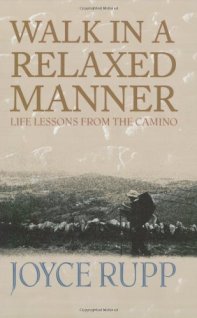
Walk in a Relaxed Manner by Joyce Rupp inspired me pre my 1st Camino back in 2014 and has nourished me post Caminos since. A book to constantly delve in, it tells the story of the writer’s physical and personal journey on the Camino de Santiago in Northern Spain. The gift of this book to me is to take life lessons from each chapter to continue your journey after you leave the Way and return home to your new reality. Your journey truly begins upon your arrival in Santiago de Compostela.
Jeannie Skinner (Facilitator, National Library Services to Schools, Northland)
When invited to share a book or books that have given comfort I agreed immediately, as I absolutely associate reading with comfort, but when it came to choosing just which books to mention it got me thinking…
Is the comfort from nostalgia – re-reading old favourites, especially from childhood, when things were simpler and books were magical escapes? Yes, maybe… Hello Anne of Green Gables, Tom’s Midnight Garden, I Capture the Castle, Flambards…
Is it about familiarity with the characters, like a pair of comfortable slippers, revisiting old friends and seeing what they have been up to – perhaps picking up one of Sue Grafton’s ABC mysteries with Kinsey Milhone in California, or taking a trip to Venice in a Donna Leon novel with Guido Brunetti, solving crime, loving his family, eating wonderful food, and appreciating the play of light on the water.
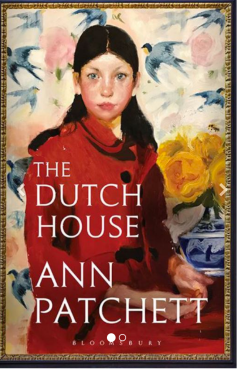
Is it about distraction and absorption into another world or the discovery of a new author? This summer I read Ann Patchett’s The Dutch House which I loved and it made me go and read others of hers – Commonwealth, Run, Bel Canto… plus her blog and her enthusiastic recommendations there such as Less by Sean Greer which I enjoyed too, and it provided a perfect escape reading plan during lockdown.
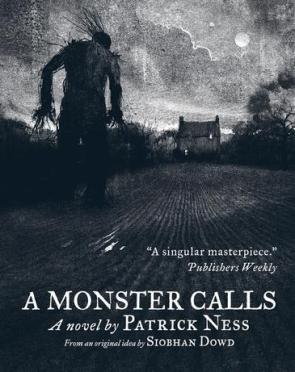
Maybe it is about the books that affirm great truths, even if they couldn’t be described as comforting reads – I’m thinking of the harrowing A Monster Calls by Patrick Ness, based on an idea by Siobhan Dowd, about a boy suffering the nightmare of the loss of his mother to cancer. I quietly snivelled and then sobbed my way through it as it resonated with my similar recent loss (one review said it would “make a stone doorstep weep”), but ultimately absorbed the message that sometimes terrible things will happen, our worst fears realised, but that you will have the strength to manage and cope and go on.
Looking for comfort it is hard to go past the healing of laughter, and books that make me smile or laugh are always welcome. I adore well-written family stories – Jane Gardam, Ann Tyler, Barbara Kingsolver, and in children’s books favourites include Kate De Goldi, anything by Richard Peck, Katherine Rundell, and Hilary McKay, whose characters are endearing, funny, kind, interesting, clever and complicated. Hilary McKay’s The Skylarks’ War was one of my favourites last year, and it made me go back and re-read all her Binny series where The Skylarks’ War characters first appeared.
Poetry provides comfort too – Mary Oliver is someone I often revisit and find something new each time, reminders to appreciate and celebrate the world we live in. I’ve just made a quilt for a friend’s young daughter and stitched some words from one of Mary’s poems into the quilting…
Hello, sun in my face. Hello you who made the morning and spread it over the fields…
Watch, now, how I start the day in happiness, in kindness.
― Mary Oliver
Such books provide sustenance and insight; they wrap me in a warm and comforting blanket, and are perennials in my life.
Chris Szekely
Letters
Last year was horrible.
Someone I loved got the big C,
Prognosis twelve months.
But it happened in three.
What do you do with that?
Death for him. Depression for me.
Where do you find comfort?
He was a great reader, a great read.
Last year I invented a personal reading challenge. I would read 26 novels, one for each letter of the alphabet, by author surname. Fiction. Not real life. Or death. And nothing sad. Choosing titles was easy. When friends heard about it, everyone had a recommendation. One day, there was a letter in the letterbox in a handwritten envelope from a girl called Olive. My neighbour’s granddaughter.
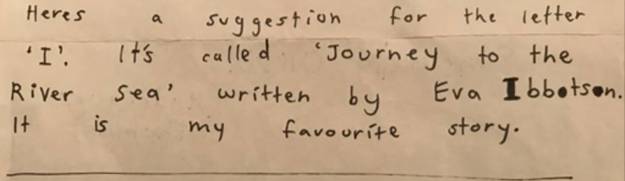
How could I refuse such an invitation?
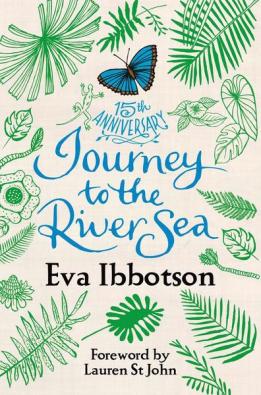
Eva Ibbotson was an Austrian-born, British children’s writer, known for her “warmth and humour, magical characters and heaps of adventure.” (1) I had never read her before, but warmth and humour sounded good to me. Journey to the River Sea was published in 2001 and tells the story of Maia Fielding, a trust fund orphan in an English boarding school. Maia is sent to live with distant relatives in the Amazon. The relatives are beastly. They want the money attached to Maia, but they don’t want her. What’s to be done?
I can see why this is Olive’s favourite story. It’s full of adventure and danger. The kids are resourceful (except for the spoilt ones). The adults are baddies (expect for the good ones). And the Amazon is amazing. For the couple of days it took to read, it was a great escape to somewhere warm; a moment of comfort.
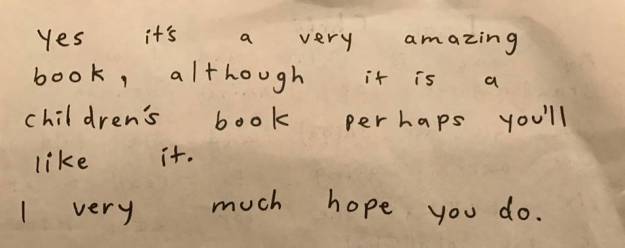
I loved it Olive. Thank you.
Bee Trudgeon (Porirua Children’s Librarian Kaitiaki Pukapuka Tamariki)
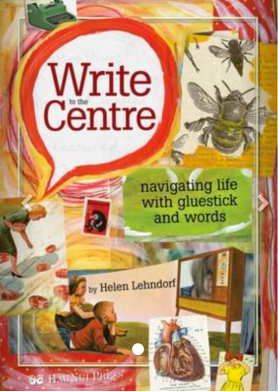
Write to the Centre – navigating life with a gluestick and words Helen Lehndorf (HauNui Press, 2016)
For the past few years I have kept Helen Lehndorf’s very valuable Write to the Centre by my bed, near my pen, Gluestick/Sellotape and diary. It’s the perfect tool for when you do not want to plug anything in, put anything on, or move anywhere, but you do need to express some of the things building up in and around you (movie tickets, restaurant receipts, mental lists, old arguments, eggy bits of what could be poetry). It has a divinely organic way of transforming the likes of simple laziness, desperate exhaustion, and deep lethargy, into playfully curious creation. I find this particularly useful when I’m feeling too bunched up – or laid low – to create (anything!), but know it is the only cure for my constriction, ennui, or despair.
As I reach for it now and find it missing, I remember, I am also periodically lending it to people who simply must take its medicine. So, now I have to find where I put it when my last borrower returned it… [didn’t have to look too far] complete with a collage of me tucked inside the cover! I don’t think I have ever picked this book up without feeling better afterwards. It permits me; and in a world of tightening rules and regulations – that is a rare and comforting thing.
Desna Wallace (Librarian, Fendalton Open Air School)
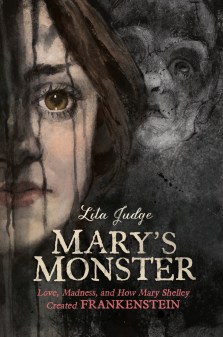
Mary’s Monster Love, Madness and How Mary Shelley Created Frankenstein by Lita Judge
This is a powerful book that brings out so many emotions when I read it. Horror, anger, joy, sadness, the whole gamut. This is also a book that whenever I pick it up, I automatically hold it tight to my chest, wrap my arms around it and hug it tight, like an old friend.
Mary’s Monster is a verse novel aimed at young adults but it is a crossover for adults too. I love verse novels. I’m obsessed with their format. They tend to have succinct writing that in its brevity, often packs a punch, which it certainly did in this book.
Judge tells the story of Mary Shelly beginning with her young days and her relationship with Percy Bysshe Shelley. It is also an insight to the poets of the time including Lord Byron. Her story is incredibly sad but also uplifting as Mary begins to find solace and confidence in her writing. The language is sublime and I find myself often pausing after different poems, to just soak up all its beauty. The book is also heavily illustrated with the most haunting images. I feel the eyes piercing right through me and I’m connected.
It is the connection that makes this book so special. It is the connection to the beauty of art and language.
Mary’s mother died when she was a baby. At seventeen, Mary herself had a baby that also died shortly after birth.
I am seventeen
Already
I am daughter to a ghost
and mother to bones.
I don’t offer a review here but this book and its story and stunning illustrations have had a profound impact on me, and for that reason it is a book that brings comfort. A treasure I hold dear.

 NZ Poetry Shelf