Category Archives: NZ Poets

Poetry Shelf review: Jennifer Compton’s Mr Clean and The Junkie – a fabulous read – the kind of book you devour in one gulp


large_cleanjacket   large_cleanjacket   large_cleanjacket   large_cleanjacket

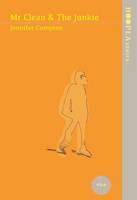
Jennifer Compton, Mr Clean & The Junkie Mākaro Press, 2015


Jennifer Compton’s new poetry collection, Mr Clean & The Junkie, is a fabulous read – the kind of book you devour in one gulp. It is a long narrative poem in four parts with a coda. Each section is written in couplets – shortish lines that deliver the perfect rhythm for the occasion. This is a 1970s love story set in Sydney (and briefly NZ), yet it is a love story with a difference. It reminded me a bit of Pirandello’s play Six Characters in Search of an Author, in that the stitching is on show — how you tell/show the story, along with the choices you make, is as much a part of the narrative as plot, characters and so. The difference here, though, it is like a poem in search of a character in search of a film director in search of character in search of a poem. Self-reflexive behaviour on the part of authors has been done to death in recent decades, so it has the potential to appear lack lustre. Not in this case. I loved the way the poetry is a series of smudges. A bit like the way life imitates cinema as much as cinema imitates life.

I spent ages on the first page. It got thoughts rolling. I loved the voice. I loved the intrusion of the director (we figure that out as we read) and I loved the way I kept putting the poem in the role of the camera (long shots to gain wider perspective or distance, tracking shots, surprising angles, refreshing views) or the editing suites with jump cuts and smooth transitions. Or sitting back and admiring the composition within the frame. Or tropes. The slow reveal.

The two main characters (My Clean and The Junkie) are definitely in search of flesh and blood, yet you can also see this as genre writing – a narrative poem that is part thriller, part whodunit, part crime writing. Then again it is part feminist critique and part postmodern explosion.


Here is a sample from the first page:


Our hero is discovered sleeping.

We find him as the camera finds him.


Our hero is dreaming of the white mouse

cleaning his whiskers in extreme close-up.


As he dreams we snoop about his habitat.

Everything is there for a reason and we will


see it from another angle before we reach The End.

I imagine ambient sound during the credit sequence.


The mouse begins to run the wheel because

the wheel is there under his paws.


The slow zoom out reveals the wheel is in a cage,

of course.


And fade to the floor-to-ceiling, slatted blinds,

chocked ajar,


looming over our man asleep on his futon.

What do they look like? Bars.


The writing is tight. The plot pulls you along at break-neck pace and then stops you in your tracks as the director’s voice pulls you out of plot and character with wry stumbling blocks.  Little flurries of sidetracks. Or how to proceed? The central idea’s beguiling (poem version of a film version of a love story), the dry humour infectious (after a curtain is pulled back to reveal a spectacular view of Sydney’s Harbour Bridge and Opera House: ‘If you’ve got it/ flaunt it.’). But there is poetry at work here. It is there in the cadence of each line, the end word and the rhythm. It is there in the use of tropes that arch across the length of the book in little delicious echoes. The caged mouse on the wheel stands in for the symbolic cage of the hero (his father’s expectations and life choices). Most of all, however, the poetry sparks and flicks in the white space; the bits that are left on the editor’s floor or the angles that the director chooses not to show. Things are hinted at. Significant events that give flesh to character are caught within a line or two. That white space, that economy, is what gives this long poem its magnetic pull.

The collection is released as part of Mākaro Press’s 2015 Hoopla series. The beautifully designed books share design features and size, and include a new poet, mid-career poet and late-career poet. The other poets this year are: Carolyn McCurdie (Bones in the Octagon) and Bryan Walpert (Native bird). Jennifer is an award-winning poet and playwright who has lived in Australia since the 1970s. She has won both The Kathleen Grattan Award for Poetry (This City, Otago University Press, 2011) and The Katherine Mansfield Award.

Reading Mr Clean and The Junkie is entertaining, diverting, challenging, laughter inducing. How wonderful that a poetry collection can do all of this. I loved it!

Poem Friday: Emma Neale’s ‘Origins’ … At the core, heart.


Origins


When my father made love to my mother

and their salts and foams seethed and lifted

so that a child washed up on their tides,

perhaps they held each other

in an old rotting villa with cracks and gaps

that let the rooms’ winter breath

unravel along the street

like spider silk adrift on the air.


Perhaps outside that house

an untrimmed, straggling macrocarpa

tossed in the wind like a woman in fever sheets

and the clouded sky came close and tight

as a fist screwing a lid on a jar

while nearby the city’s river cried deep in its bed,

birds circled but found they couldn’t alight;

as a chill hide of questions

grew a stubborn lichen

across the corroding, rented roof.


For there are days when the human heart

feels like spit rubbed in mud,

the mind a junk room

of broom handles and wheel-less prams,

must-stink chair nobody will sit in,

little black fly heads

sprinkled in a corner web,

ear bones of vanished mice,

single bits of faded jigsaws,

carpet littered with broken envelopes

addressees illegible,

and even when love creeps close

over the slanting floorboards,

sorrow drifts in with the smell of snow

clustered on its skin.


© Emma Neale

Originally printed in Landfall; appears also in Tender Machines (Otago University Press, 2015).

Author bio: Emma Neale works as an editor. On alternate years, she runs a one-semester poetry workshop at the University of Otago. She has published five novels and five collections of poetry, the most recent of which is Tender Machines (Dunedin: OUP, 2015).

Note from Paula: Usually in my Friday poem slot I have invited poets to write a note about their poem and I have added my own thoughts. Some poets are happy to provide sideways anecdotes or points of origin for their poems; others prefer to let the poems speak for themselves. I have no dogmatic stance on either option. Notes on poems can be utterly fascinating and provide unexpected roads into your reading. I don’t think they ever shut a poem down — as readers, when we press a poem’s start button, anything can happen. So I have decided to make the ‘note’ aspect of my  Poem-Friday feature flexible – taken up on a case by case basis.

This poem stalled me. It is the sort of poem I love to write about because it engages every part of my body — my eye, my ear, my heart and my mind. A poetry coup. Yet I wanted the poem to stand in its off-white space on the screen – shimmering, flickering on a cerebral and aural scale. Without my commentary. Intruding static. Yet I can’t help myself. Just a tad. I adore the loving craft of each line, the words and word connections that catch you by surprise, the surprise upheld like an internal beat, the way physical detail judders and then sets you off on memory tangents. At the core, heart.

This poem is the first poem in the book. Read it, and then you can’t wait to devour the poems that follow. Within the next weeks I will post a review.


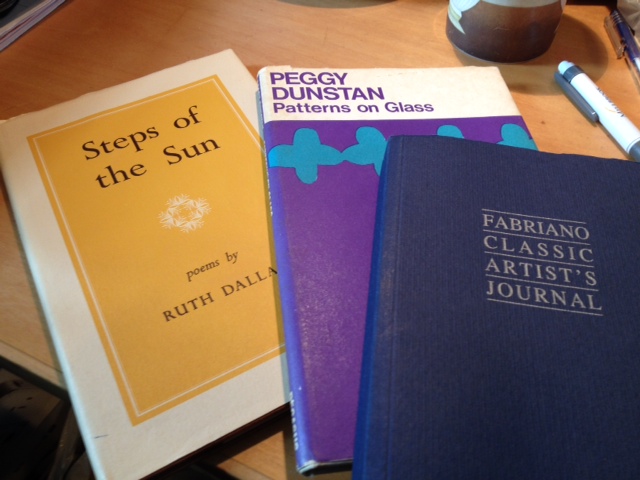
Cleaning my study, five wine boxes to unpack and a parcel that gives me goosebumps

photo

Today I am clearing my study ready to start writing a book on New Zealand women’s poetry. I am working my way through deadlines (almost done). I have finished my astonishing visit as Writer in Residence at Fairburn School in South Auckland. Still so many books to review and share here. Interviews to do. Friday poems to kick start again.

Thanks to Chris Else, I have borrowed his collections of Landfall, Sport and Takahe before they moves on to a good home. Five wine boxes full — what discoveries will I make within their pages? It is so very exciting and so very helpful when I am not attached to a university. I am full of gratitude.

Then today the most lovely surprise package from Laurence Fearnley who had discovered a collection of poetry books in a second-hand bookshop in Dunedin. I have neither of these books, beautiful much-loved editions that I will treasure. I got goosebumps as I held them. Again I am full of gratitude.

It makes me feel I am part of a very supportive writing community.

I face this project that I am about to start on Monday (full strength) with a mix of nerves, terror, pleasure, doubt, excitement — the way once you start reading and writing anything can happen as you traverse the unexpected, the unfamiliar, the wayward and the illuminating.

I can’t wait.


Poetry Shelf interviews Joan Fleming – ‘My only rule is to write from the gut, not from the head’

22594_10153379194378623_813944774194288648_n

Photo Credit: Ben Speare

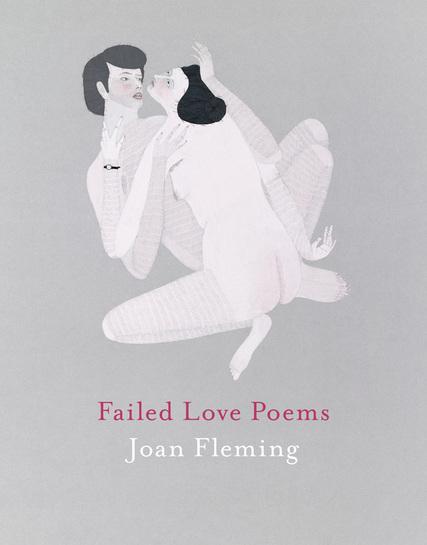
Victoria University Press has just published Joan Fleming’s second poetry collection: Failed Love Poems, a book in which I found so much to admire. Joan graduated with an MA in Creative Writing at IIML, where she was awarded the Biggs Prize in 2007. She is currently working on a Doctorate in ethnopoetics at Monash University in Melbourne. Her debut poetry collection, The Same as Yes was published by Victoria University Press in 2011. Along with Anna Jaquiery, Joan recently edited Verge 2015, a literary journal from Monash University. It is a terrific issue – I reviewed and highly recommended it here.


7485719  7485719

To celebrate the arrival of her new collection, Joan agreed to be interviewed.


Did your childhood shape you as a poet? What did you like to read? Did you write as a child? What else did you like to do?

I read constantly as a kid and kept journals. Shel Silverstein, fantasy YA novels with animal characters, kid romances, and a collection of ‘morality’ storybooks with titles like Courage: the Helen Keller story are what I remember reading and re-reading. I had an imaginary friend named Becky, and I think I was a bit fey, always off with the pixies or tucked into a corner, praying under my umbrella. But I was a performer, too. I would do anything goofy, just to be looked at. I was an easy child, but a strange one. I wonder if you can see that in my poems now.


When you started writing poems, were there any poets in particular that you were drawn to (poems/poets as surrogate mentors)?

The poems that carved early grooves in my mind were often lived or shared, somehow. I would memorise poems and recite them to my own head as I walked through Wellington. Paul Muldoon’s “Wind and Tree” is now inextricably Kelburn; Hopkins’ “The Windhover” is Lambton Quay. I discovered Anne Carson and wanted to inscribe everything she’d written on the inside of my body. I carried her “Town” poems with me, like “Town of Uneven Love”: “If he had loved me he would have seen me. / At an upstairs window brow beating against the glass.” See how you can walk yourself deeper and deeper into that poem?! I have an intense memory of drunkenly reading sections of Howl aloud to a living room of people, not all of them friends, and then going out into the alleyway behind the house to cry. Music had a similar effect. The poetry of Radiohead and Bonnie Prince Billy can still bring me to my knees. For me, it was about rhythm, emotion, suggestion. And poetry having palpable effect, an effect you couldn’t escape, even if you wanted to.


I love the way your poems refresh the page. There is an elasticity of grammar, a tilt of perspective, dazzling connections and disconnections, an originality that furnishes a distinctive voice. What are some key things for you when you write a poem?

My only rule is to write from the gut, not from the head. I know when I’m writing from the head. What happens is this flat, crass, nasal voice squats in my frontal lobe and won’t shut up, saying, “this is what a poem should do.” When I’m writing from the gut, there are no directives. Only sensation, surprise, connection, music, and feeling. It takes a lot of time and a lot of reading to get the gut working, but it’s the only way.


I adore the inventive syntax at work in your poems; a syntax that replays ambiguity and honeyed fluency all in one breath. Are there any other poets that have fed your syntactical inventiveness?

Anne Carson and Gertrude Stein are heroes of odd syntax for me. Jerome Rothenberg’s pseudo-translations of ritual poetries have also been influencing my practices of fragment and invention.


Deletion and erasure is a potent device (so apt for revelations and concealments when it comes to matters of the heart). Whereas Mary Ruefle whites out part of a poem in order to create something new, you have used bold black as an erasure tool. It steps away from a thing of aesthetic beauty as we witness on Mary’s page to something far harder hitting. Like a gut kick. Can you talk a little bit about notions of erasure in this collection?

Do they hit hard? That’s good. A couple of the blacked-out poems are angry ones. Erasure turned out to be a way of protecting certain subjects and lending torque to poems that gave too much away. The act of erasure also feels thematic – we perform conscious or unconscious erasures on our memories of love. We select moments and lenses; we tell ourselves a story, that casts the beloved in golden or bitter light. Blackout was a way of enacting that selectivity of the mind – the mind’s failure to tell itself the whole truth about love.


‘Things’ are palpable. They send you on a goose-bump trail such as with paper or sugar or biscuits. At the start of ‘First loss’: ‘When we met, all the songs were about loss,/ all the television shows contained it,/ it was in everything, like sugar.’ And then a little later: ‘your eyes gone hurt and biscuity with broken/ light and hunger.’ What do you want things to do in your poems?

Sometimes I want things to be persons. To have personhood, agency, worldview. Or be receptacles for emotional energies that can’t possibly be named.


At the heart of the book – love. Like a word repeated to the point it is drained of meaning and vitality, love can be elusive. Reading the poems love felt like a human glue. To know love is to have lost love, could that be true? To lose love, is to know love. To have lost love is to invent love, could that be so? What discoveries did you make as you wrote? Or is this only to be discovered as you live?

There is one monstrously important relationship whose aftermath I put to rest in these poems. There are still poems in the book I can’t re-read without getting choked up. I know confessional poetry is unfashionable, but candid, passionate, stirring writing is what I am always looking for. Those are the poems I value. That particular relationship was a ‘failure’ according to the standard narrative. We were together for years, but we didn’t marry, we didn’t have children, it didn’t end when one of us died. But it’s impossible to call it a failed relationship. It was a success. It didn’t last, but in the end (the last sequence in the book is named as much, “The End,”), it made us both larger and more capable of giving and receiving love.


I loved the proseness of the poetry/ the poetry of the prose. Would you write a novella or a novel?

I tried to write a novel a couple of years ago, but it was a dreadful, a plot-less, cringingly autobiographical mess. I’ve entertained the idea of writing a pulp novel about non-monogamy, Confessions of a Call Girl–style (surely it would be a bestseller!?), or a historical novel about my grandparents’ time as missionaries in Central Australia. Though I worry about becoming one of those writers who dilutes her craft by spreading it too thinly. Fiction is an art form I have huge admiration for, but I’m a total novice at it until further notice!


You recently spent time in the Outback. How did that vastness and colour infiltrate your writing?

Yes! Absolutely it has. That time helped strengthen my intuition. Weeks on end in the desert will do strange things to your body-perceptions. The land starts to talk to you, and you can’t help but listen, because it is working on your moods and your dreams.

I’m writing about that time in the Outback now. About my relationships with Yapa (Aboriginal) friends and worldview. I suppose the full effect of that desert-infiltration will show itself in time.


What New Zealand poets are you drawn to now?

Some of the New Zealand poets I’m most excited about haven’t even published full collections yet: Hera Lindsay Bird, Loveday Why, Nina Powles, Lee Posna, Bill Nelson, Emma Barnes, and Sugar Magnolia Wilson. I also want to read everything written by Ashleigh Young, Sarah Jane Barnett, Rachel O’Neill, and Zarah Butcher-McGunnigle. It’s the next generation I’m most drawn to, though poets Jenny Bornholdt and Dinah Hawken still loom large.


Joan Fleming’s webpage

Victoria University Press page

A Feast of Poetry at Going West – kick starts tonight and a photo from the archives

DSCF0102 (Large)

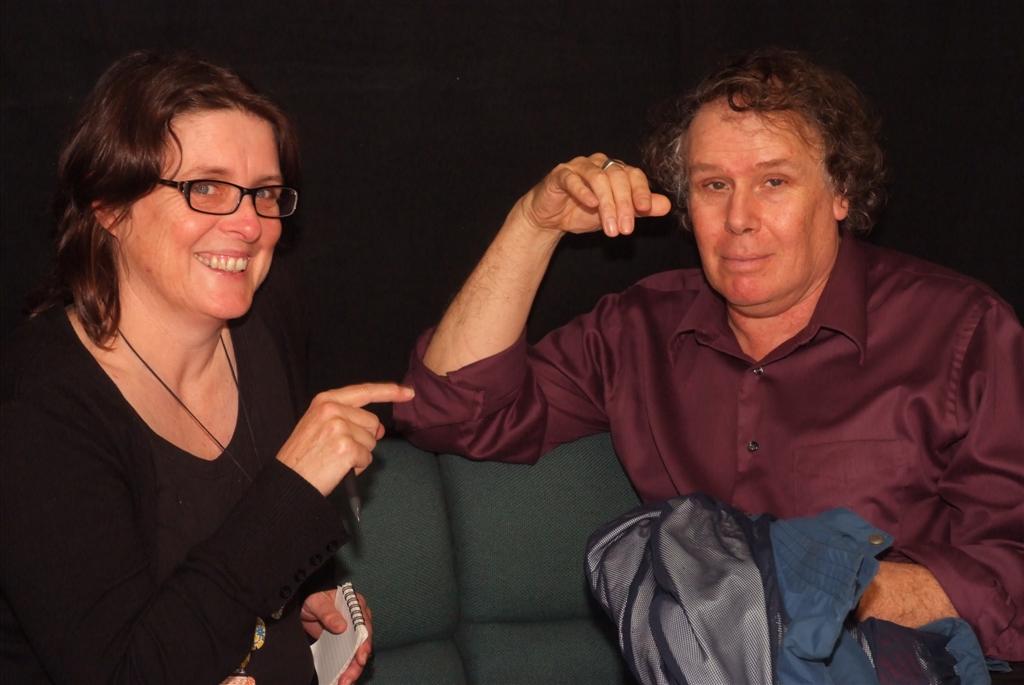
Paula Green & Harry Ricketts at the Going West Books & Writers Festival 2009.
Photo: Gil Hanly, Going West Trust Archives.

(fascinating photo! my little notebook, finger pointing, yep he’s the poet up tonight!)

I love this family festival. I love the sliding doors opening in the breaks and everyone tucking into food and conversation like one big poetry family. I love the eclectic programme and the way you can sit back in the same chair and get taken on a thousand voyages. Three cheers to the hard-working Going West team. I am honoured to be part of the festival, on your 20th celebration.


This year you hear:

Friday (tonight)

7.20 In Remembrance: Glenn Colquhoun

7.30 Curnow Reader: Harry Ricketts

8.20 Myths and Legends of the Ancient Pakeha: Glenn Colquhoun


Saturday night

8.30pm Poetry Slam (Harry, Glenn and I are judges)


Sunday morning

9.30 am  The Poetry of Place: Kerry Hines and Leilani Tamu in conversation with me


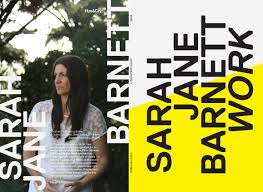
Sarah Jane Barnett is launching Work at Vic Books soon

images-1


You are warmly invited to join Hue & Cry Press and Sarah Jane Barnett in launching WORK at Vic Books, Victoria University. All welcome.

In these six long poems Sarah Jane Barnett explores how people fight for a normal life. Set in Ethiopia, Paris, Norway, and New Zealand these astonishing poems take you into the lives of others—a grieving man leaves Ethiopia at the end of the civil war; a polyamorous couple have a child; a woman hunts a black bear on a New Zealand sheep station. Original and spellbinding, these poems walk the line between poetry and fiction.

WORK will be launched at Vic Books, Wellington. Sarah will read from ‘Ghosts,’ a speculative poem set in Norway’s northernmost town, Svalbard. The poem includes dialogue between the characters Diane and Fowler, who will be read by Wellington writers Therese Lloyd and Matt Bialostocki. Get ready for a performance!


where: Vic Books, 1 Kelburn Parade, Wellington

when: Thursday 22nd October, 5.30pm start with the reading 6-6.15pm.

Hue & Cry Press
Vic Books

If you can’t make the launch, WORK can be pre-ordered from Hue & Cry Press store:

Poetry Shelf interviews Kerrin P Sharpe – I want the reader in my poems to be like a pilgrim

Kerrin P Sharpe-Poetry Shelf 2015    

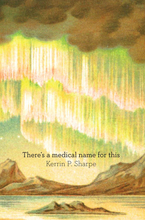
 Kerrin P Sharpe lives in Christchurch where she teaches Creative Writing in schools and at The Hagley Writers’ Institute. In 2008 she was awarded The New Zealand Post Creative Writing Teacher’s Award from the Institute of Modern Letters. She was a student in Bill Manhire’s original writing composition class at Victoria University in 1976. Last year, Victoria University Press launched There’s A Medical Name for This. Her previous collection with VUP was entitled Three Days in a Wishing Well (2012). I gave her latest poetry collection a glowing review earlier this year (link below) — it was one of my standout poetry reads of 2014.


Did your childhood shape you as a poet? What did you like to read? Did you write as a child? What else did you like to do?

As a child I was raised on a rich diet of fairy tales and Enid Blyton stories. I loved Noddy and Big Ears and the stories of the Far Away Tree which my father read to me at bed time. I wrote stories and won a few competitions at school. What else did I do? Like most children I loved riding my bike and helping my brothers build treehouses.


When you started writing poems, were there any poets in particular that you were drawn to (poems/poets as surrogate mentors)?

At Wellington Teachers’ College (as it was then) and at Victoria University I discovered the poetry of Sam Hunt, Gary McCormack and Bill Manhire and they introduced me to a whole new world of words and images that I loved. I was fortunate to be taught at Victoria by Bill Manhire: it was he in the end who was responsible for lighting the poetry writing fire in me. He encouraged what became a lifelong passion for poetry and creative writing and in a way he was and is my poetry writing “hero”. One of the funny, eccentric quirks that I developed around this time (and which my husband still reminds me of) was wearing a special black hat upside down when I was writing poetry. It seemed to work and I did it for many years!


I love the way your poems can be strange and slightly surreal in part but always lay anchors down in an acute realness. What are some key things for you when you write a poem?

When I write I try to ask myself:

  1. What is this poem trying really trying to tell me?
  2. What is the ‘right’ point of view for this poem?
  3. For me every poem has a “trigger”- some idea, story or image or suchlike that triggers the creative process and commences the creation and birth to a new poem. But there is also a point in writing one of my poems that I ask myself, “Is it time now to move on from the ‘trigger’? Where is the life of the poem taking me?”
 

medical_4_7_1__67194.1407673215.220.220   medical_4_7_1__67194.1407673215.220.220   medical_4_7_1__67194.1407673215.220.220   medical_4_7_1__67194.1407673215.220.220


Your latest collection, There’s a Medical Name for This, contains a number of poems that astonished me. Not often I say this! In my review I suggested it wasn’t just a handful of poems that did so, and that it was ‘not in a flaming extravagant way, but in ways that are at more of an alluring whisper. These poems are imbued with little droplets of incident, image, tension.’ Is there a book that has astonished you like this?

Yes there is Anthony Doerr’s The Shell Collector which does just that every time I go back to it. It is a collection of short stories and I feel the characters are always waiting there on standby for me to re-enter their astonishing and enchanting world. All I have to do is to open the collection and read one of the stories and I am back in their world discovering new things I had never even noticed before. It’s wonderful!


Characters are important in these poems. I see them as an amalgam of invention and autobiography and yet more than that. They are shoes to be filled. What did you want the characters to do in the poems? Where did you draw them from?

I believe characters are central to the success of a poem. I keep reminding myself that they want to be heard but their role is always to show, to hint, to suggest, even to foreshadow but never to “tell” – and sometimes I forget that – to my peril!

Often the characters in my poems are drawn from my past, people I knew many years ago who remain alive in my imagination. Sometimes my characters come from people I have read about; sometimes from figures in history (often obscure people whose lives interest and intrigue me). I often write in restaurants and I hear fascinating snippets of conversations that soon pop into one of my poems. I also often meet the most interesting characters in places like MacDonald’s; I’m amazed at the variety of people who come in and the meetings they have there. There are some fascinating characters that I just can’t wait to slip into my poems. They always get changed in the poems of course with different overlays of imagination but the original characters are so interesting.


I finished my review with these words: To read these poems is to be a pilgrim – tasting the sweet and sour bite of the land, feeling the lure of travel and elsewhere, entering the space between here and there that is utterly mysterious, facing a terrific moment of epiphany. Would you agree that this is poetry of movement and that movement highlights both light and dark?

I am so pleased you picked up on the pilgrim motif in many of my poems. I want the reader in my poems to be like a pilgrim, journeying through light and darkness ending up in some curious way like the Godwit in one of my poems, in the place where they originally began their journey but all the richer in experiences from the pilgrimage.


Subject matter is eclectic in this collection (ponies, illness, birds, snow, familial relations). Are there motifs and topics you find yourself returning to, again and again?

I like to steal from myself both lines and motifs and even topics. Themes like injustice and war are important to me. I also find myself returning again and again to the sea, the stars and to the horse.


I particularly loved the earthquake poem at the start of the book. How have the earthquakes affected your life as a writer, your process of writing?

The Christchurch earthquakes were a frightening time for all of us who went through them. They never seemed to stop; one after shock after another. It made me feel so impermanent and I found myself driven for a time to write with great urgency, almost as if every moment was a last chance.


What do you want readers to take away from these new poems?

Sometimes I would like to know why someone walks into a bookshop, picks up my book and reads it. What are they looking for and what do they find when they read my poems?

For me, I would like my readers to take away images and lines from my poems that creep into their minds and suddenly emerge when they least expect it. I would like the images and lines they take from my poems to make important connections with their own lives.


Do you have filters at work as you write? A need to conceal for the sake of the poem and for the sake of self?

With me poems generally spring from an initial “trigger” that gets the creative process going. As I write I begin to fictionalise situations very early on and “flashes of truth” emerge in the poem. Sometimes, as I write, I reverse situations so that they are the opposite of what might initially have triggered the poem. I suppose in a way these are all filters that are at work when I am writing. Some of the filters are consciously applied; others are perhaps more instinctive.


Do you think it makes a difference when the pen is held by a woman?

Men and women often see things differently and no doubt their writing expresses this, but in writing, the differences between men and women in my experience are less significant to writing than the differences that arise from our own unique individual experiences of life.


I gave you a glowing review of your latest book. How do you manage reviews that aren’t so positive (if you have ever had any!)?

Sometimes I think my poetry is perhaps a little unconventional both in the things I write about and my style of writing. I’m a little difficult to pin down and categorise as a writer – perhaps I’m a little eccentric! So it doesn’t entirely surprise me if a reader or critic finds my poetry a little unusual. Generally however reviewers have been very kind to me and that has been very reassuring.


You have taught Creative Writing at a number of age levels. What rewards do you reap from this experience?

I love teaching creative writing and have taught all levels from young children through to adults. Some of my happiest writing experiences have been with young children; we can all be a little crazy and creative together and I find their freshness and freedom with words so exciting. They enter new worlds so easily and with so much trust in a way that only children can do.


I agree! What irks you in poetry?

Sometimes I read poetry that doesn’t seem to be saying anything. It is almost as if it has been written to a formula; it has no inner passion or feeling. Sometimes I also see poems that are too obviously modelled on someone else’s writing – they don’t feel authentic.


What delights you?

I like images in a poem that move, grow and develop as you read further into the poem developing greater layers of meaning and resonance and constantly delighting you as you uncover greater and lovelier insights. Sometimes there are lines in a poem that stand out for you and which you come back to over and over again; they resonate in your mind and you find yourself repeatedly quoting the lines to yourself. It reminds you again of the power of poetry to open the door to a rich inner life where things are different.


What poets have mattered to you over the past year? Some may have mattered as a reader and others may have been crucial in your development as a writer.

I keep coming back to poets like Bill Manhire, Bernadette Hall, Frankie McMillan, Vincent O’Sullivan, Sarah-Jane Barnett, Jenny Bornholdt and Siobhan Harvey. We have a lot of very good poets in New Zealand and many of them like the ones I have mentioned are so encouraging and supportive. Without them I would never have grown as a poet.


What New Zealand poets are you drawn to now?

Over the last year I have especially enjoyed new collections from Caoilinn Hughes, Marty Smith and Chris Tse.


Name three NZ poetry books that you have loved.

Three that spring to mind are:

Lifted by Bill Manhire

There Are No Horses in Heaven by Frankie McMillan

Your own book: Making Lists for Francis Hodgkins by Paula Green


What about poets from elsewhere?

I like:

Ruth Pradel – an English poet and academic who has a great gift for the analysis of poetry

Tomas Transtomer – A Swedish master I admire

Mary Ruefle – an American poet whose powerful imagery is outstanding

Ted Hughes – his interweaving of nature and poetry is still unsurpassed and his poetic craft is superb


Any other reading areas that matter to you?

I like reading about creative writing and how other writers go about writing poetry. I find it fascinating reading about their daily work routines, how they overcome “writing block”, what they think about the world of creative writing — in fact anything that gives me insights into the “secrets of the dark arts” of writing good poetry.

I have found Kevin Brophy’s Creative Writing and Richard Hugo’s Triggering Town two of the best books around and I keep coming back to them.


Some poets argue that there are no rules in poetry and all rules are to be broken. Do you agree? Do you have cardinal rules?

I must admit I regularly break most of the rules! I don’t use capital letters and rarely use formal punctuation. However there are some “rules” I still abide by. I am careful with words that end in “-ing”. I rarely use “but”. I am vigilant about line lengths and line breaks. I still believe that the purpose of a poem is to “show” not “tell”.


Do you find social media an entertaining and useful tool or white noise?

Much to everyone else’s frustration I have no interest whatsoever in social media and I don’t use technology unless I really have to. I continue to handwrite my poems with sharpened pencils and writing journals!


The constant mantra to be a better writer is to write, write, write and read read read. You also need to live! What activities enrich your writing life?

I’m happily married to my best friend and critic and we do a lot together. My four grown-up children and their lives and challenges are a huge part of my life. And of course my creative writing students bring joy and interest to each day.


Finally if you were to be trapped for hours (in a waiting room, on a mountain, inside on a rainy day) what poetry book would you read?

I always take Bill Manhire’s Selected Poems when I’m travelling or waiting somewhere. They keep me inspired and wanting to be a creative writer.


My review of There’s a Medical Name for This

Victoria University Press page


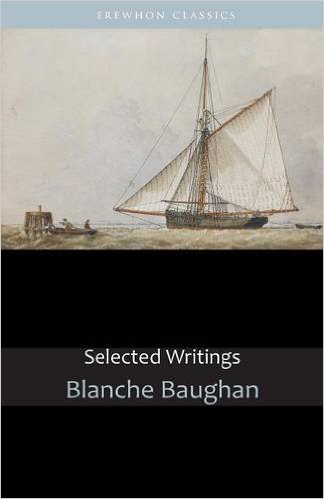
Blanche Baughan’s Selected Writings and a new project

41zKiXHKKtL._SX322_BO1,204,203,200_     41zKiXHKKtL._SX322_BO1,204,203,200_

I am currently kick starting a new project that will take a fair chunk of my energy over the next couple of years. It is both scary and exciting because it is the book I have wanted to write for a very long time. It feels as though all roads (my poetry, my reviewing, my Masters and Doctoral theses) have led to this. So while I like to keep poetry collections close to my chest until they appear in book form, I will share this secret – I am writing a book on New Zealand women’s poetry. If you know the name of a woman poet who is not yet out of the shadows but whose work you admire let me know and I will go delving.

My first venture to The Alexander Turnball Library was to go hunting in the archives for Blanche Baughan (1870 – 1958). Looking at letters and manuscripts made the hairs on my arm stand on end. Really, I want the poems to speak to me as I write this book rather than peripheral material, but there is in some way a little rocket that goes off inside you when you step into archives.

Damien Love recently edited Selected Writings: Blanche Baughan (Erewhon Press, 2015) which brings together her poetry, prose and non-fiction (especially travel writing). While I have battered copies of a number of her works, it is terrific to have this selection readily available. Open this book and you enter the pages of a woman who stretches from the mystical to the political; who made writing a full time obsession rather than a Sunday afternoon hobby. At a certain point in her life she stopped writing poetry and short stories and devoted herself to a more political role (this fascinates me!). In particular, she sought reforms in the penal system (her pen tuned to writing that backed her aims).

Damien’s introduction gives a brief overview of her publications, her strengths and weakness as a writer, as a poet in particular. Blanche was ‘the first woman to write significant poetry in New Zealand.’ I agree with Damien that it is important to engage with her writing within the context in which was written. She is a woman who paved the way for me to write. Reading the selection is opening a window on colonial life, on a woman’s life at the time. She, like so many women was plagued with self doubt, yet writing poetry was a vital part of her existence for a number of years. How does her poetry reflect the form and poetic etiquette of the times? Does it make a difference she is a woman writing? Her writing leads you into the domestic but it also takes you beyond the domestic walls into sky and land. Land becomes a poetic anchor, a way of securing a sense of home.

The selections are drawn from: Verses, Reuben and Other Poems, Shingle-Short (poetry); Brown Bread from a Colonial Oven (stories); Studies in New Zealand Scenery and People in Prison. The poems include key examples (‘A Bush Section’ and ‘The Old Place,’ for example) that have been previously anthologised and praised as well others less known.

Damien writes: ‘We cannot choose our founding fathers, our founding mothers either. If we could, we would choose a more cogent author than Baughan. But she is what we have, and recognising the felicities in her minor verse may help save us from overestimating the minor verse of our own day. Appreciating the verve encased in her Edwardian journalism may help us discern the timebound limitations of our own journalistic output. And her sometimes critical patriotism may still shed light on a few of our own vanities.’

I applaud the arrival of this astutely edited book, a book that enables us to navigate the complex engagements of one of out writing pioneers.


from ‘A Bush Section’

Logs, at the door, by the fence; logs, broadcast over the paddock;

Sprawling in motionless thousands away down the green of the gully,

Logs, grey-black. And the opposite rampart of ridges

bristles against the sky, all the tawny, tumultuous landscape

Is stuck, and prickled, and spiked with the standing black and grey splinters

Strewn, all over its hollows and hills, with the long, prone, grey-black logs.


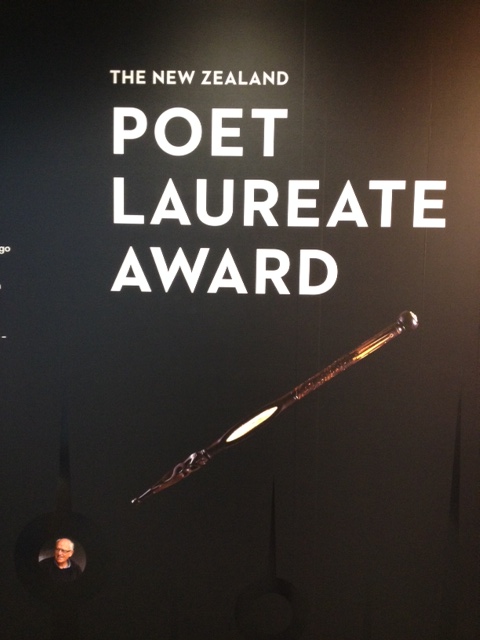
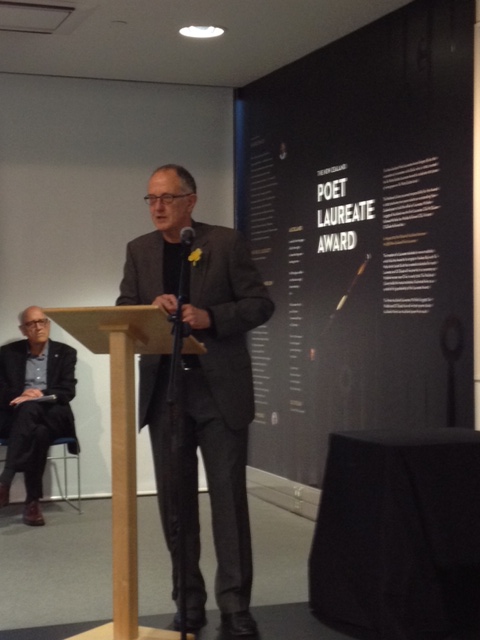
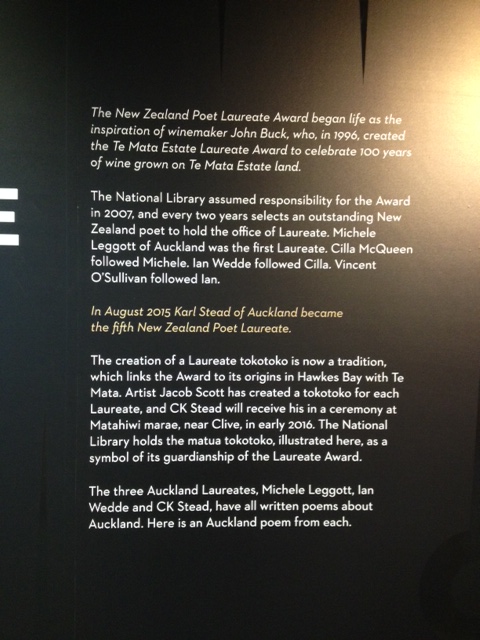
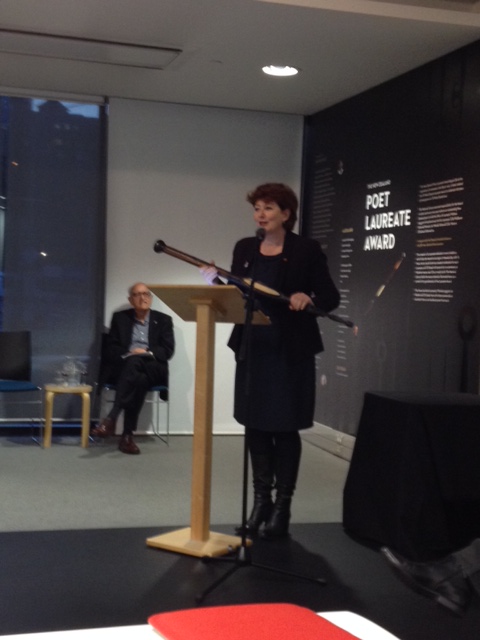
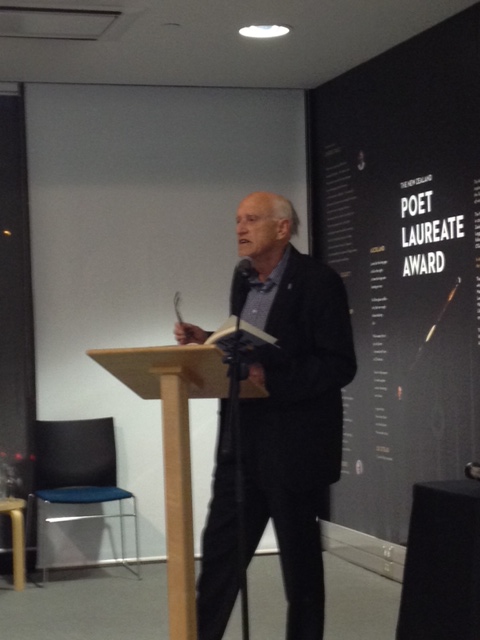
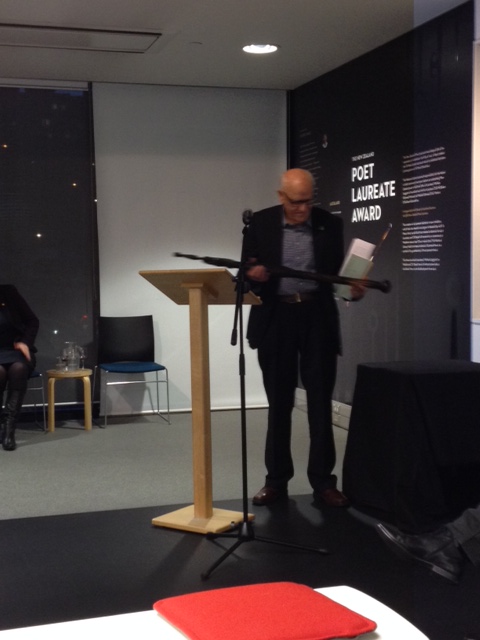
NZ Poet Laureate Award event last night – The baton is passed, as Ian Wedde, says


photophoto


Last night CK Stead was awarded the 2015 NZ Poet Laureateship at the National Library in Parnell with the support of friends and family.

Chris Szekel, Head Librarian at The Alexander Turnball Library, and responsible for the award, steered the speeches.

Ian Wedde, as a former Laureate said a few words, The RT Hon Maggie Barry, as Minister of the Arts, said a few words and then it was over to Karl.

Karl underlined how poetry had been a significant part of his life from an early age: ‘Poetry found me in Mt Albert Grammar School library’ and ‘Poetry has always been somewhere near the centre of my consciousness.’ He added: ‘Poetry is still close to the centre of my life, otherwise I would not have accepted this award.’

He acknowledged presences (atua) in the room with him (Allen Curnow, Kendrick Smithyman, Bill Pearson, Maurice Shadbolt, Maurice Duggan, Keith Sinclair). His fellow writers. I found this  very moving.

He acknowledged writers in the room and his family.

Karl read two poems, ‘Look Who’s Talking’ and ‘Crossing Cook Strait,’ suggesting the writers behind these poems, James K Baxter and Curnow, would have been Laureates if the award had existed then.

It was very clear that this writer, writes out of mesh of poetic relationships. Vitally so.

I drove back west from a lovely occasion – full of the warmth generated by a shared love of poetry and admiration of one of our most esteemed poets. It touched me.

photo 2 photo 1 photo 1 photo 3 photo 2


Poetry Shelf congratulates our new Poet Laureate

k4a

Photo credit: Marti Friedlander

CK Stead is our new Poet Laureate.


I was in the thick of stand-still, rush-hour traffic on the way to a South Auckland School this morning when I heard the news and it gave me a much needed boost. Poetry has always been a primary love in the broad spectrum of Karl’s work. His poetry catches your attention on so many levels because his poems become a meeting ground for intellect, heart, experience, musicality, craft, acumen, a history of reading and thought, engagement with the world in all its physical, human and temporal manifestations.

I am delighted to celebrate this result.


Here is a snippet from an interview I did with Karl for Poetry Shelf last year:

Your poems are delightfully complex packages that offer countless rewards for the reader—musicality, wit, acute intelligence, lucidity, warmth, intimacy, playfulness, an enviable history of reading, irony, sensual detail, humour, lyricism. What are key things for you when you write a poem?

It has to be a meeting of words and feeling, in which the words are at the very least equal in importance, and the feeling can be of any kind, not just one kind. I like wit, think laughter can be tonic, but of course it doesn’t fit all occasions.

There were a number of significant poets in NZ from the 1940s onwards and you have interacted with many of them (Curnow, Mason, Glover, Baxter and so on). Were there any in particular whose poetry struck a profound chord with you?

Curnow was always the most important for me. But when I was young Fairburn’s lyricism seemed very attractive; Glover at his rare best (the Sing’s Harry poems); Mason likewise (‘Be Swift O sun’); Baxter – especially in his later poems: they have all been important to me.

Do you think your writing has changed over time? I see an increased tenderness, a contemplative backward gaze, moments where you poke fun at and/or revisit the younger ‘Karls,’ a moving and poetic engagement with age, writerly ghosts and death. Yet still there is that love and that keen intelligence that penetrates every line you write.

You are very kind! I certainly feel ‘older and wiser’ in the sense that things don’t matter so much, one accepts the fact of human folly and one’s own share in it. Indignation doesn’t stop, but there is a kind of weary acceptance, and laughter. I still feel embarrassment – especially when looking back – but I recognize that as not only a safeguard against social mistakes, but also as another manifestation of ego, as if one feels one should be exempt from folly.

There have been shifting attitudes to the ‘New Zealand’ label since Curnow started calling for a national identity (he was laying the foundation stones that we then had the privilege to use as we might). Does it make a difference that you are writing in New Zealand? Does a sense of home matter to you?

When I was young I was a literary nationalist. Now I regard nationalism as a form of tribalism and the result of genetic programming no longer suitable or safe in the modern world. So I have changed a lot. But I still recognize regional elements as important, even essential, in the poetic process. I think Curnow himself became more a regional poet and less a nationalist one; but the arguments that had swirled around all that had had the effect of committing him to positions which he didn’t want to resile from, so he remained the committed nationalist, perhaps after the need had passed.

What irks you in poetry? What delights you?

I suppose any kind of excess, of language or of feeling; and solemnity – especially the sense that poetry is taking itself too seriously and asking for special respect.

There are many kinds of delight in poetry, but almost all of them involve economy. If an idea or an experience or a scene or a personality or whatever can be conveyed as well in 10 words as in 20, those 10 words will be full of an energy which the more relaxed and expansive version lacks. They will be radio-active.

Name three NZ poetry books that you have loved.

Singling out living poets might be invidious, but here are three by poets now dead: You will know when you get there (Curnow); Jerusalem Sonnets (Baxter); Pipe Dreams in Ponsonby (David Mitchel).

The full interview here.