Category Archives: NZ poetry

Poetry Shelf Spring Season: We Are Babies pick poems

We Are Babies is made up of Carolyn DeCarlo, Jackson Nieuwland, Stacey Teague, Ash Davida Jane, Nat-Lîm Kado, and Ya-Wen Ho. Our kaupapa is to create a space for writing and writers that might not be able to find a home elsewhere. We are focused on publishing work by LGBTQIA+, disabled, Māori, Pasifika, BIPOC, and otherwise marginalised writers. We also have a particular interest in works in translation, debut and out-of-print books, and experimental writing. We are open to works of poetry, fiction, non-fiction, and hybrid forms.

We Are Babies is in its first season. In November/December, we are publishing Whai by Nicole Titihuia Hawkins and Requiem for a Fruit by Rachel O’Neill. These books are currently available for pre-order at wearebabies.net. In March, we will be publishing Anomalia by Cadence Chung and We’re All Made of Lightning by Khadro Mohamed. We chose the following poems as representative of what these collections have on offer. We hope you enjoy their work as much as we have been.

On Nicole’s poem:

This poem was the inspiration for the cover of Nicole’s book, which is taken from a photograph of a multi-coloured piupiu made by Rita Baker (aka Flaxworx), a contemporary artist working in the Far North. This poem describes Nicole’s grandmother, whose legendary rainbow piupiu lends itself to the title of the poem. The tone Nicole uses here is so encapsulating of this collection as a whole–pride in kōrero o mua, a kind of nostalgia for things she didn’t get to experience, and the process of affirming of her heritage. These poems are heart-wrenchingly personal, but written in a way that brings the reader along on her journey. So much aroha.– Carolyn DeCarlo

On Rachel’s poem:

I’ve been a fan of Rachel O’Neill’s writing for almost a decade now and this might be my favourite poem of hers I’ve come across in all those years. I remember hearing her perform it at a reading at our house. She had the audience in convulsions. I was so glad to come across this poem again when Rachel submitted her manuscript. It brings a grin to my face every time I reread it. It might just be my raison d’être. – Jackson Nieuwland

On Cadence’s poem:

This poem is one of many gems from Cadence’s forthcoming collection, with language so lush it drips with imagery. As a teaser for what’s to come, the poet takes herself apart piece by piece, and puts herself under the microscope. It reminds me of the old nursery rhyme that says girls are made of ‘sugar and spice, and everything nice’, only Cadence turns the question back on itself and reveals the process of dissection, slightly gruesome and certainly not nice. – Ash Davida Jane

On Khadro’s poem:

I’m really lucky to be editing Khadro’s manuscript, there are so many magical moments contained within it, and this poem is a perfect example. Its rich and beautiful language builds a bridge between Aotearoa and Africa. It reads as a love letter to her homeland and herself. – Stacey Teague

The poems

Rainbow Piupiu

I don’t know enough about the tipuna I’m named after
but when I read she was a weaver 
I feel her stitching tāniko
into the bodice of my insides

She says it doesn’t hurt that much
When I breathe in 
hundreds of tiny holes expand
but her pattern holds its place
like the ocean holds the stars that got us here

I don’t know anything about kākahu
but when I hear she made cloaks from juicy kererū
I can feel her weaving muka
into my shoulder blades

She says to hold still
When I breathe out 
they move in rhythm  
rows on rows of feathers align
like the tides with the winds that carried us here 

I’ve never heard of a Rainbow Piupiu
but when I’m told she made one
I can feel her binding the cords
around my soft waist 

She says she had ten babies by my age
When I swirl my hips the piupiu dances
each dyed band melts into another colour
like her blood into the salt that brought us here

Nicole Titihuia Hawkins

A reason for everything

One day there is a reason for everything. Except, the following morning there are no reasons, only raisins, just like the philosopher warned you. The next day you go to work and your colleague asks, ‘What’s your raisin, though?’ You hand your colleague a bit of paper. On it you have written, ‘What if there is no raisin?’ Your colleague can’t handle the implication that all men walking the earth are without a single raisin, that even the smallest of raisins is missing. That night you can’t sleep. Being unconscious and prone and partially paralysed for up to eight hours without a raisin no longer seems sensible. If only there was one good raisin left in the world, you think. If only it could be found.

Rachel O’Neill

anatomy

i am made from milk teeth, not yet weaned
        from this world though it may try
to pull itself from my wet pink gums 

i will hang on to its grit for a moment 
       and a moment and a moment
longer. i am made of dandelion fluff

spinning like spokes into living rooms
      and kitchens and trying to find
a home somewhere, a place to seed

and stay. all i want is for someone
      to divide me into neat parts and lay
them all out, so i can see

the pesky veins that cause my blood 
     to swim, the blushing heart that
tries to love more than it can chew through

o, silly organs of mine, i would say
     you fools of longing, lust and time
hot and carnal and really nothing like

a seed or petal—o to be made of pretty
     white taffeta or downy petals
instead of such heavy instruments 

that weigh me down. o to have
   people take out their tweezers and glasses 
to have them examine me and pull

me apart, marvelling at each lovely
   piece that comes out—the heart
the spleen, the liver, the brain

sparkling like jewels
   crisp as bug wings
and with just as much glister

Cadence Chung

IF I GO BACK

//

if I ‘go back to where I came from’ I will take everything with me.
my mason jars with fireflies, my golden bangles, my morning coffee.
I will take my earth, my horned melons and stories of cleopatra
I will take that rug, the one you love so much, with the golden
tassels and delicately picked butterfly wings. I will take my turmeric

my henna, my lemongrass and my acacia leaves.
I will take my language, heavy and soft in the palms of my hands
I will tuck my afrobeats and hip-hop in my back pocket
I will carry the moon in my bindle, my chocolate in a zip-lock bag

I will carry my baobab and the cash you owe me in my backpack
and then you’ll be left with naked kings and queens with concave
bellies and hollow, scooped out eyes because their fancy fabric, thin
sclera and jewelled crowns belong to me too.


Ama Ata Adioo once said ‘what would the world be without Africa?’ and
I think I know now. it would no longer grow roses, it would be
void of lyrical words and sweet orange pulp that melt on my tongue
the earth would be scaly and dry, the wind would not whistle.
there would be a dent in the air every time you took a breath. there
would be no myriad of reds and purples dancing across the sky.

Khadro Mohamed

The poets

Cadence Chung is a poet, musician, and student at Wellington High School. She has been writing poetry since she was at primary school, and since then has loved writing, whether it be songs, short stories, or poems. Outside of poetry, she draws inspiration from classic literature, Tumblr text posts, and roaming antique stores.

Follow her on Twitter and Instagram.

Nicole Titihuia Hawkins (Ngāti Kahungunu ki te Wairoa, Ngāti Pāhauwera) is a novice writer, avid home-baker and proud aunt. She lives in Pōneke and works at a local high school teaching English, Social Studies and tikanga Māori. Nicole is also involved in pastoral care and facilitates Kapa Haka. Nicole has collaborated with other writers to host ‘Coffee with Brownies’, which are open mic events for people of colour to share their work in safe spaces. She co-hosted ‘Rhyme Time’, a regional youth event, with Poetry in Motion, to encourage a diverse range of youth to perform their incredible poetry. Nicole has work published by Overland, Capital Magazine, Blackmail Press and The Spinoff Ātea and credits her courageous students with inspiring her to write.

Follow her on Instagram.

Khadro Mohamed is a 20-something year old poet residing on the shores of Te Whanganui-a-Tara. She’s a tea lover, a photo enthusiast, an occasional poet… and that’s pretty much it. You can find bits of her writing floating around Newtown in Food Court Books and online.

Follow her on Twitter and Instagram.

Rachel O’Neill is a Pākehā storyteller who was raised in the Waikato and currently lives and works in Te Whanganui-a-Tara/Kāpiti Coast. Rachel enjoys collaborating with writers, artists and filmmakers on publications, exhibitions and works for screen, and they are a founding member of the four-artist collaborative group, All the Cunning Stunts. A graduate of Elam School of Fine Arts (BA/BFA) and the International Institute of Modern Letters (MA), Rachel was selected for the 2017 Aotearoa Short Film Lab, received a 2018 SEED Grant (NZWG/NZFC) for feature film development, and held a 2019 Emerging Writers Residency at the Michael King Writers Centre. Their debut book, One Human in Height (Hue & Cry Press) was published in 2013. As a queer non-binary storyteller Rachel strives to represent the longing for connection and the humour and strangeness that characterise human experience.

Follow them on Instagram, Twitter or their website.

We Are Babies website

Poetry Shelf Spring Season

Tara Black picks poems
Victor Rodger picks poems
Peter Ireland picks poems
Emma Espiner picks poems
Claire Mabey picks poems
Sally Blundell picks poems
Frances Cooke picks poems
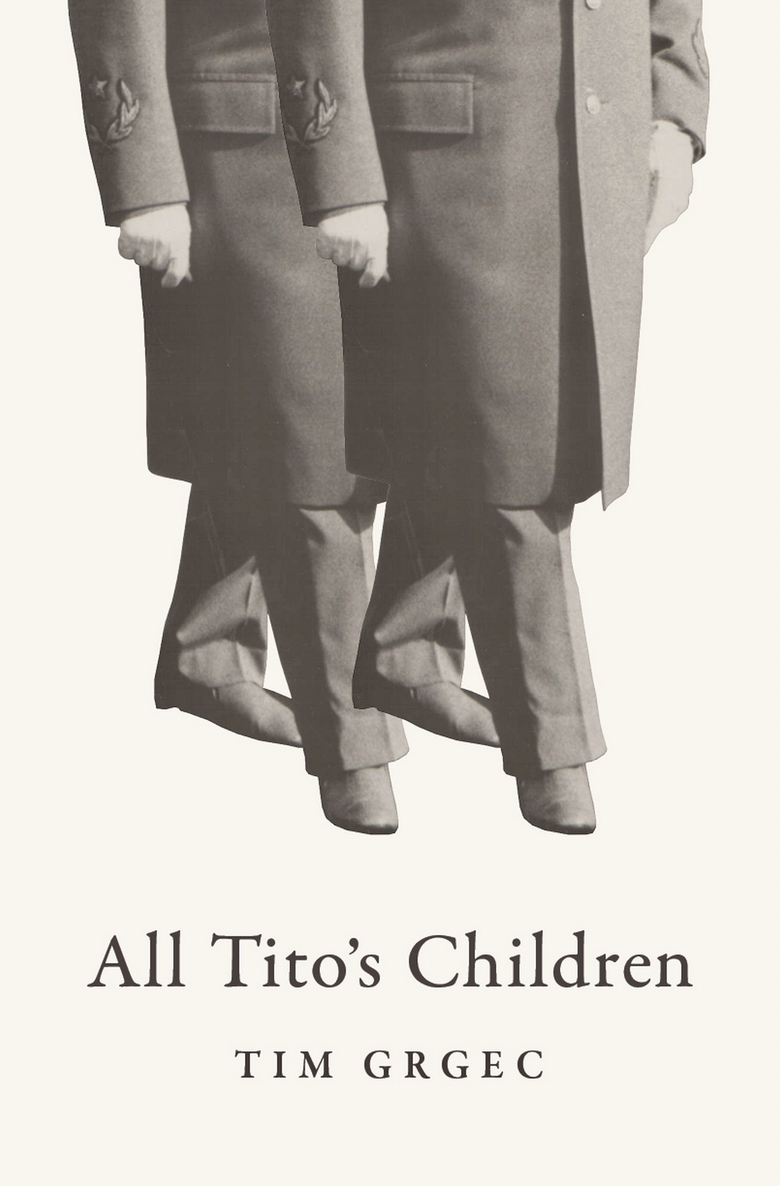
Poetry Shelf review: Tim Grgec’s All Tito’s Children

All Tito’s Children, Tim Grgec, Victoria University Press, 2021

i.    History has never been an exact science. It is simply an
       emphasis of fact: figures moving in and out of view with
       a preoccupied smoothness, the way dates and events go
       missing like memories treading just above the surface.
ii.    One cannot be certain of anything except for what one
       sees with one’s own eyes. 


from ‘The Company We Keep’

In the 1970s I had a friend whose parents fled Hungary two decades earlier. I was studying history at secondary school, but standing in a basement with hanging salamis, bottles of moonshine, and the mother who had never become fluent in English, made history more real than any school lesson. I was standing in a recreated Hungarian pocket, and it was far more moving than history lessons on the unification of Italy or the Austria-Hungarian Empire. In my awkward teens I discovered that history is more than facts and figures, warped universalisations, crippling hierarchies and even more crippling erasures. History is the braided story of individuals, of daily lives, as much as it is the story of despots, political boundaries, the visible privileged.

When I lived in London in the 1980s, the African National Congress, Amnesty International, and the Women’s Rights Movements, got me reassessing the word freedom. In 2021 it seems just as important because people are still fleeing oppressive regimes, are still imprisoned for impossible-to-discern crimes, are still fighting for freedom from domestic abuse. And yes, the concept of personal freedom is a minefield because, within the bounds of freedom, there are things we ought not do and there are things we should do.

Tim Grgec’s stunning debut collection All Tito’s Children returned me to the Hungarian basement of my teenage years and to questions of freedom.

I am haunted by this remarkable book, by this poetry that is quiet, thoughtful, essential. The poems shift between the point-of-view of Elizabeta and Stjepan, two siblings from Kotoriba, a small Yugoslavian village. Their country is under the communist leadership of Josip Broz Tito, and his voice is a chilling presence. The siblings play a game of truth and lies (guess which statement is the lie) as the country itself grapples with an unreliable leader. Spot the truth, discern the lies. There is nearby conflict, unrest, farmers hiding crops, there is daily life going on. There is daily life going on. Who is Tito? Who is the person? There is mounting dissatisfaction and the seeds of doubt.

The collection has its genesis in autobiography: Tim’s grandparents fled from Yugoslavia to Aotearoa as refugees in the 1950s. He has read and researched, and he has the family stories passed down. The poetry is strengthened by the marriage of piquant detail and pulsating gap. We don’t know everything. We are drawn to the physical (the mechanical broadcasts, the rows of crops under the heat of the sun). The muted questions and covert gestures of dissidence. How this book haunts. How this book haunts when people are still oppressed, still need to care for families, plant crops, write and speak.

This is what struck: the land is a constant. Contested yes, stolen yes, and where we stand yes; in our imaginations, in our bones and hearts, across generations. Our now endangered skies, sea, terra firma, have been a constant over centuries of change and conflict and exile. I don’t quite know how to articulate this but the word ‘wonder’ keeps arising. Questions and awe. Questions and awe. In this sequence of haunting dislocation that compels some people to leave as refugees, there are exquisite flashes of wonder. Where the power and the beauty of the land, that beloved homeland, transcend everything. Just for a moment, and in that contemplative brilliance, there resides fleeting hope. Tim’s ability to craft a line with such simplicity, such fluency, beams at you, amplifies the effect of wonder as you read. How I love this book. How this is such a perfect book to read in our own uneven times, where everything comes into question, where freedom is a tested concept, where we need to do better caring for the dispossessed. I hold this book to my heart knowing the best way to seduce you is with Tim’s words, not mine.

An old woman washing clothes on the Mura:
Why would you question that? she asks.
She knows everything about the flat rocks at the river’s edge,
the washed sky, at first foggy then red—the sun slipping
through its own lining. I watch her every movement,
rinsing and wringing, rinsing again. If I look away
I won’t have to imagine who will wear them—
the same family story—
or if she is retrieving
the stray handkerchief floating downstream,
set free from its basket
               like a piece of torn cloud.


from ‘Elizabeta’s Tiny Seeds’


Tim Grgec has master’s degrees in English literature and creative writing from Victoria University of Wellington, where he was the 2018 recipient of the Biggs Family Prize for Poetry. His work has appeared in Landfall, The Spinoff, NZ Books, Mimicry, Sweet Mammalian, Turbine and Starling. All Tito’s Children is his first book.

Victoria University Press page

Poetry Shelf: Tim reads from All Tito’s Children

interview with Lynn Freeman, Standing Room Only, RNZ National

Poetry Shelf Monday poem: Bill Manhire’s ‘The Hungry Past’

The Hungry Past 

The past isn’t dead; 

it’s eating my brain. 

It looks up for a moment 

then tucks right in again.

Bill Manhire

Bill Manhire founded the creative writing programme at Victoria University of Wellington, which a little over 20 years ago became the International Institute of Modern Letters. His most recent book Wow is published by Victoria University Press in New Zealand and Carcanet in the UK.

Poetry Shelf Spring Season: Sally Blundell picks poems

These are poems chosen in lockdown. Perhaps it shows. They are rooted in one place, with an eye on a flickering, shifting other. Ruth France, who died in 1968, finds herself between ‘headlands we did not know were headlands’ – France mastered the art of dislocation, her experience never quite fitted the map. Bernadette Hall’s twist in the tale, her superb tripwire, gives the land the upper hand, puts us in our place. Simone Kaho’s Blues holds the dream of music success just beyond the horizon of island time and an alcohol-fuelled bender. Rhian Gallagher is in that other place, of foreign sounds and welcome anonymity. Selina Tusitala Marsh’s perfunctory dismissal of ‘Jimmy’ Cook from his step on the podium of our history; Richard Langston’s gentle last rites for a roadkill seabird; the charged adolescent hopes in Airini Beautrais’ The Library – from our masked up, emptied spaces, these are Apirana Taylor’s reasons for writing: the richness of the land given to the poor.

Sally Blundell

The Poems

Near Hurunui

It is surprising, not far from home, to discover
An unknown, a shy bay where the water is very blue.


Where the road comes in through the bush
Casually, and arrives with no rush

But just comes there, beside the beach.
Where the headlands we did not know were headlands reach

Blue-shadowed into the the blue sea, stealing
Each from the other as an old remembered song


Of Greek islands lost, a long time ago.
There is a a feeling here of sleep, too

Many completed times we did not have part in,
And a strangeness as of other gods than our own

Walking among these hills. It is good in some ways
To come at evening back over the high ranges

Towards our own land, to leave such shadows behind us,
And feel tired, as though we have been a long way.

Ruth France

from No Traveller Returns: The selected poems of Ruth France, ed. Robert McLean, Cold Hub Press, 2020

The River Whau

for Linda


she tells me how her big desire
is to capture the River Whau

every day she sends me another photo

here is the river in gold dust
here is the river in ice        here is the river in mist
as it twists the sweet daily bread of language

who can explain the mystery of desire?

now, we’ve both been captured by the River Whau

Bernadette Hall

from The Ponies (Victoria University Press, 2007).

Poem note:  The Whau estuary is in Kelston. Auckland. The quotation is from Janet Frame’s poem, ‘I Write Surrounded by Poets’, from The Goose Bath (Random House, 2006)   

Blues

Andy Blues, man, soul man
let’s jam to the view
Do you want a cup of tea brother?
How did we get home last night?

Nah – good call good call.
Things have moved on man
it’s another day.
I’d give you that cat if it was mine
I swear sister.
Nah I’m Sāmoan, mainly Sāmoan.
My woman – she saved me
I like to think of her as an angel
I haven’t seen her all weekend

she doesn’t like to see me when I am on a bender.
Don’t you know who I am?
I’m Andy Blues
I’m gonna make it big in the UK
and come back and buy this street.
Yeah that’s what I said on Police Ten 7
haha cos they said You’ve got to turn it down sir
but here drink this sis

you gotta hydrate all the time
on the island.
That’s it
have a big long drink.

Simone Kaho

from Lucky Punch, Anahera Press, 2016

Abroad

I

Your own voice comes back at you
accentuating the rise
as if scaling a staircase of sound,
and everything here goes the other way round.
Everything you say is in question.

II

For the first time in your life
you feel free of your story,
walking street after street
in a city that is layered with history.
You are alone; you are in a zone of millions.
Anonymity shines down on you
from a sky so unclear
after years you will still not know
its true colour.

III

The islands shimmer against damp red brick,
flaunting their best appearances:
wild mountains & rivers & sea.
A tape in your head
plays the earliest memories. That girl,
you mother says, where she has gone?

Rhian Gallagher

from Shift, Auckland University Press, 2011

Breaking Up With Captain Cook on Our 250th Anniversary

Dear Jimmy,

It’s not you, it’s me.

Well,
maybe it is you.

We’ve both changed.

When I first met you
you were my change.

Well, your ride
the Endeavour
was anyway
on my 50-cent coin.

Your handsome face
was plastered everywhere.

On money
on stamps
on all my world maps.

You were so Christian
you were second to Jesus
and both of you
came to save us.

But I’ve changed.

We need to see other people
other perspectives
other world views.

We’ve grown apart.

I need space.

We’re just at different points
in our lives —

compass points

that is.

I need to find myself
and I can’t do that with you
hanging around all the time.

Posters, book covers, tea cozies
every year, every anniversary.

You’re a legend.

I don’t know the real you
(your wife did burn all your personal papers
but that’s beside the point.)

I don’t think you’ve ever really seen me.

You’re too wrapped up in discovery.

I’m sorry
but there just isn’t room
in my life
for the two of you right now:

you and your drama
your possessive colonising Empire.

We’re worlds apart.

I just don’t want to be in a thing right now.

Besides, my friends don’t like you.

And I can’t break up with my them so …

Selina Tusitala Marsh

from Ko Aotearoa Tātou: We Are New Zealand An Anthology, eds Michelle Elvy, Paula Morris & James Norcliffe, Otago University Press, 2020

Seabird

I have not forgotten that seabird,
the one I saw with its wings
stretched across the hard road.

One eye open,
one closed.
I wanted to walk past,

but the road is no place
for a burial –
I picked it up by the wings

took it to the
water & floated it
out to sea,

which was of no use
to the bird. It had ceased.
I like to think someone

was coaching me in the small,
never futile art,
of gentleness.

Richard Langston

from Five O’Clock Shadows, The Cuba Press, 2020

The library


The library is full of people looking for love. At the
sound of footsteps approaching, a boy turns around with
a meaningful glance, and casually slips a pencil behind his
ear. Girls pause on the landings, clutching armfuls of books
to their breasts. Sometimes, you feel sorry for these people.
You wish this wasn’t happening. All you want is a book,
and all the shelves are filled with eyes of longing.

Airini Beautrais

from Secret Heart, Victoria University Press, 2006

To write

to write of the mountains
to write of the rivers
to write of the lakes
to write of the seas
to write of the land
to write for the poor
that is the dream

Apirana Taylor

from Ko Aotearoa Tātou: We Are New Zealand An Anthology, eds Michelle Elvy, Paula Morris & James Norcliffe, Otago University Press, 2020

Sally Blundell is a freelance journalist and writer in Ōtautahi Christchurch. She holds a PhD from the University of Canterbury. She was books and culture editor for the NZ Listener and a judge (fiction) in the 2018 Ockham New Zealand Book Awards. She was awarded MPA journalist of the year in 2020 and was runner up as reviewer of the year in this year’s Voyager Media Awards.

Airini Beautrais lives in Whanganui and is the author of four poetry collections and a collection of short fiction. Her most recent poetry collection is Flow: Whanganui River Poems (VUP 2017). Bug Week and Other Stories recently won the Ockham NZ Book Fiction Award 2021.

Ruth France (1913–68) published two novels: The Race (1958), which won the New Zealand Literary Fund’s Award for Achievement, and Ice Cold River (1961); and two volumes of poetry: Unwilling Pilgrim (1955) and The Halting Place (1961), under the pseudonym Paul Henderson. Poems from a third collection, which remained in manuscript at the time of her death, are published as No Traveller Returns: The Selected poems of Ruth France (Cold Hub Press, 2020).

Rhian Gallagher’s first poetry collection Salt Water Creek (Enitharmon Press, 2003) was shortlisted for the Forward Prize for First Collection. In 2008 she received the Janet Frame Literary Trust Award. Her second poetry collection Shift, (Auckland University Press 2011, Enitharmon Press, UK, 2012) won the 2012 New Zealand Post Book Award for Poetry. A collaborative work, Freda: Freda Du Faur, Southern Alps, 1909-1913, was produced with printer Sarah M. Smith and printmaker Lynn Taylor in 2016 (Otakou Press). Rhian was the Robert Burns Fellow in 2018. Her most recent poetry collection Far-Flung was published by Auckland University Press in 2020.

Bernadette Hall lives in the Hurunui, North Canterbury. She retired from high-school teaching in 2005 in order to embrace a writing life. Fancy Dancing is her eleventh collection of poetry (VUP, 2020). In 2015 she was awarded the Prime Minister’s Award for literary achievement in poetry and in 2017 she was made a Member of the New Zealand Order of Merit for services to literature in Aotearoa New Zealand.

Richard Langston is a poet, television director, and writer. Five O’Clock Shadows is his sixth book of poems. His previous books are Things Lay in Pieces (2012), The Trouble Lamp (2009), The Newspaper Poems (2007), Henry, Come See the Blue (2005), and Boy (2003). He also writes about NZ music and posts interviews with musicians on the Phantom Billstickers website.

Simone Kaho is a digital strategist, author, performance poet and director. Her debut poetry collection Lucky Punch was published in 2016. She has a master’s degree in poetry from Victoria University’s International Institute of Modern Letters (IIML). She’s the Director of the E-Tangata web series ‘Conversations’ and a journalist for Tagata Pasifika. In 2021 Simone was awarded the Emerging Pasifika Writer residency at the IIML.

Selina Tusitala Marsh (ONZM, FRSNZ) is the former New Zealand Poet Laureate and  has performed poetry for primary schoolers and presidents (Obama), queers and Queens (HRH Elizabeth II). She has published three critically acclaimed collections of poetry, Fast Talking PI (2009), Dark Sparring (2013), Tightrope (2017) and an award-winning graphic memoir, Mophead (Auckland University Press, 2019) followed by Mophead TU (2020), dubbed as ‘colonialism 101 for kids’.

Apirana Taylor, Ngati Porou, Te Whanau a Apanui, Ngati Ruanui, Te Ati Awa, is a nationally and internationally published poet, playwright, short story writer, novelist, actor, painter and musician. He has been Writer in Residence at Canterbury and Massey Universities. He frequently tours nationally and internationally visiting schools, tertiary institutions and prisons reading his poetry, storytelling and taking creative writing workshops. He has written six collections of poetry, a book of plays, three collections of short stories, and two novels. His work has been included in many national and international anthologies.

Poetry Shelf Spring Season

Tara Black picks poems
Victor Rodger picks poems
Peter Ireland picks poems
Emma Espiner picks poems
Claire Mabey picks poems

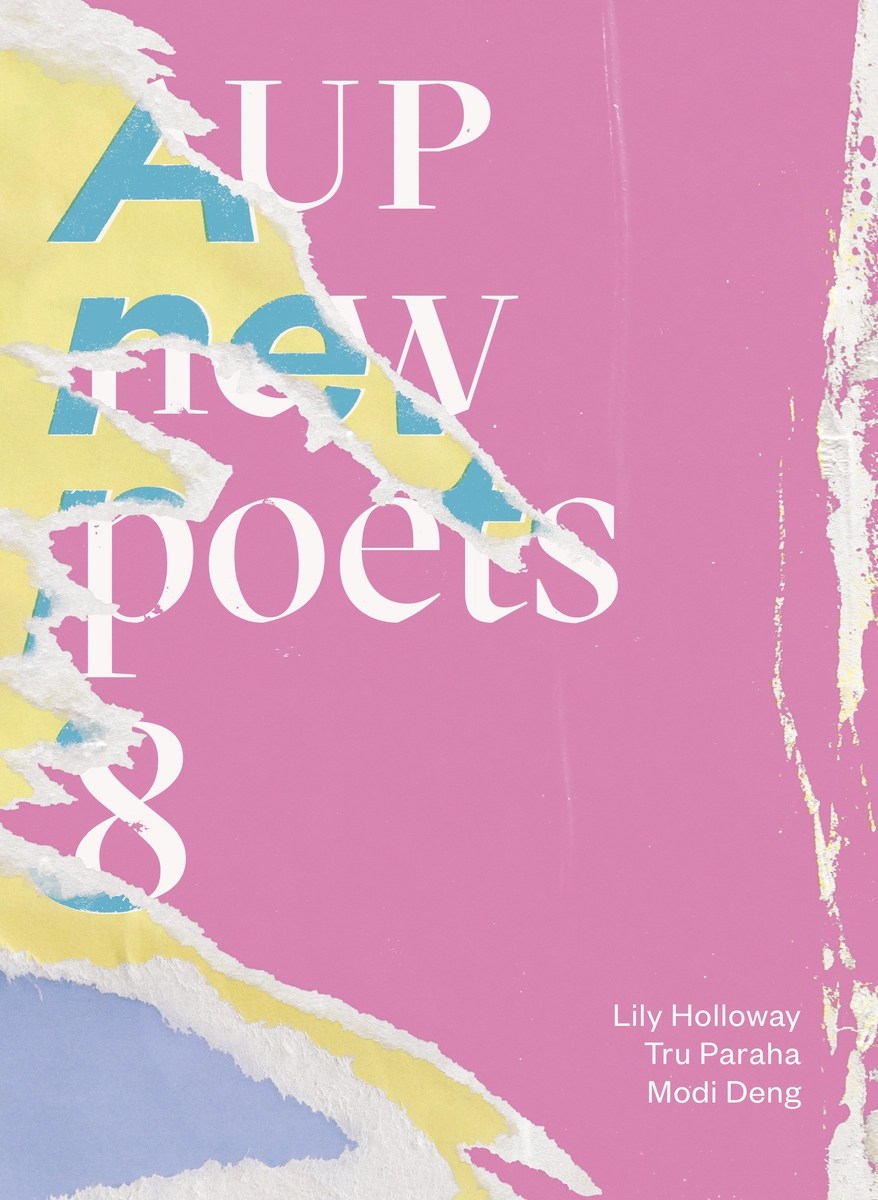
Poetry Shelf noticebaord: Paula Green reviews AUP New Poets 8 at Kete Books

AUP New Poets 8: Lily Holloway, Tru Paraha, Modi Deng, Auckland University Press, 2021

Review extract:

Editor Anna Jackson has selected three distinctive poets for AUP New Poets 8 and has placed them in the perfect tonal order.

The title of Lily Holloway’s suite, a child in the alcove, reminds me of poetry’s alcove-like features. Poems can be miniature shelters, places of refuge, an interplay of dark and light, secret, mysterious, challenging, bulging with nooks and crannies. Reading the work is to read across myriad directions, to peer into captivating cubbyholes and, as Jackson writes in her terrific foreword, to read distance and depth.

Holloway is an award-winning writer and postgraduate student who has been published in numerous journals. I have long admired her poetry: her aural and linguistic deftness, the sweet measure of surprise, the variegated forms, the connecting undercurrents, the honey, the bitterness. Her poems run on the rewarding premise that poems don’t need the full explanation, that tactile detail and deft juxtapositions can unmask love, desire, razor edges, self-exposure. Pocket narratives are equally sublime.

Full review here

Listen to the three poets read

Auckland University Press page

Lily Holloway (born in 1998, she / they) is a queer writer and postgraduate English student. While she mostly writes poetry, she has also tried her hand at non-fiction, fiction and playwriting. You can find her work in places like Starling, Midway Journal, Scum, The Pantograph Punch and The Spinoff amongst various other literary nooks and crannies. In 2020 she was honoured to receive the Shimon Weinroth Prize in Poetry, the Kendrick Smithyman Scholarship in Poetry and second place in the Charles Brasch Young Writers’ Essay Competition. In her spare time she enjoys op-shopping, letter writing, visiting small towns and collecting vintage Teletubbies paraphernalia. She is passionate about survivor advocacy and taking up space. You can find a list of her writing at lilyholloway.co.nz.

Tru Paraha resides in Tāmaki Makaurau in the suburb of Tukituki Muka (aka Herne Bay). She works as a choreographer and director, having enjoyed an extensive career in experimental dance, theatre and audio-visual arts. She is currently in the final year of a postdoctoral research fellowship in the English and Drama department at the University of Auckland. Moving between choreography, philosophy and creative writing, Tru produces live performances, artists’ pages and poems drawing on materials from deep space. She is a member of the International Dark-Sky Association and advocate for the preservation of the night sky as a world cultural heritage.

Modi Deng is a pianist based in London, currently pursuing postgraduate performance studies on a scholarship at the Royal Academy of Music. Her Chinese name 默笛 means ‘silent flute’, which her father drew from a poem by Tagore. Performances with her ensemble, the Korimako Trio, have taken her throughout the UK and her concerts have been broadcast on BBC Radio 3 and RNZ Concert. After growing up in Dunedin, she went on to complete a Master of Music with First Class Honours on a Marsden research scholarship, while completing a Bachelor of English at the University of Auckland. Modi cares deeply about literature (diaspora and poetry), music, psychology and her family.

Poetry Shelf Monday poem: Rosina Baxter and Amy Marguerite’s ‘Pathetic Fallacy’

Pathetic Fallacy

The rain is falling hard on the farm today
We’ve just messaged about loving older humans
How it’s true that age is just a number
How we want the whole world (two people) 
To eat our truth.   But how?
At noon certain numbers make a nation 
Sigh in unison
In the morning certain numbers make a city
Take out their thickest coat
At midlife certain numbers make a person 
Wistful for the bygone.
My grandmother is watching the kārearea soar 
Across the valley on warm spring waves
We give our lovers nicknames 
Like birds giving each patch of air a wing.
Punching my keyboard I ask is there is a way
to give without giving everything?  
I can’t help but think we are the kārearea
Our lovers the old ones watching 
Us soar, somewhere, like eyelashes
Licking golden cheeks 
Watching us watch the whole world
Watch each other 
For the wrong kind of answer.

Rosina Baxter and Amy Marguerite

Rosina Baxter is an emerging poet and songwriter who has used written word as personal catharsis from a young age. She is a regular performer at Poetry Live on Karangahape Road, she narrates poetry and prose for Passengers Journal, and has recently been published in Tarot Magazine.

Amy Marguerite is a poet and writer of non-fiction based in Te Whanganui-a-Tara, Wellington. Her poetry has featured in a number of journals and literary magazines, most recently the Food Court S08E01 zine. She is currently working alongside Rosina toward a collaborative collection of poetry. 

Poetry Shelf celebrates new books: AUP New Poets 8

AUP New Poets 8: Lily Holloway, Tru Paraha, Modi Deng, Auckland University Press, 2021

I am loving the AUP New Poets series under the astute editorship of Anna Jackson. Each volume draws new voices into compelling view, each volume sparks essential poetry conversations. How we write. Why we write. What we write. How we write ourselves and how we write the imagined.

This on AUP New Poets 8, from my Kete Books review appearing shortly: ‘Editor Anna Jackson has selected three distinctive poets for AUP New Poets 8 and has placed them in the perfect tonal order. The title of Lily Holloway’s suite, ‘a child in that alcove’, reminds me of poetry’s alcove-like features. Poems can be miniature shelters, places of refuge, an interplay of dark and light, secret, mysterious, challenging, bulging with nooks and crannies. Reading the work is to read across myriad directions, to peer into captivating cubbyholes and, as Anna writes in her terrific foreword, to read distance and depth.’

This is an arrival to celebrate – and how better than with a suite of readings – not as good as book launch for sure – but online readings offer a lounge of returns. Make a coffee, a cup of tea, pour a glass of wine, you choose, find a sweet spot and have a listen. I raise my glass to Anna, Lily, Tru, Modi and AUP. This is essential listening (and reading!).

The readings

Lily Holloway

Photo credit: Angela Zhang

Lily Holloway reads ‘Reverb or Aftermath’

Lily Holloway reads ‘return again’

Tru Paraha

Tru Paraha reads ‘Paradox’

Tru Paraha reads ‘Postcard from Israel’

Modi Deng

Photo credit: Mikayla Bollen

Modi Deng reads ‘field notes on Lewis Hyde’s ‘The Gift’’

Modi Deng reads ‘unrest • an wei’

Modi Deng reads ‘now and then things come in tandem’

The poets

Lily Holloway (born in 1998, she / they) is a queer writer and postgraduate English student. While she mostly writes poetry, she has also tried her hand at non-fiction, fiction and playwriting. You can find her work in places like Starling, Midway Journal, Scum, The Pantograph Punch and The Spinoff amongst various other literary nooks and crannies. In 2020 she was honoured to receive the Shimon Weinroth Prize in Poetry, the Kendrick Smithyman Scholarship in Poetry and second place in the Charles Brasch Young Writers’ Essay Competition. In her spare time she enjoys op-shopping, letter writing, visiting small towns and collecting vintage Teletubbies paraphernalia. She is passionate about survivor advocacy and taking up space. You can find a list of her writing at lilyholloway.co.nz.

Tru Paraha resides in Tāmaki Makaurau in the suburb of Tukituki Muka (aka Herne Bay). She works as a choreographer and director, having enjoyed an extensive career in experimental dance, theatre and audio-visual arts. She is currently in the final year of a postdoctoral research fellowship in the English and Drama department at the University of Auckland. Moving between choreography, philosophy and creative writing, Tru produces live performances, artists’ pages and poems drawing on materials from deep space. She is a member of the International Dark-Sky Association and advocate for the preservation of the night sky as a world cultural heritage.

Modi Deng is a pianist based in London, currently pursuing postgraduate performance studies on a scholarship at the Royal Academy of Music. Her Chinese name 默笛 means ‘silent flute’, which her father drew from a poem by Tagore. Performances with her ensemble, the Korimako Trio, have taken her throughout the UK and her concerts have been broadcast on BBC Radio 3 and RNZ Concert. After growing up in Dunedin, she went on to complete a Master of Music with First Class Honours on a Marsden research scholarship, while completing a Bachelor of English at the University of Auckland. Modi cares deeply about literature (diaspora and poetry), music, psychology and her family.

Auckland University Press page

Poetry Shelf Spring Season: Emma Espiner picks poems

Photo credit: Jenna Todd Photography

I had two introductions to poetry. The first was through my husband who insisted that my apathy towards the form was because I was going about it all wrong. Poetry had to be read aloud to be understood, he told me. He read Cassandra’s Daughter and As big as a father in the living room of our home on a hill on the south coast of Wellington and I conceded, he was right. 


The second introduction was through the arrival of Tayi Tibble. Tayi is a gateway drug, and once I’d read In the 1960s An Influx of Māori Women I read everything else she had written and, still hungry, found Hera Lindsay Bird and Nicole Titihuia Hawkins. Type Cast and Monica sit together, a matched set of sitcoms from the 90s, deconstructed and devastated, repurposed. 


These young women brought me home to J.C. Sturm, a writer whose collection of short stories I stole from my university’s library as a graduation gift to myself last year. Her poem Coming Home reaches across the years since her death into the heart of our collective ache for identity and belonging. Sturm writes with clarity and prescience and her work sits comfortably alongside the best of Aotearoa’s contemporary poets.

Emma Espiner

The poems

In the 1960s an Influx of Māori Women

Move to Tinakori Road in their printed mini dresses
Grow flowers on white stone rooftops to put in their honeycomb vases.
Dust the pussy-shaped ashtray their husbands bought on vacation in Sydney.
Walk to Kirkcaldie and Stains while their husbands are at work.
Spend their monthly allowance on a mint-green margarita mixer.
Buy makeup at Elizabeth Arden in the shade too-pale-pink.
Buy vodka and dirty magazines on the way home from the chemist.
Hide the vodka and dirty magazines in the spare refrigerator in the basement.
Telephone their favourite sister in Gisborne.
Go out to dinner with their husbands and dance with his friends.
Smile at the wives who refuse to kiss their ghost-pink cheeks.
Order dessert like pecan pie but never eat it.
Eat two pieces of white bread in the kitchen with the light off.
Slip into the apricot nylon nightgown freshly ordered off the catalogue.
Keep quiet with their husbands’ blue-veined arms corseting their waists.
Remember the appointment they made to get their hair fixed on Lambton Quay.
Think about drowning themselves in the bathtub instead.
Resurface with clean skin, then rinse and repeat.

Tayi Tibble

from Poūkahangatus, Victoria University Press, 2018

As big as a father      

I lost him the first time
before I could grasp
who he was, what he did, where
he fitted with her

and it’s always seemed so dumb:
how to lose something
as big as a father.

I lost him the next time
to the rum-running Navy
who took him and took him
and kept right on taking

and it wasn’t my mistake
losing a vessel
as big as a father.

I lost him a third time
to a ship in a bottle
that rocked him and rocked him
and shook out his pockets

and no kind of magic
could slip me inside
with my father.

I lost him at home
when floorboards subsided
as he said and she said
went this way and that way

and dead in the water
I couldn’t hang on
to my father.

The last time I lost him
I lost him for good:
the night and the day
the breath he was breathing

 and death’s head torpedoes
blew out of the water
the skiff of my father.

  Jeffrey Paparoa Holman

    from As big as a father, Steele Roberts, 2002

Cassandra’s Daughter

Cassy for short.
We’re discussing the colour green
and why.  And how last night
in her dreamtime a wooden-horse
appeared.  And look–how the wind
puts shivers in the water, shaking
the keys in their locks.
Only five years old, she is
already in love with how
one word wants another
with astonishing ease.
Inside the alphabet now,
inside the lining of a word
she asks me as we sit
on the garden wall under
plum-coloured sun: why
were you born at seven o’clock
that night?  I was a morning baby
my mum says, the best kind.
I was born with my eyes open,
you see?  Would you like to
hear me sing?  I can almost dance,
too.  Would you?  I can hear
that she knows, Priam’s daughter,
all her years to heaven–
that every word was once
a poem, isn’t it?

Michael Harlow

from Cassandra’s Daughter, Auckland University Press, 2005


Typecast 

I want Shortland Street
to cast us a fat brown woman
with a pretty face, wild hair
& an ass that could
clap back against the haters
when she plays T.K, Vinnie & Maxwell
sleeping with them all at the same time. 

I want Shortland Street
to cast us a girl gang of Māori women
who eat the weight 
of their feelings in cheese 
at wainanga & help each other
craft responses to
cultural appropriation, Govt. Depts & fuckbois.

I want Shortland Street
to cast us an exhausted junior Dr.
tall & thin, newly-vegan 
who still eats hāngī on the marae
Waka Blonde Ngāti Kahu Khaleesi 
fangirling over Lance O’Sullivan
addicted to kawakawa ointment.

I want Shortland Street
to cast us a fair-skinned Kāi Tahu Boss Lady
an expert in her field
who gets nominated for awards 
invited home to speak on panels
who snapchats her friends from the wharepaku 
saying she feels like a fraud on her own whenua. 

I want Shortland Street
to cast us an overworked
social science teacher
wearing Hine & Whitewood to work
teaching Harry, Ula & Jasmine
Whare Tapa Whā & The Native Schools Act
her passionate tangents hashtagged #WhaeasRants.

I want Shortland Street
to cast us a solo Mum in her 40’s
whose babies are to different men
rose quartz, ratchet 90’s home done
tā moko on her big boobs
spilling from a pilling lace bra from Kmart
as she rushes late from school gate to mahi.

I want Shortland Street
to cast us a long-grey-haired Kui
with a moko kauae 
who talks to our tīpuna 
in her dreams, by night
kaumātua kapa haka, 
rewana bug feeding, by day. 

I want Shortland Street
to cast us a Ngāti Porou Aunty
who sets Marge, Kirsty & Leanne straight 
when they mispronounce her reo 
takes her own time to teach them
then vents to Vasa at Box Fit
that they complained to the boss she was telling them off.

I want Shortland Street
to cast us a co-sleeping
breast-feeding Māmā
who laughs at the Plunket nurse
when she tells her to leave her 
baby to cry in a cot
calling it sleep training.

I want Shortland Street
to cast us a young emerging talent
raising eyebrows even higher than her skirt hems
rubbing shoulders with the 
top surgeon’s fathers
Chris Warner wrapped around
her dusky middle finger.

Nicole Titihuia Hawkins

from Sport 47, 2019


Monica

Monica
Monica
Monica

Monica Geller off popular sitcom F.R.I.E.N.D.S
Is one of the worst characters in the history of television
She makes me want to wash my hands with hand sanitizer
She makes me want to stand in an abandoned Ukrainian parking lot
And scream her name at a bunch of dead crows
Nobody liked her, except for Chandler
He married her, and that brings me to my second point
What kind of a name for a show was F.R.I.E.N.D.S
When two of them were related
And the rest of them just fucked for ten seasons?
Maybe their fucking was secondary to their friendship
Or they all had enough emotional equilibrium
To be able to maintain a constant state of mutual-respect
Despite the fucking
Or conspicuous nonfucking
That was occurring in their lives
But I have to say
It just doesn’t seem emotionally realistic
Especially considering that
They were not the most self-aware of people
And to be able to maintain a friendship
Through the various complications of heterosexual monogamy
Is enormously difficult
Especially when you take into consideration
What cunts they all were

I fell in love with a friend once
And we liked to congratulate each other what good friends we were
And how it was great that we could be such good friends, and still fuck
Until we stopped fucking
And then we weren’t such good friends anymore

I had a dream the other night
About this friend, and how we were walking
Through sunlight, many years ago
Dragged up from the vaults, like
Old military propaganda
You know the kind; young women leaving a factory
Arm in arm, while their fiancées
Are being handsomely shot to death in Prague
And even though this friend doesn’t love me anymore
And I don’t love them
At least, not in a romantic sense
The memory of what it had been like not to want
To strap concrete blocks to my head
And drown myself in a public fountain rather than spend another day
With them not talking to me
Came back, and I remembered the world
For a moment, as it had been
When we had just met, and love seemed possible
And neither of us resented the other one
And it made me sad
Not just because things ended badly
But more broadly
Because my sadness had less to do with the emotional specifics of that situation
And more to do with the transitory nature of romantic love
Which is becoming relevant to me once again
Because I just met someone new
And this dream reminded me
That, although I believe that there are ways that love can endure
It’s just that statistically, or
Based on personal experience
It’s unlikely that things are going to go well for long
There is such a narrow window
For happiness in this life
And if the past is anything to go by
Everything is about to go slowly but inevitably wrong
In a non-confrontational, but ultimately disappointing way

Monica
Monica
Monica
Monica Geller from popular sitcom F.R.I.E.N.D.S
Was the favourite character of the Uber driver
Who drove me home the other day
And is the main reason for this poem
Because I remember thinking Monica???
Maybe he doesn’t remember who she is
Because when I asked him specifically
Which character he liked best off F.R.I.E.N.D.S
He said ‘the woman’
And when I listed their names for him
Phoebe, Rachel and Monica
He said Monica
But he said it with a kind of question mark at the end
Like……. Monica?
Which led me to believe
Either, he was ashamed of liking her
Or he didn’t know who he was talking about
And had got her confused with one of the other
Less objectively terrible characters.
I think the driver meant to say Phoebe
Because Phoebe is everyone’s favourite
She once stabbed a police officer
She once gave birth to her brother’s triplets
She doesn’t give a shit what anyone thinks about her
Monica gives a shit what everyone thinks about her
Monica’s parents didn’t treat her very well
And that’s probably where a lot of her underlying insecurities come from
That have since manifested themselves in controlling
And manipulative behaviour
It’s not that I think Monica is unredeemable
I can recognize that her personality has been shaped
By a desire to succeed
And that even when she did succeed, it was never enough
Particularly for her mother, who made her feel like her dreams were stupid
And a waste of time
And that kind of constant belittlement can do fucked up things to a person
So maybe, getting really upset when people don’t use coasters
Is an understandable, or at least comparatively sane response
To the psychic baggage
Of your parents never having believed in you
Often I look at the world
And I am dumbfounded that anyone can function at all
Given the kind of violence that
So many people have inherited from the past
But that’s still no excuse to throw
A dinner plate at your friends, during a quiet game of Pictionary
And even if that was an isolated incident
And she was able to move on from it
It still doesn’t make me want to watch her on TV
I am falling in love and I don’t know what to do about it
Throw me in a haunted wheelbarrow and set me on fire
And don’t even get me started on Ross

Hera Lindsay Bird

from Hera Lindsay Bird, Victoria University Press, 2016

Coming home

for Peter

The bones of my tupuna
Safe in secret places up north
Must wait a little longer
Before they claim me for good
             The love of my second parents
             Unconditional from the beginning
              Unrelenting to the end
              Never quite made me theirs
That tormented paradoxical man
Father of my children
Convinced me we belonged together
But then moved on.
               The young ones (our young) he left behind
                Claimed my castle as their own
                Being themselves a part of me
                Always, bone of my bone
Years earlier, a much younger self
Lay face down in the hot dry sand –
                 Salt on her skin, the smell
                 Of green flax pungent in the heat,
                 Summer a korowai
                 Around bare shoulders –
And felt in her bones
Without knowing why
She belonged to that place.
Nearly a life-time later
On another beach –
                                             the sea
           A blinding shield at our feet,
           Behind us a dark hill fortress
           With sentinel sea birds
           Circling and calling –
I lay down beside you in tussock
And felt without warning
I had come home.                  

J. C. Sturm

from Dedications, Steele Roberts, 1996, published courtesy of J. C. Sturm estate

Emma Espiner (Ngāti Tukorehe, Ngāti Porou) is a doctor at Middlemore Hospital. Emma hosts the RNZ podcast on Māori health equity, Getting Better which won best podcast at the Voyager media awards in 2021. She won Voyager Opinion Writer of the Year in 2020. Emma’s writing has been published at The Spinoff, Newsroom.co.nz, Stuff.co.nz, The Guardian, and in academic and literary journals.

Hera Lindsay Bird was a poet from Wellington. She hasn’t written a poem in a long time, and no longer lives in Wellington. 

Michael Harlow has written 13 books of poetry, and was awarded the prestigous Prime Minister’s Award for Literary Achievement for Poetry in 2018.  A collection of his poems, Nothing For It But To Sing was the Kathleen GrattanAaward forPoetry, and in 2014 he was awarded the Lauris Edmond Memorial prize for Distinguished Contribution to New Zealand poetry.  He has been awarded a number of Writers’ Residences including the Robert Burns Fellowship, the Katherine Mansfield Menton Fellowship to France.  This past year The Moon in a Bowl of Water was published by Otago University Press.He lives and works in Central Otago as a writer, editor, essayist and Jungian Psychotherapist.

Nicole Titihuia Hawkins (Ngāti Kahungunu ki Te Wairoa, Ngāti Pāhauwera) is an emerging writer, avid home-baker and pro-level aunt. She lives in Te Awakairangi, hosts Poetry with Brownies and runs side hustles with her besties. She is most commonly found teaching English, Social Studies & Māori Activism at a local High School. Her debut poetry collection will be published by We Are Babies Press in 2021.

Jeffrey Paparoa Holman is a poet and non-fiction writer, most recently, Blood Ties: selected poems, 1963-2016, Canterbury University Press (2017); a memoir, Now When It Rains, Steele Roberts (2018); Poetry New Zealand Yearbook 2021, an essay on prison reform; poetry in More Favourable Waters – Aotearoa Poets respond to Dante’s Purgatory, (The Cuba Press, 2021).

J. C. Sturm (1927 -2009), of Taranaki iwi, Parihaka and Whakātoa descent, is thought to be the first Māori woman to graduate from a New Zealand university (First Class Hons, Philosophy, Victoria University of Wellington Te Herenga Waka). She initially wrote short fiction, and her work was the first to appear by a Māori in an anthology. Her debut collection, Dedications (Steele Roberts, 1997), received an Honour Award at the 1997 Montana NZ Book Awards. She published further collections of poetry, and received an honorary doctorate from Victoria University of Wellington Te Herenga Waka.

Tayi Tibble (Te Whānau ā Apanui/Ngāti Porou) was born in 1995 and lives in Wellington. In 2017 she completed a Masters in Creative Writing from the International Institute of Modern Letters, Victoria University of Wellington, where she was the recipient of the Adam Foundation Prize. Her first book, Poūkahangatus (VUP, 2018), won the Jessie Mackay Best First Book of Poetry Award. Her second collection, Rangikura, was published in 2021 (VUP).

Spring Season

Tara Black picks poems
Victor Rodger picks poems
Peter Ireland picks poems

Poetry Shelf poems: a poem for a cold day, Frankie McMillan’s ‘Five ways of looking at a hot water bottle’   

Tamaki Mākaurau is a mix of freezing and blue sky and thumping rain, and here I am wondering if my second batch of seeds will survive (the first got blasted by a gale all over the show), and I am falling into little black holes, and then scaling the sides by diversion writing for the love of writing, and cooking meals for the love of cooking, and reading books with the the tūī outside pitching in, and avoiding news reports, and then feeling bad because I need to know what’s happening, and to keep up with numbers and strategies, and then I am slumping back down the black hole with the constant reminder of how unkind we can be to each other, and yes, miraculously I am scaling back up the slippery sides with Jon McGregor’s luminous fiction, and turning the daily batch of sour dough,

and yes, replying to a hundred children who have sent me lockdown poems, and then there it is, the thumping rain and the politicians who need to be muted, and me worrying that Ashley and Jacinda might not get enough sleep, and then heck, here I am reading the introduction Emma Espiner has written for her Poem Picks this Friday, and I am back in the light, back in the comfort zone, remembering the hottie poem Frankie McMillan sent me, me the eternal hottie lover, me with my snake hottie wrapped about me, as our icy house waits for the fire to be lit, and the sun starts to shard through the black clouds, and Odetta sings the blues, like her voice is part saxophone, part honey, part feet travelling over the corrugated tracks

Five ways of looking at a hot water bottle   

i

Dearest rubber hottie
you can be as wicked as I, you spring
holes in your back, drench the bed
you smell of the sulphur fields
of the Ukraine

ii

I carry you round the cold house
wrapped in your woollen cover    
slip my hands under, just for the thrill
of your boiled rubber bite

iii

I have to say the braille
of your ribbed back speaks
to my fingers
more than your gobbly mouth
that tends to splutter and steam and scald
and though we both get over it, I suspect
resentment might corrode in there                                    

iv

We always wreck the things we love— 
like trees. like dirt. like certain birds 
not to mention the slow perish
of various plantations

v

Dearest rubber hottie 
please know if the bed is ever drenched again
it’s not the worst thing in the world
just one of them

Frankie McMillan

Frankie McMillan is a poet and short story writer who spends her time between Ōtautahi/ Christchurch and Golden Bay. Her poetry collection, There are no horses in heaven, was published by Canterbury University Press.  Recent work appears in Best Microfictions 2021 (Pelekinesis) Best Small Fictions 2021 (Sonder Press), the New Zealand Year Book of Poetry ( Massey University), New World Writing and Atticus Review.

Frankie’s Monday Poem: ‘Girls raised by swans’

Poetry Shelf Monday Poem: Johanna Aitchison’s ‘WHO DOES ANNA THINK SHE IS?’

WHO DOES ANNA THINK SHE IS?

Anna walks with wire
in her spine.

No one mentions the spine
wire, they just say,

“We call her Porcupine;”
or “You talking about Spiny?”

Overhead, cut-out birds
turn to ash

on powerlines. No one suspects
hidden spines are the cause of

Anna’s Olympic-
level ungratefulness. Perhaps

it’s because she’s a palindrome
that she gets away with fire.

A reversible jacket
has an unfair red side. Anna is unfair

in the forest. She requests a
thousand pines for her

red birds. She asks that her birds
sleep on needles.

Johanna Aitchison

Johanna Aitchison has just finished her PhD thesis “Asserting and Locating Value in Contemporary Elliptical-Style Poetry” at Massey University. She was the Mark Strand Scholar at the 2019 Sewanee Conference in Tennessee and a 2015 Fellow at the International Writing Program at the University of Iowa. She has published three volumes of poetry in New Zealand.