Category Archives: NZ poetry

Poetry Shelf poem festival: Trees


DSCN9848.jpg

our place, January 2020


In 2020 Poetry Shelf will host a monthly, theme-based festival of poems.

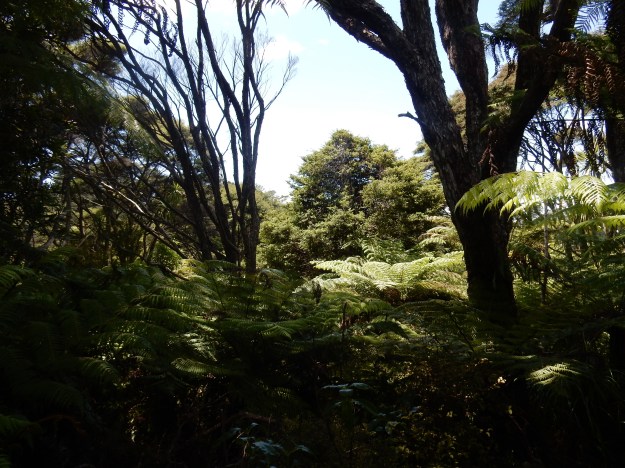
First up: trees. I chose trees because I live in a clearing in the midst of protected regenerating bush. It is a place of beauty and calm, no matter the wild West Coast weather. We look out onto the tail end of the Waitātakere Ranges knowing we work together as guardians of this land.

I chose trees because like so many other people the need to care for trees is strong – to see the fire-ravaged scenes in Australia is heartbreaking.

I love coming across trees in poems – I love the way they put down roots and anchor a poem in anecdote, life pulse, secrets, the sensual feast of bush and forests, political layers.

I could plot my life through the books I have read and loved, but I could also plot my life through my attachment to trees.
 

DSCN9841.jpg


Let me Put in a Word for Trees


Let me put in a word for breathing.

Let me put in a word for trees.

Let me put in a word for breathing.


Dinah Hawken

from Water, Leaves, Stones (Victoria University Press, 1995)


After a long hard decade, Miranda asks for a poem about feijoas


Small hard green breasts budding on a young tree

that doesn’t want them, can’t think how to dance

if it has to put up with these;


yet over summer the fruits swell and plump:

frog barrel bodies without the jump or croak

limes in thick velvet opera coats


love grenades to throw like flirt bombs

for your crush to catch and softly clutch

before they release their sweet seductions


and when the congregation and the choir

in the Tongan church next door exalt in hymns

while their brass band soars and sforzandos in,


a fresh feijoa crop tumbles to the grass

as if the tree’s just flung down its bugle mutes

in a mid-life, high-kick, survival hallelujah.


Emma Neale


Heavy lifting

Once, I climbed a tree
too tall for climbing
and threw my voice out
into the world. I screamed.
I hollered. I snapped
innocent branches. I took the view
as a vivid but painful truth gifted
to me, but did not think to lay down
my own sight in recompense.
All I wanted was someone to say
they could hear me, but the tree said
that in order to be heard I must
first let silence do the heavy lifting
and clear my mind of any
questions and anxieties
such as contemplating whether
I am the favourite son. If I am not,
I am open to being a favourite uncle
or an ex-lover whose hands still cover
the former half’s eyes. I’ll probably never
have children of my own to disappoint
so I’ll settle for being famous instead
with my mouth forced open on TV like
a Venus fly-trap lip-synching for its life.
The first and the last of everything
are always connected by
the dotted line of choice.
If there is an order to such things,
then surely I should resist it.

Chris Tse

from He’s so MASC (Auckland University Press, 2018)


Reverse Ovid

Woman running across a field
with a baby in her arms . . .
She was once the last pine tree on Mars.

Bill Manhire


My mother as a tree

I like to think my mother may have been a tree
like Fred’s, the oak whose Elizabethan
damask skirts each year spring-clean
the hillside opposite, in front of the house
where Fred was born. Her royal foliage
clothes a peasant’s weathered fingers,
the same unfussed embrace.
Fred never sees her now,
he’s in a rest-home up the coast
and doesn’t get out much
and so, in lieu, she fosters me
from unconditional dawn
to dusk and through the night,
her feet in earth, her head
in air, water in the veins, and what
transpires between us is the breath
of life. In the morning birds
fly out of her hair, in the evening
they are her singing brain
that sings to me. My mother as a tree:
my house, my spouse, my dress
and nakedness, my birth, my death,
before and afterwards. I like
to think my tears may be her
watershed, not just for me.


Chris Price

from Beside Herself  (Auckland University Press, 2016)


Objects 4


It’s the close of another year.

Stunned, I walk through the Gardens

feel them draw the numbness out of me.

This is another ‘I do this, I do that’ poem

I learnt in New York from O’Hara.

This is a New York poem set in a garden

styled in colonial civics on an island

that is not Manhattan.

I hurry to the hydrangea garden,

their shaded, moon-coloured faces

so much like my own. As a child I was posed

next to hydrangeas because the ones

next to an unremembered house

were particularly blue—

to match my eyes, presumably.

There are no hydrangeas in New York City.

I rush past the Australia garden but I stop

dead at the old aloes, their heavy leaves

so whale-like, gently swaying flukes

thick and fleshy, closing up the sky.

Some kids have carved their

initials and hearts in the smooth rind,

a hundred years against this forgotten afternoon.

I bend to the ground and sit as if to guard them

in the darkening sun.

The spread of rot constellates out of the kids’ marks

as if to say

look at the consequences,

look at me dying.


Nikki-Lee Birdsey

from Night As Day (Victoria University Press, 2019)


I Buried the Blood and Planted a Tree


Love is the thing that comes

when we suck on a teat and are fed.

Love is the food we can eat.


The food we can’t eat we give

to the ground

to the next day.

We pat the earth

like it is our own abdomen.


If I could have drunk a hot enough tea

to boil it out

I might have.

If I could have stood

on a big red button

and jumped once

to tell it to exit


like the highest note on the piano.

It was a sound I couldn’t feed.

I gave it to tomorrow.

I buried the blood and planted a tree

so she, unable to be fed, could feed.


Maeve Hughes


The sepia sky is not one for forgetting. Even fragmented, looking up at it from beneath a canopy. The flash of light through leaves more twitch than twinkle. Therapists and yoga teachers say It’s important to let yourself to be held by mother earth, to let yourself be. I used to feel relief in the arms of a tree, but now I feel unease. Is it my own chest trembling or the trees? Oxygen spinning from the leaves, boughs holding birds who were once such a chorus they almost drove Cook’s crew back to sea. Invisible roots bearing the weight of me, through the deep dark, where trees talk in voices I am too brief to hear.

Simone Kaho


Trees


Place is bottled lightning in a shop,

or in a chandelier’s glass tear-drop,

or in a glow-worm’s low watt grot,

or in street neon’s glottal stop —

wow-eh? wow-eh? wow-eh?


Place is the moulded face of a hill,

or lichen like beard on a window sill,

or the bare spaces that shadows fill,

or ancestors growing old and ill,

or descendants at the reading of a will,

who frown and examine their fingernails

before plunging off down the paper trails

of diary and letter and overdue bill.


Place is the home of family trees —

family trees to wrap round plots of soil,

tree roots to shrivel into umbilical cords,

tree branches to spill bones and skulls;

but even trees are just a spidery scrawl

against the shelf-life of a mountain wall.


Place is a brood perched on power-poles:

bellbirds with shadows of gargoyles,

korimako who clutch the power of one,

like an egg, to trill their familiar song.

Place is grandsons who sprawl

in the family tree with laughter;

place is the tree windfall,

gathered up in the lap of a daughter.


David Eggleton

from Rhyming Planet (Steele Roberts, 2001)


13

Te Mahuta Ngahere
the father of the forest
a livid monster among saplings.

A swollen aneurism grips his bole.
Below bearded epiphytes
a suppurating canker swarms with wasps.

Derisively lyrical
the tuis in his crazy, dreadlocked crown
pretend to be bulldozers.


Ian Wedde

from ‘Letter to Peter McLeavey – after Basho’, from Three Regrets and a Hymn to Beauty (Auckland University Press, 2005)


Last night I sat outside and looked at the moon. Up there, like it has been since the dawn of time.
Same one the cavemen looked at.
Sickle phase.
I know, scientifically, about the forces that hold it in place.
And suddenly I felt I knew too much.
The grass had been cut, while flowering.
The flowers were still there, they’d either sunk below the blades or reflowered.
I noticed grass flowers look like kowhai post-flowering. When the stamens hang long and white after the flower has fallen away.
The night was still. Cones on the street let me know men would come the next day in matching orange tunics and I should not park there.
The moon was still there.
The stillness and the quiet was misleading.
Everything had a perfect and terrible design that didn’t need me to know it.
I know the trees above the mangroves are called macrocarpas, some bird calls sweetly from the macrocarpa as the sun sets every evening. Orange, purple and pink from the verandah of my flat.
I don’t ever want to know that bird’s name.


Simone Kaho


Song from the fallen tree which served as a twelve year old’s altar to the wild gods

i am a hundred years more girleen since before you were a seed
i fell to mouldering in this darkleaf cathedral where you come

to bury the bones of brief chittering things and burn candles
in roothollows ah you young girleen life all aflickering past short
roots unplanted

i am all your church and ever the altar at which you girleen kneel
i all goldenarched around by sunbeam and sapling green

with my many rings i share with you rootlessness and in winter
you brush away my cloak of snow humming your warmblood
girleen beatsong to soften my ache of frost

while you ask knowing of what time is to the forest and you sing
up your low girleen voice to the horned and feathered kind which
do not walk the rustling hymn of season same as we all

then twice up here you come bringing anothergirl girleen
you open your arms to the sky saying this is your heart and

home yes this the forest that sings you by name and girleen
it is true we the trees know you but you never learned from us

the songs called shyness and slowly and the next time girleen you
bring your brighthaired friend you kiss her in the pricklebelly
shadow of the holly

where i feel you like a seed unhusked shiversway as she
branchsnap slams whipslap runs so when again you dewyoung
girleen come to me you come alone

ungrowing girleen and withering back your shoots as you
bitterbrittle freeze your sapling blood into something thinner
than lancewood leaf

which cracks you through to the heartwood solvent veinsap
dizzily diluting girleen you can barely make your mountainwalk
up to me

until for two snowmelts you do not return but even once your
starved arterial taproot has begun sucking in again greedy sunlight
and sugar to colour your suppling girleen bark back alive

you have disremembered every prayersong taught you by we the
trees and i rot in the forest you called your heart and girleen
you do not visit


Rebecca Hawkes


The Gum-Tree


Sitting on the warm steps with you

our legs and backs supported by timber

looking down to the still trunk of the gum-tree

we are neither inside ourselves

as in the dark wing of a house

nor outside ourselves, like sentries

at the iron gates – we are living

on the entire contour of our skins,

on the threshold, willing to settle

or leap into anywhere.


Here’s to this tree we are standing in.

Here’s to its blue-green shelter,

its soft bark,

the handy horizontal branch

we have our feet on

and the one supporting our shoulders.


Dinah Hawken

from Water, Leaves, Stones (Victoria University Press, 1995)


Nikki-Lee Birdsey was born in Piha. She holds an MFA from the University of Iowa Writers’ Workshop and a BA from New York University. She has been published widely in the US, UK, Canada, and New Zealand, and she is currently a PhD candidate at the International Institute of Modern Letters. Her first book Night as Day was published by VUP in 2019.

David Eggleton’s most recent poetry publication, Edgeland and other poems, was published by Otago University Press in 2018. He is the New Zealand Poet Laureate 2019 – 2021.

Dinah Hawken was born in Hawera in 1943 and now lives in Paekakariki. Her eighth collection of poetry, There is no harbour, was published by Victoria University Press in 2019.

Rebecca Hawkes is an erstwhile painter-poet and accidental corporate-ladder-ascender. Her chapbook Softcore coldsores was launched in AUP New Poets 5 in 2019 and she performs with the poetry troupe Show Ponies. She wrote this tree poem in her previous occupation as a teen and hopes it will survive repotting after all these years.

Maeve Hughes lives in a tall house in Wellington. She has studied Fine Arts and Creative Writing. Her first publication Horsepower won the 2018 Story Inc Prize for poetry and was launched in October last year.

Simone Kaho is a New Zealand / Tongan poet and a graduate of the International Institute of Modern Letters. She published her debut poetry collection, Lucky Punch, in 2016. Simone is noted for her poetry performance and writes for E-Tangata.co.nz.

Bill Manhire’s new book of poems will be published later this year. It might well be called Wow because he is so surprised by it.

Emma Neale is the author of 6 novels and 6 collections of poetry. She is the current editor of Landfall.

Chris Price is the author of three books of poetry and the hybrid ‘biographical dictionary’ Brief Lives. She convenes the poetry and creative nonfiction MA workshop at the International Institute of Modern Letters in Wellington. In May 2019 she and her guitarist partner Robbie Duncan will be among the guests at Featherston Booktown.

Chris Tse is the author of How to be Dead in a Year of Snakes and HE’S SO MASC. He is a regular contributor to Capital Magazine’s Re-Verse column and a book reviewer on Radio New Zealand. Chris is currently co-editing an anthology of LGBTQIA+ Aotearoa New Zealand writers.

Ian Wedde’s Selected Poems were published in 2017 – Te Mahuta Ngahere can be found there and we hope will survive in the bush. Wedde’s historical novel, The Reed Warbler, will be published by Victoria University Press in May, and a collection of essays 2014-2019 is in development.


Poetry Shelf audio poem: Maeve Hughes reads ‘I Buried the Blood and Planted a Tree’


DSCN9783


Maeve Hughes reads I ‘Buried the Blood and Planted a Tree’ from Horse Power


Maeve Hughes lives in a tall house in Wellington. She has studied Fine Arts and Creative Writing. Her first publication horse power won the 2018 Story Inc Prize for poetry and was launched in 2019.

Poetry Shelf summer reading: Amy Brown’s neon daze

Screen Shot 2020-01-20 at 11.11.45 AM.png

neon daze, Amy Brown, Victoria University Press, 2019


The title of Amy Brown’s new collection neon daze hooked me. Having published extracts from the book on the blog, I knew the collection came out of motherhood. I mused on the way you can be caught in a blazing daze as you invent your own mother role. How moments can also gleam with light, the miracle of a newborn baby you are responsible for. Not everyone chooses or can be mothers and there is no standardised mothering role. Thanks heavens. Women have written mother poems for centuries despite denigration from men. I came across the denigration in my Wild Honey travels, but I also came across a rich harvest of mother poems that shed light on the multiplicity of experience, experience that shaped the way poems were written as well as the content. I also encountered relentless doubt – doubt about whether what women were writing could be claimed as poetry when it retained a domestic or maternal focus.

I still encounter this!

At the Poetry & Essay conference in Wellington (2017), I sat with Amy, Joan Fleming and Brian Blanchfield over lunch and we talked about how being a mother does not shut down the option of being a poet, of being a published poet, of being read and valued. And most importantly, about the significance of publishing poems about motherhood, about sons and daughters and domestic matters.

Amy’s glorious evocation of motherhood tests how poems form on the page. neon daze raises questions about both writing and mothering and resists turning away from the difficult, the intensely private. There is a sense of inquiry, contemplation and play, along with the doubt and constrained time. Amy discusses the genesis of the title – she had ‘Neonatal’ to being with and then began playing:


(…) Too clinical to be appropriate now,

I play with the cursor, like the baby plays with the

nipple when he wants comfort rather than food.

I keep Neon: a bright, new, elemental word

like a swipe of highlighter over these days

in the calendar. I add Days, then change it

to Daze. This is where I am, in a floodlit

stupor, so bright I can barely see, like in Dante’s

Paradise, shadowless knowledge so pure it’s empty.


from ‘9 October 2016’


Amy admitted she told people she was writing even when she privately thought ‘this writing didn’t count’. She kept a verse journal for three months after her baby was born – subsequently editing and adding footnotes which pick up on a word or idea prompted by the poem.  The footnote titles track a mind musing, raising questions, allowing doubt to surface and resettle. They are like an infinitive-verb poem:

to admit, to edit, to push, to sate, to repeat, to define, to expect, to hallucinate, to dream, to dance, to address, to winter, to resolve , to heal, to regret, to visit, to abstract, to doubt, to donate, to sever, to touch, to cringe, to name, to eat, to earn, to permit, to wake, to care, to wean, to wave, to finish

The footnotes ( I want to call them something else) form their own vital presence, not as asides, but as a sequence of numbered prose pieces that enervate the poetry.

I cross the bridges between poems and prose. Sometimes I make a clearing for the poem and surround it with silent beats like the white space on the page. Sometimes I dwell on the pirouetting trains of thought in the prose and let the questions gain momentum. I am particularly interested in Amy’s double self-exposure in both poetry and prose. The writing is called into question. Is it poetry? Is it poetry of value? Does it make a difference that the writer is a woman? A mother? What lines are crossed? What lines are tested?

I am affected by this collection because it draws me deep into the challenges of writing and motherhood. How can I write when I am so depleted? How can I write anything of worth? I still feel this.

The poetry exposes both physical and emotional realities. At times it underlines the relentless day-in-day-out routines that both exhaust and provide uplift, while at other times the poetry holds a scene (still, luminous) for us to absorb. This is a personal record of mothering: of baby stages, breastfeeding, a need to avoid baby bragging, to settle baby to sleep, to listen to baby coos and baby cries. This is a personal record of climbing to the rock summit, behind baby and father, like a baby mountain goat up the less than easy walk. The poem reverberates with feeling (sharp, understated, complicated)


(…) I have seen you fall, your father replies.

And I think it has something too do with you thinking

you are a mountain goat. The words are said tensely

as he holds his left arm around you and balances

with his right palm against a rock. The sky is

granite too – shimmering, hard and slick.


from ’16 0ctober 2016′


For me neon daze satisfies on so many levels. Lines spring out with musical and visual agility. Scenes shimmer with a sensual underlay. The poetry is fluent, intricate, detail-rich. A question could stall me all day such as the thorny issue of writing the lives of others; of making public what is intimate and private. Amy admitted when she was younger she ‘had no qualms / about giving air and light to what now / seems better off private’. But now she is more inclined to keep secrets yet is compelled still ‘to expose private parts of life’. She claims: ‘now I see that even if it is just / me on display, there is still a problem: / I no longer own myself’. After Amy heard Jenny Bornholdt read a poem about the death of her father and her friend Nigel Cox at the Poetry & Essay conference she asked Jenny a question:


During the reading, Jenny invited questions, so I asked about the responsibility of writing about loved ones – Where I asked, do you draw a line? I don’t, she replied, firm and gentle at once. I don’t draw a line.


from ’26 To Permit’


Ah, this is a question pertinent to the making of neon daze. But the strongest presence is the mother poet, the poet mother. I am drawn into her world, her challenges, her delights, her epiphanies. She has placed herself on show but she had to think equally hard about putting her son and husband in the poetry frame. This questioning of the line Amy may or may not cross, and the various revelations she makes that place family and friends in good and bad lights, affected me as I read. How to write those closest to us?

I love this book. I love navigating the alleys and the undergrowth. I love coming across the hard stuff and then falling into a piquant scene. The mother rests on the sofa with her baby sleeping and watches the men in the garden working. This exquisite juxtaposition of stillness and movement is heightened by the poet’s movement of thought. She meanders from clods of earth and labour to dreams of the future, of what may or may not be. It enters me like the wind. I am replete with the movement of this book. Grateful this book exists.


What if, I wondered, looking at Alison Lester’s illustrations

of things parents want to give their child – a cosy bedroom

with a view of a tree full of wattlebirds; a garden rippling

with tulips and roses; a perfectly weeded vegetable patch

with benign insects for a child to discover; friendly cats,

dogs and horses; a rock pool full of rainbow-coloured fish;

a kaola above us in a tree; a woollen blanket and a steaming

mug of tea at the fireside. What if we never have a garden?

Or pets. or perfect holidays. At least he will know

that we wished such pleasures would be his. This book

is a petitionary prayer of sorts, and I realise now

that the answer to these requests is here, dilapidated

and overgrown and snake-infested, but here.


from ‘8 October 2016’


Amy Brown is a poet, novelist and teacher. In 2012 she completed a PhD in creative writing at the University of Melbourne. She is the author of The Propoganda Girl (VUP, 2018), which was shortlisted in the 2009 NZ Book Awards, and The Odour of Sanctity (VUP, 2013), a contemporary epic poem. She is also the author of Pony Tales, a series of children’s novels.


The Spin Off – ‘Turning on the Light Ladder: Amy Brown on motherhood and writing neon daze

Radio NZ – Harry Ricketts reviews neon daze

Poetry Shelf – excerpt from neon daze

Victoria University Press author page


Poetry Shelf Monday poem: Michael Fitzsimons’s ‘Lifeboat’


Lifeboat


You are rowing a lifeboat around a little garden in summer.

You are happy like that,
just you and a few birds and some swaying trees.
Just you and some herbs and a yellow rose.
You could be praying.

You dip your oars in the quiet,
forget everything that has happened.
All your questions are unanswered,
your beliefs unimaginable.
No matter.

You row on, thinking:
I can hop into this boat anytime,
on any disastrous afternoon.
When push comes to shove, when words fail me,
this boat is mine. There is no other.


Michael Fitzsimons


from Michael, I thought you were dead, illustration by William Carden-Horton  (The Cuba Press, 2019)

Michael Fitzsimons is a proud member of the three-person South Wellington Poetry Society and co-founder of Wellington communications and publishing company Fitzbeck Creative. Michael, I Thought You Were Dead (The Cuba Press) is his second collection. His first, Now You Know, was recommended in RNZ’s annual poetry highlights. Michael lives in Seatoun with his wife, Rose, in a hillside house overlooking Wellington Harbour.

The Cuba Press author page


Screen Shot 2020-01-20 at 9.22.14 AM.png     Michael-I-thought-you-were-dead-cover-high-res.jpg


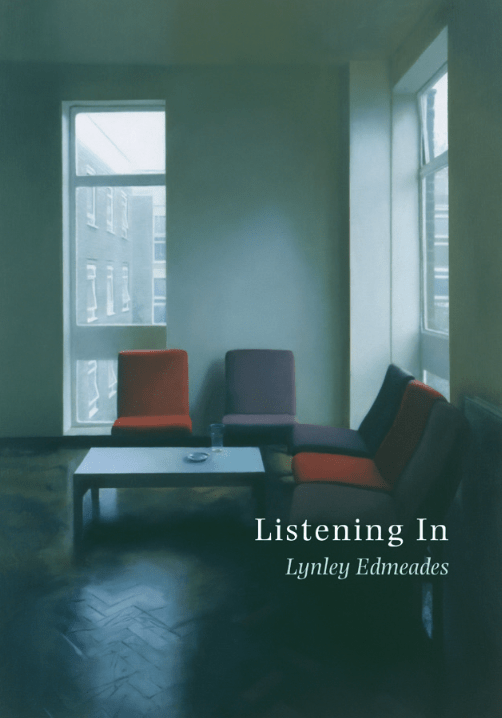
Poetry Shelf Monday poem: Lynley Edmeade’s ‘The Day’


The Day

Cambrian Valley


The dog lies down in the shade of the table.

Knives lie down with pieces of lunch on them.

The mountains lie down across the valley

and the sunlight lies down across everything.


When we drive Neil says I love this:

the car and the music and the dog

and the sun and the spring and the lambs

and the light and the mountains and the sky.


The sky is so blue you can almost hear it skying.


Lynley Edmeades from Listening In, Otago University Press, 2019


Lynley Edmeades is a poet, essayist and scholar. Her debut collection As the Verb Tenses (2016) was longlisted for the Ockham New Zealand Book Award for Poetry and was a finalist in the UNESCO Bridges of Struga Best First Book of Poetry. She has a PhD in avant-garde poetics, and lives in Dunedin with her partner.

Otago University Press author page

Poetry Shelf review of Listening In


Screen Shot 2020-01-08 at 11.59.12 AM


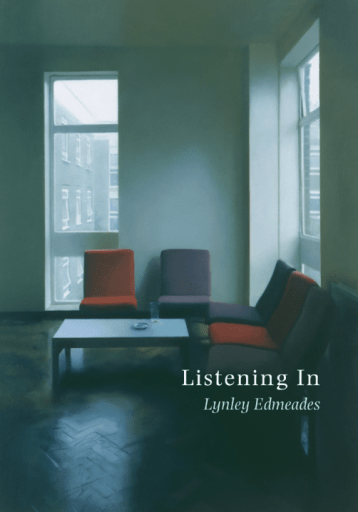
Poetry Shelf summer reading: Lynley Edmeades’s Listening In

Screen Shot 2020-01-08 at 11.59.12 AM.png

Listening In Lynley Edmeades, Otago University Press, 2019


Most of the time things slip


The seed on your plate slides

in the mess of leftover dressing


the hum of three street lights

making bright for no one


But every now and then

it feels as if things might hold


like here in this room

with its air and its airlight


from ‘Blue Planet Sky’


This is my summer holiday: reading gardening cooking walking on the wind-whipped beach. Trying to get better at sour dough. Most of all it is reading. Most of all it is reading novels. But some Aotearoa poetry books I dipped into in 2019 have been tugging at me, diverting me from the glorious satisfactions of fiction. I would hate to be a book-award judge this year as my shortlist of astonishing NZ poetry reads is Waikato-River long!

Here is another one is one to add to my list: Lynley Edmeades’s Listening In.

I adore this book. I adore the the extraordinary scope of writing.

The playful title evokes the reader bending into the frequencies of the poems but also underlines the attentiveness of the poet as she ‘listens in’ to her life, her preoccupations, the way words sing, misbehave, connect, disconnect, soothe, challenge. The linguistic play is breathtaking. You get different rhythms: from stammering staccato to sweet fluency, wayward full stops that introduce breathlessness, pause, discomfort, further pause. Verbs are signed posted (as is Lynley’s debut book As the Verb Tenses), as though each poem is a movement, as though each thing made visible is movement. A poem becomes a matter of being and doing in the now of the present tense.


The day unravels in the precarious throws of verb.

It’s everywhere we look: kitchen, bathroom, garden.

Even the floor waits in its doingness.


from ‘Things to Do With Verbs’


This is poetry as the flux of life where things are in place and out of place, where a great swell of language repeats and sidetracks and repeats again. You get to laugh and you get to feel. If we had all day, sitting together in a cafe or atop the dunes, I would tell you about the delights of each poem because there is such variation, such diverse impact as you read. ‘The Way’ is a knife-in-the-heart love poem and you have no idea the knife is coming and the love heat makes way for heartbreak. ‘Where Would You Like to Sit’ is an anxiety poem where questions pose as statements in a therapist’s chair.

You have to read the poems to see how they gather inside you. How the language gathers inside. How you can’t stop feeling the poems: the wit, the music, the originality.

Lynley takes three politicians as poem starting points. ‘Speetch’ is a transliteration of ex Prime Minister John Key’s valedictory speech in parliament. ‘Again America Great Make’ quantifies Donald Trump’s inauguration speech. ‘Ask a Woman’ juxtaposes Margaret Thatcher quotes that Lynley found online. All three poems are quite disconcerting!


(..) But long

before Wall Shtreet my political views hid been shaped by my Aushtrian Jewish

mutha Ruth, who single handedly raised me and my sisstas in now the infimiss

state house at nineteen Hollyfird Av Christchurch. My mutha wazza no nonsense

womin who refused to take no in answer. She wuddun accept fayure.


from ‘Speetch’


On other occasions a single word (stone, because) prompts a poem like an ode to a word that shadows an ode to experience. ‘Poem (Frank O’Hara Has Collapsed)’ spins on the word ‘collapse’ like a free wheeling stream of consciousness unsettling whirlpool. I adore these poems. ‘Islands of Stone’ leads from physical stones to language play. A quote from Viktor Shklovsky heads the poem and it is how I feel about the book: ‘Art exists that one may recover the sensation of life, it exists to make one feel things, to make the stone stony.’


Stone-sober stone

Getting-stoned stone

Stepping-stone stone

Sticks-and-stones stone


Leave-no-stone-unturned stone

Blood-from-a-stone stone

Two-birds-with-one-stone-stone

A-stone’s-throw stone


Then there are the poems that glow. That fill you with poetry warmth. I am thinking of ‘Constellations’, a in which Chloe tells us ‘we draw stars/ around the adjectives/ to identify them’. She is writing a story about friends and lunchtime at school and whether friends are kind or nice.


It has little shadows

of very and kinda

that reach out

towards the stars.


Perhaps another way to view Listening In is as translation.  A small poem ‘The Order of Things’ makes multiple appearances (it originally appeared in As the Verb Tenses) as half-translations and iterations. I am thinking each book we write is enmeshed in the books that we wrote before, and the books we write foreshadow the books to come. Lynley is translating the world (life) with an exuberance of words, out-of-step syntax (a nod to Gertrude Stein), repeating motifs, word chords, word cunning and delicious humour. She tests what a poem can do by testing what words can do and the effect is awe-inspiring. It makes me want to write. It makes me want to put the book in your hand. Because. Because. Because. Life is here out in the open and hiding in the crevices. Because. Because. Because. Her words open up like little explosions inside you and you know poems can do anything. I have barely touched upon what this poetry does. I love love love this book.


Otago University Press author page

Lynley Edmeades is a poet, essayist and scholar. Her debut collection As the Verb Tenses (2016) was longlisted for the Ockham New Zealand Book Award for Poetry and was a finalist in the UNESCO Bridges of Struga Best First Book of Poetry. She has a PhD in avant-garde poetics, and lives in Dunedin with her partner.


Poetry Shelf Monday poem: Emma Neale’s ‘Global’


Global


Search for counter-attack

Replace with hold

Search for attack

Replace with attach
Search for murdered

Replace with heard

Search for killed

Replace with serenaded

Search for ambushed

Replace with invited

Search for missile launchers

Replace with, oh, red silk fans

Search for front line

Replace with lamp-lit threshold

Search for grenades

Replace with iris bulbs

Search for smart bombs

Replace with crayoned paper folded into lilies, swans

Search for generals

Replace with farmers, orchardists, gardeners, mechanics, doctors, veterinarians, school-teachers, artists, painters, housekeepers, marine biologists, zoologists, nurses, musicians

Search for combatants

Replace with counsellors, conductors, bus drivers, ecologists, train drivers, sailors, fire-fighters, ambulance drivers, historians, solar engineers, designers, seamstresses, artesian well-drillers, builders

Search for profits

Replace with prophets

Save as

New World.doc


Emma Neale

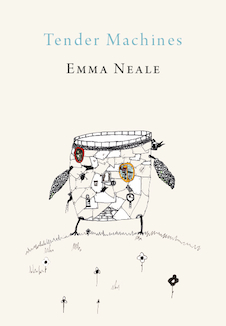
from Tender Machines  (Dunedin: OUP, 2015)


Emma Neale is the author of 6 novels and 6 collections of poetry. She is the current editor of Landfall.

Otago University page


otago122072.jpg


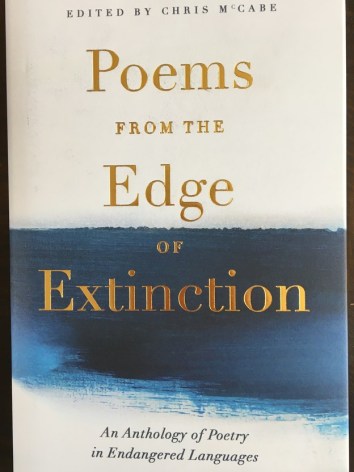
Poetry Shelf noticeboard: Vaughan Rapatahana on Poems from the Edge of Extinction

P from EE.jpg


Read full article here

The anthology Poems from the Edge of Extinction (Chambers, UK, 2019) edited by well-known English poet, Chris McCabe, was launched at Poetry International, The Southbank Centre, London  in mid-October, 2019. He was the MC on this occasion, as well as for several other events during the festival. It is an important collection of poetry written in indigenous languages — including my own, te reo Māori — which are being threatened by dominant Hydra-like languages — like English and to a lesser extent others, such as Mandarin.

My perspective on why languages are under threat:

I have written extensively previously as regards the several agencies pushing English language Hydra-like dominion over indigenous languages across the globe, for primarily cultural-power and pecuniary reasons. Agencies such as the British Council, which continue to press for a worldwide spread of the language into traditionally non-English as a first language communities — so as to seek financial and cultural benefits for Britain. An approach as exemplified in their own words from their December 2019 Request for Proposal

‘… the organisation is seeking to investigate not merely the direct benefits of the spread of English (in terms of the direct financial benefit to the UK of the provision of English services and the improved skills and life chances of those learning it, both of which are relatively well known and have been widely explored in the past), but in particular the indirect benefits — in terms of greater knowledge of English driving the UK’s influence and attractiveness for trade, and improving the access of those learning English to opportunities, information and culture.’


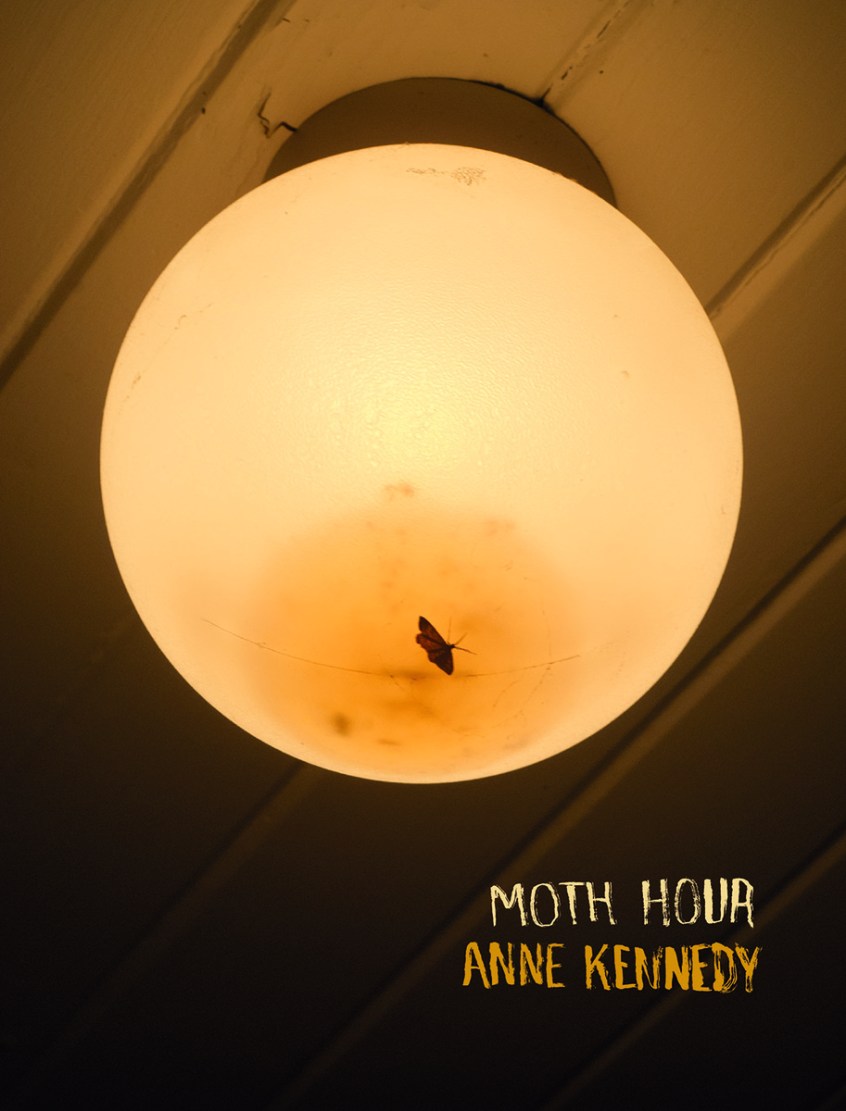
Poetry Shelf fascinations: Anne Kennedy’s Moth Hour


Kennedy_Moth_Hour__40770.1564362579.jpg


Anne Kennedy, Moth Hour, Auckland University Press, 2019


1.


The thing in the jar

always dies!

The rice cooker steams

so the sun goes down

Deep in the house

sepia gathers

The pencil has eaten

the fragile book


from ‘Thirty-Three Transformations on a Theme of Philip’


I first read Anne Kennedy’s new collection Moth Hour as a piece of music that traces the contours of grief. Words form little melodies, solo instruments sound out, there is echo, overlap, loop and patterning. Above all there is a syncopated beat that leaves room for breath, an intake of pain, an out-sigh of grief, an intake of observation, an out-breath of recognition. There is the fragile word-dance to the light.

Moth Hour responds to a family tragedy; in 1973, at the age of twenty-two, Anne’s brother, Philip, accidentally fell to his death. Anne, her seven siblings (she was the youngest and aged fourteen) and parents now lived with unbearable grief and loss, separately, diversely, as a family.

The book is in three parts: the long sequence ‘Thirty-Three Transformations on a Theme of Philip’,  a coda poem ‘The Thé’ and an essay (‘Pattern/Chaos: Afterword’).

Over time Anne had read Philip’s book collection (think a 1970s gathering of books ) along with his poetry. She begins Moth Hour with one of his poems, an affecting piece that forms both the bony skeleton of her book and a fragile yet insistent pattern of echos. A voice calling out over the crevice, a voice that keeps returning. In Philip’s poem a speaker imagines being caught by a child and placed in a jar on a windowsill along with edible leaves, The Book of Tea, paper and a pen. The power of imagination is evoked.

These elements keep returning and if there is syncopation, a form of stutter, a difficulty of transmission, of speaking and retrieving, there is also fluency. The way both music and poetry can pull you into an utterly absorbing connective movement.


The second time I read Moth Hour I listened to Ludwig van Beethoven’s Thirty-Three Variations on a Waltz by Anton Diabelli because Anne had listened to this as she wrote the book. She had first listened to it over and over after Philip’s death.


Catch me little child and put me in a jar.

Ajar is small and a view of everything.

Hopefully we will always want and want for nothing.

Shall I seize you? Yes, I mean no. Please seizure.

We will live in a jar.

I will live in a jar. And the jar is a house.

Place inside a place inside.

That is how we will look out. Look out.

I am being very straight with you.

Look no hands.

In the language.


from ’19’ Thirty-Three Transformations on a theme of Philip’


The poetic fluency of Moth Hour carries so much in its momentum. There are detailed locations: a Wellington family home, the contemporary Auckland of the poet. Signs of the times (the 1970s). Surreal intrusions. Politics (again think the 1970s). There are contrasts: new / dead / breath; some / any. There are the rebounding questions. Ideas, feelings, words waver as though nothing can be fixed and certain. Such movement evokes a sense of linguistic play but it also performs the difficulty of the subject matter. Death is impossible to pin down. Grief equally so.

Such a symphonic effect means the reader participates in dis-equilibrium – the unease of unknowing along with the whoosh of connection.

If there are no air holes in the jar we cannot breathe but this book is all about breath. Breath is life sustaining and freedom. And yet this breath, this sustained breath of writing and recall, comes in gasps and puffs.

The second poem, ‘The thé’, reflects the concerns of the first  – the reverberating motifs appear in a present tense of grief and observation – but now the short lines float apart on the page. A pattern of drift; the white space fractured like hicccupy breaths. Yet each line (melody) offers a moment of certainty. I am back to the music pooling inside me.


The poem burns off an hour.

We walk along the street many times.

The street is practice for death.

The chairs are aching in and out.

He staggers to his feet.

The the is ready to go through.

Ritual finally occupies the body.

Thoughts burst the shelter of the room.

The people swarm into the streets.


from ‘The Thé’


Like a mesmerising, lung-like piece of music, Moth Hour is a book of return-listening. Every time you place the poetry on the turntable of your reading you will hear something different. It blisters your skin. It touches you. But above all Moth Hour fills you with the variation and joy of what a lithe poet can do.


Anne Kennedy is a writer of fiction, film scripts and poetry. Her debut poetry collection Sing-song was named Poetry Book of the Year at the 2004 Montana New Zealand Book Awards. The Time of the Giants was shortlisted for the same award in 2006, and The Darling North won the 2013 NZ Post Book Award for Poetry. Her novles include The Last Days of the National Costume, shortlisted for the NZ Post Book Award for Fiction in 2014, and The ice Shelf was longlisted in the 2019 Ockham NZ Book Awards. She lives in Auckland.

Auckland University Press author page


Poetry Shelf noticeboard: Six-Pack Sound #8 is live at nzepc


Screen Shot 2019-12-17 at 8.37.32 AM.png


Six-Pack Sound #8 is live at nzepc

16 December 2019

nzepc presents Six-Pack Sound #8. Poets Jacqueline Carter, Tim Heath, Joshua Hetherington, Cilla McQueen, Richard Pamatatau and Melanie Rands contribute dazzling audio recordings of recent work and comment on their Six Pack selections. They join a gallery of recorded performances by poets working in Aotearoa New Zealand and the Pacific region. Click, listen and browse Six-Pack Sound’s growing sampler of remarkable poetic voices.